Interviews are more than just a Q&A session—they’re a chance to prove your worth. This blog dives into essential Field Drainage Management interview questions and expert tips to help you align your answers with what hiring managers are looking for. Start preparing to shine!
Questions Asked in Field Drainage Management Interview
Q 1. Explain the principles of subsurface drainage.
Subsurface drainage relies on the principle of gravity to remove excess water from the soil profile. Essentially, we create pathways – typically using perforated pipes – that allow water to move from saturated soil layers to a lower outlet point, such as a ditch or stream. This lowers the water table, improving aeration and providing a more favorable environment for plant roots. Think of it like installing underground plumbing for your field. The system intercepts subsurface water flow and redirects it away from the root zone, preventing waterlogging and improving soil conditions for optimal crop growth. The success of subsurface drainage depends on understanding the soil’s hydraulic properties and the landscape’s topography to effectively intercept and convey water.
Q 2. Describe different types of drainage systems (e.g., open ditches, tile drains, subsurface drains).
Several drainage systems are employed, each with its advantages and disadvantages depending on the specific site conditions and budget:
- Open Ditches: These are the simplest, involving excavating channels to carry surface and subsurface water. They are inexpensive but can occupy valuable land, experience erosion, and become breeding grounds for mosquitos.
- Tile Drains: These are underground systems using perforated pipes laid in trenches at specific depths and spacings. They are highly effective for subsurface drainage and minimize land loss compared to open ditches. However, the initial installation cost is higher. Different materials like clay, plastic, or corrugated metal are used depending on the application.
- Subsurface Drains (including Mole Drains): These encompass a range of techniques to create subsurface flow pathways without extensive excavation. Mole drains, for instance, use a specialized machine to create channels in the soil. They’re less expensive than tile drains but may have a shorter lifespan.
The choice of system depends on factors such as soil type, topography, water table depth, and the intended use of the land. For example, on flat, heavy clay soils, tile drains would likely be the most effective solution, while mole drains might be more suitable for lighter soils with gentler slopes.
Q 3. What are the key factors to consider when designing a drainage system for a specific site?
Designing an effective drainage system requires a holistic approach considering various factors:
- Soil properties: Understanding soil type (clay, silt, sand), texture, structure, and hydraulic conductivity is crucial. Clay soils, for example, require wider spacing between drains compared to sandy soils.
- Topography: The land slope dictates the direction and gradient of water flow, influencing drain design and spacing. Steeper slopes require fewer drains spaced further apart.
- Water table depth: This defines the depth at which the drains should be placed. Drains should be positioned below the typical water table to ensure effective drainage.
- Climate: Rainfall intensity and frequency directly influence the required drainage capacity of the system. High rainfall areas necessitate more robust systems.
- Crop type: Different crops have varying water requirements. Systems designed for rice paddies will differ significantly from those for drought-tolerant crops.
- Cost considerations: The economic feasibility of different drainage options needs to be assessed. This is a critical factor in choosing between, for example, open ditches, tile drains and more expensive alternatives.
A professional drainage engineer uses computer models and field surveys to integrate these factors into a design that meets the specific site needs. A poorly designed system can be ineffective and even cause unintended negative consequences.
Q 4. How do you assess soil drainage characteristics?
Assessing soil drainage characteristics involves a combination of field observations and laboratory analyses. Field methods include:
- Visual examination: Observing soil color, texture, and structure provides initial insights. Greyish or bluish hues often suggest poor drainage.
- Percolation tests: Measuring the rate of water infiltration into the soil helps determine its hydraulic conductivity. This involves digging a small hole and measuring the time it takes for a specific volume of water to disappear.
- Water table monitoring: Observing the depth of the water table over time helps understand the soil’s drainage capacity.
Laboratory analyses can further quantify soil properties, including hydraulic conductivity (using methods like constant head or falling head permeameters). The combination of field observation and laboratory data provides a comprehensive understanding of the soil’s drainage capacity, which is essential for successful drainage system design.
Q 5. Explain the concept of hydraulic conductivity and its importance in drainage design.
Hydraulic conductivity (K) is a measure of how easily water can move through a soil. It is expressed in units of length per time (e.g., cm/s or m/day). It’s crucial in drainage design because it dictates the rate at which water will drain from the soil. A higher K value indicates better drainage.
In drainage design, K is used to determine the optimal spacing and depth of drains. For example, soils with low K (e.g., heavy clay soils) require more closely spaced drains compared to soils with high K (e.g., sandy soils). Design equations and computer models utilize K as a key input to predict water table levels and drainage efficiency. Ignoring K during design can lead to ineffective or overly costly drainage systems. Think of it as the ‘flow rate’ of water in your soil plumbing system. A low K means slow flow, demanding more efficient drainage pathways.
Q 6. What are the common problems encountered in field drainage systems and their solutions?
Common problems in field drainage systems include:
- Clogging: Sediment buildup, organic matter, or root growth can restrict water flow in drains. Regular maintenance (e.g., flushing or cleaning) is essential to prevent clogging. Solutions include using appropriate filter fabric around pipes during installation and periodic maintenance practices.
- Erosion: Open ditches are prone to erosion, especially during high rainfall events. This can lead to instability and reduced effectiveness. Solutions involve stabilizing ditch banks with vegetation or constructing reinforced channels.
- Incorrect drain spacing: Poorly designed spacing can result in inadequate drainage in certain areas. This might be rectified through supplementary drainage efforts or re-design in severe instances.
- Poorly installed drains: Inadequate depth, incorrect gradient, or damaged pipes can render the entire system ineffective. Careful construction practices are vital to prevent this problem. This needs to be addressed with complete or partial re-installation.
- Outlet problems: Restricted outlet flow can cause water to back up into the drainage system. Regular inspections and cleaning of outlets are necessary.
Addressing these issues requires regular monitoring, maintenance, and, in some cases, system repair or redesign.
Q 7. Describe methods for evaluating the effectiveness of a drainage system.
Evaluating the effectiveness of a drainage system involves several methods:
- Water table monitoring: Measuring water table depths before and after installation and over time indicates the system’s impact on lowering water levels.
- Soil moisture measurements: Assessing soil moisture content in the root zone provides insights into improved aeration and water availability.
- Crop yield analysis: Comparing crop yields before and after drainage implementation can reveal the system’s effect on crop productivity. Improved yields often indicate effective drainage.
- Discharge measurements: Measuring the volume of water discharged from the drainage system helps determine its capacity and efficiency.
- Visual inspection: Regular visual inspections of drains and outlets can help identify potential problems like clogging or erosion.
A comprehensive evaluation combines these methods to gain a complete understanding of the drainage system’s performance. This data can inform future improvements, maintenance schedules, and assist in the design of similar systems for other areas.
Q 8. How do you determine the appropriate spacing and depth for subsurface drains?
Determining the optimal spacing and depth for subsurface drains is crucial for effective field drainage. It involves a careful consideration of several factors, primarily soil type, water table depth, rainfall intensity, and the desired drainage rate. Think of it like designing a plumbing system for your field; you need the right size pipes (drains) spaced appropriately to efficiently remove excess water.
Soil Type: Heavily clay soils with low permeability require closer spacing and shallower drains compared to sandy soils with high permeability. Clay holds water longer, demanding more frequent drainage points. Sandy soils allow water to move more freely, allowing for wider spacing.
Water Table Depth: The depth to the water table dictates the drain depth. Drains should ideally be placed below the highest anticipated water table to ensure efficient interception and removal of water. A deeper water table often allows for greater spacing between drains.
Rainfall Intensity: Areas with high rainfall intensity require closer drain spacing to handle the increased volume of water. Conversely, areas with lower rainfall intensity can accommodate wider spacing.
Drainage Rate: The desired drainage rate – how quickly you want the water removed – also influences spacing. Faster drainage requires closer spacing. Drainage calculations, often involving empirical formulas or computer modeling, are used to determine optimal drain spacing and depth for specific site conditions. For instance, the Hooghoudt equation is frequently used to estimate drain spacing in homogenous soils.
Example: In a field with heavy clay soil and a high water table, you might opt for drain spacing of 10-15 meters and a depth of 1-1.5 meters. However, in a field with sandy soil and a shallower water table, the spacing could be 20-30 meters with a depth of 0.8-1 meter. Always consult soil maps and local hydrological data for accurate assessment.
Q 9. What are the environmental considerations in field drainage design?
Environmental considerations are paramount in field drainage design. Poorly designed systems can have detrimental effects on water quality, aquatic ecosystems, and greenhouse gas emissions.
- Water Quality: Drains can carry pollutants such as fertilizers, pesticides, and sediments into surface waters. To mitigate this, buffer strips of vegetation can be planted along drain lines to filter pollutants before they reach water bodies. Proper drain design and management also prevent erosion.
- Aquatic Ecosystems: Altered water flow regimes due to drainage can harm aquatic habitats. Maintaining natural hydrological flow patterns as much as possible is key. This includes minimizing the amount of water diverted and incorporating features like vegetated channels to help filter water and sustain aquatic life.
- Greenhouse Gas Emissions: Drained soils can release significant amounts of greenhouse gases, particularly methane and nitrous oxide. Minimizing soil disturbance during construction and promoting soil health practices (like no-till farming) can help reduce emissions. Furthermore, careful management of water levels can prevent anoxic conditions (lack of oxygen) in the soil which foster methane production.
- Biodiversity: Drainage can disrupt natural habitats. Careful planning, implementing ecologically sensitive designs and ensuring minimal impact on existing wetlands and riparian zones is crucial.
Environmental Impact Assessments (EIAs) are often mandatory for larger drainage projects. These assessments evaluate the potential environmental effects and identify ways to minimize them.
Q 10. Explain the role of GIS in field drainage management.
Geographic Information Systems (GIS) play a vital role in modern field drainage management, enabling efficient data collection, analysis, and visualization.
- Data Integration: GIS integrates diverse datasets such as soil maps, topography, hydrological data, and existing drainage infrastructure to create a comprehensive understanding of the field.
- Spatial Analysis: GIS tools perform spatial analysis to identify areas with poor drainage, assess drainage effectiveness, and optimize drain placement. For example, slope analysis helps determine optimal drain alignment to enhance water flow.
- Visualization: GIS creates maps and 3D models to visualize the drainage system and its impact on the field. This helps in decision-making, stakeholder communication, and monitoring system performance.
- Modeling: GIS integrates with hydrological models to simulate water flow and predict the effectiveness of different drainage designs. This allows for evaluating various scenarios without physical implementation, saving time and resources.
- Monitoring & Maintenance: GIS can track the condition of the drainage system, identifying areas requiring maintenance or repairs. Sensor data can be integrated to provide real-time information on water levels and flow rates.
Example: GIS can be used to overlay a soil map with a digital elevation model to identify low-lying areas prone to waterlogging. Then, optimal drain placement can be determined through spatial analysis and modeling, minimizing environmental impact and maximizing efficiency.
Q 11. Discuss the impact of climate change on field drainage needs.
Climate change significantly impacts field drainage needs. Changes in rainfall patterns, increased intensity of storms, and rising sea levels are altering hydrological conditions, requiring adaptive drainage strategies.
- Increased Rainfall Intensity: More intense rainfall events lead to greater runoff and increased demands on drainage systems. Existing systems may become overwhelmed, requiring upgrades or modifications to handle the larger volumes of water.
- Changes in Rainfall Patterns: Shifting rainfall patterns, including longer dry periods followed by intense downpours, necessitates more resilient and flexible drainage systems. Systems should be designed to handle both extremes.
- Rising Sea Levels: In coastal areas, rising sea levels can lead to higher water tables and increased salinity, impacting drainage design and necessitating different strategies such as elevated drains or improved drainage to minimize saltwater intrusion.
- Increased Temperatures: Higher temperatures can accelerate evapotranspiration, potentially reducing the need for drainage in some areas, but can also lead to more frequent droughts and increased stress on crops requiring different water management strategies.
Climate change projections should be incorporated into field drainage design, making systems more adaptable to future conditions. This may involve incorporating larger capacity drains, improved water storage capacity and climate-resilient design strategies.
Q 12. How do you manage water table levels in different soil types?
Managing water table levels varies significantly depending on soil type. The goal is to maintain optimal moisture levels for crop growth while preventing waterlogging.
- Sandy Soils: Sandy soils have high permeability, allowing water to drain quickly. Managing water tables in sandy soils often involves ensuring adequate drainage to prevent rapid depletion of soil moisture, potentially leading to drought stress. Irrigation may be needed to supplement water during dry periods.
- Clay Soils: Clay soils have low permeability, retaining water for extended periods. Managing water tables here involves efficient drainage systems to prevent waterlogging and improve aeration. Subsurface drainage is crucial in clay soils, possibly supplemented with surface drainage in heavier clay.
- Loamy Soils: Loamy soils possess a good balance of sand, silt, and clay, offering better drainage than clay but less than sandy soils. Drainage management in loamy soils often involves a combination of subsurface and surface drainage strategies tailored to the specific soil characteristics.
Techniques for managing water tables include subsurface drainage, surface drainage, controlled drainage, and water management practices like crop selection and irrigation scheduling. Soil surveys are crucial to understanding soil properties and guiding effective water table management strategies.
Q 13. What are the economic considerations in choosing a drainage system?
Economic considerations are a critical aspect of choosing a drainage system. The best system is often a balance between cost-effectiveness and long-term benefits.
- Initial Costs: Different drainage systems have varying initial costs. Subsurface drainage is generally more expensive to install than surface drainage, but it offers long-term benefits and reduces maintenance needs.
- Maintenance Costs: Maintenance costs vary depending on the system’s type and design. Regular cleaning and inspection of subsurface drains are important to prevent clogging and failure. Surface drains may require periodic repairs due to erosion and sedimentation.
- Crop Yields: Improved drainage leads to higher crop yields due to better aeration, root development, and reduced water stress. This increased yield offsets the initial and maintenance costs over time.
- Land Value: Improved drainage increases the value of agricultural land, making it more productive and attractive to buyers.
- Environmental Costs: The environmental impact of a drainage system should also be considered. Systems with minimal environmental impact may have higher initial costs, but they can avoid potential penalties and long-term environmental remediation.
A life-cycle cost analysis is valuable to compare different drainage systems, considering initial costs, maintenance, repair, potential yield increases, and environmental considerations. This approach helps make informed decisions maximizing returns on investment.
Q 14. Describe different types of drain materials and their suitability for various conditions.
Various drain materials are available, each suited for different conditions. The choice depends on factors like soil type, water quality, cost, and durability.
- Clay Tiles: Traditional material, relatively inexpensive, but can be fragile and prone to breakage. Suitable for less demanding applications in stable soils.
- Concrete Pipes: Durable and resistant to corrosion, offering long service life. Costlier than clay tiles but suitable for high-flow applications and challenging soil conditions.
- Plastic Pipes (PVC, HDPE): Lightweight, easy to install, and resistant to corrosion. A popular choice due to their cost-effectiveness and durability. Suitable for most soil conditions. HDPE (High-Density Polyethylene) is particularly strong and resistant to chemicals.
- Geotextiles: Woven or non-woven fabrics used to prevent soil particles from entering and clogging drains. They extend the life of drain systems, especially in fine-grained soils.
- Stone Drains: Use of gravel or crushed stone for drainage. Simple and economical, suitable for shallow drainage applications or areas where other materials are not readily available.
Example: In a field with highly corrosive groundwater, concrete or HDPE pipes are preferred over clay tiles. In sandy soils, geotextiles are often used with plastic pipes to prevent clogging. For shallow drainage applications with readily available stone, stone drains might be the most cost-effective solution.
Q 15. Explain the maintenance requirements for different drainage systems.
Maintaining drainage systems is crucial for their longevity and effectiveness. The specific requirements vary greatly depending on the system type. Let’s look at a few common examples:
- Open Ditches and Channels: These require regular cleaning to remove sediment, vegetation, and debris that can obstruct flow. This often involves manual labor or the use of specialized machinery. Regular inspections are needed to identify erosion or bank instability. We should also check for proper slope and alignment to ensure efficient water movement.
- Subsurface Drains (e.g., perforated pipes): These systems require less frequent maintenance but still need periodic inspection to check for blockages, pipe damage, or joint failures. This often involves using specialized equipment like drain cameras to assess the internal condition of the pipes. Regular flushing might be necessary to remove accumulated sediment.
- Stormwater Management Systems: These can include a wide range of components such as inlets, pipes, detention basins, and wetlands. Maintenance involves keeping inlets free of debris, regularly inspecting pipes for damage or blockages, and ensuring proper functionality of retention/detention basins. Vegetation management within the system is also crucial.
- Pumping Systems: These systems require regular checks on pump functionality, ensuring the power supply is consistent, and monitoring the pump’s efficiency. Routine servicing and occasional replacement of worn parts are essential. We should also monitor the discharge points and ensure there are no blockages.
A comprehensive maintenance schedule tailored to the specific drainage system and local conditions is essential. This schedule should outline regular inspections, cleaning procedures, and necessary repairs to prevent system failure and ensure long-term performance.
Career Expert Tips:
- Ace those interviews! Prepare effectively by reviewing the Top 50 Most Common Interview Questions on ResumeGemini.
- Navigate your job search with confidence! Explore a wide range of Career Tips on ResumeGemini. Learn about common challenges and recommendations to overcome them.
- Craft the perfect resume! Master the Art of Resume Writing with ResumeGemini’s guide. Showcase your unique qualifications and achievements effectively.
- Don’t miss out on holiday savings! Build your dream resume with ResumeGemini’s ATS optimized templates.
Q 16. How do you handle drainage issues in areas with high water tables?
Managing drainage in high water table areas requires strategic approaches focused on lowering the water table or diverting surface runoff effectively. Here’s a breakdown of common strategies:
- Deep Drainage Systems: Installing deep, perforated drainage pipes (often with gravel backfill) below the water table helps collect and convey subsurface water away from the problem area. The depth and spacing of these pipes are critical and determined by site-specific hydrological investigations.
- Tile Drains: These are a type of subsurface drain that are laid horizontally and collect water which is then transported away. It is important to ensure proper gradient for effective drainage.
- French Drains: These are simpler, less expensive solutions that involve a trench filled with gravel or other porous material that allows water to seep into and drain away. They are suitable for smaller areas with less intense water issues.
- Pumping Systems: In areas with extremely high water tables, pumping systems might be necessary to lift water to a higher elevation for discharge into a suitable outlet. This method requires regular maintenance and electricity supply.
- Improved Soil Drainage: Incorporating amendments to the soil to improve its permeability can reduce the amount of water that remains in the soil profile. This could involve adding organic matter to improve drainage or using other soil improvement techniques. This is a long-term solution that is less expensive than installing drainage systems.
The best approach depends on factors like the extent of the problem, the soil type, the budget, and the proximity to discharge points. Often, a combination of methods is most effective.
Q 17. Describe different techniques for water level monitoring.
Monitoring water levels is vital for effective drainage management. Several techniques are available, each with its strengths and weaknesses:
- Manual Readings: Using a simple measuring stick or graduated staff gauge in observation wells provides a straightforward and cost-effective method. Regular manual readings are necessary and can be time-consuming. It provides good visibility into water table fluctuations.
- Data Loggers: These electronic devices are placed in wells and automatically record water level data at specified intervals. Data can be downloaded and analyzed for trends and patterns, allowing for more efficient and proactive management.
- Pressure Transducers: These sensors measure water pressure, which can be converted to water level. They are often used in wells where access for manual readings is difficult. It provides continuous monitoring of water level and precise data.
- Remote Sensing Technologies: Techniques like LiDAR (Light Detection and Ranging) and satellite imagery can be used for large-scale monitoring of water levels in rivers and lakes, providing valuable information for regional drainage management.
The choice of method depends on budget, accessibility, the required accuracy, and the scale of the project. For example, manual readings are suitable for small-scale projects or areas needing occasional monitoring, while automated data loggers are better for continuous monitoring and large-scale projects.
Q 18. What are the safety considerations when working with drainage systems?
Safety is paramount when working with drainage systems. Several key considerations must be addressed:
- Confined Spaces: Entering drainage pipes or structures presents a risk of asphyxiation due to low oxygen levels. Proper ventilation and safety equipment, including respirators and harnesses, are essential. Following all relevant safety guidelines and permits are crucial.
- Heavy Machinery: Operating excavators, loaders, and other heavy equipment requires trained personnel, appropriate safety gear, and strict adherence to safety protocols. This is to prevent accidents.
- Water Hazards: Working near or in water poses risks of drowning, electrocution, and exposure to harmful substances. Personal flotation devices (PFDs) and appropriate clothing might be necessary.
- Traffic Control: Establishing appropriate traffic control measures around the work site is important to protect workers and the public from the hazards. Road closures and signage can be crucial.
- Ground Stability: Excavation work requires careful consideration of ground stability. Slope protection, shoring, and other measures are critical for preventing collapses.
A thorough risk assessment should be conducted before any work commences to identify potential hazards and establish appropriate control measures. Regular safety training for all personnel involved is also necessary.
Q 19. How do you design for drainage in challenging terrains (e.g., slopes, wetlands)?
Designing drainage in challenging terrains requires careful consideration of the unique characteristics of the site. Here are some approaches:
- Slopes: On slopes, terracing, contour drains, and swales can help to intercept runoff and reduce erosion. The design must consider the gradient and the soil type to ensure the stability of the drainage system. Drainage channels need careful design to prevent erosion.
- Wetlands: Drainage in wetlands requires a sensitive approach that minimizes disruption to the ecosystem. Techniques might involve constructing vegetated swales or using subsurface drainage systems designed to minimize impact on the water table and the existing flora and fauna. This requires proper environmental impact assessment.
- Rock Outcrops: In areas with rock outcrops, drainage might need to be adapted to navigate around obstacles or use specialized construction methods. Careful planning to minimize excavation in rocky areas is needed.
These designs often require detailed topographic surveys, hydrological assessments, and geotechnical investigations to ensure the system is both effective and environmentally responsible. Using specialized software, such as AutoCAD Civil 3D or ArcGIS, can aid in the design and modeling of these complex drainage systems.
Q 20. Explain the process of selecting appropriate drainage design software.
Selecting drainage design software involves considering several factors:
- Software Capabilities: Does the software support the specific drainage design techniques needed for the project (e.g., 1D, 2D, or 3D hydraulic modeling)? Does it provide tools for automating calculations and generating detailed reports? Consider the software’s suitability to your specific needs, and if it integrates with other software you may need.
- User Friendliness: The software should be intuitive and easy to use, even for those without extensive experience in drainage design. A user-friendly interface minimizes training time and potential errors.
- Data Handling Capabilities: The software should be able to handle large datasets, such as topographic data, rainfall information, and soil properties. The ability to import and export data in various formats is also essential. Integration with GIS software is crucial for mapping and spatial analysis.
- Cost and Support: The cost of the software should be considered, along with the availability of technical support and training. Consider the licensing costs and ongoing maintenance required.
Examples of common software include AutoCAD Civil 3D, ArcGIS, HEC-RAS, and SWMM. The best choice depends on the project’s specific requirements, budget, and the team’s technical expertise. A trial period or a demo is often available before committing to a purchase.
Q 21. How do you incorporate sustainable drainage practices into your designs?
Incorporating sustainable drainage systems (SuDS) is crucial for environmentally responsible drainage management. The goal is to manage rainfall runoff closer to its source, mimicking natural hydrological processes. Here are some key practices:
- Rain Gardens: These vegetated depressions capture and filter runoff, reducing pollutants before they reach waterways. They also provide aesthetic benefits.
- Bioretention Cells: Similar to rain gardens, these use a combination of soil, gravel, and vegetation to filter pollutants and manage runoff volume. They can help with groundwater recharge.
- Permeable Pavements: Using pavements that allow water to infiltrate the ground reduces surface runoff and replenishes groundwater. This minimizes flooding and reduces the need for extensive drainage infrastructure.
- Green Roofs: These vegetated roofs capture rainfall, reducing runoff and mitigating the urban heat island effect. They can help to reduce the workload of the drainage system.
- Swales and Vegetated Channels: These natural channels convey runoff while providing habitat for wildlife and improving water quality. They’re a cost-effective solution compared to more traditional drainage systems.
SuDS are often integrated into broader water sensitive urban design (WSUD) strategies, promoting a holistic approach to water management in urban and suburban areas. The application of SuDS requires considering local environmental conditions and regulatory requirements.
Q 22. What are the regulations and standards relevant to field drainage in your region?
Regulations and standards for field drainage vary significantly by region, often influenced by local geology, climate, and agricultural practices. In my region, we primarily adhere to guidelines established by the [Insert Relevant Regional Authority, e.g., State Department of Agriculture, local water management district]. These regulations typically address:
- Water quality protection: Regulations often dictate the permitted level of nutrient runoff and other pollutants from drained fields to protect surface and groundwater resources. This often involves stipulations on drainage design and management practices to minimize environmental impact.
- Drainage system design and installation: Standards specify acceptable materials, construction techniques, and design criteria for drainage systems to ensure longevity and effectiveness. For instance, minimum pipe diameter and slope requirements might be defined to prevent clogging and ensure adequate flow capacity.
- Permitting requirements: Major drainage projects often necessitate permits from regulatory bodies, requiring detailed plans and environmental impact assessments. These permits outline permitted discharge locations and volumes.
- Maintenance and operation: Regulations may set standards for the maintenance and operation of drainage systems, including regular inspections and cleaning to prevent blockages and ensure efficient operation. This is critical for avoiding waterlogging and potential damage to crops.
For instance, we had a case where a farmer attempted to expand his drainage system without obtaining the necessary permits. This led to delays in the project and potential fines due to non-compliance with water quality regulations.
Q 23. Describe your experience with different types of drainage pumps and their applications.
My experience encompasses a wide range of drainage pumps, each suited to specific applications. The choice depends on factors like flow rate, head (vertical lift), power source, and budget.
- Submersible pumps: These pumps are submerged directly into the water, ideal for deep wells or sumps. They are efficient and require less space but can be more susceptible to wear and tear due to constant submersion. I’ve used these extensively in situations with consistently high water tables.
- Centrifugal pumps: These pumps are widely applicable and efficient for moving large volumes of water. They are often employed in larger-scale drainage systems where high discharge rates are needed. I’ve overseen the installation of centrifugal pumps in a large-scale irrigation system, also repurposed for drainage during heavy rainfall.
- Diaphragm pumps: Ideal for handling slurry or water containing solids, these pumps are robust and can handle abrasive materials. We used a diaphragm pump successfully in a project where the drainage water contained a significant amount of sediment.
- Positive displacement pumps: These pumps offer high pressure but can be less efficient than centrifugal pumps for large volumes. They’re useful in situations requiring high head pressure, like pumping water uphill to a holding pond.
Selecting the right pump involves careful consideration of site conditions and project requirements. For example, a shallow well might only need a small submersible pump, while a large field with heavy clay soil would require a more powerful centrifugal pump.
Q 24. How do you troubleshoot drainage system failures?
Troubleshooting drainage system failures requires a systematic approach. I typically follow these steps:
- Visual inspection: Begin by visually inspecting the entire system, looking for obvious issues such as blockages, leaks, or damaged components. This often reveals the problem’s location and nature.
- Flow measurement: Measure the flow rate at various points in the system to identify flow restrictions or blockages. This helps pinpoint the problem’s location.
- Level measurement: Check water levels in various parts of the system to determine if there are areas experiencing waterlogging or backpressure.
- Pump assessment: If pumps are involved, assess their functionality, checking for issues like low power, mechanical problems, or blocked suction lines.
- Soil investigation: If subsurface problems are suspected, consider soil analysis to determine the permeability and potential clogging issues.
- Data analysis: Utilize historical data on rainfall, water levels, and pump operation to gain a comprehensive understanding of the system’s performance and identify recurring problems.
For instance, in one project, low flow rates were initially attributed to pump failure. But a thorough inspection revealed significant sediment buildup in the main drainage pipe, requiring cleaning and potentially upgrading pipe diameter.
Q 25. Explain the importance of proper drainage in crop production.
Proper drainage is paramount to successful crop production. It impacts several key factors:
- Root development: Excess water leads to oxygen deprivation (anoxia) in the root zone, hindering root growth and nutrient uptake. This results in stunted growth and reduced yields.
- Nutrient availability: Waterlogged soil limits nutrient availability and can lead to nutrient leaching, reducing the effectiveness of fertilizers.
- Pest and disease control: Waterlogged conditions promote the spread of soilborne diseases and pests, further impacting crop health and yields.
- Soil structure and health: Poor drainage compacts the soil, reducing aeration and affecting the soil’s overall structure. This limits microbial activity, vital for soil health and nutrient cycling.
- Harvesting efficiency: Waterlogged fields are difficult to access with harvesting machinery, delaying harvests and leading to potential yield losses.
Imagine trying to grow tomatoes in consistently waterlogged soil – the roots would rot, and the plants would fail to thrive. Proper drainage ensures optimal soil conditions for healthy root development and nutrient absorption, ultimately leading to better yields and profitability.
Q 26. How do you conduct a site assessment for drainage needs?
A thorough site assessment for drainage needs involves a multi-faceted approach:
- Topographic survey: A detailed survey is conducted to map the land’s elevation, identifying high and low points to determine the natural flow of water. This informs the optimal location of drainage channels and ditches.
- Soil analysis: Soil samples are collected and analyzed to determine its permeability, texture, and water-holding capacity. This information helps determine the appropriate drainage system design – for instance, heavily clay soils might require more extensive drainage than sandy soils.
- Hydrological assessment: This assesses the rainfall patterns, groundwater levels, and potential runoff volumes to determine the capacity required for the drainage system. Historical rainfall data and climate projections are crucial.
- Existing drainage infrastructure assessment: If any existing drainage infrastructure is present, it should be inspected to identify its capacity, condition, and suitability for the current or intended use.
- Environmental considerations: Environmental impact assessments may be required depending on the scale of the project and local regulations. This could involve analysis of potential impacts on water quality, wetlands, and wildlife habitats.
For example, in one assessment, we discovered a previously unknown underground spring contributing to waterlogging. Incorporating this information into the design prevented costly oversights and ensured effective drainage.
Q 27. Describe your experience with the installation and maintenance of drainage systems.
My experience includes both surface and subsurface drainage system installation and maintenance. Subsurface systems, typically employing perforated pipes, are commonly used in agricultural fields to manage subsurface water. These projects involve careful planning to ensure proper pipe layout and slope for effective drainage. I oversee every stage, from surveying and pipe laying to backfilling and compaction.
Surface drainage, involving ditches, channels, and swales, requires careful grading and vegetation management to ensure efficient water flow. This involves machinery operation and ensuring proper erosion control. Maintenance of these systems is crucial, often involving regular cleaning to prevent blockages by debris or sediment. Pump maintenance is also a key part of the process. We conduct regular inspections and preventative maintenance schedules to address potential issues before they become major problems, preventing costly repairs and downtime.
For instance, we redesigned a failing drainage system for a large farm. The previous system was poorly designed, resulting in frequent blockages. Our new design incorporated larger-diameter pipes and improved ditch grading, leading to significantly improved drainage efficiency and reducing maintenance costs. Regular cleaning and pump inspections are integrated into an ongoing farm maintenance plan.
Q 28. What are some emerging technologies in field drainage management?
Several emerging technologies are revolutionizing field drainage management:
- Precision drainage systems: These systems utilize sensors and data analytics to optimize drainage based on real-time soil moisture and rainfall data. This allows for targeted drainage, minimizing energy consumption and environmental impact.
- Remote sensing and GIS: Remote sensing technologies like drones and satellite imagery provide detailed information on water levels, soil moisture, and vegetation health, facilitating better monitoring and decision-making.
- Smart pumps and automation: Automated pump systems controlled by sensors and data analytics optimize pumping schedules based on real-time conditions, improving efficiency and reducing energy costs.
- Drainage modeling and simulation: Sophisticated software programs simulate water flow and predict drainage system performance under different scenarios, improving design and helping to avoid costly mistakes.
- Bio-drainage techniques: The use of plant species with high water uptake capacity can supplement conventional drainage systems in managing excess water in certain contexts.
These technologies are transforming field drainage from a reactive to a proactive approach, optimizing drainage efficiency, minimizing environmental impact, and ultimately increasing agricultural productivity.
Key Topics to Learn for Field Drainage Management Interview
- Hydrology and Soil Physics: Understanding water movement in soil, including infiltration, percolation, and evapotranspiration. Practical application: Analyzing soil types and their drainage characteristics to recommend appropriate drainage solutions.
- Drainage System Design: Mastering the principles of surface and subsurface drainage design, including ditch layout, tile drainage systems, and water control structures. Practical application: Calculating drainage gradients and sizing drainage components for specific field conditions.
- Water Management Strategies: Developing and implementing effective water management plans for various crops and soil conditions. Practical application: Optimizing irrigation schedules and drainage practices to maximize crop yields while minimizing water waste.
- Drainage System Maintenance and Repair: Understanding common drainage system problems, troubleshooting techniques, and preventative maintenance strategies. Practical application: Identifying and resolving issues such as clogged tiles, broken pipes, and inadequate drainage capacity.
- Environmental Impact of Drainage: Assessing the environmental consequences of drainage practices, including water quality impacts and greenhouse gas emissions. Practical application: Implementing sustainable drainage management practices that minimize negative environmental effects.
- GIS and Remote Sensing Applications: Utilizing Geographic Information Systems (GIS) and remote sensing techniques for site assessment, drainage system mapping, and monitoring. Practical application: Creating precise drainage plans and assessing the effectiveness of existing systems.
- Cost-Benefit Analysis: Evaluating the economic feasibility of different drainage solutions, considering both initial investment and long-term operational costs. Practical application: Justifying drainage projects based on their potential return on investment.
Next Steps
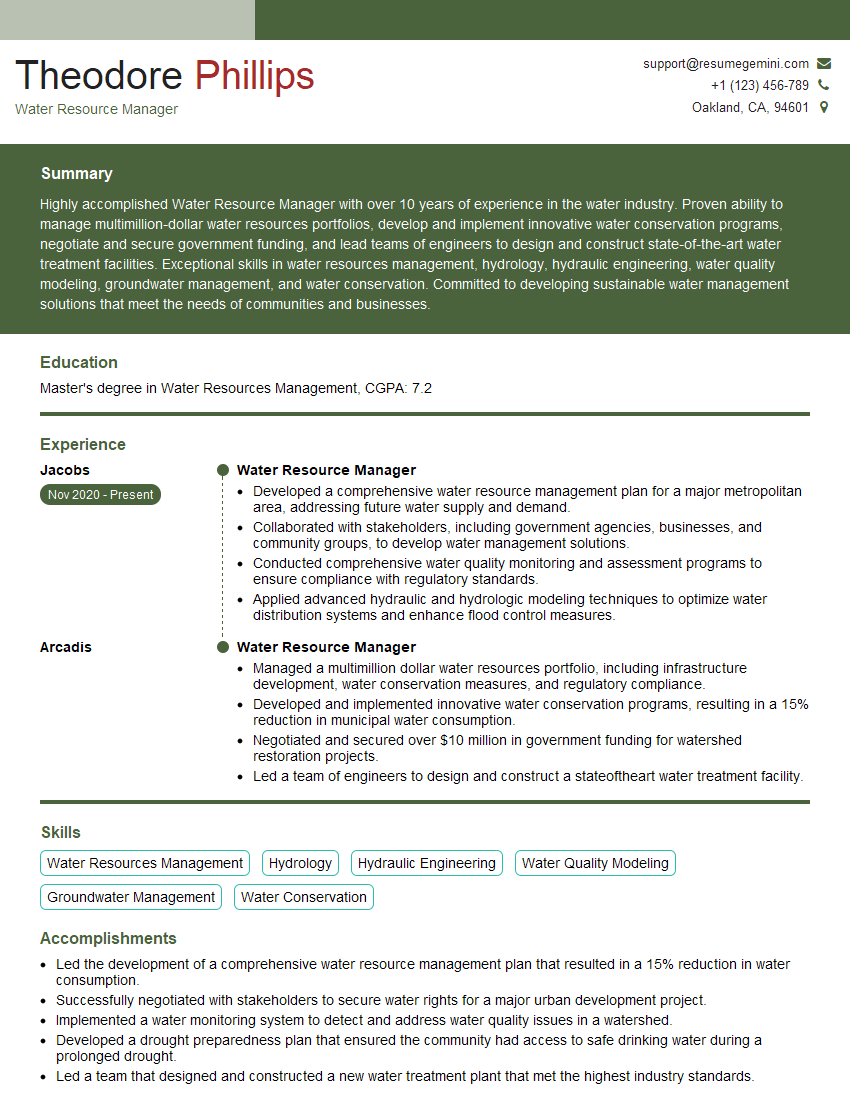
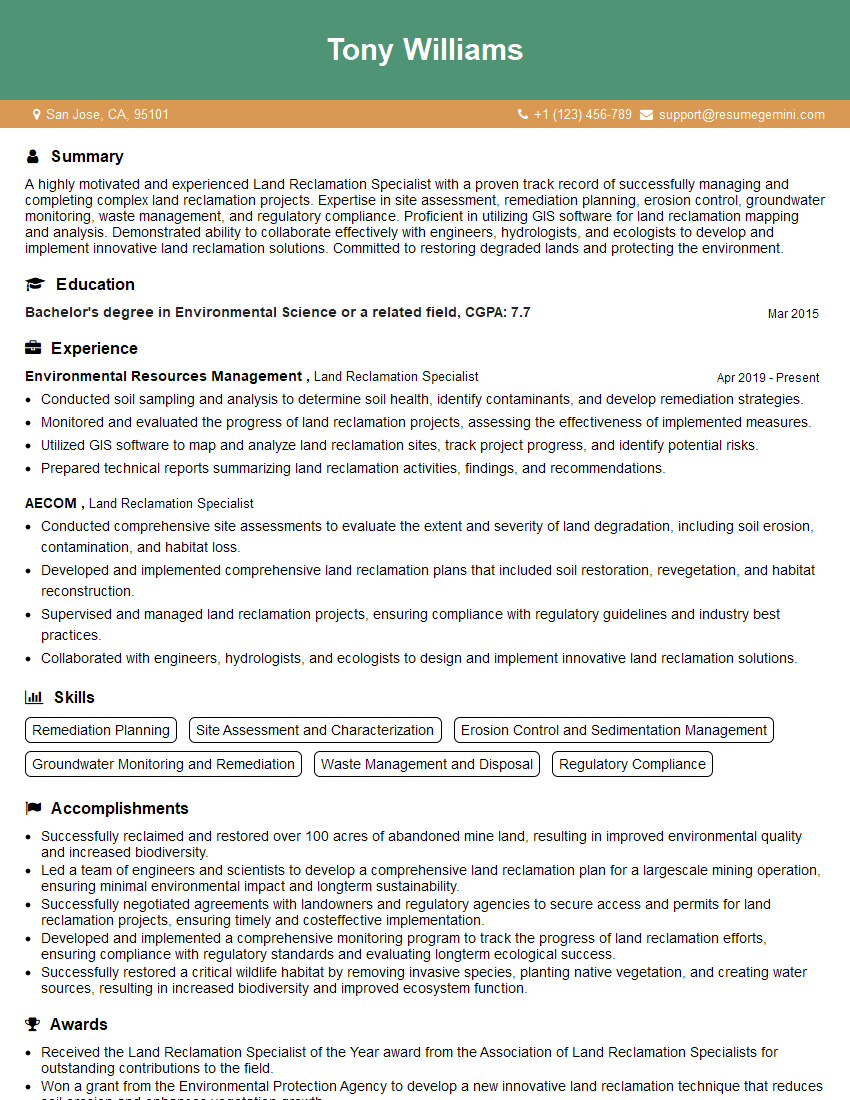
Mastering Field Drainage Management opens doors to rewarding careers with significant growth potential in agriculture, environmental engineering, and land management. To increase your job prospects, focus on creating a strong, ATS-friendly resume that highlights your skills and experience. ResumeGemini is a trusted resource that can help you build a professional and effective resume tailored to the specific requirements of Field Drainage Management jobs. Examples of resumes tailored to this field are available to help you get started.


Explore more articles
Users Rating of Our Blogs
Share Your Experience
We value your feedback! Please rate our content and share your thoughts (optional).
What Readers Say About Our Blog
Very informative content, great job.
good