Cracking a skill-specific interview, like one for Fur Alteration, requires understanding the nuances of the role. In this blog, we present the questions you’re most likely to encounter, along with insights into how to answer them effectively. Let’s ensure you’re ready to make a strong impression.
Questions Asked in Fur Alteration Interview
Q 1. Describe your experience with different fur types (e.g., mink, fox, sable).
My experience spans a wide range of fur types, each demanding a unique approach. Mink, known for its luxurious sheen and relative durability, requires delicate handling to prevent damage to its fine guard hairs. Fox fur, with its longer, thicker guard hairs and softer underfur, presents different challenges; repairs often involve careful blending of the guard hairs to maintain the natural look. Sable, prized for its exceptionally soft and dense underfur, necessitates extremely precise techniques to avoid disturbing the delicate structure of the pelt. I’ve worked extensively with all three, gaining a deep understanding of their individual characteristics and the best repair methods for each.
For instance, a small tear in mink might be seamlessly repaired using a near-invisible stitch, while a larger tear in fox may require a more intricate patch using a piece of donor fur, carefully matched in color and texture. With sable, the utmost precision is paramount, minimizing any visible scarring.
Q 2. Explain your process for assessing damage to a fur garment.
Assessing damage to a fur garment is a meticulous process. I begin with a thorough visual inspection under good lighting, noting the type and extent of the damage. This includes checking for tears, holes, matting, staining, and loss of fur. I then carefully examine the underlying structure of the garment, including the lining and any supporting fabrics. The location of the damage is also crucial; damage near seams or stressed areas requires different solutions than damage in the middle of a panel.
I use a magnifying glass to examine the fur itself, determining the depth of any damage and assessing the integrity of the individual hairs. This helps me determine the appropriate repair technique and predict the success of the restoration. For example, a surface-level stain might be cleaned relatively easily, while a deep, embedded stain might require more intensive treatment or might be irreparable.
Q 3. What techniques do you use for repairing tears in fur?
Repairing tears in fur requires a delicate hand and specialized techniques. The method varies depending on the size and location of the tear, the type of fur, and the overall condition of the garment. For small tears, I often use a fine, almost invisible stitch to carefully rejoin the edges of the tear. The needle must be exceptionally fine and the thread should match the fur in color and texture.
Larger tears may require patching. In this case, I carefully select a piece of donor fur that closely matches the damaged area in color, texture, and hair density. I use specialized adhesives and careful stitching to seamlessly blend the patch into the existing fur. Often, I’ll use a technique called ‘invisible mending’, where the stitch is placed between the hair fibers so it is not visible from the surface. Finally, I will lightly groom the repaired area to restore the natural look and feel of the fur.
Q 4. How do you handle the cleaning and conditioning of various furs?
Cleaning and conditioning fur is a crucial aspect of fur alteration and preservation. The process depends greatly on the type of fur and the extent of soiling. I always begin with a careful inspection to determine the best approach. Some furs are more delicate than others and require gentler methods.
Generally, I use specialized fur cleaning solutions that are designed to dissolve dirt and grime without damaging the fur itself. For example, I may use a mild detergent solution or a dry-cleaning process depending on the fur. After cleaning, I use a specialized conditioner designed to restore the natural oils and shine of the fur. This leaves the fur soft, supple and helps maintain its condition. After conditioning, the garment is carefully dried and groomed to restore its original fullness and shape.
Q 5. Describe your experience with fur garment reconstruction.
Fur garment reconstruction is perhaps the most challenging aspect of my work, requiring significant skill and experience. It involves recreating parts of a damaged or deteriorated garment to restore its original design. This might include replacing a severely damaged sleeve, repairing extensive water damage, or even reconstructing sections of a coat that have been lost or completely destroyed. This frequently involves working with donor fur, carefully matching it to the original fur in texture and color.
I recently reconstructed a vintage fox stole where a large section of fur had been lost. I meticulously sourced a matching piece of fox fur, and using a combination of careful stitching and specialized adhesives, reconstructed the missing section. The final result was nearly indistinguishable from the original garment. This type of work requires a deep understanding of fur construction techniques, pattern making and an artistic sensibility to replicate the original design’s integrity.
Q 6. What methods do you employ for resizing fur garments?
Resizing fur garments requires a high level of skill and precision. Unlike fabric, fur cannot be simply stretched or shrunk. Resizing usually involves carefully letting out existing seams or adding new sections of fur. The process begins with a detailed assessment of the garment and the desired size change. I then meticulously measure and mark the areas needing adjustment.
Letting out seams involves carefully unpicking existing seams, often using a seam ripper specifically designed for fur to avoid damaging the fur fibers. Adding new sections requires sourcing matching fur (which can be challenging) and expertly integrating it into the existing garment. This process requires precision stitching and blending techniques to ensure a seamless transition between the old and new fur. Extreme care must be taken to ensure the integrity of the fur pelt, and prevent stretching or damage. I may use specialized interlining to support any seams or areas where extra stress is placed.
Q 7. How do you adjust the lining of a fur garment?
Adjusting the lining of a fur garment is a common alteration, often necessary to improve fit or repair damage. The process involves carefully removing the existing lining, assessing its condition, and making the necessary adjustments. This might involve replacing a damaged lining, altering its size, or even replacing the lining material entirely.
When replacing a lining, I choose a fabric appropriate for the fur garment. It’s important to select a lining that is breathable, durable and doesn’t irritate the skin. I then carefully stitch the new lining into place, ensuring a neat and professional finish that doesn’t interfere with the drape or feel of the fur. Sometimes, it requires careful tailoring around any existing pockets or other features within the garment. I ensure the new lining is a comfortable fit and allows the fur to hang and move naturally.
Q 8. Explain your experience with fur dyeing and color correction.
Fur dyeing and color correction are crucial aspects of fur alteration, allowing for customization and restoration. My experience encompasses a wide range of techniques, from subtle shade adjustments to complete color transformations. I’m proficient in using both professional-grade dyes and specialized color correction solutions. For example, I once successfully corrected a discolored fox stole by carefully applying a series of graduated dyes to blend out the uneven coloration and restore its original vibrancy. This required a deep understanding of dye chemistry and the specific properties of the fur type. Another project involved dyeing a mink coat a rich burgundy, a process which required careful pre-treatment to ensure even dye penetration and prevent damage to the fur fibers.
I carefully consider factors like the fur’s base color, fiber type (guard hairs vs. underfur), and desired end result to select the appropriate dye and method. This often involves meticulous testing on inconspicuous areas to prevent unforeseen issues. My approach prioritizes preserving the fur’s softness and luster while achieving the client’s desired color.
Q 9. Describe your experience with pattern making for fur garments.
Pattern making for fur garments is a specialized skill requiring knowledge of both draping and flat pattern techniques, adapted to account for the unique properties of fur. Unlike fabric, fur has a directional pile, which significantly impacts how the pattern is placed and cut. I’ve worked on numerous projects, from simple linings to intricate full-length coats, creating patterns from scratch and adapting existing ones for specific fur types. For instance, when working with a long-haired fur like fox, I need to consider the flow of the pile and design the pattern to minimize disruptions in its appearance.
My process typically involves draping the fur to create the desired silhouette and then translating this onto a flat pattern. This involves precise measurements and careful consideration of seam allowances to account for the fur’s thickness and potential shrinkage. The patterns are then carefully marked and cut using specialized shears, ensuring that the pile is maintained consistently.
Q 10. How do you select appropriate interlining and supporting materials for fur?
Selecting appropriate interlining and supporting materials for fur is crucial for achieving both structural integrity and aesthetic appeal. The choice of interlining depends heavily on the type of fur, the garment’s style, and its intended use. For example, a lightweight silk interlining might be ideal for a delicate ermine stole, while a robust canvas interlining would be more suitable for a heavy winter coat.
I consider factors such as breathability, drape, and weight to ensure a comfortable and durable garment. Supporting materials, like shoulder pads and boning, further enhance the garment’s shape and structure, providing necessary support for the often heavy fur. I work closely with clients to understand their preferences and select materials that will complement the fur without compromising its luxurious feel. Improper selection can lead to bulging, flattening, or damage to the fur. Thus, my expertise is critical in preventing such issues.
Q 11. What are the common challenges in fur alteration and how do you overcome them?
Common challenges in fur alteration include maintaining the integrity of the fur, matching colors and textures, and dealing with unusual or damaged sections. One recurring problem is the difficulty in seamlessly repairing tears or holes, as the fur’s structure can be fragile. I address this by using specialized techniques like grafting and let-out, carefully matching fur fibers for an invisible repair. Another challenge is managing the directional nature of the pile. Any misalignment can result in an unappealing appearance.
My approach to overcoming these challenges involves meticulous planning, careful execution, and the utilization of advanced techniques and tools. I employ a systematic problem-solving approach, carefully assessing the issue, selecting the appropriate repair method, and testing the outcome before proceeding. Patience and attention to detail are critical to success in fur alteration.
Q 12. Explain your understanding of fur grading and quality assessment.
Fur grading and quality assessment involve a thorough evaluation of the fur’s characteristics, including its density, luster, length, and overall condition. Grading takes into account factors like pelt size, uniformity of color and texture, and the presence of any defects such as scars or missing guard hairs. Higher-grade furs typically exhibit greater uniformity, denser underfur, and a more luxurious feel.
My expertise allows me to accurately assess the quality of fur, identifying potential issues and determining the best approach for alteration or repair. This assessment informs my choices regarding techniques, materials, and pricing. I use a combination of visual inspection and tactile evaluation to determine the fur’s condition and suitability for various alterations. Understanding fur grading is crucial for providing clients with realistic expectations and ensuring the final result meets their expectations and aligns with the fur’s inherent quality.
Q 13. How do you handle complicated alterations requiring multiple techniques?
When faced with complicated alterations requiring multiple techniques, a systematic and phased approach is essential. For instance, resizing a fur coat may necessitate pattern adjustments, fur cutting, let-out techniques, and potentially dyeing to match the new sections. I begin by carefully mapping out the steps involved, creating a detailed plan that accounts for potential complications. This plan includes detailed sketches, measurements, and material specifications.
I break down the project into smaller, manageable tasks, carefully executing each step before moving on to the next. Regular checks and evaluations ensure that each stage aligns with the overall plan. This methodical approach minimizes errors, reduces the risk of damage, and maintains a high level of precision. My experience allows me to anticipate potential issues and adjust the plan accordingly. Thorough communication with the client throughout the process ensures their satisfaction and expectations are met.
Q 14. How do you maintain the integrity of the fur during alterations?
Maintaining the integrity of the fur during alterations is paramount. This requires a deep understanding of fur’s physical properties and sensitivity. I use specialized tools and techniques to avoid damage to the delicate fibers. For example, I use sharp, fine shears to ensure clean, precise cuts and avoid pulling or stretching the fur. Appropriate stretching and mounting techniques are employed to prevent distortion or damage during the alteration process.
Furthermore, the use of appropriate interlining and supporting materials, as well as careful handling and storage practices, ensures the fur’s longevity and quality. Careful consideration of the fur type is essential; delicate furs require more gentle handling than robust ones. My attention to detail and experience ensure the fur remains in pristine condition after alteration.
Q 15. What safety precautions do you take when working with fur and chemicals?
Safety is paramount when working with fur and chemicals. My process starts with proper ventilation. I always work in a well-ventilated area, ideally with an industrial-grade ventilation system to minimize exposure to fumes from cleaning solvents and dyes. I use respirators and protective eyewear whenever handling chemicals, specifically when working with solvents like dry cleaning fluid or specialized fur cleaning agents. These agents can be harsh on the skin and respiratory system, so gloves are also essential. When handling fur itself, I take care to avoid sharp objects, using blunt-ended needles and carefully handling shears to prevent accidental cuts and injuries. Proper waste disposal is crucial. All chemical waste is handled according to local and national regulations, ensuring environmental safety.
For example, when using a fur cleaning solution, I always test a small, inconspicuous area first to check for any adverse reactions before applying it to the entire garment. This preventative measure avoids potential damage to the fur.
Career Expert Tips:
- Ace those interviews! Prepare effectively by reviewing the Top 50 Most Common Interview Questions on ResumeGemini.
- Navigate your job search with confidence! Explore a wide range of Career Tips on ResumeGemini. Learn about common challenges and recommendations to overcome them.
- Craft the perfect resume! Master the Art of Resume Writing with ResumeGemini’s guide. Showcase your unique qualifications and achievements effectively.
- Don’t miss out on holiday savings! Build your dream resume with ResumeGemini’s ATS optimized templates.
Q 16. Describe your experience with working with vintage or antique furs.
Working with vintage and antique furs is a rewarding but challenging experience. These furs often require more delicate handling due to age and potential fragility. The first step involves careful inspection to assess the condition of the fur, noting any damage, wear, or weaknesses. This includes checking for moth damage, broken hairs, and areas of deterioration. Then, I use gentle cleaning techniques, often opting for dry cleaning methods to preserve the integrity of the fur and its delicate structure. Sometimes, I’ll use specialized conservation-grade cleaning products and techniques specific to vintage materials. For example, I recently worked on a mink stole from the 1940s. The fur was brittle, so I had to carefully hand-stitch a small tear rather than using a machine which could have caused further damage. Patching is carefully done with similarly aged and colored furs to maintain the garment’s historical integrity and aesthetics. Every stitch counts when dealing with such delicate items.
Q 17. How do you manage client expectations regarding fur alteration costs?
Managing client expectations regarding cost is crucial. Transparency is key. I begin by providing a detailed breakdown of the alteration process, explaining each step, the time involved, and the materials used. This involves a thorough consultation with the client, during which we discuss the desired alterations, the condition of the fur, and any potential complexities that might affect the cost. I provide a detailed estimate, not just a single number. I explain the reasoning behind each cost element, including labor, materials (e.g., lining, thread, interfacing), and any specialized cleaning or repair work. If unexpected issues arise during the alteration process (like hidden damage), I immediately contact the client to discuss the situation and obtain approval for any additional costs before proceeding. Open communication fosters trust and prevents misunderstandings. For example, if a client wants a significant redesign of a fur coat, I’ll show them comparable examples of similar work I’ve done before and break down what exactly makes the project more or less expensive to give them a clear and informed understanding.
Q 18. What software or tools do you utilize for pattern design or measurements?
While traditional pattern making techniques are still highly relevant in fur alteration, I also utilize digital tools to enhance accuracy and efficiency. I use specialized CAD (Computer-Aided Design) software specifically designed for apparel and pattern making. This allows me to create and modify patterns digitally, offering greater precision in measurements and adjustments. This software facilitates creating and manipulating patterns, minimizing errors. For example, the digital adjustments can reflect precisely how the fur will drape or stretch, allowing the construction of more accurate and better-fitting patterns. I combine this digital approach with physical measurements taken directly from the garment, ensuring a perfect fit and preserving the garment’s unique character. In addition, I use digital cameras and scanners to photograph and archive my work and client garments, providing visual records for future reference.
Q 19. Explain your knowledge of different stitching techniques for fur.
Knowledge of various stitching techniques is essential for fur alteration. Different stitches are suited for different types of fur and the specific alteration. The most common is the blind stitch, which is vital for creating nearly invisible seams crucial for maintaining the natural look of the fur. Then there is the running stitch, which is used for gathering or easing fur when shaping or tailoring. I also use backstitch for strength and durability, often employed in areas that require extra reinforcement. For delicate furs or repairs, the slip stitch is a subtle method that nearly disappears. The choice of stitch depends heavily on the type of fur. Thick, robust furs can tolerate more robust stitching, while thin, delicate furs require much finer and more sensitive techniques. For instance, when working with a chinchilla, I’d use a slip stitch to minimize visible scarring. Proper technique is key to preserving the integrity and beauty of the fur, ensuring longevity and preventing damage.
Q 20. How do you handle difficult clients or unexpected issues during alterations?
Handling difficult clients or unexpected issues demands patience and professional communication. I address client concerns by actively listening to their perspectives and validating their feelings. I strive to understand their expectations and then clearly explain my process and reasoning. If misunderstandings arise, I present all information calmly, using visuals like sketches or examples of previous work to bridge the gap. If unexpected issues occur during the alteration (e.g., hidden damage, unforeseen technical challenges), I promptly communicate the problem to the client, suggesting solutions and ensuring they’re fully informed before proceeding. Transparency and open communication are crucial, and I always strive to find a mutually acceptable solution, prioritizing client satisfaction.
For example, if a client is unhappy with a slightly off-shade patch in a repair, I might show them the limited options available for matching vintage furs and offer solutions like blending techniques or slight color adjustments to ensure they understand the constraints of working with antique materials.
Q 21. Describe your experience working with fur from different species.
My experience encompasses working with a wide variety of furs, each requiring a unique approach. Mink, for instance, is known for its luxurious sheen and durability; it requires careful handling to prevent damage to the delicate guard hairs. Fox fur, with its distinctive long and fluffy texture, needs different techniques during alterations to avoid matting or pulling. Sable, renowned for its dense underfur, requires meticulous attention when stitching to avoid creating visible marks. Shearling, with its unique combination of fur and leather, necessitates specialized techniques for cleaning and repairs. Each fur type has its own unique characteristics, requiring specific knowledge of its handling, stitching, and care. My understanding of these differences allows me to deliver high-quality alterations that maintain and enhance the beauty of each fur garment.
Q 22. How do you determine the best approach for altering a specific fur garment?
Determining the best approach for altering a fur garment requires a meticulous assessment. First, I carefully examine the fur type, its condition (considering age, wear, and previous alterations), and the desired alteration. For example, a simple hem adjustment on a mink coat differs significantly from restyling a fox stole. The garment’s construction – the type of lining, stitching, and skinning – also dictates the technique.
- Fur Type: Different furs have varying textures and strengths. A delicate sable requires a gentler approach than a robust coyote.
- Alteration Type: A simple lengthening requires different techniques than a complete redesign involving pattern adjustments and fur grafting.
- Condition Assessment: Pre-existing damage like tears or thinning fur impacts the feasibility and complexity of the alteration. Weak areas necessitate reinforcing techniques.
Once I have a complete understanding of these factors, I can determine the optimal method, choosing from techniques like letting out seams, adding panels, reshaping, or even complete reconstruction. This process ensures the alteration enhances the garment’s beauty and longevity without compromising its integrity.
Q 23. What is your experience with maintaining and repairing fur collars and trims?
Maintaining and repairing fur collars and trims requires specialized knowledge. My experience encompasses cleaning delicate furs, repairing minor tears using invisible stitching, and replacing worn-out linings. I’m proficient in techniques like fur regluing (where necessary) and the careful reshaping of damaged or distorted trims. For example, a fox fur collar with a broken seam requires precision stitching with appropriate thread and a careful matching of the fur to avoid a visible mend. Often, a client might bring in a vintage coat with a damaged collar, in which case I can source matching fur (if available) to replicate the original, or recommend a creatively compatible replacement.
Furthermore, I’m skilled in addressing issues like shedding or matting. Knowing the specific fur and its characteristics is crucial, as some furs are more prone to shedding than others. I use gentle cleaning methods appropriate for each fur type to minimize damage and extend the lifespan of these delicate details.
Q 24. How familiar are you with the latest trends and techniques in fur alteration?
I remain actively engaged with the latest trends and techniques in fur alteration through several channels. I regularly attend industry workshops and conferences, and I subscribe to several trade publications that feature the newest innovations in fur technology and design. Currently, there’s a growing interest in sustainable practices, including fur recycling and upcycling, which I am eager to integrate into my work. Additionally, I find that social media platforms such as Pinterest and Instagram offer glimpses into emerging styles and techniques, which then often inspire my own creative problem-solving when faced with unusual alteration requests.
Furthermore, many furriers participate in professional organizations which provide continuing education and access to peer discussions regarding new methods and solutions to common alteration challenges. This ongoing learning is paramount in delivering the highest quality results for my clients.
Q 25. Describe a time you had to troubleshoot a particularly challenging fur alteration.
One particularly challenging alteration involved a vintage chinchilla coat with significant water damage. The fur was matted in several areas, and parts had thinned considerably. My initial assessment indicated that simple cleaning wasn’t sufficient; the damage was too extensive. I had to carefully comb out the matted areas, a process that required patience and expertise to avoid further damage to the already compromised fur. Then, I had to devise a plan to replace the thinned-out sections. This involved sourcing similar chinchilla fur (a difficult task due to the coat’s age), meticulously grafting the replacement fur onto the existing fur, and expertly blending the color and texture for an invisible repair. The final result was a beautifully restored coat, a testament to the dedication required for complex fur restoration projects.
Q 26. What are your strengths and weaknesses as a fur alteration specialist?
My strengths lie in my meticulous attention to detail, my deep understanding of various fur types and their properties, and my creativity in finding innovative solutions to challenging alteration requests. I’m highly skilled in both traditional and contemporary techniques. I pride myself on my ability to communicate effectively with clients, ensuring that their vision is realized while maintaining the integrity of the garment.
However, my experience has highlighted the need for continual improvement in my business acumen. While my craft skills are strong, I acknowledge room to grow in areas such as time management and pricing strategies. I am actively working to improve in these areas through workshops and mentorship opportunities.
Q 27. How do you stay updated with the industry’s best practices?
Staying updated with industry best practices involves a multi-pronged approach. I actively seek out and participate in professional development workshops and conferences offered by relevant organizations. Trade publications keep me informed about new materials, techniques, and standards in fur care and alteration. Furthermore, I actively connect with other furriers through online forums and professional networks, allowing me to learn from the experiences of others and stay abreast of innovative solutions and emerging trends.
Q 28. What is your desired salary range for this position?
Based on my experience and skills, and considering the demands of this position, my desired salary range is between $X and $Y annually. I am confident that my expertise and contributions would provide significant value to your organization.
Key Topics to Learn for Fur Alteration Interview
- Understanding Fur Types: Learn to identify different fur types (e.g., natural, synthetic, long-pile, short-pile) and their unique properties affecting alteration techniques.
- Sewing Techniques Specific to Fur: Master specialized stitching methods for fur, including techniques for seams, closures, and repairs that maintain the fur’s integrity and appearance.
- Pattern Making and Alteration: Understand how to adapt existing patterns or create new ones to accommodate fur’s unique drape and texture. Practice altering garments to achieve desired fits and styles while preserving the fur’s quality.
- Fur Handling and Maintenance: Learn proper techniques for handling fur to avoid damage, including cleaning, storage, and appropriate tools for handling delicate materials.
- Repair and Restoration Techniques: Gain expertise in repairing common fur issues such as tears, worn areas, and damaged seams. Understand methods for restoring the appearance and functionality of damaged fur garments.
- Working with Different Fur Garments: Develop experience altering various fur items, from coats and jackets to hats and accessories, recognizing the unique challenges each presents.
- Problem-Solving in Fur Alteration: Develop your ability to diagnose and troubleshoot problems related to fur alterations, such as pattern fitting issues or unforeseen challenges during the alteration process.
- Health and Safety Procedures: Understand and adhere to health and safety guidelines when working with fur, including proper hygiene and handling of potentially hazardous materials.
Next Steps
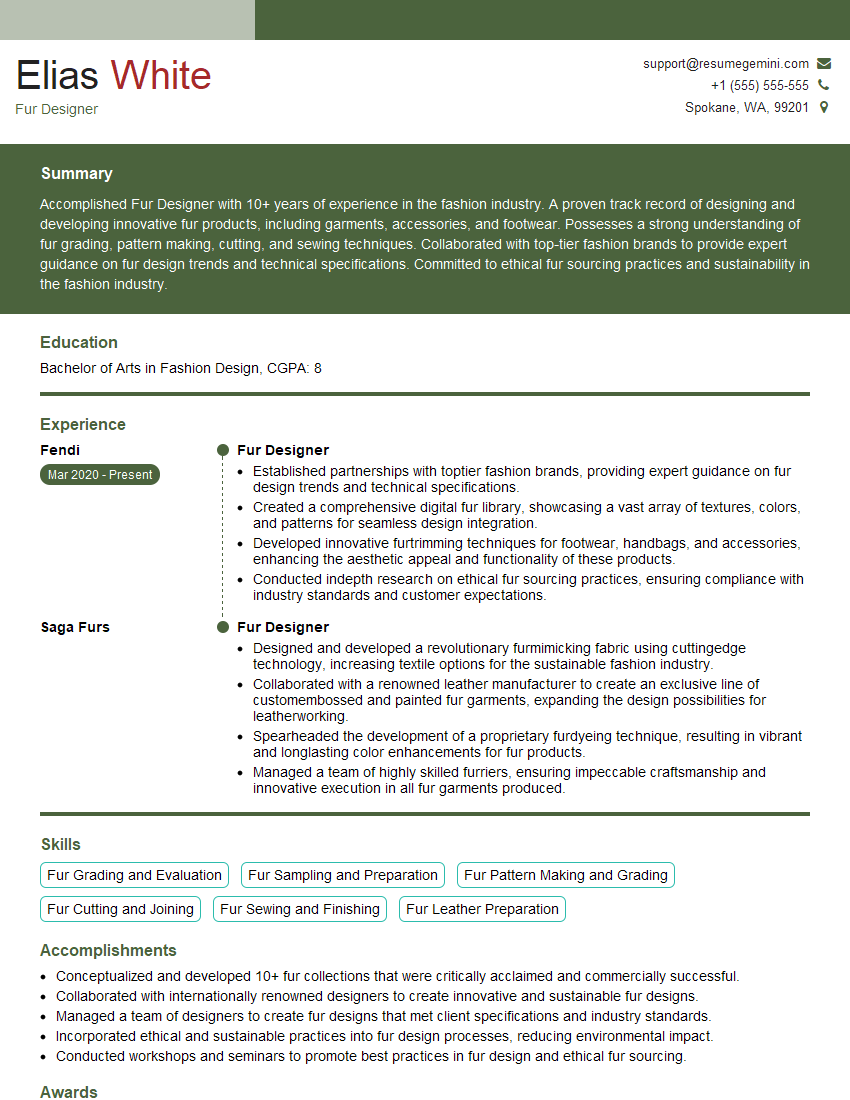
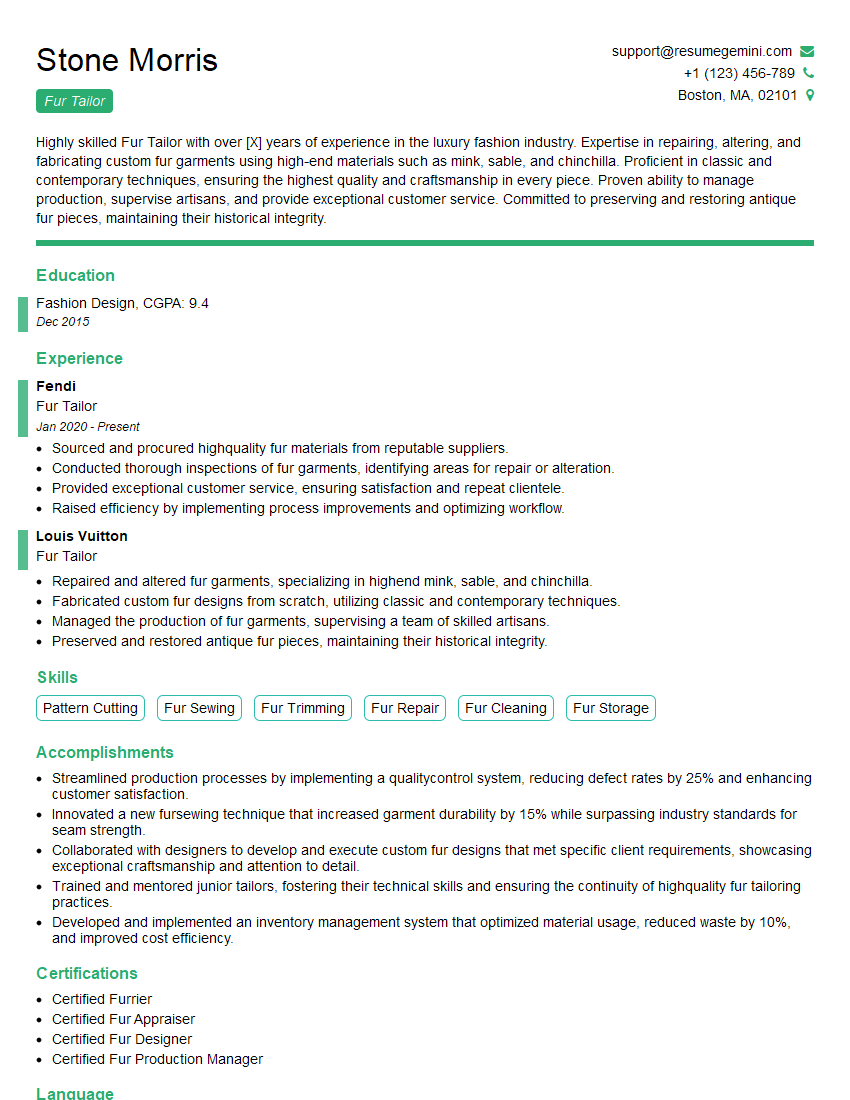
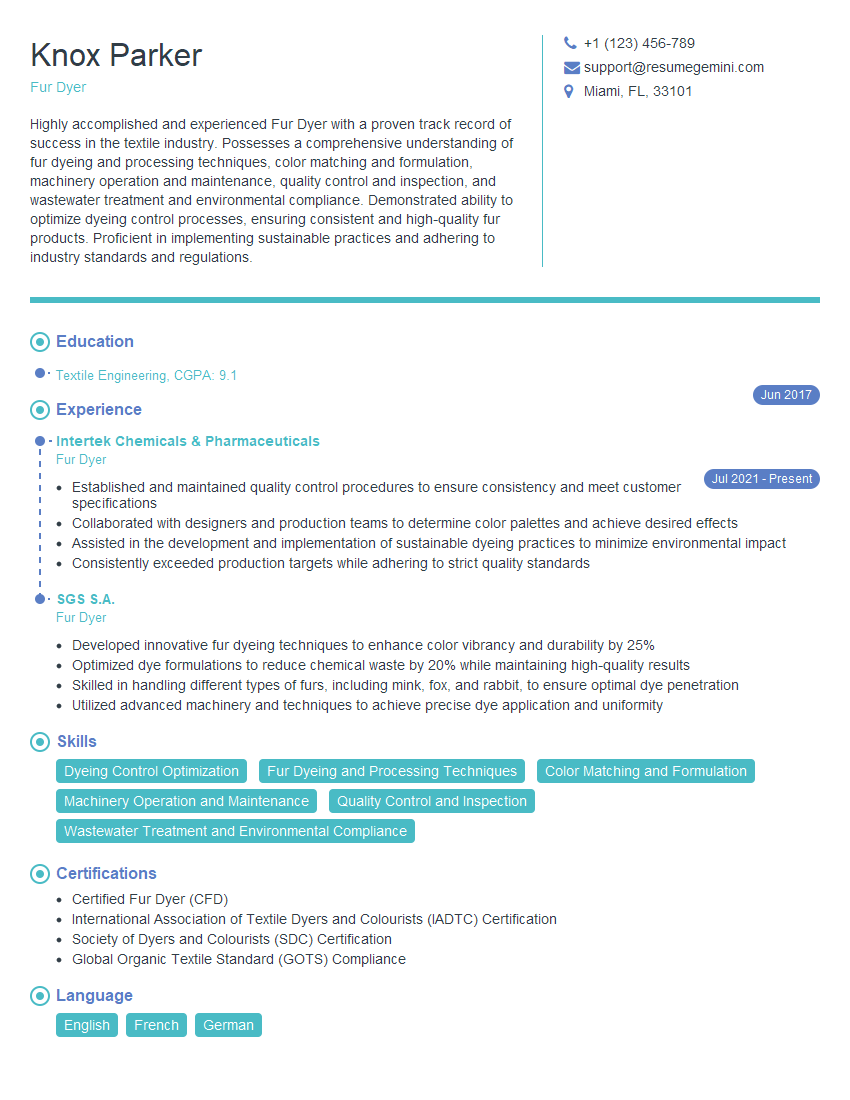
Mastering fur alteration techniques opens doors to a rewarding career with diverse opportunities. A strong understanding of these skills will significantly enhance your interview performance and job prospects. To maximize your chances, focus on crafting an ATS-friendly resume that showcases your abilities effectively. ResumeGemini is a trusted resource to help you build a professional and compelling resume that highlights your skills and experience. Examples of resumes tailored to the Fur Alteration field are available through ResumeGemini to guide you in creating your own.

Explore more articles
Users Rating of Our Blogs
Share Your Experience
We value your feedback! Please rate our content and share your thoughts (optional).
What Readers Say About Our Blog
Attention music lovers!
Wow, All the best Sax Summer music !!!
Spotify: https://open.spotify.com/artist/6ShcdIT7rPVVaFEpgZQbUk
Apple Music: https://music.apple.com/fr/artist/jimmy-sax-black/1530501936
YouTube: https://music.youtube.com/browse/VLOLAK5uy_noClmC7abM6YpZsnySxRqt3LoalPf88No
Other Platforms and Free Downloads : https://fanlink.tv/jimmysaxblack
on google : https://www.google.com/search?q=22+AND+22+AND+22
on ChatGPT : https://chat.openai.com?q=who20jlJimmy20Black20Sax20Producer
Get back into the groove with Jimmy sax Black
Best regards,
Jimmy sax Black
www.jimmysaxblack.com
Hi I am a troller at The aquatic interview center and I suddenly went so fast in Roblox and it was gone when I reset.
Hi,
Business owners spend hours every week worrying about their website—or avoiding it because it feels overwhelming.
We’d like to take that off your plate:
$69/month. Everything handled.
Our team will:
Design a custom website—or completely overhaul your current one
Take care of hosting as an option
Handle edits and improvements—up to 60 minutes of work included every month
No setup fees, no annual commitments. Just a site that makes a strong first impression.
Find out if it’s right for you:
https://websolutionsgenius.com/awardwinningwebsites
Hello,
we currently offer a complimentary backlink and URL indexing test for search engine optimization professionals.
You can get complimentary indexing credits to test how link discovery works in practice.
No credit card is required and there is no recurring fee.
You can find details here:
https://wikipedia-backlinks.com/indexing/
Regards
NICE RESPONSE TO Q & A
hi
The aim of this message is regarding an unclaimed deposit of a deceased nationale that bears the same name as you. You are not relate to him as there are millions of people answering the names across around the world. But i will use my position to influence the release of the deposit to you for our mutual benefit.
Respond for full details and how to claim the deposit. This is 100% risk free. Send hello to my email id: lukachachibaialuka@gmail.com
Luka Chachibaialuka
Hey interviewgemini.com, just wanted to follow up on my last email.
We just launched Call the Monster, an parenting app that lets you summon friendly ‘monsters’ kids actually listen to.
We’re also running a giveaway for everyone who downloads the app. Since it’s brand new, there aren’t many users yet, which means you’ve got a much better chance of winning some great prizes.
You can check it out here: https://bit.ly/callamonsterapp
Or follow us on Instagram: https://www.instagram.com/callamonsterapp
Thanks,
Ryan
CEO – Call the Monster App
Hey interviewgemini.com, I saw your website and love your approach.
I just want this to look like spam email, but want to share something important to you. We just launched Call the Monster, a parenting app that lets you summon friendly ‘monsters’ kids actually listen to.
Parents are loving it for calming chaos before bedtime. Thought you might want to try it: https://bit.ly/callamonsterapp or just follow our fun monster lore on Instagram: https://www.instagram.com/callamonsterapp
Thanks,
Ryan
CEO – Call A Monster APP
To the interviewgemini.com Owner.
Dear interviewgemini.com Webmaster!
Hi interviewgemini.com Webmaster!
Dear interviewgemini.com Webmaster!
excellent
Hello,
We found issues with your domain’s email setup that may be sending your messages to spam or blocking them completely. InboxShield Mini shows you how to fix it in minutes — no tech skills required.
Scan your domain now for details: https://inboxshield-mini.com/
— Adam @ InboxShield Mini
support@inboxshield-mini.com
Reply STOP to unsubscribe
Hi, are you owner of interviewgemini.com? What if I told you I could help you find extra time in your schedule, reconnect with leads you didn’t even realize you missed, and bring in more “I want to work with you” conversations, without increasing your ad spend or hiring a full-time employee?
All with a flexible, budget-friendly service that could easily pay for itself. Sounds good?
Would it be nice to jump on a quick 10-minute call so I can show you exactly how we make this work?
Best,
Hapei
Marketing Director
Hey, I know you’re the owner of interviewgemini.com. I’ll be quick.
Fundraising for your business is tough and time-consuming. We make it easier by guaranteeing two private investor meetings each month, for six months. No demos, no pitch events – just direct introductions to active investors matched to your startup.
If youR17;re raising, this could help you build real momentum. Want me to send more info?
Hi, I represent an SEO company that specialises in getting you AI citations and higher rankings on Google. I’d like to offer you a 100% free SEO audit for your website. Would you be interested?
Hi, I represent an SEO company that specialises in getting you AI citations and higher rankings on Google. I’d like to offer you a 100% free SEO audit for your website. Would you be interested?