Cracking a skill-specific interview, like one for Clean Air Act Amendments, requires understanding the nuances of the role. In this blog, we present the questions you’re most likely to encounter, along with insights into how to answer them effectively. Let’s ensure you’re ready to make a strong impression.
Questions Asked in Clean Air Act Amendments Interview
Q 1. Explain the key amendments to the Clean Air Act since its inception.
The Clean Air Act (CAA), initially passed in 1963 and significantly amended several times, has undergone substantial evolution to address increasingly complex air pollution challenges. Key amendments have expanded its scope and strengthened its regulatory tools. The 1970 amendments were pivotal, establishing the framework for the NAAQS and setting emission standards for stationary and mobile sources. The 1977 and 1990 amendments further refined these standards, addressing acid rain, ozone depletion, and toxic air pollutants. The 1990 amendments, in particular, were transformative, introducing a market-based approach to reduce sulfur dioxide emissions through the Acid Rain Program and expanding the list of regulated pollutants. Subsequent amendments have focused on specific pollutants, like mercury and hazardous air pollutants, and refining regulatory mechanisms for better enforcement and effectiveness.
- 1970 Amendments: Laid the foundation for the modern CAA, introducing NAAQS and emission standards.
- 1977 Amendments: Addressed issues related to nonattainment areas and introduced stricter regulations.
- 1990 Amendments: A landmark revision, incorporating provisions to combat acid rain, ozone depletion, and toxic air pollutants, along with market-based mechanisms.
Q 2. Describe the National Ambient Air Quality Standards (NAAQS) and their role in regulating air pollution.
National Ambient Air Quality Standards (NAAQS) are legally mandated limits on the concentration of six common air pollutants, known as criteria pollutants, in outdoor air. These standards are set by the EPA based on scientific assessments of the health and environmental effects of these pollutants. Their role is crucial in protecting public health and welfare by setting a threshold that all areas of the country must meet. The NAAQS are not emission standards themselves but rather standards for the quality of the ambient air, meaning the air we breathe. States then develop State Implementation Plans (SIPs) to meet these standards within their jurisdictions. Failure to meet NAAQS results in sanctions and stricter regulatory measures.
Think of it like this: the NAAQS are the speed limit for air quality. The EPA sets the limit, and each state has a plan to ensure that nobody exceeds it. If a state consistently breaks the speed limit, it faces consequences.
Q 3. What are the major sources of criteria pollutants covered under the Clean Air Act?
The Clean Air Act focuses on six criteria pollutants: particulate matter (PM2.5 and PM10), ozone (O3), carbon monoxide (CO), sulfur dioxide (SO2), nitrogen dioxide (NO2), and lead (Pb). These pollutants originate from diverse sources:
- Particulate Matter (PM): Industrial processes, construction, vehicle exhaust, agricultural activities, and wildfires.
- Ozone (O3): Formed by chemical reactions involving NOx and VOCs emitted from vehicles, power plants, and industrial sources.
- Carbon Monoxide (CO): Primarily from vehicle exhaust and industrial processes.
- Sulfur Dioxide (SO2): Combustion of fossil fuels, especially coal, in power plants and industrial facilities.
- Nitrogen Dioxide (NO2): Vehicle exhaust, industrial processes, and power plants.
- Lead (Pb): Historically from leaded gasoline, now primarily from industrial processes and smelting.
Understanding these sources is key to effective pollution control strategies. For instance, regulating emissions from power plants and vehicles is critical in reducing SO2 and NOx which contribute significantly to ozone formation.
Q 4. Explain the concept of Prevention of Significant Deterioration (PSD) and its implications.
Prevention of Significant Deterioration (PSD) is a program under the Clean Air Act designed to protect areas that already have air quality better than the NAAQS. It aims to prevent significant deterioration of air quality in these pristine areas by requiring new or modified major sources of air pollution to obtain permits and implement best available control technology (BACT) before operating. This program ensures that economic development doesn’t come at the cost of degrading air quality in regions where it’s already clean. The determination of ‘significant’ deterioration is based on specific increments of pollutant concentrations allowed within a given area, classified as Class I, II, or III, with Class I having the strictest protection.
For example, a new power plant in a national park (Class I area) would face much stricter emission limits and technology requirements under PSD than a similar plant in a less protected area.
Q 5. How does the Clean Air Act regulate emissions from mobile sources (vehicles)?
The Clean Air Act regulates mobile source emissions, primarily from vehicles, through stringent emission standards. The EPA sets standards for new vehicles, including cars, trucks, and motorcycles, mandating specific limits on pollutants like NOx, CO, VOCs, and PM. These standards have become increasingly stringent over time, resulting in significant reductions in vehicle emissions. The Act also incorporates programs such as vehicle inspection and maintenance (I/M) programs in certain areas to ensure that vehicles continue to meet these standards throughout their lifespan. The introduction of cleaner fuels and technologies, like catalytic converters, has also played a major role in reducing mobile source emissions.
Think of it as a yearly checkup for your car – ensuring it meets the emission standards to keep air clean.
Q 6. Describe the process of obtaining an air quality permit under the Clean Air Act.
The process of obtaining an air quality permit under the Clean Air Act varies depending on the type and size of the source. Generally, facilities that emit significant amounts of regulated pollutants must obtain a permit from the relevant state or local air quality agency. This process typically involves:
- Application Submission: Submitting a complete permit application with detailed information about the facility’s emissions, proposed control technologies, and potential impacts on air quality.
- Review and Analysis: The agency reviews the application, assessing its completeness and conducting any necessary air quality modeling to predict the facility’s impact.
- Public Comment Period: A public comment period allows stakeholders and the community to provide input on the proposed project.
- Permit Issuance (or Denial): Based on the review, public comments, and compliance with applicable regulations, the agency issues the permit with specific conditions on emissions, monitoring requirements, and potential penalties for non-compliance. If the application is incomplete or doesn’t meet requirements, the permit can be denied.
The specific requirements for permits vary widely depending on factors such as the type of industry, the location, and the amount of pollutants emitted.
Q 7. Explain the role of the Environmental Protection Agency (EPA) in enforcing the Clean Air Act.
The Environmental Protection Agency (EPA) plays a central role in enforcing the Clean Air Act. Its responsibilities include setting the NAAQS, developing and implementing emission standards for stationary and mobile sources, approving state implementation plans (SIPs), and providing funding and technical assistance to states. The EPA also monitors air quality, conducts research, and enforces compliance through inspections, penalties, and legal actions against violators. While states have primary responsibility for implementing the Act within their borders, the EPA retains ultimate authority to ensure compliance with federal standards. A key aspect of EPA’s role is establishing a consistent framework nationwide to address air pollution effectively.
Think of the EPA as the referee ensuring a fair and clean game by setting the rules (NAAQS and standards), verifying player performance (monitoring and inspections), and penalizing those who break the rules.
Q 8. What are the different types of air pollution control technologies?
Air pollution control technologies span a wide range, categorized by the pollutant targeted and the control method employed. Think of them as different tools in a toolbox to clean up the air.
- Particulate Matter Control: These technologies remove solid or liquid particles from exhaust streams. Examples include:
- Fabric Filters (Baghouse Filters): These are like giant vacuum bags that trap particles. Commonly used in cement plants and power plants.
- Electrostatic Precipitators (ESPs): These use electric charges to attract and collect particles onto collection plates. Widely used in power plants burning coal.
- Cyclones: These use centrifugal force to separate particles from the gas stream. A simpler, less efficient method often used as a pre-cleaner.
- Sulfur Dioxide (SO2) Control: Primarily focused on reducing acid rain precursors. Key technologies include:
- Flue Gas Desulfurization (FGD): This process, often using wet scrubbing, removes SO2 from power plant emissions. Think of it as washing the gases to remove the sulfur.
- Nitrogen Oxides (NOx) Control: These technologies reduce smog-forming NOx emissions. Examples include:
- Selective Catalytic Reduction (SCR): This uses a catalyst to convert NOx into less harmful nitrogen and water. Frequently used in power plants and large industrial boilers.
- Selective Non-Catalytic Reduction (SNCR): Similar to SCR but doesn’t require a catalyst, making it a less expensive but less efficient option.
- Volatile Organic Compound (VOC) Control: These technologies target VOCs that contribute to ozone formation and smog. Examples include:
- Incineration: High-temperature combustion destroys VOCs. Used in many industrial processes.
- Absorption: Uses liquids to absorb VOCs from gas streams.
- Adsorption: Uses solid materials to adsorb (bind) VOCs.
- Hazardous Air Pollutants (HAPs) Control: These technologies focus on specific toxic pollutants and can vary widely based on the HAP. Examples include specialized filters, absorbers, and thermal oxidizers.
The selection of the appropriate technology depends on factors like the type and concentration of pollutants, the size and type of source, and cost considerations.
Q 9. Discuss the economic impacts of complying with Clean Air Act regulations.
Compliance with the Clean Air Act regulations has significant economic impacts, both positive and negative. It’s a balancing act between environmental protection and economic viability.
Negative Impacts: The initial costs of installing and operating pollution control technologies can be substantial for businesses. This can lead to increased production costs, potentially impacting profitability and competitiveness. Some industries might face higher compliance costs than others, leading to uneven economic burdens.
Positive Impacts: Improved air quality leads to significant public health benefits, resulting in reduced healthcare costs and increased worker productivity. Technological innovation driven by the need to meet regulations often creates new markets and jobs in the environmental technology sector. Moreover, cleaner air can attract investment and tourism, boosting local economies.
Example: The installation of scrubbers in power plants to reduce SO2 emissions was initially costly, but it significantly reduced acid rain, leading to long-term benefits for ecosystems and human health. The costs were ultimately offset by avoided environmental damage and improved public health.
Economists use various models to assess the overall economic impacts, weighing the costs of regulation against the benefits of improved air quality. It’s a complex calculation with many variables.
Q 10. How does the Clean Air Act address the issue of acid rain?
The Clean Air Act addresses acid rain primarily through the Acid Rain Program, established under Title IV of the 1990 amendments. This program targets emissions of sulfur dioxide (SO2) and nitrogen oxides (NOx), the main precursors to acid rain.
The program uses a cap-and-trade system. This means that power plants receive allowances that limit their emissions of SO2 and NOx. These allowances can be bought, sold, or traded among power plants, creating a market-based incentive to reduce emissions efficiently. Plants that reduce emissions below their allowance can sell their excess allowances to those exceeding their limits. This encourages cost-effective emission reductions across the industry.
In essence: The Acid Rain Program incentivizes power plants to invest in technologies that reduce SO2 and NOx emissions cost-effectively, leading to a significant decrease in acid rain across North America.
Q 11. Explain the significance of the Clean Air Act’s provisions on hazardous air pollutants (HAPs).
The Clean Air Act’s provisions on Hazardous Air Pollutants (HAPs), also known as air toxics, are significant because they address the potential for serious health and environmental damage from exposure to even small amounts of certain pollutants. These are not the everyday pollutants that contribute to smog, but rather highly toxic substances.
Title III of the Act established the National Emission Standards for Hazardous Air Pollutants (NESHAP). These standards set emission limits for a wide range of HAPs from various sources, including industrial facilities and chemical manufacturing plants. The EPA continuously evaluates and updates the list of HAPs and revises the NESHAP to reflect new scientific information and technological advancements.
Significance: The HAPs provisions demonstrate a commitment to protecting public health by directly targeting substances known to cause cancer, birth defects, and other serious health problems, even at low concentrations. The program necessitates the use of advanced control technologies and has greatly reduced emissions of these dangerous substances.
Q 12. What are the reporting requirements for companies under the Clean Air Act?
Reporting requirements under the Clean Air Act vary depending on the type of facility and the pollutants emitted. Generally, facilities subject to permitting requirements must submit regular reports to the EPA or relevant state agencies. These reports typically include:
- Emission Inventory: A detailed accounting of all air pollutants emitted from the facility.
- Compliance Certifications: Statements confirming compliance with applicable emission limits and operational requirements.
- Monitoring Data: Results from continuous emission monitoring systems (CEMS) or other monitoring equipment, documenting actual emissions.
- Performance Testing Data: Results from periodic performance tests demonstrating compliance with emission limits.
- Maintenance Records: Documentation of routine maintenance and repairs of pollution control equipment.
- Incident Reports: Reports on unexpected emission events or malfunctions of control equipment.
Failure to comply with these reporting requirements can lead to penalties, including fines and enforcement actions. The specific reporting requirements are outlined in permits issued to each facility and detailed in EPA guidance documents.
Q 13. Describe the process of conducting an air quality assessment.
Conducting an air quality assessment involves a systematic process to determine the levels of various pollutants in the air and assess their potential impacts. This assessment requires careful planning and execution.
Steps typically include:
- Define the scope and objectives: Clearly state the purpose of the assessment, the geographic area to be studied, and the specific pollutants of concern.
- Gather existing data: Collect information from various sources such as EPA databases, state air monitoring networks, and emission inventories from nearby facilities.
- Conduct field measurements: Use air monitoring equipment to collect samples at specific locations and times. This may involve installing monitoring stations or conducting mobile monitoring surveys.
- Analyze data: Use statistical methods to analyze the collected data, determine pollutant concentrations, and assess trends over time.
- Model air quality: Employ air dispersion models to predict pollutant concentrations under various scenarios. This is helpful for evaluating the impact of proposed projects or changes in emission sources.
- Interpret results: Compare the measured or modeled concentrations to air quality standards and guidelines to assess the potential health and environmental risks.
- Prepare a report: Document the assessment methodology, findings, and conclusions in a comprehensive report.
The complexity of the assessment depends on the objectives and the available resources. Simple assessments may only involve reviewing existing data, while more complex assessments may require extensive field monitoring and modeling.
Q 14. How do you calculate emissions from various sources using EPA approved methods?
Calculating emissions from various sources requires using EPA-approved methods, ensuring consistency and accuracy. The specific methods depend on the type of source and the pollutant being measured.
Examples of EPA-approved methods:
- For stationary sources (e.g., power plants, factories): The EPA’s 40 CFR Part 60 and Part 63 regulations provide specific emission calculation methods. These methods often involve using material balances, engineering calculations, and data from continuous emission monitoring systems (CEMS).
- For mobile sources (e.g., cars, trucks): The EPA uses emission factors derived from testing data to estimate emissions from vehicle fleets. These factors are based on vehicle type, fuel type, and operating conditions.
- For area sources (e.g., residential heating, agriculture): Emission factors are also used for area sources. These factors represent the average emission rate per unit of activity (e.g., tons of pollutant per year per acre of farmland).
Example Calculation (simplified):
Let’s say a power plant burns coal with a known sulfur content. To calculate SO2 emissions, you would:
- Determine the amount of coal burned.
- Calculate the amount of sulfur in the coal.
- Use a conversion factor to determine the amount of SO2 produced from the sulfur.
- Apply emission control efficiency (if applicable) to calculate the actual SO2 emissions released to the atmosphere.
SO2 emissions (tons/year) = (Coal burned (tons/year)) * (Sulfur content (%)) * (Conversion factor (tons SO2/ton S)) * (1 - Control efficiency (%))
The actual calculations are more complex and require detailed knowledge of specific EPA methods and the characteristics of the emission source. Software packages and specialized expertise are often used for accurate emission calculations.
Q 15. What are the penalties for non-compliance with Clean Air Act regulations?
Penalties for violating the Clean Air Act are serious and can significantly impact businesses and individuals. The EPA has a range of enforcement tools at its disposal. These include:
- Civil penalties: These can be substantial, reaching millions of dollars depending on the severity and duration of the violation. For example, a company consistently exceeding emission limits could face hefty fines.
- Criminal penalties: In cases of egregious or willful violations, criminal charges can be filed, leading to jail time and even more significant fines. Knowingly falsifying emission data, for instance, carries severe consequences.
- Administrative orders: The EPA can issue orders requiring polluters to take immediate corrective actions, such as installing new pollution control equipment or ceasing operations until compliance is achieved. Non-compliance with these orders can result in further penalties.
- Citizen suits: Private citizens can sue violators under the Clean Air Act, which adds another layer of accountability. This encourages proactive compliance and allows for public involvement in environmental protection.
The specific penalty depends on factors like the type of violation, the amount of pollution released, the violator’s history, and the environmental impact. The EPA aims to deter future violations through a robust enforcement program and to ensure responsible environmental stewardship.
Career Expert Tips:
- Ace those interviews! Prepare effectively by reviewing the Top 50 Most Common Interview Questions on ResumeGemini.
- Navigate your job search with confidence! Explore a wide range of Career Tips on ResumeGemini. Learn about common challenges and recommendations to overcome them.
- Craft the perfect resume! Master the Art of Resume Writing with ResumeGemini’s guide. Showcase your unique qualifications and achievements effectively.
- Don’t miss out on holiday savings! Build your dream resume with ResumeGemini’s ATS optimized templates.
Q 16. Explain the concept of maximum achievable control technology (MACT).
Maximum Achievable Control Technology (MACT) standards are a cornerstone of the Clean Air Act’s approach to regulating hazardous air pollutants (HAPs). Essentially, MACT dictates that facilities must use the best available technology to control emissions of these harmful substances. It’s not a one-size-fits-all solution; the ‘best’ technology is determined by considering factors such as technological feasibility, cost, and the nature of the specific industry or process.
Think of it like this: imagine several restaurants preparing the same dish. MACT ensures that each restaurant, regardless of size or resources, uses the cleanest, most efficient cooking methods available to minimize harmful fumes. The specific cooking method (technology) might vary between restaurants, but each must meet the defined emission reduction standards set by MACT.
The EPA regularly reviews and updates MACT standards to reflect advancements in technology, ensuring continuous improvement in pollution control. These standards are crucial for protecting public health and the environment from the dangers of HAPs. They are applied to a wide variety of industrial sources, ranging from chemical plants to dry cleaners, ensuring a comprehensive approach to controlling emissions.
Q 17. How does the Clean Air Act address regional haze?
The Clean Air Act addresses regional haze by aiming to improve visibility in national parks and wilderness areas. This isn’t just about aesthetics; reduced visibility can negatively impact ecosystems and recreational opportunities. The Act mandates that states develop and implement plans to reduce emissions of pollutants that contribute to haze. This is a complex process that often involves addressing sources far from the protected areas themselves.
Imagine trying to see a distant mountain range through a persistent fog. Regional haze is similar, but it’s caused by the accumulation of pollutants over a wide area. The Clean Air Act’s regional haze program targets power plants, industrial facilities, and other sources that emit pollutants that scatter and absorb light, degrading visibility. States are required to develop plans that consider the specific sources impacting their designated visibility areas and to achieve reasonable progress toward improving visibility. These plans are carefully reviewed and approved by the EPA, ensuring accountability and consistent improvement in air quality.
Q 18. Discuss the role of citizen suits in enforcing the Clean Air Act.
Citizen suits are a powerful tool in enforcing the Clean Air Act. They allow individuals or groups to file lawsuits against polluters or government agencies for violations of the Act. This mechanism plays a critical role in ensuring compliance and supplementing government enforcement efforts. Think of them as an additional layer of oversight, ensuring that no violations go unnoticed or unaddressed.
For example, if a factory consistently exceeds its permitted emission levels, a concerned citizen could file a citizen suit, compelling the factory to rectify its practices and potentially face penalties. This empowers the public to actively participate in environmental protection and holds polluters accountable. Citizen suits serve as a vital deterrent, encouraging compliance and protecting public health and the environment. The success of a citizen suit depends on demonstrating a clear violation of the Clean Air Act and often requires gathering extensive evidence.
Q 19. Explain the difference between primary and secondary NAAQS.
The Clean Air Act establishes National Ambient Air Quality Standards (NAAQS) to protect public health and welfare. These standards are categorized as primary and secondary.
- Primary NAAQS protect public health, specifically with a margin of safety. They set limits on pollutants to safeguard against adverse health effects like respiratory problems or cardiovascular disease. These are the most stringent standards.
- Secondary NAAQS protect public welfare, encompassing issues like damage to crops, animals, and materials. While still crucial, they don’t carry the same emphasis on direct human health impacts as primary standards. For example, a secondary standard might address the effects of ozone on agricultural productivity.
Think of it like a two-tiered system. Primary standards prioritize human health, ensuring the air is safe to breathe, while secondary standards broaden the scope to include broader environmental impacts. Both are critical for achieving clean air and protecting both human health and the environment.
Q 20. What are the key provisions of Title V of the Clean Air Act?
Title V of the Clean Air Act establishes a permitting program for major sources of air pollution. It requires these sources to obtain operating permits that demonstrate compliance with all applicable Clean Air Act requirements. This provides a structured framework for regulatory oversight and enforcement.
These permits detail emission limits, monitoring requirements, and operational standards, ensuring transparent and accountable operation. The permitting program improves air quality by providing a centralized mechanism for controlling emissions from large industrial facilities and other major sources. Think of it as a comprehensive ‘license to operate’ for major polluters, requiring them to consistently meet stringent environmental standards and undergo regular inspections. It’s a key mechanism for enforcing emission controls and minimizing environmental damage.
Q 21. How are greenhouse gases regulated under the Clean Air Act?
The regulation of greenhouse gases (GHGs) under the Clean Air Act is a complex and evolving area. While the Clean Air Act doesn’t specifically mention GHGs in the same way it does other pollutants, the Supreme Court’s Massachusetts v. EPA decision (2007) established that the EPA has the authority to regulate GHGs if they are found to endanger public health and welfare.
Following this decision, the EPA has taken several actions, including issuing regulations for GHG emissions from vehicles and power plants. However, these regulations have been subject to significant legal and political challenges. The overall approach to regulating GHGs under the Clean Air Act continues to evolve and faces ongoing debate regarding the extent and specific mechanisms of regulation. The current landscape emphasizes a more integrated, sector-specific approach, focusing on emission reduction in key areas like transportation and energy production.
Q 22. Describe your experience with air quality modeling and dispersion.
Air quality modeling and dispersion is crucial for understanding how pollutants move and spread in the atmosphere. It involves using sophisticated computer programs and meteorological data to predict pollutant concentrations at various locations. My experience spans over 15 years, encompassing the use of models like AERMOD and CALPUFF. I’ve utilized these models in numerous projects, from assessing the impact of industrial emissions on surrounding communities to evaluating the effectiveness of various emission control strategies. For example, in one project, we used AERMOD to model the dispersion of particulate matter from a cement plant, demonstrating the need for upgraded emission controls to meet Clean Air Act standards. The models help visualize the ‘plume’ of pollution and predict its concentration based on factors like wind speed, atmospheric stability, and emission rates. This information is vital for regulatory compliance and decision-making.
Q 23. Explain the challenges in enforcing the Clean Air Act in different geographical regions.
Enforcing the Clean Air Act across diverse geographical regions presents significant challenges. These challenges stem from variations in topography, meteorology, population density, and industrial activity. For example, mountainous regions can trap pollutants, leading to higher concentrations than in flat areas. Similarly, densely populated urban areas require stricter controls than sparsely populated rural regions. Economic disparities also play a role; industrial facilities in economically disadvantaged areas might lack the resources to implement advanced pollution control technologies. Furthermore, enforcement can be hampered by a lack of monitoring infrastructure in some areas, making it difficult to track emissions and hold polluters accountable. Finally, the diverse regulatory landscape, involving federal, state, and local agencies, can create complexities in coordination and enforcement.
Q 24. How do you stay updated on changes and amendments to the Clean Air Act?
Staying updated on the Clean Air Act is paramount. I achieve this through a multi-pronged approach. I regularly monitor the Environmental Protection Agency’s (EPA) website for rule changes, updates, and guidance documents. I also subscribe to relevant newsletters and journals focusing on air quality and environmental law. Attending professional conferences and workshops provides valuable opportunities to network with colleagues and learn about the latest developments. Membership in professional organizations like the Air & Waste Management Association (AWMA) offers access to resources and ongoing education on emerging issues and regulatory changes. Finally, I maintain a network of contacts within the regulatory community, allowing for rapid dissemination of critical information.
Q 25. Discuss your experience with environmental impact assessments related to air quality.
Environmental Impact Assessments (EIAs) concerning air quality are a significant part of my work. In these assessments, I analyze the potential air quality impacts of proposed projects, such as power plants, refineries, or major construction projects. This involves employing air dispersion modeling, as previously discussed, to predict pollutant concentrations and compare them to ambient air quality standards. The EIA process also requires a comprehensive review of existing air quality data, an evaluation of potential mitigation measures, and the development of a plan to minimize the project’s environmental footprint. For instance, in an EIA for a proposed highway expansion, I modeled the increased traffic-related emissions and recommended mitigation strategies, including the implementation of low-emission vehicles and improved traffic management.
Q 26. Explain the significance of the State Implementation Plans (SIPs).
State Implementation Plans (SIPs) are crucial for the effective implementation of the Clean Air Act. They represent the strategies each state develops to achieve and maintain the National Ambient Air Quality Standards (NAAQS) set by the EPA. These plans outline specific emission control measures, monitoring programs, and enforcement mechanisms to address local air quality issues. The EPA reviews and approves each SIP to ensure it meets the requirements of the Clean Air Act. A well-developed SIP is essential for ensuring clean air in a state. It helps to address localized pollution sources and ensures compliance with federal standards. A poorly developed or inadequately enforced SIP can lead to persistent air pollution problems, impacting public health and the environment.
Q 27. Describe a time you had to solve a complex air quality compliance issue.
One challenging case involved a manufacturing facility exceeding its permitted emission limits for volatile organic compounds (VOCs). Initial investigations pointed to a malfunctioning emission control system. However, further analysis revealed that the problem was more complex. It turned out that a combination of factors—a poorly maintained system, inadequate operational procedures, and even unexpected chemical reactions within the process—were contributing to the exceedances. Solving this required a multi-faceted approach. We implemented a comprehensive maintenance plan for the emission control system, revised operational procedures to optimize process efficiency and reduce VOC emissions, and conducted a thorough process optimization study. The solution involved not only fixing the immediate problem but also improving the long-term operational efficiency and environmental performance of the facility. This highlighted the need for a holistic approach to air quality compliance.
Q 28. How would you approach the development of a compliance plan for a new industrial facility?
Developing a compliance plan for a new industrial facility requires a proactive and comprehensive approach. First, we’d conduct a thorough review of applicable federal and state regulations, identifying all relevant air quality standards and permitting requirements. Next, we would characterize the facility’s emissions, using process information, emission factors, and potentially specialized testing, to accurately predict its environmental footprint. This information informs the selection of appropriate pollution control technologies. The plan would also incorporate a robust monitoring program to ensure ongoing compliance, including the installation of appropriate monitoring equipment and the establishment of a reporting protocol. A comprehensive training program for facility personnel is essential. The plan must also include provisions for responding to unforeseen events and maintenance protocols for emission control systems. Finally, the plan should be submitted to the appropriate regulatory agency for review and approval, ensuring a smooth permitting process. This process ensures that the facility operates within legal limits and minimizes its impact on air quality from the start.
Key Topics to Learn for Clean Air Act Amendments Interview
- National Ambient Air Quality Standards (NAAQS): Understanding the criteria pollutants, their health effects, and the process of setting and revising NAAQS. Consider the scientific basis and political considerations involved.
- State Implementation Plans (SIPs): Learn how states develop and implement plans to achieve and maintain NAAQS. Explore the roles and responsibilities of state and federal agencies in this process. Consider successful and unsuccessful SIP examples.
- Permitting and Enforcement: Familiarize yourself with the permitting process for major stationary sources of air pollution, including Title V permits. Understand enforcement mechanisms and legal challenges related to non-compliance.
- New Source Review (NSR): Grasp the concepts of Prevention of Significant Deterioration (PSD) and Nonattainment New Source Review (NNSR). Understand how these programs impact industrial development.
- Mobile Sources: Become familiar with regulations concerning mobile sources of air pollution, including vehicles and other mobile equipment. Understand emission standards and technologies used to reduce emissions.
- Acid Rain Program: Understand the cap-and-trade system used to control sulfur dioxide and nitrogen oxide emissions from power plants. Analyze its effectiveness and potential improvements.
- Stratospheric Ozone Protection: Learn about the regulations aimed at phasing out ozone-depleting substances and the international collaborations involved.
- Emerging Pollutants and Technologies: Explore the challenges posed by emerging pollutants and the role of innovative technologies in improving air quality. Discuss examples of such technologies and their impact.
- Environmental Justice and Community Engagement: Understand the importance of considering the disproportionate impacts of air pollution on vulnerable communities and the role of public participation in decision-making.
- Economic Impacts of Air Pollution Control: Analyze the economic costs and benefits of implementing air pollution control measures. Consider cost-benefit analysis and the role of economic incentives.
Next Steps
Mastering the Clean Air Act Amendments is crucial for career advancement in environmental science, law, and policy. A strong understanding of these regulations will make you a highly competitive candidate. To enhance your job prospects, it’s essential to have an ATS-friendly resume that highlights your relevant skills and experience. Use ResumeGemini to build a professional and impactful resume tailored to the specific requirements of your target jobs. ResumeGemini provides examples of resumes specifically designed for professionals in the Clean Air Act Amendments field, helping you showcase your qualifications effectively.
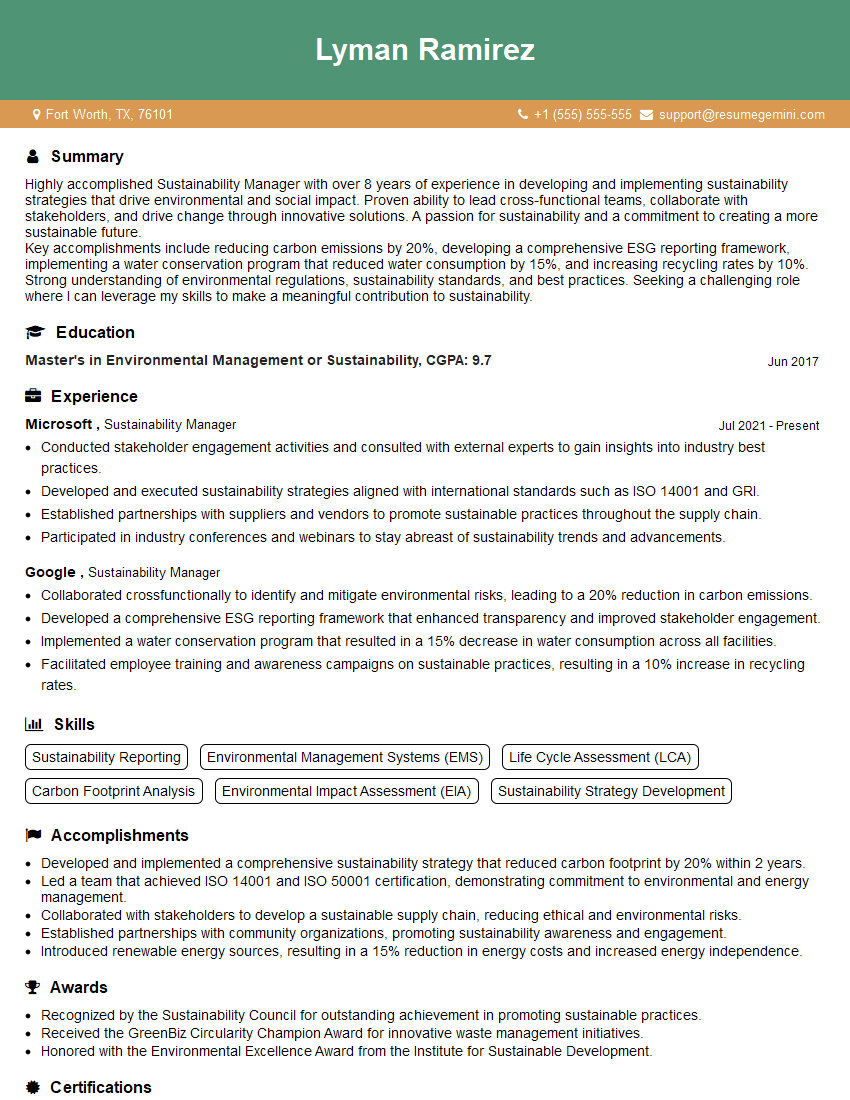
Sustainability Manager Resume Sample
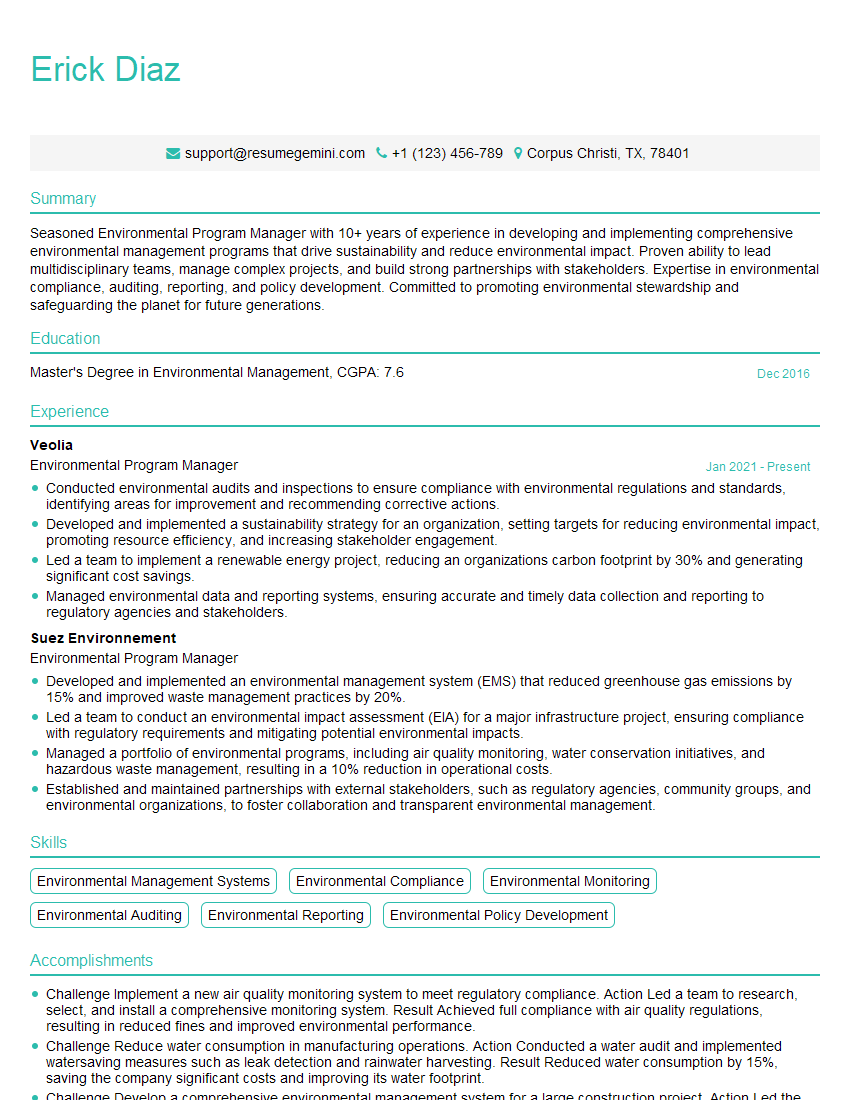
Environmental Program Manager Resume Sample
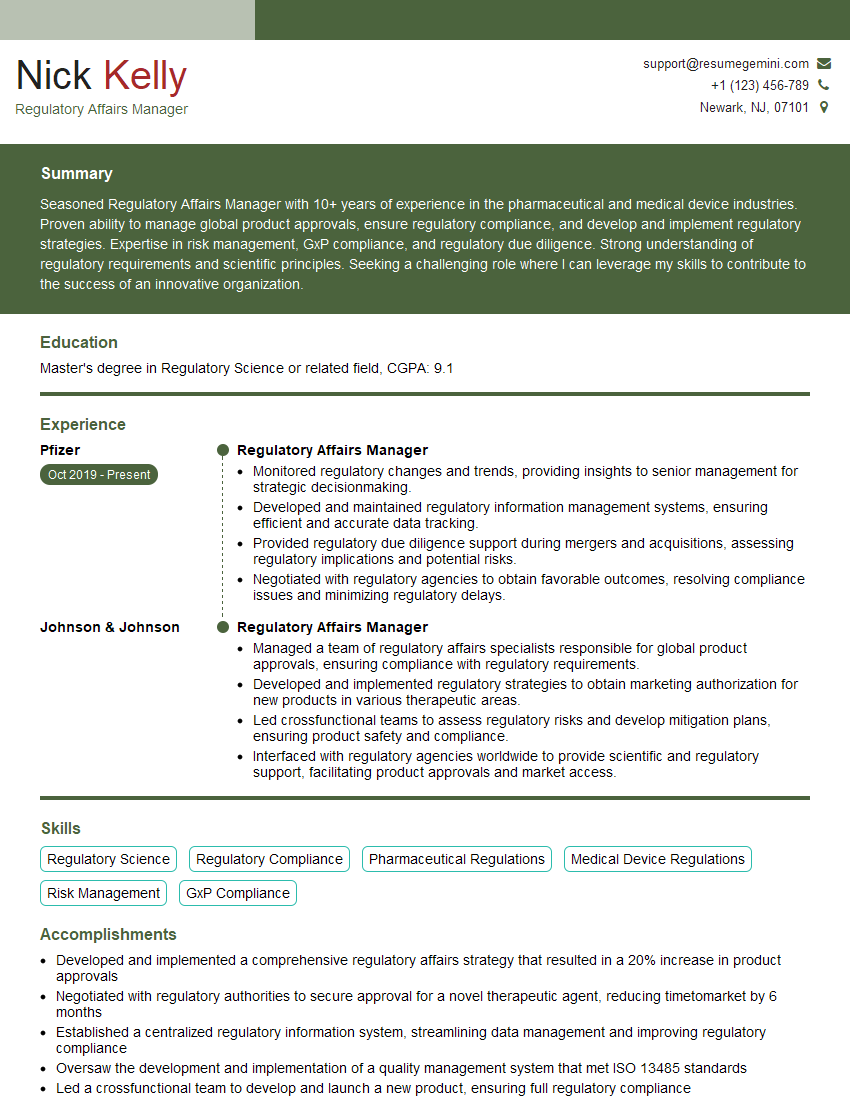
Regulatory Affairs Manager Resume Sample
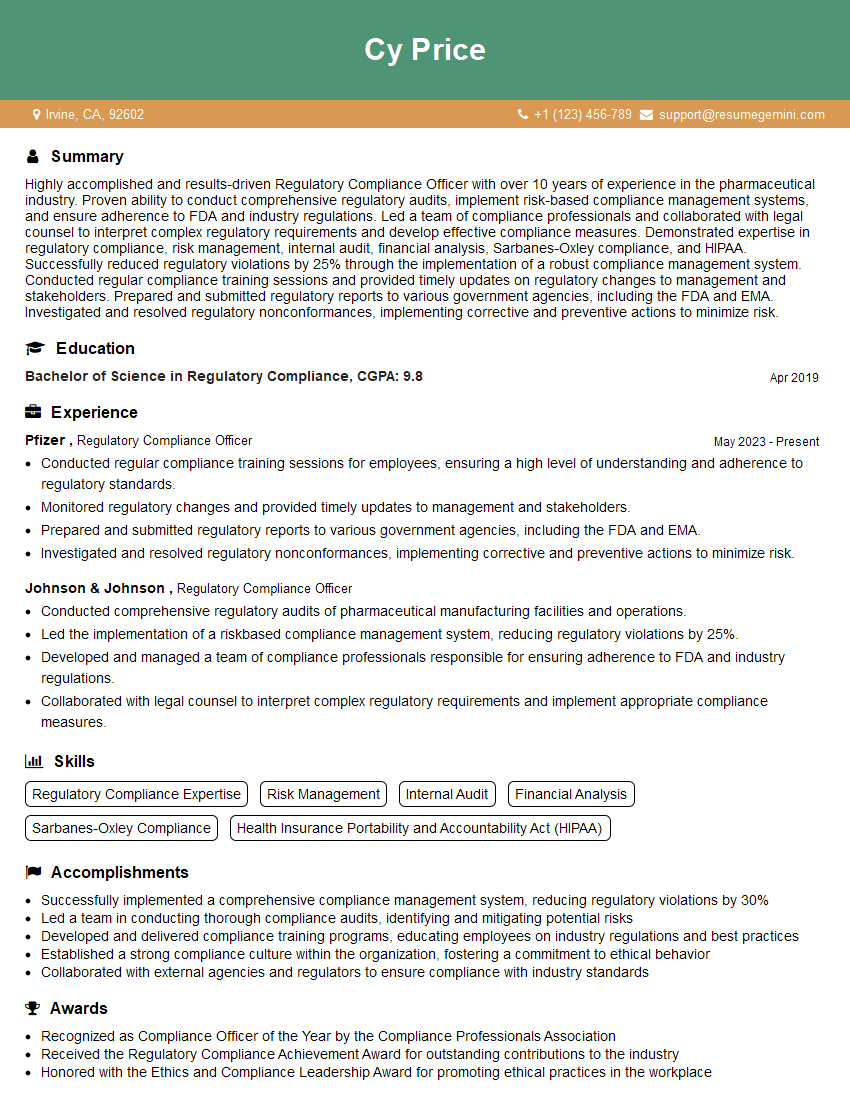
Regulatory Compliance Officer Resume Sample
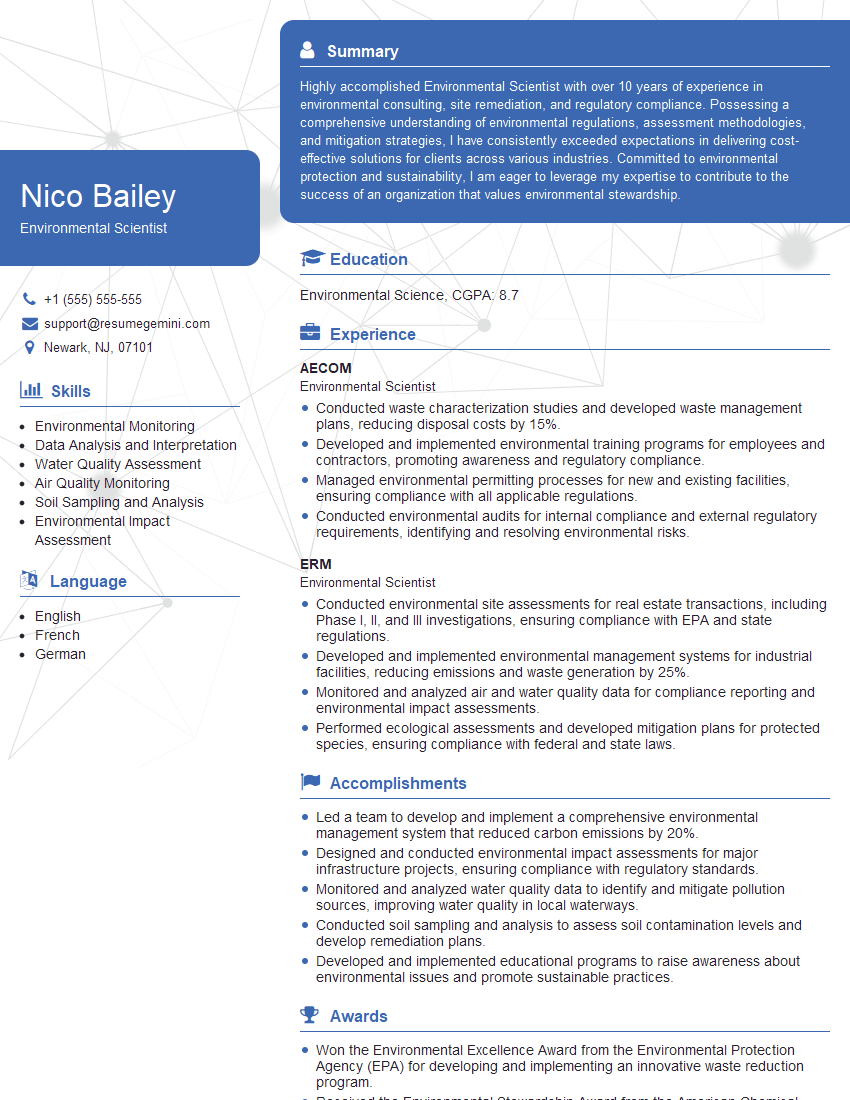
Environmental Scientist Resume Sample
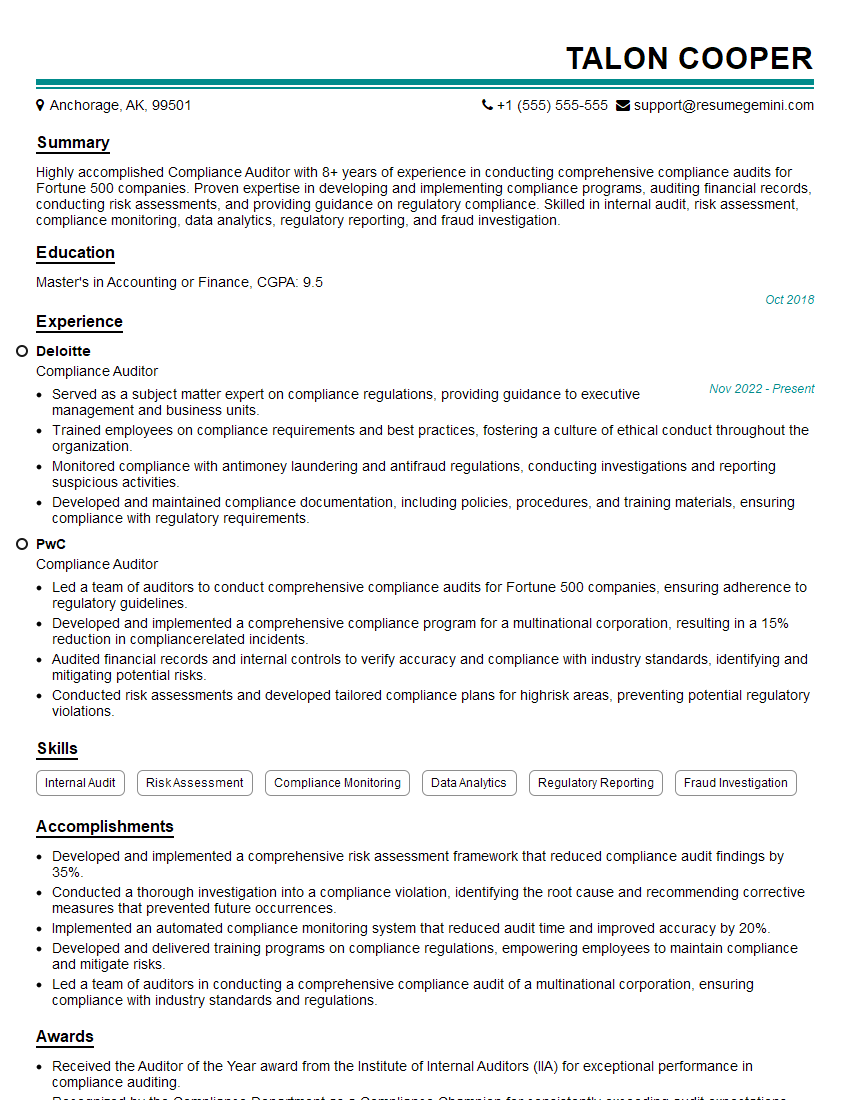
Compliance Auditor Resume Sample
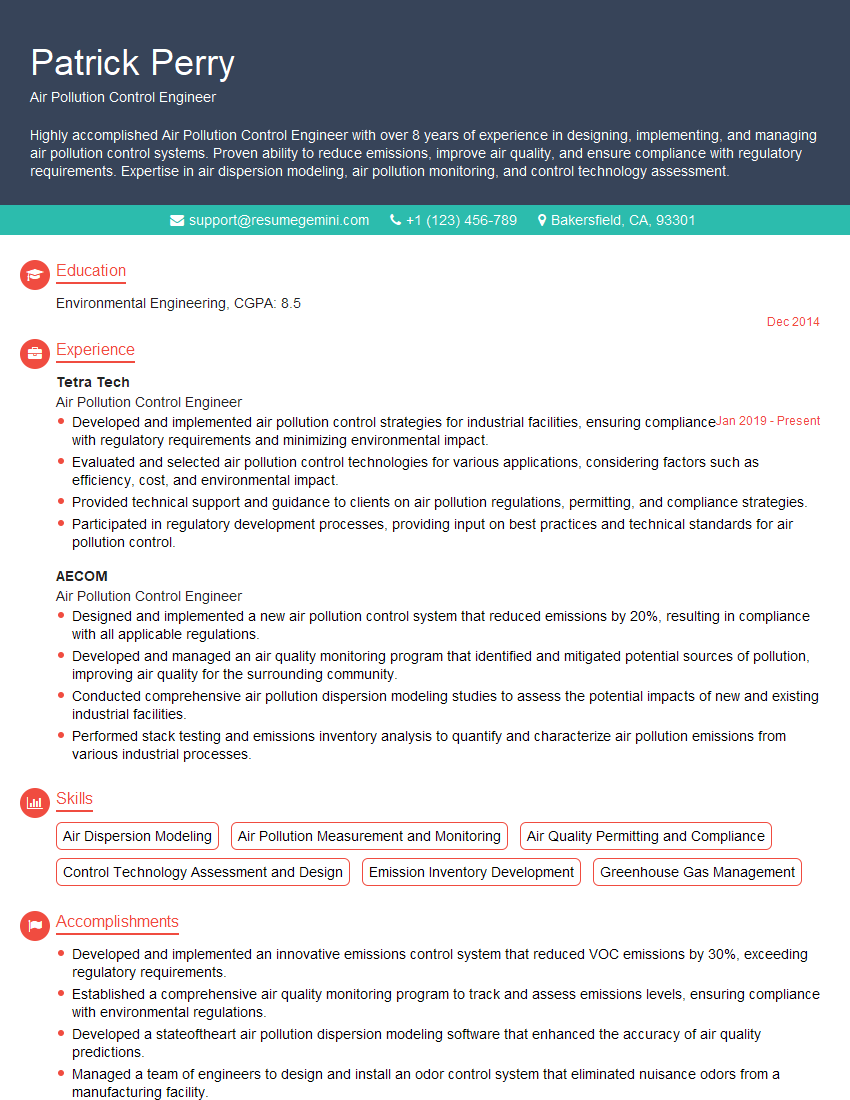
Air Pollution Control Engineer Resume Sample
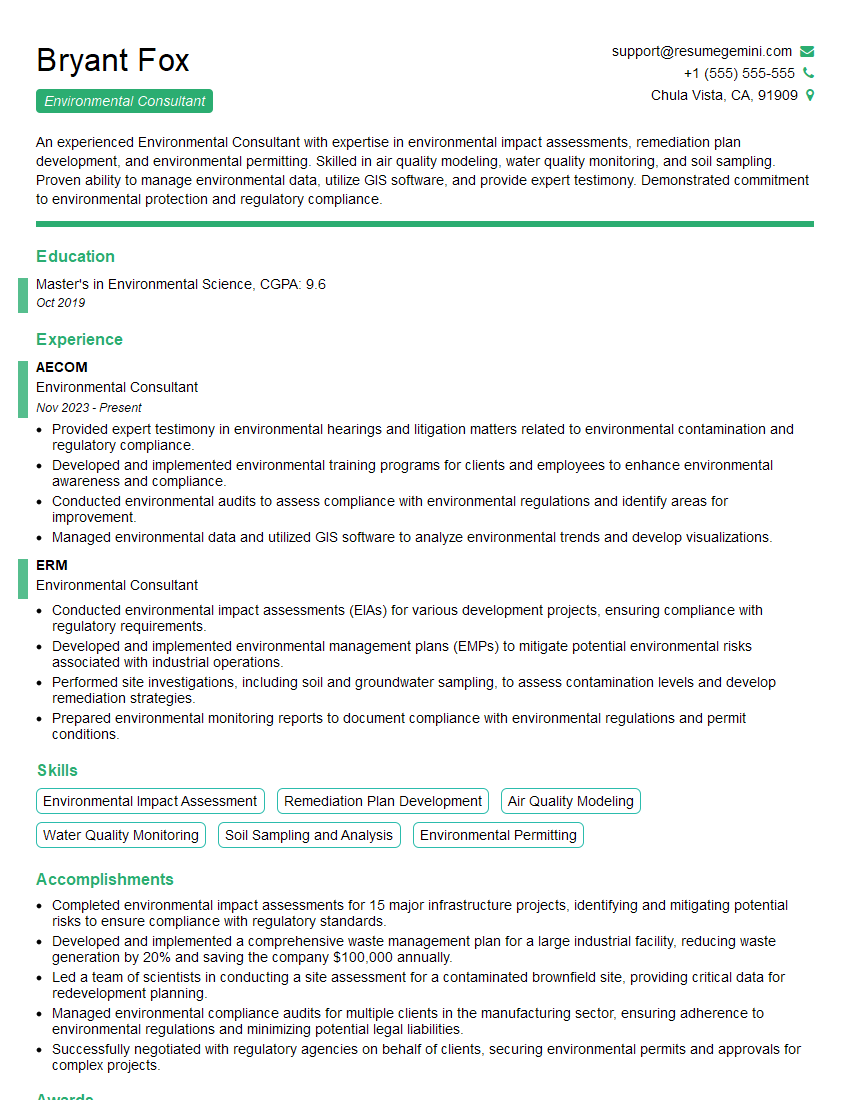
Environmental Consultant Resume Sample
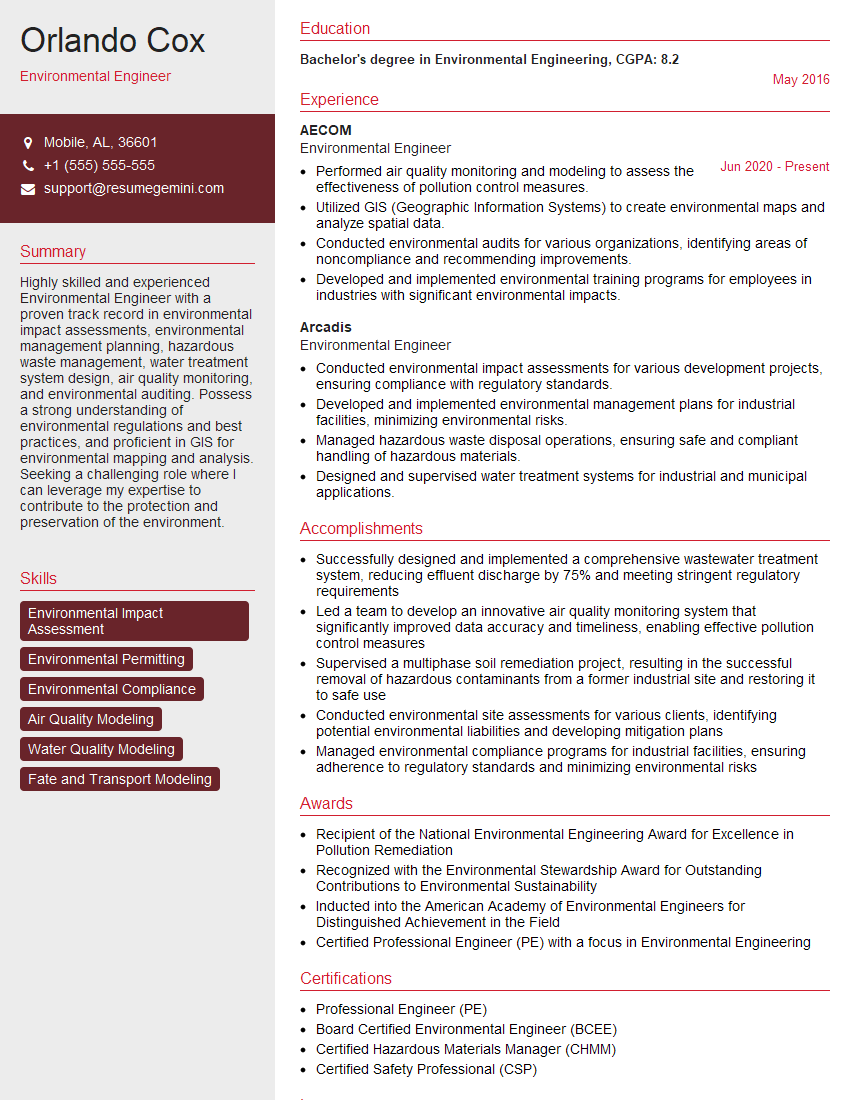
Environmental Engineer Resume Sample
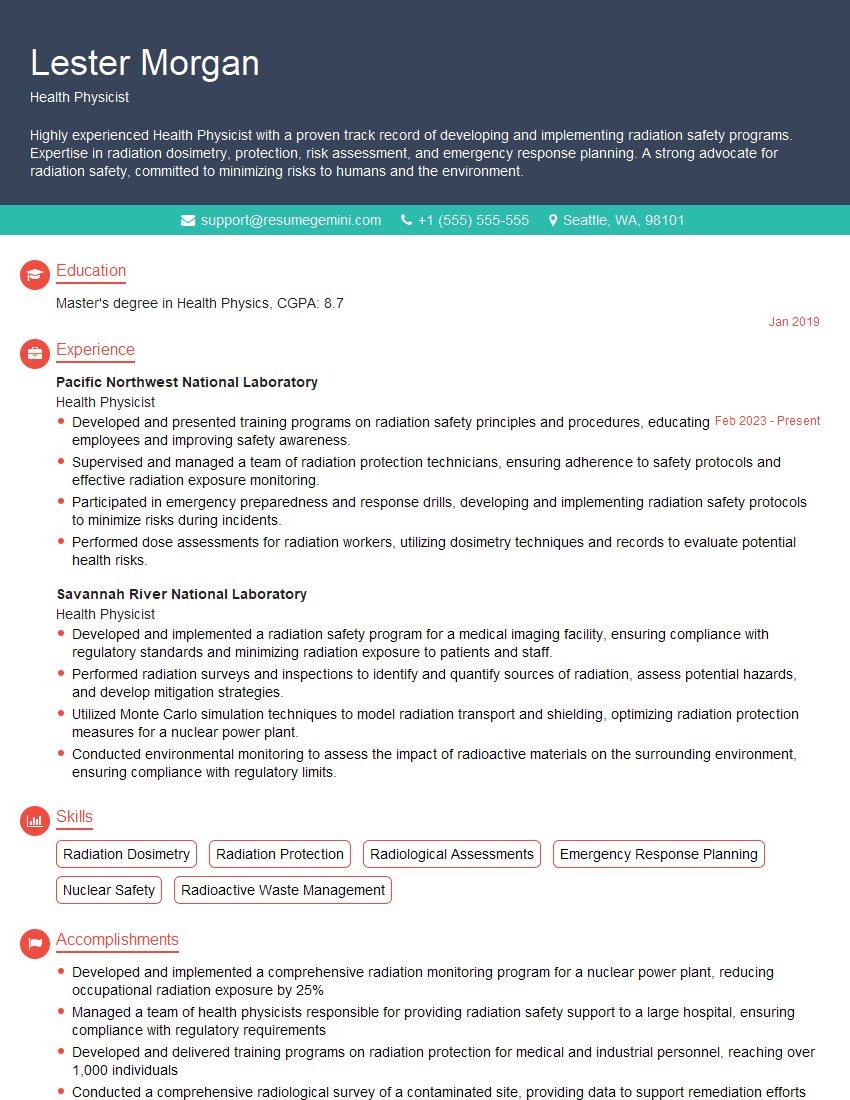
Health Physicist Resume Sample

Senior Environmental Scientist Resume Sample
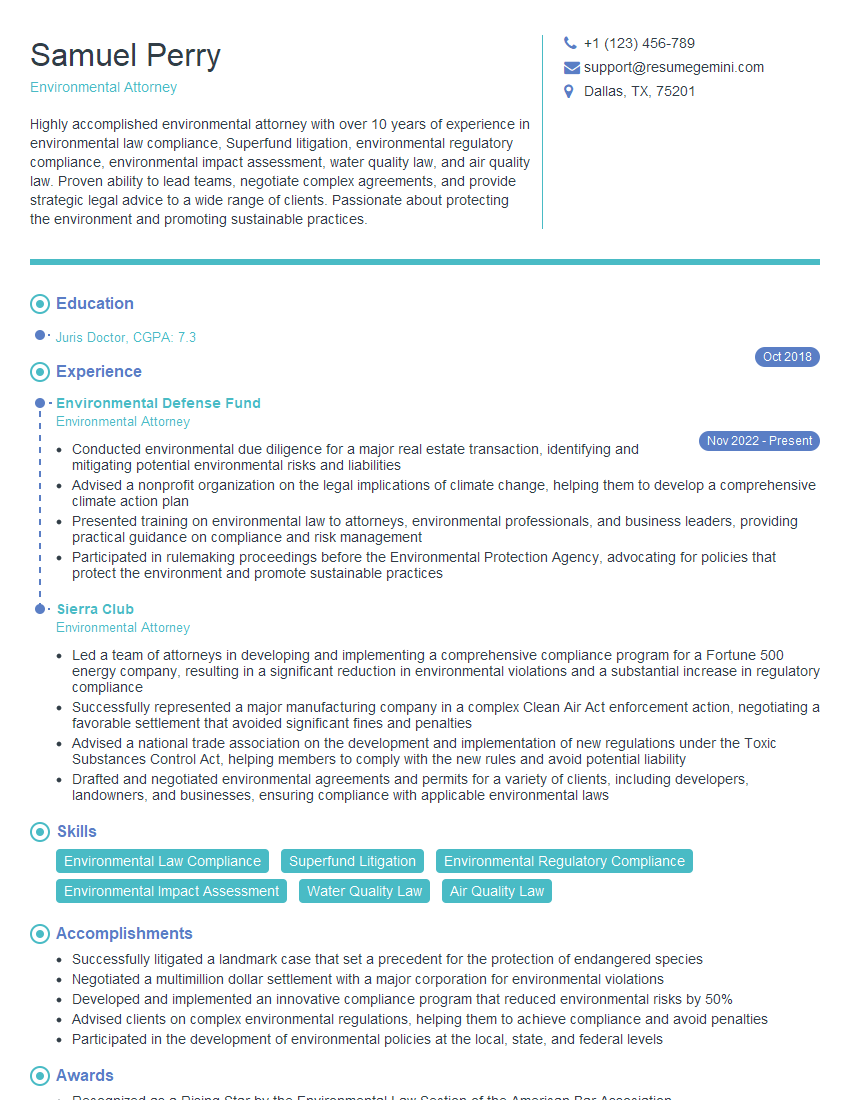
Environmental Attorney Resume Sample
- Sustainability Manager
- Environmental Program Manager
- Regulatory Affairs Manager
- Regulatory Compliance Officer
- Environmental Scientist
- Compliance Auditor
- Air Pollution Control Engineer
- Environmental Consultant
- Environmental Engineer
- Health Physicist
- Senior Environmental Scientist
- Environmental Attorney
Explore more articles
Users Rating of Our Blogs
Share Your Experience
We value your feedback! Please rate our content and share your thoughts (optional).
What Readers Say About Our Blog
Very informative content, great job.
good