The thought of an interview can be nerve-wracking, but the right preparation can make all the difference. Explore this comprehensive guide to Operation of Spray Equipment interview questions and gain the confidence you need to showcase your abilities and secure the role.
Questions Asked in Operation of Spray Equipment Interview
Q 1. What types of spray equipment are you familiar with?
My experience encompasses a wide range of spray equipment, from simple hand-held sprayers used in gardening to sophisticated industrial systems for large-scale applications. I’m proficient with airless sprayers, HVLP (High Volume Low Pressure) sprayers, air-assisted airless sprayers, and various types of electrostatic sprayers. I’ve also worked with specialized equipment like boom sprayers for agricultural applications and robotic sprayers for precise coating in manufacturing.
- Hand-held sprayers: Ideal for small-scale applications like painting fences or applying pesticides to small gardens.
- Airless sprayers: Used for high-volume, high-pressure applications like painting houses, applying primers or protective coatings on large structures.
- HVLP sprayers: Produce a fine atomized spray, minimizing overspray and making them suitable for fine finishing work and applications requiring minimal material waste.
- Air-assisted airless sprayers: Combine the power of airless with the atomization control of HVLP, offering a balance of speed and finish quality.
- Electrostatic sprayers: Utilize an electrical charge to attract the paint or coating to the target surface, resulting in better coverage and less waste, particularly useful in hard-to-reach areas.
Q 2. Describe your experience with different spray nozzle types and their applications.
Spray nozzle selection is crucial for achieving the desired finish. I’ve worked extensively with various nozzle types, each suited to specific applications:
- Fan nozzles: Produce a flat, wide spray pattern, ideal for covering large areas quickly. Different fan angles (e.g., 15°, 30°, 40°) are available to control the spray width.
- Round nozzles: Create a circular spray pattern, suitable for spot painting or intricate detailing. Different orifice sizes control the spray volume and particle size.
- Airless nozzles: Designed for high-pressure applications, these nozzles generate a dense spray for quick coverage, often with wider spray angles.
- HVLP nozzles: These nozzles produce a finer spray with less overspray, ideal for smooth finishes and applications where material conservation is important. They require lower pressures compared to airless nozzles.
- Speciality nozzles: These include nozzles designed for specific materials (like viscous paints or fine finishes), textured coatings, or specialized applications like agricultural spraying.
For instance, I once used fan nozzles to efficiently paint a large warehouse, while round nozzles were employed for detailed work on intricate metal parts in a manufacturing setting.
Q 3. Explain the process of setting up and calibrating spray equipment.
Setting up and calibrating spray equipment is a systematic process ensuring consistent and efficient application. Here’s a step-by-step guide:
- Inspect Equipment: Thoroughly check the sprayer for leaks, damage, and proper assembly.
- Prepare Material: Strain the material to remove any impurities that could clog the nozzle. Proper material viscosity is crucial, often requiring thinning or thickening.
- Assemble Nozzle: Select the appropriate nozzle for the application and ensure it’s correctly fitted.
- Pressure Adjustment: Adjust the pressure according to the manufacturer’s recommendations and the material being sprayed. This often involves trial and error to find the optimal pressure for even coverage.
- Calibration: This is critical. I typically use a calibration test to measure the spray rate by spraying a known area and collecting the material. The collected volume helps determine the coverage rate and potential adjustments to pressure and/or nozzle.
- Pattern Adjustment: Fine-tune the spray pattern using the nozzle controls to achieve even coverage. Overlap each pass for complete coverage, avoiding streaks and runs.
For example, when painting a house, accurate calibration ensures consistent coverage and prevents overspray, saving material and time. Similarly, in precision coating applications, calibration ensures the correct thickness and evenness of the applied material.
Q 4. How do you ensure proper safety procedures are followed when operating spray equipment?
Safety is paramount when operating spray equipment. My procedures always include:
- Personal Protective Equipment (PPE): This includes respirators, safety glasses, gloves, and protective clothing to prevent inhalation of overspray and skin contact with the material.
- Proper Ventilation: Ensuring adequate ventilation is crucial to prevent the build-up of hazardous fumes and mists. This might involve working outdoors or using respirators with appropriate cartridges.
- Fire Prevention: Many spray materials are flammable. I always take precautions to avoid sparks and maintain a safe distance from ignition sources. Fire extinguishers should be readily available.
- Material Safety Data Sheets (MSDS): Thoroughly understanding the MSDS for each material being sprayed is essential for handling and disposal procedures.
- Emergency Procedures: Knowing how to respond to spills, equipment malfunctions, or injuries is critical. Having a pre-planned response protocol is crucial.
- Training and Certification: When dealing with complex or hazardous materials, formal training and certification are required to ensure safe and efficient operation.
Ignoring safety precautions can lead to serious health issues, fires, and environmental damage. Prioritizing safety is not just a best practice, but a necessity.
Q 5. What are the common causes of nozzle clogging and how do you address them?
Nozzle clogging is a common problem, often caused by:
- Material impurities: Undissolved particles or contaminants in the paint or coating.
- Incorrect material viscosity: Too thick of a material.
- Low-quality material: Some paints are simply more prone to clogging than others.
- Temperature variations: Extreme temperatures can affect the material’s viscosity, leading to clogging.
- Nozzle wear and tear: Over time, nozzles can become worn, making them more susceptible to clogging.
Addressing clogs involves:
- Cleaning: Disassembling and thoroughly cleaning the nozzle with appropriate solvents.
- Strain Material: Pre-straining the material to remove particles before spraying.
- Adjusting Viscosity: Thinning the material using a recommended thinner.
- Nozzle Replacement: Replacing a worn or damaged nozzle.
- Preventing future clogs: Regular maintenance and cleaning of the equipment can significantly reduce the incidence of nozzle clogging.
For example, I once experienced frequent clogging when spraying a thick, unstrained paint. After straining and slightly thinning the paint, the problem was eliminated.
Q 6. How do you calculate the required spray pressure and flow rate?
Calculating the required spray pressure and flow rate depends on several factors, including the material being sprayed, the nozzle type, the desired spray pattern, and the application method. There’s no single formula, but I use a combination of experience, manufacturer’s recommendations, and practical testing. The process often involves:
- Manufacturer’s Specifications: Consulting the nozzle manufacturer’s data sheets provides a starting point for pressure and flow rate recommendations.
- Test Sprays: Conducting test sprays at different pressures and flow rates, observing the spray pattern, material coverage and material usage. Adjustments are made based on the observed results.
- Material Viscosity: Higher viscosity materials generally require higher pressures.
- Nozzle Size and Type: Different nozzles have different pressure and flow rate requirements. Larger orifice nozzles typically require higher pressures.
- Calibration Measurements: Measuring the amount of material sprayed over a known area, allows for accurate calculations of the application rate. This helps optimize both pressure and flow rate for efficiency and consistency.
This iterative process ensures the optimal settings for efficient spraying and consistent application. The precise calculations often involve using formulas provided by equipment manufacturers and adjusting them based on my experience and field tests.
Q 7. Explain the difference between airless, HVLP, and air-assisted airless spray systems.
These three spray systems differ significantly in their operation and application:
- Airless Spray Systems: These systems use very high pressure to atomize the material without the use of compressed air. This results in a high transfer efficiency and fast application speed. Ideal for large-scale projects, but can require higher skill to avoid overspray. They are less prone to material build-up compared to air-assisted.
- HVLP (High Volume Low Pressure) Spray Systems: These utilize a large volume of air at low pressure to atomize the material. They produce a fine spray with minimal overspray and are ideal for finishing work where quality and material conservation are paramount. Transfer efficiency is lower than airless, but the finish quality is generally superior.
- Air-Assisted Airless Spray Systems: These combine the high pressure of airless systems with the atomization control provided by compressed air. This offers a balance between speed, transfer efficiency, and finish quality. They are more versatile than pure airless or HVLP systems, adaptable to various materials and surface types.
The choice depends on the application. Airless is best for speed and coverage on large projects like house painting. HVLP is better for fine finishing and detail work. Air-assisted airless offers a compromise between speed and quality.
Q 8. How do you maintain and clean spray equipment after use?
Maintaining and cleaning spray equipment is crucial for its longevity and to prevent contamination. Think of it like this: you wouldn’t use a dirty paintbrush to paint a masterpiece, right? The process involves several key steps:
Immediate Cleaning: After each use, immediately rinse the equipment thoroughly with clean water. This prevents the spray material from drying and hardening inside the nozzles and hoses, making cleaning much harder later. For water-based materials, this is often sufficient. For oil-based or solvent-based materials, a suitable solvent (specified by the manufacturer) should be used for initial flushing.
Disassembly and Deep Cleaning: Disassemble the equipment according to the manufacturer’s instructions. This allows for thorough cleaning of all components. Use appropriate brushes, cleaning solutions, and solvents (always consulting the safety data sheets) to remove any remaining residue. Pay close attention to nozzles, filters, and internal tubing – these areas are prone to clogging.
Drying and Storage: Allow all parts to dry completely before reassembling. Store the equipment in a clean, dry place, protected from extreme temperatures and moisture. For long-term storage, consider applying a light coat of protective oil to prevent corrosion.
Example: When cleaning a pesticide sprayer, I always use a dedicated cleaning solution, followed by a thorough rinse with clean water. I meticulously inspect all parts for any blockages before storing it in a designated area, away from food and children.
Q 9. What are the safety precautions for handling different spray materials (e.g., solvents, pesticides)?
Safety is paramount when handling spray materials. Different materials pose different hazards, demanding specific precautions:
Solvents: Solvents are often flammable and toxic. Always work in a well-ventilated area, away from ignition sources. Wear appropriate personal protective equipment (PPE), including gloves, eye protection, and a respirator. Dispose of solvents according to local regulations.
Pesticides: Pesticides can be highly toxic to humans and the environment. Always follow label instructions carefully. Wear appropriate PPE, including coveralls, gloves, eye protection, and a respirator. Avoid skin contact and inhalation. Dispose of pesticide containers and leftover materials responsibly, following local regulations.
Paints and Coatings: Some paints and coatings contain volatile organic compounds (VOCs) that can be harmful if inhaled. Ensure adequate ventilation and wear appropriate PPE. Follow manufacturer’s instructions regarding disposal.
Example: When spraying pesticides, I always wear a full body suit, gloves, goggles, and a respirator rated for the specific pesticide. I carefully read the label instructions and strictly adhere to the recommended application rates and safety precautions.
Q 10. Describe your experience with troubleshooting spray equipment malfunctions.
Troubleshooting spray equipment malfunctions requires a systematic approach. I typically follow these steps:
Identify the Problem: Carefully observe the malfunction. Is the spray inconsistent? Is there no spray at all? Is there excessive drift? Document your observations.
Check the Obvious: Inspect the pressure gauge, check for clogged nozzles or filters, ensure adequate power supply (if applicable), and verify proper connections.
Systematic Troubleshooting: If the problem persists, systematically check each component, starting from the tank and working towards the nozzle. This might involve checking for leaks, inspecting hoses for kinks or damage, and checking the pump for proper function.
Consult Manuals and Experts: If you can’t identify the problem, refer to the equipment’s manual or contact a qualified technician or manufacturer for assistance.
Example: Once, a sprayer I was using had inconsistent spray patterns. After checking the obvious, I discovered a partially clogged nozzle. A quick cleaning with a wire resolved the issue.
Q 11. How do you ensure even and consistent spray coverage?
Achieving even and consistent spray coverage depends on several factors:
Proper Nozzle Selection: Choose the correct nozzle type and size for the material being sprayed and the application method. Different nozzles produce different spray patterns (e.g., cone, flat fan).
Consistent Spray Pressure: Maintain a constant pressure during application. Fluctuations in pressure will lead to inconsistent coverage.
Appropriate Spray Height and Speed: Maintain a consistent height and speed while spraying to ensure uniform coverage. Too high or too low, or too fast or too slow, can result in uneven application.
Overlapping Spray Patterns: Overlap each spray pass by approximately 50% to avoid gaps and ensure complete coverage.
Calibration: Regularly calibrate the sprayer to ensure accurate application rates. This involves measuring the amount of material sprayed over a known area.
Example: When spraying paint on a wall, I use a flat fan nozzle and maintain a consistent spray height and speed, overlapping each pass to ensure a smooth, even finish. Regular calibration ensures I’m applying the correct amount of paint, saving me time and material.
Q 12. What are the environmental regulations concerning spray application?
Environmental regulations concerning spray application vary depending on location and the material being sprayed. Generally, regulations aim to minimize environmental impact by:
Reducing Drift: Regulations often restrict spraying during windy conditions to minimize the drift of spray materials onto non-target areas.
Protecting Water Bodies: Buffer zones are often required around water bodies to prevent contamination.
Restricting the Use of Certain Chemicals: Some pesticides and other chemicals may be banned or restricted due to their toxicity.
Proper Disposal of Waste: Regulations govern the proper disposal of empty containers and leftover materials.
Record Keeping: Detailed records of spray applications, including the materials used, application rates, and dates, are often required.
Example: In my region, we are required to maintain a buffer zone of at least 25 feet from any water body when spraying pesticides. We must also keep detailed records of all pesticide applications for at least three years.
Q 13. How do you adjust spray parameters for different surface textures and materials?
Adjusting spray parameters for different surface textures and materials requires understanding how surface properties affect spray deposition.
Surface Roughness: Rough surfaces require higher application rates and potentially different nozzle types to ensure adequate coverage in crevices and irregularities.
Porosity: Porous surfaces absorb more material, requiring adjustments to application rates to achieve the desired final coverage.
Material Type: Different materials (wood, metal, concrete, etc.) have varying surface tensions and absorption characteristics, necessitating adjustments to spray pressure, nozzle type, and application technique.
Example: When spraying paint on a rough-textured wood surface, I would increase the application rate and use a nozzle that produces a broader spray pattern to ensure complete penetration into the recesses of the wood grain.
Q 14. Explain the concept of transfer efficiency in spray application.
Transfer efficiency in spray application refers to the percentage of the spray material that actually reaches the target surface. Ideally, you want 100% transfer efficiency, meaning all the material is deposited where it’s intended. In reality, this is rarely achieved due to factors such as:
Drift: Wind can carry spray material away from the target area.
Evaporation: Some materials evaporate before reaching the target.
Bounce and Run-off: Material may bounce off the surface or run off before adhering.
Improving Transfer Efficiency: Techniques to improve transfer efficiency include using lower spray pressures, employing appropriate nozzle types, spraying in calm conditions, and applying the material at the optimal application rate.
Example: A high transfer efficiency is crucial when applying pesticides, as it minimizes the amount of pesticide wasted and reduces the risk of environmental contamination.
Q 15. How do you manage waste disposal in spray operations?
Waste disposal in spray operations is crucial for environmental protection and worker safety. It involves a multi-step process focusing on proper containment, collection, and disposal of overspray, used solvents, and other hazardous materials. We begin by using containment systems such as spray booths with efficient filtration systems to capture overspray. This prevents the paint from entering the environment.
Next, collected waste is segregated according to its composition. For example, water-based paints are handled differently than solvent-based paints. Solvent-based waste often needs special handling and disposal in accordance with local regulations. We always utilize licensed waste haulers specializing in hazardous materials disposal, ensuring compliance with all applicable environmental laws and regulations. Proper documentation of waste disposal is vital, and we maintain detailed records for traceability and auditing purposes.
For example, in a recent project painting automotive parts, we employed a closed-loop system where overspray was filtered, collected, and the solvent recycled to minimize waste and costs. This demonstrates our commitment to responsible environmental practices and cost-effective waste management.
Career Expert Tips:
- Ace those interviews! Prepare effectively by reviewing the Top 50 Most Common Interview Questions on ResumeGemini.
- Navigate your job search with confidence! Explore a wide range of Career Tips on ResumeGemini. Learn about common challenges and recommendations to overcome them.
- Craft the perfect resume! Master the Art of Resume Writing with ResumeGemini’s guide. Showcase your unique qualifications and achievements effectively.
- Don’t miss out on holiday savings! Build your dream resume with ResumeGemini’s ATS optimized templates.
Q 16. What are the different types of spray patterns and their uses?
Spray patterns are crucial for achieving the desired finish quality and efficiency. Different patterns cater to various needs. The most common types include:
- Circular/Round Pattern: Produces a uniform, circular spray, ideal for general coating and filling of large, flat areas. Think painting a wall.
- Fan Pattern (Horizontal & Vertical): Creates a flat, elliptical spray ideal for precise control and coating intricate shapes or edges. This pattern is commonly used for furniture finishing or automotive painting.
- Pencil Pattern: A narrow, focused spray, perfect for touch-ups, detailed work, or reaching hard-to-access areas. Think detailing small parts or repairing a chipped paint area.
Selecting the right pattern depends on the application. A round pattern is efficient for large surfaces, while a fan pattern offers more precise control for intricate detailing. The pencil pattern provides spot correction capabilities.
Q 17. How do you identify and address overspray issues?
Overspray is a major concern in spray operations, leading to waste, inefficiency, and poor finish quality. Identifying overspray starts with visual inspection of the finished product and the surrounding area. Excessive paint accumulation beyond the target area is a clear sign.
Addressing overspray involves a multi-pronged approach. First, adjusting spray parameters like air pressure, fluid viscosity, and nozzle distance can significantly reduce overspray. Using appropriate masking techniques to protect areas not needing paint is also crucial. Next, we optimize spray gun technique and operator training – proper gun movement and control minimize overspray. Regular maintenance of the spray equipment, ensuring proper atomization, is essential.
For instance, if we notice a significant increase in overspray, we might investigate nozzle wear, air cap alignment, or fluid pressure settings. By systematically addressing these issues, we can significantly improve efficiency and minimize environmental impact.
Q 18. Describe your experience with different spray booth types and their operation.
My experience encompasses various spray booth types, each with unique operational characteristics and applications.
- Downdraft Booths: These booths pull air downwards, removing overspray and contaminants to the floor. They’re effective for large projects and provide excellent dust and fume extraction. Cleaning and maintenance require careful attention to filter integrity.
- Side Draft Booths: Air is drawn across the work area, removing overspray through side vents. They are more compact than downdraft booths but may be less efficient at capturing heavy overspray. Airflow management is crucial to maximize efficiency.
- Cross-Draft Booths: Air flows across the work area, creating a constant flow that removes contaminants. These are relatively inexpensive, but airflow management can be more complex.
Each booth type requires specific operating procedures for airflow adjustments, filter replacement, and safety protocols. For example, regular checks on the air filtration system in a downdraft booth are paramount to prevent clogging and ensure effective overspray capture.
Q 19. How do you ensure the quality and consistency of the sprayed finish?
Ensuring consistent, high-quality sprayed finishes necessitates a meticulous approach involving several key steps. Firstly, proper surface preparation is vital—cleaning, sanding, and priming create an ideal base for the finish coat. Secondly, consistent material mixing ratios are crucial for maintaining viscosity and color accuracy. We meticulously follow manufacturer’s guidelines for mixing ratios.
Next, controlled environmental conditions are essential, especially temperature and humidity which affect paint drying and curing. Maintaining consistent air pressure and fluid flow rates using a pressure gauge and flow meter guarantees consistent atomization and spray pattern. Furthermore, regular equipment calibration and maintenance are paramount to ensuring consistent performance. Regularly inspecting the spray nozzle for wear and tear helps to maintain atomization quality.
For instance, in a recent furniture painting job, maintaining consistent humidity levels prevented uneven drying, leading to a superior finish with a consistent sheen.
Q 20. What are the factors affecting spray pattern and atomization?
Several factors influence spray pattern and atomization, impacting the final finish.
- Fluid Viscosity: Thicker fluids create coarser, less well-atomized sprays, while thinner fluids result in finer atomization. Viscosity is controlled by thinners or additives.
- Air Pressure: Higher air pressure generally leads to finer atomization but can also increase overspray. Proper air pressure is critical for optimal atomization.
- Nozzle Size & Type: Different nozzles produce different spray patterns and atomization. The nozzle size needs to be appropriate to the material being sprayed.
- Fluid Flow Rate: The volume of fluid delivered through the nozzle impacts the density and uniformity of the spray.
- Spray Gun Distance: The distance between the gun and the surface affects spray pattern and uniformity. Maintaining a consistent distance is key.
For example, using a nozzle that’s too small for a high-viscosity paint will result in poor atomization, creating a thick, uneven coat. The correct combination of these parameters ensures proper atomization, resulting in a consistent and even finish.
Q 21. How do you maintain spray equipment to ensure optimal performance and longevity?
Maintaining spray equipment is critical for optimal performance, longevity, and safety. A preventative maintenance schedule is crucial, encompassing regular cleaning, inspection, and component replacement as needed.
After each use, the equipment should be thoroughly cleaned to remove all traces of paint, solvent, and other materials. This prevents clogging and ensures the equipment is ready for the next use. Regular inspections of wear parts, such as nozzles, air caps, and seals, are important to identify potential problems before they impact performance. Nozzles should be checked for wear that can cause inconsistent spray patterns and overspray. We also meticulously examine all hoses for leaks and cracks.
We maintain a detailed log of all maintenance activities, including dates, procedures performed, and any parts replaced. This enables us to track equipment performance, identify recurring issues, and optimize our maintenance program. For instance, replacing worn-out seals in the air compressor proactively prevents costly repairs and ensures consistent air pressure.
Q 22. Describe your experience with different types of spray guns and their maintenance.
My experience encompasses a wide range of spray guns, from airless to air-assisted airless, HVLP (High Volume Low Pressure), and conventional air spray guns. Each type has its own strengths and weaknesses, impacting application efficiency and finish quality. For instance, airless spray guns are ideal for high-volume, fast applications like painting large surfaces, but they require meticulous cleaning to prevent nozzle clogging. HVLP guns, on the other hand, excel in producing a fine finish with less overspray, making them suitable for detailed work and sensitive surfaces, but they’re less efficient for large-scale projects. Conventional air spray guns offer a balance between these extremes but demand more operator skill for consistent results.
Maintenance for all spray guns is crucial. This involves daily cleaning, which includes flushing the gun with appropriate solvent, meticulously cleaning the fluid tip, nozzle, and air cap, and checking for wear and tear. Regular lubrication of moving parts is also essential. More in-depth maintenance, including replacing worn parts like the fluid tip or needle, should be performed based on usage and manufacturer recommendations. Failing to maintain spray guns properly leads to poor atomization, uneven coating, and costly repairs in the long run. I always keep a detailed log of my equipment maintenance, ensuring traceability and preventive measures.
Q 23. How do you perform preventative maintenance on spray equipment?
Preventative maintenance is paramount to ensure the longevity and optimal performance of spray equipment. My routine involves several key steps. First, I perform a thorough visual inspection of all components, looking for signs of wear, damage, or leaks. I carefully check hoses for cracks or kinks, paying particular attention to connections. Second, I regularly clean all parts according to manufacturer instructions, ensuring no residue remains that could affect future performance. Third, I lubricate moving parts, such as pump pistons and seals, using the recommended lubricants to prevent friction and premature wear. This extends the life of the pump and other mechanical components. Fourth, I regularly check pressure gauges and filters for proper operation. Finally, I maintain a comprehensive maintenance log for each piece of equipment, noting the date, the type of service performed, and any anomalies observed. This proactive approach minimizes downtime and maximizes the life of the equipment.
Q 24. What are the signs of a malfunctioning spray pump?
Several signs indicate a malfunctioning spray pump. Reduced spray pressure is a major indicator, often accompanied by inconsistent spray patterns. You might also notice unusual noises emanating from the pump, like grinding or knocking sounds, which suggest internal damage. Leaks around the pump seals or connections are another significant warning sign. Overheating of the pump motor, indicated by increased temperature or a burning smell, suggests a potential issue with motor bearings or internal components. Lastly, significantly decreased output, despite a constant pressure setting, can signify pump wear or blockage within the system. Addressing these issues promptly, often involving professional inspection and repair, prevents catastrophic failure and ensures continued operational efficiency.
Q 25. How do you handle emergency situations during spray operations?
Emergency situations during spray operations demand swift and decisive action. My response protocol begins with assessing the situation, prioritizing safety. If a leak occurs, I immediately shut down the equipment and isolate the affected area to prevent further spread. In case of fire, I would use the appropriate fire extinguisher (depending on the material being sprayed) and evacuate the area, contacting emergency services immediately. If there’s an injury, I would administer first aid as needed, ensuring the injured person receives professional medical attention. Proper personal protective equipment (PPE) is crucial; wearing this equipment helps mitigate risks. Post-emergency procedures include a thorough investigation into the root cause of the incident to prevent recurrence. Documentation is essential for both insurance claims and safety improvement. In short, training, preparedness, and disciplined execution are paramount for effective emergency response.
Q 26. Describe your experience with different types of spray materials and their properties.
My experience encompasses a broad spectrum of spray materials, including paints (water-based, solvent-based, and powder coatings), stains, sealants, and specialized coatings. Each material possesses unique properties affecting application techniques and safety precautions. For example, water-based paints are generally less hazardous but require specific cleaning procedures. Solvent-based paints, while offering superior durability, require careful handling due to flammability and toxicity. Powder coatings, applied electrostatically, offer excellent durability and minimal VOC emissions. Understanding the viscosity, flash point, VOC content, and other properties of each material is critical for optimizing spray parameters and ensuring worker safety. I always adhere to manufacturer guidelines and relevant safety data sheets (SDS) to ensure proper handling and disposal procedures.
Q 27. How do you ensure compliance with relevant safety regulations and standards?
Compliance with safety regulations and standards is non-negotiable in spray operations. I’m familiar with OSHA (Occupational Safety and Health Administration) standards and other relevant local and national regulations. This involves maintaining a safe work environment through proper ventilation, using appropriate PPE (including respirators, gloves, eye protection, and protective clothing), and following all labeling and safety data sheet instructions for the materials being sprayed. Regular safety training and equipment inspections are vital. Maintaining accurate records of training and inspections, including any incident reports, is critical for demonstrating compliance. Proper disposal of waste materials according to environmental regulations is also paramount. I am committed to proactive safety measures because worker safety is not just a legal requirement but a moral obligation.
Q 28. Explain the importance of proper ventilation in spray operations.
Proper ventilation is paramount in spray operations for several crucial reasons. First, it minimizes exposure to hazardous airborne particles and volatile organic compounds (VOCs) present in many spray materials. Inhalation of these substances can lead to serious health problems, ranging from respiratory irritation to long-term health issues. Second, adequate ventilation prevents the buildup of flammable vapors, significantly reducing the risk of fire or explosion. Third, good ventilation ensures a comfortable and productive working environment, improving air quality and reducing worker fatigue. The type of ventilation system needed depends on factors like the size of the area, the type of material being sprayed, and the volume of spray operations. Methods range from simple exhaust fans to sophisticated air filtration systems. Regular maintenance and inspection of the ventilation system are crucial to ensure effectiveness. Neglecting ventilation can lead to serious health consequences and safety hazards, highlighting its importance in responsible spray operations.
Key Topics to Learn for Operation of Spray Equipment Interview
- Types of Spray Equipment: Understanding the differences between airless, air-assisted airless, and electrostatic sprayers; their applications and limitations.
- Spray Pattern and Control: Mastering techniques for achieving consistent and even spray patterns; adjusting pressure, nozzle size, and spray distance to optimize application.
- Material Handling and Mixing: Safe and efficient handling of various spray materials; understanding mixing ratios and potential hazards.
- Maintenance and Troubleshooting: Performing routine maintenance tasks; identifying and resolving common malfunctions; understanding preventative maintenance schedules.
- Safety Procedures and Regulations: Adhering to safety protocols; proper use of personal protective equipment (PPE); understanding relevant environmental regulations.
- Application Techniques: Proper techniques for different surfaces and materials; understanding the impact of weather conditions on application.
- Calibration and Measurement: Accurately calibrating spray equipment; understanding the importance of precise measurements for efficient application.
- Cleaning and Storage: Proper cleaning procedures for different materials; safe and efficient storage of equipment to prevent damage and ensure longevity.
- Understanding Spray Material Properties: Knowledge of viscosity, adhesion, and other properties that influence application and results.
- Problem-Solving and Diagnostics: Troubleshooting common issues; identifying the root causes of spray application problems; implementing effective solutions.
Next Steps
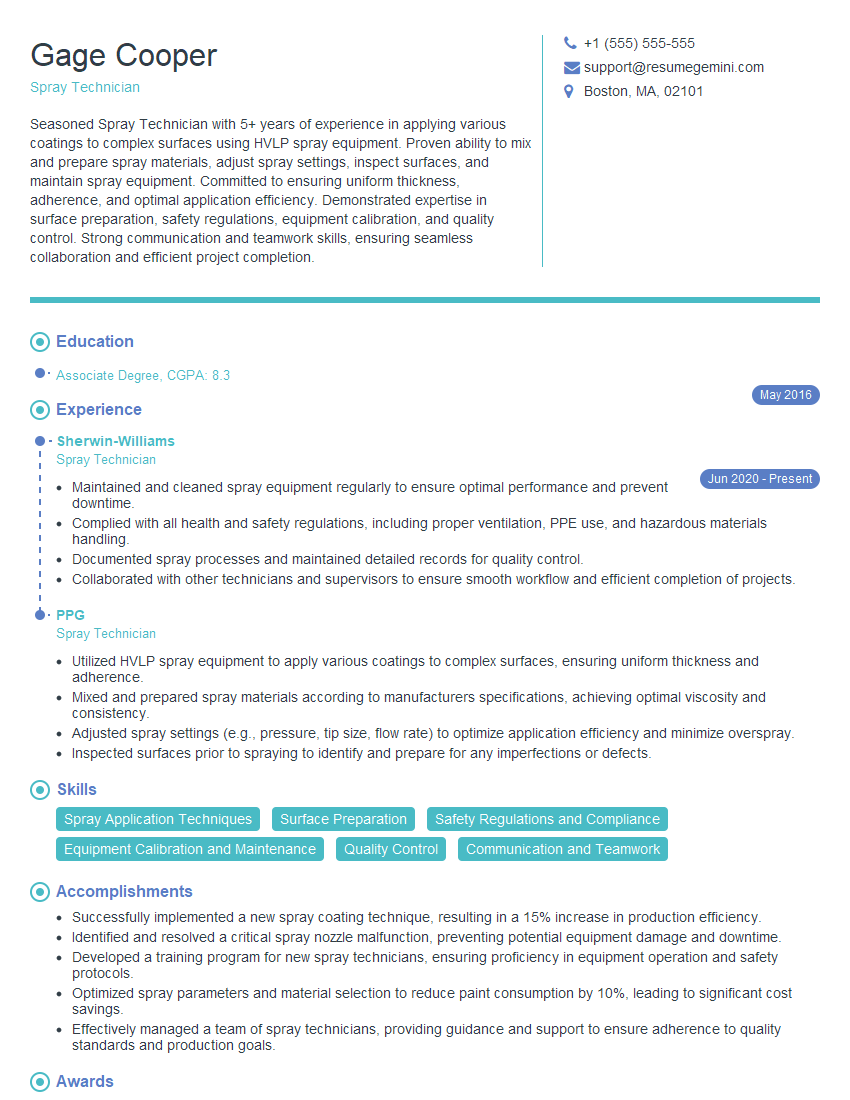
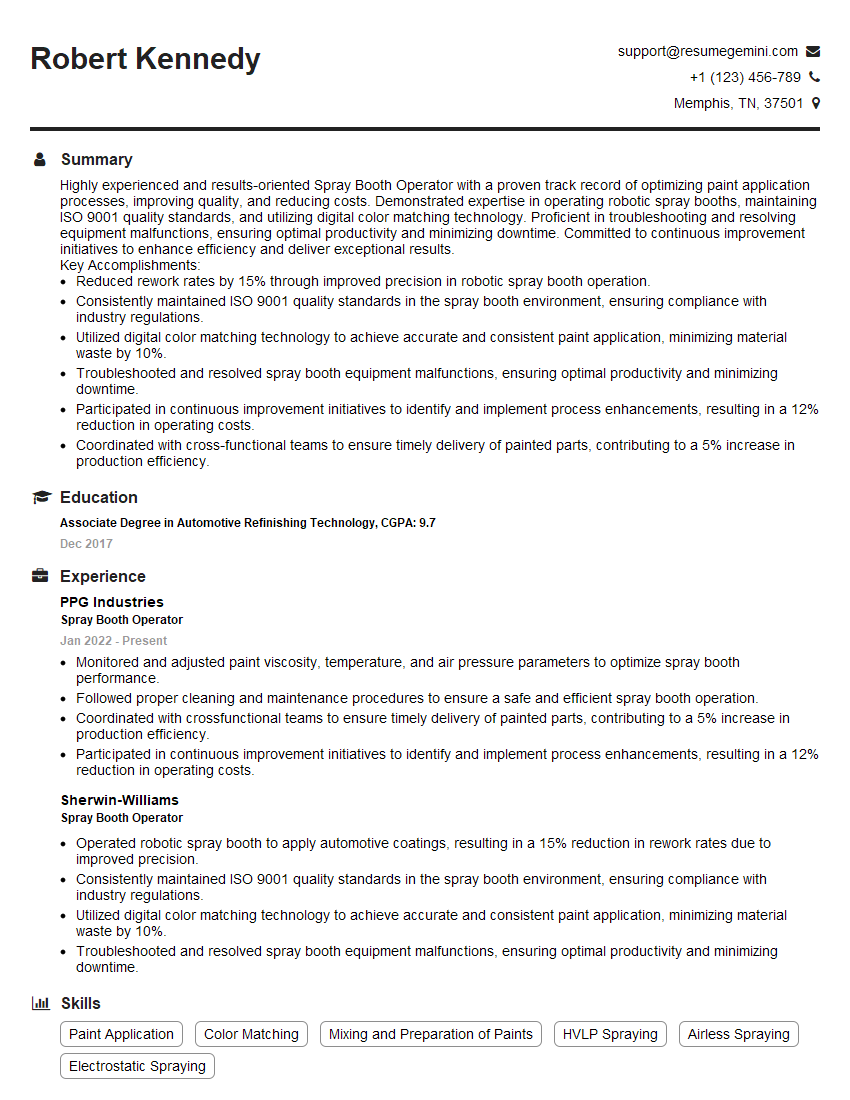
Mastering the operation of spray equipment opens doors to exciting career opportunities with significant growth potential in various industries. A strong understanding of these techniques demonstrates your value to potential employers. To maximize your job prospects, it’s crucial to present your skills effectively. Creating an ATS-friendly resume is key to getting your application noticed. ResumeGemini is a trusted resource that can help you build a professional and impactful resume tailored to the specific requirements of your target roles. Examples of resumes tailored to Operation of Spray Equipment are available through ResumeGemini to guide you.
Explore more articles
Users Rating of Our Blogs
Share Your Experience
We value your feedback! Please rate our content and share your thoughts (optional).
What Readers Say About Our Blog
Very informative content, great job.
good