Unlock your full potential by mastering the most common Receiving Procedures interview questions. This blog offers a deep dive into the critical topics, ensuring you’re not only prepared to answer but to excel. With these insights, you’ll approach your interview with clarity and confidence.
Questions Asked in Receiving Procedures Interview
Q 1. Describe your experience with receiving and inspecting incoming shipments.
My experience in receiving and inspecting incoming shipments spans over seven years, encompassing diverse industries like manufacturing and retail. I’ve handled everything from small, delicate components to large, palletized goods. My process always begins with a pre-inspection, reviewing the packing slip and purchase order against the delivery manifest to ensure everything is accounted for before the truck even unloads. This proactive step significantly reduces discrepancies and streamlines the process. Then, I meticulously check each item against the documentation, verifying the quantity, part numbers, and condition. For example, in my previous role, we received shipments of sensitive electronics. A pre-inspection revealed a discrepancy in the number of boxes; a quick call to the supplier prevented a significant delay. I also have experience visually inspecting products for damage; this includes checking for dents, scratches, and broken seals. Once the visual inspection is complete, I then often undertake further quality control checks as per the product specifications. This could range from weight checks to simple functionality tests, all documented in our system.
Q 2. How do you verify the quantity and quality of received goods?
Verifying quantity and quality is crucial. For quantity, I always compare the received items against the packing slip and purchase order. This involves counting each item, checking for any missing or extra units. I might use handheld scanners to expedite this process, especially for large shipments. Discrepancies are immediately documented, and I photograph any damage for evidence. For quality, the method varies depending on the product. It could involve visual inspection, weight checks using scales, or even functional testing, like plugging in an electronic device to check if it powers on. For example, while receiving a shipment of furniture, we would not only count the number of chairs but also inspect each chair for any physical damage. We may then compare the serial numbers to those listed in the accompanying paperwork. For specialized items, I’d engage with a quality control department for further testing. The entire process is documented meticulously, ensuring traceability.
Q 3. What software or systems have you used for managing receiving processes?
I’ve worked extensively with several inventory management systems, including SAP, Oracle NetSuite, and Fishbowl Inventory. These systems are vital for managing the receiving process effectively. Using SAP, for instance, I’ve been able to scan barcodes to automatically update inventory levels and track received items against purchase orders. This automated data entry minimizes manual errors and speeds up the receiving process. Further, the systems allowed me to generate reports on receiving times, quantities, and any discrepancies. This data is invaluable for analyzing receiving efficiency and identifying areas for improvement. I’m also proficient with WMS (Warehouse Management Systems), which enhances the entire receiving workflow – from the initial shipment notification to final put-away location within the warehouse.
Q 4. Explain your process for handling damaged or incorrect shipments.
Handling damaged or incorrect shipments follows a clear protocol. First, I thoroughly document the damage or discrepancy, including taking photos and videos as evidence. This is crucial for initiating returns or claims with the supplier. Then, I immediately notify the supplier about the issue, providing all the documented evidence. Next, depending on the severity, I might initiate a return authorization and repackage the damaged goods for return. If the incorrect items are received, I’ll adjust the inventory accordingly and work with the supplier to arrange for the correct items to be sent. For example, we once received a shipment with broken glass items. I documented the damage with photos and immediately contacted the vendor. The entire process, from reporting to resolution, was tracked through the system to ensure accountability. In the case of minor damage where the items were still usable, a manager was consulted to determine the best course of action.
Q 5. How do you ensure accurate data entry of received items?
Accurate data entry is paramount. To ensure accuracy, I utilize bar code scanners and RFID technology wherever possible. This eliminates manual data entry errors and speeds up the process. When manual entry is necessary, I always double-check the information against the source documents—packing slips, purchase orders, and invoices— to verify accuracy. Additionally, I use data validation features in our system to prevent errors, such as incorrect item codes or quantities. Regular reconciliation of the system data against physical inventory ensures any discrepancy is flagged quickly and promptly addressed. If any error occurs, the system allows me to reverse the entry and correct it, maintaining data integrity.
Q 6. What is your experience with different types of shipping documents (e.g., packing slips, invoices)?
I’m familiar with various shipping documents, including packing slips, invoices, bills of lading, certificates of origin, and commercial invoices. I know how to interpret each document and use the information to verify the shipment’s contents and accuracy against the purchase order. I understand the significance of each document for customs clearance (in international shipments) and internal accounting purposes. The packing slip helps verify the contents of the shipment, the invoice confirms the pricing and payment terms, and the bill of lading proves the shipment was transferred from the carrier to us. I thoroughly review each document before and after the goods are received to ensure completeness and consistency.
Q 7. Describe your experience with cycle counting or inventory audits.
I have significant experience with cycle counting and inventory audits. Cycle counting involves regularly counting a small subset of inventory items to verify the system accuracy, preventing large discrepancies from going unnoticed. This helps maintain inventory accuracy on an ongoing basis. We often use a planned schedule to count specific areas or item types at regular intervals. I’ve also participated in full inventory audits, which involve a thorough count of all inventory. These audits are more comprehensive and generally occur less frequently, often annually or bi-annually. Both cycle counting and inventory audits are vital for identifying inaccuracies in our inventory system and making necessary corrections. This ensures the data is reliable for decision-making regarding procurement, sales forecasting, and overall business operations. The data from these exercises is carefully analyzed to pinpoint areas of weakness in our inventory management system and help improve our processes.
Q 8. How do you prioritize tasks during peak receiving periods?
Prioritizing tasks during peak receiving periods requires a structured approach. Think of it like air traffic control – you need a system to manage the influx efficiently. My strategy involves a combination of techniques:
- Urgency and Importance Matrix: I categorize incoming shipments based on urgency (e.g., immediate production needs, upcoming deadlines) and importance (e.g., high-value items, perishable goods). This allows me to focus on critical shipments first.
- First In, First Out (FIFO) with Exceptions: While FIFO is generally a good rule, exceptions exist. Urgent orders or perishable goods override the FIFO system.
- Teamwork and Communication: Open communication with the warehouse team and other departments is crucial. Knowing what’s needed and when prevents bottlenecks. I regularly update everyone on progress and any potential delays.
- Technology Leverage: Using a Warehouse Management System (WMS) with real-time tracking and order prioritization features significantly streamlines the process. For example, a WMS can automatically assign tasks based on urgency and available resources.
For example, during a recent promotional period, we received a huge influx of inventory. Using my prioritization system, we ensured critical items for the promotion reached the floor on time, preventing stockouts and maintaining customer satisfaction.
Q 9. How do you maintain a clean and organized receiving area?
Maintaining a clean and organized receiving area is paramount for safety, efficiency, and accuracy. It’s like a well-organized kitchen – everything has its place, and you can find what you need quickly. My approach includes:
- Designated Zones: We have specific areas for incoming shipments, inspection, damaged goods, and returned items. This prevents confusion and speeds up processing.
- Regular Cleaning Schedule: Daily cleaning routines are essential to remove debris and maintain a safe environment. This includes sweeping, mopping, and removing unnecessary materials.
- Proper Storage of Materials: Pallets are stacked correctly to prevent collapse and ensure easy access. Supplies are stored neatly and labeled.
- 5S Methodology: We actively use the 5S methodology (Sort, Set in Order, Shine, Standardize, Sustain) to improve organization and workflow. This ensures that the receiving area remains consistently clean and efficient.
- Employee Accountability: Everyone in the receiving department is responsible for maintaining cleanliness and order. Regular inspections and feedback are provided.
For example, we recently implemented a visual management system using color-coded labels to identify different zones, making it easier for everyone to maintain order.
Q 10. Explain your experience with using scanners and barcode systems in receiving.
I have extensive experience using scanners and barcode systems in receiving. They are fundamental to efficient and accurate inventory management. It’s like having a digital assistant that tracks everything.
- Receiving Scanners: I’m proficient in using handheld scanners to scan barcodes on packing slips and individual items. This data is instantly transmitted to the WMS, creating a digital record of received goods.
- Barcode Verification: I’m adept at identifying and resolving any discrepancies between the scanned barcode and the expected item.
- Data Entry and Accuracy: Scanners minimize manual data entry, reducing human error and speeding up the process. I’m experienced in using software to check for data accuracy and resolve discrepancies.
- Inventory Tracking: The data collected via scanners provides real-time inventory updates, giving us an accurate picture of our stock levels.
For instance, in a previous role, we implemented a new barcode system, which reduced receiving time by 20% and minimized errors related to inventory counts.
Q 11. How do you handle discrepancies between the packing slip and the actual shipment?
Handling discrepancies between the packing slip and the actual shipment requires a methodical approach. It’s like solving a puzzle – you need to find the missing pieces.
- Verification: First, I carefully recount and re-scan all items to confirm the discrepancy. I check for any potential reasons such as damaged packaging that might hide missing items.
- Documentation: I meticulously document the discrepancy, noting the missing items or extra items received. Photos or videos can help support the documentation.
- Contacting the Supplier: I contact the supplier immediately to report the discrepancy and request a resolution – whether it’s reshipment of missing items or a credit for extra charges.
- Internal Communication: I notify relevant departments, such as purchasing or accounting, about the discrepancy and the resolution plan.
- Updating the System: Once the discrepancy is resolved, I update the WMS accordingly to reflect the actual received quantities.
For example, we recently received a shipment with 10 fewer units than stated on the packing slip. Following our procedure, we contacted the supplier who promptly arranged a reshipment, minimizing the impact on production.
Q 12. What are the key performance indicators (KPIs) you track in receiving?
Key Performance Indicators (KPIs) in receiving help us monitor efficiency and identify areas for improvement. These metrics are vital for continuous improvement and cost reduction. Think of them as the dashboard for our receiving operations.
- Receiving Cycle Time: This measures the time taken from the shipment’s arrival to its final storage. A shorter cycle time indicates higher efficiency.
- Order Accuracy: This tracks the percentage of orders received without discrepancies. Higher accuracy indicates better efficiency and quality control.
- On-Time Delivery Rate: This reflects the percentage of orders received within the scheduled delivery time frame. It is essential for meeting production schedules.
- Damage Rate: This measures the percentage of damaged goods received. Lower damage rate reflects improved handling practices.
- Cost Per Order Received: This measures the cost associated with processing each order, allowing identification of cost saving opportunities.
We regularly analyze these KPIs to identify bottlenecks and implement corrective actions. For example, by analyzing a higher-than-average receiving cycle time, we identified a need to improve our unloading procedures, resulting in a 15% reduction in processing time.
Q 13. Describe your experience with managing returns and damaged goods.
Managing returns and damaged goods requires a structured process to minimize losses and ensure compliance. It’s like triage in a hospital – you need to categorize and treat each case appropriately.
- Inspection and Documentation: All returned and damaged goods undergo a thorough inspection to determine the cause and extent of damage. Detailed documentation, including photos, is crucial for potential claims.
- Categorization: Items are categorized based on their condition (e.g., repairable, recyclable, scrap). This aids in efficient disposal or processing.
- Supplier Communication: For damaged goods, we contact the supplier to initiate a return authorization (RMA) process, typically including documentation from the inspection.
- Inventory Management: The WMS is updated to reflect the return or disposal of items. This keeps our inventory records accurate.
- Disposal or Recycling: We follow environmentally responsible practices for disposal or recycling of unusable items.
For example, we recently handled a large return of damaged goods. By meticulously documenting the damage, we successfully negotiated a full credit from the supplier, avoiding significant financial losses.
Q 14. How do you ensure compliance with company policies and procedures during receiving?
Ensuring compliance with company policies and procedures during receiving is critical for maintaining operational integrity and legal adherence. This involves consistently following established guidelines. It’s like following a recipe – you need to follow the instructions precisely.
- Training and Education: All receiving staff receive thorough training on company policies and procedures, including safety regulations and quality control standards.
- Regular Audits: We conduct regular audits to verify compliance with policies and identify areas for improvement. These might include compliance with health and safety regulations, inventory control procedures, and data accuracy standards.
- Documentation and Record-Keeping: Meticulous documentation of all receiving activities, including inspections and discrepancies, is essential for traceability and compliance.
- Continuous Improvement: We actively seek ways to improve compliance through updated training and policy reviews. Changes in regulations are swiftly integrated into our procedures.
- Technology Adoption: Utilizing WMS and other technologies enables automated tracking, minimizing manual processes and increasing the chances of compliance.
For example, we recently updated our receiving procedures to reflect new safety regulations, and we implemented new training modules to ensure all staff were aware of the changes.
Q 15. How do you communicate with suppliers regarding receiving issues?
Communicating effectively with suppliers about receiving issues is crucial for maintaining a smooth supply chain. My approach involves a structured process focusing on clear, concise communication and documentation. I begin by carefully documenting the discrepancy – whether it’s a damaged shipment, incorrect quantities, or missing items – including photos or videos as evidence. Then, I contact the supplier through their preferred method (usually email, but sometimes phone for urgent matters), providing them with the documentation and a detailed description of the problem. The communication is always professional and collaborative, focusing on finding a solution rather than assigning blame. For example, if a shipment of raw materials arrived with 10% of the units damaged, I would send an email including photos of the damaged goods, the purchase order number, and the invoice number, clearly stating the discrepancy and requesting either a replacement shipment or a credit adjustment. I always aim for a timely resolution that benefits both parties and ensures our production isn’t disrupted. Following up is key – I’ll send a reminder email if I don’t receive a response within a reasonable timeframe. This proactive approach keeps everyone informed and fosters a strong supplier relationship.
Career Expert Tips:
- Ace those interviews! Prepare effectively by reviewing the Top 50 Most Common Interview Questions on ResumeGemini.
- Navigate your job search with confidence! Explore a wide range of Career Tips on ResumeGemini. Learn about common challenges and recommendations to overcome them.
- Craft the perfect resume! Master the Art of Resume Writing with ResumeGemini’s guide. Showcase your unique qualifications and achievements effectively.
- Don’t miss out on holiday savings! Build your dream resume with ResumeGemini’s ATS optimized templates.
Q 16. Describe your experience with different types of inventory (e.g., raw materials, finished goods).
My experience encompasses a wide range of inventory types, from raw materials to finished goods. Working with raw materials requires a keen understanding of their specific handling requirements. For example, perishable items necessitate immediate storage in temperature-controlled environments, while sensitive electronics demand careful handling to prevent damage. With finished goods, the focus shifts to tracking inventory levels, ensuring proper labeling and storage for efficient order fulfillment. I’ve worked with various inventory control systems to manage these different types. In one role, I oversaw the receiving and storage of raw textiles for a clothing manufacturer. This required precise tracking of fabric types, colors, and quantities to avoid mixing and ensure efficient production scheduling. In another, I handled the receiving and distribution of finished electronics, requiring meticulous attention to detail to prevent damage during handling and storage. Managing finished goods also involves coordinating with the shipping department to ensure timely order fulfillment, thus highlighting the interconnectedness of these departments.
Q 17. How do you handle the receiving of hazardous materials?
Handling hazardous materials requires stringent adherence to safety regulations and procedures. My experience includes thorough training in handling various hazardous substances, understanding their Safety Data Sheets (SDS), and following all relevant OSHA guidelines. This includes proper personal protective equipment (PPE) such as gloves, goggles, and respirators. The receiving process for hazardous materials is more rigorous, involving detailed inspections upon arrival to verify proper packaging and labeling. Any discrepancies are immediately reported. We use designated storage areas with appropriate containment measures to prevent leaks or spills. Detailed logs are maintained, recording the date of receipt, quantity, supplier information, and the location of storage, including the SDS information for each material. Regular inspections of these storage areas are conducted to ensure continued compliance with safety regulations. For example, when receiving chemicals, we ensure they’re transported and stored according to their specific hazardous material classification and in compliance with all local, state, and federal regulations. Failure to adhere to these strict protocols can result in serious health risks and legal penalties.
Q 18. What is your experience with using Warehouse Management Systems (WMS)?
I have extensive experience using Warehouse Management Systems (WMS). These systems are essential for optimizing inventory control and streamlining receiving procedures. My experience includes utilizing WMS to scan barcodes or RFID tags, automatically recording incoming shipments against purchase orders, and updating inventory levels in real-time. WMS significantly reduces errors, improves accuracy in tracking inventory, and enhances overall efficiency. For instance, I used a WMS in a previous role that enabled us to track the location of every item in our warehouse, reducing search time and improving order fulfillment speed. The system also generated reports on various aspects of inventory management, allowing us to identify trends and make data-driven decisions to optimize our processes. Specifically, I’m proficient with [mention specific WMS software if comfortable – e.g., SAP WM, Manhattan Associates, etc.]. This proficiency extends to the system’s reporting functionalities, which I utilize to monitor key performance indicators (KPIs) such as receiving accuracy, cycle count accuracy, and order fulfillment time.
Q 19. Explain your experience with RF scanners and their applications in receiving.
RF scanners are indispensable tools in the receiving process. They enable quick and accurate data entry, minimizing manual input errors and boosting efficiency. My experience with RF scanners includes using them to scan barcodes on incoming shipments, instantly verifying the quantity and item details against purchase orders. This real-time verification dramatically reduces discrepancies and speeds up the receiving process. RF scanners also help in tracking inventory location and managing putaway locations within the warehouse. For example, in a fast-paced distribution center, I implemented a system using RF scanners where each incoming item had its barcode scanned upon arrival, verified against the purchase order, and then scanned again when placed into its designated storage location. This process eliminated manual data entry, reduced human error, and improved overall efficiency of the receiving and putaway processes significantly. The data collected is then automatically updated in the WMS, providing accurate and up-to-the-minute inventory information.
Q 20. How do you maintain accurate records of received items?
Maintaining accurate records is paramount in the receiving process. This is achieved through a combination of technology and meticulous manual processes. We utilize our WMS to automatically record all incoming shipments, capturing details like purchase order numbers, item descriptions, quantities received, dates, and supplier information. In addition, we maintain physical copies of all receiving documentation, including packing slips and invoices, for audit trails. These records are cross-referenced with the data stored in the WMS to ensure complete accuracy. Any discrepancies are investigated immediately. This thorough documentation not only ensures accurate inventory control but also aids in resolving disputes with suppliers, tracking down lost or damaged items, and conducting efficient inventory audits. Regular cycle counts are performed to further verify the accuracy of our inventory records against the WMS data. This multi-layered approach ensures we maintain a high degree of accuracy in our inventory records.
Q 21. Describe your problem-solving skills related to receiving challenges.
Problem-solving is a crucial aspect of receiving. I approach challenges systematically, employing a structured approach to identify the root cause and implement effective solutions. My problem-solving process typically involves: 1. Identifying the problem: Clearly define the issue, collecting all relevant data. 2. Analyzing the root cause: Investigate potential causes, including supplier errors, process inefficiencies, or system malfunctions. 3. Developing solutions: Propose solutions based on the root cause analysis, considering feasibility and impact. 4. Implementing and testing: Implement the chosen solution, monitoring its effectiveness. 5. Documentation and improvement: Document the process and learnings, continually looking for ways to refine our procedures to prevent similar issues in the future. For example, if we consistently experience delays in receiving shipments from a particular supplier, I would investigate the reason for the delays, such as transportation issues or internal supplier problems. I’d then work collaboratively with the supplier to find a solution, such as implementing a new delivery schedule or exploring alternative transportation methods. This systematic approach ensures not only immediate problem resolution but also long-term improvements in our receiving processes.
Q 22. What are your strategies for improving efficiency in the receiving process?
Improving receiving efficiency hinges on optimizing processes and leveraging technology. My strategies focus on several key areas:
- Streamlining the Receiving Process: This involves implementing standardized procedures, clear communication channels between receiving, shipping, and inventory management, and using technology like barcode scanners and RFID to automate data entry and minimize manual handling. For example, pre-loading delivery information into our system allows us to verify shipments quickly against the expected POs.
- Optimizing Space and Layout: A well-organized receiving dock with clear pathways and designated areas for different types of shipments minimizes congestion and wasted time. This might involve implementing a zone-picking strategy to direct incoming goods to their designated storage locations quicker.
- Investing in Technology: Warehouse Management Systems (WMS) are crucial. They provide real-time tracking of shipments, automate inventory updates, and generate reports to identify bottlenecks. For instance, a WMS might flag a shipment discrepancy alerting us to address it immediately.
- Training and Development: Well-trained receiving personnel are essential. Regular training on best practices, new technologies, and safety procedures ensures a smooth and efficient workflow. A good training program leads to reduced errors and increased accuracy.
- Vendor Collaboration: Working closely with vendors to establish clear communication protocols and delivery schedules improves predictability and minimizes delays. Advance shipment notices (ASNs) are invaluable in this regard.
Q 23. How do you ensure the security of incoming shipments?
Securing incoming shipments is paramount. My approach is multifaceted:
- Access Control: Restricting access to the receiving dock to authorized personnel only is crucial. This might involve using security cameras, access badges, or even security guards depending on the level of risk. We could even implement a multi-factor authentication system for additional security.
- Shipment Verification: Thorough inspection of all incoming shipments, including comparing quantities and checking for damage, is vital. This also involves verifying seals, labels, and documentation against the purchase order. Discrepancies are immediately reported and recorded.
- Inventory Management: Implementing a robust inventory control system with clear tracking and accountability prevents theft or loss. This is aided by utilizing barcodes or RFID tags to follow inventory throughout its journey from receiving to storage.
- Regular Audits: Periodic audits of security procedures, inventory levels, and receiving logs help identify potential weaknesses and ensure effectiveness. A regular audit identifies areas needing adjustment and reduces vulnerabilities.
- Surveillance: Using security cameras with recording capabilities throughout the receiving area provides a visual deterrent and records all activity for review if necessary.
Q 24. Describe a time you had to handle a large or unexpected shipment.
During a recent product launch, we received a significantly larger shipment than anticipated – almost double the expected volume. It arrived unexpectedly early, which initially threatened to disrupt our established workflow.
To handle this, we immediately convened a team meeting involving receiving, warehouse management, and shipping. We implemented a flexible, tiered approach:
- Prioritization: We prioritized unpacking and storing the most critical items needed for the launch first.
- Temporary Overflow Space: We utilized temporary storage space within the warehouse and even secured a short-term lease on additional space nearby.
- Additional Personnel: We temporarily hired extra staff to assist with unpacking, sorting, and storing the shipment.
- Communication: Clear, frequent communication with all stakeholders kept everyone informed about the situation and progress.
Through collaborative problem-solving, we successfully processed the large shipment with minimal disruption to the product launch.
Q 25. What is your experience with cross-docking procedures?
Cross-docking involves unloading materials from an incoming shipment and immediately loading them onto outbound shipments, bypassing storage. My experience includes managing cross-dock operations in high-volume environments. This requires precise coordination and efficient material handling.
I am proficient in:
- Scheduling and Planning: Accurate scheduling of incoming and outgoing shipments is essential to optimize cross-docking efficiency. This involves close coordination with carriers and internal departments.
- Real-time Tracking: Using technology like WMS and RF scanners to track the movement of goods throughout the cross-docking process helps maintain accuracy and prevent errors. This allows for immediate visibility of inventory.
- Process Optimization: Continuous improvement of cross-docking processes is crucial for maximizing throughput. We identify and eliminate bottlenecks, improve workflow, and optimize labor usage for maximum efficiency.
- Inventory Control: Despite the minimal storage involved, accurate tracking is vital. Any deviations from planned inbound and outbound movements must be identified immediately.
Q 26. How familiar are you with different types of inventory control methods (e.g., FIFO, LIFO)?
I am very familiar with various inventory control methods, including FIFO (First-In, First-Out) and LIFO (Last-In, First-Out).
FIFO: This method prioritizes the oldest inventory for use or sale. It’s ideal for perishable goods to minimize waste. Example: A grocery store using FIFO for milk ensures the freshest milk is sold first.
LIFO: This method prioritizes the newest inventory. It’s often used for non-perishable goods and can be advantageous for tax purposes (in some jurisdictions) as the cost of goods sold reflects current market prices. Example: A lumber yard using LIFO for lumber might have the newest boards sold first.
The choice of method depends on the nature of the inventory and business objectives. I can also implement other methods like FEFO (First-Expired, First-Out) for perishable items with expiration dates, ensuring the items will not expire while in storage.
Q 27. How do you contribute to a safe and efficient warehouse environment?
Contributing to a safe and efficient warehouse environment is a top priority. My approach involves:
- Adhering to Safety Regulations: Strict adherence to all safety regulations, including proper lifting techniques, equipment maintenance, and use of Personal Protective Equipment (PPE), is essential. We conduct regular safety meetings to remind staff of safety protocols.
- Maintaining a Clean and Organized Workspace: A clean and well-organized warehouse reduces the risk of accidents and improves efficiency. This includes regular clean-ups, proper storage of materials, and clear pathways.
- Regular Equipment Inspections: Ensuring all equipment is properly maintained and inspected regularly minimizes the risk of malfunctions and accidents. We create a log of maintenance for each piece of equipment and follow a strict timetable.
- Promoting a Safety-Conscious Culture: Creating a safety-conscious culture through training, communication, and employee involvement fosters a proactive approach to safety. This involves empowering workers to report potential hazards.
- Incident Reporting and Analysis: Prompt reporting and thorough analysis of any incidents help identify underlying causes and prevent similar events from happening in the future. This analysis gives insight into potential improvements to our processes.
Q 28. What steps do you take to prevent receiving errors?
Preventing receiving errors requires a multi-pronged approach:
- Verification Procedures: Implementing rigorous verification procedures, including comparing the purchase order (PO), packing slip, and actual shipment contents, is critical. We use barcode scanners and WMS to reduce manual data entry.
- Quality Control Checks: Conducting thorough quality control checks of incoming goods to ensure they meet specifications and are free from damage. We record and report any discrepancies immediately.
- Data Entry Accuracy: Emphasizing accuracy in data entry and utilizing technology such as barcode scanners and RFID tags to minimize manual data input reduces errors. Training staff in proper data entry procedures is also key.
- Regular Audits: Regular audits of receiving processes and documentation help identify areas for improvement and prevent errors. We regularly audit our procedures to uncover and rectify any flaws.
- Feedback Mechanisms: Establishing clear feedback mechanisms for reporting and addressing errors allows for prompt correction and prevents recurrence. We have a system in place for staff to report errors without fear of reprisal.
Key Topics to Learn for Receiving Procedures Interview
- Receiving Processes: Understanding the entire receiving workflow, from initial order verification to final inventory updates. This includes knowledge of different receiving methods (e.g., manual, automated).
- Inventory Management: Practical application of inventory control techniques within the receiving process. This involves accurate data entry, stock reconciliation, and identifying discrepancies.
- Quality Control: Inspecting incoming shipments for damage, defects, or discrepancies against purchase orders. Understanding procedures for handling rejected goods and documenting issues.
- Documentation and Record Keeping: Maintaining accurate and organized records of all received shipments, including documentation of any quality control issues or discrepancies. Understanding relevant compliance regulations.
- Technology and Systems: Familiarity with warehouse management systems (WMS), scanning equipment, and other technologies used in the receiving process. Ability to troubleshoot common technical issues.
- Safety Procedures: Understanding and adhering to all safety regulations and best practices within the receiving area. This includes proper handling of materials and equipment.
- Problem-Solving and Decision-Making: Demonstrating the ability to quickly identify and resolve issues that arise during the receiving process, such as damaged goods, incorrect shipments, or system malfunctions.
- Teamwork and Communication: Effective communication with internal stakeholders (e.g., warehouse staff, purchasing department) and external suppliers to ensure smooth receiving operations.
Next Steps
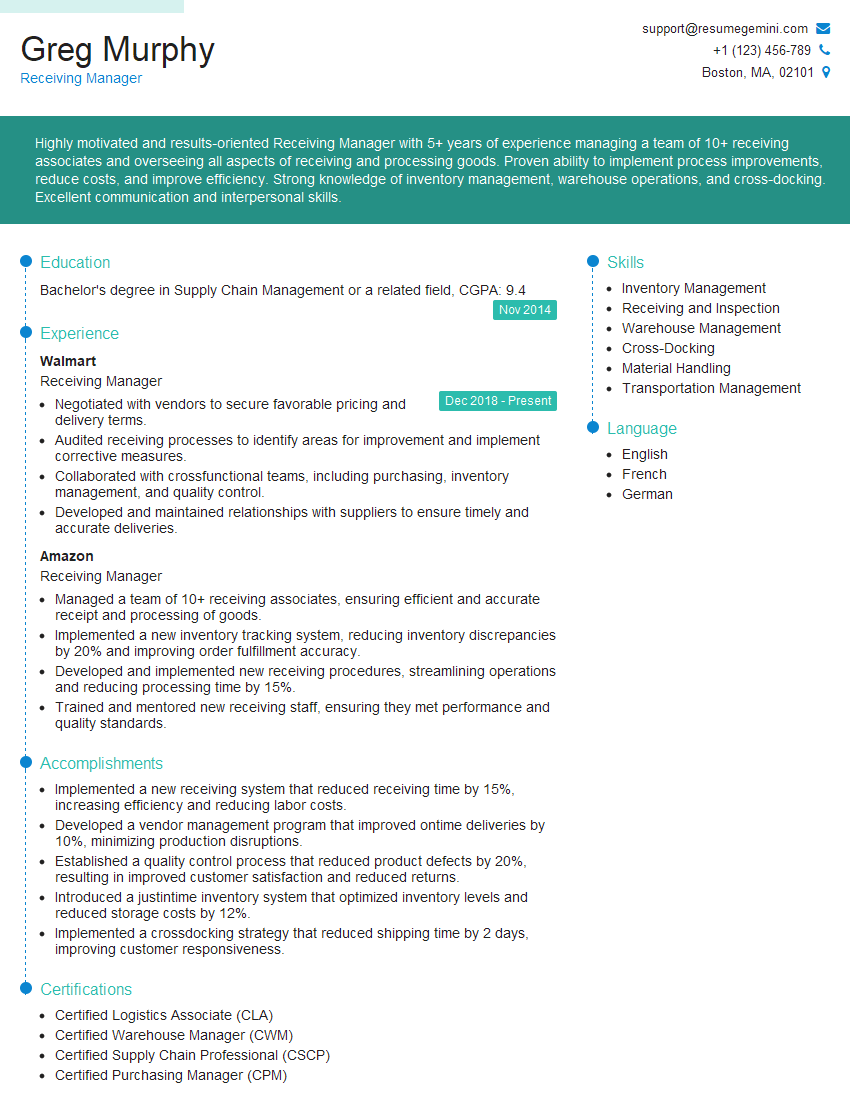
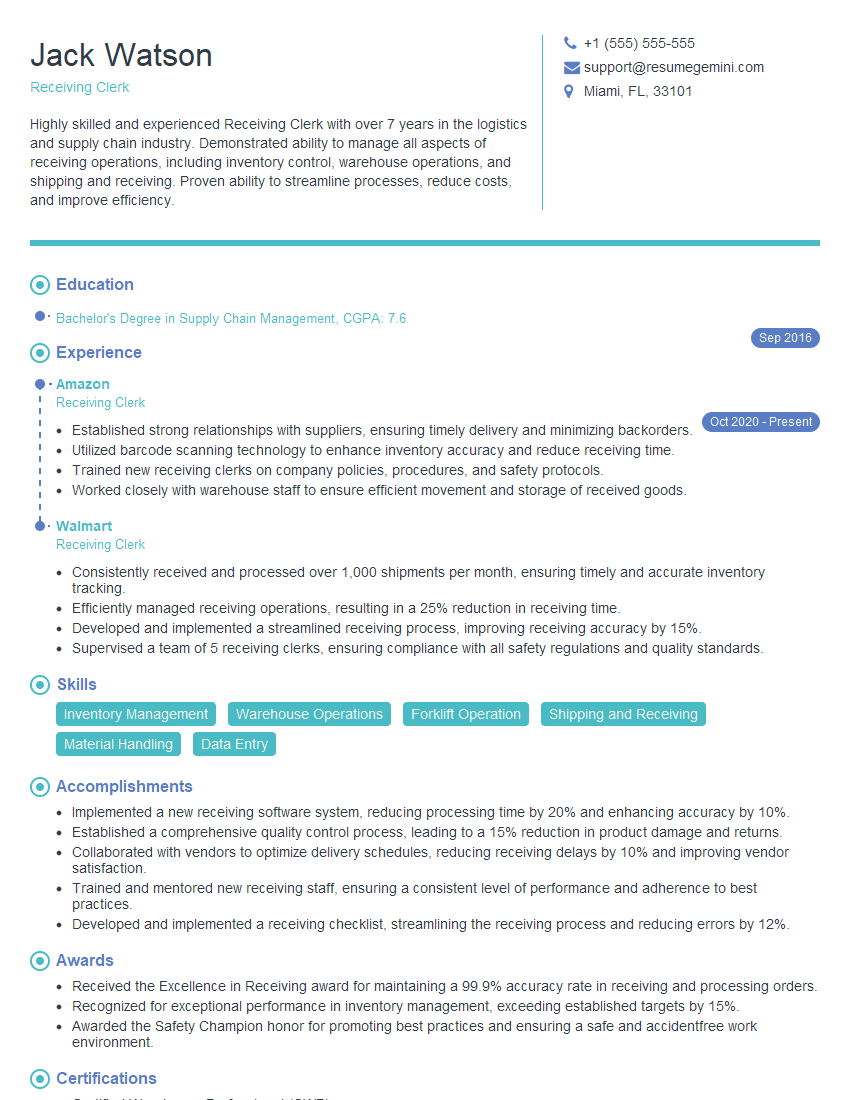
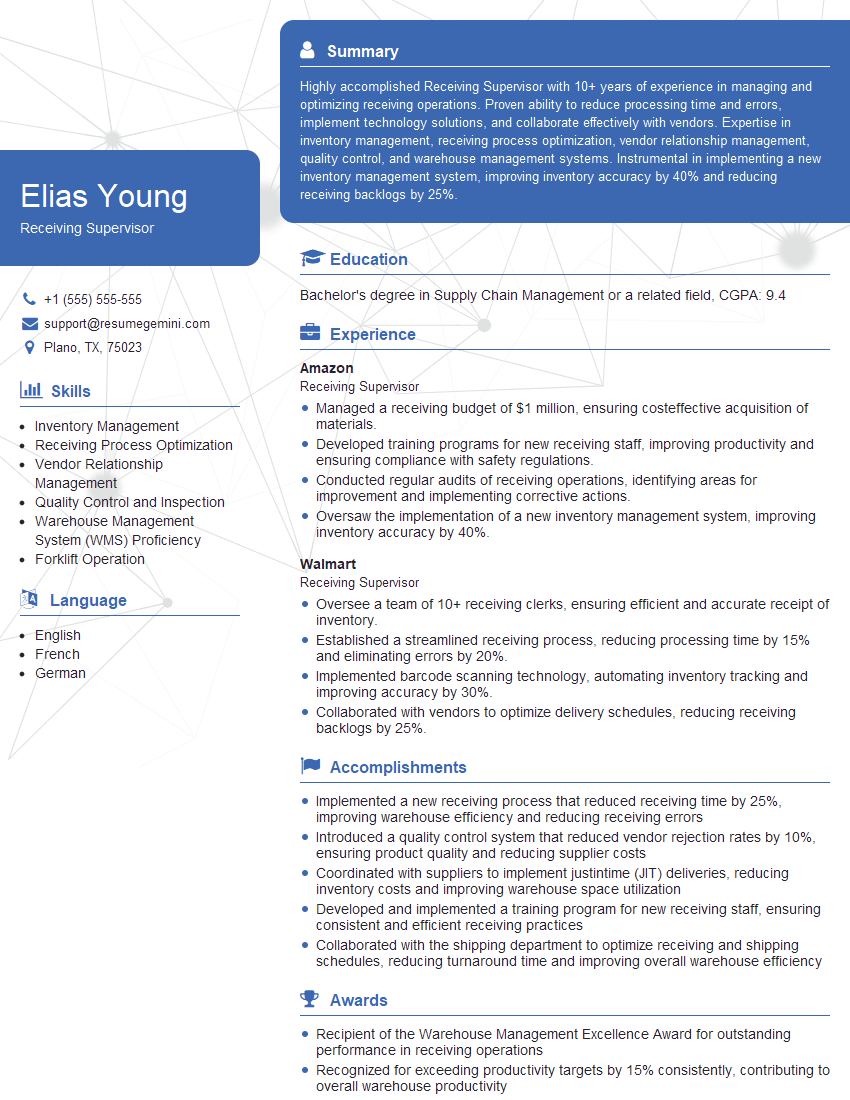
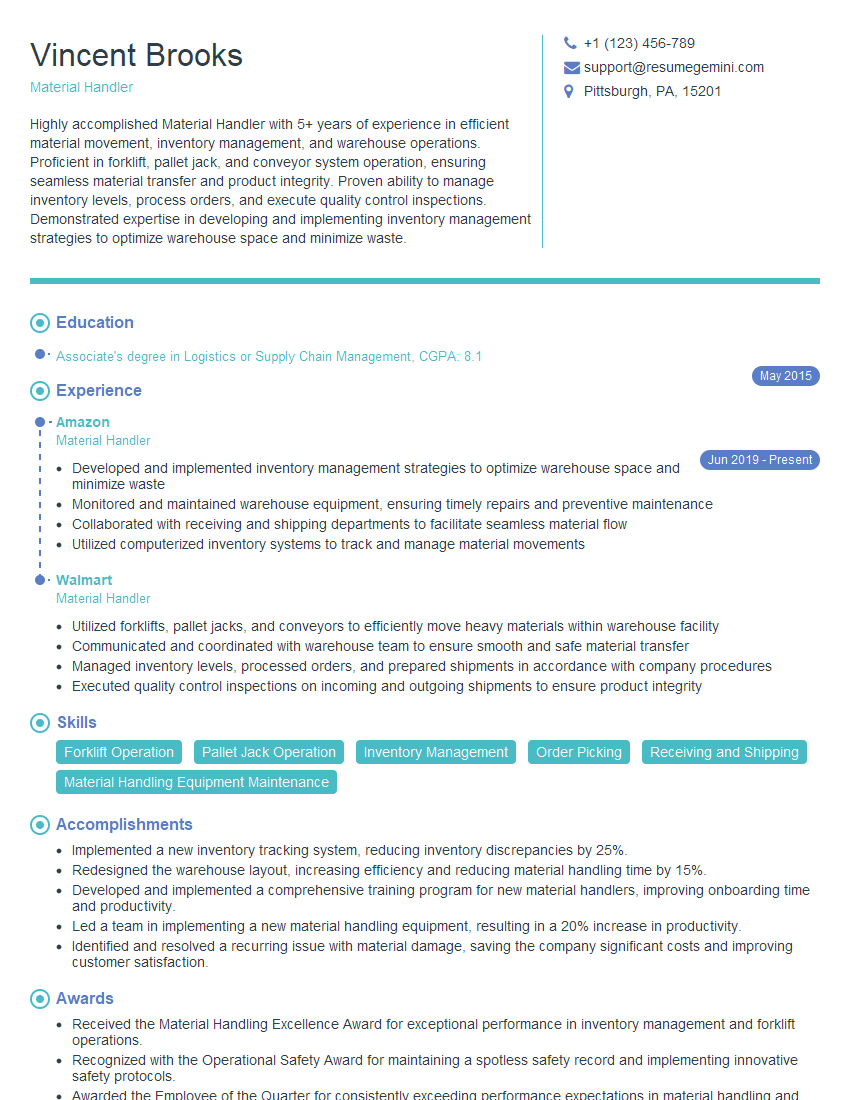
Mastering Receiving Procedures is crucial for career advancement in logistics, warehousing, and supply chain management. A strong understanding of these processes demonstrates efficiency, accuracy, and attention to detail—highly valued skills in today’s competitive job market. To significantly increase your chances of landing your dream role, creating an ATS-friendly resume is essential. ResumeGemini is a trusted resource that can help you build a professional, impactful resume tailored to highlight your skills and experience. We provide examples of resumes specifically designed for candidates in Receiving Procedures to guide you in creating yours.


Explore more articles
Users Rating of Our Blogs
Share Your Experience
We value your feedback! Please rate our content and share your thoughts (optional).
What Readers Say About Our Blog
Very informative content, great job.
good