Interviews are opportunities to demonstrate your expertise, and this guide is here to help you shine. Explore the essential UL 2272 Portable Electric Lights interview questions that employers frequently ask, paired with strategies for crafting responses that set you apart from the competition.
Questions Asked in UL 2272 Portable Electric Lights Interview
Q 1. Explain the key requirements of UL 2272 for portable electric lights.
UL 2272, the Standard for Safety for Portable Electric Lamps, outlines crucial requirements to ensure these lights are safe for consumers. It covers a wide range of aspects, focusing on preventing electrical hazards, fire risks, and mechanical injuries. Key requirements include:
- Construction and Materials: The standard specifies requirements for the materials used in the lamp’s construction, ensuring they’re resistant to heat, impact, and other environmental factors. For example, the plastic housing must be appropriately rated for temperature resistance to avoid melting or deformation near heat sources.
- Electrical Safety: This section details requirements for insulation, wire sizing, grounding, and the proper use of components like switches and cords to prevent electrical shock. A crucial element is ensuring sufficient insulation resistance to avoid current leakage.
- Mechanical Strength and Stability: The lamp must withstand reasonable impacts and stresses during normal use. Tests are conducted to assess the strength of the lamp’s structure, ensuring parts don’t break off easily, posing potential injury risks.
- Thermal Protection: The standard addresses potential overheating and the prevention of fire hazards. This often involves requirements for temperature limits, proper ventilation, and the use of thermal protection devices.
- Marking and Labeling: Clear and visible labeling is mandated, providing essential information like voltage, wattage, and warnings. This ensures the user understands the safe operating parameters of the lamp.
Essentially, UL 2272 aims to create a consistent standard for safety, ensuring portable electric lights are manufactured to minimize risks across all aspects of their operation.
Q 2. Describe the different types of testing conducted for UL 2272 compliance.
Testing for UL 2272 compliance is rigorous and comprehensive, covering various aspects of the lamp’s performance and safety. Some key tests include:
- Dielectric Strength Test: This assesses the insulation’s ability to withstand high voltages, preventing electrical shock.
- Grounding Continuity Test: This verifies proper grounding, ensuring safety in case of a fault.
- Temperature Rise Test: This evaluates the temperature increase under normal operating conditions and verifies compliance with thermal limits.
- Impact Test: This assesses the lamp’s resistance to drops and impacts, verifying mechanical strength.
- Wire and Cord Tests: These tests assess the durability and insulation resistance of the cords and wires.
- Flammability Test: This test determines the materials’ resistance to fire and propagation.
- Ingress Protection (IP) Test: (if applicable) This evaluates the lamp’s resistance to water and dust intrusion.
Each test simulates real-world scenarios, pushing the lamp to its limits to uncover potential weaknesses. The testing process is meticulous, with clear pass/fail criteria defined for each parameter.
Q 3. What are the common failure points in portable electric lights that lead to non-compliance with UL 2272?
Common failure points leading to UL 2272 non-compliance often stem from design flaws, manufacturing defects, or inadequate quality control. Some examples include:
- Inadequate Insulation: Damaged or insufficient insulation can lead to electrical shock hazards.
- Poor Grounding: A faulty ground connection can cause dangerous electrical currents to flow through the lamp’s casing.
- Overheating Components: Poor heat dissipation can cause components to overheat and potentially ignite.
- Weak Mechanical Construction: Weak points in the lamp’s structure may lead to breakage and potential injuries.
- Improper Use of Materials: Using materials with inadequate temperature ratings or flammability characteristics poses a risk.
- Faulty Wiring and Connections: Poorly soldered connections or damaged wires can lead to shorts and other electrical faults.
These issues can often be traced back to insufficient design analysis, inadequate testing during development, or substandard manufacturing processes. A thorough design review and robust quality control measures are crucial in mitigating these risks.
Q 4. How do you interpret the results of a UL 2272 test report?
A UL 2272 test report is a formal document that details the results of the safety testing conducted on a portable electric light. Understanding the report requires careful review of several key aspects:
- Test Results Summary: This section provides an overview of whether the lamp passed or failed each individual test.
- Detailed Test Results: This section provides specific data for each test, like measured temperatures, voltage readings, or impact resistance values. These should be compared to the standard’s acceptance criteria.
- Non-Compliances: If any tests failed, this section provides detailed explanations of the non-compliances and their severity.
- Corrective Actions: If non-compliances are identified, this section should outline the corrective actions taken to address the failures and re-testing results.
- Certification Status: This clearly indicates whether the lamp meets the requirements of UL 2272 and has received certification.
A thorough understanding of the testing procedures and acceptance criteria is crucial for proper interpretation. Discrepancies between the obtained results and the expected values should be carefully analyzed to identify potential root causes.
Q 5. What are the implications of non-compliance with UL 2272?
Non-compliance with UL 2272 has significant implications, impacting both the manufacturer and the consumer. For the manufacturer:
- Product Recall: Non-compliant products may need to be recalled, incurring substantial costs.
- Legal Liability: Manufacturers can face legal actions if their products cause injury or damage due to safety failures.
- Loss of Reputation: Non-compliance can severely damage a company’s reputation and trust with consumers.
- Market Restrictions: Many jurisdictions prohibit the sale of products that don’t meet safety standards like UL 2272.
For the consumer, non-compliance means increased risk of:
- Electrical Shock: Faulty insulation or grounding can result in serious injury or death.
- Fire Hazards: Overheating or flammable materials can cause fires.
- Mechanical Injuries: Poorly constructed lamps may break, leading to injuries.
Therefore, compliance with UL 2272 is not just a regulatory requirement, but a critical aspect of product safety and corporate responsibility.
Q 6. Describe your experience with UL 2272 testing procedures.
I’ve been involved in UL 2272 testing for over ten years, working with a wide range of portable electric lights, from simple bedside lamps to complex work lights. My experience spans all phases, from assisting in test set-up and execution to analyzing the results and generating reports. I’m proficient in operating all necessary testing equipment, including dielectric testers, insulation resistance meters, and thermal cameras. I have been directly responsible for identifying and resolving multiple instances of non-compliance through rigorous analysis, and proposing design modifications to ensure final products met or exceeded the standard’s stringent requirements. I’ve worked on projects requiring various levels of IP ratings (Ingress Protection), ensuring the lamp’s resilience to environmental factors like water and dust, depending on the intended application. For instance, I was instrumental in revising a work light design that failed the impact test, leading to modifications that improved the robustness of its construction and ensuring compliance.
Q 7. How do you ensure the safety of portable electric lights during the design phase?
Ensuring the safety of portable electric lights during the design phase is crucial and involves a multifaceted approach. Key strategies include:
- Component Selection: Choosing components with appropriate safety ratings and certifications (e.g., UL-listed components) is paramount. This includes selecting appropriate wire gauges, switches, plugs, and other critical elements.
- Design Reviews: Thorough design reviews by experts familiar with UL 2272 should be conducted to identify potential hazards early in the development process. This should include Finite Element Analysis (FEA) to predict stress and strain.
- Material Selection: Employing appropriate materials is vital. The materials must be resistant to heat, impact, and flammability. Testing should be conducted to verify material properties.
- Thermal Analysis: Computational fluid dynamics (CFD) and thermal simulations should be used to analyze heat generation and dissipation, ensuring adequate ventilation and temperature control.
- Electrical Safety Analysis: This involves designing for proper grounding, insulation, and protection against short circuits. Circuit simulations should be used to evaluate potential fault currents and their impacts.
- Prototype Testing: Building and testing prototypes is essential to validate the design and identify any weaknesses before mass production. This allows for iterative improvements based on real-world testing.
By incorporating these strategies throughout the design process, manufacturers can significantly reduce the risk of producing non-compliant and potentially unsafe products, contributing to a safer and more reliable end-product.
Q 8. What are some common materials used in portable electric lights, and how do they impact safety?
Material selection is critical for safety in portable electric lights. UL 2272 considers the flammability, thermal stability, and electrical insulation properties of all components. Common materials include plastics like ABS and polycarbonate for housings, which need to meet specific flammability ratings (like UL 94). Metals, such as aluminum or steel, are frequently used for heat sinks and structural elements, enhancing durability and heat dissipation. The wire insulation must be rated for the appropriate temperature and voltage, often using materials like PVC or silicone. The choice of each material directly affects the light’s resistance to overheating, fire hazards, and electrical shock. For example, a poorly chosen plastic housing might melt or ignite during prolonged use or in high-temperature environments, posing a serious fire risk. Similarly, insufficiently insulated wires could lead to short circuits and electrical shocks. A careful evaluation of material properties, considering the intended use and operating conditions of the light, is paramount to ensuring safety.
Q 9. Explain the importance of risk assessment in the design and manufacturing of UL 2272 compliant lights.
Risk assessment is the cornerstone of designing and manufacturing UL 2272 compliant lights. It’s a systematic process of identifying hazards, analyzing the likelihood and severity of potential risks, and implementing appropriate control measures. This includes considering potential failure modes, such as overheating, short circuits, insulation breakdown, and impact damage. For example, a risk assessment might identify the potential for overheating if the heat sink is inadequate. This leads to design modifications, like adding larger heat sinks or incorporating better airflow. Thorough risk assessment helps prevent accidents, protecting both consumers and the manufacturer’s reputation. Documentation of the risk assessment process is also critical for demonstrating compliance during audits.
Q 10. How do you handle discrepancies between design specifications and UL 2272 requirements?
Discrepancies between design specifications and UL 2272 requirements necessitate a careful and documented resolution process. This usually involves a collaborative effort between the design engineers and testing laboratory personnel. The first step is to thoroughly investigate the root cause of the discrepancy. Is it a misunderstanding of the standard, an oversight in the design, or a testing methodology issue? Once identified, solutions might involve redesigning the problematic component, modifying the assembly process, or seeking clarifications from UL directly. Documentation is paramount; this includes recording the discrepancy, the analysis, the chosen solution, and the verification that the solution effectively addresses the issue. In some cases, it may require additional testing to demonstrate compliance after the corrective action.
Q 11. What is your experience with different testing laboratories and their accreditation?
I have extensive experience working with several nationally recognized testing laboratories (NRTL’s) accredited to test to UL 2272. This includes Intertek, UL itself, and TUV Rheinland. My experience encompasses understanding each laboratory’s specific testing procedures, turnaround times, and communication styles. Accreditation ensures that these laboratories operate under stringent quality control measures, guaranteeing the reliability and consistency of their test results. Different labs might have slightly different approaches to specific tests, and familiarity with these nuances is essential for effective communication and efficient certification processes. Knowing their strengths and weaknesses allows for selecting the optimal lab based on project needs and timelines. Choosing an accredited laboratory is non-negotiable for achieving UL 2272 certification.
Q 12. Explain the process of obtaining UL 2272 certification.
Obtaining UL 2272 certification is a multi-stage process. It starts with designing a product that meets all the requirements of the standard. Next, a comprehensive testing plan is developed and submitted to a chosen NRTL. The lab performs rigorous testing on samples of the product, encompassing electrical safety, mechanical strength, and environmental endurance testing. This includes tests for things like temperature rise, dielectric strength, and impact resistance. If the product passes all tests, the lab prepares a report. Then, the manufacturer must address any non-conformities found during testing. Finally, once all requirements are met and documented, the NRTL issues the UL certification listing, granting the manufacturer the right to affix the UL mark to the product. The entire process typically takes several months and requires close collaboration between the manufacturer, the testing laboratory, and, sometimes, UL directly.
Q 13. How do you ensure that a product remains compliant with UL 2272 throughout its lifecycle?
Maintaining UL 2272 compliance throughout a product’s lifecycle necessitates a robust quality management system. This involves implementing rigorous quality control procedures during manufacturing and employing a comprehensive post-market surveillance program. Regular internal audits, supplier audits, and periodic testing of production samples help ensure consistent product quality and safety. Changes in design or materials must be evaluated to confirm they maintain compliance. Keeping detailed records of all production runs, including materials used and test results, is crucial for demonstrating ongoing compliance. Additionally, actively monitoring for customer reported issues and addressing any identified problems promptly are essential steps for maintaining compliance and ensuring product safety.
Q 14. How familiar are you with the different marking requirements for UL 2272 compliant products?
Familiarity with UL marking requirements is crucial for compliance. The UL 2272 compliant products must bear the appropriate UL mark, which indicates that the product has been tested and listed by a recognized NRTL. This mark typically includes the UL logo, the file number assigned by UL, and possibly other markings depending on the specific features of the product. Incorrect or incomplete marking constitutes non-compliance. The exact placement and appearance of the UL mark are specified by UL, and variations must be pre-approved. Misunderstandings or mistakes in marking can lead to significant consequences, including recall and legal issues. Therefore, meticulous attention to detail in the marking process is vital for maintaining compliance and protecting the integrity of the UL certification.
Q 15. Describe a situation where you had to troubleshoot a compliance issue with a portable electric light.
During a recent project involving a new line of LED work lights, we encountered a compliance issue with the thermal management system. Initial testing revealed that under prolonged use, the light’s internal temperature exceeded the limits specified in UL 2272. This could lead to material degradation, potential fire hazards, and ultimately, product failure.
To troubleshoot, we first meticulously reviewed the design specifications and manufacturing process. We used thermal imaging to pinpoint the areas with the highest temperatures. We discovered that the heat sink design was insufficient for the LED’s power output, particularly in high-ambient temperature conditions.
Our solution involved a three-pronged approach: redesigning the heat sink with increased surface area and improved thermal conductivity, optimizing the internal airflow within the light housing, and incorporating a thermal fuse as an added safety measure. After these modifications and subsequent testing, the light passed all the required UL 2272 compliance tests.
Career Expert Tips:
- Ace those interviews! Prepare effectively by reviewing the Top 50 Most Common Interview Questions on ResumeGemini.
- Navigate your job search with confidence! Explore a wide range of Career Tips on ResumeGemini. Learn about common challenges and recommendations to overcome them.
- Craft the perfect resume! Master the Art of Resume Writing with ResumeGemini’s guide. Showcase your unique qualifications and achievements effectively.
- Don’t miss out on holiday savings! Build your dream resume with ResumeGemini’s ATS optimized templates.
Q 16. How do you stay updated on changes and revisions to UL 2272?
Staying current with UL 2272 revisions is paramount. I utilize several methods to ensure I’m up-to-date. I subscribe directly to UL’s online updates and notifications for standard changes. I also actively participate in industry conferences and workshops where experts discuss the latest revisions and interpretations of the standard.
Furthermore, I maintain a professional network of colleagues and engineers specializing in safety standards, allowing for the exchange of information and insights on evolving best practices. Regularly reviewing relevant technical literature and publications also plays a crucial role in keeping abreast of changes and ensuring continued compliance.
Q 17. What is your understanding of the differences between UL 2272 and other relevant safety standards?
UL 2272 focuses specifically on the safety requirements for portable electric lights. It differs from other standards by its detailed specifications for factors unique to portable lighting, such as impact resistance, ingress protection (IP ratings for water and dust resistance), and the specific testing procedures for lamp holders and cordsets used in portable applications.
For instance, while IEC 60598 covers luminaires in general, UL 2272 adds the stringent requirements needed for the portability factor, addressing the risks associated with handling and movement of the light. Other standards, like those addressing specific materials or components, might overlap but won’t comprehensively cover the total safety profile required by UL 2272 for portable electric lights.
Q 18. How do you incorporate safety considerations into the cost-benefit analysis of a product design?
Safety considerations are never an afterthought; they’re integrated into the cost-benefit analysis from the very beginning of the product design process. We use a structured approach that prioritizes safety alongside cost and performance.
For example, while selecting components, we might compare the cost of a higher-rated capacitor with better longevity and safety against a cheaper, lower-rated one. The analysis considers not only the initial cost but also potential liabilities, warranty claims, and reputational damage resulting from a safety incident. The long-term costs associated with a potential recall or lawsuit significantly outweigh the initial savings from using inferior components. In short, we demonstrate that investing upfront in safety is a financially sound strategy.
Q 19. Explain the importance of documentation in maintaining UL 2272 compliance.
Thorough documentation is the cornerstone of maintaining UL 2272 compliance. It provides an auditable trail for verifying conformity to the standard’s requirements throughout the product lifecycle.
- Design documentation: This includes schematics, component specifications, material selection, thermal analysis reports, and risk assessments.
- Testing documentation: Detailed records of all tests performed, including test setups, procedures, results, and any deviations.
- Manufacturing process documentation: Procedures for production, quality control checks, and traceability of components used.
- Maintenance records: Documentation of any changes to the design or manufacturing process, and associated retesting.
This meticulous record-keeping is not only essential for demonstrating compliance to UL but also aids in troubleshooting issues and improving future designs. Think of it as a safety net, protecting the company and the consumer.
Q 20. Describe your experience with conducting failure analysis on non-compliant portable electric lights.
I’ve conducted several failure analyses on non-compliant portable electric lights. The process typically involves a systematic investigation, combining visual inspection, electrical testing, and often material analysis.
For instance, in one case, a work light failed due to overheating. Through careful examination, we determined that the insulation on the internal wiring had degraded due to prolonged exposure to high temperatures. Material analysis confirmed the degradation, and further investigation revealed a flaw in the heat sink design, leading to insufficient thermal dissipation. This systematic investigation pinpointed the root cause and informed the necessary design corrections to ensure compliance with UL 2272.
Q 21. What are the ethical considerations involved in ensuring product safety compliance?
Ethical considerations in ensuring product safety compliance are paramount. It’s not just about meeting the minimum requirements; it’s about a commitment to safeguarding the well-being of consumers.
This involves transparency in reporting test results, even unfavorable ones. It requires a proactive approach to identify and mitigate potential risks, going beyond the stated requirements of the standard where necessary. It also demands that we prioritize product safety over cost-cutting measures that compromise safety, even if it means delaying product launches or increasing production costs. Ultimately, the ethical responsibility lies in prioritising the safety and well-being of the end-user above all else.
Q 22. How do you communicate technical information related to UL 2272 compliance to non-technical audiences?
Communicating complex technical information about UL 2272 compliance to non-technical audiences requires a clear and concise approach. I avoid jargon and use analogies to explain concepts. For instance, instead of saying “insulation resistance,” I might explain it as “how well the light’s wiring prevents electric shocks.” I use visuals like diagrams and simple charts to illustrate key points. I also focus on the practical implications of compliance, such as ensuring user safety and avoiding potential hazards. For example, I would explain that meeting UL 2272 standards means the portable electric light is less likely to overheat, catch fire, or cause electric shocks, resulting in a safer product for the consumer.
A successful communication strategy also involves breaking down complex information into smaller, digestible chunks and actively seeking feedback to ensure understanding. I often use a question-and-answer format to gauge their understanding and address their concerns. For example, after explaining the importance of specific tests, I might ask, “Does that make sense? Do you have any questions about how this ensures the safety of the product?” This interactive approach enhances comprehension and strengthens the message.
Q 23. Describe your experience with working with regulatory bodies regarding UL 2272 compliance.
My experience with regulatory bodies regarding UL 2272 compliance is extensive. I’ve worked closely with Underwriters Laboratories (UL) throughout various product certification processes. This involves submitting detailed documentation, providing samples for testing, and addressing any discrepancies or deficiencies identified by UL. For example, in one project, we had to redesign a specific component to meet the thermal requirements of the standard. This involved multiple rounds of testing and communication with UL’s engineers to ensure the final design met all the safety requirements.
I’m familiar with the different stages of the certification process, from initial application to final approval. I understand the importance of meticulous record-keeping and maintaining transparent communication with the regulatory bodies throughout the process. I am adept at navigating the potentially complex approval process, anticipating potential challenges, and preparing solutions proactively to ensure smooth compliance.
Q 24. How do you manage competing demands such as time constraints, budget limitations, and safety requirements?
Balancing time constraints, budget limitations, and safety requirements in UL 2272 compliance is a crucial aspect of my work. I utilize project management techniques such as prioritizing tasks, setting realistic deadlines, and utilizing efficient testing methodologies to optimize resource allocation. For instance, I employ risk assessment to identify potential delays or cost overruns and implement proactive measures to mitigate them.
Furthermore, I collaborate closely with engineering and design teams to identify cost-effective solutions that don’t compromise safety. This often involves exploring alternative materials or designs that still meet UL 2272 standards but are more budget-friendly. Regular progress meetings and transparent communication with all stakeholders ensure everyone is aligned and informed about any potential challenges or changes to the project timeline or budget.
Q 25. What is your understanding of the impact of different environmental factors on portable electric light safety?
Environmental factors significantly impact the safety and performance of portable electric lights. Extreme temperatures, high humidity, and ingress of dust or water can all compromise the insulation, wiring, and other components, potentially leading to malfunctions, fire hazards, or electric shocks. For example, excessive heat can degrade insulation materials, reducing their dielectric strength and increasing the risk of short circuits.
UL 2272 addresses these concerns by specifying various environmental tests, such as high-temperature and low-temperature testing, damp heat testing, and ingress protection (IP) testing. Understanding the specific environmental conditions where the light will be used is critical in selecting appropriate materials and designs that can withstand those conditions and maintain safety and reliability. I have experience designing and testing lights for various extreme environments, like construction sites or outdoor events, requiring enhanced protection measures.
Q 26. How do you ensure the quality and reliability of UL 2272 testing?
Ensuring the quality and reliability of UL 2272 testing is paramount. This begins with meticulous planning and preparation, including selecting appropriate testing equipment calibrated and validated according to recognized standards. The testing process itself is meticulously documented, with detailed records maintained for traceability and review. Regular calibration and maintenance of testing equipment are critical to guarantee accurate and reliable results.
Beyond the technical aspects, a crucial part of quality assurance is the competency of the testing personnel. Experienced engineers and technicians with thorough knowledge of UL 2272 standards are essential for ensuring the tests are performed correctly and the results are interpreted accurately. We also implement robust quality control procedures and regularly review testing processes to identify areas for improvement.
Q 27. What strategies do you employ to improve efficiency in the UL 2272 certification process?
Improving efficiency in the UL 2272 certification process involves a multi-pronged approach. First, we prioritize proactive design for compliance, ensuring that the product design considers UL 2272 requirements from the outset rather than making costly modifications later. This often involves early consultation with UL to understand the requirements and potential challenges.
Second, we streamline the testing process by employing efficient testing methodologies and leveraging automation where possible. Third, we maintain clear and concise communication with UL throughout the process, proactively addressing any potential issues or delays. This approach not only reduces the overall time and cost of the certification process but also significantly minimizes the risk of delays and potential design changes.
Q 28. Describe your experience with using different testing equipment for UL 2272 compliance.
My experience with various testing equipment used for UL 2272 compliance is extensive. I am familiar with the operation and maintenance of equipment used for various tests, including insulation resistance testers, dielectric strength testers, high-pot testers, thermal shock chambers, and various types of environmental testing chambers (humidity, temperature, etc.).
I understand the importance of selecting the appropriate equipment for each test based on the specific requirements of the standard and the characteristics of the product being tested. For example, for high-voltage testing, a high-pot tester with the appropriate voltage and current ratings would be used, while different thermal chambers are selected based on the desired temperature range and testing duration. Proficiency in using this range of equipment and the ability to analyze and interpret test results are essential components of my expertise.
Key Topics to Learn for UL 2272 Portable Electric Lights Interview
- Safety Requirements: Understand the core safety standards defined in UL 2272, including electrical protection, thermal protection, and impact resistance. Consider how these requirements translate into practical design choices.
- Construction and Materials: Analyze the impact of different materials (plastics, metals) on the light’s compliance with UL 2272. Discuss the implications of material selection on safety, durability, and cost.
- Testing and Certification: Familiarize yourself with the testing procedures involved in obtaining UL 2272 certification. Understand the significance of each test and how they relate to real-world performance.
- Electrical Components: Analyze the role of various electrical components (batteries, wiring, switches) in ensuring compliance with UL 2272. Be prepared to discuss potential failure modes and mitigation strategies.
- Ergonomics and Design: Discuss the importance of user-friendliness and ergonomic design in portable lighting. Explain how these considerations align with UL 2272 requirements.
- Troubleshooting and Problem-Solving: Be ready to discuss scenarios where a portable light might fail to meet UL 2272 standards and how you would approach troubleshooting and remediation.
- Regulatory Compliance: Beyond UL 2272, understand other relevant safety regulations and standards that may apply to portable electric lights in different markets or applications.
Next Steps
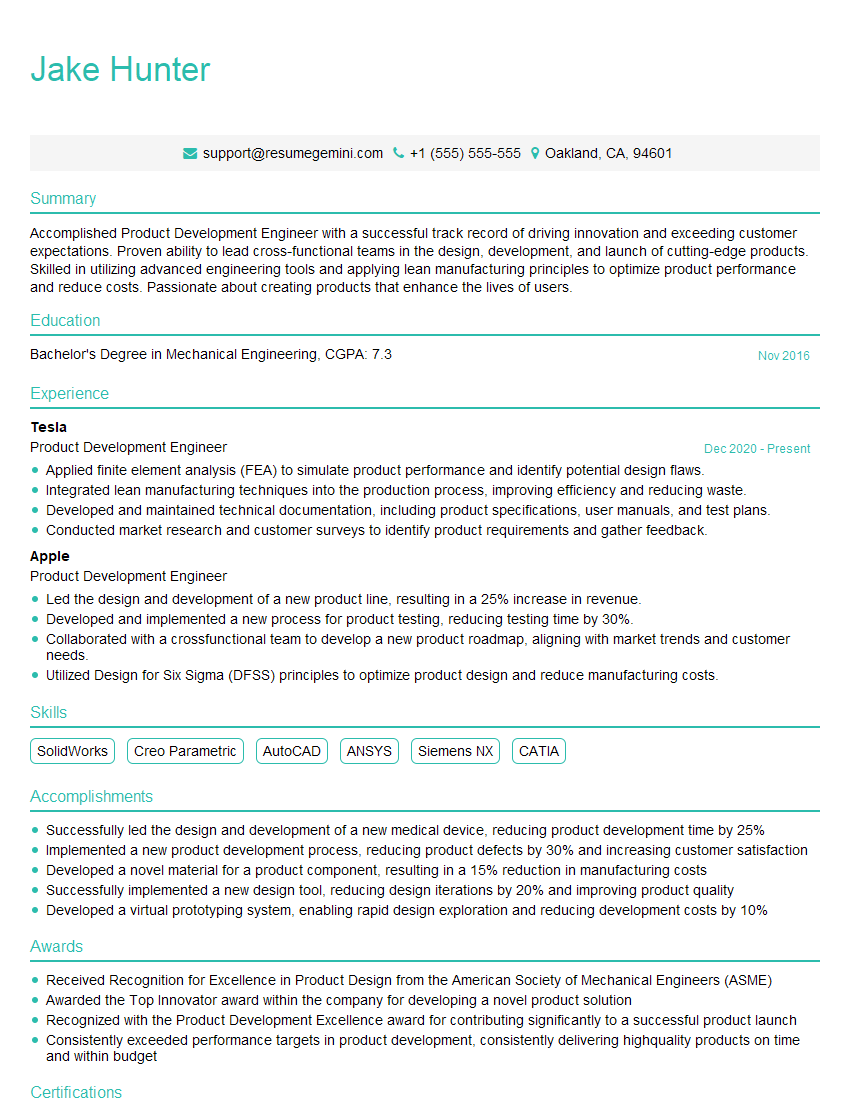
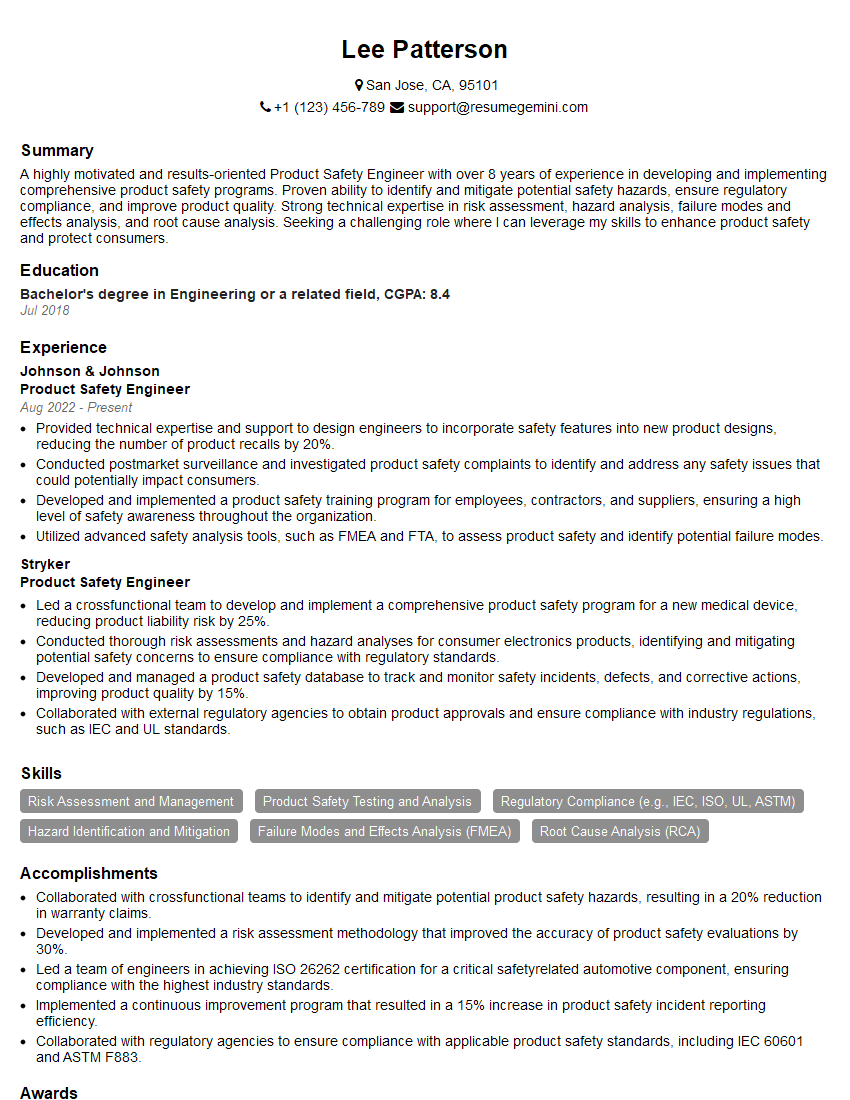
Mastering UL 2272 Portable Electric Lights demonstrates a strong understanding of safety standards and product development, significantly enhancing your career prospects in electrical engineering, product design, and quality assurance. To maximize your job search success, it’s crucial to present your skills effectively. Creating an ATS-friendly resume is key to getting your application noticed. ResumeGemini is a trusted resource that can help you build a professional and impactful resume tailored to highlight your relevant experience and expertise. Examples of resumes specifically tailored to UL 2272 Portable Electric Lights are available to help you get started.
Explore more articles
Users Rating of Our Blogs
Share Your Experience
We value your feedback! Please rate our content and share your thoughts (optional).
What Readers Say About Our Blog
Very informative content, great job.
good