Preparation is the key to success in any interview. In this post, we’ll explore crucial Artwork Creation interview questions and equip you with strategies to craft impactful answers. Whether you’re a beginner or a pro, these tips will elevate your preparation.
Questions Asked in Artwork Creation Interview
Q 1. Explain your creative process from concept to final artwork.
My creative process is iterative and deeply rooted in understanding the project’s goals. It begins with a thorough concept phase, where I immerse myself in research, brainstorming, and sketching. I meticulously explore different visual directions, mood boards, and initial drafts to solidify the core idea. This involves clarifying the target audience, defining the desired emotional impact, and establishing the overall style.
Next comes the design phase. I refine my chosen concept, creating detailed sketches or digital mockups. This stage involves experimenting with composition, color palettes, typography (if applicable), and visual elements. I often use low-fidelity prototypes to test different variations before committing to a high-fidelity design. For example, for a book cover, this might involve trying different font pairings and layout styles before settling on the final arrangement.
The production phase follows, where I meticulously create the final artwork using the appropriate software, ensuring high resolution and technical precision. This involves detailed rendering, adding textures, and refining the overall visual quality. Continuous review and adjustment are key here. Think of it as sculpting – refining the form until it perfectly matches the initial vision.
Finally, the review and refinement phase. I carefully review the artwork, making any necessary adjustments based on feedback or my own critical eye. This could include subtle color corrections, tweaks to composition, or refining details. The final artwork is then prepared for output, taking into account the specific requirements of the medium (print, web, etc.).
Q 2. Describe your experience with different software (e.g., Adobe Photoshop, Illustrator, InDesign).
My proficiency spans several industry-standard software packages. Adobe Photoshop is my go-to for photo manipulation, digital painting, and retouching. I frequently utilize its powerful layer management and adjustment tools for detailed image control. For example, I’ve used Photoshop’s masking capabilities to create intricate composite images, blending photographic elements seamlessly with digitally painted textures.
Adobe Illustrator is essential for creating vector graphics – logos, illustrations, and scalable artwork. Its precision and ability to maintain quality at any size are invaluable. I’ve used Illustrator to design logos that retain crispness even when printed on large banners or used as small website icons.
While less frequently used for my primary artwork creation, Adobe InDesign is invaluable for layout and typesetting in projects such as brochures, books, and multi-page documents. It allows me to seamlessly integrate artwork with text, ensuring a professional and visually appealing final product.
Q 3. How do you manage your time effectively when working on multiple projects with tight deadlines?
Managing multiple projects with tight deadlines requires a structured approach. I employ a project management system, often using a digital task manager like Asana or Trello, to break down large projects into smaller, manageable tasks. I assign deadlines to each task, prioritizing them based on urgency and importance. I utilize time-blocking techniques, dedicating specific time slots to focused work on particular projects.
Regularly reviewing my schedule and adjusting priorities as needed is crucial. Effective communication with clients is essential; ensuring alignment on deadlines and expectations prevents unexpected delays. It’s also important to recognize my personal limitations and avoid overcommitting myself. Taking short, strategic breaks during the day helps maintain focus and prevent burnout.
Q 4. Describe your approach to receiving constructive criticism on your work.
I view constructive criticism as an invaluable tool for growth. I actively seek feedback from peers and mentors, understanding that an objective perspective can identify areas for improvement that I might have overlooked. My approach involves carefully listening to the critique, asking clarifying questions to fully understand the feedback, and separating subjective opinions from objective observations.
I don’t take criticism personally; instead, I see it as an opportunity to learn and refine my skills. I analyze the feedback, determining if it aligns with my artistic vision and the project’s goals. I then thoughtfully consider how to implement the suggestions to improve the artwork.
Q 5. How do you stay updated on the latest trends and technologies in artwork creation?
Staying current in this dynamic field requires continuous learning. I subscribe to art-related publications, follow influential artists and designers on social media, and attend industry events and workshops. Online platforms like Behance, Dribbble, and ArtStation offer exposure to diverse styles and techniques, sparking inspiration and keeping my skills sharp.
Experimenting with new software features and exploring emerging technologies is crucial. For instance, I recently experimented with AI art generation tools to understand their potential and integration into my workflow. It’s about finding a balance between adopting innovations and retaining core artistic principles.
Q 6. What are your strengths and weaknesses as an artist?
My strengths lie in my meticulous attention to detail, my ability to translate complex ideas into visually compelling artwork, and my strong communication skills which help facilitate clear collaboration with clients. I’m adept at understanding the nuances of different design styles and adapting my approach to meet the specific needs of each project.
As for weaknesses, I sometimes struggle to detach emotionally from my work during the initial creative phases. Overcoming perfectionism and knowing when to declare a piece ‘finished’ are areas I continuously strive to improve. To mitigate this, I set clear deadlines and utilize peer reviews to provide an objective assessment of my work.
Q 7. How do you handle creative blocks?
Creative blocks are a common challenge. My strategies for overcoming them include stepping away from the project temporarily, engaging in unrelated creative activities (like sketching or listening to music), and seeking inspiration from external sources such as nature, museums, or other artists’ work.
Sometimes, a change of environment can be beneficial. I might work in a different location or try a different approach to the project. Collaborating with others can also help spark new ideas and provide fresh perspectives. Ultimately, persistence and a willingness to experiment are key to breaking through creative barriers.
Q 8. Describe a time you had to adapt your artistic style to meet a client’s needs.
Adaptability is crucial in artwork creation. A recent project involved designing a logo for a tech startup. My initial concept, a vibrant, abstract design, didn’t quite align with the client’s preference for a more minimalist and professional look. Instead of arguing for my vision, I understood their need for a logo that reflected their brand’s seriousness and stability. I adapted my style by simplifying the design elements, opting for a clean sans-serif font and a more muted color palette. The final result retained a touch of creativity but emphasized professionalism, satisfying both aesthetic and functional requirements. This experience taught me the importance of active listening and collaborative problem-solving in client projects.
Q 9. Explain your understanding of color theory and its application in your work.
Color theory is the foundation of visually appealing artwork. It encompasses the relationships between colors, including hue, saturation, and value (brightness). Understanding the color wheel – the arrangement of primary, secondary, and tertiary colors – is essential. For instance, complementary colors (opposite each other on the wheel, like red and green) create high contrast and visual excitement. Analogous colors (adjacent on the wheel, like blue, blue-green, and green) provide harmony and a sense of calmness. In my work, I strategically use color to evoke emotions and guide the viewer’s eye. For example, warm colors like reds and oranges can convey energy and excitement, while cool colors like blues and greens often create a sense of peace and tranquility. I use value to create depth and dimension, ensuring my work is both visually stimulating and communicates the intended message effectively.
Q 10. How do you ensure your artwork is accessible to a diverse audience?
Creating accessible artwork involves considering the diverse perspectives and needs of my audience. This goes beyond simply creating visually appealing pieces. It involves being mindful of cultural sensitivities, avoiding stereotypes, and using imagery that is inclusive of people with disabilities. For example, I ensure sufficient color contrast for viewers with visual impairments, using tools that measure color contrast ratios. I also consider the cultural context of symbols and imagery to avoid unintentionally offensive representations. Furthermore, I strive to create artwork that is relatable and engaging to a broad spectrum of people, regardless of their background or experience. The aim is to foster a sense of connection and understanding through art.
Q 11. What is your preferred method for presenting your artwork to clients or stakeholders?
My preferred method for presenting artwork is a carefully curated online portfolio complemented by physical presentations. The online portfolio showcases a range of my work, organized by project type and style, allowing clients to easily browse my capabilities. This is usually followed up by a more personal presentation, depending on the project. For larger projects or collaborations, I often prepare a presentation with detailed mood boards, concept sketches, and potential final renderings. This method allows for interactive feedback and ensures a clear understanding of the design process and direction. The physical presentation allows for a tactile experience that enhances the viewing experience and allows for immediate feedback and discussion.
Q 12. Describe your experience working with different file formats and resolutions.
Proficiency in various file formats and resolutions is essential. I regularly work with raster formats like .jpg (for web and print with lossy compression), .png (for web and print with lossless compression, ideal for graphics with sharp edges and transparency), and .tiff (for high-resolution print). For vector graphics, I use .ai (Adobe Illustrator) and .svg (Scalable Vector Graphics) which maintain quality regardless of scaling. Understanding resolution (measured in pixels per inch or PPI) is crucial; high-resolution images (e.g., 300 PPI) are needed for print, while lower resolutions are suitable for web use. Mismatching these can lead to blurry prints or pixelated images. I always make sure to deliver files in the appropriate format and resolution to meet the specific needs of the project and printing method.
Q 13. How do you approach solving a design problem with limited resources?
Resourcefulness is key when facing design limitations. If budget or time constraints are an issue, I focus on simplifying the design, prioritizing core elements, and maximizing the impact with limited resources. For example, instead of using expensive photography, I might opt for illustration or vector graphics. I might also explore cost-effective printing techniques or utilize readily available, free or low-cost resources, while maintaining the quality and integrity of the design. Smart resource allocation and creative problem-solving are paramount in these situations. This often involves brainstorming alternative solutions and exploring unconventional approaches to achieve a successful outcome within the given constraints.
Q 14. How familiar are you with different printing techniques and their limitations?
I’m familiar with various printing techniques, understanding their strengths and limitations. Offset printing is ideal for large print runs and provides high-quality results, but can be expensive for small quantities. Digital printing is cost-effective for smaller runs, but may have limitations in color accuracy compared to offset. Screen printing is excellent for vibrant colors on textiles or posters, but is less suitable for intricate details. Knowing these distinctions allows me to recommend the most appropriate printing method for a project, ensuring the final product meets expectations in terms of quality, cost, and turnaround time. I always discuss printing options with the client, explaining the trade-offs to make an informed decision together.
Q 15. Describe a project where you had to overcome a significant challenge.
One significant challenge I faced involved creating a large-scale mural for a city’s anniversary celebration. The initial design, while visually appealing, proved structurally unsound for the chosen wall material. The wall was older brick, and the weight of the planned materials, combined with the wind load, presented a risk of damage or even collapse.
To overcome this, I had to completely rethink the design. I collaborated with a structural engineer to determine the maximum weight the wall could safely support. This involved exploring alternative materials, reducing the mural’s overall size, and adapting the design to minimize stress points. We switched from heavy ceramic tiles to lighter, yet durable, aluminum composite panels with a specialized paint system. The final design not only met the structural requirements but also maintained the original artistic vision, albeit in a more refined and practical form. This project highlighted the importance of collaborating with specialists and adapting creatively when unexpected constraints arise.
Career Expert Tips:
- Ace those interviews! Prepare effectively by reviewing the Top 50 Most Common Interview Questions on ResumeGemini.
- Navigate your job search with confidence! Explore a wide range of Career Tips on ResumeGemini. Learn about common challenges and recommendations to overcome them.
- Craft the perfect resume! Master the Art of Resume Writing with ResumeGemini’s guide. Showcase your unique qualifications and achievements effectively.
- Don’t miss out on holiday savings! Build your dream resume with ResumeGemini’s ATS optimized templates.
Q 16. How do you maintain a balance between creative freedom and client expectations?
Balancing creative freedom and client expectations is crucial. I approach this by establishing clear communication from the outset. This includes detailed discussions about the project’s objectives, target audience, and the client’s vision. I encourage open dialogue and brainstorm sessions to understand their needs and incorporate their feedback without compromising the artistic integrity of the work.
I present multiple design concepts, each offering a variation on the initial brief, to give the client options while demonstrating my range of creative thinking. I also use mood boards and sketches to visually communicate ideas and manage expectations early in the process. Through collaborative refinement, we typically arrive at a design that satisfies both aesthetic and functional requirements. Think of it like a collaborative journey where we both reach the destination, but the route is shaped by mutual understanding and compromise.
Q 17. What are your strategies for ensuring quality control in your work?
Quality control is an ongoing process, starting with the initial concept and continuing through every stage of production. I use a multi-layered approach. First, I meticulously plan each project, outlining every step from initial sketches to final delivery. This includes detailed material specifications and technical drawings where necessary.
Secondly, I employ rigorous self-critique at each stage, often stepping away from the work for a period before returning with fresh eyes. This helps me identify potential issues or areas for improvement that might have been overlooked during the initial creation. Finally, I incorporate feedback from trusted peers or mentors during the review process, gaining an objective perspective before presenting the final work to the client. For digital artwork, I use software-specific quality checks and high-resolution formats to ensure print quality. This careful, multi-stage process ensures that the final product meets the highest professional standards.
Q 18. Describe your understanding of copyright and intellectual property laws.
I have a strong understanding of copyright and intellectual property laws. I know that copyright protection automatically extends to original artistic works from the moment they are created in a tangible form. This means I own the copyright to my creations unless a work-for-hire agreement explicitly states otherwise.
I always obtain necessary permissions for using copyrighted materials belonging to others. This includes things like images, music, or text incorporated into my work. I’m also aware of fair use principles, understanding its limitations in terms of the transformative nature of the usage, and the potential for infringement if these boundaries are exceeded. I actively strive to maintain ethical and legal compliance in all my artistic endeavors.
Q 19. Explain your experience working collaboratively in a team setting.
I have extensive experience collaborating in team settings, particularly on large-scale projects. This includes working with designers, engineers, marketing professionals, and project managers. I excel at contributing my creative input, actively listening to others’ ideas, and providing constructive feedback.
My approach emphasizes clear communication, effective task management, and mutual respect. I’m comfortable delegating tasks and collaborating effectively via various platforms including project management software and online communication tools. On a recent collaborative project designing an interactive installation, my expertise in visual design complemented the technical skills of our programming team leading to a seamless and successful outcome.
Q 20. How do you handle revisions and feedback from clients or supervisors?
I view revisions and feedback as essential components of the creative process. I approach them with an open mind, recognizing that constructive critique helps improve the final product. I always ensure that I completely understand the client’s or supervisor’s feedback before making any changes.
I maintain detailed records of all revisions, including sketches, notes, and digital files, which allows for clear tracking of the changes made. My goal is to incorporate the feedback in a way that enhances the artwork while adhering to the project’s vision and timeline. I see revisions not as obstacles, but as opportunities to refine and improve the work, leading to a more satisfying outcome for both myself and the client.
Q 21. What types of artwork do you enjoy creating the most, and why?
I find the most fulfillment in creating large-scale murals and public art installations. I’m drawn to the transformative power of art in public spaces. These projects offer a unique opportunity to engage with the community, create dialogue, and enhance the urban landscape.
I enjoy the collaborative aspect of such projects and the challenge of working with diverse stakeholders to achieve a shared vision. The scale and impact of these projects are incredibly rewarding, and it’s particularly satisfying to see the joy and inspiration they evoke in the public. I also enjoy working with digital painting, where I explore new techniques and blend traditional methods with technological advancements.
Q 22. Describe your experience with different artistic styles (e.g., realism, abstraction, surrealism).
My experience spans a wide range of artistic styles, each offering unique challenges and creative avenues. Realism, for instance, demands meticulous attention to detail and accurate representation of form, light, and shadow. I’ve employed this style in several commissioned portraits, focusing on capturing the subject’s essence through precise brushstrokes and lifelike textures. In contrast, abstraction allows for greater freedom of expression, focusing on conveying emotions and concepts through shapes, colors, and composition rather than literal representation. A recent abstract piece I created explored the theme of urban decay using bold, contrasting colors and jagged lines. Surrealism, with its focus on the juxtaposition of unexpected elements and dreamlike imagery, provides a fascinating playground for exploring subconscious thoughts and creating visually arresting narratives. One of my surreal pieces involved merging organic forms with industrial elements to represent the tension between nature and technology. Proficiency in these diverse styles allows me to adapt my approach to meet the specific needs of a project.
Q 23. How do you use typography effectively in your artwork?
Typography is more than just text; it’s a powerful visual element that can significantly impact the overall aesthetic and message of an artwork. I use typography strategically to create visual hierarchy, guide the viewer’s eye, and enhance the narrative. For example, in a poster design promoting a historical event, I might use a bold, serif typeface for the main title to convey a sense of authority and tradition, while employing a more modern, sans-serif font for the supporting text to maintain readability and visual balance. I also consider the kerning (spacing between letters), tracking (spacing between words), and leading (spacing between lines) to ensure optimal readability and aesthetic appeal. The choice of font weight, style, and size also contributes to the overall mood and tone of the piece. Ultimately, effective typography should seamlessly integrate with the visual elements, strengthening the artwork’s overall impact.
Q 24. Explain your understanding of design principles such as balance, contrast, and unity.
Design principles like balance, contrast, and unity are fundamental to creating visually appealing and effective artwork. Balance refers to the distribution of visual weight within a composition. Symmetrical balance, where elements are mirrored on either side of a central axis, creates a sense of stability and formality, while asymmetrical balance achieves harmony through the careful arrangement of unequal elements. Contrast, the juxtaposition of opposing elements, is crucial for creating visual interest and emphasis. This could involve contrasting colors, shapes, textures, or sizes. Think of a vibrant red flower against a muted green background; the contrast makes the flower stand out. Unity, on the other hand, refers to the sense of cohesiveness and harmony within a composition. This is achieved through the use of consistent elements, such as color palettes, textures, or stylistic choices, creating a sense of visual flow and wholeness. In practice, I carefully consider these principles throughout the design process, making adjustments to achieve a balanced, dynamic, and unified composition.
Q 25. Describe your approach to creating a consistent brand identity.
Creating a consistent brand identity involves establishing a cohesive visual language that effectively communicates a company’s values and personality. My approach begins with a deep understanding of the brand’s mission, target audience, and overall aesthetic goals. This involves research, analysis, and often, collaborative discussions with the client. Next, I define key visual elements such as a logo, color palette, typography, and imagery style. These elements are then meticulously applied across all brand materials, ensuring consistency in messaging and visual presentation. For example, I recently worked with a startup developing sustainable clothing, ensuring the color palette reflected natural earth tones, and the typography was clean and modern, conveying a sense of responsibility and innovation. Maintaining this consistency across platforms – websites, social media, packaging – is crucial for building brand recognition and trust.
Q 26. How do you maintain organization and efficiency in your workflow?
Maintaining organization and efficiency in my workflow is paramount. I employ a project management system that utilizes a combination of digital tools and analog methods. I begin each project by creating a detailed brief outlining objectives, deadlines, and deliverables. I then break down the project into smaller, manageable tasks and assign them to specific time slots within my schedule. I use digital tools like project management software to track progress, manage files, and collaborate with clients or team members. Furthermore, I prioritize regular clean-up of my digital and physical workspace, ensuring easy access to resources and minimizing distractions. This methodical approach helps me stay on track, manage deadlines effectively, and avoid burnout, ultimately increasing productivity and project quality.
Q 27. What are your salary expectations?
My salary expectations are commensurate with my experience and skillset, and the specific requirements of the role. I am open to discussing a competitive compensation package that reflects the value I bring to your organization.
Q 28. Do you have any questions for me?
I’m very interested in learning more about the specific projects your team is currently working on and the technologies and software your studio utilizes. I’d also like to know more about your team’s collaborative process and opportunities for professional development within the company.
Key Topics to Learn for Artwork Creation Interview
- Software Proficiency: Demonstrate expertise in industry-standard software like Adobe Photoshop, Illustrator, InDesign, and potentially others relevant to the specific role (e.g., 3D modeling software). Be prepared to discuss your experience level and specific projects showcasing your skills.
- Design Principles: Understand and be able to articulate core design principles such as color theory, typography, composition, balance, and visual hierarchy. Practice applying these principles to various design challenges.
- Workflow and Process: Discuss your approach to project management, from initial concept to final delivery. Highlight your ability to manage time effectively, meet deadlines, and adapt to changing requirements.
- Client Communication: Explain how you effectively communicate with clients to understand their needs, present design options, and incorporate feedback throughout the creative process. Showcase your ability to manage expectations and deliver exceptional results.
- Creative Problem-Solving: Be ready to discuss how you approach creative challenges and overcome obstacles. Provide examples of how you’ve used innovative solutions to achieve desired outcomes.
- Portfolio Presentation: Practice articulating your design choices and the thought process behind each piece in your portfolio. Be prepared to discuss both successes and lessons learned from past projects.
- Technical Skills (if applicable): Depending on the role, you may need to demonstrate knowledge of image optimization, web design principles, print production processes, or other specialized techniques.
Next Steps
Mastering Artwork Creation opens doors to exciting and rewarding career opportunities in various creative fields. To significantly boost your job prospects, it’s crucial to have a strong, ATS-friendly resume that highlights your skills and experience effectively. ResumeGemini is a trusted resource that can help you build a professional and impactful resume tailored to your unique background and career goals. Examples of resumes specifically tailored for Artwork Creation professionals are available to guide you through the process. Invest time in crafting a compelling resume – it’s your first impression and a key to unlocking your dream job.
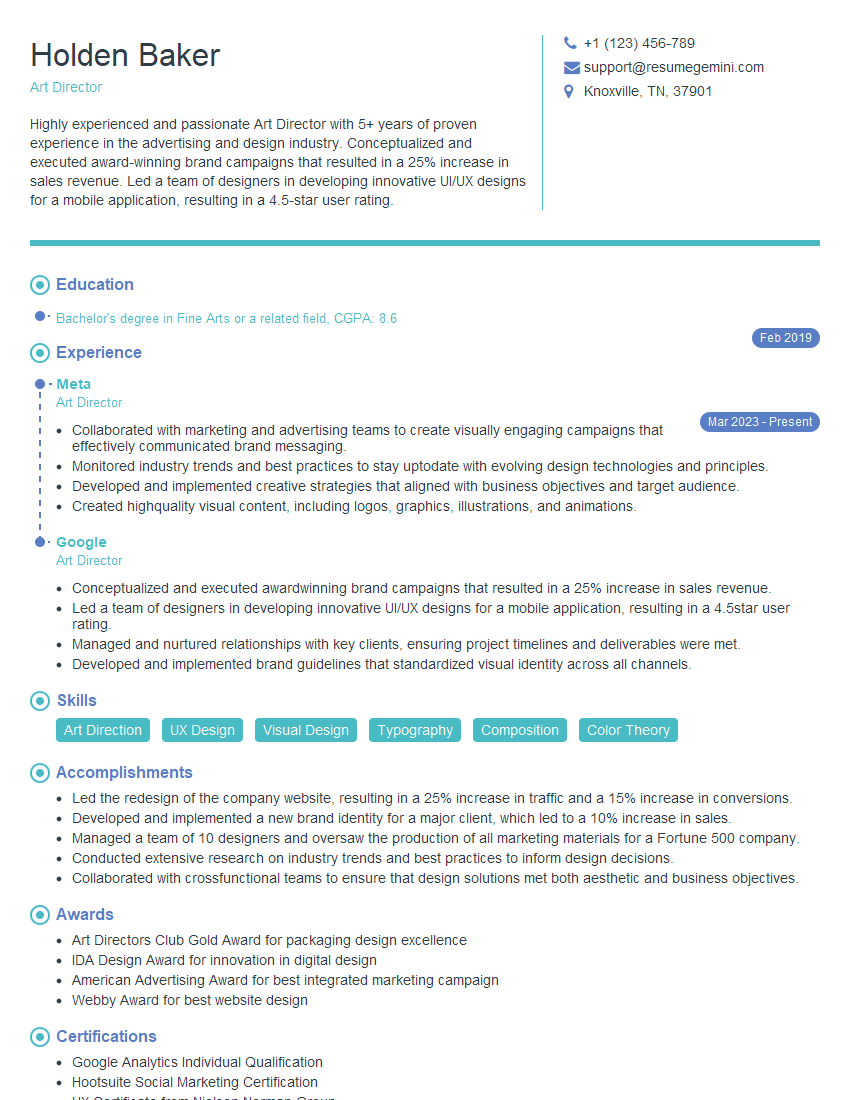
Art Director Resume Sample
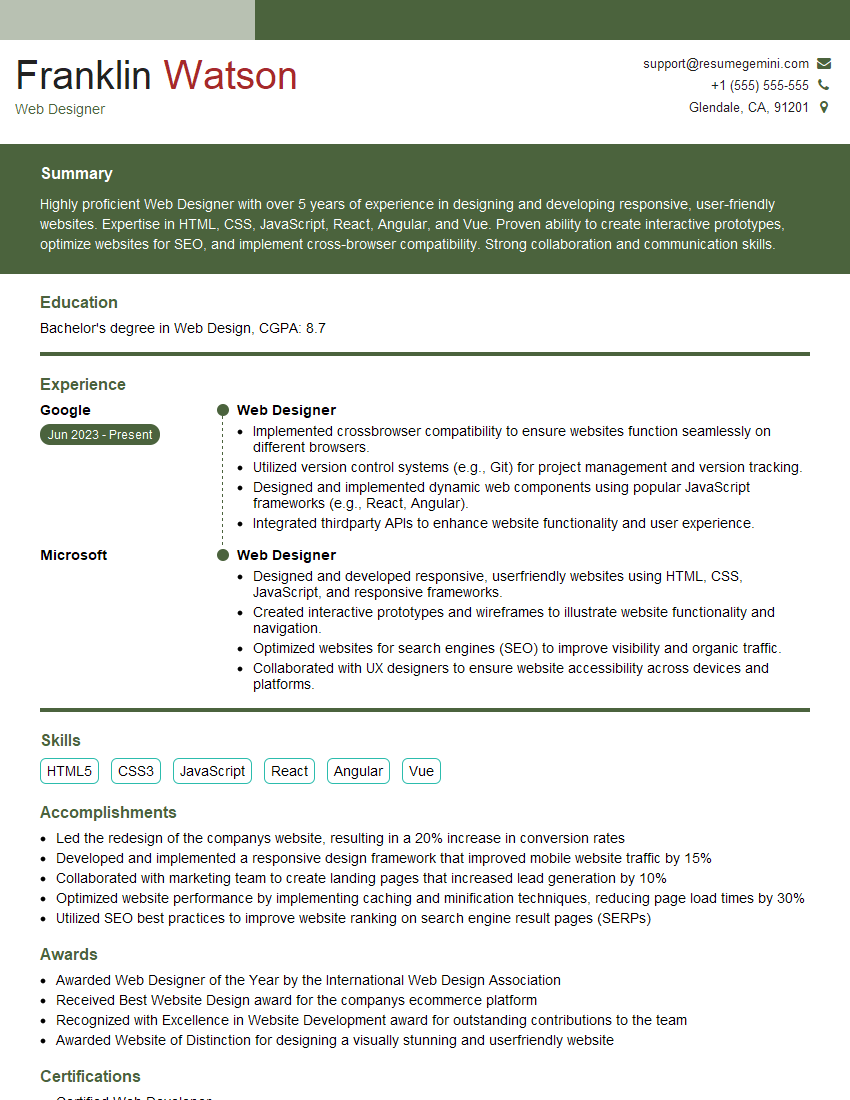
Web Designer Resume Sample
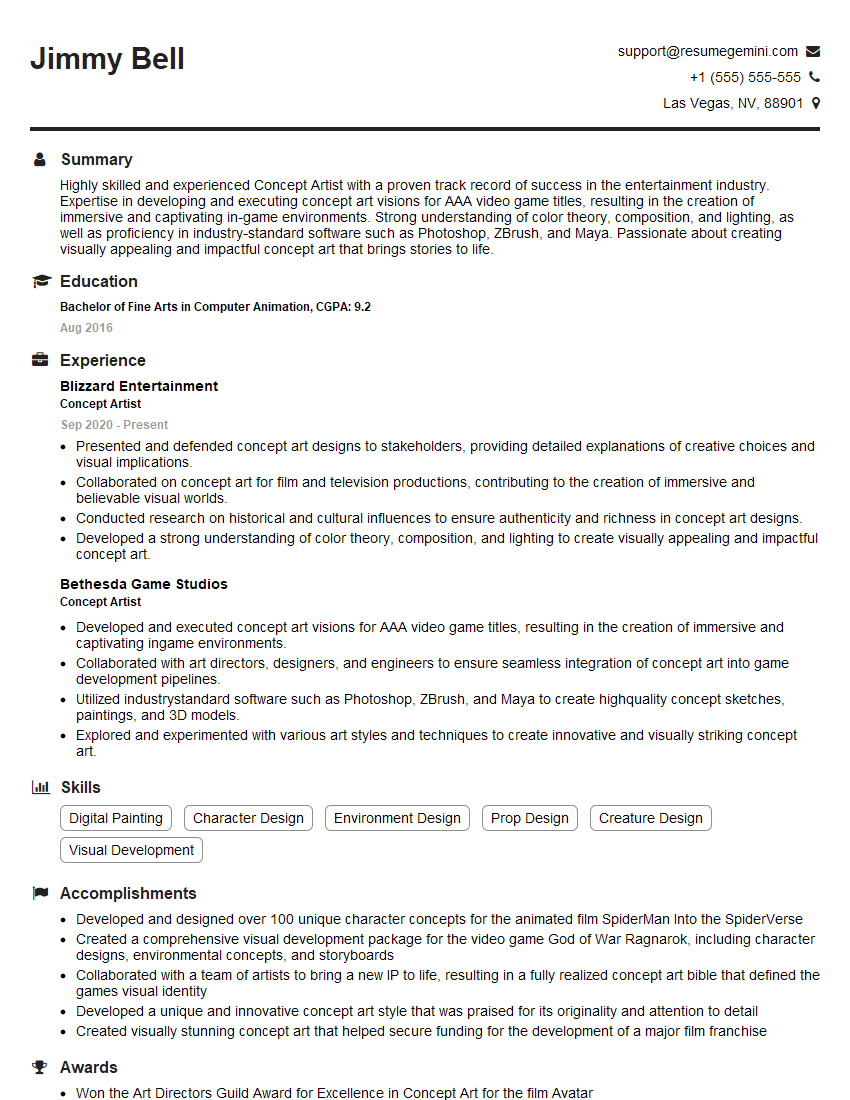
Concept Artist Resume Sample
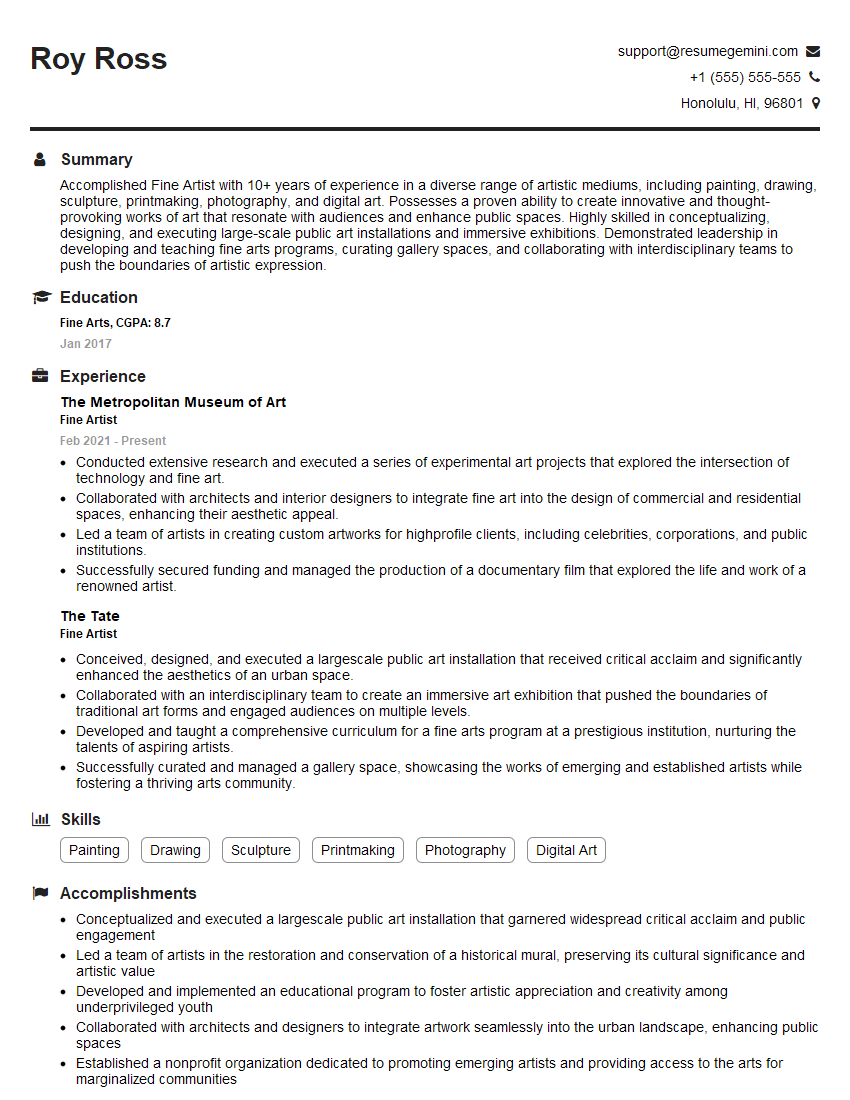
Fine Artist Resume Sample
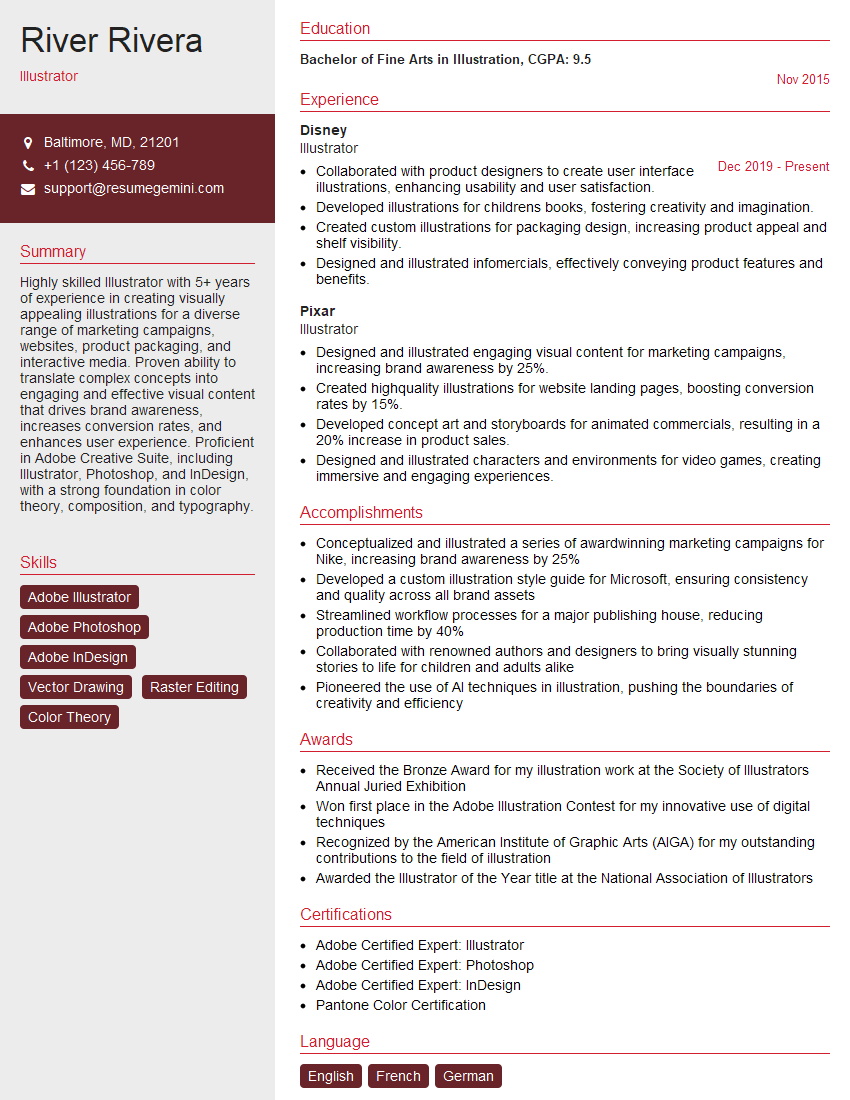
Illustrator Resume Sample
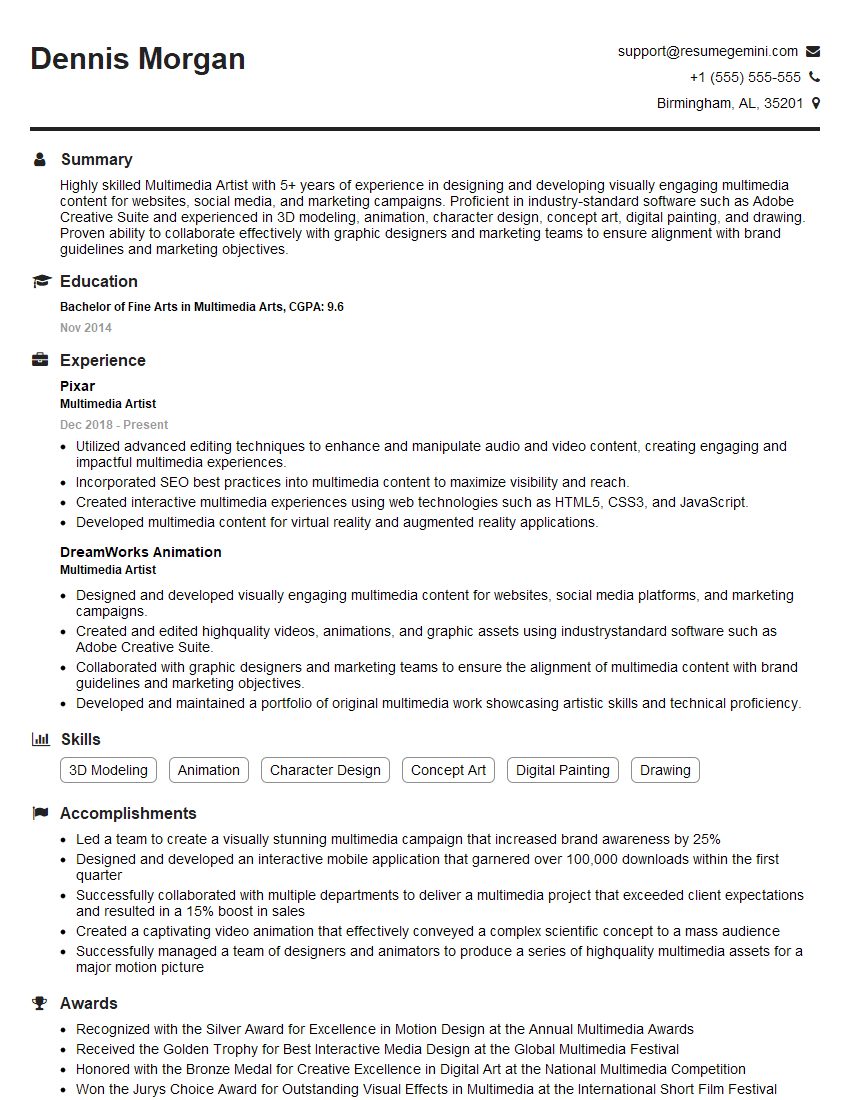
Multimedia Artist Resume Sample
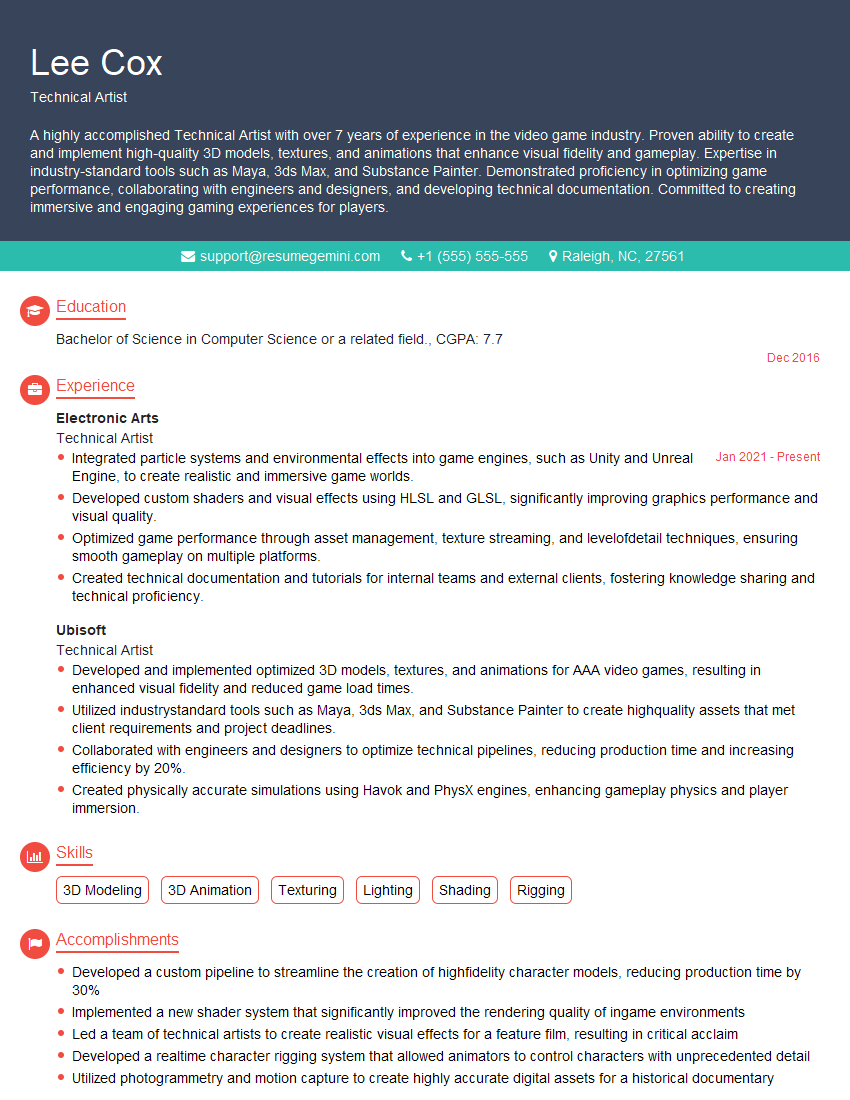
Technical Artist Resume Sample
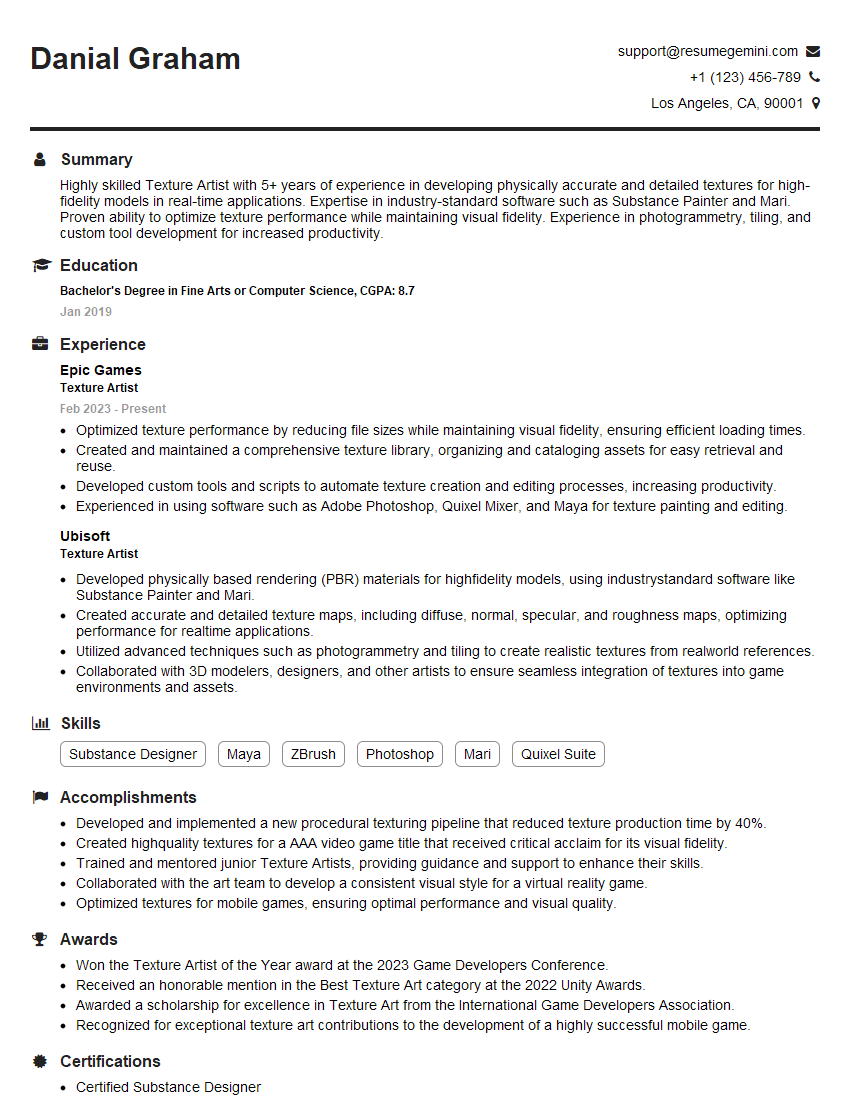
Texture Artist Resume Sample
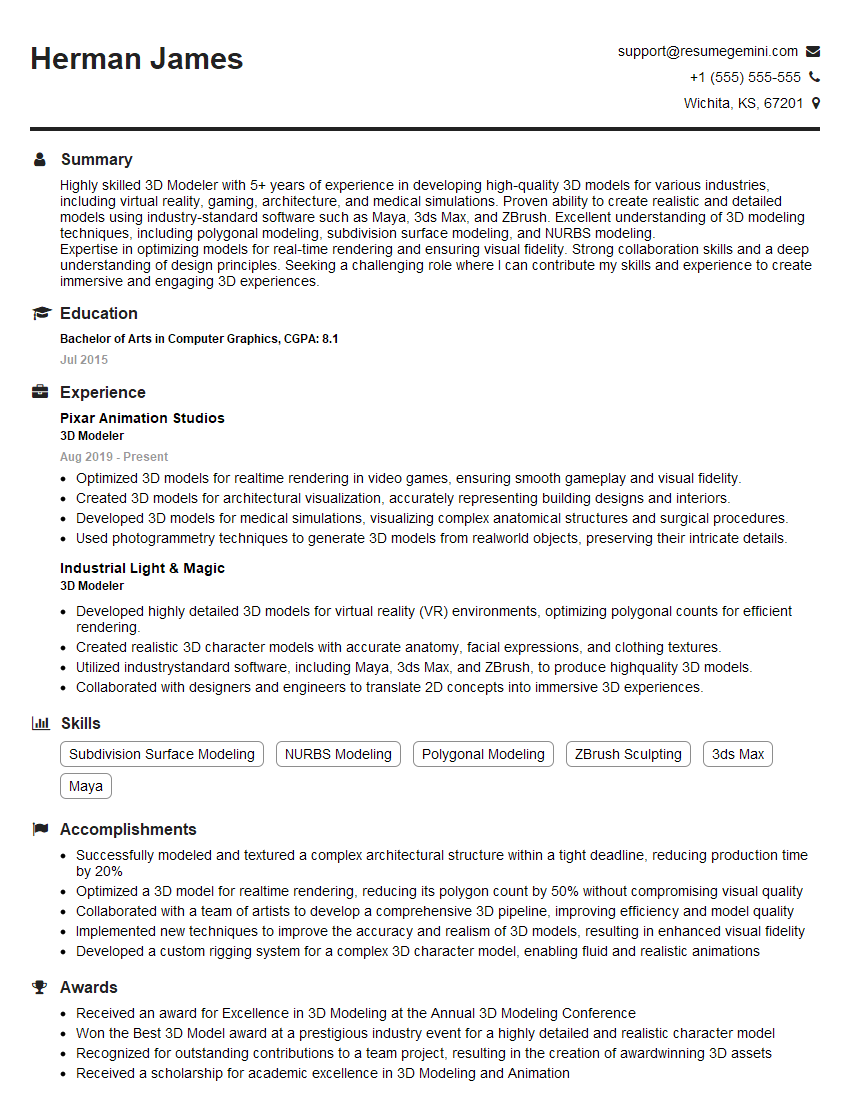
3D Modeler Resume Sample
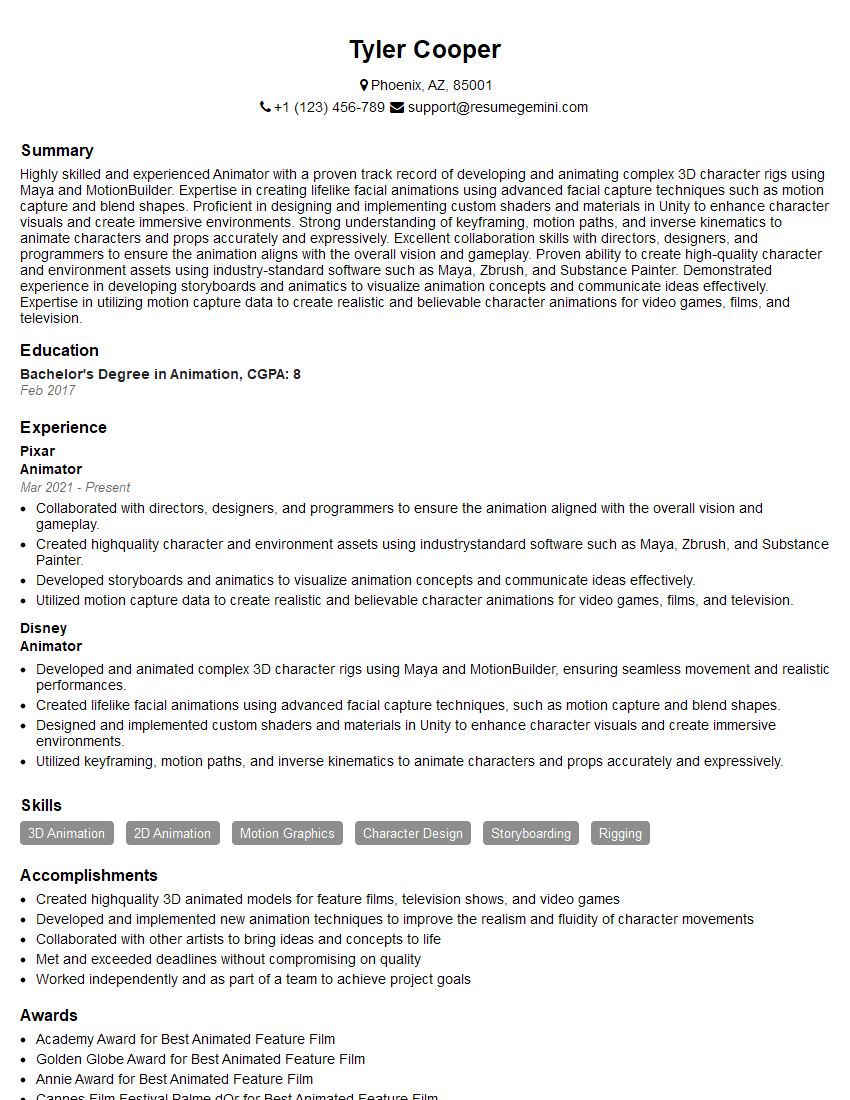
Animator Resume Sample
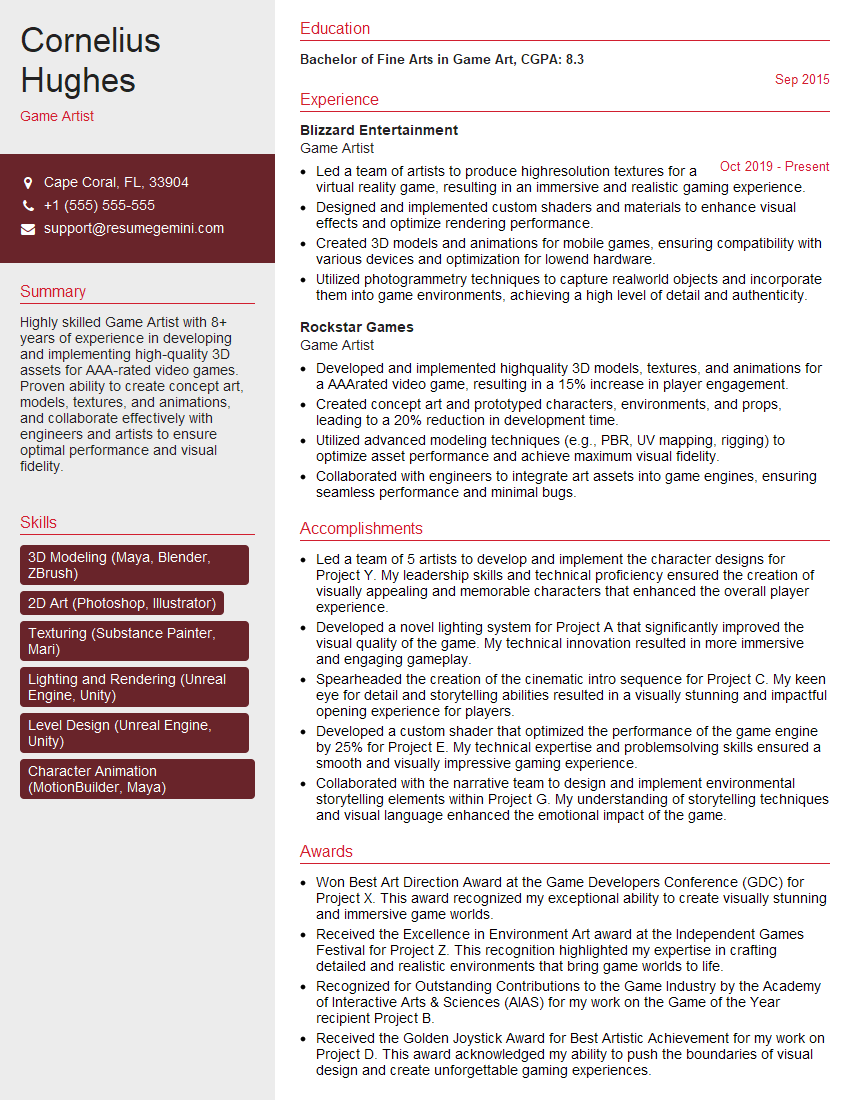
Game Artist Resume Sample
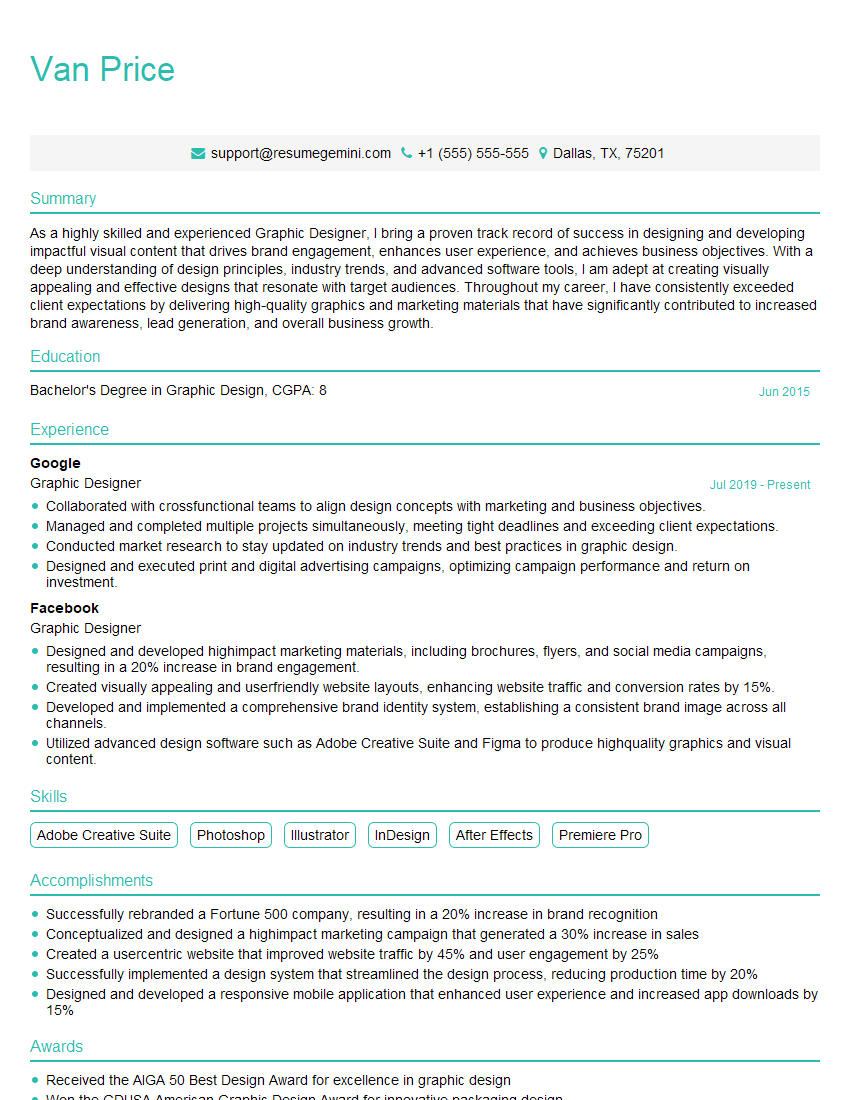
Graphic Designer Resume Sample
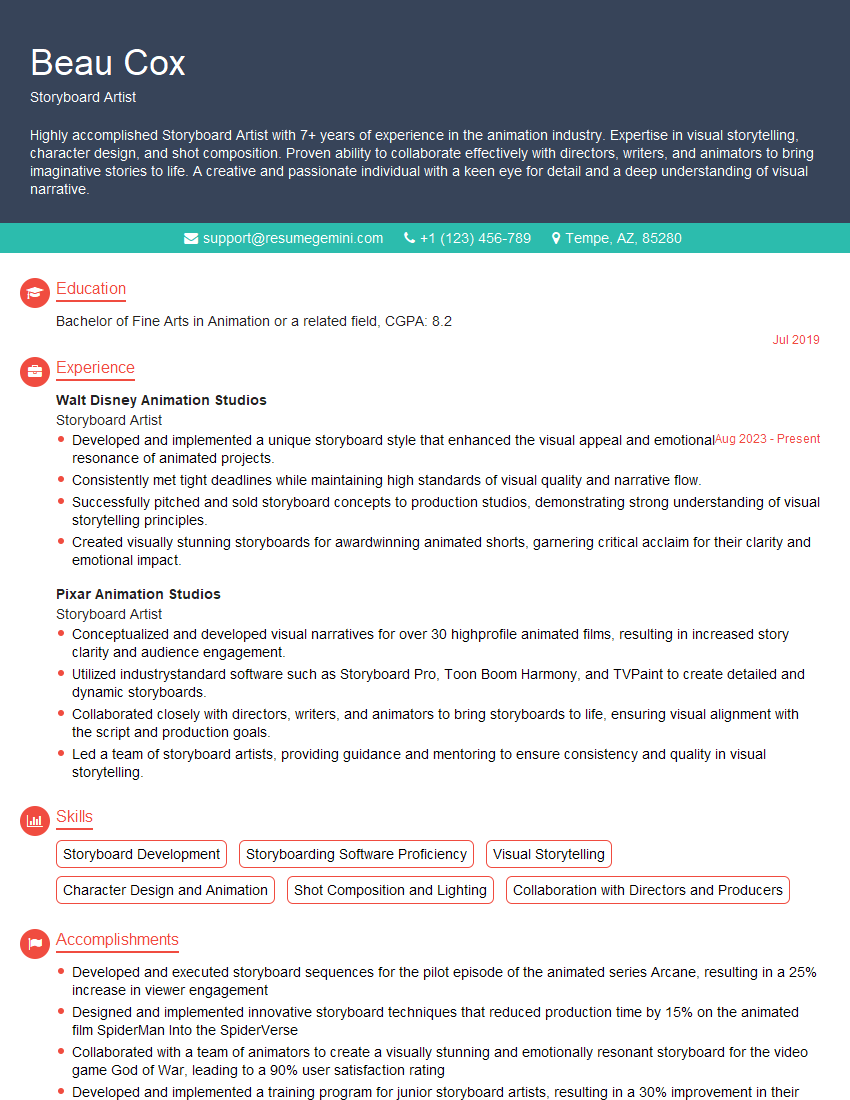
Storyboard Artist Resume Sample
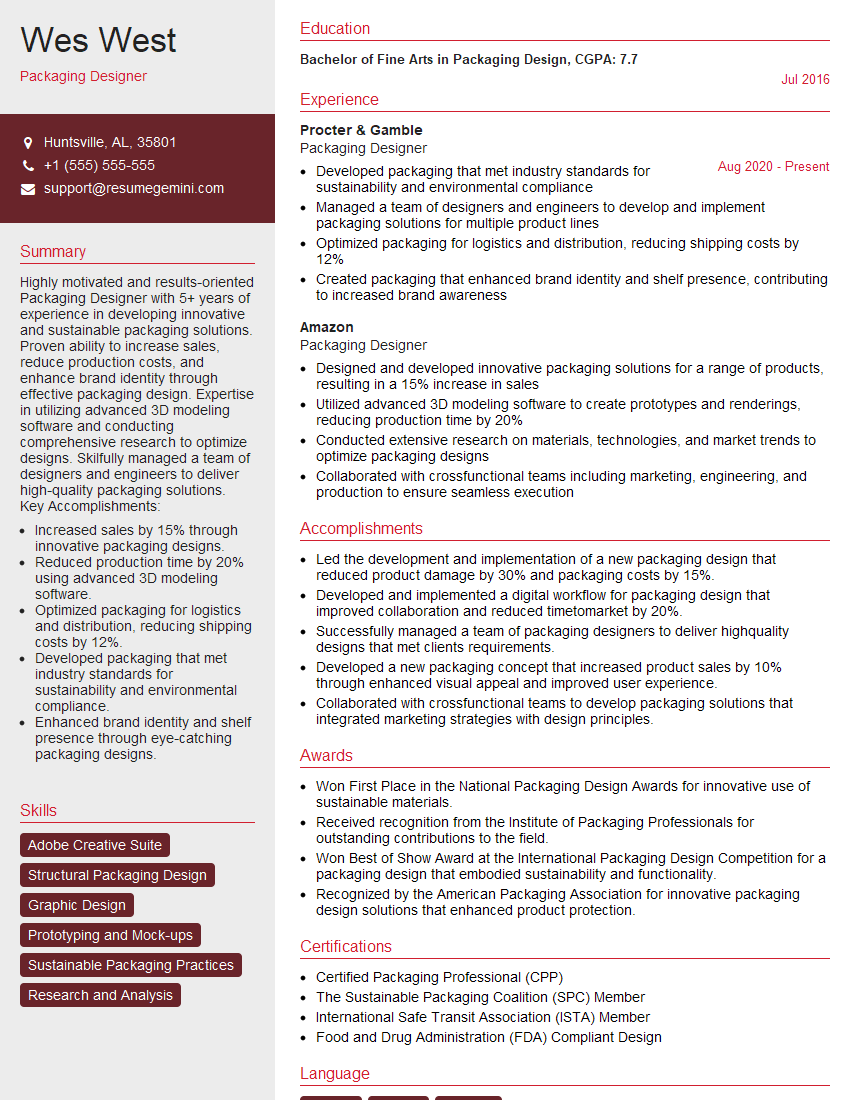
Packaging Designer Resume Sample
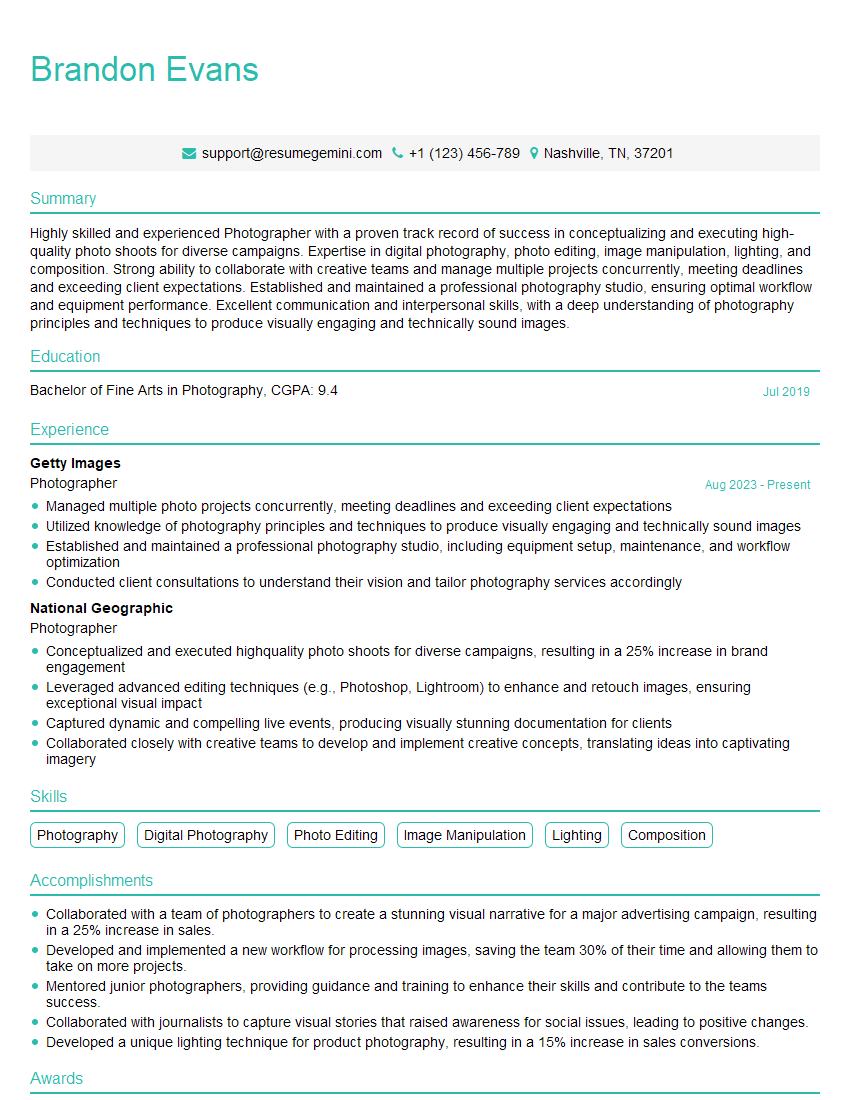
Photographer Resume Sample
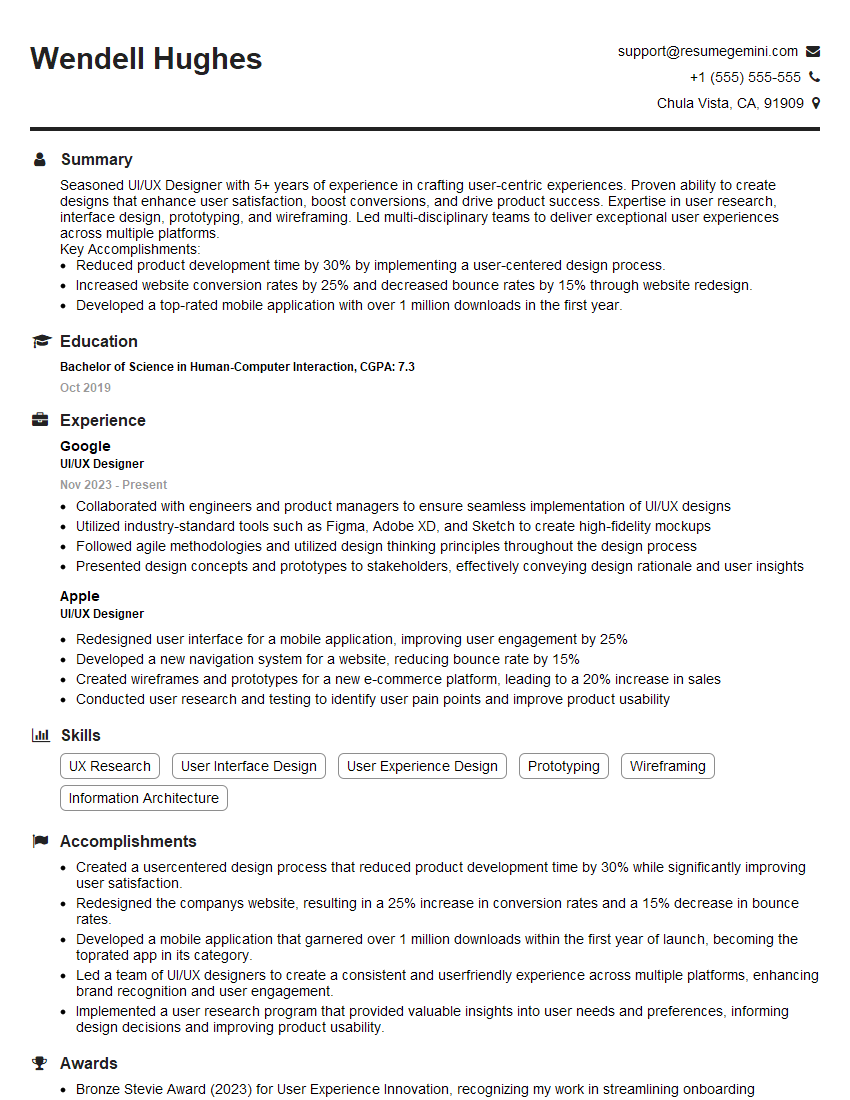
UI/UX Designer Resume Sample
Explore more articles
Users Rating of Our Blogs
Share Your Experience
We value your feedback! Please rate our content and share your thoughts (optional).
What Readers Say About Our Blog
Very informative content, great job.
good