Feeling uncertain about what to expect in your upcoming interview? We’ve got you covered! This blog highlights the most important EU 2014/30/EU EMC Directive interview questions and provides actionable advice to help you stand out as the ideal candidate. Let’s pave the way for your success.
Questions Asked in EU 2014/30/EU EMC Directive Interview
Q 1. Explain the scope of the EU 2014/30/EU EMC Directive.
The EU 2014/30/EU Electromagnetic Compatibility (EMC) Directive sets the rules for placing equipment on the EU market that can emit or be affected by electromagnetic disturbances. Its scope is incredibly broad, covering virtually all electrical and electronic equipment, from simple household appliances to complex industrial machinery. The only major exceptions are equipment explicitly excluded by other directives. Think of it as a safety net for preventing electronic devices from interfering with each other or causing harm. For example, a radio emitting strong signals that disrupt nearby medical devices would fall under this directive.
Essentially, if your product uses electricity or generates electromagnetic fields, it likely needs to comply.
Q 2. What are the key requirements for EMC compliance under 2014/30/EU?
Key requirements under 2014/30/EU revolve around ensuring electromagnetic compatibility. This boils down to two main aspects:
- Emission Limits: The equipment must not emit excessive electromagnetic interference (EMI) that could disrupt other devices or systems. This is tested by measuring the electromagnetic fields emanating from the device.
- Immunity Requirements: The equipment must be able to withstand specified levels of electromagnetic interference without malfunctioning. This is tested by subjecting the equipment to various levels of electromagnetic fields.
Compliance often involves a combination of good design practices, careful component selection, and rigorous testing. The directive requires manufacturers to prepare a technical file demonstrating conformity. This file includes things like test reports, design documentation, and declarations of conformity.
Q 3. Describe the different EMC emission limits defined in the directive.
The EMC Directive doesn’t explicitly define specific numerical limits; instead, it references harmonized standards (like EN standards). These standards specify the precise emission limits for different equipment categories and frequency ranges. For instance, a microwave oven will have different limits than a smartphone. These limits typically express the maximum allowed level of electromagnetic emissions in volts per meter (V/m) for radiated emissions or in decibels relative to one microvolt (dBuV) for conducted emissions, measured at specified frequencies.
The complexity arises from the vast array of equipment and the need for tailored limits based on intended use and environment. A toy will have less stringent limits than industrial equipment operating near sensitive medical devices.
Q 4. Explain the difference between conducted and radiated emissions.
The distinction between conducted and radiated emissions is crucial in EMC testing.
- Conducted Emissions: These are electromagnetic disturbances that travel along the power lines or signal cables connected to the equipment. Think of it like noise travelling along a wire. They’re often measured at the points where the equipment connects to the power supply and other devices. This is important because conducted emissions can propagate through the entire electrical network.
- Radiated Emissions: These are electromagnetic disturbances that are transmitted through the air as electromagnetic waves. Imagine your device acting like a tiny radio transmitter, albeit unintentionally. These emissions are measured at a distance from the equipment using antennas.
Both types of emissions are important because they can cause interference in different ways. For instance, conducted emissions might cause a flicker in connected lights, while radiated emissions could affect nearby radio receivers.
Q 5. How are immunity tests performed according to the directive?
Immunity tests are designed to assess how well the equipment withstands electromagnetic interference. The testing is done according to the applicable harmonized standards, which specify the types and levels of interference to apply. These tests simulate real-world conditions that might expose the equipment to electromagnetic fields. Common immunity tests include:
- Radiated Immunity: The equipment is exposed to radiated electromagnetic fields at various frequencies and intensities.
- Conducted Immunity: Electromagnetic disturbances are injected into the power lines and signal cables connected to the equipment.
- Surge Immunity: The equipment is subjected to transient surges in voltage to simulate power line disturbances.
- EFT (Electrical Fast Transient): Short, high-voltage pulses are applied to simulate electrical fast transients often seen in power lines.
The equipment’s response is observed during these tests, and it must continue to function correctly without malfunction or data corruption. The intensity of the applied field is increased until the device fails, and this failure point helps define the equipment’s immunity.
Q 6. What are the essential requirements of the EMC Directive?
The EMC Directive’s essential requirements are aimed at ensuring that equipment does not generate intolerable levels of electromagnetic disturbances, and that it is sufficiently resistant to disturbances stemming from other equipment. These requirements are broadly worded and act as the foundation for the more specific technical standards. The essential requirements focus on the protection of:
- Radio reception: Equipment must not cause unacceptable interference with radio communications.
- Telecommunications services: Equipment must not disrupt telecommunication services, such as telephone lines and data networks.
- Other equipment: Equipment should not cause malfunctions in other nearby equipment.
- Human health and safety: While not directly specifying health limits, ensuring EMC compliance indirectly contributes to a safer environment.
Manufacturers need to demonstrate that their products meet these requirements through testing and documentation.
Q 7. What is the role of a Notified Body in EMC certification?
A Notified Body (NB) is a third-party organization designated by an EU Member State to assess the conformity of products with the EMC Directive. While not mandatory for all products, certain higher-risk equipment requires involvement of a Notified Body for certification. The NB’s role involves:
- Assessment of the technical documentation: Reviewing the manufacturer’s technical file to verify compliance with the essential requirements.
- Factory inspection (often): Inspecting the manufacturing facilities to ensure the quality system is in place and capable of producing compliant products.
- Testing (sometimes): Possibly performing or witnessing specific tests to validate claims made in the technical file.
- Issuance of a certificate: If the equipment satisfies all the requirements, the NB issues a certificate, allowing the manufacturer to affix the CE marking demonstrating compliance with the directive.
Using a Notified Body enhances credibility and simplifies market access within the EU. Choosing a reputable NB is vital for ensuring the process is rigorous and the product receives appropriate scrutiny.
Q 8. Describe the process of obtaining EMC certification under 2014/30/EU.
Obtaining EMC certification under the 2014/30/EU directive involves a multi-step process focusing on demonstrating compliance with the essential requirements. It doesn’t involve a single ‘certification body’ issuing a certificate directly, but rather a declaration of conformity based on testing and assessment.
- Design Phase: Thorough EMC design is crucial. This includes careful component selection, PCB layout design, and consideration of shielding and grounding strategies from the outset. This proactive approach significantly reduces the need for costly redesigns later.
- Testing: The product undergoes EMC testing by a notified body or, in some cases, a testing lab accredited to relevant standards. These tests assess emission levels (radiated and conducted) and immunity to external electromagnetic fields. Specific tests depend on the equipment’s category and intended use.
- Conformity Assessment: Based on the test results, a conformity assessment procedure is followed. This might involve internal production quality control, type testing, or even full quality assurance system audits. The choice depends on the manufacturer’s chosen route to conformity.
- Declaration of Conformity (DoC): If all requirements are met, the manufacturer issues a Declaration of Conformity, a legal declaration stating the product complies with the directive. This DoC must contain specific information such as the product description, applicable standards, and the manufacturer’s details.
- CE Marking: Finally, the manufacturer affixes the CE marking to the product and packaging, indicating conformity with the directive and allowing it to be legally sold within the EU market.
Imagine building a car – you wouldn’t just assemble parts and hope it works; similarly, comprehensive EMC design and testing ensure your electronic product functions reliably and doesn’t interfere with other devices.
Q 9. Explain the concept of electromagnetic compatibility (EMC).
Electromagnetic Compatibility (EMC) refers to the ability of an electronic device or system to function satisfactorily in its electromagnetic environment without causing unacceptable electromagnetic interference (EMI) to other devices.
Think of it like a crowded city: EMC ensures each device (car, bus, pedestrian) operates without causing accidents or disruptions to others. A radio’s ability to receive a signal cleanly without interference from a nearby power line is a perfect example of good EMC. Conversely, a faulty appliance causing interference on your television displays poor EMC.
It involves two key aspects:
- Emissions: The electromagnetic energy a device radiates or conducts into its surroundings.
- Immunity: The device’s resistance to disruption from external electromagnetic fields.
Both emissions and immunity are equally important for achieving EMC compliance.
Q 10. What are common EMC problems in electronic design?
Common EMC problems arise from various sources in electronic design. Here are some examples:
- High-speed digital signals: Fast switching transitions generate significant EMI. This is especially relevant in high-frequency circuits and processors.
- Poor PCB layout: Inadequate routing of traces, lack of grounding planes, and improper placement of components can lead to increased EMI emissions and susceptibility.
- Insufficient shielding: Inadequate enclosure shielding allows electromagnetic energy to escape or enter, leading to interference. This can be a problem for devices with exposed circuitry.
- Improper grounding: Multiple ground points, high impedance ground paths, and poor connections can cause ground loops and interference.
- Inductive components: Components like transformers and motors can generate significant EMI if not properly designed and filtered.
- Spurious emissions from switching power supplies: Switching power supplies are major sources of conducted and radiated EMI if not properly filtered.
For instance, a poorly designed power supply might generate unwanted noise that interferes with nearby audio equipment, a classic example of emissions issue. Similarly, an improperly shielded medical device might be susceptible to interference from other medical equipment leading to inaccurate readings.
Q 11. How do you identify the potential EMC issues during the design phase?
Identifying potential EMC issues during the design phase is crucial for efficient and cost-effective development. This involves a proactive approach incorporating EMC considerations early on.
- EMC simulations: Use of electromagnetic simulation tools allows designers to predict EMI emission levels and susceptibility before building a prototype.
- Careful component selection: Choosing components with low EMI emissions is essential. Datasheets should be carefully checked for relevant EMC parameters.
- PCB layout guidelines: Adhering to established PCB layout guidelines is critical. This includes using proper grounding techniques, incorporating shielding, and managing trace lengths for high-speed signals.
- Design reviews: Conducting regular design reviews with EMC expertise ensures the early identification and mitigation of potential problems.
- Use of EMC design guidelines and standards: Familiarizing oneself with the relevant standards, like CISPR standards, provides valuable insights into best practices and requirements.
For example, simulating a PCB layout helps identify potential coupling paths for noise. A thorough design review can highlight issues like insufficient shielding before they become costly problems to fix.
Q 12. Describe different EMC testing techniques.
EMC testing employs various techniques to assess both emissions and immunity. Key methods include:
- Conducted emissions testing: Measures interference conducted along power lines using a Line Impedance Stabilization Network (LISN). This detects EMI injected into the mains supply.
- Radiated emissions testing: Measures electromagnetic fields radiated by the device using an antenna in an anechoic chamber. This identifies signals escaping into the environment.
- Conducted immunity testing: Tests the device’s resistance to conducted interference injected through its power lines.
- Radiated immunity testing: Exposes the device to radiated electromagnetic fields to evaluate its susceptibility.
- Fast transient/burst immunity testing: Evaluates resilience against sudden surges in voltage.
- Electrostatic discharge (ESD) testing: Simulates electrostatic discharge events to assess a product’s robustness to these common occurrences.
Each test has specific requirements and methodologies laid out in relevant standards. Imagine testing a mobile phone’s resilience to sudden surges during a thunderstorm (burst immunity) or its resistance to being struck by static electricity (ESD).
Q 13. What are the different types of EMC filters?
EMC filters are crucial for suppressing unwanted electromagnetic interference. Different types of filters target specific frequency ranges and interference modes:
- LC filters (Inductor-Capacitor): These are passive filters commonly used for attenuating conducted EMI at specific frequencies. Simple LC filters can effectively address narrow-band interference, whereas more complex configurations can tackle broader frequency ranges.
- Pi filters and T filters: These are variations of LC filters that offer improved attenuation characteristics at specific frequencies.
- EMI/RFI filters: These are commercially available filters designed for specific applications and come in various configurations (common mode, differential mode) to address different types of interference.
- Active filters: These use active components like operational amplifiers to provide more flexible filtering characteristics but require power to operate.
Choosing the correct filter depends on the specific application and the nature of the interference. A power line filter in a computer power supply is an excellent example of an essential EMI/RFI filter used to prevent interference with other equipment.
Q 14. Explain the importance of proper grounding and shielding in EMC design.
Proper grounding and shielding are fundamental to successful EMC design. They play crucial roles in reducing both EMI emissions and susceptibility.
Grounding: Establishes a common reference point for all signals and components, reducing ground loops and preventing unwanted currents from flowing.
- Single-point grounding: All grounds are connected to a single point to minimize ground loops. This is often the most effective strategy.
- Star grounding: Similar to single-point, but often employed for more complex setups.
- Ground plane: A large conducting surface on a PCB used to minimize impedance and reduce noise.
Shielding: Prevents electromagnetic fields from entering or escaping a device.
- Enclosure shielding: Metallic enclosures are effective at blocking electromagnetic radiation. The effectiveness depends on the material’s conductivity and the quality of seams.
- Conductive coatings: Conductive paints or coatings can be used to improve shielding effectiveness.
- Gaskets: Conductive gaskets improve the shielding effectiveness of enclosures by providing a continuous conductive path around the seams.
Think of grounding as the ‘electrical earth’ – providing a stable reference. Shielding is like a protective layer around a sensitive component, preventing external interference. Both are critical in ensuring the device functions reliably and doesn’t cause problems for others. A poorly grounded system can generate significant noise, while a poorly shielded system can be susceptible to external interference.
Q 15. What are the key aspects of an EMC test report?
An EMC test report is a crucial document demonstrating a product’s compliance with the EU’s EMC Directive 2014/30/EU. It’s essentially a detailed record of the electromagnetic compatibility testing performed. Key aspects include:
- Product Identification: Clear identification of the tested device, including model number and manufacturer details.
- Test Standards: A list of the specific EMC standards (e.g., EN 55032, EN 55024, EN 61000-3-2) applied during testing, referencing the relevant clauses and limits.
- Test Procedures: A description of the test setup, equipment used, and the methodology followed. This ensures reproducibility and transparency.
- Test Results: This is the core of the report. It presents measured emission and immunity levels, often shown graphically and compared against the applicable limits. Pass/fail criteria are clearly stated.
- Test Laboratory Accreditation: The report should identify the testing laboratory and confirm its accreditation (e.g., ILAC accreditation) to demonstrate the credibility and competence of the testing process.
- Date of Issue and Signatures: The report is signed and dated by qualified personnel from the accredited testing laboratory.
- Conformity Statement: A declaration specifying whether the product passed or failed the tests and its compliance status with the relevant standards.
Imagine it like a medical report for your product; it details its ‘health’ in terms of electromagnetic interference.
Career Expert Tips:
- Ace those interviews! Prepare effectively by reviewing the Top 50 Most Common Interview Questions on ResumeGemini.
- Navigate your job search with confidence! Explore a wide range of Career Tips on ResumeGemini. Learn about common challenges and recommendations to overcome them.
- Craft the perfect resume! Master the Art of Resume Writing with ResumeGemini’s guide. Showcase your unique qualifications and achievements effectively.
- Don’t miss out on holiday savings! Build your dream resume with ResumeGemini’s ATS optimized templates.
Q 16. How do you interpret the results of an EMC test?
Interpreting EMC test results involves comparing the measured values against the limit values specified in the relevant standards. A simple ‘pass’ or ‘fail’ isn’t always the full picture. Here’s a breakdown:
- Margin of Compliance: How much below the limit the measured emission or immunity is. A large margin suggests robustness; a small margin might indicate vulnerability.
- Frequency Dependence: Emissions and immunity often vary significantly across the frequency spectrum. It’s crucial to analyze the results across the full frequency range.
- Specific Standards Compliance: Results must be assessed against the specific requirements of each relevant EMC standard. The report needs to clearly state compliance or non-compliance for each parameter in each standard.
- Peak vs. Average Values: Depending on the standard, both peak and average values might be relevant. The report will specify which are considered for pass/fail.
- Anomalies and Outliers: Unusual results need investigation. They may indicate issues with the test setup or hint at design flaws.
For example, if the conducted emissions at a certain frequency exceed the limit, it indicates a design weakness that needs to be addressed. Careful analysis helps pinpoint the source of the problem.
Q 17. What is the significance of the CE marking?
The CE marking is a mandatory conformity marking for products sold within the European Economic Area (EEA). For EMC, it signifies that the product has been assessed and shown to meet the requirements of the EMC Directive 2014/30/EU. It’s not a guarantee of quality in a broader sense, but it’s a legal requirement.
It’s crucial because placing a CE mark on a non-compliant product carries significant legal and financial risks, including hefty fines and product recalls. It acts as a self-declaration of conformity by the manufacturer.
Think of the CE mark as a passport for your product to legally enter the European market; it shows that you’ve followed the rules.
Q 18. Describe different methods for reducing emissions.
Reducing electromagnetic emissions involves addressing the sources of interference within the product’s design. Techniques include:
- Shielding: Using conductive enclosures or materials to contain electromagnetic fields. Think of a Faraday cage, preventing emissions from escaping.
- Filtering: Using filters to attenuate specific frequencies of emissions. This is common in power supplies and input/output lines.
- Grounding and Bonding: Proper grounding and bonding techniques minimize current loops and reduce radiated emissions. This is vital for safety and reducing noise.
- Cable Management: Organizing and routing cables effectively to minimize unwanted coupling and radiation. This involves proper twisting, shielding and separation.
- Layout Optimization: Careful placement of components on a printed circuit board (PCB) can minimize capacitive and inductive coupling.
- Component Selection: Using components with low inherent emission levels.
A practical example: Shielding a power supply with a metal enclosure reduces radiated emissions significantly. Filtering reduces noise on the power lines.
Q 19. Describe different methods for improving immunity.
Improving immunity involves making a product more resistant to external electromagnetic interference. Methods include:
- Shielding: Similar to emission reduction, shielding protects sensitive circuits from external electromagnetic fields.
- Filtering: Input and output filters can block unwanted interference before it reaches sensitive parts.
- Grounding and Bonding: A well-designed grounding system prevents external interference from coupling into the product.
- Circuit Design Techniques: Using balanced lines, differential signaling and other techniques to reduce susceptibility to common-mode noise.
- Component Selection: Selecting components with high immunity to noise.
- Software Solutions: Implementing software-based countermeasures to reduce susceptibility to interference.
For instance, using shielded cables and proper grounding can drastically reduce susceptibility to external electromagnetic interference.
Q 20. What are the implications of non-compliance with the EMC Directive?
Non-compliance with the EMC Directive has serious consequences for manufacturers. These include:
- Market Access Restrictions: Products cannot be legally sold within the EEA without demonstrating compliance.
- Fines and Penalties: Significant fines can be imposed by national authorities for selling non-compliant products.
- Product Recalls: Non-compliant products may need to be recalled, leading to substantial costs and reputational damage.
- Legal Actions: Manufacturers can face legal action from consumers or competitors affected by their non-compliant products.
- Insurance Issues: Product liability insurance may be invalidated if the product is non-compliant.
The costs associated with non-compliance significantly outweigh the costs of proper EMC testing and compliance. It’s always better to ensure compliance before entering the market.
Q 21. What is the difference between pre-compliance and full compliance testing?
Pre-compliance testing and full compliance testing differ in scope and purpose. Pre-compliance testing is typically done in-house or by a less formally accredited lab, providing an early assessment of compliance. It helps identify potential EMC issues early in the design process, allowing for design modifications. The goal is to identify issues and bring the product closer to compliance.
Full compliance testing, on the other hand, is conducted by a notified body (a formally accredited lab), and its results are legally required for self-declaration of compliance. The test results are part of the technical documentation that is used to support the CE marking and demonstrate compliance with all the mandatory requirements. It’s a formal and rigorous process with stringent requirements for the test setup and procedures, with legal consequences for incorrect testing.
Think of pre-compliance testing as a ‘dry run’ and full compliance testing as the official exam needed for market access.
Q 22. How do you manage EMC issues in a complex electronic system?
Managing EMC issues in complex electronic systems requires a holistic approach, starting from the initial design phase and extending through testing and certification. It’s like building a house – you wouldn’t start putting on the roof before laying the foundation. We need a systematic process.
- Modular Design: Break down the complex system into smaller, manageable modules. This isolates potential EMI sources and simplifies troubleshooting. Think of it like compartmentalizing a house’s plumbing and electrical systems.
- Careful Component Selection: Choose components with known good EMC performance. Consult datasheets and look for specifications on emissions and immunity. This is like choosing quality building materials.
- Shielding and Grounding: Implement effective shielding to prevent electromagnetic radiation from escaping or entering sensitive parts of the system. A proper grounding strategy is essential to create a low-impedance path for unwanted currents, comparable to a house’s grounding system.
- Filtering: Use filters (such as input and output filters) to attenuate unwanted frequencies. These are like air filters for your electronic system, cleaning up the signals.
- PCB Layout: Carefully design the printed circuit board (PCB) layout to minimize loop areas and manage signal integrity. This is akin to properly routing plumbing and wiring in a house.
- Simulation and Modeling: Use electromagnetic simulation software to predict potential EMC problems before physical prototyping. This is like creating a blueprint for the house before construction.
- Testing and Verification: Rigorous testing at each stage of the development process is crucial to identify and resolve EMC issues early. This is the final inspection before moving into the house.
Q 23. How do you incorporate EMC requirements into the design process?
Incorporating EMC requirements into the design process is not an afterthought; it’s a fundamental aspect. It should be integrated from the very beginning, just as safety is a priority when constructing a building.
- Early Stage Assessment: Perform a preliminary EMC risk assessment to identify potential issues early on. This involves analyzing the system architecture and identifying components likely to cause or be susceptible to EMI.
- Standards Compliance: Ensure compliance with relevant EMC standards (like EN 55032) from the outset. This might seem restrictive, but it prevents costly rework later on.
- Design for EMC: Incorporate EMC best practices into the design, including proper shielding, grounding, filtering, and PCB layout techniques. Remember the analogy of building a house to code.
- Component Selection: Prioritize components known for their EMC performance. Their data sheets will provide valuable information.
- Documentation: Maintain comprehensive documentation of the design choices made to address EMC concerns. This documentation proves your adherence to standards and facilitates any future debugging.
- Iterative Design: EMC design is an iterative process. Testing and simulation might reveal problems, prompting design adjustments. This is like renovating or adjusting the house plan during construction.
Q 24. Explain the significance of the frequency range in EMC testing.
The frequency range is crucial in EMC testing because different types of electronic equipment operate and generate emissions across a wide spectrum of frequencies. It’s like listening to different radio stations; each broadcasts at a specific frequency. The specific frequency range tested depends on the equipment’s intended use and the relevant standards.
Testing across the appropriate range ensures that the device meets the emission limits at all relevant frequencies. For example, EN 55032 specifies different limits for different frequency bands, reflecting the sensitivity of receivers in those bands. Failure to test across the entire specified range could lead to non-compliance and rejection. The consequences could range from hefty fines to product recalls.
Q 25. What is the role of the standard EN 55032 in relation to 2014/30/EU?
EN 55032 is a harmonized standard that provides specific technical requirements for the electromagnetic compatibility (EMC) of information technology equipment (ITE). The 2014/30/EU EMC Directive is a broader legal framework that mandates all placed equipment must comply with harmonized standards like EN 55032 to meet essential requirements.
Essentially, the Directive sets the rules (and consequences for non-compliance), and EN 55032 provides the detailed technical specifications for achieving compliance. Meeting EN 55032 demonstrates conformity with the Directive’s requirements. If a product claims to meet the EMC Directive, evidence of compliance with EN 55032 is almost mandatory.
Q 26. Explain the concept of electromagnetic interference (EMI).
Electromagnetic interference (EMI) refers to the disruption of the functioning of electronic equipment caused by electromagnetic energy. Think of it as unwanted radio signals interfering with your TV reception. This energy can be radiated (propagating through the air) or conducted (traveling through cables and circuits).
EMI can manifest in various ways, including noise on signals, malfunctioning components, and data corruption. Sources of EMI can be internal (within the device itself) or external (from other electronic devices or environmental sources).
Q 27. How do you troubleshoot EMC problems in a finished product?
Troubleshooting EMC problems in a finished product requires a methodical approach, similar to diagnosing a medical condition. It involves a combination of measurements, analysis, and iterative problem-solving.
- Identify the Problem: Precisely define the nature of the EMC problem (e.g., exceeding emission limits, susceptibility to interference). This needs detailed documentation.
- Systematic Measurements: Use EMC test equipment (spectrum analyzers, network analyzers, etc.) to measure emissions and immunity levels across the relevant frequency range. Careful documentation is needed to track progress.
- Isolation and Analysis: Isolate potential sources of EMI within the system and analyze the interference mechanisms. This might involve probing signals, examining PCB layout, and analyzing component behavior.
- Targeted Solutions: Implement corrective actions based on the analysis. These may include shielding, grounding improvements, filtering, PCB modifications, or component changes.
- Verification and Retesting: After implementing the corrections, retest the product to verify that the EMC problem has been resolved. Repeat until satisfactory compliance is achieved.
Q 28. What are some common mistakes to avoid during EMC testing and design?
Several common mistakes can hinder the EMC design and testing process, leading to delays, extra costs, and ultimately, product failure.
- Ignoring EMC early in the design process: Addressing EMC issues as an afterthought is often costly and ineffective. It’s like adding a security system to your house after a burglary.
- Poor grounding and shielding practices: Inadequate grounding can create loops that radiate emissions, and insufficient shielding can allow interference to enter the system.
- Neglecting PCB layout: A poorly designed PCB can significantly impact EMC performance. Proper component placement, routing, and decoupling are essential.
- Using unsuitable components: Selecting components without considering their EMC characteristics can compromise the overall performance.
- Insufficient testing: Limited testing might fail to reveal subtle EMC problems that may only appear under certain conditions.
- Lack of proper documentation: Poorly documented design choices and test results hinder troubleshooting and future modifications. This is essential for regulatory compliance, too.
Key Topics to Learn for EU 2014/30/EU EMC Directive Interview
- Definition and Scope: Understand the directive’s purpose, what it covers, and which products and equipment fall under its regulations.
- Essential Requirements: Master the key performance criteria related to electromagnetic compatibility (EMC), including emission limits and immunity levels.
- Conformance Procedures: Familiarize yourself with the various routes to demonstrate compliance, such as self-declaration, internal production control, and third-party testing.
- EMC Testing and Measurement: Learn about common EMC test methods, equipment, and standards used for evaluating compliance with the directive.
- Technical Documentation: Understand the importance of comprehensive technical documentation and the required information for demonstrating compliance.
- CE Marking: Grasp the significance of the CE marking and the legal implications of affixing it to products.
- Practical Application: Be ready to discuss real-world scenarios involving EMC compliance challenges and how they were addressed, highlighting problem-solving skills.
- Harmonized Standards: Understand the role of harmonized standards in meeting the directive’s requirements and how they relate to specific product categories.
- Notified Bodies: Learn about the role of notified bodies in conformity assessment procedures and their involvement in product certification.
- EMC Directive Updates and Amendments: Stay informed about any recent updates or changes to the directive and their implications.
Next Steps
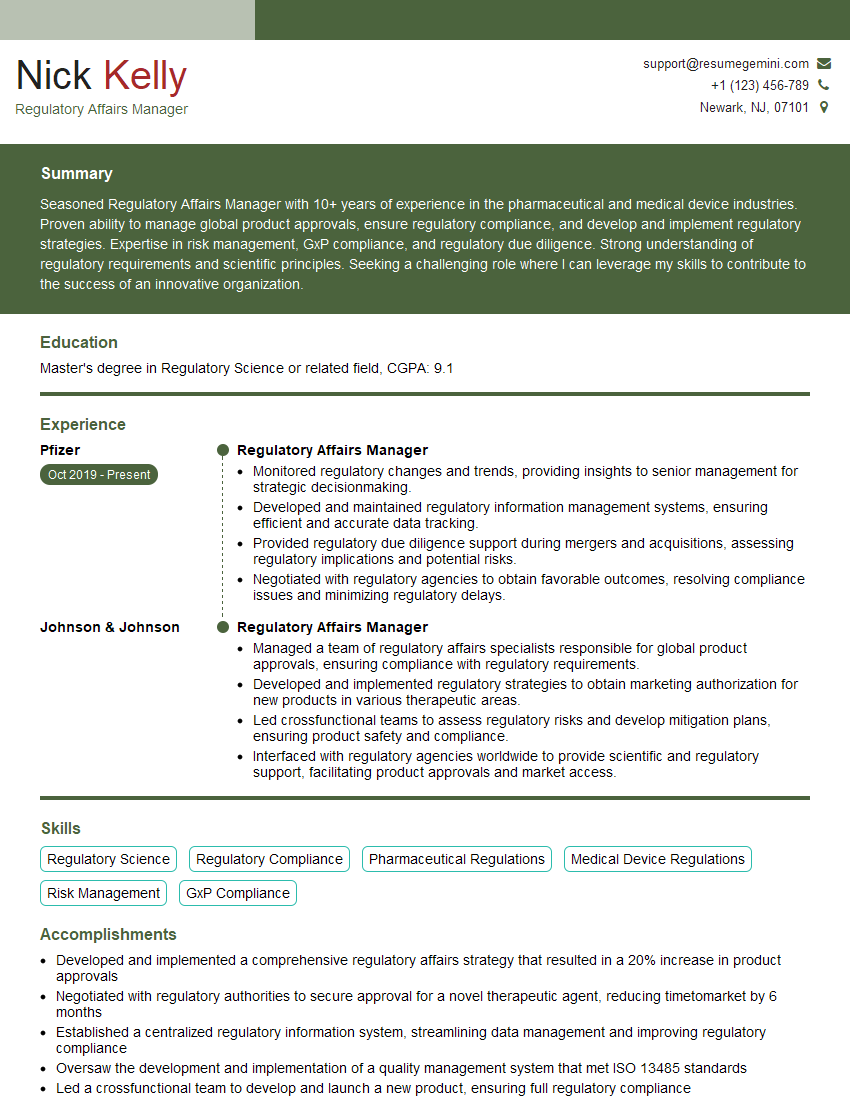
Mastering the EU 2014/30/EU EMC Directive is crucial for career advancement in fields requiring compliance expertise. A strong understanding of this directive will significantly enhance your marketability and open doors to specialized roles in product development, testing, and regulatory affairs. To maximize your job prospects, create an ATS-friendly resume that highlights your relevant skills and experience. ResumeGemini is a trusted resource that can help you build a professional and impactful resume, ensuring your qualifications stand out. Examples of resumes tailored to the EU 2014/30/EU EMC Directive are available to guide you.

Explore more articles
Users Rating of Our Blogs
Share Your Experience
We value your feedback! Please rate our content and share your thoughts (optional).
What Readers Say About Our Blog
Very informative content, great job.
good