Every successful interview starts with knowing what to expect. In this blog, we’ll take you through the top Interdisciplinary Collaboration and Performance interview questions, breaking them down with expert tips to help you deliver impactful answers. Step into your next interview fully prepared and ready to succeed.
Questions Asked in Interdisciplinary Collaboration and Performance Interview
Q 1. Describe your experience in leading or participating in interdisciplinary projects.
My experience in interdisciplinary projects spans over a decade, encompassing roles ranging from team member to project lead. I’ve been fortunate to participate in projects involving engineering, design, marketing, and finance teams, focusing on product development, strategic planning, and organizational change management. For example, in a recent product development project, I led a team of engineers, designers, and marketers to create a new software application. My role involved coordinating efforts, managing resources, and ensuring alignment between the different disciplines to achieve a common goal. Another significant project involved facilitating a company-wide strategic planning initiative, where I worked with representatives from various departments to develop a unified vision and set of strategic objectives. In both instances, successful outcomes hinged on fostering collaborative communication and a shared understanding of goals.
Q 2. How do you manage conflicting priorities and perspectives in a cross-functional team?
Managing conflicting priorities and perspectives in cross-functional teams requires a proactive and structured approach. I typically start by clearly defining project goals and establishing a shared understanding of priorities among team members. This often involves facilitated workshops and clear documentation of goals and objectives. When conflicts arise, I encourage open communication and active listening. I facilitate discussions, ensuring all voices are heard, and work collaboratively to find mutually acceptable solutions. Prioritization matrices and a well-defined decision-making process can also help resolve conflicting priorities. Visual tools, such as Kanban boards, can help transparently show workloads and identify potential bottlenecks. For example, in one project, we used a weighted scoring system to prioritize competing features based on user needs, business value, and technical feasibility, leading to a more focused and effective development process.
Q 3. What strategies do you employ to foster effective communication across disciplines?
Effective communication is the bedrock of successful interdisciplinary collaboration. My strategies center around establishing clear communication channels and protocols, utilizing multiple communication methods to cater to different team members’ preferences. This includes regular team meetings, both formal and informal, project management software for task tracking and updates (e.g., Asana, Jira), and utilizing visual aids like charts and diagrams to explain complex ideas concisely. Furthermore, I emphasize active listening and providing constructive feedback. Creating a psychologically safe space for open dialogue is crucial, encouraging team members to respectfully share their perspectives and concerns without fear of judgment. For instance, in one project, we held weekly ‘stand-up’ meetings to provide quick updates and identify any immediate roadblocks, and bi-weekly ‘deep-dive’ meetings to address more complex issues and strategic decisions.
Q 4. Explain your approach to conflict resolution within an interdisciplinary team.
My approach to conflict resolution is based on collaborative problem-solving. I believe in addressing conflicts directly and constructively, rather than avoiding them. I aim to understand each party’s perspective, identify the root cause of the conflict, and collaboratively develop solutions that meet everyone’s needs, where possible. I often use active listening, empathy, and facilitation techniques to guide the discussion. Sometimes, a structured approach using techniques like the ‘interest-based negotiation’ method can be helpful. It’s essential to ensure that the resolution process is fair, transparent, and respectful, maintaining team cohesion even after the conflict is resolved. For example, in one instance, a disagreement arose between the engineering and design teams regarding the feasibility of a certain design element. By facilitating a discussion focused on the underlying needs and constraints of each team, we found a mutually agreeable compromise that satisfied both parties and improved the overall product.
Q 5. How do you measure the success of an interdisciplinary project?
Measuring the success of an interdisciplinary project requires a multifaceted approach, going beyond simply meeting deadlines and staying within budget. Key performance indicators (KPIs) should align with the project’s overarching objectives, encompassing both qualitative and quantitative measures. This might include assessing the achievement of project milestones, customer satisfaction (if applicable), the effectiveness of the implemented solution, and the overall team’s performance in terms of collaboration and efficiency. Post-project reviews, including feedback from stakeholders and team members, are invaluable in evaluating the project’s success and identifying areas for improvement in future collaborations. For example, in one project, we measured success based on user adoption rates, positive customer reviews, and the team’s self-reported satisfaction levels with the collaboration process.
Q 6. Describe a time you had to negotiate with stakeholders from different departments.
In a recent project involving the launch of a new product, I had to negotiate with stakeholders from the marketing, sales, and finance departments. Each department had differing priorities: Marketing focused on a broad reach campaign, sales wanted a targeted approach, and finance emphasized cost-effectiveness. To navigate this, I started by clearly defining the project objectives and constraints. Then, I facilitated a series of meetings, presenting each department’s perspectives and concerns transparently. Through collaborative brainstorming, we identified a hybrid approach that balanced each department’s needs, incorporating elements of a broader reach campaign, targeted sales strategies, and a financially responsible budget. The key to success was active listening, compromise, and ensuring that all stakeholders felt heard and understood. The result was a successful product launch that met the needs of all involved.
Q 7. How do you identify and leverage the unique expertise of team members from diverse backgrounds?
Identifying and leveraging the unique expertise of diverse team members requires an understanding of each individual’s strengths and contributions. I actively solicit input from team members, encourage them to share their perspectives, and create opportunities for knowledge sharing. Early in a project, I conduct individual interviews or questionnaires to understand each team member’s background, expertise, and interests, assigning tasks that leverage their specific skills. Regular brainstorming sessions and cross-functional workshops also facilitate the identification and utilization of diverse perspectives, ensuring everyone feels valued and that their unique skills contribute to the project’s success. For example, in one project, a team member with a background in anthropology provided invaluable insights into user behavior, leading to a significant improvement in the user interface design.
Q 8. How do you facilitate knowledge sharing and collaboration amongst team members?
Facilitating knowledge sharing and collaboration requires a multi-pronged approach. It’s not just about throwing information at a team; it’s about creating a culture of open communication and mutual learning.
- Establish a central knowledge repository: This could be a shared drive, a project management tool like Asana or Trello, or even a dedicated wiki. The key is easy access to documents, meeting minutes, and project updates.
- Regular knowledge-sharing sessions: These could be informal “brown bag” lunches where team members share their expertise or formal presentations on relevant topics. Think of it as a continuous learning environment.
- Cross-functional team meetings: Regular meetings involving members from all disciplines ensure everyone is informed and can contribute their unique perspectives. These shouldn’t just be status updates; they should foster discussion and idea generation.
- Mentorship and peer-learning programs: Pairing experienced members with newer ones fosters skill development and knowledge transfer. This also builds camaraderie within the team.
- Gamification and incentives: Introducing friendly competitions or rewards for knowledge contributions can motivate participation. A simple system of recognizing valuable contributions can be surprisingly effective.
For example, in a recent project developing a new medical device, we used a shared online platform to document design specifications, testing results, and regulatory requirements. This centralized information ensured everyone was on the same page and facilitated quick resolution of queries.
Q 9. What techniques do you use to build consensus and buy-in from diverse stakeholders?
Building consensus with diverse stakeholders demands strong communication, active listening, and a willingness to compromise. It’s about understanding everyone’s needs and finding common ground.
- Understand individual perspectives: Begin by actively listening to each stakeholder’s concerns, priorities, and potential roadblocks. One-on-one meetings can be invaluable here.
- Collaborative brainstorming and problem-solving: Engage stakeholders in brainstorming sessions to generate solutions collaboratively. Techniques like nominal group technique or Delphi method can help structure these sessions and encourage participation.
- Data-driven decision making: Present data and evidence to support your proposals. This helps shift the conversation from opinions to facts and strengthens your arguments.
- Transparency and open communication: Keep stakeholders informed throughout the process and actively solicit feedback. Regular updates and progress reports are crucial.
- Negotiation and compromise: Be prepared to negotiate and compromise to reach a mutually acceptable solution. This might involve identifying trade-offs and prioritizing key objectives.
In a recent project involving a university, a hospital, and a technology company, building consensus required extensive negotiation. Each entity had differing priorities – research output, patient care, and profitability, respectively. We used a collaborative process, mapping out the project’s dependencies and prioritizing shared goals to finally achieve alignment.
Q 10. Describe your experience with project management methodologies in an interdisciplinary setting.
My experience with project management in interdisciplinary settings relies heavily on Agile methodologies, specifically Scrum and Kanban. These frameworks adapt well to the fluidity inherent in interdisciplinary collaborations.
- Scrum: Its iterative approach, with short sprints and daily stand-up meetings, allows for frequent feedback and adjustments, crucial when dealing with diverse expertise and potential conflicts.
- Kanban: Its visual workflow management is excellent for visualizing dependencies across different teams and disciplines, allowing for better tracking and improved coordination.
- Hybrid approaches: Often, a blend of Agile and traditional methods works best. For instance, a high-level project plan using a waterfall approach might be combined with Agile sprints for specific tasks within the project.
In a recent research project, we used Scrum to manage the development of a new software application for analyzing medical images. The team comprised software engineers, medical physicists, and clinicians. The daily stand-ups facilitated quick communication, identified bottlenecks early, and ensured that everyone was aligned on goals and progress.
Q 11. How do you handle challenges related to differing communication styles within a team?
Differing communication styles can create significant hurdles in interdisciplinary teams. Addressing this requires awareness, empathy, and proactive measures.
- Communication style assessment: Understanding individual preferences (direct vs. indirect, detailed vs. concise, etc.) is crucial. Tools like personality assessments can be helpful, but observation and open communication are key.
- Establish clear communication protocols: Define preferred methods of communication (email, instant messaging, meetings) and the level of formality expected for different types of communication.
- Active listening and feedback: Encourage active listening and provide constructive feedback to ensure everyone feels heard and understood.
- Training and workshops: Workshops on effective communication, conflict resolution, and cross-cultural communication can significantly enhance teamwork.
- Use diverse communication channels: Offer multiple avenues for communication, catering to different preferences. Some might prefer detailed written reports, while others might benefit from visual presentations or informal discussions.
In one project involving engineers and designers, we found that engineers favored concise, data-driven reports, while designers preferred visual presentations and brainstorming sessions. By adopting both approaches, we ensured everyone felt included and could effectively contribute.
Q 12. How do you ensure accountability and shared responsibility within an interdisciplinary project?
Accountability and shared responsibility are paramount for successful interdisciplinary projects. This requires clearly defining roles, responsibilities, and success metrics.
- Clearly defined roles and responsibilities: Create a RACI matrix (Responsible, Accountable, Consulted, Informed) to outline who is responsible for each task and who needs to be kept informed. This avoids ambiguity and duplication of effort.
- Shared goals and objectives: Ensure that all team members understand and agree on the overall project goals and objectives. This shared understanding promotes a sense of collective ownership.
- Regular progress reviews and feedback: Regular meetings and progress reviews are crucial to track progress against goals, identify potential issues, and provide constructive feedback.
- Transparent performance tracking: Use project management tools to track progress, identify bottlenecks, and ensure that everyone is meeting their responsibilities.
- Recognition and appreciation: Acknowledge and appreciate individual and team contributions to foster a culture of shared responsibility and mutual support.
In a previous project involving multiple research groups, a well-defined RACI matrix ensured that each group knew their specific tasks and responsibilities. Regular meetings and progress reports further fostered transparency and accountability.
Q 13. Explain your approach to risk management in collaborative projects.
Risk management in collaborative projects necessitates a proactive approach that identifies, assesses, and mitigates potential problems before they impact the project’s success.
- Risk identification: Brainstorm potential risks with the team, considering factors like technical challenges, resource constraints, communication breakdowns, and stakeholder conflicts.
- Risk assessment: Assess the likelihood and impact of each identified risk, prioritizing those with the highest potential negative consequences.
- Risk mitigation strategies: Develop proactive strategies to reduce the likelihood or impact of each risk. These might include contingency planning, alternative solutions, or risk transfer (e.g., insurance).
- Risk monitoring and reporting: Regularly monitor the identified risks, tracking progress and updating mitigation plans as needed. Transparent reporting ensures everyone is aware of potential issues.
- Contingency planning: Develop backup plans for critical tasks or milestones in case unforeseen events occur. This helps to minimize disruptions and maintain project momentum.
In a recent project involving field research, we identified risks related to weather conditions and equipment malfunctions. We developed contingency plans, including alternative data collection methods and backup equipment, to mitigate these risks and ensure the project remained on track.
Q 14. How do you adapt your communication style to effectively interact with individuals from various disciplines?
Adapting my communication style involves understanding the audience and tailoring my approach to their preferences and expertise. It’s about being a chameleon, but a helpful one.
- Active listening and observation: Pay close attention to how individuals communicate and what resonates with them. Observe their body language, tone, and preferred communication channels.
- Adjusting language and terminology: Use clear and concise language, avoiding jargon or technical terms that might not be familiar to everyone in the group. When necessary, define terms and explain complex concepts clearly.
- Visual aids and diverse communication formats: Utilize various communication methods like visual aids, presentations, written reports, and informal discussions, catering to different learning styles and preferences.
- Building rapport and trust: Developing strong relationships with team members fosters trust and open communication. Making an effort to understand individual perspectives and values builds rapport and encourages collaborative work.
- Seeking feedback: Regularly ask for feedback on my communication style to ensure I am effectively connecting with the team and adjusting accordingly.
For instance, when explaining complex technical details to a non-technical stakeholder, I might use analogies and simple explanations, while communicating with technical experts, I can use more technical jargon. This flexibility ensures everyone feels understood and informed.
Q 15. How do you use technology to enhance collaboration and communication within a team?
Technology is crucial for enhancing collaboration and communication in today’s interconnected world. It’s not just about using tools; it’s about strategically selecting and implementing them to address specific team needs and challenges. I leverage a variety of technologies, tailored to the project’s context.
Project Management Software: Tools like Asana, Trello, or Monday.com are indispensable for task management, progress tracking, and file sharing. They provide a centralized hub for team communication, reducing reliance on email and fostering transparency.
Communication Platforms: Instant messaging platforms such as Slack or Microsoft Teams facilitate quick, informal communication, while video conferencing tools like Zoom or Google Meet enable face-to-face interaction, crucial for building rapport and addressing complex issues.
Cloud-Based Collaboration Tools: Google Workspace or Microsoft 365 offer collaborative document editing, allowing multiple team members to work simultaneously on the same document, reducing version control issues and promoting real-time feedback.
Knowledge Management Systems: Intranets or dedicated platforms can house project documentation, meeting minutes, and other essential information, ensuring that everyone has access to the resources they need.
For instance, in a recent project involving a global team, we used Slack for daily updates, Zoom for weekly meetings, and Google Workspace for shared documents and presentations. This integrated approach minimized communication barriers and maximized efficiency.
Career Expert Tips:
- Ace those interviews! Prepare effectively by reviewing the Top 50 Most Common Interview Questions on ResumeGemini.
- Navigate your job search with confidence! Explore a wide range of Career Tips on ResumeGemini. Learn about common challenges and recommendations to overcome them.
- Craft the perfect resume! Master the Art of Resume Writing with ResumeGemini’s guide. Showcase your unique qualifications and achievements effectively.
- Don’t miss out on holiday savings! Build your dream resume with ResumeGemini’s ATS optimized templates.
Q 16. Describe a time you had to overcome a significant challenge in an interdisciplinary project.
During a product development project, we faced a significant challenge integrating the software development and marketing teams’ perspectives. The developers prioritized functionality and technical feasibility, while the marketers focused on user experience and market trends. This led to conflicting priorities and design choices.
To overcome this, I implemented a phased approach. First, we held a series of collaborative workshops where team members from both departments presented their perspectives and concerns. We used visual aids like mind maps and flowcharts to clarify each team’s vision. Next, we established a cross-functional working group composed of representatives from both teams. This group was tasked with mediating disputes, finding common ground, and developing a compromise that satisfied both sides. Finally, we adopted an iterative design process, incorporating regular feedback loops throughout the development process to ensure continuous alignment and address any emerging conflicts proactively. The result was a product that successfully integrated both technical excellence and market appeal.
Q 17. What are some key performance indicators (KPIs) you would use to measure interdisciplinary team effectiveness?
Measuring the effectiveness of interdisciplinary teams requires a holistic approach, going beyond simply achieving project deliverables. Key Performance Indicators (KPIs) should reflect both the project’s success and the team’s performance in working together. I typically use a combination of KPIs, including:
Project Outcomes: Metrics such as project completion rate, on-time delivery, and budget adherence reflect the overall success of the project.
Team Collaboration: KPIs like the frequency of cross-functional communication, the number of resolved conflicts, and team member satisfaction surveys assess the effectiveness of team collaboration and communication.
Innovation and Creativity: Measuring the number of innovative ideas generated, the level of cross-pollination of ideas between disciplines, and the quality of solutions developed reflects the team’s ability to leverage diverse perspectives.
Knowledge Sharing: Tracking the frequency of knowledge sharing sessions, the use of collaborative platforms, and the overall knowledge retention within the team assesses the team’s learning and development.
By regularly monitoring these KPIs, I gain valuable insights into the team’s performance and identify areas for improvement.
Q 18. How do you build trust and rapport among team members from different departments?
Building trust and rapport among diverse team members requires intentional effort and a focus on creating a psychologically safe environment. My approach involves:
Early Team-Building Activities: Initiating informal social interactions, such as team lunches or off-site activities, helps break the ice and foster a sense of camaraderie.
Clear Communication and Expectations: Establishing transparent communication channels and clearly defining roles, responsibilities, and project goals helps avoid misunderstandings and fosters trust.
Active Listening and Empathy: Creating space for each team member to share their perspective and actively listening to their concerns demonstrates respect and builds trust.
Recognition and Appreciation: Regularly acknowledging team members’ contributions and celebrating successes boosts morale and reinforces positive team dynamics.
Conflict Resolution Mechanisms: Establishing clear protocols for addressing disagreements, such as facilitated discussions or mediation, provides a safe space for conflict resolution and promotes collaborative problem-solving.
For instance, in one project, I organized a team-building exercise where members from different departments worked together to solve a complex puzzle. This helped them see each other’s strengths and foster a shared sense of accomplishment.
Q 19. Describe your experience with facilitating workshops or meetings involving diverse stakeholders.
Facilitating workshops and meetings with diverse stakeholders requires careful planning and execution. My approach centers around ensuring inclusivity, clarity, and effective communication. I begin by defining the meeting’s objectives and agenda, ensuring everyone understands the purpose and desired outcomes. I then structure the session to encourage active participation from all stakeholders, using techniques such as brainstorming, round-robin discussions, and breakout groups. I use visual aids, such as whiteboards or mind maps, to clarify complex information and capture key ideas. During the session, I pay close attention to the dynamics of the group, ensuring that all voices are heard and that discussions remain focused and productive. Finally, I document the key decisions and action items, distributing them to all participants for follow-up. This structured approach ensures that the meeting is productive, inclusive, and results in actionable outcomes.
Q 20. How do you handle disagreements or disputes about project scope or priorities?
Disagreements about project scope or priorities are inevitable in interdisciplinary projects. My approach involves a structured, collaborative process to resolve these conflicts constructively. This usually involves:
Open and Honest Discussion: Creating a safe space for all parties to express their concerns and perspectives without judgment.
Objective Data Analysis: Analyzing project timelines, resource availability, and market demands to inform decision-making.
Prioritization Framework: Employing a prioritization matrix or similar tool to systematically evaluate competing priorities and make data-driven decisions.
Compromise and Negotiation: Facilitating a collaborative process to reach mutually acceptable solutions.
Documentation of Agreements: Clearly documenting agreed-upon decisions to avoid future misunderstandings.
Remember, finding a solution that satisfies all stakeholders perfectly is rarely achievable. The goal is to find a compromise that’s acceptable to all parties, and that meets the core project objectives.
Q 21. How do you ensure that all team members understand and are committed to the project goals?
Ensuring that all team members understand and are committed to project goals requires consistent communication and engagement. My strategy includes:
Clearly Defined Goals: Developing concise, measurable, achievable, relevant, and time-bound (SMART) project goals that are easily understood by everyone.
Regular Communication: Holding regular team meetings, sharing progress updates, and actively soliciting feedback from all members.
Collaborative Goal Setting: Involving team members in the goal-setting process helps them feel ownership and increases their commitment.
Visual Representation of Goals: Using visual aids, such as project roadmaps or Kanban boards, helps to clarify project goals and track progress.
Recognizing Contributions: Regularly acknowledging and celebrating team members’ contributions helps boost morale and reinforce commitment to the project goals.
For example, we used a shared online project board to visualize our project goals and milestones, enabling all members to understand their roles and responsibilities within the larger picture.
Q 22. Describe a situation where you had to mediate between competing interests within an interdisciplinary team.
In a recent project developing a new sustainable building design, our interdisciplinary team – architects, engineers, environmental scientists, and construction specialists – clashed over the optimal energy efficiency strategy. Architects favored aesthetically pleasing designs, potentially compromising on energy efficiency. Engineers prioritized cost-effectiveness, which sometimes meant sacrificing design elements. The environmental scientists pushed for maximum sustainability, even if it increased costs. I mediated by facilitating a series of structured brainstorming sessions. We started by clearly defining each stakeholder’s goals and priorities, using a visual representation to highlight potential overlaps and conflicts. Then, we employed a collaborative problem-solving approach, exploring alternative solutions that addressed all concerns, like exploring innovative building materials that are both aesthetically pleasing and highly energy-efficient. This involved active listening, encouraging open communication, and reframing opposing views to find common ground. The result was a design that met the needs of all stakeholders, resulting in a successful project that achieved both aesthetic appeal and substantial energy savings.
Q 23. How do you identify and mitigate potential cultural differences within a diverse team?
Identifying and mitigating cultural differences starts with acknowledging their existence. I use a combination of strategies. First, I facilitate team-building activities that encourage self-reflection and shared understanding. For example, we might have each team member share their work style preferences or cultural background in a safe and respectful environment. This helps to build empathy and awareness. Second, I establish clear communication protocols – encouraging active listening, clear and concise language, and avoiding assumptions. We use a collaborative project management tool that allows for asynchronous communication, addressing concerns promptly and avoiding misunderstandings. Third, I actively promote inclusivity by ensuring all voices are heard, and that every team member feels valued and respected. This might involve adapting meeting times to accommodate different time zones, or providing translated materials if necessary. Regularly checking in with individual team members to gauge their comfort level and address any concerns is crucial.
Q 24. What tools or techniques do you use to manage the complexities of interdisciplinary projects?
Managing complex interdisciplinary projects requires a structured approach. I rely heavily on project management methodologies like Agile, utilizing tools such as Trello or Jira for task management, progress tracking, and communication. We create a detailed project plan with clearly defined roles, responsibilities, and deliverables for each discipline. Regular progress meetings, using visual aids like Gantt charts, keep everyone informed and on track. Risk management is integrated throughout, with regular risk assessments and mitigation strategies in place. We also utilize communication platforms like Slack or Microsoft Teams to facilitate quick and efficient exchange of information. Furthermore, establishing a robust system for version control and documentation is crucial to maintain transparency and avoid conflicts.
Q 25. How do you ensure that project deliverables meet the needs of all stakeholders?
Ensuring deliverables meet stakeholder needs involves consistent engagement and feedback loops. From the outset, I work with stakeholders to clearly define project goals, objectives, and success criteria. This involves collaborative workshops and detailed documentation of requirements. Regular progress updates and feedback sessions allow stakeholders to provide input and address any emerging concerns early on. We use surveys and feedback forms to gather data on stakeholder satisfaction, and incorporate this feedback into subsequent project iterations. Active listening and transparent communication are critical in maintaining trust and ensuring that the final deliverables align with stakeholder expectations. A stakeholder matrix is often helpful to keep track of each stakeholder’s level of interest and influence, ensuring the right level of communication for each.
Q 26. Describe your experience with change management in an interdisciplinary environment.
Change management in an interdisciplinary setting requires careful planning and communication. In a previous project, we had to switch from a traditional waterfall methodology to an agile approach mid-project. To manage this change effectively, I started by clearly explaining the rationale behind the change to the entire team, highlighting the benefits of the new approach, such as increased flexibility and responsiveness. I then held workshops to train the team on the new agile methodologies. Open communication channels were maintained throughout the transition. Regular feedback sessions allowed the team to voice their concerns and adapt to the changes. We also celebrated early wins to maintain morale and build confidence in the new approach. This phased approach, combining clear communication, training, and regular feedback, ensured a smooth transition and ultimately improved project efficiency.
Q 27. How do you promote innovation and creativity within an interdisciplinary team?
Promoting innovation and creativity involves fostering a culture of psychological safety where team members feel comfortable taking risks and sharing ideas. I encourage brainstorming sessions, using techniques like ‘design thinking’ to generate diverse perspectives. We establish cross-functional teams to encourage collaboration and knowledge sharing across disciplines. Celebrating successes and learning from failures are crucial in building a culture of continuous improvement. I also make time for informal interactions, like team lunches or off-site meetings, to encourage spontaneous idea generation. Access to diverse information sources, such as industry publications or external experts, can further fuel creativity and innovation. Providing the team with the necessary resources and autonomy is equally critical.
Q 28. How do you evaluate the overall performance of an interdisciplinary team?
Evaluating an interdisciplinary team’s performance requires a multi-faceted approach. We use a combination of quantitative and qualitative methods. Quantitative metrics include on-time and on-budget delivery, successful project completion, and key performance indicators (KPIs) specific to the project goals. Qualitative assessment involves gathering feedback from team members, stakeholders, and clients through surveys, interviews, and observation. We assess factors like teamwork, communication, problem-solving skills, and overall satisfaction. A 360-degree feedback system allows team members to evaluate each other’s contributions, identifying both strengths and weaknesses. Finally, analyzing project post-mortems allows for the identification of areas for improvement in future projects. The combined quantitative and qualitative data paint a holistic picture of team performance, enabling continuous improvement.
Key Topics to Learn for Interdisciplinary Collaboration and Performance Interview
- Understanding Interdisciplinary Teams: Explore the dynamics of diverse teams, including communication styles, conflict resolution, and leveraging diverse expertise.
- Collaboration Frameworks and Methodologies: Learn about Agile, Design Thinking, and other frameworks used to facilitate successful interdisciplinary projects. Be prepared to discuss their strengths and weaknesses in different contexts.
- Effective Communication Strategies: Master techniques for clear and concise communication across disciplines, including active listening, visual communication, and presenting complex information to varied audiences.
- Conflict Management and Negotiation: Develop your skills in identifying and addressing conflict constructively within a team environment. Understand different negotiation styles and their applications.
- Project Management in Interdisciplinary Settings: Discuss your experience with managing timelines, budgets, and resources within complex, multi-disciplinary projects. Highlight successful strategies and lessons learned.
- Measuring Performance and Impact: Understand how to define and measure success in interdisciplinary projects, considering diverse perspectives and metrics. Be prepared to discuss relevant KPIs and performance indicators.
- Ethical Considerations in Collaboration: Explore the ethical implications of working in interdisciplinary teams, including issues of intellectual property, data sharing, and responsible innovation.
- Technological Tools for Collaboration: Familiarize yourself with commonly used project management software and communication platforms used in collaborative settings.
Next Steps
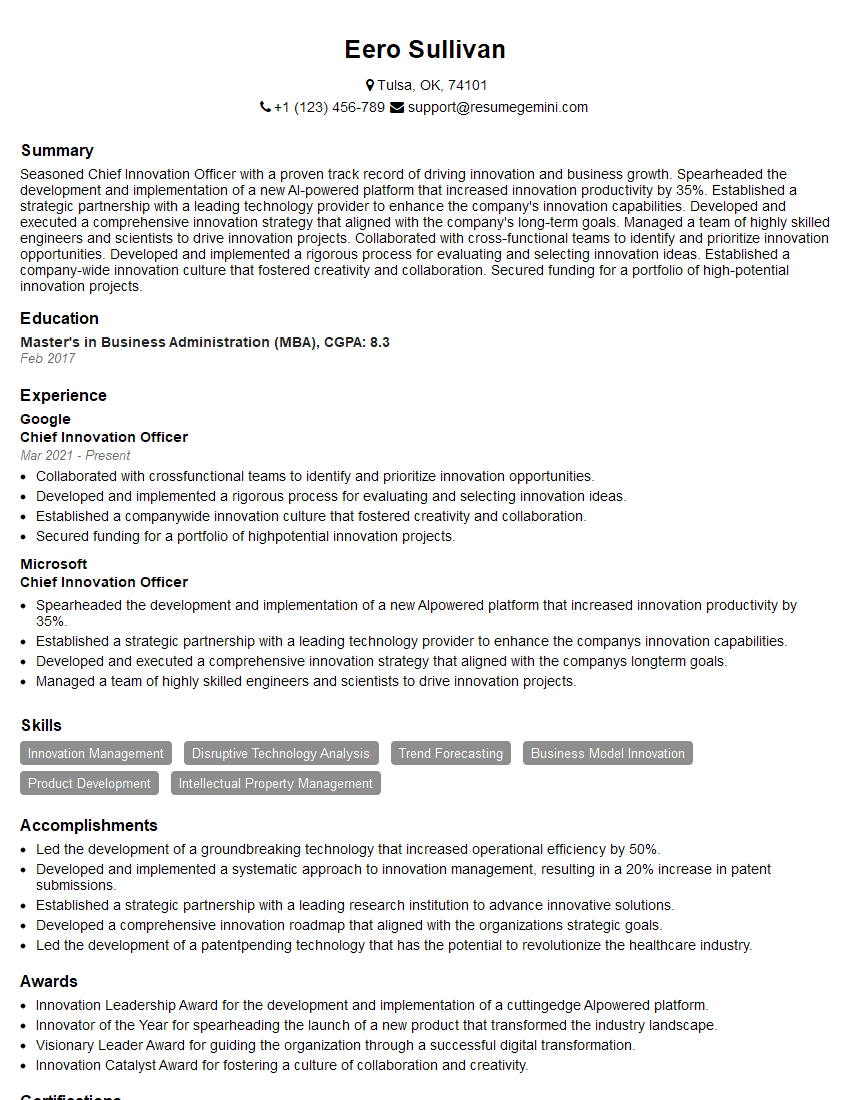
Mastering interdisciplinary collaboration and performance is crucial for career advancement in today’s complex and interconnected world. It demonstrates valuable skills highly sought after by employers across various sectors. To maximize your job prospects, it’s essential to present these skills effectively on your resume. Creating an ATS-friendly resume is key to getting noticed by recruiters. ResumeGemini is a trusted resource to help you build a professional and impactful resume that highlights your unique strengths and experiences. Examples of resumes tailored to Interdisciplinary Collaboration and Performance are available to guide you through the process.
Explore more articles
Users Rating of Our Blogs
Share Your Experience
We value your feedback! Please rate our content and share your thoughts (optional).
What Readers Say About Our Blog
Very informative content, great job.
good