Every successful interview starts with knowing what to expect. In this blog, we’ll take you through the top Lobster Banding and Tagging interview questions, breaking them down with expert tips to help you deliver impactful answers. Step into your next interview fully prepared and ready to succeed.
Questions Asked in Lobster Banding and Tagging Interview
Q 1. Describe the different types of lobster tags and bands used in research.
Lobster tags and bands come in various types, each designed for specific research needs and lobster sizes. The choice depends on factors like the study’s duration, the lobster’s size, and the environment.
- Metal Tags: These are durable and long-lasting, often made of stainless steel or monel metal. They’re usually stamped with a unique identification number. They are best for long-term studies but can be more difficult to attach.
- Plastic Tags: These are lightweight and come in various colors and shapes, often with a space to write a number. They are generally less expensive and easier to apply than metal tags, but they may not be as durable, and the printed numbers can fade over time.
- T-bar Anchors and Bands: These are a common combination where a small T-shaped anchor is inserted under the carapace (shell) and a plastic or metal band is attached, making it difficult for the tag to fall off. Different sizes are available to fit various lobster sizes.
- Electronic Tags (PIT tags): Passive Integrated Transponder tags are small electronic devices implanted in the lobster. These tags can be read with a scanner, providing information about location and even environmental parameters if the tag is specially designed. They are significantly more expensive than other tags.
The selection of a specific tag depends on the research objectives and available resources. For instance, a short-term study might use plastic tags, while a long-term study monitoring movement would require durable metal tags or PIT tags.
Q 2. What are the ethical considerations when handling and tagging lobsters?
Ethical considerations in lobster banding and tagging are paramount. Our primary goal is to minimize stress and harm to the animals while maximizing the scientific value of the data collected.
- Minimizing Handling Time: Quick and efficient tagging procedures are crucial to reduce stress. Lobsters are sensitive to changes in temperature and handling.
- Proper Anesthesia: In certain situations, particularly for complex tagging procedures or measuring physiological parameters, temporary anesthesia might be necessary. The use of appropriate anesthetics and careful monitoring are essential to ensure the lobster’s welfare.
- Species-Specific Protocols: Different lobster species may have different sensitivities and therefore necessitate species-specific handling protocols.
- Tag Rejection Rate: We continually monitor tag rejection rates (tags falling off) as a measure of appropriate tagging techniques and overall animal welfare.
- Post-Release Monitoring: Observing the lobsters’ post-release behavior can help assess the impact of tagging on their immediate survival.
For instance, if a lobster appears to be overly stressed during the tagging process, we may delay or postpone tagging until it is less stressed. Ethical guidelines and relevant permits are strictly adhered to.
Q 3. Explain the proper techniques for attaching lobster bands and tags.
Proper techniques are crucial for successful lobster tagging. The process generally involves several steps:
- Gentle Restraint: The lobster is carefully restrained to minimize stress and prevent injury. This may involve using a specially designed lobster restraint device.
- Tag Selection: Choose an appropriate tag based on the lobster’s size and the study’s requirements.
- Anchor Placement (if applicable): For T-bar anchors, carefully insert the anchor under the carapace, ensuring proper placement to avoid puncturing vital organs.
- Band/Tag Attachment: Securely attach the band or tag, making sure it’s tight enough to stay in place but not so tight as to cause constriction or injury.
- Inspection: Before release, carefully inspect the lobster for any injuries or signs of distress. If there are any issues, the lobster must be treated accordingly.
- Data Recording: Immediately record all relevant data, including the tag number, lobster’s size, location, date, and any other observations.
Thorough training on these techniques is critical for consistent and ethical data collection. Variations in techniques may exist, especially for different species or types of tags.
Q 4. How do you ensure tag retention and minimize tag loss?
Tag retention is vital for the success of any lobster tagging project. Tag loss introduces bias into the data and can compromise the study’s results.
- Proper Tag Selection and Placement: Using appropriate tags for the lobster’s size and carefully placing the anchor (if applicable) are fundamental.
- Secure Attachment: Ensuring a secure and proper attachment of the tag or band is essential.
- Minimizing Stress: Stress can lead to increased activity and potential tag loss. Gentle handling and quick tagging procedures are important.
- Material Choice: Durable materials like stainless steel or high-quality plastics will help minimize tag loss over time.
- Post-Release Monitoring (if feasible): Checking for tag retention in a subset of released animals can provide valuable information about tag effectiveness.
We also routinely assess tag loss rates by recapturing lobsters to check how many retain their tags over time. This informs improvements in our techniques and allows for better modeling of tag loss in data analysis.
Q 5. What are the potential impacts of banding and tagging on lobster behavior and survival?
Banding and tagging can have potential impacts on lobster behavior and survival, although these effects are usually minimal if proper techniques are employed.
- Behavioral Changes: Some studies suggest that tagging may temporarily alter lobster behavior, such as increased activity or changes in shelter use. These effects are usually short-lived.
- Increased Predation Risk: In some cases, a large or brightly colored tag may slightly increase predation risk. We aim to minimize this risk by using tags that are inconspicuous and that don’t significantly alter the lobster’s appearance.
- Infection Risk: Improper tagging techniques could increase the risk of infection. Proper sterilization of equipment and careful placement of tags are critical to minimize this risk.
- Mortality: Improper tagging can lead to direct mortality. Strict adherence to ethical protocols and proper training helps to mitigate this risk.
Ongoing research investigates these potential impacts to refine tagging practices and ensure that the benefits of the research outweigh any potential negative effects on the lobsters.
Q 6. Describe your experience with data collection and recording in lobster tagging projects.
Data collection and recording are critical aspects of any lobster tagging project. We maintain meticulous records to ensure data integrity and facilitate effective data analysis.
- Standardized Data Sheets: We use standardized data sheets to collect consistent and comparable information from each lobster. This includes the unique tag number, species, size (carapace length), sex, location of capture, date of tagging, and any other relevant observations.
- GPS Coordinates: Precise GPS coordinates are recorded for the capture and release locations.
- Digital Databases: All data are entered into digital databases, often using specialized software designed for wildlife tagging projects. This allows for efficient data management, querying, and analysis.
- Quality Control: Regular quality control checks are performed to ensure data accuracy and consistency. This includes double-checking data entry and verifying the completeness of records.
For instance, we might use a custom-designed database with fields for all relevant variables to make data analysis more streamlined, allowing for efficient queries and report generation. Data security and backup procedures are also crucial.
Q 7. How do you handle a lobster that is injured or difficult to tag?
Handling injured or difficult-to-tag lobsters requires careful consideration and appropriate actions.
- Assessment of Injury: First, assess the extent and nature of the injury. A minor injury might not preclude tagging, but a serious injury may necessitate different actions.
- Treatment of Injury: If necessary, provide appropriate first aid, which may include cleaning and disinfecting wounds. If the injury is severe, releasing the animal without tagging is often the most humane approach.
- Modified Tagging Techniques: If the lobster is difficult to tag due to its size, behavior, or the presence of deformities, we may need to adjust our techniques, potentially using a different type of tag or seeking assistance from experienced personnel. We may choose to forgo tagging the animal completely if there is too much risk of causing further harm.
- Consultation: In case of complex or uncertain situations, consultation with experienced biologists or veterinarians specializing in crustaceans may be necessary.
The priority is always the welfare of the lobster. If the risk of further injury or stress from tagging outweighs the scientific benefit, it’s ethically responsible to prioritize the animal’s well-being and not proceed with tagging.
Q 8. Explain your proficiency in using various data analysis tools for lobster tagging data.
My proficiency in analyzing lobster tagging data relies heavily on a suite of tools. I’m adept at using statistical software packages like R and Python, employing libraries such as pandas and statsmodels for data manipulation, cleaning, and statistical modeling. For visualization, I utilize tools like Tableau and R’s ggplot2 to create insightful charts and graphs that reveal patterns in lobster movement, growth, and survival. Specifically, I use linear mixed-effects models to account for repeated measures within individual lobsters, and survival analysis (e.g., Kaplan-Meier curves) to assess mortality rates based on tag recapture data. Furthermore, I’m experienced with Geographic Information Systems (GIS) software like ArcGIS to map lobster locations and analyze spatial patterns in their distribution. For instance, I once used GIS to identify key habitats based on recapture locations, informing future conservation efforts.
I’m comfortable working with large datasets, ensuring data integrity through rigorous quality checks and employing techniques such as data imputation to handle missing values. My experience extends to collaborative data management platforms, allowing for efficient teamwork on large-scale projects. The ability to effectively analyze data is crucial for drawing scientifically sound conclusions from tagging studies.
Q 9. How do you identify and differentiate between different lobster species?
Identifying lobster species requires a careful examination of several morphological characteristics. The most crucial features include the shape and size of the rostrum (the projection between the eyes), the number and arrangement of spines on the carapace (the shell covering the body), and the shape and color of the claws and body. For example, the American lobster (Homarus americanus) has a smooth rostrum with a distinctive pair of lateral spines near the base, while the European lobster (Homarus gammarus) has a more prominent rostrum with multiple spines. Coloration, while variable depending on habitat and maturity, can be an additional identifying factor. Furthermore, measuring the total length (from the rostrum tip to the telson – the end segment of the abdomen) and carapace length is essential for species identification and size analysis. In cases of ambiguity, genetic analysis can be utilized for conclusive species identification. This method involves extracting DNA from a tissue sample and comparing it to known genetic sequences.
Q 10. What are the legal requirements and regulations for lobster banding and tagging in your region?
Legal requirements for lobster banding and tagging vary by region and are usually governed by fisheries management agencies. In my region, [Insert specific region here, e.g., Maine, Canada], we must obtain permits before conducting any tagging activities. These permits specify the number of lobsters we can tag, the types of tags allowed (e.g., plastic tags, coded wire tags), and the methods of tagging. Failure to comply can result in significant penalties. Detailed record-keeping is mandatory, including tag numbers, species, location, size, and date of tagging. Further regulations might also dictate minimum size limits for lobsters that can be tagged, ensuring that we don’t impact the reproductive stock. All tagging procedures must adhere to strict animal welfare guidelines, prioritizing the humane handling of the animals to minimize stress and injury. Moreover, we are obligated to report all recapture data to the relevant authorities, which contributes to stock assessment and management strategies.
Q 11. Describe your understanding of lobster population dynamics and life cycles.
Lobster population dynamics are complex and influenced by various biotic and abiotic factors. Understanding their life cycle is crucial to effective management. Lobsters typically have a planktonic larval phase, which is highly vulnerable to environmental conditions and predation. After settling on the seafloor, they progress through several molting stages, increasing in size with each molt. Growth rate is temperature-dependent, with warmer waters generally leading to faster growth. Reproduction occurs when lobsters reach a certain size, with females carrying fertilized eggs attached to their pleopods (swimmerets) until they hatch. Mortality rates vary with age, size, and environmental factors, and understanding these patterns is crucial to predicting population trends. My research incorporates concepts like density-dependent growth, recruitment variability, and the influence of fishing pressure to model lobster populations. This knowledge allows for predictions on future stock sizes and the development of sustainable fishing strategies.
Q 12. Explain the importance of accurate data recording and its impact on research outcomes.
Accurate data recording is the cornerstone of successful lobster tagging studies. Inaccurate data can lead to flawed conclusions, misleading resource management decisions, and wasted research funding. For example, a simple error in recording the tag number or location can invalidate an entire recapture record, making it impossible to track an individual lobster’s movement or growth. Inconsistencies in data collection methods (e.g., variations in the way measurements are taken) can also introduce bias. Accurate data facilitates the identification of significant trends and patterns in lobster populations, providing valuable insights into their biology, ecology, and response to environmental changes. Accurate data are essential for assessing the effectiveness of management strategies, providing reliable information for policymakers to make informed decisions about sustainable fishing practices and conservation efforts.
Q 13. How do you maintain the integrity and accuracy of data during fieldwork?
Maintaining data integrity during fieldwork requires meticulous attention to detail and standardized procedures. We utilize pre-printed data sheets with clearly defined fields, reducing ambiguity and human error. All data is recorded on waterproof paper, and duplicate copies are made to safeguard against loss. Data sheets are clearly labeled with relevant information, including date, location, and researcher’s initials. We use high-quality, durable tags with unique identifiers that are resistant to wear and tear. Regular equipment checks and calibration (e.g., for measuring tools) are conducted to ensure consistency. Furthermore, team members receive thorough training in data collection protocols to minimize variations in measurements and recording methods. Immediately after fieldwork, data are transferred to a secure digital database, and regular backups are performed to prevent data loss. This multi-layered approach minimizes the risk of errors and ensures that our data is reliable and consistent.
Q 14. How would you address inconsistencies or errors in collected data?
Addressing inconsistencies or errors in collected data requires a systematic approach. First, the data is thoroughly reviewed for outliers and inconsistencies. Outliers, extreme values that differ significantly from the rest of the dataset, can be investigated to determine if they are genuine or resulted from errors. If errors are identified (e.g., typos, incorrectly recorded measurements), corrections are made, and any changes are documented. If inconsistencies are due to methodological issues, these need to be addressed in future fieldwork. For missing data, imputation techniques, such as replacing missing values with the mean, median, or predicted values based on statistical models, can be used with caution. Data validation techniques, such as range checks and plausibility checks, are utilized to identify and correct any other inconsistencies. Finally, thorough documentation of all data handling procedures, including any corrections made, is essential for transparency and reproducibility.
Q 15. Describe your experience working in diverse environmental conditions while conducting lobster tagging.
Lobster tagging isn’t confined to a climate-controlled lab; it’s a field-based endeavor demanding adaptability to diverse and often challenging conditions. My experience spans from the frigid waters of the Gulf of Maine, battling icy winds and rough seas, to the warmer, calmer waters of the Mid-Atlantic. In Maine, for example, we’ve had to contend with blizzards, delaying fieldwork and necessitating careful planning to ensure both crew safety and the well-being of the lobsters. In contrast, working in warmer waters presented different challenges: higher temperatures impacting lobster handling and increased risk of rapid decomposition if proper handling and cooling techniques aren’t followed. This adaptability is crucial – understanding the specific environmental factors influencing a given location and adjusting procedures accordingly is paramount. I’ve learned to anticipate these variations, developing contingency plans for everything from unexpected weather to equipment malfunctions in the field.
For instance, during one particularly rough trip in the Gulf of Maine, we encountered unexpected high waves that nearly capsized our boat. We were forced to quickly relocate to a sheltered cove, prioritize safety, and reassess our planned sampling locations for the day. This highlighted the need for rigorous safety protocols and flexible planning in variable environments.
Career Expert Tips:
- Ace those interviews! Prepare effectively by reviewing the Top 50 Most Common Interview Questions on ResumeGemini.
- Navigate your job search with confidence! Explore a wide range of Career Tips on ResumeGemini. Learn about common challenges and recommendations to overcome them.
- Craft the perfect resume! Master the Art of Resume Writing with ResumeGemini’s guide. Showcase your unique qualifications and achievements effectively.
- Don’t miss out on holiday savings! Build your dream resume with ResumeGemini’s ATS optimized templates.
Q 16. Explain your experience with GPS or other navigational tools in fieldwork.
GPS technology is indispensable in lobster tagging. We use high-precision GPS units to meticulously record the exact location of each lobster’s capture and release. This geospatial data is critical for understanding lobster movements and habitat use. Beyond simple location marking, we use GPS-enabled depth sounders to identify optimal trapping locations, particularly near rocky reefs or kelp forests – the preferred habitats for many lobster species. This also helps us avoid areas with potential hazards such as strong currents or submerged obstacles.
Furthermore, we leverage GIS software, such as ArcGIS, to integrate and analyze this GPS data along with other environmental variables like water temperature and salinity obtained from sensors deployed at the sampling locations. This allows us to create detailed maps showing lobster distribution patterns in relation to environmental factors – essential for effective population monitoring and management. We also use electronic charts for navigation to ensure safer boat operations, especially in unfamiliar waters or during adverse weather conditions.
Q 17. How familiar are you with different statistical methods for analyzing lobster tagging data?
Statistical analysis is the backbone of interpreting lobster tagging data. I’m proficient in several methods crucial for understanding lobster population dynamics. For instance, I regularly use capture-recapture models (e.g., Jolly-Seber model) to estimate population size, survival rates, and movement patterns. These models account for the fact that not all lobsters are caught in each sampling event. Survival analysis techniques help assess factors that influence lobster mortality, such as fishing pressure or environmental stressors. Additionally, I use spatial analysis techniques to identify hotspots of lobster density or areas with high movement rates, providing critical insights for fisheries management.
Beyond these standard methods, I’m adept at incorporating more advanced approaches like mixed-effects models, allowing us to account for individual variation in lobster behavior and environmental influences. My experience encompasses statistical software such as R and SAS, which allows me to conduct thorough and accurate analysis.
Q 18. Explain your experience with software used for data management and analysis (e.g., Excel, R, ArcGIS).
Data management and analysis are crucial for lobster tagging projects. My experience includes proficiency in a range of software. Microsoft Excel is used for initial data entry and organization. The data are then frequently transferred to more powerful statistical packages like R. R’s statistical capabilities are invaluable for advanced modeling and visualization, generating the graphs and tables used in our publications and presentations. For spatial data analysis – incorporating GPS locations and environmental data – I utilize ArcGIS, a GIS software package that allows us to create informative maps and understand spatial relationships. In short, I’m able to seamlessly move between different software packages according to the data analysis tasks involved.
For example, I’ve used R to create survival curves illustrating the effects of different fishing regulations on lobster populations and ArcGIS to map lobster distribution patterns in relation to habitat type and water depth. The effective use of these tools allows us to accurately present our findings and support effective management decisions.
Q 19. How do you ensure the safety of both yourself and the lobsters during tagging procedures?
Safety is paramount in lobster tagging, for both the researchers and the lobsters. We adhere to strict protocols to minimize stress and injury to the animals. Lobsters are handled carefully to avoid physical damage. Specialized tagging tools are used, minimizing trauma during the process. The size and type of tag are carefully chosen to be appropriate for the size of the lobster, preventing undue stress and ensuring the tag doesn’t hinder the lobster’s ability to move and feed. Quick and efficient handling is crucial to minimize the time the lobster is out of water. After tagging, lobsters are immediately returned to their original capture location to ensure minimal disturbance to their natural environment.
For researcher safety, we always use appropriate personal protective equipment (PPE), including gloves and waterproof clothing, to protect against injuries from sharp claws or rough seas. We work in teams to ensure there’s always someone monitoring the surroundings and ensuring safety during challenging weather conditions or in areas with potentially dangerous currents.
Q 20. Describe your experience collaborating with a team during lobster tagging projects.
Lobster tagging is inherently a team-based effort. Successful projects rely on effective collaboration, clear communication, and division of labor. I have extensive experience working in teams of various sizes and compositions. This includes coordination with other researchers, field technicians, and boat crews. My role often involves coordinating fieldwork logistics, data collection protocols, and ensuring everyone’s safety during operations. I value effective communication; it avoids confusion and allows everyone to contribute to the collective goal. This also includes ensuring all team members are properly trained on both safety and data collection procedures.
For example, in one particular project, our team included an expert in statistical modeling, a field technician skilled in lobster handling, and a boat captain familiar with the local waters. This combination of expertise and strong collaboration was key to the success of the project.
Q 21. How do you communicate research findings effectively to both scientific and non-scientific audiences?
Communicating research findings effectively is crucial for ensuring that our work influences conservation and management strategies. For scientific audiences, I use peer-reviewed publications and conference presentations, employing rigorous methodology and data analysis. These communications often involve detailed statistical analyses, figures, and tables which are tailored to the understanding of the expert audience.
For non-scientific audiences, I favor a more accessible approach. I use plain language, avoiding technical jargon, and incorporate visual aids like infographics and videos to convey key findings. This often involves translating complex statistical concepts into clear and concise explanations which everyone can understand. I focus on highlighting the implications of the research for the broader community, whether it’s the impact of fishing practices or the effect of environmental change on lobster populations. The goal is to effectively engage and educate a wide range of stakeholders.
Q 22. Explain your understanding of the role of lobster banding and tagging in fisheries management.
Lobster banding and tagging are crucial for effective fisheries management. They provide invaluable data on lobster populations, growth rates, movement patterns, and survival rates. This information allows scientists and managers to make informed decisions about sustainable fishing practices, protecting the lobster stocks from overexploitation and ensuring the long-term health of the ecosystem.
For example, by tracking tagged lobsters, we can determine their migration routes, identifying critical habitats that need protection. We can also assess the impact of different fishing regulations by comparing the growth and survival rates of tagged lobsters in areas with varying fishing pressure. This data-driven approach is far more effective than relying on estimations alone.
Q 23. How do you handle unexpected challenges or problems encountered during fieldwork?
Fieldwork in lobster banding and tagging often presents unexpected challenges, from inclement weather to equipment malfunctions. My approach focuses on proactive planning and flexible problem-solving. Before heading out, we meticulously check all our equipment, ensuring we have backup gear. If we encounter unexpected issues, such as a malfunctioning tagging device, we have contingency plans in place. This may involve switching to a different tagging method, temporarily suspending operations until repairs can be made, or even contacting colleagues for assistance.
For example, during one field trip, a sudden storm forced us to quickly relocate our operations. We were able to swiftly adapt our procedures, securing our equipment and finding a sheltered area to continue the work, ensuring the safety of the team and the integrity of the data.
Q 24. Describe your experience with different tagging methods (e.g., visual tags, electronic tags).
My experience encompasses a range of tagging methods. Visual tags, such as numbered plastic tags or colored tags, are relatively inexpensive and easy to apply, making them suitable for large-scale studies. However, their reliance on visual identification limits their effectiveness over long periods, as tags can be lost or become illegible.
Electronic tags, on the other hand, offer a wealth of information. Acoustic tags, for example, emit signals that can be detected by receivers, providing precise location data. Data storage tags record environmental parameters and can store information on the lobster’s depth, temperature and other relevant data. The choice of tagging method depends heavily on the research question and the resources available. For instance, if precise movement patterns are the primary focus, electronic tags are superior to visual tags. However, the higher costs of electronic tags should be considered against the data they provide.
Q 25. How do you ensure the longevity and durability of tags under various environmental conditions?
Ensuring tag longevity is paramount. We use high-quality, durable materials resistant to abrasion, corrosion, and biofouling (the accumulation of organisms on the tag’s surface). For example, we might use titanium tags for their strength and resistance to saltwater corrosion. The tags are securely attached using methods proven to minimize tag loss. The method chosen will vary depending on the size and species of lobster, ensuring that the tag does not negatively impact the lobster’s health or behavior. Regular post-tagging monitoring and recapture efforts help us assess tag retention rates and identify any issues that may require adjustments to our tagging protocols.
Q 26. What are the key performance indicators (KPIs) you use to assess the success of a lobster banding and tagging program?
Key performance indicators (KPIs) for a lobster banding and tagging program include tag retention rates (percentage of tags remaining after a certain period), recapture rates (number of tagged lobsters recaptured), growth rates of tagged lobsters, survival rates, and the spatial distribution of tagged lobsters. Analyzing these KPIs allows us to evaluate the effectiveness of our tagging methods, the accuracy of our population estimates, and the overall success of the program in achieving its management objectives. For example, a low tag retention rate indicates that our tagging method may need improvement, which would lead us to investigate the cause and explore more effective attachment methods.
Q 27. What are some common challenges faced in lobster banding and tagging research, and how would you overcome them?
Common challenges include tag loss, tag shedding, high costs of some tagging methods, and difficulty in recapturing lobsters. We overcome these by employing robust tagging techniques, selecting appropriate tag materials, employing a combination of different tagging methods to increase recapture probability and using statistical modeling to account for tag loss and biases in the recapture data.
For instance, to address the challenge of tag shedding, we can utilize multiple smaller tags or improve the attachment technique. To reduce costs, we might use a combination of inexpensive visual tags for large-scale population surveys and more expensive electronic tags for focused studies on specific behaviors.
Q 28. Describe a situation where you had to adapt your tagging techniques due to unexpected circumstances.
During a study on the impact of a new fishing regulation, the fishing gear used by local fishermen inadvertently damaged a significant number of the acoustic tags we had deployed. This resulted in a substantial loss of data and compromised the study’s initial design. We immediately adapted our approach. We switched to a combination of visual tags and archival tags, which were less prone to damage. While this change meant a reduction in the quality of some of our data, it allowed us to continue the study and still gather valuable information.
Key Topics to Learn for Lobster Banding and Tagging Interview
- Lobster Biology and Physiology: Understanding lobster growth stages, molting cycles, and overall health is crucial for effective banding and tagging.
- Banding and Tagging Techniques: Mastering various banding and tagging methods, including the selection of appropriate tags for different research objectives and sizes of lobsters.
- Data Collection and Management: Learn about accurate data recording, including location, date, tag number, and lobster measurements. Understanding data organization and management for analysis is essential.
- Regulatory Compliance: Familiarize yourself with relevant regulations and permits required for lobster banding and tagging in your area. This includes adhering to ethical considerations and best practices.
- Data Analysis and Interpretation: Understanding basic statistical analysis and the interpretation of data obtained from banded and tagged lobsters for population studies and management decisions.
- Safety Procedures and Risk Management: Know the safety protocols involved in handling lobsters, including techniques for minimizing stress and injury to the animals and protecting yourself from potential hazards.
- Equipment and Tools: Become familiar with the various tools and equipment used in lobster banding and tagging, including their proper usage and maintenance.
- Problem-solving and Troubleshooting: Develop the ability to identify and resolve common challenges encountered during the banding and tagging process, such as tag failure or difficult lobster handling.
Next Steps
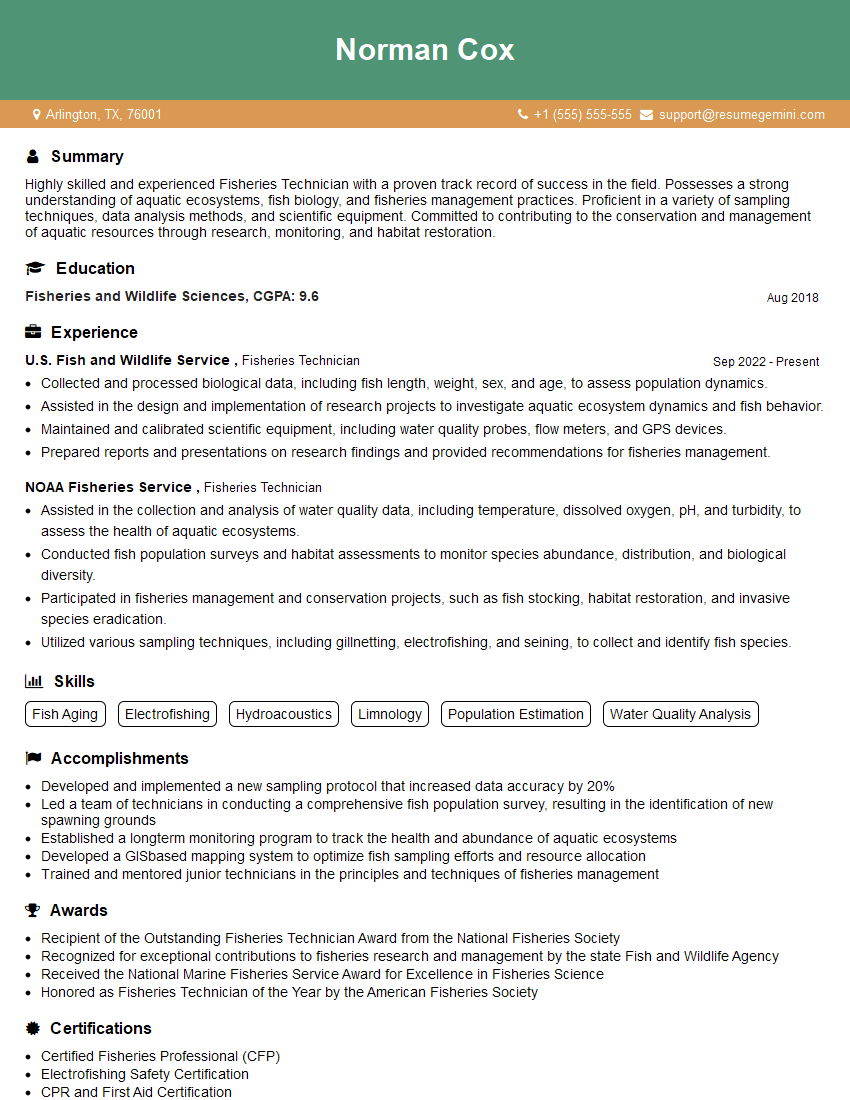
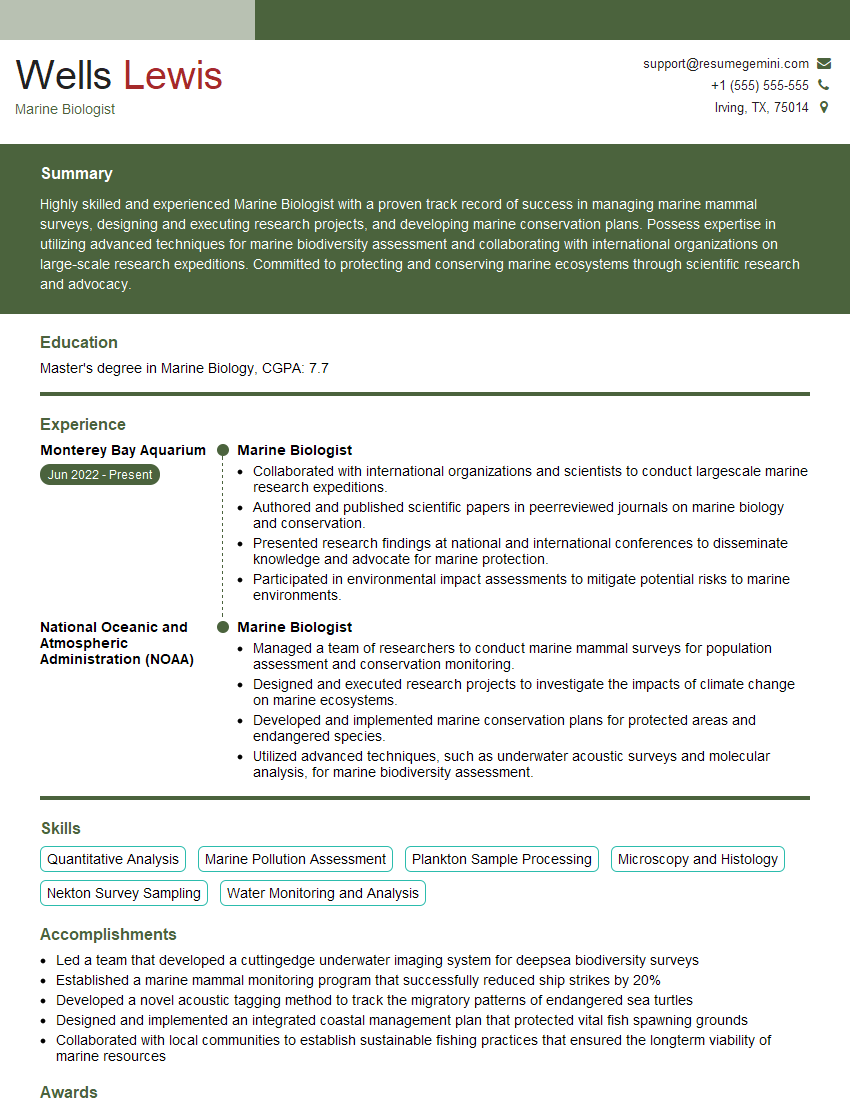
Mastering lobster banding and tagging opens doors to exciting careers in fisheries management, marine research, and conservation. A strong understanding of these techniques demonstrates valuable skills to potential employers. To significantly boost your job prospects, crafting an ATS-friendly resume is crucial. ResumeGemini is a trusted resource to help you build a professional and impactful resume that highlights your skills and experience effectively. Examples of resumes tailored to Lobster Banding and Tagging are available to guide you through the process.

Explore more articles
Users Rating of Our Blogs
Share Your Experience
We value your feedback! Please rate our content and share your thoughts (optional).
What Readers Say About Our Blog
Very informative content, great job.
good