Unlock your full potential by mastering the most common Understanding of Garment Specifications interview questions. This blog offers a deep dive into the critical topics, ensuring you’re not only prepared to answer but to excel. With these insights, you’ll approach your interview with clarity and confidence.
Questions Asked in Understanding of Garment Specifications Interview
Q 1. Explain the importance of a detailed garment specification.
A detailed garment specification is the cornerstone of successful garment manufacturing. Think of it as a blueprint – it ensures everyone involved, from designers to factory workers, is on the same page regarding the garment’s design, materials, construction, and measurements. Without a precise specification, inconsistencies arise, leading to costly errors, delays, and ultimately, a final product that doesn’t meet expectations.
A comprehensive specification minimizes misinterpretations, streamlines the production process, and ensures quality control throughout. It protects both the brand and the manufacturer by establishing clear standards and reducing disputes.
Q 2. What are the key components of a typical garment specification?
A typical garment specification includes several crucial components:
- Garment Description: A concise summary of the garment, including style, intended use, and target market.
- Technical Drawings/Sketches: Visual representations showing the garment’s construction, measurements, and design details.
- Fabric Specifications: Details about the fabric composition (e.g., 100% cotton), weight (e.g., 150 gsm), weave type (e.g., twill), color, and any special finishes (e.g., water-resistant).
- Measurements: Precise measurements for all garment parts, including body measurements, seam allowances, and finished garment dimensions. These are often presented in a size chart.
- Construction Details: Specific instructions on how the garment is to be constructed, including seam types (e.g., French seam, overlock), stitching specifications (e.g., stitch length, type), and placement of pockets, buttons, zippers, etc. This section might include detailed diagrams.
- Trims and Findings: Details on all the components used besides the fabric, like buttons, zippers, labels, threads, interfacing, and linings. This includes specifications on material, size, color, and quantity.
- Labels and Packaging: Specifications for care labels, brand labels, and packaging requirements.
- Quality Control Standards: Clear guidelines on acceptable tolerances for measurements and quality standards to be met during production.
Q 3. Describe the different types of fabric constructions and their suitability for specific garments.
Fabric construction significantly impacts a garment’s drape, durability, and suitability for a particular purpose. Here are some examples:
- Woven Fabrics: Made by interlacing yarns (e.g., cotton twill, linen canvas, silk charmeuse). Twill is durable and wrinkle-resistant, suitable for trousers or jackets. Linen canvas is strong and stiff, ideal for structured bags or outerwear. Silk charmeuse is luxurious and smooth, perfect for dresses or blouses.
- Knit Fabrics: Made by interlocking loops of yarn (e.g., jersey, rib knit, double knit). Jersey is soft and stretchy, suitable for t-shirts and leggings. Rib knit provides more structure and is used for cuffs and collars. Double knit is thicker and more durable, ideal for outerwear.
- Non-Woven Fabrics: Made from fibers bonded together without weaving or knitting (e.g., felt, fleece). Fleece is warm and cozy, used for sweaters and jackets. Felt is stiff and can be used for hats or craft projects.
The choice of fabric construction directly depends on the garment’s design and intended function. A lightweight woven fabric would be unsuitable for a heavy-duty work jacket, while a stretchy knit fabric wouldn’t be suitable for a sharply tailored suit.
Q 4. How do you interpret a technical drawing or sketch in relation to a garment specification?
Technical drawings and sketches are vital visual aids that complement the written garment specification. They provide a clear visual representation of the design, showcasing the garment’s style, fit, and construction details. The specification provides the precise measurements and technical instructions that the drawing only hints at.
For example, a technical drawing might show the placement of a pocket, but the specification would state the pocket’s exact dimensions, seam allowances, and the type of stitching used. The drawing could show a specific sleeve style, but the specification would define the sleeve length, width, and any special construction details like pleats or gathers.
In essence, the drawing provides the overall visual concept, while the specification provides the detailed instructions for its execution. Together, they ensure accurate and consistent garment production.
Q 5. Explain the process of creating a tech pack.
Creating a tech pack is a systematic process that consolidates all the necessary information for garment production. It’s a comprehensive package that guides the entire manufacturing process from design to production.
The process typically involves these steps:
- Design Development: Finalizing the garment design, including sketches, measurements, and material choices.
- Technical Design: Creating detailed technical drawings and specifications, including measurements, construction details, and material specifications.
- Material Sourcing: Identifying and selecting suitable fabrics, trims, and findings.
- Sample Making: Creating a prototype sample to test the design and construction.
- Sample Approval: Reviewing the sample against the tech pack and making necessary adjustments.
- Tech Pack Compilation: Gathering all the approved documentation into a single, organized tech pack. This usually includes the design sketches, technical drawings, fabric swatches, material specifications, measurement charts, construction details, and quality control standards.
- Production: Sending the tech pack to the manufacturer for mass production.
A well-organized tech pack is essential for clear communication between the designer, pattern maker, sample maker, and manufacturer, ensuring consistent quality and efficiency.
Q 6. What are the common tolerances used in garment specifications?
Tolerances in garment specifications represent the acceptable range of variation from the specified measurements. They acknowledge the inherent limitations of manufacturing processes and the natural variations in materials. Tolerances are crucial to avoid unnecessary rejection of garments that fall slightly outside the ideal measurement. They ensure that minor variations that do not impact the garment’s functionality or appearance are acceptable.
Common tolerances vary depending on the garment type and measurement, but typical ranges might include:
- Length: ± 0.5 cm to ± 1.5 cm
- Width: ± 0.5 cm to ± 1.0 cm
- Seam Allowance: ± 0.2 cm to ± 0.5 cm
These tolerances are expressed as positive and negative values (e.g., ±0.5cm indicates a range of 0.5 cm above or below the specified measurement).
Q 7. How do you ensure consistency between the specification, sample, and mass production?
Ensuring consistency between the specification, sample, and mass production is critical for maintaining quality and brand reputation. This is achieved through a combination of thorough quality control measures at each stage:
- Detailed Specification: A precise and unambiguous specification serves as the gold standard.
- Accurate Sample Making: The sample must adhere strictly to the specification. Any deviation should be documented and approved.
- Pre-Production Meeting: A meeting between the brand and manufacturer before mass production to review the sample and clarify any remaining questions or potential issues.
- Quality Control Checks: Regular quality checks are performed during the production process to ensure adherence to the specification. This might involve measuring random samples of the finished garments.
- Final Inspection: A final inspection of the finished garments is conducted before shipment, ensuring quality and adherence to specifications.
- Consistent Materials: Using the same fabrics, trims, and findings throughout production is crucial.
By diligently following these steps, brands can maintain consistency across the entire production process, leading to a final product that aligns with the original design and specifications.
Q 8. What are the different types of seams and their applications?
Seams are the foundation of garment construction, joining fabric pieces together. Different seam types offer varying levels of strength, stretch, and aesthetic appeal. The choice depends on the garment’s style, fabric type, and intended use.
- French Seam: A high-quality, durable seam ideal for sheer fabrics or where a clean finish is crucial. It encloses all raw edges, preventing fraying. Think of delicate blouses or lingerie.
- Flat Felled Seam: Incredibly strong and durable, often used in workwear or denim garments. One fabric edge is completely enclosed within the other, creating a smooth, flat exterior.
- Overlock Seam (Serged Seam): A fast and efficient method using a serger machine to create a neat, finished edge while simultaneously stitching the seam. Commonly used for knit fabrics or where speed is important, like mass production.
- Double-Needle Seam: Creates a decorative and strong seam with parallel stitching lines. Often seen on jeans or sportswear for a professional finish.
- Zigzag Seam: A simple and versatile seam for finishing raw edges and preventing fraying. It’s not as strong as other seams but is quick and efficient for less-stress areas.
Selecting the appropriate seam type is critical. For instance, using a French seam on heavy denim would be impractical, while a simple zigzag seam on a tailored suit would be inappropriate.
Q 9. How do you identify and address potential issues in a garment specification?
Identifying potential issues in garment specifications requires a meticulous review process. I start by checking for clarity, completeness, and feasibility. I look for ambiguities that could lead to misinterpretations by the manufacturer.
Common issues I look for include:
- Incomplete measurements or unclear descriptions: For example, specifying ‘long sleeves’ without precise length measurements.
- Inconsistent units of measurement: Mixing inches and centimeters can cause significant errors.
- Unrealistic tolerances: Demanding extremely tight tolerances that are difficult and expensive to achieve.
- Missing details on fabric specifications: Omitting crucial information like composition, weight, and drape characteristics.
- Ambiguous technical terms or terminology: Using industry jargon without ensuring everyone understands its meaning.
Addressing these issues involves:
- Clarification with the designer or client: If a specification is unclear, I seek clarification to avoid misunderstandings.
- Suggesting alternative solutions: If a specification is unrealistic, I propose feasible alternatives that maintain the design intent.
- Detailed documentation of revisions: Maintaining a clear record of all changes and their rationale.
For example, if a specification calls for a seam that is structurally unsound for the chosen fabric, I would propose a different seam type that provides better durability and stability. This proactive approach ensures a high-quality final product.
Q 10. Explain the difference between a flat sketch and a 3D model in garment design.
Flat sketches and 3D models serve different purposes in garment design. While both communicate design ideas, they differ significantly in detail and functionality.
Flat Sketch: A two-dimensional drawing showing the garment’s front, back, and side views, often including details like seams, pockets, and embellishments. It’s primarily a conceptual tool used in the initial design phase to quickly illustrate ideas and explore various design options. It lacks the realism and depth of a 3D model.
3D Model: A digital representation of the garment, offering a realistic three-dimensional view. It provides a much more comprehensive visualization, allowing designers to simulate fabric drape, fit, and overall garment appearance. 3D models are invaluable for identifying potential design flaws early on, testing different fabric types, and creating virtual prototypes before physical production.
Think of it like this: a flat sketch is like a blueprint, while a 3D model is like a virtual mockup. A flat sketch is essential for initial design communication, but a 3D model provides greater accuracy and detail, especially for complex designs or when precise fit and drape are critical.
Q 11. What are the common quality control checks during garment production?
Quality control checks during garment production are essential to ensure the final product meets the specified standards. These checks are implemented at various stages of the production process.
- Fabric Inspection: Checking the fabric for defects like holes, stains, and inconsistencies in color or texture before cutting.
- Cutting Inspection: Verifying that the cut pieces are accurate, consistent, and free from defects.
- Sewing Inspection: Examining the quality of stitching, seam allowance, and overall construction of the garment. This involves checking for proper stitch length, consistent tension, and correct seam types.
- Finishing Inspection: Checking for accurate buttonholes, proper button attachment, and overall garment presentation (pressing, labeling, etc.).
- Final Inspection: A comprehensive review of the finished garment to identify any remaining defects or inconsistencies. This often involves visual inspection, measurement checks, and even fit sessions.
These checks often involve visual inspection, but also incorporate measuring tools (like rulers and calipers) to ensure dimensional accuracy. Statistical Process Control (SPC) techniques might also be employed to monitor and control the production process.
Q 12. How do you manage revisions and updates to garment specifications?
Managing revisions and updates to garment specifications requires a systematic approach to ensure that everyone involved is informed and working from the most current version. I typically use a version control system, such as a shared online document or a dedicated Product Lifecycle Management (PLM) system.
My process includes:
- Document Versioning: Assigning version numbers to each update (e.g., v1.0, v1.1, v2.0). This ensures traceability and prevents confusion.
- Clear Change Logs: Documenting each change, including the date, the person who made the change, and the reason for the revision. This provides a transparent audit trail.
- Communication: Notifying all stakeholders (designers, manufacturers, and clients) about revisions and providing them with access to the updated specifications.
- Approval Process: Implementing a formal approval process to ensure that changes are reviewed and approved before implementation. This prevents unauthorized modifications.
Using a centralized system ensures everyone is working with the same information. This prevents costly mistakes and production delays caused by outdated specifications.
Q 13. Describe your experience with different CAD software used in garment design.
I have extensive experience using various CAD software in garment design, including industry-standard programs like CLO 3D, OptiTex, and Gerber Technology’s Accumark. Each software has its strengths and weaknesses, and my choice depends on the project’s specific needs.
CLO 3D: Excellent for realistic 3D visualization and draping simulations. It’s particularly useful for complex designs and when accurate fit is paramount. I’ve used it extensively for designing women’s wear and creating virtual prototypes.
OptiTex: A versatile platform well-suited for pattern making, grading, and marker making. Its strengths lie in its efficiency for production processes, especially in large-scale manufacturing. I’ve utilized this for optimizing pattern designs and minimizing fabric waste.
Gerber Accumark: A powerful and comprehensive system often used in industrial settings. It excels in automation and integrates well with other manufacturing systems. I have experience using this for advanced pattern design and optimizing the cutting process.
My proficiency extends beyond just using the software itself. I’m also skilled in customizing templates, creating efficient workflows, and troubleshooting any technical issues that may arise. This ensures smooth and efficient completion of projects.
Q 14. How do you communicate effectively with manufacturers regarding garment specifications?
Effective communication with manufacturers is critical for successful garment production. My approach emphasizes clarity, accuracy, and collaboration.
My strategies include:
- Detailed and unambiguous specifications: Providing clear, concise, and comprehensive garment specifications, avoiding ambiguous terminology.
- Visual aids: Supplementing written specifications with technical drawings, flat sketches, and, if available, 3D models to illustrate the design details clearly.
- Samples and prototypes: Sharing physical samples or prototypes to provide a tangible reference for the manufacturer. This helps in clarifying fabric choices, construction techniques, and overall design aesthetic.
- Regular communication: Establishing clear channels of communication and maintaining regular contact throughout the production process. This enables timely feedback and address any concerns promptly.
- Technical specifications sheets: I create and share detailed tech packs containing precise measurements, material specifications, and construction details to facilitate seamless production.
Open communication and proactive collaboration are key to ensuring that the manufacturers understand the requirements and produce a garment that aligns precisely with the design vision. I always encourage feedback from manufacturers, viewing their input as valuable to the overall success of the project.
Q 15. What are some common challenges in interpreting or implementing garment specifications?
Interpreting and implementing garment specifications can be challenging due to several factors. Ambiguity in terminology is a major hurdle; for instance, ‘medium weight fabric’ can be interpreted differently by various manufacturers. Another challenge lies in the complexities of technical drawings; inconsistencies or missing information can lead to production errors. Furthermore, variations in measurement systems (metric vs. imperial) and the lack of standardized terminology across different regions frequently cause confusion. Finally, the successful implementation relies on effective communication across all stakeholders—designers, pattern makers, sample makers, and manufacturers—and miscommunication can easily derail the process.
For example, a specification stating ‘buttonholes to be reinforced’ might lack clarity on the specific reinforcement method. Is it bar tacking, double stitching, or a different technique? This ambiguity can result in variations in the final product, affecting quality and consistency.
Career Expert Tips:
- Ace those interviews! Prepare effectively by reviewing the Top 50 Most Common Interview Questions on ResumeGemini.
- Navigate your job search with confidence! Explore a wide range of Career Tips on ResumeGemini. Learn about common challenges and recommendations to overcome them.
- Craft the perfect resume! Master the Art of Resume Writing with ResumeGemini’s guide. Showcase your unique qualifications and achievements effectively.
- Don’t miss out on holiday savings! Build your dream resume with ResumeGemini’s ATS optimized templates.
Q 16. Explain your understanding of grading and sizing in apparel manufacturing.
Grading and sizing in apparel manufacturing are crucial steps that involve scaling a base pattern to create various sizes. The base pattern, usually a size medium, is adjusted based on pre-defined measurements for different sizes (small, large, extra-large, etc.). This process ensures that the garment fits correctly across a range of body types. Grading involves adjusting the pattern pieces’ dimensions proportionately, considering factors like ease (extra fabric for comfort), seam allowances, and style variations. Sizing, on the other hand, involves assigning these graded patterns to specific sizes and creating size charts that provide detailed measurements for each size.
Think of it like baking a cake: the base recipe (base pattern) is adjusted (graded) to make a smaller or larger cake (different sizes) while ensuring all proportions (measurements) remain correct. Precise grading and sizing are essential to maintaining consistent fit and quality across all sizes.
Q 17. How do you ensure compliance with industry standards and regulations in garment specifications?
Ensuring compliance with industry standards and regulations is paramount for ethical and legal reasons. This involves adhering to safety standards (e.g., flammability tests for children’s clothing), ethical sourcing guidelines (e.g., ensuring fair labor practices), and environmental regulations (e.g., restricted substances in textiles). We achieve compliance through several methods. First, the garment specifications should explicitly mention the relevant standards and regulations, such as Oeko-Tex Standard 100 for textile safety or ISO 9001 for quality management. Second, regular testing and quality control procedures are essential to verify that the final product meets these standards. Finally, collaboration with certified testing labs and ethical sourcing partners ensures that all materials and manufacturing processes are compliant.
For example, when specifying dyes, we’d ensure they meet specific standards for heavy metal content and environmental impact. Regular audits of manufacturing facilities are also vital to verify adherence to ethical labor standards.
Q 18. What are some best practices for writing clear and concise garment specifications?
Clear and concise garment specifications are essential for effective communication and consistent production. Best practices include using precise and unambiguous language, avoiding jargon, and employing standardized terminology. Specifications should include detailed illustrations or technical drawings, clearly defining dimensions, seam allowances, and construction methods. A well-structured format, using tables and bullet points, enhances readability and helps prevent misunderstandings. The use of a consistent measurement system (metric or imperial) is crucial for accuracy. Furthermore, the specifications should specify fabric types, quantity, and color clearly, referencing standards when applicable.
For instance, instead of saying ‘Use a sturdy zipper,’ specify ‘Use a YKK #5 metal zipper, 22 inches long.’ This removes ambiguity and ensures consistency across productions.
Q 19. How familiar are you with different labeling requirements for garments?
My familiarity with garment labeling requirements is extensive. I understand that regulations vary by region (e.g., the EU, the US, Canada, etc.) and often differ depending on the garment type (children’s wear has stricter regulations). I am well-versed in the mandatory information that must be included on labels, such as fiber content, country of origin, care instructions, and manufacturer information. I also know the importance of accurate sizing information and any necessary warnings or certifications (e.g., Fair Trade certification, GOTS (Global Organic Textile Standard) certification). I can easily interpret and apply the labeling requirements of different regions to ensure compliance with local laws and regulations.
For example, the EU has detailed regulations regarding the use of certain chemicals in textiles, requiring specific labeling if restricted substances are present. Understanding these nuances is critical for avoiding legal issues and consumer safety concerns.
Q 20. How do you incorporate sustainability considerations into garment specifications?
Incorporating sustainability considerations into garment specifications is crucial for minimizing the environmental and social impacts of apparel production. This starts with selecting sustainable materials – organic cotton, recycled fabrics, or innovative materials with reduced environmental footprint. Specifications should explicitly state the preferred fiber composition and sourcing details, emphasizing responsible sourcing. Moreover, energy-efficient manufacturing processes should be considered, such as using water-saving dyeing techniques and reducing waste generation. Finally, end-of-life considerations, such as designing for recyclability or biodegradability, need to be included.
For example, instead of specifying conventional cotton, we might specify GOTS-certified organic cotton to promote sustainable farming practices. We could also specify a lower water consumption dyeing process to reduce environmental impact.
Q 21. Explain your experience with different types of closures (zippers, buttons, etc.).
I have extensive experience with various types of closures, including zippers (metal, plastic, invisible), buttons (various materials and sizes), hooks and eyes, snaps, toggles, and drawstrings. My understanding encompasses not only the type of closure but also its functionality, durability, and aesthetic suitability for the garment. I can specify closure types and their respective requirements accurately, considering factors like stress points, ease of use, and overall design. This includes defining the placement, number, and size of closures, as well as specifying any necessary reinforcement or finishing techniques. For example, I know the difference between a #3 and #5 zipper and can choose the appropriate type based on garment weight and intended use.
I can also specify the desired finish of the closures, such as antique brass buttons or matte black zippers, to meet the aesthetic requirements of the garment design. My understanding extends to evaluating the durability and quality of closures, ensuring they meet the expected lifespan of the garment.
Q 22. How do you handle discrepancies between the sample and the final product?
Discrepancies between samples and final products are unfortunately common in garment manufacturing. My approach is systematic and focuses on root cause analysis to prevent recurrence. First, I meticulously document the differences, using detailed photos and measurements. This includes comparing stitch counts, fabric properties, and trim details against the approved tech pack. Then, I categorize the discrepancies as either critical (affecting fit, functionality, or safety) or minor (aesthetic variations within acceptable tolerances). For critical discrepancies, I immediately engage the factory to understand the cause – was it a raw material issue, a misinterpretation of the spec, or a process flaw? We then collaboratively develop corrective actions, which might involve adjusting machine settings, retraining operators, or sourcing alternative materials. For minor discrepancies, I assess if they fall within the pre-defined acceptable range. If not, I’ll discuss with the client whether to rework the batch or adjust tolerances for future production. A key element is maintaining clear communication throughout the process – keeping both the factory and the client informed every step of the way. For example, once I identified a consistent color variation in a recent batch, we traced it back to a new dye lot. By immediately flagging the issue, we avoided a large-scale production problem.
Q 23. Describe your experience working with different types of fabrics (knit, woven, etc.).
My experience spans a wide range of fabrics, including knits and wovens, each demanding a unique approach to garment construction. Woven fabrics, like cotton poplin or linen, offer structure and drape differently than knits, which possess stretch and recovery. Understanding these inherent properties is crucial. For instance, designing a tailored shirt requires a crisp, stable woven fabric, whereas a comfortable t-shirt needs a soft, drapey knit with appropriate elasticity. I’ve worked extensively with various knit structures, from single jersey (commonly used for t-shirts) to rib knits (offering more stability), and double knits (providing better body and shape retention). Similarly, my experience with wovens includes everything from lightweight silks to heavy-duty denim, each presenting unique challenges in pattern making, cutting, and sewing. The choice of fabric directly influences the garment’s construction: for instance, a loosely woven fabric will require different seam finishes to prevent fraying compared to a tightly woven fabric. This understanding is critical for creating high-quality garments that meet the design intent and client expectations.
Q 24. What are the key considerations for choosing appropriate trims and embellishments?
Choosing appropriate trims and embellishments is a critical aspect of garment design and specification, impacting both the aesthetic and functional aspects of the garment. Key considerations include:
- Durability: Trims should withstand the garment’s intended use and washing instructions. For example, a delicate lace trim might not be suitable for a high-activity garment.
- Colorfastness: The trim’s color should not bleed or fade easily, ensuring the garment maintains its appearance over time.
- Compatibility with fabric: The trim should complement the fabric in terms of weight, texture, and drape. Using a heavy trim on a lightweight fabric will create an imbalance.
- Cost-effectiveness: The cost of trims should be factored into the overall budget. Exploring alternative trims can significantly impact cost without compromising quality.
- Brand Identity: Trims contribute to a brand’s unique style and identity. Consistent use of specific trims across collections reinforces brand recognition.
For instance, while working on a luxury evening gown, I specified delicate hand-stitched beading and high-quality silk ribbon, reflecting the garment’s high-end nature. In contrast, for a casual line of t-shirts, I chose simple, durable cotton labels and minimal stitching.
Q 25. How do you calculate the fabric consumption for a garment?
Calculating fabric consumption requires careful consideration of various factors. The most straightforward method involves using the garment’s pattern pieces and adding allowances for cutting losses, seam allowances, and potential fabric shrinkage. This is often done through a process called marker making, where pattern pieces are arranged efficiently on the fabric width. Software like Lectra or Gerber can significantly aid in this optimization. The formula typically involves determining the total area of all pattern pieces (including seam allowances), then dividing by the fabric’s usable width to determine the number of fabric lengths needed. Factors influencing consumption include:
- Pattern piece size and shape: Larger and more complex shapes result in higher fabric usage.
- Fabric width: Wider fabric generally reduces waste.
- Marker efficiency: Optimal nesting of pattern pieces minimizes fabric waste.
- Shrinkage: Pre-shrinking fabric minimizes post-production shrinkage.
- Seam allowance: The amount of extra fabric added for stitching.
For example, a simple t-shirt might have a relatively low fabric consumption, whereas a complex garment with multiple layers and embellishments will require a significantly higher amount. Accurate fabric consumption calculation is crucial for efficient production and cost control. Underestimating fabric needs can cause delays, and overestimating can increase material costs.
Q 26. Explain your understanding of different types of garment finishes (e.g., washing, dyeing).
Garment finishes are crucial for achieving the desired look, feel, and performance of a garment. These finishes significantly influence the final product’s quality and durability. Different finishes serve various purposes:
- Washing: Processes like enzyme washing, stone washing, or acid washing alter the fabric’s texture and appearance, creating unique effects like fading or softening. The choice of washing technique depends on the desired effect and the fabric’s properties. Enzyme washing, for example, is often used to create a worn-in look on denim.
- Dyeing: Dyeing adds color to the fabric. Various dyeing methods, including reactive, disperse, and vat dyeing, cater to different fiber types and color requirements. The chosen dyeing method significantly influences colorfastness and the overall quality of the finished product.
- Printing: Printing adds designs to fabric through different methods such as screen printing, digital printing, or heat transfer printing. Each technique offers different levels of detail, color accuracy, and cost-effectiveness.
- Finishing treatments: This includes processes like calendaring (to smooth the fabric), mercerization (to enhance luster and strength), and anti-wrinkle treatments.
Each finish impacts cost, time, and the final aesthetic. Understanding the nuances of each finish is essential for specifying the right treatment for a specific fabric and garment.
Q 27. How do you address issues related to fit and comfort in garment specifications?
Addressing fit and comfort is paramount in garment specifications. It starts with detailed measurements and grading to accommodate various body types. This involves creating a range of sizes based on standard body measurements or using more advanced body scanning technologies. Understanding ease (the amount of looseness or tightness in a garment) is crucial. Excessive ease can make the garment look sloppy; insufficient ease can result in discomfort and restricted movement. Comfort is also influenced by fabric choice – breathable fabrics are preferred for activewear, while luxurious fabrics might be better suited for formal wear. In specifications, this is addressed by specifying fabric properties like breathability, drape, and hand feel. Furthermore, construction details play a significant role. Seams should be flat and comfortable, avoiding bulk or pressure points. The placement and type of closures also impact comfort and fit. For instance, a well-fitting garment uses darts or princess seams to shape the garment to the body, while elasticated waistbands enhance comfort and flexibility.
Q 28. What are your strategies for troubleshooting manufacturing challenges related to garment specifications?
Troubleshooting manufacturing challenges requires a structured approach. My strategy typically involves the following steps:
- Identify the problem: Clearly define the discrepancy between the specification and the actual product, using detailed documentation.
- Analyze the root cause: Investigate the potential causes, considering factors like fabric defects, machine malfunction, operator error, or misinterpretation of the specifications.
- Gather data: Collect relevant data, including production reports, quality control reports, and samples of the defective garments. This helps pinpoint the exact source of the problem.
- Develop corrective actions: Propose solutions based on the root cause analysis. This might involve adjusting machine settings, retraining operators, sourcing alternative materials, or revising the specifications.
- Implement and monitor: Implement the chosen solution and monitor the results to ensure effectiveness. This may involve closely monitoring production for a period to ensure the problem is resolved.
- Document findings and learnings: Document the problem, solution, and lessons learned to prevent similar issues in the future.
For example, when facing issues with consistent puckering in a seam, I systematically investigated different factors: needle size, stitch length, fabric tension, and operator technique. Through systematic testing, we identified the incorrect needle size as the culprit, resulting in a quick resolution. This systematic approach ensures efficiency and helps prevent repeated occurrences.
Key Topics to Learn for Understanding of Garment Specifications Interview
- Garment Construction: Understanding different types of seams, stitching methods, and their impact on garment durability and aesthetics. Practical application: Analyzing a technical drawing to identify potential construction challenges.
- Fabric Properties: Knowledge of various fabrics, their composition, drape, and suitability for different garments. Practical application: Selecting appropriate fabrics based on garment specifications and intended use.
- Measurement and Sizing: Understanding standard sizing charts, tolerance levels, and the importance of accurate measurements for proper fit. Practical application: Identifying inconsistencies in a garment’s measurements against specifications.
- Pattern Making and Grading: Familiarity with pattern design principles and the process of grading patterns for different sizes. Practical application: Interpreting pattern markings and understanding adjustments needed for fit.
- Technical Drawings and Specifications: Interpreting technical packages, including understanding of symbols, annotations, and measurements. Practical application: Identifying discrepancies between the technical drawing and the finished garment.
- Quality Control and Inspection: Knowledge of quality control processes, defect identification, and industry standards. Practical application: Developing a quality control checklist based on provided specifications.
- Production Processes: Understanding the different stages of garment manufacturing, from pattern cutting to finishing. Practical application: Evaluating the efficiency of a production process based on given specifications.
Next Steps
Mastering the understanding of garment specifications is crucial for career advancement in the fashion and apparel industry. A strong grasp of these concepts demonstrates your technical expertise and problem-solving abilities, opening doors to more senior roles and higher earning potential. To increase your job prospects, creating an ATS-friendly resume is essential. ResumeGemini is a trusted resource that can help you build a professional and impactful resume tailored to highlight your skills and experience in understanding garment specifications. Examples of resumes tailored to this specific skill set are available through ResumeGemini, allowing you to showcase your abilities effectively to potential employers.
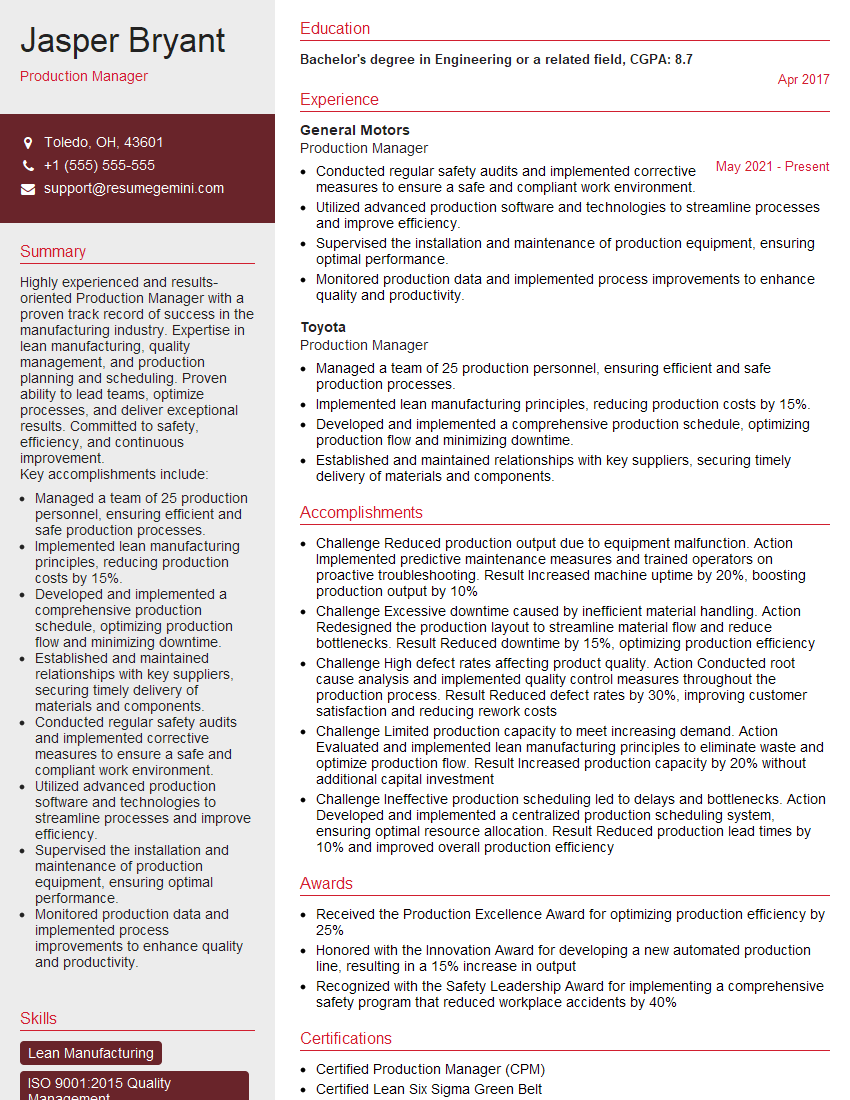
Production Manager Resume Sample

Quality Control Manager Resume Sample
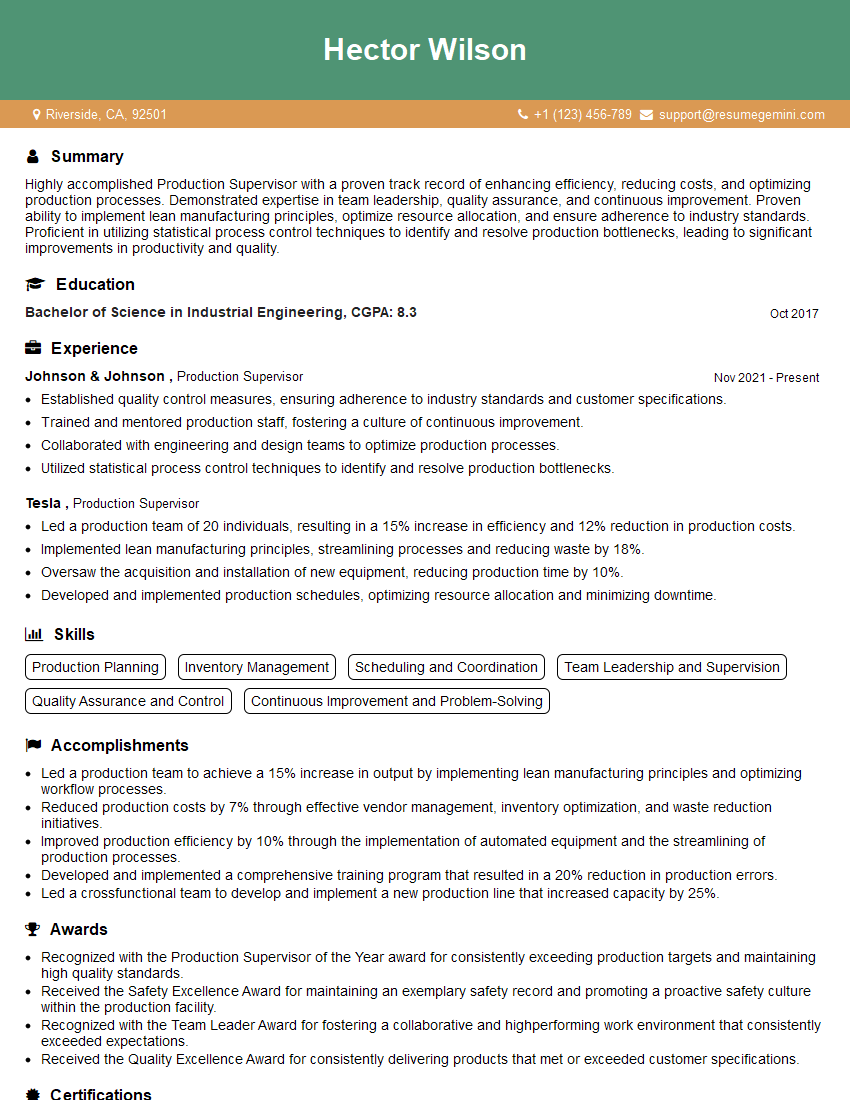
Production Supervisor Resume Sample

Sourcing Manager Resume Sample
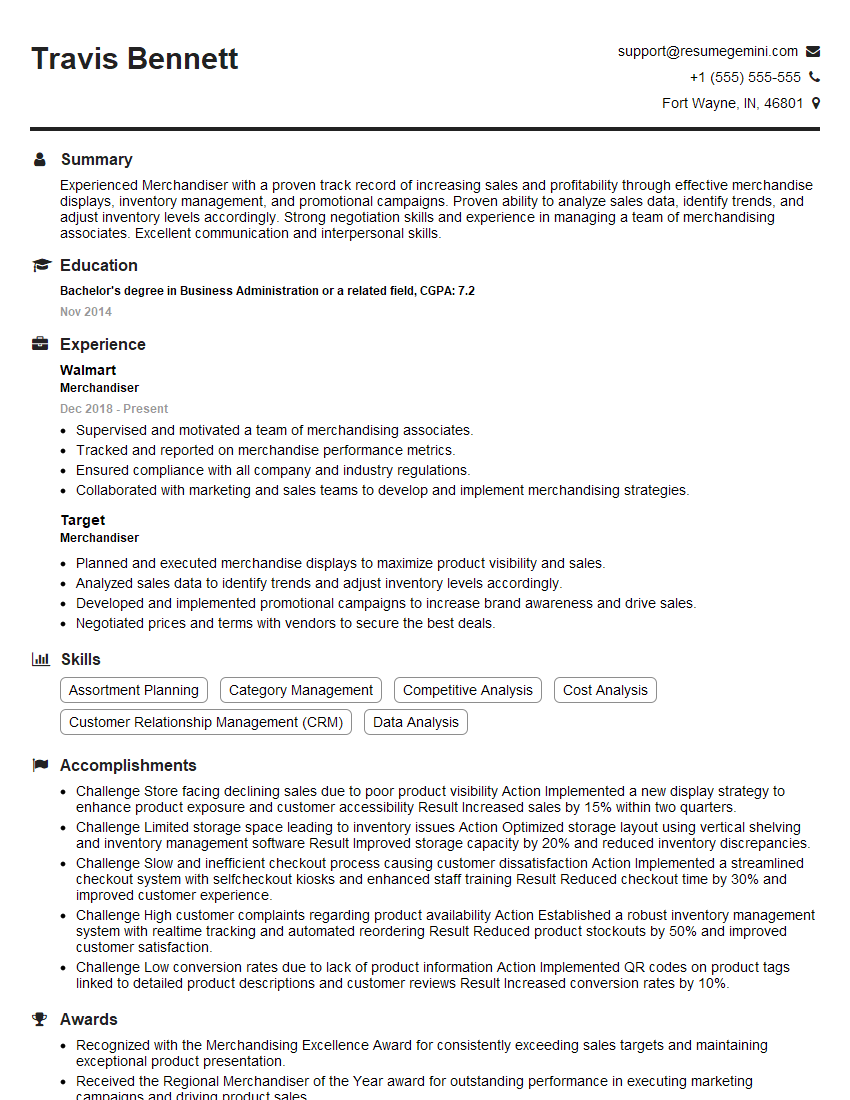
Merchandiser Resume Sample
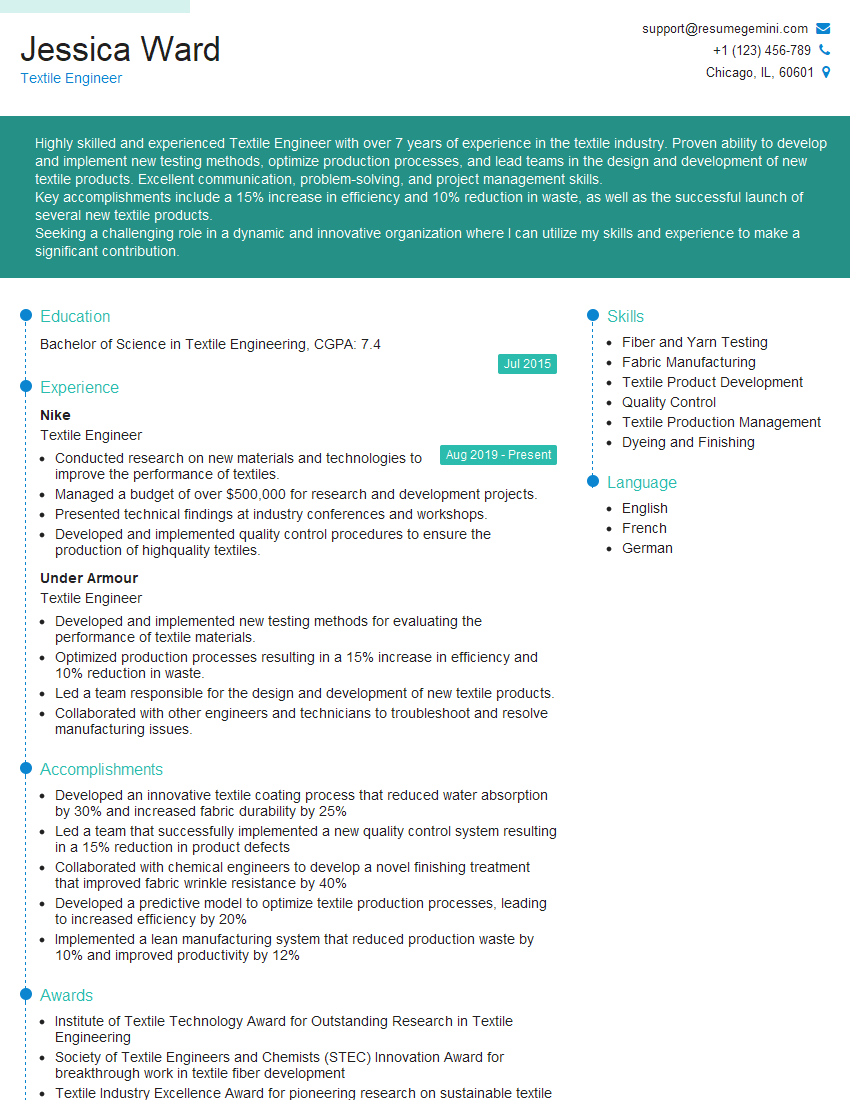
Textile Engineer Resume Sample
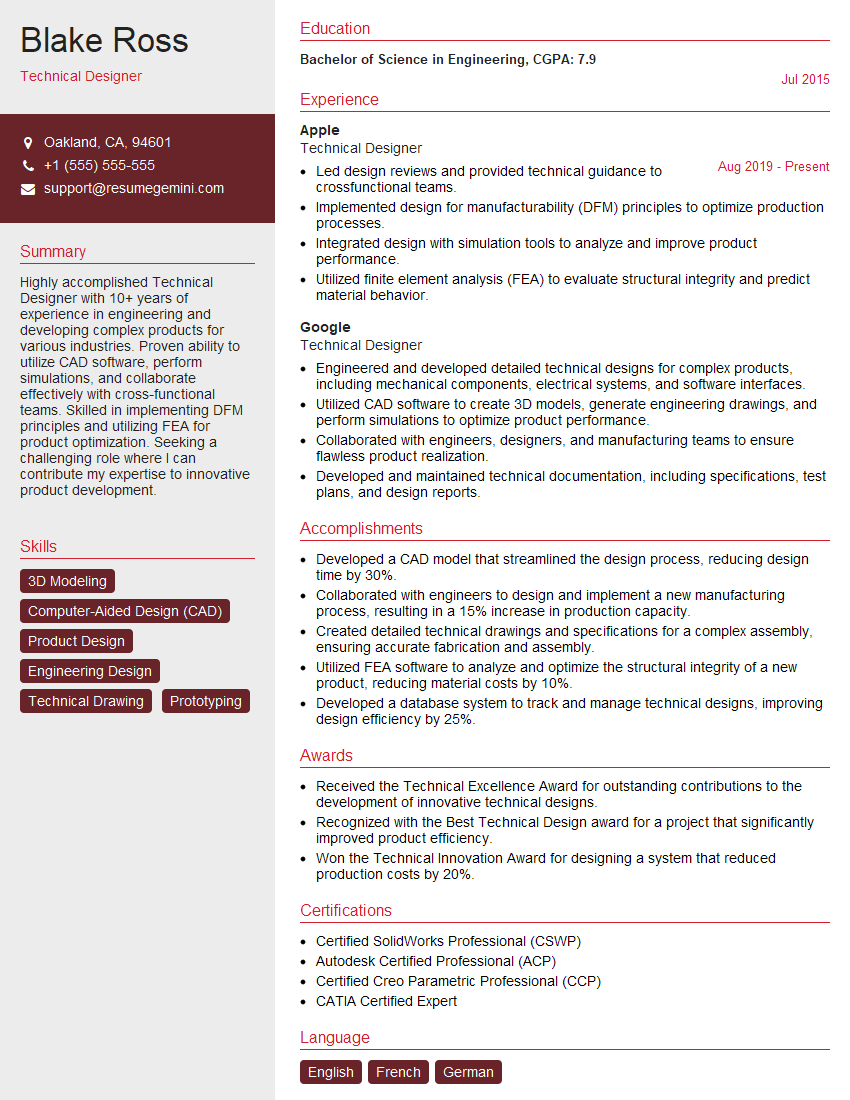
Technical Designer Resume Sample

Product Developer Resume Sample
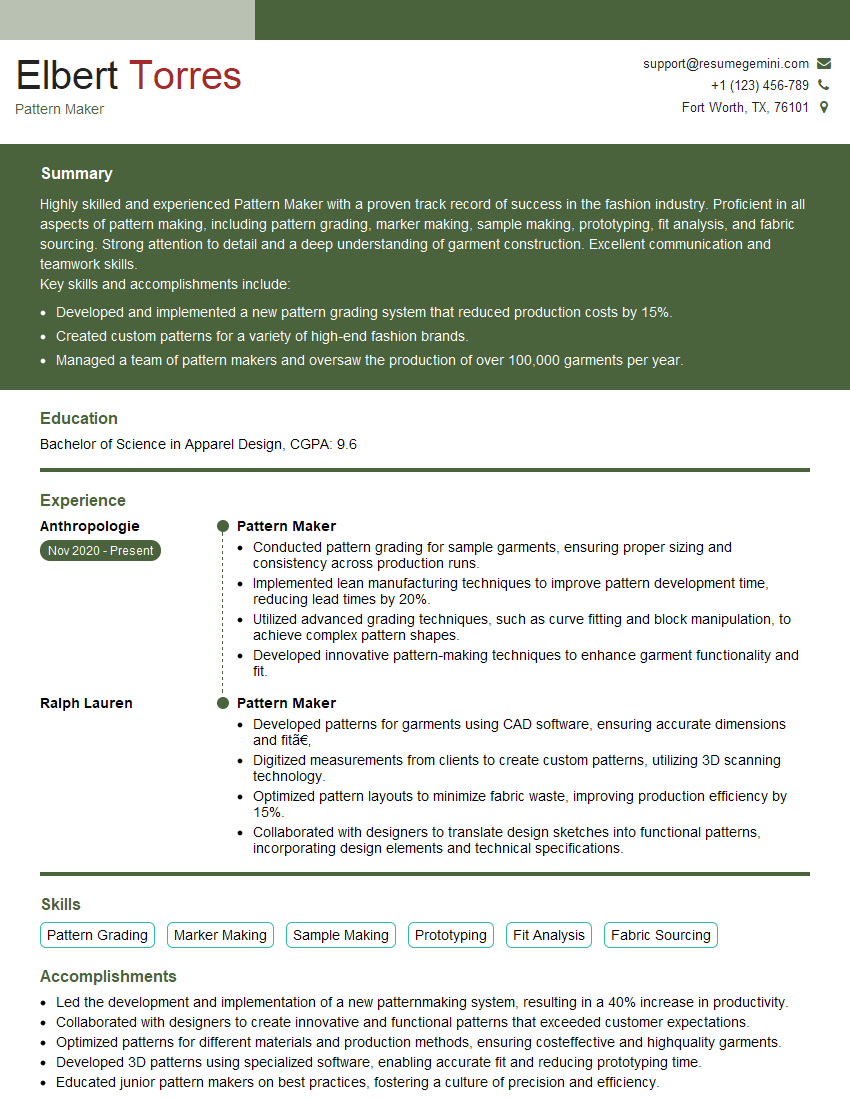
Pattern Maker Resume Sample
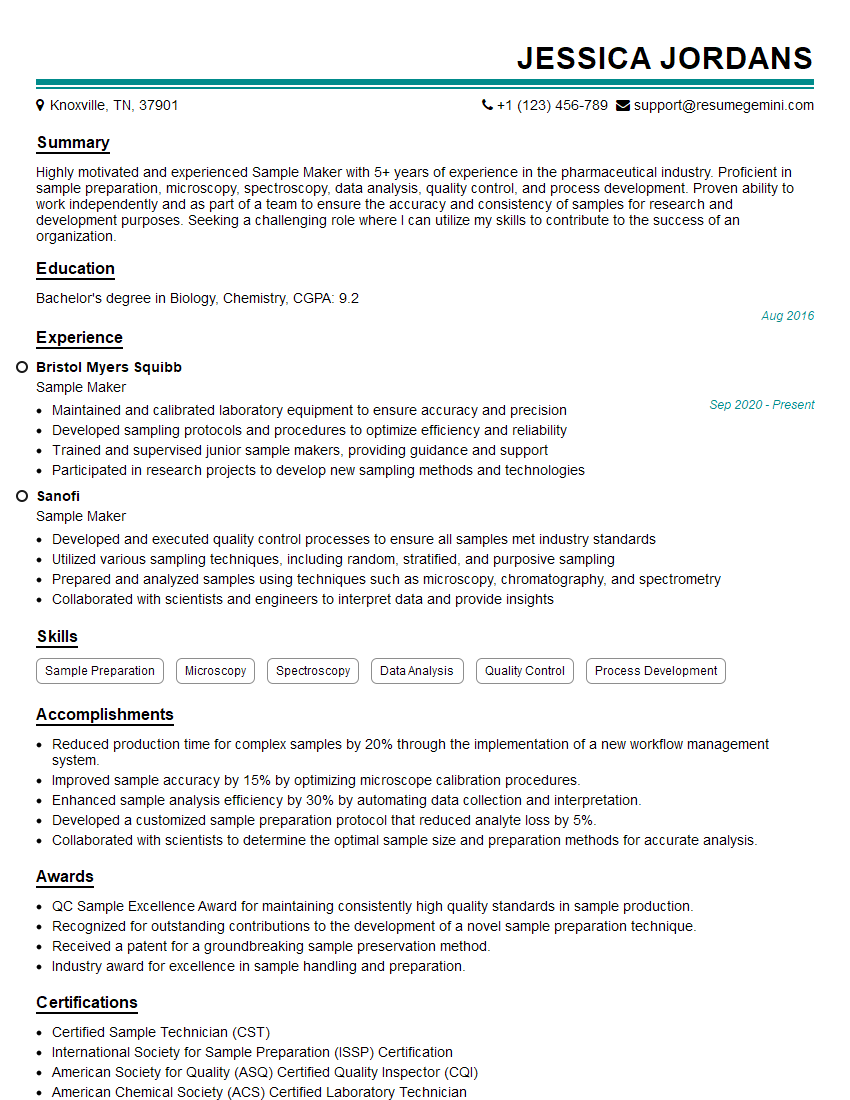
Sample Maker Resume Sample
Explore more articles
Users Rating of Our Blogs
Share Your Experience
We value your feedback! Please rate our content and share your thoughts (optional).
What Readers Say About Our Blog
Very informative content, great job.
good