The right preparation can turn an interview into an opportunity to showcase your expertise. This guide to Inboard and Outboard Engine Repair interview questions is your ultimate resource, providing key insights and tips to help you ace your responses and stand out as a top candidate.
Questions Asked in Inboard and Outboard Engine Repair Interview
Q 1. Explain the difference between a two-stroke and four-stroke outboard engine.
The key difference between two-stroke and four-stroke outboard engines lies in their combustion cycles. Think of it like this: a two-stroke engine completes a power stroke every other piston stroke, while a four-stroke engine needs four piston strokes.
- Two-stroke: In a two-stroke engine, the piston completes the intake, compression, power, and exhaust phases in just two strokes (up and down) of the piston. They are simpler, lighter, and generally less expensive but are less fuel-efficient and produce more emissions. Imagine a simpler, faster, but dirtier engine.
- Four-stroke: A four-stroke engine uses four piston strokes (intake, compression, power, exhaust) to complete one combustion cycle. They’re more complex but offer superior fuel efficiency, more power for a given size, and cleaner emissions. Think of it as a more refined, powerful, but complex engine.
For instance, smaller, less powerful outboard motors, like those on smaller inflatable boats, often use two-stroke technology. Larger, more powerful outboards on fishing boats and larger vessels predominantly use four-stroke technology.
Q 2. Describe the function of a carburetor in an outboard engine.
The carburetor in an outboard engine is the heart of the fuel system. Its job is to precisely mix air and fuel to create a combustible mixture before it enters the engine’s combustion chamber. Think of it as the engine’s fuel injector, but using a mechanical system instead of electronic control.
It does this through a series of intricate passages and valves that use the engine’s intake vacuum to draw in both air and fuel. The fuel/air ratio is carefully controlled by a series of jets and other components. A properly functioning carburetor ensures efficient combustion and optimal engine performance. Malfunctioning carburetors can lead to poor engine performance, stalling, and difficulty starting.
For example, a clogged carburetor jet can cause a lean fuel mixture, resulting in overheating and potential engine damage. A carburetor adjustment problem may cause a rich mixture, leading to excessive fuel consumption and smoky exhaust.
Q 3. What are the common causes of overheating in an inboard engine?
Overheating in an inboard engine is a serious issue that can lead to significant damage. Several factors can contribute to this problem:
- Insufficient coolant flow: This could be due to a clogged impeller in the raw water pump, a blockage in the cooling system, or a malfunctioning thermostat. Imagine a clogged pipe restricting water flow to your radiator.
- Faulty thermostat: A stuck-closed thermostat prevents coolant from circulating, leading to overheating. It’s like a valve refusing to open and allow water through.
- Leaking coolant: Leaks in the cooling system will cause coolant loss and affect the engine’s cooling capacity. A small leak can quickly become a major problem.
- Fouled heat exchanger: In salt water systems, a fouled heat exchanger (where engine coolant and raw water meet) restricts efficient heat transfer. Think of this as your radiator fins being covered in mud, preventing efficient cooling.
- Raw water pump failure: The raw water pump is crucial for supplying cooling water to the engine. Failure of this pump will almost certainly lead to overheating.
Regular maintenance, including checking coolant levels and inspecting the cooling system components, is key to preventing overheating.
Q 4. How do you diagnose a problem with a fuel injection system on an outboard?
Diagnosing fuel injection system problems in an outboard engine requires a systematic approach. Modern outboards utilize sophisticated electronic fuel injection systems. We don’t just use a simple visual inspection. We need advanced tools to pinpoint the issues accurately.
Troubleshooting steps typically involve:
- Visual inspection: Check fuel lines for leaks, cracks, or kinks. Examine the fuel injectors for physical damage or debris.
- Fuel pressure testing: Use a fuel pressure gauge to measure the fuel pressure at various points in the system to identify pressure drops or leaks. Low pressure points to a problem.
- Injector testing: Specialized injector testers can verify the functionality of each injector, determining if it’s delivering the correct amount of fuel and whether it’s spraying properly. A faulty injector needs replacing.
- Diagnostic codes: Most modern outboards feature diagnostic systems that store trouble codes. Reading and interpreting these codes can pinpoint the specific malfunction in the fuel injection system.
- ECM Testing (Electronic Control Module): The engine’s computer (ECM) can also be tested. Faulty ECM can cause many issues throughout the engine.
These steps require specialized tools and knowledge; a professional mechanic is usually needed.
Q 5. Explain the process of troubleshooting a no-start condition in an inboard engine.
Troubleshooting a no-start condition in an inboard engine requires a logical, step-by-step process. Remember to always check for the obvious things first.
- Check the basics: Ensure the battery is charged and the connections are clean and tight. A low battery is the most common cause of no-start situations.
- Fuel system: Verify fuel is reaching the engine. Check for fuel in the tank, inspect fuel lines for blockages, and check the fuel filter. This may involve priming the fuel system or checking the fuel pump.
- Ignition system: Test the spark plugs for spark using a spark tester. Examine the ignition coil and distributor (if applicable) for any damage or issues. This usually involves using an ignition tester.
- Compression test: Perform a compression test to ensure sufficient compression in each cylinder. Low compression indicates issues with rings, valves, or head gasket.
- Starter motor: Check the starter motor for proper engagement and operation. A weak or faulty starter will prevent the engine from turning over.
- Engine sensors: Modern inboard engines rely on sensors to regulate fuel and ignition. Faulty sensors can prevent starting and require diagnostics to identify the culprit.
This process might require specialized tools, and if problems persist, seeking professional help is always recommended.
Q 6. What are the safety precautions when working on a marine engine?
Safety is paramount when working on marine engines. These engines operate in potentially hazardous environments with flammable liquids and moving parts. Here are key safety precautions:
- Disconnect the battery: Always disconnect the negative terminal of the battery before performing any work to prevent accidental short circuits.
- Proper ventilation: Work in a well-ventilated area to prevent carbon monoxide poisoning, especially when working with inboard engines in enclosed spaces.
- Eye protection: Wear safety glasses or goggles to protect your eyes from debris or splashing fluids.
- Hearing protection: Use hearing protection when operating tools or running the engine, as the noise can be significant.
- Gloves: Wear gloves to protect your hands from grease, oil, and sharp edges.
- Fire safety: Have a fire extinguisher readily available, and be aware of the flammability of fuel and oil.
- Follow manufacturer’s instructions: Always consult the engine’s manual for specific safety guidelines and procedures.
- Know your limits: If you are not comfortable with a particular repair, seek professional help.
Ignoring these precautions can lead to serious injuries or damage.
Q 7. How do you perform a compression test on an outboard engine?
A compression test measures the pressure inside the cylinders when the piston is at top dead center (TDC). It helps diagnose problems with rings, valves, head gaskets, or piston damage. This is an important diagnostic tool for outboard engines.
- Gather your tools: You’ll need a compression tester specifically designed for marine engines, and usually a special adapter for the spark plug hole.
- Prepare the engine: Ensure the engine is cold, the battery is fully charged, and the spark plugs are removed.
- Install the compression tester: Screw the compression tester into the spark plug hole of one cylinder.
- Crank the engine: Have someone crank the engine over for several seconds while you watch the compression gauge. Note the reading. Remember to use the starter, not by manually turning the engine.
- Repeat: Repeat the process for each cylinder, recording the compression readings for each.
- Interpret the results: Compare the readings to the manufacturer’s specifications for your engine. Significant differences between cylinders indicate potential problems.
Low compression in one or more cylinders points to internal engine damage requiring more serious investigation. Consistent, but low compression across all cylinders might indicate issues like a valve timing problem or worn rings.
Q 8. Describe the function of a propeller and how it impacts engine performance.
The propeller is the underwater ‘fan’ that converts the engine’s rotational energy into thrust, propelling the boat forward. Think of it like a spinning screw pushing its way through water. Its design – pitch (angle of the blades), diameter, and number of blades – significantly impacts engine performance. A higher pitch propeller will create more speed at higher RPMs, but may require more engine power to turn. A larger diameter propeller will generally move more water, offering more thrust at lower speeds. An improperly selected propeller can lead to reduced fuel efficiency, poor acceleration, and even damage to the engine. For example, a propeller with too much pitch for the engine’s horsepower will struggle to reach its optimal speed, while one with too little pitch might spin excessively without generating enough thrust.
Q 9. What is the purpose of a trim tab and how does it work?
Trim tabs are small, hinged plates located on the transom (back) of the boat. They adjust the boat’s attitude in the water, improving handling and efficiency. Imagine trying to steer a car with one tire constantly digging into the ground – that’s what happens with improper trim. By adjusting the trim tabs, you can control the angle of the boat’s hull in the water. Raising a trim tab lifts that side of the stern, which helps to reduce bow rise at high speeds (planing) or to lift the stern when exiting shallow water. Lowering a trim tab lowers that side of the stern, improving stability in rough water and providing better steering control at lower speeds. Effective trim tab use leads to improved fuel economy, better handling, and reduced wear and tear on the engine and propeller.
Q 10. Explain the difference between direct and indirect drive systems.
Inboard and outboard engines differ in how the engine’s power is transferred to the propeller. In a direct drive system, the engine’s crankshaft is directly connected to the propeller shaft. This is common in inboard engines. Think of it as a simple, efficient chain of command: engine turns, propeller turns. This system is mechanically straightforward and reliable, but usually less versatile than an indirect drive system. In an indirect drive system, the engine is connected to the propeller shaft via a gearbox (or inboard/outboard, via a drive leg containing a gearbox). Outboard and sterndrive engines are prime examples. This allows for gear reduction (more torque at lower RPM), and it often means a more compact engine placement is possible. The gearbox allows for reverse gear, improving maneuverability. Direct drive systems offer simplicity and direct power transmission, while indirect drive systems provide gear reduction, reverse capabilities, and increased versatility. An example of an indirect drive system would be a standard outboard motor where the lower unit houses the gearbox and propeller.
Q 11. How do you check the oil level and condition in an inboard engine?
Checking the oil level and condition in an inboard engine is crucial for maintaining its health. First, locate the engine’s dipstick (usually marked with a clear ‘oil’ symbol). Ensure the engine is off and cold. Remove the dipstick, wipe it clean, reinsert it fully, and then remove it again to check the oil level. The oil level should be between the minimum and maximum marks. Note that reading this while the engine is warm, will provide an inaccurate reading due to thermal expansion. Next, inspect the oil’s condition. Clean oil will be clear or slightly amber. If it’s dark brown, black, or milky (indicating water contamination), an oil change is necessary. Additionally, pay attention to the texture; the presence of metal shavings indicates serious internal damage. Regular oil checks and timely changes prevent costly engine repairs.
Q 12. Describe the process of replacing a water pump impeller on an outboard.
Replacing a water pump impeller on an outboard is a relatively straightforward but crucial maintenance task. First, disconnect the battery and drain the engine’s cooling system. Then, access the impeller housing, usually located at the lower unit. You’ll need special tools for the specific model of outboard to ensure safe removal of the impeller cover. Once accessed, you’ll find the impeller, a rubber component that pushes water through the engine’s cooling system. Carefully remove the old impeller; note the orientation of the vanes, as this is important for correct reinstallation. Lubricate the new impeller with marine grease and carefully insert it into the housing, ensuring the vanes are properly aligned. Reassemble the housing, reconnect the battery, and test run the engine to check for leaks. Always refer to your engine’s specific service manual for detailed instructions.
Q 13. What are the common causes of excessive engine smoke?
Excessive engine smoke is a symptom of several potential problems. White smoke often indicates burning coolant, a sign of a cracked cylinder head or head gasket. Blue smoke typically signals burning oil, suggesting worn piston rings, valve seals, or excessive crankcase pressure. Black smoke usually points to a rich fuel mixture, indicating problems with the carburetor, fuel injectors, or air intake system. Occasionally, a combination of smoke colors can be present, resulting from multiple issues. For example, white and blue smoke together can indicate a serious problem combining a coolant leak and oil burning. Diagnosing the root cause requires a thorough inspection of the engine’s components. Ignoring excessive smoke can lead to catastrophic engine damage.
Q 14. How do you winterize an inboard/outboard engine?
Winterizing an inboard/outboard engine protects it from damage during freezing temperatures. The process involves removing water from the engine’s cooling system and lubricating key components to prevent corrosion. For inboard engines, this includes draining the engine block, manifolds, and exhaust system. Flush the system with antifreeze to protect against freeze damage. For outboards, the procedure includes draining the lower unit gearcase and flushing the cooling system. Run the engine with antifreeze until it circulates through the entire system. Add fogging oil to the cylinders to lubricate internal components and prevent corrosion. Finally, disconnect the battery and store the engine in a dry place. If stored outside, cover the engine to shield it from the elements. Consult your engine’s manual for specific winterization recommendations based on your model and environment.
Q 15. Explain the importance of regular maintenance on marine engines.
Regular maintenance on marine engines is paramount for ensuring reliable operation, extending engine lifespan, and preventing costly repairs. Think of it like regular check-ups for your car – preventative care is far cheaper than emergency surgery!
Neglecting maintenance can lead to premature wear and tear on critical components like the fuel system, cooling system, and exhaust system. This can result in performance issues, reduced fuel efficiency, and even catastrophic engine failure, potentially leaving you stranded at sea. Regular maintenance schedules, typically defined by the engine manufacturer, usually include tasks like oil changes, filter replacements, fluid level checks, and visual inspections for leaks or corrosion.
- Improved Performance: Clean components and properly functioning systems lead to optimal engine performance.
- Fuel Efficiency: Regular maintenance keeps the engine running efficiently, minimizing fuel consumption.
- Extended Lifespan: Preventative measures significantly extend the service life of the engine, saving you money in the long run.
- Safety: Regular checks help identify potential problems before they escalate into dangerous situations.
Career Expert Tips:
- Ace those interviews! Prepare effectively by reviewing the Top 50 Most Common Interview Questions on ResumeGemini.
- Navigate your job search with confidence! Explore a wide range of Career Tips on ResumeGemini. Learn about common challenges and recommendations to overcome them.
- Craft the perfect resume! Master the Art of Resume Writing with ResumeGemini’s guide. Showcase your unique qualifications and achievements effectively.
- Don’t miss out on holiday savings! Build your dream resume with ResumeGemini’s ATS optimized templates.
Q 16. What are the common types of fuel systems used in marine engines?
Marine engines employ various fuel systems, primarily categorized by the type of fuel they use and the method of fuel delivery. Common types include:
- Carbureted Systems: These older systems use a carburetor to mix fuel and air before entering the engine. They are simpler but less efficient and environmentally friendly than newer systems.
- Electronic Fuel Injection (EFI): EFI systems utilize electronic control units (ECUs) to precisely meter fuel delivery, optimizing combustion and fuel efficiency. This system offers superior performance and emissions control. Think of it like the sophisticated fuel injection in modern cars.
- Diesel Fuel Systems: Diesel engines, common in larger vessels, use either mechanical or electronic injection systems to deliver diesel fuel under high pressure. These systems often incorporate fuel filters and pressure regulators to ensure clean and consistent fuel supply.
The choice of fuel system depends heavily on engine size, application, and emission regulations.
Q 17. Describe how to diagnose and repair a leaking fuel line.
Diagnosing a leaking fuel line requires a systematic approach. Safety is paramount, as fuel is highly flammable. Always disconnect the battery before starting any fuel system work.
- Locate the Leak: Carefully inspect all fuel lines visually, checking for wetness, discoloration, or cracks. A pressure test can help pinpoint leaks not readily visible.
- Identify the Cause: Determine the root cause. Is it a cracked or damaged line? A loose fitting? A corroded connection? A faulty fuel pump?
- Repair or Replace: For minor leaks, repair might involve tightening fittings or using fuel-resistant sealant. For major leaks or damaged sections, replacing the entire line is often necessary. Always use fuel-compatible materials.
- Pressure Test (if necessary): After repairs, a pressure test is crucial to ensure the integrity of the system and prevent future leaks. This involves using a fuel pressure gauge to monitor system pressure.
Remember: If you’re not comfortable performing these repairs yourself, consult a qualified marine mechanic. Improper fuel line repairs can lead to serious safety hazards.
Q 18. How do you test the charging system on a marine engine?
Testing a marine engine’s charging system involves checking several key components to ensure the battery is properly charging. You’ll need a multimeter for accurate measurements. First, make sure the engine is running.
- Battery Voltage: With the engine running, measure the voltage at the battery terminals. A reading below 13.5 volts suggests a problem with the charging system.
- Alternator Output: Measure the voltage at the alternator output while the engine is running. This should be similar to the battery voltage. A significantly lower reading points to an alternator issue.
- Charging Current: Using the multimeter’s amperage setting, measure the current flowing from the alternator to the battery. A low reading indicates a problem with the charging circuit.
- Check Wiring and Connections: Inspect all wiring and connections for corrosion, loose terminals, or damaged insulation. Loose connections can significantly impede charging.
These tests will help diagnose whether the problem lies with the battery, alternator, wiring, voltage regulator, or a combination thereof.
Q 19. Explain the function of a thermostat in an inboard engine.
The thermostat in an inboard engine is a crucial component of the cooling system. It acts as a temperature regulator, ensuring the engine operates within its optimal temperature range. Think of it as the engine’s temperature control valve.
When the engine is cold, the thermostat remains closed, restricting coolant flow through the radiator. This allows the engine to warm up quickly to its operating temperature. Once the engine reaches its optimal temperature, the thermostat opens, allowing coolant to circulate through the radiator to dissipate heat. This prevents overheating and safeguards the engine from damage.
A malfunctioning thermostat, either stuck open or closed, can lead to overheating or insufficient warm-up, both detrimental to engine performance and longevity.
Q 20. How do you identify and address corrosion in a marine engine?
Corrosion in a marine engine is a serious issue due to the saltwater environment. Identifying and addressing it is critical for maintaining engine performance and extending its life. Corrosion often manifests as pitting, rust, or white powdery deposits.
- Visual Inspection: Regularly inspect all metal parts for signs of corrosion. Pay close attention to areas exposed to saltwater spray or standing water.
- Cleaning: Remove loose corrosion with a wire brush or suitable cleaning agent. Be careful not to damage underlying metal.
- Protection: Apply a corrosion inhibitor or protective coating to vulnerable areas. Many specialized marine coatings offer excellent protection against saltwater corrosion.
- Replacement: Severely corroded parts should be replaced to prevent further damage and ensure reliable operation.
Preventing corrosion involves regular washing, proper storage, and using corrosion-resistant materials wherever possible. Think of it as a constant battle against the harsh marine environment.
Q 21. Describe your experience with different types of marine engine lubricants.
My experience encompasses a wide range of marine engine lubricants, from conventional oils to high-performance synthetics. The selection of the correct lubricant is crucial for engine health and performance.
- Conventional Oils: These are typically less expensive but offer less protection and have shorter service intervals compared to synthetics. Suitable for less demanding applications and older engines.
- Synthetic Oils: These offer superior protection, extended service intervals, better performance at high temperatures and low temperatures, and improved fuel efficiency. They are ideal for high-performance engines and demanding operating conditions.
- Multi-grade Oils: These oils maintain their viscosity across a wider range of temperatures, making them suitable for various operating conditions. The viscosity grade (like 10W-30 or 15W-40) is a critical factor for selection.
- Gear Oils: Specialized oils designed for gearboxes and transmissions. Selecting the correct gear oil is essential for smooth shifting and long gear life.
Always refer to the engine manufacturer’s recommendations when choosing an engine lubricant. Using the wrong oil can lead to engine damage and void the warranty.
Q 22. How do you troubleshoot an engine that is running rough?
A rough-running engine is a common problem with many potential causes. Troubleshooting requires a systematic approach. Think of it like diagnosing a medical condition – you need to gather symptoms before making a diagnosis.
- Check the basics first: Start with the simple stuff. Is the engine getting enough fuel? Is the spark strong and consistent (if it’s a gasoline engine)? Check fuel lines for leaks, the fuel filter for blockages, and spark plugs for fouling or damage.
- Listen to the engine: A knocking sound could indicate low compression in a cylinder, while a ticking sound might point to a valve problem. A misfire often manifests as a rough idle or irregular running at higher RPMs.
- Inspect the air intake: A clogged air filter restricts airflow, leading to a rough running condition. Check for any debris or damage.
- Consider the carburetor or fuel injection system: Problems here are major culprits. Carburetor issues might involve incorrect jetting or a faulty float valve. Fuel injection problems might be related to faulty sensors or injectors.
- Check the ignition system: Weak sparks, faulty ignition coils, or a problem with the distributor (in older engines) can all cause rough running. Use a spark tester to assess spark strength.
- Examine the timing: Incorrect ignition timing drastically affects engine performance. Check the timing belt or chain for wear or slippage.
- Compression test: A low compression reading in one or more cylinders points to a more serious internal engine problem, such as worn piston rings or a blown head gasket.
Troubleshooting is iterative; after addressing one potential issue, retest the engine to see if the problem is solved. If not, proceed to the next potential cause.
Q 23. Explain the process of aligning a propeller shaft.
Propeller shaft alignment is crucial for preventing vibration, improving fuel efficiency, and extending the life of the drivetrain components. Misalignment leads to excessive wear and premature failure. Think of it like aligning two train tracks—they need to be perfectly parallel and in line to avoid derailment.
The process generally involves these steps:
- Preparation: Ensure the boat is properly supported, usually on a cradle or jack stands. Access to the shaft and its couplings must be clear.
- Measurement: Use alignment tools such as dial indicators or laser alignment systems. These tools precisely measure the shaft’s position and angle relative to the engine and the strut or cutless bearing.
- Adjustment: Shims or adjustment mechanisms (depending on the boat’s design) are used to correct any misalignment. This is often a delicate process requiring precision and patience.
- Verification: After adjustments, re-measure the alignment to ensure it meets specifications. This iterative process ensures optimal alignment.
Different boats have different alignment methods, some more complex than others. Working with a manual is usually necessary and professional assistance might be required for larger vessels or complex systems.
Q 24. What are the common problems associated with sterndrives?
Sterndrives, while convenient, are complex systems prone to various problems. Common issues include:
- Gimbal bearing failure: This allows the drive unit to tilt and can lead to excessive wear and vibration. Early detection is key to preventing further damage.
- Shift cable issues: Worn or broken shift cables result in difficulty shifting gears or prevent the drive from shifting completely. These are relatively easy to replace but need careful adjustment.
- Water pump problems: A failing water pump leads to overheating, which can cause severe engine damage. Regular maintenance is crucial.
- U-joint failure: The universal joints allow for flexible transmission of power. Wear or damage can cause vibration and noise, ultimately leading to complete failure. Regular lubrication can extend their lifespan.
- Seals and gaskets: Leaks are common. They cause loss of lubrication, cooling water intrusion, or fuel leakage. Replacement might be needed if they are damaged or deteriorated.
- Corrosion: Saltwater environments are particularly harsh on sterndrives. Corrosion protection and regular cleaning are paramount.
Regular maintenance and inspections are essential for mitigating these problems and ensuring the longevity of your sterndrive. An ounce of prevention is worth a pound of cure!
Q 25. How do you troubleshoot electrical issues on a marine engine?
Troubleshooting electrical issues on a marine engine requires a methodical approach and a good understanding of basic electrical principles. Safety is paramount: always disconnect the battery before working on the electrical system.
- Visual inspection: Start by looking for obvious problems such as loose connections, damaged wiring, corrosion, and blown fuses. A simple visual inspection can often solve the problem.
- Use a multimeter: This is your primary tool. Use it to check voltages, currents, and continuity. For example, check for battery voltage, alternator output, and continuity in circuits.
- Wiring diagrams: Consult the engine’s wiring diagram to trace circuits and identify components. This is crucial for complex systems.
- Testing components: Once you’ve identified a suspected faulty component (e.g., starter motor, alternator, sensor), test it with a multimeter or appropriate testing equipment.
- Grounding issues: Poor grounding is a frequent cause of electrical problems. Check for clean, secure ground connections.
- Check the battery: A weak or dead battery can cause a host of problems. Ensure it’s properly charged and functioning correctly.
Remember to always follow safety procedures when working with electrical systems. If unsure about any aspect, seek professional help.
Q 26. Describe your experience with different diagnostic tools used in marine engine repair.
My experience with diagnostic tools encompasses a wide range of equipment. This experience allows me to quickly identify and rectify problems efficiently and effectively.
- Multimeters: Essential for measuring voltage, current, resistance, and continuity. I routinely use both analog and digital multimeters, each with its own advantages.
- Compression testers: These accurately measure the compression in each cylinder, crucial for diagnosing internal engine problems. I’ve used various types, including those with adapters for different spark plug threads.
- Vacuum gauges: These help assess the condition of the intake manifold, detecting vacuum leaks which are a common source of poor engine performance.
- Fuel pressure gauges: Measuring fuel pressure is vital for diagnosing fuel system problems in both carburetted and fuel-injected engines. I have experience using both mechanical and electronic gauges.
- Diagnostic scanners: Modern marine engines often have onboard computer systems. Diagnostic scanners read codes from these systems, providing insights into potential problems. I have familiarity with various marine engine specific scanners.
- Oscilloscope: This powerful tool allows for precise waveform analysis to troubleshoot ignition issues, sensor problems, and other complex electrical faults.
The choice of diagnostic tool depends on the specific engine and the nature of the problem. My expertise allows me to select and use the right tools to solve the problem in a timely manner.
Q 27. How do you handle emergency situations, such as engine failure at sea?
Engine failure at sea is a serious situation requiring swift and decisive action. Safety is the top priority.
- Assess the situation: Determine the severity of the failure and potential dangers (e.g., location, weather, other vessels).
- Radio distress call: If the failure is serious, immediately contact the Coast Guard or other relevant maritime authorities via VHF radio.
- Emergency procedures: Implement the boat’s emergency procedures. This may include deploying a sea anchor to maintain position, activating emergency lights, and preparing life rafts or other safety equipment.
- Attempt repairs (if safe): If the problem seems minor and repairable (e.g., a minor fuel line leak) and it is safe to do so, attempt a temporary fix.
- Communication: Keep in communication with the authorities and anyone who might be able to assist.
- Stay calm: Panic is your worst enemy in an emergency. Maintain a calm and rational approach to increase chances of a positive outcome.
Regular maintenance, pre-trip checks, and a well-stocked emergency kit significantly improve your chances of handling such a situation effectively. Experience in handling these situations allows for quick and decisive actions that will improve safety.
Q 28. What are the environmental regulations concerning marine engine maintenance and repair?
Environmental regulations concerning marine engine maintenance and repair are increasingly stringent, focusing on preventing pollution. The specific regulations vary depending on location (national and regional).
- Waste oil disposal: Used oil must be collected and disposed of properly, following local regulations. Improper disposal can lead to significant environmental damage.
- Fuel handling: Strict regulations govern the handling and storage of fuel, preventing spills and leaks into the water. This includes proper spill containment measures.
- Bilge water management: Bilge water often contains oil and other pollutants. Regulations dictate how bilge water must be treated before discharge. This might involve the use of oil/water separators.
- Hull cleaning: Anti-fouling paints contain biocides. Regulations govern the application and maintenance of these paints, minimizing environmental impact.
- Emission controls: Regulations control exhaust emissions from marine engines, particularly in sensitive areas. Newer engines have stricter emission standards.
Staying updated on these regulations is critical for compliance and environmental responsibility. Failure to comply can result in significant penalties.
Key Topics to Learn for Inboard and Outboard Engine Repair Interview
- Internal Combustion Engines: Understanding the four-stroke cycle, fuel systems (carburetors and fuel injection), ignition systems, and cooling systems in both inboard and outboard applications.
- Diagnostics and Troubleshooting: Practical application of diagnostic tools, interpreting engine performance data, identifying common malfunctions (e.g., starting issues, overheating, poor performance), and implementing effective troubleshooting strategies.
- Inboard Engine Systems: Specific knowledge of inboard engine components such as shaft drives, sterndrives, and associated cooling systems. Understanding the unique challenges of inboard maintenance and repair.
- Outboard Engine Systems: Deep understanding of outboard engine components like lower units, powerheads, and the various types of outboard motors (two-stroke, four-stroke). Experience with lower unit service and propeller repair.
- Electrical Systems: Familiarity with the electrical components of both inboard and outboard engines, including alternators, batteries, starting systems, and wiring diagrams. Troubleshooting electrical faults.
- Safety Procedures: Understanding and adhering to all relevant safety regulations and procedures for working with marine engines, including proper handling of fuel and lubricants.
- Maintenance and Repair Techniques: Practical experience with engine overhaul, component replacement, and preventative maintenance. Understanding the importance of meticulous work and attention to detail.
- Advanced Topics (Optional): Consider exploring topics like fuel injection systems, electronic control modules (ECMs), and advanced diagnostic techniques for more senior-level roles.
Next Steps
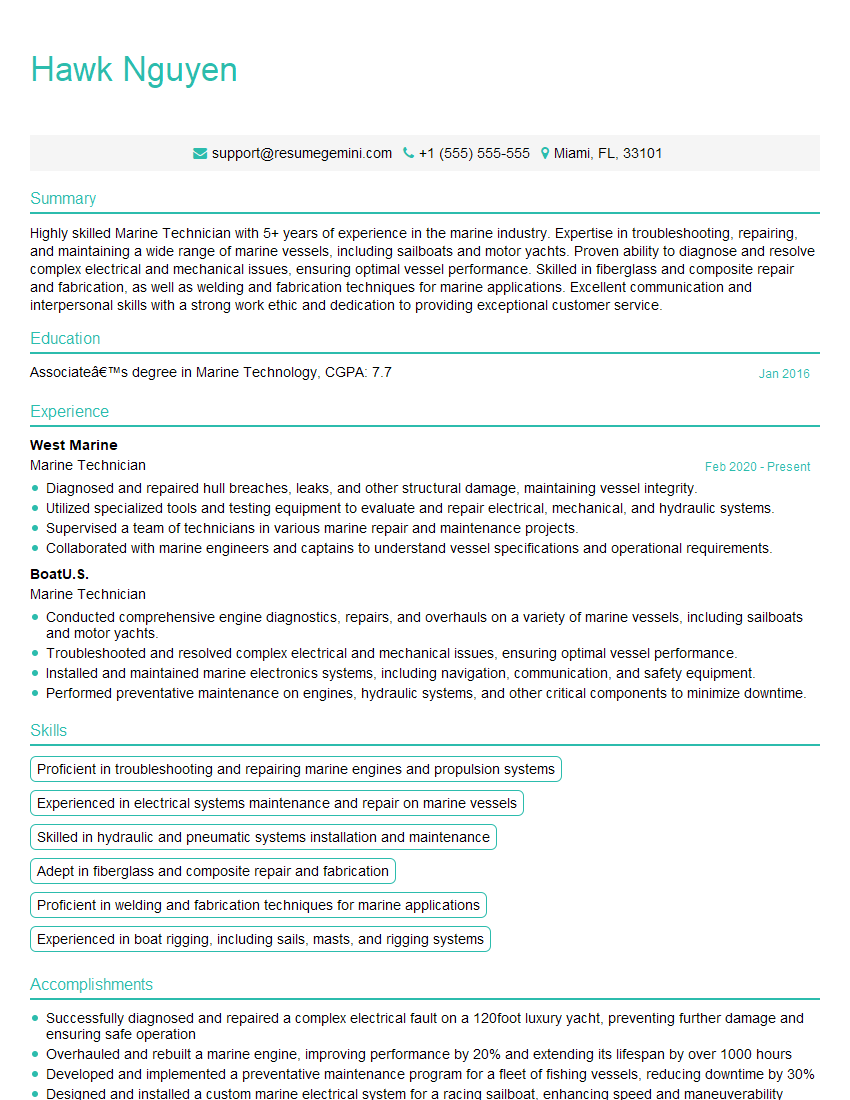
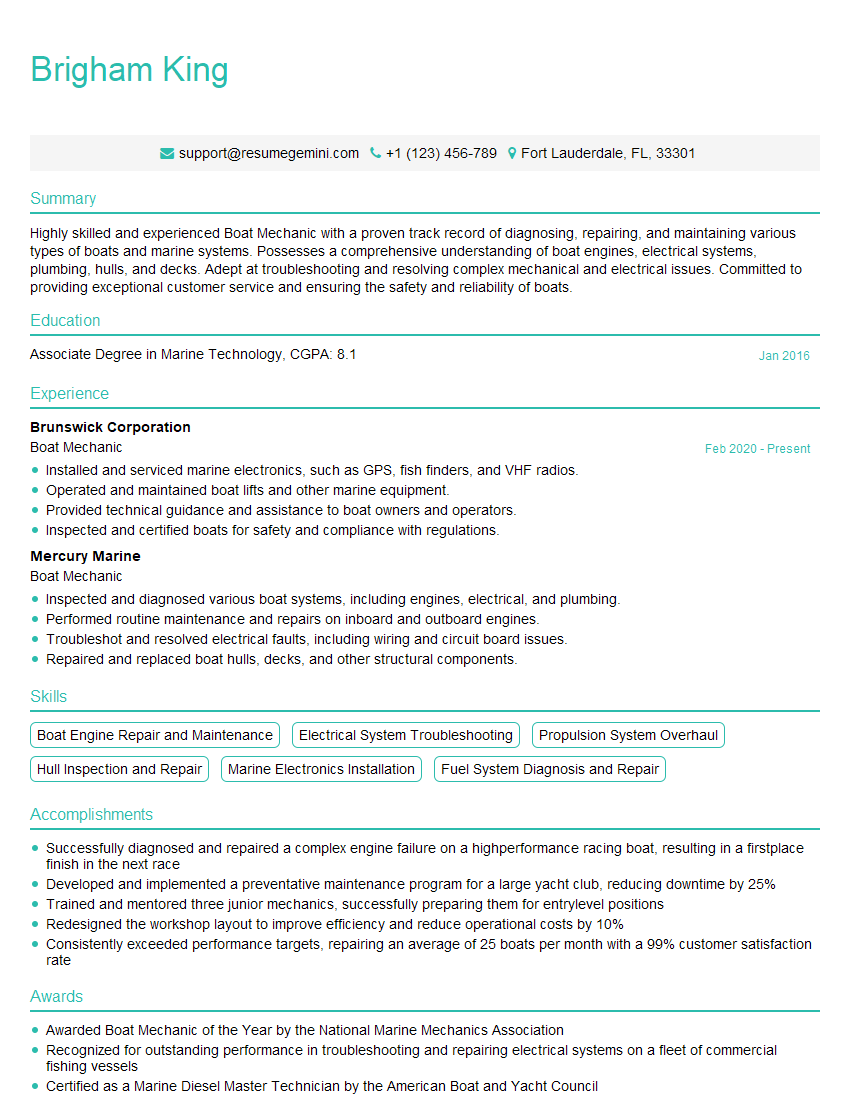
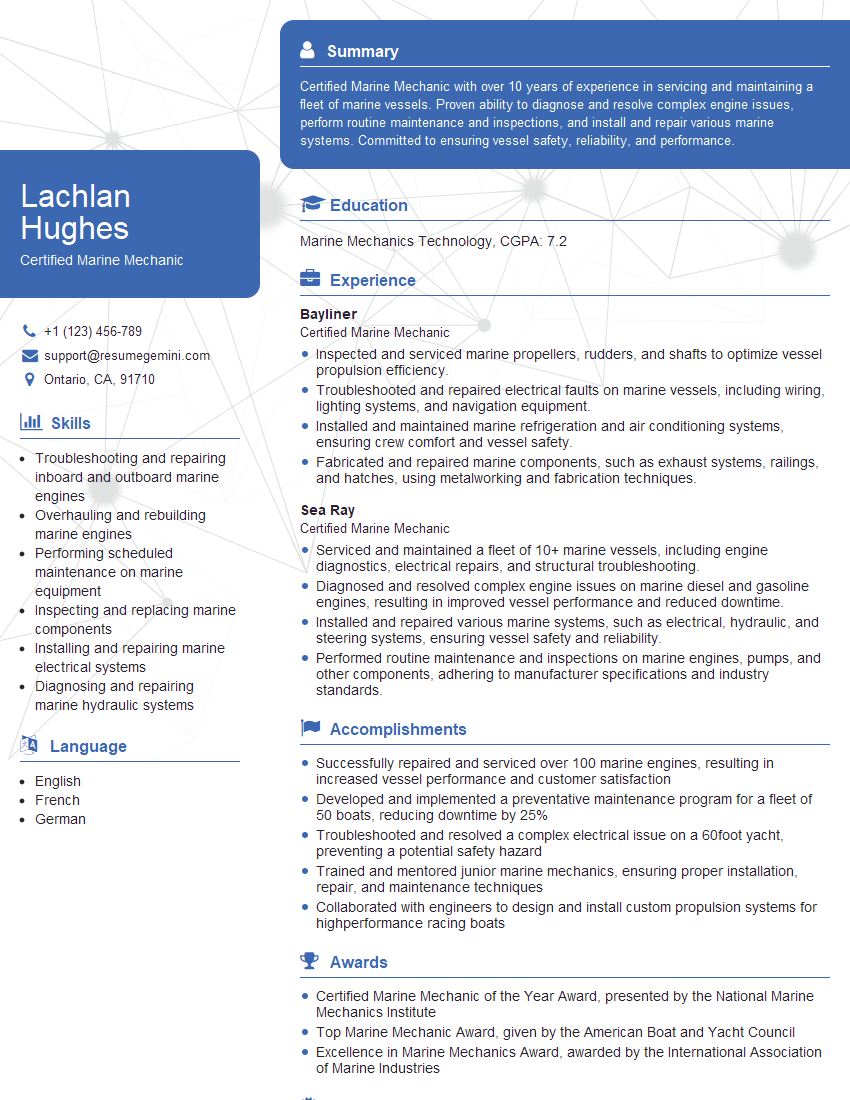
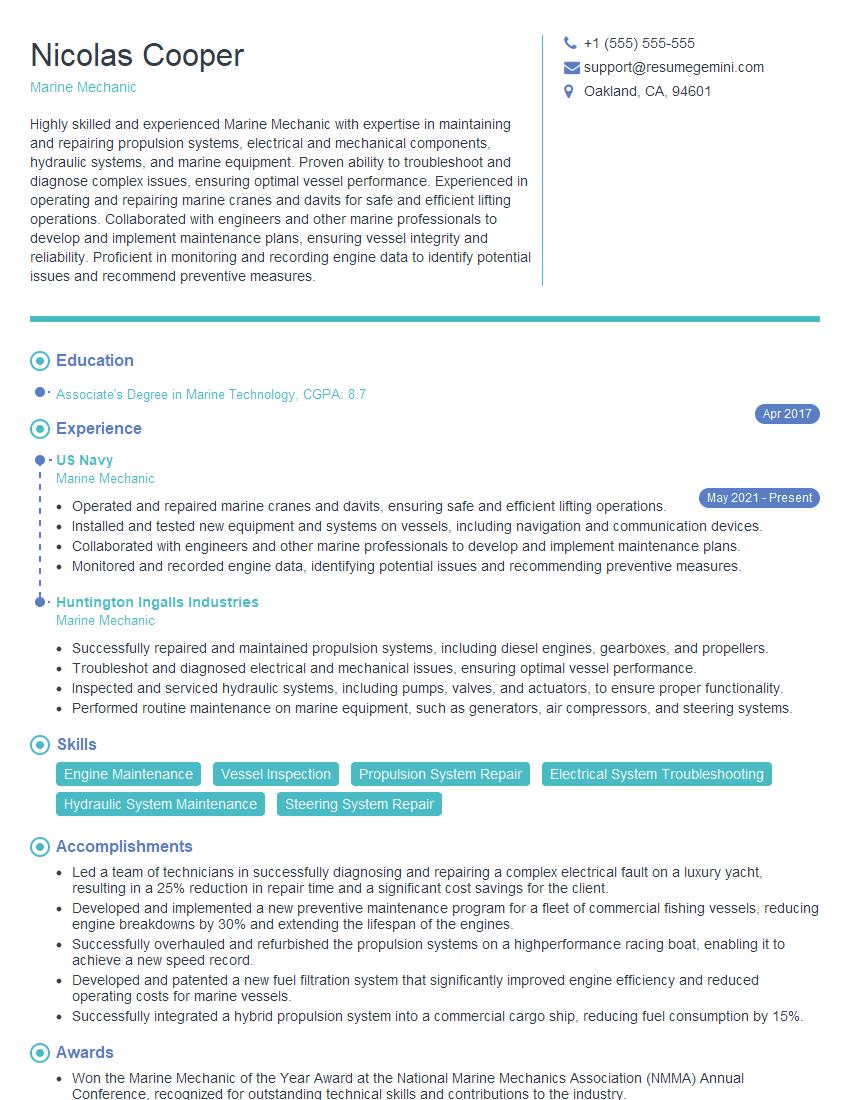
Mastering Inboard and Outboard Engine Repair opens doors to rewarding careers in the marine industry, offering opportunities for specialization and growth. To stand out, a well-crafted resume is crucial. An ATS-friendly resume increases your chances of getting noticed by recruiters. ResumeGemini can help you create a professional, impactful resume that highlights your skills and experience effectively. Examples of resumes tailored to Inboard and Outboard Engine Repair are available to guide you.
Explore more articles
Users Rating of Our Blogs
Share Your Experience
We value your feedback! Please rate our content and share your thoughts (optional).
What Readers Say About Our Blog
Very informative content, great job.
good