Feeling uncertain about what to expect in your upcoming interview? We’ve got you covered! This blog highlights the most important Balance and Stability Training interview questions and provides actionable advice to help you stand out as the ideal candidate. Let’s pave the way for your success.
Questions Asked in Balance and Stability Training Interview
Q 1. Explain the difference between static and dynamic balance.
Static balance refers to the ability to maintain equilibrium while standing still, like holding a yoga pose. Dynamic balance, on the other hand, involves maintaining balance during movement, such as walking or changing directions quickly. Think of it this way: static balance is like a still photograph, while dynamic balance is like a movie.
The key difference lies in the presence of movement. Static balance tests assess stability in a stationary position, while dynamic balance tests require the individual to move, challenging their ability to adjust and maintain equilibrium while shifting their center of gravity.
For example, the single-leg stance test assesses static balance, whereas the timed up-and-go test evaluates dynamic balance.
Q 2. Describe the role of proprioception in balance.
Proprioception is your body’s awareness of its position and movement in space. It’s like having an internal GPS that constantly tells your brain where your limbs are and how they’re moving. This information, along with input from your visual and vestibular systems (inner ear), is crucial for maintaining balance. Imagine trying to walk on a tightrope blindfolded – it’s incredibly difficult because you lack crucial visual and proprioceptive feedback.
Proprioceptors, specialized sensory receptors in your muscles, tendons, and joints, send signals to the brain about joint angle, muscle length, and tension. These signals allow your brain to make incredibly small, rapid adjustments to maintain your balance, preventing you from falling. Weakness or damage to these systems significantly impairs proprioception and, therefore, balance.
Q 3. What are the common causes of balance impairments?
Balance impairments can stem from various causes, often interacting in complex ways. Some common causes include:
- Neuromuscular disorders: Conditions like Parkinson’s disease, stroke, multiple sclerosis, and peripheral neuropathy can affect the nervous system’s ability to control muscles and coordinate movement, leading to balance problems.
- Musculoskeletal issues: Arthritis, muscle weakness, and joint pain limit range of motion and reduce stability.
- Vestibular disorders: Problems with the inner ear, responsible for balance and spatial orientation, can cause dizziness, vertigo, and impaired balance.
- Visual impairments: Reduced vision or blurry vision significantly impacts balance, as visual input is a major contributor to maintaining equilibrium.
- Medications: Certain medications, especially those affecting the nervous system, can have side effects that negatively impact balance.
- Age-related changes: As we age, we experience natural declines in muscle strength, joint flexibility, sensory acuity, and cognitive function, all of which contribute to increased risk of falls.
Q 4. List three assessment tools used to evaluate balance.
Several assessment tools are used to evaluate balance, each providing different perspectives on an individual’s capabilities. Here are three common ones:
- Romberg Test: A simple test where the individual stands with feet together, arms at their sides, eyes closed. Increased sway or loss of balance indicates impaired balance.
- Timed Up and Go (TUG) Test: This assesses dynamic balance by timing how long it takes an individual to rise from a chair, walk three meters, turn around, and return to the chair. Slower times suggest balance difficulties.
- Berg Balance Scale (BBS): A more comprehensive assessment that evaluates static and dynamic balance through 14 different tasks. It provides a numerical score indicating balance ability and fall risk.
Q 5. Explain how you would design a balance training program for an elderly client.
Designing a balance training program for an elderly client requires careful consideration of their individual capabilities and limitations. The program should be progressive, starting with easier exercises and gradually increasing the challenge. Safety is paramount.
Phase 1: Building a foundation (weeks 1-4): Focus on improving postural control and strength. Exercises could include seated exercises like marching in place, heel-toe raises, and arm circles. Standing exercises should be supported initially, such as holding onto a chair or countertop for balance while performing simple movements.
Phase 2: Improving static and dynamic balance (weeks 5-8): Progress to more challenging exercises like single-leg stance (with support initially), weight shifts, and slow, controlled movements like walking heel-to-toe. Introduce balance boards or wobble cushions for added challenge.
Phase 3: Functional balance training (weeks 9-12): Focus on activities that mimic daily life, such as picking up objects from the floor, turning, and stepping over obstacles. Incorporate dual-task training (performing a cognitive task like counting backward while doing a balance exercise) to improve balance in more challenging real-life situations.
Throughout the program, regularly assess the client’s progress, modify exercises as needed, and emphasize proper form to prevent injury. Always prioritize safety and encourage regular participation.
Q 6. How would you adapt a balance training program for a client with Parkinson’s disease?
Adapting balance training for a client with Parkinson’s disease requires a nuanced approach, considering the disease’s impact on motor control, rigidity, and postural instability. Safety is paramount due to the increased risk of falls.
Key adaptations:
- Emphasis on large, rhythmic movements: Exercises should be performed slowly and deliberately, emphasizing fluidity and rhythm. This helps counteract the rigidity and tremor common in Parkinson’s.
- Cueing and feedback: Use visual, auditory, and tactile cues to help the client maintain balance and proper form. Regular feedback helps reinforce correct movements.
- External support: Utilize assistive devices such as a walking frame or cane as needed to provide additional support and stability.
- Focus on postural alignment: Address postural deviations such as stooped posture and improve trunk stability through specific exercises targeting the core muscles.
- Task-specific training: Focus on functional activities relevant to the client’s daily life, adapting them to their abilities and limitations. This approach promotes generalization of balance improvements to daily activities.
- Low-impact activities: Avoid high-impact exercises that might worsen symptoms or increase the risk of falls. Aqua therapy can be a beneficial alternative due to its reduced impact.
Close collaboration with a neurologist or physical therapist specializing in Parkinson’s disease is crucial for designing and implementing an effective and safe balance training program.
Q 7. Describe the importance of core strength in balance.
Core strength plays a vital role in balance by providing a stable base of support for the body. The core muscles – including the abdominal, back, and pelvic floor muscles – act as a central link between the upper and lower body. Strong core muscles enhance postural control, allowing for precise adjustments to maintain equilibrium.
Imagine your body as a tree. The trunk (core) provides stability, while the branches (limbs) can move freely without causing the tree to fall. A weak core is like a weak trunk – any movement of the branches (limbs) can easily disrupt the tree’s balance. Therefore, core stability is crucial for executing smooth, controlled movements and maintaining balance effectively.
Exercises targeting the core, like planks, bridges, and stability ball exercises, are vital components of any effective balance training program.
Q 8. What are some common exercises used to improve balance?
Improving balance involves exercises that challenge the body’s proprioceptive system – its sense of body position and movement in space. We utilize exercises that require controlled movements against gravity, often on unstable surfaces.
- Single-leg stance: This simple exercise, holding a single-leg stance for increasing durations, improves ankle, knee, and hip stability. Variations include closing your eyes to increase the challenge and/or lifting the opposite knee.
- Tandem stance: Placing one foot directly in front of the other, heel-to-toe, requires precise control and strengthens stabilizing muscles.
- Clock reach: Standing on one leg, reach in different directions (like the numbers on a clock) while maintaining balance. This works on dynamic balance.
- Balance board exercises: Using wobble boards or BOSU balls challenges balance in multiple planes and strengthens core muscles.
- Tai Chi and Yoga: These practices emphasize slow, controlled movements and mindfulness, promoting improved body awareness and balance.
The choice of exercise depends on the individual’s fitness level and any specific balance impairments.
Q 9. How would you progress a balance exercise program?
Progressing a balance exercise program is crucial for safety and effectiveness. It’s a gradual process that focuses on increasing the difficulty of exercises while maintaining proper form and safety.
- Start with stable surfaces: Begin with exercises on firm, level ground before progressing to unstable surfaces.
- Increase duration: Gradually increase the time spent in each balance exercise. For example, start with 10 seconds on one leg and work up to 60 seconds or more.
- Reduce base of support: Narrow your stance or move to smaller surfaces (e.g., moving from two feet to one foot, or using a smaller balance board).
- Add challenges: Incorporate eye closure, arm movements, or external weight to increase difficulty.
- Introduce dual-tasking: Combine balance exercises with other cognitive tasks, such as counting backwards or reciting the alphabet, to enhance neurological challenge.
- Progress to dynamic movements: After mastering static balance, introduce dynamic exercises that involve movement, such as reaching, stepping, or changing directions.
- Regular assessment: Continuously assess the client’s progress and adjust the program accordingly.
It’s essential to listen to your body and stop if you feel unsafe or experience pain. Always prioritize proper form over speed or intensity.
Q 10. Explain the concept of center of gravity and its relevance to balance.
The center of gravity (COG) is the point where the weight of an object is balanced. In humans, it’s the average location of the body’s mass. Maintaining balance is essentially about keeping the COG within the base of support – the area of contact between the body and the supporting surface (feet).
If the COG moves outside the base of support, the body loses its balance and falls. For instance, imagine standing on one leg. A small shift in your weight can move your COG beyond your foot’s boundaries, leading to a fall. Factors like posture, body weight distribution, and the surface you are standing on all affect the location of your COG and consequently your balance.
Understanding the COG is vital in balance training because exercises are designed to challenge the body’s ability to control and maintain the COG within the base of support.
Q 11. How do you address fear of falling in your clients?
Fear of falling (FOF) is a significant barrier to balance training. It’s crucial to address this fear empathetically and systematically.
- Open communication: Begin by acknowledging and validating the client’s concerns. Create a safe space for them to express their fears without judgment.
- Gradual exposure: Start with very low-intensity exercises and gradually increase the challenge as the client feels more comfortable and confident. This builds a sense of mastery and reduces anxiety.
- Safety measures: Use assistive devices (e.g., chairs, walls) initially to provide a sense of security. This allows the client to focus on the exercise without worrying about falling.
- Positive reinforcement: Focus on the client’s successes and progress, highlighting improvements in balance and confidence. Positive reinforcement builds motivation.
- Education: Explain the benefits of balance training and how it reduces the risk of falls. Providing clients with a clear understanding helps alleviate fears based on misinformation.
- Goal setting: Collaboratively set achievable goals, starting with small, easily attainable objectives. This promotes motivation and builds a sense of accomplishment.
Addressing FOF is a collaborative process. Building trust and rapport with the client is essential for success.
Q 12. Describe the role of visual input in balance.
Visual input is a major contributor to balance. Our eyes provide crucial information about our position relative to the environment, helping us maintain stability. The vestibular system (inner ear), proprioception (joint position sense), and visual system constantly interact to maintain balance.
For example, if you’re standing on a moving bus, your visual system helps compensate for the movement, allowing you to maintain balance. Conversely, closing your eyes significantly reduces visual input and increases the challenge of balancing exercises. Conditions affecting vision can dramatically impact balance.
In balance training, we often manipulate visual input. Exercises involving closing the eyes or focusing on a distant object are utilized to challenge the system and improve reliance on other sensory inputs.
Q 13. How do you assess a client’s risk of falls?
Assessing a client’s fall risk involves a multi-faceted approach, combining subjective and objective measures.
- History of falls: A history of falls is a strong predictor of future falls.
- Medical history: Conditions like neurological disorders, cardiovascular issues, or medication side effects can impact balance.
- Balance tests: Objective measures include timed up-and-go tests (TUG), single-leg stance tests, and functional reach tests.
- Gait analysis: Observing the client’s walking pattern identifies gait abnormalities that could increase fall risk.
- Strength assessment: Muscle weakness, particularly in the lower extremities, significantly impacts balance.
- Cognitive function: Cognitive impairments can affect a person’s ability to react and maintain balance.
- Visual acuity and vestibular function: Assess visual and inner ear function as these contribute significantly to balance control.
This comprehensive assessment allows for the development of a personalized balance training program targeted at the client’s specific needs and risk factors. Fall risk assessments should be performed by qualified healthcare professionals.
Q 14. What are the benefits of balance training for athletes?
Balance training offers significant advantages for athletes across various disciplines.
- Improved performance: Enhanced balance directly translates to improved agility, speed, and coordination. A strong balance base is crucial for explosive movements and quick changes in direction.
- Reduced injury risk: Better balance reduces the likelihood of ankle sprains, knee injuries, and other musculoskeletal problems. A strong base of support safeguards against unexpected movements.
- Enhanced proprioception: Balance training improves the body’s awareness of its position in space, leading to better control of movement and improved reaction time.
- Increased power output: A stable base allows for more efficient transfer of force, increasing power output during activities like jumping, throwing, or hitting.
- Improved reaction time: Enhanced balance contributes to improved reaction time, critical in sports requiring quick responses to changing situations.
For example, a basketball player with superior balance is better positioned to maintain control while dribbling, making quick cuts, and shooting. Similarly, a tennis player needs excellent balance to execute powerful serves and precise returns.
Q 15. How can you incorporate balance training into a general fitness program?
Incorporating balance training into a general fitness program is crucial for improving functional fitness and reducing fall risk. It shouldn’t be an isolated component but integrated seamlessly. Think of it as building a strong foundation for all other movements.
- Warm-up: Start with dynamic stretches focusing on ankle, hip, and core mobility, preparing the body for balance challenges.
- Integration into existing routines: Single-leg squats, lunges, and rows can be easily modified to challenge balance. For example, performing a bicep curl on one leg forces the body to stabilize itself.
- Dedicated balance exercises: Include exercises like single-leg stance, clock reaches (touching points on the floor around you while standing on one leg), and tandem stance (heel-to-toe walking). Progress by reducing the base of support and adding perturbations (gentle pushes).
- Cool-down: Conclude with static stretches, targeting muscles involved in balance, promoting flexibility and reducing muscle soreness.
- Progression: Gradually increase the difficulty of exercises by reducing the base of support, closing eyes, using unstable surfaces (foam pads, wobble boards), or adding weights.
For example, a client working on upper body strength could incorporate single-leg dumbbell rows to enhance balance while simultaneously improving upper body power.
Career Expert Tips:
- Ace those interviews! Prepare effectively by reviewing the Top 50 Most Common Interview Questions on ResumeGemini.
- Navigate your job search with confidence! Explore a wide range of Career Tips on ResumeGemini. Learn about common challenges and recommendations to overcome them.
- Craft the perfect resume! Master the Art of Resume Writing with ResumeGemini’s guide. Showcase your unique qualifications and achievements effectively.
- Don’t miss out on holiday savings! Build your dream resume with ResumeGemini’s ATS optimized templates.
Q 16. Describe a time you had to modify a balance exercise for a client.
I once worked with a client recovering from a knee injury who struggled with a simple single-leg stance. The exercise was too challenging due to knee instability and lack of strength. Instead of abandoning it entirely, I modified it to make it accessible and safe.
- Modification 1: I started by having her perform the single-leg stance holding onto a stable chair for support. This helped her build confidence and improve balance without putting excessive strain on her knee.
- Modification 2: Next, I reduced the duration of the stance from 30 seconds to 10 seconds, allowing for sufficient rest in between.
- Modification 3: I then progressed to a slightly unstable surface like a wobble board, focusing on maintaining stability before increasing the duration.
- Modification 4: As her knee strength improved, we integrated light resistance band exercises around the knee to add a level of challenge while maintaining stability.
This stepwise approach ensured that the client felt safe and progressively challenged. The key was to celebrate each small success, keeping her engaged and motivated.
Q 17. What is your experience with using balance assistive devices?
Balance assistive devices are valuable tools, especially when working with clients who have significant balance impairments. However, the goal is always to minimize reliance on them over time and improve intrinsic balance. My experience includes using:
- Walking canes and walkers: These offer support and enhance stability, especially for clients with mobility limitations.
- Balance boards and wobble boards: These unstable surfaces challenge proprioception and improve stability. They can be used for both static and dynamic exercises.
- Parallel bars: Provide substantial support during balance exercises and are frequently used for clients with significant balance deficits.
It’s crucial to select the appropriate device for the individual’s needs and to teach proper usage to maximize safety and effectiveness. We work on gradually reducing the reliance on the device as balance improves.
Q 18. How do you measure the effectiveness of a balance training program?
Measuring the effectiveness of a balance training program involves both subjective and objective assessments. A multi-faceted approach is crucial.
- Subjective measures: Include client feedback on their perceived balance improvement, changes in confidence levels, and any reduction in falls or near falls. This provides valuable qualitative data.
- Objective measures: Utilize standardized balance tests like the Romberg test (standing with eyes closed), the Timed Up and Go (TUG) test, and the Berg Balance Scale. These provide quantitative data that can be tracked over time to monitor progress.
- Functional assessments: Observe clients performing functional tasks that require balance, such as getting up from a chair, walking on uneven surfaces, or reaching for objects. This provides a real-world measure of improvement.
Regular assessments are essential, ideally at the start, midway, and at the end of the program, to monitor progress and adapt the program as needed.
Q 19. Explain the difference between reactive and proactive balance.
Reactive balance refers to the ability to recover from an unexpected perturbation or loss of balance, while proactive balance is the ability to anticipate and prevent a loss of balance. Think of it like this:
- Reactive balance: Imagine someone unexpectedly pushes you; your reactive balance is how quickly and effectively you recover your balance to avoid a fall.
- Proactive balance: Imagine you are walking on an icy surface; your proactive balance is your ability to anticipate the slippery conditions and adjust your gait to maintain stability. It’s about anticipating potential challenges.
Effective balance training programs should address both reactive and proactive balance. Reactive balance is often assessed using perturbation tests, while proactive balance is evaluated through tasks requiring anticipation and adjustment.
Q 20. What are some common postural deviations that affect balance?
Several postural deviations can significantly impact balance. These deviations often involve misalignments in the spine, pelvis, and lower extremities.
- Kyphosis (excessive curvature of the upper spine): This can shift the center of gravity forward, making it harder to maintain balance.
- Lordosis (excessive curvature of the lower spine): This can similarly affect the center of gravity and increase instability.
- Scoliosis (lateral curvature of the spine): This can create asymmetry in weight distribution, impacting balance and potentially leading to compensatory movements.
- Foot pronation/supination: Abnormal foot mechanics can affect ankle stability and contribute to poor balance.
- Leg-length discrepancies: Unequal leg lengths can create imbalance in the pelvis and affect posture and balance.
Addressing these postural deviations through appropriate exercises and interventions, such as stretching, strengthening, and postural re-education, is crucial for improving balance.
Q 21. Describe your experience working with clients with vestibular disorders.
Working with clients with vestibular disorders requires a specialized approach. Vestibular disorders affect the inner ear, impacting balance and coordination. My experience involves careful assessment and a phased approach:
- Thorough assessment: This includes understanding the specific nature of the vestibular disorder, the client’s medical history, and their current functional abilities.
- Gradual progression: Exercises should start with simple movements and gradually increase in complexity. Focusing on head and eye movements, combined with postural control is crucial.
- Adaptation of exercises: Standard balance exercises might need significant modification to accommodate symptoms like dizziness, vertigo, and nystagmus (involuntary eye movements).
- Collaboration with other healthcare professionals: Working closely with an otolaryngologist (ENT specialist) or vestibular therapist is often necessary to ensure a comprehensive treatment plan.
- Emphasis on safety: Preventing falls is paramount, and clients may need to perform exercises with assistance or near a supportive surface.
The key is patience, understanding, and a focus on functional improvement rather than solely focusing on the deficits. We aim to enhance the client’s confidence and independence in performing everyday activities.
Q 22. How do you educate clients about the importance of balance training?
Educating clients about the importance of balance training involves highlighting its multifaceted benefits. I begin by explaining that balance isn’t just about avoiding falls; it’s crucial for overall functional independence and quality of life.
- Improved Mobility and Independence: I explain how better balance makes everyday tasks like walking, bending, and climbing stairs easier and safer, reducing the risk of falls and injuries which are particularly prevalent in older adults.
- Enhanced Athletic Performance: For athletes, I emphasize how improved balance translates to better agility, quicker reflexes, and improved coordination, ultimately leading to better performance and injury prevention.
- Reduced Fall Risk: I present statistics on falls and their devastating consequences, emphasizing that balance training is a proactive approach to mitigating this risk. We discuss fall risk factors specific to the client, such as age, medical conditions, or medication side effects.
- Increased Confidence: I acknowledge the psychological impact of fear of falling. Balance training helps build confidence and a sense of security, leading to increased participation in daily activities.
I use visual aids like diagrams and videos to illustrate the complex interplay of sensory systems involved in balance (vestibular, proprioceptive, visual) and show how training improves their interaction. Finally, I tailor my explanation to the client’s individual needs and goals, ensuring they understand the personal relevance of the training.
Q 23. What are some contraindications for balance exercises?
Several contraindications exist for balance exercises. It’s crucial to screen clients thoroughly before beginning any program. These contraindications can be broadly categorized:
- Orthopedic Limitations: Severe arthritis, recent fractures, or unstable joints may prevent participation in certain exercises. Modifications are often possible, but a careful assessment by a physician or physical therapist is necessary.
- Neurological Conditions (Severe): Individuals with severe dizziness, vertigo, ataxia (lack of muscle control), or other neurological impairments that significantly compromise balance might need to start with very basic exercises or alternative therapies. Collaboration with a neurologist or physical therapist specializing in neurological rehabilitation is often essential.
- Cardiovascular Issues: Individuals with uncontrolled hypertension, heart conditions, or recent cardiac events should have medical clearance before undertaking strenuous balance exercises.
- Vestibular Disorders: Acute inner ear infections or severe vestibular dysfunction require careful management. Specific balance exercises might exacerbate symptoms and should be avoided until the condition improves.
- Medication Side Effects: Certain medications can cause drowsiness, dizziness, or decreased coordination, impacting balance and making exercise potentially unsafe.
It’s vital to prioritize safety and adapt exercises accordingly. When in doubt, seeking a physician’s or therapist’s assessment is always the safest course of action.
Q 24. How do you ensure client safety during balance training?
Client safety is paramount in balance training. I employ several strategies to minimize risk:
- Thorough Assessment: I begin with a detailed assessment of the client’s balance abilities, medical history, and physical limitations. This allows me to tailor the program to their specific needs and avoid potentially risky exercises.
- Progressive Overload: I progressively increase the challenge of exercises, starting with simple, stable positions and gradually increasing difficulty. This prevents sudden overexertion and minimizes the risk of falls.
- Safe Environment: Training occurs in a clean, clutter-free environment, with adequate space to move safely. I ensure proper lighting and a stable, supportive surface.
- Use of Assistive Devices: I use assistive devices such as chairs, counter tops, or balance aids (e.g., balance bars, wobble boards) as needed, particularly during the initial stages of training. This provides additional support and confidence.
- Spotting and Supervision: Depending on the client’s needs and the complexity of the exercises, I might provide direct spotting or supervision to prevent falls.
- Clear Instructions: I provide clear and concise instructions, ensuring the client understands each exercise before proceeding. I encourage them to verbalize any discomfort or dizziness immediately.
- Regular Monitoring: I monitor the client’s progress closely, adjusting the program as needed to maintain safety and effectiveness.
Communication is key; clients should feel comfortable reporting any concerns or discomfort.
Q 25. Describe your experience with different balance training modalities (e.g., Tai Chi, Yoga).
I have extensive experience integrating various balance training modalities.
- Tai Chi: Tai Chi’s slow, deliberate movements and focus on body awareness are excellent for improving balance and coordination. The gentle, flowing postures challenge balance subtly yet effectively. I often incorporate Tai Chi principles, such as maintaining a wide base of support and shifting weight smoothly, into my programs.
- Yoga: Yoga postures, particularly those that emphasize standing balances (tree pose, warrior poses), are excellent for strengthening leg muscles and improving proprioception (awareness of body position in space). Yoga’s emphasis on breath control can also calm the nervous system and reduce anxiety, which often contributes to balance issues.
- Pilates: Pilates focuses on core strengthening and body awareness, which are fundamental to balance. Exercises emphasizing core stability and controlled movements can greatly improve postural control and balance.
I find that a blended approach, drawing on the strengths of different modalities, often provides the most comprehensive and effective balance training program for my clients. This allows me to tailor programs to individual preferences and physical capabilities.
Q 26. How do you incorporate functional movements into your balance training programs?
Incorporating functional movements is vital because balance training should translate to real-world improvements. I focus on activities mimicking daily life:
- Sit-to-Stand Transfers: Practicing getting up from and down to a chair strengthens leg muscles and improves balance. I may progress this by reducing the use of arm support.
- Reaching and Bending: Exercises that involve reaching for objects while maintaining balance simulate common household tasks. I might incorporate this with weight-bearing tasks.
- Walking on Uneven Surfaces: Walking on slightly uneven surfaces (e.g., grass, carpet) challenges balance and improves adaptability to different terrains.
- Single-Leg Stances: Holding single-leg stances, initially with support, strengthens the legs and improves postural control, similar to standing on a bus.
- Step-ups and Downs: Stepping up and down on a low step improves leg strength and coordination – relevant for navigating stairs.
I continually assess the client’s progress and modify the functional exercises to match their abilities, ultimately aiming for improved independence and safety in their daily routines.
Q 27. What is your approach to addressing balance deficits in individuals with neurological conditions?
Addressing balance deficits in individuals with neurological conditions requires a highly individualized and cautious approach. It often involves close collaboration with other healthcare professionals, such as neurologists and physical therapists specializing in neurological rehabilitation.
My approach focuses on:
- Understanding the Underlying Cause: I carefully review the client’s medical history and diagnosis to understand the specific neurological condition affecting their balance. This helps in tailoring the exercises appropriately.
- Gradual Progression: I initiate training with very basic exercises, focusing on postural control and stability in a safe and supported environment. Progression is very slow and carefully monitored.
- Adaptive Strategies: I incorporate strategies such as using assistive devices, modifying exercise intensity, and focusing on compensatory movements to maximize safety and effectiveness.
- Sensory Integration Exercises: I might include exercises specifically targeting the different sensory systems involved in balance (vestibular, visual, proprioceptive). This could involve activities that challenge each sense individually or in combination.
- Task-Specific Training: I focus on exercises relevant to the client’s daily activities, ensuring that improvements translate to functional improvements in real-world situations.
- Regular Monitoring and Adaptation: I consistently monitor the client’s progress and adjust the program accordingly. Regular communication with other healthcare providers is crucial to ensure coordinated care.
Safety and avoiding exacerbation of symptoms are prioritized above all else in this population.
Q 28. Explain your understanding of the sensory integration process in maintaining balance.
Maintaining balance is a complex process involving the integration of information from three primary sensory systems:
- Vestibular System (Inner Ear): This system detects head position and movement, providing information about balance and spatial orientation. Problems here lead to dizziness and vertigo.
- Proprioceptive System (Muscles, Joints, and Skin): This system provides information about the body’s position in space through sensory receptors in muscles, joints, and skin. It tells us where our limbs are without looking.
- Visual System (Eyes): This system provides visual input about the environment and the body’s position relative to it. Visual cues are crucial for maintaining balance, particularly when other sensory information is ambiguous.
The brain integrates information from these three systems to create a comprehensive representation of the body’s position and orientation. When one system is impaired (e.g., vision loss), the brain relies more heavily on the other two. Balance training aims to improve the efficiency of this sensory integration process by strengthening muscle groups, enhancing proprioception, and improving visual attention. For example, exercises like standing on one leg with eyes closed challenge the system and strengthen its compensatory mechanisms.
Key Topics to Learn for Balance and Stability Training Interview
- Neuromuscular Control: Understanding the interplay between the nervous and muscular systems in maintaining balance. Consider the roles of proprioception, vision, and the vestibular system.
- Center of Gravity and Base of Support: Explain how manipulating these factors impacts stability and the practical implications for exercise prescription and injury prevention.
- Assessment Techniques: Discuss various methods for evaluating balance and stability, including static and dynamic balance tests. Be prepared to explain the limitations and advantages of each.
- Exercise Programming for Balance and Stability: Describe different exercise modalities (e.g., bodyweight exercises, resistance training, balance boards) and how to design effective programs based on client needs and goals.
- Biomechanics of Movement: Analyze movement patterns and identify compensations that negatively impact balance and stability. Explain how to correct these imbalances.
- Injury Prevention and Rehabilitation: Discuss the role of balance and stability training in injury prevention and rehabilitation programs for various populations (e.g., athletes, older adults).
- Common Balance Disorders: Familiarize yourself with conditions affecting balance, such as vestibular disorders and neurological impairments, and how training approaches might need to be adapted.
- Technological Advancements: Discuss the use of technology (e.g., force plates, motion capture systems) in balance assessment and training.
Next Steps
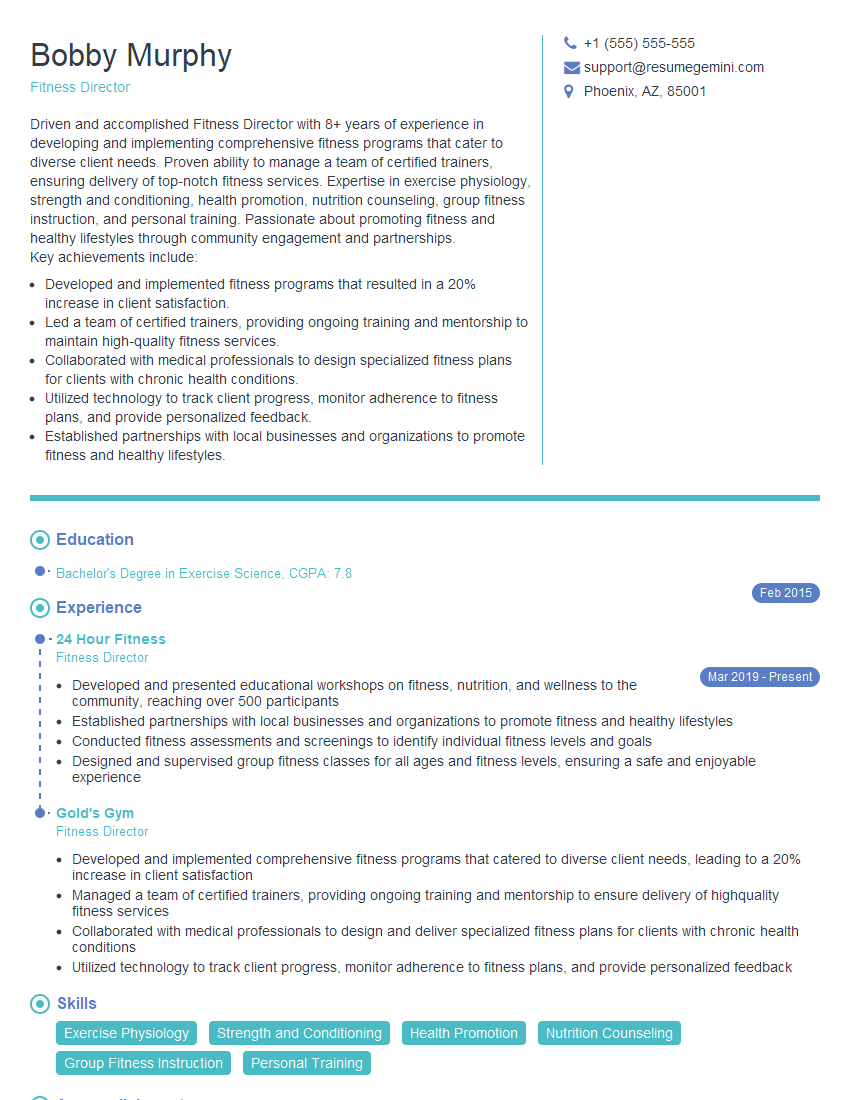
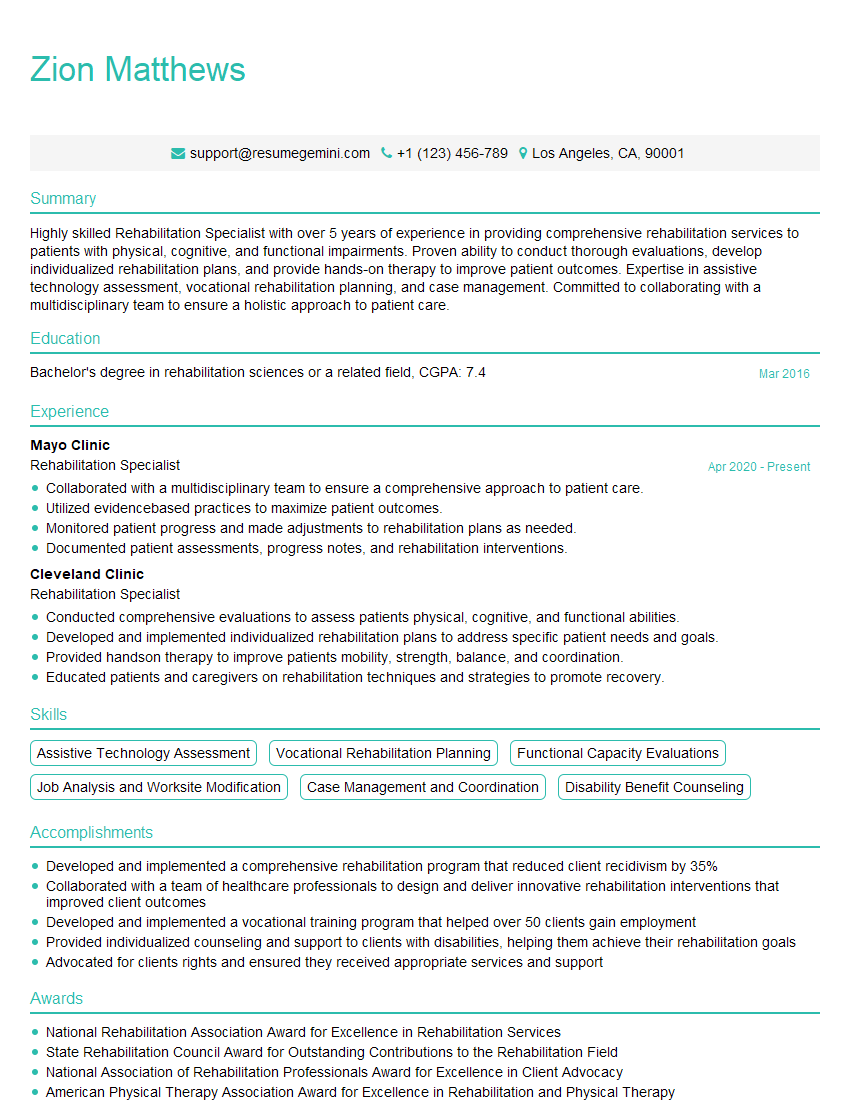
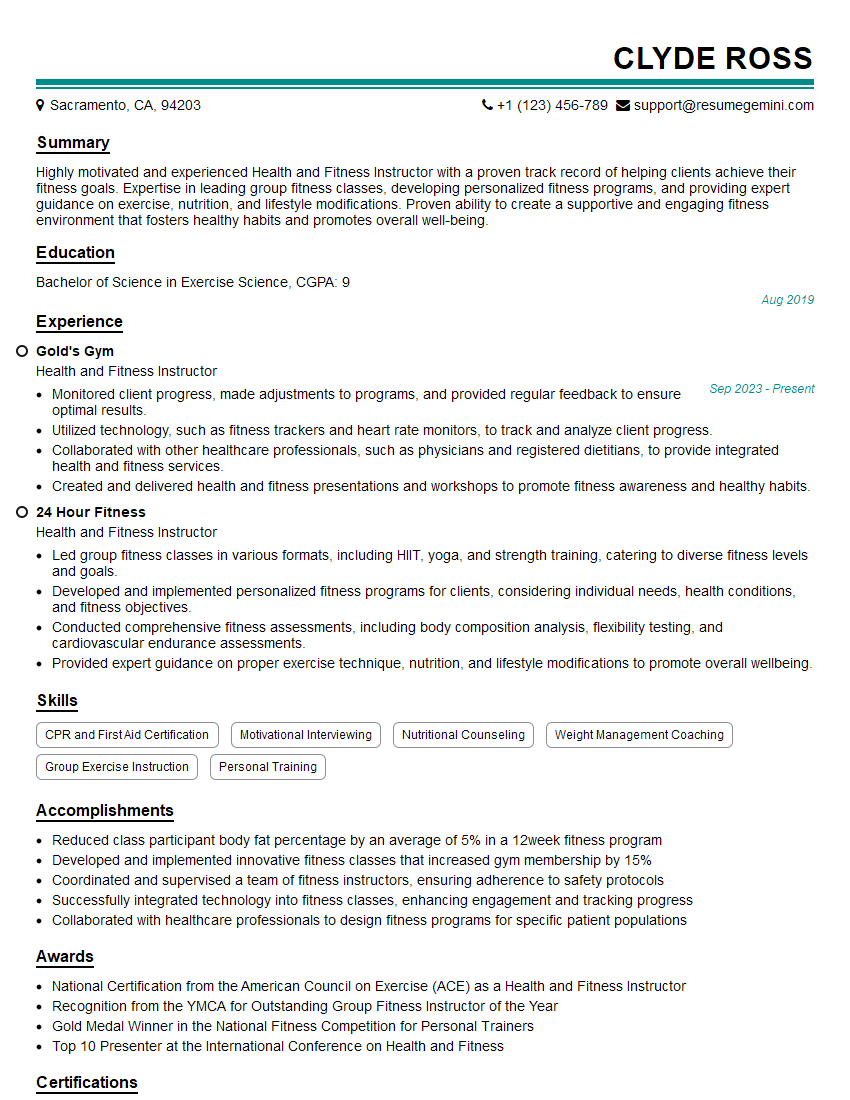
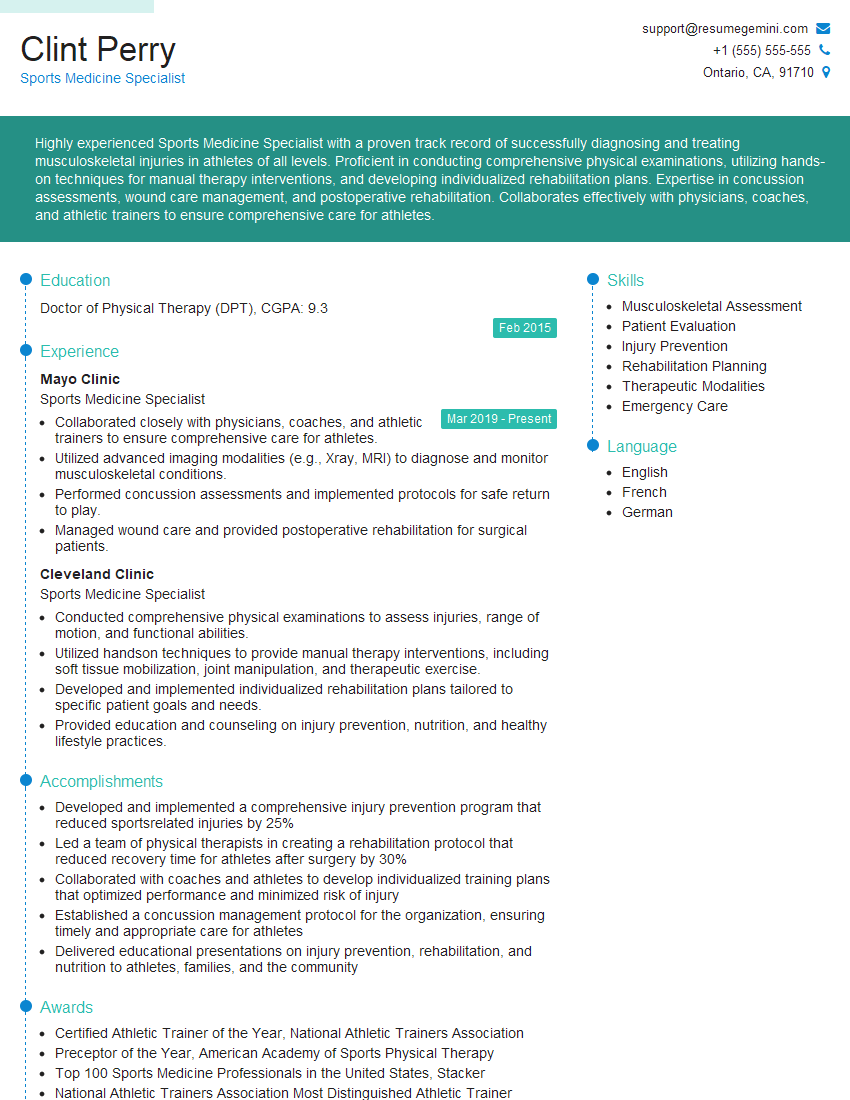
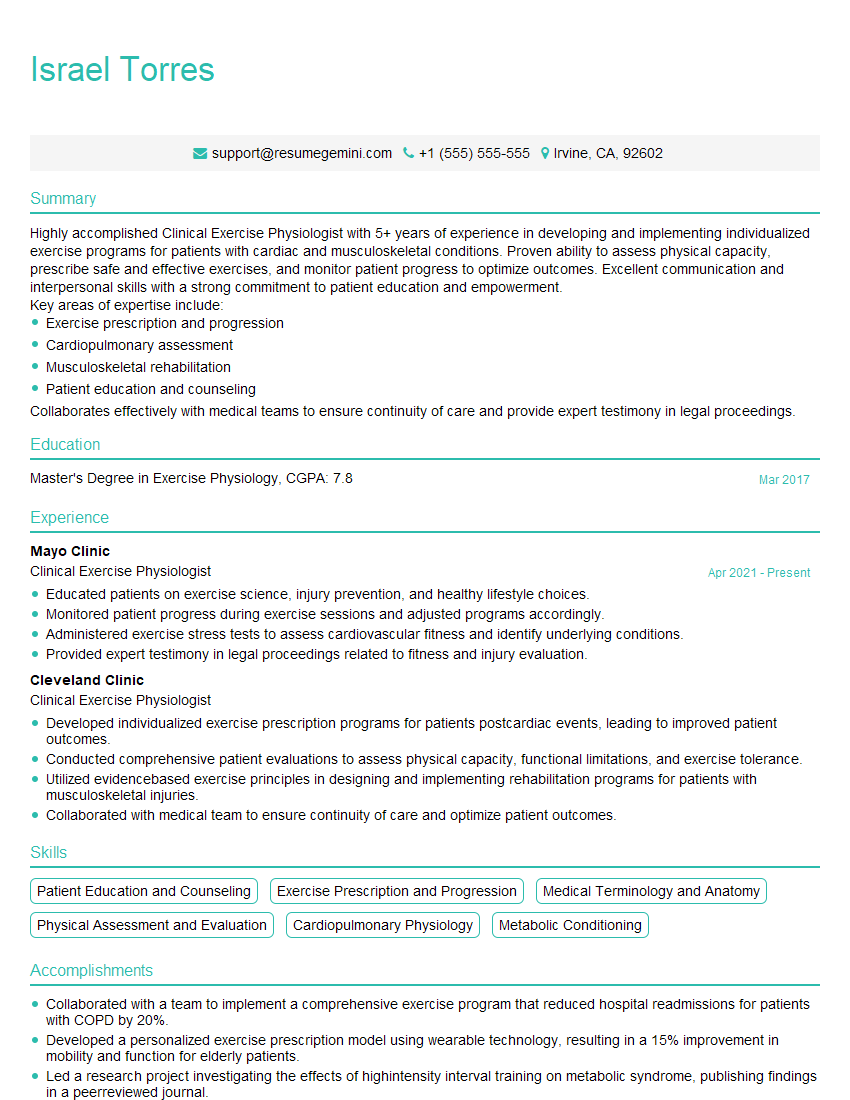
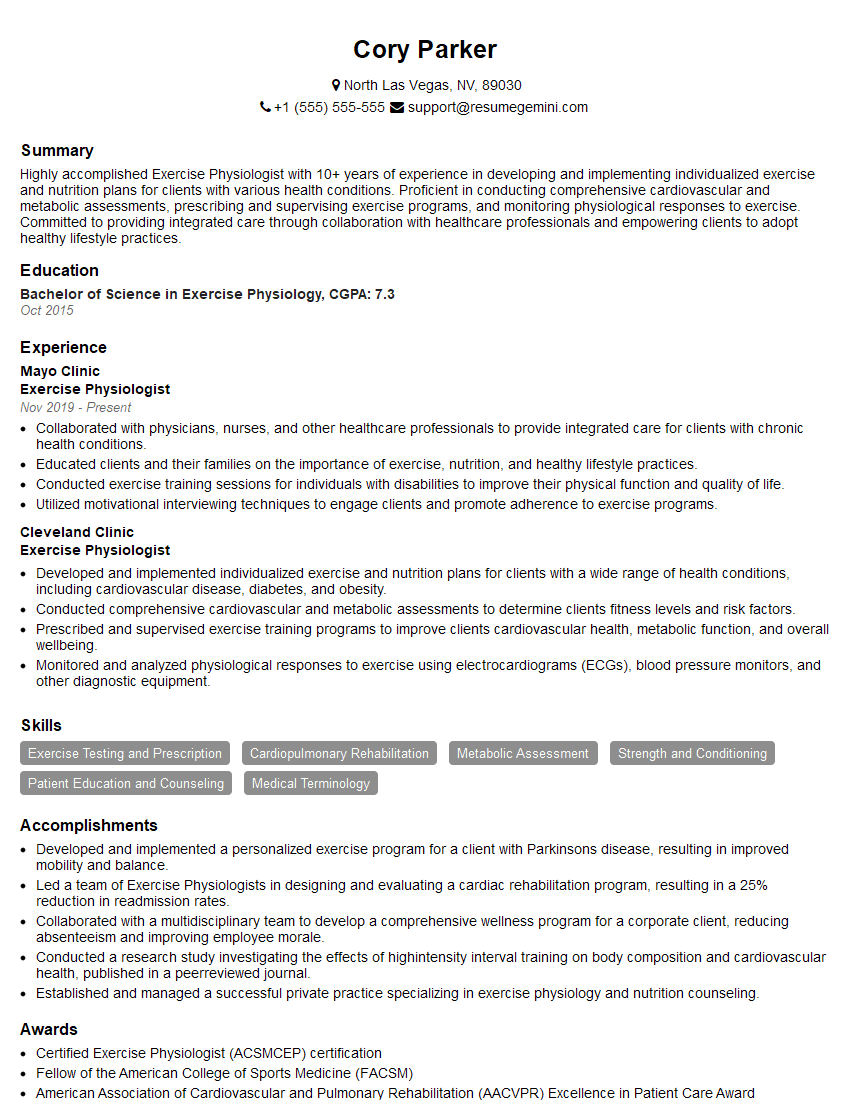
Mastering Balance and Stability Training opens doors to exciting career opportunities in fitness, rehabilitation, and athletic performance enhancement. To significantly improve your job prospects, it’s crucial to present your skills effectively. Creating an ATS-friendly resume is key to getting your application noticed. ResumeGemini is a trusted resource that can help you build a professional and impactful resume, ensuring your qualifications shine. Examples of resumes tailored to Balance and Stability Training are available through ResumeGemini, enabling you to craft a winning application that reflects your expertise and passion.

Explore more articles
Users Rating of Our Blogs
Share Your Experience
We value your feedback! Please rate our content and share your thoughts (optional).
What Readers Say About Our Blog
Very informative content, great job.
good