The thought of an interview can be nerve-wracking, but the right preparation can make all the difference. Explore this comprehensive guide to Wine List Creation interview questions and gain the confidence you need to showcase your abilities and secure the role.
Questions Asked in Wine List Creation Interview
Q 1. Explain your process for creating a wine list for a fine-dining restaurant.
Creating a wine list for a fine-dining restaurant is a multifaceted process requiring a deep understanding of wine, the restaurant’s concept, and its target clientele. It’s not just about listing wines; it’s about crafting a narrative that enhances the dining experience.
- Research & Concept Alignment: I begin by thoroughly researching the restaurant’s menu, target audience, and overall ambiance. A rustic Italian trattoria will need a very different list than a modern French bistro. The wine list should complement, not compete with, the food.
- Wine Selection: I then curate a selection of wines, considering a broad range of styles, varietals, regions, and price points. Balance is key – a mix of classic and innovative choices, established and emerging regions, and a variety of price points to cater to all preferences. I aim for a good representation of different grape types (e.g., Cabernet Sauvignon, Chardonnay, Pinot Noir, Sauvignon Blanc) and regions (e.g., Bordeaux, Burgundy, Napa Valley, Tuscany).
- Tasting & Quality Assurance: Each wine is personally tasted and evaluated for quality, ensuring it meets the restaurant’s standards. I also assess its suitability alongside specific menu items.
- List Organization & Description: Finally, the list is carefully organized, usually by region or style, with concise but descriptive tasting notes for each wine. This enhances guest understanding and guides them towards informed selections.
- Example: For a restaurant focusing on modern American cuisine, I might feature Californian Pinot Noir alongside dishes like seared scallops, while offering a bold Napa Cabernet Sauvignon to pair with richer meat dishes.
Q 2. How do you balance wine list cost and profitability?
Balancing wine list cost and profitability is crucial. It’s about optimizing the markups while remaining competitive and appealing to the target customer.
- Cost Analysis: I thoroughly analyze the cost of each wine, considering purchase price, storage, and potential spoilage. Accurate cost tracking is essential.
- Markup Strategy: A tiered markup approach is often used, with higher markups on more expensive and rarer wines to maximize profit, but more moderate markups on more regularly consumed, affordable bottles. I also consider the restaurant’s overall profit margin targets.
- Inventory Management: Effective inventory management minimizes waste and ensures optimal stock levels, preventing losses from spoilage. Regularly reviewing sales data helps identify slow-moving items and informs purchasing decisions.
- Wine Pricing Strategies: The pricing should be strategically positioned to encourage sales without alienating customers. I might include a selection of wines at various price points, ensuring accessibility and offering a range of options.
- Example: A wine costing $20 might have a 2.5x markup, while a prestigious wine costing $100 might have a 3x markup. This tiered approach ensures both profitability and balanced customer affordability.
Q 3. Describe your experience with wine inventory management.
Wine inventory management is a critical skill in the restaurant industry. It requires a combination of technical proficiency and meticulous attention to detail.
- Inventory Tracking System: I utilize a robust inventory management system, often integrated with the POS (point-of-sale) system. This allows for real-time tracking of stock levels, sales data, and cost of goods sold.
- Regular Stock Checks: Frequent physical checks are conducted to verify inventory accuracy and identify any discrepancies between physical stock and system records. This helps prevent losses from theft or spoilage.
- First-In, First-Out (FIFO): The FIFO method is employed to ensure older wines are consumed before newer ones, minimizing spoilage of older vintages.
- Storage Conditions: I rigorously oversee proper storage conditions, including temperature and humidity control, to maintain wine quality and extend its shelf life.
- Waste Management: I implement strategies to minimize waste, such as identifying slow-moving items and potentially adjusting pricing or offering promotions to increase their turnover.
Q 4. How do you select wines that complement a restaurant’s menu?
Selecting wines to complement a restaurant’s menu requires a nuanced understanding of both food and wine pairings. It’s about creating a harmonious culinary experience.
- Flavor Profile Analysis: I analyze the restaurant’s menu, identifying dominant flavors and textures in each dish. This informs my wine selection process.
- Pairing Principles: I apply established wine pairing principles, such as matching weight (light wines with light dishes, bold wines with bold dishes), acidity (acidic wines cutting through richness), and contrasting or complementing flavors (e.g., oaky Chardonnay with creamy pasta).
- Regional Considerations: I consider regional cuisine and wine pairings. For example, Italian wines often pair well with Italian cuisine.
- Wine Varietal and Dish Matching: I match specific wine varietals with the corresponding dishes on the menu. A fruity Pinot Noir might complement roasted salmon, while a full-bodied Cabernet Sauvignon might pair well with a grilled steak.
- Tasting Notes: I provide tasting notes on the menu that highlight the wine’s characteristics and its suggested food pairings, guiding customers toward informed decisions.
Q 5. What are your preferred wine list design and formatting techniques?
Wine list design and formatting are crucial for readability and creating a sophisticated impression. It’s about creating a visual appeal that reflects the restaurant’s brand.
- Organization: I prefer organizing the list logically, typically by region or style, with subcategories by grape varietal or price. This facilitates easy navigation.
- Typography: A clear and elegant typeface is selected to ensure easy readability, considering font size and spacing.
- Layout: The layout should be visually appealing and uncluttered, using white space effectively to guide the eye and avoid overwhelming the reader. Use of headings, subheadings, and visual dividers help organize information.
- Descriptive Tasting Notes: Concise but informative tasting notes are crucial, providing insight into each wine’s flavor profile without being overly technical.
- Visual Elements: A visually appealing design, potentially incorporating the restaurant’s logo and color scheme, enhances the overall presentation. Minimalist designs are generally preferred for upscale establishments.
Q 6. How do you handle wine list updates and changes?
Wine list updates and changes are essential for maintaining freshness, reflecting seasonal availability, and adapting to evolving customer preferences.
- Regular Reviews: I conduct regular reviews of sales data to identify slow-moving or unpopular wines and potential gaps in the list.
- Seasonal Adjustments: The list is updated seasonally to incorporate new vintages and wines appropriate for the time of year. Lighter wines might be featured in summer, while richer wines are highlighted in winter.
- New Releases: New and exciting wine releases are incorporated regularly to keep the list dynamic and interesting.
- Customer Feedback: Customer feedback is valued, and comments about specific wines can influence future updates.
- Supplier Relations: I maintain close relationships with wine suppliers to stay abreast of new offerings and availability.
Q 7. What are some key factors to consider when pricing wines?
Wine pricing involves a delicate balance of cost, profit, and market competitiveness. It requires a thorough understanding of the restaurant’s target market and the competitive landscape.
- Cost of Goods: The cost of purchasing the wine, including any import duties or taxes, forms the basis of the pricing calculation.
- Target Profit Margin: The desired profit margin is determined, taking into account the restaurant’s overall financial objectives and the cost of operations.
- Market Research: Competitor pricing is analyzed to ensure that the restaurant’s wine list remains competitive yet profitable. Analyzing prices at similar establishments in the same geographic area provides valuable insight.
- Wine Quality: The quality of the wine directly influences the price. Rarer, higher-quality wines command higher prices.
- Perceived Value: The perceived value of the wine, based on its reputation, region of origin, and vintage, also influences pricing. Customers are often willing to pay a premium for wines they perceive as high-quality.
Q 8. How do you ensure the accuracy of wine descriptions on your list?
Ensuring accuracy in wine descriptions is paramount for maintaining customer trust and managing expectations. My approach is multi-faceted and involves several key steps. First, I rely on reputable sources such as the winery’s website, tasting notes from reputable wine publications (like Wine Spectator or Wine Advocate), and my own tasting experiences. I meticulously cross-reference information to verify details like grape varietal, region, vintage, and tasting notes. For example, if a winery website describes a wine as having notes of black cherry and cedar, I’d cross-reference that with reviews from professional critics to corroborate the description. Discrepancies are investigated further, potentially through direct communication with the winery or distributor.
Secondly, I always avoid overly subjective or hyperbolic language. Instead, I focus on using precise and descriptive terminology that conveys the wine’s characteristics without exaggeration. Instead of saying ‘a divine nectar,’ I might describe it as ‘a medium-bodied red with ripe plum and earthy undertones’. Finally, I implement a rigorous review process. Before the wine list is finalized, it’s reviewed by myself, potentially other sommeliers, and management to catch any inaccuracies or inconsistencies.
Q 9. How familiar are you with different wine regions and varietals?
My familiarity with wine regions and varietals is extensive. Years of experience, coupled with continuous learning, allows me to confidently discuss wines from across the globe. I possess in-depth knowledge of classic regions like Bordeaux, Burgundy, Tuscany, and Napa Valley, as well as emerging regions such as Chile’s Maipo Valley or Australia’s Barossa Valley. I understand the terroir (soil, climate, and topography) of each region’s impact on the resulting wine’s characteristics. For example, I understand how the limestone soils of Burgundy contribute to the elegance and minerality of Pinot Noir from that region, versus the fuller-bodied style from warmer climates like California.
My varietal knowledge extends to a wide range of grapes, including both classic and less common varietals. I’m not only familiar with Cabernet Sauvignon, Merlot, Pinot Noir, and Chardonnay, but also with lesser-known grapes like Albariño, Nebbiolo, and Grenache. This broad understanding allows me to select a diverse range of wines for the list and make informed recommendations to customers.
Q 10. Explain your approach to organizing a wine list by region, varietal, or price point.
My approach to organizing a wine list depends on the establishment’s concept and target audience. However, I generally favor a combination of organizational strategies. A purely regional organization works well for establishments focusing on highlighting specific regions or for customers interested in geographical exploration. For example, a list might be organized into sections like ‘Burgundy’, ‘Bordeaux’, ‘Rhone Valley’, etc.
Organizing by varietal is a great option when the focus is on grape types and their diverse expressions across various regions. This allows easy comparison of, for instance, different Pinot Noirs from various regions. A price-point organization is useful for providing options at different price ranges, making it easy for customers to select wines within their budget. This often involves creating price tiers such as ‘Under $40’, ‘$40-$75’, ‘$75+’, etc. Ultimately, the optimal organization involves a flexible approach combining these methods for the best customer experience. Often, a regional structure is used as the backbone, with further sub-categories by varietal and price point within each region.
Q 11. Describe your experience working with wine distributors and suppliers.
I’ve established strong, collaborative relationships with numerous wine distributors and suppliers throughout my career. I leverage these relationships to secure access to a wide variety of wines, including both well-known and hard-to-find selections. Effective communication is key; I maintain open lines of communication with distributors to stay informed about new releases, inventory availability, and pricing. I often engage in blind tastings and sample various wines before making selections for the list, ensuring quality and suitability for the establishment.
Beyond price and availability, my relationships allow me to negotiate favorable terms, ensuring competitive pricing and advantageous purchasing conditions. For example, I’ve worked with distributors to arrange exclusive access to limited-release wines or receive preferential pricing based on volume purchases. Regular communication and collaborative efforts are essential in maintaining these crucial partnerships.
Q 12. How do you manage wine storage and cellar conditions?
Proper wine storage and cellar conditions are fundamental to maintaining the quality and longevity of wines. The ideal wine cellar maintains consistent temperature and humidity levels. The temperature should ideally be between 55-58°F (13-14°C) and the humidity around 50-70%. Fluctuations in temperature and humidity can negatively impact the wine’s aging process and potentially lead to spoilage. For example, excessive heat can accelerate aging, resulting in a premature loss of fruitiness and development of unpleasant flavors, while fluctuations can cause cork damage and oxidation.
In addition to temperature and humidity control, proper racking and organization are crucial. Bottles should be stored on their sides to keep the cork moist, preventing it from drying out and allowing air to enter the bottle. The cellar should also be dark to protect the wine from UV light, which can degrade its quality. Regular inventory checks are necessary to monitor the condition of the bottles and ensure efficient rotation of stock.
Q 13. How would you handle a situation where a wine is unavailable?
When a wine is unavailable, my primary goal is to provide the customer with a suitable alternative. My approach involves understanding the customer’s preferences and expectations. I start by asking questions about their preferred varietal, region, and style, and their price range. For example, if a customer orders a specific Burgundy Pinot Noir that’s unavailable, I might suggest another Burgundy Pinot Noir from a different producer within a similar price range, or if their preference is a lighter-bodied red, perhaps a Pinot Noir from Oregon or New Zealand, explaining the stylistic similarities and differences.
If a suitable alternative isn’t readily available, I offer honest and transparent communication, explaining the situation and suggesting other comparable wines. I always avoid offering a lesser quality wine simply to fill the order. If an equivalent substitute cannot be found, I apologize for the inconvenience and offer a different wine or a refund depending on the customer’s preference. Maintaining good customer relations is key.
Q 14. How do you stay current with wine trends and new releases?
Staying current with wine trends and new releases requires a proactive and multi-pronged approach. I regularly subscribe to wine publications, both print and online (e.g., Wine Spectator, Wine Advocate, Decanter), keeping abreast of reviews, ratings, and emerging trends. I also attend industry events, such as wine tastings, trade shows, and conferences to discover new wineries and wines firsthand. These events provide valuable networking opportunities, connecting me with winemakers, importers, and distributors.
Furthermore, I actively utilize online resources, such as wine blogs and websites, to research new vintages and varietals. I maintain relationships with distributors to receive early notification of new releases and explore potential additions to the wine list. These combined strategies ensure that my knowledge is consistently up-to-date, allowing me to create a dynamic and relevant wine list that reflects current trends and offers a diverse selection for our customers.
Q 15. What is your preferred wine service etiquette?
My preferred wine service etiquette prioritizes guest experience and professionalism. It begins with a warm greeting and offering assistance in navigating the wine list. I believe in presenting the wine properly, describing its characteristics in an engaging way, avoiding overly technical jargon, and tailoring my explanation to the guest’s palate and preferences.
After pouring a small amount for the guest to taste (allowing them to swirl, smell, and sip), I wait for their approval before proceeding with the rest of the bottle. Throughout the meal, I remain attentive to ensure their glasses are topped off without being intrusive. I also offer guidance on food pairings if requested, highlighting the wine’s complementary notes and potential conflicts. Finally, I ensure a smooth and professional closing, thanking the guest for their patronage.
For example, if a guest mentions they enjoy fruity wines, I might steer them towards a Pinot Noir with notes of cherry and raspberry rather than a tannic Cabernet Sauvignon. Or, if they are unsure, I might suggest a popular, well-regarded house wine as a safe and enjoyable introduction.
Career Expert Tips:
- Ace those interviews! Prepare effectively by reviewing the Top 50 Most Common Interview Questions on ResumeGemini.
- Navigate your job search with confidence! Explore a wide range of Career Tips on ResumeGemini. Learn about common challenges and recommendations to overcome them.
- Craft the perfect resume! Master the Art of Resume Writing with ResumeGemini’s guide. Showcase your unique qualifications and achievements effectively.
- Don’t miss out on holiday savings! Build your dream resume with ResumeGemini’s ATS optimized templates.
Q 16. How do you train staff on wine knowledge and service?
Training staff on wine knowledge and service is a multi-faceted process. It begins with foundational knowledge, covering grape varietals, wine regions, winemaking techniques, and basic tasting notes. We then move onto practical service skills, including proper pouring techniques, decanting, serving temperatures, and understanding wine labels.
- Blind tastings: Regular blind tastings enhance their ability to identify different flavor profiles and improve their descriptive vocabulary.
- Role-playing: We simulate real-world scenarios, like handling difficult customers or explaining complex wines, to build confidence and problem-solving skills.
- On-the-job training: Shadowing experienced staff and observing their interactions with guests is crucial.
- Ongoing education: We encourage continued learning through wine courses, trade publications, and attending wine-tasting events.
Regular quizzes and feedback sessions ensure knowledge retention and identify areas needing further attention. A comprehensive training manual with tasting notes for each wine on the list and detailed service procedures enhances the learning process.
Q 17. Describe a time you had to resolve a customer complaint related to wine.
One time, a guest complained that their bottle of Chardonnay was corked (meaning it had a musty, unpleasant taste due to a flawed cork).
My immediate response was to apologize sincerely and empathize with their experience. I then personally tasted the wine to confirm the cork taint. Once confirmed, I didn’t hesitate to replace the bottle immediately with another bottle of the same wine, ensuring it was opened and tasted before serving. I also offered a complimentary dessert or another small gesture of apology to show my appreciation for their patience.
This situation highlighted the importance of proactive problem-solving and genuine empathy when handling customer complaints. A timely and sincere response can turn a negative experience into a positive one, demonstrating our commitment to guest satisfaction. In cases where the fault is clear, a replacement or discount might be the best route; however, good communication is crucial to make things right.
Q 18. What software or tools do you utilize for managing wine lists and inventory?
We utilize a combination of software and tools for managing our wine lists and inventory. For inventory management, we use Vin65, which allows us to track stock levels, monitor costs, and predict future needs. It integrates seamlessly with our point-of-sale (POS) system, providing real-time updates on inventory and sales data.
For the wine list itself, we use a combination of spreadsheet software (Microsoft Excel or Google Sheets) for easy updates and organization, and a dedicated wine list design software such as WineList.com to create a visually appealing menu for our guests. This allows for quick updates to pricing, descriptions, and availability, while keeping the list looking professional and easy to navigate for our customers.
Q 19. How do you identify potential revenue-generating opportunities from a wine list?
Identifying revenue-generating opportunities from a wine list requires careful analysis and a strategic approach.
- Data Analysis: We analyze sales data to identify our best-selling wines, allowing us to optimize pricing and highlight those popular choices on the list.
- Market Research: Understanding current trends and consumer preferences, we can adapt the wine list to feature wines that are in demand.
- Price Optimization: Analyzing price points and margins, we can determine optimal pricing strategies to maximize profitability while remaining competitive.
- Wine Flights and Promotions: Offering curated wine flights introduces guests to a variety of wines, increasing potential sales. Themed promotions, seasonal specials, and limited-time offerings can also generate excitement and drive sales.
- Upselling Strategies: Our staff is trained on upselling techniques – suggesting a slightly more expensive wine that complements the dish or a higher-quality bottle to enhance the dining experience.
For instance, if we see a high demand for Sauvignon Blanc, we might increase our selection and create a special featuring different styles of the grape. Understanding and acting upon data is key to developing a profitable and effective wine list.
Q 20. How familiar are you with wine laws and regulations?
I am very familiar with wine laws and regulations, specifically focusing on those related to alcohol service and sales. This includes licensing requirements, age verification protocols, responsible alcohol service guidelines, and labeling regulations.
Understanding and adhering to these regulations are paramount to maintaining a legally compliant and responsible establishment. This includes proper training of staff on serving alcohol responsibly and following all legal procedures regarding age verification and alcohol sales to minors. I regularly review and update my knowledge of these regulations to ensure we remain compliant with all applicable local, state, and federal laws.
For example, understanding the legal blood alcohol content (BAC) limits and the penalties associated with over-serving are critical for responsible service and avoiding legal issues.
Q 21. How do you incorporate sustainability considerations into wine list curation?
Incorporating sustainability considerations into wine list curation is crucial for ethical and environmentally conscious operations. We prioritize wines from producers who demonstrate a strong commitment to sustainable practices.
- Organic and Biodynamic Wines: We feature wines made using organic or biodynamic farming methods, minimizing the use of pesticides and herbicides.
- Sustainable Winery Practices: We partner with wineries that employ energy-efficient techniques, water conservation strategies, and waste reduction programs.
- Local and Regional Wines: Supporting local and regional wineries reduces transportation emissions and supports our local economy.
- Lightweight Bottles: Choosing wines bottled in lighter weight glass reduces transportation costs and carbon footprint.
- Wine List Communication: Clearly communicate our commitment to sustainability on the wine list itself, highlighting the sustainable practices of our featured wineries. This resonates with environmentally conscious consumers.
By highlighting these wines, we not only showcase our commitment to sustainability but also appeal to a growing segment of environmentally conscious consumers, increasing patronage from a broader base.
Q 22. What’s your approach to building a diverse wine list representing different price points and styles?
Creating a diverse wine list involves a strategic approach to balancing price points, styles, and regional representation. It’s like curating a culinary experience, not just offering a selection of beverages.
First, I define target customer segments. Are we attracting a sophisticated clientele seeking rare vintages, or a broader audience wanting approachable choices? This informs my pricing tiers. I’d typically include entry-level wines (under $40), mid-range options ($40-$80), and premium selections (above $80). This offers accessibility while catering to varying budgets.
Next, I focus on varietal and regional diversity. This means including wines from different countries and regions, showcasing diverse grape varieties like Cabernet Sauvignon, Pinot Noir, Chardonnay, Sauvignon Blanc, and lesser-known gems. I aim for a balance of red and white, sparkling and rosé, to satisfy different palates. A well-rounded list might include a classic Bordeaux, a crisp Sancerre, a bold Napa Cabernet, and a delicate Pinot Grigio from Alto Adige – each providing a unique flavour profile.
Finally, I carefully consider the list’s overall aesthetic. The visual presentation, including the font, formatting, and descriptions, is crucial for enhancing the customer’s experience. An organized list is easier to navigate and encourages more sales.
Q 23. How do you handle wine pairings with menu items?
Wine pairing is an art and science. It’s about complementing, contrasting, or cutting through the flavours of the dish. My process begins with a thorough understanding of the menu. I analyze each dish’s key ingredients, cooking techniques, and overall flavour profile – is it rich, spicy, acidic, earthy?
For instance, a rich, buttery dish like lobster risotto would pair beautifully with a full-bodied Chardonnay or a light-bodied oaked Pinot Noir. These wines offer complementary richness without overpowering the delicacy of the lobster. Conversely, a lighter dish like grilled chicken salad might be best served with a crisp Sauvignon Blanc or a Pinot Grigio, to provide a refreshing contrast.
I also take into account the weight of the dish, the seasoning, and any dominant flavours. For spicy dishes, wines with some sweetness or acidity are often a better fit. The goal is to create a harmonious experience, where wine and food enhance each other.
I regularly taste-test potential pairings to ensure the wine complements the dish and the overall dining experience.
Q 24. How do you build relationships with local wineries or vineyards?
Building relationships with local wineries is essential for securing quality wines at competitive prices and telling a compelling story to our customers. It’s about creating a win-win scenario.
I start by attending wine industry events, trade shows, and wine festivals. This allows me to meet producers, sample their wines, and learn about their production methods. I also visit wineries directly, to experience their vineyards and gain a deeper understanding of their winemaking philosophy.
Building trust is key. I communicate clearly about our restaurant’s concept, customer base, and wine list goals. I am transparent about our sales expectations and offer fair pricing to ensure a mutually beneficial partnership. Regular communication, tastings, and feedback sessions help maintain these relationships.
I believe in showcasing the passion and dedication of the winemakers through tasting notes and descriptions on the wine list – providing a narrative alongside the product.
Q 25. What are some strategies for promoting a wine list to customers?
Promoting a wine list goes beyond simply printing it. It’s about creating excitement and guiding customer choices.
Firstly, visual presentation is crucial. A well-designed wine list, with clear categorization, descriptions, and attractive visuals, can significantly impact sales. The list should be easy to navigate, with options for different budgets and preferences.
Secondly, staff training is vital. Our servers need to be knowledgeable about the wines, able to make recommendations based on customer preferences and menu choices, and to articulate the wine’s story. They are the best ambassadors for the wine list.
Thirdly, I employ targeted marketing strategies. This might include highlighting featured wines on the restaurant’s website, social media promotions, email newsletters to regular customers, or creating themed wine pairings that tie in with special events or seasons.
Finally, offering wine flights or tasting menus can expose customers to a wider range of wines, potentially leading to increased sales.
Q 26. How do you analyze wine sales data to make informed decisions?
Analyzing wine sales data is crucial for optimizing the wine list and maximizing profitability. It’s about turning data into actionable insights.
I use point-of-sale (POS) systems to track sales data, identifying best-selling wines, average bottle prices, and sales trends by day of the week, season, or special occasion. This data gives me a clear picture of customer preferences and the overall performance of the list.
I also analyze the inventory turnover rate, identifying slow-moving wines that might require price adjustments, promotional offers, or removal from the list. I track profit margins on individual wines to assess their overall contribution to profitability.
By comparing sales data with market trends and customer feedback, I make data-driven decisions about wine selections, pricing, and promotional activities. This iterative process allows for continuous improvement and adaptation to evolving customer preferences.
Q 27. Describe your experience managing a wine list with a specific focus on organic or biodynamic wines.
Managing a wine list focused on organic or biodynamic wines requires a deeper level of understanding beyond just varietals and regions. It’s about aligning with a specific philosophy and appealing to a growing segment of environmentally conscious consumers.
My approach begins with thorough research to identify producers committed to sustainable practices. I prioritize certifications, such as Demeter for biodynamic wines, and verify the winery’s commitment to organic viticulture and minimal intervention winemaking.
I emphasize the unique characteristics of these wines in the descriptions, highlighting the terroir, production methods, and the resulting environmental benefits. This resonates with customers seeking wines produced with respect for nature and mindful of sustainability.
Furthermore, I educate my staff on the principles of organic and biodynamic viticulture and winemaking to ensure they can effectively communicate this information to customers. This enhanced knowledge translates into a more engaging and informed customer experience.
Successfully managing such a list requires building strong relationships with these producers, understanding their production processes, and consistently communicating their values to customers, thus differentiating our establishment and attracting a loyal following.
Q 28. How do you deal with damaged or spoiled wine?
Handling damaged or spoiled wine requires immediate action to prevent further loss and maintain customer satisfaction. It’s about minimizing damage control and proactively addressing issues.
Firstly, I establish a robust inventory management system, employing a FIFO (First In, First Out) method to ensure older wines are used first. This helps mitigate the risk of spoilage.
Regular temperature and humidity monitoring in the wine cellar is essential. Any deviations should be addressed promptly to prevent wine degradation. If a bottle shows signs of spoilage (cork taint, oxidation, etc.), it’s removed from service immediately.
Upon detecting a spoiled bottle, I apologize to the customer, offer a replacement (a different wine or a complimentary drink), and note the incident in our inventory system to track potential issues with a specific batch or supplier.
I also emphasize staff training in recognizing signs of spoilage, ensuring they promptly identify and address such issues before serving them to customers. Proactive measures are key to minimizing waste and ensuring customer satisfaction.
Key Topics to Learn for Wine List Creation Interview
- Understanding Target Audience & Market Positioning: Analyze the restaurant’s clientele and brand identity to curate a wine list that aligns perfectly. Consider price points, preferred varietals, and overall dining experience.
- Wine Selection & Sourcing: Learn the intricacies of selecting wines based on quality, region, vintage, and price. Understand the process of negotiating with suppliers and managing inventory.
- Pricing Strategies & Profitability: Master the art of pricing wines strategically to maximize profitability while maintaining customer satisfaction. Explore cost analysis and markup calculations.
- Wine List Design & Presentation: Discover how to create visually appealing and user-friendly wine lists that enhance the overall dining experience. Consider categorization, descriptions, and formatting.
- Legal & Regulatory Compliance: Familiarize yourself with relevant laws and regulations concerning alcohol service and labeling. Understand responsible alcohol service procedures.
- Wine Description & Storytelling: Learn to craft compelling and informative wine descriptions that engage customers and highlight key characteristics.
- Pairing Suggestions & Menu Integration: Understand how to suggest appropriate wine pairings for different menu items, considering flavors, textures, and overall culinary experience.
- Data Analysis & Sales Tracking: Learn to analyze sales data to understand customer preferences and optimize wine list performance. Track popular items and identify opportunities for improvement.
- Inventory Management & Ordering: Master efficient inventory management techniques to minimize waste and ensure sufficient stock. Understand the processes for ordering and receiving wine shipments.
Next Steps
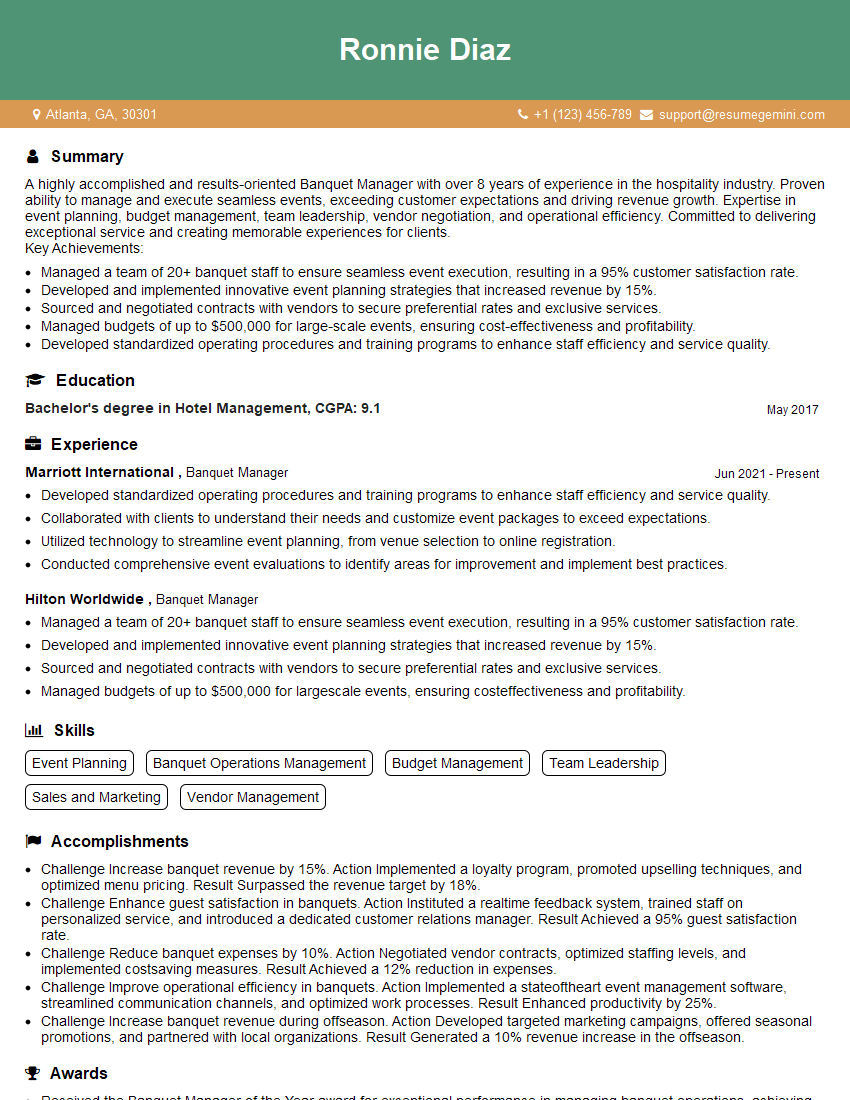
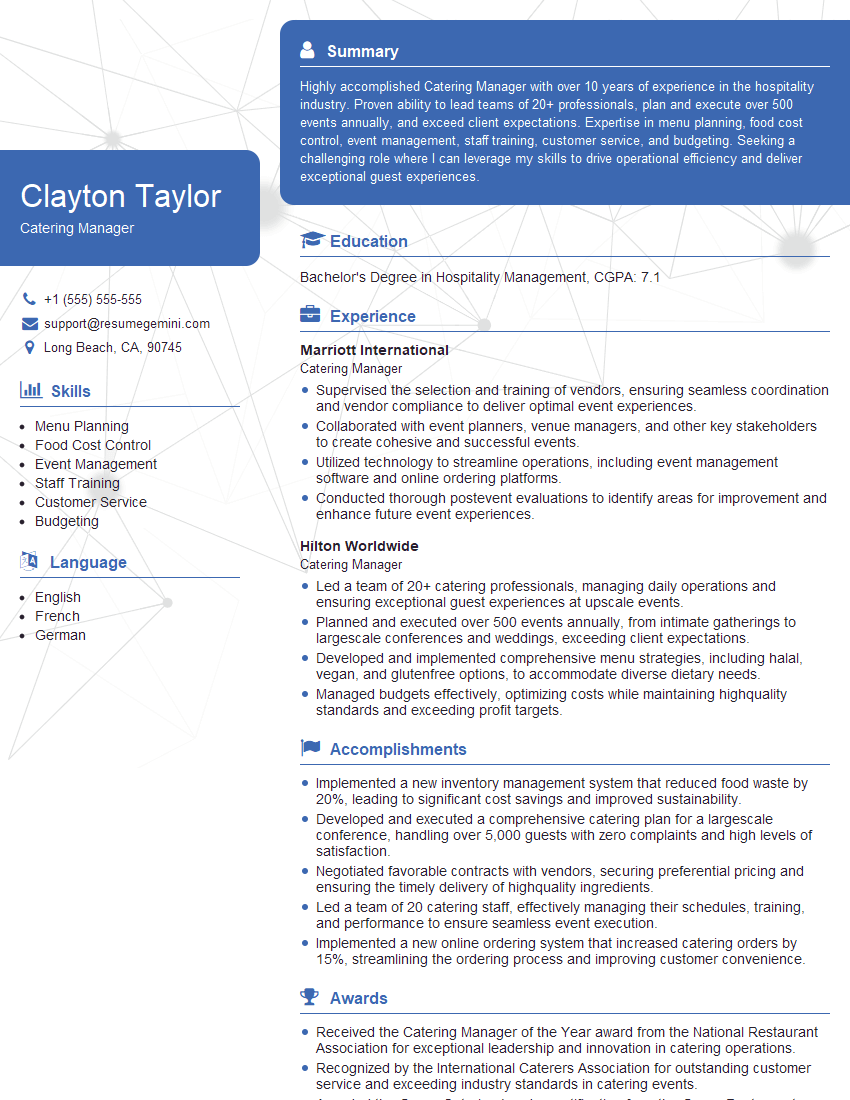
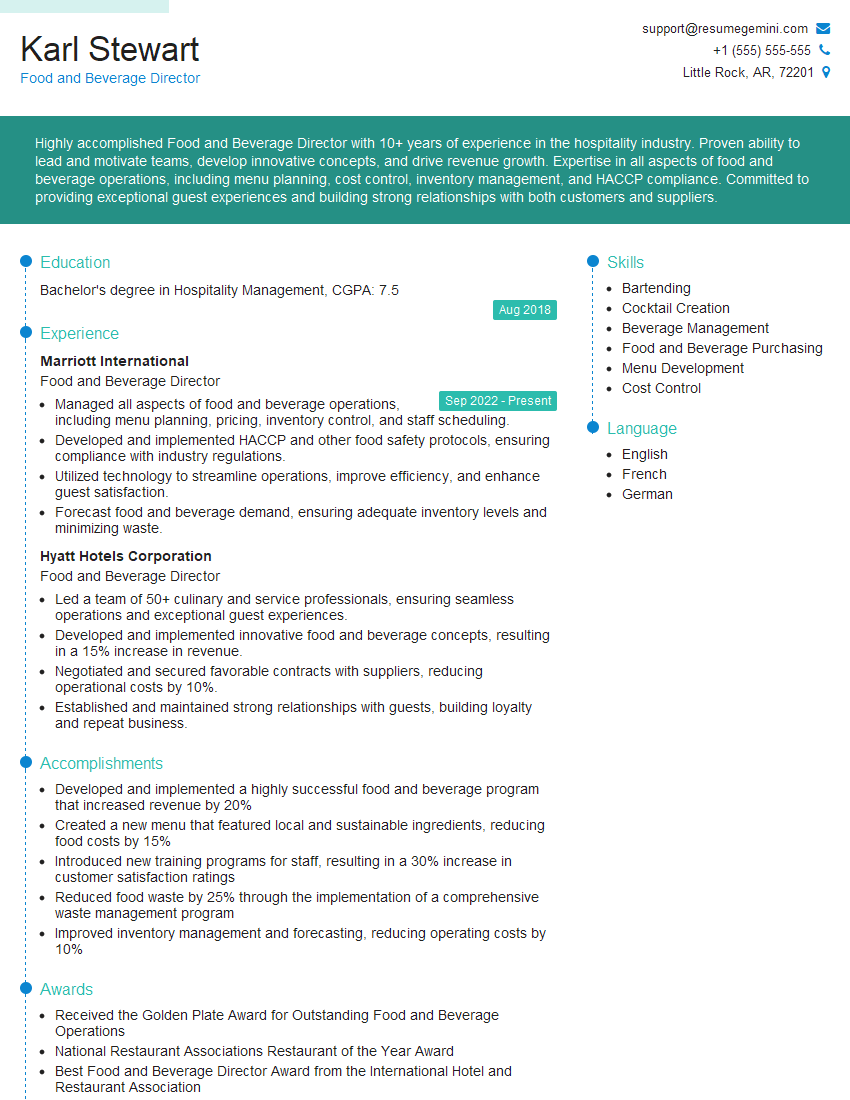
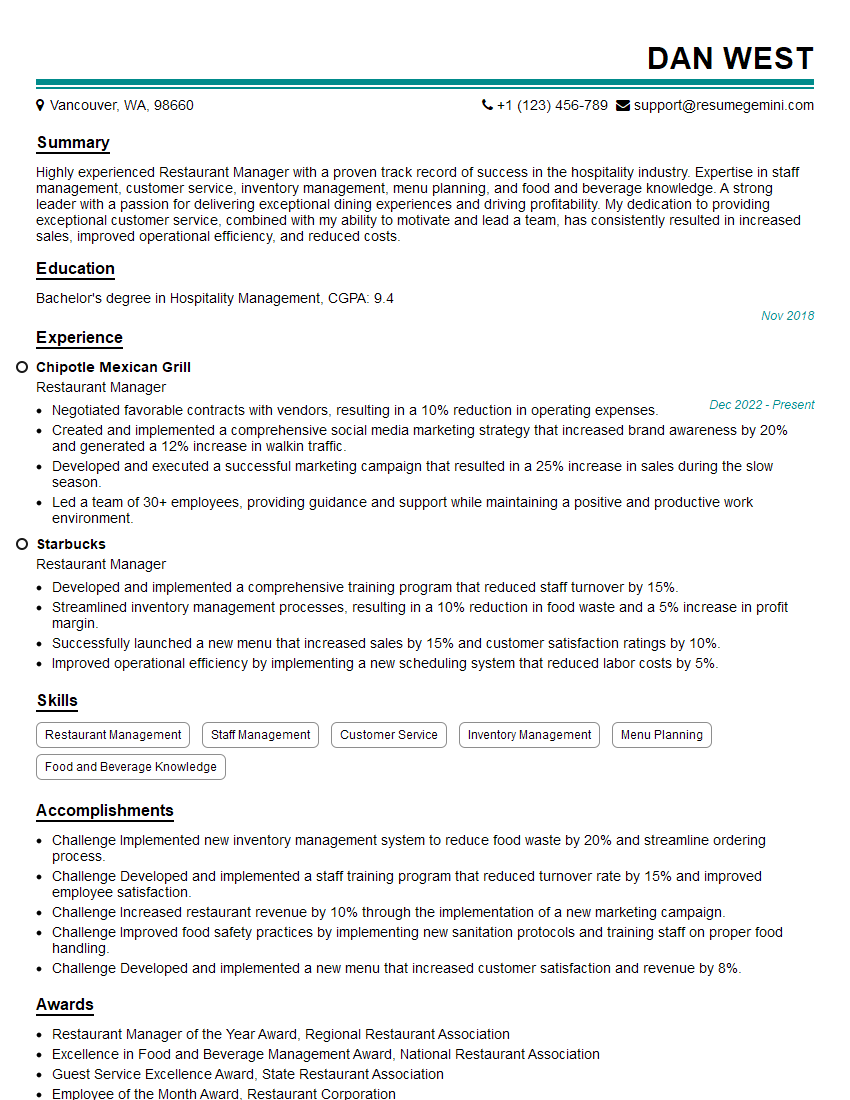
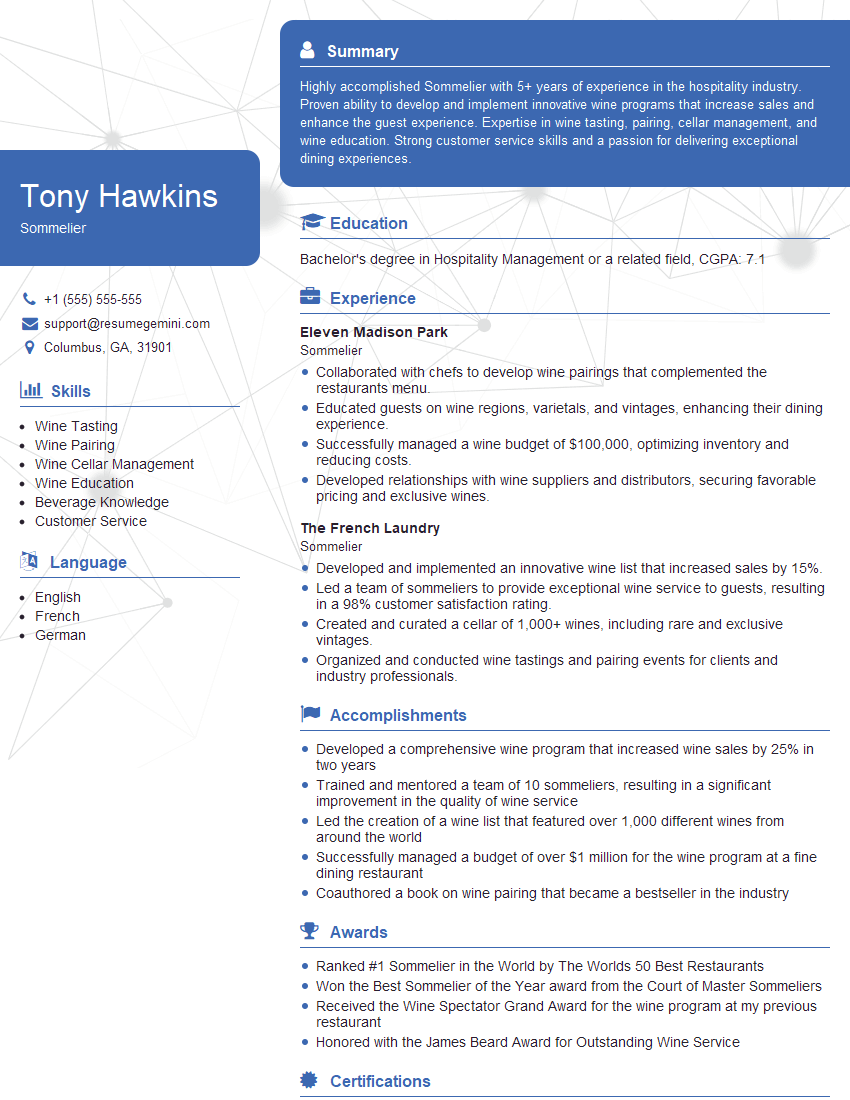
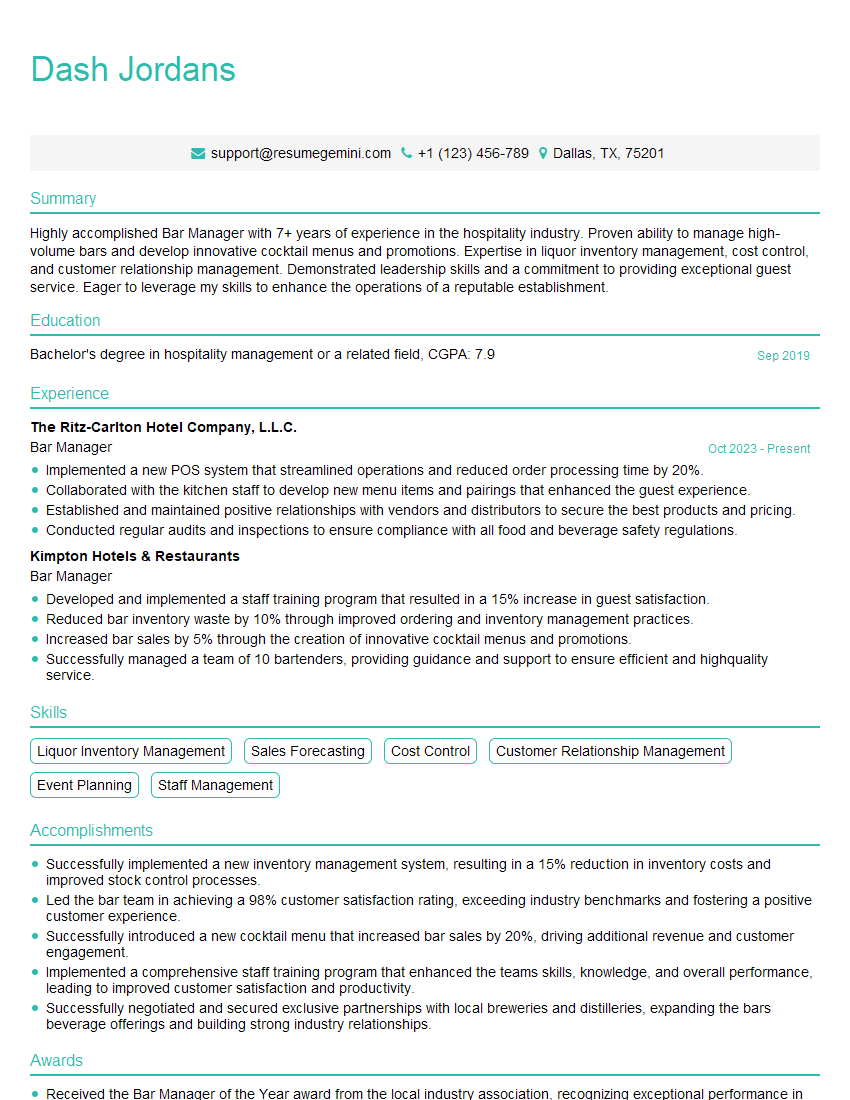
Mastering wine list creation is crucial for career advancement in the hospitality industry, opening doors to exciting opportunities and increased earning potential. An ATS-friendly resume is essential to getting your application noticed by recruiters. To significantly boost your job prospects, leverage ResumeGemini to craft a professional and impactful resume that highlights your skills and experience in this specialized field. Examples of resumes tailored to Wine List Creation are available within ResumeGemini to guide you.
Explore more articles
Users Rating of Our Blogs
Share Your Experience
We value your feedback! Please rate our content and share your thoughts (optional).
What Readers Say About Our Blog
Very informative content, great job.
good