The right preparation can turn an interview into an opportunity to showcase your expertise. This guide to Skill in using specialized sewing machines and equipment interview questions is your ultimate resource, providing key insights and tips to help you ace your responses and stand out as a top candidate.
Questions Asked in Skill in using specialized sewing machines and equipment Interview
Q 1. What types of specialized sewing machines have you operated?
Throughout my career, I’ve had the opportunity to operate a wide range of specialized sewing machines. This includes industrial straight stitch machines, renowned for their speed and durability in mass production; high-speed overlock machines, essential for creating professional-looking seams and preventing fraying; bartacking machines, perfect for reinforcing stress points on garments; buttonhole machines, automating the creation of consistent and precise buttonholes; and even computerized embroidery machines, allowing for intricate and customized designs. Each machine requires a distinct skill set and understanding of its capabilities, and I’ve honed my expertise on all of these.
- Industrial Straight Stitch: Think of the machines that churn out thousands of jeans pockets a day – that’s the power and precision of an industrial straight stitch machine.
- Overlock: These are crucial for finishing edges on knit fabrics, giving a professional, clean look. Imagine the difference between a frayed t-shirt hem and a professionally finished one – that’s the overlock’s impact.
- Computerized Embroidery: These machines allow for intricate designs and branding, adding a level of personalization often found in custom apparel.
Q 2. Describe your experience with different needle types and their applications.
Needle selection is paramount for achieving quality stitching. The wrong needle can lead to broken needles, skipped stitches, or damage to the fabric. I have extensive experience with various needle types, including:
- System needles: These are the workhorses, used for general-purpose sewing on a wide range of fabrics.
- Ballpoint needles: Designed for knit fabrics, preventing snags and runs. Imagine trying to sew a stretchy jersey fabric with a sharp needle – disaster! Ballpoints glide through the loops.
- Stretch needles: Similar to ballpoints but with a slightly different shape, offering superior performance on highly elastic fabrics.
- Leather needles: With their extra-strong, sharp points, these are perfect for piercing tough materials like leather and denim. Trying to sew leather with a regular needle often leads to bent or broken needles.
- Embroidery needles: These have a larger eye to accommodate embroidery thread, offering even stitching and preventing thread breakage.
The choice depends entirely on the fabric type and sewing application. My experience ensures I choose the right needle for the job every time, preventing potential damage and ensuring optimal results.
Q 3. How do you troubleshoot common sewing machine malfunctions?
Troubleshooting sewing machine malfunctions requires a systematic approach. I typically follow these steps:
- Identify the problem: Is it skipped stitches, broken needles, inconsistent tension, or a noise? Precise identification is key.
- Check the basics: Is the machine properly threaded? Is the needle correctly inserted? Is there adequate lighting to see clearly?
- Inspect the needle and bobbin: Bent needles are a common culprit. Similarly, a damaged bobbin case can cause inconsistent stitching. Often, a quick replacement solves the problem.
- Check the tension: Correct tension is crucial. If stitches are loose or tight, adjust the tension dials accordingly. This often involves a trial-and-error process, adjusting slightly at a time.
- Lubricate as needed: Proper lubrication keeps the machine running smoothly. Regular lubrication is preventive maintenance, critical for reducing wear and tear.
- If the problem persists: Consult the machine’s manual or seek professional assistance.
For instance, recently, a machine was producing inconsistent stitching. A quick check revealed a slightly bent needle. After replacing the needle, the problem was solved, highlighting the importance of basic checks.
Q 4. Explain the process of setting up a specialized sewing machine for a specific fabric.
Setting up a sewing machine for a specific fabric requires careful consideration of several factors:
- Needle Selection: As discussed earlier, choosing the correct needle is crucial – ballpoint for knits, leather needles for leather, etc.
- Stitch Length: Adjusting stitch length affects the overall look and strength of the seam. Shorter stitches are ideal for areas requiring more durability, such as seams on trousers.
- Presser Foot: Different presser feet cater to various fabrics. A walking foot, for instance, helps prevent slippage when sewing multiple layers of fabric or difficult-to-handle materials like leather.
- Tension Adjustment: Tension needs adjusting depending on the fabric’s weight and type. Lighter fabrics often need less tension than heavier ones.
- Feed Dog Adjustment: The feed dogs control how the fabric moves through the machine. Adjusting them ensures smooth and even feeding.
For example, sewing silk requires a delicate touch, a fine needle, and lower tension, while sewing denim needs stronger needles, a higher stitch length, and potentially a walking foot to manage the thick fabric.
Q 5. What safety precautions do you take when operating industrial sewing equipment?
Safety is paramount when operating industrial sewing equipment. My safety protocols include:
- Proper Clothing: Avoid loose clothing and jewelry that could get caught in the machine. Always wear fitted clothing and remove jewelry before operating the machinery.
- Machine Guards: Ensure all safety guards are in place and functioning correctly before operating the equipment. This prevents accidents from moving parts.
- Regular Maintenance: Regularly inspect and maintain the equipment. This includes lubricating the machine, checking for loose parts, and ensuring the electrical components are in good working order.
- Emergency Stop Button: Know the location of the emergency stop button and how to use it. Be aware of all safety procedures and regulations, always prioritizing safety above speed.
- Protective Eye wear: Always wear protective eyewear to avoid potential injury from flying debris or needle breakage.
I treat every machine with the respect it deserves, and my adherence to safety regulations has prevented many potential accidents.
Q 6. How do you maintain and clean specialized sewing machines?
Maintaining and cleaning specialized sewing machines is essential for their longevity and efficient performance. My routine involves:
- Regular Dusting: Removing dust and lint from the machine prevents build-up that can interfere with its function. A soft brush is perfect for this.
- Lubrication: Applying high-quality sewing machine oil to moving parts ensures smooth operation and reduces wear and tear. Refer to the machine’s manual for specific lubrication points.
- Bobbin Case Cleaning: Regularly clean the bobbin case and shuttle race to remove lint and debris that can affect the quality of the stitch.
- Needle Plate Cleaning: Keep the needle plate clean from debris and lint to prevent damage to the needle and fabric.
- Professional Servicing: Schedule professional servicing regularly, such as annually, or more often if you use it heavily. A professional cleaning and check-up can identify minor problems before they become major issues.
I treat machine maintenance as preventive healthcare – small investments in regular care prevent costly repairs down the line.
Q 7. What is your experience with different sewing machine tensions and their effects?
Sewing machine tension is the balance between the upper and lower threads. Incorrect tension leads to problems like skipped stitches, puckering, or broken threads. The ideal tension results in an even, balanced stitch on both sides of the fabric.
- Too Much Upper Tension: Results in stitches bunched on the top, puckering the fabric. Imagine a tight knot – that’s what the fabric looks like.
- Too Much Lower Tension: Creates loose loops on the bottom, often visible as loops of the bobbin thread underneath the fabric.
- Balanced Tension: Produces neat, even stitches with no visible loops or puckering. Both upper and lower threads are equally visible and create a perfect, even seam.
Mastering tension adjustment requires practice and a keen eye. I adjust the dials incrementally, testing the stitches on a scrap of fabric until the perfect balance is achieved for the specific fabric and thread being used.
Q 8. Describe your experience with computerized sewing machines.
My experience with computerized sewing machines spans over 15 years, encompassing various brands and models, from basic home machines to industrial-grade units. I’m proficient in programming stitch patterns, utilizing built-in designs, and customizing settings for diverse fabric types and projects. For example, I’ve used computerized machines to create intricate embroidery designs on denim jackets, requiring precise control over stitch density and speed, and I’ve also utilized them for high-volume production runs of simple garments, leveraging their speed and consistency.
I’m familiar with features such as needle position adjustment, automatic thread trimming, and sensor-based functions like automatic speed control, optimizing the machine for different materials. My expertise extends to troubleshooting common computerized machine issues, such as sensor calibration and software malfunctions.
Q 9. How do you adjust stitch length and width for different fabric types?
Adjusting stitch length and width is crucial for achieving professional results. The ideal settings depend heavily on the fabric’s weight, weave, and stretch. For instance, delicate fabrics like silk require shorter stitch lengths (around 1.5-2.0 mm) and narrower widths (around 2.5-3.0 mm) to prevent puckering or damage. Conversely, heavier fabrics like denim or canvas may benefit from longer stitch lengths (2.5-3.5 mm) and wider widths (3.5-4.0 mm) for increased strength and durability.
I always test my stitch settings on a scrap piece of the same fabric before starting on the main project. This allows for adjustments and prevents costly mistakes. Stretch fabrics require special attention, often using a slightly longer stitch length and a zigzag stitch to accommodate their flexibility. The type of stitch itself (straight, zigzag, etc.) also influences the choice of length and width.
Q 10. What are the different types of seams and their appropriate applications?
Seam selection is critical for garment construction. The choice of seam depends on the fabric type, garment style, and desired aesthetic. Here are a few common seam types and their applications:
- French Seam: Creates a clean, professional finish, ideal for sheer fabrics or garments where a neat interior is important. It’s created by sewing the seam allowance twice, completely encasing the raw edges.
- Flat-Felled Seam: Durable and very strong, often used in high-stress areas of workwear or heavy-duty clothing. One seam allowance is enclosed within the other.
- Serged Seam: Utilizes an overlock stitch for a neat and stretchy finish, common for knit fabrics or garments needing flexibility.
- Zigzag Seam: A versatile seam for various fabrics, particularly useful for preventing fraying. The stitch itself is used to finish the seam, preventing raveling.
- Seam allowance varies based on the project and fabric. A standard seam allowance can range between 5/8 and 1 inch but it should be decided upon the design and fabric requirements.
Choosing the incorrect seam can lead to a garment that doesn’t hold its shape, frays easily, or looks unprofessional.
Q 11. How do you identify and repair broken needles?
Identifying a broken needle usually involves visual inspection. Look for bent, broken, or dull points. A bent needle will often cause skipped stitches or uneven stitching. A broken needle might leave a hole in the fabric or jam the machine. A dull needle will result in weak stitches that are easily broken.
To repair, simply replace the needle with a new one of the correct size and type for the fabric. Always use needles appropriate to your fabric to prevent damage to your needle and your sewing machine. It’s crucial to ensure the needle is properly inserted and tightened to prevent further issues.
Q 12. How familiar are you with different types of sewing machine feet?
My familiarity with different sewing machine feet is extensive. I’m adept at using and changing presser feet for various applications. This includes:
- General-purpose foot: For most basic stitching tasks.
- Zipper foot: For sewing zippers neatly and precisely.
- Buttonhole foot: For creating various types of buttonholes.
- Blind hem foot: For creating nearly invisible hems.
- Walking foot: For sewing multiple layers of fabric or slippery materials evenly.
- Rolled hem foot: For creating a professional rolled hem finish on delicate fabrics.
Knowing which foot to use significantly impacts the quality and efficiency of sewing. For example, using a walking foot when sewing heavy layers prevents the top layer from slipping.
Q 13. What is your experience with pattern making and grading?
I have considerable experience in pattern making and grading. I’m proficient in drafting patterns from scratch using both sloper and flat pattern methods. I’m also experienced in grading patterns to create multiple sizes from one base pattern. I utilize both manual and computer-aided design (CAD) methods for these tasks.
For instance, I’ve recently graded a pattern for a women’s dress from size 6 to size 16, adjusting seam allowances and other critical design features accordingly to maintain design integrity across sizes. My skills enable me to create accurate, well-fitting garments.
Q 14. How do you ensure consistent stitch quality?
Consistent stitch quality relies on several factors. Firstly, using the correct needle and thread for the fabric is paramount. Secondly, proper tension adjustment is vital – too tight, and the stitches are puckered, while too loose results in loose stitching. Thirdly, consistent speed and pressure on the foot pedal contribute to even stitches.
Regular maintenance of the machine, such as cleaning and oiling, is crucial. Finally, testing stitch settings on a scrap piece of fabric before starting the project ensures the correct settings are utilized. Consistent quality reflects a professional approach.
Q 15. What is your experience with different types of sewing machine oils and lubricants?
Choosing the right sewing machine oil is crucial for maintaining the machine’s longevity and performance. Different oils have different viscosities and chemical compositions, making them suitable for various machine types and operating conditions. I’ve worked extensively with several types, including:
- General-purpose sewing machine oil: This is a lightweight oil ideal for most domestic and light industrial machines. It ensures smooth operation of moving parts and prevents wear. I typically use this for my everyday machines, like my Pfaff 1246.
- Heavy-duty sewing machine oil: This thicker oil is designed for high-speed, heavy-duty machines that experience greater stress and friction. I’ve used this successfully on industrial walking foot machines when sewing through multiple layers of heavy denim.
- Silicone-based lubricants: These are excellent for preventing rust and corrosion, particularly beneficial in humid environments or for machines stored for extended periods. I regularly apply a light silicone spray to the exterior of my machines to protect them from dust and moisture.
Proper oiling involves applying a small amount to the designated lubrication points, avoiding excess oil which can attract dust and gum up the machine. I always refer to the manufacturer’s instructions for specific oil recommendations and application points. Regular oiling, ideally before and after each significant sewing session, is key to keeping my machines running smoothly.
Career Expert Tips:
- Ace those interviews! Prepare effectively by reviewing the Top 50 Most Common Interview Questions on ResumeGemini.
- Navigate your job search with confidence! Explore a wide range of Career Tips on ResumeGemini. Learn about common challenges and recommendations to overcome them.
- Craft the perfect resume! Master the Art of Resume Writing with ResumeGemini’s guide. Showcase your unique qualifications and achievements effectively.
- Don’t miss out on holiday savings! Build your dream resume with ResumeGemini’s ATS optimized templates.
Q 16. How do you handle large-scale sewing projects?
Managing large-scale sewing projects requires meticulous planning and organization. I approach these projects using a systematic, phased approach:
- Detailed Planning: This involves creating a comprehensive production plan, including material requirements, cutting patterns, and a detailed schedule.
- Teamwork and Delegation: For larger projects, I build a strong team, delegating tasks efficiently based on individual expertise. This can include pattern makers, cutters, and other skilled sewers. Clear communication is vital throughout the process.
- Quality Control Checks: Regular quality checks at different stages of production are crucial to ensure consistency and identify any issues early on. I usually implement a multi-level QC system, with each sewer responsible for their work and a final QC check before packaging.
- Efficient Workflow: Establishing an organized workflow minimizes delays and improves productivity. This involves optimizing the sewing process, utilizing specialized equipment (such as high-speed machines and automated cutters), and implementing efficient material handling strategies.
For example, when I was involved in producing 500 identical custom-made bags for a client, we divided the process into separate sections: cutting, sewing, and finishing. Each team member had a clear understanding of their role, enhancing productivity and leading to a timely delivery.
Q 17. Describe your experience with working with different fabrics (e.g., leather, denim, silk).
My experience spans a wide range of fabrics, each requiring unique sewing techniques and machine settings. Here are some examples:
- Leather: Leather requires specialized needles (typically leather needles), a reduced sewing speed, and often the use of a walking foot to prevent slippage. The type of leather also impacts the technique; heavier leathers might necessitate stronger thread and slower speeds.
- Denim: Denim is a durable fabric, but its thickness can strain needles. I use denim needles and often adjust the stitch length for optimal strength and durability. A walking foot can also be helpful to maintain even feed.
- Silk: Silk is a delicate fabric that requires a fine needle, a slow stitch speed, and a very fine thread. I avoid using pins as much as possible to prevent marking the fabric. I might use a lighter touch on the presser foot to prevent pulling or stretching.
Working with different fabrics is all about understanding their properties and adjusting my techniques and equipment accordingly. Adaptability is key to achieving high-quality results on various materials.
Q 18. What are your experience with digital sewing machine controls and programming?
I’m proficient in operating and programming digital sewing machines, which offer a significant advantage in precision, efficiency, and customization. Many modern industrial machines feature sophisticated control panels and software allowing for:
- Stitch customization: Adjusting stitch length, width, and density to suit different fabrics and designs. I often program specific stitch patterns for unique projects.
- Automated functions: Controlling features such as speed, tension, and needle positioning, leading to enhanced consistency and reduced errors.
- Data logging and monitoring: Tracking production data, allowing for analysis of efficiency and identifying potential areas for improvement.
For example, I recently used a computerized embroidery machine to create intricate designs on a batch of high-end jackets. The machine’s digital controls enabled me to achieve precise stitching and consistent placement of the design across all garments. The programming capabilities streamlined the process, making it much more efficient than traditional methods.
Q 19. How do you manage time effectively when working on multiple sewing projects?
Effective time management is crucial when handling multiple sewing projects. My approach relies on several key strategies:
- Prioritization: I prioritize projects based on deadlines and urgency, focusing my energy on the most time-sensitive tasks first.
- Detailed Scheduling: I create a detailed schedule, breaking down each project into smaller, manageable tasks. This allows for better tracking of progress and identification of potential delays.
- Time Blocking: I allocate specific time blocks for particular projects or tasks, minimizing distractions and maximizing focus. This helps me remain on schedule and prevents multitasking that can reduce efficiency.
- Delegation: When feasible, I delegate certain tasks to other skilled sewers, freeing up my time to concentrate on more complex or demanding aspects of the projects.
Using project management tools, either digital or physical, helps me keep track of all my projects and deadlines. This ensures I can effectively manage my time, deliver projects on time, and maintain a good work-life balance.
Q 20. What is your experience with quality control in sewing production?
Quality control is paramount in sewing production. My approach involves implementing a multi-layered quality control system throughout the entire process:
- Material Inspection: Thoroughly inspecting all materials for defects before commencing any sewing work. This prevents the use of faulty materials that could impact the final product.
- In-Process Checks: Regularly checking the quality of work during the production process, identifying and addressing any inconsistencies promptly.
- Final Inspection: A comprehensive final inspection of each finished product to ensure it meets the required standards. This involves checking stitch quality, seam strength, overall finish, and adherence to specifications.
- Documentation: Maintaining detailed records of quality checks, including any issues encountered and the corrective actions taken. This assists in identifying trends and improving future production processes.
For instance, in a recent project involving a large order of shirts, we implemented a three-stage quality control process: initial fabric inspection, in-process checks after every 50 shirts, and a final inspection of each completed shirt. This system ensured that the finished products were consistent in quality and met the client’s specifications.
Q 21. How do you solve problems related to sewing machine malfunction?
Troubleshooting sewing machine malfunctions requires a systematic approach. My process involves:
- Identify the Problem: Carefully observe the machine’s behavior to pinpoint the exact issue, such as skipped stitches, inconsistent tension, or noise.
- Check the Obvious: Start with simple checks, like ensuring the bobbin is properly wound and inserted, the needle is correctly installed, and the thread is correctly threaded.
- Consult the Manual: Refer to the machine’s manual for troubleshooting tips and solutions specific to the model.
- Clean and Lubricate: Clean the machine thoroughly, paying close attention to the areas where lint and debris accumulate. Then lubricate the moving parts with the correct type of oil.
- Advanced Troubleshooting: If the problem persists, I might need to check the timing, tension discs, or other internal components. For this, I often need to refer to detailed diagrams and sometimes require specialized tools.
- Seek Professional Help: If I can’t resolve the issue, I consult a qualified sewing machine technician. This is especially true for complex issues or for machines that I’m not as familiar with.
For example, when I encountered a machine consistently producing skipped stitches, I systematically went through these steps. After ruling out simple issues like threading and bobbin problems, I found that the needle was slightly bent. Replacing the needle instantly resolved the issue.
Q 22. How familiar are you with different types of sewing machine threads?
Thread selection is crucial for achieving high-quality stitching. I’m familiar with a wide range of threads, categorized by fiber content (cotton, polyester, silk, rayon), ply (single, double, triple), and weight (denier or tex). Cotton threads are versatile and suitable for many fabrics, while polyester offers strength and durability. Silk and rayon add luxurious sheen. Choosing the right thread weight depends on the fabric – lighter threads for delicate fabrics, heavier threads for durable ones. For instance, a lightweight cotton thread would be perfect for sewing a silk blouse, whereas a heavier polyester thread would be suitable for sewing durable denim. I also understand the importance of matching thread color and sheen to the fabric for a professional finish.
- Cotton: Great all-purpose thread.
- Polyester: Strong and durable, ideal for heavy-duty projects.
- Silk: Adds a luxurious touch to fine garments.
- Rayon: Offers a beautiful sheen and drape.
Q 23. Describe your experience with using different sewing machine attachments.
My experience with sewing machine attachments is extensive. I’ve worked with a variety of attachments, including zipper feet, buttonhole feet, rolled hem feet, blind stitch feet, and many more. Each attachment specializes in a specific sewing task, significantly improving efficiency and precision. For example, using a zipper foot allows for precise stitching close to a zipper without catching the fabric. A blind stitch foot creates almost invisible hems, and a rolled hem foot produces a neat, decorative finish. I’m adept at adapting to different attachments and quickly mastering their usage. I regularly use these attachments on various projects, from simple clothing alterations to intricate garment construction.
One memorable experience involved using a walking foot attachment for sewing layers of heavy-duty canvas for a custom-made tote bag. The walking foot ensures even feed, crucial when working with thick materials that often feed unevenly.
Q 24. What is your experience with industrial sewing machine maintenance protocols?
Industrial sewing machine maintenance is paramount for preventing costly downtime and ensuring consistent high-quality stitching. My experience includes regular cleaning, lubrication, and adjustments to industrial machines. This involves daily cleaning of lint and debris from the bobbin case, hook, and feed dogs. Regular lubrication of moving parts with the appropriate sewing machine oil is vital to prevent wear and tear. I also know how to adjust the timing of the hook and needle, tension, and stitch length to optimize performance. Preventive maintenance, such as replacing needles and belts at recommended intervals, is critical. I’m familiar with identifying and rectifying common issues like skipped stitches, broken needles, and inconsistent stitch formation, through both routine inspections and troubleshooting.
I’m well-versed in safety protocols, including proper shut-off procedures and guarding against moving parts.
Q 25. How do you handle different fabric weights and thicknesses?
Handling different fabric weights and thicknesses requires adjusting the sewing machine settings and using appropriate needles and threads. For lighter fabrics like silk or chiffon, I use a fine needle and a lighter thread weight with a lower stitch length. Conversely, for heavier fabrics such as denim or canvas, a heavier needle, a stronger thread, and a longer stitch length are needed. I also adjust the presser foot pressure to accommodate different fabric thicknesses—lighter pressure for delicate fabrics and heavier pressure for thicker ones. In cases of exceptionally thick fabrics, I may even employ techniques like using a walking foot to maintain even fabric feed.
For example, when sewing leather, I’d use a leather needle to avoid breaking it, and a heavier thread for durability, alongside a slower stitch speed.
Q 26. How do you ensure accurate and consistent stitching?
Achieving accurate and consistent stitching involves a multi-faceted approach. Firstly, proper thread tension is critical – both upper and lower tension must be balanced to prevent puckering or loose stitches. Secondly, the needle should be correctly inserted and appropriate for the fabric type. Thirdly, the presser foot pressure needs adjustment to ensure smooth fabric feed. Finally, maintaining a consistent sewing speed helps to prevent variations in stitch length and tension. Regular cleaning and maintenance of the sewing machine are essential to ensure optimal performance. I always test my stitch settings on a scrap piece of the same fabric to ensure perfection before working on the main project.
Imagine it like baking – you need the right ingredients and precise measurements for a consistent outcome. Sewing is similar; precise settings translate into consistent, quality results.
Q 27. What is your understanding of different stitch types and their functions?
My understanding of stitch types is comprehensive. I’m familiar with a wide range of stitches, each suited to a specific purpose. Basic stitches include straight stitch (for seams), zig-zag stitch (for finishing edges and stretch fabrics), and overlock stitch (for preventing fraying). More advanced stitches include blind hem stitch (for invisible hems), buttonhole stitch, decorative stitches, and satin stitch (for embroidery). Each stitch type has specific settings for stitch length and width, impacting the overall appearance and functionality of the seam. For example, a short straight stitch is ideal for seams requiring strength and durability, while a longer straight stitch might be used for basting.
- Straight Stitch: Strong seams.
- Zig-Zag Stitch: Prevents fraying, adds stretch.
- Blind Hem Stitch: Invisible hems.
- Buttonhole Stitch: Creates buttonholes.
Q 28. Explain your experience with troubleshooting and resolving sewing machine errors.
Troubleshooting sewing machine errors is a key skill. My approach is systematic. I first identify the problem—skipped stitches, broken needles, inconsistent tension, or jammed feed dogs. Then, I systematically check each possible cause. Skipped stitches often indicate a blunt needle, improper threading, or incorrect tension. A broken needle might point to hitting a pin or using the wrong needle type for the fabric. Inconsistent tension can result from incorrect thread winding or tension adjustment. Jammed feed dogs might indicate debris build-up. I address the problem accordingly, referring to manuals and online resources if needed. I’ve developed a troubleshooting flowchart for common problems to improve efficiency and accuracy. Prevention through regular maintenance is also crucial, minimizing the frequency of errors.
For example, if the machine keeps jamming, I’ll check for any lint or thread build-up in the bobbin case and under the needle plate before looking at other potential causes.
Key Topics to Learn for Skill in using specialized sewing machines and equipment Interview
- Machine Operation & Maintenance: Understanding the functionality of various specialized sewing machines (e.g., industrial, embroidery, quilting machines), including their specific features, settings, and maintenance procedures. This includes preventative maintenance and troubleshooting minor malfunctions.
- Stitch Types & Applications: Knowing the different stitch types (e.g., zigzag, blindstitch, overlock) and their appropriate applications for various fabrics and projects. Demonstrating understanding of stitch selection based on fabric type and desired outcome.
- Fabric Handling & Selection: Expertise in handling different fabric types (e.g., leather, silk, denim) and selecting the appropriate needles, thread, and machine settings for optimal results. Understanding the impact of fabric weight and texture on sewing techniques.
- Pattern Interpretation & Adjustment: Ability to interpret and accurately follow sewing patterns, making adjustments as needed to ensure a proper fit and finish. This includes understanding seam allowances and grading techniques.
- Safety Procedures & Ergonomics: Knowledge of safe operating procedures for specialized sewing equipment, including proper needle handling, machine cleaning, and the importance of ergonomic practices to prevent injury.
- Troubleshooting & Problem Solving: Demonstrating the ability to identify and resolve common sewing machine issues, such as skipped stitches, broken needles, or thread jams. This includes a systematic approach to troubleshooting and identifying the root cause of problems.
- Advanced Techniques (if applicable): Depending on the specific role, you may need to showcase advanced techniques such as free-motion quilting, appliqué, or specific industrial sewing processes.
Next Steps
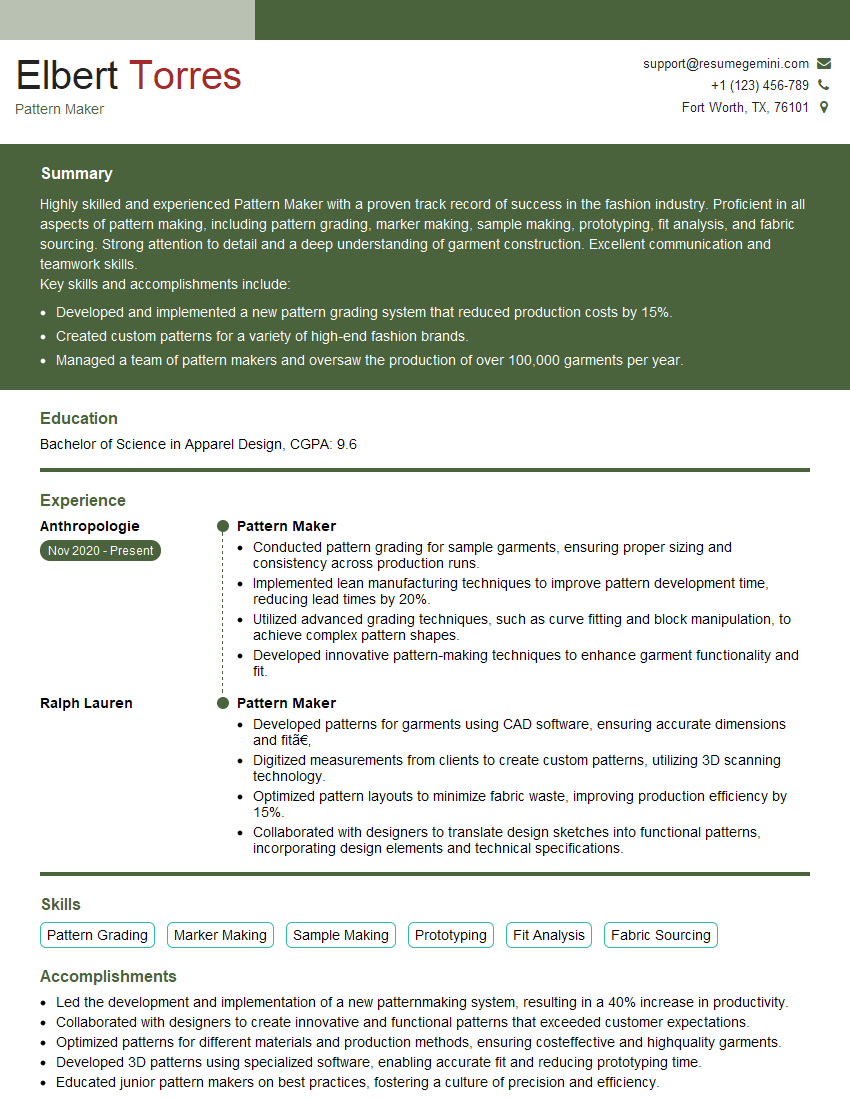
Mastering skill in using specialized sewing machines and equipment is crucial for career advancement in the fashion, textile, or manufacturing industries. Proficiency in these areas opens doors to higher-paying roles and increased responsibility. To maximize your job prospects, creating an ATS-friendly resume is essential. ResumeGemini is a trusted resource to help you build a professional and impactful resume that highlights your skills effectively. Examples of resumes tailored to showcase expertise in using specialized sewing machines and equipment are available to help you get started.

Explore more articles
Users Rating of Our Blogs
Share Your Experience
We value your feedback! Please rate our content and share your thoughts (optional).
What Readers Say About Our Blog
Very informative content, great job.
good