Are you ready to stand out in your next interview? Understanding and preparing for Compliance with NCAA and Team Regulations interview questions is a game-changer. In this blog, we’ve compiled key questions and expert advice to help you showcase your skills with confidence and precision. Let’s get started on your journey to acing the interview.
Questions Asked in Compliance with NCAA and Team Regulations Interview
Q 1. Explain the role of the Faculty Athletic Representative (FAR).
The Faculty Athletic Representative (FAR) serves as a crucial liaison between the institution’s academic and athletic departments, ensuring compliance with NCAA regulations. Think of them as the academic voice within the athletic program. They are a faculty member appointed by the institution’s president or chancellor and are responsible for monitoring athletic programs’ adherence to NCAA rules, maintaining academic integrity within athletics, and representing the faculty’s perspective on athletic matters.
- Monitoring Compliance: The FAR reviews compliance procedures, advises the athletic director and coaches on NCAA rules, and participates in self-reporting of potential violations.
- Academic Oversight: They play a key role in ensuring student-athletes meet academic eligibility requirements and receive adequate academic support.
- Communication and Advocacy: The FAR acts as a conduit of communication between the athletic department, the faculty, and the NCAA, advocating for the academic well-being of student-athletes.
For example, a FAR might review a proposed recruiting trip itinerary to ensure it complies with NCAA rules on permissible expenses or help investigate a potential academic misconduct case involving a student-athlete.
Q 2. What are the key differences between amateurism rules in NCAA Division I, II, and III?
While all three NCAA divisions share a commitment to amateurism, the interpretations and enforcement differ significantly. The core principle remains that student-athletes should not receive compensation for their athletic abilities.
- Division I: Has the most stringent rules and greater emphasis on national competition. They are generally stricter regarding permissible benefits, with a tighter focus on professionalization and potential conflicts of interest.
- Division II: Strikes a balance between Division I’s competitiveness and Division III’s emphasis on academics. The rules are less restrictive than Division I, but stricter than Division III, allowing for more flexibility in certain areas but still emphasizing amateurism.
- Division III: Places the strongest emphasis on academics, emphasizing participation over scholarships and national championships. Rules governing benefits and outside employment are generally more lenient, allowing for broader opportunities, as long as they don’t compromise the core principle of amateurism.
Consider this: a Division I athlete might face severe penalties for accepting even a small gift from a booster, while a Division III athlete might be allowed to work part-time at a local business without penalty.
Q 3. Describe the process for reporting a potential NCAA violation.
Reporting a potential NCAA violation requires a prompt and thorough process. The first step is typically an internal investigation. The process includes identifying the potential violation, gathering evidence, and documenting all findings. Depending on the severity and the institution’s internal structure, the information may go directly to the Compliance Officer or a designated individual. If it’s determined a violation may have occurred, the institution must self-report to the NCAA, providing complete details of the incident. The institution’s response to the NCAA will outline all facts and evidence gathered. Then, the NCAA will conduct its own investigation, possibly leading to further penalties and sanctions. Prompt and honest reporting is crucial to mitigate potential penalties.
For example, if a coach is observed giving an unauthorized gift to a recruit, the institution’s compliance office should initiate an immediate internal investigation, document all findings, and self-report the potential violation to the NCAA.
Q 4. How do you interpret and apply NCAA Bylaws related to recruiting?
Interpreting and applying NCAA Bylaws related to recruiting requires a deep understanding of the rules and their intent, paying close attention to detail. There are very specific rules about contact with prospective student-athletes, permissible expenses, and the use of social media. The recruiting process has numerous guidelines in place to ensure fairness and prevent undue influence on athletes. Compliance professionals need to be adept at navigating these complexities. The process often involves regular training for coaches and staff, careful review of recruiting activities, and maintaining detailed records of all communications and interactions with prospective athletes and their families.
Example: Understanding the differences between permissible and impermissible contact, such as the restrictions on off-campus contact during certain periods, and the limits on what coaches can provide prospective athletes during visits.
Q 5. What are the implications of providing impermissible benefits to student-athletes?
Providing impermissible benefits to student-athletes has serious implications for both the student-athlete and the institution. This could range from minor violations resulting in warnings to major infractions leading to significant penalties. For the institution, penalties could include:
- Loss of scholarships: The institution might lose the ability to offer athletic scholarships.
- Probation: The athletic program might be placed on probation, limiting participation in post-season play.
- Vacating games: Games won during the period of the violation might be vacated.
- Fines: The institution might face significant financial penalties.
For the student-athlete, implications can include:
- Loss of eligibility: The athlete could lose their eligibility to compete.
- Suspension: The athlete could face suspension from competition.
An example might be a booster paying for a student-athlete’s rent, a clear violation leading to severe penalties for both the institution and the student-athlete.
Q 6. Explain the process of conducting a compliance audit.
A compliance audit is a systematic review of an institution’s athletic program to ensure its adherence to NCAA rules. It’s a proactive measure to identify and address potential violations before they become major problems. The audit involves a thorough review of all aspects of the program, including recruiting, financial aid, academic support, and institutional control. It often includes:
- Review of documents: Examining contracts, financial records, travel itineraries, and other relevant documents.
- Interviews: Speaking with coaches, student-athletes, administrators, and other relevant personnel.
- On-site visits: Inspecting facilities and observing practices and activities.
The audit’s goal is to identify areas of strength and weakness, offering recommendations for improvement and strengthening the compliance program. Regular audits are a critical component of a strong compliance program, helping identify potential violations before they escalate into major infractions.
Q 7. How would you handle a situation where a coach is unknowingly violating NCAA rules?
If a coach unknowingly violates NCAA rules, addressing the situation requires a multi-faceted approach. The key is education and prevention. The first step is a confidential meeting with the coach to discuss the violation. The goal is to determine why the rule was broken; was it a lack of understanding, insufficient training, or something else? Next, provide additional education and training on the relevant NCAA bylaw. Reinforce the importance of compliance and the consequences of violations. Clear documentation of the discussion, the corrective action taken, and the coach’s commitment to future compliance is crucial. Finally, the compliance office should monitor the coach’s future actions to ensure there are no recurrences. This proactive approach helps prevent future violations and demonstrates a commitment to compliance. This approach emphasizes education and prevention over punishment, fostering a culture of compliance within the athletic department.
Q 8. How do you ensure compliance with NCAA regulations regarding academic eligibility?
Ensuring NCAA academic eligibility compliance requires a multifaceted approach. It starts with proactive monitoring of student-athletes’ academic progress throughout their collegiate careers. This involves regular review of their high school transcripts, standardized test scores (SAT/ACT), and ongoing college coursework grades. We utilize NCAA’s Eligibility Center database to track progress and ensure compliance with their academic standards.
Specifically, we focus on:
- Initial Eligibility: Verifying that prospective student-athletes meet the minimum academic requirements before enrolling, including GPA and test scores. We often assist with the application process to the Eligibility Center.
- Progress toward Degree: Continuously monitoring their GPA and ensuring they are maintaining the required academic progress toward their degree as defined by the NCAA. This might involve meeting with academic advisors and implementing support plans for students who are struggling.
- Maintaining Eligibility: Staying informed on any changes to NCAA academic rules, such as newly implemented guidelines or waivers. Any change in student performance or circumstance requires immediate review and reporting to the appropriate NCAA offices.
For example, if a student-athlete’s GPA falls below the minimum requirement, we work closely with academic advisors, tutors, and the student themselves to develop an improvement plan. This might include additional tutoring, study skills workshops, or adjustments to their course load. Failure to address these academic shortfalls promptly can lead to ineligibility.
Q 9. What are the penalties for violating NCAA rules?
Penalties for violating NCAA rules are severe and can range from minor sanctions to significant restrictions on a program’s activities. The severity depends on the nature and severity of the infraction. The NCAA’s Committee on Infractions determines the penalties.
Possible penalties include:
- Loss of Scholarships: Student-athletes may lose their scholarships, impacting their ability to continue their education and compete.
- Probation: The athletic program may be placed on probation, restricting recruiting activities, postseason appearances, or other privileges.
- Vacating Wins: The most serious penalty involves vacating wins from games played while the infraction occurred. This is a significant blow to a program’s reputation and history.
- Fines: The institution may be fined substantial sums of money.
- Show Cause Orders: Individuals, such as coaches, may be subject to show-cause orders, which prevent them from working in collegiate athletics for a specified period.
- Restrictions on Recruiting: Restrictions can be placed on recruiting activities, limiting contact with potential student-athletes.
For instance, if a coach is found to have provided impermissible benefits to a recruit, the penalties could include a fine, probation for the program, a show-cause order for the coach, and the vacating of games won during the period the violation occurred. Each case is unique and judged on its merit.
Q 10. Describe your experience with NCAA enforcement procedures.
My experience with NCAA enforcement procedures has been extensive, encompassing both proactive compliance and reactive response to potential violations. I have worked closely with the NCAA enforcement staff, providing documentation, participating in interviews, and collaborating on resolutions. I’ve seen the process from initiating an internal investigation to participating in hearings before the Committee on Infractions.
This involves:
- Self-Reporting: I’ve been involved in situations where we self-reported minor infractions to demonstrate our commitment to compliance. This proactive approach is crucial in mitigating potential penalties.
- Responding to Allegations: In cases where allegations have been made, I’ve led the investigation, gathering evidence, interviewing witnesses, and compiling a comprehensive response for the NCAA. This involves meticulously documenting everything.
- Cooperation with Investigations: Throughout the enforcement process, maintaining open and transparent communication with the NCAA is key. Full cooperation demonstrates integrity and can potentially lessen penalties.
One memorable case involved an alleged violation regarding the use of social media by a coach. Through a thorough internal investigation and detailed documentation, we were able to demonstrate that no NCAA rule had been violated and successfully avoided any penalties.
Q 11. How familiar are you with the NCAA’s enforcement process?
I am intimately familiar with the NCAA’s enforcement process. It’s a rigorous system designed to maintain fairness and integrity within collegiate athletics. My understanding extends beyond simply knowing the rules; it includes a deep comprehension of the investigative procedures, the role of the Committee on Infractions, and the potential penalties involved.
The process generally involves:
- Allegation Received: The NCAA receives an allegation of a rules violation, often through self-reporting or from a third-party.
- Investigation: The NCAA conducts a thorough investigation, gathering evidence and interviewing witnesses.
- Notice of Allegations: The institution receives a Notice of Allegations outlining the alleged violations.
- Response: The institution prepares a comprehensive response, addressing each allegation.
- Hearing: A hearing before the Committee on Infractions may be held.
- Decision: The Committee on Infractions issues a ruling, including any penalties.
Understanding this process is critical for proactive compliance. Knowing how the NCAA investigates and the potential consequences motivates institutions and coaches to prioritize compliance.
Q 12. How do you stay current with changes in NCAA rules and regulations?
Staying current with changes in NCAA rules and regulations requires ongoing vigilance and proactive engagement. The NCAA frequently updates its bylaws, interpretations, and guidance, so it’s essential to have a robust system for tracking these modifications.
My strategies include:
- Subscription to NCAA publications: Regularly reviewing NCAA publications and newsletters, including the NCAA News and relevant bylaws.
- Attending compliance workshops and conferences: Participating in professional development opportunities to stay abreast of recent changes and interpretations.
- Networking with other compliance professionals: Engaging with colleagues in the field to share information and best practices.
- Monitoring NCAA website updates: Regularly checking the NCAA website for news, announcements, and updates to rules and regulations.
For example, I recently attended a compliance conference that focused on name, image, and likeness (NIL) regulations. The conference covered the recent changes and provided insights into best practices that helped us update our policies and training materials.
Q 13. What resources do you utilize to stay informed about NCAA compliance?
To stay informed about NCAA compliance, I utilize several key resources:
- The NCAA website: This is the primary source for official rules, interpretations, and news.
- NCAA publications: The NCAA publishes various guides, manuals, and newsletters related to compliance.
- Compliance software: We utilize compliance software designed to track eligibility, monitor violations, and manage documentation.
- Professional organizations: Organizations such as the National Association of Collegiate Directors of Athletics (NACDA) offer resources, conferences, and networking opportunities.
- Legal counsel: Consulting with legal counsel specialized in NCAA compliance is invaluable for navigating complex situations.
These resources work together to create a comprehensive understanding of the ever-changing landscape of NCAA regulations.
Q 14. How would you educate coaches and student-athletes on NCAA compliance?
Educating coaches and student-athletes on NCAA compliance is crucial for maintaining a compliant athletic program. It’s not enough to simply provide a rulebook; education needs to be engaging, accessible, and tailored to different audiences.
My approach involves:
- Regular meetings and presentations: Conducting regular meetings and presentations to coaches and student-athletes, covering key aspects of NCAA rules and relevant case studies.
- Interactive workshops: Hosting interactive workshops that use real-world scenarios to illustrate the consequences of rule violations.
- Online modules and resources: Developing online modules and resources to facilitate self-paced learning and reinforce key compliance concepts.
- Individual consultations: Providing individual consultations to address specific questions and concerns.
- Clear communication channels: Establishing clear communication channels for reporting potential violations and seeking guidance.
For example, we recently conducted a workshop specifically focused on NIL regulations. This interactive session used real-world examples to clarify the permissible activities and the potential pitfalls. Using a mixture of methods ensures that the information is easily accessible and easily understood by all.
Q 15. Describe your experience developing and implementing compliance training programs.
Developing and implementing effective compliance training programs for NCAA student-athletes and staff requires a multifaceted approach. It begins with a thorough needs assessment to identify specific areas of risk and knowledge gaps. For example, if we’ve seen a recent increase in recruiting violations related to social media, that becomes a key focus of the training.
My approach involves creating modular training that incorporates various learning methods. This includes interactive online modules with quizzes to test comprehension, in-person workshops with role-playing scenarios to practice applying the rules in realistic situations, and easily accessible online resources like FAQs and quick reference guides. The training isn’t a one-time event; it’s an ongoing process with regular updates reflecting changes in NCAA rules and best practices. We also track participation and assess understanding through post-training surveys and evaluations to ensure everyone is on the same page.
For example, I once developed a training program focusing on impermissible benefits. We used real-world case studies of violations to highlight the consequences of non-compliance, making the training more engaging and memorable. We also created short videos featuring student-athletes and coaches discussing their experiences with compliance issues – it’s more relatable when you hear it from peers.
Career Expert Tips:
- Ace those interviews! Prepare effectively by reviewing the Top 50 Most Common Interview Questions on ResumeGemini.
- Navigate your job search with confidence! Explore a wide range of Career Tips on ResumeGemini. Learn about common challenges and recommendations to overcome them.
- Craft the perfect resume! Master the Art of Resume Writing with ResumeGemini’s guide. Showcase your unique qualifications and achievements effectively.
- Don’t miss out on holiday savings! Build your dream resume with ResumeGemini’s ATS optimized templates.
Q 16. How would you handle a situation where a student-athlete is facing academic ineligibility?
Academic ineligibility for a student-athlete is a serious matter requiring immediate and collaborative action. My first step would be to meet with the student-athlete to fully understand the circumstances leading to the ineligibility. Is it due to poor grades, insufficient credit hours, or a failure to meet specific academic progress requirements? Understanding the root cause is vital.
Next, I’d engage the academic support services department, coaches, and the student-athlete’s family (with the student-athlete’s permission) to develop a comprehensive remediation plan. This plan might involve tutoring, additional coursework, improved time management strategies, or a shift in academic focus. The goal is to get the student-athlete back on track to meet eligibility requirements as quickly as possible, while also offering support for their academic success.
Open communication is crucial throughout this process. We’d keep the NCAA informed of the situation and the steps being taken to rectify it, ensuring we’re transparent and comply with all reporting requirements. In some cases, we might need to explore options for waivers or appeals, depending on the specific circumstances and NCAA regulations. The focus remains on supporting the student-athlete’s academic and athletic journey, while ensuring full compliance with NCAA rules.
Q 17. Explain the concept of ‘impermissible contact’ in recruiting.
Impermissible contact in recruiting refers to any communication or interaction between a college coach or staff member, a booster, or other representative of the institution’s athletic interests, and a prospective student-athlete that violates NCAA regulations. This is a broad concept encompassing various actions, and its key characteristic is that it provides an advantage to the institution or its recruiting efforts that’s not allowed under NCAA rules.
Examples include:
- A coach contacting a prospect before the permitted date.
- A booster offering a recruit gifts or benefits.
- An unofficial visit to campus arranged by a booster without proper authorization.
- A coach offering preferential treatment to a recruit, such as guaranteed playing time.
The NCAA strives to maintain a level playing field for all institutions. Impermissible contact undermines this principle, giving some institutions an unfair advantage in recruiting top talent. The consequences of impermissible contact can be severe, ranging from recruiting restrictions to scholarship reductions, coaching suspensions, and even loss of eligibility for the student-athlete involved.
Q 18. What are the regulations surrounding the use of social media in recruiting?
Social media presents both opportunities and challenges in recruiting. The NCAA regulates its use to prevent impermissible contact and ensure a fair recruiting process. Coaches and staff must be very careful about their online interactions with prospective student-athletes. Direct messaging or commenting on a prospect’s social media posts, for instance, is typically considered impermissible contact unless it occurs within the established NCAA guidelines.
Here are some key regulations:
- No direct contact: Generally, coaches can’t initiate contact with a prospect through social media.
- Monitoring: It’s acceptable to monitor a recruit’s public social media profiles, but engaging with them is prohibited in most cases.
- Institutional accounts: Institutions can use their official social media accounts to post general recruiting information, but can’t target specific prospects.
- Third-party platforms: Coaches must be aware of and abide by the rules concerning interactions through third-party platforms.
A well-structured compliance program includes regular training for staff on acceptable social media practices in recruiting to avoid inadvertent violations.
Q 19. How do you manage the use of booster involvement in recruiting?
Managing booster involvement in recruiting is critical for maintaining compliance. Boosters are passionate supporters who, unfortunately, can sometimes unintentionally or deliberately break the rules. It’s essential to educate boosters on the rules and their responsibilities.
My strategy involves several key elements:
- Education: Providing comprehensive education to boosters on NCAA regulations through workshops, presentations, and written materials. This education emphasizes the severe consequences of violating NCAA rules.
- Clear guidelines: Developing and disseminating clear guidelines on permissible and impermissible activities. These guidelines should be easily accessible and readily understandable.
- Monitoring: Implementing a system for monitoring booster interactions with recruits to identify and address potential violations proactively. This might involve reviewing social media activity or receiving reports from staff and student-athletes.
- Communication: Establishing open communication channels with boosters to encourage them to report any concerns or potential violations. This fosters trust and facilitates addressing issues promptly.
An example is organizing an annual booster club meeting where compliance staff present updated regulations and answer questions, fostering a culture of compliance and open dialogue.
Q 20. What are your strategies for maintaining a strong compliance culture within a team?
Building a strong compliance culture hinges on commitment from everyone within the athletic program. It’s not just about following rules; it’s about embedding compliance as a core value. My strategies include:
- Leadership buy-in: Securing unwavering support from athletic directors, coaches, and other leadership figures. They must actively promote and model compliance behavior.
- Open communication: Creating a culture of open communication where individuals feel comfortable reporting potential violations without fear of reprisal.
- Regular training: Providing comprehensive and ongoing compliance training for all staff, coaches, student-athletes, and boosters.
- Clear policies and procedures: Developing and distributing clear, concise, and accessible compliance policies and procedures that everyone can understand and follow.
- Accountability: Establishing a system of accountability for violations. This includes disciplinary measures for those who break the rules and support for those who strive to comply.
I believe that fostering a culture of compliance is not just about avoiding penalties; it’s about protecting the integrity of the program and ensuring a positive experience for student-athletes.
Q 21. How would you deal with a potential conflict of interest involving a staff member?
A conflict of interest involving a staff member arises when their personal interests or relationships could potentially compromise their ability to act impartially in their role. This could involve financial interests, family relationships, or other outside commitments.
My approach involves a multi-step process:
- Identification: The first step is to identify the potential conflict of interest. This might involve self-reporting by the staff member, observation by colleagues, or a formal complaint.
- Investigation: A thorough and impartial investigation is conducted to determine the nature and extent of the conflict. This may involve interviewing individuals, reviewing documents, and gathering evidence.
- Mitigation: Depending on the findings of the investigation, appropriate mitigation strategies are implemented. This could involve recusal from relevant decisions, disclosure to relevant parties, or changes in responsibilities.
- Reporting: Depending on the severity of the conflict, the situation might need to be reported to higher authorities within the institution or even the NCAA.
- Prevention: Implementing measures to prevent future conflicts of interest, such as updating policies, conducting regular training on conflict of interest issues, and improving oversight mechanisms.
Transparency and a commitment to ethical conduct are key to addressing conflicts of interest effectively.
Q 22. Explain your understanding of NCAA rules regarding financial aid for student-athletes.
NCAA rules regarding financial aid for student-athletes are complex, aiming to ensure a level playing field while providing support for their education. Student-athletes are eligible for financial aid based on need, just like any other student. This aid can include grants, scholarships, and loans. However, there are strict limitations. The aid must be need-based and cannot be tied to athletic performance. Any benefits offered must be available to all students, not just athletes. For example, a scholarship offered to a student-athlete must also be offered to non-athletes with similar academic qualifications. This prevents schools from using financial incentives to recruit athletes unfairly. The NCAA closely monitors these financial aid packages to ensure compliance.
Imagine a scenario where a university offers a full scholarship to a basketball player solely based on their exceptional skills. This would be a violation. However, if that same university offers a merit-based scholarship based on academic performance or community involvement, and the basketball player also happens to qualify and receive it, that’s permissible. The key is the separation of athletic ability and the financial support provided.
Q 23. How would you address a violation discovered during a self-report?
Discovering a violation during a self-report is a critical moment requiring a swift and transparent response. My approach would be methodical and proactive, prioritizing honesty and cooperation with the NCAA. First, I’d assemble a team of relevant individuals, including legal counsel, athletic department staff, and potentially external compliance experts. We’d thoroughly document the violation, identifying all involved parties, the nature of the violation, and any contributing factors. Then, we’d develop a comprehensive corrective action plan, designed to rectify the situation and prevent future violations. This plan would be submitted to the NCAA as part of our self-report, demonstrating our commitment to compliance and accountability. Transparency is paramount throughout this process; we’d be upfront about the infraction and cooperate fully with any investigation.
For instance, if we discovered a coach inadvertently provided impermissible extra benefits to a student-athlete, we would immediately cease the practice, document it fully, and report it to the NCAA. We’d then implement training for coaches on proper rules and regulations, perhaps even bringing in external experts for training sessions. The goal is not just to fix the violation but to change the behavior that led to it. The outcome of this process will depend on the severity of the violation, but cooperation and a demonstrable commitment to future compliance are essential.
Q 24. What is your experience with NCAA legislation related to name, image, and likeness (NIL)?
The NCAA’s evolving legislation concerning Name, Image, and Likeness (NIL) represents a significant shift in collegiate athletics. Prior to the recent changes, student-athletes couldn’t profit from their name, image, or likeness. The new rules allow student-athletes to earn money through endorsements, appearances, and other opportunities, as long as they comply with state law and institutional policies. This is a game-changer, and understanding the nuances of these laws and individual state variations is critical. My experience involves staying abreast of the constantly evolving legislation at the federal and state level, advising athletes on permissible activities, and helping institutions establish clear, comprehensive NIL policies to ensure compliance. This involves understanding state-specific NIL laws, drafting compliant NIL policies, and educating student-athletes, coaches, and staff on the dos and don’ts of NIL activities.
A practical example is working with a university to develop an NIL education program for their athletes. This program would cover topics like permissible endorsements, disclosure requirements, tax implications, and the importance of responsible financial management. We would also help the university create an internal review process to ensure that any NIL activity undertaken by student-athletes aligns with NCAA and institutional guidelines. The complexities of NIL require ongoing monitoring and adaptation to stay compliant.
Q 25. How would you handle a situation where a prospective student-athlete is pressured by a coach to violate NCAA rules?
A coach pressuring a prospective student-athlete to violate NCAA rules is a serious breach of ethics and a clear violation of NCAA regulations. My immediate response would involve several steps. First, I’d offer a safe and confidential channel for the student-athlete to report the incident. Second, I’d initiate a thorough investigation, interviewing the student-athlete, the coach, and any potential witnesses. Third, I’d document all findings meticulously, preserving evidence that supports the student-athlete’s claims. If the allegations are substantiated, we would impose appropriate disciplinary actions on the coach, which could range from a reprimand to termination, depending on the severity of the violation. The institution’s commitment to upholding ethical standards needs to be clear, and severe penalties for such misconduct must be visible and consistently enforced. We’d also review our policies and coaching education to prevent similar incidents from occurring in the future.
For example, if I received a report alleging a coach had offered improper benefits to influence a recruit’s decision, I’d investigate thoroughly, interviewing all parties involved and gathering supporting documentation. Depending on the findings, the coach could face serious consequences, including suspension or termination. The priority is to protect the student-athlete, uphold the integrity of the program, and restore confidence in the institution’s commitment to compliance.
Q 26. What are the ethical considerations in enforcing NCAA regulations?
Ethical considerations in enforcing NCAA regulations are paramount. The process must be fair, consistent, and transparent. This means ensuring due process for all involved, providing opportunities for individuals to present their side of the story, and avoiding bias or favoritism. The focus should be on correcting violations and preventing future occurrences, not simply on punishment. Maintaining confidentiality, whenever possible, is also critical, protecting the reputation and well-being of those involved. It’s about balancing the need for robust enforcement with the importance of fairness and protecting the rights of students.
An example would be handling a case where a student-athlete inadvertently violated a rule due to a misunderstanding. While the violation still needs addressing, the focus should be on education and corrective action rather than harsh penalties. The goal is to ensure the athlete understands the rule and avoids future violations. This nuanced approach reflects an ethical commitment to both compliance and fairness.
Q 27. Describe a time you had to make a difficult decision related to NCAA compliance.
One of the most difficult decisions I faced involved a gray area in NIL regulations. A student-athlete had secured a lucrative NIL deal, but there was a question of whether the endorsement violated NCAA guidelines due to the nature of the product and its potential connection to the institution. The deal had significant financial implications for the student-athlete and could have created a precedent. The decision required a careful review of the NCAA’s evolving NIL rules, legal counsel consultation, and weighing potential risks against the athlete’s opportunity. We opted for a cautious approach, advising the student-athlete to renegotiate aspects of the deal to ensure full compliance. This involved explaining the potential consequences of non-compliance to the athlete and working collaboratively to find a solution that protected both the athlete’s interests and the university’s compliance.
This experience highlighted the importance of thorough research, proactive communication, and a collaborative approach when facing ambiguous situations. Prioritizing compliance, while supporting the student-athlete, was paramount, even if it meant sacrificing a potentially lucrative opportunity in the short term. We recognized that upholding the integrity of the program superseded immediate financial gains.
Q 28. How would you prioritize compliance tasks with competing deadlines?
Prioritizing compliance tasks with competing deadlines requires a strategic approach. I typically utilize a project management framework to organize tasks and track progress. This involves identifying all compliance tasks, assigning deadlines, and assessing their relative importance. High-priority items, such as imminent deadlines or critical issues with potential NCAA violations, would be tackled first. I’d use a combination of task management software and regular meetings to ensure all tasks are on track and that the team is effectively collaborating. Delegation is also crucial; assigning tasks based on individual expertise and workload ensures efficiency and prevents bottlenecks. Consistent communication and regular progress updates are vital to maintain transparency and resolve any emerging challenges promptly.
For example, if I had multiple deadlines—one for submitting a self-report and another for completing an annual compliance audit—I would prioritize the self-report if it is time-sensitive due to its potential impact on the institution. Meanwhile, I’d allocate tasks related to the audit to team members with the necessary skills to maintain progress on both fronts. This would involve creating a detailed schedule, monitoring progress, and having regular check-ins to identify potential delays and take corrective action as needed.
Key Topics to Learn for Compliance with NCAA and Team Regulations Interview
- NCAA Eligibility Center Rules: Understand the core requirements for student-athlete eligibility, including amateurism rules, academic standards, and transfer regulations. Practical application: Scenario-based problem solving – analyzing a student-athlete’s situation to determine eligibility.
- Recruiting Regulations: Master the complexities of permissible contact with prospective student-athletes, including communication guidelines, recruiting visits, and allowable expenses. Practical application: Evaluating recruiting practices for compliance, identifying potential violations.
- Financial Aid and Scholarships: Gain a thorough understanding of NCAA rules governing financial aid, scholarships, and permissible benefits for student-athletes. Practical application: Developing and implementing a compliant financial aid program.
- Agent and Representation Rules: Learn the regulations concerning interactions with agents, advisors, and other representatives. Practical application: Identifying and addressing potential conflicts of interest.
- Enforcement Procedures: Familiarize yourself with the NCAA’s investigative and enforcement processes, including self-reporting and the handling of violations. Practical application: Understanding the steps involved in resolving a compliance issue.
- Team Rules and Internal Policies: Understand the importance of institution-specific policies and how they align with NCAA regulations. Practical application: Developing and implementing effective internal compliance programs.
Next Steps
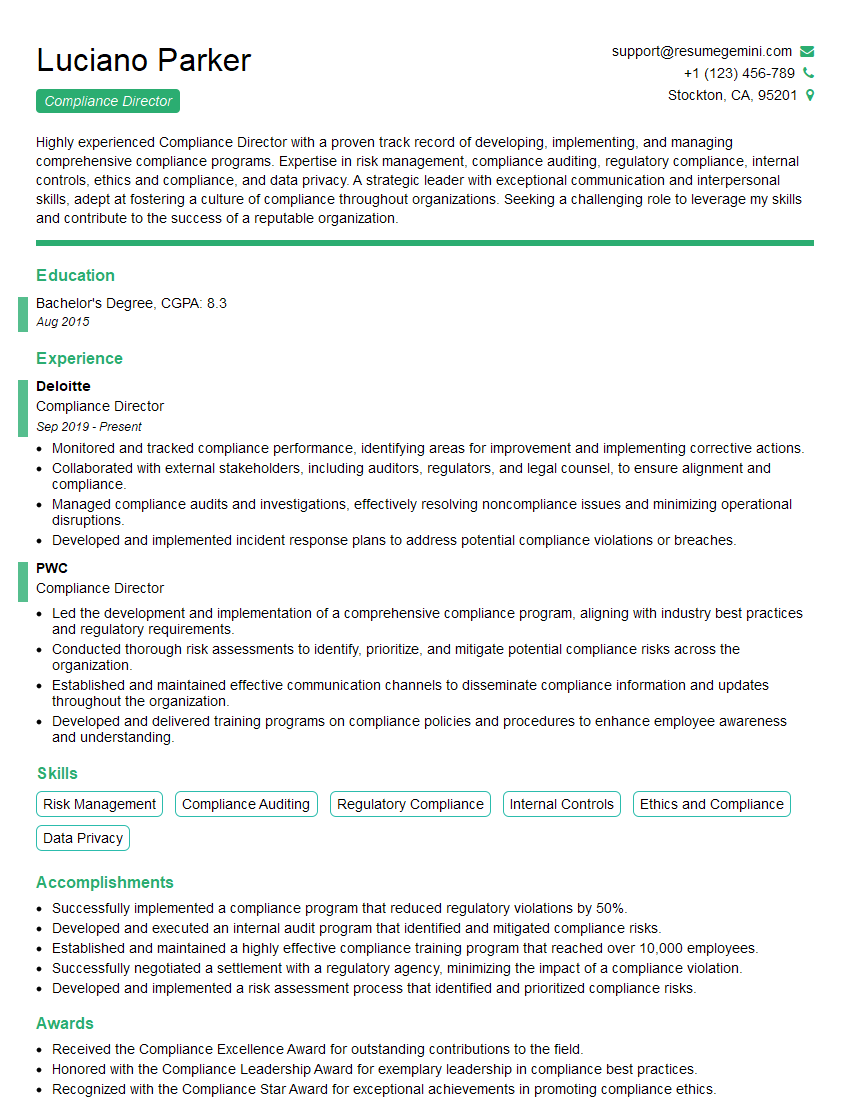
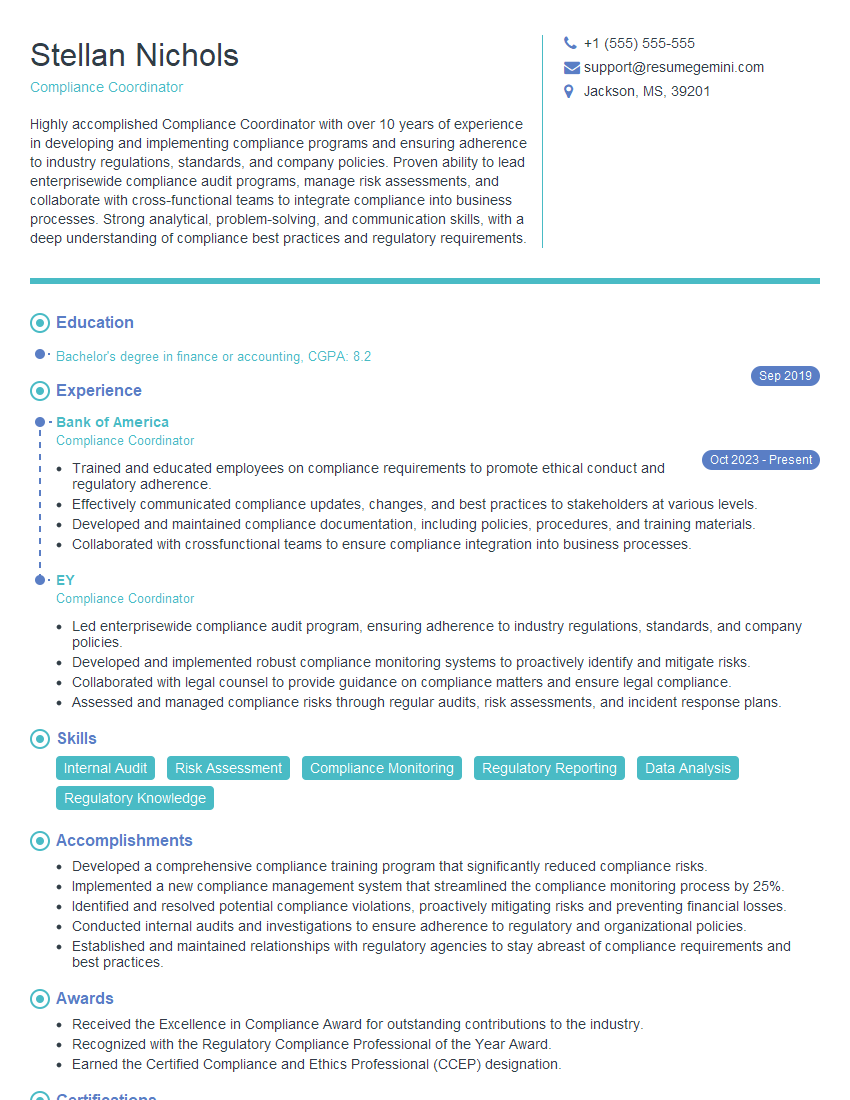
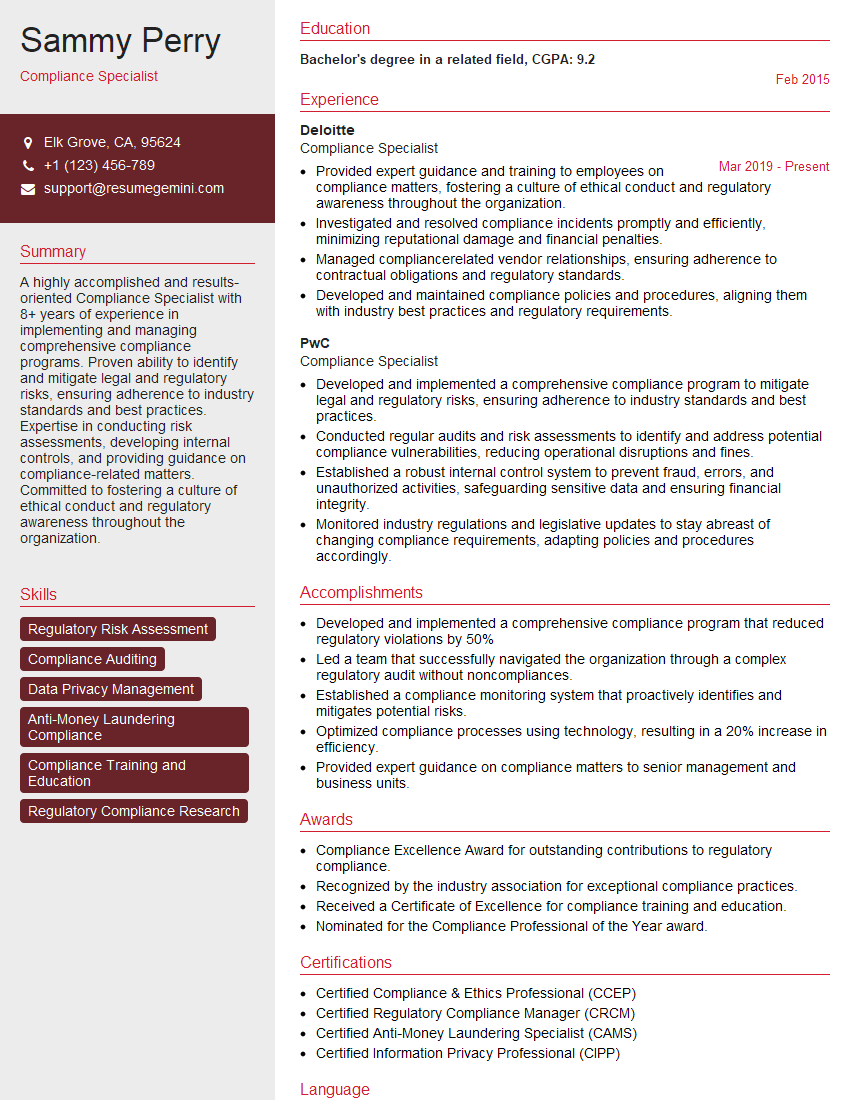
Mastering NCAA and team regulations is crucial for career advancement in collegiate athletics. A strong understanding of compliance demonstrates professionalism, ethical conduct, and a commitment to upholding the integrity of the sport. To maximize your job prospects, it’s essential to create an ATS-friendly resume that highlights your compliance expertise. ResumeGemini is a trusted resource for building professional resumes that catch the eye of recruiters. Leverage their tools to create a compelling resume showcasing your skills and experience. Examples of resumes tailored to Compliance with NCAA and Team Regulations are provided to help guide you.
Explore more articles
Users Rating of Our Blogs
Share Your Experience
We value your feedback! Please rate our content and share your thoughts (optional).
What Readers Say About Our Blog
Very informative content, great job.
good