Interviews are more than just a Q&A session—they’re a chance to prove your worth. This blog dives into essential Dribbling and Ball Control interview questions and expert tips to help you align your answers with what hiring managers are looking for. Start preparing to shine!
Questions Asked in Dribbling and Ball Control Interview
Q 1. Explain the importance of proper grip in dribbling.
Proper grip is fundamental to effective dribbling. Think of it like holding a delicate bird – you need a firm but gentle touch. A correct grip allows for maximum control and responsiveness to the ball. It prevents the ball from slipping away and enables quick changes in direction and speed. Imagine trying to write with a pencil you can barely hold – your handwriting would be messy and uncontrolled. The same principle applies to dribbling.
Typically, the fingers should lightly spread across the ball, allowing for quick adjustments to the ball’s position and path. The palm should not be overly engaged, but instead should provide a supportive base. Experiment to find the grip that feels most natural and allows for the most control. Remember, a relaxed grip is key; tension will hinder your dribbling finesse.
Q 2. Describe different dribbling styles and their applications.
Dribbling styles vary depending on the player’s strengths, the game situation, and the opponent’s defense. Here are a few key styles:
- Low dribble: Keeps the ball close to the ground, making it harder for opponents to steal. This is best used when navigating crowded spaces or facing aggressive defenders. Think of it as a stealth mode.
- High dribble: Raises the ball higher, allowing for greater visibility and speed. This is useful for quickly transitioning down the court or creating space.
- Between-the-legs dribble: The ball passes between the legs, creating a deceptive change of direction and making it difficult for defenders to anticipate movement. This requires good coordination and ball control.
- Behind-the-back dribble: The ball is passed behind the back, again, obscuring the direction of the dribble and making it harder for opponents to react.
- Crossover dribble: The ball is transferred rapidly from one hand to the other, changing direction as it crosses the body. Essential for changing pace and breaking through defensive lines.
The application of each style depends heavily on the context of the game. A low dribble might be preferable in a tight space, while a high dribble might be better for a fast break.
Q 3. How do you teach crossover dribbles to beginners?
Teaching beginners crossover dribbles requires a gradual approach. Start with the fundamentals of dribbling with both hands individually – ensuring they’re comfortable with a consistent and controlled dribble in each hand. Then, introduce the crossover by:
- Slow and controlled practice: Begin with slow, deliberate crossovers, focusing on accuracy and ball control. Avoid rushing the movement. Imagine drawing a slow, neat arc with your dribble.
- Hand-to-hand transfer: Practice transferring the ball smoothly from one hand to the other, keeping the ball low and close to the body. Focus on a smooth transition without interrupting the rhythm of the dribble.
- Incorporation of movement: Once comfortable, introduce movement while performing the crossover. Start with small steps, then gradually increase the speed and distance covered.
- Repetition and drills: Use drills like cone weaving with crossover dribbles to enhance coordination and speed.
- Game-like scenarios: Integrate the crossover dribble into simple games to simulate game situations and improve decision-making.
Patience and consistent practice are key. Encourage positive reinforcement and celebrate small improvements.
Q 4. What are the key elements of effective ball control?
Effective ball control is the cornerstone of successful dribbling. It’s about having complete command of the ball at all times. Key elements include:
- Grip: As discussed earlier, a secure yet relaxed grip is essential.
- Body posture: A balanced, athletic stance ensures stability and agility while dribbling.
- Fingertip control: Using your fingertips to guide the ball allows for precise adjustments to its trajectory.
- Eye contact: Maintaining eye contact with teammates and opponents allows for better awareness of the surrounding environment and making informed decisions.
- Proper use of both hands: Proficiency in both hands enables unpredictable movements and better ball security.
- Protection of the ball: Keeping the ball close to your body and shielding it from defenders is crucial.
Think of ball control as an extension of your body – as natural and seamless as breathing.
Q 5. How do you assess a player’s dribbling skills?
Assessing a player’s dribbling skills involves observing several factors:
- Ball handling proficiency: Can the player maintain control at different speeds and under pressure? Are they able to perform various dribbling techniques such as crossovers, behind-the-back, and between-the-legs?
- Hand-eye coordination: Is the player’s hand-eye coordination precise? Do they maintain visual contact with the ball while dribbling?
- Speed and agility: How quickly and effectively can the player change directions and pace while maintaining control of the ball?
- Decision-making: Can the player effectively use their dribbling skills to create scoring opportunities or pass to teammates under pressure?
- Performance under pressure: How do their dribbling skills hold up when facing aggressive defenders?
Assessment should involve observation during practice and game situations, and should consider both quantitative and qualitative aspects. You could use drills that focus on specific skills (like cone weaving drills for crossover and agility) and set specific time limits or targets to evaluate speed and control.
Q 6. Explain the relationship between dribbling and agility.
Dribbling and agility are intrinsically linked. Agility is the ability to change direction quickly and efficiently. Effective dribbling requires high levels of agility to navigate around defenders and create scoring opportunities. A player with poor agility will struggle to execute complex dribbling moves and will be easily predictable and defensible. Conversely, excellent agility allows a player to make the most of their dribbling skills, creating space and scoring opportunities through unexpected movements.
Imagine trying to weave through a crowded market: Good agility is like being able to swiftly and smoothly move through the crowd without bumping into people; while poor agility is akin to struggling to find a path forward, constantly getting stuck and slowed down. Dribbling is the same; a player who can change direction quickly has a great advantage over their opponent.
Q 7. Describe how to incorporate dribbling drills into a training program.
Incorporating dribbling drills into a training program requires careful planning and progression. Start with basic drills to build fundamental skills before progressing to more advanced techniques. Here’s a sample framework:
- Warm-up: Begin with dynamic stretches and light ball-handling exercises.
- Basic Drills: Focus on stationary ball handling, dribbling with both hands, and low dribbles.
- Advanced Dribbling Drills: Introduce crossover drills, behind-the-back dribbles, and between-the-legs drills.
- Agility Drills: Integrate cone drills, ladder drills, and shuttle runs to improve agility and change of direction.
- Game-like Situations: Simulate game scenarios that include defenders to apply dribbling skills under pressure.
- Cool-down: End the session with static stretches.
The frequency and duration of these drills will vary based on the player’s skill level and overall training plan. Remember to focus on quality over quantity, ensuring proper technique is emphasized throughout the drills. A good coach provides feedback and progressive adjustments based on observation of individual performance.
Q 8. How do you adapt dribbling techniques for different playing surfaces?
Adapting dribbling techniques to different surfaces is crucial for effective ball control. The key is understanding how the surface affects ball trajectory and friction.
- Grass: Longer grass requires a higher, softer touch. You’ll use more of the inside and outside of your foot to cushion the ball and maintain control. Think of gently ‘scooping’ the ball rather than striking it hard. You also need to anticipate the ball’s tendency to slow down and adjust your speed accordingly.
- Artificial Turf: Artificial turf offers more consistent bounce and speed. You can use shorter, quicker touches, incorporating more use of the sole of your foot for quick changes in direction. Dribbling will feel faster and more responsive.
- Hard Surfaces (Concrete, Indoor): Hard surfaces require a light touch to avoid losing control and potentially injuring your ankles. Focus on shorter, controlled touches, using the inside and outside of your feet with quick adjustments to maintain balance and control. The ball will have a faster, more erratic bounce, so precision is key.
Imagine dribbling a basketball – on a court, you can use powerful dribbles; on sand, you’d have to adjust significantly. Soccer is the same; understanding the surface is key to effective dribbling.
Q 9. What are common dribbling mistakes and how to correct them?
Many common dribbling mistakes stem from poor technique and a lack of focus. Here are some examples and their solutions:
- Looking down at the ball: This restricts your vision and awareness of your surroundings. Solution: Practice dribbling while keeping your head up, using your peripheral vision to track the ball. Start with short drills, gradually increasing the distance.
- Using only your dominant foot: This makes you predictable and limits your versatility. Solution: Dedicate equal time to practicing with both feet. Start with basic touches and gradually incorporate more complex moves.
- Dribbling too hard: This makes the ball difficult to control and predictable for opponents. Solution: Focus on gentle, controlled touches, using the inside and outside of your feet to vary the ball’s trajectory and speed.
- Dribbling too high: Makes the ball easier for opponents to intercept. Solution: Practice keeping the ball close to your feet, maintaining control at all times. Lower your center of gravity to stay balanced.
Regular practice and focused drills are key to correcting these mistakes. Remember, consistency is crucial; even small improvements in technique add up over time.
Q 10. How do you incorporate ball control into strength and conditioning?
Integrating ball control into strength and conditioning improves overall athleticism and enhances performance on the field. It’s not just about muscle strength; it’s about functional strength that directly translates to ball control.
- Plyometrics: Box jumps and lateral bounds build explosive power, crucial for quick changes in direction while dribbling. Include ball-related activities like ball-slams between jumps for added coordination.
- Core strengthening: A strong core is essential for balance and stability, allowing for greater control of the ball during tight situations. Planks, Russian twists, and medicine ball exercises are effective.
- Agility drills: Cone drills, ladder drills, and shuttle runs improve footwork agility, making players quicker and more precise with their touches. Add the ball into the drills to make them functional.
- Resistance training: Include exercises targeting the legs (squats, lunges), which contribute to better power and explosiveness while dribbling. You can also use resistance bands to add controlled resistance while doing ball control drills.
The key is to combine exercises that improve overall fitness with exercises that directly enhance dribbling skills, creating a symbiotic relationship between strength and ball control.
Q 11. Describe the benefits of using different parts of the foot in ball control (soccer).
Using different parts of the foot enhances ball control precision and unpredictability. Each part offers unique advantages:
- Inside of the foot: Provides a soft touch, ideal for close control, passing, and short dribbles. It’s perfect for cushioning the ball and controlling its trajectory in confined spaces. Think of smoothly guiding the ball.
- Outside of the foot: Offers more power and allows for greater changes in direction. It’s useful for making quick turns and creating space. Imagine using the outside of your foot to guide the ball away from a defender.
- Sole of the foot: Provides a flatter surface, good for trapping and quickly moving the ball a short distance, particularly useful for nutmegs or quick changes of direction.
- Instep: Used for longer passes, powerful shots and more forceful dribbling actions. It is less used for dribbling but is crucial when it comes to longer range passes or shots.
Mastering each technique allows for diverse gameplay strategies, making you a more unpredictable and effective player. It’s like having a wider range of tools in your toolbox – each is useful for different situations.
Q 12. How do you teach players to shield the ball effectively while dribbling?
Shielding the ball effectively involves using your body to protect it from opponents. This requires a combination of positioning, technique, and awareness.
- Body positioning: Place your body between the ball and your opponent, using your arms and legs to create a barrier. A slightly angled body position works best.
- Footwork: Use small, controlled touches to keep the ball close to your feet and change direction unpredictably. Maintain a low center of gravity to prevent easily being pushed off the ball.
- Head and eye contact: Keep your head up to be aware of your surroundings, anticipate opponent movements and maintain a visual on the ball without constantly focusing on it. Maintaining eye contact with defenders can be useful, but make sure to keep scanning the space around you.
- Use of arms and shoulders: Your arms should be used to push off defenders, creating space, and not to hold the ball. Your shoulders can also slightly help as a shield but don’t overuse this as it can easily become a foul.
Imagine a shield; you need to use your entire body to block the opponent effectively. Practice these techniques regularly to develop muscle memory and reflexes.
Q 13. Explain how to use body feints to improve dribbling effectiveness.
Body feints deceive opponents, creating opportunities for dribbling past them. These are quick, subtle movements that make your opponent believe you’re going in one direction when you are actually going in another.
- Shoulder feints: Quickly shift your shoulders in one direction while keeping your body weight central, making the defender believe you’ll go that way before suddenly changing direction.
- Head feints: A quick head movement to simulate a change in direction. This is often coupled with a shoulder feint for a more believable deception.
- Foot feints: Make the move to pass or shoot before changing your mind and dribbling in a different direction. It is important that the action is believable and not sloppy.
- Combination Feints: Combine different feints simultaneously to maximize deception. This takes more practice but can be devastating when done correctly.
Remember, successful feints require precise timing and subtlety. Practice these moves slowly before increasing your speed, keeping the movements quick and fluid to avoid giving away your true intention.
Q 14. How do you incorporate dribbling into small-sided games?
Incorporating dribbling into small-sided games emphasizes its practical application and enhances player development. It’s about more than just drills; it’s about game-like situations.
- Modified rules: Limit the number of touches or introduce rules that incentivize dribbling, such as awarding points for successful dribbles past defenders.
- Game scenarios: Design games that require players to use dribbling to overcome obstacles or to beat defenders. Examples include 1v1 or 2v2 dribbling games where the aim is to get past the defender and reach the goal.
- Competitive elements: Introduce a scoring system to enhance motivation and encourage players to strive for precision in their dribbling.
- Progressive difficulty: Start with smaller spaces and fewer players and then increase the size of the pitch and the number of players.
Small-sided games provide a realistic context for developing dribbling skills, making it more engaging and effective than isolated drills. The pressure of the game will also make players adapt and learn more effectively.
Q 15. How do you assess a player’s ability to dribble under pressure?
Assessing a player’s dribbling under pressure involves more than just observing their skills in an open setting. We need to see how they maintain control, change pace, and make decisions while a defender is actively challenging them.
- Control under pressure: Does the player maintain a low center of gravity, protecting the ball effectively? Do they panic and lose possession easily? I observe how consistently they keep the ball close to their body, even when jostled.
- Decision-making: Can they identify openings and make quick, intelligent decisions about when to drive, when to pass, and how to avoid defenders? I look for effective use of head fakes, shoulder fakes, and changes in pace to create space.
- Execution: How clean are their touches under duress? Are their dribbles controlled and precise, or are they sloppy and easily intercepted? I assess their efficiency – the fewer unnecessary dribbles, the better.
- Game-like scenarios: The best assessment comes from drills that mimic real game situations. Scrimmages, 1-on-1 drills with defenders, and specific pressure drills where the defender actively tries to steal the ball are crucial.
For example, I once had a player with incredible open-court dribbling skills, but they crumbled under even light pressure. Through focused drills and consistent practice on game-like situations, we improved their decision-making and control under pressure dramatically.
Career Expert Tips:
- Ace those interviews! Prepare effectively by reviewing the Top 50 Most Common Interview Questions on ResumeGemini.
- Navigate your job search with confidence! Explore a wide range of Career Tips on ResumeGemini. Learn about common challenges and recommendations to overcome them.
- Craft the perfect resume! Master the Art of Resume Writing with ResumeGemini’s guide. Showcase your unique qualifications and achievements effectively.
- Don’t miss out on holiday savings! Build your dream resume with ResumeGemini’s ATS optimized templates.
Q 16. What are some advanced dribbling techniques?
Advanced dribbling techniques build upon fundamental skills and require a high level of ball control and coordination. They are crucial for creating separation from defenders and generating scoring opportunities.
- Crossover dribble variations: These aren’t just simple crossovers; we work on speed variations, incorporating hesitation moves, and adding deception through head and shoulder fakes to throw off the defender.
- Behind-the-back dribble: Requires precise timing and coordination. We emphasize keeping the ball close to the body and maintaining control through the entire motion.
- Between-the-legs dribble: Similar to the behind-the-back, this demands excellent body control and ball awareness. We break down the motion into smaller components, focusing on consistency and fluidity.
- Spin moves: These involve rotating the body while maintaining ball control, creating space and changing direction quickly. Mastering various spin move variations is vital.
- Combination dribbles: This involves smoothly linking multiple advanced dribbles together, such as a crossover followed by a between-the-legs dribble and a spin move. This requires seamless transitions and impeccable timing.
These techniques aren’t learned overnight; it’s about building a strong foundation of basic skills and then progressively adding complexity and mastering each element before integrating them into fluid sequences.
Q 17. How do you teach players to change pace and direction while dribbling?
Teaching players to change pace and direction effectively while dribbling is about developing their body awareness, ball control, and deception. It’s not just about speed; it’s about controlled acceleration and deceleration.
- Footwork drills: We start with basic footwork drills, focusing on quick first steps, shuffling, and crossovers. This builds the foundation for rapid changes in direction.
- Controlled acceleration and deceleration: We practice starting slow, accelerating gradually, and then abruptly slowing down or stopping. This helps players develop feel and control over their speed.
- Deception: Head fakes, shoulder fakes, and subtle changes in body position are crucial. Players learn to create the illusion of going one way while actually moving another. This adds an element of unpredictability, making it harder for defenders to react.
- Cone drills: Dribbling through cones at varied speeds and angles helps players master changing direction while maintaining control. We vary the cone spacing and introduce time constraints to increase the challenge.
- Game simulations: Eventually, these drills are integrated into game-like scenarios, where players have to make quick decisions about pace and direction depending on their defender’s position and the overall flow of the game.
Think of it like a boxer – they don’t just throw punches at full force; they use feints and changes of rhythm to keep their opponent off balance. The same applies to dribbling.
Q 18. Describe how to develop a player’s ball control in confined spaces.
Developing ball control in confined spaces is critical for improving close-quarters dribbling skills, essential in tight game situations. This demands precision, quick reflexes, and exceptional body control.
- Close-quarters dribbling drills: We use small areas, like a 5×5 square, for players to dribble, focusing on precise touches and minimal space usage.
- Obstacle courses: We set up obstacle courses with cones, hurdles, and other objects to make players navigate tight spaces while maintaining ball control.
- Partner drills: Two players can challenge each other in a confined area, focusing on maintaining possession and utilizing tight dribbling moves to create space.
- Blindfolded dribbling (with spotter): This enhances touch and ball awareness. A spotter is crucial for safety.
- Dribbling with different surfaces: Practicing on uneven or textured surfaces enhances hand-eye coordination and strengthens muscle memory, leading to improved control even on less-than-perfect surfaces.
This type of training mirrors the reality of many game situations, especially near the basket or when being aggressively guarded. Mastering this helps players remain confident and effective in those scenarios.
Q 19. How do you measure the improvement of dribbling skills?
Measuring dribbling improvement isn’t just about subjective observation; we need objective data points. We combine qualitative and quantitative assessments.
- Time trials: Completing a dribbling course under pressure, tracking the time taken, and comparing this over time. Improvement is shown by a decrease in time.
- Accuracy drills: Dribbling through obstacles while hitting specific targets or maintaining a specific dribbling path. Improved accuracy means fewer errors and better ball control.
- Pressure drills with scoring elements: Dribbling through defenders and scoring. Improved performance suggests better ability to handle pressure and execute under stressful game-like conditions.
- Video analysis: Reviewing recorded drills and games to identify improvements in technique, decision-making, and overall performance. It provides valuable feedback.
- Player self-assessment: Players also record their feelings and identify their own areas of improvement. Self-reflection is crucial for developing self-awareness.
It’s about combining objective metrics and subjective observation to gain a holistic picture of player development.
Q 20. What are some innovative dribbling drills you utilize?
I employ several innovative dribbling drills that push players beyond traditional methods. It’s about challenging them to think creatively and develop a more dynamic style.
- Blindfolded dribbling with sound cues: A partner uses verbal cues to guide the blindfolded player’s dribbling path. It’s about developing auditory awareness and advanced ball control.
- Mirror dribbling: The player mimics a partner’s dribbling movements, emphasizing observation and coordination.
- Dribbling with a weighted ball: This builds hand strength and enhances control. Gradually decreasing the weight increases the pace and control.
- Reactive dribbling: Players dribble while reacting to unpredictable commands or changes in the environment, increasing reaction time and decision-making skills.
- Dribble tag: A fun, competitive game where players dribble and try to tag each other while maintaining ball control. It improves dribbling under pressure and quick reactions.
These drills not only improve skills but also enhance concentration and creativity – crucial components for advanced players.
Q 21. Describe your coaching philosophy regarding dribbling development.
My coaching philosophy centers around building a solid foundation, emphasizing proper technique before introducing complexity. It’s a holistic approach, addressing physical, mental, and tactical aspects.
- Fundamental first: We start with the basics: proper grip, stance, and body positioning. A strong foundation is non-negotiable.
- Progressive overload: Gradually increasing the difficulty of drills to challenge players and push their skill levels. We don’t rush the process; we ensure proper learning and mastering of each step.
- Individualized training: Recognizing that each player learns differently, I tailor drills to suit their individual strengths and weaknesses. Some might need more work on ball handling, others on decision-making.
- Positive reinforcement: Creating a supportive and encouraging environment where players feel comfortable taking risks and making mistakes. Learning from mistakes is an integral part of skill development.
- Game application: Ultimately, the goal is to translate these skills into real-game situations. We regularly integrate dribbling drills into full-court practice and game scenarios.
Dribbling isn’t just about individual skill; it’s a crucial element of team play. My approach focuses on making players not only skilled but also strategic in their dribbling, using it to create opportunities for their teammates as well as themselves.
Q 22. How do you adapt your dribbling coaching for different age groups?
Adapting dribbling coaching to different age groups requires understanding their developmental stages and physical capabilities. Younger children (e.g., 5-8 years old) focus on fundamental skills like ball control using both hands, maintaining a low center of gravity, and simple dribbling patterns. We use games and fun activities to keep them engaged, prioritizing the development of hand-eye coordination and basic ball handling. With older children (9-12 years old), we introduce more advanced techniques such as crossovers, behind-the-back dribbles, and between-the-legs dribbles. The focus shifts to incorporating dribbling into game situations, practicing under pressure, and developing speed and agility. For teenagers and adults, the emphasis is on refining technique, improving speed and efficiency, and integrating advanced dribbling moves into their overall game strategy. We incorporate drills that improve reaction time, change of direction, and ball protection. Individualized coaching is crucial, as every player learns at a different pace and has unique strengths and weaknesses.
- Young children: Focus on fun, games, and basic ball handling.
- Older children: Introduce advanced moves and game situations.
- Teenagers and adults: Refine technique and integrate advanced moves into game strategy.
Q 23. What are some common injuries associated with improper dribbling techniques?
Improper dribbling techniques can lead to several common injuries. These include:
- Wrist sprains and strains: Using incorrect wrist movements, improper grip or excessive force can strain or sprain the wrist.
- Finger injuries: Improper contact with the ball can cause jammed fingers, sprains, or even fractures.
- Ankle sprains: Poor footwork and inadequate balance increase the risk of ankle injuries during dribbling.
- Knee injuries: Improper body mechanics, landing incorrectly, or twisting motions while dribbling can lead to knee pain and injuries like meniscus tears.
- Shoulder injuries: Overuse and incorrect throwing motion can lead to shoulder strain or rotator cuff problems.
These injuries can range from minor to severe, impacting a player’s ability to participate in the game. Prevention is always key.
Q 24. How do you prevent these injuries through proper technique and training?
Preventing dribbling-related injuries involves a multi-faceted approach focused on proper technique and training:
- Proper Grip and Posture: Teach players to use a relaxed grip, maintaining a balanced posture with knees slightly bent and shoulders aligned.
- Controlled Movements: Emphasize controlled movements of the wrist and fingers, avoiding jerky or forceful actions.
- Footwork Drills: Incorporate footwork drills that focus on balance, agility, and quick changes of direction, reducing the strain on the ankles and knees.
- Strength and Conditioning: Develop strength and conditioning programs to improve muscle strength and flexibility in the wrists, ankles, and knees. This helps protect joints during rapid changes in direction.
- Warm-up and Cool-down: Always ensure a proper warm-up before drills and cool-down after. This prepares muscles and joints for activity and prevents stiffness and potential injuries.
- Progressive Overload: Gradually increase the intensity and duration of drills, avoiding overtraining which can lead to overuse injuries.
- Proper Rest and Recovery: Allow for adequate rest and recovery to prevent burnout and injury.
Q 25. Explain the biomechanics of effective dribbling.
Effective dribbling involves a complex interplay of biomechanical principles. The process begins with a proper stance – feet shoulder-width apart, knees slightly bent, and a low center of gravity for balance. The core muscles stabilize the body, ensuring controlled movements. The dribble itself is a coordinated action between the dominant hand, wrist, and fingers, using a combination of push-and-pull motions with the fingertips. The non-dominant hand plays a crucial role in ball protection and balance. Footwork is essential; quick steps and precise changes of direction are vital for agility and deception. The eyes should constantly scan the court, anticipating the opponent’s movements and planning the next move. Using the whole body—not just the arms—creates power and control. Think of it as a rhythmic dance between your body and the ball. Effective dribbling is less about powerful pushes and more about controlled, consistent contact with the ball.
Q 26. How do you use visual cues to enhance dribbling performance?
Visual cues are integral to enhancing dribbling performance. Players need to constantly scan the court, not just focusing on the ball. This involves:
- Peripheral Vision: Developing peripheral vision to anticipate opponent’s movements, teammate’s positions, and potential passing lanes. This allows for quick decision-making and strategic play.
- Target Fixation: Focusing on a specific point on the court, perhaps where you plan to move or drive, helps in maintaining direction and accuracy in dribbling.
- Anticipation: Reading the opponent’s body language and anticipating their moves allows players to adjust their dribbling style to create space or evade defenders.
- Head Movement: Head movements shouldn’t be stiff; instead, players should turn their heads subtly while maintaining their eyes on the court and the surroundings.
Drills involving cones, defenders, or even obstacles can significantly improve a player’s ability to use visual cues effectively.
Q 27. How do you integrate dribbling with shooting and passing in a game-like scenario?
Integrating dribbling with shooting and passing is crucial for a well-rounded game. Drills should simulate real-game scenarios. For example:
- Dribbling and Shooting: Dribbling through cones or around defenders, followed by a shot, develops a player’s ability to create space and finish effectively.
- Dribbling and Passing: Dribbling while scanning the court, then making precise passes to teammates, improves decision-making under pressure and enhances teamwork.
- Live Scrimmages: Full-court scrimmages force players to combine all skills (dribbling, shooting, passing) within the context of a game, reinforcing technique under pressure.
- Combination Drills: Create drills which seamlessly incorporate shooting and passing after a series of dribbling moves, e.g., crossover dribble, drive to the basket, then kick-out pass to a teammate.
These drills help players develop an intuitive sense of flow and timing, making them more effective and efficient on the court.
Q 28. Describe your approach to providing feedback on dribbling performance.
Providing constructive feedback on dribbling performance is crucial for improvement. My approach emphasizes a positive and supportive environment. I use a combination of techniques:
- Specific Observations: Instead of general comments, I identify specific areas for improvement, such as ‘Your crossover could be more controlled,’ or ‘Try maintaining a lower center of gravity.’
- Video Analysis: Using video recording, I can point out specific technical flaws or positive aspects of their performance. Slow-motion replay allows players to see what they might have missed.
- Demonstration and Modeling: I will often demonstrate the correct technique myself, highlighting the key elements and subtleties involved.
- Positive Reinforcement: I focus on praising their positive aspects and efforts, before addressing areas needing improvement, to maintain motivation.
- Goal Setting: Collaboratively set realistic goals with the player, based on their current skill level. This keeps them engaged and focused on their progress.
Consistent and targeted feedback, delivered in a positive and constructive manner, ensures players are engaged and motivated to continue developing their dribbling skills.
Key Topics to Learn for Dribbling and Ball Control Interview
- Fundamental Dribbling Techniques: Mastering basic dribbling techniques like the crossover, behind-the-back, and between-the-legs dribble. Understanding the mechanics and variations of each.
- Ball Control in Different Situations: Applying dribbling skills under pressure, while changing pace and direction, and navigating around defenders. Analyzing scenarios and strategizing appropriate techniques.
- Advanced Dribbling Combinations: Developing fluid transitions between different dribbling moves. Understanding the rhythm and timing necessary for effective combinations.
- Spatial Awareness and Court Vision: Maintaining awareness of surroundings while dribbling, anticipating opponent movements, and making effective decisions with the ball.
- Footwork and Balance: Developing proper footwork to maintain balance and control while dribbling. Understanding the relationship between footwork and effective ball handling.
- Protection of the Ball: Developing techniques to shield the ball from defenders, utilizing body positioning and effective hand placement.
- Dribbling in Transition and Game Situations: Applying dribbling skills effectively during fast breaks, offensive plays, and defensive situations. Understanding tactical applications.
- Problem-Solving and Adaptability: Analyzing game situations and adapting dribbling techniques based on the opponent’s defensive strategy. Demonstrating the ability to troubleshoot and adjust techniques on the fly.
- Physical Conditioning and Training Regimen: Discussing the importance of maintaining physical fitness, agility, and hand-eye coordination for optimal dribbling performance.
Next Steps
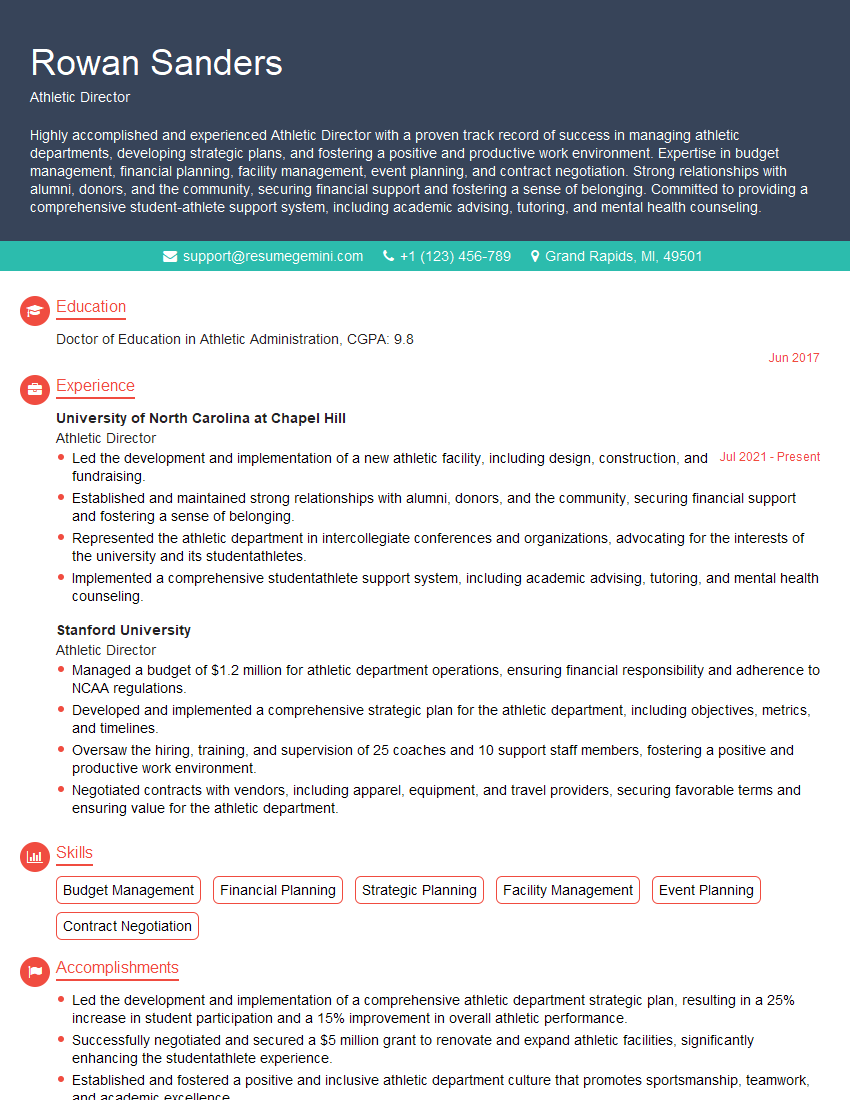
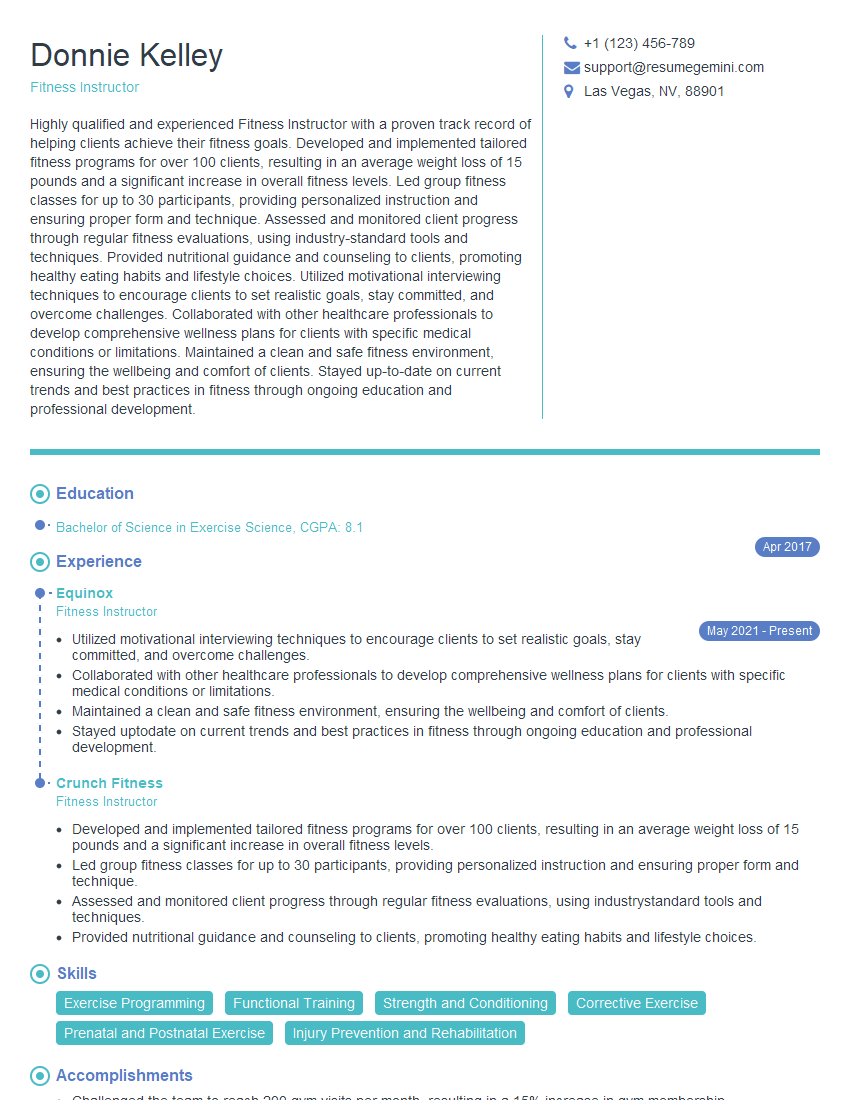
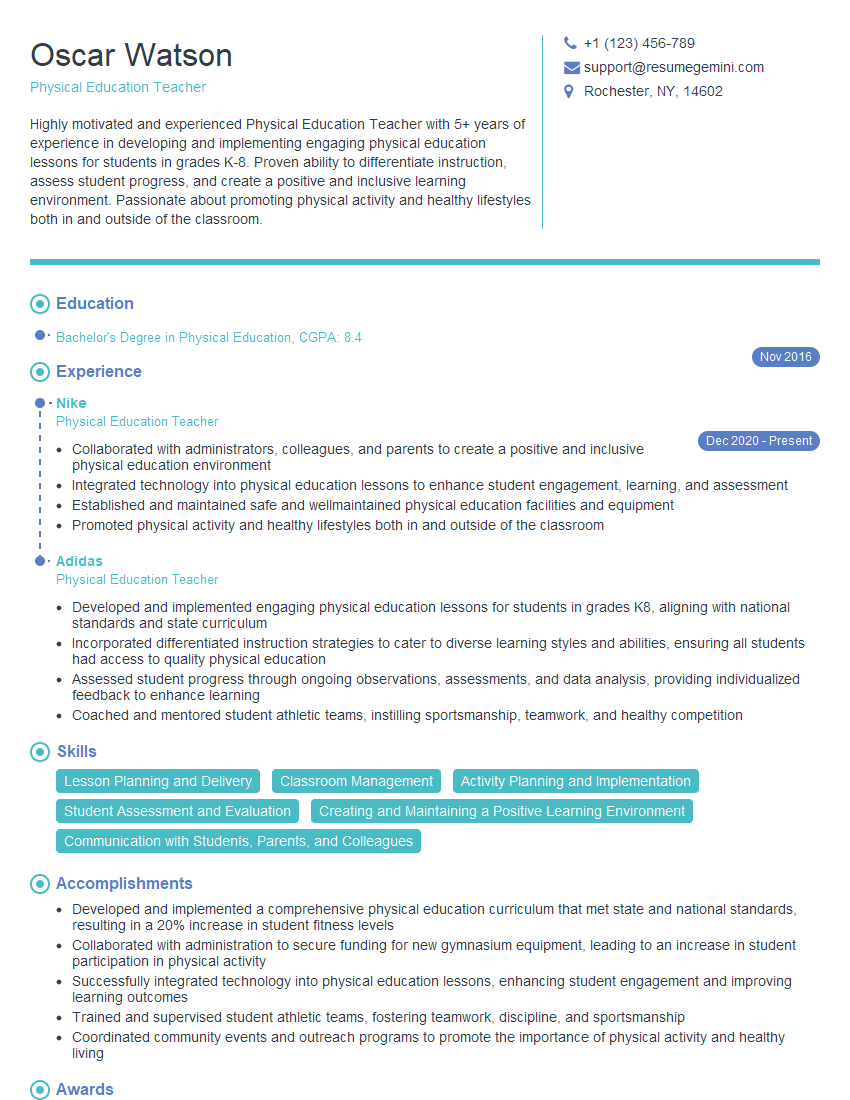
Mastering dribbling and ball control is paramount for success in many athletic and coaching roles. Proficiency in these skills demonstrates dedication, skill, and strategic thinking – highly valued attributes in any competitive environment. To highlight your expertise and secure your dream position, crafting a strong, ATS-friendly resume is crucial. ResumeGemini can help you build a professional and impactful resume that showcases your unique skills and experience. We provide examples of resumes tailored specifically to Dribbling and Ball Control roles to help you get started. Take the next step towards your career goals today!
Explore more articles
Users Rating of Our Blogs
Share Your Experience
We value your feedback! Please rate our content and share your thoughts (optional).
What Readers Say About Our Blog
Very informative content, great job.
good