Preparation is the key to success in any interview. In this post, we’ll explore crucial Customer Service and Order Management interview questions and equip you with strategies to craft impactful answers. Whether you’re a beginner or a pro, these tips will elevate your preparation.
Questions Asked in Customer Service and Order Management Interview
Q 1. Describe your experience handling high-volume customer inquiries.
Handling high-volume customer inquiries requires a structured approach and efficient tools. My experience involves managing hundreds of inquiries daily across various channels – phone, email, chat – in demanding environments. I’ve successfully navigated peak seasons and unexpected surges in demand by utilizing ticketing systems, prioritizing urgent requests, and leveraging knowledge bases to provide quick resolutions.
For example, during a major product launch, we experienced a five-fold increase in customer inquiries. By implementing a tiered support system with dedicated teams for specific issue types (e.g., technical issues, order status, returns) and utilizing automated responses for frequently asked questions, we were able to maintain average response times and customer satisfaction levels.
Furthermore, I’m adept at using CRM systems to track customer interactions, identify trends, and proactively address potential issues. This proactive approach allowed me to anticipate and resolve many issues before they escalated into full-blown complaints.
Q 2. Explain your process for prioritizing customer issues.
Prioritizing customer issues involves a multi-faceted approach that combines urgency, impact, and customer value. I utilize a system that categorizes issues based on several factors:
- Urgency: Issues requiring immediate attention, such as order cancellations during the shipping process or critical technical malfunctions, take precedence.
- Impact: Issues affecting a large number of customers or potentially causing significant financial or reputational damage are prioritized highly.
- Customer Value: High-value customers (VIPs, long-term clients) often receive higher priority, reflecting the importance of maintaining their loyalty.
This prioritization framework is often implemented using a ticketing system with customizable fields to track these factors. A simple color-coding system (e.g., red for urgent, yellow for high impact, green for routine) makes it immediately clear which issues need immediate attention.
Q 3. How do you handle a customer complaint that escalates?
Escalated customer complaints require a calm, empathetic, and systematic approach. My first step is to actively listen to the customer, acknowledging their frustration and validating their concerns. Then, I thoroughly investigate the issue, gathering all necessary information from relevant departments, such as shipping, warehouse, or product development.
Once I understand the root cause, I present the customer with a clear, concise explanation of what happened and outline the steps being taken to resolve the problem. If a full resolution isn’t immediately possible, I set clear expectations about timelines and keep the customer updated regularly. Transparency and proactive communication are critical during escalation. In situations where I cannot personally resolve the issue, I escalate it to a supervisor or relevant manager, ensuring a smooth transition and consistent communication with the customer.
For example, a complaint about a damaged product was escalated to the shipping department to investigate the handling process. After confirming the damage, we expedited a replacement and offered a partial refund, exceeding customer expectations and restoring their trust.
Q 4. What metrics do you use to measure customer satisfaction?
Measuring customer satisfaction involves a combination of quantitative and qualitative metrics. Key quantitative metrics include:
- Customer Satisfaction (CSAT) scores: Surveys measuring customer happiness after an interaction.
- Net Promoter Score (NPS): Gauging customer loyalty and willingness to recommend the company.
- Average Resolution Time (ART): Tracking the speed of issue resolution.
- First Contact Resolution (FCR): Measuring the percentage of issues resolved on the first contact.
Qualitative metrics include:
- Customer feedback from surveys, reviews, and social media:
- Analysis of customer comments and call recordings:
By analyzing these metrics, we identify areas for improvement in customer service processes, products, or communication strategies. For instance, consistently low CSAT scores for a specific product might indicate the need for product improvements or more effective training for support staff.
Q 5. Describe your experience with order tracking and management systems.
I have extensive experience using various order tracking and management systems, including ERP (Enterprise Resource Planning) systems, and dedicated order management software. My experience spans from small-scale inventory management systems to large-scale enterprise platforms. I’m proficient in using these systems to track order status, manage inventory, process returns, and generate reports.
I’m familiar with different functionalities such as real-time order visibility, automated order updates, inventory forecasting, and integration with shipping carriers. For example, I’ve used SAP to track the entire order lifecycle, from order placement to delivery, and generate reports on key performance indicators. This allowed for efficient order fulfillment and proactive issue identification.
Q 6. How do you manage order fulfillment challenges, such as backorders or shipping delays?
Managing order fulfillment challenges like backorders and shipping delays requires proactive communication and efficient problem-solving. For backorders, I promptly inform customers about the expected delay, providing alternative options if available (e.g., partial shipment, substitute product). Transparency is key—customers appreciate knowing the situation and a realistic timeline.
For shipping delays, I investigate the cause (carrier issues, warehouse problems) and proactively update customers with progress reports. I work closely with shipping carriers to expedite delivery and explore alternative shipping methods if necessary. In some cases, offering compensation (e.g., expedited shipping, discount on future orders) demonstrates a commitment to customer satisfaction and mitigates negative experiences.
For instance, when a major snowstorm caused widespread shipping delays, we proactively contacted all affected customers, offering alternative delivery dates and providing tracking updates throughout the process.
Q 7. How do you ensure accuracy in order processing and data entry?
Ensuring accuracy in order processing and data entry is crucial to avoid errors and maintain customer trust. I follow a multi-step process:
- Double-checking data: Verifying all customer details, product information, and shipping addresses before processing each order.
- Using standardized processes: Following established procedures and checklists to minimize human error.
- Utilizing data validation tools: Employing software that automatically checks for data inconsistencies and errors.
- Regular data audits: Conducting periodic checks to identify and correct any data discrepancies.
- Training and continuous improvement: Ensuring all staff are properly trained on data entry procedures and actively seeking feedback for improvement.
For example, implementing automated checks for invalid zip codes significantly reduced the number of address-related errors and improved delivery accuracy.
Q 8. Explain your experience with different CRM systems.
Throughout my career, I’ve gained extensive experience with various CRM (Customer Relationship Management) systems. My proficiency spans from simpler systems like HubSpot to more complex enterprise-level solutions such as Salesforce and Microsoft Dynamics 365. I understand that the optimal CRM selection depends heavily on a company’s size, industry, and specific needs. For example, a small business might thrive with HubSpot’s user-friendly interface and robust marketing features, while a large corporation might require the scalability and customization options offered by Salesforce. In each role, I’ve focused on mastering the core functionalities: contact management, lead tracking, opportunity pipeline management, reporting and analytics, and integration with other business systems like order management platforms.
My experience includes configuring CRM systems to optimize workflows, creating custom reports for performance analysis, and training colleagues on best practices for data entry and utilization. I’m adept at using CRM data to identify trends, anticipate customer needs, and improve customer service strategies. For instance, analyzing customer interaction data in Salesforce helped me identify a common pain point in our return process, leading to the implementation of a streamlined online returns portal that significantly reduced customer wait times and improved satisfaction.
Q 9. Describe your experience with inventory management and control.
Inventory management and control are critical for efficient order fulfillment and customer satisfaction. My experience includes managing inventory across various channels, from physical warehouses to online marketplaces. I am familiar with various inventory management techniques, including FIFO (First-In, First-Out), LIFO (Last-In, First-Out), and weighted-average costing methods. I understand the importance of accurate inventory tracking to prevent stockouts and overstocking.
In my previous role, I implemented a new inventory management system that integrated with our e-commerce platform. This improved our forecasting accuracy and reduced our carrying costs significantly. The system provided real-time visibility into inventory levels, allowing us to proactively manage stock replenishment and avoid costly delays in order fulfillment. I also have experience using barcode scanning and RFID technologies to improve the accuracy and efficiency of inventory tracking. Think of it like a well-organized library – you need a robust system to know what you have, where it is, and how much you need to reorder.
Q 10. How do you identify and resolve order discrepancies?
Order discrepancies, such as incorrect items, quantities, or shipping addresses, can be frustrating for both customers and businesses. My approach to resolving these issues is methodical and customer-centric. First, I thoroughly investigate the discrepancy by reviewing the order details, comparing them to warehouse records, and examining any shipping documentation. This often involves coordinating with the warehouse team and shipping carriers.
Once the root cause is identified (e.g., data entry error, picking error, shipping mishap), I work to correct the issue efficiently. This may involve issuing a replacement order, refunding the incorrect items, or reshipping the order to the correct address. Throughout this process, I maintain open communication with the customer, providing regular updates and ensuring they feel heard and valued. For instance, if a customer received the wrong item, I’d apologize for the inconvenience, explain the steps being taken to resolve the issue, and offer a small token of appreciation for their patience.
Q 11. How do you handle returns and exchanges?
Handling returns and exchanges requires a balance of efficient processes and empathetic customer service. My experience includes managing returns across various channels, including online portals, phone calls, and in-person returns. I understand the importance of having clear return policies that are easily accessible to customers.
My process typically involves verifying the customer’s eligibility for a return or exchange based on our return policy. I then guide the customer through the return process, providing pre-paid shipping labels if applicable. Once the returned item is received and inspected, I process the refund or exchange as quickly as possible. I always strive to make the return process as seamless and stress-free as possible for the customer, understanding that returns can be a source of frustration. For example, if a customer is returning a damaged item, I’d go the extra mile to ensure the replacement arrives promptly and in perfect condition.
Q 12. What is your experience with order processing software?
I’ve worked with several order processing software systems, including those integrated within larger ERP (Enterprise Resource Planning) systems and standalone order management solutions. My experience encompasses various functionalities, such as order entry, inventory tracking, order fulfillment, shipping integration, and reporting. I’m comfortable with both manual and automated order processing workflows and understand the benefits of integrating order management systems with other business tools like CRM and warehouse management systems.
For instance, in a previous role, I helped implement a new order processing system that automated many manual tasks, reducing processing times and minimizing errors. This system also provided valuable data on order fulfillment metrics, which helped us identify areas for improvement and optimize our overall order fulfillment process. I’m proficient in using order processing software to generate reports on various metrics, such as order volume, order fulfillment time, and return rates, which are essential for tracking performance and identifying areas for optimization.
Q 13. How do you communicate effectively with customers via email, phone, and chat?
Effective communication is the cornerstone of excellent customer service. My approach involves adapting my communication style to the chosen channel and the customer’s preferences. When communicating via email, I ensure my messages are clear, concise, and professional, always including a relevant subject line and a clear call to action. For phone calls, I prioritize active listening, empathy, and a friendly tone. I use positive language and strive to resolve the issue on the first call.
Live chat requires a quick and efficient response time. I use concise language and provide immediate assistance while keeping the customer updated on the progress. Regardless of the channel, I always strive to personalize the interaction, using the customer’s name and addressing their concerns directly. I believe in building rapport by showing genuine empathy and understanding. For example, if a customer is frustrated, I acknowledge their feelings and reassure them that I’m working to resolve the problem.
Q 14. Describe a time you had to resolve a complex customer issue.
One time, a customer reported receiving a damaged product, but our records indicated it had been shipped in perfect condition. The customer was understandably upset, and the conflicting information made it a complex issue to resolve. My initial step was to calmly listen to the customer’s concerns, assuring them that I would investigate thoroughly. I then carefully reviewed the shipping documentation, contacted the shipping carrier to verify the condition of the package during transit, and investigated our internal handling procedures.
After a detailed investigation, it turned out that while the product was initially packaged correctly, it had been damaged during transit due to mishandling by the carrier. I worked directly with the shipping carrier to file a claim and secure a replacement product for the customer. While it took longer than a typical resolution, I proactively kept the customer updated at every step, apologized for the inconvenience, and offered a partial refund as a gesture of goodwill. The experience highlighted the importance of thorough investigation, collaboration with other teams, and transparent communication in resolving complex customer issues.
Q 15. How do you proactively identify and address potential customer service problems?
Proactively identifying and addressing potential customer service problems involves a multi-faceted approach focusing on both preventative measures and reactive monitoring. It’s about being a step ahead, not just reacting to complaints.
- Data Analysis: Regularly analyzing customer feedback (surveys, reviews, social media mentions) to pinpoint recurring issues or emerging trends. For example, a spike in negative reviews about shipping delays would signal a problem in the logistics department.
- Predictive Modeling: Using historical data to predict potential service disruptions. If we notice a correlation between high order volumes during specific holidays and an increase in customer support tickets, we can proactively allocate more resources for those periods.
- Process Audits: Regularly reviewing internal processes to identify bottlenecks or areas prone to error. This could involve examining order fulfillment workflows or customer communication channels for inefficiencies. A streamlined process minimizes delays and frustration.
- Customer Segmentation: Identifying high-value customers or those with a history of issues and proactively reaching out to offer personalized support or prevent problems before they arise. This shows customer appreciation and reduces potential churn.
- Feedback Loops: Establishing clear channels for customers to provide feedback, ensuring prompt response and resolution. This could be a dedicated feedback email address or an in-app feedback mechanism.
By combining these strategies, we create a proactive environment that anticipates and resolves potential customer service problems before they significantly impact customer satisfaction.
Career Expert Tips:
- Ace those interviews! Prepare effectively by reviewing the Top 50 Most Common Interview Questions on ResumeGemini.
- Navigate your job search with confidence! Explore a wide range of Career Tips on ResumeGemini. Learn about common challenges and recommendations to overcome them.
- Craft the perfect resume! Master the Art of Resume Writing with ResumeGemini’s guide. Showcase your unique qualifications and achievements effectively.
- Don’t miss out on holiday savings! Build your dream resume with ResumeGemini’s ATS optimized templates.
Q 16. What strategies do you use to improve customer service efficiency?
Improving customer service efficiency requires a strategic approach that combines technological solutions, process optimization, and employee empowerment. Think of it like optimizing a well-oiled machine.
- Self-Service Options: Implementing a comprehensive knowledge base (FAQs, tutorials, video guides) allows customers to find solutions independently, freeing up agents to handle complex issues. Imagine a robust help section on a website that drastically reduces call volume.
- Automation: Automating repetitive tasks, such as order confirmations or shipping updates, through email or SMS messaging, reduces agent workload and ensures consistent communication. This also ensures timely delivery of crucial information.
- CRM Software: Utilizing customer relationship management (CRM) systems to centralize customer data, track interactions, and provide agents with a complete view of the customer’s history. This ensures personalized and efficient service. It’s like having all the customer’s information at your fingertips.
- Employee Training: Investing in thorough training programs to equip agents with the knowledge and skills to handle diverse customer inquiries efficiently and effectively. Think of it as sharpening your team’s tools.
- Performance Monitoring: Regularly tracking key metrics such as average handling time, customer satisfaction scores (CSAT), and first contact resolution (FCR) to identify areas for improvement. Data-driven insights guide effective changes.
By implementing these strategies, we aim to reduce costs, increase customer satisfaction, and improve overall operational efficiency.
Q 17. What is your experience with different payment processing methods?
My experience encompasses a wide range of payment processing methods, both online and offline. Understanding the nuances of each is crucial for a smooth customer experience and secure transactions.
- Credit/Debit Cards: Extensive experience processing payments via major credit and debit card networks (Visa, Mastercard, American Express, Discover) using secure payment gateways like Stripe or PayPal. I understand PCI compliance requirements.
- Digital Wallets: Familiar with processing payments through popular digital wallets like Apple Pay, Google Pay, and PayPal, which offer convenient and secure options for customers.
- ACH Transfers: Experience with Automated Clearing House (ACH) transactions for bank-to-bank transfers, often used for recurring billing or large purchases. I understand the associated timelines and security protocols.
- Wire Transfers: Understanding of international and domestic wire transfer processes for high-value transactions. I know the importance of secure handling and proper documentation.
- Buy Now, Pay Later (BNPL): Experience with integrating and managing BNPL services like Affirm or Klarna, providing customers with flexible payment options. I understand the risk management aspects involved.
My understanding extends to reconciling transactions, managing refunds, and troubleshooting payment-related issues. I am always aware of the security and regulatory compliance considerations associated with each method.
Q 18. How do you handle situations with irate or difficult customers?
Handling irate or difficult customers requires a calm, empathetic, and structured approach. It’s about de-escalation and finding a resolution, not winning an argument.
- Active Listening: Let the customer vent their frustrations without interruption. Show empathy and understanding.
- Validate Feelings: Acknowledge their feelings, even if you don’t agree with their perspective. A simple “I understand your frustration” can go a long way.
- Take Ownership: Apologize sincerely, even if the issue isn’t entirely your fault. Taking responsibility shows you care.
- Find a Solution: Offer concrete solutions to resolve the issue, and follow up to confirm satisfaction. This could involve a refund, replacement, or expedited shipping.
- Set Boundaries: While being empathetic, maintain professionalism. Don’t tolerate abusive behavior, but firmly and politely redirect the conversation.
I find that maintaining a calm and professional demeanor, combined with a genuine desire to resolve the situation, is the most effective strategy. Remember, a satisfied customer is often a returning customer. Even a negative interaction can be turned into a positive one with good customer service.
Q 19. How familiar are you with supply chain management principles?
My understanding of supply chain management principles is strong, as it’s crucial for effective order management. It’s about understanding the flow of goods from origin to customer.
- Inventory Management: I understand the importance of accurate inventory tracking to ensure timely order fulfillment and avoid stockouts. This includes understanding forecasting techniques and inventory optimization strategies.
- Procurement: I have knowledge of the processes involved in sourcing materials and managing supplier relationships. This is important for ensuring consistent product availability.
- Logistics and Transportation: I’m familiar with different transportation modes and their associated costs and timelines. Understanding this allows for effective shipment planning and cost optimization.
- Demand Planning: I understand the importance of accurate demand forecasting for efficient inventory management and production planning. This ensures you have the right products at the right time.
- Risk Management: I’m aware of potential disruptions in the supply chain, such as natural disasters or geopolitical events, and how to mitigate their impact on order fulfillment. This involves having contingency plans.
A solid understanding of supply chain management is vital for providing accurate delivery estimates, managing customer expectations, and minimizing disruptions to the order fulfillment process.
Q 20. Describe your experience using order management software such as SAP or Oracle.
I have extensive experience using order management software, including SAP and Oracle. These systems are powerful tools for managing the entire order lifecycle.
- SAP: I’m proficient in using SAP modules such as SD (Sales and Distribution) and MM (Materials Management) for order processing, inventory management, and shipment tracking. I understand the importance of data accuracy and configuration.
- Oracle: I have experience with Oracle’s order management system, including order entry, fulfillment, and customer service functions. I understand how to utilize reports and analytics to improve efficiency.
- Data Entry and Maintenance: I am proficient at accurately entering and maintaining order data, ensuring consistency and accuracy across systems. Data integrity is key.
- Reporting and Analysis: I can generate reports on key metrics such as order fulfillment rates, average order value, and customer order history to identify trends and areas for improvement.
- Integration with other systems: I have experience integrating order management systems with other business systems, such as ERP (Enterprise Resource Planning) and CRM systems, to ensure seamless data flow. This optimizes overall operations.
My experience with these systems extends beyond basic usage; I can troubleshoot issues, optimize configurations, and leverage the systems’ advanced functionalities to enhance operational efficiency and customer service.
Q 21. What is your experience with data analysis and reporting related to customer service and order fulfillment?
Data analysis and reporting are critical for improving customer service and order fulfillment. It’s all about understanding the ‘why’ behind the numbers.
- Metrics Tracking: I’m proficient in tracking key metrics such as customer satisfaction scores (CSAT), Net Promoter Score (NPS), average handling time (AHT), order fulfillment time, and return rates.
- Data Visualization: I can create dashboards and visualizations using tools like Tableau or Power BI to effectively communicate insights from data. Visualizations are key for understanding trends.
- Root Cause Analysis: I can analyze data to identify the root causes of customer service issues or order fulfillment delays. This helps in implementing targeted improvements.
- Predictive Analytics: I can leverage historical data to predict future trends and anticipate potential problems. This allows for proactive mitigation strategies.
- Reporting and Communication: I can effectively communicate data-driven insights to stakeholders, using clear and concise reports and presentations. Data storytelling is crucial.
By using data-driven insights, we can identify areas for improvement, optimize processes, and ultimately deliver a superior customer experience. My experience allows me to translate raw data into actionable steps.
Q 22. How do you contribute to a positive team environment in a customer service setting?
Contributing to a positive team environment in customer service involves fostering collaboration, open communication, and mutual respect. It’s about creating a supportive atmosphere where everyone feels valued and empowered to do their best work.
- Active Listening and Empathy: I actively listen to my colleagues’ concerns and perspectives, showing empathy and understanding. This helps build trust and strengthens relationships.
- Proactive Collaboration: I proactively offer assistance to colleagues when needed, sharing knowledge and expertise to help solve problems collectively. For example, if a colleague is struggling with a particularly difficult customer, I’ll offer to assist or share a successful resolution strategy from a similar situation.
- Positive Communication: I maintain positive and respectful communication, even during stressful situations. I focus on solutions rather than blame, and I’m always willing to offer constructive feedback. This could involve suggesting improvements to our processes or offering peer-to-peer training.
- Team Building: I participate in team-building activities and social events to foster camaraderie and strengthen team bonds. These activities encourage informal interactions and improve morale.
Ultimately, a positive team environment directly translates to better customer service; when we support each other, we are better equipped to handle customer needs effectively and efficiently.
Q 23. How do you adapt to changes in customer service procedures or technologies?
Adapting to changes in customer service procedures or technologies requires flexibility, a proactive learning attitude, and a willingness to embrace new challenges. My approach involves a structured process:
- Active Participation in Training: I actively participate in all training sessions related to new procedures or technologies. I ask clarifying questions and take detailed notes to ensure complete understanding.
- Self-directed Learning: I supplement formal training with self-directed learning, utilizing online resources, documentation, and tutorials to deepen my understanding. For example, if a new CRM system is implemented, I’d spend time exploring its features and functionalities outside of scheduled training.
- Seeking Feedback and Mentorship: I seek feedback from supervisors and experienced colleagues to identify areas for improvement and leverage their expertise. I actively solicit their guidance and support during the transition period.
- Practical Application: I actively apply my learnings in real-world scenarios, focusing on incorporating new procedures and technologies into my daily workflow. I embrace opportunities to use the new systems and procedures to improve my efficiency and performance.
By consistently seeking knowledge and practicing new skills, I ensure a seamless transition to new procedures and technologies, maintaining a high level of customer service.
Q 24. Explain your process for documenting customer interactions and resolving issues.
My process for documenting customer interactions and resolving issues is meticulous and ensures thorough record-keeping and efficient issue resolution. I utilize a combination of methods:
- Detailed Notes within CRM: I meticulously document all customer interactions within our CRM system, including timestamps, the nature of the issue, steps taken towards resolution, and the final outcome. This includes relevant customer information, product details, and any specific requests.
- Standard Templates: I utilize standardized templates for common issue types to ensure consistency and completeness in documentation. This helps maintain uniformity in recording crucial information across all interactions.
- Clear and Concise Language: I utilize clear and concise language in my documentation, avoiding jargon and ambiguity. This ensures that anyone reviewing the notes can easily understand the context of the interaction and its resolution.
- Follow-up and Updates: I consistently update notes throughout the resolution process, providing a clear timeline of actions taken and their outcomes. This includes documenting any follow-up actions required.
- Escalation Procedures: In cases requiring escalation, I maintain detailed notes outlining the escalation process, including individuals contacted and the outcome of each communication. This is crucial for auditing and quality control.
This thorough documentation ensures accountability, allows for efficient issue tracking, facilitates effective knowledge sharing among team members, and improves overall customer service quality.
Q 25. How do you balance the needs of multiple customers with competing priorities?
Balancing the needs of multiple customers with competing priorities requires effective prioritization and time management skills. I employ a multi-pronged approach:
- Prioritization Matrix: I use a prioritization matrix (such as urgency/importance) to categorize customer needs. This helps me focus on the most critical issues first, ensuring timely resolution for those who need it most.
- Time Blocking: I allocate specific time blocks for addressing different customer needs. This prevents tasks from overlapping and ensures dedicated attention to each customer.
- Communication and Setting Expectations: I communicate with customers proactively, setting realistic expectations regarding response times. This avoids customer frustration stemming from long wait times.
- Efficient Workflow: I streamline my workflow by utilizing tools and technologies that help automate tasks and improve efficiency. This creates more time to address multiple customer needs effectively.
- Seeking Assistance When Needed: If I find myself overwhelmed, I don’t hesitate to ask for assistance from my colleagues. This ensures customers continue receiving timely and effective support.
Balancing competing priorities effectively requires a combination of organizational skills, communication, and teamwork. It is all about ensuring fair and efficient service to all customers.
Q 26. Describe your experience with providing customer training or support.
I have extensive experience providing both customer training and support. In a previous role, I developed and delivered training materials for new customer service representatives on our CRM system, order management processes, and product knowledge. This involved creating comprehensive training manuals, conducting interactive workshops, and providing ongoing mentorship. I also regularly provide on-the-job support to my colleagues, guiding them through complex issues and offering best-practice advice.
- Creating Training Materials: I create engaging and informative training materials tailored to the needs of the audience, using various methods such as presentations, videos, and interactive exercises.
- Mentoring and Coaching: I provide ongoing support and mentorship, guiding new team members and offering constructive feedback to improve performance.
- Troubleshooting and Support: I effectively troubleshoot technical issues and provide clear, concise solutions to customer queries.
- Knowledge Sharing: I consistently share my expertise and best practices with my colleagues through training sessions, informal discussions, and documentation.
My approach is to make training accessible, practical, and engaging, focusing on building confidence and competence among team members. This ultimately improves overall customer service quality and team performance.
Q 27. How do you maintain a high level of accuracy while working under pressure?
Maintaining accuracy under pressure involves a combination of organizational skills, attention to detail, and efficient workflow practices.
- Double-Checking: I consistently double-check my work, especially under pressure, to minimize errors. This includes verifying data accuracy, reviewing calculations, and proofreading communications.
- Prioritization and Time Management: I prioritize tasks effectively, focusing on the most critical and time-sensitive items first. This prevents unnecessary stress and allows for methodical attention to each task.
- Organized Workspace: I maintain an organized workspace, ensuring all necessary information is readily accessible. This prevents wasted time searching for documents or information.
- Breaks and Mindfulness: I take short breaks to rest and refocus, helping maintain concentration and accuracy. This prevents burnout and promotes sustained performance.
- Utilize Technology: Leveraging technology such as automation and workflow tools can streamline processes and reduce the likelihood of manual errors.
By employing these strategies, I can consistently maintain a high level of accuracy even when working under significant time constraints.
Q 28. What are your salary expectations for this role?
My salary expectations are commensurate with my experience and skills, and align with the industry standard for this role. Based on my research and understanding of the market rate for a similar position with my qualifications, I am targeting a salary range of [Insert Salary Range Here]. However, I am open to discussing this further and am confident we can reach a mutually agreeable figure.
Key Topics to Learn for Customer Service and Order Management Interview
- Understanding Customer Needs: Active listening techniques, empathy, and identifying underlying customer issues beyond the initial complaint.
- Effective Communication: Clear and concise verbal and written communication, adapting your style to different customer personalities and situations. Practice explaining complex information simply.
- Order Processing and Fulfillment: Knowledge of the entire order lifecycle, from order placement to delivery, including handling returns and exchanges. Be prepared to discuss different order management systems.
- Problem-Solving and Troubleshooting: Demonstrate your ability to resolve customer issues efficiently and effectively, escalating complex problems when necessary. Prepare examples of successful problem resolution.
- Inventory Management (if applicable): Understanding of inventory tracking, stock levels, and managing discrepancies. This is particularly relevant for roles with a stronger operational focus.
- CRM Software and Technology: Familiarity with common CRM platforms and order management systems. Highlight any experience you have using relevant software.
- Compliance and Regulations: Understanding of relevant industry regulations and company policies regarding customer data privacy, returns, and refunds.
- Teamwork and Collaboration: Explain how you collaborate with colleagues to resolve customer issues or improve processes. Showcase your ability to work effectively within a team.
- Metrics and KPIs: Understanding of key performance indicators (KPIs) related to customer service and order management, such as customer satisfaction scores, order fulfillment rates, and resolution times.
Next Steps
Mastering Customer Service and Order Management skills opens doors to exciting career opportunities with excellent growth potential. These skills are highly sought after across various industries, offering both stability and advancement possibilities. To maximize your chances of landing your dream job, focus on creating a strong, ATS-friendly resume that effectively showcases your abilities and experience. ResumeGemini is a trusted resource to help you build a professional and impactful resume that highlights your key qualifications. We offer examples of resumes tailored specifically to Customer Service and Order Management roles to guide you in creating your own compelling application.
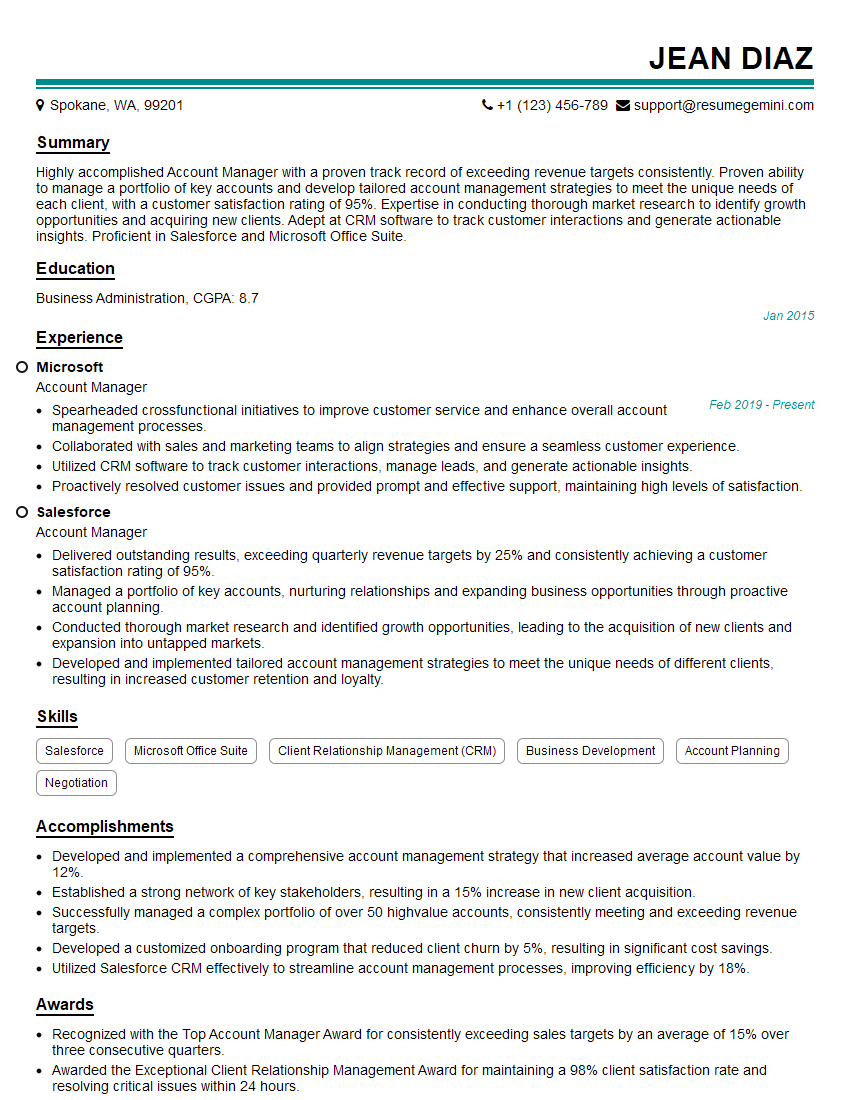
Account Manager Resume Sample

Customer Service Manager Resume Sample
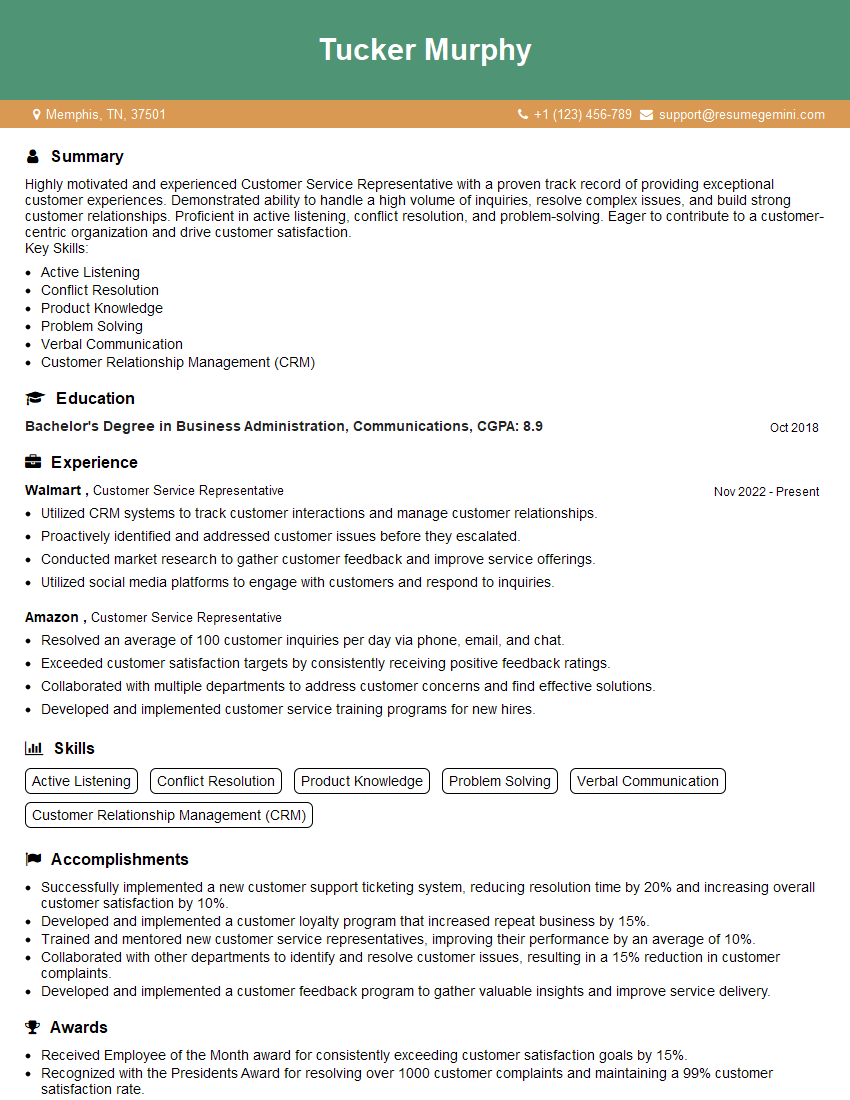
Customer Service Representative Resume Sample
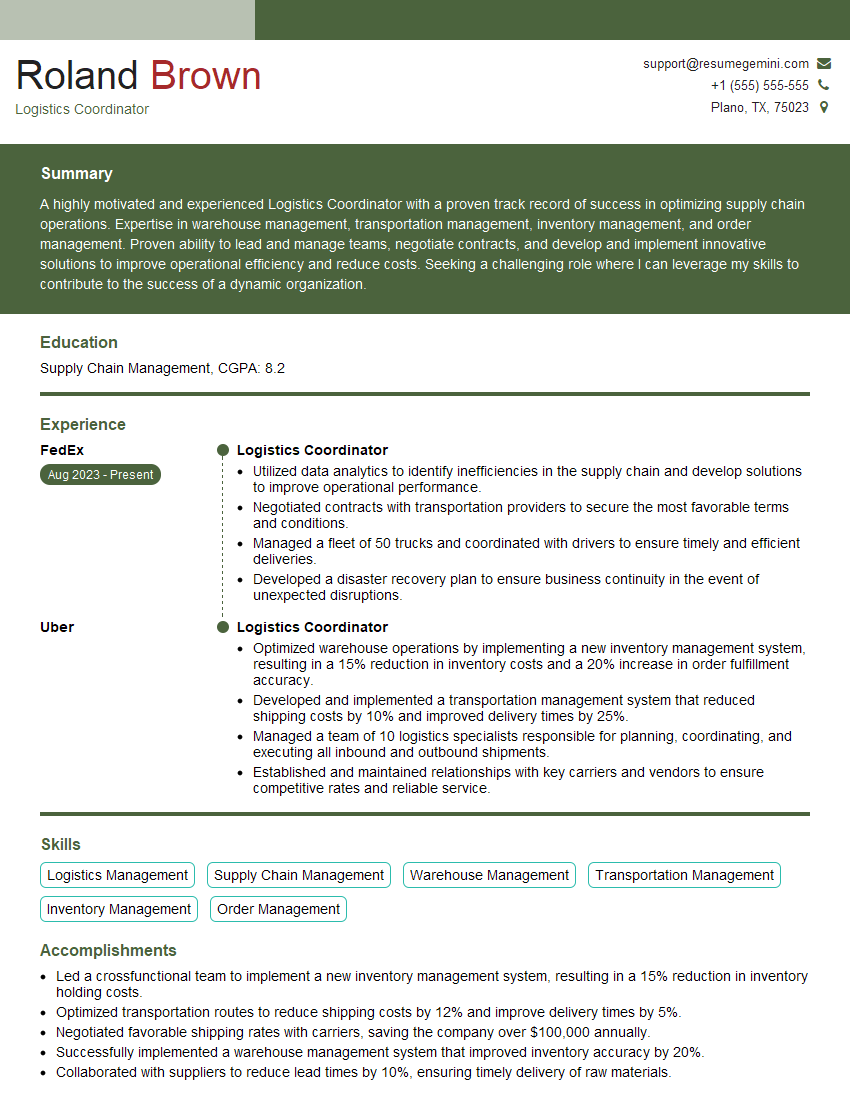
Logistics Coordinator Resume Sample
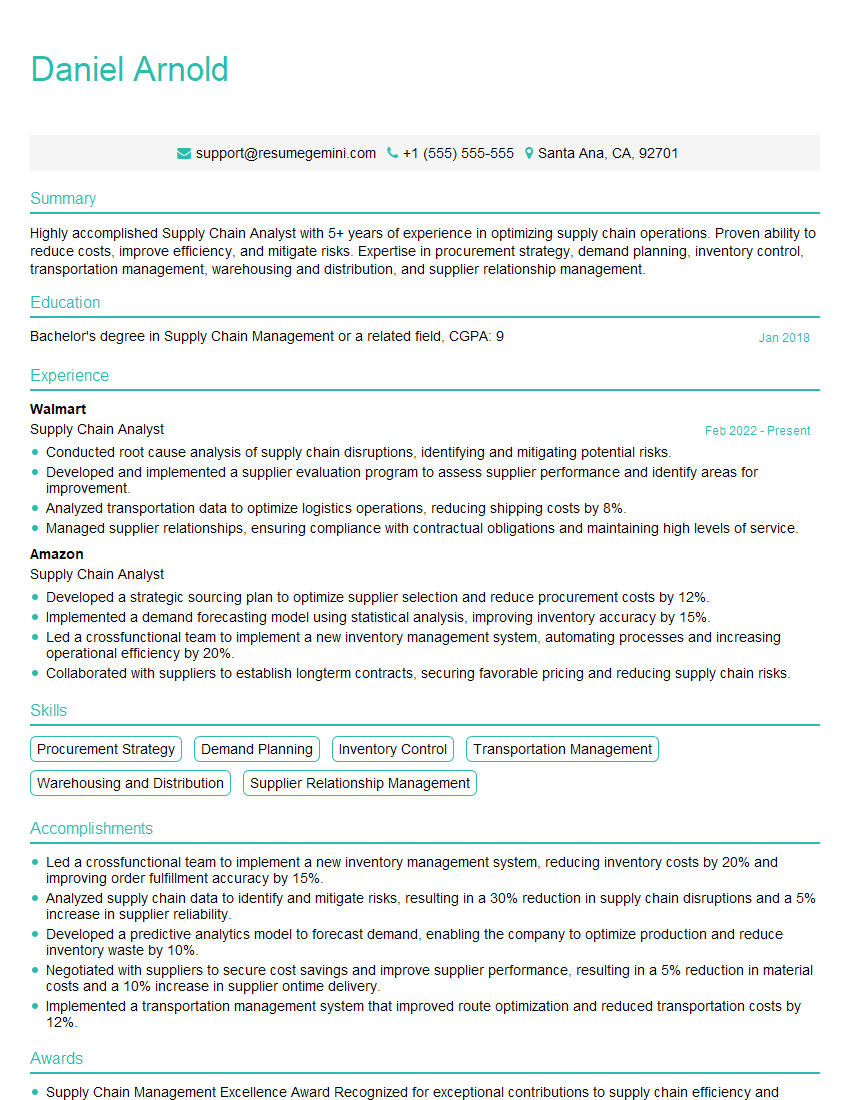
Supply Chain Analyst Resume Sample
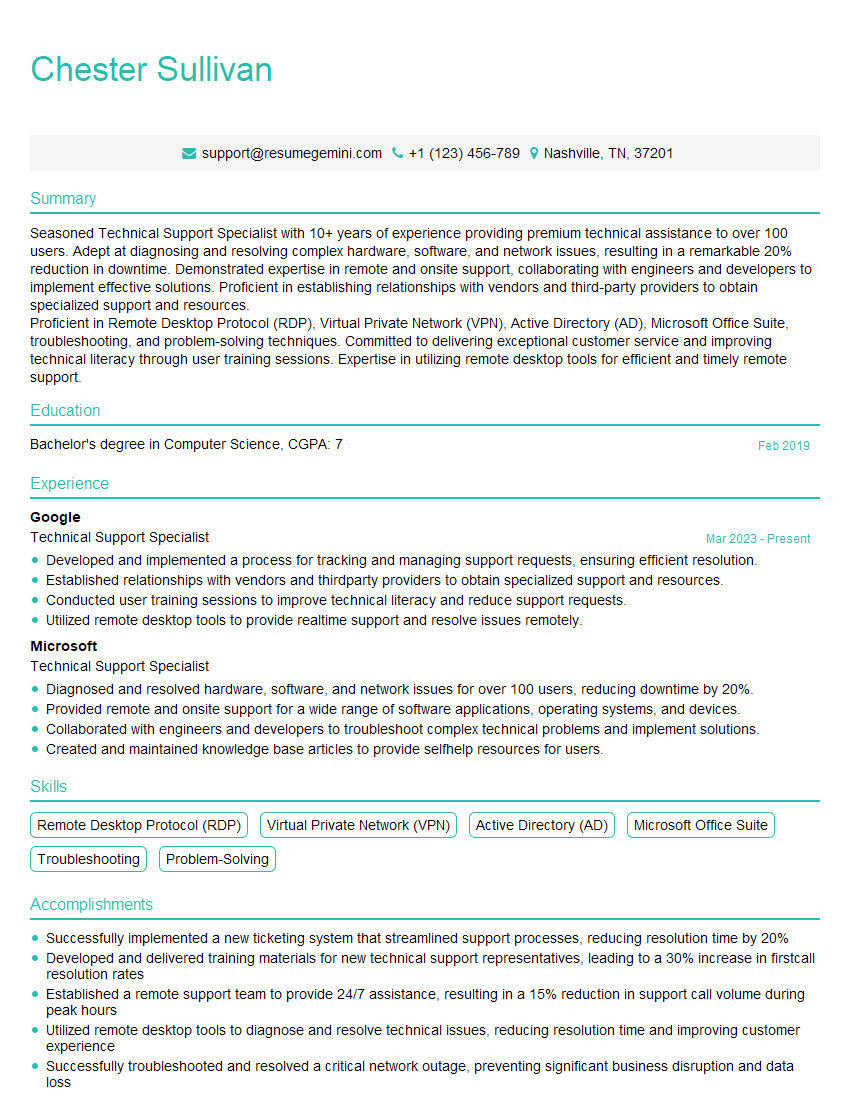
Technical Support Specialist Resume Sample

Customer Support Analyst Resume Sample
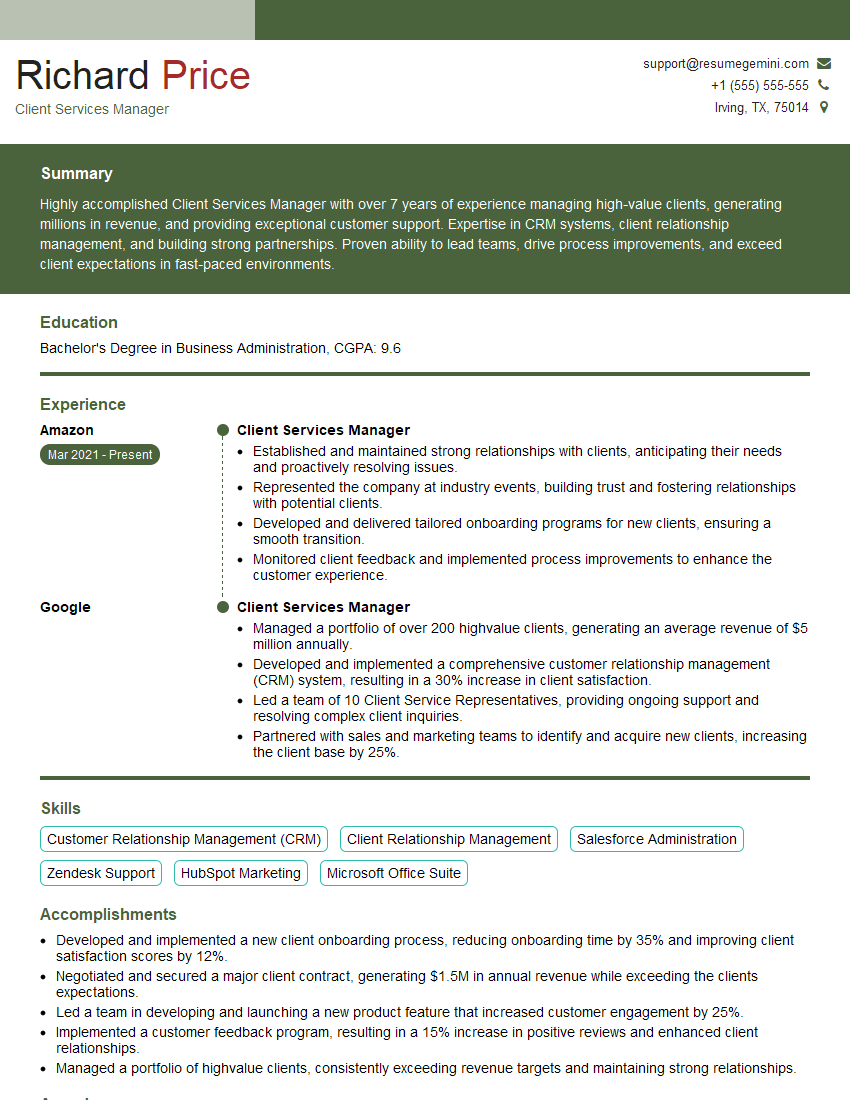
Client Services Manager Resume Sample

Call Center Agent Resume Sample
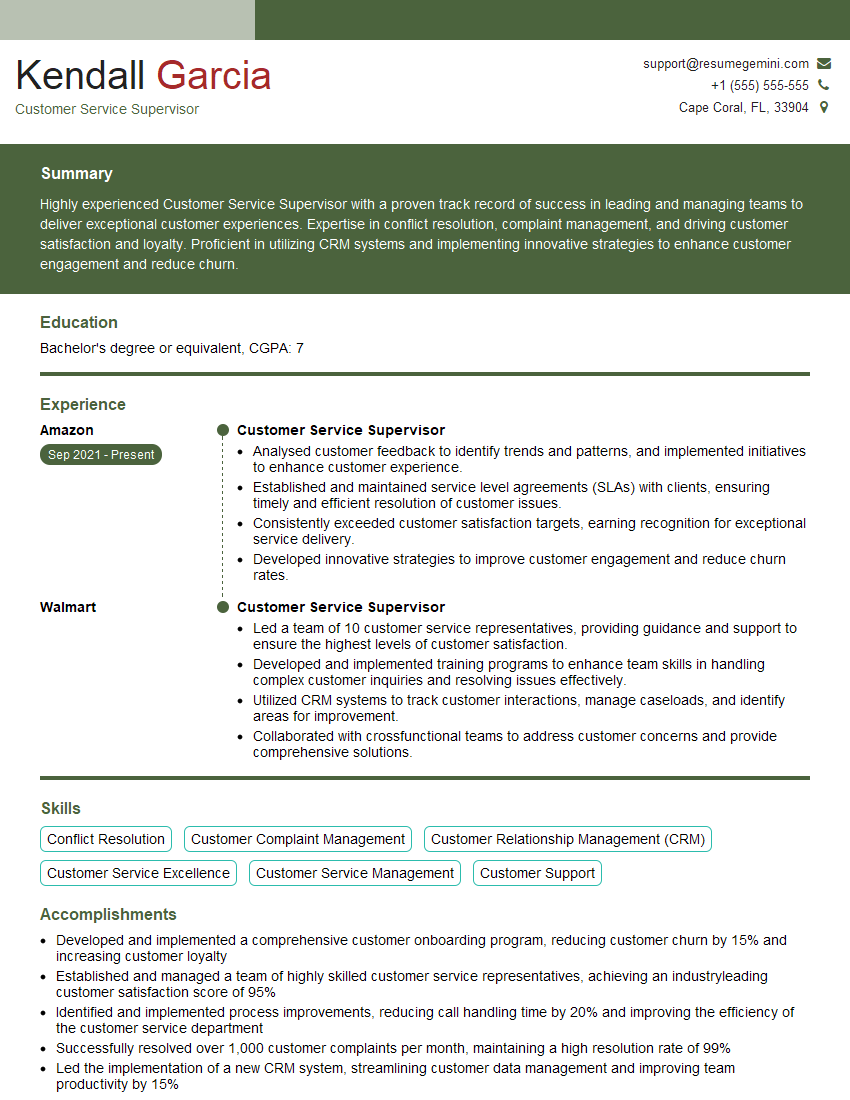
Customer Service Supervisor Resume Sample
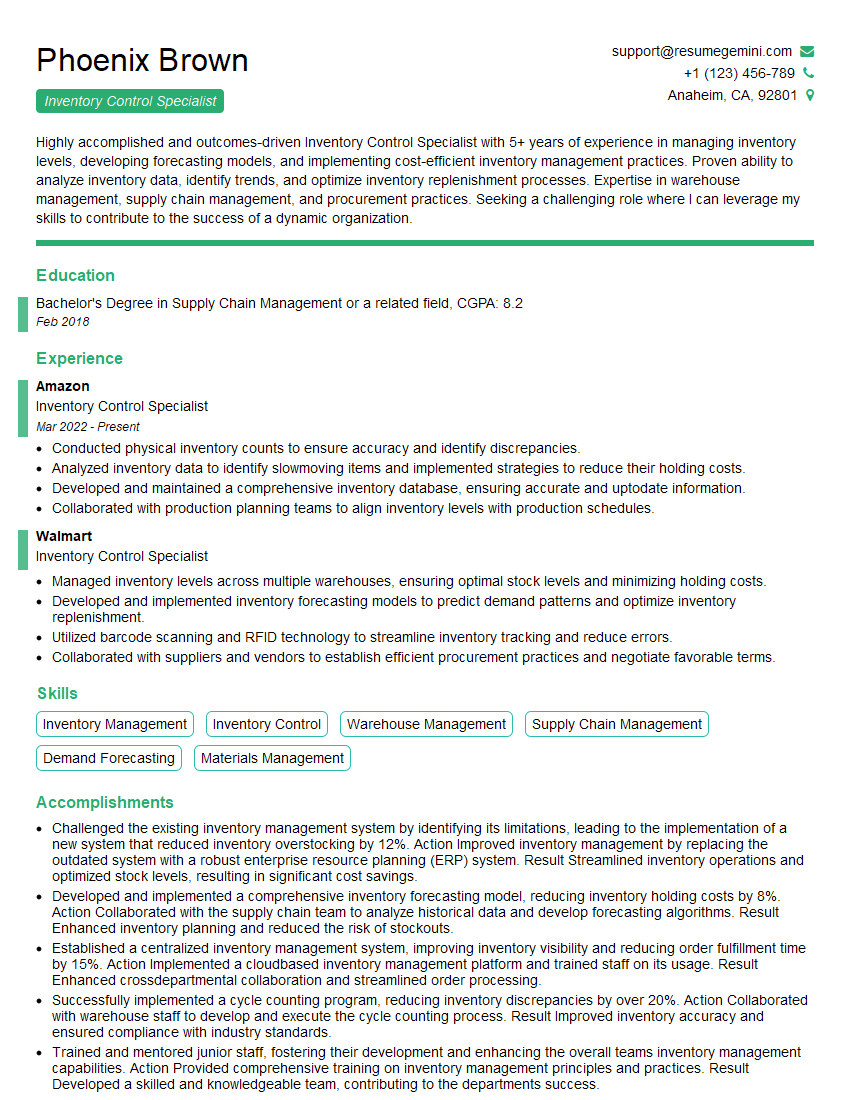
Inventory Control Specialist Resume Sample
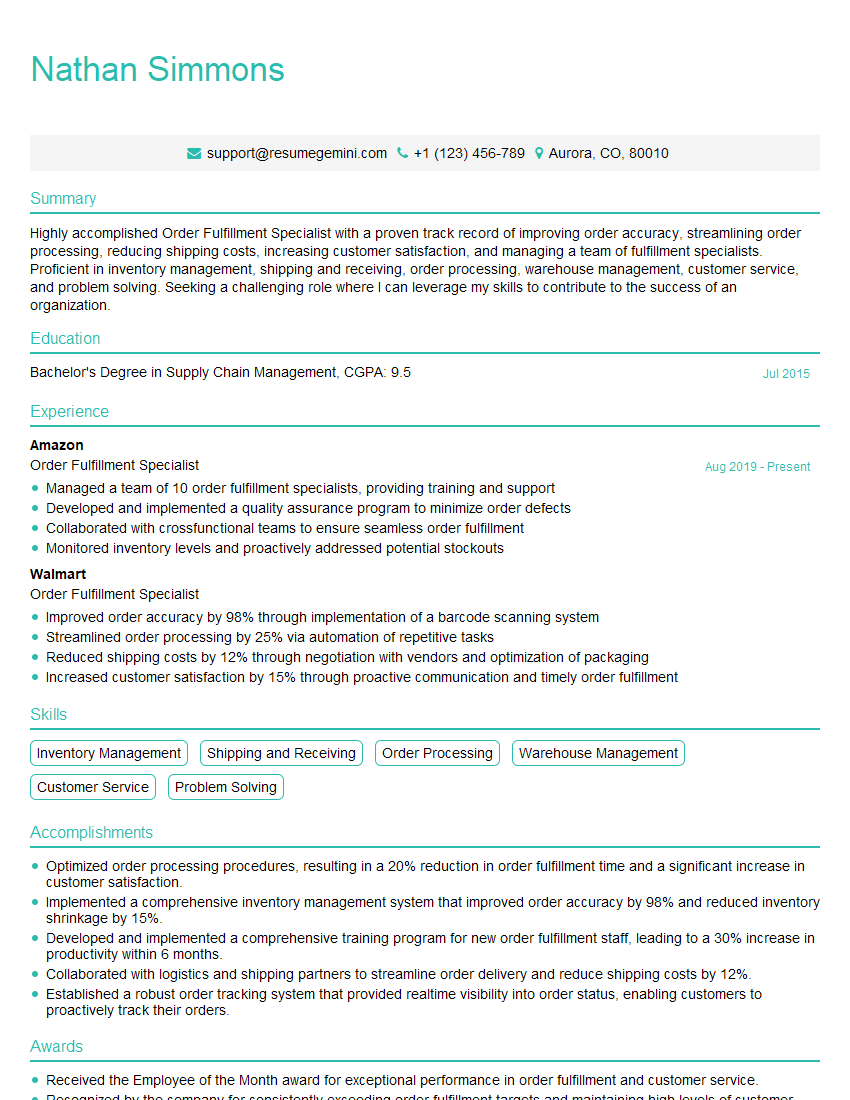
Order Fulfillment Specialist Resume Sample
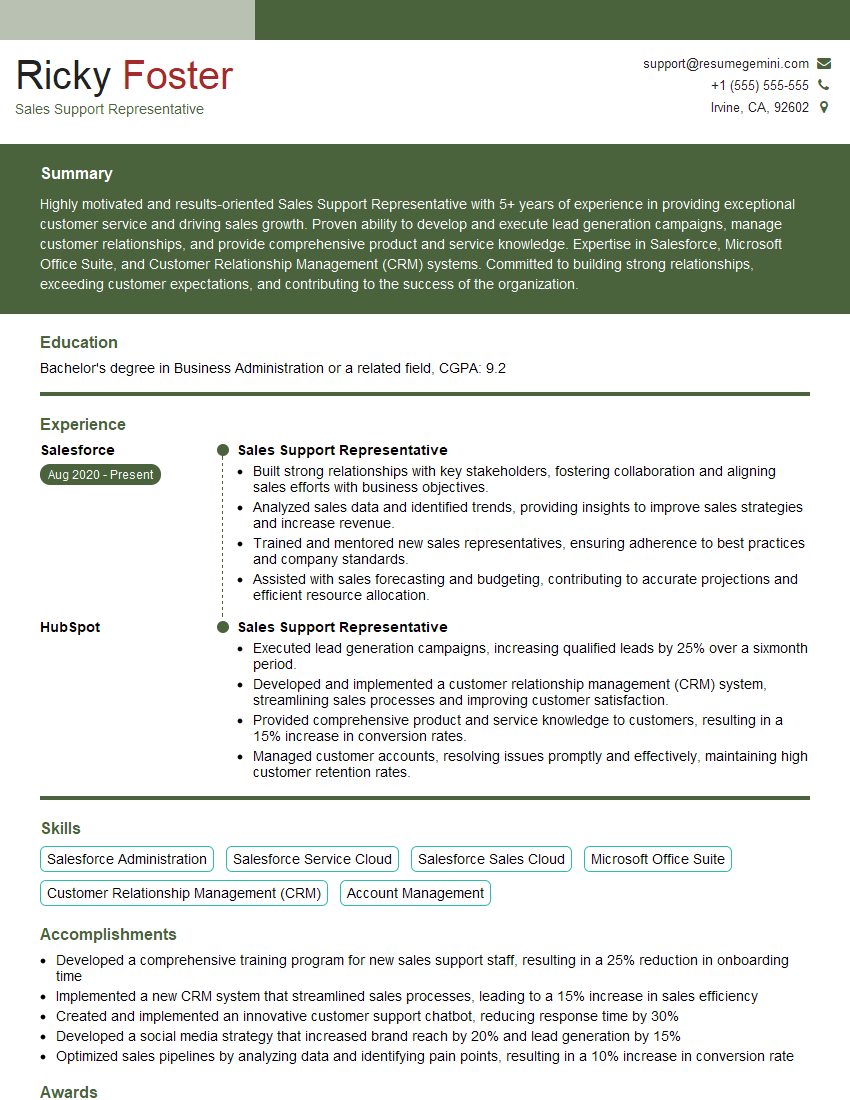
Sales Support Representative Resume Sample
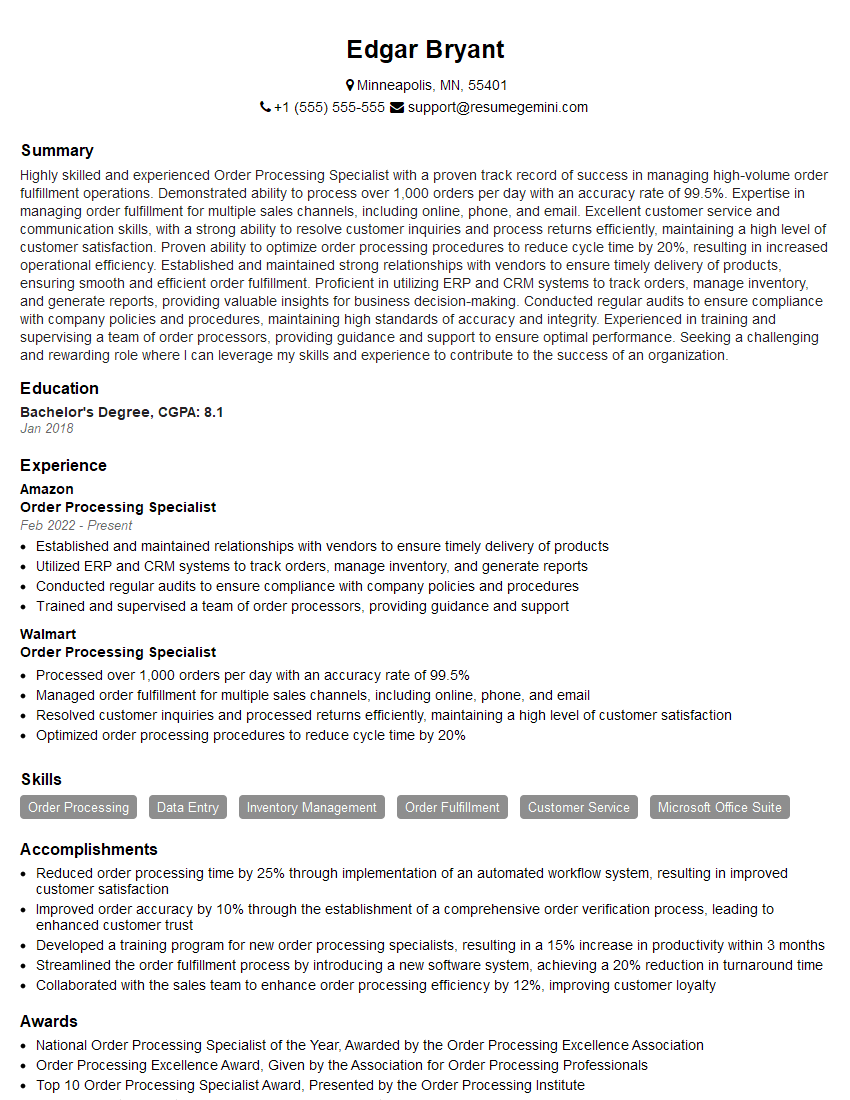
Order Processing Specialist Resume Sample
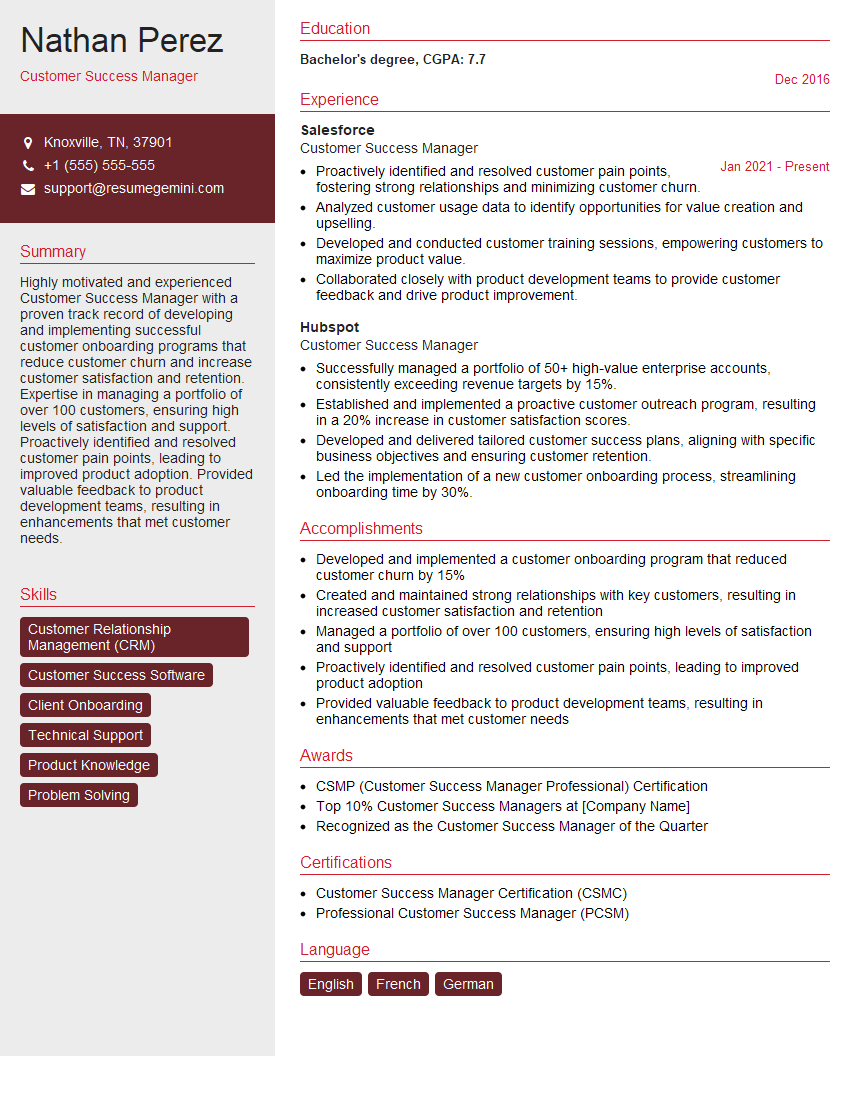
Customer Success Manager Resume Sample
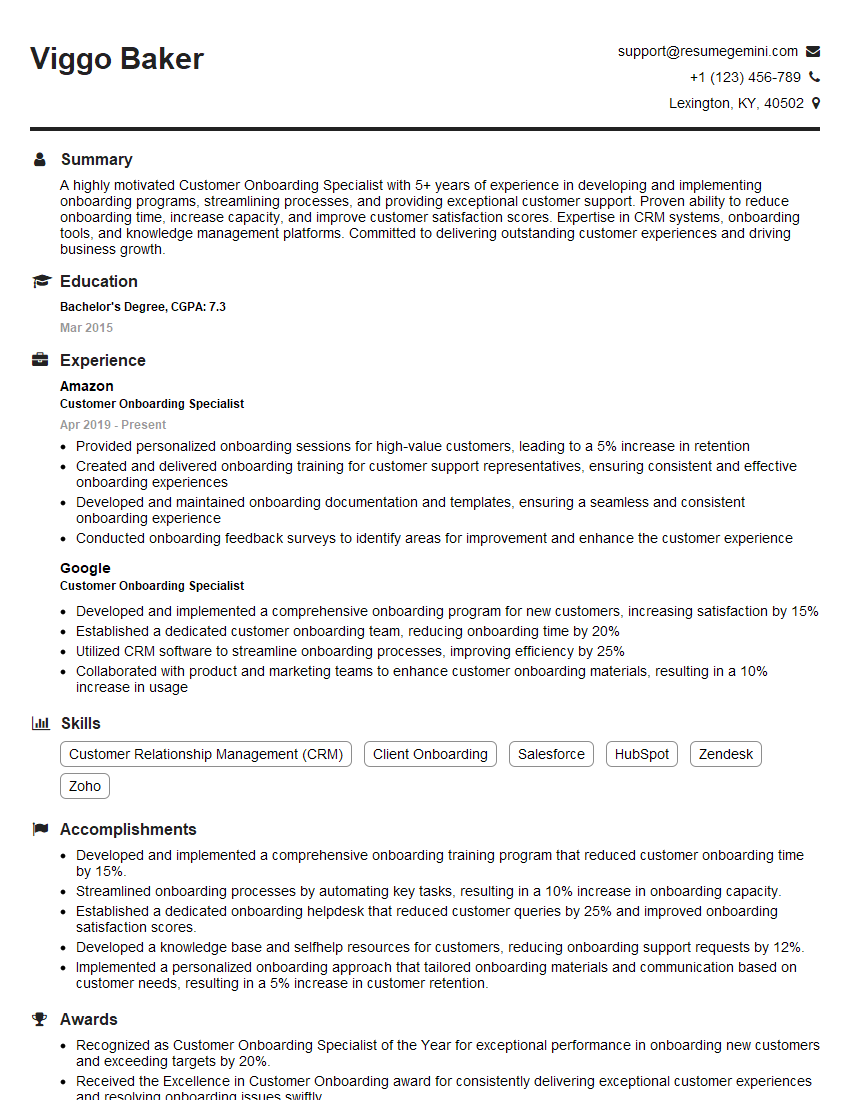
Customer Onboarding Specialist Resume Sample
- Account Manager
- Customer Service Manager
- Customer Service Representative
- Logistics Coordinator
- Supply Chain Analyst
- Technical Support Specialist
- Customer Support Analyst
- Client Services Manager
- Call Center Agent
- Customer Service Supervisor
- Inventory Control Specialist
- Order Fulfillment Specialist
- Sales Support Representative
- Order Processing Specialist
- Customer Success Manager
- Customer Onboarding Specialist
Explore more articles
Users Rating of Our Blogs
Share Your Experience
We value your feedback! Please rate our content and share your thoughts (optional).
What Readers Say About Our Blog
Very informative content, great job.
good