Interviews are opportunities to demonstrate your expertise, and this guide is here to help you shine. Explore the essential Ballet and Modern Dance interview questions that employers frequently ask, paired with strategies for crafting responses that set you apart from the competition.
Questions Asked in Ballet and Modern Dance Interview
Q 1. Describe the differences between classical ballet technique and contemporary ballet technique.
Classical ballet and contemporary ballet, while sharing a common ancestor, differ significantly in their technique and aesthetic. Classical ballet, rooted in the codified vocabulary of the French and Russian schools, emphasizes precise, technically demanding movements executed with impeccable form. Think perfectly pointed toes, unwavering turnout, and the graceful execution of complex steps like fouetté turns and arabesques. The focus is on achieving a highly stylized, almost ethereal quality.
Contemporary ballet, on the other hand, draws upon the classical vocabulary but expands upon it, often incorporating elements from modern dance and other movement styles. It may feature less strict adherence to traditional lines and positions, prioritizing expressive movement and emotional depth over rigid technical perfection. The floor work might be more integrated, and the vocabulary itself will often be more fluid and less dictated by the classic ‘five positions’. For example, a contemporary piece might incorporate floor work, contact improvisation, or even elements of martial arts, while still maintaining a certain elegance associated with ballet.
In essence, classical ballet prioritizes precision and technical mastery, while contemporary ballet prioritizes expression and artistic exploration, using the classical foundation as a springboard for innovative choreography.
Q 2. Explain the importance of proper alignment in ballet.
Proper alignment in ballet is paramount for both artistic expression and injury prevention. It’s about the precise positioning of the body parts relative to each other, creating a stable and efficient base for movement. This includes having a balanced posture, a lifted chest, and engaging core muscles. Imagine a stack of blocks – each block representing a body part (head, shoulders, hips, etc.) – if one block is out of alignment, the entire structure becomes unstable.
Good alignment prevents strain on joints, allowing for fluidity and control in movement. It enhances the dancer’s ability to achieve high extensions and turns, creating a visually striking and powerful performance. Without proper alignment, dancers are prone to injuries such as knee problems, back pain, and ankle sprains. It’s crucial that dancers develop a strong kinesthetic awareness to ensure they are consistently maintaining proper alignment, even during challenging movements. A teacher’s guidance and correcting feedback are essential in developing this awareness.
Q 3. What are the key elements of a successful modern dance improvisation?
A successful modern dance improvisation hinges on several key elements: physicality, musicality, emotional honesty, and dynamic variation.
- Physicality: This encompasses the dancer’s use of space, weight, and energy. Are they moving with fluidity and grace, or sharp, angular movements? How are they using their body weight – are they grounded, or are they floating through the space?
- Musicality: Responding effectively to the musical phrasing, rhythm, and dynamics. The movement shouldn’t just accompany the music; it should embody it.
- Emotional Honesty: Modern dance often prioritizes authenticity and raw emotion. The dancer should allow their feelings to manifest in their movement, creating a genuine connection with the audience.
- Dynamic Variation: The improvisation should showcase a range of movement qualities – fast and slow, strong and delicate, sharp and fluid. This keeps the piece engaging and prevents it from becoming monotonous.
Think of a successful improvisation as a conversation between the dancer and the music, guided by the dancer’s physicality, emotions, and creative impulse. Improvisation allows for experimentation and spontaneity; it’s a process of discovery, both for the dancer and the audience.
Q 4. Discuss the role of musicality in both ballet and modern dance.
Musicality is fundamental to both ballet and modern dance, although the expression differs. In ballet, musicality often involves precise timing and phrasing, mirroring the structure and nuances of the music. The dancer executes the choreography in accordance with the music’s rhythm, accentuating beats and creating a visual reflection of the musical phrases. Think of the graceful pliés and elegant port de bras that precisely follow the musical flow in a classical pas de deux.
In modern dance, musicality can be more interpretative. The dancer might respond to the mood, emotion, and underlying energy of the music, rather than strictly adhering to its rhythm. They might emphasize certain parts of the music by altering their speed and energy, or use silence and pauses to create contrast. A dancer might use the emotional peaks and valleys of a musical piece to reflect the emotional arc of their movement. Therefore, while both forms require a strong connection to the music, their manifestations differ greatly depending on the style and intention.
Q 5. How do you adapt your teaching style to different learning styles?
Adapting my teaching style to different learning styles is crucial for effective instruction. I use a multi-sensory approach, recognizing that learners process information differently. Some students are visual learners, thriving on demonstrations and visual aids. Others are kinesthetic learners, needing to physically experience the movement to understand it. Still others are auditory learners who benefit from verbal explanations and musical cues.
For visual learners, I demonstrate the steps thoroughly, utilizing mirrors and visual aids. For kinesthetic learners, I incorporate hands-on corrections and partner exercises. Auditory learners benefit from clear verbal instructions, rhythmic counts, and musical accompaniment. I also incorporate different teaching methods into my lessons, offering opportunities for individual practice, group work, and interactive exercises to engage various learning preferences. Regular feedback and individual attention are always a key component of my teaching.
Q 6. Explain the importance of floor work in modern dance.
Floor work in modern dance plays a significant role, offering a way to explore movement possibilities not readily available in upright positions. It allows for a deeper connection to gravity, exploring weight, momentum, and release. Floor work is incredibly important for developing a dancer’s body awareness and control.
Through floor work, dancers can explore intricate rolling movements, intricate patterns on the floor, or weight shifts that wouldn’t be as easily achieved standing up. It allows for a broader range of expression, enabling dancers to communicate both vulnerability and power. The close proximity to the floor often allows for more intimate and grounded movement. Specific techniques like contraction and release, common in modern dance, are often more effectively explored on the floor. Think of floor work as an extension of the body’s vocabulary, adding depth and complexity to the dancer’s artistic expression.
Q 7. Describe your experience working with different age groups in a dance setting.
My experience working with various age groups in dance has been incredibly rewarding and formative. Teaching children requires patience, creativity, and a playful approach. The focus is often on building foundational skills, fostering a love for movement, and developing coordination. Young children respond well to games, storytelling, and imaginative exercises, making learning fun and engaging.
With teenagers, the focus shifts to developing more advanced technical skills and exploring personal expression through movement. During this stage, building confidence and self-esteem is also crucial. Working with adults often involves a focus on physical conditioning, injury prevention, and exploring the nuances of movement styles. I adjust my teaching approach depending on the age group to ensure they are learning effectively, with safety as a primary concern.
Q 8. What are some common injuries in ballet and modern dance, and how can they be prevented?
Ballet and modern dance, while incredibly rewarding, place significant stress on the body, leading to various injuries. Common issues include ankle sprains, knee problems like meniscus tears and patellar tendinitis, stress fractures in the feet and legs, and muscle strains (particularly in the hamstrings, groin, and back). In ballet, repetitive en pointe work significantly increases the risk of bunions, Morton’s neuroma, and stress fractures. Modern dance, with its emphasis on floor work and dynamic movements, can lead to wrist injuries, back pain, and hip impingement.
Prevention strategies are crucial. These include:
- Proper warm-up and cool-down: A thorough warm-up prepares the muscles and joints for the demands of the dance form, while a cool-down helps prevent stiffness and muscle soreness. This might involve dynamic stretching like leg swings and arm circles, followed by static stretches held for 20-30 seconds.
- Strengthening and conditioning: Regular strength training, particularly focusing on core muscles, legs, and feet, builds resilience against injury. Exercises like Pilates and yoga are excellent complements to dance training.
- Proper technique: Correct technique is paramount. A skilled teacher can identify and correct postural issues and movement patterns that increase injury risk. This involves understanding anatomical alignment and biomechanics.
- Adequate rest and recovery: Overtraining is a major contributor to injuries. Allowing the body sufficient time to recover between rehearsals and performances is crucial. This might include rest days and active recovery strategies like light walks or swimming.
- Appropriate footwear: Using well-fitting and supportive shoes designed for the specific dance style is essential. For ballet dancers, pointe shoes should be fitted by a professional and regularly checked for wear and tear.
- Cross-training: Engaging in other low-impact activities like swimming or cycling can improve overall fitness without placing excessive stress on the joints.
Think of it like this: a well-maintained car is less likely to break down. Similarly, a dancer who prioritizes conditioning, proper technique, and rest will significantly reduce their injury risk.
Q 9. How do you create a positive and supportive learning environment for your students?
Creating a positive and supportive learning environment is essential for student growth and well-being. I foster this by creating a space where students feel safe to experiment, make mistakes, and learn from them without judgment. This involves:
- Clear communication and expectations: Setting clear goals and expectations for each class ensures everyone is on the same page. This includes explaining the rationale behind exercises and providing constructive feedback.
- Individualized attention: Recognizing that each student learns at a different pace and has unique strengths and weaknesses, I tailor my instruction to meet individual needs. This means offering modifications and progressions based on their abilities and providing extra support when needed.
- Positive reinforcement and encouragement: Celebrating successes, both big and small, and providing consistent encouragement fosters confidence and motivation. Focusing on effort and improvement rather than solely on perfection is crucial.
- Creating a sense of community: Encouraging collaboration and teamwork among students promotes a supportive learning environment. This might involve group work, partner exercises, or sharing experiences.
- Respectful interactions: Modeling respectful behavior and promoting a culture of respect and inclusivity is crucial. Addressing any bullying or negativity promptly and firmly is non-negotiable.
For example, I might offer a less challenging variation of a complex step to a beginner while encouraging a more advanced student to explore variations on the same step. Creating a nurturing environment makes learning fun and allows students to thrive.
Q 10. Explain your approach to choreographing a new piece.
My approach to choreographing begins with an idea – a theme, a feeling, a story, or even a single movement that sparks my imagination. It’s a process of exploration and experimentation. I often start by improvising, moving my body freely to the music or exploring a specific concept. From this improvisation, I begin to identify motifs and phrases that feel compelling.
Next, I select music that evokes the desired emotion or atmosphere. The music strongly dictates the rhythm, phrasing, and overall character of the piece. I consider the dancers’ strengths and abilities when selecting and developing the choreography. This involves paying attention to dynamics, spatial awareness, and the use of the stage. I will work with the dancers, giving them the space to bring their individual creativity and movement vocabulary to the work. I test different variations to find the most effective way to tell the story or embody the theme. Throughout the process, I constantly refine and revise, focusing on clarity, flow, and artistic impact.
For instance, if I’m creating a piece about loss, I might start with slow, melancholic movements, incorporating imagery related to grief and reflection. Then I might move towards faster, more erratic movements to show the turmoil, and then perhaps back to a calm conclusion.
Q 11. How do you use feedback to improve your teaching or choreography?
Feedback is invaluable for improving both my teaching and choreography. I actively seek feedback from multiple sources, including my students, fellow teachers, choreographers, and even audience members. For teaching, I use student performance and engagement in class as a barometer of effectiveness. Student feedback, whether formal or informal, helps me to identify areas where I can improve my communication, adapt my teaching methods, or adjust the level of difficulty of exercises. I actively observe student progress and modify my approach if necessary.
For choreography, feedback is especially crucial. I often hold workshops or showings to get input on the flow, clarity, and emotional impact of my work. Constructive criticism helps me refine the piece, ensuring it achieves its artistic goal. I also use video recordings to critically analyze both my teaching and choreography, identifying areas for improvement in technique, flow, and storytelling. This iterative process of feedback, refinement, and observation is continuous and integral to my development as an educator and choreographer.
Q 12. Describe your experience working with different dance styles.
My dance background encompasses both ballet and modern dance, allowing me to appreciate and understand the nuances of each style. My ballet training provides a strong foundation in technique, precision, and musicality; while my modern experience emphasizes freedom of movement, expression, and improvisation. I’ve also worked with other styles such as contemporary, jazz, and even some contact improvisation and release techniques. Each style offers a unique vocabulary and set of challenges. This exposure has expanded my own movement vocabulary and allowed me to develop a more holistic and versatile approach to teaching and choreographing.
Working in different styles has enhanced my ability to understand the physical demands of each technique and adapt my teaching to suit different learning styles. It’s also shaped my creative process, allowing me to approach choreography with greater flexibility and originality.
Q 13. Discuss the challenges of teaching both ballet and modern dance techniques to the same group.
Teaching both ballet and modern dance to the same group presents unique challenges. The fundamental differences in technique, posture, and movement vocabulary require careful planning and adaptable instruction. Ballet emphasizes precision, alignment, and controlled movements, while modern dance embraces freedom, improvisation, and expressive movement. This dichotomy can be challenging for students accustomed to one style, requiring patience and clear explanations.
To address this, I structure my classes thoughtfully. I might dedicate specific sections of the class to each style, clearly defining the objectives and expectations for each. I also focus on the common ground between the styles – for instance, both emphasize strength, flexibility, and musicality. I use cross-training exercises to bridge the gap between styles and reinforce fundamental concepts across both disciplines. Clear communication, patient instruction, and individualized attention are crucial for successful teaching in this context.
Q 14. How do you incorporate storytelling in your choreography?
Storytelling in choreography involves using movement to create a narrative, evoke emotions, and communicate ideas. It’s not about literally depicting a story, but rather using movement to create imagery and evoke feelings. I often begin with a narrative concept or a central theme. Then I develop movement phrases that reflect the emotional arc or plot points of the story. The use of space, levels, dynamics, and partnering can all contribute to the narrative. I also consider the use of props, costumes, and lighting to enhance the storytelling. For example, a slow, flowing sequence might depict serenity, while sharp, angular movements might represent conflict.
Often, the story isn’t explicitly told, but rather implied through movement and emotion. The audience interprets the narrative through the dancers’ physical performance. This involves careful consideration of the audience’s experience and a focus on creating a compelling and emotionally resonant piece. It’s crucial for the choreography to be emotionally evocative, even without explicit dialogue or action. The audience should feel engaged and emotionally affected by the performance.
Q 15. Explain your understanding of dance anatomy and kinesiology.
Dance anatomy and kinesiology are fundamental to effective teaching and choreography. Dance anatomy focuses on the structure and function of the musculoskeletal system as it relates to movement, while kinesiology studies the mechanics of body movement. Understanding both is crucial for preventing injuries, improving technique, and creating choreography that is both aesthetically pleasing and physically sound.
For example, knowing the specific muscles involved in a grand jeté (a large jump) allows me to guide students in engaging the correct muscle groups for optimal power and height, reducing the risk of strain. Similarly, understanding joint biomechanics helps prevent overuse injuries, such as tendinitis in the knees from repetitive pliés (bending of the knees). I use this knowledge to tailor my teaching to different body types and skill levels, focusing on proper alignment and efficient movement to maximize potential and minimize risk of injury. This could involve adapting exercises for students with pre-existing conditions, such as scoliosis, by modifying their posture and movements.
Career Expert Tips:
- Ace those interviews! Prepare effectively by reviewing the Top 50 Most Common Interview Questions on ResumeGemini.
- Navigate your job search with confidence! Explore a wide range of Career Tips on ResumeGemini. Learn about common challenges and recommendations to overcome them.
- Craft the perfect resume! Master the Art of Resume Writing with ResumeGemini’s guide. Showcase your unique qualifications and achievements effectively.
- Don’t miss out on holiday savings! Build your dream resume with ResumeGemini’s ATS optimized templates.
Q 16. What are some effective strategies for motivating students?
Motivating students involves fostering a positive learning environment and celebrating both individual and collective achievements. I believe in setting achievable goals, providing constructive feedback, and creating a sense of community. This might involve setting small, incremental goals for each student, tailored to their individual skills and aspirations, and regularly providing positive reinforcement and encouragement.
- Positive Reinforcement: Praising effort and progress, rather than just focusing on perfection, encourages continued effort. For instance, I might praise a student’s improvement in their arabesque (a balancing pose) even if it’s not yet perfect.
- Collaboration: Encouraging peer support and teamwork builds camaraderie and shared responsibility for learning. Group exercises or collaborative choreography projects offer opportunities for students to support and learn from one another.
- Setting Challenges: Presenting age-appropriate challenges keeps students engaged and pushes them to grow. This could be attempting a more advanced variation of a step or participating in a small performance.
- Celebrating Successes: Acknowledging achievements, both big and small, reinforces positive learning behaviors. This could include class showcases, informal performances, or personal goal recognition.
Q 17. Describe your experience working with dancers of varying skill levels.
Throughout my career, I’ve had the privilege of working with dancers of all skill levels, from complete beginners to professionals. My approach adapts to each individual’s needs and abilities. For beginners, my focus is on building a solid foundation in fundamental techniques, correct posture, and body awareness. I emphasize proper alignment, basic steps, and the importance of mindful movement. With intermediate students, I introduce more challenging techniques and choreography, gradually increasing complexity and difficulty. I often use progressive overload – gradually increasing the demand placed on their body and mind – to enhance their skills.
For advanced dancers, the focus shifts towards refining technique, exploring artistry and expression, and developing personal style. I provide individualized feedback and create opportunities for creative exploration, pushing them to experiment with different movements and styles. I’ve found that tailoring the approach based on the individuals creates a more effective and enjoyable learning experience. For example, I designed a tailored program for a student with previous dance experience who was recovering from an injury – incorporating modifications and gentle progression.
Q 18. How do you maintain professionalism and build rapport with dancers?
Maintaining professionalism and building rapport involves creating a safe, respectful, and supportive learning environment. This starts with clear communication, setting expectations, and being punctual and prepared for each class or rehearsal. I strive to be approachable and empathetic, listening to my students’ concerns and providing constructive feedback in a positive and encouraging manner. This approach builds trust and fosters a strong teacher-student relationship.
Active listening and demonstrating genuine interest in each student’s development are crucial. I find that taking the time to understand each dancer’s aspirations and challenges enables me to tailor my instruction to better meet their needs. For instance, understanding a student’s anxieties about performing can inform my coaching style, providing extra support and encouragement.
Q 19. What methods do you use to assess student progress?
Assessing student progress is an ongoing process that involves a combination of methods. I use formal and informal assessments to track improvement in technique, artistry, and overall performance. Formal assessments might include technique exams, choreography presentations, or performance evaluations. These are structured assessments that allow me to objectively track progress.
Informal assessments are continuous and involve observing students during classes and rehearsals, providing ongoing feedback and adjustments to their training. This could involve noting improvements in their flexibility, strength, coordination, and artistry, giving personalized feedback, and adjusting training based on their progress. Combining both formal and informal assessments provides a comprehensive view of student growth.
Q 20. How do you handle conflict within a dance group?
Conflict resolution is an important skill in any group setting. When conflicts arise, I facilitate open and honest communication among the dancers, encouraging them to express their concerns and perspectives in a respectful manner. I act as a neutral mediator, guiding them towards finding mutually acceptable solutions. I emphasize active listening and finding common ground, reminding them that respect and understanding are essential components of teamwork.
Sometimes, individual meetings are necessary to address underlying issues. If the conflict persists, I might involve parents or guardians (if applicable), offering a supportive environment for resolving the issue effectively. The goal is to address conflict constructively, so that it does not damage team spirit, hinder rehearsal progress, or affect performance quality.
Q 21. How do you prepare a dance company for a performance?
Preparing a dance company for a performance is a multi-faceted process that involves meticulous planning and execution. It begins with careful selection of repertoire, followed by intensive rehearsals to refine technique, choreography, and artistic interpretation. The process incorporates a detailed schedule that gradually increases intensity closer to performance day.
- Technical Rehearsals: Focus on perfecting choreography, transitions, and timing.
- Run-throughs: Full-length rehearsals simulating the actual performance conditions.
- Costume and Set Rehearsals: Integrating costumes, props, and sets to ensure smooth transitions and avoid potential mishaps.
- Dress Rehearsals: Final full-run rehearsals in the performance venue to address any logistical issues.
- Performance Prep: Focusing on mental and physical well-being, including pre-performance routines.
Communication and collaboration among dancers, choreographers, and technical staff are crucial to a successful performance. I always emphasize the importance of teamwork and mutual support among all members of the company.
Q 22. Describe your experience with costume design and selection.
Costume design and selection in dance are crucial; they’re not merely decorative but integral to storytelling and character portrayal. My experience spans both Ballet and Modern, requiring distinct approaches. In Ballet, costumes often adhere to classical styles—tutus, pointe shoes— emphasizing elegance and technical precision. The fabric choices are significant: lightweight, flowing fabrics for ethereal roles, while stronger materials are needed for more demanding pieces. Color palettes can evoke mood and emotion. For example, a dark, somber palette might suit a tragic ballet, whereas vibrant colors could represent joy or energy.
Modern dance offers far greater freedom. Costumes can be minimalist, emphasizing the dancer’s body, or elaborate and conceptual, becoming a part of the choreography itself. I’ve worked with designers to create costumes using unconventional materials—recycled fabrics, found objects— to reflect the themes and aesthetics of the piece. I actively collaborate with designers, providing input on movement restrictions, comfort for dancers, and how the costumes will interact with lighting and stage design. For instance, a costume that restricts movement in a complex sequence would be counterproductive. Ultimately, costume selection involves a balance of artistic vision and practical considerations.
Q 23. Explain your understanding of dance history and its evolution.
Dance history is a rich tapestry woven from diverse cultural influences and evolving artistic expressions. It’s essential to understand its evolution to appreciate the nuances of contemporary styles. Ballet, with its roots in the Italian Renaissance courts, developed through codified techniques and formalized vocabulary—the five basic positions, specific steps like fouetté and arabesque. Over centuries, ballet branched into various styles, from the French Romantic era with its ethereal ballerinas to the more athletic styles of the 20th century. The rise of ballet masters like Marius Petipa and the development of pointe work significantly impacted the art form.
Modern dance, in contrast, emerged as a rebellion against ballet’s rigid structures. Pioneers like Isadora Duncan championed natural movement and expressive freedom, rejecting traditional steps and costumes. The early 20th century saw the development of influential techniques like Graham, Limon, and Horton, each characterized by distinct physical vocabulary and philosophies. Post-modern dance further challenged norms, questioning the role of choreography and exploring improvisation and conceptual frameworks. Understanding this evolution allows me to appreciate the lineage of movements and techniques and effectively translate that knowledge to both my teaching and choreographic work. For example, I can draw on the strength and groundedness of Graham technique while incorporating the fluidity and release of Limon.
Q 24. How do you adapt dance techniques for dancers with disabilities?
Adapting dance techniques for dancers with disabilities requires a deep understanding of both dance and the specific needs of each individual. It’s crucial to avoid a ‘one-size-fits-all’ approach. I begin with an individualized assessment, focusing on the dancer’s strengths, limitations, and goals. For example, a dancer with limited mobility in one leg might excel in choreography that emphasizes upper body movement or utilizes assistive devices. The focus shifts from replicating specific movements to finding expressive alternatives. We explore adaptive equipment like modified barres, specialized wheelchairs, or adaptive footwear. I might modify choreography, breaking down complex steps into smaller, more manageable components.
Inclusive pedagogy emphasizes that dance is about communication and expression, not just technical perfection. It’s about finding ways for dancers to participate and engage in movement that feels authentic to them. It’s about building confidence and celebrating each dancer’s unique strengths. We might use assistive technologies or adaptive equipment to allow a wider range of participation in movement activities. The emphasis remains on joy, self-expression, and fostering a supportive, inclusive environment where every dancer feels valued.
Q 25. What are your thoughts on the use of technology in dance education?
Technology offers transformative opportunities in dance education. Virtual reality (VR) and augmented reality (AR) can create immersive learning environments, allowing dancers to practice techniques in simulated performance settings. Motion capture technology facilitates detailed analysis of movement, providing valuable feedback for improvement. Online platforms provide access to a global community of dancers and educators, enabling collaborative learning and sharing of resources. For example, using VR, a dancer can practice a complex turn in a virtual environment before attempting it in the studio, reducing the risk of injury. Motion capture software can provide precise data on the dancer’s posture and alignment, leading to better technique.
However, technology should complement, not replace, in-person instruction. The human connection between teacher and student is irreplaceable, providing personalized feedback, motivation, and creative inspiration. Careful consideration should be given to the ethical implications of technology use, particularly concerning data privacy and accessibility for all students. The challenge lies in finding the optimal balance between the innovative potential of technology and the irreplaceable value of human interaction in dance education. Therefore, I view technology as a powerful tool that should be integrated thoughtfully and ethically to enhance, rather than diminish, the learning experience.
Q 26. Describe your experience working with budgets and resources.
Managing budgets and resources in dance requires careful planning and resourcefulness. This involves creating detailed budgets that anticipate all costs—venue rental, costumes, music licensing, marketing, and artist fees. I prioritize securing diverse funding streams, including grants, sponsorships, ticket sales, and fundraising events. I have experience negotiating contracts with venues and suppliers, ensuring cost-effectiveness without compromising artistic quality. I understand the importance of prioritizing essential expenses while finding creative ways to optimize resource allocation. For example, I might collaborate with local businesses to secure in-kind donations for costumes or lighting equipment.
In addition, resource management includes effectively utilizing available space, equipment, and personnel. For instance, I would schedule rehearsals strategically to maximize the use of studio time and organize costume and prop storage efficiently. Transparent record-keeping and regular budget reviews are essential for ensuring fiscal accountability and informed decision-making. This approach ensures that we work effectively within budget and deliver high-quality productions that respect the time and talent of all involved.
Q 27. How do you promote dance within the community?
Promoting dance within the community is crucial for fostering appreciation and participation in the art form. My approach involves a multi-pronged strategy. This includes offering accessible community dance classes for all ages and skill levels, including free introductory workshops to reach a broader audience. I have experience collaborating with local schools, community centers, and youth organizations to offer dance programs. I organize public performances and showcases to demonstrate the artistry and diversity of dance. I also actively participate in community events, sharing my passion for dance through outreach activities and educational programs.
Engaging with local media—newspapers, radio, and social media—is another effective strategy. This helps build awareness and invites community involvement. I seek out opportunities to partner with other arts organizations, fostering collaboration and expanding audience reach. Ultimately, fostering a sense of community, celebrating diversity, and ensuring accessibility to all skill levels and ages are integral aspects of building a sustainable and vibrant dance community.
Q 28. What are your long-term career goals in the field of dance?
My long-term career goals encompass a multifaceted vision for contributing to the field of dance. I aspire to continue developing my skills as a choreographer, creating innovative and thought-provoking works that push boundaries and challenge conventions. I aim to further establish my leadership role in inclusive dance education, creating accessible and equitable opportunities for all aspiring dancers, regardless of their background or abilities. I also want to expand my work in community engagement, promoting dance as a powerful tool for social change and personal growth.
Specifically, I plan to pursue opportunities to create and direct large-scale dance productions, incorporating advanced technologies and innovative artistic collaborations. I’m also committed to mentoring and fostering future generations of dance artists through workshops, masterclasses, and educational programs. My ultimate goal is to create a lasting legacy that promotes the art of dance in all its diversity and inclusivity.
Key Topics to Learn for Ballet and Modern Dance Interview
- Ballet Technique: Understanding foundational positions, steps (e.g., plié, relevé, arabesque), and their variations. Consider the historical evolution of ballet technique and its different styles.
- Modern Dance Principles: Exploring core concepts like improvisation, floor work, release technique, and contact improvisation. Analyze the philosophies behind different modern dance styles (e.g., Graham, Horton, Cunningham).
- Musicality and Interpretation: Discuss the importance of phrasing, dynamics, and emotional expression in both ballet and modern dance. How do you translate musical cues into physical movement?
- Choreographic Process: Understanding the steps involved in creating a dance piece, from initial concept to final performance. This includes considering space, time, and dynamics.
- Injury Prevention and Rehabilitation: Discuss common injuries in dance and strategies for prevention and recovery. Demonstrate an understanding of safe dance practices.
- Collaboration and Teamwork: Explain your experience working with choreographers, dancers, and other creative professionals. Highlight your ability to contribute effectively within a team environment.
- Performance and Presentation: Articulate your understanding of stage presence, character portrayal, and audience engagement. How do you prepare for auditions and performances?
- Teaching Methodology (if applicable): If you have teaching experience, discuss your teaching philosophy and methods, including age-appropriate instruction and adapting to different learning styles.
Next Steps
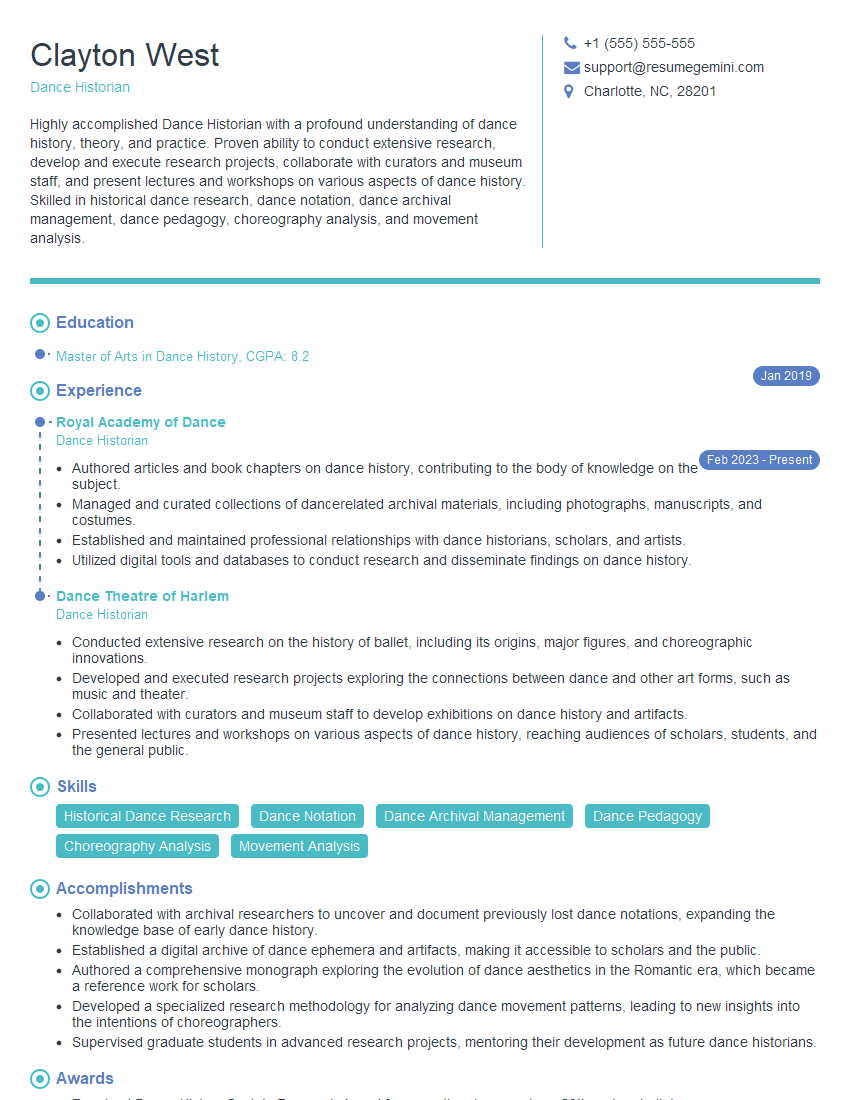
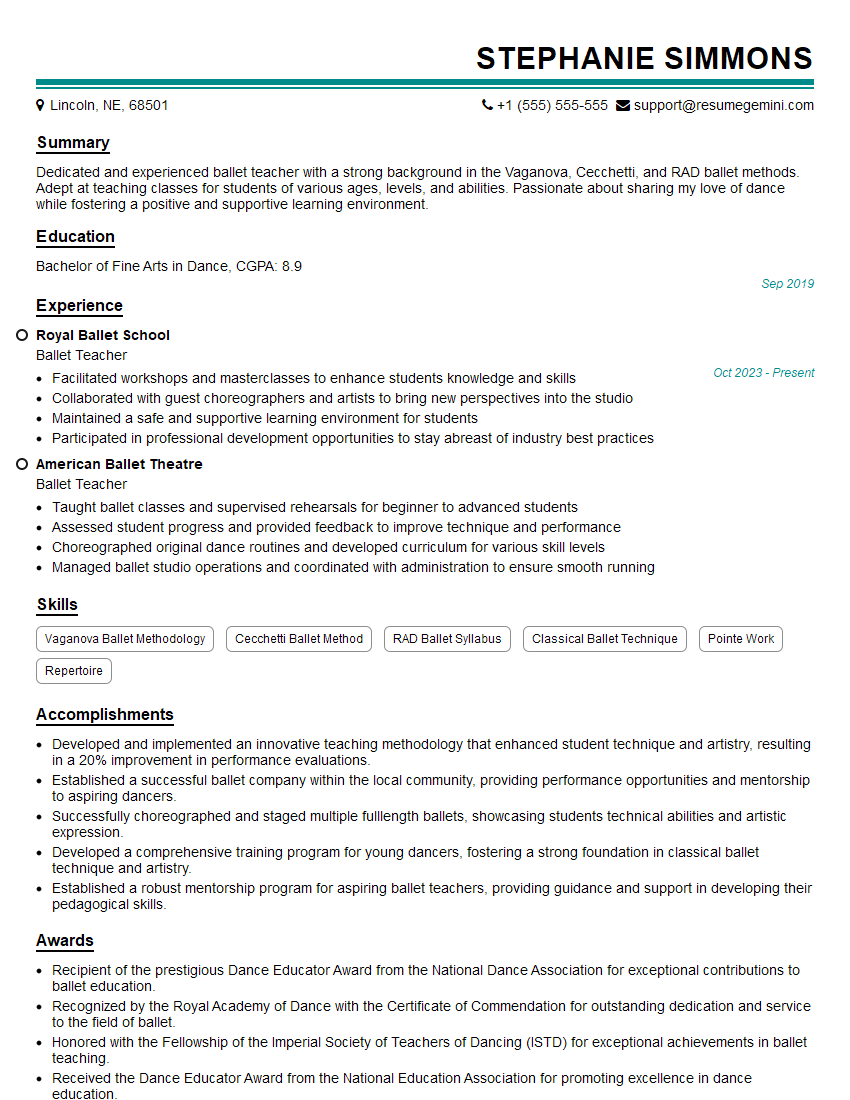
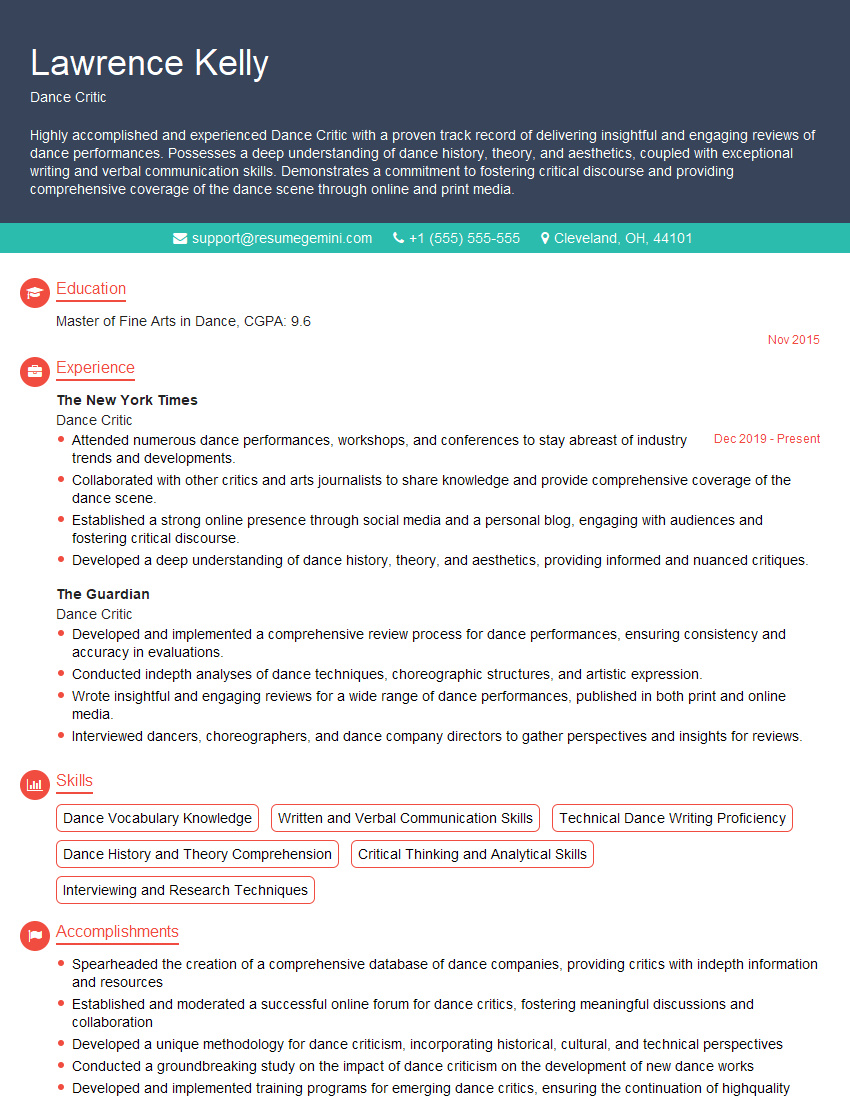
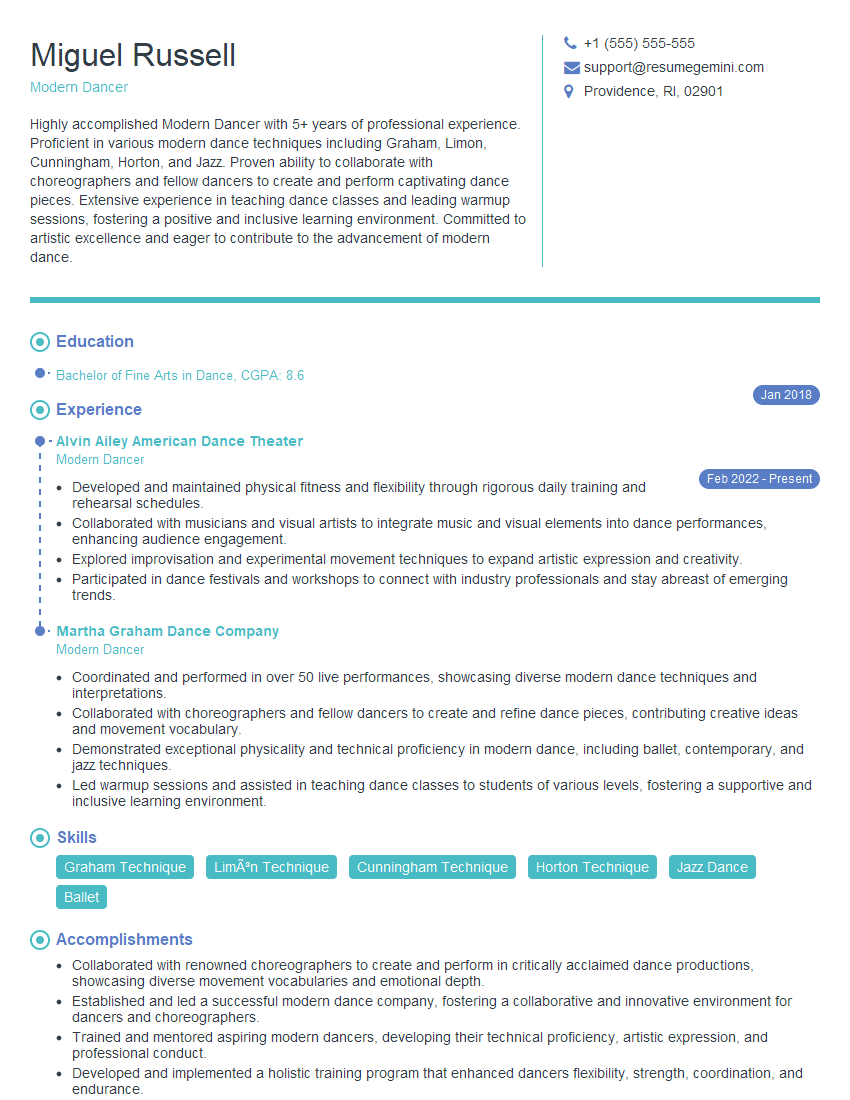
Mastering both Ballet and Modern Dance opens doors to diverse and exciting career paths, from professional performance and choreography to teaching and arts administration. To maximize your job prospects, crafting a strong, ATS-friendly resume is crucial. This ensures your qualifications are effectively highlighted to potential employers. ResumeGemini is a trusted resource to help you build a professional resume that showcases your skills and experience effectively. Examples of resumes tailored to Ballet and Modern Dance are available to guide you.

Explore more articles
Users Rating of Our Blogs
Share Your Experience
We value your feedback! Please rate our content and share your thoughts (optional).
What Readers Say About Our Blog
Very informative content, great job.
good