The thought of an interview can be nerve-wracking, but the right preparation can make all the difference. Explore this comprehensive guide to Multibeam Echosounder Operation interview questions and gain the confidence you need to showcase your abilities and secure the role.
Questions Asked in Multibeam Echosounder Operation Interview
Q 1. Explain the principles of multibeam echosounder operation.
A multibeam echosounder (MBES) works by transmitting a fan-shaped beam of acoustic pulses towards the seafloor. Unlike single-beam systems that only measure depth directly below the transducer, an MBES uses an array of transducers to emit multiple beams simultaneously, covering a wide swath of the seabed. Each beam measures the time it takes for the sound pulse to travel to the seafloor and back, allowing for the calculation of water depth along numerous points across the swath. This process is repeated continuously as the vessel moves, creating a detailed map of the seabed. Think of it like a highly sophisticated underwater flashlight that not only measures the distance to the objects in its beam but also creates a comprehensive image of the illuminated area.
The key here is the precise measurement of the travel time, which depends on the speed of sound in water. The system also uses sophisticated signal processing to account for factors like water temperature, salinity, and pressure, which influence sound speed.
Q 2. Describe the different types of multibeam echosounders and their applications.
Multibeam echosounders are categorized based on frequency, swath width, and application. High-frequency systems (e.g., 200-700 kHz) are ideal for shallow-water applications and provide very high-resolution imagery, perfect for detailed seabed mapping in coastal zones. Lower-frequency systems (e.g., 12-30 kHz) offer greater range, penetrating more sediment layers and allowing for mapping in deep water. The selection of a system heavily depends on the project.
- Shallow-water MBES: Used in harbor surveys, pipeline inspections, and archeological surveys where high-resolution data are needed.
- Deep-water MBES: Employed in oceanographic research, seabed mining exploration, and large-scale bathymetric mapping.
- High-Resolution MBES: These are designed for detailed studies, like those used in habitat mapping or identifying small-scale features such as scour around offshore structures.
There is also a differentiation between hull-mounted and towed systems. Hull-mounted MBES are simpler to operate but can be affected by vessel motion. Towed systems offer improved stability, particularly in challenging sea conditions, but require a more complex deployment setup.
Q 3. What are the key parameters to consider when setting up a multibeam echosounder?
Setting up a multibeam echosounder requires careful consideration of several key parameters to ensure high-quality data acquisition. These include:
- Sound Velocity Profile (SVP): This is crucial. An accurate SVP, obtained using a CTD (conductivity, temperature, and depth) profiler, is essential for precise depth calculations. Inaccurate SVP data leads to errors in depth determination.
- Ping Rate: The frequency of acoustic pulses. A higher ping rate results in greater data density but requires more processing power and may be limited by the system’s capabilities.
- Beam Angle: This influences the swath width. Wider beam angles cover a larger area but compromise the resolution. Narrower angles result in higher resolution but require more passes to cover the same area.
- Transmit Power: Higher power can increase the range and penetration depth but also increases the potential for noise.
- Navigation Data: Accurate positioning of the vessel is paramount. This usually involves using a high-precision GPS system coupled with an inertial navigation system (INS).
- Tidal corrections: Water level variation (tides) must be accounted for to obtain accurate depth values relative to a fixed datum.
Q 4. How do you ensure accurate data acquisition with a multibeam echosounder?
Ensuring accurate data acquisition requires a multi-faceted approach:
- Pre-survey Planning: Thorough planning, including selecting appropriate system settings, and understanding the survey area’s characteristics (water depth, seabed type, potential obstructions) is critical.
- Calibration: Regular calibration of the system is needed to ensure the accuracy of the measurements. This includes checking the transducer alignment and validating the sound velocity profile.
- Quality Control (QC): Real-time monitoring during the survey is essential, often using onboard software to view the data. Detecting any anomalies early helps to mitigate potential errors.
- Post-processing: After the survey, the acquired data undergoes rigorous processing to correct errors, remove noise and produce final outputs.
- Data validation: Comparing the data to known features or using independent methods to validate the accuracy of the results is a final and crucial step.
In essence, it is a combination of careful planning, appropriate equipment, stringent procedures, and post-processing techniques that guarantees the quality and accuracy of the data.
Q 5. Explain the concept of swath width and its relation to water depth and transducer characteristics.
Swath width refers to the horizontal extent of the area covered by the multibeam system’s acoustic beams on the seabed. It’s directly related to both water depth and transducer characteristics. The deeper the water, the wider the swath, as the beams have a greater distance to spread. The transducer’s beam angle (its vertical and horizontal opening) also plays a significant role; wider beam angles cover a broader swath but with reduced resolution. Imagine a spotlight: a narrow beam provides a focused, high-resolution image, but a wide beam illuminates a larger area at the cost of clarity.
Swath width is typically expressed as a function of the water depth and is influenced by parameters like the number of beams and the beam spacing. Manufacturers will provide a range for each transducer type, but actual achieved swath varies depending on the water column and seabed conditions.
Q 6. What are the common sources of error in multibeam data acquisition?
Several sources can introduce errors in multibeam data acquisition. These include:
- Inaccurate Sound Velocity Profile (SVP): Incorrect SVP data leads to systematic errors in depth measurements. A simple mistake can cause a significant vertical error.
- Vessel Motion: Vessel roll, pitch, and heave can affect the accuracy of positioning and the beam’s direction.
- Multipath Interference: Sound waves can reflect off the surface or other objects before reaching the seabed, causing multiple returns that can corrupt the primary echo.
- Bottom Type: The nature of the seabed itself (e.g., hard rock, soft sediment) influences the backscattered signal strength, affecting the data quality.
- Positioning Errors: Inaccuracies in GPS or INS data can lead to errors in the geographic location of data points.
- System Errors: Malfunctioning equipment or incorrect system settings also introduce errors.
Q 7. How do you identify and mitigate multipath interference in multibeam data?
Multipath interference, where sound waves take multiple paths to reach the receiver, is a significant challenge in multibeam data. It creates false or distorted bottom returns which can negatively impact the quality of the bathymetry and backscatter data. Mitigation strategies include:
- Data Processing Techniques: Sophisticated algorithms are used to identify and remove or attenuate the effects of multipath by analyzing the signal’s characteristics and arrival times. These algorithms look for inconsistencies in arrival times and signal strength between beams.
- Careful System Setup: Properly selecting the transmit pulse length can help reduce multipath. Shorter pulses improve the resolution of closely spaced echoes but may have lower penetration ability.
- Survey Design: Survey lines that intersect can help to identify multipath, as spurious echoes will appear on fewer lines.
- Environmental Considerations: Understanding the environmental conditions, such as strong currents or temperature gradients that can impact sound propagation, is crucial to reducing multipath effects.
Identifying multipath often involves visual inspection of the processed data for anomalies and inconsistencies that are typical of multipath, like spurious bottom detections and distortions in the swath.
Q 8. Describe the process of data processing for multibeam echosounder data.
Multibeam echosounder data processing is a multi-step procedure transforming raw sonar data into a usable representation of the seabed. Think of it like developing a photo; the raw image needs adjustments to reveal its true detail. It starts with importing the raw data files (.all, .s7k, etc.) into dedicated software. The process then involves several key steps:
Data Cleaning: This removes spurious data points, often caused by noise or errors during acquisition. This is crucial because outliers can significantly skew results. Imagine trying to build a map with inaccurate GPS points – the final product will be unreliable.
Corrections: Applying various corrections is crucial for accurate positioning and depth measurements. These include sound velocity corrections (accounting for changes in water speed), tide corrections (adjusting for rising and falling water levels), and heave corrections (compensating for vessel movement). We’ll explore these in more detail in a later answer.
Georeferencing: This assigns geographic coordinates (latitude, longitude) to each data point, creating a map of the seafloor. Accurate georeferencing is paramount for integrating multibeam data with other geographic information systems (GIS).
Mosaicking: If multiple survey lines were used, the individual datasets are stitched together to form a seamless, continuous representation of the surveyed area. This is like assembling a jigsaw puzzle of the seafloor.
Visualization and Interpretation: Finally, the processed data is visualized using various techniques, such as 3D models, contour maps, and backscatter imagery to analyze the seafloor features.
Q 9. What software packages are you familiar with for processing multibeam data?
I’m proficient in several widely-used multibeam processing software packages. My experience includes:
CARIS HIPS and SIPS: This is an industry-standard package known for its robust processing capabilities and wide range of functionalities. I’ve used it extensively for large-scale hydrographic surveys.
Qimera: Qimera is another powerful tool well-suited for both processing and visualizing multibeam data. Its user-friendly interface and comprehensive tools make it a strong choice for a variety of applications.
MB-System: A more specialized software which is particularly useful for specific tasks and data types. It’s excellent for advanced processing and interpretation.
SonarWiz: A versatile program that can handle data from a range of sonar systems, including multibeam.
My choice of software depends on the specific project requirements and the type of data being processed. The ability to adapt to various software packages is essential in this field.
Q 10. Explain the different types of corrections applied to multibeam data (e.g., sound velocity, tide, heave).
Several corrections are essential for accurate multibeam data processing. These corrections compensate for various factors that can affect the accuracy of the depth and position measurements:
Sound Velocity Corrections: The speed of sound in water varies with temperature, salinity, and pressure. Inaccurate sound velocity profiles can lead to significant errors in depth measurements. We use sound velocity sensors (SV probes) deployed in the water column to obtain a detailed profile. This profile is then input into the processing software to correct for variations in sound speed along the sonar beam path. Think of it like correcting a ruler that’s slightly warped in places.
Tide Corrections: The vertical position of the vessel relative to a mean sea level varies with tidal changes. Tide data (obtained from nearby tide gauges or predictions) are used to adjust depth readings to a common vertical datum (e.g., Mean Lower Low Water). Otherwise, your seafloor map will be systematically shifted up or down based on the tide at the time of data acquisition.
Heave Corrections: The vertical movement of the vessel (heave) due to waves affects the depth measurements. Motion sensors on board the vessel measure heave, allowing the software to compensate for these vertical movements, ensuring consistent depth measurements regardless of sea state. Without this, your seafloor would appear wavy, reflecting the boat’s movement rather than the actual seabed morphology.
Roll, Pitch, and Yaw Corrections: These corrections account for vessel attitude (rotation around various axes). Accurate motion sensors are critical for removing these errors.
Position Corrections: These ensure accurate positioning of the data points, utilizing data from GPS and other positioning systems. Precise positioning is crucial for creating georeferenced maps.
Q 11. How do you create a digital terrain model (DTM) from multibeam data?
Creating a Digital Terrain Model (DTM) from multibeam data involves several steps. First, the processed and corrected data needs to be gridded. This means interpolating the irregularly spaced depth points onto a regular grid of cells (like a spreadsheet). Different interpolation methods exist (e.g., kriging, nearest neighbor), each with strengths and weaknesses. The choice depends on factors such as data density and desired level of smoothing. A suitable interpolation method is chosen based on the characteristics of the data. Once the grid is created, you have your DTM which is a digital representation of the seafloor’s surface.
Next, it’s crucial to apply appropriate filtering techniques to remove noise and artifacts in the DTM. For instance, you might use a median filter to smooth out small-scale irregularities, or a spatial filter to reduce the effects of outliers. The final DTM is then ready for visualization and analysis, potentially integrated into larger GIS projects.
Q 12. What are the quality control checks you perform on processed multibeam data?
Quality control is paramount in multibeam data processing. I employ a multi-faceted approach:
Visual Inspection: A thorough visual inspection of the processed data is crucial. This involves examining the raw data for artifacts, checking the distribution of data points, and looking for any inconsistencies or gaps.
Statistical Analysis: Statistical analysis can detect systematic errors or outliers. For example, checking the standard deviation of depth measurements can highlight potential issues. If the standard deviation is unnaturally high, it indicates possible problems in the data or processing.
Cross-checking with other data: Where possible, comparing the multibeam data with other datasets, such as previous surveys or bathymetric charts, ensures consistency and identifies discrepancies. This serves as an independent validation step.
Error propagation analysis: Analyzing the potential error sources (e.g., sound velocity, tide, heave) and how these uncertainties propagate to the final DTM allows for assessing the overall uncertainty of the results. The uncertainty is then included in the final deliverable map. This is especially important when producing hydrographic charts.
Documenting each step of the processing workflow and the applied quality control measures is essential for traceability and auditing purposes.
Q 13. How do you interpret multibeam data to identify different seabed features?
Interpreting multibeam data involves analyzing both the bathymetry (depth) and backscatter (intensity of the returned signal) data. Different seabed features exhibit distinct characteristics in both datasets:
Bathymetry: Smooth, relatively flat areas represent featureless seabed; steep slopes indicate cliffs or scarps; isolated peaks suggest rocks or mounds; channels and depressions represent erosional features.
Backscatter: Backscatter intensity provides information about the seabed’s reflectivity. High backscatter values are indicative of hard, rocky surfaces; low backscatter values suggest soft, muddy sediments. Changes in backscatter can reveal variations in sediment type or the presence of objects on the seabed.
For example, I’ve used multibeam data to identify and map rock outcrops, scour features around pipelines, and even sunken vessels. Combining bathymetric and backscatter data enhances the reliability of feature identification and characterization.
Software like Qimera and CARIS allows us to generate different visualizations that aid interpretation, including 3D views, slope maps, and different colour schemes to highlight specific characteristics of the seabed.
Q 14. Describe your experience with different types of transducer configurations.
I have experience with various transducer configurations, understanding that the choice of configuration significantly impacts data quality and survey efficiency:
Narrow swath systems: These provide high-resolution data but have limited swath width, requiring more survey lines. This is useful for high-resolution mapping of small areas.
Wide swath systems: Cover wider areas per pass, improving survey speed but potentially sacrificing some resolution, particularly at the edges of the swath. These are more suitable for covering large areas quickly.
Deepwater systems: Designed for deeper water depths, and often with higher frequency configurations.
Shallow water systems: Optimize resolution and performance in shallow water environments. They usually operate at higher frequencies.
The selection of a transducer configuration always involves trade-offs between resolution, swath width, and water depth capability. It’s important to choose a configuration appropriate for the specific survey requirements and environmental conditions. For instance, a high-resolution survey of a shipwreck would call for a different transducer configuration than a broad survey of the seabed in a deep ocean environment.
Q 15. Explain the importance of sound velocity profiles in multibeam surveying.
Sound velocity profiles (SVPs) are crucial in multibeam surveying because the speed of sound in water isn’t constant. It varies with temperature, salinity, and pressure. Accurate depth measurements rely on knowing precisely how fast the sound waves travel. Imagine trying to measure the distance to a distant object using a ruler but not knowing the actual length of your ruler – that’s the problem without an accurate SVP.
Multibeam systems measure the travel time of sound pulses to the seafloor. To calculate the distance, this time needs to be multiplied by the speed of sound. An inaccurate SVP leads to incorrect depth readings, distorting the entire survey. We obtain SVPs using a combination of sensors, like CTDs (Conductivity, Temperature, and Depth) casts or underway sensors that continuously monitor the water column. Sophisticated processing software then interpolates this data to create a continuous profile, providing the accurate speed of sound at each depth for precise depth calculations.
For example, in a project surveying a fjord with significant temperature gradients, neglecting the SVP correction could result in errors of several meters, rendering the survey unusable for applications like pipeline routing or habitat mapping. Accurate SVPs are therefore fundamental for generating high-quality, reliable bathymetric data.
Career Expert Tips:
- Ace those interviews! Prepare effectively by reviewing the Top 50 Most Common Interview Questions on ResumeGemini.
- Navigate your job search with confidence! Explore a wide range of Career Tips on ResumeGemini. Learn about common challenges and recommendations to overcome them.
- Craft the perfect resume! Master the Art of Resume Writing with ResumeGemini’s guide. Showcase your unique qualifications and achievements effectively.
- Don’t miss out on holiday savings! Build your dream resume with ResumeGemini’s ATS optimized templates.
Q 16. What is the role of GPS/GNSS in multibeam surveying?
GPS/GNSS (Global Navigation Satellite System) provides the horizontal positioning for the multibeam echosounder. Think of it as the ‘eyes’ of the system, telling it precisely where it is on the Earth’s surface. The precise location of each emitted sound pulse needs to be known to accurately georeference the resulting depth measurements. Without this information, the data is simply a collection of depth measurements without a geographical context – useless for most applications.
High-precision GPS/GNSS receivers are integrated with the multibeam system, continuously recording position data at high sampling rates. This data is crucial for creating accurate maps and charts. Furthermore, real-time kinematic (RTK) GPS techniques are commonly used to achieve centimeter-level accuracy, essential for high-resolution surveys. This ensures accurate position fixes are associated with each sound pulse.
In a real-world scenario, imagine surveying a complex coastline with numerous submerged features. Accurate GPS/GNSS data is essential to accurately position these features on a map, allowing for safe navigation, engineering planning, or environmental impact assessments. Poor GPS accuracy would blur these features, making them difficult to interpret or potentially hazardous to vessels.
Q 17. How do you deal with data gaps or voids in multibeam data?
Data gaps or voids in multibeam data are common, often caused by factors like shadowing (sound waves failing to reach the seafloor due to steep slopes or overhanging features), multipathing (sound waves reflecting multiple times), or system malfunctions. Addressing these gaps is crucial to ensure the integrity of the final dataset. We employ several strategies.
- Visual Inspection and Manual Editing: We carefully examine the data in specialized software, identifying the extent and causes of the gaps. In smaller, easily-definable areas, manual interpolation or replacement might be possible, guided by surrounding data.
- Interpolation Techniques: Advanced algorithms like kriging or inverse distance weighting are used to estimate missing data based on surrounding known values. The chosen method depends on the size, nature, and cause of the gap. This should be done with caution, as it is an approximation.
- Resurveys: For significant gaps, a resurvey of the affected area is often necessary to ensure accurate data acquisition. This involves replanning the survey lines to ensure complete coverage of the problem area.
- Data Fusion: Sometimes, other data sources, such as single-beam echosounder data or existing charts, can be used to supplement the incomplete multibeam dataset. However, careful consideration must be given to the accuracy and resolution of any supplementary data.
Each method has its strengths and limitations, and the optimal strategy is determined based on the specific conditions of the survey and the scale of the data gap. The key is transparency – ensuring any interpolation or data supplementation is clearly documented in the final dataset.
Q 18. Describe your experience with motion compensation systems.
Motion compensation systems are essential for high-quality multibeam surveys, particularly in dynamic environments. They counteract the effects of vessel movement (roll, pitch, heave) on the sound beams, which would otherwise introduce significant errors in the data. Think of it like stabilizing a camera while filming from a moving boat – you need a gimbal to keep the image steady.
My experience encompasses both gyro-based and GPS-based motion compensation systems. Gyro-based systems use highly sensitive gyroscopes to measure the vessel’s movements, and this data is used to correct the position of each emitted sound pulse in real-time. GPS-based systems use high-frequency GPS data to determine the vessel’s position and orientation. Both systems require careful calibration and regular maintenance to ensure accuracy.
I’ve worked with various systems, from simpler, less expensive ones suitable for calmer waters to advanced systems with multiple sensors that provide superior compensation in rough sea conditions. The choice of system depends on factors like the survey environment, budget, and the required accuracy of the final data. In one project, employing an advanced motion compensation system was critical in successfully surveying a highly dynamic coastal area with strong currents and significant wave action, delivering accurate bathymetry despite challenging conditions.
Q 19. What are the safety procedures you follow while operating a multibeam echosounder?
Safety is paramount during multibeam echosounder operations. My safety procedures adhere to industry best practices and are tailored to the specific conditions of each survey. These include:
- Pre-Survey Planning and Risk Assessment: Thoroughly reviewing the survey area, identifying potential hazards (e.g., shallow water, obstructions, traffic), and developing a comprehensive safety plan. This includes establishing communication protocols with other vessels and land-based personnel.
- Vessel Safety Checks: Ensuring the vessel is seaworthy and equipped with appropriate safety gear (life jackets, flares, EPIRB). Regularly checking the operational status of navigational aids and communication equipment.
- Personnel Safety: Ensuring all personnel are adequately trained, wearing appropriate personal protective equipment (PPE), and following established safety guidelines. This may include fall protection measures if working on deck.
- Environmental Awareness: Being mindful of environmental considerations, such as minimizing noise pollution and adhering to any regulations governing the survey area.
- Emergency Procedures: Developing and practicing emergency procedures, including procedures for equipment failure, personnel injuries, and adverse weather conditions.
I always prioritize safety, knowing that a seemingly small oversight could have significant consequences. A proactive approach to safety helps ensure the survey is completed successfully and safely.
Q 20. How do you manage and archive multibeam data?
Multibeam data management and archiving are crucial for ensuring the long-term usability and accessibility of the data. My approach involves:
- Data Organization: Creating a structured file system, using clear and consistent naming conventions to organize raw data, processed data, and associated metadata (SVPs, GPS data, survey parameters).
- Data Backup and Redundancy: Regularly backing up all data to multiple locations, using both local and cloud-based storage. This ensures data security and prevents data loss due to equipment failure or other unforeseen events.
- Metadata Management: Meticulously documenting all aspects of the survey, including survey parameters, equipment used, data processing steps, and any known issues or limitations of the dataset. This is essential for future interpretation and analysis.
- Data Format: Storing the data in industry-standard formats (e.g., XYZ, GeoTIFF) to ensure compatibility with different software packages.
- Archiving: Archiving the data according to relevant industry standards and regulations (e.g., IHO standards for hydrographic surveys). This often involves selecting appropriate storage media and ensuring the long-term integrity of the data.
Proper data management and archiving ensures that the survey data remains accessible and usable for years to come, supporting a range of applications from navigation and engineering to environmental research and resource management.
Q 21. Explain the differences between single-beam and multibeam echosounders.
Single-beam and multibeam echosounders differ fundamentally in their data acquisition methods and the resulting data products. Single-beam systems emit a single, narrow cone of sound, measuring the travel time to the seafloor at a single point along the vessel’s track. This is like shining a flashlight on the bottom of a dark room to see just one point at a time.
Multibeam systems, on the other hand, emit a fan-shaped array of sound pulses, covering a wide swath of the seafloor simultaneously. Each pulse provides a depth measurement at several points across the swath. This is analogous to illuminating a whole area with a floodlight. As a result, multibeam systems acquire vastly more data per unit of time, covering the seafloor more efficiently and producing high-resolution bathymetric maps. Single-beam systems are simpler and less expensive, but they provide only a single line of depth measurements, necessitating extensive parallel lines to cover an area.
The difference in data resolution is significant; multibeam surveys provide much richer and more detailed information on seafloor topography, making them ideal for various applications, including high-resolution charting, pipeline route planning, and habitat mapping. Single-beam is still relevant for simpler tasks, but the superior detail of multibeam makes it the preference for most modern applications.
Q 22. What are the limitations of multibeam echosounder technology?
Multibeam echosounder technology, while powerful, isn’t without its limitations. The primary constraints revolve around water column conditions, seabed characteristics, and system limitations.
- Water Column Effects: Sound propagation is affected by water temperature, salinity, and currents. These variations can cause sound refraction and scattering, leading to inaccurate depth measurements or missing data points, especially in areas with strong currents or significant water column stratification. Imagine trying to throw a ball accurately in a strong wind – the wind (currents) affects the ball’s (sound wave’s) trajectory.
- Seabed Type: The nature of the seabed significantly impacts data quality. Soft, unconsolidated sediments can absorb sound energy, reducing the strength of the returned signal and making it difficult to obtain reliable depth readings. Similarly, rough or complex seabeds can cause multipathing, where sound waves bounce off multiple surfaces before returning to the transducer, resulting in distorted data.
- System Limitations: The swath width of the multibeam system is limited by the transducer design and the water depth. In deeper water, the swath width can be proportionally narrower, meaning more survey lines are needed to cover the same area, increasing survey time and cost. Additionally, the system’s resolution is also limited by the frequency of the transducer. Higher frequencies offer better resolution but have reduced range.
- Motion Compensation: While advanced motion compensation systems minimize the impact of vessel movement on data accuracy, significant roll, pitch, and yaw can still affect data quality, especially in rough seas. This is why precise positioning systems are crucial for accurate multibeam surveying.
Q 23. Describe your experience with different types of seabed materials and their acoustic properties.
My experience encompasses a wide range of seabed materials, each exhibiting unique acoustic properties. The acoustic properties determine how sound waves interact with the seabed, influencing the strength and timing of the returned signals. This directly impacts the quality of the resulting bathymetric data and backscatter imagery.
- Rock: Generally hard and reflective, resulting in strong, sharp returns with minimal sound absorption. Backscatter imagery will show high intensities.
- Sand: Relatively homogenous and less reflective than rock. Returns will be weaker than from rock and show varying backscatter intensities depending on grain size and compactness.
- Mud/Clay: Highly absorbent, often yielding weak, diffuse returns. Data quality can be compromised, and backscatter imagery might appear dark and homogenous.
- Vegetation (Seagrass, Kelp): Can create complex acoustic signatures due to scattering and absorption. Backscatter will often reveal distinct features associated with the vegetation and its density.
- Artificial Structures (Wreck, Pipelines): Produce very strong and often unique returns due to their sharp geometric shapes. Identifying artificial structures is readily apparent in backscatter.
Understanding these properties is critical for interpreting the data accurately. For instance, a weak return might indicate a soft seabed, but it could also be due to factors such as excessive water absorption or the presence of a high concentration of suspended sediments in the water column. Therefore, careful consideration of all factors is crucial for proper data interpretation.
Q 24. How do you calibrate a multibeam echosounder?
Calibrating a multibeam echosounder is a crucial process that ensures data accuracy. It involves several steps, typically performed in a controlled environment, such as a calibration facility or a calm, deep-water area.
- Depth Calibration: This involves using known depths (e.g., from a precisely surveyed location or a known-depth target) to verify the accuracy of the depth measurements. Any discrepancies are corrected through adjustments to the system’s settings. Often this requires precision water level measurements and the utilization of GPS and IMU-based positioning systems.
- Beam Angle Calibration: Ensures that the measured angles of the individual beams are accurate. This often involves using a precisely known target or a series of targets at known distances and angles, as deviations can significantly affect the accuracy of the swath. Any deviation must be corrected within the system.
- Sound Velocity Calibration: Sound speed in water varies with temperature, salinity, and pressure. An accurate sound velocity profile (SVP) is crucial, either through direct measurement with a CTD (Conductivity, Temperature, Depth) sensor during data acquisition or based on external environmental data. Inaccurate SVP information directly affects the accuracy of depth calculations and must be updated accordingly.
- Attitude and Heading Calibration: This involves verifying the accuracy of the motion sensors (IMU) that compensate for vessel roll, pitch, and yaw. Inaccurate motion compensation data may affect the swath quality and should be addressed by proper calibration and maintenance of the onboard sensors. This will involve utilizing dedicated calibration ranges or post-processing solutions.
- Transducer Installation Verification: Before data acquisition begins, the system should be inspected to ensure the transducer is installed correctly and the transducer mounting parameters are accurately characterized.
Post-processing software can also make corrections based on the calibration data, helping refine the final dataset.
Q 25. Explain your understanding of the different data formats used in multibeam surveying (e.g., XYZ, XTF).
Multibeam data is typically stored in various formats, each with its strengths and weaknesses. Understanding these formats is vital for data processing, visualization, and integration with other datasets.
- XYZ: A simple format representing three-dimensional coordinates (X, Y, Z), where X and Y are horizontal positions (typically in a Cartesian coordinate system like UTM) and Z is the depth. This format is relatively easy to understand and manipulate, although it lacks the richness of other formats.
- XTF (X-Terra format): A more complex and comprehensive format developed by Teledyne Reson. It stores a wealth of information beyond just XYZ coordinates, including intensity data, beam angles, and quality indicators. The inclusion of metadata and other parameters makes XTF a preferred format for post-processing, especially in demanding hydrographic survey applications. It is particularly useful when analyzing the seabed and creating detailed maps.
- Other Formats: Other formats exist, including proprietary formats used by specific multibeam manufacturers. Compatibility between various software packages necessitates format conversions. Common conversion tools are available, but careful attention to data integrity is crucial during these processes.
The choice of data format depends on the specific application and the software being used. For simple visualization, XYZ may suffice, but for detailed processing and analysis, a richer format like XTF is highly recommended.
Q 26. How do you integrate multibeam data with other datasets (e.g., side-scan sonar, sub-bottom profiler)?
Integrating multibeam data with other datasets enhances the understanding of the seabed environment. This integration requires careful consideration of coordinate systems, data formats, and the relative accuracies of each dataset.
- Side-Scan Sonar: Multibeam data provides high-resolution bathymetry, while side-scan sonar provides high-resolution imagery of the seabed surface. Combining these datasets creates a comprehensive view of both the topography and the seafloor’s texture and composition. This helps identify geological features, obstacles, or targets that would be harder to detect from bathymetry alone.
- Sub-bottom Profiler: Sub-bottom profilers reveal subsurface strata, providing valuable information about the geological layers below the seabed. Integrating this information with the multibeam data allows for a more complete understanding of the seabed’s structure and history. This can be particularly important for understanding sediment layers, identifying buried objects, or assessing the stability of the seabed.
Specialized software packages are used to achieve this integration. These tools require accurate georeferencing of all datasets and often involve techniques such as co-registration and interpolation to align the datasets spatially. This typically involves matching common points of reference across datasets. The precision of the transformation algorithms is paramount in achieving a seamless integration of data.
Q 27. Describe a challenging multibeam survey project you worked on and how you overcame the challenges.
One particularly challenging project involved a multibeam survey in a highly dynamic tidal environment with strong currents and significant water column variations. The area was also characterized by dense kelp forests, making data acquisition extremely difficult.
The challenges included:
- Motion Compensation: The strong currents and tidal flows made precise motion compensation challenging. We addressed this by using a high-quality IMU, precise GPS, and employing meticulous post-processing techniques that focused on motion correction and data filtering.
- Data Gaps: The kelp forests caused significant data gaps. To mitigate this, we implemented multiple survey lines, carefully adjusting the survey parameters to maximize data acquisition. Extensive post-processing involved using advanced interpolation techniques, validating the data quality, and ensuring that the data gaps did not adversely affect the final bathymetric model.
- Sound Velocity Variations: Significant changes in water temperature and salinity added complexity to sound velocity corrections. We employed a CTD profiler to obtain frequent and precise sound velocity profiles. Utilizing this data during post-processing yielded a model with sufficient accuracy.
By employing a multi-pronged approach combining sophisticated equipment, diligent survey planning, and advanced data processing techniques, we successfully completed the survey, delivering a high-quality bathymetric model.
Q 28. What are your future aspirations in the field of hydrographic surveying?
My future aspirations involve leveraging my expertise in multibeam echosounder operation to contribute to advancements in autonomous survey systems. I envision a future where highly automated, unmanned survey vehicles perform complex hydrographic surveys safely and efficiently. I am particularly interested in developing advanced data processing algorithms and techniques that improve the accuracy and resolution of multibeam data, and in integrating multibeam data with other sensors to create even more comprehensive models of the underwater environment.
Furthermore, I aim to contribute to the development of standardized data processing and interpretation workflows to improve consistency and efficiency across hydrographic projects. This would ensure the wider availability of readily usable data from various hydrographic sources, facilitating better understanding of our oceans and providing valuable data for various applications such as environmental protection, engineering, and nautical charting.
Key Topics to Learn for Multibeam Echosounder Operation Interview
- Fundamentals of Sonar Principles: Understanding sound wave propagation, reflection, and refraction in water, and how these principles underpin multibeam operation.
- Multibeam Echosounder System Components: Familiarize yourself with the transducer, receiver, signal processing units, and data acquisition systems. Understand their interconnectivity and function.
- Data Acquisition and Processing: Learn about different data acquisition modes (e.g., swath width, ping rate), processing techniques for noise reduction and artifact removal, and the generation of various data products (e.g., bathymetry, backscatter).
- Bathymetric Data Interpretation: Develop your ability to interpret bathymetric data, identify potential errors, and understand the limitations of multibeam technology. Practice recognizing features like reefs, channels, and sediment types.
- Navigation and Positioning Systems: Gain a solid understanding of GPS, IMU, and other positioning systems used in conjunction with multibeam systems and their impact on data accuracy.
- Post-Processing and Software: Become familiar with common multibeam processing software packages and the procedures for cleaning, correcting, and visualizing the collected data.
- Quality Control and Assurance: Understand the importance of quality control procedures, including identifying and correcting errors in bathymetric data. Learn about different quality metrics.
- Practical Applications: Explore the diverse applications of multibeam echosounders, such as hydrographic surveying, marine habitat mapping, pipeline inspection, and underwater archaeology.
- Troubleshooting and Problem Solving: Prepare to discuss common issues encountered during multibeam surveys and demonstrate your ability to troubleshoot problems related to equipment malfunction, data acquisition, and processing.
Next Steps
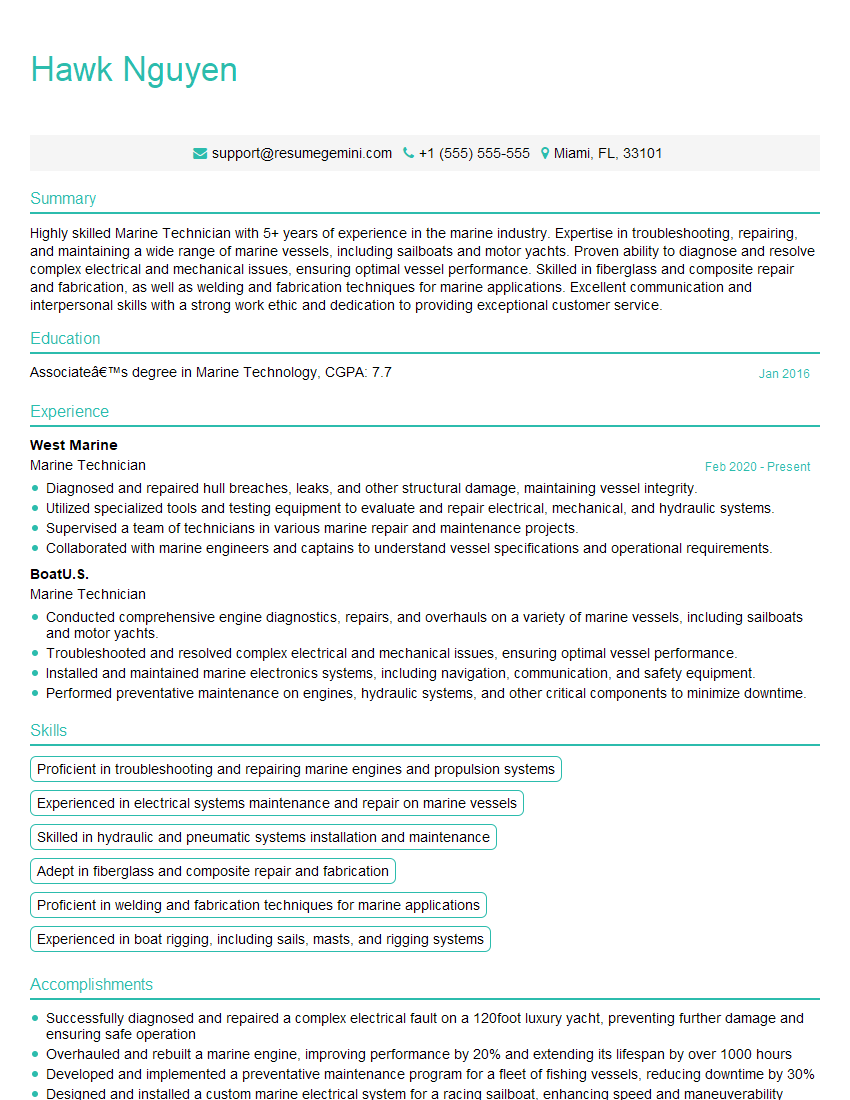
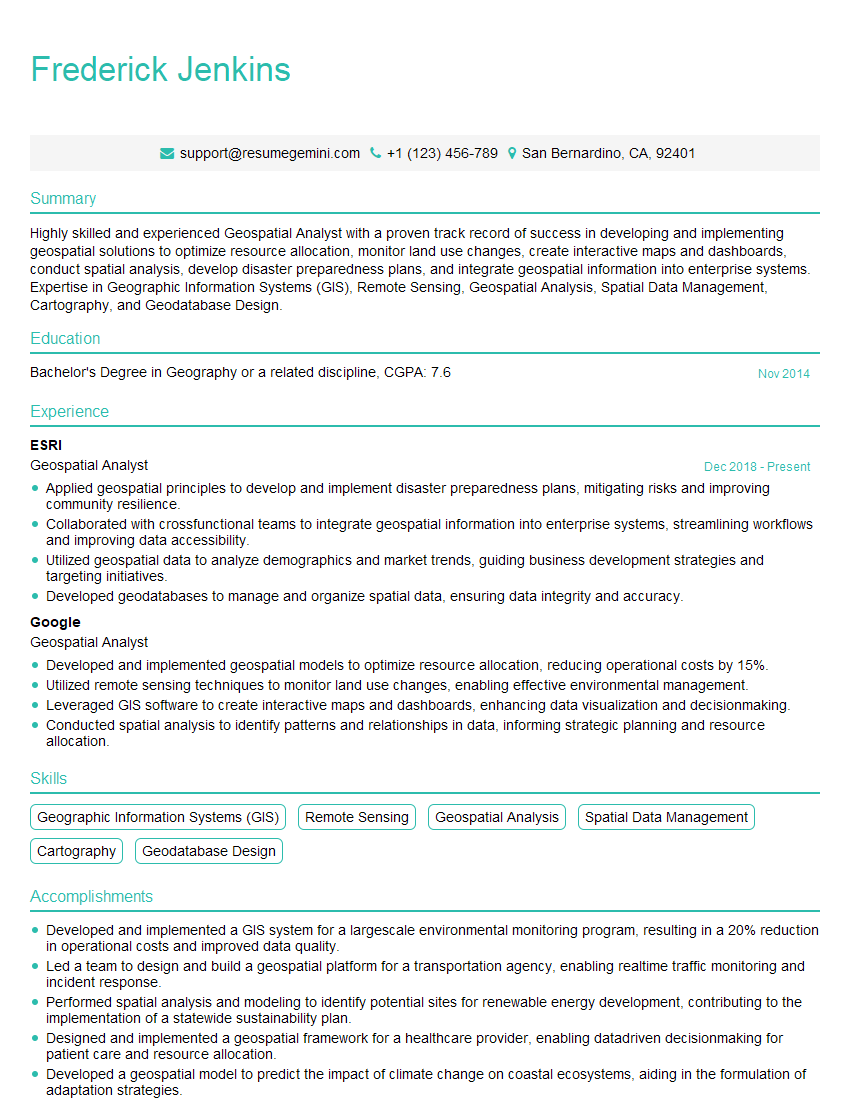
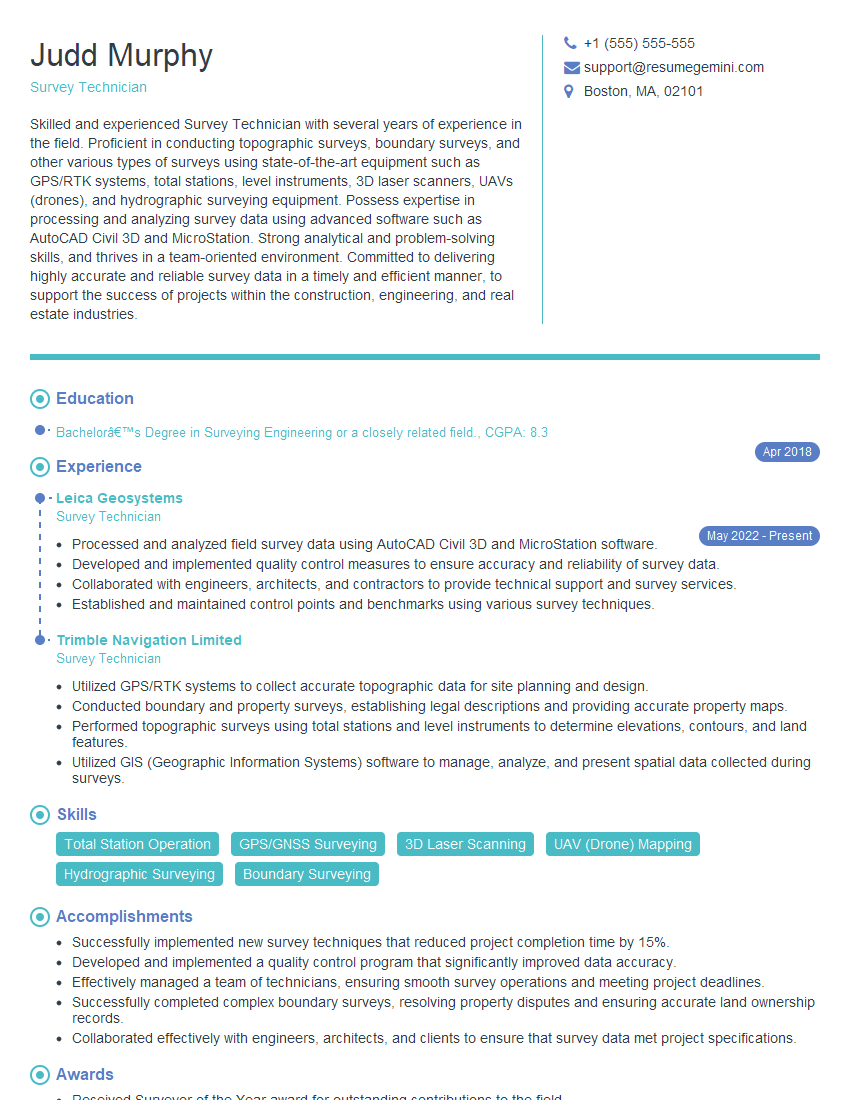
Mastering multibeam echosounder operation opens doors to exciting and rewarding careers in hydrography, oceanography, and marine engineering. To maximize your job prospects, focus on building a strong and ATS-friendly resume that highlights your skills and experience. ResumeGemini is a trusted resource that can help you create a professional and impactful resume tailored to the specific requirements of multibeam echosounder positions. Examples of resumes tailored to Multibeam Echosounder Operation are available to help guide you.



Explore more articles
Users Rating of Our Blogs
Share Your Experience
We value your feedback! Please rate our content and share your thoughts (optional).
What Readers Say About Our Blog
Very informative content, great job.
good