Are you ready to stand out in your next interview? Understanding and preparing for Geological Drilling interview questions is a game-changer. In this blog, we’ve compiled key questions and expert advice to help you showcase your skills with confidence and precision. Let’s get started on your journey to acing the interview.
Questions Asked in Geological Drilling Interview
Q 1. Explain the difference between rotary and percussion drilling methods.
Rotary and percussion drilling are two fundamentally different methods for creating boreholes. Rotary drilling uses a rotating drill bit to cut or crush rock, while percussion drilling relies on repeated impacts from a hammer to break up the formation. Think of it like this: rotary drilling is like using a saw to cut wood, while percussion drilling is more like hammering a nail into a piece of wood.
Rotary Drilling: This method employs a rotating drill bit, usually fitted with cutting elements like teeth or diamonds, to create a borehole. A drilling fluid (mud) is circulated down the drill string to lubricate the bit, remove cuttings, and maintain borehole stability. This is the most common method for deep and large-diameter holes. Variations include roller cone bits (for harder formations) and diamond bits (for softer formations).
Percussion Drilling: Here, a heavy bit repeatedly strikes the formation, breaking it down. The broken rock is then removed from the hole using air or water. This is typically used for shallower holes and harder rock, although variations exist that are capable of reaching considerable depths. Cable tool drilling is a classic example of percussion drilling.
In short, rotary drilling is continuous and uses rotation, while percussion drilling is intermittent and uses impact. The choice of method depends on factors like the rock type, depth, and desired hole diameter.
Q 2. Describe your experience with various drilling fluids and their applications.
My experience encompasses a wide range of drilling fluids, each tailored to specific geological conditions and drilling objectives. The selection of the appropriate drilling fluid is critical to successful and safe drilling operations.
- Water-based muds (WBM): These are the most common and cost-effective, suitable for many formations. They are easily prepared and environmentally friendly, but their limitations include susceptibility to high-temperature environments and potential for instability in certain formations.
- Oil-based muds (OBM): These are used in challenging formations where WBM may fail, providing better lubricity, shale inhibition, and stability at high temperatures. However, they are more expensive and pose greater environmental concerns.
- Synthetic-based muds (SBM): These aim to combine the advantages of OBM and WBM, providing enhanced performance with reduced environmental impact. They are generally more expensive than WBM but offer superior properties in complex formations.
- Air and foam: Used in shallower, less challenging formations, air or air-foam mixtures are efficient and cost-effective, but may present challenges in terms of hole stability and cuttings removal.
For example, while drilling through shale formations prone to swelling, a carefully selected, high-density water-based mud with shale inhibitors will be essential to prevent borehole collapse. Conversely, in high-temperature wells, an oil-based or synthetic-based mud would be necessary to maintain viscosity and prevent degradation of the fluid.
Q 3. How do you ensure the safety of drilling operations?
Safety is paramount in geological drilling. My approach to ensuring safe operations is multifaceted and proactive.
- Rigorous pre-planning: This includes detailed risk assessments, emergency response planning, and careful selection of personnel and equipment. Site-specific safety plans are crucial.
- Strict adherence to safety protocols: This includes regular safety meetings, training programs, and enforcing safety regulations and procedures. Personal Protective Equipment (PPE) is mandatory at all times.
- Regular inspections and maintenance: Equipment is inspected daily and serviced regularly to prevent mechanical failures and maintain operational efficiency.
- Emergency response capabilities: We maintain emergency response plans that cover all potential incidents, from well control issues to medical emergencies. This involves close collaboration with emergency services.
- Communication and teamwork: Open and effective communication among the entire drilling team is crucial for avoiding accidents. A culture of reporting near-misses is actively fostered.
For instance, before commencing any drilling operation, I conduct a thorough site survey to identify potential hazards such as high-voltage power lines, underground utilities, or unstable ground conditions. This information is then incorporated into a site-specific safety plan.
Q 4. What are the common challenges faced during directional drilling?
Directional drilling, while offering significant advantages in accessing hard-to-reach reserves, presents several unique challenges.
- Doglegs and wellbore instability: Achieving the desired well trajectory while maintaining borehole stability can be difficult, particularly in complex geological formations. Excessive doglegs (sharp changes in wellbore direction) can lead to stuck pipe and other complications.
- Torque and drag: The forces acting on the drill string during directional drilling can be high, potentially causing the drill string to become stuck or damaged. Careful monitoring and management of these forces are crucial.
- Mud motor performance: The mud motor, which provides the rotational power for directional drilling, can be susceptible to damage and wear. Maintaining optimal mud motor performance is essential for efficient drilling.
- Precise directional control: Maintaining the desired wellbore trajectory within tight tolerances requires sophisticated technology and skilled personnel. Errors in directional control can lead to deviations from the planned path and increased costs.
- Formation evaluation challenges: Interpreting well logs and other formation evaluation data from deviated wells can be more complex than from vertical wells.
Overcoming these challenges often involves advanced drilling techniques, specialized equipment such as steerable mud motors and downhole tools, and rigorous real-time monitoring and data analysis.
Q 5. Explain the importance of well logging in geological drilling.
Well logging is crucial in geological drilling as it provides critical information about the subsurface formations encountered during drilling. This information is essential for various aspects of reservoir management and decision-making.
- Lithology identification: Well logs help determine the type of rock (e.g., sandstone, shale, limestone) encountered at different depths.
- Porosity and permeability assessment: These parameters are vital for determining the reservoir’s capacity to hold and transmit hydrocarbons.
- Fluid saturation determination: Well logs identify the fluids present in the formation (e.g., oil, gas, water).
- Formation pressure determination: Measuring pressure within the formation is critical for well design and production optimization.
- Fracture identification: Well logs can help identify natural fractures in the formation, which can affect production.
For instance, a gamma-ray log helps to differentiate between shale and sandstone layers. This information is crucial in determining the location of potential hydrocarbon reservoirs, which are typically found in permeable sandstone layers.
Q 6. How do you interpret drilling data to identify geological formations?
Interpreting drilling data to identify geological formations is a complex process that requires experience and expertise. It often involves integrating multiple data sources.
- Drilling parameters: Analysis of parameters such as rate of penetration (ROP), torque, and weight on bit provides insights into the formation’s hardness and lithology.
- Well logs: Various well logs (gamma ray, resistivity, density, neutron) provide detailed information on formation properties, including lithology, porosity, and fluid content.
- Cuttings analysis: Examination of rock cuttings retrieved from the borehole provides direct observation of the formation’s lithology and mineralogy.
- Mud logging data: Mud log data, including gas shows and drilling fluid properties, provide clues about the presence of hydrocarbons and formation pressure.
For example, a high ROP with low torque might indicate a soft, easily drilled formation, such as a shale. Conversely, low ROP with high torque might suggest a harder rock, perhaps a sandstone or limestone. Integrating this information with well logs can help to build a comprehensive picture of the subsurface geology.
Q 7. Describe your experience with different types of drilling rigs.
My experience includes working with a variety of drilling rigs, each suited to different drilling applications and environments.
- Land rigs: These are used for drilling on land and come in various sizes and configurations, ranging from small, portable rigs to massive structures capable of drilling to extreme depths. They are often designed for specific applications, such as horizontal drilling or directional drilling.
- Offshore rigs: These are more specialized, designed for drilling in marine environments. They can be jack-up rigs (that raise themselves above the water), semi-submersible rigs (that float on the water), or drillships (that are mobile). They are designed to withstand harsh marine conditions.
- Top drive rigs: These use a top drive system which provides greater control and efficiency compared to traditional rotary rigs using a kelly bar. They are particularly suited to directional and horizontal drilling.
For instance, a large land rig would be necessary for a deep exploration well targeting a substantial reservoir, while a smaller portable rig might suffice for a shallow environmental investigation. Offshore drilling operations obviously require specialized offshore platforms and rigs.
Q 8. How do you manage drilling costs effectively?
Effective drilling cost management requires a multi-pronged approach focusing on planning, execution, and post-operation analysis. It’s akin to running a lean manufacturing operation, minimizing waste at every stage.
Pre-Drilling Planning: Thorough geological surveys and site investigations are crucial to accurately estimate the necessary drilling time and resources. Using advanced modelling techniques to predict subsurface conditions helps avoid unexpected delays and cost overruns. For example, if we anticipate encountering hard rock formations, we can specify a rig with higher penetration rates, upfront, mitigating delays and extra costs from rig changes.
Optimized Drilling Parameters: Selecting appropriate drilling parameters—such as rotary speed, weight on bit, and mud properties—is essential. Incorrect settings can lead to premature bit wear, stuck pipe, or inefficient penetration rates. We use data-driven methods and sophisticated software to optimize parameters for specific geological conditions.
Efficient Logistics: Careful planning of logistics including transport, storage and personnel deployment directly impacts costs. Minimizing downtime through efficient material handling and proactive maintenance scheduling greatly improves efficiency. For instance, a well-planned supply chain ensures that materials are available on-site when needed, preventing delays and associated expenses.
Post-Drilling Analysis: Post-drilling analysis allows for continuous improvement. We meticulously review the data from each drilling operation to identify areas for optimization. Analyzing factors like drilling time, equipment performance, and material usage helps us pinpoint inefficiencies and make data-driven decisions to reduce costs in future projects.
Q 9. How do you handle unexpected geological formations during drilling?
Encountering unexpected geological formations is common in drilling. It requires a flexible and adaptable approach, relying on real-time data interpretation and quick decision-making. Imagine drilling through what’s anticipated to be soft sediment, only to suddenly hit a hard, unexpected layer of basalt.
Real-time Monitoring: Constant monitoring of drilling parameters (weight on bit, torque, rate of penetration) is crucial for detecting changes in formation properties. Deviations from the predicted profile signal a need for adjustments.
Geosteering and Downhole Tools: Advanced geosteering techniques use real-time data from downhole sensors (e.g., gamma ray, resistivity) to navigate the drill bit around problematic zones, preventing potential complications. This allows for adjusting the path of the wellbore to avoid unstable formations or potentially hazardous zones.
Adaptive Drilling Strategies: Depending on the nature of the unexpected formation, we may need to change drilling parameters, switch drill bits, or employ specialized techniques like directional drilling or underreaming to overcome the challenge. For example, a change in formation from shale to sandstone might require changing to a bit more suitable for harder rock.
Geological Expertise: Immediate consultation with experienced geologists is paramount. Their interpretation of the data helps determine the best course of action, mitigating risks and minimizing downtime.
Q 10. What are the environmental considerations in geological drilling?
Environmental considerations are paramount in geological drilling. We must minimize our impact on the surrounding environment. Think of it as leaving the site as we found it, or better. This involves a multi-faceted approach.
Waste Management: Proper management of drilling waste (cuttings, mud, fluids) is crucial. This includes effective containment, treatment (e.g., filtering, dewatering) and disposal, conforming to all environmental regulations. Improper disposal can lead to soil and water contamination.
Water Management: Drilling often uses large amounts of water, so minimizing water consumption through efficient drilling techniques and recycling is critical. Furthermore, we must ensure that any discharged water meets regulatory requirements for quality.
Air Quality: Controlling emissions from drilling equipment is essential. Properly maintained equipment and using emissions-reducing technologies can significantly reduce our environmental impact.
Biodiversity Protection: We take precautions to protect sensitive ecosystems and wildlife. This might involve careful site selection, habitat restoration, or implementing mitigation measures to minimize disruption to local flora and fauna.
Q 11. Describe your experience with quality control and assurance in drilling.
Quality control and assurance (QA/QC) are fundamental throughout the entire drilling process. It’s all about ensuring that the data collected is accurate and reliable, and that the drilling operation is conducted safely and efficiently. We employ a rigorous QA/QC program.
Calibration and Maintenance: Regular calibration of drilling equipment and thorough maintenance schedules are crucial to ensure accurate data acquisition and prevent malfunctions.
Core Handling and Logging: Careful handling and logging of core samples are essential. We follow strict protocols to ensure that core samples are properly oriented, described, and stored to maintain their integrity.
Data Validation: We utilize rigorous data validation techniques to identify and correct errors, ensuring the reliability of the data used for geological interpretation. This involves regular audits and cross-checking of information.
Safety Audits: Regular safety audits ensure compliance with safety regulations and identify potential hazards. Maintaining a safe working environment is not just a priority, but a moral imperative.
Q 12. How do you troubleshoot problems with drilling equipment?
Troubleshooting drilling equipment problems requires a systematic approach, combining technical expertise with problem-solving skills. It’s like being a mechanic for a highly specialized machine.
Identify the Problem: Precisely define the problem. Is it a mechanical failure, hydraulic issue, or electrical fault? Symptoms such as unusual sounds, vibrations, or pressure fluctuations can provide clues.
Gather Data: Collect data from various sources – operational logs, sensor readings, and operator observations – to understand the context of the problem.
Diagnose the Cause: Based on the collected data and experience, identify the likely cause of the problem. This might involve checking hydraulic lines, electrical connections, or mechanical components.
Implement Solution: Carry out the necessary repairs or adjustments. This might involve replacing faulty parts, tightening connections, or adjusting parameters. Documentation is key.
Preventative Maintenance: Regular preventative maintenance is crucial to minimize equipment downtime and ensure the longevity of the equipment. A stitch in time saves nine, as the saying goes.
Q 13. What are your skills in interpreting core samples?
Interpreting core samples requires a combination of geological knowledge, experience, and analytical skills. It’s like reading a rock’s history book. The core itself is a rich source of information.
Visual Inspection: Careful visual inspection of the core, including color, texture, and structure, provides initial insights into the lithology (rock type) and stratigraphy (rock layering).
Laboratory Analysis: Laboratory analysis such as geochemical analysis (e.g., XRF, XRD), petrographic analysis (microscopic examination of thin sections), and geotechnical testing provides detailed information about the rock’s composition, physical properties, and mineralogy.
Correlation with other data: Integrating core data with other subsurface data such as geophysical logs, well logs, and seismic surveys helps to build a comprehensive understanding of the subsurface.
Geological Interpretation: Drawing geological interpretations from the data requires experience and an understanding of geological processes. This includes identifying sedimentary structures, tectonic features, and diagenetic alterations (changes in the rock after its formation).
Q 14. Explain the process of selecting appropriate drilling parameters.
Selecting appropriate drilling parameters is crucial for efficient and safe drilling operations. It’s a balancing act between speed and safety.
Geological Information: Understanding the anticipated geological formations, including rock type, strength, and stress conditions, is paramount. This information guides the selection of the appropriate drilling method and parameters.
Drilling Equipment Capabilities: The capabilities of the drilling rig, including its horsepower, hoist capacity, and mud pumps, influence the selection of parameters. We must operate within the rig’s operational limits.
Drilling Fluid Properties: The type and properties of the drilling fluid (mud) are critical. Mud viscosity, density, and filtration properties need to be optimized to ensure borehole stability, cuttings removal, and well control.
Drilling Method: The choice of drilling method (e.g., rotary, percussion, directional) determines the optimal parameters. Different methods have different sensitivities to parameter adjustments.
Optimization Software: Specialized software can assist in optimizing drilling parameters. These tools use algorithms and models to predict drilling performance and identify the optimal settings for maximizing efficiency while minimizing risks.
Q 15. How do you manage a drilling team?
Managing a drilling team effectively requires a blend of leadership, technical expertise, and safety consciousness. It’s about fostering a collaborative environment where everyone feels valued and understands their role in achieving project goals. My approach focuses on three key areas:
- Clear Communication: Regular team meetings, pre-shift briefings, and open communication channels are crucial for coordinating tasks, addressing concerns, and ensuring everyone is on the same page. I believe in transparent communication regarding both successes and challenges.
- Safety First: Safety is paramount. I emphasize adherence to safety protocols, conduct regular safety audits, and actively encourage reporting of near misses. This includes thorough risk assessments before starting any operation and the use of proper personal protective equipment (PPE).
- Skill Development and Motivation: I invest in my team’s professional development through training and mentorship opportunities. Recognizing and rewarding good work boosts morale and promotes a sense of shared accomplishment. I also encourage a culture of problem-solving and continuous improvement, where learning from mistakes is essential.
For example, during a challenging project in the Canadian Rockies, we faced unexpected geological conditions. By openly communicating the challenges to the team and working collaboratively to find solutions, we successfully adapted our drilling plan and completed the project on time and within budget.
Career Expert Tips:
- Ace those interviews! Prepare effectively by reviewing the Top 50 Most Common Interview Questions on ResumeGemini.
- Navigate your job search with confidence! Explore a wide range of Career Tips on ResumeGemini. Learn about common challenges and recommendations to overcome them.
- Craft the perfect resume! Master the Art of Resume Writing with ResumeGemini’s guide. Showcase your unique qualifications and achievements effectively.
- Don’t miss out on holiday savings! Build your dream resume with ResumeGemini’s ATS optimized templates.
Q 16. Describe your experience with different types of drill bits.
My experience encompasses a wide range of drill bits, each suited to different geological formations and drilling objectives. The selection of the appropriate bit is critical for efficiency and cost-effectiveness.
- Roller Cone Bits: These are robust bits ideal for hard, abrasive formations like granite or quartzite. Their teeth crush and grind the rock. I’ve used these extensively in mining operations where rock strength is a major concern.
- PDC (Polycrystalline Diamond Compact) Bits: These are very efficient in softer to medium-hard formations like sandstone or shale. Their diamond inserts cut the rock rather than crushing it, leading to higher penetration rates. I’ve found them invaluable in hydrocarbon exploration where fast penetration is key.
- Tricone Bits: These are a type of roller cone bit with three cones, suitable for a wide range of formations. The design offers versatility but might not be as efficient as PDC bits in certain situations.
- Drag Bits: These are primarily used for drilling soft formations like clay and unconsolidated sediments. They rely on their weight and cutting surfaces to disintegrate the material.
Choosing the right bit involves careful consideration of the rock properties (hardness, abrasiveness), the desired rate of penetration, and the overall drilling costs. Incorrect bit selection can lead to significant time and cost overruns, so meticulous planning is crucial.
Q 17. How do you ensure accurate depth measurements during drilling?
Accurate depth measurement is fundamental to the success of any drilling operation. We utilize several methods to ensure precision:
- Mechanical Depth Indicators: These are attached to the drill string and measure the length of the drill string deployed. This provides a basic measurement of the drilled depth.
- Wireline Logging Tools: These tools are run into the borehole after drilling and provide highly accurate depth measurements through various techniques such as gamma ray logging and caliper logging, which measure the borehole diameter, further confirming depth.
- Survey Tools: These tools measure the inclination and azimuth of the borehole, crucial for directional drilling and understanding the well trajectory. Combined with the mechanical depth indicators, these provide a three-dimensional representation of the borehole.
- Data Logging Systems: Modern drilling rigs utilize sophisticated data logging systems that automatically record and store depth measurements throughout the drilling process. This ensures that all data is accurately recorded and stored electronically.
Regular calibration checks are critical to maintain accuracy. For instance, we regularly calibrate our depth indicators and survey tools against known benchmarks to ensure consistency and reliability.
Q 18. How do you monitor and control wellbore stability?
Wellbore stability is crucial to ensure safe and efficient drilling. Loss of wellbore stability can lead to stuck pipe, wellbore collapse, and potential environmental damage. My approach involves several strategies:
- Geotechnical Analysis: Pre-drilling analysis of geological formations helps us predict potential instability issues. This includes understanding the stress state of the rocks, the presence of fractures and faults, and the fluid pressures in the formation.
- Mud Engineering: The drilling mud (or drilling fluid) plays a critical role. We carefully design and monitor the mud properties (density, viscosity, filtration rate) to maintain adequate wellbore pressure and prevent formation collapse or fluid influx.
- Real-time Monitoring: Close monitoring of parameters such as drilling rate, torque, and drag helps detect signs of instability. Unusual changes in these parameters can indicate problems and prompt corrective action.
- Casing and Cementing: Appropriate casing design and cementing are used to stabilize the borehole, particularly in unstable formations. This creates a robust barrier, supporting the wellbore against collapse.
For example, during a project in a region with high-pressure formations, we used a high-density mud system to prevent formation fluid influx and maintain wellbore stability. This proactive approach ensured a safe and efficient operation.
Q 19. Explain your experience with different types of geological formations.
My experience encompasses a diverse range of geological formations, each presenting unique challenges and requiring specific drilling techniques.
- Sedimentary Rocks: I have extensive experience drilling through various sedimentary formations, including sandstones, shales, limestones, and conglomerates. The variability in these formations requires adaptive drilling strategies to address differences in hardness and lithology.
- Igneous Rocks: Drilling through igneous rocks like granite and basalt can be challenging due to their high hardness and abrasiveness. Specialized drill bits and drilling parameters are required to achieve optimal performance.
- Metamorphic Rocks: Metamorphic formations, such as schist and gneiss, can be highly variable in their properties, often exhibiting complex fracturing and foliation. Careful planning and monitoring are needed to minimize drilling complications.
- Unconsolidated Formations: Drilling in unconsolidated sediments like sands and gravels requires specialized techniques to prevent wellbore collapse. This frequently involves the use of appropriate drilling fluids and potentially casing programs.
Understanding the specific characteristics of each formation is critical for selecting the appropriate drilling parameters, drill bits, and drilling fluids, optimizing the efficiency of the drilling process and minimizing the risk of complications.
Q 20. What are your skills in data analysis and reporting from drilling operations?
Data analysis and reporting are integral parts of my role. I’m proficient in analyzing data from various sources, including drilling parameters, logging data, and core descriptions. I use this information to generate comprehensive reports that highlight key findings, optimize drilling procedures, and support decision-making.
- Data Collection and Management: I’m adept at using drilling data management software to collect, organize, and analyze large datasets efficiently.
- Statistical Analysis: I utilize statistical methods to identify trends, patterns, and anomalies in the data to aid in understanding the geological formations and drilling performance.
- Visualization and Reporting: I create clear, concise reports and visualizations (charts, graphs, maps) to effectively communicate complex geological and drilling data to both technical and non-technical audiences.
- Software Proficiency: My proficiency includes specialized software like Petrel, Kingdom, and various data analysis tools commonly used in the geological drilling industry.
For example, I recently analyzed drilling data from a geothermal project to identify zones with optimal permeability and temperature, optimizing the placement of production wells and significantly improving project outcomes.
Q 21. How do you maintain drilling equipment?
Rigorous maintenance is vital for the longevity and reliability of drilling equipment. This involves a combination of preventative maintenance, regular inspections, and prompt repairs.
- Preventative Maintenance Schedule: We adhere to a strict preventative maintenance schedule that includes regular inspections, lubrication, and component replacements. This ensures the equipment functions optimally and prevents unexpected breakdowns.
- Inspection and Repair: Regular inspections of all equipment components, including drill bits, pumps, engines, and hoses, are conducted to identify any potential issues before they lead to major failures. Timely repairs are essential to minimize downtime and prevent safety hazards.
- Record Keeping: We maintain detailed records of all maintenance activities, repairs, and equipment performance. This helps us identify patterns, track equipment lifecycle, and plan for future maintenance needs.
- Safety Procedures: All maintenance work is conducted according to strict safety procedures, ensuring the safety of personnel and minimizing the risk of accidents.
A well-maintained drilling rig not only ensures operational efficiency but also significantly improves safety, reducing the risk of accidents and maximizing the lifespan of equipment. Proper maintenance translates to cost savings in the long run, by avoiding expensive emergency repairs and prolonged downtime.
Q 22. How do you handle conflicts on a drilling site?
Conflict resolution on a drilling site requires a proactive and collaborative approach. It’s crucial to remember that safety and efficiency are paramount. My approach involves:
- Open Communication: Addressing concerns directly and fostering open dialogue among all team members (drillers, geologists, engineers, support staff). I facilitate clear and respectful communication, ensuring everyone feels heard.
- Identifying the Root Cause: Before jumping to solutions, I meticulously investigate the underlying cause of the conflict. Is it a scheduling issue, a misunderstanding of procedures, a equipment malfunction, or a personality clash? Pinpointing the root cause allows for targeted solutions.
- Mediation and Facilitation: I act as a mediator, guiding the parties toward a mutually acceptable resolution. This may involve compromise, renegotiation of timelines, or adjustments to operational procedures. I focus on finding win-win solutions.
- Documentation and Follow-up: All resolutions are documented, and a follow-up is scheduled to ensure the agreed-upon solutions are implemented and effective. This prevents future recurrences of the same conflicts.
For example, I once mediated a conflict between the drilling crew and the geological team regarding core sampling procedures. By clarifying the geological objectives and the practical limitations of the drilling equipment, we established a new procedure that met both parties’ needs, improving both data quality and operational efficiency.
Q 23. What is your experience with different drilling permits and regulations?
My experience with drilling permits and regulations spans various jurisdictions, including national and state/provincial levels. I’m familiar with the complexities of obtaining and maintaining permits, adhering to environmental regulations (like those governing wastewater disposal), and meeting safety standards. This includes:
- Environmental Impact Assessments (EIAs): I understand the requirements for conducting and submitting comprehensive EIAs to demonstrate the project’s minimal impact on the environment.
- Permit Applications: I have experience in preparing and submitting all necessary documentation for permit applications, including site plans, drilling programs, and risk assessments.
- Regulatory Compliance: I am well-versed in various regulations, including those related to waste management, noise pollution, and land reclamation. I’m proficient in ensuring compliance throughout the entire drilling process.
- Indigenous Consultation: Where applicable, I have experience with engaging and consulting with indigenous communities to ensure respect for traditional land use and cultural heritage. This includes obtaining free, prior, and informed consent (FPIC).
A notable example was securing permits for a deep geothermal drilling project in a sensitive ecological area. This required navigating complex regulations and extensive stakeholder engagement, demonstrating my ability to successfully navigate the regulatory landscape.
Q 24. How do you contribute to the overall project success?
My contribution to overall project success extends beyond just drilling operations. It encompasses several key areas:
- Cost-Effective Drilling: I optimize drilling parameters to ensure timely and cost-effective execution. This involves efficient planning, risk mitigation, and effective equipment utilization.
- Data Quality Assurance: I oversee the proper collection and handling of geological data, ensuring high-quality samples and accurate logging for reliable interpretations.
- Safety Leadership: I prioritize safety above all else, implementing and enforcing safety protocols to minimize risks and prevent incidents. I lead by example, fostering a culture of safety awareness amongst the team.
- Team Collaboration: I foster strong collaborative relationships between the drilling team, geological team, and other stakeholders, ensuring clear communication and efficient workflow.
- Problem Solving and Adaptability: I am adept at identifying and resolving unexpected challenges, adapting to changing conditions and ensuring the project stays on track.
For instance, on a recent project, I identified an issue with the drilling mud that could have compromised data quality. By quickly implementing corrective actions and communicating clearly with all stakeholders, we avoided costly delays and maintained the integrity of the geological data.
Q 25. Explain your experience with risk assessment and mitigation in drilling.
Risk assessment and mitigation are integral to safe and successful drilling operations. My process typically involves:
- Hazard Identification: Thorough identification of potential hazards, including geological (e.g., unstable formations, high-pressure zones), mechanical (e.g., equipment failure), and human factors (e.g., fatigue, lack of training).
- Risk Analysis: Evaluating the likelihood and severity of each identified hazard, assigning risk levels based on a predefined matrix (e.g., using a qualitative or quantitative risk assessment method).
- Mitigation Strategies: Developing and implementing mitigation strategies to reduce or eliminate the identified risks. This may involve modifying drilling procedures, using specialized equipment, providing additional training, or implementing safety protocols.
- Monitoring and Review: Continuously monitoring the effectiveness of the mitigation strategies and adjusting them as needed. Regular safety meetings and reviews are conducted to assess risks and improve safety performance.
For example, when drilling through a known fault zone with a potential for unexpected high-pressure formations, we implemented a slow drilling rate, used pressure monitoring tools, and prepared contingency plans to handle potential kicks (sudden influx of formation fluids).
Q 26. Describe a time you had to solve a complex drilling problem.
During a horizontal drilling project, we encountered an unexpected deviation in the wellbore trajectory. Initial attempts to correct the deviation using conventional steering tools were unsuccessful. The problem was compounded by the fact that the well was in a remote location, limiting access to specialized equipment.
My solution involved a multi-pronged approach:
- Detailed Analysis: We thoroughly analyzed the downhole data (borehole surveys, drilling parameters) to identify the cause of the deviation.
- Innovative Solution: After careful consideration and consultations with drilling engineers, we decided to employ a combination of steerable motor techniques and specialized downhole tools (e.g., bent subs) to correct the trajectory.
- Risk Mitigation: We carefully calculated the risks associated with this approach, including potential for stuck pipe, and developed contingency plans.
- Implementation: The solution was successfully implemented, correcting the deviation and bringing the wellbore back to the planned trajectory.
This experience highlighted the importance of thorough analysis, creative problem-solving, and meticulous risk management in overcoming challenging drilling situations. It also underscored the value of a collaborative approach involving all members of the drilling team and outside experts when needed.
Q 27. What is your understanding of geomechanical modeling in relation to drilling?
Geomechanical modeling plays a vital role in optimizing drilling operations and mitigating risks. It involves using computational models to simulate the mechanical behavior of rocks under stress. This informs decisions related to drilling parameters, wellbore stability, and potential hazards.
Applications of geomechanical modeling in drilling include:
- Wellbore Stability Analysis: Predicting the stability of the wellbore by evaluating the stresses acting on the borehole wall. This helps optimize drilling mud properties to prevent wellbore collapse or swelling.
- Fracture Pressure Prediction: Estimating the pressure required to initiate fractures in the formation. This is critical to avoid induced fracturing during drilling and hydraulic fracturing operations.
- Drilling Optimization: Determining optimal drilling parameters (e.g., weight on bit, rotary speed) to minimize drilling costs and maximize drilling efficiency while maintaining wellbore stability.
- Sand Production Prediction: Predicting the potential for sand production from the formation, allowing for the design of appropriate well completion strategies.
By integrating geomechanical data into the drilling plan, we can minimize costly complications and ensure the safe and efficient completion of drilling projects.
Q 28. How familiar are you with different types of downhole tools and their applications?
My familiarity with downhole tools is extensive, covering a range of applications. This includes:
- Measurement While Drilling (MWD) tools: These tools provide real-time data on wellbore trajectory, inclination, azimuth, and other parameters during drilling.
- Logging While Drilling (LWD) tools: These tools measure formation properties (e.g., porosity, permeability, density) while the well is being drilled, providing critical geological data for reservoir characterization.
- Directional Drilling tools: These tools enable directional and horizontal drilling, allowing access to otherwise inaccessible reservoirs. This includes motor assemblies and steerable systems.
- Rotary Steerable Systems (RSS): Advanced directional drilling technology that provides highly accurate and efficient wellbore placement.
- Formation Testers: Tools that allow for in-situ testing of reservoir fluids and formation pressure.
- Core barrels: Tools used for the recovery of rock cores for laboratory analysis.
Understanding the capabilities and limitations of these tools is crucial for making informed decisions related to drilling strategy, data acquisition, and risk management. For instance, selecting appropriate logging tools allows for optimizing data acquisition and reducing operational costs.
Key Topics to Learn for Geological Drilling Interview
- Drilling Techniques: Understand various drilling methods (e.g., rotary, percussion, directional drilling), their applications, and limitations in different geological formations. Consider the advantages and disadvantages of each method in various contexts.
- Formation Evaluation: Learn about techniques used to assess subsurface formations during and after drilling (e.g., core logging, geophysical logging, mud logging). Be prepared to discuss how this data informs drilling decisions and geological interpretations.
- Drilling Fluids (Mud): Master the properties and functions of drilling fluids, including their role in wellbore stability, cuttings removal, and formation pressure control. Understand how fluid selection impacts drilling efficiency and safety.
- Wellbore Stability: Discuss the factors that influence wellbore stability (e.g., formation pressure, stress, pore pressure) and how to mitigate problems like wellbore collapse or fracturing. This includes understanding the role of drilling parameters and fluid properties.
- Health and Safety: Demonstrate a strong understanding of drilling safety procedures, regulations, and risk management strategies. This is crucial in the geological drilling industry.
- Data Analysis and Interpretation: Be prepared to discuss how you would analyze drilling data (e.g., rate of penetration, torque, weight on bit) to identify potential problems and optimize drilling operations. Practice interpreting geological logs and other subsurface data.
- Project Management Aspects: Depending on the role, familiarity with project planning, budgeting, scheduling, and resource allocation relevant to geological drilling projects will be beneficial.
Next Steps
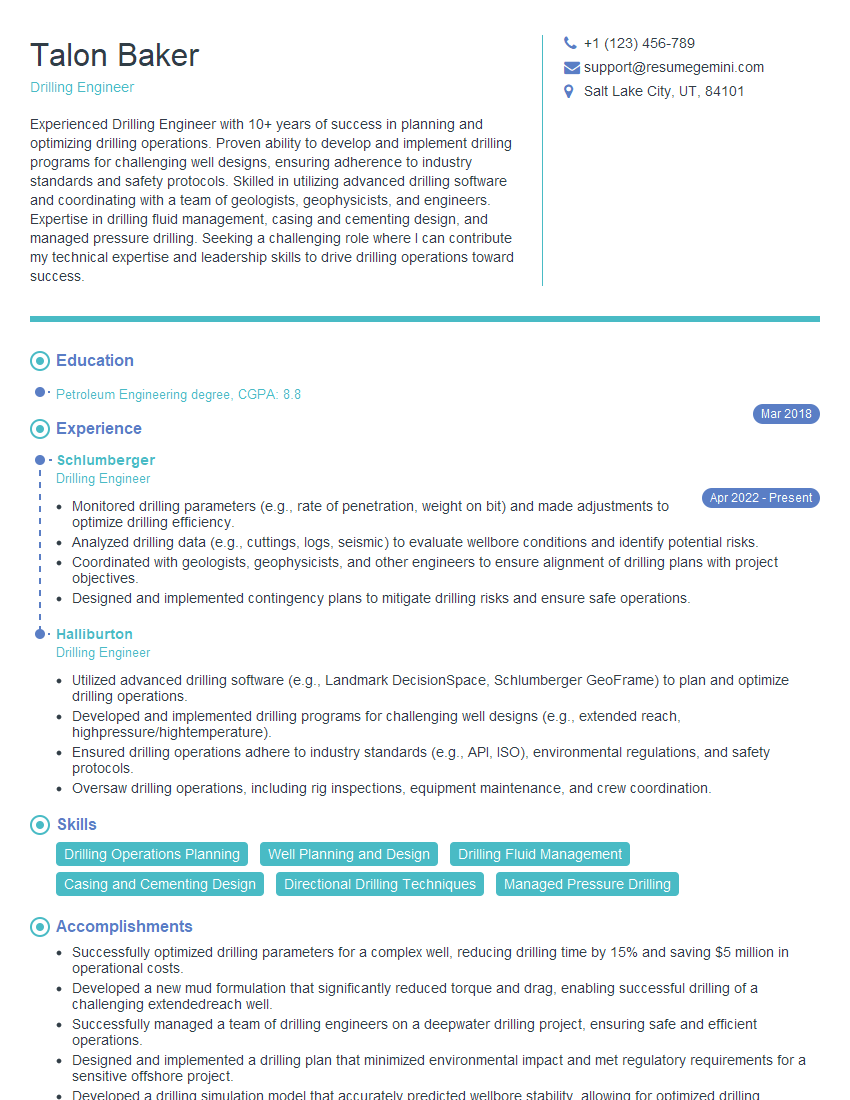
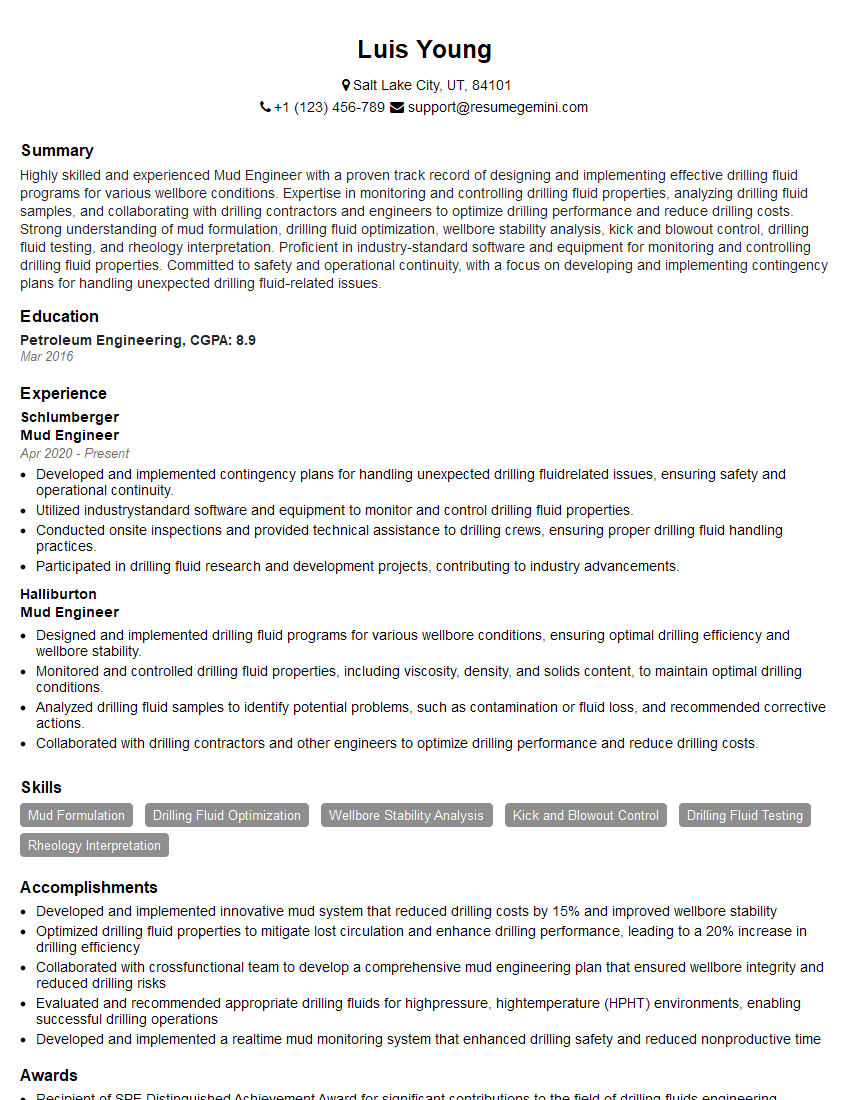
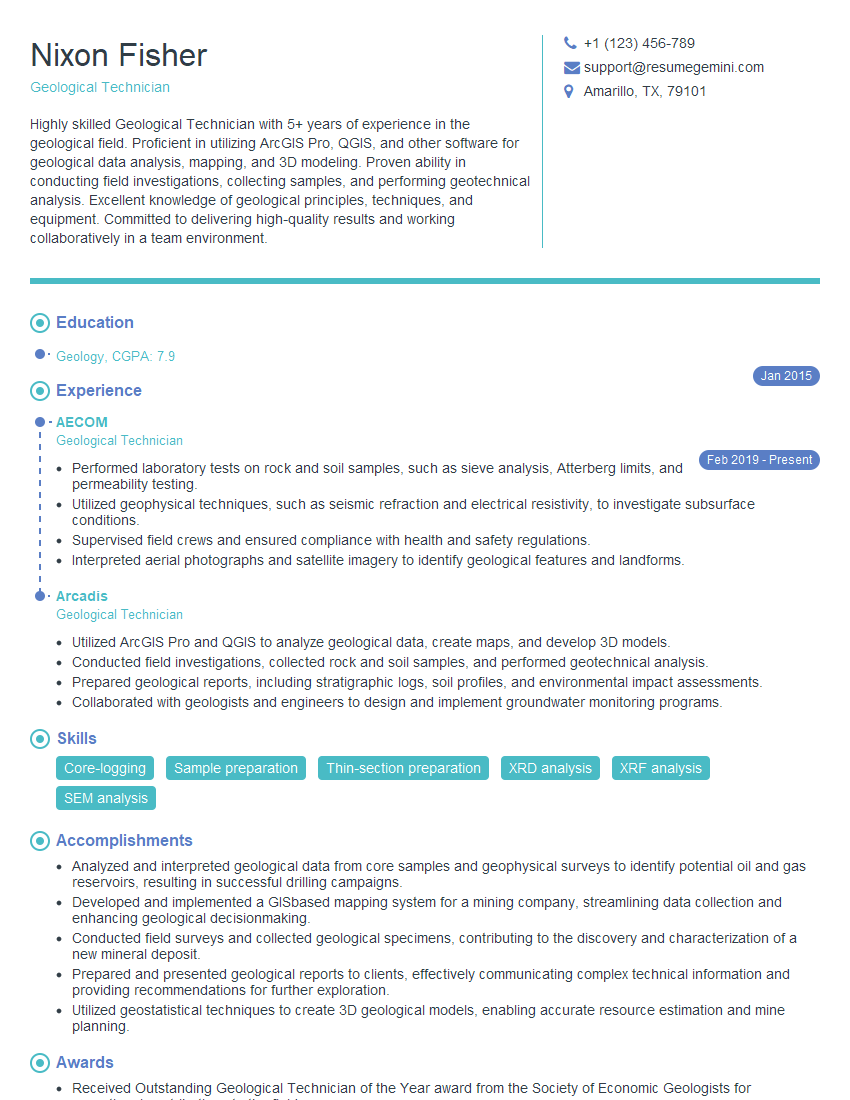
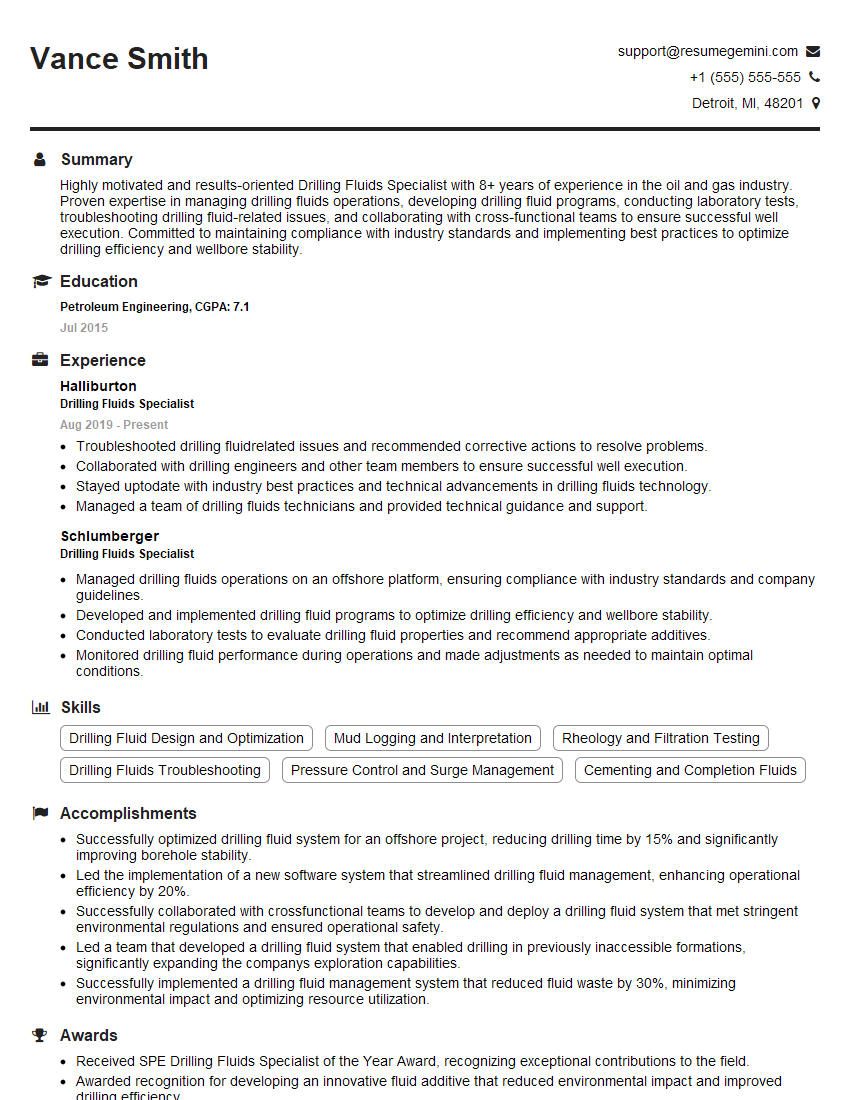
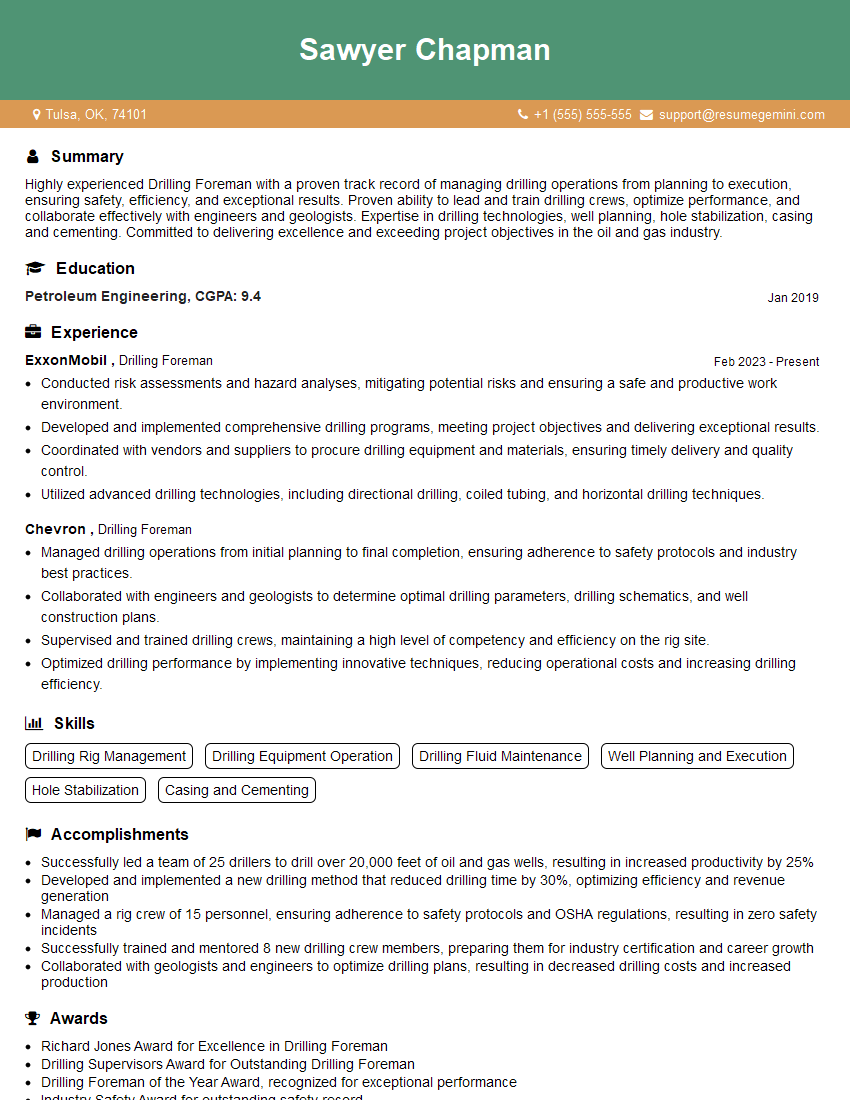
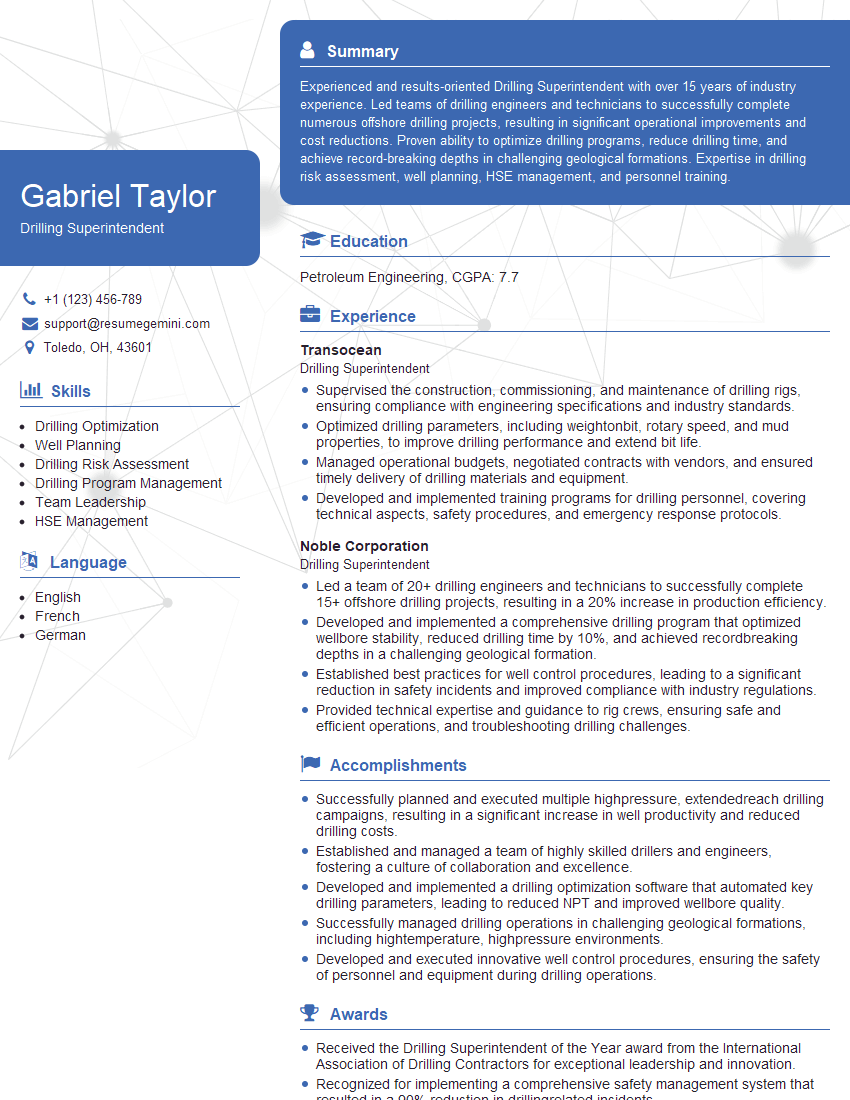
Mastering Geological Drilling principles opens doors to exciting and impactful careers in the energy, mining, and environmental sectors. A strong understanding of these concepts will significantly boost your interview performance and long-term career prospects. To increase your chances of landing your dream role, create an ATS-friendly resume that highlights your skills and experience effectively. ResumeGemini is a trusted resource to help you build a professional and compelling resume tailored to the specific requirements of Geological Drilling jobs. Examples of resumes optimized for this field are available through ResumeGemini to help guide you.

Explore more articles
Users Rating of Our Blogs
Share Your Experience
We value your feedback! Please rate our content and share your thoughts (optional).
What Readers Say About Our Blog
Very informative content, great job.
good