The right preparation can turn an interview into an opportunity to showcase your expertise. This guide to Risk Assessment and Vulnerability Analysis interview questions is your ultimate resource, providing key insights and tips to help you ace your responses and stand out as a top candidate.
Questions Asked in Risk Assessment and Vulnerability Analysis Interview
Q 1. Explain the difference between risk and vulnerability.
Think of a house. A vulnerability is a weakness in the house, like an unlocked window or a weak door. A risk is the potential for something bad to happen because of that weakness – for example, a burglar entering through the unlocked window and stealing your belongings. Vulnerability is the flaw; risk is the potential consequence of that flaw being exploited. In cybersecurity, a vulnerability is a security weakness in a system, application, or network. A risk is the potential for that weakness to be exploited by a threat, resulting in a negative outcome (data breach, system downtime, financial loss, etc.).
Q 2. Describe the risk assessment methodologies you are familiar with (e.g., NIST, OCTAVE, FAIR).
I’m experienced with several risk assessment methodologies, each with its strengths and weaknesses. NIST (National Institute of Standards and Technology) offers a comprehensive framework focusing on identifying, assessing, and mitigating risks. It’s highly structured and often used in government and regulated industries. OCTAVE (Operationally Critical Threat, Asset, and Vulnerability Evaluation) is a more collaborative and iterative approach, emphasizing stakeholder involvement in the risk assessment process. It’s useful for organizations that need to tailor their risk assessment to their specific operational context. Finally, FAIR (Factor Analysis of Information Risk) is a quantitative model that allows for the calculation of risk in monetary terms. This facilitates a more data-driven approach to prioritizing and managing risks. The choice of methodology depends heavily on the organization’s size, risk appetite, and regulatory requirements.
Q 3. How do you prioritize risks?
Risk prioritization is crucial. I typically use a combination of qualitative and quantitative methods. Qualitatively, I consider the likelihood (probability) of a threat exploiting a vulnerability and the impact (severity) if that happens. A simple matrix with likelihood and impact axes is helpful. For example, a high likelihood and high impact risk (like a critical vulnerability in a core system) would be prioritized over a low likelihood and low impact risk (like a minor vulnerability in a non-critical application). Quantitatively, methods like FAIR help assign monetary values to risks, facilitating objective prioritization based on potential financial loss. Ultimately, the best approach involves considering both qualitative and quantitative factors, and always aligning prioritization with business objectives.
Q 4. What are the key components of a vulnerability management program?
A robust vulnerability management program encompasses several key components:
- Vulnerability Identification: Regularly scanning systems and applications for known vulnerabilities using automated tools and manual penetration testing.
- Vulnerability Assessment: Analyzing identified vulnerabilities to determine their severity and potential impact.
- Vulnerability Remediation: Prioritizing and implementing fixes (patches, configuration changes, etc.) for identified vulnerabilities.
- Vulnerability Reporting and Tracking: Maintaining a centralized repository of vulnerabilities, their status, and remediation progress.
- Policy and Procedure Development: Establishing clear policies and procedures for vulnerability management across the organization.
- Security Awareness Training: Educating users about security best practices to prevent vulnerabilities from being introduced in the first place.
Q 5. Explain the concept of threat modeling.
Threat modeling is a proactive process of identifying and analyzing potential security threats to a system or application. It involves systematically thinking like an attacker to understand how they might exploit vulnerabilities. This process typically involves identifying assets, threats, vulnerabilities, and potential attack paths. A common approach is the STRIDE threat model, which categorizes threats as Spoofing, Tampering, Repudiation, Information Disclosure, Denial of Service, and Elevation of Privilege. By systematically walking through different scenarios, we can identify vulnerabilities and design mitigation strategies before the system is deployed, reducing the overall risk significantly.
Q 6. How do you identify and assess vulnerabilities in a system or application?
Identifying and assessing vulnerabilities involves a multi-pronged approach. Firstly, I use automated vulnerability scanners (like Nessus, OpenVAS, QualysGuard) to identify known vulnerabilities based on databases of known exploits. Secondly, I conduct penetration testing – simulating real-world attacks to uncover vulnerabilities that automated scanners might miss. This often includes techniques like code review (looking for flaws in the source code), social engineering tests (assessing the human element of security), and fuzzing (testing application input for unexpected behavior). Finally, manual analysis helps to investigate and verify findings from automated and penetration testing, and provides deeper insights into the root cause of any vulnerability discovered.
Q 7. Describe your experience with vulnerability scanning tools.
I have extensive experience with various vulnerability scanning tools, including Nessus, OpenVAS, QualysGuard, and Nexpose. I understand their capabilities and limitations, and I know how to configure them effectively to achieve accurate and comprehensive results. My experience goes beyond simply running scans; I can interpret the results, prioritize vulnerabilities based on severity and impact, and correlate findings from multiple tools to gain a holistic view of the security posture. More importantly, I understand that these tools are only part of the solution. They are best complemented by manual penetration testing and code reviews to obtain the most comprehensive assessment.
Q 8. How do you communicate risk findings to both technical and non-technical audiences?
Communicating risk findings effectively requires tailoring the message to the audience. For technical audiences, I use precise terminology, detailed reports with technical specifications, and vulnerability scoring systems like CVSS (Common Vulnerability Scoring System). I’ll include specific remediation steps, code examples where applicable, and potentially leverage visual aids like network diagrams to illustrate vulnerabilities.
For non-technical audiences, I prioritize clear, concise language, avoiding jargon. I use analogies and metaphors to explain complex concepts. For example, instead of saying “SQL injection vulnerability,” I might say, “Imagine someone using a secret back door to access our database – that’s what this vulnerability allows.” I focus on the potential impact – financial losses, reputational damage, or operational disruptions – and present the information in a visually appealing format, like charts and graphs, highlighting the severity and likelihood of each risk.
In both cases, I always emphasize the context of the findings, explaining the business impact and prioritization based on risk severity and likelihood. I make sure to propose actionable recommendations, not just present problems.
Q 9. What are the key regulatory compliance frameworks related to risk and vulnerability management?
Several regulatory compliance frameworks significantly impact risk and vulnerability management. The specifics depend on the industry and geographic location, but some key ones include:
- GDPR (General Data Protection Regulation): Focuses on protecting personal data within the European Union. It mandates robust data security measures and breach notification processes.
- HIPAA (Health Insurance Portability and Accountability Act): Governs the protection of sensitive patient health information in the United States. It sets strict rules on data security, access controls, and breach reporting.
- PCI DSS (Payment Card Industry Data Security Standard): Mandates security standards for organizations that process, store, or transmit credit card information. It covers areas like network security, access control, and vulnerability management.
- NIST Cybersecurity Framework: A voluntary framework developed by the National Institute of Standards and Technology (NIST) in the US, providing a comprehensive approach to cybersecurity risk management. It offers guidance across all aspects of cybersecurity, from identify to recover.
- ISO 27001: An internationally recognized standard for information security management systems (ISMS). It provides a framework for establishing, implementing, maintaining, and continually improving an ISMS.
Compliance with these frameworks often necessitates regular risk assessments, vulnerability scanning, penetration testing, and the implementation of robust security controls.
Q 10. Explain the concept of residual risk.
Residual risk is the risk that remains after you’ve implemented your risk mitigation strategies. It’s the risk you’re essentially accepting. Think of it like this: you have a house (your system), and you’ve installed a security system (risk mitigation). Despite the security system, there’s still a chance of a break-in (residual risk).
It’s crucial to understand and accept residual risk, as it’s impossible to eliminate all risk entirely. The goal is to reduce risk to an acceptable level, balancing the cost and effort of mitigation with the potential impact of the remaining risk. A thorough cost-benefit analysis helps determine this acceptable level. Documenting the residual risk is also essential for transparency and accountability.
Q 11. How do you measure the effectiveness of risk mitigation strategies?
Measuring the effectiveness of risk mitigation strategies involves a multi-faceted approach. Key metrics include:
- Vulnerability reduction rate: Tracking the number of vulnerabilities identified before and after implementing mitigation strategies.
- Mean Time To Resolution (MTTR): Measuring the time taken to resolve vulnerabilities after they are discovered.
- Security incident frequency and severity: Monitoring the number and impact of security incidents before and after mitigation.
- Compliance audit results: Assessing compliance with relevant regulatory frameworks and industry standards.
- Key Risk Indicators (KRIs): Defining and tracking specific metrics aligned with organizational strategic objectives.
Regular security assessments, vulnerability scanning, and penetration testing are crucial for evaluating the effectiveness of mitigation strategies. Comparing pre- and post-mitigation metrics helps quantify the impact of the implemented controls.
Q 12. Describe your experience with penetration testing.
I have extensive experience in penetration testing, encompassing both black-box (no prior knowledge of the system) and white-box (with full system knowledge) testing methodologies. My experience includes conducting vulnerability assessments, exploitation attempts, and reporting on findings with actionable remediation advice. I’ve worked with various testing tools, including Nessus, Metasploit, and Burp Suite, and I’m familiar with OWASP (Open Web Application Security Project) testing guidelines. For example, in a recent engagement, I discovered a critical SQL injection vulnerability in a web application that could have allowed attackers to compromise the entire database. My detailed report included the steps to reproduce the vulnerability, its severity, and specific code modifications required to fix it.
I always ensure that penetration testing is conducted ethically and with appropriate authorization. I follow a well-defined scope and timeline, and I maintain meticulous documentation throughout the process.
Q 13. What are some common vulnerabilities you have encountered?
Over the years, I’ve encountered a wide range of vulnerabilities. Some of the most common include:
- SQL Injection: Allows attackers to manipulate database queries to gain unauthorized access to data.
- Cross-Site Scripting (XSS): Enables attackers to inject malicious scripts into web applications.
- Cross-Site Request Forgery (CSRF): Tricks users into performing unwanted actions on a web application.
- Weak or default passwords: A major security vulnerability across all systems.
- Unpatched software: Leaving systems vulnerable to known exploits.
- Misconfigured cloud services: Improperly configured cloud storage or servers expose sensitive data.
- Lack of input validation: Failing to properly validate user inputs can allow malicious code to be executed.
The frequency and severity of these vulnerabilities vary, but addressing them proactively is crucial to minimizing organizational risk. Regular vulnerability scanning and penetration testing can help identify and mitigate these issues.
Q 14. How do you handle conflicting priorities in risk management?
Conflicting priorities in risk management are common. I address this through a structured approach:
- Prioritization Framework: Employing a risk matrix that considers both likelihood and impact helps rank risks objectively. This allows for a data-driven approach to prioritizing mitigation efforts.
- Stakeholder Alignment: Clearly communicating the risk landscape to stakeholders, including business leaders and technical teams, facilitates a shared understanding and helps align priorities.
- Cost-Benefit Analysis: Evaluating the cost of implementing mitigation strategies against the potential financial and reputational impact of the risks provides a clear rationale for resource allocation.
- Phased Approach: Breaking down mitigation efforts into manageable phases allows for a more focused and efficient approach, addressing the most critical risks first.
- Documentation and Communication: Maintaining thorough documentation of risk assessments, mitigation strategies, and stakeholder discussions ensures transparency and accountability.
Open communication and collaboration are key to resolving conflicts and ensuring that risk management efforts are aligned with overall business objectives. It is sometimes necessary to compromise, but this should be informed by a sound risk assessment and a clear understanding of the trade-offs involved.
Q 15. Explain the difference between qualitative and quantitative risk analysis.
Qualitative and quantitative risk analysis are two approaches to assessing risk, differing primarily in how they measure and express risk. Qualitative analysis uses descriptive terms and subjective judgments to assess the likelihood and impact of risks. Think of it as a ‘high-level’ overview. Quantitative analysis, on the other hand, uses numerical data and statistical methods to measure the likelihood and impact, providing a more precise, ‘low-level’ assessment.
- Qualitative Analysis: Uses scales like ‘high,’ ‘medium,’ and ‘low’ for likelihood and impact. It’s faster and easier to implement, but less precise. For example, we might assess the risk of a data breach as ‘high likelihood’ and ‘high impact’ based on industry trends and expert opinion, without assigning specific numerical probabilities or financial losses.
- Quantitative Analysis: Employs statistical methods and data to express likelihood as probabilities (e.g., a 20% chance of a power outage) and impact as monetary values (e.g., a $100,000 loss due to downtime). This provides a more accurate risk profile, but requires more data and resources. We could, for example, analyze historical outage data to determine the probability of a power outage and calculate the financial impact of lost productivity and repair costs.
Often, a combined approach – using qualitative analysis to prioritize risks and quantitative analysis to further assess the most critical ones – provides the best results.
Career Expert Tips:
- Ace those interviews! Prepare effectively by reviewing the Top 50 Most Common Interview Questions on ResumeGemini.
- Navigate your job search with confidence! Explore a wide range of Career Tips on ResumeGemini. Learn about common challenges and recommendations to overcome them.
- Craft the perfect resume! Master the Art of Resume Writing with ResumeGemini’s guide. Showcase your unique qualifications and achievements effectively.
- Don’t miss out on holiday savings! Build your dream resume with ResumeGemini’s ATS optimized templates.
Q 16. How do you stay up-to-date with the latest threats and vulnerabilities?
Staying current in the ever-evolving threat landscape is paramount. My strategy involves a multi-faceted approach:
- Subscription to threat intelligence feeds: I subscribe to reputable sources like security firms (e.g., CrowdStrike, FireEye) and government agencies (e.g., CISA) that provide regular updates on emerging threats and vulnerabilities.
- Industry conferences and webinars: Attending conferences and participating in webinars allows me to learn directly from experts and network with peers in the field.
- Reading security blogs and research papers: I regularly read blogs and articles from leading security researchers and follow relevant publications in academic journals. This ensures I’m aware of the latest research and techniques used by threat actors.
- Vulnerability scanning and penetration testing tools: Using tools like Nessus or OpenVAS to actively scan systems for vulnerabilities and perform regular penetration testing enables hands-on knowledge of current exploits.
- Following security news and social media: Staying abreast of current events and discussions on platforms like Twitter helps in recognizing and responding to emerging threats quickly.
This continuous learning process allows me to anticipate potential threats, adapt my risk assessments, and refine my security strategies.
Q 17. What is your experience with risk registers?
I have extensive experience working with risk registers. A risk register is a centralized document that records, tracks, and manages identified risks. My experience encompasses the entire lifecycle of risk register management:
- Identification and Documentation: I’m proficient in facilitating risk identification workshops and documenting identified risks, including their description, likelihood, impact, owner, and proposed mitigation strategies.
- Prioritization: I utilize various methods such as risk matrices (combining likelihood and impact) to prioritize risks for remediation, focusing on the most critical ones first.
- Monitoring and Reporting: I regularly update the risk register, track the effectiveness of implemented mitigation strategies, and generate reports for stakeholders to highlight the current risk profile and progress on risk reduction.
- Risk Response Planning: I collaborate with stakeholders to develop and document appropriate risk responses (avoidance, mitigation, transfer, acceptance).
- Software Tools: I’m familiar with various software tools used for managing risk registers, such as Jira, spreadsheets, and specialized risk management platforms.
I ensure the risk register is dynamic and reflects the ever-changing threat landscape and organizational context.
Q 18. Describe your experience with creating and maintaining security policies.
Creating and maintaining robust security policies is crucial for mitigating risks. My experience includes:
- Policy Development: I have participated in the creation of numerous security policies, including access control policies, data security policies, incident response policies, and acceptable use policies. This involves collaborating with stakeholders to define clear objectives, scope, and guidelines.
- Policy Enforcement: I’ve worked with teams to implement and enforce these policies, ensuring that they’re integrated into organizational processes and workflows.
- Policy Review and Updates: I recognize that security policies need to be regularly reviewed and updated to reflect changes in the threat landscape and regulatory requirements. I conduct regular reviews and incorporate updates based on emerging threats and best practices.
- Communication and Training: It’s vital that employees understand and adhere to security policies. I have contributed to developing training programs and communication materials to ensure effective awareness and compliance.
- Policy Alignment: Ensuring alignment between security policies and other relevant organizational policies, such as those governing data privacy and compliance, is critical. I ensure this compatibility in all my work.
I believe that effective security policies must be clearly written, easily accessible, regularly updated, and enforced consistently.
Q 19. How do you perform a business impact analysis (BIA)?
A Business Impact Analysis (BIA) identifies potential disruptions to business operations and quantifies the consequences of those disruptions. It helps prioritize resources for risk mitigation. Here’s how I conduct a BIA:
- Identify Critical Business Functions: I work with business units to identify core functions critical to the organization’s success. This might involve things like customer service, order processing, or financial reporting.
- Identify Potential Threats and Disruptions: We brainstorm potential events (natural disasters, cyberattacks, equipment failures) that could disrupt these functions.
- Analyze the Impact: For each threat, we assess the potential impact on the critical business functions – financial loss, reputational damage, legal liabilities, or operational downtime. We often use qualitative scales (high, medium, low) initially.
- Determine Recovery Time Objectives (RTOs) and Recovery Point Objectives (RPOs): RTO defines the maximum acceptable downtime after a disruption, while RPO indicates the maximum acceptable data loss. For example, an RTO of 4 hours for an e-commerce website means it must be back online within 4 hours of an outage. An RPO of 2 hours means no more than 2 hours of data loss is acceptable.
- Develop Recovery Strategies: We develop plans to restore critical business functions within the defined RTOs and RPOs, including backup and recovery procedures, disaster recovery plans, and business continuity plans.
- Document Findings: The results are documented in a comprehensive BIA report, which is used to inform risk management and resource allocation decisions.
The BIA informs the risk assessment process by providing concrete data on potential losses, helping prioritize mitigation efforts.
Q 20. How do you handle a critical vulnerability discovered in production?
Discovering a critical vulnerability in production is a serious incident requiring immediate action. My approach follows a structured process:
- Containment: The immediate priority is to contain the vulnerability to prevent exploitation. This might involve isolating affected systems, blocking network access, or implementing temporary workarounds.
- Analysis: Thoroughly analyze the vulnerability to understand its scope, potential impact, and exploitability. This will often include a review of logs, and potentially further penetration testing, or vulnerability scanning.
- Remediation: Develop and implement a fix. This may involve applying security patches, upgrading software, or implementing other mitigation controls. Prioritization is key in determining whether an immediate fix is required, or whether a longer-term remediation strategy is acceptable.
- Validation: After remediation, rigorously test the system to ensure the vulnerability is effectively addressed and the system is secure.
- Communication: Maintain transparent communication with stakeholders, including leadership, affected users, and regulatory bodies where appropriate.
- Post-Incident Review: Conduct a thorough post-incident review to identify the root cause of the vulnerability and improve security processes to prevent similar occurrences in the future.
This response needs to be rapid and efficient. The severity and potential impact determine the urgency of each step, with critical vulnerabilities necessitating immediate containment and remediation.
Q 21. Explain the importance of incident response planning in relation to risk management.
Incident response planning is integral to effective risk management. It’s the ‘what to do’ part after a risk event has occurred. A well-defined incident response plan helps minimize the impact of security incidents and ensures a quick recovery.
- Reducing Losses: A robust plan reduces the financial, reputational, and operational losses associated with security breaches and other incidents.
- Faster Recovery: A structured approach minimizes disruption and downtime, ensuring a swift return to normal operations.
- Compliance: Many regulations and industry standards (like PCI DSS) mandate having a comprehensive incident response plan.
- Improved Preparedness: Regularly testing and updating the plan ensures the organization is well-prepared to handle various incidents efficiently.
- Lessons Learned: Post-incident reviews of the plan’s effectiveness help organizations identify areas for improvement and refine their processes to prevent similar occurrences.
In essence, incident response planning is the operational arm of risk management. It translates risk assessments and mitigation strategies into concrete actions to be taken when things go wrong. Without a strong incident response plan, the value of risk assessment and mitigation efforts is significantly diminished.
Q 22. What is your experience with using risk scoring matrices?
Risk scoring matrices are crucial tools for quantifying and prioritizing risks. They typically involve assigning numerical values to the likelihood and impact of a risk, then multiplying these values to obtain a risk score. This score helps prioritize mitigation efforts, focusing resources on the highest-risk areas first.
My experience encompasses using various matrices, including those based on qualitative scales (e.g., low, medium, high) and quantitative scales (e.g., 1-5 or 1-10). I’ve used them across different sectors, from IT security to operational risk management. For example, in a recent IT security assessment, we used a matrix with likelihood ranging from 1 (unlikely) to 5 (almost certain) and impact from 1 (negligible) to 5 (catastrophic). A vulnerability with a likelihood of 4 and an impact of 5 would receive a score of 20, signifying a high priority for remediation.
I’m proficient in selecting the appropriate matrix for a given context, considering factors like data availability, stakeholder understanding, and the specific nature of the risks being assessed. Furthermore, I understand the limitations of these matrices – they rely on subjective judgments and may not capture all nuances of complex risks. However, they provide a valuable framework for structured risk analysis and communication.
Q 23. How do you incorporate risk management into the software development lifecycle (SDLC)?
Integrating risk management into the SDLC is vital for building secure and reliable software. My approach involves embedding risk considerations throughout each phase of the SDLC – from planning and requirements gathering to testing, deployment, and maintenance.
- Requirements Gathering: We identify potential risks early by analyzing user stories and functional specifications. This includes security risks, performance risks, and compliance risks.
- Design: Security architecture and design reviews are conducted to address identified risks and implement appropriate controls. Threat modeling is employed to proactively identify vulnerabilities.
- Development: Secure coding practices are enforced, along with regular code reviews and static analysis to identify vulnerabilities. Automated testing helps detect security flaws early.
- Testing: Penetration testing and vulnerability scanning are integral to identifying and mitigating security risks before release.
- Deployment: Secure deployment practices are followed, considering factors such as infrastructure security and access control.
- Maintenance: Continuous monitoring and incident response plans are essential for addressing security incidents and vulnerabilities that may emerge after deployment.
This iterative approach ensures that risks are proactively addressed throughout the entire process, reducing the chances of costly and time-consuming fixes later on. The success of this method depends on effective communication and collaboration between development teams, security teams, and stakeholders.
Q 24. Describe a situation where you had to make a difficult risk-based decision.
In a previous role, we faced a critical decision regarding the release of a new software update. Testing revealed a low-probability, high-impact vulnerability. Releasing the update risked significant financial and reputational damage if the vulnerability were exploited. However, delaying the release would negatively affect our customers, jeopardizing project timelines and potentially impacting revenue.
To navigate this dilemma, we convened a risk assessment meeting involving stakeholders from development, security, and product management. We carefully weighed the potential consequences of both releasing and delaying the update. We developed a mitigation strategy, prioritizing a rapid patch release following the initial deployment, coupled with intense monitoring for any signs of exploitation. We also enhanced our communication plan to inform users of the patch and address any concerns. The decision to proceed with the release, accompanied by the mitigation plan, was ultimately deemed the least risky option, given the context and available data. The subsequent successful deployment and rapid patch release demonstrated the effectiveness of this risk-based decision-making process.
Q 25. Explain your experience with different types of risk assessments (e.g., IT, physical, operational).
My experience encompasses a wide range of risk assessments, including IT, physical, and operational risks.
- IT Risk Assessments: I’ve conducted numerous assessments focusing on vulnerabilities in software, networks, and systems. This includes vulnerability scanning, penetration testing, and security audits. I’m familiar with frameworks like NIST Cybersecurity Framework and ISO 27005.
- Physical Risk Assessments: I’ve assessed physical security threats, such as theft, vandalism, and natural disasters. This involves site surveys, reviewing security systems (CCTV, access control), and evaluating emergency response plans.
- Operational Risk Assessments: I’ve evaluated operational processes to identify potential disruptions and inefficiencies. This involves analyzing business processes, identifying key risks and dependencies, and developing mitigation strategies.
In each case, my approach involves clearly defining the scope, identifying potential hazards, analyzing likelihood and impact, and developing appropriate controls. The methodologies employed are tailored to the specific type of risk being assessed.
Q 26. What are the limitations of risk assessment methodologies?
Risk assessment methodologies, while valuable, have inherent limitations.
- Subjectivity: Risk assessment often involves subjective judgments regarding likelihood and impact, particularly when dealing with low-probability, high-impact events. These judgments can be influenced by biases and lack of sufficient data.
- Data limitations: Accurate and comprehensive data may be unavailable or difficult to obtain, especially for rare or unforeseen events. This can lead to incomplete or inaccurate risk assessments.
- Complexity: Interdependencies between various risks can be complex and difficult to model accurately. Oversimplification can lead to an incomplete picture.
- Changing environments: Risk landscapes are constantly evolving. Assessments must be regularly reviewed and updated to reflect these changes. Otherwise they become obsolete.
- Resource constraints: Thorough risk assessments can be time-consuming and resource-intensive. Organizations may be constrained by budget and personnel limitations.
Recognizing these limitations is crucial for interpreting and using risk assessment results effectively. Combining quantitative and qualitative methods, regular review and updates, and transparency regarding assumptions and limitations are essential to mitigate these limitations.
Q 27. How do you ensure the accuracy and reliability of risk assessments?
Ensuring the accuracy and reliability of risk assessments requires a rigorous and systematic approach.
- Data quality: Using reliable and relevant data sources is crucial. This might involve reviewing audit logs, security scans, incident reports, and other relevant documentation.
- Methodology selection: Choosing the appropriate methodology for the context is essential. This may involve quantitative methods (e.g., statistical modeling), qualitative methods (e.g., expert interviews), or a combination of both.
- Peer review: Having the assessment reviewed by independent experts helps identify biases and potential errors.
- Validation and verification: Comparing assessment results with actual events (e.g., comparing predicted vulnerabilities with those found during penetration testing) helps validate the accuracy of the assessment.
- Documentation: Maintaining clear and comprehensive documentation of the assessment process, including assumptions, methodologies, and results, is essential for transparency and accountability.
Regular updates and revisions of the assessment are also critical to reflect changes in the environment and new information. Continuously monitoring the effectiveness of controls and refining the assessment process are key components of maintaining accuracy and reliability.
Q 28. Describe your approach to managing third-party risks.
Managing third-party risks is a crucial aspect of overall risk management. My approach involves a multi-faceted strategy that starts with a thorough due diligence process. This includes evaluating the third-party’s security posture, reviewing their security policies and procedures, and potentially conducting security assessments.
We use a tiered approach, with higher-risk third parties receiving more rigorous scrutiny. This might involve contractual agreements with specific security requirements, regular security audits, and ongoing monitoring of their performance. For instance, we might require third-party vendors to undergo penetration testing or to comply with specific security standards (e.g., ISO 27001).
Communication and collaboration are key. Maintaining open lines of communication with third-party vendors allows for the timely identification and resolution of security concerns. Regular performance reviews and security audits provide valuable insights and allow for the adjustment of our risk mitigation strategies as needed. This continuous monitoring helps ensure that third-party risks remain effectively managed.
Key Topics to Learn for Risk Assessment and Vulnerability Analysis Interview
- Risk Identification and Assessment Methodologies: Understanding various frameworks (e.g., NIST, ISO 27005) and their practical application in identifying and evaluating potential risks.
- Vulnerability Analysis Techniques: Mastering techniques like vulnerability scanning, penetration testing, and code review to identify weaknesses in systems and applications. Consider the practical application of these techniques in diverse environments (e.g., cloud, on-premise).
- Threat Modeling: Developing and applying threat modeling techniques to proactively identify potential threats and their impact on organizational assets. Discuss real-world examples and different modeling approaches.
- Risk Mitigation Strategies: Exploring and evaluating different risk mitigation strategies (e.g., avoidance, transfer, mitigation) and their cost-benefit analysis. Prepare to discuss the selection process for the most effective strategies.
- Quantitative and Qualitative Risk Analysis: Understanding the differences and applications of both approaches, and how to present findings effectively to diverse audiences.
- Compliance and Regulatory Frameworks: Familiarity with relevant industry regulations and standards (e.g., GDPR, HIPAA, PCI DSS) and how they influence risk assessment and vulnerability analysis processes.
- Reporting and Communication: Understanding how to effectively communicate risk assessments and vulnerability analysis findings to both technical and non-technical stakeholders. Practice presenting complex information concisely and clearly.
- Emerging Threats and Technologies: Demonstrate awareness of current trends in cybersecurity threats and vulnerabilities, and how new technologies impact risk management practices.
Next Steps
Mastering Risk Assessment and Vulnerability Analysis is crucial for a successful and rewarding career in cybersecurity. It opens doors to challenging roles with significant impact. To maximize your job prospects, create a compelling and ATS-friendly resume that highlights your skills and experience. ResumeGemini is a trusted resource to help you build a professional resume that stands out. Examples of resumes tailored specifically to Risk Assessment and Vulnerability Analysis positions are available to guide you. Invest time in crafting a strong resume—it’s your first impression on potential employers.
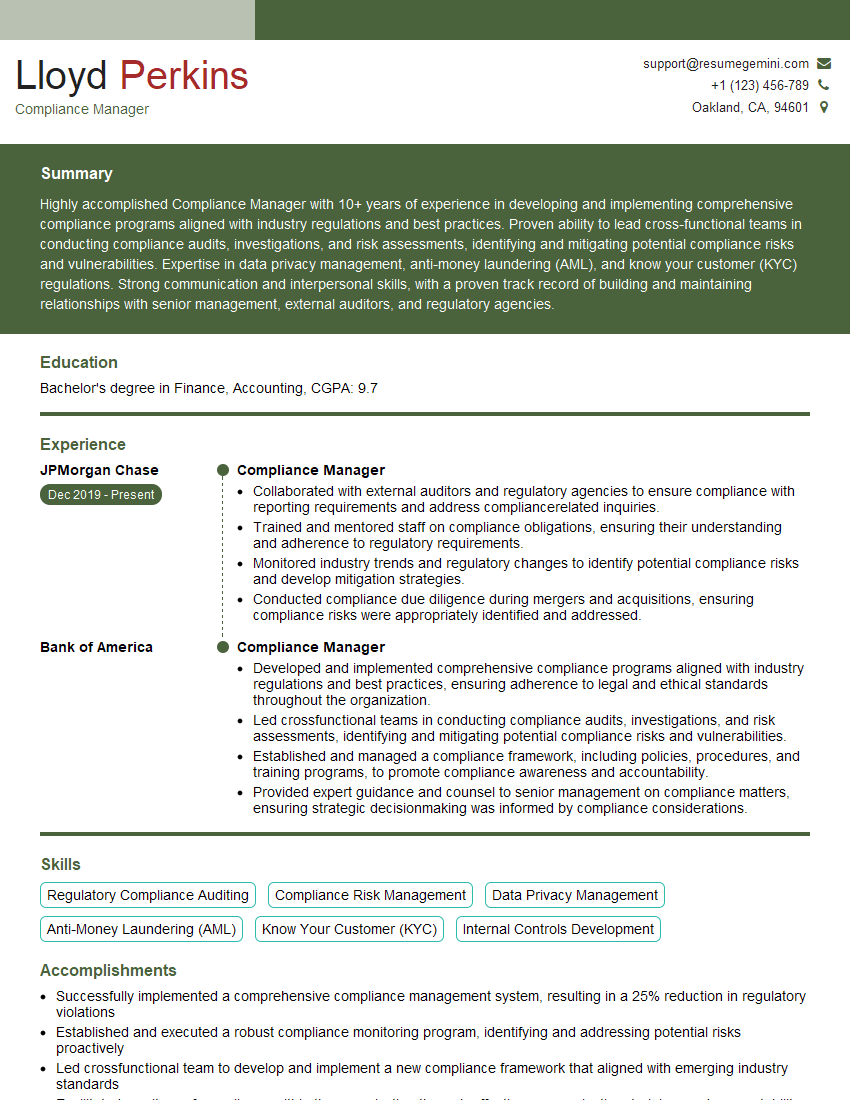
Compliance Manager Resume Sample

Compliance Officer Resume Sample
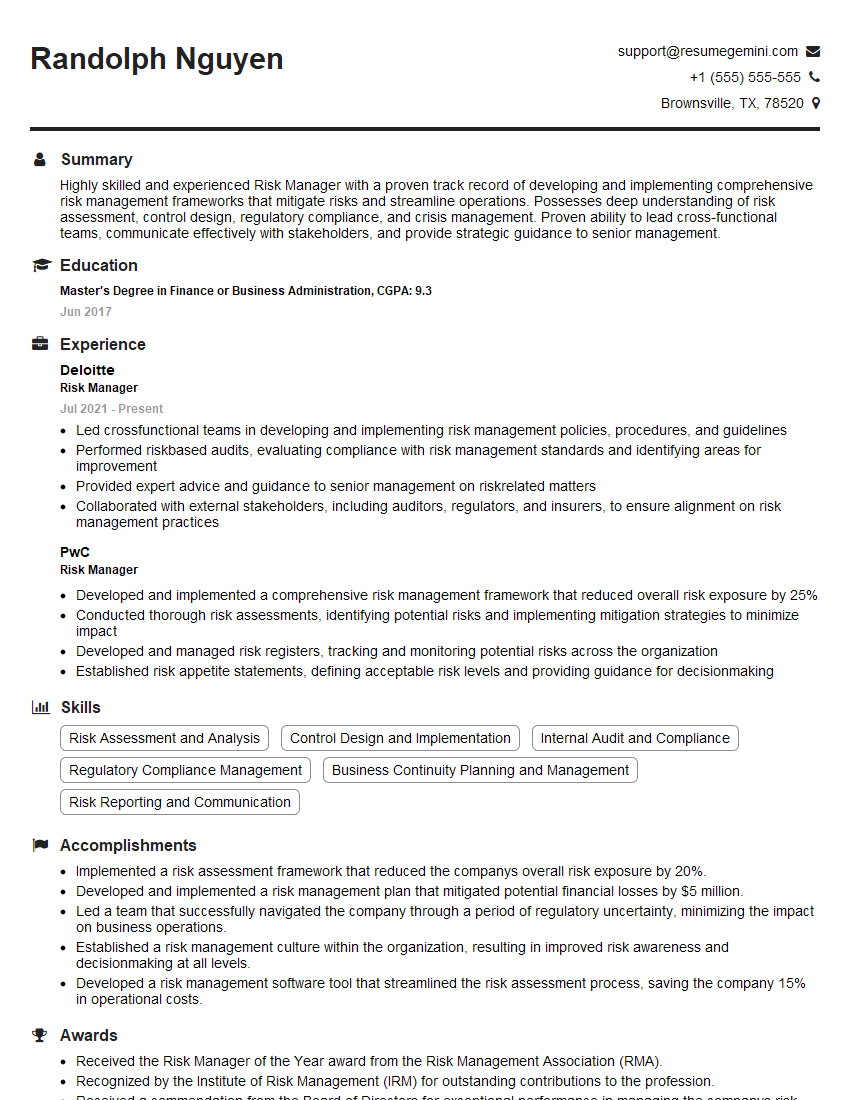
Risk Manager Resume Sample
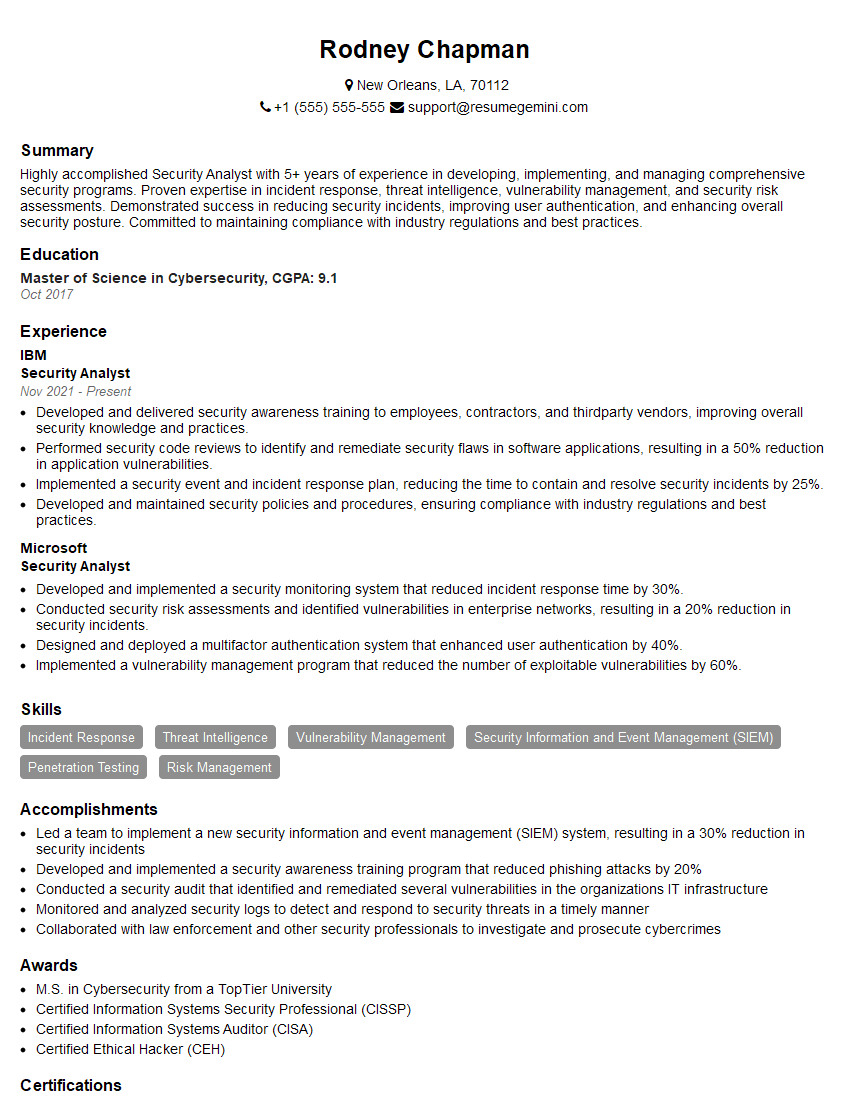
Security Analyst Resume Sample
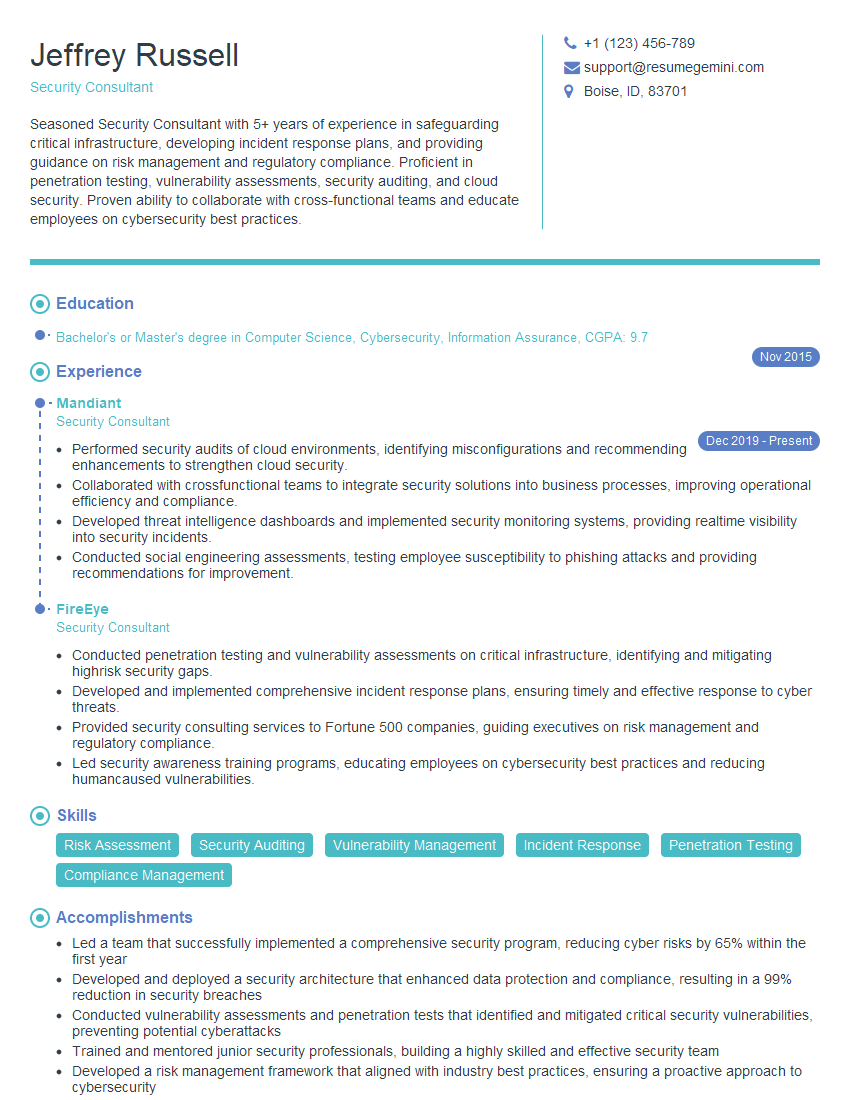
Security Consultant Resume Sample
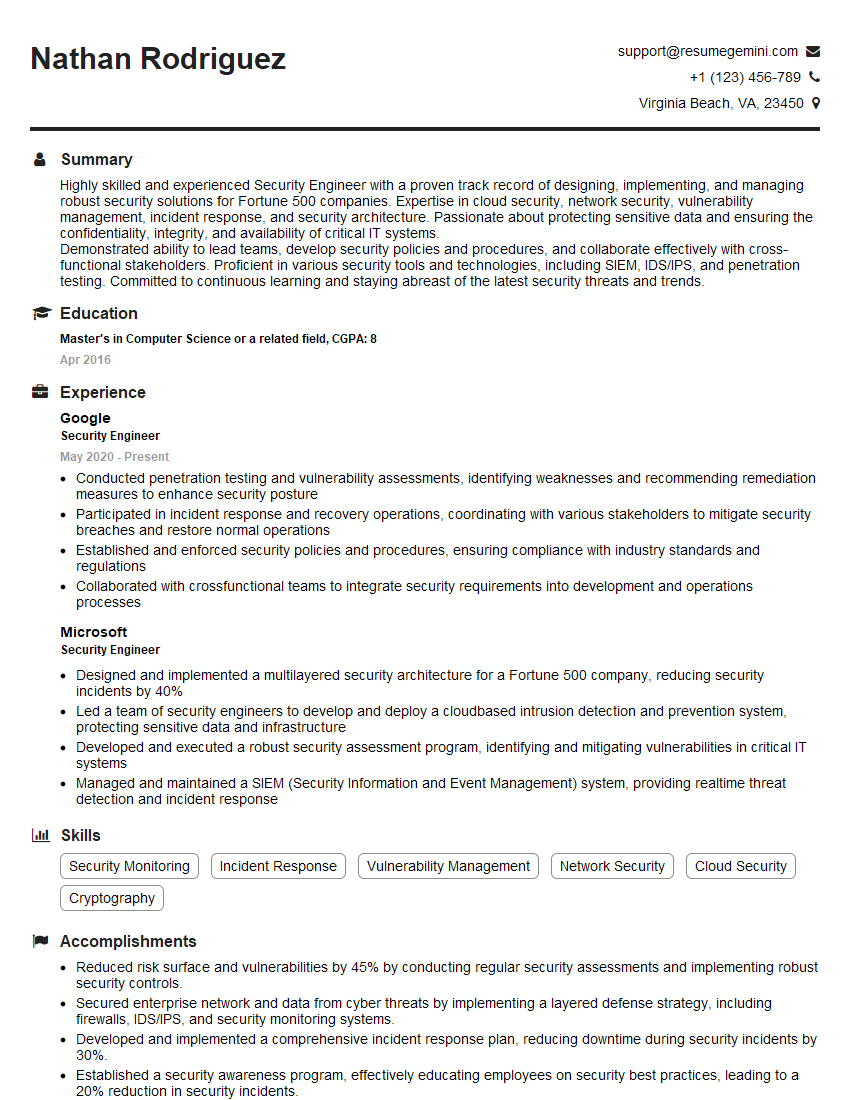
Security Engineer Resume Sample
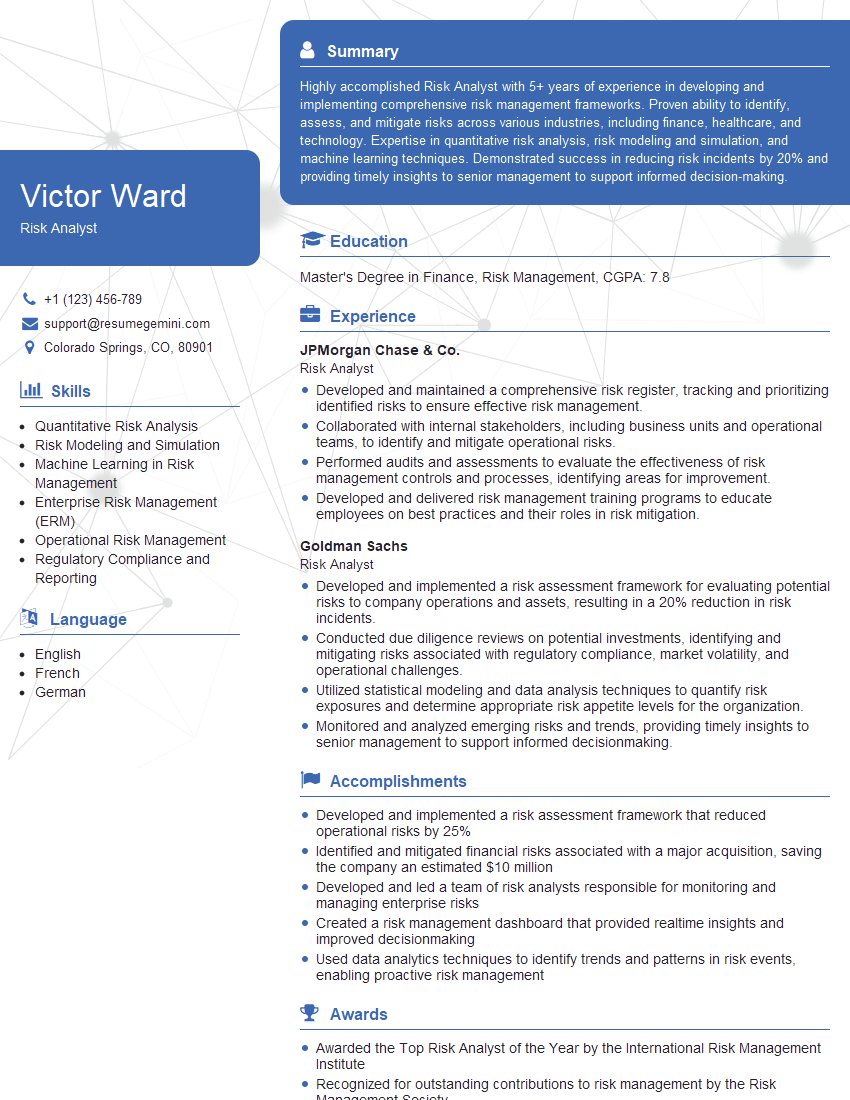
Risk Analyst Resume Sample
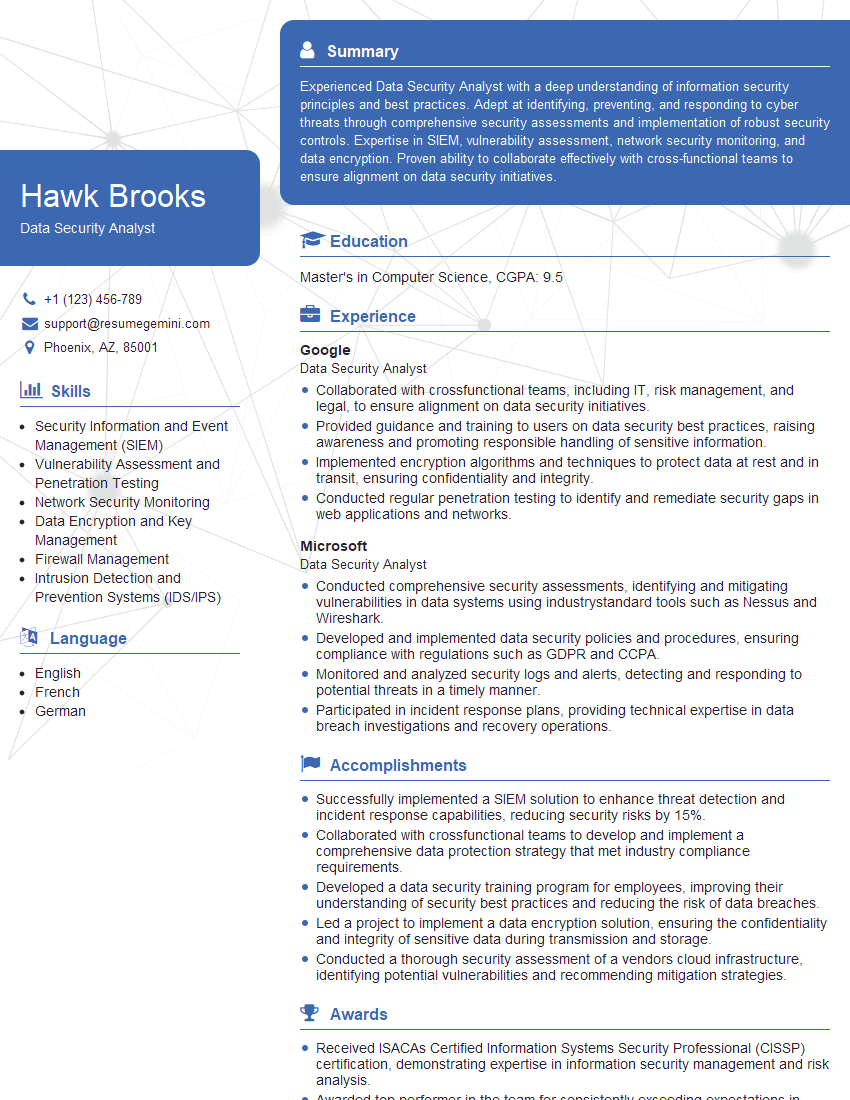
Data Security Analyst Resume Sample
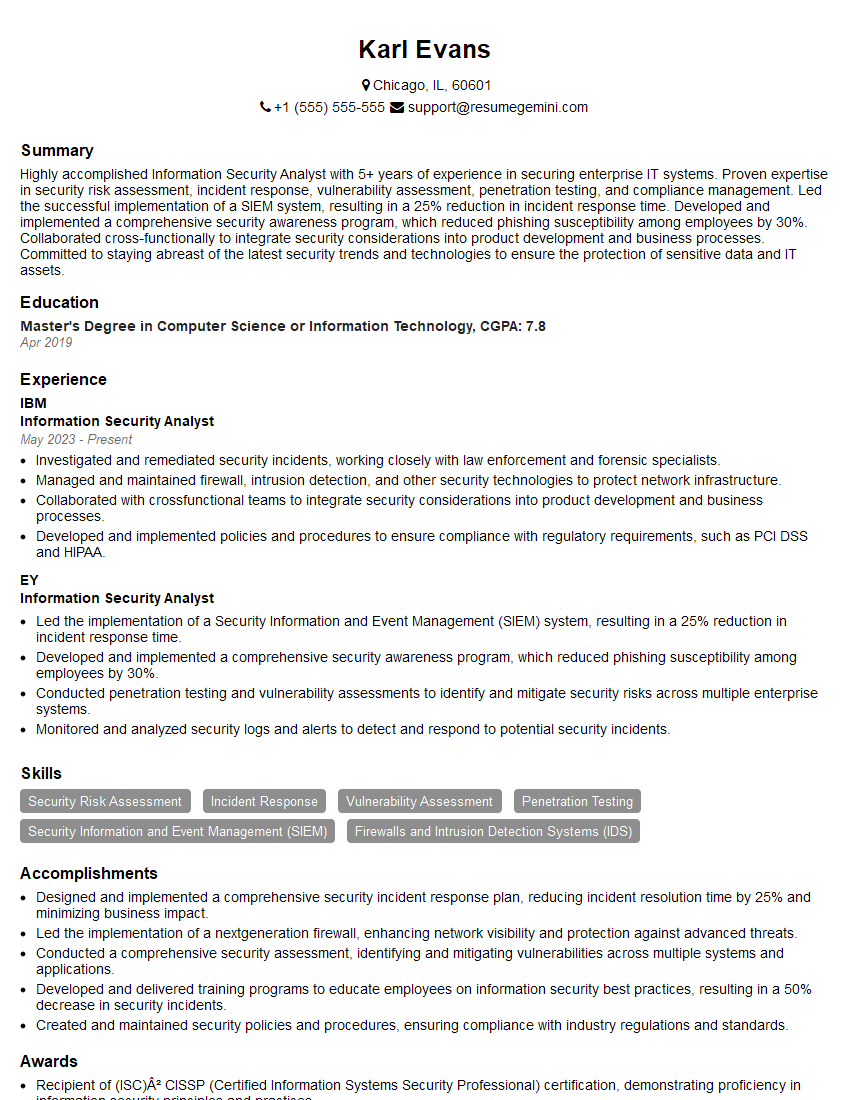
Information Security Analyst Resume Sample
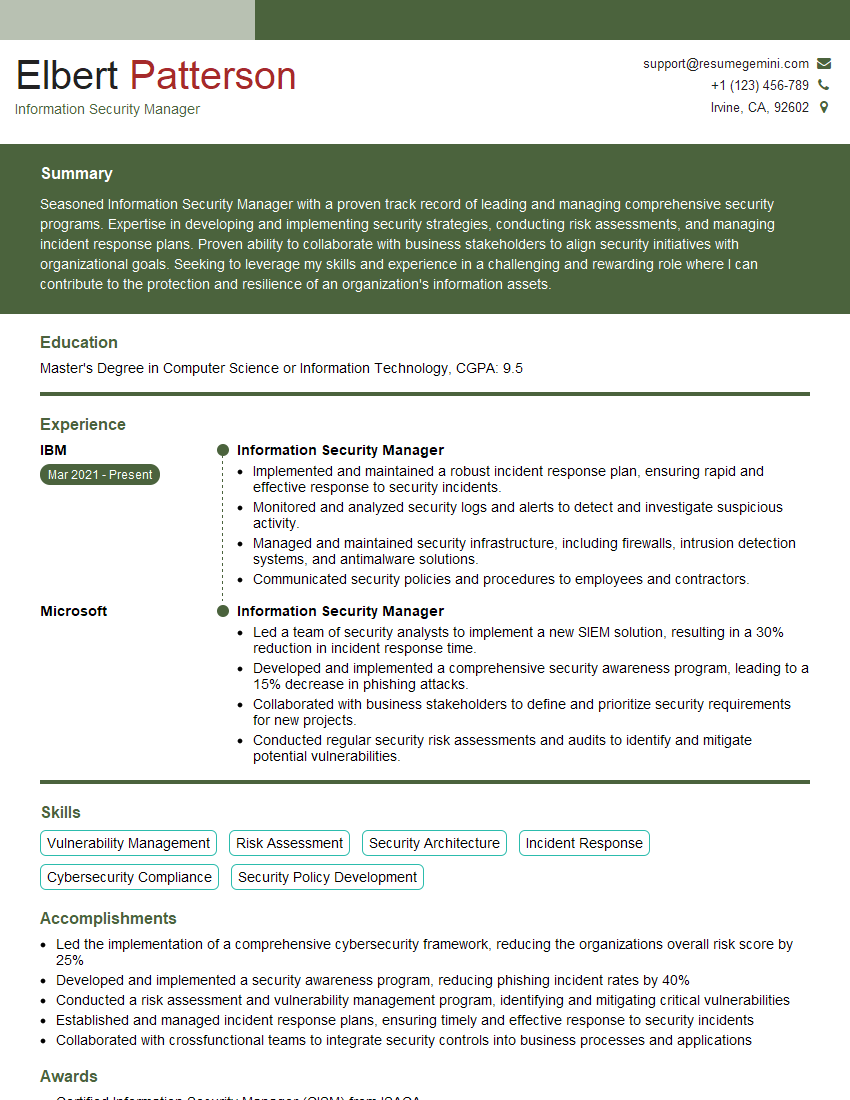
Information Security Manager Resume Sample
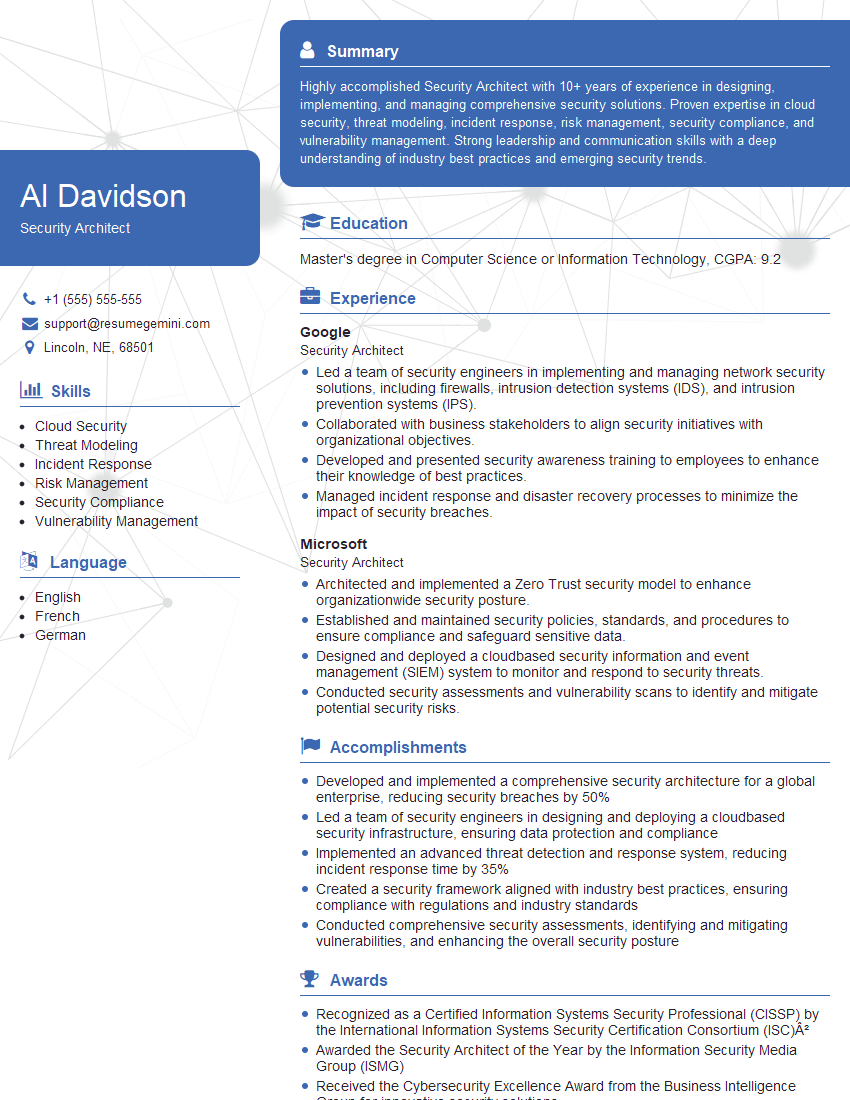
Security Architect Resume Sample
Explore more articles
Users Rating of Our Blogs
Share Your Experience
We value your feedback! Please rate our content and share your thoughts (optional).
What Readers Say About Our Blog
Very informative content, great job.
good