Interviews are opportunities to demonstrate your expertise, and this guide is here to help you shine. Explore the essential 2D and 3D Directional Survey Data Visualization interview questions that employers frequently ask, paired with strategies for crafting responses that set you apart from the competition.
Questions Asked in 2D and 3D Directional Survey Data Visualization Interview
Q 1. Explain the difference between 2D and 3D directional survey data visualization.
The key difference between 2D and 3D directional survey data visualization lies in their ability to represent the wellbore trajectory. 2D visualizations, typically presented as profiles or planar projections, show the well path in a simplified, two-dimensional space. Imagine looking at a map – you see the horizontal and vertical position, but not the full three-dimensional path. This is suitable for simpler wells but lacks crucial information in complex scenarios. 3D visualizations, however, provide a far more accurate and comprehensive representation. Think of a 3D model of the wellbore – you can rotate, zoom and view the path from any angle, getting a true sense of its spatial position and orientation. This is essential for understanding complex wellbores with multiple curves and branches.
For example, a 2D profile might show a well deviating from vertical, but it won’t clearly illustrate how it curves in three-dimensional space. A 3D model, on the other hand, would clearly show the well’s inclination and azimuth changes, providing a much better understanding of the wellbore trajectory.
Q 2. Describe the common data formats used in directional drilling surveys.
Directional drilling surveys utilize several common data formats. The most prevalent are:
- LIS (Log Interval Station): This is a common text-based format where data points are recorded with their measured depth, inclination, and azimuth. It’s straightforward but lacks the richer metadata sometimes found in other formats.
- ASCII Files: Various ASCII formats exist, tailored to specific software packages. These files contain survey data in a human-readable format, although often with a structured format.
- LAS (Log ASCII Standard): While primarily used for logging data, LAS files can also include directional survey data, making it useful for integrating data from multiple sources.
- Proprietary Formats: Several drilling equipment manufacturers use proprietary formats, which often require special software for interpretation. This can limit interoperability.
The choice of format often depends on the software used for data processing and visualization. Converting between formats is sometimes necessary for interoperability, which may require dedicated conversion tools.
Q 3. What are the key parameters included in a directional survey report?
A comprehensive directional survey report includes numerous parameters, vital for understanding the wellbore trajectory and its surrounding geological context. Key parameters typically included are:
- Measured Depth (MD): The total distance along the wellbore from the surface.
- Inclination (Inc): The angle between the wellbore and the vertical axis, usually measured in degrees.
- Azimuth (Azi): The direction of the wellbore, measured clockwise from a reference north direction, usually in degrees.
- True Vertical Depth (TVD): The vertical distance from the surface to a specific point on the wellbore.
- North/East/Vertical Coordinates (XYZ): The three-dimensional coordinates of each survey point.
- Dogleg Severity (DLS): A measure of the rate of change in wellbore direction, crucial for evaluating stress on the drill string.
- Build Rate: The rate at which inclination changes over distance.
- Turn Rate: The rate at which azimuth changes over distance.
- Wellbore Geometry Data: including data of all the planned and executed wellbore sections.
- Geological Information: Including formation tops, contacts and potential drilling hazards.
The report also usually includes a graphical representation of the wellbore trajectory (2D or 3D), allowing for visual interpretation.
Q 4. How do you interpret wellbore trajectory from 2D and 3D visualizations?
Interpreting wellbore trajectory from visualizations requires careful examination of the displayed parameters. In 2D profiles, we primarily look at the relationship between MD and TVD, and the changing inclination angle. The azimuth change can often be inferred from the profile curvature, but it’s not explicitly shown.
3D visualizations offer a far richer interpretation. By rotating the model, one can observe the three-dimensional curvature, including the combined effects of inclination and azimuth changes. This allows for a precise understanding of how the wellbore twists and turns through the subsurface. One can also use measuring tools within the 3D model to determine exact distances, angles and locations.
For example, in a 3D visualization, you can easily identify a sharp dogleg, which might only be hinted at in a 2D profile. This is crucial for risk assessment, as sharp doglegs can cause problems with the drilling equipment.
Q 5. Explain the concept of Minimum Curvature method in well path planning.
The Minimum Curvature method is a widely used technique in well path planning. It calculates the wellbore trajectory by minimizing the overall curvature along the path. Imagine bending a flexible rod – the minimum curvature method strives to find the path where the rod bends the least amount overall, resulting in a smooth trajectory. This approach avoids sharp changes in inclination and azimuth, reducing stress on the drillstring and minimizing the risk of downhole problems.
The method uses iterative calculations to determine the coordinates of points along the planned path. Input parameters include the known start point, planned inclination and azimuth at various points along the path. By minimizing the curvature, the algorithm determines the optimal curve to reach the planned target location smoothly.
It’s particularly valuable in situations where smooth well trajectories are important, such as in highly deviated or horizontal wells.
Q 6. What are the limitations of 2D visualization in directional drilling analysis?
2D visualization, while offering a simpler representation, has significant limitations in directional drilling analysis. The primary drawback is its inability to fully capture the three-dimensional nature of the wellbore path. In complex wells with multiple curves or changes in azimuth, 2D profiles can be misleading or fail to accurately reflect the actual spatial relationship between different sections of the wellbore.
Imagine a wellbore that makes a sharp turn horizontally. A 2D profile might suggest a relatively simple curve, while a 3D visualization would reveal the true complexity of the turn in three-dimensional space. This can lead to inaccurate estimations of parameters such as TVD and horizontal displacement.
In conclusion, 2D visualizations might suffice for simple vertical or slightly deviated wells, but more complex wells necessitate the use of 3D visualizations for accurate analysis and planning.
Q 7. How do you identify and address measurement while drilling (MWD) data errors?
Identifying and addressing Measurement While Drilling (MWD) data errors is crucial for accurate wellbore trajectory representation. Errors can arise from various sources, including sensor malfunctions, communication issues, or environmental factors. These errors can significantly impact the accuracy of subsequent analysis and decision-making. Identification involves several steps:
- Data Validation: Check for outliers and improbable values. Look for abrupt changes in inclination or azimuth that don’t correspond to expected drilling parameters.
- Cross-Referencing: Compare the MWD data with other available data sources, like gyro surveys or surface data. Discrepancies might indicate errors.
- Visual Inspection: Analyze the wellbore trajectory plotted in both 2D and 3D visualizations. Look for sudden changes or discontinuities that are visually inconsistent with the expected well path.
- Statistical Analysis: Employ statistical methods to identify and remove outliers and noise from the data.
Addressing errors often involves filtering and smoothing techniques. Simple methods, like moving averages, can reduce noise. More sophisticated techniques, involving Kalman filtering or spline interpolation, might be necessary for more complex datasets. In some cases, erroneous data points might need to be removed, or interpolation used to estimate the missing values.
Careful data validation and quality control procedures are paramount to minimize errors and ensure the integrity of the directional survey data for accurate well path analysis and planning.
Q 8. Describe different types of well trajectories (e.g., build and hold, S-shape).
Well trajectories describe the path a wellbore takes underground. Different drilling strategies lead to distinct shapes. Think of it like drawing different lines on a map, each representing a different way to reach your target.
- Build and Hold: This involves building inclination (angle from vertical) to a target angle and then maintaining that angle for a certain distance. Imagine drilling straight down for a bit, then gradually angling the drill bit until it reaches a specific slope, then continuing at that slope. This is common for reaching relatively shallow, horizontal reservoirs.
- S-shape: This trajectory involves building inclination, holding it for some distance, and then dropping the inclination back down to achieve a specific target depth and horizontal displacement. Picture drawing an ‘S’ – it increases and then decreases its angle from vertical. It’s useful when aiming for a target that requires initial angle change, followed by a shallower approach to the reservoir to maximize contact length.
- J-shape: Similar to an S-shape, but only involves one build and one hold section. It’s a simpler trajectory, often used in scenarios where drilling complexity needs to be minimized.
- Complex Trajectories: More advanced trajectories can involve multiple build and hold sections, curves, or even helical paths, driven by the complexity of the reservoir target and potential obstructions encountered.
The choice of trajectory depends heavily on the geological setting, reservoir characteristics (thickness, depth, lateral extent), and drilling challenges (faults, unstable formations).
Q 9. Explain the role of inclination and azimuth in wellbore placement.
Inclination and azimuth are crucial for precise wellbore placement. They act as coordinates in 3D space, guiding the drill bit to the desired reservoir target.
- Inclination: This is the angle between the wellbore and the vertical axis. A 0° inclination means the wellbore is perfectly vertical; a 90° inclination means it’s perfectly horizontal.
- Azimuth: This is the direction of the wellbore measured clockwise from north, projected onto a horizontal plane. It essentially determines the compass direction of the wellbore at any given point.
Together, inclination and azimuth define the wellbore’s orientation in three-dimensional space. Accurate measurement and control of these parameters are essential for ensuring that the wellbore intersects the reservoir as planned, maximizing reservoir contact and production potential.
For example, if a reservoir is located at a specific depth and distance east from the surface location, the directional driller will need to plan a trajectory with specific inclination and azimuth settings at various depths to reach that target.
Q 10. How do you use directional survey data to optimize well placement for reservoir targets?
Directional survey data is the cornerstone of optimizing well placement. By analyzing this data, we can precisely steer the wellbore through the subsurface, maximizing contact with the reservoir and avoiding potential hazards.
The process typically involves:
- Geological Modeling: Integrating seismic and geological data to create a 3D model of the reservoir, including its boundaries and potential variations in properties.
- Trajectory Planning: Designing a well trajectory using specialized software that incorporates the reservoir model and accounts for potential drilling challenges. This often involves simulations to predict how the well will behave under different drilling conditions.
- Real-time Monitoring: Using the directional survey data acquired during drilling to monitor the wellbore’s progress against the planned trajectory. Any deviations are corrected in real-time to maintain accuracy.
- Post-Drilling Analysis: Comparing the final wellbore trajectory with the planned trajectory to identify any unexpected deviations and learn for future operations. This allows for optimization of future well placement strategies.
This iterative process ensures that the wellbore is placed optimally to maximize the production of hydrocarbons from the reservoir, reducing costs and increasing efficiency.
Q 11. What software packages are you familiar with for 2D and 3D directional survey visualization?
I’m proficient in several software packages for visualizing 2D and 3D directional survey data. My experience includes:
- Landmark DecisionSpace: A comprehensive suite of tools for planning, monitoring, and analyzing well trajectories. It allows for advanced visualization in 2D and 3D, including integration with other geological and geophysical data.
- Petrel: Another industry-standard platform offering robust visualization and analytical capabilities for wellbore data. It excels in integrating well data with reservoir simulation models.
- WellCAD: This software focuses specifically on wellbore surveying and visualization, providing a user-friendly interface with advanced features for data analysis and report generation.
- Compass: A widely used software known for its ability to handle complex well trajectories and provide detailed visualizations for drilling optimization.
My familiarity extends beyond the user interface to understanding the underlying algorithms and data structures utilized in these applications. This allows me to effectively leverage their capabilities to solve complex problems related to well placement and analysis.
Q 12. Describe your experience with interpreting wellbore stability issues from survey data.
Interpreting wellbore stability issues from survey data involves careful analysis of the wellbore trajectory in relation to the geological formations encountered. Unexpected deviations or changes in the rate of penetration can indicate instability.
For instance:
- Doglegs (abrupt changes in direction): These can suggest instability caused by encountering a weak or fractured formation. The sudden change in the wellbore path indicates that the formation could not withstand the stresses imposed during drilling.
- Changes in inclination or azimuth: These may indicate wellbore collapse, swelling shales, or other formation-related issues. A gradual or rapid drift from the planned trajectory may point towards instability.
- Variations in Rate of Penetration (ROP): Unusually high or low ROP can indicate changes in formation strength, which could trigger instability. A sudden drop in ROP might signal a collapse or severe change in the rock’s properties.
By analyzing these data patterns, I can identify potential problems and collaborate with geologists and engineers to suggest mitigation strategies, such as changing drilling parameters, implementing wellbore strengthening techniques, or adjusting the drilling fluid properties. Careful analysis of the wellbore trajectory is vital for early detection and management of these issues.
Q 13. How do you identify potential drilling hazards using directional survey data?
Directional survey data plays a critical role in identifying potential drilling hazards. By analyzing the wellbore path and comparing it to geological models, we can anticipate and mitigate several risks.
- Faults and Fractures: Significant deviations from the planned trajectory might indicate an unexpected encounter with a fault or fracture zone. This can lead to wellbore instability or loss of circulation.
- Unstable Formations: Changes in ROP or unexpected doglegs can signal the presence of unstable formations prone to collapse or swelling. This information helps adjust the drilling parameters to minimize risks.
- Pressure Regimes: Integrating pressure data with directional survey data can help identify potential pressure changes that might lead to kicks (uncontrolled influx of formation fluids) or losses (loss of drilling mud into the formation).
- Obstacles: The data can reveal unexpected obstructions like lost circulation zones, which require adjustments in drilling strategy to safely pass through them.
This information is crucial for updating the drilling plan, potentially including changes in trajectory or drilling parameters to safely navigate these challenges and prevent accidents.
Q 14. Explain the concept of wellbore tortuosity and its implications.
Wellbore tortuosity refers to the degree of curvature or sinuosity of a wellbore path. It’s essentially a measure of how much the wellbore deviates from a straight line. A highly tortuous wellbore has many bends and curves.
Implications of high tortuosity:
- Increased Drilling Time and Costs: Navigating a highly tortuous wellbore requires more time and effort, increasing drilling costs and potentially delaying production.
- Wellbore Instability: Excessive curvature can induce stress concentrations in the wellbore, potentially leading to instability, sticking, or collapse.
- Challenges in Completions and Production: A tortuous wellbore can complicate completion operations, such as running casing or setting downhole tools. It can also affect the efficiency and effectiveness of production, impacting overall hydrocarbon recovery.
- Increased Risk of Accidents: The complex path can create challenges in effective mud circulation and increase the risk of accidents.
Therefore, careful trajectory planning and real-time monitoring are crucial to minimize tortuosity and ensure a safe and efficient drilling operation. The goal is to strike a balance between reaching the target reservoir and maintaining a reasonably straight well path to reduce potential problems.
Q 15. How do you assess the accuracy and precision of directional survey data?
Assessing the accuracy and precision of directional survey data involves a multi-faceted approach. Accuracy refers to how close the measured values are to the true values, while precision reflects the repeatability of measurements. We assess this by considering several factors:
- Comparison with independent data sources: We compare our survey data against other available data, like surface locations, geological markers encountered during drilling, or even data from a different survey tool. Discrepancies highlight potential inaccuracies.
- Statistical analysis of the data: We perform statistical analyses, including calculations of the mean, standard deviation, and root mean square error (RMSE) to quantitatively evaluate the data’s consistency and reliability. A high RMSE suggests poor accuracy or precision.
- Examination of survey tool capabilities and limitations: Understanding the tool’s specifications, such as its measurement resolution, error margins, and operational limitations, is crucial. For instance, magnetic tools are susceptible to magnetic interference, while gyro tools may drift over time, affecting accuracy.
- Review of the survey methodology: We carefully scrutinize the survey procedures and identify potential sources of error. This could involve analyzing the tool’s calibration status, survey intervals, and the environmental conditions during the survey.
- Visual inspection of the survey trajectory: A visual inspection of the plotted trajectory can reveal inconsistencies or sudden changes in direction that might indicate problematic data points.
For example, if we see a sudden, unrealistic bend in the wellbore trajectory during visual inspection, it may signal a malfunctioning tool or a data entry error and necessitates a more thorough investigation.
Career Expert Tips:
- Ace those interviews! Prepare effectively by reviewing the Top 50 Most Common Interview Questions on ResumeGemini.
- Navigate your job search with confidence! Explore a wide range of Career Tips on ResumeGemini. Learn about common challenges and recommendations to overcome them.
- Craft the perfect resume! Master the Art of Resume Writing with ResumeGemini’s guide. Showcase your unique qualifications and achievements effectively.
- Don’t miss out on holiday savings! Build your dream resume with ResumeGemini’s ATS optimized templates.
Q 16. Describe your experience in creating and presenting technical reports based on survey data.
I have extensive experience in creating and presenting technical reports based on directional survey data. My reports typically include:
- Executive Summary: A concise overview of the well trajectory, key findings, and implications for drilling operations.
- Data Summary and Quality Control: A detailed description of the survey methods, tools employed, and a comprehensive quality control analysis showcasing accuracy and precision metrics (like RMSE, standard deviation).
- Visualization: Various visualizations, including 2D and 3D plots of the wellbore trajectory, deviation plots, and possibly animations, all meticulously labeled and annotated.
- Analysis and Interpretation: Interpretation of the data in the context of the geological model and drilling objectives, highlighting significant deviations from the planned path and their potential causes. This often includes identifying critical points like planned well-path deviations and wellbore build rate.
- Recommendations: Recommendations based on the analysis, such as adjustments to the drilling plan, further investigation, or specific corrective actions.
- Appendices: Raw data, survey reports, and other supporting documents.
I utilize presentation software like PowerPoint or specialized petroleum engineering software to create visually appealing and easy-to-understand reports. I tailor the complexity of the report based on the audience, ranging from detailed technical reports for engineers to executive summaries for management.
Q 17. Explain how you would handle conflicting data from different survey tools.
Handling conflicting data from different survey tools requires a methodical approach. It’s rarely a simple case of picking one dataset over another. Instead, we employ several strategies:
- Understanding the strengths and weaknesses of each tool: Different tools have inherent biases and limitations. For instance, magnetic tools are sensitive to magnetic anomalies, while gyro tools accumulate drift over time. Understanding these biases is critical in evaluating the data.
- Cross-referencing the data with other sources: We compare the data against other information, such as geological logs, well logs, surface coordinates, and even independent survey data, if available. Consistency across these independent sources provides confidence in selecting data.
- Statistical analysis to identify outliers: We use statistical methods, such as outlier detection algorithms, to identify data points that deviate significantly from the overall trend. Outliers might be due to tool errors or environmental factors and can be given less weight.
- Weighting of data based on reliability: Data from more reliable tools or sections of the survey are given higher weighting in the final reconciled trajectory. This may involve sophisticated weighted averaging techniques.
- Data reconciliation software: Specialized software packages facilitate data reconciliation. They can employ advanced algorithms to mathematically combine data from different sources, providing a best-fit trajectory.
If discrepancies remain after applying these techniques, we often need to revisit the field data and investigation procedures to pin-point the source of the conflict. In extreme cases, further survey runs might be necessary to resolve uncertainty.
Q 18. Describe the process of building a 3D model of a wellbore trajectory.
Building a 3D model of a wellbore trajectory typically involves these steps:
- Data Acquisition and Preprocessing: Gather directional survey data (inclination, azimuth, measured depth) from various sources and perform necessary quality control and data cleansing (handling missing data, outlier removal).
- Data Transformation: Transform the survey data into a Cartesian coordinate system (X, Y, Z) using appropriate algorithms. This might involve accounting for survey reference points, declination, and Earth curvature.
- Trajectory Calculation: Employ a minimum curvature method or another suitable algorithm to generate a smooth 3D wellbore trajectory. Minimum curvature ensures the trajectory is physically realistic (realistic wellbore build-up).
- 3D Modeling Software: Utilize specialized software (e.g., Petrel, Landmark) or programming languages (e.g., Python with libraries like Matplotlib) to visualize the trajectory in 3D space.
- Visualization and Enhancement: Create visual representations such as wireframe models, surface models, or cross-sectional views, adding relevant annotations (e.g., depths, formations, planned well path).
- Model Validation: Compare the 3D model to the original survey data and other relevant geological information to validate its accuracy.
Think of it like creating a 3D map of the well’s path underground. The software stitches together the points from the survey data to form a continuous line representing the wellbore in 3D space.
Q 19. How do you use directional survey data to plan for well completions?
Directional survey data is fundamental for well completion planning. It dictates the location, orientation, and accessibility of the wellbore, impacting various completion aspects:
- Completion Tool Placement: The 3D trajectory precisely defines the position of perforations, packers, and other completion equipment. This ensures these tools are placed at the target zone within the reservoir.
- Fracture Stimulation Design: Understanding the wellbore’s orientation and its position within the reservoir dictates how the hydraulic fractures will propagate. This is crucial for maximizing contact with the reservoir and enhancing hydrocarbon production.
- Sand Control Design: The trajectory affects sand control strategies because it influences the distribution of sand within the wellbore and its interaction with the formation.
- Reservoir Simulation Modeling: The 3D wellbore path is a crucial input in reservoir simulation models to accurately predict fluid flow and production performance.
- Assessment of wellbore stability: The directional survey data along with other geological data is used to assess the stability of the wellbore and plan for potential issues like wellbore collapse.
For example, in horizontal wells, the accurate positioning of the lateral section within the reservoir, as determined by the directional survey, directly impacts the amount of reservoir contacted and thus the production potential of the well.
Q 20. What are the common challenges in visualizing complex well trajectories?
Visualizing complex well trajectories presents several challenges:
- Data Density and Complexity: High-density data from modern tools can lead to cluttered visualizations if not handled effectively. Sophisticated data reduction techniques are often employed.
- Spatial Representation: Representing a three-dimensional path in a two-dimensional space can lose crucial information, especially for highly deviated wells. Interactive 3D models and animations are crucial to resolve this.
- Geological Context: Integrating the trajectory data with geological models adds complexity. Visualization techniques must effectively show the wellbore’s relationship to geological formations and structures.
- Communication and Interpretation: Communicating complex trajectories to non-technical audiences can be challenging. Well-designed visualizations, including clear labeling, annotations, and simple explanations, are necessary to ensure understanding.
- Software Limitations: Some software packages might struggle with exceptionally complex trajectories or large datasets.
To overcome these challenges, we use various techniques like interactive 3D visualization tools that allow rotation and zooming, simplified representations that focus on essential features, and the creation of cross-sectional views to understand the trajectory in different planes. We also use animations to simulate drilling progression and better communicate the wellbore path.
Q 21. How do you ensure data integrity and quality control in directional surveys?
Ensuring data integrity and quality control in directional surveys is paramount. Our procedures include:
- Tool Calibration and Maintenance: Regular calibration of survey tools is crucial. We meticulously document calibration procedures and maintain detailed logs of tool maintenance.
- Data Validation Checks: We perform rigorous checks on the acquired data. This includes reviewing for data gaps, outliers, and inconsistencies using statistical analysis and visual inspection of the data.
- Redundant Measurements: We often utilize multiple survey tools to obtain redundant data and compare results for consistency. Discrepancies trigger further investigation.
- Real-time Monitoring: During the drilling process, real-time monitoring of the survey data allows immediate detection of errors and prompt corrective action.
- Data Logging and Documentation: Maintain detailed logs of all survey activities, including tool specifications, operational parameters, and environmental conditions. This meticulous record-keeping facilitates troubleshooting and data validation.
- Independent Verification: In critical cases, we may involve an independent third-party to verify the accuracy of the survey data.
By following these procedures, we aim to minimize errors, maintain high data quality, and ensure the reliability of our directional survey results for safe and efficient drilling operations.
Q 22. Explain your experience with different types of survey tools and their limitations.
My experience encompasses a wide range of directional survey tools, from traditional gyroscopic and magnetic tools to the latest Measurement While Drilling (MWD) and Logging While Drilling (LWD) systems. Each tool has its strengths and limitations. For example, gyroscopic tools provide highly accurate inclination and azimuth measurements but are susceptible to errors in high-deviation wells due to the earth’s rotation. Magnetic tools, while less expensive, are influenced by magnetic anomalies in the formation, leading to potential inaccuracies. MWD tools offer real-time data transmission to the surface, enabling immediate course corrections, but their accuracy can be affected by tool tilt and magnetic interference. LWD systems provide even more comprehensive data, including formation properties, but are generally more costly and complex to deploy. I’ve had hands-on experience resolving issues caused by tool limitations, such as using multiple tool types to cross-validate data and applying sophisticated error correction algorithms to minimize inaccuracies.
- Gyroscopic tools: High accuracy in moderate deviation wells; susceptible to errors in high-deviation wells.
- Magnetic tools: Cost-effective; prone to magnetic field distortions.
- MWD tools: Real-time data; susceptible to tool tilt and magnetic interference.
- LWD tools: Comprehensive data; high cost and complexity.
Q 23. Describe your experience with geological interpretation using directional survey data.
Geological interpretation using directional survey data is crucial for optimizing well placement and reservoir management. I leverage directional survey data to identify structural features like faults and folds, map stratigraphic horizons, and correlate wellbore trajectories with seismic data. For instance, by analyzing changes in inclination and azimuth, I can infer the presence of faults and their orientation. Similarly, consistent changes in formation dip can indicate a stratigraphic change. Integrating directional data with other geological data, such as core samples and wireline logs, allows for a more comprehensive interpretation. I’ve used this approach successfully in several projects to pinpoint optimal well placement within target reservoirs, reducing drilling risks and improving hydrocarbon recovery. A recent project involved identifying a previously unmapped fault using directional survey data, preventing a costly wellbore collision.
Furthermore, I use advanced techniques such as formation micro-imaging log interpretation alongside directional survey data to further refine my geological models. This allows me to accurately predict drilling challenges based on identified geological features.
Q 24. How do you communicate technical information from directional surveys to non-technical audiences?
Communicating complex technical information effectively to a non-technical audience requires simplifying concepts and using visual aids. Instead of using jargon like ‘azimuth’ or ‘inclination,’ I’d explain these concepts using relatable analogies. For example, azimuth can be described as the compass direction the well is drilling, and inclination as the angle the well deviates from vertical. I often use clear and concise diagrams, maps, and 3D models to illustrate well trajectories, highlighting key aspects such as wellbore placement, proximity to existing wells, and target zones. I find that storytelling helps as well; recounting a past project and how directional survey data solved a specific problem engages the audience more effectively. I also incorporate simple infographics and avoid overwhelming the audience with excessive technical details.
Q 25. How do you use 2D and 3D visualization to identify potential collisions with existing wells?
Identifying potential collisions with existing wells requires careful analysis of 2D and 3D visualizations of well trajectories. In 2D, I use cross-sections and plan views to assess the relative positions of the proposed well and existing wells. However, 2D representations can be misleading, particularly in complex geological settings. 3D visualization is essential for accurately assessing spatial relationships. I employ specialized software to load directional survey data for both the planned well and existing wells into a 3D model, which allows for a realistic depiction of the subsurface geometry. The software enables rotating the model to view the trajectories from different perspectives, highlighting areas of potential conflict. In some cases, we use advanced collision detection algorithms that automatically flag potential issues, allowing for proactive adjustments to the well trajectory before drilling commences. I’ve used this method successfully to avoid numerous potential wellbore collisions and prevent costly remediation efforts.
Q 26. How would you analyze and present directional survey data to support decision-making?
Analyzing and presenting directional survey data for decision-making involves a structured approach. First, I perform quality control checks on the data to identify and correct any anomalies or errors. Then, I process the data using appropriate software to generate various visualizations, such as trajectory plots, deviation surveys, and 3D models. These visualizations are then used to assess wellbore placement, identify potential problems such as dog legs or excessive curvature, and evaluate the success of directional drilling operations. My presentations typically include clear summaries of key findings, highlighting potential risks and opportunities. Quantitative metrics such as wellbore length, directional accuracy, and the proximity to target zones are presented with relevant charts and graphs. I always ensure that the presentation is tailored to the audience and their specific decision-making needs; a presentation for a drilling engineer will be different from one for a project manager.
Q 27. Describe your experience with automation and data processing in directional drilling surveys.
Automation and data processing are integral to modern directional drilling surveys. I have extensive experience with automated data processing workflows, leveraging software to perform tasks such as data cleaning, error correction, and trajectory calculation. This automation significantly reduces processing time and minimizes human error. For instance, I use software that automatically identifies and flags outliers in the survey data, allowing me to investigate and correct any inconsistencies. Furthermore, I’m proficient in using scripting languages (e.g., Python) to customize processing workflows and automate report generation. This allows for efficient handling of large datasets and ensures consistent data analysis. This process enables faster turnaround times and improves the efficiency of decision-making, leading to substantial cost savings and improved operational performance.
Q 28. Explain how advancements in technology are impacting directional survey data visualization.
Advancements in technology are revolutionizing directional survey data visualization. High-resolution 3D modeling software now allows for the creation of incredibly detailed and realistic subsurface models, enabling more accurate well planning and risk assessment. The integration of virtual reality (VR) and augmented reality (AR) technologies is also enhancing visualization, allowing for immersive exploration of wellbore trajectories and geological structures. This improves communication and collaboration among teams and facilitates better decision-making. Furthermore, the rise of cloud computing and big data analytics is enabling faster data processing and more sophisticated data analysis, leading to a deeper understanding of subsurface conditions and improved well placement. The development of AI-powered algorithms is automating aspects of data interpretation and prediction, further streamlining the workflow. These advancements are pushing the boundaries of what’s possible, leading to more efficient and effective directional drilling operations.
Key Topics to Learn for 2D and 3D Directional Survey Data Visualization Interview
- Data Formats and Import: Understanding common directional survey data formats (e.g., LIS, ASCII) and methods for importing them into visualization software.
- Coordinate Systems and Transformations: Proficiency in various coordinate systems (e.g., North-South-East-West, UTM) and their transformations for accurate data representation.
- 2D Visualization Techniques: Mastering the creation and interpretation of 2D plots such as trajectory plots, inclination-azimuth profiles, and dog-leg severity diagrams.
- 3D Visualization Techniques: Experience with 3D visualization software and techniques to represent wellbore trajectories in 3D space, including the use of different projection methods.
- Data Quality Control and Error Analysis: Identifying and handling potential errors and inconsistencies within directional survey data, including outlier detection and data smoothing techniques.
- Practical Applications: Understanding the application of directional survey data visualization in well planning, drilling operations, and reservoir management.
- Software Proficiency: Demonstrating familiarity with industry-standard software packages used for directional survey visualization (mention specific software if appropriate, but avoid being overly specific to avoid bias).
- Problem-Solving: Ability to analyze and interpret visualized data to identify potential drilling problems, optimize well trajectories, and make informed decisions.
- Data Interpretation and Reporting: Clearly communicating insights derived from visualized data through effective reporting and presentation techniques.
- Advanced Techniques (optional): Exploring advanced concepts such as geosteering, real-time data visualization, and integration with other geoscience datasets.
Next Steps
Mastering 2D and 3D Directional Survey Data Visualization is crucial for career advancement in the energy industry, opening doors to exciting roles with increased responsibility and compensation. A strong resume is your key to unlocking these opportunities. Creating an ATS-friendly resume is essential to ensure your application gets noticed by recruiters. To help you build a compelling and effective resume, consider leveraging ResumeGemini. ResumeGemini provides a trusted platform for creating professional resumes, and we offer examples of resumes tailored specifically to highlight expertise in 2D and 3D Directional Survey Data Visualization to help you showcase your skills effectively.
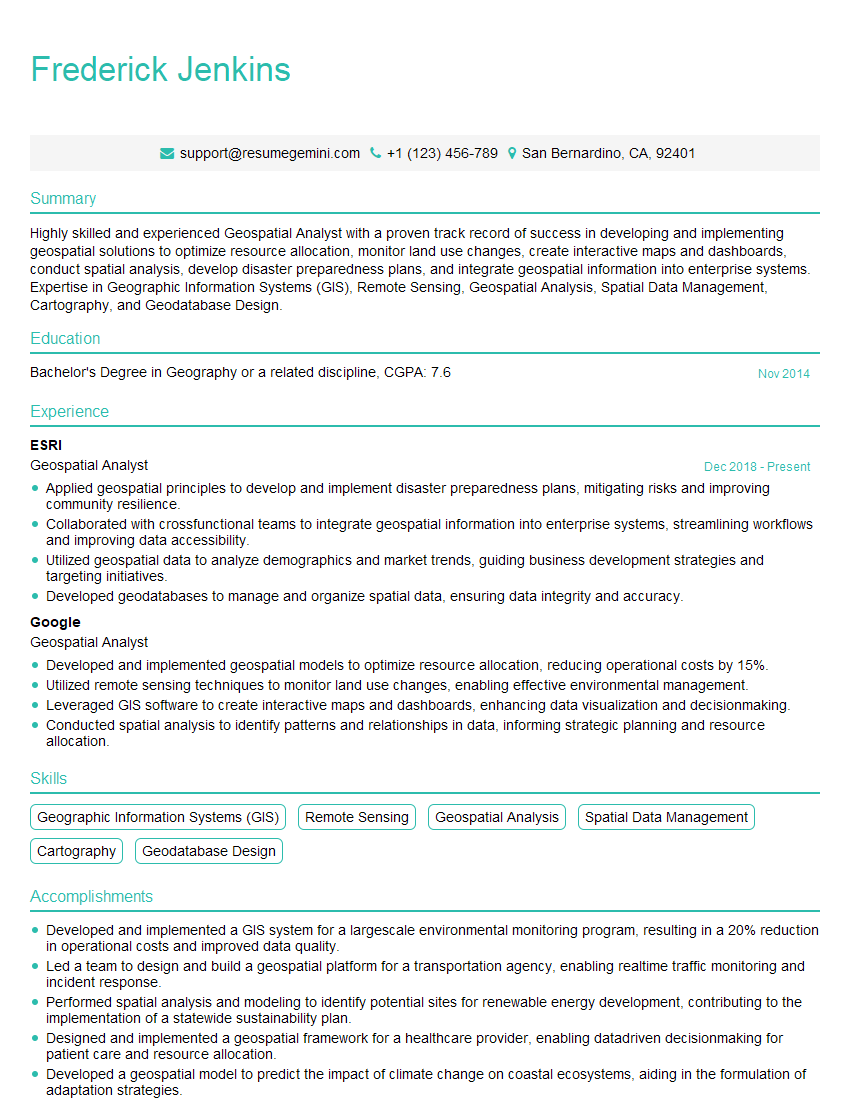
Geospatial Analyst Resume Sample
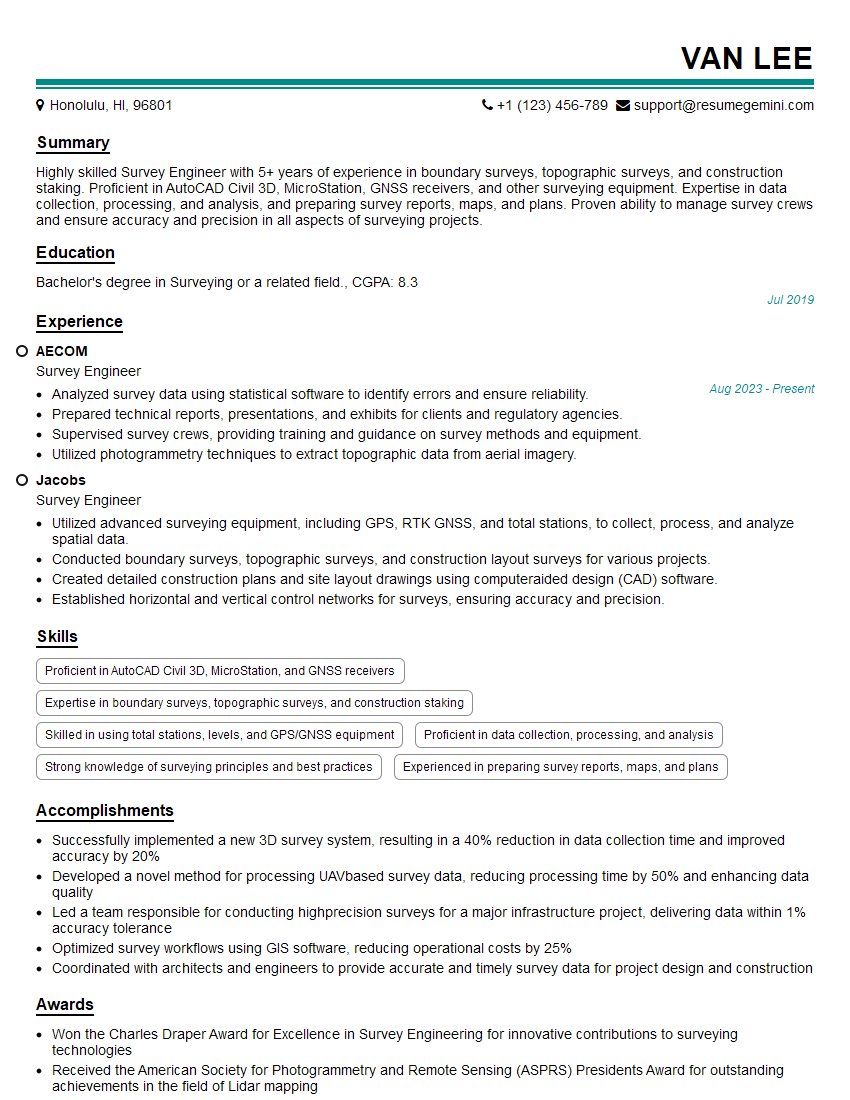
Survey Engineer Resume Sample

Reservoir Engineer Resume Sample

Production Engineer Resume Sample

Completions Engineer Resume Sample
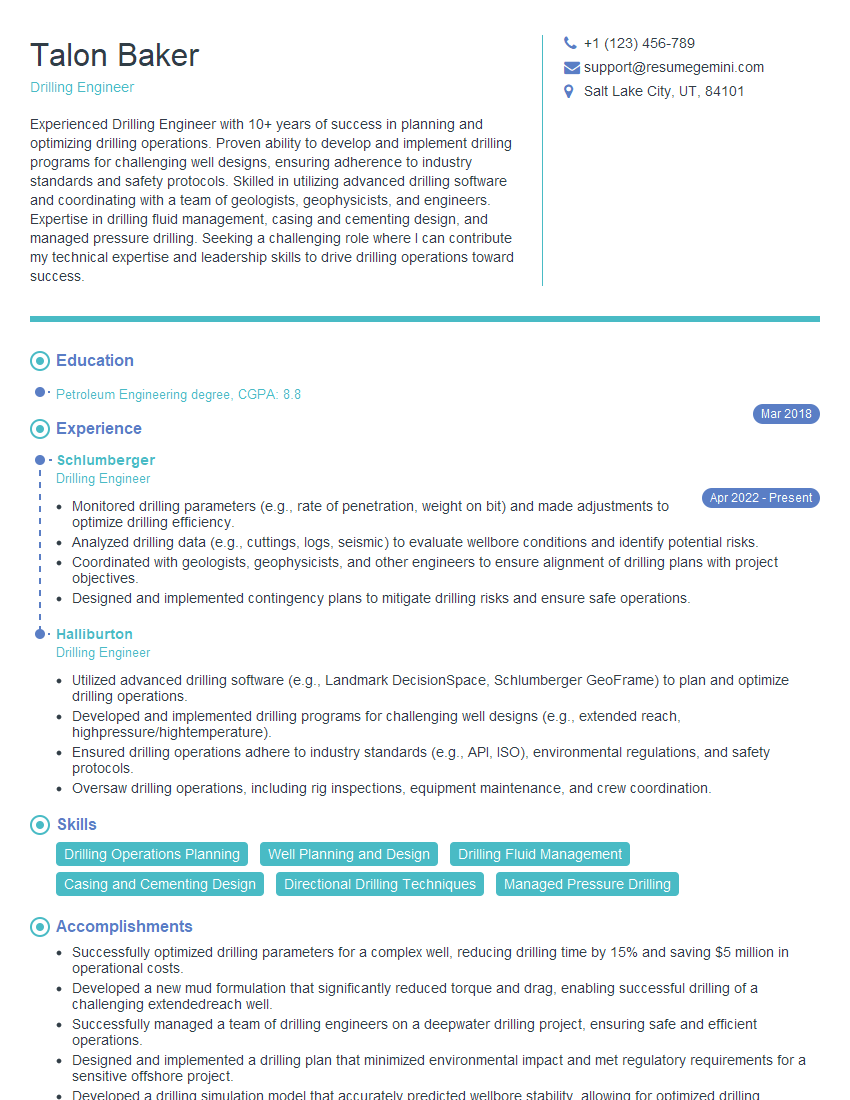
Drilling Engineer Resume Sample

Petroleum Engineer Resume Sample
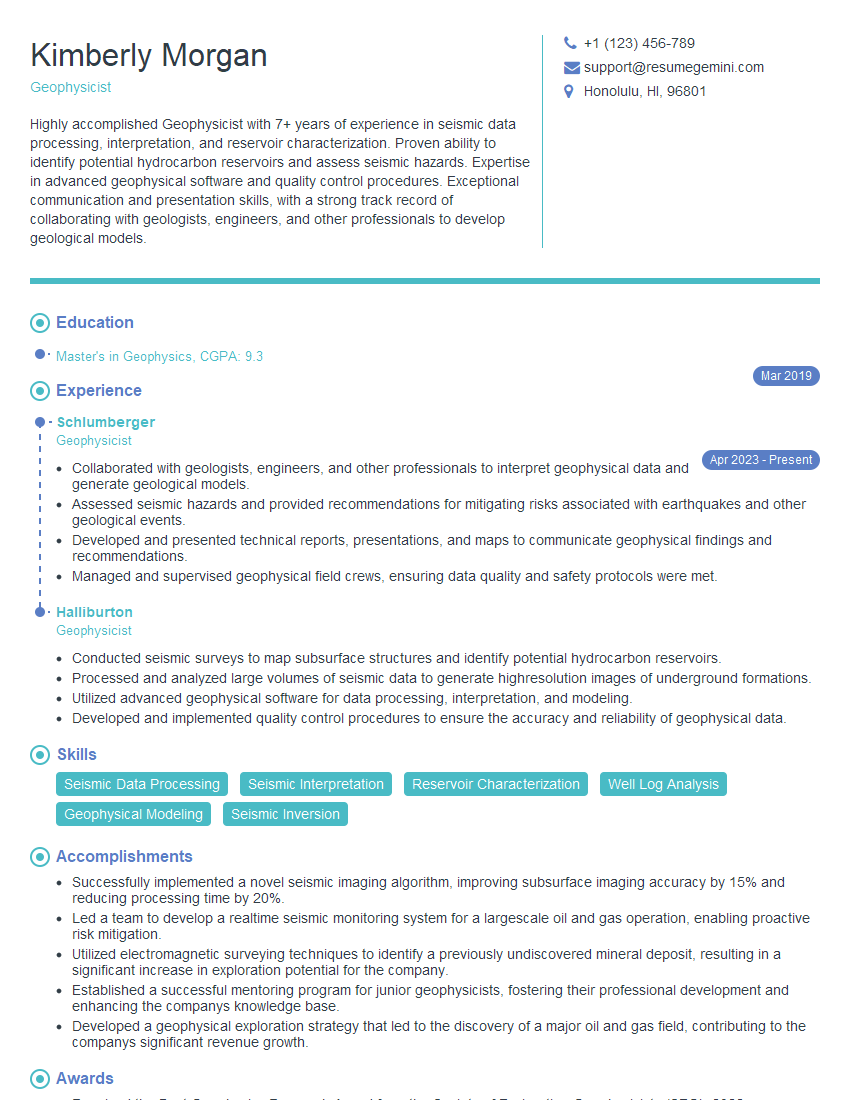
Geophysicist Resume Sample
Petrophysicist Resume Sample

Directional Driller Resume Sample

Drilling Supervisor Resume Sample
Explore more articles
Users Rating of Our Blogs
Share Your Experience
We value your feedback! Please rate our content and share your thoughts (optional).
What Readers Say About Our Blog
Very informative content, great job.
good