Cracking a skill-specific interview, like one for 3D Modeling and Animation (Maya, Blender, Cinema 4D), requires understanding the nuances of the role. In this blog, we present the questions you’re most likely to encounter, along with insights into how to answer them effectively. Let’s ensure you’re ready to make a strong impression.
Questions Asked in 3D Modeling and Animation (Maya, Blender, Cinema 4D) Interview
Q 1. Explain your experience with Maya’s UV unwrapping workflow.
UV unwrapping in Maya is the process of projecting a 3D model’s surface onto a 2D plane, creating a flattened map for applying textures. It’s crucial for efficient texture mapping, preventing distortion and ensuring seamless transitions. My workflow typically starts with choosing the right unwrapping method based on the model’s geometry. For simpler models, I might use an automatic method like Planar Mapping, but for more complex organic models, I’d prefer Cylindrical or Spherical Mapping, or even a more sophisticated technique like Unfold 3D. After the initial unwrap, I meticulously clean up the seams, ensuring they fall along less visible areas to minimize texture distortion. I frequently use the Cut and Sew tools to refine the UV layout, arranging the UV shells logically and efficiently to optimize texture space. This often involves stretching and scaling UV islands to achieve a balanced distribution across the UV map, avoiding excessive stretching in critical areas like the face in a character model. Finally, I check for overlapping UVs and ensure the texture coordinates are within the 0-1 UV space. I’ve worked on projects requiring meticulous UV unwrapping, like a character model with intricate clothing where precise UV layout was crucial for maintaining high detail in the final render.
Q 2. Describe your process for creating realistic skin textures in Blender.
Creating realistic skin textures in Blender involves a multi-step process. I begin by gathering reference images—high-quality photos of real skin, paying attention to pores, blemishes, and subsurface scattering. Then, I use these images to create base color, normal, and roughness maps. I often use Blender’s image editor to adjust the contrast, saturation, and levels to fine-tune these maps. Creating the base color map requires careful blending of different skin tones and shades to achieve a natural look. The normal map adds surface detail, enhancing the appearance of pores and wrinkles. The roughness map defines how rough or smooth the skin appears, affecting the way light interacts with its surface. A crucial aspect is subsurface scattering, which simulates how light penetrates the skin and scatters underneath. I achieve this using Blender’s Principled BSDF shader, adjusting the Subsurface Scattering radius and color parameters to mimic the effect of light traveling through the skin layers. I might also use a displacement map generated from a high-resolution sculpt to add even more realistic micro-detail. Finally, I integrate all maps into the Principled BSDF shader, tweaking the parameters until the rendered result looks convincing. For example, I once created a skin texture for a photorealistic character model where I had to meticulously adjust the subsurface scattering parameters to achieve a subtle but noticeable effect on the skin’s appearance under different lighting conditions.
Q 3. How would you optimize a high-poly model for real-time rendering in a game engine?
Optimizing a high-poly model for real-time rendering involves a series of steps focused on reducing polygon count and simplifying geometry without sacrificing visual fidelity. The process usually starts with a decimation process – using tools like Blender’s Decimate Modifier or Maya’s Quadric Mesh Simplification. These tools reduce polygon count while trying to maintain the overall shape of the model. Then, I’d bake high-poly details like normal maps, displacement maps, ambient occlusion maps, and curvature maps onto a low-poly model. This transfers the fine details from the high-poly model to a lower-polygon counterpart, allowing for a high-quality visual representation in real-time. Next, I optimize the model’s topology; ensuring efficient polygon distribution. For example, areas with high curvature often require denser geometry, while flat surfaces can be significantly simplified. I also pay attention to the model’s UV layout, ensuring efficient texture memory usage and minimizing texture stretching. Finally, I would optimize the model’s material setup. This involves using efficient shaders and textures to minimize rendering overhead. In games, using lower-resolution textures and simplifying shader complexity can significantly improve performance. This optimization process is crucial; for example, in a game with thousands of characters, optimizing each model significantly enhances performance and responsiveness.
Q 4. Compare and contrast the animation workflow in Maya and Cinema 4D.
Both Maya and Cinema 4D offer robust animation workflows but differ in their approaches. Maya leans towards a more node-based, procedural system, offering greater flexibility and customization but requiring a steeper learning curve. Cinema 4D, on the other hand, provides a more intuitive, user-friendly interface, particularly for beginners. In Maya, animation is often done using keyframes, with the ability to layer and manipulate curves for precise control. It excels in complex character rigs and procedural animation techniques. Cinema 4D, while also utilizing keyframes, offers strong character animation tools through its MoGraph system, enabling procedural animation that simplifies complex tasks. For instance, Cinema 4D’s MoGraph clones and dynamics make creating crowd animations more efficient. Both programs support inverse kinematics (IK) and forward kinematics (FK), with differences mainly in the user interface and workflow. I prefer Maya for highly complex and physically accurate simulations due to its robust dynamics system, whereas I find Cinema 4D’s ease of use beneficial for projects requiring fast turnaround and simpler character animation.
Q 5. Explain your understanding of rigging principles and techniques.
Rigging is the process of creating a control system for a 3D model, allowing animators to manipulate its pose and movement. It involves creating a skeletal structure (the rig) that is linked to the model’s geometry through joints and bones. Good rigging principles focus on creating a robust, stable, and intuitive system. Essential techniques include using appropriate joint placement, minimizing unwanted transformations, using constraints to limit joint movement, and creating controllers for easy pose manipulation. Effective rigging often utilizes inverse kinematics (IK) for natural limb movement and forward kinematics (FK) for precise control over individual joints. I generally start by analyzing the model’s anatomy and its range of motion before designing the rig. The choice between a simple or complex rig depends on the animation requirements and desired level of control. For example, a simple rig might suffice for a static object, while a complex rig is necessary for a high-detail character needing precise movement. A well-designed rig is essential for efficient and high-quality animation, allowing animators to focus on creating expressive and believable movements.
Q 6. How do you troubleshoot common issues encountered during the animation process?
Troubleshooting animation issues often involves a systematic approach. I start by isolating the problem. Is it a rigging issue, an animation error, or a rendering problem? Common issues include joint rotations, unexpected transformations, and animation glitches. For joint rotation problems, I check joint orientations and constraints. If the problem involves unexpected transformations, I meticulously review the hierarchy and transformations applied to various objects. Animation glitches are often caused by keyframe errors or issues with animation curves. I review the animation timeline carefully, searching for inconsistent keyframes or unexpected tangents. Using the software’s debugging tools is essential. For example, in Maya, I might use the graph editor to visually inspect animation curves. Sometimes, a simple restart helps resolve minor issues caused by temporary glitches in the software. The key is patience and a step-by-step approach to investigate potential sources of error. Documenting each step of the process helps immensely in diagnosing problems.
Q 7. Describe your experience with different types of shaders and materials.
I have extensive experience with various shaders and materials in Maya, Blender, and Cinema 4D. My understanding encompasses both physically-based rendering (PBR) and older, less realistic shader types. PBR shaders, like Blender’s Principled BSDF or Arnold’s Standard Surface, are crucial for creating realistic materials. These shaders simulate how light interacts with surfaces by accounting for parameters like roughness, metallicness, and subsurface scattering. I use these for creating materials ranging from skin and hair to metals and wood. Other shader types, like Lambert and Phong, offer simpler models of light interaction, useful for stylized rendering or situations where performance is paramount. These offer a faster rendering but might lack the realism of PBR shaders. I also utilize specialized shaders for specific effects like subsurface scattering (for skin and translucent materials), anisotropic reflection (for brushed metals), and emission (for glowing objects). Selecting the right shader depends heavily on the project’s visual style and performance requirements. For example, in a real-time game, I might optimize for simpler shaders to avoid performance bottlenecks. In a high-end cinematic project, I would prioritize PBR shaders to achieve a photorealistic look.
Q 8. How would you approach creating realistic hair and fur in your chosen software?
Creating realistic hair and fur involves a multi-step process, and the specific approach varies slightly depending on the software (Maya, Blender, or Cinema 4D), but the core principles remain consistent. The key is to simulate the individual strands’ behavior and their interaction with each other and the environment.
Hair/Fur Systems: All three software packages offer dedicated hair and fur systems. These systems generate and manage numerous individual strands, allowing for control over parameters like length, density, thickness, and curl. In Maya, for example, you’d use the XGen system; Blender uses its own particle system often in conjunction with its hair modifier; and Cinema 4D has its Hair object. These systems allow for procedural generation, eliminating the need to manually model each strand, which would be incredibly time-consuming.
Grooming: This crucial step involves shaping and styling the hair/fur. Think of it like a virtual hairstylist! You’ll use various tools to comb, sculpt, and manipulate the strands to achieve the desired look. This often includes creating guides to influence the overall flow and shape of the hair. Using different brushes and tools can even simulate wind or other environmental effects.
Simulation and Dynamics: To add realism, you’ll often employ physics simulation. This allows the hair/fur to react to gravity, wind, and collisions with other objects, creating natural movement. The level of simulation detail you employ will depend on the project’s complexity and time constraints. Simple simulations are great for quick renders, while more complex simulations produce highly realistic results.
Rendering: Finally, the choice of renderer greatly influences the final appearance. A high-quality renderer capable of handling the complexity of many individual strands, like Arnold or V-Ray (mentioned later), is vital for achieving photorealistic results. Proper shading and texturing are also crucial for adding realism to individual strands. You might use subsurface scattering to make the hair seem translucent and lifelike.
For instance, I once worked on a project requiring a realistic lion’s mane. I used Maya’s XGen to create the initial fur, then spent significant time grooming it to match reference images. I used a combination of combing and sculpting tools to create believable clumps and volume. Finally, I simulated wind using Maya’s nCloth, ensuring the mane reacted naturally to the environment.
Q 9. Explain your understanding of keyframing and interpolation techniques.
Keyframing is the process of setting values for an object’s properties (position, rotation, scale, etc.) at specific points in time. These points are called ‘keyframes’. Interpolation refers to how the software calculates the values between those keyframes, creating smooth transitions or animation.
Types of Interpolation: Different interpolation methods exist, each affecting the resulting animation’s smoothness and character. Common methods include:
Linear Interpolation: The simplest method, creating a constant rate of change between keyframes. This can result in a jerky or unnatural appearance.
Bezier Interpolation: Offers more control, using curves to define the speed and acceleration between keyframes. This allows for smooth, realistic movement.
Hermite Interpolation: Similar to Bezier, providing smooth transitions but with different curve handling, resulting in potentially smoother curves.
Spline Interpolation: This method is often used in animation to control the speed and ease-in/ease-out of movement, leading to more natural-looking animations.
Practical Application: Imagine animating a ball bouncing. You’d keyframe the ball’s position at the highest point of each bounce and the point of impact on the ground. The interpolation method would determine how smoothly the ball moves between these keyframes. Using linear interpolation would produce a jarring, unrealistic bounce. Bezier or spline interpolation would create a more natural, fluid arc.
Choosing the right interpolation method is crucial for realistic animation. In practice, I frequently experiment with different methods to achieve the desired effect. I might use linear interpolation for simple movements and Bezier or spline interpolation for more complex or character-driven animations.
Q 10. How do you manage and organize large 3D projects?
Managing large 3D projects requires a systematic approach emphasizing organization and efficient workflow. My strategy typically involves the following:
Project Structure: A well-defined folder structure is essential. I organize assets (models, textures, animations, etc.) into logical subfolders, avoiding cluttered file locations. For example, I might have separate folders for characters, environments, props, and textures, each further subdivided as necessary.
Naming Conventions: Consistent naming conventions are critical, especially in collaborative projects. This ensures everyone understands the purpose and relationship between different assets. Clear and descriptive names prevent confusion and time wasted searching for files.
Version Control: Utilizing version control software like Git is vital for large projects. This allows for tracking changes, reverting to previous versions, and collaborative work without file conflicts. This is especially beneficial for team projects.
Asset Management Software: For extremely large projects, dedicated asset management software can significantly streamline workflows. This software often offers improved search functionality, database integration, and more advanced version control features than Git alone.
Example: In a recent project involving a complex city environment, I established a folder structure based on geographical locations within the city. Within each location folder, further organization into models, textures, and animation subfolders kept the project neatly organized and easily navigable. Each asset followed a strict naming convention (e.g., ‘building_01_lowpoly.fbx’). This was important because multiple artists worked on the project simultaneously. Version control ensured that everyone’s work was tracked and merged without problems.
Q 11. What are your preferred methods for creating believable character movements?
Creating believable character movements involves understanding both technical aspects and the underlying principles of human or animal motion. My approach incorporates the following:
Reference: Studying real-world movement is crucial. I utilize video references of actors, athletes, or animals, observing how they move in various situations. This provides crucial insights into timing, weight, and subtle nuances.
Animation Principles: Applying Disney’s 12 principles of animation—squash and stretch, anticipation, staging, etc.—is foundational to creating dynamic and engaging character movement. These principles ensure the movement looks natural and appealing.
Posing: Careful posing is essential. Strong poses define the character’s action and emotion, while in-between poses create smooth transitions. I often use reference images or even create quick sketches to define key poses before animating.
Spacing and Timing: Precise control over spacing and timing is crucial for creating realistic movement. The speed and distance between poses affect the feeling of weight and momentum.
Secondary Motion: Adding secondary motion—such as swaying hair, clothing ripples, or jiggling body parts—adds realism and enhances the character’s movement.
Example: Animating a character walking requires considering weight distribution, foot placement, and the subtle shifts in body posture. I would start by creating key poses for the walk cycle and then add in-between poses, paying close attention to spacing and timing to make the motion look natural. Then, I would add secondary actions like arm swings and head movement to enhance realism. For example, I might add a small bounce or sway to make the character seem more fluid and natural.
Q 12. Describe your experience with motion capture data and its integration into your workflow.
Motion capture (MoCap) data significantly enhances animation realism by providing realistic movement references. My experience with MoCap involves several key steps:
Data Acquisition: I’m familiar with various MoCap techniques, including optical and inertial systems. Optical systems use cameras to track markers placed on the actor, while inertial systems use sensors attached to the actor’s body. Each method has advantages and disadvantages depending on the project requirements and budget.
Data Cleaning and Retargeting: Raw MoCap data often requires cleaning to remove noise and errors. Retargeting is also frequently needed—adapting the motion data from the actor’s body to the character’s rig. This is usually done using software specific tools or custom scripts.
Integration into Animation Software: The cleaned and retargeted data is then imported into animation software. It can directly drive the character’s rig or be used as a reference for manual animation. It can also sometimes require extensive cleanup and adjustment to ensure that all joints align properly with the character’s intended movement.
Editing and Refinement: Even with MoCap, manual editing and refinement are crucial. MoCap data needs to be adjusted to enhance the character’s performance or to fix inconsistencies. This is often done via keyframing and interpolation.
Example: I once worked on a project requiring realistic martial arts combat. MoCap data provided a foundation for the fight scenes, capturing the dynamic movements and intricate details of martial arts techniques. However, I still needed to refine the animations, adding subtle details and correcting minor inaccuracies. I was able to enhance these scenes significantly through the use of MoCap data.
Q 13. How familiar are you with different rendering engines (e.g., Arnold, V-Ray, Cycles)?
I have considerable experience with various rendering engines, including Arnold, V-Ray, and Cycles.
Arnold: Known for its speed and high-quality results, particularly with physically-based rendering (PBR). It’s excellent for complex scenes and offers robust features for subsurface scattering, hair rendering, and advanced materials. I’ve used Arnold extensively in Maya and Houdini.
V-Ray: Another powerful renderer commonly used with 3ds Max and Maya. It’s highly versatile, offering both physically-based and non-physically-based rendering options. V-Ray’s lighting tools and advanced material system are some of its primary strengths.
Cycles: Blender’s built-in rendering engine, known for its path-tracing capabilities. It’s often used for photorealistic renders and has strong support for physically-based materials. Its open-source nature makes it a very accessible option.
The choice of renderer depends on the project’s specific requirements and the software being used. For example, if I need highly photorealistic images and am using Maya, Arnold would often be my preferred option. However, if working in Blender, Cycles is a natural and efficient choice. Speed and quality are always considered. I might also choose a less demanding renderer for quick previews or less demanding tasks, before final rendering with a more powerful option.
Q 14. Explain your understanding of lighting principles and techniques.
Lighting is critical in 3D; it establishes mood, enhances realism, and guides the viewer’s eye. My understanding of lighting principles draws from both technical knowledge and artistic sensibility.
Key Lighting Principles: These include understanding the three-point lighting technique (key light, fill light, rim light) and how to utilize it to sculpt form and create depth. I also understand the interplay of ambient, diffuse, and specular light, and how they affect the appearance of surfaces.
Light Types and Properties: I’m proficient in using different types of lights, including point lights, spotlights, area lights, and environmental lighting. I understand their properties like intensity, color temperature, decay, and shadow characteristics. This allows me to control the lighting’s overall look and feel.
Realistic Lighting: I can create realistic lighting through the use of HDRI images (High Dynamic Range Images), which provide realistic reflections and lighting conditions. Using these can greatly cut down on the amount of lighting setup required.
Mood and Atmosphere: Understanding how lighting affects mood is essential. Warm colors create a cozy atmosphere, while cooler colors can establish a more serious or cold tone. The direction and intensity of the light are also key components for setting the mood.
Example: For a night scene, I would likely use a darker key light, a subtle fill light to prevent excessive darkness, and a rim light to highlight the character’s form against the night sky. An HDRI environment map would provide realistic ambient lighting, further enhancing the scene’s realism. If the mood called for a more mysterious feel, I could play with color temperature and add some volumetric lighting to create fog or mist. I could also use different lighting techniques to help tell the story within the scene.
Q 15. How do you achieve realistic environmental lighting in your scenes?
Achieving realistic environmental lighting is crucial for believable 3D scenes. It involves a multi-faceted approach, combining several techniques to mimic how light behaves in the real world. The foundation lies in understanding light sources – their intensity, color temperature, and falloff.
- HDRI (High Dynamic Range Image) Lighting: This is my go-to method. HDRIs capture incredibly detailed lighting and reflections from real-world environments, offering a photorealistic base. I often use them as environment maps in Maya, Blender, or Cinema 4D, dramatically improving realism with minimal effort. For instance, I recently used an HDRI of a cloudy forest to light a character animation, instantly adding depth and believability to the scene.
- Point, Directional, and Area Lights: These are fundamental light types. Directional lights simulate sunlight, points lights act like bulbs, and area lights mimic soft sources like windows. I use a combination to achieve a balanced lighting setup, adjusting their intensity and color to match the HDRI or create specific effects like rim lighting or backlighting. For example, in a night scene, I might use a subtle blue directional light and a few warm-toned point lights to imitate streetlights.
- Global Illumination (GI): GI algorithms simulate the indirect bouncing of light, creating realistic shadows, reflections, and ambient lighting. Both path tracing (like Arnold’s) and photon mapping (like in Maxwell Render) are powerful GI options that significantly enhance the realism of my scenes. I often experiment with different GI settings to achieve the desired level of detail and performance.
- Subsurface Scattering: This technique is essential for rendering materials like skin, wax, or marble, creating a more natural look by simulating how light penetrates and scatters beneath the surface. Most modern renderers offer built-in subsurface scattering features that I utilize for organic materials.
By thoughtfully combining these elements, I ensure my environments possess a depth and realism that captivates the viewer. The key is iteration; I constantly adjust and refine my lighting setup until it accurately represents the scene’s intended mood and atmosphere.
Career Expert Tips:
- Ace those interviews! Prepare effectively by reviewing the Top 50 Most Common Interview Questions on ResumeGemini.
- Navigate your job search with confidence! Explore a wide range of Career Tips on ResumeGemini. Learn about common challenges and recommendations to overcome them.
- Craft the perfect resume! Master the Art of Resume Writing with ResumeGemini’s guide. Showcase your unique qualifications and achievements effectively.
- Don’t miss out on holiday savings! Build your dream resume with ResumeGemini’s ATS optimized templates.
Q 16. Describe your experience with compositing and post-production techniques.
Compositing and post-production are vital steps in my workflow, offering powerful tools to enhance visuals, correct imperfections, and add creative flair. My experience spans various compositing software, primarily Nuke and After Effects.
- Color Correction and Grading: I frequently use nodes in Nuke or adjustments layers in After Effects to fine-tune colors, enhance contrast, and create specific moods. For example, I might cool down the overall tone of a scene to create a colder, more mysterious atmosphere.
- Roto-scoping and Keying: These techniques are critical for isolating elements. I use rotoscoping tools to mask out objects or parts of an image and keying to extract subjects from complex backgrounds, ensuring seamless integration of elements from various sources. I recently used rotoscoping extensively to composite a character against a live-action background for a short film.
- Adding VFX elements: This often involves incorporating additional elements generated in other software (like particle systems or simulations) seamlessly within my renders. I use masking and blending techniques to integrate these elements organically, ensuring they blend naturally with the existing scene. For instance, I recently added digital rain to an outdoor scene using particle simulations and compositing.
- Motion Tracking and Stabilization: When working with live action footage, these tools enable accurate placement of 3D elements within the frame, matching the camera movement and eliminating shakes and jitters.
Post-production gives me the freedom to improve upon my initial 3D render, correcting errors, adding details, and realizing the full creative vision. It’s a crucial aspect that turns a good render into a polished and compelling final product.
Q 17. What are some common issues faced when working with high resolution models and how can they be mitigated?
Working with high-resolution models presents unique challenges, primarily memory management and rendering times. Here’s how I mitigate these issues:
- Optimized Modeling: I always strive for clean, efficient models. Unnecessary geometry, overly complex polygons, and excessive subdivisions significantly increase file sizes and render times. I prefer using decimation modifiers or retopology techniques to reduce polygon counts while preserving detail where necessary.
- Level of Detail (LOD): This technique is crucial for managing performance. I create multiple versions of a model with varying polygon counts. The highest resolution model is used for close-ups, and lower resolution models are used for distant views, dramatically improving rendering speed. This is especially critical in games or interactive applications.
- Proxy Geometry: During animation or complex simulations, replacing high-poly models with low-poly proxies can improve performance. The high-poly models are only used for the final render, greatly speeding up the iterative process.
- Baking: Baking processes such as normal maps, ambient occlusion, and curvature maps can reduce the reliance on high-resolution geometry during rendering. This significantly improves rendering times without sacrificing visual detail.
- Efficient Render Settings: Selecting appropriate render settings is vital. Using smart features like ray tracing denoising and adaptive sampling helps manage render times and produce cleaner results with fewer samples.
By implementing these strategies, I can effectively manage the complexities of high-resolution models, achieving a balance between quality and efficiency.
Q 18. Describe your workflow for creating a short animation, from concept to final render.
My workflow for creating a short animation is iterative and highly organized. It breaks down into these key stages:
- Concept and Storyboarding: The foundation. I develop a clear narrative, creating storyboards to visualize the key shots and actions. This phase helps establish pacing and camera angles, saving time and effort later.
- Modeling and Texturing: I create the 3D assets, focusing on clean geometry and realistic textures. This phase often involves reference gathering and iterative refinement to achieve the desired look and feel.
- Rigging and Animation: I build a skeleton (rig) for the characters and animate their movements, paying close attention to weight painting and dynamics for natural and believable motion. I usually test animatics to evaluate the flow and timing before moving on.
- Lighting and Rendering: This is where the scene comes to life. I experiment with different lighting setups, striving for realism or stylistic choices, and carefully choose render settings to balance quality and efficiency.
- Compositing and Post-Production: I refine the final render, adding special effects, correcting errors, and applying color grading for a cohesive final product.
Throughout this entire process, I utilize version control to manage assets and revisions. Regular reviews and feedback sessions help ensure the project stays on track and meets the creative goals.
Q 19. Explain your experience with procedural modeling techniques.
Procedural modeling is a powerful technique that allows for the creation of complex geometries using algorithms and mathematical formulas, rather than manual sculpting. It’s incredibly efficient for generating repetitive elements or creating intricate details.
- Noise functions: These are fundamental in procedural generation. Using noise functions, I can create realistic textures, displace surfaces, or generate organic shapes. Perlin noise and simplex noise are common examples.
- Particle systems: I use particle systems in conjunction with procedural techniques to create complex effects like grass, fur, or fire. I can manipulate their properties like size, density, and behavior to achieve realistic outcomes.
- Geometry Nodes (Blender): This node-based system lets me create complex, reusable procedural workflows. It’s a powerful tool for creating things like repeating patterns or procedural terrains. For instance, I can create a sprawling city environment by using a grid of procedural buildings with variations generated through noise and other modifiers.
- Thinking Particles (Cinema 4D): Cinema 4D’s Thinking Particles system offers immense power and flexibility for creating complex particle simulations and procedural effects. This system allows me to define particle behaviors and interactions using various node-based effectors, making it great for things like flocking simulations or creating realistic destruction effects.
Procedural modeling is particularly valuable for creating environments, generating textures, and automating repetitive tasks, significantly increasing efficiency and consistency.
Q 20. How do you handle feedback and revisions on your projects?
Handling feedback and revisions effectively is essential for successful project completion. My approach is built on clear communication and a collaborative spirit.
- Active Listening: I pay close attention to feedback, asking clarifying questions to fully understand the concerns or requests. I don’t take criticism personally but instead view it as an opportunity to improve the project.
- Organized Revisions: I maintain a clear record of changes made and ensure they are documented. Version control is essential for tracking modifications across various iterations.
- Iterative Refinement: I often implement feedback iteratively, presenting refined versions to the client for further review. This ensures that everyone is on the same page throughout the process.
- Clear Communication: I maintain open and consistent communication with clients and collaborators, promptly addressing any queries or concerns that arise. I prefer to over-communicate rather than leaving room for ambiguity.
Ultimately, collaboration and clear communication ensure that the final product aligns perfectly with the client’s vision.
Q 21. Describe your experience with version control systems (e.g., Git, Perforce).
Version control is integral to my workflow, primarily using Git. I understand the importance of tracking changes, collaborating effectively, and managing various project iterations.
- Branching and Merging: I utilize branching to isolate experimental features or revisions without impacting the main project files. This allows for parallel work and safe experimentation. After testing, I merge the changes back into the main branch.
- Commit Messages: I write clear and concise commit messages describing each change, making it easy to trace the project’s evolution and understand the reasons behind modifications.
- Collaboration: Git’s collaborative features are critical for team projects. I frequently use Git platforms like GitHub or Bitbucket for remote collaboration, enabling seamless sharing and merging of changes with team members.
- Conflict Resolution: I’m familiar with resolving merge conflicts efficiently using Git’s tools. I can identify and address conflicts that arise from simultaneous modifications to the same files.
My proficiency in Git ensures that my projects are well-organized, readily accessible, and effectively managed, enhancing collaboration and minimizing the risk of losing work.
Q 22. How do you stay up-to-date with the latest advancements in 3D modeling and animation?
Staying current in the dynamic field of 3D modeling and animation requires a multi-pronged approach. It’s not just about learning new software features; it’s about understanding evolving industry trends and techniques.
- Following Industry Blogs and Websites: I regularly read publications like 80.lv, CGSociety, and others that showcase cutting-edge projects and tutorials. These offer insights into how leading artists are utilizing the latest technologies.
- Participating in Online Communities: Active participation in forums like Polycount and ArtStation allows me to engage with other artists, share knowledge, and learn from their experiences and challenges. This collaborative environment is invaluable for staying informed about the latest techniques and software updates.
- Attending Webinars and Online Courses: Platforms like Udemy, Coursera, and Skillshare offer a wealth of courses on advanced modeling, animation, and rendering techniques. I regularly take advantage of these resources to upgrade my skills and experiment with new workflows.
- Experimenting with New Software and Plugins: I dedicate time to explore new software releases and plugins, testing their capabilities and integrating them into my workflow. This hands-on approach ensures I’m familiar with the latest tools and their potential.
- Following Industry Leaders on Social Media: Following prominent artists and studios on platforms like Instagram and Twitter keeps me abreast of industry news, project announcements, and new technological developments.
By combining these methods, I ensure I remain at the forefront of 3D modeling and animation advancements.
Q 23. What is your experience with sculpting software (e.g., ZBrush, Mudbox)?
I have extensive experience with both ZBrush and Mudbox, utilizing them for high-poly sculpting, retopology, and texturing. My experience extends beyond basic sculpting; I’m proficient in utilizing advanced features like:
- ZBrush: I’m comfortable using tools like DynaMesh, Zremesher, and various brushes for creating highly detailed organic and hard-surface models. I’ve used ZBrush extensively in projects requiring complex character modeling and creature creation, leveraging its powerful sculpting capabilities and texturing workflows.
- Mudbox: My proficiency in Mudbox allows me to seamlessly integrate high-poly sculpting with other software like Maya or Blender. I’m skilled in creating high-quality normal maps and displacement maps for efficient game-ready models.
I find both programs valuable, and my choice depends on the specific project’s needs. For highly intricate organic models, ZBrush’s dense brush sets often provide a better workflow, while Mudbox’s integration with Autodesk software can be advantageous in studio environments that leverage Maya.
Q 24. What are your strengths and weaknesses as a 3D modeler/animator?
My strengths lie in my ability to quickly grasp new techniques and software, problem-solve efficiently, and deliver high-quality work within deadlines. I’m also a collaborative team player and I thrive in dynamic work environments. I am adept at both organic and hard-surface modeling, and comfortable with a wide range of animation styles.
One area I’m actively working to improve is my proficiency in rigging complex characters for animation. While I can create functional rigs, I aim to further refine my skills in creating more sophisticated and efficient rigs for characters with intricate movements.
Q 25. Describe a time you had to overcome a challenging technical problem.
During a project involving a highly detailed fantasy creature, I encountered a significant issue with the model’s topology. The high-poly sculpt, while visually stunning, had an incredibly dense and messy mesh, making it nearly impossible to retopologize efficiently.
To overcome this, I employed a multi-step approach:
- Initial Cleanup: I started by using ZBrush’s decimation master to reduce the polygon count while preserving important details. This reduced the overall complexity, making the subsequent steps less computationally expensive.
- Strategic Retopology: Instead of attempting a full retopology in one go, I divided the model into sections (head, body, limbs, etc.), retopologizing each part individually. This allowed me to focus on creating clean, efficient topology for each section without being overwhelmed by the entire model.
- Sculpt Detail Transfer: After retopologizing, I transferred the high-poly sculpt details onto the low-poly model using normal and displacement maps in Maya. This preserved the visual fidelity while drastically improving the polygon count and overall workflow for animation.
This methodical approach not only resolved the initial topology issue but also taught me valuable lessons about managing complex models and optimizing workflows for large projects. It highlighted the importance of planning and breaking down a large challenge into smaller, manageable tasks.
Q 26. What are your salary expectations?
My salary expectations are commensurate with my experience and skills, and the specific requirements of this position. I’m open to discussing this further once I have a better understanding of the complete compensation and benefits package.
Q 27. Why are you interested in this position?
I’m highly interested in this position because of [Company Name]’s reputation for creating innovative and visually stunning work, particularly in [mention specific area of their work that interests you]. The opportunity to contribute to projects with such a high level of quality, alongside a team of talented professionals, is incredibly appealing. The project descriptions align perfectly with my skills and interests, and I believe I can make a significant contribution to your team.
Q 28. What are your long-term career goals?
My long-term career goals include becoming a senior 3D artist and potentially a lead or art director. I aspire to contribute to visually captivating projects that push creative boundaries. I’m committed to continuous learning and development, striving to stay at the forefront of industry innovation. I’m eager to hone my leadership skills, guiding and mentoring junior artists. Ultimately, I aim to leave a lasting impact on the field of 3D modeling and animation.
Key Topics to Learn for 3D Modeling and Animation (Maya, Blender, Cinema 4D) Interview
- Modeling Fundamentals: Understanding polygon modeling, NURBS modeling, and sculpting techniques in your chosen software (Maya, Blender, Cinema 4D). Practice creating high-quality, low-poly and high-poly models.
- UV Unwrapping and Texturing: Mastering UV unwrapping techniques for efficient texture application. Explore different texturing methods, including procedural and hand-painted textures. Understand the importance of texture resolution and optimization.
- Rigging and Animation Principles: Familiarize yourself with character rigging techniques, skeletal animation, and key principles of animation (e.g., squash and stretch, anticipation, follow-through). Practice animating different types of characters and objects.
- Lighting and Rendering: Explore different lighting techniques (e.g., three-point lighting, ambient occlusion) and rendering engines. Understand the importance of light composition and mood creation. Practice creating realistic and stylized renders.
- Software-Specific Tools and Workflows: Become proficient in the specific tools and workflows of your chosen software (Maya, Blender, Cinema 4D). Understand shortcuts and efficient work practices to demonstrate your expertise.
- Workflow Optimization and Asset Management: Discuss strategies for organizing projects, managing assets, and streamlining your 3D pipeline for efficiency and collaboration.
- Problem-Solving and Troubleshooting: Be prepared to discuss how you approach and solve common technical challenges encountered during the 3D modeling and animation process.
- Understanding different file formats and their applications: Demonstrate knowledge of common 3D file formats and their suitability for different purposes.
- Portfolio Preparation: Showcase your best work in a visually appealing and organized portfolio, highlighting your skills and creativity.
Next Steps
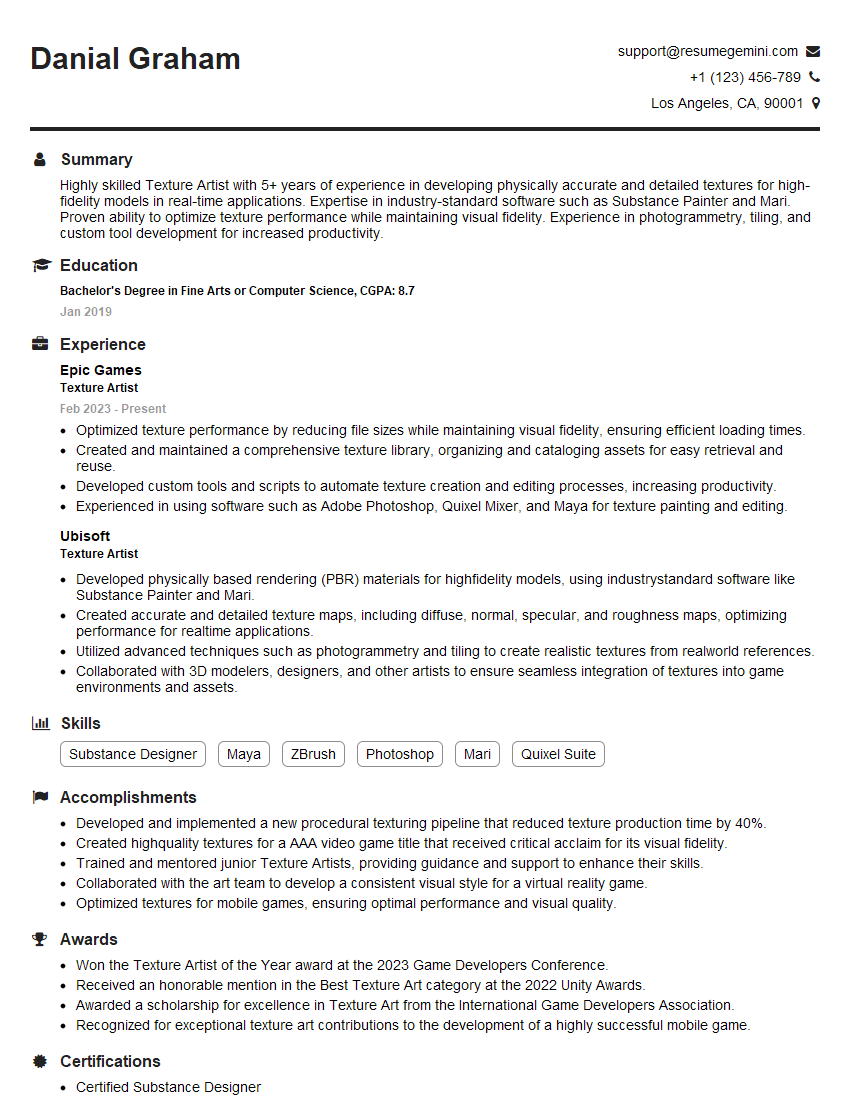
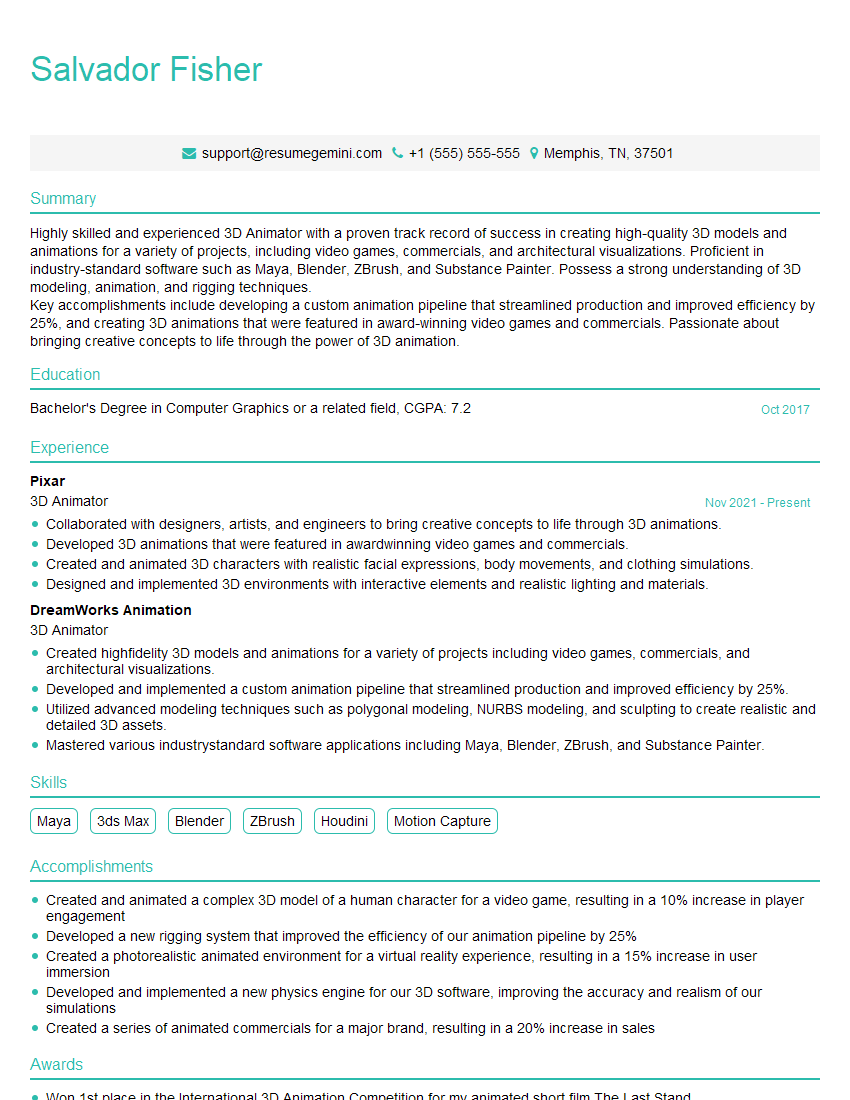
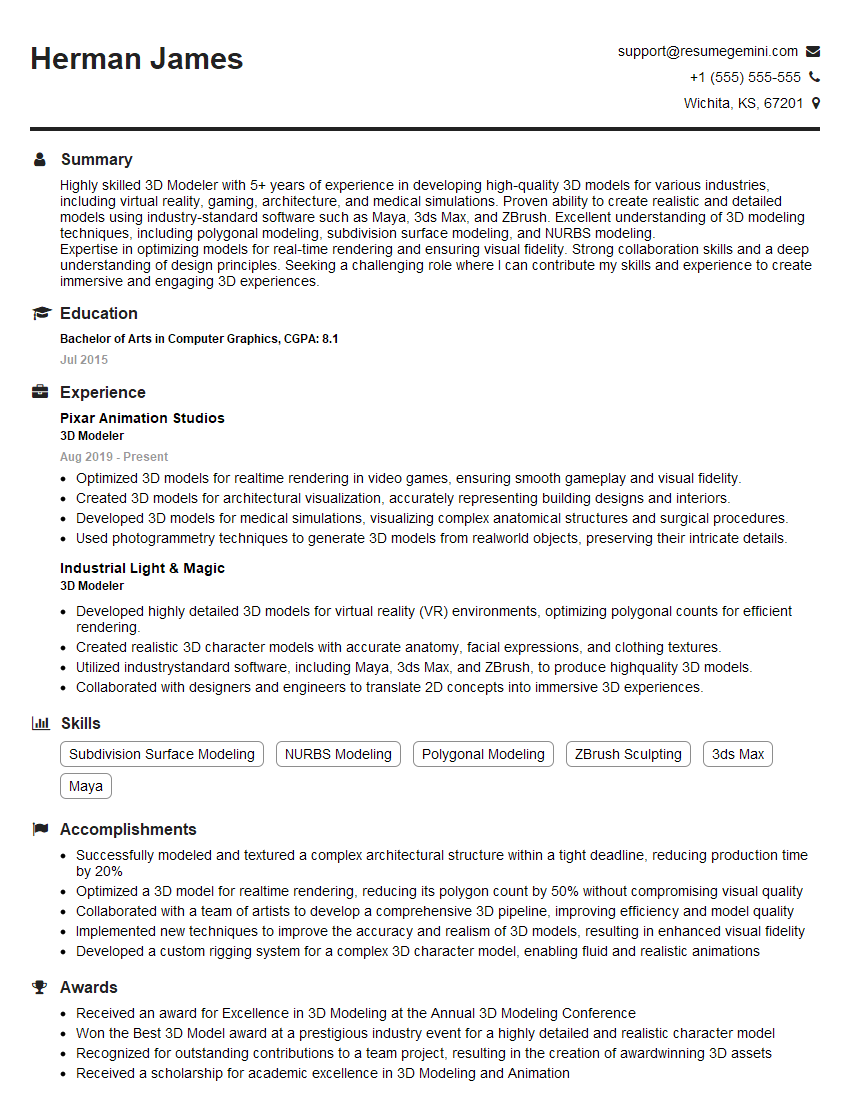
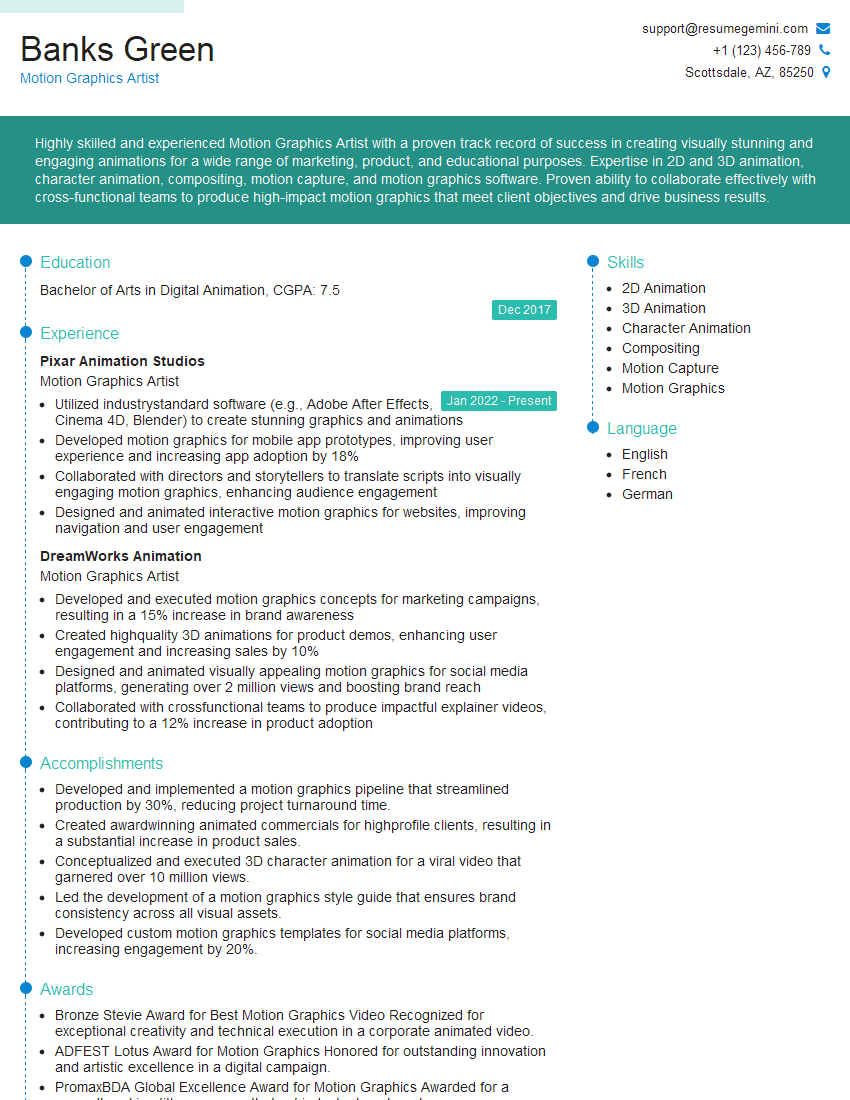
Mastering 3D modeling and animation with Maya, Blender, or Cinema 4D opens doors to exciting and rewarding careers in film, gaming, architecture, and more! To maximize your job prospects, create an ATS-friendly resume that clearly highlights your skills and experience. ResumeGemini is a trusted resource that can help you build a professional and impactful resume. We provide examples of resumes tailored to 3D Modeling and Animation professionals using Maya, Blender, and Cinema 4D to give you a head start. Invest time in crafting a compelling resume—it’s your first impression on potential employers.
Explore more articles
Users Rating of Our Blogs
Share Your Experience
We value your feedback! Please rate our content and share your thoughts (optional).
What Readers Say About Our Blog
Very informative content, great job.
good