Are you ready to stand out in your next interview? Understanding and preparing for 3D scanning and reverse engineering interview questions is a game-changer. In this blog, we’ve compiled key questions and expert advice to help you showcase your skills with confidence and precision. Let’s get started on your journey to acing the interview.
Questions Asked in 3D scanning and reverse engineering Interview
Q 1. Explain the difference between structured light and laser scanning.
Both structured light and laser scanning are active 3D scanning techniques, meaning they project light onto the object and measure the reflected light to create a 3D model. However, they differ in their approach. Structured light uses a projector to cast a known pattern (e.g., a grid or stripes) onto the object. Cameras capture the distorted pattern, and sophisticated algorithms calculate the 3D coordinates based on the pattern deformation. Think of it like shining a coded light grid on an object and seeing how that grid bends to map the object’s shape.
Laser scanning, on the other hand, utilizes a single or multiple laser beams to measure distances. It often employs time-of-flight (ToF) or triangulation techniques to determine the distance between the scanner and the object’s surface. A rotating mirror often helps scan a larger area. It’s like using a laser rangefinder to meticulously map every point on an object’s surface.
In essence, structured light is faster for capturing large areas and generally less expensive, while laser scanning provides higher accuracy and precision, particularly for objects with complex geometries or reflective surfaces.
Q 2. Describe the process of point cloud registration.
Point cloud registration is the crucial process of aligning multiple point clouds from different scans into a single, coherent coordinate system. This is essential because it’s often impossible to capture a complete 3D model in a single scan. Imagine trying to scan a whole car – you need multiple scans from different angles. Registration aligns these scans to create a seamless overall model.
The process typically involves these steps:
- Feature Extraction: Identifying distinctive features (points, edges, planes) in each point cloud.
- Initial Alignment (Coarse Registration): Using algorithms like Iterative Closest Point (ICP) or other methods to find an initial rough alignment between point clouds based on these features. This is like finding a general orientation match.
- Fine Registration (Refinement): Refining the initial alignment using iterative optimization techniques. ICP is very commonly used here, iteratively adjusting the transformation parameters (translation and rotation) to minimize the distance between corresponding points in overlapping scans. This is the iterative fine tuning to ensure precision.
- Validation: Checking the accuracy of the registration using various metrics and visual inspection to ensure no major misalignments remain.
Accurate point cloud registration is vital for creating a complete and accurate 3D model, and the choice of algorithm depends on factors like the complexity of the object, scan quality, and the overlap between scans.
Q 3. What are the common file formats used in 3D scanning and reverse engineering?
Several common file formats are used in 3D scanning and reverse engineering, each with its strengths and weaknesses:
- PLY (Polygon File Format): A widely used format that stores both the geometry and attributes (color, normals) of a 3D model. It’s popular for point cloud data because it handles massive point sets quite well.
- STL (Stereolithography): A classic format focused on the geometry of the model, representing it as a collection of triangles. It is widely used for 3D printing but might lack rich attribute data.
- OBJ (Wavefront OBJ): A versatile format that can represent both geometry and textures. While not specifically designed for point clouds, it’s often used for mesh data after reconstruction.
- PCD (Point Cloud Data): A format specifically designed for point cloud data; often used in conjunction with the PCL library (Point Cloud Library).
- LAS (LASer): Commonly used in LiDAR point cloud data, often used in surveying and mapping.
The choice of file format often depends on the software used and the application; some software might only support a subset of these formats.
Q 4. How do you handle noise and outliers in point cloud data?
Noise and outliers are common issues in point cloud data, often resulting from limitations of the scanning process, environmental factors (lighting conditions, vibrations), or errors in data acquisition. To address these:
- Filtering Techniques: These methods smooth out noisy data and remove outliers. Common techniques include statistical filtering (removing points deviating significantly from their neighbors), spatial filtering (using a moving average or median filter), and bilateral filtering (preserving sharp edges while removing noise).
- Outlier Removal Algorithms: Algorithms like Radius Outlier Removal (ROR) or statistical outlier removal are used to identify and remove points that are significantly distant from their neighbors, treating them as outliers.
- Data Smoothing: Techniques like moving least squares (MLS) or Poisson surface reconstruction can smooth the point cloud surface, reducing the visual impact of noise, although they may lose small details.
The specific techniques used depend on the characteristics of the noise and outliers and the desired level of detail preservation. Often, a combination of approaches is necessary for optimal results. It’s like cleaning up a messy dataset before constructing a perfect 3D model.
Q 5. Explain different techniques for surface reconstruction from point clouds.
Surface reconstruction from point clouds is the process of creating a smooth, continuous surface model from a set of discrete points. Various techniques exist:
- Delaunay Triangulation: A widely used method that creates a mesh by connecting points based on geometric proximity. It’s simple to implement but can result in uneven or poorly shaped triangles if the point cloud is not uniform.
- Poisson Surface Reconstruction: A powerful method that solves a Poisson equation to generate a smooth surface from the point cloud. It produces high-quality results, even with noisy or incomplete data, and is known for handling complex shapes well. It’s often the preferred method for higher quality.
- Moving Least Squares (MLS): This approach fits a smooth surface to the point cloud locally, providing good results but can be computationally expensive.
- Ball Pivoting Algorithm: Creates meshes that closely follow the input point cloud. The result is often closer to a point cloud than a smooth surface.
The choice of method depends on factors like the quality of the point cloud, desired surface smoothness, and computational resources available. Each technique offers trade-offs between accuracy, computational cost, and the preservation of fine details.
Q 6. What are the limitations of 3D scanning technologies?
3D scanning technologies, while powerful, have several limitations:
- Occlusion: Hidden surfaces cannot be scanned directly. This means parts of an object obscured by other parts might be missing from the final model. Think of scanning a chair – you can’t see the underside of the seat unless you move it or use multiple scans.
- Accuracy Limitations: The accuracy of the scan depends on several factors including the scanner’s resolution, the distance to the object, and the surface reflectivity. Highly reflective or transparent materials can pose challenges.
- Data Processing Requirements: Point cloud data is often massive and requires significant computational resources for processing, registration, and surface reconstruction.
- Cost and Complexity: High-resolution 3D scanners can be expensive, and their operation may require specialized skills and software.
- Material Limitations: Some materials are difficult to scan effectively (highly reflective materials, very dark or very light materials). The color and texture of an object also impact the quality of the scan.
Understanding these limitations is crucial for planning a successful 3D scanning project and managing expectations.
Q 7. Compare and contrast different 3D scanning technologies (e.g., laser scanning, structured light, photogrammetry).
Let’s compare three common 3D scanning technologies:
| Feature | Laser Scanning | Structured Light | Photogrammetry |
|---|---|---|---|
| Principle | Measures distance using laser beams (ToF or triangulation) | Projects structured patterns and measures distortions | Reconstructs 3D model from multiple 2D images |
| Accuracy | High | Medium | Medium to High (depending on image quality and setup) |
| Speed | Medium to Slow (depends on resolution and area) | Fast | Slow (requires numerous images and processing) |
| Cost | High | Medium | Low (requires only a camera and software) |
| Suitable for | Precise measurements, complex geometries, industrial applications | Fast capture of medium-sized objects | Objects with textured surfaces, large objects, architectural modelling |
| Limitations | High cost, slower scanning speed | Challenges with reflective surfaces | Requires good lighting and many overlapping images, detail dependent on texture |
Each technology has its strengths and weaknesses. The best choice depends on the specific application, budget, and the characteristics of the object being scanned.
Q 8. How do you determine the accuracy and precision of a 3D scan?
Determining the accuracy and precision of a 3D scan is crucial for ensuring the quality of the reverse engineering process. Accuracy refers to how close the scanned data is to the actual dimensions of the object, while precision refers to the level of detail and consistency in the measurements. We assess this using several methods.
Comparison with known dimensions: If we have a CAD model or detailed blueprints of the original object, we can directly compare the scanned data to these known values. This involves overlaying the scan data onto the CAD model and measuring the deviations.
Reference targets: We often use calibrated reference targets (spheres or cubes of known dimensions) placed within the scanning field. The software can then analyze the scan data of these targets to calculate the accuracy and precision of the scanner itself.
Statistical analysis: Software packages provide tools to analyze the point cloud data, generating statistics like standard deviation of point distances. This helps quantify the noise and inconsistencies within the scan. High standard deviation indicates lower precision.
Repeatability scans: Scanning the same object multiple times allows us to assess the repeatability of the process. Consistency between scans indicates high precision.
For example, in a recent project scanning a complex automotive part, we used both reference targets and comparison with the original CAD model. The analysis revealed a maximum deviation of 0.2mm, acceptable for the intended application. This systematic approach ensures our scans meet the required tolerances for reliable reverse engineering.
Q 9. What software packages are you proficient in for processing 3D scan data?
My expertise encompasses a range of software packages crucial for processing 3D scan data. I’m highly proficient in Geomagic Design X, a leading software for reverse engineering. Its powerful tools allow for efficient mesh processing, surface modeling, and CAD model creation. I’m also experienced with MeshLab, a free and open-source solution excellent for mesh cleaning and processing, especially for large datasets. Additionally, I have extensive experience with cloud-based solutions like PolyWorks, offering collaborative features for large projects. Finally, my proficiency extends to other industry standard packages such as Autodesk Recap, for scan data processing and registration.
Q 10. Describe your experience with mesh editing and cleaning.
Mesh editing and cleaning is a critical step in reverse engineering. Raw 3D scan data often contains noise, holes, and inconsistencies that need to be addressed before creating a usable CAD model. My experience involves a variety of techniques.
Noise reduction: I employ filtering techniques like Gaussian smoothing to remove minor irregularities in the mesh without compromising important details.
Hole filling: For holes or gaps in the mesh, I use automated hole-filling algorithms or manual techniques depending on the complexity of the geometry. Sometimes, careful extrapolation based on surrounding data is necessary.
Mesh simplification: Reducing polygon count improves performance without significant loss of detail. I strategically employ decimation algorithms that preserve key features.
Manual editing: For intricate details or problematic areas, I directly edit the mesh using tools for vertex manipulation, edge splitting, and face creation. This requires a keen eye for detail and a strong understanding of 3D geometry.
For example, during a project involving a highly detailed antique sculpture, I had to carefully remove noise from the scan data while preserving fine surface textures, and subsequently filled minor cracks using a combination of automated and manual techniques. The result was a clean, high-quality mesh ready for surface modeling.
Q 11. Explain the process of creating a CAD model from a 3D scan.
Creating a CAD model from a 3D scan is a multi-step process that transforms raw point cloud data into a precise, editable CAD model. The workflow typically includes:
Scan data processing: This involves cleaning and preparing the scan data as described in the previous answer. This stage removes noise, fills holes, and aligns multiple scans (if necessary).
Mesh generation: The processed point cloud is converted into a mesh, a surface representation of the object. Various algorithms can be used to generate meshes with varying levels of detail and accuracy.
Feature extraction: Key features like curves, edges, and surfaces are identified and extracted from the mesh. This forms the foundation for creating the CAD model.
CAD model creation: Using CAD software, I create the final CAD model based on the extracted features. This often involves curve fitting, surface creation, and solid modeling techniques. The goal is a model that accurately represents the scanned object and is suitable for further engineering or manufacturing processes.
I often use a combination of surface modeling and solid modeling techniques depending on the complexity of the scanned object. For instance, for organic shapes, I might favor surface modeling, while for mechanical parts with defined features, solid modeling is more appropriate.
Q 12. How do you handle complex geometries and features during reverse engineering?
Handling complex geometries and features during reverse engineering requires a methodical approach and a deep understanding of both 3D scanning and CAD modeling techniques. Strategies include:
Sectioning the model: For extremely complex objects, breaking the scan data into smaller, manageable sections simplifies processing and reduces the computational load. Individual sections are processed and then reassembled.
Hybrid modeling: Combining different modeling techniques – such as surface modeling for complex curves and solid modeling for defined features – is often essential for optimal results. This ensures an accurate representation of both organic and mechanical aspects of the part.
Iterative refinement: It’s a common practice to iteratively refine the model, checking for accuracy and making adjustments as needed. This might involve comparing the CAD model to the original scan data, performing dimensional checks, and making corrections to ensure the desired level of fidelity.
Using specialized tools: Software packages often include specialized tools for handling complex geometries, like freeform surfaces and NURBS (Non-Uniform Rational B-Splines) curves. Mastering these tools is crucial for achieving accurate representations.
For example, reverse engineering a turbine blade with intricate internal channels required a combination of sectioning the model for easier processing, and hybrid modeling to accurately represent the curved external surfaces and precisely defined internal channels.
Q 13. What are your strategies for feature extraction from 3D scans?
Feature extraction is crucial in transforming raw scan data into a usable CAD model. My strategies for feature extraction from 3D scans involve a combination of automated and manual techniques.
Automated feature recognition: Software packages provide automated tools that identify features like edges, planes, and curves based on algorithms that analyze the mesh geometry. These tools greatly accelerate the process, especially for simple parts.
Manual feature identification: For complex geometries or subtle features, manual identification is often necessary. This involves careful visual inspection of the mesh, using tools to highlight relevant features, and manually defining the boundaries of these features.
Sectioning and profiling: Creating cross-sections and profiles of the scanned object helps visualize internal features and complex curves. This information is then used to create the corresponding features in the CAD model.
Using feature-based modeling techniques: CAD software allows creation of models using parameterized features, offering flexibility in design and modification. Extracted features can be directly used to construct these parameterized features.
In a project involving a cast iron component with intricate details, I used a combination of automated edge detection and manual feature extraction to accurately capture the complex patterns and structural features within the CAD model.
Q 14. Discuss your experience with different CAD software packages (e.g., SolidWorks, AutoCAD, Creo).
My experience with various CAD software packages is extensive, offering versatility in tackling different reverse engineering challenges. I’m highly proficient in SolidWorks, renowned for its robust solid modeling capabilities, ideal for mechanical parts and assemblies. AutoCAD, with its strength in 2D drafting and parametric modeling, is used for detailed drawings and precise dimensioning. Creo (formerly Pro/ENGINEER) is another powerful package, known for its advanced surface modeling capabilities and its role in the manufacturing process. My familiarity extends beyond these, including experience with NX and Fusion 360. The selection of a particular package depends on the project’s specific requirements and the nature of the object being reverse engineered. For instance, a highly complex, organic shape might be better handled in a package like Creo focusing on surface modelling, while SolidWorks could be better for a mechanical part with intricate assembly.
Q 15. Explain your understanding of GD&T and its application in reverse engineering.
Geometric Dimensioning and Tolerancing (GD&T) is a standardized system for defining and communicating engineering tolerances. It’s crucial in reverse engineering because it allows us to precisely capture the design intent of an existing part, going beyond simple dimensional measurements. Instead of just stating a dimension, GD&T specifies the permissible variations in form, orientation, location, and runout. For example, a simple cylindrical hole might have a diameter tolerance, but GD&T would also specify the permissible cylindricity (how round it is), perpendicularity (how square it is to the surface), and position (its location relative to other features). In reverse engineering, we use GD&T to create a CAD model that accurately reflects the functional requirements of the original part, ensuring its proper fit and function in the assembly.
During reverse engineering, we capture GD&T information through careful measurement using CMMs (Coordinate Measuring Machines) and laser scanners, paying close attention to feature control frames (FCFs) and datums. We then translate this data into the CAD model, utilizing the GD&T tools available within the CAD software to precisely define tolerances on each feature. This ensures that any part manufactured from the reverse-engineered model will meet the original design intent.
Career Expert Tips:
- Ace those interviews! Prepare effectively by reviewing the Top 50 Most Common Interview Questions on ResumeGemini.
- Navigate your job search with confidence! Explore a wide range of Career Tips on ResumeGemini. Learn about common challenges and recommendations to overcome them.
- Craft the perfect resume! Master the Art of Resume Writing with ResumeGemini’s guide. Showcase your unique qualifications and achievements effectively.
- Don’t miss out on holiday savings! Build your dream resume with ResumeGemini’s ATS optimized templates.
Q 16. How do you ensure the accuracy and fidelity of a reverse-engineered model?
Accuracy and fidelity in reverse engineering are paramount. We achieve this through a multi-pronged approach. First, we select appropriate scanning techniques based on the part’s complexity and required precision. For highly detailed parts, we might use a high-resolution laser scanner or a structured light scanner. For larger parts, a CMM might be necessary for specific measurements. Second, we employ robust data processing techniques, including noise reduction, point cloud alignment, and surface reconstruction algorithms. These steps help eliminate errors introduced during scanning and ensure a smooth, accurate digital representation.
Third, we use multiple scans from different angles and orientations to create a complete and accurate 3D model, compensating for any occlusion or limitations of a single scan. We then compare the digital model with the physical part using dimensional measurements (obtained through CMM or manual measurements) to detect and correct any discrepancies. Finally, we perform a thorough quality check on the final CAD model, examining it for surface irregularities, gaps, and inconsistencies to ensure a high-fidelity representation of the original object. This iterative approach ensures we capture not just the shape but also the precise details necessary for successful replication.
Q 17. Describe your experience with tolerance analysis and its importance in reverse engineering.
Tolerance analysis is critical in reverse engineering because it assesses the cumulative effect of tolerances on the final part’s functionality. In essence, it answers the question: ‘Given the tolerances derived from the reverse-engineered model, will the manufactured part function correctly?’ During a project, I might discover that a specific feature in a reverse-engineered model has a large tolerance range. This calls for careful analysis to see if this tolerance stack-up with tolerances of mating parts causes interference or functional issues.
We use various methods for tolerance analysis, including statistical tolerance analysis, worst-case tolerance analysis, and Monte Carlo simulation. For example, in the design of a complex assembly, we will analyze if the accumulated tolerance in the position of different components can still ensure the functionality of the assembly. Identifying and mitigating potential issues at the design stage prevents costly rework and ensures that the final product meets the specified requirements. Without proper tolerance analysis, a reverse-engineered part might appear correct on its own, but fail to function correctly within its intended assembly.
Q 18. How do you manage large datasets in 3D scanning and reverse engineering?
Managing large datasets in 3D scanning and reverse engineering is a significant challenge, often involving gigabytes or even terabytes of data. We address this using a combination of strategies. Firstly, we employ efficient scanning techniques that minimize data redundancy. Secondly, we utilize specialized software for point cloud processing that can handle large datasets effectively, often involving advanced algorithms for data reduction and compression without compromising detail. For example, we might use techniques like mesh decimation to reduce polygon count without significant loss of visual fidelity.
Thirdly, we employ high-performance computing resources (HPCs) or cloud-based solutions to speed up processing and analysis. This involves utilizing powerful multi-core processors and large amounts of RAM to handle computationally intensive tasks. Furthermore, we use data management techniques like organizing files into a well-structured hierarchy and employing version control systems to effectively manage and archive the data. This streamlined approach ensures efficient data processing and prevents data loss or corruption, enabling us to handle even the most demanding reverse engineering projects.
Q 19. Explain your experience with different 3D printing technologies and their suitability for reverse-engineered parts.
My experience encompasses various 3D printing technologies, including Fused Deposition Modeling (FDM), Stereolithography (SLA), Selective Laser Sintering (SLS), and Multi Jet Fusion (MJF). The choice of technology for a reverse-engineered part depends on several factors, including the part’s geometry, material requirements, and desired surface finish. For example, FDM is cost-effective and suitable for prototyping, but it often yields lower resolution and surface quality than SLA. SLA, on the other hand, produces high-resolution parts with smooth surfaces, making it ideal for applications requiring intricate details.
SLS is suitable for creating durable parts from various materials, including polymers and metals, while MJF offers speed and high-quality results for high-volume production. When selecting a 3D printing technology, I consider factors such as the part’s complexity, surface finish requirements, material properties, and the required production volume. A detailed assessment ensures that the chosen technology accurately reflects the original part’s characteristics and meets the project’s requirements. For instance, a plastic part with complex geometries might be best suited to SLA or MJF, while a metal part requiring strength might require SLS.
Q 20. Describe your approach to creating manufacturing-ready designs from reverse-engineered models.
Creating manufacturing-ready designs from reverse-engineered models involves more than just generating a 3D model. It requires a thorough understanding of manufacturing processes and constraints. The process begins with cleaning and repairing the reverse-engineered model to ensure it’s free of errors and inconsistencies. This includes filling holes, smoothing surfaces, and ensuring the model is watertight if required for specific manufacturing processes. Next, we analyze the model for manufacturability, checking for undercuts, complex internal geometries, and other features that might pose challenges for traditional manufacturing processes.
Based on the analysis, we modify the design to make it more suitable for manufacturing using specific processes such as injection molding, machining, or casting. This often involves simplifying geometries, adding draft angles to facilitate removal from molds, and incorporating features for tooling and assembly. We also ensure that the final design adheres to relevant manufacturing standards and specifications, including tolerances, surface finish, and material selection. Finally, we create detailed manufacturing drawings and documentation that clearly specify the design, dimensions, tolerances, and manufacturing instructions, ensuring the successful production of the part.
Q 21. How do you assess the manufacturability of a reverse-engineered part?
Assessing the manufacturability of a reverse-engineered part is a crucial step that influences design choices and production cost. We conduct a thorough analysis considering several aspects. Firstly, we analyze the part’s geometry for features that might be difficult or impossible to manufacture using standard methods. This includes checking for undercuts, thin walls, complex internal features, and sharp corners that require specialized tooling or manufacturing techniques.
Secondly, we consider material selection, ensuring the chosen material is compatible with the manufacturing process and meets the part’s functional requirements. Thirdly, we assess the tolerances defined in the model. Tight tolerances can increase manufacturing cost and time. Finally, we evaluate the overall complexity of the part and assess whether it can be economically produced using available manufacturing technologies. The results inform modifications to the design, the selection of the most appropriate manufacturing method, and accurate cost estimations. This rigorous evaluation ensures that the reverse-engineered part is not only accurate but also practically and economically manufacturable.
Q 22. Describe your experience with quality control and inspection processes for 3D scanned parts.
Quality control in 3D scanning and reverse engineering is paramount. It ensures the accuracy and reliability of the digital model and subsequent manufactured parts. My approach involves a multi-stage process starting with assessing the scanner’s calibration and accuracy before each scan. I employ various techniques depending on the project’s requirements and the complexity of the part. This includes:
- Pre-scan inspection: Checking the part for cleanliness, surface defects, and ensuring proper fixturing to minimize positional errors.
- Data acquisition: Employing multiple scan strategies (e.g., rotating the part, using multiple viewpoints) to capture complete and accurate data, minimizing shadowing and occlusion. This also involves using appropriate scanning parameters based on the part’s material and geometry.
- Post-processing quality checks: Utilizing software to identify and correct noise, outliers, and misalignment in the point cloud data. This often involves manual editing to refine the model.
- Geometric Dimensioning and Tolerancing (GD&T) analysis: Comparing the scanned data to the original CAD model (or nominal dimensions) to identify deviations and assess whether they are within acceptable tolerances. This often requires the use of specialized software for GD&T measurements.
- Dimensional verification: Comparing critical dimensions using physical measurement tools like CMMs (Coordinate Measuring Machines) or laser trackers to independently verify the accuracy of the 3D model.
For example, on a recent project involving a complex automotive part, we implemented a rigorous GD&T analysis, identifying a slight deviation in a critical radius. By carefully analyzing the source of the discrepancy, we were able to determine it was due to slight wear on the original part and not a scanning error, thus preventing costly rework.
Q 23. Explain your experience with different types of measurement equipment used in reverse engineering (e.g., CMM, laser tracker).
My experience encompasses a wide range of measurement equipment crucial for reverse engineering. Each device offers unique strengths and weaknesses, making the choice dependent on the project’s demands for accuracy, speed, and accessibility.
- Coordinate Measuring Machines (CMMs): CMMs are highly accurate, offering micron-level precision for detailed dimensional measurements. They’re indispensable for verifying the accuracy of complex parts and geometries. I’ve extensively used both contact and non-contact CMM probes, selecting the appropriate type based on the part’s surface finish and material.
- Laser Trackers: These systems excel in large-scale measurements, particularly for large assemblies or parts that are difficult to move. They offer high accuracy and speed, making them ideal for measuring large aerospace components or architectural structures. I’m proficient in using laser trackers for both static and dynamic measurements.
- Optical Scanners (Structured Light, Laser Line, White Light): These scanners are the backbone of my 3D scanning workflow. I’ve worked with various types, including handheld and stationary scanners, choosing the optimal technology based on part size, surface characteristics, and required resolution. For instance, structured light scanners are very good for intricate details while laser line scanners work well on larger, less detailed surfaces.
The selection of equipment is critical. For instance, using a handheld scanner for a high-precision part would be unsuitable; instead, a CMM would be more appropriate for post-scan verification.
Q 24. How do you handle discrepancies between the 3D scan data and original design specifications?
Discrepancies between 3D scan data and original design specifications are common. My approach is systematic and involves a thorough investigation to pinpoint the root cause. This includes:
- Data analysis: Carefully examining the point cloud data and the CAD model to identify the nature and extent of the discrepancies. This involves comparing key features and dimensions.
- Source identification: Determining whether the discrepancies stem from inaccuracies in the original design, manufacturing tolerances of the original part, or errors introduced during the 3D scanning process itself.
- Tolerance analysis: Assessing whether the discrepancies fall within acceptable tolerances. Manufacturing processes always have some level of variability.
- Model adjustment: If necessary and within acceptable tolerances, the 3D model can be adjusted to reconcile the differences using specialized 3D modeling software. This requires careful consideration to avoid introducing further errors.
- Documentation: Meticulously documenting all findings and corrective actions. This is crucial for transparency and traceability.
For example, if a discrepancy is beyond tolerance, we might need to re-examine the original design specifications or investigate potential issues with the original part’s manufacturing process. It’s important to collaborate with engineering teams to resolve these discrepancies and determine the best course of action.
Q 25. Describe a challenging project involving 3D scanning and reverse engineering and how you overcame the difficulties.
One challenging project involved reverse engineering a highly intricate antique clock mechanism. The clock was extremely delicate, and its components were made of various materials (brass, steel, and precious stones). The primary challenge was accurately capturing the geometry of the tiny, intricately detailed parts without causing damage.
We overcame these difficulties by:
- Careful part preparation: Implementing a meticulous cleaning process to remove dust and debris without damaging the delicate surfaces.
- Selecting the right scanning technology: Choosing a high-resolution white-light scanner capable of capturing fine details without damaging the parts. Using multiple scan positions to minimize shadowing.
- Specialized fixturing: Designing a custom jig to securely hold the components during the scanning process, minimizing movement and vibration.
- Advanced post-processing: Employing advanced point cloud processing techniques to clean up noise and fill in any gaps in the data. This was crucial due to the complexity of the part geometry.
- Iterative approach: Using an iterative process, where we scanned individual components, then the assembled mechanism to ensure accuracy.
This project highlighted the importance of selecting the right tools and adopting a methodical approach to overcome obstacles in reverse engineering projects.
Q 26. What are your strategies for optimizing the workflow in 3D scanning and reverse engineering projects?
Optimizing the workflow in 3D scanning and reverse engineering projects is crucial for efficiency and accuracy. My strategies focus on:
- Project planning: Thorough planning before starting, including defining clear objectives, selecting the appropriate scanning equipment, and outlining the required data processing steps. A well-defined project plan helps avoid unnecessary delays and rework.
- Automation where possible: Utilizing automated scanning and post-processing techniques to streamline repetitive tasks, improving efficiency and reducing human error. This includes using scripts or macros to automate certain data processing steps.
- Efficient data management: Employing a structured system for organizing and managing scan data, including proper naming conventions and metadata, to ensure easy access and retrieval. A well-organized data system is key for team collaboration.
- Effective communication: Maintaining clear and consistent communication with the project team and stakeholders, ensuring everyone is informed and aligned on project goals and progress.
- Iterative approach: Utilizing an iterative approach where feedback loops are embedded at each stage of the process, allowing for adjustments and improvements based on the results.
For example, using a standardized naming convention for scan data files saves considerable time in managing large projects. Similarly, automating repetitive tasks using scripting languages can significantly reduce processing time.
Q 27. How do you stay updated with the latest advancements in 3D scanning and reverse engineering technologies?
Staying updated in this rapidly evolving field is essential. I utilize several strategies to ensure my expertise remains current:
- Professional development: Actively participating in conferences, workshops, and training courses related to 3D scanning and reverse engineering. This includes attending industry events and webinars.
- Industry publications: Regularly reading trade journals, online publications, and research papers on the latest advancements in 3D scanning technology and reverse engineering techniques.
- Online communities: Engaging with online forums and communities focused on 3D scanning and reverse engineering, participating in discussions and sharing knowledge with other professionals.
- Software updates: Staying current with the latest versions of 3D scanning and modeling software, leveraging new features and improvements in efficiency and accuracy.
- Hands-on experience: Experimenting with new technologies and techniques on personal projects to gain practical experience with cutting-edge developments. Learning by doing helps bridge the gap between theory and practice.
For example, I recently completed a course on advanced point cloud processing techniques, enabling me to improve efficiency and accuracy in my projects. Continual learning is vital for remaining competitive in this dynamic field.
Key Topics to Learn for 3D Scanning and Reverse Engineering Interviews
- 3D Scanning Technologies: Understanding various scanning methods (e.g., laser scanning, structured light, photogrammetry), their strengths, weaknesses, and appropriate applications. Consider the impact of sensor resolution, accuracy, and range on project selection.
- Data Processing and Cleaning: Mastering techniques for noise reduction, alignment, registration, and mesh editing. Be prepared to discuss different software packages and their functionalities.
- Reverse Engineering Workflow: Explain the complete process, from initial scan acquisition to final CAD model creation. Highlight your experience with different stages like point cloud processing, surface reconstruction, and feature extraction.
- CAD Software Proficiency: Demonstrate your expertise in industry-standard CAD software (e.g., SolidWorks, AutoCAD, Rhino) and your ability to manipulate and modify 3D models effectively.
- Material Properties and Selection: Discuss the implications of different materials on the scanning process and the subsequent reverse engineering workflow. Understand how material properties influence the accuracy and feasibility of the final product.
- Geometric Dimensioning and Tolerancing (GD&T): Explain your understanding of GD&T principles and how they apply to reverse engineering projects, ensuring accurate representation and manufacturing feasibility.
- Practical Applications and Case Studies: Be ready to discuss real-world projects where you’ve applied 3D scanning and reverse engineering techniques. Highlight your problem-solving skills and ability to adapt to different challenges.
- Quality Control and Validation: Explain your methods for ensuring the accuracy and reliability of the resulting 3D models. This includes techniques for comparing the scanned model to the original object and identifying potential errors.
Next Steps
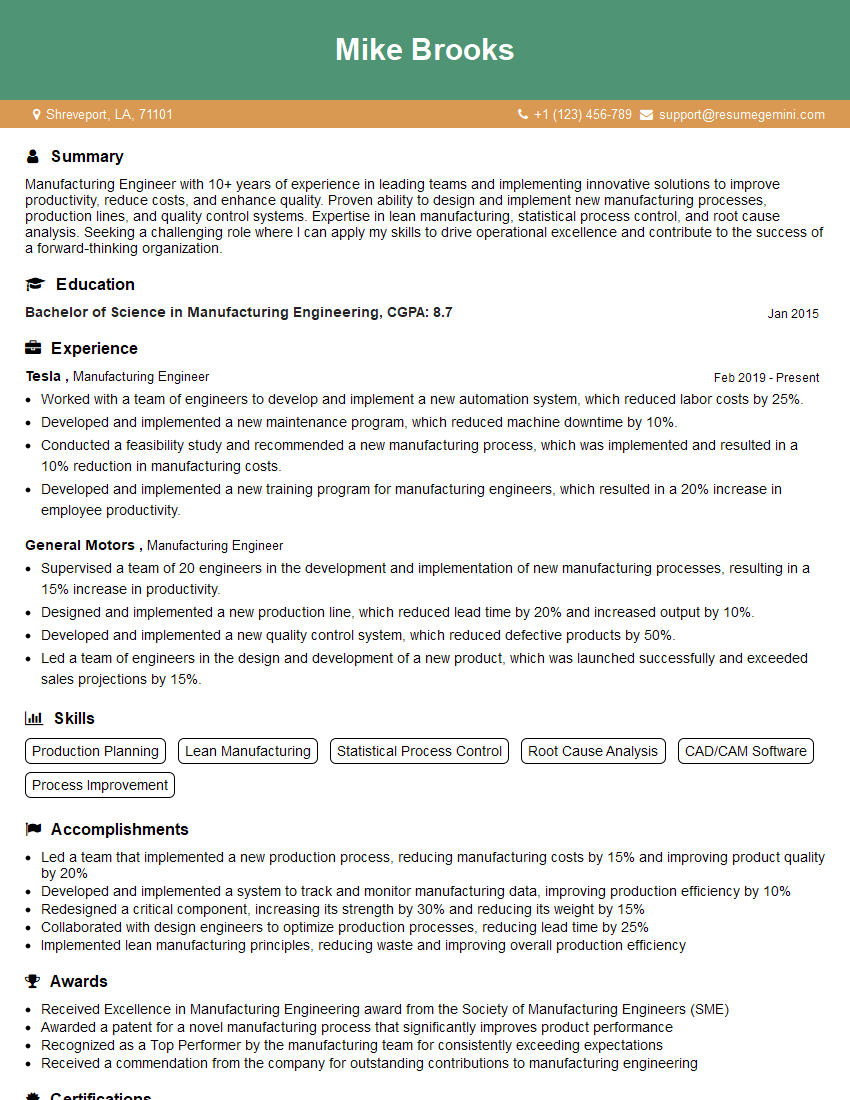
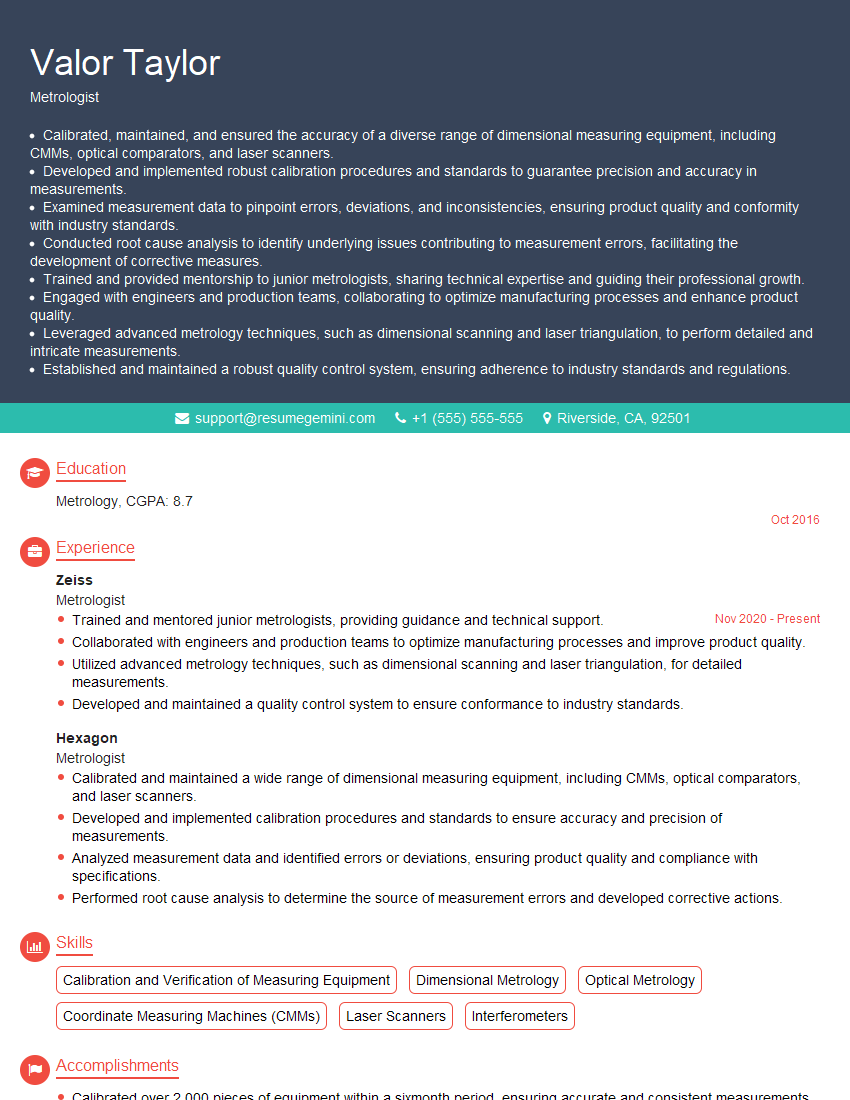
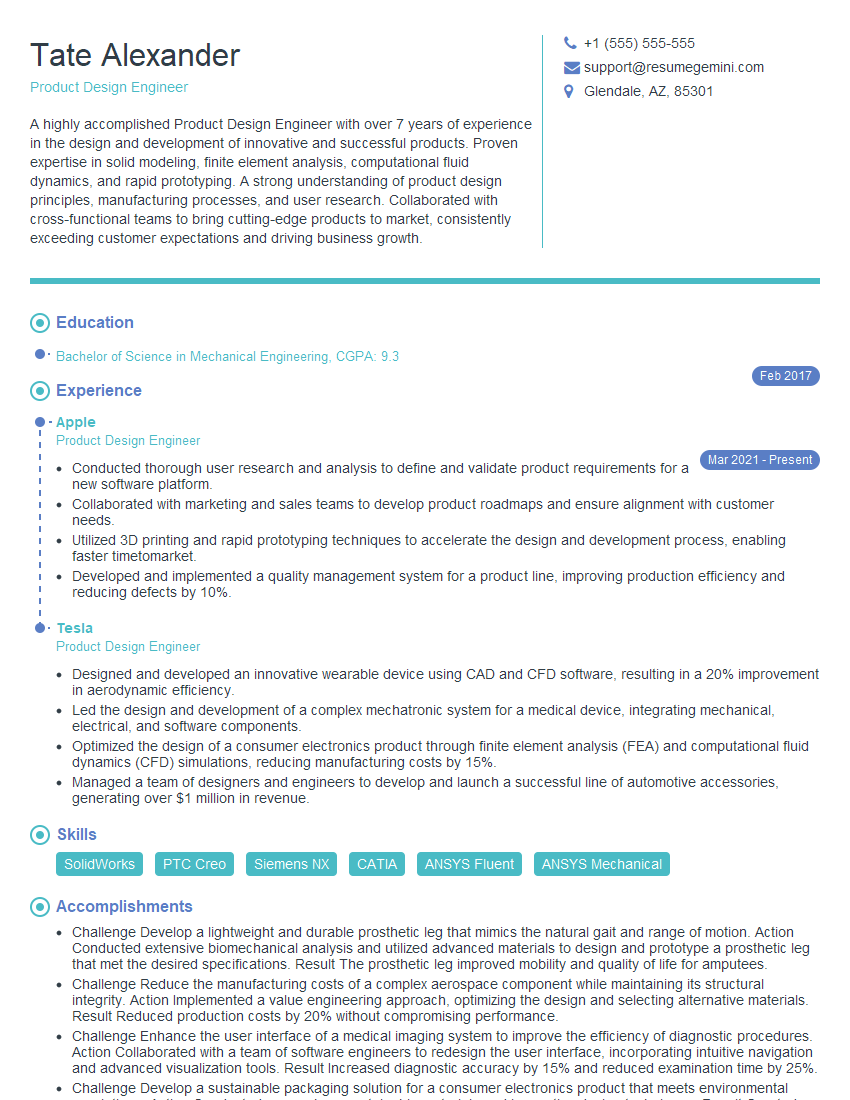
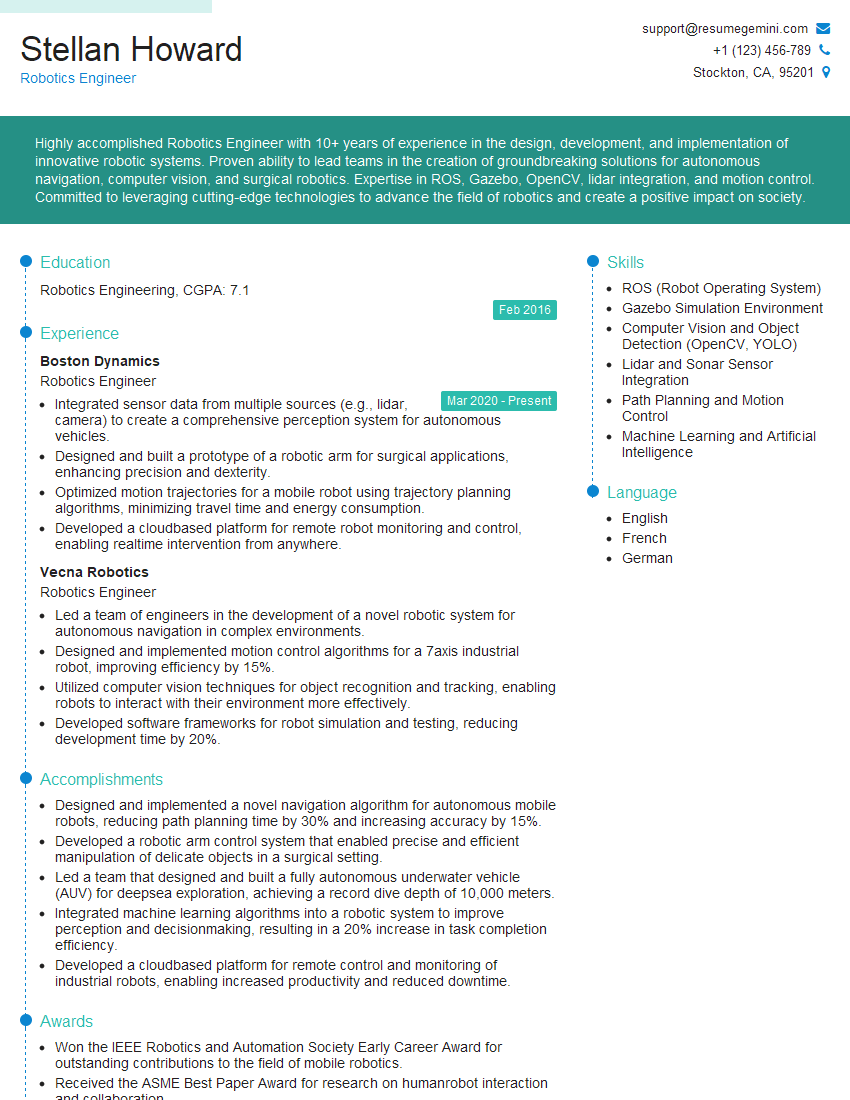
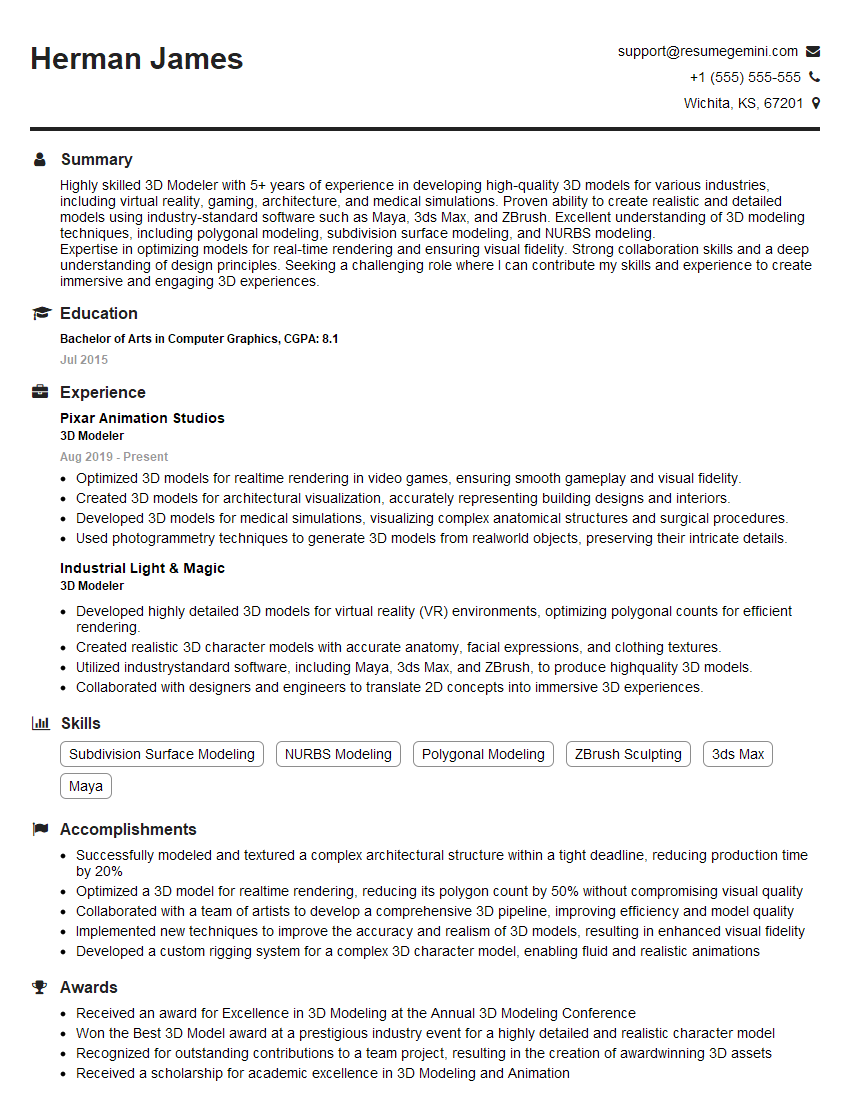
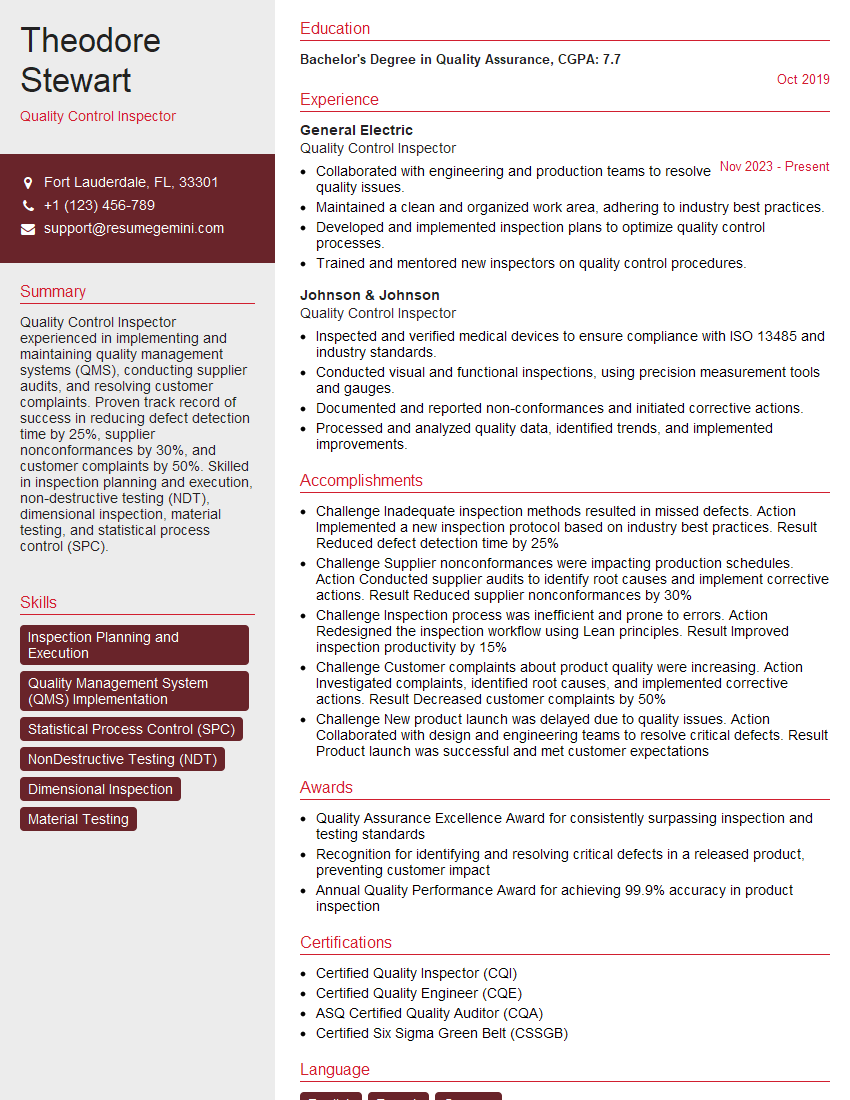
Mastering 3D scanning and reverse engineering opens doors to exciting career opportunities in various industries, offering high demand and competitive salaries. To maximize your job prospects, it’s crucial to present your skills effectively. Creating an Applicant Tracking System (ATS)-friendly resume is key to getting your application noticed. ResumeGemini is a trusted resource to help you build a professional and impactful resume tailored to your unique skills and experience. We provide examples of resumes specifically crafted for 3D scanning and reverse engineering professionals to give you a head start.
Explore more articles
Users Rating of Our Blogs
Share Your Experience
We value your feedback! Please rate our content and share your thoughts (optional).
What Readers Say About Our Blog
Very informative content, great job.
good