Are you ready to stand out in your next interview? Understanding and preparing for AAS Analysis interview questions is a game-changer. In this blog, we’ve compiled key questions and expert advice to help you showcase your skills with confidence and precision. Let’s get started on your journey to acing the interview.
Questions Asked in AAS Analysis Interview
Q 1. Explain the principle of Atomic Absorption Spectroscopy (AAS).
Atomic Absorption Spectroscopy (AAS) is a quantitative analytical technique used to determine the concentration of a specific element in a sample. It’s based on the principle that free atoms in the gaseous state absorb light at specific wavelengths characteristic of that element. Imagine it like a fingerprint for each element. When a light beam of that specific wavelength passes through a cloud of these free atoms, some of the light is absorbed. The amount of light absorbed is directly proportional to the concentration of the element in the sample. This allows us to determine the concentration by measuring the absorbance.
In simpler terms, we vaporize the sample, then shine a specific wavelength of light through it. The more of the element present, the more light gets absorbed. We measure this absorption, and using a calibration curve (a graph relating absorbance to concentration), we calculate the concentration of the element in the original sample.
Q 2. Describe the different types of AAS instruments (flame, graphite furnace, hydride generation).
AAS instruments primarily differ in how they atomize the sample:
- Flame AAS: This is the most common type. The sample (usually a liquid) is aspirated into a flame (often air-acetylene or nitrous oxide-acetylene), which atomizes it. The flame provides the necessary high temperature to break down the sample into free atoms. It’s relatively simple, robust, and suitable for many elements.
- Graphite Furnace AAS (GFAAS): Here, a small volume of sample is injected into a graphite tube, which is then heated electrically to a very high temperature (up to 3000°C). This allows for higher sensitivity because a much higher proportion of the sample is atomized and remains in the light path. It’s ideal for trace element analysis but has lower sample throughput compared to flame AAS.
- Hydride Generation AAS (HG-AAS): This technique is specifically used for elements that easily form volatile hydrides (like arsenic, selenium, and mercury). The sample is treated with a reducing agent to form the hydride, which is then swept into an argon stream and passed through a heated quartz cell. This cell is then placed within the spectrometer’s light path. This method offers high sensitivity and avoids some chemical interferences common in flame and graphite furnace techniques.
Q 3. What are the advantages and disadvantages of flame AAS versus graphite furnace AAS?
Choosing between flame AAS and graphite furnace AAS depends on the specific application. Here’s a comparison:
- Flame AAS: Advantages: Relatively simple, robust, high sample throughput, low cost per analysis. Disadvantages: Lower sensitivity compared to GFAAS, higher sample volume needed, some elements may not be easily atomized.
- Graphite Furnace AAS: Advantages: Higher sensitivity (allowing for trace element analysis), smaller sample volume needed. Disadvantages: Lower sample throughput, more complex operation, higher cost per analysis, more susceptible to matrix effects.
For example, routine analysis of major elements in a large number of samples might favour flame AAS, whereas analyzing trace amounts of lead in blood samples would be better suited for GFAAS.
Q 4. Explain the role of the hollow cathode lamp in AAS.
The hollow cathode lamp (HCL) is the light source in AAS. It’s a specialized gas-discharge lamp that emits light at specific wavelengths corresponding to the element being analyzed. Each HCL is designed for a particular element. Inside, the cathode is made of the element of interest, and when a high voltage is applied, the gas within the lamp ionizes. These ions then collide with the cathode, causing atoms of the element to be sputtered off. These excited atoms then emit light at specific wavelengths, as they return to their ground state. This creates a very narrow and intense spectral line that is ideal for minimizing background noise.
Think of it as a highly specific flashlight emitting only the color of light needed to excite the atoms of the element we’re measuring.
Q 5. How does a monochromator work in AAS?
The monochromator’s role is to isolate the specific wavelength emitted by the hollow cathode lamp. It’s a critical component for ensuring accurate measurements. A monochromator uses a diffraction grating or a prism to separate the light into its component wavelengths. By rotating the grating or prism, we can select the desired wavelength, effectively filtering out any unwanted light from the lamp or the sample matrix. This prevents interference from other elements present in the sample and increases the accuracy of the absorbance measurement.
It’s like a filter that allows only the correct colour of light to pass through, enhancing the precision of the analysis.
Q 6. What is the purpose of the burner in flame AAS?
In flame AAS, the burner mixes the sample with a fuel and oxidant (like air and acetylene), creating a flame. The flame’s purpose is threefold:
- Atomization: It vaporizes the sample and breaks it down into free, ground-state atoms that can absorb light at their characteristic wavelength.
- Excitation/Desolvation: The high temperature of the flame removes the solvent from the sample and excites a small fraction of the atoms to higher energy levels.
- Homogenization: The flame helps to create a stable and uniform atom cloud within the light path, enabling reproducible and accurate measurements.
Essentially, it’s the heart of the process, transforming the liquid sample into a cloud of individual atoms ready for analysis.
Q 7. Explain the concept of chemical interference in AAS and how it’s mitigated.
Chemical interference in AAS occurs when substances in the sample matrix affect the atomization of the analyte, leading to inaccurate results. For instance, the presence of certain compounds might form stable compounds with the analyte, preventing its efficient atomization and causing a decrease in the absorbance signal. This can lead to an underestimation of the analyte’s concentration.
Several methods are used to mitigate chemical interference:
- Standard additions method: This involves adding known amounts of the analyte to the sample and measuring the absorbance. By extrapolating the results, we can correct for the interference.
- Matrix modification: This technique involves adding a chemical modifier to the sample before atomization. The modifier alters the sample matrix, preventing or reducing the interference.
- Chemical separation: In some cases, separating the analyte from the interfering substances using techniques like ion exchange or solvent extraction can be effective.
- Choosing a different wavelength: If the interference is from another element absorbing light at the same wavelength, then choosing a different less affected wavelength may help resolve the issue.
The choice of mitigation strategy depends on the type and severity of the interference and the specific elements being analyzed.
Q 8. What is spectral interference and how is it addressed in AAS?
Spectral interference in Atomic Absorption Spectroscopy (AAS) refers to any signal that overlaps with the analyte’s absorption signal, causing inaccurate measurements. Think of it like trying to hear a specific instrument in an orchestra – other instruments might drown out the sound you’re trying to isolate. This interference can stem from various sources:
- Background Absorption: The sample matrix itself might absorb light at the same wavelength as the analyte. For example, high concentrations of salts in a water sample could absorb light, falsely increasing the apparent analyte concentration.
- Spectral Overlap: Another element in the sample might absorb light at a similar wavelength to the analyte. Imagine two musical instruments playing notes so close in pitch that they’re hard to distinguish.
- Scattering: Light can be scattered by particles in the sample, leading to apparent absorption. This is like light being diffused in a foggy environment, reducing the intensity that reaches the detector.
Addressing spectral interference involves several techniques:
- Background Correction: Using a deuterium lamp or Zeeman background correction to measure and subtract the background absorption. This is like electronically isolating the sound of your specific instrument in the orchestra.
- Chemical Separation: Techniques like solvent extraction or ion exchange can separate the analyte from interfering species. This would be analogous to removing some instruments from the orchestra to make the target instrument easier to hear.
- Choice of Wavelength: Selecting a different wavelength where interference is minimized. In our orchestra analogy, this would be like choosing a different instrument that plays a clearer, less interfered note.
- Standard Additions Method: This technique, discussed in more detail later, helps compensate for matrix effects, a major source of spectral interference.
Properly addressing spectral interference is crucial for accurate and reliable AAS results. Ignoring it can lead to significant errors in your analysis.
Q 9. Describe the process of sample preparation for AAS analysis.
Sample preparation for AAS is a critical step determining the accuracy and reliability of your results. It involves converting the sample into a solution suitable for atomization in the AAS instrument. The specific procedure depends heavily on the sample type (e.g., soil, water, biological tissue) and the analyte of interest. However, some common steps include:
- Digestion/Dissolution: Solid samples often need to be dissolved using acids (like HNO3, HCl, or aqua regia) or other reagents. This process breaks down the sample matrix to release the analyte into solution. Microwave digestion is frequently used for efficient and safe digestion.
- Dilution: Once dissolved, the sample may need to be diluted to bring the analyte concentration within the linear range of the AAS instrument. Imagine having a very strong tea; you would dilute it before drinking.
- Filtration: Removing particulate matter to prevent clogging of the nebulizer and atomizer in the AAS instrument. This is analogous to using a strainer to remove larger solids from a juice.
- Matrix Modification: Adding chemicals to improve the atomization efficiency of the analyte or to reduce interference from the sample matrix. It’s like adding a special ingredient to a recipe to enhance the flavour of a particular component.
For example, analyzing lead in soil would involve digesting the soil sample with a strong acid, filtering the solution, and then diluting it to a suitable concentration before AAS measurement. The details of each step are highly dependent on the sample’s characteristics and the required sensitivity.
Q 10. How do you prepare standard solutions for AAS calibration?
Preparing standard solutions for AAS calibration is fundamental to obtaining accurate results. These solutions contain known concentrations of the analyte and are used to create a calibration curve. The process usually involves:
- Weighing: Accurately weighing a precise amount of a high-purity analyte salt or metal. For example, to prepare a lead standard, you’d weigh a specific amount of lead nitrate.
- Dissolution: Dissolving the weighed analyte in a suitable solvent (usually deionized water) to achieve a stock solution of a known concentration. This concentration must be precisely calculated and recorded.
- Dilution: Serial dilution of the stock solution to create a series of standards with progressively lower concentrations. Using a volumetric flask ensures accurate dilutions. This is analogous to carefully diluting juice to create multiple levels of concentration.
- Quality Control: Using certified reference materials (CRMs) to verify the accuracy of the prepared standards.
For instance, to prepare a series of lead standards, you might weigh out enough lead nitrate to make a 1000 ppm stock solution. Then, you would perform serial dilutions to produce standards at 10, 20, 50, and 100 ppm. Precise measurements and careful record-keeping are crucial at each step.
Q 11. Explain how to create a calibration curve in AAS.
A calibration curve in AAS is a graph that plots the absorbance of a series of standard solutions against their known concentrations. This graph is used to determine the concentration of an unknown sample by measuring its absorbance and finding the corresponding concentration on the curve.
Creating a calibration curve involves:
- Preparing Standards: As described earlier, prepare a series of standard solutions with known concentrations of your analyte.
- Measuring Absorbance: Measure the absorbance of each standard solution using the AAS instrument under consistent conditions (e.g., lamp current, flame conditions).
- Plotting the Data: Plot the absorbance values (y-axis) against the corresponding concentrations (x-axis). The resulting graph should ideally be a straight line, indicating a linear relationship between absorbance and concentration.
- Determining the Equation of the Line: Use linear regression analysis (often built into AAS software) to determine the equation of the line (typically y = mx + c, where y is absorbance, x is concentration, m is the slope, and c is the y-intercept).
- Measuring Unknown Sample: Measure the absorbance of the unknown sample using the same instrument settings used for the standards.
- Determining Unknown Concentration: Substitute the unknown sample’s absorbance into the equation of the line to calculate its concentration.
A well-prepared calibration curve is essential for accurate quantitative analysis in AAS. The linearity of the curve is crucial; deviations from linearity indicate potential issues that need to be addressed.
Q 12. What is the method of standard additions and when is it used?
The method of standard additions is a technique used in AAS to compensate for matrix effects. Matrix effects occur when components of the sample matrix (everything except the analyte) interfere with the atomization process, leading to inaccurate measurements. Imagine trying to weigh flour precisely but your scale is affected by the presence of other ingredients in the bowl.
The method involves adding known amounts of the analyte to aliquots of the unknown sample and measuring the absorbance of each spiked sample. This process is usually repeated with several different known additions. Plotting the absorbance against the added concentration and extrapolating back to the x-intercept provides the concentration of the analyte in the original unknown sample.
The method of standard additions is particularly useful when:
- Matrix effects are significant: The sample matrix significantly alters the absorbance signal of the analyte.
- Sample preparation is difficult: It’s difficult or impossible to completely remove the interfering components from the sample.
By adding known amounts of the analyte to the sample, you essentially create a series of standards that are matched to the matrix of the unknown sample. This approach helps to neutralize the effect of the matrix and leads to a more accurate determination of the analyte concentration. It’s like adding a known amount of salt to both your sample and standards so that the effect of salt on the final measurement becomes the same for both and allows you to measure your analyte of interest correctly.
Q 13. How do you determine the detection limit and quantification limit in AAS?
The detection limit (DL) and quantification limit (QL) in AAS represent the lowest concentrations of an analyte that can be reliably detected and quantified, respectively. They are crucial parameters for assessing the sensitivity and capabilities of the AAS method.
Determining these limits usually involves analyzing several blank samples (samples without the analyte) and constructing a calibration curve. Common methods include:
- 3σ Method: The detection limit is calculated as three times the standard deviation (σ) of the blank readings divided by the slope (m) of the calibration curve:
DL = 3σ/m. The quantification limit is typically calculated as ten times the standard deviation of the blank readings divided by the slope of the calibration curve:QL = 10σ/m. - Visual Inspection: The detection limit can also be determined visually from the calibration curve as the lowest concentration that is significantly distinguishable from the blank signal. This method is subjective, but helpful for a quick initial assessment.
These limits are specific to the AAS instrument, the chosen analytical conditions, and the specific analyte. They serve as a benchmark for the method’s sensitivity and determine whether the method is suitable for measuring low concentrations of the analyte of interest. Knowing these limits is vital for interpreting results and deciding whether the method is appropriate for a given application.
Q 14. Explain the concept of linearity in AAS and its importance.
Linearity in AAS refers to the linear relationship between the absorbance of the analyte and its concentration within a specific range. Ideally, the calibration curve will show a straight line over a significant concentration range. This linear response is essential for accurate quantitative analysis because it allows us to use a simple linear equation to determine the concentration of unknown samples.
The importance of linearity stems from the fact that the Beer-Lambert law, which forms the basis of AAS measurements, holds true only within a certain concentration range. Outside this range, the relationship between absorbance and concentration becomes non-linear, rendering the linear equation unreliable. A non-linear response can be caused by several factors, such as high analyte concentrations, spectral interferences, or instrumental limitations. Ensuring a good linear range through careful sample preparation and method optimization is crucial for achieving precise and reliable results. Deviation from linearity necessitates further investigation, potential adjustments to the methodology (such as dilution) or using a different analytical approach.
Q 15. What are the common sources of error in AAS measurements?
Errors in AAS measurements stem from various sources, broadly categorized into instrumental, chemical, and spectral interferences.
- Instrumental Errors: These include issues with the lamp, monochromator, detector, or the atomizer itself. For example, a faulty hollow cathode lamp will produce a weak signal, leading to inaccurate readings. Incorrect lamp alignment can also significantly affect the signal intensity. Drift in the instrument’s electronics can cause gradual changes in the baseline, impacting the accuracy of measurements over time.
- Chemical Interferences: These arise from the sample matrix. For instance, the presence of certain elements can form compounds with the analyte, reducing its atomization efficiency. This is often seen in high salt matrices. Another example is ionization interference, where the analyte ionizes in the flame, reducing the number of neutral atoms available for absorption.
- Spectral Interferences: These occur when other elements or molecules in the sample absorb light at the same wavelength as the analyte. This can lead to overestimation of the analyte concentration. For example, molecular absorption from combustion products in the flame can lead to a higher background signal.
Understanding these error sources is crucial for implementing appropriate quality control measures and obtaining reliable results.
Career Expert Tips:
- Ace those interviews! Prepare effectively by reviewing the Top 50 Most Common Interview Questions on ResumeGemini.
- Navigate your job search with confidence! Explore a wide range of Career Tips on ResumeGemini. Learn about common challenges and recommendations to overcome them.
- Craft the perfect resume! Master the Art of Resume Writing with ResumeGemini’s guide. Showcase your unique qualifications and achievements effectively.
- Don’t miss out on holiday savings! Build your dream resume with ResumeGemini’s ATS optimized templates.
Q 16. How do you troubleshoot common problems encountered in AAS analysis (e.g., low signal, high background)?
Troubleshooting AAS problems requires a systematic approach. Let’s consider low signal and high background scenarios:
- Low Signal:
- Check the lamp: Ensure the lamp is properly aligned and not nearing the end of its lifespan. A weak or improperly aligned lamp is a frequent cause of low signals.
- Optimize atomization conditions: This includes adjusting the flame height, fuel-oxidant ratio, and flow rates. Different analytes require different optimal conditions.
- Sample preparation: Verify that the sample is properly diluted and doesn’t contain interfering substances. Incorrect sample preparation often leads to low signals or inaccurate results.
- Check the detector: Ensure the detector is functioning properly and that the signal is being processed correctly by the instrument’s electronics.
- High Background:
- Spectral interference: Consider using background correction techniques like deuterium arc background correction or Zeeman background correction to remove the background absorbance.
- Chemical interference: Optimize the sample matrix by using chemical modifiers (releasing agents or protective agents) to minimize the interference. For example, using lanthanum chloride to reduce phosphate interference in calcium determination.
- Clean the atomizer: Accumulation of sample residues in the burner or graphite tube can increase the background signal. Proper cleaning and maintenance are essential.
Troubleshooting is an iterative process. Documenting each step and observation is vital for identifying the root cause and achieving accurate and precise results.
Q 17. Describe the quality control procedures used in AAS analysis.
Quality control in AAS analysis ensures accurate and reliable results. Key procedures include:
- Blank measurements: Regularly measure the absorbance of a blank (a solution without the analyte) to account for background absorbance.
- Calibration verification: Periodically check the accuracy of the calibration curve using calibration verification standards (CVSs). This helps detect any drift or inaccuracies in the instrument’s response.
- Internal standards: Using an internal standard helps compensate for variations in sample introduction or atomization efficiency. This will be discussed in more detail later.
- Spike recovery: A known amount of analyte is added to a sample, and the recovery is calculated to assess the accuracy of the analysis.
- Duplicate analysis: Replicate analyses of samples are performed to determine the precision of the method.
- Control charts: Keeping records of absorbance readings of standards and QC samples in control charts helps to monitor the stability and accuracy of the analysis over time.
- Regular maintenance: This includes daily lamp checks, burner cleaning, and routine instrument calibration and verification to maintain optimal performance.
Implementing these procedures ensures the quality and reliability of the data generated. Any deviation from expected values requires investigation and appropriate corrective actions.
Q 18. What are the safety precautions associated with using AAS instruments?
AAS involves working with hazardous materials and high-voltage equipment, necessitating strict safety protocols:
- Proper ventilation: Acetylene is highly flammable, and the instrument should be operated in a well-ventilated area with appropriate exhaust systems.
- Eye protection: Always wear safety glasses or goggles to protect against splashes and fumes.
- Appropriate clothing: Wear lab coats and gloves to prevent contamination and protect skin from chemicals.
- Handling hazardous materials: Follow proper procedures for handling acids, bases, and other potentially hazardous chemicals.
- Electrical safety: Exercise caution when working with the high-voltage components of the instrument.
- Emergency procedures: Be aware of the location and usage of fire extinguishers, safety showers, and eyewash stations.
- Proper waste disposal: Dispose of waste chemicals according to regulations.
Adherence to these safety precautions is paramount for the safety of the analyst and the integrity of the laboratory environment.
Q 19. Explain the role of internal standards in AAS.
Internal standards in AAS compensate for variations in sample introduction and atomization. A known concentration of an element, different from the analyte, is added to both standards and samples. By measuring both the analyte and internal standard signals, you account for inconsistencies.
For example, if the sample introduction system temporarily delivers less sample, both analyte and internal standard signals will decrease proportionately. The ratio of the analyte signal to the internal standard signal remains relatively constant, leading to more accurate quantitative results. This is especially helpful for techniques like flame AAS, where the introduction of the sample into the flame can fluctuate.
The choice of internal standard is crucial. It should have similar chemical properties to the analyte to experience similar matrix effects, but not overlap spectrally.
Q 20. How do you perform a blank correction in AAS?
Blank correction is vital in AAS to remove background absorbance. A blank, which is a sample that contains all components except the analyte, is measured before the samples. The absorbance of the blank is subtracted from the absorbance of the sample. This corrects for absorbance due to the matrix, solvent, or any other interfering species present in the sample, ensuring the measured signal corresponds solely to the analyte’s absorption.
For instance, if the blank absorbance is 0.050 and the sample absorbance is 0.200, the corrected absorbance would be 0.200 – 0.050 = 0.150. This corrected value is then used in the calibration curve for analyte concentration determination.
Q 21. What are the different types of atomizers used in AAS?
AAS utilizes different atomizers to convert the analyte into a free, gaseous atomic state for absorption measurement. The choice of atomizer depends on the analyte and the required sensitivity.
- Flame atomizers: These use a flame (typically air-acetylene or nitrous oxide-acetylene) to atomize the sample. They are relatively simple and inexpensive, but have lower sensitivity than other techniques. They are widely used for many elements.
- Electrothermal atomizers (graphite furnace): These use a graphite tube heated electrically to atomize the sample. They offer significantly higher sensitivity than flame atomizers but require smaller sample volumes and are more prone to matrix interferences. Ideal for trace element analysis.
- Hydride generation systems: These are specialized atomizers used for elements that readily form volatile hydrides (e.g., arsenic, selenium, antimony). They improve sensitivity and reduce matrix effects. This method involves chemical reduction of the analyte to its volatile hydride form, followed by atomization in a heated quartz cell.
- Cold vapor atomic absorption (CVAA): Used for mercury determination. Mercury vapor is generated by chemical reduction and then passes through a long absorption cell for measurement. It offers superior sensitivity for mercury.
Each atomizer has its strengths and weaknesses; selecting the appropriate atomizer is crucial for optimizing the analysis.
Q 22. Describe the principles of Zeeman background correction.
Zeeman background correction is a powerful technique used in atomic absorption spectroscopy (AAS) to eliminate spectral interferences caused by background absorption. Unlike other methods, it doesn’t require a separate measurement of the background. Instead, it utilizes a magnetic field to split the atomic absorption lines. Let’s break it down:
Imagine a light beam shining through a sample. The analyte absorbs some of this light, giving us our signal. But background substances in the sample also absorb light, creating a false high reading. Zeeman correction cleverly uses a magnetic field applied to the sample. This field splits the atomic absorption lines into multiple components, some affected by the magnetic field and others not. By carefully measuring the absorption of both components, the instrument can separate the analyte signal from the background absorption, providing a more accurate measurement.
Here’s how it works in practice: A strong magnetic field is applied to the sample. This splits the spectral line into three components – one unaffected by the magnetic field (the π-component) and two that are (σ-components). The π-component shows both analyte and background absorption, while the σ-components show mostly background. The instrument calculates the background absorption from the σ-components and subtracts it from the overall absorption in the π-component, thus providing a corrected measurement for the analyte.
This method is especially valuable when dealing with samples with high background absorption, such as those with high salt content or complex matrices. It’s a significant advancement over other background correction methods such as deuterium background correction, because it’s less prone to errors and provides superior results in complex scenarios.
Q 23. How does matrix modification affect AAS measurements?
Matrix modification in AAS refers to the process of adding a chemical modifier to the sample before analysis to improve the atomization efficiency and reduce interferences. The sample matrix (everything besides the analyte) can significantly impact the AAS measurement. For example, high concentrations of certain elements can suppress the analyte signal. Matrix modifiers help alleviate these issues.
Consider a scenario where you’re analyzing lead in a soil sample. The soil matrix contains various components that can interfere with the lead signal. A common matrix modifier is palladium or magnesium nitrate. These modifiers alter the chemical behavior of the analyte during the atomization process, enhancing the formation of free atoms of the analyte and reducing the formation of compounds that would otherwise hinder atomization.
The benefits of matrix modification include:
- Increased sensitivity: By improving atomization efficiency, we get stronger signals for the same concentration of the analyte.
- Reduced chemical interferences: Matrix modifiers can prevent the formation of refractory compounds that otherwise would cause signal suppression.
- Improved precision: More consistent atomization results in more repeatable and accurate measurements.
However, it’s crucial to carefully select the appropriate matrix modifier for the specific sample and analyte. Improper use can introduce its own interferences, making optimization crucial for successful analysis. The choice of modifier, its concentration, and the atomization conditions need to be carefully optimized to achieve best results.
Q 24. What are the applications of AAS in environmental monitoring?
AAS plays a vital role in environmental monitoring due to its sensitivity and ability to measure a wide range of heavy metals and other elements present in environmental samples. Some key applications include:
- Heavy metal analysis in water: Detecting lead, cadmium, mercury, arsenic, and other toxic metals in drinking water, wastewater, and surface water. This helps ensure compliance with environmental regulations and protects public health.
- Soil contamination assessment: Measuring the concentration of heavy metals in soil samples to assess the extent of contamination from industrial activities or other pollution sources. This information guides remediation efforts.
- Air quality monitoring: Analyzing particulate matter for trace elements released into the atmosphere through industrial emissions or other sources. This data informs air quality standards and regulations.
- Monitoring of pesticides and herbicides: Determining the levels of certain elements associated with the breakdown products of pesticides and herbicides to assess their impact on the environment.
For instance, imagine investigating a potential case of water contamination near an industrial site. AAS would be the ideal technique to accurately quantify the concentration of heavy metals like lead and cadmium in water samples collected from various points near the site. This data would help determine the extent and source of the contamination.
Q 25. What are the applications of AAS in food analysis?
AAS finds widespread use in food analysis for determining the elemental composition of various food products. Its applications span several areas:
- Trace element analysis: Measuring essential minerals (e.g., iron, zinc, copper) and potentially harmful elements (e.g., lead, cadmium, mercury) in food and beverages. This is important for nutritional assessments and safety evaluations.
- Food authenticity verification: Analyzing the elemental profile of food products to verify their origin or detect adulteration. For example, determining the geographic origin of certain spices or detecting the addition of cheaper substitutes.
- Food processing monitoring: Analyzing the elemental composition of food products throughout the processing stages to ensure that processing doesn’t introduce contaminants or affect the nutritional value.
- Contaminant detection: Detecting heavy metals in food due to environmental contamination or accidental inclusion during processing.
A practical example: Analyzing canned tuna for mercury contamination. AAS allows for precise quantification of mercury levels, ensuring that they fall within safe limits set by regulatory bodies. This directly impacts consumer safety and public health.
Q 26. What are the applications of AAS in pharmaceutical analysis?
AAS plays a crucial role in pharmaceutical analysis, primarily focusing on the detection and quantification of trace elements in pharmaceuticals. Its applications include:
- Quality control: Analyzing the elemental composition of raw materials, intermediate products, and finished pharmaceutical products to ensure consistent quality and purity. This is essential for drug safety and efficacy.
- Impurity analysis: Detecting and quantifying trace metal impurities that may have leached into the drug from containers, manufacturing equipment, or raw materials. These impurities can have detrimental effects on the patient.
- Drug stability monitoring: Assessing the impact of storage conditions on the elemental content of drugs to determine shelf life and packaging requirements.
- Forensic analysis: Identifying and quantifying specific elements present in drugs as part of forensic investigations or determining the authenticity of a drug sample.
For example, AAS is vital in checking for heavy metal contamination in active pharmaceutical ingredients (APIs). Even trace amounts of heavy metals can compromise drug safety and efficacy, making AAS a critical quality control tool in pharmaceutical manufacturing.
Q 27. How does AAS compare to other atomic spectroscopic techniques (e.g., ICP-OES, ICP-MS)?
AAS, ICP-OES, and ICP-MS are all atomic spectroscopic techniques used for elemental analysis, but they differ significantly in their principles, capabilities, and applications. Here’s a comparison:
- AAS (Atomic Absorption Spectroscopy): Measures the absorption of light by free atoms in a flame or graphite furnace. It’s relatively simple, inexpensive, and suitable for a wide range of elements. However, it’s generally less sensitive than ICP-OES or ICP-MS for many elements and requires separate measurements for each element.
- ICP-OES (Inductively Coupled Plasma Optical Emission Spectrometry): Excites atoms in an argon plasma and measures the emitted light. It’s more sensitive than AAS for many elements and can simultaneously determine multiple elements. It is also more complex and expensive than AAS.
- ICP-MS (Inductively Coupled Plasma Mass Spectrometry): Measures the mass-to-charge ratio of ions in an argon plasma. It’s the most sensitive of the three techniques and is ideal for isotopic analysis and the determination of very low concentrations of elements. It’s the most expensive and complex to operate.
Choosing the right technique depends on the application. For routine analyses of a few elements at relatively high concentrations, AAS might suffice. For more comprehensive analysis of numerous elements at trace levels, ICP-OES or ICP-MS would be preferred. ICP-MS is particularly suitable for isotopic measurements or ultratrace analysis.
Q 28. Describe your experience with method validation in AAS.
Method validation in AAS is crucial for ensuring the reliability and accuracy of analytical results. My experience encompasses all stages of the validation process, following established guidelines like those from ICH (International Council for Harmonisation) or similar regulatory bodies. This typically includes:
- Specificity: Demonstrating that the method only measures the analyte of interest, without interference from other components in the sample matrix. This often involves spiking experiments and the use of various background correction techniques.
- Linearity: Establishing a linear relationship between the analyte concentration and the measured signal over the relevant concentration range. This involves creating a calibration curve and calculating the coefficient of determination (R2).
- Limit of detection (LOD) and limit of quantification (LOQ): Determining the lowest concentration that can be reliably detected and quantified. These values are important for assessing the method’s sensitivity.
- Accuracy: Assessing the closeness of the measured values to the true values. This typically involves analyzing certified reference materials (CRMs) or using recovery studies.
- Precision: Measuring the reproducibility of the method by performing multiple analyses of the same sample. This involves calculating the relative standard deviation (RSD).
- Robustness: Evaluating the method’s performance under slightly varied conditions (e.g., changes in temperature, instrument parameters). This provides an indication of how reliable the method is in routine use.
I’ve been involved in validating numerous AAS methods across various applications, from environmental monitoring to food and pharmaceutical analysis. A recent example involved validating a method for determining trace amounts of arsenic in rice samples. This involved meticulous attention to sample preparation, optimization of instrument parameters, and careful statistical analysis of the results to ensure the method met all required validation criteria. A comprehensive validation report documenting all aspects of the process was generated and is available for review. This process is critical to ensure the data produced is reliable, defensible, and fit-for-purpose.
Key Topics to Learn for AAS Analysis Interview
- Instrumentation and Principles: Understand the fundamental principles of Atomic Absorption Spectroscopy (AAS), including light sources (hollow cathode lamps), atomization techniques (flame, graphite furnace), and the Beer-Lambert law. Be prepared to discuss the differences between flame and graphite furnace AAS.
- Sample Preparation: Master various sample preparation techniques crucial for accurate AAS analysis. This includes digestion methods (acid digestion, microwave digestion), dilutions, and matrix matching. Understand the impact of sample preparation on analytical results.
- Method Development and Validation: Discuss your experience (or theoretical knowledge) in developing and validating AAS methods. This includes aspects like linearity, limit of detection (LOD), limit of quantification (LOQ), precision, and accuracy. Be ready to explain the importance of method validation in ensuring reliable results.
- Data Analysis and Interpretation: Demonstrate your ability to interpret AAS data, identify potential interferences (spectral and chemical), and troubleshoot common issues encountered during analysis. Discuss how to assess the quality of data obtained.
- Quality Control and Assurance: Understand the importance of quality control in AAS analysis, including the use of standards, blanks, and quality control samples. Be familiar with relevant quality management systems (e.g., ISO 17025).
- Applications of AAS: Be prepared to discuss the various applications of AAS in different fields, such as environmental monitoring, food safety, clinical chemistry, and materials science. Provide specific examples of analytes commonly determined using AAS.
- Troubleshooting and Maintenance: Demonstrate your understanding of common problems encountered with AAS instruments and how to address them. This includes burner adjustments, lamp alignment, and general instrument maintenance.
Next Steps
Mastering AAS Analysis opens doors to exciting career opportunities in analytical chemistry and related fields. A strong understanding of this technique is highly valued by employers across various industries. To maximize your job prospects, focus on building a compelling and ATS-friendly resume that effectively showcases your skills and experience. ResumeGemini is a trusted resource to help you create a professional and impactful resume. We offer examples of resumes tailored to AAS Analysis positions to guide you. Take advantage of these resources to elevate your job search and land your dream role!
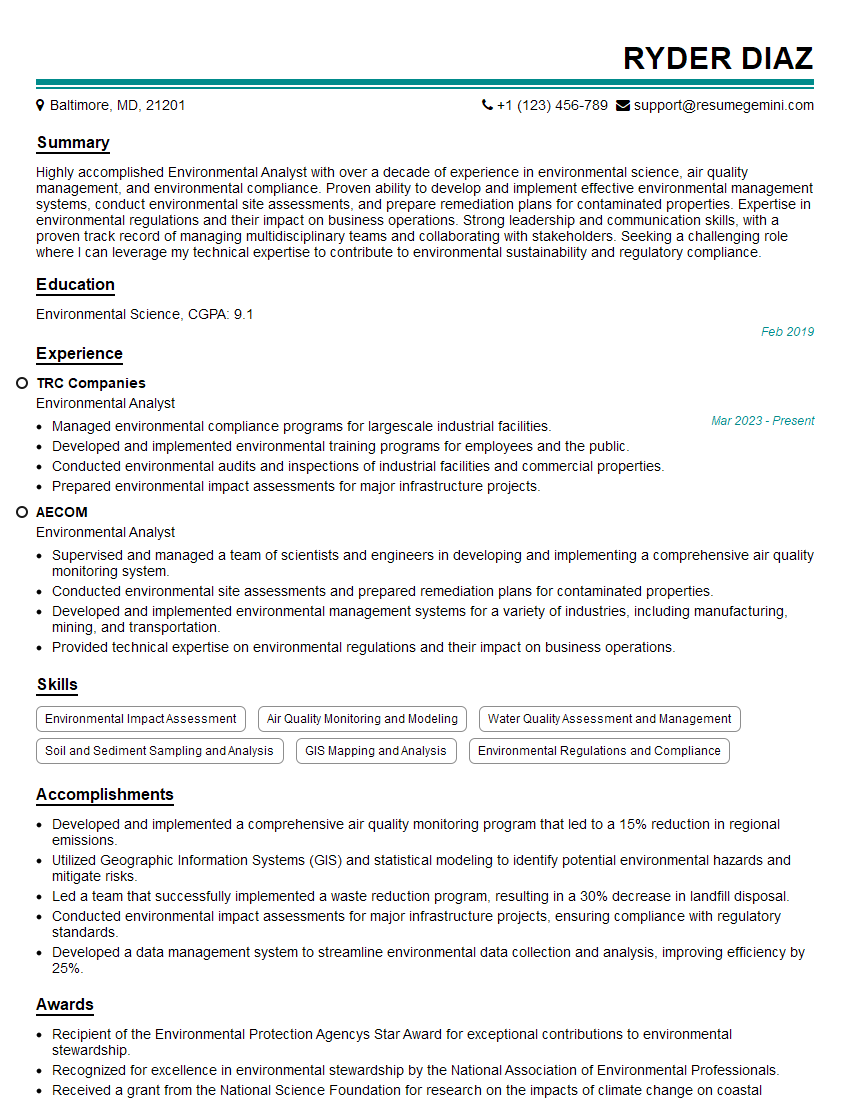
Environmental Analyst Resume Sample

Laboratory Manager Resume Sample

Quality Control Manager Resume Sample

Research Associate Resume Sample

Regulatory Affairs Specialist Resume Sample

Quality Control Analyst Resume Sample

Research Scientist Resume Sample

Metrologist Resume Sample

Validation Specialist Resume Sample

Laboratory Technician Resume Sample

Food Scientist Resume Sample

Analytical Chemist Resume Sample
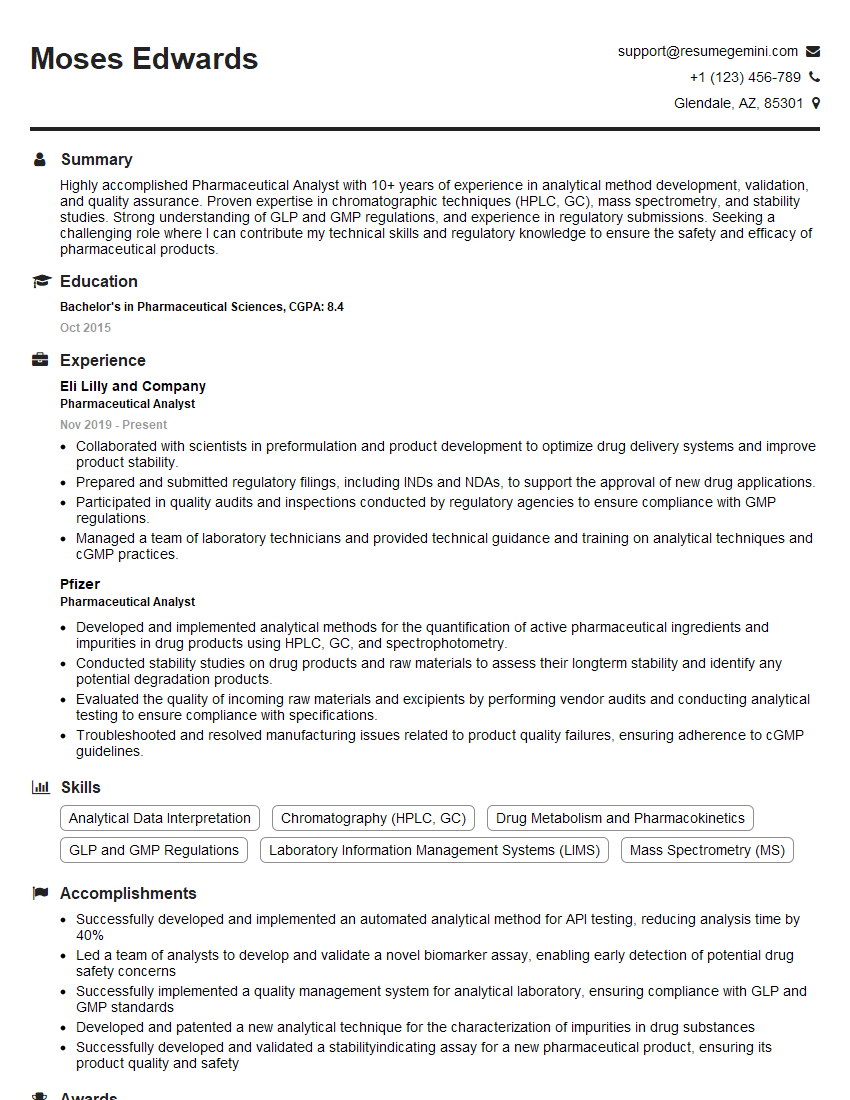
Pharmaceutical Analyst Resume Sample

Materials Scientist Resume Sample

Geochemist Resume Sample

Laboratory Analyst Resume Sample
- Environmental Analyst
- Laboratory Manager
- Quality Control Manager
- Research Associate
- Regulatory Affairs Specialist
- Quality Control Analyst
- Research Scientist
- Metrologist
- Validation Specialist
- Laboratory Technician
- Food Scientist
- Analytical Chemist
- Pharmaceutical Analyst
- Materials Scientist
- Geochemist
- Laboratory Analyst
Explore more articles
Users Rating of Our Blogs
Share Your Experience
We value your feedback! Please rate our content and share your thoughts (optional).
What Readers Say About Our Blog
Very informative content, great job.
good