The right preparation can turn an interview into an opportunity to showcase your expertise. This guide to ABB System 800xA interview questions is your ultimate resource, providing key insights and tips to help you ace your responses and stand out as a top candidate.
Questions Asked in ABB System 800xA Interview
Q 1. Explain the architecture of ABB System 800xA.
ABB System 800xA boasts a client-server architecture, built upon a distributed, object-oriented foundation. Think of it like a well-organized city: different parts handle specific tasks, but they all communicate seamlessly. At the core is the Application Server, which acts as the central brain, managing data and coordinating actions. This server interacts with various Control Servers, which directly manage the field devices (like valves, sensors, and actuators) via various communication protocols. Each Control Server acts like a neighborhood manager, responsible for its specific area of control. Client workstations (like operator consoles and engineering stations) connect to the Application Server to access and interact with the system. This distributed structure ensures robustness; if one part fails, the others continue operating.
The key components include: Application Server (central data management), Control Servers (real-time control), Client Workstations (operator interface, engineering), and Field Devices (sensors, actuators).
For example, in a large chemical plant, you might have multiple Control Servers, each managing a different process unit (like polymerization, distillation, and packaging). The Application Server then gathers data from all these units, allowing operators to monitor and control the entire plant from a central location.
Q 2. Describe the different types of controllers used in 800xA.
System 800xA offers a variety of controllers, each designed for specific needs. These can be categorized broadly as:
- AC 800M Controllers: These are highly versatile, programmable logic controllers (PLCs) suitable for a wide range of applications. They’re often used in larger, more complex processes requiring extensive control logic and high performance. Think of them as the workhorses capable of handling heavy-duty tasks.
- AC 800F Controllers: These are designed for smaller, simpler processes, providing a more compact and cost-effective solution. They are ideal for situations where the control requirements are less demanding.
- Third-party controllers: 800xA is designed to integrate with controllers from other manufacturers, demonstrating its flexibility and adaptability to existing infrastructure. This integration allows you to leverage existing investments while benefiting from the advanced features of the 800xA system.
The choice of controller depends heavily on the application’s demands. A complex refinery would likely use AC 800M controllers for their advanced capabilities, whereas a smaller water treatment plant might find AC 800F controllers sufficient.
Q 3. How do you configure alarms and events in 800xA?
Configuring alarms and events in 800xA is done primarily within the Alarm and Event Management system. This involves defining alarm limits and actions based on process variables. Think of this as setting up a sophisticated warning system for your process. You define which values trigger alarms, the severity (high, medium, low), and what actions the system should take when an alarm occurs (e.g., sound an alarm, display a message, send an email).
The process typically involves:
- Defining alarm limits: Specify the high and low limits for each variable that should trigger an alarm. This might involve setting upper and lower bounds for temperature, pressure, or flow rate.
- Setting alarm severity: Assign a severity level to each alarm based on its potential impact. This helps prioritize alarms and ensures that critical issues receive immediate attention.
- Defining alarm actions: Specify the actions to be taken when an alarm is triggered. This could include sending an email or SMS notification to operators, triggering a shutdown procedure, or displaying an alarm message on a control panel.
- Configuring event logging: Define which events should be logged for tracking and analysis. This can help identify trends and prevent future issues.
For example, in a power plant, you might configure an alarm that triggers when the boiler temperature exceeds a certain threshold, signaling a potential overheating situation. This alarm might be set to high severity, triggering audible alarms and immediate notification of plant operators.
Q 4. Explain the role of the Application Server in 800xA.
The Application Server is the central hub of the 800xA system. It’s the brains of the operation, managing data, communication, and application services. Think of it as the air traffic control tower of an airport, coordinating all the different aircraft (Control Servers, client workstations).
Its key roles include:
- Data management: Storing and managing historical and real-time process data.
- Communication management: Facilitating communication between Control Servers, client workstations, and other systems.
- Application service provision: Providing services to client workstations, such as alarming, trending, and reporting.
- Security management: Enforcing security policies and access control.
- Redundancy and failover: Ensuring system availability by providing redundant servers and failover mechanisms.
Without a functional Application Server, the entire 800xA system would be crippled. It’s the backbone that allows the system to operate smoothly and reliably.
Q 5. How do you manage user roles and permissions in 800xA?
Managing user roles and permissions in 800xA is crucial for system security. This involves assigning users to different roles with specific permissions, limiting access to sensitive data and functionalities. Think of it as creating a security gatekeeper for your process control system.
This is typically achieved through the 800xA Security Configuration. You can define different roles (e.g., operator, engineer, administrator) and assign specific permissions to each role. For example, an operator might only have permission to monitor and control the process, while an engineer might have permission to configure the system and modify control logic. An administrator would have full access to the entire system.
The process involves creating user accounts, assigning them to specific roles, and defining the permissions associated with those roles. This granular control ensures that only authorized personnel can access and modify sensitive information, enhancing the overall security of the system. This is particularly important in industries like power generation or chemical processing, where unauthorized access could have severe consequences.
Q 6. Describe your experience with 800xA graphics development.
I have extensive experience in 800xA graphics development, using the 800xA Graphics Builder to create customized operator interfaces. I am proficient in designing efficient and intuitive graphics that optimize operator workflow and enhance process visibility. My experience includes designing graphics for various applications, from simple supervisory displays to complex process control panels. I’m comfortable working with different graphics objects, such as trend displays, alarm summaries, and custom faceplates. I understand the importance of adhering to human-machine interface (HMI) design principles to ensure easy navigation and readability.
For example, in a recent project, I developed a dynamic graphic that displays real-time data from multiple sensors on a map view of a manufacturing facility. This allowed operators to quickly identify and address potential issues within the facility.
I’m also familiar with the best practices for graphics development, including the use of consistent design elements, clear labeling, and effective alarm management to prevent operator overload.
Q 7. Explain the process of creating and configuring a faceplate in 800xA.
Creating and configuring a faceplate in 800xA involves using the 800xA Graphics Builder. Faceplates are reusable graphical components that encapsulate specific functionalities or data. Think of them as pre-built modules that you can drag and drop onto your main screens. They improve efficiency and consistency in graphics design.
The process typically involves:
- Defining the faceplate functionality: Determine what data the faceplate will display and what actions it will perform. This might include displaying real-time data from a specific instrument, controlling a valve, or providing access to specific configuration settings.
- Creating the graphic design: Use the Graphics Builder to design the visual layout of the faceplate. This involves selecting appropriate graphic objects, arranging them logically, and ensuring clear labeling.
- Linking data variables: Connect the graphic objects to process variables, allowing the faceplate to display real-time data. This typically involves linking graphic elements (like gauges or trend displays) to specific tags within the 800xA system.
- Configuring actions: Define actions that the faceplate will perform in response to user interactions (e.g., clicking a button, adjusting a slider). This might involve controlling a valve, modifying a setpoint, or triggering an alarm.
- Testing and refining: Thoroughly test the faceplate to ensure it functions correctly and meets the required specifications. This may involve iterative adjustments to the design and functionality.
For example, a faceplate might represent a single pump, showing its status (running/stopped), flow rate, and pressure, with buttons to start/stop the pump and adjust its speed. Once created, this faceplate can be easily reused in multiple locations throughout the system.
Q 8. How do you troubleshoot communication issues in an 800xA system?
Troubleshooting communication issues in an 800xA system involves a systematic approach, starting with the simplest checks and progressing to more complex diagnostics. Think of it like detective work – you need to gather clues and eliminate possibilities.
First, I’d check the obvious: Are the physical connections secure? Are the network cables plugged in firmly at both ends? Are there any visible signs of damage to the cables or connectors? A loose connection is often the culprit.
Next, I’d use the 800xA system’s built-in diagnostic tools. The System Information and Network Status views within the operator interface provide real-time information about the network and communication status of different components. These tools show connection status (online/offline), error messages and signal strengths.
Then I’d examine the network configuration. Are the IP addresses, subnet masks, and gateway addresses correctly configured on all devices? Are there any network conflicts or firewall issues preventing communication? I’d use tools like ping and traceroute to verify network connectivity between different components.
If the problem persists, I’d delve into the communication protocols. 800xA uses various protocols like Profinet, Profibus, Ethernet/IP, etc., depending on the field devices. I’d verify that the correct protocols are configured, that the baud rates are correct, and check for any protocol-specific errors reported in the system logs. Analyzing the detailed log files is crucial here.
Finally, if the problem still persists, I might check the hardware itself. Are there any failing network cards or other hardware issues? A faulty component could disrupt communication. Replacing suspect components might be necessary.
Throughout this entire process, documenting each step, the results, and the actions taken is vital for both troubleshooting and future reference. A well-maintained troubleshooting log can save considerable time and effort in the long run.
Q 9. Describe your experience with 800xA’s historical data management.
My experience with 800xA’s historical data management involves using the built-in historian functionalities, which offer a robust solution for storing, retrieving, and analyzing process data. Think of it as a vast, highly organized library for all your process data.
I’m proficient in configuring the historian, defining data tags to be archived, setting up archiving strategies (e.g., cyclical archiving, event-based archiving, continuous archiving), and optimizing storage based on data importance and frequency.
I’ve worked with different historian configurations, including local historian for smaller applications and distributed historian setups for large-scale systems ensuring data redundancy and high availability. This often involves integrating with other systems for enterprise-wide data management.
Beyond basic configuration, I’m experienced in data retrieval using the 800xA’s reporting and analysis tools, and have developed custom queries using SQL to extract and analyze specific data sets. This has been invaluable for performance analysis, trend identification, and root cause investigations of incidents.
For example, I once used the historian data to pinpoint the exact timing and conditions that led to a process upset, enabling rapid corrective action and preventing similar occurrences. Analyzing historical data provides valuable insights for process optimization and proactive maintenance.
Q 10. Explain the different types of control strategies implemented in 800xA.
800xA supports a wide range of control strategies, offering flexibility to meet diverse process requirements. It’s like having a toolbox filled with different tools, each suited for a specific job.
- PID Control: The workhorse of process control, 800xA allows implementing proportional-integral-derivative controllers for precise regulation of process variables. Tuning these controllers to optimize performance is a key skill.
- Advanced Process Control (APC): For more complex processes, 800xA enables implementation of advanced control algorithms like model predictive control (MPC) and cascade control. These improve efficiency and stability, especially in multivariable processes.
- Sequential Control: Used for managing sequences of operations, such as batch processes or start-up/shutdown procedures. 800xA offers graphical tools for designing and managing these sequences.
- Feedback Control: This classic approach uses sensor feedback to maintain a desired process setpoint. 800xA seamlessly integrates sensor data into its control algorithms.
- Feedforward Control: This anticipates disturbances and adjusts the process accordingly, preventing deviations before they occur. This is particularly useful in handling predictable disturbances.
The choice of control strategy depends on factors like the process complexity, the desired level of automation, and the availability of sensors and actuators. I have experience in selecting and implementing the most appropriate control strategy for various applications, always optimizing for performance and robustness.
Q 11. How do you perform a backup and restore of an 800xA system?
Backing up and restoring an 800xA system is crucial for data protection and system recovery. It’s like regularly saving your work on a computer – essential to avoid losing your progress.
The backup process in 800xA involves creating copies of both the system configuration (application data, settings) and historical data. This typically uses the 800xA’s built-in backup utilities. The system configuration backup usually involves creating a backup of the entire project or specific components.
The backup strategy should be planned to address different scenarios. I usually recommend a multi-layered approach: regular incremental backups, full backups at scheduled intervals, and offsite storage of backup copies for disaster recovery. This minimizes data loss in case of failures.
Restoring the system involves using the backup copies to restore the system to a previous state. This could be a full restoration from a full backup or a selective restore from an incremental backup, restoring only changed elements.
The exact process varies depending on the version of 800xA and the chosen backup method. Thorough testing of the restored system is crucial after any restore operation to ensure its functionality and data integrity.
It’s vital to follow ABB’s recommended backup and restore procedures, and to properly document the process. This documentation aids in efficient recovery in case of an emergency.
Q 12. Describe your experience with 800xA’s redundancy and failover mechanisms.
800xA offers robust redundancy and failover mechanisms to ensure high availability and operational continuity. Imagine a system with a backup ready to take over immediately if the primary system fails; this is what redundancy provides.
I’ve worked with different redundancy configurations, including redundant servers, network components, and I/O modules. This usually involves configuring a hot-standby system that automatically takes over in case of a failure of the primary system. The failover process is designed to be seamless, minimizing downtime.
My experience includes configuring and testing these redundancy mechanisms to ensure they function correctly under various failure scenarios. This involves verifying the automatic failover process and performing manual failover tests to validate the backup system’s readiness.
Careful planning and configuration are crucial for successful redundancy implementation. This includes selecting the right hardware, configuring the network correctly, and testing the failover procedures thoroughly. For example, I’ve implemented redundant server architectures with automatic failover using shared storage.
Regular testing and validation of the redundancy system is key to ensuring its effectiveness. This prevents unexpected downtime and maintains the overall reliability of the system.
Q 13. How do you handle version control in 800xA projects?
Version control in 800xA projects is paramount for managing changes and collaborating effectively. It’s like maintaining a detailed history of every revision of a document, allowing you to revert to previous versions or track changes.
While 800xA itself doesn’t have an integrated version control system like Git, best practice involves using external version control systems like SVN or Git, storing project files outside the 800xA environment. This allows for tracking changes, managing different versions, and collaborating with multiple engineers.
I typically utilize a version control system to manage the application code, configuration files, and other project-related documents. This enables rollback to previous versions if errors occur and facilitates collaboration amongst team members working on the same project concurrently.
A clear naming convention for project files and backups is also essential for good version control, making it easy to identify different versions and their associated changes.
For example, I’ve used Git to manage application code changes, allowing us to track individual contributions, revert to previous versions if necessary, and merge changes from multiple developers seamlessly. The version history serves as a valuable audit trail of all project modifications.
Q 14. Explain your experience with 800xA’s reporting and analysis tools.
800xA’s reporting and analysis tools provide powerful capabilities for extracting, analyzing, and visualizing process data. It’s like having a data analyst at your fingertips.
I’m experienced in using 800xA’s built-in reporting tools to generate various reports, including trend reports, summary reports, alarm reports, and custom reports. These reports can be scheduled to run automatically at regular intervals.
I’ve also leveraged the 800xA historian’s data query capabilities to extract historical data for detailed analysis. This often involves using SQL-like queries to retrieve specific data sets and export them to external applications for further analysis.
Furthermore, I’ve integrated 800xA with other analysis tools such as spreadsheets and data visualization software to create custom dashboards and reports, providing a comprehensive overview of process performance. For example, I once used this capability to create a real-time dashboard displaying key process parameters, alarm status, and historical trends.
My experience encompasses creating and customizing reports tailored to specific needs, including regulatory compliance reporting, performance analysis reports, and troubleshooting reports. This ensures data is presented clearly and effectively, facilitating informed decision-making.
Q 15. How do you integrate 800xA with third-party systems?
Integrating 800xA with third-party systems is crucial for a holistic automation solution. This is typically achieved using various communication protocols and interfaces. Think of 800xA as the central nervous system, and these third-party systems as various organs needing to communicate. The key is choosing the right communication method for each system.
- OPC UA: This is the preferred method for its robust security and interoperability. We often use OPC UA to connect to SCADA systems, historians, and MES platforms. For instance, I integrated 800xA with a Siemens SIMATIC PCS 7 system using OPC UA, enabling seamless data exchange between the two platforms. This allowed for centralized monitoring and control of both processes.
- Modbus: For simpler devices or legacy systems, Modbus is frequently used. Its simplicity makes it quick to implement but lacks the sophisticated security features of OPC UA. I once integrated several older PLCs using Modbus into an 800xA system for a smaller production line. This project highlighted the importance of understanding data mapping and addressing within Modbus.
- Proprietary Protocols: Some systems might use proprietary protocols that require custom drivers or interfaces. This adds complexity, so thorough testing is essential. In one project, we developed a custom driver for a specialized valve controller to integrate it with 800xA. This involved deep understanding of the communication protocols and careful data validation.
The choice of integration method depends on the specific third-party system, its capabilities, and the required level of data security and reliability.
Career Expert Tips:
- Ace those interviews! Prepare effectively by reviewing the Top 50 Most Common Interview Questions on ResumeGemini.
- Navigate your job search with confidence! Explore a wide range of Career Tips on ResumeGemini. Learn about common challenges and recommendations to overcome them.
- Craft the perfect resume! Master the Art of Resume Writing with ResumeGemini’s guide. Showcase your unique qualifications and achievements effectively.
- Don’t miss out on holiday savings! Build your dream resume with ResumeGemini’s ATS optimized templates.
Q 16. Describe your experience with 800xA’s security features.
Security is paramount in 800xA, especially in critical infrastructure. ABB provides a multi-layered security approach. Think of it as a castle with multiple defense layers.
- Access Control: User roles and permissions are strictly managed, ensuring only authorized personnel can access specific system functionalities. This prevents unauthorized access and prevents accidental misconfiguration.
- Network Security: Firewalls, intrusion detection systems, and VPNs are crucial for isolating the 800xA network from external threats. Imagine these as the castle walls and moats, protecting against external attacks.
- Data Encryption: Both data at rest and in transit are encrypted to protect confidentiality and integrity. This is like a strong vault safeguarding sensitive information within the castle.
- Auditing: Extensive auditing capabilities track all user activities, providing a detailed log for compliance and troubleshooting. This detailed log acts as the castle’s records, allowing investigation of any security incident.
My experience includes implementing and maintaining these security features, performing regular security audits, and responding to potential security vulnerabilities. We regularly review and update security settings to mitigate emerging threats.
Q 17. Explain the process of commissioning an 800xA system.
Commissioning an 800xA system is a structured process ensuring the system operates as designed and meets safety requirements. It’s like building a house – a careful, step-by-step process.
- System Design and Engineering: This involves defining the system architecture, selecting hardware, and configuring software settings based on the specific process needs. This is similar to designing the blueprint for the house.
- Hardware Installation and Wiring: The physical installation of the hardware (servers, I/O modules, etc.) and the connecting cables needs to be carried out meticulously. This stage involves the actual construction of the house.
- Software Configuration and Testing: This is where the core 800xA software is configured, including creating control strategies, operator interfaces, and alarming settings. It’s like furnishing and installing the internal systems in the house.
- Loop Testing and Calibration: Each control loop is individually tested to ensure correct functionality and accurate calibration. This is a crucial stage like testing the plumbing and electricity.
- System Integration Testing: This stage tests the interaction between different system components. It’s like checking how all aspects of the house work together.
- Factory Acceptance Testing (FAT) and Site Acceptance Testing (SAT): These formal tests verify that the system meets the requirements before going live. These act as the final inspection before moving into the house.
- Handover and Training: Once approved, the system is handed over to the client with appropriate training provided to the operators and maintenance personnel. This is akin to giving a detailed explanation on how to maintain the house.
Throughout the entire process, meticulous documentation is critical for future maintenance and troubleshooting.
Q 18. How do you handle changes and updates to an 800xA system?
Managing changes and updates in 800xA requires a structured approach to minimize disruption and ensure system stability. Think of it as carefully updating software on your computer.
- Change Management Process: We use a formal change management process, ensuring all changes are documented, reviewed, and approved before implementation. This prevents accidental overwrites and maintains a clear audit trail.
- Version Control: Maintaining different versions of the 800xA application allows rollback to a previous stable state if an update causes problems. This is similar to having backups of your computer’s files.
- Testing: Thorough testing is performed before implementing any changes in the production environment. We start with simulations and then move to testing in a controlled environment before rolling out to the actual process. This mirrors the testing of new software.
- ABB Support and Updates: We keep the 800xA system updated with the latest software patches and security updates provided by ABB. This ensures ongoing system stability and security.
A robust change management system helps minimize risks and ensures a smooth update process. I have successfully implemented this methodology in multiple projects, resulting in minimal downtime and operational interruptions.
Q 19. What are some common challenges you’ve encountered while working with 800xA?
Working with 800xA presents some common challenges, but with experience, these can be effectively mitigated. Think of these as common pitfalls that need to be avoided.
- Complexity: The system’s extensive functionality can be overwhelming for new users, requiring thorough training and documentation. Clear documentation and proper training minimizes this problem.
- Troubleshooting: Identifying and resolving issues in a complex system requires a systematic approach. Proper diagnostics and effective communication amongst the team is crucial.
- Integration Challenges: Integrating with third-party systems can be challenging, particularly when dealing with legacy systems or proprietary protocols. Careful planning and choice of protocols are essential.
- Security Threats: Protecting the system from cyber threats is crucial; a lack of robust security measures can have severe consequences. Proper security implementation and regular audits are vital.
I have overcome these challenges by employing structured troubleshooting methodologies, strong teamwork, and thorough system understanding. These methods ensure smooth project execution and optimal system operation.
Q 20. How do you optimize the performance of an 800xA system?
Optimizing 800xA performance is crucial for maintaining real-time control and responsiveness. It’s like tuning an engine for maximum efficiency.
- Hardware Optimization: Ensuring adequate hardware resources, such as sufficient memory and processing power, is essential. Upgrading outdated components can greatly enhance performance.
- Software Optimization: Efficient programming and code optimization helps minimize the system’s computational load. This reduces strain on the system, avoiding unnecessary delays.
- Network Optimization: A well-designed and efficient network infrastructure with minimal latency minimizes delays in data transmission. This avoids bottlenecks and ensures responsiveness.
- Database Optimization: Regular database maintenance, including cleaning up unused data, improves query performance and reduces data access times. This helps maintain the database’s efficiency.
- Regular Monitoring and Analysis: Regularly monitoring the system’s performance metrics allows proactive identification and resolution of potential bottlenecks. This allows timely intervention before problems become critical.
By strategically addressing these areas, we can significantly enhance system responsiveness and overall efficiency.
Q 21. Explain your experience with different communication protocols used in 800xA (e.g., OPC UA, Modbus).
800xA supports a wide range of communication protocols, providing flexibility in integrating with various devices and systems. This allows communication with legacy and modern systems.
- OPC UA: My extensive experience with OPC UA highlights its versatility and robust security features. It’s the industry standard, offering seamless interoperability between different vendors’ systems. I used it extensively in integrating 800xA with numerous third-party systems, providing a secure and reliable data exchange.
- Modbus: While less secure than OPC UA, Modbus remains important for connecting to older PLCs and simpler devices. I’ve utilized Modbus to connect legacy equipment to newer 800xA installations, ensuring smooth transition during upgrades.
- Profibus: Used for connecting to various field devices and industrial sensors in process automation. I have successfully configured and implemented Profibus communication in several projects, specifically in industrial process environments.
- Ethernet/IP: A widely-used industrial Ethernet protocol, particularly in the North American market. I have utilized it for integrating 800xA with Allen-Bradley PLCs and other devices in projects involving this specific architecture.
Understanding the strengths and limitations of each protocol is crucial for selecting the most suitable option for the specific application, ensuring optimal communication and data exchange.
Q 22. Describe your experience with 800xA’s scripting capabilities (e.g., Add-on Instructions).
800xA’s scripting capabilities, primarily through Add-on Instructions (AOIs), are incredibly powerful. AOIs allow you to create reusable blocks of code written in various languages like Structured Text (ST), Function Block Diagram (FBD), Ladder Logic (LD), and Instruction List (IL). This dramatically increases efficiency and maintainability. Imagine building a complex PID controller – instead of writing the same logic repeatedly for different loops, you create a single AOI. Then, you simply instantiate it wherever needed, adjusting parameters as required.
My experience includes developing AOIs for various tasks: advanced alarming systems, custom data logging routines, and complex calculations needing precise timing. For instance, I developed an AOI to handle batch recipe management, reducing engineering time significantly by automating the sequence control and parameter changes for each batch.
// Example of a simple AOI in Structured Text (ST):FUNCTION_BLOCK MyAOIVAR_INPUT Input1 : INT; Input2 : REAL;END_VARVAR_OUTPUT Output : REAL;END_VAROutput := Input1 * Input2;END_FUNCTION_BLOCK
Q 23. How do you debug and troubleshoot control logic in 800xA?
Debugging and troubleshooting in 800xA relies heavily on its built-in tools and diagnostics. The approach is systematic, starting with identifying the symptom and working backward to the root cause. This often involves several steps:
- Utilizing the 800xA’s online monitoring tools: This includes visualizing process variables, alarms, and control actions using the operator interface and engineering workstations. Trends are invaluable for spotting patterns and anomalies.
- Employing the debugger: The built-in debugger allows stepping through code, observing variable values, and setting breakpoints. This is critical for isolating the faulty logic within AOIs or control programs.
- Analyzing alarm and event logs: The system maintains detailed logs, providing insights into past events and helping to reconstruct the sequence leading to the issue. This often reveals hidden correlations.
- Using simulation tools: For complex scenarios, simulating the system in a safe environment allows testing different assumptions and changes without affecting live operations. This can pinpoint problems before they reach the production environment.
- Leveraging the built-in diagnostic tools: These include network diagnostics, hardware status monitoring, and communication checks. Problems often stem from unexpected network issues, faulty hardware, or communication failures.
For instance, I once solved a mysterious production halt by utilizing the event logs. The logs pinpointed a communication delay on a specific network segment, leading to the discovery of a faulty network switch.
Q 24. What is your experience with Asset Management in 800xA?
My experience with Asset Management in 800xA encompasses both the configuration and utilization of its features. It’s a crucial component for optimizing maintenance, reducing downtime, and improving overall operational efficiency. I’ve worked with the system’s capabilities to manage everything from basic device information to complex maintenance schedules and work orders.
Specifically, I’ve assisted in configuring the asset management database, defining asset hierarchies, and integrating it with other enterprise systems. We used this for predictive maintenance strategies, leveraging historical data and advanced analytics to anticipate equipment failures and schedule maintenance proactively. For example, using vibration data from sensors linked to critical pumps, we predicted impending bearing failures, scheduling maintenance before the pump failed, preventing costly production delays.
Q 25. Describe your experience with the 800xA engineering tools.
800xA provides a comprehensive suite of engineering tools which I’ve extensively used for various projects. These tools include:
- Control Builder: Used for creating and managing control applications. It includes tools for configuring variables, logic, and communication. Its drag-and-drop interface greatly simplifies development.
- Graphics Builder: A powerful tool for designing operator interfaces, leveraging dynamic displays and advanced visualization techniques for efficient monitoring and control. Creating user-friendly interfaces to minimize operator error is critical.
- System Builder: Central to managing the overall system architecture, configuring hardware, and handling network configurations. It’s the backbone for system integration.
- Object Manager: Provides a central repository for managing all objects within the system. This is crucial for version control and maintaining system integrity.
In one project, we utilized the version control features within Object Manager to efficiently collaborate on a large-scale upgrade, reducing the risk of errors and ensuring a smooth transition.
Q 26. Explain your understanding of the different types of licenses in 800xA.
800xA licensing is complex, varying greatly depending on the specific features and functionalities required. Generally, it involves several license types, often purchased in a tiered approach:
- Engineering Licenses: These are required to access and utilize the engineering workstations, allowing for control application development and system configuration. These licenses often distinguish between different software modules (e.g., Control Builder, Graphics Builder).
- Runtime Licenses: These licenses are needed for the controllers and operator workstations to execute the control application. The number of runtime licenses depends on the number of controllers and operator stations within the system.
- Option Packages: These provide access to optional functionalities such as advanced analytics, specific communication protocols, and asset management tools.
- User Licenses: These licenses grant access to the system through operator workstations, potentially restricted based on predefined roles and responsibilities.
The exact licensing model needs careful consideration based on project requirements and budget constraints. It is often advisable to involve ABB’s licensing specialists to plan the appropriate licensing strategy.
Q 27. How would you approach designing a control strategy for a specific process using 800xA?
Designing a control strategy in 800xA begins with a thorough understanding of the process. I usually follow a structured approach:
- Process Understanding: First, gain a comprehensive understanding of the process including its inputs, outputs, and critical parameters. This may involve studying P&IDs, process descriptions, and collaborating with process engineers.
- Control Objectives Definition: Clearly define the control objectives, such as maintaining specific setpoints, optimizing production rates, or ensuring safe operation.
- Control Strategy Selection: Select appropriate control algorithms (e.g., PID, cascade control, feedforward control) based on the process dynamics and control objectives.
- 800xA Implementation: Implement the control strategy using 800xA’s engineering tools. This includes configuring control loops, creating AOIs for custom logic, designing operator interfaces, and testing.
- Testing and Commissioning: Rigorous testing is crucial, including simulations, loop tuning, and site testing to ensure that the control system performs as expected.
For example, in a water treatment plant, I designed a cascade control system for pH regulation, utilizing an inner loop for chemical dosing and an outer loop for pH adjustment, achieving precise pH control and efficient chemical usage.
Q 28. What is your understanding of the lifecycle of an 800xA project?
The lifecycle of an 800xA project mirrors a typical automation project but with specific considerations for the system’s capabilities. It comprises several phases:
- Requirements Gathering and Definition: Clearly defining the project scope, functionality, and performance requirements.
- Design and Engineering: Developing the control strategy, designing the operator interface, and configuring the hardware.
- Implementation and Testing: Implementing the system, performing rigorous testing and commissioning, and ensuring compliance with safety standards.
- Deployment and Startup: Deploying the system to the production environment and ensuring a smooth transition.
- Operation and Maintenance: Ongoing operation, maintenance, and support of the system, including proactive maintenance scheduling and upgrades.
- Decommissioning: Planning and executing the decommissioning process at the end of the system’s life.
Proper planning and management across all these phases are crucial for a successful 800xA project. For instance, meticulous documentation during the design and implementation phases facilitates smoother operation and maintenance later on.
Key Topics to Learn for ABB System 800xA Interview
- System Architecture: Understand the overall architecture of 800xA, including its components (e.g., Control Server, Operator Workstation, Engineering Workstation) and their interactions.
- Process Control Fundamentals: Demonstrate a solid grasp of PID control, control loops, and other fundamental process control concepts as they apply within the 800xA environment.
- Engineering and Configuration: Be prepared to discuss your experience with configuring 800xA, including creating and managing control strategies, I/O configuration, and alarm management.
- HMI Design and Operation: Showcase your understanding of creating efficient and user-friendly operator interfaces using 800xA’s graphical tools and best practices.
- Data Management and Historical Trending: Explain your knowledge of managing historical process data, creating trends, and analyzing performance within the 800xA system.
- Networking and Communication Protocols: Discuss your familiarity with the communication protocols used by 800xA and how it integrates with other systems.
- Troubleshooting and Problem Solving: Be ready to describe your approach to diagnosing and resolving issues within the 800xA system, including fault finding and recovery procedures.
- Security Considerations: Understand the importance of security in industrial automation and how 800xA addresses these concerns.
- Specific Modules (if applicable): Depending on the job description, focus on any specific modules of 800xA that are relevant, such as Asset Management, Performance Management, or others.
- Practical Application: Prepare examples from past projects where you’ve utilized 800xA to solve real-world problems. Focus on quantifiable results and your contributions.
Next Steps
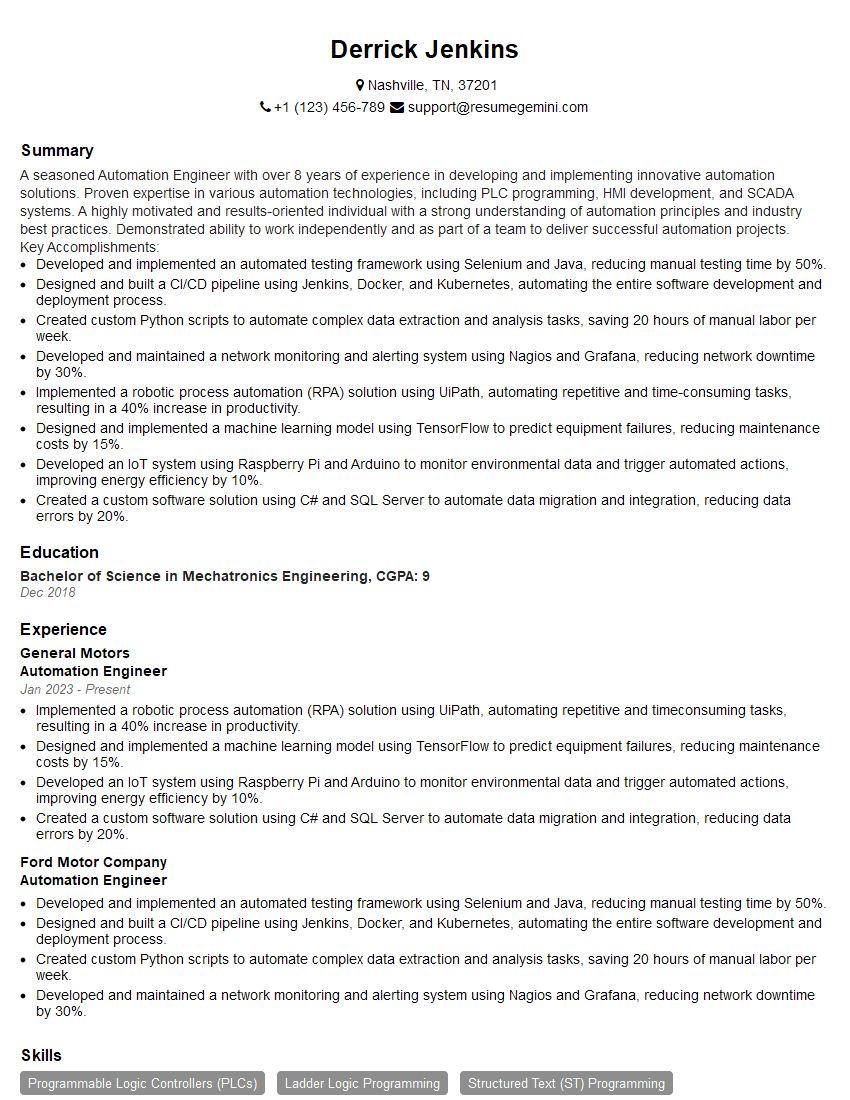
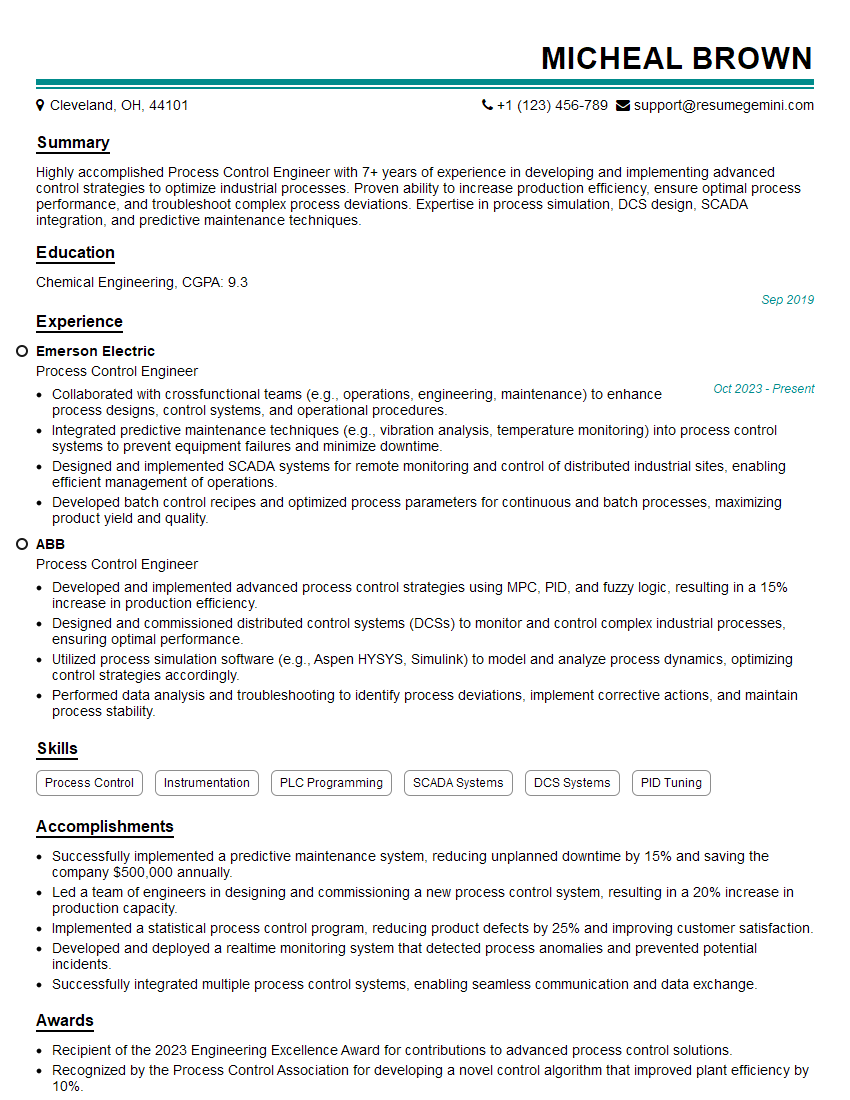
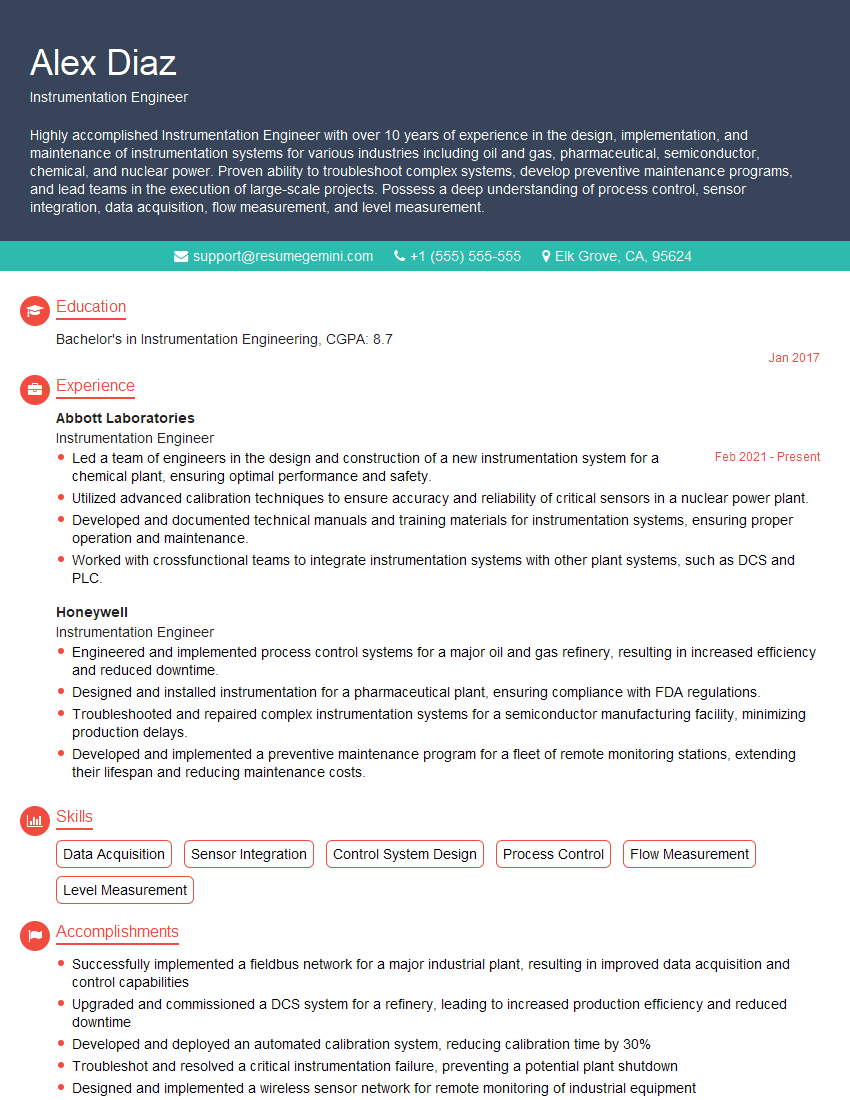
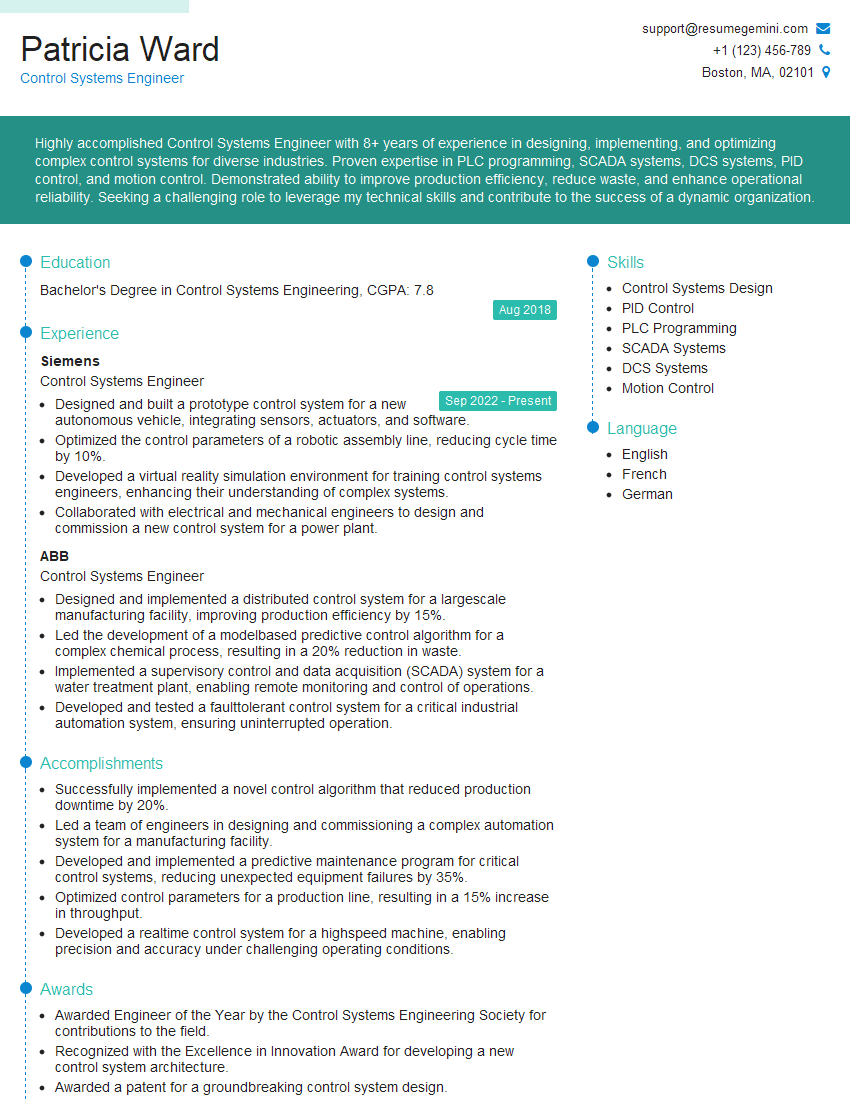
Mastering ABB System 800xA significantly enhances your career prospects in the process automation industry, opening doors to challenging and rewarding roles. A strong resume is crucial for getting your foot in the door. Creating an ATS-friendly resume is essential for maximizing your chances of getting noticed by recruiters and hiring managers. To help you build a compelling and effective resume, we recommend using ResumeGemini, a trusted resource for crafting professional resumes. Examples of resumes tailored to ABB System 800xA are available to guide you.
Explore more articles
Users Rating of Our Blogs
Share Your Experience
We value your feedback! Please rate our content and share your thoughts (optional).
What Readers Say About Our Blog
Very informative content, great job.
good