Preparation is the key to success in any interview. In this post, we’ll explore crucial Officiating Standards and Evaluation interview questions and equip you with strategies to craft impactful answers. Whether you’re a beginner or a pro, these tips will elevate your preparation.
Questions Asked in Officiating Standards and Evaluation Interview
Q 1. Describe your experience in developing or reviewing officiating standards.
My experience in developing and reviewing officiating standards spans over 15 years, encompassing various sports including basketball, soccer, and volleyball. I’ve been involved in creating rulebooks, updating existing standards to align with rule changes, and leading workshops to train officials on these standards. Reviewing involves analyzing game footage, assessing officiating performance against established criteria, identifying areas for improvement, and proposing modifications to the standards themselves. For instance, in basketball, I helped revise the standard on goaltending calls to clarify ambiguous situations and ensure greater consistency across different officiating crews. This involved extensive analysis of game video clips showing varied interpretations of the rule and feedback from officials at various experience levels. The revised standard included clearer visual aids and specific examples to aid in accurate application.
Q 2. How do you ensure consistent application of officiating standards across different officials?
Consistency in officiating is paramount. We achieve this through a multi-pronged approach. First, comprehensive and standardized training programs are crucial. These programs must cover all aspects of the rules, including interpretations and application. Second, regular evaluations and feedback sessions are essential. We use a combination of live game observations, video review sessions, and post-game discussions to identify areas where officials might be deviating from the standards. Third, a clear and accessible rulebook is essential. The rulebook needs to be updated regularly and should incorporate explanatory examples and visual aids to minimize ambiguity. Fourth, we utilize standardized evaluation forms to assess performance objectively across all officials. Finally, fostering a culture of open communication and peer learning amongst officials themselves is also vital to address inconsistencies and foster collaborative growth.
Q 3. Explain your approach to evaluating an official’s performance during a game or competition.
My approach to evaluating an official’s performance involves a holistic assessment. It’s not just about the number of correct or incorrect calls, but rather, the overall quality of officiating. I use a combination of live observation and video review. Live observation allows me to assess factors like positioning, communication, demeanor, and game management, while video review enables a more detailed examination of specific calls and situations. I pay close attention to the official’s understanding and application of the rules, their ability to manage the game flow, their communication with players and coaches, and their overall professionalism. A structured evaluation form guides my assessment, ensuring consistency and objectivity. For example, I might note instances where an official exhibited good game management by proactively positioning themselves to anticipate plays, or instances where clear and timely communication prevented potential conflicts.
Q 4. What metrics or criteria do you use to assess officiating quality?
The metrics used to assess officiating quality are multifaceted and include:
- Accuracy of calls: The percentage of correct calls made. This is a crucial aspect, but it isn’t the only one.
- Consistency of calls: Maintaining a similar standard of judgment throughout the game and across different situations.
- Game management: The official’s ability to control the game flow, prevent disruptions, and ensure a fair and orderly competition.
- Communication: Clear, concise, and respectful communication with players, coaches, and other officials.
- Positioning: The official’s positioning to have a clear view of the plays.
- Professionalism: Maintaining composure and professionalism under pressure, exhibiting appropriate conduct, and handling difficult situations with grace.
Q 5. How do you handle disagreements with officials regarding rule interpretations or calls?
Disagreements are a natural part of officiating. My approach involves respectful dialogue and a focus on understanding the reasoning behind the differing perspectives. I start by listening attentively to the official’s explanation of their call, referencing the rulebook and any applicable interpretations. If necessary, I will review video footage to analyze the situation. The goal is not to simply determine who is right or wrong, but to understand why the discrepancy occurred and to provide guidance to prevent similar situations in the future. The focus is always on professional development and improvement. For instance, if a disagreement arises regarding a subtle interpretation of a rule, we would consult the official rulebook together and discuss how the rule could be better applied in similar situations.
Q 6. Describe a situation where you had to address inconsistent officiating.
In a youth soccer tournament, I noticed significant inconsistency in the interpretation of offside calls across different referees. Some referees were applying a very strict interpretation, while others were more lenient. This led to confusion among players, coaches, and spectators. To address this, I organized a post-tournament workshop specifically addressing offside. We reviewed game footage showcasing both correct and incorrect calls, analyzing the positioning of players and the timing of the pass and shot. We emphasized the importance of consistent application of the rule and discussed common scenarios where misinterpretations often arise. The follow-up games showed a marked improvement in consistency.
Q 7. How do you provide constructive feedback to officials to improve their performance?
Constructive feedback is critical for improvement. My approach involves providing specific examples of both positive and negative aspects of the official’s performance. Instead of general statements like “you need to improve,” I provide detailed feedback such as, “In the second half, your positioning during the fast breaks could have been better, resulting in a missed foul call. Let’s review the video and discuss how you could have adjusted your position to anticipate the play better.” I also highlight their strengths, saying things like, “Your communication with the players was excellent; your clear and concise instructions helped maintain order on the field.” The feedback is always delivered in a supportive and encouraging manner, focusing on learning and growth, and always includes actionable steps for improvement.
Q 8. How familiar are you with relevant rule books and regulations?
My familiarity with rule books and regulations is extensive. I’ve worked with rule sets for various sports, including [mention specific sports and governing bodies, e.g., NCAA basketball, FIFA soccer, USA Volleyball]. I don’t just passively read them; I actively study the nuances, the interpretations, and the precedents set by rulings. Think of it like a legal scholar knowing case law – it’s not enough to just know the rules; you have to understand how they’ve been applied and the implications of those applications. I regularly update my knowledge as rules change, often attending workshops and seminars to stay current.
For example, in volleyball, understanding the intricacies of the fault line and the interpretation of ‘libero’ rules is critical for accurate officiating. Similarly, in basketball, grasping the difference between a charging foul and a blocking foul requires a detailed understanding of player positioning and momentum.
Q 9. What technology or tools do you utilize to support officiating standards and evaluation?
Technology plays a vital role in enhancing officiating standards and evaluation. I utilize several tools: video review systems allow for detailed analysis of calls, highlighting points of contention and providing a basis for constructive feedback. Dedicated officiating software helps track individual official performance metrics, such as accuracy rates and consistency in applying rules. I also use digital communication platforms to facilitate quick feedback sessions with officials, share relevant rule interpretations, and access professional development resources.
For instance, in reviewing a close call in soccer, slow-motion replay on a video review system allows me to identify subtle factors like the placement of the foot in a tackle, offering a more precise evaluation than real-time observation. Data from officiating software can help identify trends, for example, revealing an official may be more lenient with certain types of fouls, prompting focused training on consistency.
Q 10. How do you ensure fairness and impartiality in your evaluations?
Ensuring fairness and impartiality is paramount. I implement several strategies. First, I use a standardized evaluation rubric that focuses solely on objective criteria, such as accurate application of rules, proper mechanics, and communication skills. Subjectivity is minimized by carefully defining each criterion with clear observable behaviors. Second, I use blind evaluations when possible, removing any identifying information about the official being evaluated until after the evaluation is completed. This eliminates the potential for unconscious bias to creep into the assessment.
For example, the rubric might include specific points: ‘Correctly calls 90% of fouls according to rulebook’, ‘Maintains consistent communication with players and coaches throughout the game’, ‘Displays appropriate body language and positioning to ensure optimal viewing’. These are measurable aspects, reducing potential bias.
Q 11. Describe your process for documenting officiating performance evaluations.
My documentation process is meticulous and transparent. For each officiating performance, I complete a detailed evaluation form, using the standardized rubric. This form includes space for specific examples of both positive and negative officiating moments, referenced by time stamp or game event if applicable. This allows for specific, constructive feedback. The completed form is then shared with the official, with an opportunity for discussion and clarification. All evaluations are stored securely in a centralized database, maintained for record-keeping and continuous improvement.
The documentation includes things like: game details (date, time, level of competition), detailed notes on specific calls with time stamps and justifications for scores, overall performance summary, areas for improvement, and a plan for future development. This level of detail ensures consistency and traceability.
Q 12. How do you identify and address potential bias in officiating?
Identifying and addressing bias is an ongoing process requiring constant vigilance. I use a multi-pronged approach: Firstly, regular training sessions address unconscious biases in officiating. These trainings may include discussions of implicit bias, and practice scenarios involving situations where bias may influence decisions. Secondly, I encourage self-reflection among officials, prompting them to consider their own potential biases and how they might affect their calls. Finally, the use of blind evaluations, as mentioned previously, helps minimize the impact of conscious or unconscious biases on the evaluation process.
For example, a training session might involve analyzing video clips of near-identical fouls committed by players of different ethnic backgrounds or skill levels. This facilitates critical thinking about whether unconscious bias might influence the decision to call a foul.
Q 13. How do you adapt officiating standards to accommodate different levels of competition?
Adapting officiating standards across competition levels is essential. The emphasis on rule enforcement and technical precision differs significantly between youth games and professional matches. At youth levels, the focus is often on player development and safety, meaning officials may prioritize player safety and positive coaching interactions over strict rule application. In contrast, professional level demands precise enforcement of every rule.
For instance, at a youth soccer match, an official might give a verbal warning for a minor tripping foul, while the same foul at a professional match would result in a yellow card. The adjustment reflects the different priorities and stakes at each competitive level.
Q 14. Explain your understanding of due process for officials under review.
Due process for officials under review is crucial for fairness and transparency. I adhere to a clear procedure: Officials are informed in writing of any concerns regarding their performance. They are then given the opportunity to review the evaluation, provide their perspective, and offer any supporting evidence. A fair and impartial review is conducted, considering all submitted information. The official is informed of the final decision, with a clear explanation of the reasoning. Finally, opportunities for improvement and further development are provided.
This process ensures that every official receives a thorough and fair hearing. It provides a structured path for addressing concerns, improving performance, and maintaining the integrity of the officiating process.
Q 15. How do you maintain confidentiality in officiating evaluations?
Maintaining confidentiality in officiating evaluations is paramount to fostering trust and open communication. It’s crucial for officials to feel safe providing honest feedback without fear of repercussions. I adhere to strict confidentiality protocols, treating all evaluation information as private and privileged. This includes only discussing evaluations with authorized personnel involved in the development and improvement of officials, such as the assigned evaluator, mentor, or designated supervisor, never with other officials or members of the public. I never share specific details about an official’s performance beyond aggregate data that does not identify the individual. My evaluation notes are securely stored in a password-protected database, accessible only by authorized personnel.
For instance, if an official demonstrates a weakness in managing player interactions, I would address this in a private meeting, focusing on specific examples without mentioning the game or players involved. This way, the feedback remains constructive and targeted at performance improvement without compromising the confidentiality of the individuals and the game itself.
Career Expert Tips:
- Ace those interviews! Prepare effectively by reviewing the Top 50 Most Common Interview Questions on ResumeGemini.
- Navigate your job search with confidence! Explore a wide range of Career Tips on ResumeGemini. Learn about common challenges and recommendations to overcome them.
- Craft the perfect resume! Master the Art of Resume Writing with ResumeGemini’s guide. Showcase your unique qualifications and achievements effectively.
- Don’t miss out on holiday savings! Build your dream resume with ResumeGemini’s ATS optimized templates.
Q 16. How do you manage the expectations of officials regarding performance evaluations?
Managing expectations is key to a successful evaluation process. Before each evaluation season, I clearly communicate the evaluation criteria, methods, and the overall goals. This includes explaining the evaluation’s purpose—to identify strengths and areas for improvement—and emphasizing its role in professional development. I also ensure that officials understand that evaluations are not solely about performance ranking but rather a tool for growth. I emphasize that feedback is delivered constructively and aimed at helping them improve their skills.
For example, I might share a sample evaluation form and explain the scoring rubric to ensure transparency. After each evaluation, I provide a detailed explanation of the feedback, answering any questions the official may have. This open dialogue builds trust and ensures that expectations are managed effectively. I always provide specific, actionable feedback rather than vague or general statements, ensuring that officials understand how they can improve.
Q 17. Describe your experience in training and mentoring new officiating personnel.
I have extensive experience training and mentoring new officiating personnel. My approach is multifaceted, combining classroom instruction with practical on-field experience. I begin with a comprehensive overview of the rules, officiating mechanics, and ethical standards. We then move to practical exercises, including simulations and live game observation. During these sessions, I provide constructive feedback, demonstrating correct techniques and offering suggestions for improvement. Mentorship is a key component, focusing on building confidence and decision-making skills.
One successful mentoring program I developed involved pairing experienced officials with new recruits. This allowed for immediate feedback and support in a real-game environment. I also created a comprehensive online resource hub with videos, rule interpretations, and case studies. These resources allowed for self-paced learning and provided additional support beyond in-person training. This multi-pronged approach ensures that new officials are well-equipped to handle the challenges of officiating.
Q 18. How do you stay current on rule changes and updated officiating standards?
Staying current on rule changes and updated officiating standards is critical for maintaining the integrity of the game and ensuring consistent officiating across all levels. I actively participate in officiating clinics and workshops organized by the governing bodies. I thoroughly review rule books and official interpretations, paying close attention to any modifications or clarifications. I also subscribe to relevant newsletters and online resources that provide updates on rule changes and best practices.
Furthermore, I actively engage in professional networks with other officials, exchanging insights and discussing the implications of recent rule changes. Regular self-testing through online quizzes and case studies ensures my understanding remains sharp. This holistic approach ensures that my knowledge remains up-to-date and my officiating is consistently aligned with the latest standards.
Q 19. What is your experience with using video review in officiating evaluations?
Video review has revolutionized officiating evaluations, offering a powerful tool for detailed analysis of performance. I am proficient in using video review software to dissect game footage, identifying both successful calls and instances where improvement is needed. Video review allows for a deeper level of scrutiny, enabling a more nuanced and objective assessment of an official’s performance. It allows for collaborative review sessions with the official, where we can review specific plays and discuss decision-making processes. This is invaluable for improving the quality of feedback and enhancing the learning experience.
For instance, during a review, we may analyze the positioning of an official during a crucial play, identifying potential improvements to their angle of vision or reaction time. This allows for concrete, visual feedback that is far more impactful than general comments. However, I always emphasize that video review is a tool to enhance performance, not a means of fault-finding.
Q 20. How do you balance performance evaluation with providing support to struggling officials?
Balancing performance evaluation with support for struggling officials requires a delicate approach. The goal is not to simply identify shortcomings but to guide officials towards improvement. I use a supportive and developmental approach, emphasizing constructive feedback, identifying root causes of performance issues, and designing tailored development plans. These plans might include additional training, mentoring, or observation of experienced officials. I foster a culture of open communication and encourage officials to seek help when needed.
For example, if an official consistently misses crucial calls, I wouldn’t immediately focus on the negative aspect, but rather delve deeper to identify the underlying cause. Is it a lack of understanding of the rule, poor positioning, or inadequate communication with their fellow officials? Once we identify the root cause, we can tailor the support to address the specific issue.
Q 21. Describe a time you had to make a difficult decision regarding an official’s performance.
One particularly challenging decision involved an experienced official who consistently showed a lack of composure during tense game situations. Their performance was otherwise strong, demonstrating excellent knowledge of the rules and good physical fitness. However, their occasional outbursts and poor communication with players and coaches were negatively impacting the game atmosphere.
After careful consideration and several discussions, I decided to place the official on a performance improvement plan, focusing on improving their communication and emotional regulation skills. This involved attending anger management workshops, mentoring sessions with a highly skilled communication coach, and regular follow-up meetings to monitor progress. While it was a difficult decision, it was crucial for maintaining the integrity of the game and supporting the official’s long-term development. Ultimately, the official responded positively, improving their composure and becoming a more effective and respected member of the officiating team.
Q 22. How would you handle a situation where an official’s actions compromise the integrity of the game?
Compromising the game’s integrity through officiating errors is a serious matter demanding swift and decisive action. My approach involves a multi-step process prioritizing fairness and transparency. First, I’d thoroughly review the situation, gathering all available evidence including video footage, official reports, and witness statements. This allows for an objective assessment of the official’s actions and their impact on the game’s outcome.
Next, I’d engage in a private meeting with the official, providing constructive feedback focusing on the specific actions that compromised the integrity. This meeting aims to understand the circumstances leading to the error, not to place blame but to facilitate learning and prevent recurrence. Open communication is crucial here; I’d encourage the official to express their perspective and collaboratively identify areas for improvement. Depending on the severity of the infraction, consequences might range from retraining and mentorship to suspension, always adhering to established protocols and fairness.
Finally, I’d communicate the resolution transparently to all stakeholders, including coaches, players, and spectators, ensuring everyone understands the process and the measures taken. This promotes accountability and maintains confidence in the officiating system. For instance, a clear explanation of a controversial call might prevent future disputes and enhance trust. The emphasis remains on learning from mistakes, enhancing officiating standards, and upholding the spirit of fair play.
Q 23. What is your experience with using data analysis to inform officiating standards?
Data analysis plays a vital role in modern officiating. In my experience, we’ve used data to track various metrics, such as call accuracy rates across different officials, the frequency of specific types of fouls, and even the impact of weather conditions on officiating decisions. This data is gathered through video review, statistical tracking during games, and post-game analysis. For instance, analyzing call accuracy rates allows us to identify areas where officials may need additional training or support.
Example: If we notice a consistently low accuracy rate for offsides calls among a group of officials, we can pinpoint this specific area for targeted training sessions. We might incorporate video analysis, reviewing examples of correctly and incorrectly called offsides to enhance their understanding and consistency. Similarly, analyzing foul frequency allows us to assess whether certain rules are being enforced uniformly and objectively.
This data-driven approach helps us identify trends, highlight areas needing improvement, and ultimately enhance the consistency and quality of officiating. It moves us beyond subjective evaluations toward a more objective and evidence-based system for improving performance.
Q 24. How do you promote a culture of continuous improvement in officiating?
Cultivating a culture of continuous improvement in officiating is paramount. I achieve this through a combination of strategies. First, regular feedback sessions are crucial. These shouldn’t be solely focused on criticism but should incorporate positive reinforcement and identify strengths along with areas for development. These sessions can be individual, with peer feedback playing a significant role. Officials learning from one another, sharing best practices, and discussing challenging scenarios helps create a supportive and collaborative learning environment.
Secondly, I believe in providing access to ongoing professional development opportunities. This includes regular workshops, seminars, and access to advanced training materials. For instance, we might incorporate advanced video analysis techniques to dissect complex plays and improve decision-making abilities. The use of technology, such as virtual reality simulations, can also be very beneficial in creating realistic game situations for practice.
Finally, fostering open communication and creating a safe space for officials to discuss mistakes, challenges, and successes is essential. This openness encourages continuous learning, reduces the fear of failure, and promotes a positive and supportive work environment where continuous improvement is the norm rather than the exception.
Q 25. Describe your experience with conflict resolution related to officiating disputes.
Conflict resolution is an inevitable part of officiating. My approach emphasizes active listening, empathy, and a focus on finding mutually agreeable solutions. When a dispute arises, I start by gathering all perspectives involved, ensuring everyone feels heard and understood. This often involves calmly and impartially reviewing the facts surrounding the incident, which might involve reviewing video footage or consulting with other officials.
I find that clearly outlining the rules and regulations relevant to the dispute often helps to clarify the situation. If the disagreement remains, I use mediation techniques to help the parties find common ground. This can involve brainstorming solutions collaboratively, focusing on the shared goal of a fair and enjoyable game. The goal is not necessarily to assign blame but rather to resolve the immediate conflict and prevent similar incidents in the future. Documentation of the resolution is vital, serving as a record for future reference and potentially informing rule modifications or improved training.
In more serious situations, escalation procedures might be necessary, following a structured hierarchy within the officiating organization. However, the emphasis always remains on finding a fair and equitable resolution that maintains the integrity of the game and respects all those involved.
Q 26. How would you implement a new officiating standard or protocol?
Implementing a new officiating standard or protocol requires a phased approach to ensure effective adoption and minimize disruption. First, I’d thoroughly research and document the rationale behind the change, ensuring its alignment with the overall goals of fairness, safety, and improved game play. This often involves consulting with relevant stakeholders, such as coaches, players, and other officials, to get their feedback and buy-in.
Next, I’d design a comprehensive training program to educate officials on the new standard or protocol. This would include clear explanations, practical examples, and hands-on exercises. The training should be adaptable to various learning styles and incorporate interactive sessions to enhance understanding and retention. For example, we might use interactive simulations or role-playing scenarios to better illustrate application of the new rule.
Finally, I’d implement a trial period for the new standard, allowing for feedback and adjustments. This pilot phase is critical for identifying any unforeseen issues or needed modifications. Regular monitoring and feedback mechanisms throughout the implementation process are vital, ensuring that the new standard achieves its intended objectives while addressing any challenges that may emerge. Post-implementation evaluation ensures the new standard enhances the quality of the officiating.
Q 27. What are the key challenges in maintaining high officiating standards?
Maintaining high officiating standards presents several key challenges. One major challenge is ensuring consistency across all officials. Different officials may have varying interpretations of rules, leading to discrepancies in calls. Another significant hurdle is the subjective nature of many officiating calls. Many decisions require judgment and interpretation, making it difficult to achieve perfect objectivity.
Technological advancements, while beneficial, also introduce challenges. Implementing and maintaining new technology, such as video review systems, can be expensive and require ongoing training and support. Furthermore, human error remains a factor, even with advanced technology. Officiating often involves high-pressure situations, which can impact decision-making and lead to errors. Finally, balancing the need for consistency with the need for flexibility and understanding in unusual circumstances is a constant challenge. Rules cannot cover every possible situation.
Addressing these challenges necessitates ongoing professional development, consistent application of rules, use of technology where appropriate, and a commitment to continuous improvement and open communication within the officiating community.
Q 28. How do you measure the effectiveness of your officiating evaluation system?
Measuring the effectiveness of our officiating evaluation system is a crucial aspect of continuous improvement. We employ a multi-faceted approach combining quantitative and qualitative data. Quantitative data includes statistics on call accuracy, consistency across different officials, and the number of disputes or protests. For example, we might track the percentage of correctly called fouls or offsides across various games and officials.
Qualitative data comes from various sources such as feedback surveys from coaches and players, peer evaluations among officials, and self-assessments provided by the officials themselves. This qualitative data offers valuable insight into areas that are difficult to quantify, such as communication skills, game management, and the overall impact of an official on the game’s atmosphere. We also analyze video recordings of games to review officials’ performance, particularly in controversial calls or situations that raised questions.
By integrating both quantitative and qualitative data, we obtain a holistic picture of our officiating system’s effectiveness. This comprehensive analysis helps us identify areas for improvement, refine our training programs, and ensure the continual enhancement of our officiating standards.
Key Topics to Learn for Officiating Standards and Evaluation Interview
- Understanding the Rules & Regulations: Thoroughly grasp the specific rulebook governing your officiating area. Practice applying the rules to hypothetical scenarios.
- Mechanics of Officiating: Master the proper positioning, signaling techniques, and communication strategies for effective officiating. Consider how different officiating styles impact game flow.
- Game Management & Control: Develop strategies for managing player behavior, maintaining game flow, and addressing conflicts fairly and efficiently. Practice de-escalation techniques.
- Fairness and Objectivity: Understand the importance of unbiased officiating. Explore methods for ensuring consistent application of rules and minimizing personal biases.
- Self-Evaluation & Improvement: Develop a framework for reviewing your own performance, identifying areas for improvement, and actively seeking feedback from colleagues and supervisors.
- Communication & Interpersonal Skills: Practice clear and concise communication with players, coaches, and other officials. Develop strategies for handling difficult conversations professionally.
- Ethical Considerations: Understand the ethical responsibilities of an official and how to navigate challenging situations with integrity.
- Technology in Officiating: Familiarize yourself with any technology used in your officiating area (e.g., instant replay systems, scoring software) and how it impacts decision-making.
- Legal Aspects of Officiating: Understand your legal responsibilities and potential liabilities associated with officiating.
Next Steps
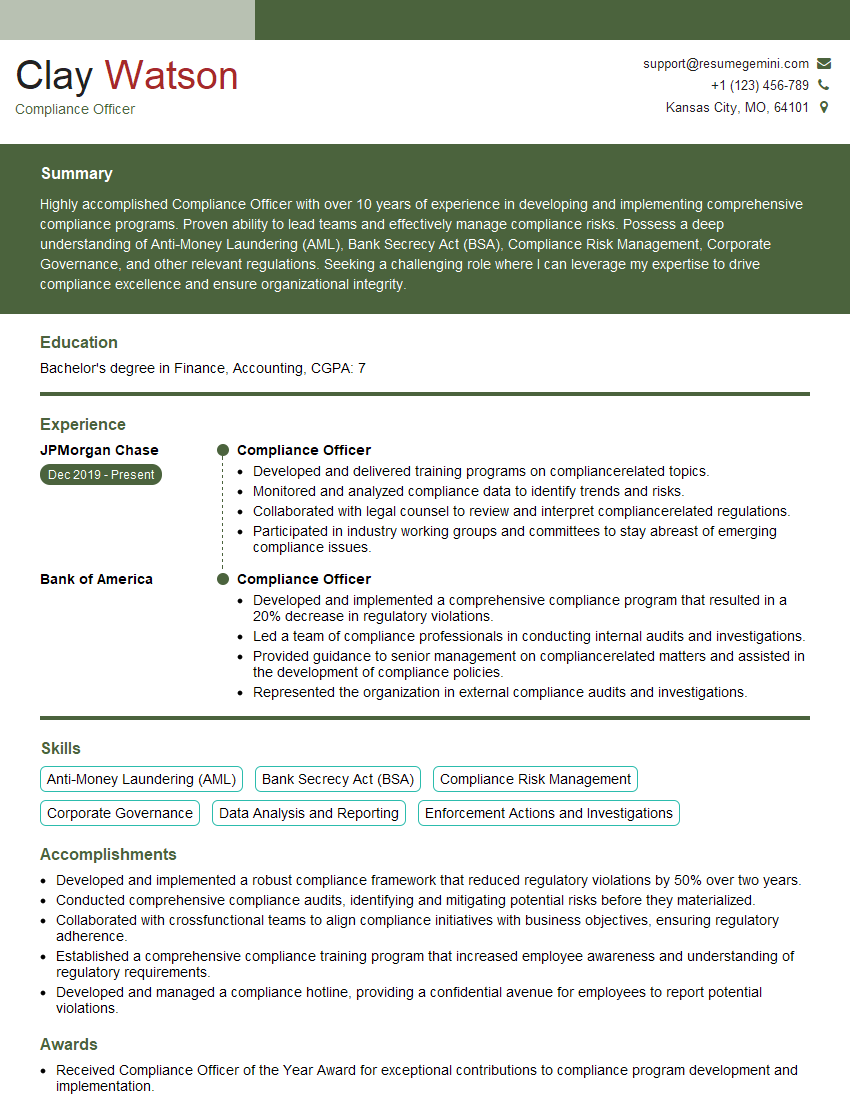
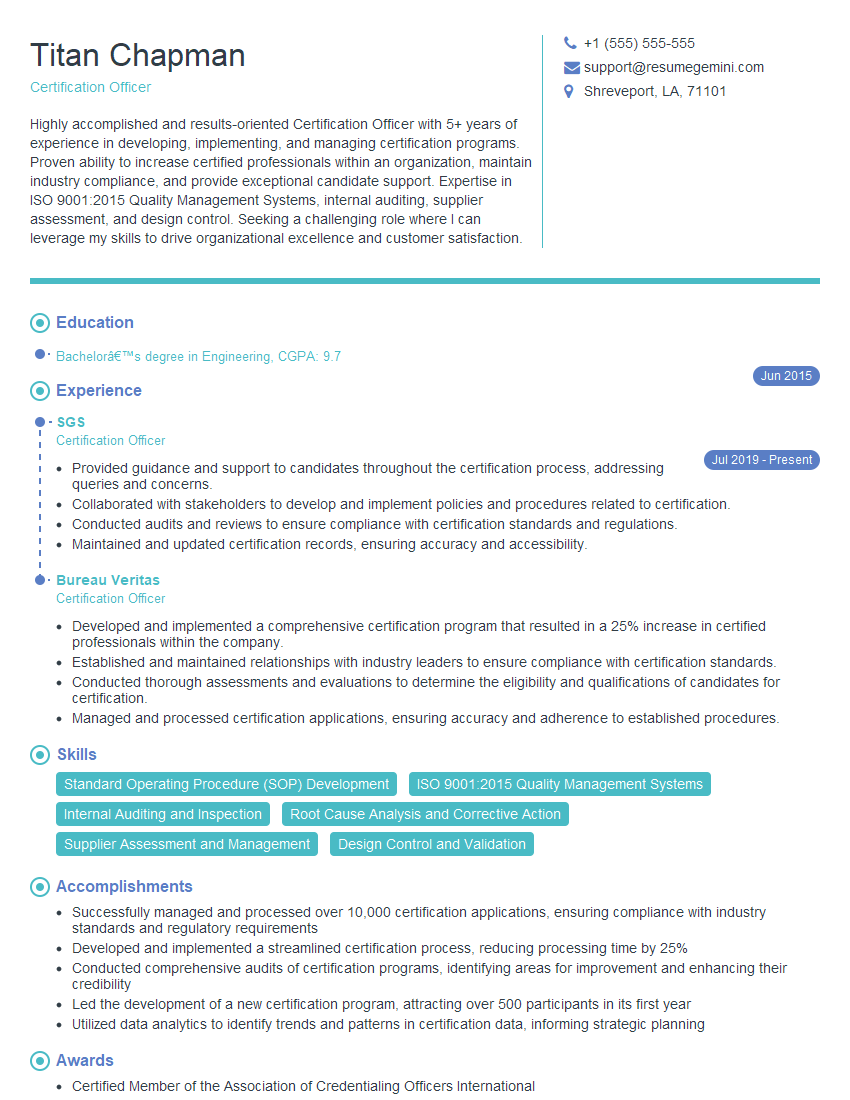
Mastering Officiating Standards and Evaluation is crucial for career advancement in this field. A strong understanding of these principles demonstrates professionalism and commitment, significantly enhancing your candidacy. To further strengthen your application, focus on creating an ATS-friendly resume that highlights your skills and experience effectively. ResumeGemini is a trusted resource for building professional resumes that stand out. They provide examples of resumes tailored to Officiating Standards and Evaluation to help you craft a compelling document that showcases your qualifications. This will significantly increase your chances of landing your dream officiating role.
Explore more articles
Users Rating of Our Blogs
Share Your Experience
We value your feedback! Please rate our content and share your thoughts (optional).
What Readers Say About Our Blog
Very informative content, great job.
good