The thought of an interview can be nerve-wracking, but the right preparation can make all the difference. Explore this comprehensive guide to Ability to Create and Execute Training Programs interview questions and gain the confidence you need to showcase your abilities and secure the role.
Questions Asked in Ability to Create and Execute Training Programs Interview
Q 1. Describe your experience designing and delivering training programs.
My experience in designing and delivering training programs spans over [Number] years, encompassing a wide range of industries and learning objectives. I’ve designed and delivered training for diverse audiences, from entry-level employees to senior management, using various methodologies including instructor-led training, e-learning, blended learning, and on-the-job training. For instance, I recently developed a comprehensive onboarding program for a tech startup, which reduced employee turnover by 15% within the first year. This program incorporated interactive modules, mentorship opportunities, and regular feedback sessions, ensuring new hires felt supported and integrated into the company culture. Another example includes creating a leadership development program for a non-profit organization. This program focused on building emotional intelligence, strategic thinking, and effective communication skills using role-playing exercises and case studies. The success of this program was measured through improved employee performance and higher employee satisfaction scores.
Q 2. What methodologies do you utilize for needs assessment in training program development?
Needs assessment is the cornerstone of effective training program development. I utilize a multi-faceted approach that incorporates several methodologies. This begins with a thorough analysis of organizational needs, using methods like reviewing business plans, conducting interviews with stakeholders and subject matter experts (SMEs), and analyzing performance data (e.g., sales figures, customer satisfaction scores, employee performance reviews). I then conduct a gap analysis to identify the discrepancy between current performance and desired performance levels. This may involve surveys, focus groups, or observations of employees in their work environment. The goal is to clearly identify the knowledge, skills, and attitudes (KSAs) employees need to improve. For example, when developing training for a sales team, I might analyze sales data to identify areas where sales are lacking, then survey the sales team to understand their knowledge gaps and training preferences, and finally conduct interviews with sales managers to gather their insights on the performance issues. This provides a holistic view, leading to a targeted and effective training program.
Q 3. How do you ensure the effectiveness of your training programs?
Ensuring training effectiveness requires a rigorous evaluation strategy implemented throughout the entire training lifecycle. This begins with clearly defined learning objectives, which are then translated into measurable outcomes. I utilize the Kirkpatrick Model of evaluation, which assesses training effectiveness at four levels: Reaction (how participants felt about the training), Learning (what participants learned), Behavior (how participant behavior changed after training), and Results (the impact of the training on organizational goals). For example, I’d use pre- and post-training assessments to measure learning, observation and on-the-job performance evaluation to measure behavioral changes, and analyze sales figures or other relevant metrics to measure results. Additionally, regular feedback loops and informal check-ins with participants help address immediate concerns and adapt the training as needed. This iterative approach is crucial for continuous improvement.
Q 4. Explain your approach to creating engaging and interactive training materials.
Creating engaging and interactive training materials is paramount to participant learning and retention. I avoid passive learning methods and instead focus on active learning strategies such as simulations, role-playing exercises, gamification, case studies, and group discussions. For online training, I incorporate interactive elements like quizzes, branching scenarios, and personalized feedback. For example, in a leadership training program, I might use a simulation where participants have to manage a virtual team, facing various challenges and making critical decisions that reflect real-world scenarios. Visual aids, like infographics and short videos, are also used to improve understanding and maintain interest. The use of storytelling and relatable examples further enhances engagement by connecting the training content to the learners’ experiences and making the learning process more memorable.
Q 5. How do you adapt training methods for different learning styles?
Understanding and catering to different learning styles is essential for maximizing training effectiveness. I use a variety of methods that appeal to different learning preferences – visual, auditory, kinesthetic, and reading/writing. Visual learners benefit from diagrams, charts, and videos; auditory learners from lectures and discussions; kinesthetic learners from hands-on activities and simulations; and reading/writing learners from detailed documents and workbooks. I might incorporate a blend of these methods in a single training session. For example, I might begin with a lecture introducing key concepts, followed by a hands-on activity where learners apply what they’ve learned, and then conclude with a written assignment to reinforce their understanding. Providing options for learners to choose activities best suited to their style is also crucial to allow for maximum engagement and retention.
Q 6. What are your preferred methods for evaluating training program outcomes?
My preferred methods for evaluating training program outcomes include both quantitative and qualitative approaches. Quantitative methods such as pre- and post-training assessments, surveys, and performance data analysis offer objective measurements of learning and behavioral changes. Qualitative methods, such as focus groups, interviews, and observations, provide valuable insights into participant experiences and perceptions, helping understand the training’s impact beyond simple metrics. For instance, I might use a survey to measure participant satisfaction and knowledge gained, analyze sales data to measure the impact on business outcomes, and conduct interviews with participants and managers to gather feedback on the overall effectiveness of the training program. Triangulation, combining multiple methods, provides a comprehensive and robust evaluation.
Q 7. How do you handle challenges in delivering training, such as participant disengagement?
Participant disengagement is a common challenge in training delivery. My approach to addressing this involves proactive measures and reactive strategies. Proactively, I design engaging and interactive training materials, ensuring relevance to participants’ roles and responsibilities. I also utilize various techniques to foster a supportive and collaborative learning environment. Reactively, if I notice signs of disengagement during a training session (e.g., lack of participation, inattentiveness), I immediately adjust my approach. This may involve changing the activity, incorporating a short break, initiating a small group discussion, or using humor to lighten the mood. In cases of persistent disengagement, I might schedule a one-on-one meeting with the participant to understand the underlying reasons and offer personalized support. Regular feedback collection and analysis helps identify and address potential issues before they lead to widespread disengagement.
Q 8. What experience do you have with different training delivery methods (e.g., online, in-person, blended learning)?
My experience spans various training delivery methods, each chosen strategically based on the learning objectives and audience. I’ve extensively used in-person training for hands-on workshops and collaborative activities, fostering immediate interaction and feedback. For instance, I led a series of in-person workshops on advanced data analysis for a financial institution, resulting in a significant improvement in their reporting accuracy.
Online training, through platforms like Zoom and custom learning portals, has been crucial for reaching geographically dispersed teams or offering flexible learning. I developed a comprehensive online course on cybersecurity best practices, incorporating interactive modules, quizzes, and video lectures to maximize engagement and retention. The asynchronous nature allowed employees to learn at their own pace and schedule.
Finally, blended learning, which combines online and in-person elements, offers the best of both worlds. I implemented a blended learning program for a manufacturing company, pairing online modules covering safety regulations with in-person simulations and practical exercises. This approach significantly improved employee understanding and compliance.
Q 9. Describe your experience with creating and managing training budgets.
Managing training budgets requires careful planning and resource allocation. I begin by defining clear learning objectives and identifying the most cost-effective methods to achieve them. This includes evaluating various training vendors, exploring free or open-source resources, and negotiating favorable contracts. For example, instead of hiring an expensive external consultant, I successfully leveraged internal expertise to develop engaging training materials, significantly reducing costs.
I use budget tracking software to monitor spending against allocated funds and regularly review expenses to identify areas for optimization. In one project, by strategically shifting from proprietary software to open-source alternatives, I managed to stay within budget while improving the overall quality of the training materials.
Continuous monitoring and reporting on budget performance ensure transparency and allow for proactive adjustments if necessary, ensuring that training investments yield maximum returns.
Q 10. How do you ensure your training programs align with organizational goals?
Aligning training programs with organizational goals is paramount. I start by closely collaborating with key stakeholders – including executives, department heads, and subject matter experts – to understand the organization’s strategic objectives and identify the skills gaps that hinder their achievement. This involves conducting needs assessments, surveys, and interviews to gather data on skill proficiency.
Once these gaps are identified, I design training programs that directly address them. For instance, if a company aims to improve customer satisfaction, I would develop training focusing on customer service skills, communication techniques, and problem-solving strategies. I always ensure that the learning outcomes are directly measurable and contribute to the organization’s broader goals.
Regular evaluation and feedback mechanisms help to maintain alignment throughout the training process, making sure that the program remains relevant and effective in driving the organization towards its objectives.
Q 11. How do you maintain updated and relevant training materials?
Maintaining updated and relevant training materials is crucial for effective learning. I establish a system for regular review and revision of all training content, incorporating feedback from participants and subject matter experts. This often involves using version control systems to track changes and ensure that everyone is working with the most current materials.
I also stay abreast of industry trends and changes in best practices through professional development activities, attending conferences, and reviewing relevant publications. This enables me to update the content proactively, ensuring it remains current and relevant. For example, when new regulations were introduced in the healthcare industry, I immediately updated our compliance training program to reflect these changes.
Finally, a well-defined update schedule helps to maintain a consistent rhythm of content refresh, ensuring the training materials remain accurate and effective over time.
Q 12. How do you integrate technology into your training programs?
Technology plays a vital role in enhancing training effectiveness. I integrate technology in various ways, starting with the use of Learning Management Systems (LMS) to deliver, track, and assess learning. For example, I’ve used Moodle and Canvas to host online courses, track learner progress, and administer assessments.
Beyond LMS, I incorporate interactive simulations and gamification to make learning engaging and memorable. In one project, I used a flight simulator to train pilots on emergency procedures, providing a realistic and safe environment for practicing critical skills.
Microlearning, delivering short bursts of content, is another useful technique for ensuring better retention in a fast-paced digital world. For instance, I’ve successfully used short video tutorials and interactive quizzes to support on-the-job learning and reinforcement.
Q 13. What is your experience with learning management systems (LMS)?
I have extensive experience with various Learning Management Systems (LMS), including Moodle, Canvas, and Cornerstone. My expertise encompasses not only using these platforms but also configuring them to meet specific training needs. This includes customizing courses, creating user roles, integrating assessments, and generating reports on learner progress.
I understand the importance of user experience in an LMS. Therefore, I always prioritize creating intuitive and user-friendly interfaces to ensure a positive learning experience for participants. I’ve successfully migrated training programs from older systems to newer, more robust platforms, ensuring data integrity and minimal disruption during the transition.
Beyond basic functionality, I leverage the advanced features of LMS platforms, such as analytics dashboards and automated reporting, to track learning outcomes and measure the impact of training programs.
Q 14. How do you measure the ROI of your training programs?
Measuring the ROI of training programs requires a multifaceted approach. I start by defining clear Key Performance Indicators (KPIs) aligned with the organizational goals. These KPIs can include improvements in employee performance, productivity gains, reduced errors, increased customer satisfaction, or cost savings.
I use pre- and post-training assessments to measure the change in employee knowledge and skills. This data, combined with performance metrics collected after the training, allows for quantifying the impact of the program. For example, I tracked the reduction in customer complaints after implementing a customer service training program, demonstrating a direct link between training and improved performance.
Finally, I develop comprehensive reports that clearly present the ROI, illustrating the return on investment in terms of both tangible and intangible benefits. This ensures that stakeholders understand the value of the training initiatives and are able to justify continued investment in employee development.
Q 15. Describe a time you had to revise a training program based on feedback.
Revising training programs based on feedback is a crucial part of ensuring effectiveness. It’s not about admitting failure, but about continuous improvement. In one instance, I developed a sales training program focusing heavily on theoretical knowledge. Post-training surveys revealed participants felt it lacked practical application. The feedback highlighted a disconnect between the content and their daily tasks.
My revision involved:
- Increased Practical Exercises: I incorporated role-playing scenarios, case studies based on real sales calls, and interactive simulations to bridge the theory-practice gap.
- Modular Design: I broke down the program into smaller, manageable modules, allowing participants to apply learned skills immediately and receive targeted feedback.
- Focus on Skill Application: The assessment was revamped to primarily test practical application of skills rather than just theoretical knowledge. This included live sales calls and presentations.
- Post-Training Support: I implemented a mentorship program where experienced sales representatives could guide new trainees.
The revised program saw a significant improvement in participant satisfaction and, most importantly, a noticeable increase in sales performance. The key takeaway was the importance of iterative improvement, incorporating regular feedback loops to ensure the training remains relevant and impactful.
Career Expert Tips:
- Ace those interviews! Prepare effectively by reviewing the Top 50 Most Common Interview Questions on ResumeGemini.
- Navigate your job search with confidence! Explore a wide range of Career Tips on ResumeGemini. Learn about common challenges and recommendations to overcome them.
- Craft the perfect resume! Master the Art of Resume Writing with ResumeGemini’s guide. Showcase your unique qualifications and achievements effectively.
- Don’t miss out on holiday savings! Build your dream resume with ResumeGemini’s ATS optimized templates.
Q 16. How do you prioritize training needs within an organization?
Prioritizing training needs requires a strategic approach that aligns with organizational goals. I use a three-step process:
- Needs Assessment: This involves identifying skill gaps through various methods like performance reviews, surveys, interviews with managers and employees, and analysis of key performance indicators (KPIs). I look for areas where performance is lagging and pinpoint the root causes.
- Impact Analysis: Once needs are identified, I assess their impact on the organization. Which skill gaps have the most significant effect on productivity, efficiency, and overall organizational goals? This involves quantifying the potential return on investment (ROI) of training initiatives. For example, if improving customer service skills leads to a demonstrable increase in customer retention, that training will be prioritized.
- Prioritization Matrix: I create a matrix that plots the impact versus the effort required for each training need. High-impact, low-effort needs are addressed first, followed by high-impact, high-effort needs (which may require more resources and time). Low-impact needs might be deferred or addressed through different methods (e.g., online resources, quick guides).
This structured approach ensures that training resources are focused on the areas that will deliver the greatest return and contribute most effectively to organizational success.
Q 17. What is your experience with developing and implementing onboarding programs?
Onboarding is critical for employee success and retention. My approach focuses on creating a structured, engaging, and informative experience that integrates both administrative tasks and skill development. I typically design onboarding programs with the following components:
- Pre-boarding: Before the first day, new hires receive welcome packets, information about company culture, and potentially even introductions to their teams.
- Orientation: The first day or week involves introductions to the company, its history, mission, and values. Administrative tasks like paperwork and IT setup are streamlined.
- Role-Specific Training: This involves learning the specific job functions, tools, and processes required for the role. This could range from software training to shadowing experienced employees.
- Mentorship or Buddy System: Pairing new hires with experienced employees provides ongoing support and guidance.
- Regular Check-ins: Scheduled check-ins with managers help monitor progress, address concerns, and provide feedback.
- 30-60-90 Day Plan: A clear plan outlines expected goals and milestones for the first three months, providing structure and accountability.
I ensure the onboarding program is adaptable to different roles and incorporates various learning methods (videos, presentations, hands-on exercises) to engage learners and improve knowledge retention.
Q 18. How do you manage multiple training projects simultaneously?
Managing multiple training projects simultaneously requires careful planning and organization. I utilize project management methodologies like Agile to prioritize tasks, track progress, and allocate resources efficiently. My approach includes:
- Project Prioritization: Clearly defining project goals and deadlines and using a system like a Kanban board to visualize progress and identify potential bottlenecks.
- Resource Allocation: Assigning team members with specific roles and responsibilities and establishing clear communication channels.
- Regular Check-ins: Holding regular team meetings to review progress, address issues, and make adjustments to the project plan as needed.
- Risk Management: Identifying potential risks and developing mitigation strategies to minimize their impact.
- Tools and Technologies: Using project management software like Asana or Trello to track tasks, deadlines, and resources.
By breaking down larger projects into smaller, manageable tasks and employing effective communication, I ensure all projects are completed on time and within budget. Delegation and trust in my team are essential for success.
Q 19. What software or tools are you proficient in for training development?
I am proficient in several software and tools for training development. These include:
- Learning Management Systems (LMS): Moodle, Canvas, and Articulate 360, for delivering, tracking, and managing online training courses.
- Authoring Tools: Articulate Storyline 360 and Adobe Captivate, for creating interactive e-learning modules and simulations.
- Video Editing Software: Adobe Premiere Pro and DaVinci Resolve, for creating engaging video-based training content.
- Presentation Software: Microsoft PowerPoint and Google Slides, for creating presentations and training materials.
- Collaboration Tools: Microsoft Teams and Google Workspace, for team collaboration and communication during the development process.
My proficiency in these tools allows me to create and deliver high-quality, engaging training programs across various modalities.
Q 20. Describe your approach to creating assessments for training programs.
Creating effective assessments is crucial for measuring the impact of training programs. My approach aligns assessments with the learning objectives, ensuring they accurately evaluate participant knowledge and skill acquisition. I use a variety of assessment methods:
- Knowledge Checks: Multiple-choice quizzes, fill-in-the-blank exercises, and short-answer questions to test factual recall.
- Performance-Based Assessments: Simulations, role-playing, case studies, and practical exercises to assess application of skills in real-world scenarios.
- Projects and Assignments: Complex tasks or projects that require learners to integrate knowledge and skills.
- Observations: Direct observation of learners performing tasks to assess competency.
I ensure assessments are fair, reliable, and valid, using a rubric or scoring guide to ensure consistent and objective evaluation. Feedback is an integral part of the assessment process, providing learners with insights for improvement.
Q 21. How do you deal with resistance to training from participants?
Resistance to training can stem from various factors, including lack of time, perceived irrelevance, fear of failure, or past negative training experiences. My approach involves understanding the root causes of resistance and addressing them proactively:
- Open Communication: I start by actively listening to participants’ concerns and addressing them empathetically.
- Demonstrating Value: I clearly communicate the benefits of the training, highlighting its relevance to their job roles and career development. I demonstrate a clear link between the training and improved performance.
- Addressing Fears: I create a safe and supportive learning environment where participants feel comfortable asking questions and making mistakes. Positive reinforcement and encouragement are key.
- Tailoring the Approach: I adapt the training methodology to suit the learning styles and preferences of participants. Offering various formats (e.g., interactive activities, group discussions) can enhance engagement.
- Incentivizing Participation: Offering rewards or recognition for successful completion of the training can motivate participants.
Addressing resistance requires patience, understanding, and a willingness to adjust the training program based on participant needs. The ultimate goal is to create a positive and engaging learning experience that leads to meaningful skill development and improved performance.
Q 22. How do you ensure accessibility and inclusivity in your training programs?
Ensuring accessibility and inclusivity in training is paramount. It’s not just about compliance; it’s about creating a learning environment where everyone can thrive. My approach involves a multi-faceted strategy:
- Diverse Learning Materials: I use varied formats – videos with captions and transcripts, audio recordings, interactive simulations, and text-based materials with adjustable font sizes – catering to different learning styles and abilities. For example, I’d include alt text for all images in online modules and provide audio descriptions for videos.
- Universal Design for Learning (UDL) Principles: I apply UDL principles, offering multiple means of representation (how information is presented), action and expression (how learners demonstrate understanding), and engagement (how learners are motivated). This might involve providing different assessments – written tests, oral presentations, practical demonstrations – to accommodate diverse learning preferences.
- Accessibility Checks: Before launching any program, I conduct thorough accessibility checks using tools and seeking feedback from individuals with disabilities to identify and address any barriers. This includes ensuring compatibility with assistive technologies like screen readers.
- Culturally Sensitive Content: I ensure that the training materials and language are culturally sensitive and inclusive, avoiding stereotypes and bias. This necessitates careful consideration of imagery, examples used, and overall tone.
- Accommodations and Support: I proactively identify and provide reasonable accommodations for learners with disabilities, such as extended time for assessments or alternative formats for materials. Open communication with learners about their needs is crucial.
Ultimately, creating accessible and inclusive training is an iterative process. Continuous feedback and evaluation are vital to ensure the program effectively serves all learners.
Q 23. What is your experience with compliance-related training?
I have extensive experience designing and delivering compliance-related training across various industries. My work has encompassed topics like data privacy (GDPR, CCPA), workplace harassment prevention, safety regulations (OSHA), and financial compliance. I’m adept at translating complex legal and regulatory requirements into engaging and easily understandable training materials.
For instance, in a recent project for a healthcare provider, I developed a comprehensive training program on HIPAA compliance. This involved creating interactive modules, scenario-based exercises, and quizzes to reinforce understanding of patient privacy regulations. The program also included a robust tracking system to ensure all employees completed the training and demonstrated competency.
My approach focuses on not just meeting the legal requirements but also fostering a culture of compliance within the organization. I believe that effective compliance training should go beyond simply checking boxes; it needs to cultivate a genuine understanding and commitment to ethical conduct among employees.
Q 24. How do you foster a positive learning environment in your training programs?
Fostering a positive learning environment is key to effective training. I achieve this through several strategies:
- Creating a Safe and Respectful Space: I establish clear expectations for respectful communication and active participation. I encourage learners to ask questions and share their experiences without fear of judgment.
- Active Learning Techniques: Instead of passive lectures, I incorporate interactive activities like group discussions, role-playing, case studies, and games to enhance engagement and knowledge retention. This makes learning more fun and memorable.
- Building Rapport and Connection: I make an effort to get to know my learners, understand their backgrounds, and connect with them on a personal level. This fosters a sense of community and belonging.
- Providing Regular Feedback and Encouragement: I provide constructive feedback throughout the program, highlighting learners’ strengths and offering support to address areas for improvement. Regular positive reinforcement boosts motivation and confidence.
- Utilizing Technology Effectively: I leverage technology such as learning management systems (LMS) and collaborative tools to enhance the learning experience, enabling communication and knowledge sharing outside of formal training sessions.
Essentially, I aim to create a learning environment that feels supportive, engaging, and rewarding for all participants.
Q 25. Describe your experience with coaching and mentoring trainees.
Coaching and mentoring are integral parts of my training approach. I don’t just deliver content; I guide learners through their learning journey, helping them develop their skills and reach their full potential.
My coaching style is tailored to the individual learner’s needs and learning preferences. I utilize various methods including:
- One-on-one sessions: I provide personalized guidance, addressing individual challenges and offering tailored strategies for improvement.
- Feedback and goal setting: I work with learners to set clear learning goals and provide regular feedback to track progress and identify areas for further development.
- Mentorship: I offer ongoing support and guidance beyond the formal training program, helping learners navigate challenges and apply their new skills in their workplace.
- Observational feedback: I conduct performance observations in real-world settings, providing constructive feedback and identifying areas for improvement.
For instance, I recently mentored a new employee who was struggling to adapt to a new role. Through regular check-ins and personalized coaching, I helped her develop new skills, build confidence, and ultimately excel in her position.
Q 26. How do you stay current with best practices in training and development?
Staying current with best practices is crucial in the rapidly evolving field of training and development. I employ several strategies to maintain my expertise:
- Professional Development: I actively participate in conferences, workshops, and webinars to stay abreast of new methodologies, technologies, and trends. I also pursue relevant certifications to validate my knowledge and skills.
- Industry Publications and Research: I regularly read industry publications, journals, and research reports to stay informed about the latest developments in training and development.
- Networking: I actively network with other professionals in the field through professional organizations and online communities. This provides opportunities for knowledge sharing and collaboration.
- Experimentation and Continuous Improvement: I continuously evaluate and refine my training programs based on feedback from learners and data analysis. I embrace experimentation and adapt my approaches based on what works best.
- Online learning platforms: I leverage online courses and resources to deepen my understanding of specific areas within training and development.
This multifaceted approach ensures I remain a highly effective and knowledgeable training professional.
Q 27. What are your strengths and weaknesses in creating and executing training programs?
My strengths lie in my ability to design engaging and effective training programs that cater to diverse learning styles and needs. I excel at creating interactive and memorable learning experiences that translate complex information into easily digestible formats. I’m also a strong communicator and facilitator, creating a supportive and positive learning environment. Furthermore, my experience in various industries allows me to adapt my approach to different contexts and organizational cultures.
However, one area where I could improve is in mastering the latest advancements in virtual reality (VR) and augmented reality (AR) training technologies. While I understand their potential, I haven’t had extensive hands-on experience developing VR/AR-based training programs. I’m actively seeking opportunities to expand my knowledge and skills in this area.
Q 28. What are your salary expectations for this role?
My salary expectations for this role are between $XXX,XXX and $YYY,YYY per year, depending on the specific responsibilities and benefits package. This range is based on my experience, skills, and the prevailing market rates for similar roles.
I am open to discussing this further and am confident that my skills and experience will bring significant value to your organization.
Key Topics to Learn for Ability to Create and Execute Training Programs Interview
- Needs Assessment: Defining training objectives, identifying target audience needs, and aligning training with business goals. Practical application: Conducting surveys, interviews, and analyzing performance data to determine training gaps.
- Curriculum Design: Developing engaging and effective training materials, including learning objectives, content outlines, and assessments. Practical application: Utilizing various instructional design models (ADDIE, SAM, etc.) to create a structured and measurable training program.
- Instructional Methods: Selecting appropriate training delivery methods (e.g., classroom, online, blended learning) based on learner needs and learning styles. Practical application: Designing interactive exercises, simulations, and group activities to enhance engagement and knowledge retention.
- Training Delivery & Facilitation: Effectively delivering training content, managing learner participation, and adapting to diverse learning styles. Practical application: Utilizing active learning techniques, providing constructive feedback, and addressing participant questions effectively.
- Evaluation & Measurement: Developing and implementing methods to assess the effectiveness of training programs, including pre- and post-training assessments, and tracking key performance indicators (KPIs). Practical application: Analyzing training data to identify areas for improvement and demonstrate ROI.
- Technology Integration: Utilizing technology (LMS, eLearning platforms, authoring tools) to enhance training delivery and effectiveness. Practical application: Selecting and implementing appropriate technologies to support various training methodologies.
- Budget Management & Resource Allocation: Planning and managing training budgets, securing necessary resources, and tracking expenditures. Practical application: Developing a detailed training budget and justifying resource allocation decisions.
Next Steps
Mastering the ability to create and execute effective training programs is crucial for career advancement in many fields, demonstrating your leadership, organizational, and communication skills. A well-crafted resume is key to showcasing these abilities to potential employers. Creating an ATS-friendly resume significantly increases your chances of getting your application noticed. We encourage you to leverage ResumeGemini as a trusted resource for building a professional and impactful resume that highlights your expertise in training program development and implementation. Examples of resumes tailored to the “Ability to Create and Execute Training Programs” are available to help you get started.
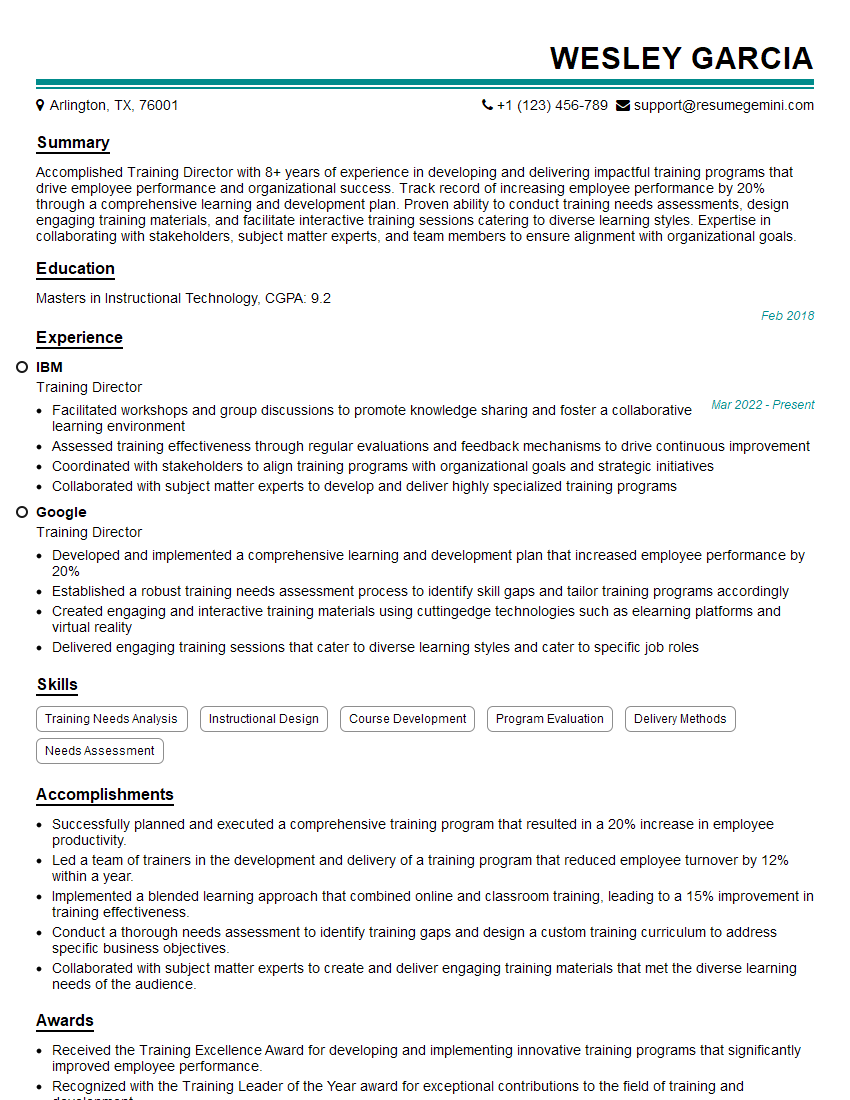
Training Director Resume Sample
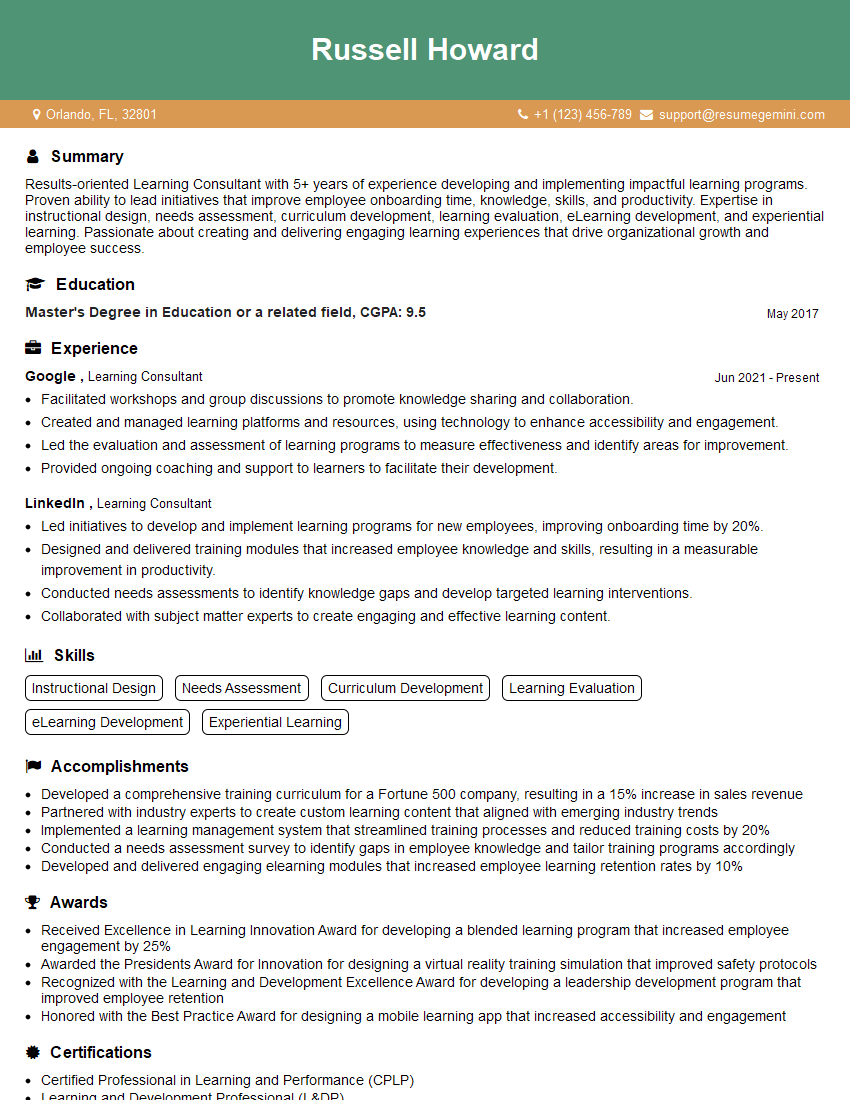
Learning Consultant Resume Sample
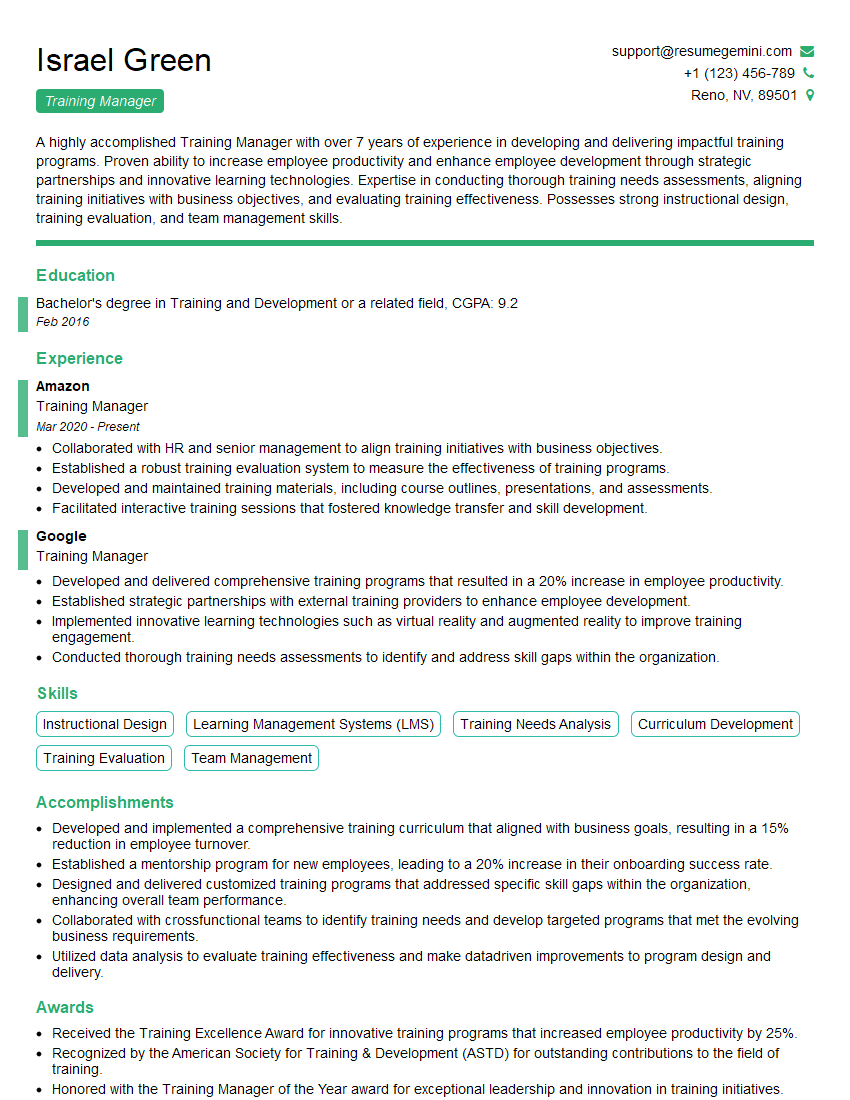
Training Manager Resume Sample
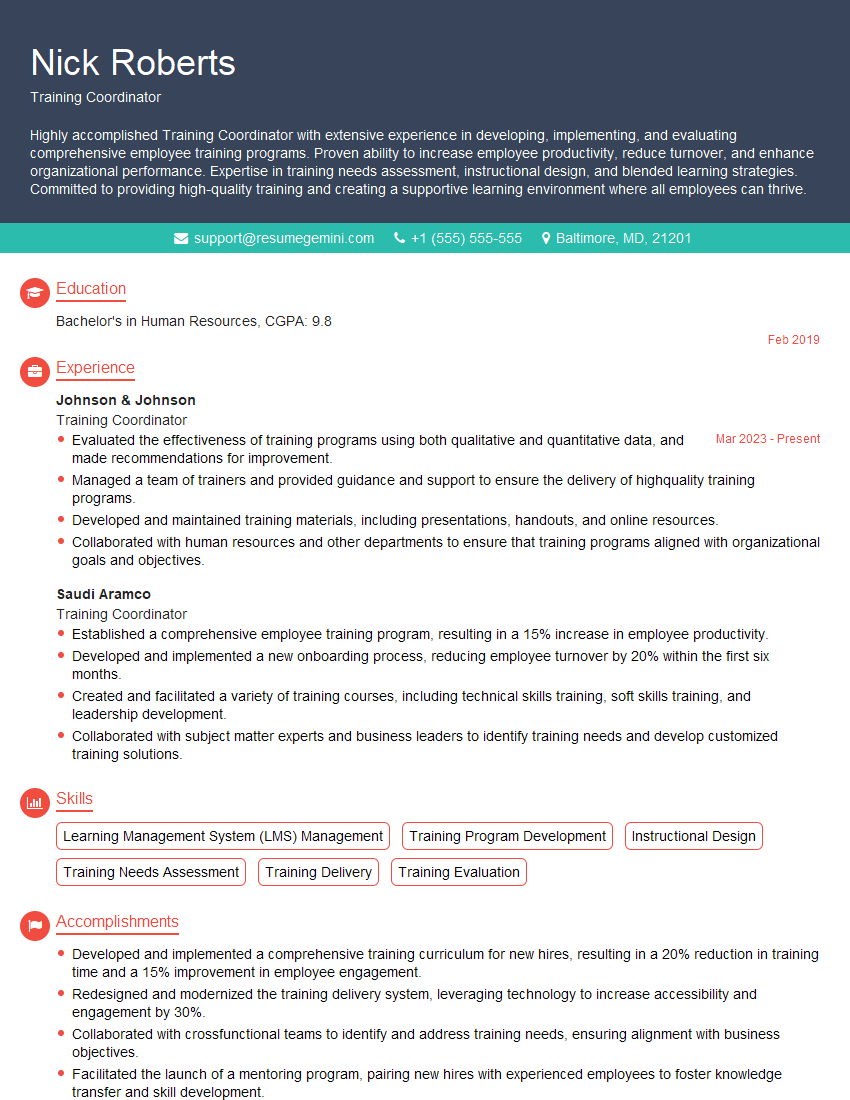
Training Coordinator Resume Sample
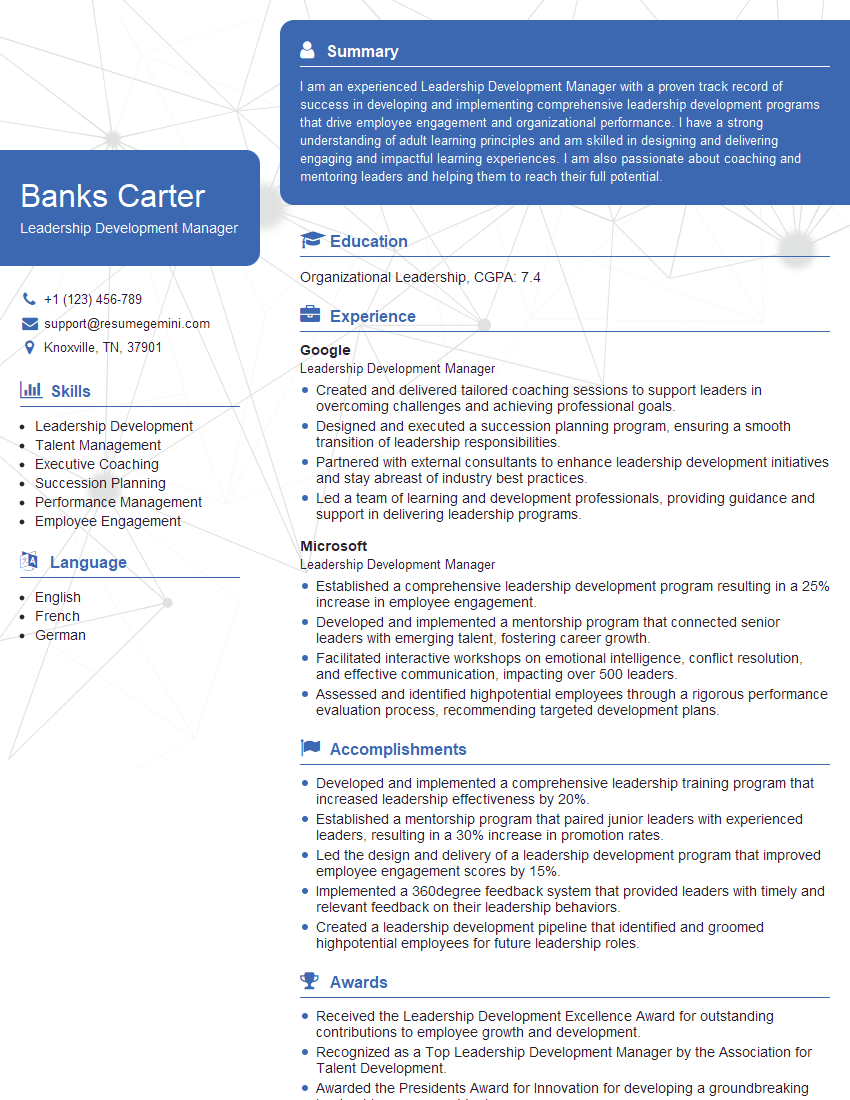
Leadership Development Manager Resume Sample
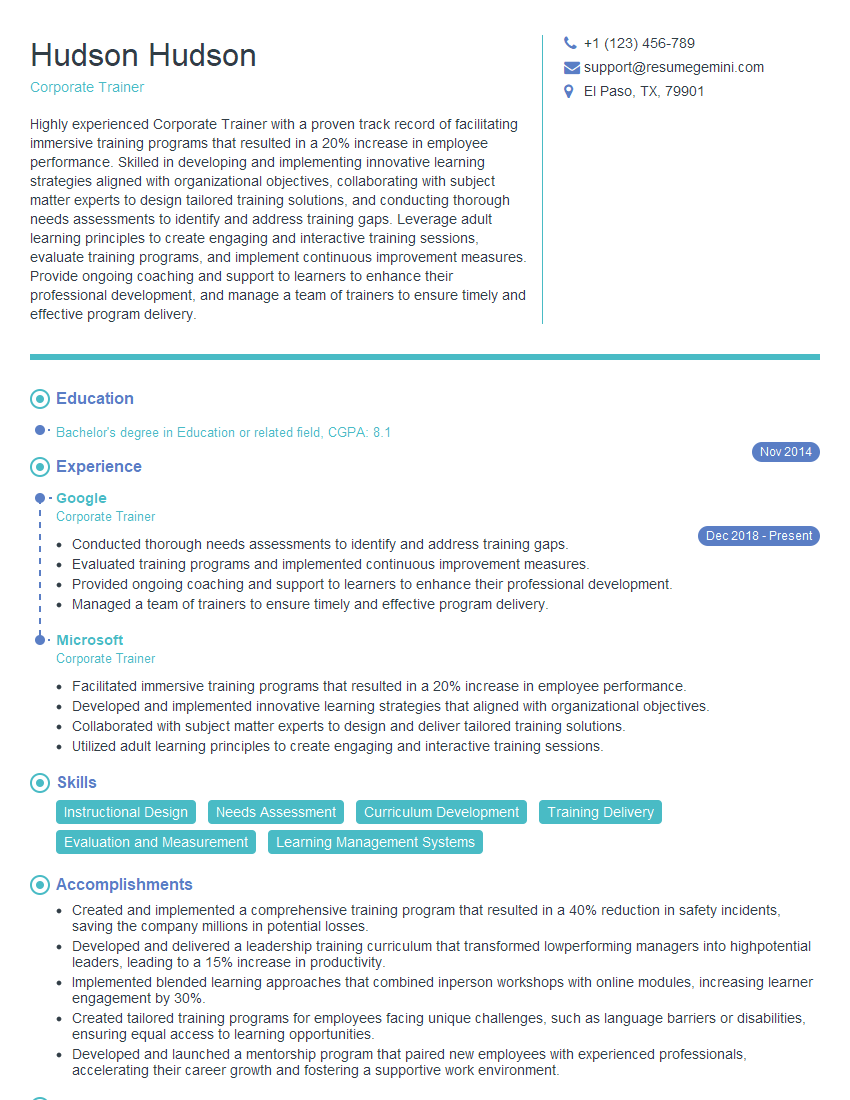
Corporate Trainer Resume Sample

Curriculum Developer Resume Sample
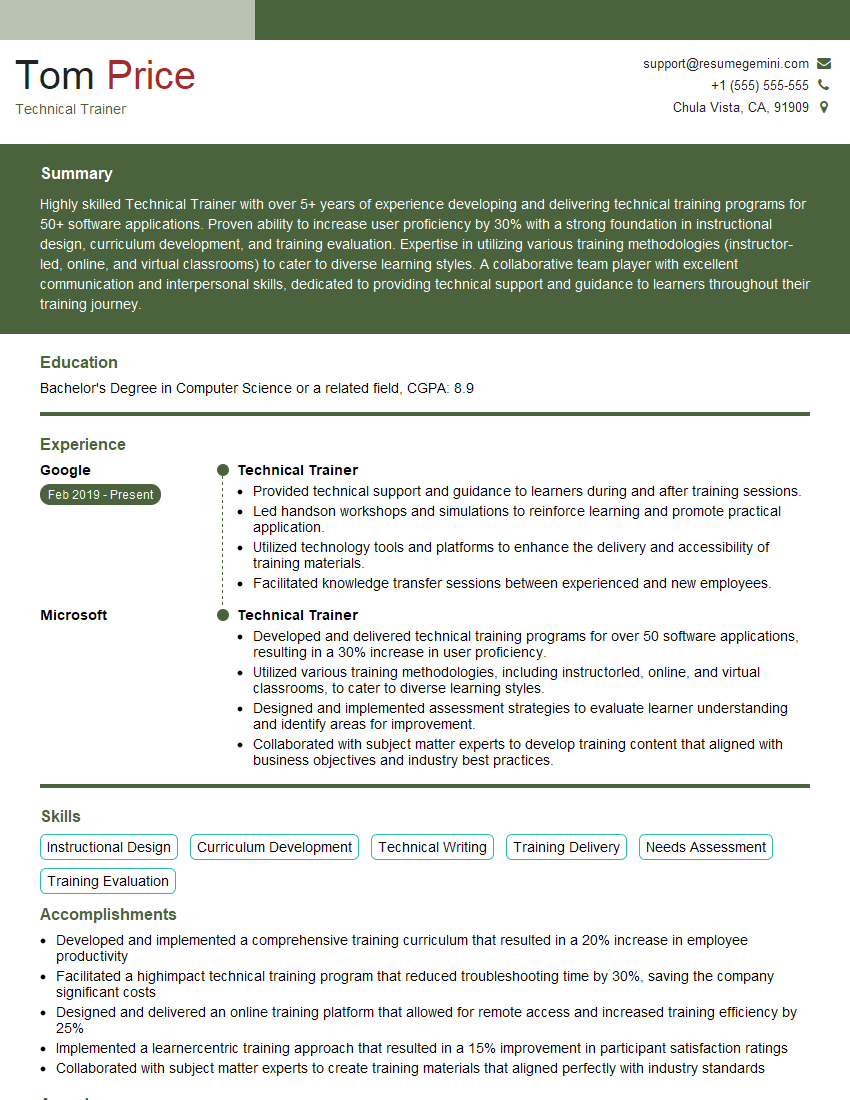
Technical Trainer Resume Sample

Training Specialist Resume Sample
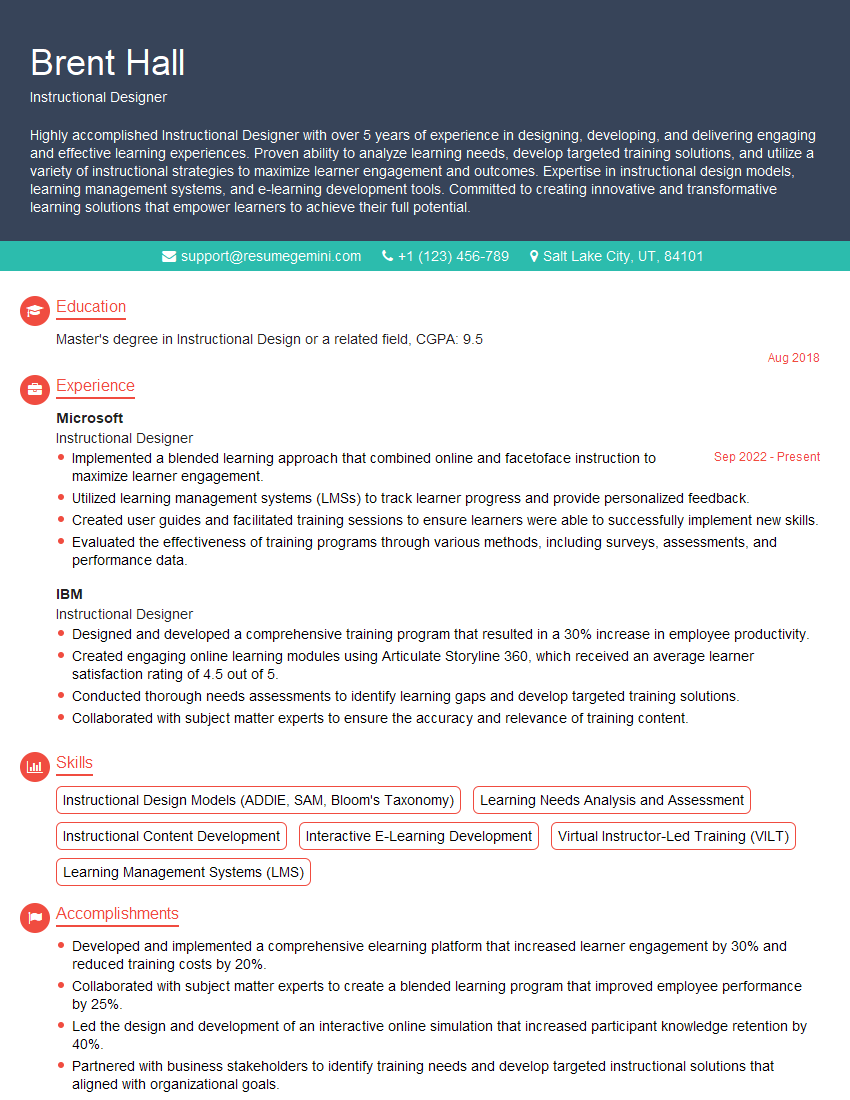
Instructional Designer Resume Sample
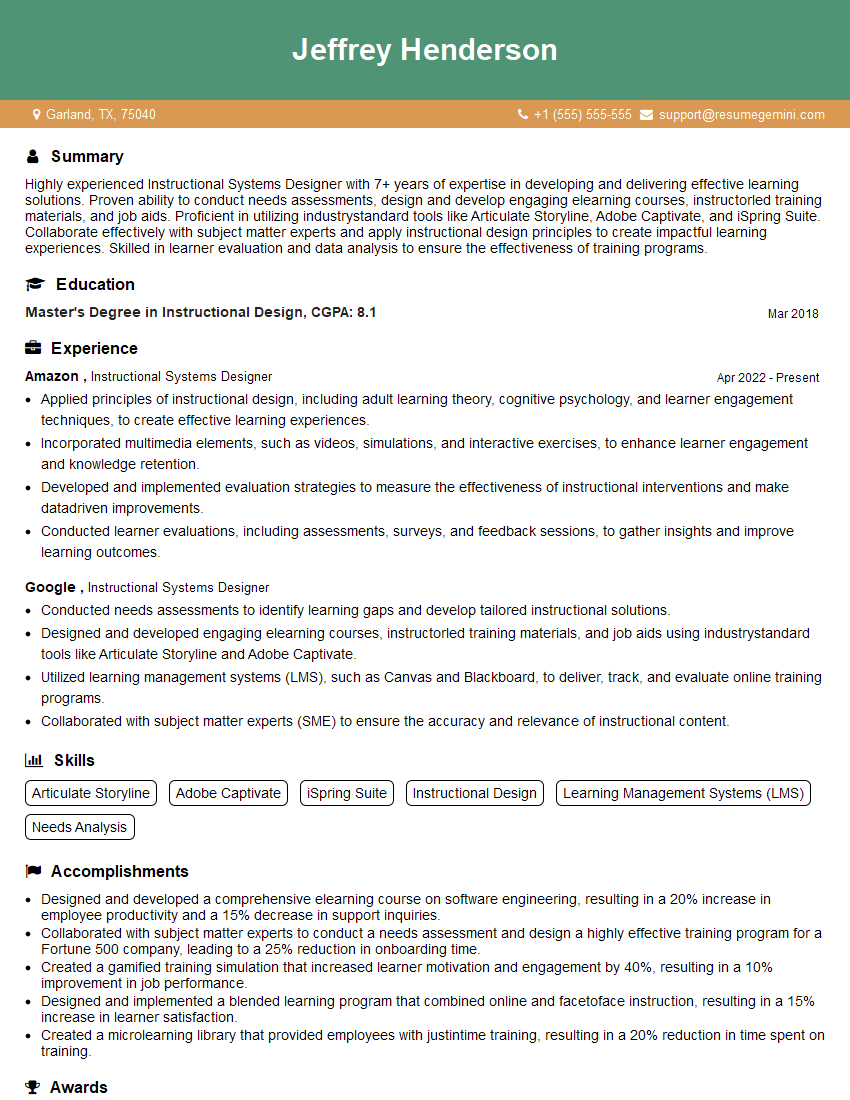
Instructional Systems Designer Resume Sample
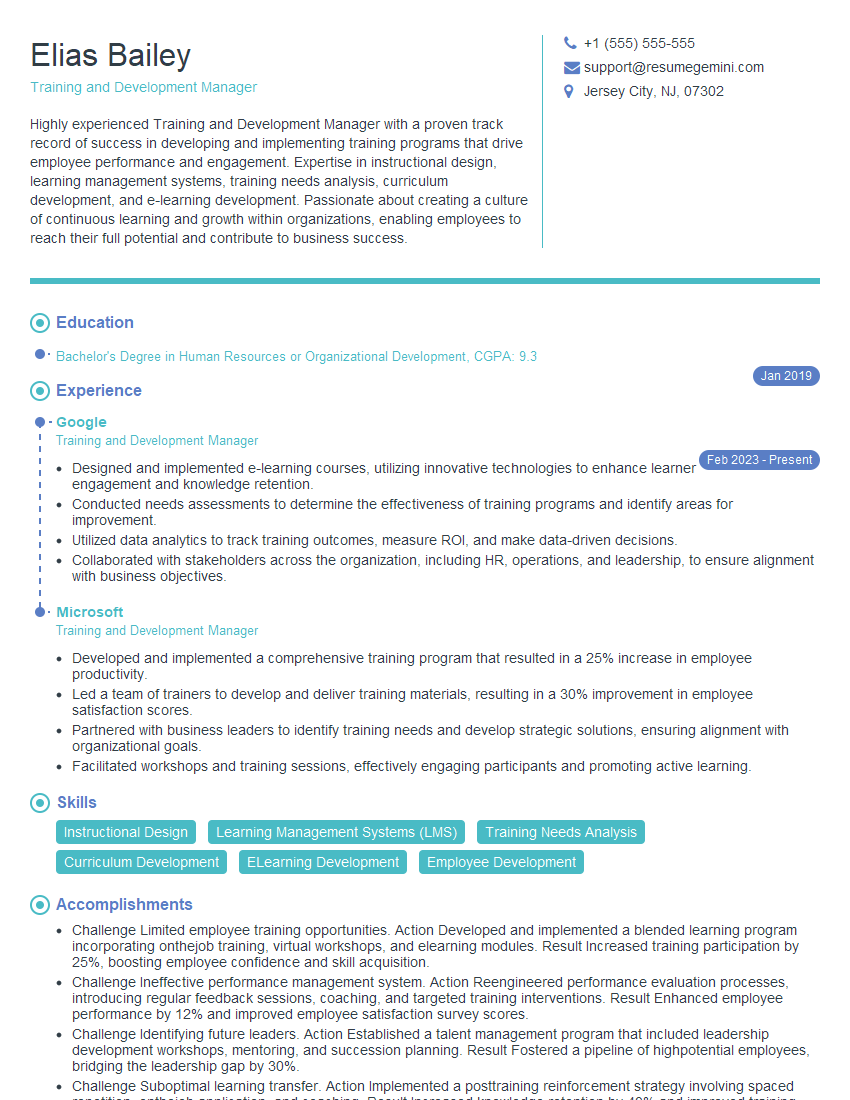
Training and Development Manager Resume Sample
Explore more articles
Users Rating of Our Blogs
Share Your Experience
We value your feedback! Please rate our content and share your thoughts (optional).
What Readers Say About Our Blog
Hello,
we currently offer a complimentary backlink and URL indexing test for search engine optimization professionals.
You can get complimentary indexing credits to test how link discovery works in practice.
No credit card is required and there is no recurring fee.
You can find details here:
https://wikipedia-backlinks.com/indexing/
Regards
NICE RESPONSE TO Q & A
hi
The aim of this message is regarding an unclaimed deposit of a deceased nationale that bears the same name as you. You are not relate to him as there are millions of people answering the names across around the world. But i will use my position to influence the release of the deposit to you for our mutual benefit.
Respond for full details and how to claim the deposit. This is 100% risk free. Send hello to my email id: [email protected]
Luka Chachibaialuka
Hey interviewgemini.com, just wanted to follow up on my last email.
We just launched Call the Monster, an parenting app that lets you summon friendly ‘monsters’ kids actually listen to.
We’re also running a giveaway for everyone who downloads the app. Since it’s brand new, there aren’t many users yet, which means you’ve got a much better chance of winning some great prizes.
You can check it out here: https://bit.ly/callamonsterapp
Or follow us on Instagram: https://www.instagram.com/callamonsterapp
Thanks,
Ryan
CEO – Call the Monster App
Hey interviewgemini.com, I saw your website and love your approach.
I just want this to look like spam email, but want to share something important to you. We just launched Call the Monster, a parenting app that lets you summon friendly ‘monsters’ kids actually listen to.
Parents are loving it for calming chaos before bedtime. Thought you might want to try it: https://bit.ly/callamonsterapp or just follow our fun monster lore on Instagram: https://www.instagram.com/callamonsterapp
Thanks,
Ryan
CEO – Call A Monster APP
To the interviewgemini.com Owner.
Dear interviewgemini.com Webmaster!
Hi interviewgemini.com Webmaster!
Dear interviewgemini.com Webmaster!
excellent
Hello,
We found issues with your domain’s email setup that may be sending your messages to spam or blocking them completely. InboxShield Mini shows you how to fix it in minutes — no tech skills required.
Scan your domain now for details: https://inboxshield-mini.com/
— Adam @ InboxShield Mini
Reply STOP to unsubscribe
Hi, are you owner of interviewgemini.com? What if I told you I could help you find extra time in your schedule, reconnect with leads you didn’t even realize you missed, and bring in more “I want to work with you” conversations, without increasing your ad spend or hiring a full-time employee?
All with a flexible, budget-friendly service that could easily pay for itself. Sounds good?
Would it be nice to jump on a quick 10-minute call so I can show you exactly how we make this work?
Best,
Hapei
Marketing Director
Hey, I know you’re the owner of interviewgemini.com. I’ll be quick.
Fundraising for your business is tough and time-consuming. We make it easier by guaranteeing two private investor meetings each month, for six months. No demos, no pitch events – just direct introductions to active investors matched to your startup.
If youR17;re raising, this could help you build real momentum. Want me to send more info?
Hi, I represent an SEO company that specialises in getting you AI citations and higher rankings on Google. I’d like to offer you a 100% free SEO audit for your website. Would you be interested?
Hi, I represent an SEO company that specialises in getting you AI citations and higher rankings on Google. I’d like to offer you a 100% free SEO audit for your website. Would you be interested?
good