Cracking a skill-specific interview, like one for Ability to design and develop AI and Machine Learning models, requires understanding the nuances of the role. In this blog, we present the questions you’re most likely to encounter, along with insights into how to answer them effectively. Let’s ensure you’re ready to make a strong impression.
Questions Asked in Ability to design and develop AI and Machine Learning models Interview
Q 1. Explain the difference between supervised, unsupervised, and reinforcement learning.
The core difference between supervised, unsupervised, and reinforcement learning lies in how the model is trained and the type of data it uses.
- Supervised Learning: This is like having a teacher. You provide the model with labeled data – input data paired with the correct output. The model learns to map inputs to outputs by minimizing the difference between its predictions and the actual labels. Think of classifying images of cats and dogs; you show the model many images labeled ‘cat’ or ‘dog,’ and it learns to distinguish them. Examples include image classification, spam detection, and medical diagnosis.
- Unsupervised Learning: Here, the model receives unlabeled data and must find patterns or structure on its own. It’s like giving a child a box of toys and asking them to sort them – they’ll figure out groupings based on shape, color, or size. Common tasks include clustering (grouping similar data points), dimensionality reduction (reducing the number of variables while preserving important information), and anomaly detection. An example would be customer segmentation based on purchasing behavior.
- Reinforcement Learning: Imagine training a dog with treats. The model (the dog) learns through trial and error, receiving rewards (treats) for desired behaviors and penalties for undesired ones. It interacts with an environment, takes actions, and receives feedback to learn an optimal strategy. This is used in robotics, game playing (like AlphaGo), and resource management.
In short: Supervised learning learns from labeled examples, unsupervised learning finds structure in unlabeled data, and reinforcement learning learns through interaction and feedback.
Q 2. What are some common evaluation metrics for classification and regression problems?
Evaluation metrics depend on whether you have a classification or regression problem.
- Classification:
- Accuracy: The percentage of correctly classified instances. Simple but can be misleading with imbalanced datasets.
- Precision: Out of all instances predicted as positive, what proportion was actually positive? Useful when the cost of false positives is high.
- Recall (Sensitivity): Out of all actually positive instances, what proportion was correctly predicted? Useful when the cost of false negatives is high.
- F1-score: The harmonic mean of precision and recall, providing a balanced measure. A good choice when both precision and recall are important.
- AUC-ROC (Area Under the Receiver Operating Characteristic Curve): Measures the ability of the classifier to distinguish between classes across different thresholds. A higher AUC indicates better performance.
- Regression:
- Mean Squared Error (MSE): The average squared difference between predicted and actual values. Sensitive to outliers.
- Root Mean Squared Error (RMSE): The square root of MSE, providing the error in the original units. Easier to interpret than MSE.
- Mean Absolute Error (MAE): The average absolute difference between predicted and actual values. Less sensitive to outliers than MSE.
- R-squared: Represents the proportion of variance in the dependent variable explained by the model. Ranges from 0 to 1, with higher values indicating better fit.
Choosing the right metric depends on the specific problem and the relative costs of different types of errors.
Q 3. Describe the bias-variance tradeoff.
The bias-variance tradeoff is a fundamental concept in machine learning. It describes the tension between two sources of error in a model:
- Bias: Represents the error introduced by approximating a real-world problem, which is often complex, by a simplified model. High bias means the model makes strong assumptions and may miss important relationships in the data, leading to underfitting. Think of trying to fit a straight line to highly curved data.
- Variance: Represents the error introduced by the model’s sensitivity to fluctuations in the training data. High variance means the model is too complex and fits the training data too closely, capturing noise instead of the underlying pattern. This leads to overfitting, where the model performs well on training data but poorly on unseen data. Think of trying to fit a very high-degree polynomial to noisy data.
The goal is to find a balance – a model that is complex enough to capture the underlying patterns but not so complex that it overfits the noise. Techniques like regularization help manage this tradeoff.
Q 4. How do you handle imbalanced datasets?
Imbalanced datasets, where one class has significantly fewer samples than others, are a common challenge. Several techniques can help:
- Resampling:
- Oversampling: Increasing the number of samples in the minority class. Techniques include duplicating existing samples or generating synthetic samples (SMOTE).
- Undersampling: Reducing the number of samples in the majority class. Techniques include randomly removing samples or using more sophisticated methods like Tomek links.
- Cost-sensitive learning: Assigning different misclassification costs to different classes. For example, assigning a higher cost to misclassifying the minority class. This can be achieved by adjusting class weights in the model’s loss function.
- Ensemble methods: Combining multiple models trained on different subsets of the data or with different resampling strategies. This can improve robustness and reduce the impact of imbalance.
- Algorithm selection: Choosing algorithms that are less sensitive to class imbalance, such as decision trees or certain ensemble methods.
The best approach depends on the specifics of the dataset and the problem. Often, a combination of techniques is most effective.
Q 5. Explain different regularization techniques and their purpose.
Regularization techniques prevent overfitting by adding penalties to the model’s complexity. They constrain the model’s weights, making it less sensitive to noise in the training data.
- L1 Regularization (LASSO): Adds a penalty proportional to the absolute value of the weights. This encourages sparsity – many weights become exactly zero, effectively performing feature selection.
- L2 Regularization (Ridge): Adds a penalty proportional to the square of the weights. This shrinks the weights towards zero, reducing their magnitude but not necessarily driving them to zero.
- Elastic Net: A combination of L1 and L2 regularization, offering the benefits of both. It combines the sparsity of L1 and the stability of L2.
The choice between L1 and L2 depends on the specific problem and whether feature selection is desired. L1 is preferable if you believe that only a subset of features is truly important, while L2 is generally more robust.
Regularization is implemented by adding a penalty term to the loss function during model training. For example, in linear regression with L2 regularization, the loss function would be:
Loss = MSE + λ * Σ(w_i^2)where MSE is the mean squared error, λ is the regularization parameter (controls the strength of the penalty), and w_i are the model weights.
Q 6. What are the advantages and disadvantages of different model selection methods (e.g., cross-validation)?
Model selection methods help choose the best model from a set of candidates. Cross-validation is a popular technique.
- k-fold Cross-Validation: The data is split into k folds. The model is trained k times, each time using k-1 folds for training and one fold for validation. The performance is averaged across all k folds. This provides a more robust estimate of model performance than a single train-test split.
- Advantages of Cross-Validation:
- Reduces the impact of data variability on model evaluation.
- Provides a more reliable estimate of generalization performance.
- Allows for efficient model comparison.
- Disadvantages of Cross-Validation:
- Computationally expensive, especially for large datasets and complex models.
- The choice of k can affect the results.
- Doesn’t directly estimate the uncertainty of the model’s performance.
- Other Model Selection Methods:
- Train-test split: A simple method where the data is split into training and testing sets. Easy to implement but less robust than cross-validation.
- Bootstrapping: Creating multiple subsets of the data by sampling with replacement. Used to estimate the variability of model performance.
- Nested cross-validation: Used for hyperparameter tuning. An outer loop performs cross-validation for model selection, and an inner loop performs cross-validation for hyperparameter optimization within each fold of the outer loop. This is more computationally expensive but provides more robust estimates of model performance.
The choice of model selection method depends on the computational resources, dataset size, and desired level of accuracy in performance estimation.
Q 7. Describe your experience with different deep learning architectures (CNNs, RNNs, Transformers).
My experience with deep learning architectures includes extensive work with CNNs, RNNs, and Transformers.
- Convolutional Neural Networks (CNNs): I’ve used CNNs extensively for image recognition tasks. My experience includes building models for object detection, image classification, and image segmentation. I’m familiar with different architectures like AlexNet, VGGNet, ResNet, and Inception, and I understand how to optimize CNNs for specific applications and datasets, including techniques for handling large datasets and limited computational resources. For example, I worked on a project classifying satellite imagery to identify deforestation areas, using a custom CNN architecture optimized for high-resolution images.
- Recurrent Neural Networks (RNNs): RNNs are my go-to for sequential data such as time series and natural language processing. I have experience building RNNs for tasks like sentiment analysis, machine translation, and time series forecasting. I understand the challenges of vanishing and exploding gradients, and I’m proficient in using LSTM and GRU units to mitigate these problems. A recent project involved developing an RNN-based model to predict stock prices, leveraging various technical indicators as input features.
- Transformers: Transformers have revolutionized natural language processing. My work with transformers includes fine-tuning pre-trained models like BERT and GPT for tasks like text classification, question answering, and text generation. I’m familiar with the attention mechanism and its role in capturing long-range dependencies in sequential data. I recently implemented a transformer-based model for chatbots, leveraging transfer learning to improve performance and reduce training time.
My experience spans different aspects of deep learning model development, from data preprocessing and architecture design to model training, evaluation, and deployment. I’m comfortable working with various deep learning frameworks such as TensorFlow and PyTorch.
Q 8. How do you deal with overfitting and underfitting?
Overfitting and underfitting are two common problems in machine learning where a model doesn’t generalize well to unseen data. Overfitting occurs when a model learns the training data too well, including the noise and outliers, resulting in poor performance on new data. Imagine trying to memorize an entire textbook word-for-word – you might ace the test on that specific book, but fail miserably on a different one covering the same material. Underfitting, on the other hand, happens when the model is too simple to capture the underlying patterns in the data. It’s like trying to understand a complex equation using only basic arithmetic – you’ll miss crucial details.
Dealing with Overfitting:
- Regularization: Techniques like L1 (LASSO) and L2 (Ridge) regularization add penalties to the model’s complexity, discouraging it from learning too much detail. This is like adding a ‘complexity tax’ to the model, incentivizing simpler solutions.
- Cross-validation: Methods like k-fold cross-validation help evaluate model performance on unseen data, giving a more realistic estimate of generalization ability. It’s like testing your knowledge with practice exams before the real one.
- Data augmentation: Increasing the size and diversity of the training dataset can improve generalization. For images, this might involve rotations or cropping. Think of it as providing more varied examples to learn from.
- Dropout (for neural networks): Randomly ignoring neurons during training prevents the network from relying too heavily on any single neuron or feature. This is like randomly removing team members during training to make sure the whole team can function independently.
- Pruning (for decision trees): Removing unnecessary branches from a decision tree to simplify the model.
Dealing with Underfitting:
- Increase model complexity: Use a more sophisticated model (e.g., switch from linear regression to a polynomial model or use a deeper neural network). This is like upgrading from a basic calculator to a powerful computer.
- Feature engineering: Add more relevant features to improve the model’s ability to capture the patterns. This is like adding more information to help solve a puzzle.
- Reduce regularization: If you’re using regularization, try decreasing the strength of the penalty term.
Q 9. Explain the concept of gradient descent and its variants.
Gradient descent is an iterative optimization algorithm used to find the minimum of a function (often a loss function in machine learning). Imagine you’re standing on a mountain and want to get to the lowest point. Gradient descent is like taking small steps downhill, always following the steepest descent. The gradient represents the direction of the steepest ascent, so we move in the opposite direction to find the minimum.
Variants of Gradient Descent:
- Batch Gradient Descent: Calculates the gradient using the entire training dataset in each iteration. This is accurate but slow, especially with large datasets. It’s like measuring the entire mountain’s slope before taking each step.
- Stochastic Gradient Descent (SGD): Calculates the gradient using only a single data point (or a small batch) at each iteration. It’s faster but noisier (more fluctuating). It’s like estimating the slope based on a single pebble and taking a step based on that estimation.
- Mini-batch Gradient Descent: A compromise between batch and stochastic gradient descent. It calculates the gradient using a small random subset of the data in each iteration. This combines the speed of SGD with the stability of batch gradient descent. It’s like estimating the slope based on a handful of pebbles and taking a step based on that estimation.
- Momentum: Adds a momentum term to the updates, accelerating convergence in directions with consistent gradients and dampening oscillations. It’s like adding weight to your steps, making you move faster downhill and smoother over bumpy terrain.
- Adagrad, RMSprop, Adam: Adaptive learning rate methods that adjust the learning rate for each parameter based on past gradients. These are more sophisticated algorithms that automatically adjust step sizes for faster convergence.
Q 10. What is backpropagation, and how does it work?
Backpropagation is an algorithm used to train artificial neural networks. It’s the process of calculating the gradient of the loss function with respect to the network’s weights. Think of it as figuring out how much each weight contributed to the error made by the network. This information is then used to update the weights and improve the network’s performance.
How it works:
- Forward pass: The input data is fed forward through the network, and the output is calculated.
- Loss calculation: The difference between the network’s output and the actual target value is calculated using a loss function (e.g., mean squared error).
- Backward pass: The error is propagated backward through the network, calculating the gradient of the loss function with respect to each weight. This involves applying the chain rule of calculus.
- Weight update: The weights are updated using an optimization algorithm like gradient descent, moving in the direction that reduces the error.
This process is repeated iteratively until the network’s performance reaches a satisfactory level. It’s like correcting mistakes by going back and adjusting each step along the way.
Q 11. Describe different activation functions and when to use them.
Activation functions introduce non-linearity into neural networks, allowing them to learn complex patterns. Without them, a neural network would simply be a linear transformation, severely limiting its capabilities. They are applied to the output of each neuron.
Common Activation Functions:
- Sigmoid: Outputs values between 0 and 1. Often used in the output layer for binary classification problems. However, it suffers from the vanishing gradient problem.
- Tanh: Outputs values between -1 and 1. Similar to sigmoid but centered around 0. Also suffers from the vanishing gradient problem.
- ReLU (Rectified Linear Unit): Outputs the input if positive, otherwise 0. Popular due to its simplicity and effectiveness. Less prone to the vanishing gradient problem.
- Leaky ReLU: A variation of ReLU that allows a small, non-zero gradient for negative inputs. Addresses the ‘dying ReLU’ problem where neurons can become inactive.
- Softmax: Outputs a probability distribution over multiple classes. Commonly used in the output layer for multi-class classification problems.
When to use them:
- Sigmoid and Softmax: Output layer for classification tasks.
- ReLU, Leaky ReLU: Hidden layers in deep neural networks.
- Tanh: Hidden layers, but less popular than ReLU variations.
Q 12. How do you perform hyperparameter tuning?
Hyperparameter tuning is the process of finding the optimal settings for the parameters of a machine learning model that are not learned during training. These parameters control the learning process itself. Examples include the learning rate in gradient descent, the number of hidden layers in a neural network, or the regularization strength. Think of it as adjusting the knobs and dials of a machine to get the best performance.
Methods for Hyperparameter Tuning:
- Grid search: Systematically tries all possible combinations of hyperparameters within a specified range. It’s like exhaustively testing every setting.
- Random search: Randomly samples hyperparameter combinations from the search space. Often more efficient than grid search, especially with many hyperparameters.
- Bayesian optimization: Uses a probabilistic model to guide the search, focusing on promising regions of the hyperparameter space. It’s like intelligently exploring the landscape to find the lowest point.
- Evolutionary algorithms: Employ evolutionary principles like mutation and selection to find optimal hyperparameter configurations. It’s like simulating natural selection to find the best-performing model.
The choice of method depends on the number of hyperparameters and the computational resources available. Cross-validation is crucial to evaluate the performance of each hyperparameter configuration and prevent overfitting to the validation set.
Q 13. Explain the concept of feature engineering and provide examples.
Feature engineering is the process of selecting, transforming, and creating new features from existing data to improve the performance of a machine learning model. It’s arguably the most important step in building a successful machine learning model. It’s like preparing the ingredients before cooking a delicious meal.
Examples:
- Creating interaction terms: Combining two or more features to capture their interaction effects. For example, combining ‘age’ and ‘income’ to create ‘age_times_income’ might reveal a more complex relationship.
- Polynomial features: Adding polynomial terms of existing features to model non-linear relationships. For example, adding ‘x^2’ and ‘x^3’ to a linear model.
- One-hot encoding: Transforming categorical variables into numerical representations. For example, converting colors (‘red’, ‘green’, ‘blue’) into binary vectors.
- Feature scaling: Standardizing or normalizing features to have a similar range of values. This prevents features with larger magnitudes from dominating the model.
- Date/time features: Extracting day of week, month, or time of day from timestamps.
- Log transformation: Applying a logarithmic transformation to skewed features to make them more normally distributed.
Effective feature engineering requires domain expertise and understanding of the data. It’s an iterative process that involves experimentation and evaluation.
Q 14. What are some common challenges in deploying machine learning models?
Deploying machine learning models presents several challenges beyond just training a high-performing model. These challenges can be broadly categorized into technical, operational, and ethical considerations.
Technical Challenges:
- Model scalability: Ensuring the model can handle the volume and velocity of data in a production environment.
- Latency requirements: Meeting real-time constraints for applications requiring immediate predictions.
- Model monitoring and maintenance: Continuously tracking the model’s performance and retraining or updating it as needed. Model drift (the model’s performance degrades over time) is a major concern.
- Infrastructure: Setting up the necessary hardware and software infrastructure to host and serve the model.
- Integration with existing systems: Seamlessly integrating the model into the existing IT ecosystem.
Operational Challenges:
- Data pipelines: Establishing robust data pipelines to feed the model with fresh and accurate data.
- Deployment strategies: Choosing an appropriate deployment strategy (e.g., batch processing, real-time prediction).
- Team collaboration: Effective collaboration between data scientists, engineers, and other stakeholders.
Ethical Challenges:
- Bias and fairness: Addressing potential biases in the data and model, ensuring fair and equitable outcomes.
- Explainability and interpretability: Understanding how the model makes predictions, especially in high-stakes applications.
- Privacy and security: Protecting sensitive data used for training and prediction.
Successfully deploying and maintaining machine learning models requires careful planning, a strong engineering team, and a commitment to ongoing monitoring and improvement.
Q 15. How do you handle missing data?
Missing data is a common challenge in machine learning. The best approach depends heavily on the nature and extent of the missingness. Ignoring it is rarely a good idea, as it can bias your model and lead to inaccurate predictions. My strategy typically involves a three-pronged approach:
- Understanding the Missingness: First, I investigate why the data is missing. Is it Missing Completely at Random (MCAR), Missing at Random (MAR), or Missing Not at Random (MNAR)? MCAR means the missingness is unrelated to any other variables. MAR means the missingness is related to observed variables, while MNAR implies it’s related to unobserved variables. Understanding this helps choose the appropriate imputation technique.
- Imputation Techniques: Several methods exist for filling in missing values. For numerical data, I might use mean/median/mode imputation (simple but can distort variance), k-Nearest Neighbors (KNN) imputation (finds similar data points to fill the gap), or multiple imputation (creates multiple plausible filled datasets and combines results). For categorical data, I might use the most frequent category or a more sophisticated probabilistic approach.
- Model Selection: Some algorithms handle missing data better than others. Tree-based models (like Random Forests or Gradient Boosting) often deal with missingness intrinsically, while others might require preprocessing before training. If imputation introduces bias, I might explore models robust to missing data.
For instance, in a project predicting customer churn, missing income data might be MAR (related to the customer’s age or subscription type). I’d use KNN imputation, as it considers similar customers’ income levels. If a significant portion of the data was missing, I might explore a robust model like a Random Forest which can handle missing values without pre-processing.
Career Expert Tips:
- Ace those interviews! Prepare effectively by reviewing the Top 50 Most Common Interview Questions on ResumeGemini.
- Navigate your job search with confidence! Explore a wide range of Career Tips on ResumeGemini. Learn about common challenges and recommendations to overcome them.
- Craft the perfect resume! Master the Art of Resume Writing with ResumeGemini’s guide. Showcase your unique qualifications and achievements effectively.
- Don’t miss out on holiday savings! Build your dream resume with ResumeGemini’s ATS optimized templates.
Q 16. What is the difference between L1 and L2 regularization?
L1 and L2 regularization are techniques used to prevent overfitting in machine learning models. Overfitting occurs when a model learns the training data too well, performing exceptionally on it but poorly on unseen data. Both methods add a penalty term to the model’s loss function, discouraging overly complex models.
L1 Regularization (LASSO): Adds a penalty term proportional to the absolute value of the model’s coefficients. This encourages sparsity, meaning some coefficients are driven to exactly zero. This is useful for feature selection, as it effectively removes irrelevant features from the model. It’s represented in the loss function as: Loss = Original Loss + λ * Σ|βi| where λ is the regularization strength and βi are the coefficients.
L2 Regularization (Ridge): Adds a penalty term proportional to the square of the model’s coefficients. This shrinks the coefficients towards zero but doesn’t drive them to exactly zero. It’s good at reducing the influence of less important features, leading to better generalization. It’s represented as: Loss = Original Loss + λ * Σβi²
In essence: L1 performs feature selection, while L2 performs feature shrinkage. The choice depends on the problem; if you suspect many irrelevant features, L1 is preferable. Otherwise, L2 often works well.
Q 17. Explain the concept of a confusion matrix.
A confusion matrix is a visual representation of the performance of a classification model. It summarizes the counts of true positive (TP), true negative (TN), false positive (FP), and false negative (FN) predictions. Think of it like a summary table showing what your model predicted versus the actual ground truth.
Imagine a model predicting whether an email is spam or not spam.
| Predicted Spam | Predicted Not Spam | |
|---|---|---|
| Actual Spam | TP (Correctly identified spam) | FN (Missed spam) |
| Actual Not Spam | FP (Falsely identified as spam) | TN (Correctly identified not spam) |
From the confusion matrix, you can derive key performance metrics like:
- Accuracy: (TP + TN) / (TP + TN + FP + FN)
- Precision: TP / (TP + FP) (Out of all predicted spam, how many were actually spam?)
- Recall (Sensitivity): TP / (TP + FN) (Out of all actual spam, how many were correctly identified?)
- F1-Score: Harmonic mean of Precision and Recall, balancing both.
The confusion matrix provides a comprehensive understanding of a classifier’s performance beyond just accuracy, revealing its strengths and weaknesses in different prediction classes.
Q 18. What are some common techniques for dimensionality reduction?
Dimensionality reduction is crucial when dealing with datasets containing many features, as it reduces computational cost, improves model performance by removing redundant or irrelevant features, and can help prevent overfitting. Common techniques include:
- Principal Component Analysis (PCA): A linear transformation that projects data onto a lower-dimensional subspace while preserving as much variance as possible. It’s excellent for reducing noise and identifying the most important features.
- t-distributed Stochastic Neighbor Embedding (t-SNE): A non-linear technique primarily used for visualization. It maps high-dimensional data to a lower-dimensional space (often 2D or 3D) while preserving local neighborhood structures. It’s great for visualizing clusters but not for feature reduction in model training.
- Linear Discriminant Analysis (LDA): A supervised technique that finds the linear combination of features that best separates different classes. It’s particularly useful for classification problems.
- Feature Selection: This involves selecting a subset of the original features based on criteria like correlation with the target variable, feature importance scores from tree-based models, or statistical tests. This directly removes less important features.
The choice of technique depends on the dataset and the problem. For instance, PCA is a good starting point for general dimensionality reduction, while LDA is better suited for supervised learning tasks.
Q 19. What are your preferred programming languages for machine learning?
My preferred programming languages for machine learning are Python and R. Python offers a rich ecosystem of libraries like scikit-learn, TensorFlow, and PyTorch, providing extensive tools for various machine learning tasks. Its readability and versatility make it ideal for prototyping and deployment. R excels in statistical computing and data visualization, particularly useful for exploratory data analysis and creating insightful plots. I often use both languages depending on the project’s specific needs; Python for model building and deployment, and R for initial data exploration and visualization.
Q 20. What are your experiences with cloud computing platforms (AWS, Azure, GCP)?
I have extensive experience with all three major cloud computing platforms: AWS, Azure, and GCP. My experience spans various services, including:
- AWS: EC2 for compute, S3 for storage, SageMaker for model training and deployment, and Lambda for serverless functions. I’ve used AWS extensively for building and deploying machine learning models at scale.
- Azure: Azure Machine Learning, Azure Databricks, and Azure Blob Storage for large-scale data processing and model deployment. I’ve utilized Azure for projects requiring robust data management and integration with other Azure services.
- GCP: Google Cloud Platform’s Vertex AI, BigQuery, and Cloud Storage for data warehousing, analysis, and model deployment. GCP’s strengths in data analytics have been valuable for specific projects.
My familiarity with these platforms allows me to choose the most appropriate services based on the project’s requirements, budget, and scalability needs. I’m comfortable managing resources, optimizing costs, and ensuring the security and reliability of cloud-based machine learning solutions.
Q 21. Describe a complex machine learning project you’ve worked on.
One complex project involved building a real-time fraud detection system for a major financial institution. The system processed millions of transactions daily, identifying potentially fraudulent activities in real-time. This was challenging due to the high volume, velocity, and variety of data, as well as the need for extremely low latency and high accuracy.
We employed a multi-stage approach:
- Data Preprocessing: Cleaning, transforming, and feature engineering on large, streaming transaction data using Apache Kafka and Spark. We addressed class imbalance (fraudulent transactions are rare) using techniques like oversampling and cost-sensitive learning.
- Model Development: We explored various models, including ensemble methods like Gradient Boosting and Random Forests, and neural networks. We employed techniques like anomaly detection to identify unusual transaction patterns.
- Model Deployment: We deployed the model using a microservice architecture on Kubernetes, ensuring scalability and fault tolerance. We utilized A/B testing to evaluate different models and continuously monitor their performance.
- Model Monitoring: We implemented continuous monitoring to detect concept drift (when the model’s performance degrades due to changes in the data) and retrain the model as needed. This ensured the system adapted to evolving fraud patterns.
This project required a strong understanding of data engineering, machine learning algorithms, distributed systems, and DevOps practices. The successful implementation resulted in a significant reduction in fraudulent activities and saved the company millions of dollars.
Q 22. How do you ensure the fairness and ethical implications of your models?
Ensuring fairness and ethical implications in AI models is paramount. It’s not just about building accurate models, but responsible ones that don’t perpetuate or amplify existing biases. My approach is multifaceted and begins even before data collection.
Data Collection and Preprocessing: I meticulously examine the source and composition of my data. Are there any underrepresented groups? Are there biases embedded in how the data was collected or labeled? For example, if building a facial recognition system, I would ensure a diverse dataset representing various ethnicities, ages, and genders to avoid disproportionately poor performance on certain groups. Techniques like data augmentation can help address imbalances.
Algorithmic Fairness: During model development, I employ techniques to mitigate bias. This might include using fairness-aware algorithms or incorporating fairness metrics into the model evaluation process. For instance, I’d use metrics like disparate impact or equal opportunity to measure fairness across different demographic subgroups.
Transparency and Explainability: I prioritize using explainable AI (XAI) techniques whenever possible. This helps to understand *why* a model makes certain predictions, allowing us to identify potential biases. Techniques like LIME or SHAP can help uncover these biases. Openly communicating the limitations and potential biases of the model to stakeholders is crucial.
Ongoing Monitoring: Fairness isn’t a one-time fix. Post-deployment monitoring is crucial to identify and address emerging biases that might arise due to changes in the data distribution or the model’s performance over time. Regular audits and bias detection systems are implemented.
In a recent project developing a loan application scoring system, I proactively identified and addressed bias in historical data that favored certain demographics. By carefully cleaning the data and applying appropriate algorithmic adjustments, I created a more equitable model.
Q 23. What is your experience with model monitoring and maintenance?
Model monitoring and maintenance are crucial for ensuring the long-term effectiveness and reliability of AI models. It’s an iterative process that involves continuous evaluation and adjustment.
Performance Monitoring: I regularly track key performance indicators (KPIs) to detect performance degradation. This includes metrics like accuracy, precision, recall, F1-score, and AUC depending on the model type. Automated dashboards and alerts are vital for early detection of issues.
Data Drift Detection: I monitor for changes in the input data distribution that could negatively impact model performance. This includes using techniques like concept drift detection to identify when the relationship between input features and target variable changes significantly.
Model Retraining: When data drift or performance degradation is detected, I’ll retrain the model with updated data to maintain accuracy. Version control is essential to track model changes and easily revert if needed.
Model Explainability Monitoring: I regularly assess the model’s explanations to identify any changes in its decision-making processes that might indicate emerging biases. This involves revisiting techniques like LIME or SHAP to track their outputs and spot significant changes.
For instance, in a fraud detection system, I’d continuously monitor the model’s performance and retrain it regularly with new fraud patterns. This ensures the model remains effective against evolving fraud techniques.
Q 24. How do you handle categorical features in your models?
Categorical features, representing non-numerical data like colors or cities, require special handling in machine learning models. They can’t be directly used as input to many algorithms. My approach depends on the nature of the data and the chosen model.
One-Hot Encoding: This technique creates new binary features for each unique category. For example, if ‘color’ has categories ‘red’, ‘blue’, and ‘green’, it transforms into three binary features: ‘color_red’, ‘color_blue’, ‘color_green’. This works well for models that handle high-dimensionality but can lead to increased dimensionality.
Label Encoding: This assigns a unique integer to each category. While simpler, it introduces an ordinal relationship between categories which might not be appropriate if categories lack inherent order. Use cautiously.
Target Encoding/Mean Encoding: Replaces each category with the average value of the target variable for that category. Useful for regression tasks, but prone to overfitting and should be handled with regularization techniques.
Binary Encoding: Represents categories with binary codes (0s and 1s). More compact than one-hot encoding, reducing dimensionality.
The choice of encoding method depends on the specific dataset and model. I often experiment with different methods to find the best performing one, using techniques like cross-validation to avoid overfitting.
Q 25. Explain your experience with different data visualization techniques.
Data visualization is crucial for understanding and communicating insights from data. My experience spans various techniques, tailored to the specific data and purpose.
Histograms and Density Plots: To visualize the distribution of numerical features. Helps to identify skewness, outliers, and potential data problems.
Scatter Plots and Pair Plots: To explore relationships between pairs of numerical features. Useful for detecting correlations or patterns.
Box Plots: To compare the distribution of a numerical feature across different categories. Helps to identify differences in central tendency and variability between groups.
Bar Charts and Pie Charts: To visualize the distribution of categorical features. Simple and effective for summarizing categorical data.
Heatmaps: To visualize correlation matrices or other tabular data. Useful for identifying patterns and relationships between many variables.
Interactive Dashboards (e.g., using Tableau, Power BI): For creating dynamic and interactive visualizations that allow for exploration and deep dives into data.
In a customer churn prediction project, I used a combination of histograms, box plots, and bar charts to understand the distribution of customer demographics and their relationship to churn rate, helping to identify key risk factors.
Q 26. What is your experience with version control (e.g., Git)?
Git is an indispensable tool in my workflow. I leverage its version control capabilities extensively to manage code, data, and model versions.
Code Management: I use Git for collaborative coding, tracking changes, and resolving merge conflicts. Branching strategies are employed to manage concurrent development.
Model Versioning: Git allows me to store different versions of my models, including their parameters and training scripts. This is critical for reproducibility and allows for easy rollback in case of unexpected performance issues.
Experiment Tracking: I often use Git to track the details of different experiments, including hyperparameters, results, and associated code. This allows me to easily compare and contrast different model configurations.
In a recent project, Git helped me manage a team of data scientists effectively, enabling seamless collaboration and easy tracking of changes throughout the model development lifecycle. Its branching capabilities were key in testing various model architectures without impacting the main development branch.
Q 27. Explain different types of neural network architectures and their applications.
Neural networks encompass a broad range of architectures, each designed for specific tasks. Here are a few examples:
Feedforward Neural Networks (FNNs): The simplest type, where information flows in one direction. Suitable for tasks like classification and regression.
Convolutional Neural Networks (CNNs): Excellent for image and video processing, leveraging convolutional layers to extract spatial features. Used in image classification, object detection, and image segmentation.
Recurrent Neural Networks (RNNs): Designed for sequential data like text and time series. RNNs, particularly LSTMs and GRUs, handle long-range dependencies well. Used in natural language processing, speech recognition, and time series forecasting.
Autoencoders: Used for dimensionality reduction and feature extraction. They learn compressed representations of data, useful for anomaly detection and data denoising.
Generative Adversarial Networks (GANs): Two networks (generator and discriminator) compete to generate realistic synthetic data. Used in image generation, drug discovery, and style transfer.
Transformer Networks: Based on the attention mechanism, highly effective for sequence-to-sequence tasks, especially in natural language processing. Used in machine translation, text summarization, and question answering.
The choice of architecture depends heavily on the specific problem. For image classification, I’d likely use a CNN, while for natural language processing, I’d favor an RNN or a Transformer network.
Q 28. How do you evaluate the performance of a recommendation system?
Evaluating a recommendation system requires a nuanced approach, going beyond simple accuracy metrics. The evaluation is often context-specific, depending on the type of recommendation system (content-based, collaborative filtering, hybrid).
Precision and Recall: Measures the accuracy of recommendations. Precision focuses on the relevance of recommended items among those recommended, while recall focuses on the ability to retrieve all relevant items.
F1-Score: The harmonic mean of precision and recall, providing a balance between the two.
Mean Average Precision (MAP): Considers the ranking of recommendations, giving more weight to highly ranked relevant items.
Normalized Discounted Cumulative Gain (NDCG): Another ranking-based metric that accounts for the position of relevant items in the recommendation list.
Click-Through Rate (CTR): Measures the percentage of users who click on the recommended items. This is a crucial real-world metric reflecting user engagement.
Conversion Rate: Measures the percentage of users who take a desired action (e.g., purchase) after seeing the recommendations.
A/B Testing: Comparing different recommendation algorithms or strategies through controlled experiments with real users to determine which performs better in practice.
In an e-commerce setting, I’d use a combination of metrics like MAP, NDCG, CTR, and conversion rate to evaluate the performance of a recommendation system. A/B testing would help validate improvements made to the algorithm.
Key Topics to Learn for AI and Machine Learning Model Design & Development Interviews
- Supervised Learning: Understand regression and classification algorithms (linear regression, logistic regression, support vector machines, decision trees, random forests). Be prepared to discuss their strengths, weaknesses, and appropriate applications.
- Unsupervised Learning: Master clustering techniques (k-means, hierarchical clustering) and dimensionality reduction methods (PCA, t-SNE). Practice explaining how to choose the right technique for a given dataset.
- Deep Learning: Familiarize yourself with neural networks, convolutional neural networks (CNNs) for image processing, and recurrent neural networks (RNNs) for sequential data. Be ready to discuss architectures and hyperparameter tuning.
- Model Evaluation & Selection: Know how to evaluate model performance using metrics like accuracy, precision, recall, F1-score, AUC-ROC, and understand bias-variance tradeoff. Practice explaining techniques for model selection and avoiding overfitting.
- Data Preprocessing & Feature Engineering: Discuss techniques for handling missing data, outliers, and feature scaling. Be prepared to explain the importance of feature engineering for model performance.
- Deployment & Monitoring: Understand the practical aspects of deploying models into production environments and the importance of ongoing monitoring and maintenance.
- Explainability and Interpretability: Discuss techniques for understanding how a model makes predictions, especially for complex models like deep learning architectures. This is increasingly important for ethical considerations and building trust.
Next Steps
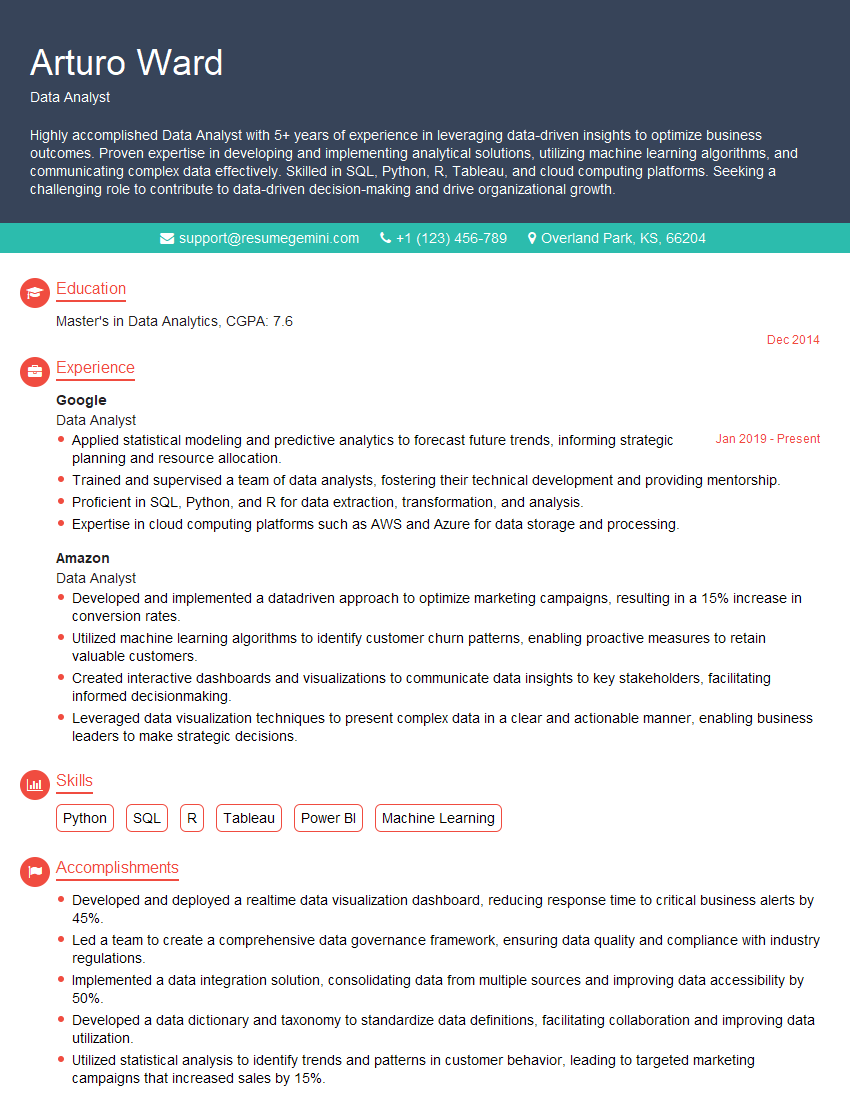
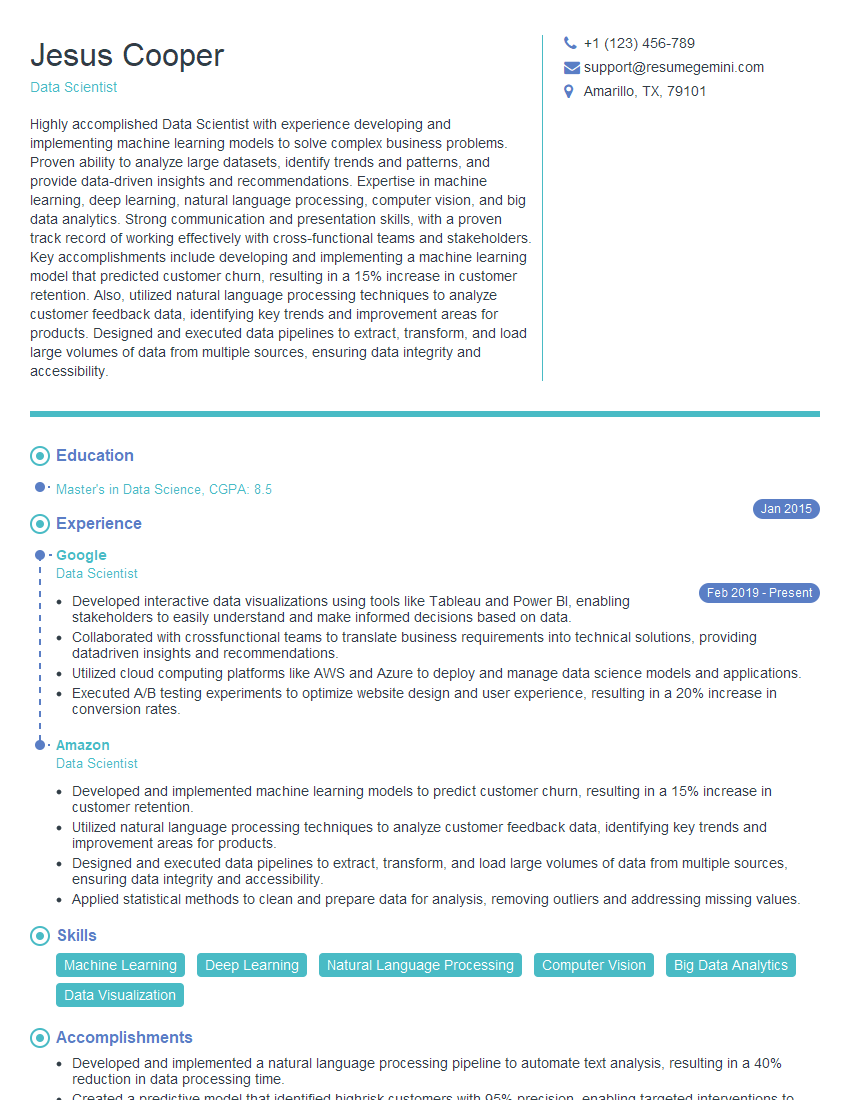
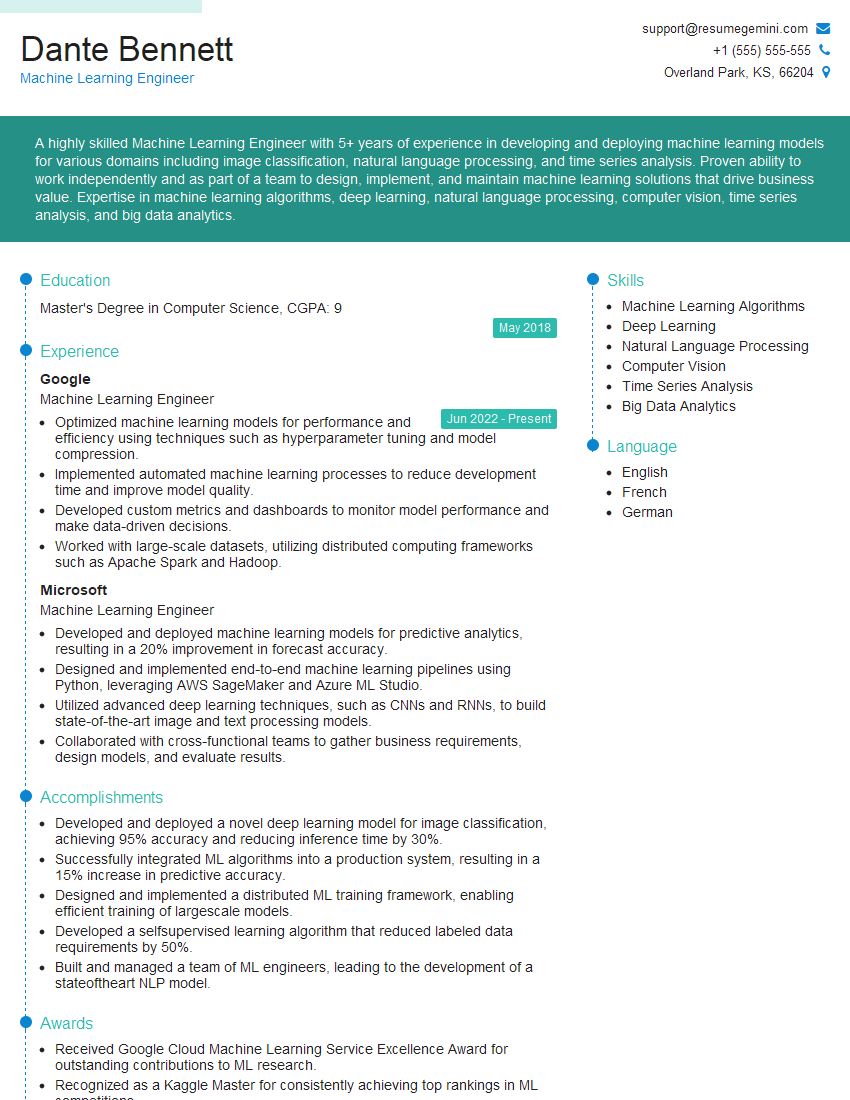
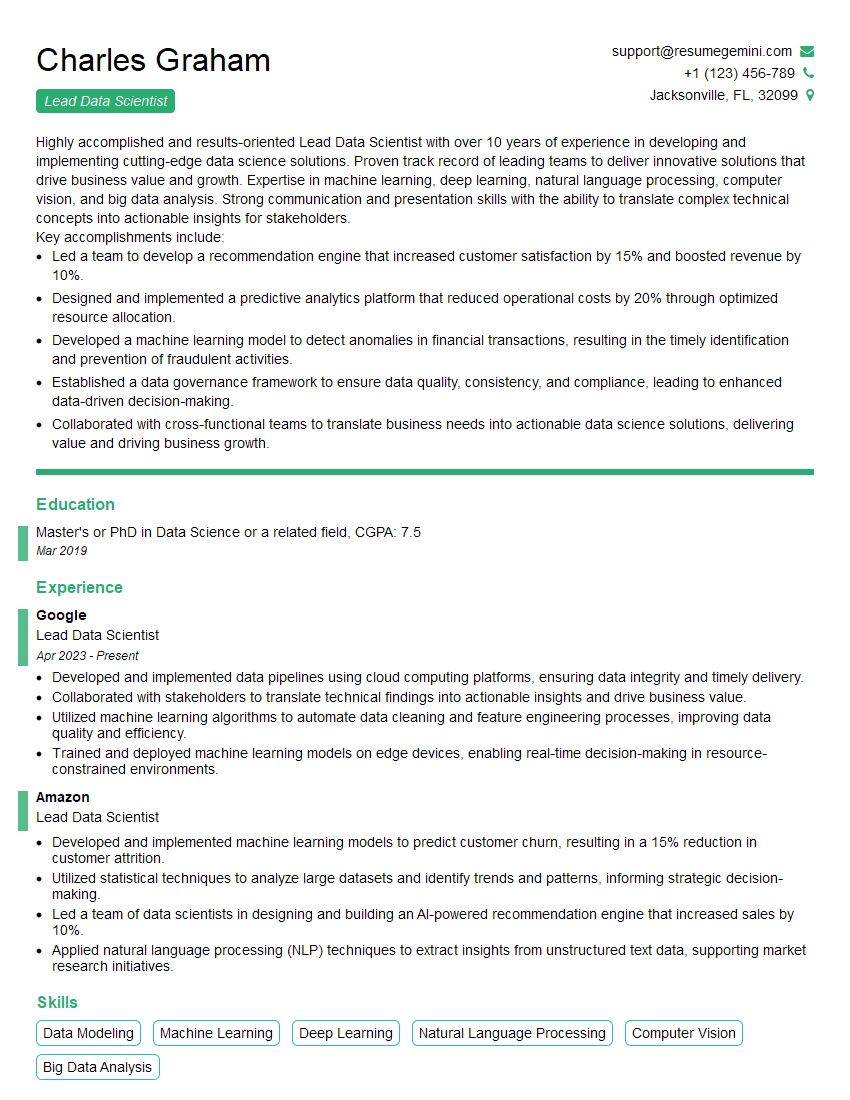
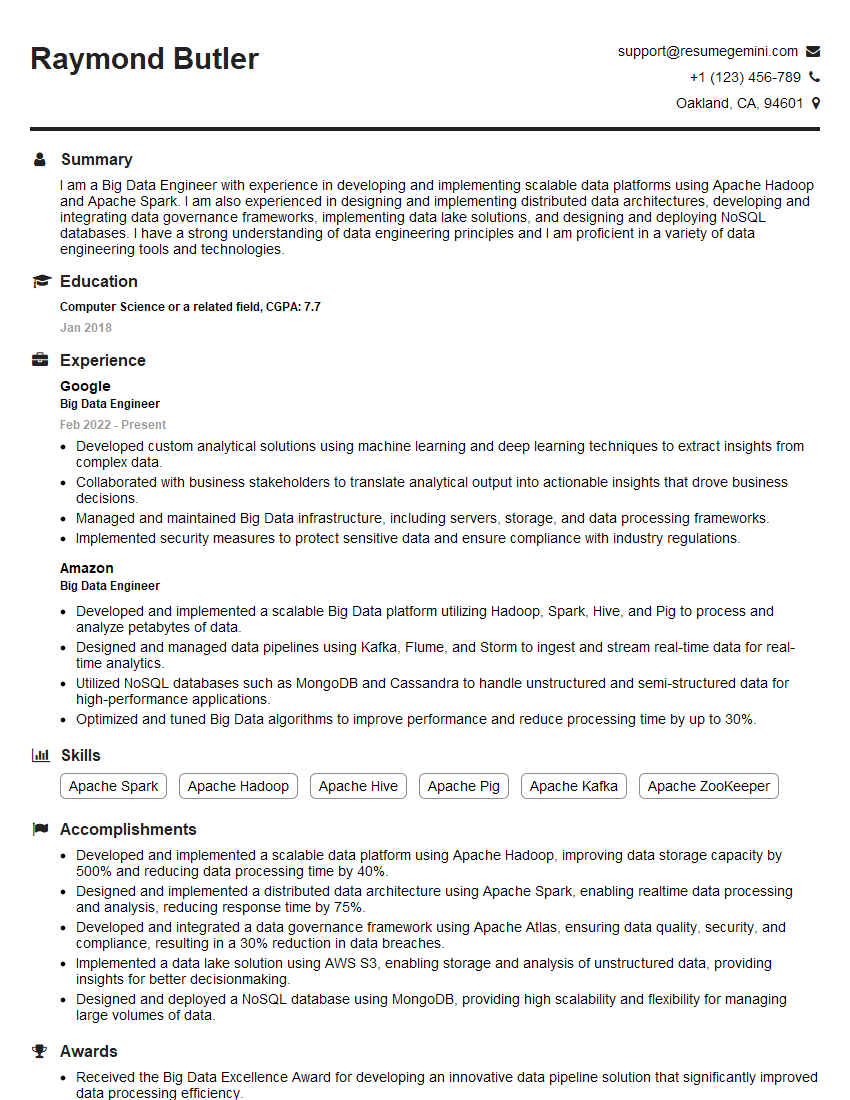
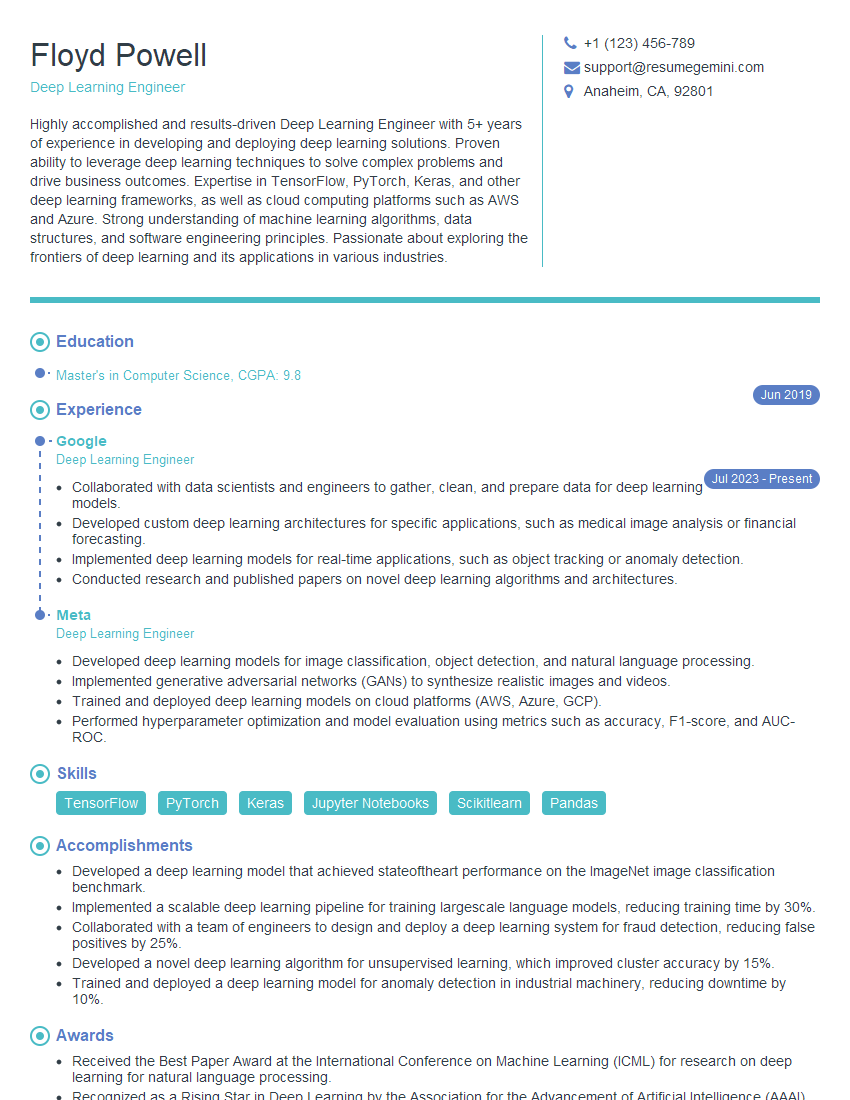
Mastering the ability to design and develop AI and Machine Learning models is crucial for a successful and rewarding career in this rapidly growing field. A strong foundation in these concepts will open doors to exciting opportunities and significantly enhance your earning potential. To maximize your chances of landing your dream job, it’s essential to present your skills effectively. Create an ATS-friendly resume that highlights your relevant experience and accomplishments. ResumeGemini is a trusted resource that can help you build a professional and impactful resume, tailored to the specific requirements of AI and Machine Learning roles. Examples of resumes tailored to showcasing expertise in AI and Machine Learning model design and development are available to help you get started.

Explore more articles
Users Rating of Our Blogs
Share Your Experience
We value your feedback! Please rate our content and share your thoughts (optional).
What Readers Say About Our Blog
Very informative content, great job.
good