The right preparation can turn an interview into an opportunity to showcase your expertise. This guide to Analog and Digital Signal Analysis interview questions is your ultimate resource, providing key insights and tips to help you ace your responses and stand out as a top candidate.
Questions Asked in Analog and Digital Signal Analysis Interview
Q 1. Explain the difference between analog and digital signals.
Analog and digital signals represent information in fundamentally different ways. An analog signal is a continuous representation of information, varying smoothly over time. Think of a vinyl record – the groove continuously changes to represent the music. In contrast, a digital signal is a discrete representation, where information is encoded as a sequence of numbers. Imagine a CD – the music is represented by a series of discrete values sampled at regular intervals.
The key difference lies in continuity. Analog signals have infinite possible values within a given range, while digital signals are limited to a finite number of discrete values (e.g., 0 and 1 in binary). This discrete nature makes digital signals robust to noise and easier to store and process, while analog signals are often more directly related to the physical phenomenon being measured (e.g., voltage representing temperature).
Example: A microphone produces an analog signal representing sound waves, while a digital thermometer measures temperature and outputs a digital signal.
Q 2. Describe Nyquist-Shannon sampling theorem and its implications.
The Nyquist-Shannon sampling theorem is fundamental to digital signal processing. It states that to accurately reconstruct an analog signal from its samples, the sampling frequency (fs) must be at least twice the highest frequency component (fmax) present in the analog signal. Mathematically, fs ≥ 2fmax.
Implications:
- Accurate Reconstruction: If the sampling rate satisfies the theorem, the original analog signal can be perfectly reconstructed from the digital samples through a process called interpolation.
- Aliasing: If the sampling rate is less than twice the highest frequency, a phenomenon called aliasing occurs, resulting in the lower frequency components being misrepresented as higher frequency components. This leads to distortion and loss of information.
- Anti-aliasing Filters: Before sampling, a low-pass filter (anti-aliasing filter) is typically used to remove high-frequency components beyond fmax, preventing aliasing.
Example: If you’re sampling audio with a maximum frequency of 20 kHz, you need a sampling rate of at least 40 kHz. Sampling at 30 kHz would result in aliasing where higher frequencies are ‘folded’ into the lower frequency range.
Q 3. What are the common types of analog-to-digital converters (ADCs)?
Several types of Analog-to-Digital Converters (ADCs) exist, each with its strengths and weaknesses:
- Flash ADC: Uses a parallel comparator array for high-speed conversion, but is expensive and power-hungry for high resolutions.
- Successive Approximation ADC: Uses a binary search approach, offering a good balance between speed, resolution, and cost. It’s commonly used in many applications.
- Sigma-Delta ADC (ΔΣ ADC): Uses oversampling and digital filtering to achieve high resolution with lower component precision, ideal for applications needing high resolution at lower speeds.
- Pipeline ADC: Divides the conversion process into multiple stages, providing high speed at higher resolutions. This ADC is commonly used in high-speed data acquisition.
- Counting ADC: Simple, integrates the analog signal using a counter and comparator, suitable for low-frequency signals and low resolution.
The choice depends on the application’s requirements, primarily speed, resolution, cost, and power consumption.
Q 4. Explain the concept of aliasing and how to avoid it.
Aliasing is the phenomenon where high-frequency components of a signal, after sampling, appear as lower-frequency components in the sampled data. This occurs when the Nyquist-Shannon sampling theorem is violated (sampling rate is less than twice the highest frequency). Imagine trying to photograph a rapidly spinning wheel: if the shutter speed is too slow, the wheel might appear to be spinning backward or at a much slower speed than it actually is.
Avoiding Aliasing:
- Increase Sampling Rate: The most straightforward method is to increase the sampling frequency above twice the maximum frequency of the signal of interest.
- Anti-aliasing Filter: Use a low-pass filter before the ADC to attenuate frequencies above the Nyquist frequency (half the sampling rate). This filter removes the high frequencies that would cause aliasing.
- Oversampling: Sample at a significantly higher rate than the Nyquist rate, allowing for digital filtering to remove aliasing components after sampling.
Aliasing is a significant concern in many applications, such as audio recording and image processing. Properly addressing it is crucial for obtaining accurate and reliable results.
Q 5. What are the advantages and disadvantages of using FIR and IIR filters?
Finite Impulse Response (FIR) and Infinite Impulse Response (IIR) filters are two fundamental types of digital filters. The key difference lies in their impulse response:
- FIR Filters: Have a finite impulse response, meaning the output eventually settles to zero after a finite number of samples. They are always stable, and their design is relatively straightforward using windowing techniques or other methods. However, they generally require a higher order (more computations) to achieve the same performance as an IIR filter.
- IIR Filters: Have an infinite impulse response, meaning the output continues to respond indefinitely after the input has stopped. They can achieve sharper frequency responses with lower orders than FIR filters, resulting in reduced computational complexity. However, IIR filters can be unstable if not designed carefully.
Advantages and Disadvantages Summary:
| Feature | FIR | IIR |
|---|---|---|
| Stability | Always stable | Can be unstable |
| Complexity | Higher order for same performance | Lower order for same performance |
| Phase Response | Linear phase (easier to design with linear phase) | Generally non-linear phase |
| Computational Cost | Higher | Lower |
The best choice depends on the specific application and its priorities (e.g., stability is critical in some real-time systems while computational efficiency is prioritized in others).
Q 6. Describe different windowing techniques used in filter design.
Windowing techniques are used in FIR filter design to reduce the effect of truncation of the ideal impulse response. An ideal filter has an infinitely long impulse response; in reality, it must be truncated to create a finite-length filter. Truncation introduces ripples in the frequency response.
Windowing mitigates these ripples by multiplying the ideal impulse response with a window function. Different window functions offer different trade-offs between main lobe width (transition bandwidth) and side lobe attenuation (ripple level).
- Rectangular Window: Simple, but produces significant ripples in the frequency response.
- Hamming Window: Reduces ripples compared to the rectangular window, but has a wider main lobe.
- Hanning Window: Similar to Hamming but with slightly better ripple attenuation, but wider transition band.
- Blackman Window: Offers better ripple attenuation than Hamming and Hanning, but with a wider main lobe.
- Kaiser Window: Provides a trade-off between main lobe width and side lobe attenuation, offering flexibility in design.
The choice of window function depends on the specific application requirements. If sharp cutoff is critical, a window with a narrow main lobe might be preferable. If ripple reduction is the main concern, a window with low side lobes would be chosen, even at the cost of a wider transition band.
Q 7. Explain the Z-transform and its application in digital signal processing.
The Z-transform is a powerful mathematical tool used in digital signal processing to analyze and design discrete-time systems. It transforms a discrete-time signal (a sequence of numbers) into a complex-valued function of a complex variable ‘z’.
The Z-transform is analogous to the Laplace transform for continuous-time signals. It provides a way to represent the signal in the frequency domain, allowing us to easily analyze its frequency characteristics (magnitude and phase responses) and manipulate it.
Applications:
- System Analysis: Determine the stability and frequency response of digital filters and other discrete-time systems.
- Filter Design: Design and analyze digital filters by manipulating the Z-transform to meet specific frequency response requirements.
- Signal Processing: Solve difference equations, perform spectral analysis, and implement various signal processing algorithms efficiently.
- Control Systems: Used for analyzing and designing digital controllers for various systems.
The Z-transform simplifies complex signal analysis and manipulation by allowing us to work with algebraic equations instead of difference equations, thus significantly simplifying the process of digital signal processing.
Example: The Z-transform of a unit step sequence u[n] = {1, 1, 1, ...} is Z{u[n]} = 1/(1 - z-1). This allows analyzing the system’s response to a step input easily.
Q 8. What is the Fast Fourier Transform (FFT) and how does it work?
The Fast Fourier Transform (FFT) is a highly efficient algorithm for computing the Discrete Fourier Transform (DFT). The DFT decomposes a discrete signal into its constituent frequencies, essentially revealing the signal’s frequency spectrum. Imagine trying to identify the individual notes in a chord – the FFT is like a sophisticated ear, separating the blended sounds into their individual components.
Instead of performing the DFT’s O(N²) calculations directly (where N is the number of data points), the FFT cleverly uses divide-and-conquer strategies to reduce the computational complexity to O(N log N). This dramatic speedup makes it practical to analyze large datasets in real-time. The algorithm recursively breaks down the DFT into smaller DFTs, utilizing symmetry and complex number properties to reduce redundancy. This is often implemented using a radix-2 algorithm (dividing into halves), but other radix sizes are possible.
For example, in audio processing, FFT is used for spectrum analysis – identifying the frequencies present in a recording. In image processing, it is used for filtering, compression, and feature extraction. A common application is in medical imaging (MRI, EEG) where FFT is crucial for data interpretation.
Q 9. How do you design a low-pass filter using operational amplifiers?
Designing a low-pass filter using operational amplifiers (op-amps) involves selecting an appropriate circuit topology and choosing component values to meet the desired specifications. A common and simple design uses a first-order RC (Resistor-Capacitor) filter in a non-inverting configuration.
The circuit consists of a resistor (R) and a capacitor (C) connected in series. The input signal is applied to the non-inverting terminal of the op-amp, and the output is taken from the output terminal. The capacitor acts as a high-impedance path for high-frequency signals, effectively attenuating them. The cutoff frequency (fc) – the frequency at which the output power is reduced by half (3dB) – is determined by the formula: fc = 1 / (2πRC).
To design the filter, you would first determine the desired cutoff frequency. Then, choose a suitable value for either R or C (considering factors such as component availability and noise), and calculate the value of the other component using the formula. Higher-order filters (e.g., second-order Butterworth, Chebyshev) can be designed by cascading multiple first-order stages or employing more sophisticated op-amp configurations for sharper roll-offs and improved performance, but this increases complexity.
For instance, if you need a low-pass filter with a cutoff frequency of 1kHz, you could choose R = 10kΩ and solve for C: C = 1 / (2π * 1000Hz * 10kΩ) ≈ 15.9nF. Always consider the op-amp’s limitations, like bandwidth and input bias current, when selecting components.
Q 10. Explain the concept of noise in analog circuits and how to mitigate it.
Noise in analog circuits refers to unwanted electrical signals that interfere with the desired signal. Think of it as static on a radio – it obscures the intended transmission. Noise degrades signal quality, reducing accuracy and precision. It can manifest as unwanted voltage fluctuations, current variations, or interference patterns superimposed on the signal.
Mitigating noise involves several techniques. Careful circuit design is paramount. Shielding reduces electromagnetic interference (EMI) by enclosing sensitive components in metallic enclosures. Grounding provides a low-impedance path for noise currents, preventing them from coupling into the signal path. Proper bypassing (using capacitors to shunt high-frequency noise to ground) is critical. Filtering, using techniques like those described for op-amp filters, can selectively remove certain frequency ranges of noise. Choosing low-noise components and operating within the specified ranges of the components are essential.
In professional applications, such as high-precision instrumentation or medical devices, noise reduction is crucial to ensure accuracy and reliable operation. This often requires a multi-pronged approach combining careful design, appropriate shielding, and proper filtering.
Q 11. Describe different types of noise and their sources in analog circuits.
Several types of noise affect analog circuits, each with different sources.
- Thermal Noise (Johnson-Nyquist Noise): This fundamental noise is generated by the random thermal motion of electrons in resistors and other conductive components. It’s proportional to temperature and bandwidth. Reducing the operating temperature or narrowing the bandwidth reduces this noise.
- Shot Noise: Arises from the discrete nature of charge carriers (electrons or holes) crossing a junction, like a diode or transistor. It’s proportional to the current flowing through the junction. Careful selection of components and bias conditions can minimize shot noise.
- Flicker Noise (1/f Noise): A low-frequency noise with a power spectral density inversely proportional to frequency. Its origin is complex and often related to surface defects in semiconductors. Careful component selection and reducing bias currents can help.
- Burst Noise (Popcorn Noise): Characterized by random bursts of noise. Often associated with defects in semiconductor devices. Careful component screening and selection can mitigate it.
- EMI/RFI Noise: External electromagnetic interference (EMI) or radio frequency interference (RFI) from nearby sources (power lines, motors, radio transmitters) can couple into circuits. Shielding, filtering, and proper grounding are crucial defenses.
Q 12. What are the common architectures of digital signal processors (DSPs)?
Digital Signal Processors (DSPs) employ various architectures optimized for efficient signal processing tasks. Common architectures include:
- Harvard Architecture: Uses separate memory spaces for instructions and data, allowing simultaneous access. This boosts efficiency in instruction fetching and data processing, vital in real-time signal processing.
- Von Neumann Architecture: Shares the same memory space for instructions and data. Simpler than Harvard but less efficient for concurrent access.
- VLIW (Very Long Instruction Word): Packs multiple independent instructions into a single instruction word. This allows parallel processing of instructions, improving throughput but requiring more complex instruction scheduling.
- SIMD (Single Instruction, Multiple Data): Executes the same instruction on multiple data elements simultaneously. Very effective for vector operations commonly found in signal processing (e.g., FFT, filtering).
- Multiple-Core Architectures: Incorporate multiple processing units on a single chip, enabling parallel processing of larger or more complex signals. This is becoming increasingly common for demanding applications.
The choice of architecture depends on the specific application’s demands. For instance, real-time applications often favor Harvard architecture for its efficiency, while applications requiring extensive vector operations might benefit from SIMD architectures.
Q 13. Explain the concept of quantization error in ADCs.
Quantization error arises in Analog-to-Digital Converters (ADCs) because they represent continuous analog signals using a finite number of discrete levels. Imagine trying to represent the infinite shades of color in a photograph using only a limited palette – you lose some detail. The difference between the continuous analog value and its nearest digital representation is the quantization error.
The magnitude of this error is related to the resolution of the ADC (the number of bits). A higher-bit ADC has more quantization levels, resulting in a smaller quantization error and improved accuracy. For an N-bit ADC, the quantization error is typically within ±1/2 of the least significant bit (LSB). This error is often modeled as uniformly distributed noise, impacting the signal’s dynamic range and signal-to-noise ratio (SNR).
This error is crucial in many applications where high fidelity is necessary. For example, in audio processing, a low-resolution ADC may introduce audible distortion. In medical imaging, quantization error can affect diagnostic accuracy. Minimizing quantization error often involves using ADCs with higher resolution and employing techniques like dithering, which adds a small amount of noise to mask the quantization error.
Q 14. How do you perform signal demodulation?
Demodulation is the process of extracting the original information signal from a modulated carrier wave. Think of it as unwrapping a gift – the carrier wave is the wrapping, and the information signal is the present inside.
The method used depends on the type of modulation. Common methods include:
- Amplitude Demodulation (AM): Uses a diode to rectify the AM signal, followed by a low-pass filter to remove the carrier frequency. The output is the original information signal.
- Frequency Demodulation (FM): Employs a discriminator circuit, which converts frequency variations into amplitude variations, followed by a low-pass filter to recover the baseband signal.
- Phase Demodulation (PM): Similar to FM demodulation, this typically involves a phase detector followed by a low-pass filter.
- Digital Demodulation: In digital communication systems, demodulation is performed digitally using algorithms that match the modulation scheme used (e.g., QAM, PSK). This often involves coherent detection, requiring knowledge of the carrier’s phase and frequency.
The selection of the demodulation method depends entirely on the modulation technique used during transmission. A mismatched approach will result in signal loss or distortion. In real-world communication systems, precise timing and synchronization are crucial for effective demodulation.
Q 15. Describe different modulation techniques used in communication systems.
Modulation is the process of varying one or more properties of a periodic waveform, called the carrier signal, with a modulating signal that typically contains information. This allows us to transmit information over long distances efficiently. Different modulation techniques cater to various needs regarding bandwidth, power efficiency, and noise immunity.
- Amplitude Modulation (AM): The amplitude of the carrier wave is varied proportionally to the instantaneous amplitude of the message signal. Think of it like varying the loudness of a sound wave to encode information. Simple to implement, but susceptible to noise.
- Frequency Modulation (FM): The frequency of the carrier wave is varied proportionally to the instantaneous amplitude of the message signal. Imagine changing the pitch of a sound wave to encode the message. More resistant to noise than AM, but requires a wider bandwidth.
- Phase Modulation (PM): The phase of the carrier wave is varied proportionally to the instantaneous amplitude of the message signal. This is similar to FM, but the phase shift is directly related to the message signal. Often used in combination with FM.
- Pulse Modulation techniques: These techniques modulate characteristics of a pulsed carrier signal. Examples include Pulse Amplitude Modulation (PAM), Pulse Width Modulation (PWM), and Pulse Position Modulation (PPM). They are efficient for digital signal transmission.
- Digital Modulation techniques: These techniques represent digital data as changes in the carrier signal’s properties. Examples include Binary Phase Shift Keying (BPSK), Quadrature Phase Shift Keying (QPSK), and Quadrature Amplitude Modulation (QAM). They are widely used in modern communication systems like Wi-Fi and cellular networks.
Choosing the right modulation technique depends on the specific application. For example, AM is simple and suitable for broadcasting, while QAM is preferred for high-speed data transmission due to its higher spectral efficiency.
Career Expert Tips:
- Ace those interviews! Prepare effectively by reviewing the Top 50 Most Common Interview Questions on ResumeGemini.
- Navigate your job search with confidence! Explore a wide range of Career Tips on ResumeGemini. Learn about common challenges and recommendations to overcome them.
- Craft the perfect resume! Master the Art of Resume Writing with ResumeGemini’s guide. Showcase your unique qualifications and achievements effectively.
- Don’t miss out on holiday savings! Build your dream resume with ResumeGemini’s ATS optimized templates.
Q 16. Explain the concept of signal-to-noise ratio (SNR).
Signal-to-Noise Ratio (SNR) is a measure that compares the level of a desired signal to the level of background noise. It’s a crucial metric in signal processing and communications, indicating the clarity and quality of a signal. A higher SNR means a stronger signal relative to the noise, resulting in better signal fidelity. It’s often expressed in decibels (dB).
The formula for SNR is: SNR = (Signal Power) / (Noise Power)
Imagine listening to music on a radio. A high SNR means you can hear the music clearly without much interference from static (noise). A low SNR means the music is drowned out by static, making it difficult to hear. In professional settings, maintaining a high SNR is crucial for accurate data transmission and reception in applications such as satellite communication and medical imaging. A low SNR leads to signal degradation and potential loss of information.
Q 17. How do you perform spectral analysis of a signal?
Spectral analysis is the process of decomposing a signal into its constituent frequencies to reveal its frequency content. This allows us to understand the signal’s composition and identify different frequency components contributing to the overall signal.
The primary tool for spectral analysis is the Fast Fourier Transform (FFT). The FFT is an algorithm that efficiently computes the Discrete Fourier Transform (DFT), which transforms a signal from the time domain to the frequency domain. This transformation reveals the signal’s frequency components and their amplitudes. The resulting plot is called a spectrum, which shows the magnitude (or power) of each frequency component.
In practice, spectral analysis involves several steps:
- Data Acquisition: Collect the signal using appropriate sensors or instruments.
- Preprocessing: Clean the signal by removing noise or artifacts (e.g., using filtering techniques).
- FFT Computation: Apply the FFT algorithm to the preprocessed signal.
- Spectrum Visualization: Plot the magnitude or power spectrum to visualize the frequency content.
- Interpretation: Analyze the spectrum to understand the dominant frequencies and their relative strengths. This may involve identifying specific spectral features or patterns.
Spectral analysis finds applications in various fields such as audio engineering (equalizer design), image processing (image compression), and biomedical engineering (ECG analysis). For example, in audio engineering, a spectrum shows the frequencies present in a musical piece, helping in designing equalizers to adjust the sound.
Q 18. What are the different types of filters (e.g., Butterworth, Chebyshev)?
Filters are signal processing components that selectively pass certain frequencies while attenuating others. Different types of filters offer various characteristics in terms of frequency response, sharpness of cutoff, and ripple in the passband or stopband. Here are some common filter types:
- Butterworth Filter: Known for its maximally flat magnitude response in the passband. It offers a smooth transition between the passband and stopband, but the transition isn’t very sharp.
- Chebyshev Filter (Type I and Type II): These filters offer a steeper roll-off than Butterworth filters, but they have ripples in either the passband (Type I) or the stopband (Type II). Type I Chebyshev filters have ripples in the passband, resulting in a sharper transition. Type II Chebyshev filters have ripples in the stopband, exhibiting a flatter response in the passband.
- Elliptic Filter (Cauer Filter): These filters achieve the sharpest transition between passband and stopband compared to Butterworth and Chebyshev filters. However, they have ripples in both the passband and the stopband.
- Bessel Filter: These filters prioritize a constant group delay, ensuring that all frequency components pass through the filter with minimal time distortion. This is important for preserving the signal’s shape.
The choice of filter depends on the application’s requirements. For instance, audio applications may prioritize the Bessel filter to preserve the waveform, while image processing might prefer a Chebyshev or Elliptic filter for sharp cutoff frequency responses.
Q 19. Explain the concept of convolution and its application in signal processing.
Convolution is a mathematical operation that combines two signals to produce a third signal. It’s a fundamental concept in signal processing, representing the effect of one signal on another. Think of it as a weighted average of the input signal, where the weights are determined by the other signal (the impulse response). This impulse response essentially describes the system’s response to a short, sharp input.
Mathematically, the convolution of two signals, x[n] and h[n], is defined as:
y[n] = x[n] * h[n] = Σ (x[k] * h[n-k]) where the summation is over all values of k.
Imagine an echo in a room. The echo is a delayed and attenuated version of the original sound. The original sound is the input signal x[n], the room’s characteristics (delay and attenuation) are described by the impulse response h[n], and the result (the sound including the echo) is the output y[n], obtained through convolution.
Applications of convolution in signal processing include:
- Filtering: Applying a filter to a signal is equivalent to convolving the signal with the filter’s impulse response.
- System analysis: Convolution is used to model the behavior of linear time-invariant (LTI) systems.
- Image processing: Convolution is used for operations like blurring, sharpening, and edge detection. Imagine blurring an image: the convolution operation averages the pixel’s value with its neighbouring pixels’ values, smoothing out sharp edges.
Q 20. How do you design a digital filter using MATLAB or a similar tool?
Designing a digital filter in MATLAB involves several steps:
- Specify filter requirements: Determine the desired filter type (e.g., lowpass, highpass, bandpass), cutoff frequency(ies), passband ripple, stopband attenuation, and sample rate.
- Choose a design method: MATLAB offers various functions for digital filter design, including:
butter(): Designs Butterworth filters.cheby1(): Designs Type I Chebyshev filters.cheby2(): Designs Type II Chebyshev filters.ellip(): Designs elliptic filters.fir1(): Designs FIR filters using the window method.- Implement the design: Use the chosen MATLAB function to design the filter. For example, to design a lowpass Butterworth filter:
Nis the filter order (higher order = steeper roll-off).Wnis the normalized cutoff frequency (between 0 and 1).'low'specifies a lowpass filter.- Verify the design: Use MATLAB’s frequency response functions (
freqz()) to plot the filter’s magnitude and phase response and check if it meets the specified requirements. - Apply the filter: Use the
filter()function to apply the designed filter to your signal.y = filter(b, a, x);where:
bandaare the filter coefficients.xis the input signal.yis the filtered output signal.
[b, a] = butter(N, Wn, 'low');
where:
Remember to properly normalize your frequencies based on your sampling rate. MATLAB provides extensive documentation and examples to guide you through the filter design process. It allows you to interactively explore different filter parameters and evaluate the performance of your design.
Q 21. Explain the concept of feedback in control systems.
Feedback in control systems refers to the process of using the output of a system to influence its input. It’s a crucial concept that enables systems to maintain a desired output despite disturbances or changes in the system’s characteristics. Think of a thermostat controlling room temperature. The thermostat measures the room’s temperature (output) and adjusts the heating/cooling system (input) accordingly to maintain the desired temperature.
There are two main types of feedback:
- Negative feedback: The output is subtracted from the desired input (setpoint), and the difference (error) is used to adjust the input. This stabilizes the system and reduces the effect of disturbances, leading to improved accuracy and stability. It’s like a self-correcting mechanism that keeps the system close to the setpoint.
- Positive feedback: The output is added to the input. This type of feedback amplifies changes, potentially leading to instability or runaway behavior. While it may appear undesirable, positive feedback plays a crucial role in certain applications, such as oscillators (generating sine waves).
Feedback is essential in many real-world systems:
- Temperature control: Thermostats, ovens, refrigerators
- Speed control: Cruise control in vehicles
- Position control: Robotic arms, hard disk drives
- Process control: Chemical plants, power plants
The design of a control system often involves careful consideration of feedback loops to achieve the desired performance, including stability and responsiveness. The stability analysis usually involves examining the system’s transfer function or using techniques such as root locus analysis or Bode plots.
Q 22. What are the different types of sampling methods (e.g., uniform, non-uniform)?
Sampling is the process of converting a continuous-time signal into a discrete-time signal by taking its values at specific points in time. Uniform sampling, the most common method, involves taking samples at equally spaced intervals. The sampling rate, or frequency, determines how many samples are taken per unit of time. This is governed by the Nyquist-Shannon sampling theorem, which states that to accurately reconstruct a signal, the sampling rate must be at least twice the highest frequency component of the signal (to avoid aliasing).
Non-uniform sampling, on the other hand, involves taking samples at unequally spaced intervals. This is useful in situations where the signal’s characteristics change more rapidly in certain regions. For example, imagine monitoring a sensor that produces a mostly constant reading, but occasionally spikes—non-uniform sampling could focus on capturing those spikes more effectively, while reducing data volume during periods of stability. Specific techniques include logarithmic sampling or adaptive sampling, where the sampling rate varies dynamically based on the signal’s current behavior.
- Uniform Sampling: Think of taking snapshots of a moving car at regular intervals – every second, for instance. This is straightforward but may waste resources if the car’s motion is slow.
- Non-uniform Sampling: Imagine taking snapshots more frequently when the car speeds up and less frequently when it slows down. This adapts to the signal’s activity.
Q 23. Describe different techniques for signal compression.
Signal compression aims to reduce the size of a signal while preserving its essential information. Several techniques exist:
- Lossless Compression: These methods allow perfect reconstruction of the original signal. Examples include run-length encoding (RLE) which encodes sequences of identical data and Huffman coding, which assigns shorter codes to more frequent symbols. Lossless techniques are used when preserving all data is critical, like in medical imaging.
- Lossy Compression: These methods discard some information to achieve higher compression ratios. Examples include JPEG for images and MP3 for audio. They exploit human perceptual limitations – we may not notice the subtle details lost during compression. JPEG uses Discrete Cosine Transform (DCT) to remove higher-frequency components, which are less visible to the human eye. MP3 uses psychoacoustic models to discard inaudible frequencies.
- Wavelet Transform: This technique decomposes a signal into different frequency bands and allows for selective compression. It is commonly used in image compression and denoising.
- Fractal Compression: This method exploits self-similarity within the signal. It represents the signal as a set of self-similar patterns. This technique excels in compressing images with repetitive patterns.
The choice of compression technique depends on the application and the acceptable level of information loss. Lossless compression is preferable for data where accuracy is paramount, while lossy compression is suitable for applications where some data loss is acceptable to reduce file size and storage needs.
Q 24. Explain the concept of matched filtering.
Matched filtering is a powerful signal processing technique used to detect the presence of a known signal (template) within a noisy signal. The filter is designed to be the time-reversed and complex conjugate of the known signal. This specific filter maximizes the signal-to-noise ratio (SNR) at the output when the template is present, allowing for better detection, even in low SNR environments.
Imagine searching for a specific word (the template) in a noisy text (the noisy signal). A matched filter is like a specialized search algorithm that is tuned to find only that specific word, regardless of surrounding noise or distractions. It works by correlating the noisy signal with the template. The output of the matched filter shows a peak at the time instants where the template is present in the signal.
Applications include radar signal processing, digital communication systems, and biomedical signal analysis. In radar, for example, the matched filter helps detect a weak target’s return signal amongst background noise. In digital communication, it aids in demodulating signals distorted by channel noise.
Q 25. What are some common challenges in designing high-speed digital circuits?
Designing high-speed digital circuits presents numerous challenges:
- Signal Integrity: High-speed signals are susceptible to reflections, crosstalk, and attenuation along transmission lines. These effects can lead to signal distortion and errors. Careful design of PCB layouts and the use of impedance-matched components are crucial.
- Power Integrity: High-speed circuits consume significant power, and fluctuations in power supply voltage can cause malfunction. Effective power distribution networks are essential for stable operation. Power supply noise is also a major concern.
- Clock Distribution: Distributing the clock signal with minimal skew (timing differences between clock signals reaching different parts of the circuit) is essential for synchronous operation. Skew can lead to metastability and data errors.
- Electromagnetic Interference (EMI): High-speed circuits generate EMI that can interfere with other circuits. Proper shielding and grounding are necessary to minimize EMI emissions and susceptibility.
- Thermal Management: High-speed circuits generate significant heat, necessitating effective thermal management solutions to avoid overheating and reliability issues.
Advanced techniques such as controlled impedance routing, differential signaling, and low-k dielectrics are used to mitigate these challenges.
Q 26. Explain the concept of power spectral density (PSD).
Power Spectral Density (PSD) is a measure of the power of a signal at different frequencies. It’s essentially a frequency domain representation of the signal’s power content. Instead of plotting amplitude vs. frequency like a typical spectrum, PSD plots power vs. frequency, showing how the signal’s power is distributed across different frequencies. The units are typically Watts/Hz or dBm/Hz.
Imagine a musical piece. A traditional frequency spectrum shows the strength of each individual note. The PSD, on the other hand, provides information about the overall energy or power associated with the different frequencies (bass, midrange, treble). A flat PSD implies that the signal has equal power at all frequencies, while a PSD concentrated at low frequencies indicates that the signal’s power is mostly concentrated in the lower frequencies.
PSD is widely used in signal analysis to characterize noise, identify dominant frequencies, and evaluate the spectral content of signals in various fields, including telecommunications, vibration analysis, and finance (for time series analysis).
Q 27. How do you analyze the stability of a linear system?
The stability of a linear system can be analyzed using several methods:
- Pole-Zero Plot: For a linear time-invariant (LTI) system represented by its transfer function, the location of poles in the complex s-plane determines its stability. A system is stable if all its poles lie in the left-half plane (real part of poles < 0). Poles on the imaginary axis indicate marginal stability, while poles in the right-half plane indicate instability.
- Routh-Hurwitz Criterion: This algebraic method examines the coefficients of the characteristic polynomial of the system to determine its stability. It is a systematic approach to determine if any poles lie in the right-half plane without explicitly computing the poles.
- Bode Plot Analysis: Bode plots show the magnitude and phase response of the system as a function of frequency. Gain margin and phase margin, calculated from the Bode plot, indicate how close the system is to instability. Sufficiently large gain and phase margins are essential for robust stability.
- Nyquist Criterion: This graphical technique assesses stability by examining the contour of the system’s frequency response in the complex plane. The number of encirclements of the critical point (-1, 0) determines the number of unstable poles.
Choosing the right method depends on the complexity of the system and the available information. The pole-zero plot provides a clear visual representation, while the Routh-Hurwitz criterion is efficient for systems represented by their transfer function. Bode plots and Nyquist plots are useful for analyzing the frequency response and margins of stability.
Q 28. Describe different techniques for signal synchronization.
Signal synchronization is crucial in many applications to ensure accurate and reliable data transmission and processing. Key techniques include:
- Clock Synchronization: This involves aligning the clocks of different parts of a system to maintain consistent timing. Global Positioning System (GPS) signals are frequently used for precise time synchronization.
- Carrier Recovery: In digital communication, this process recovers the carrier frequency from the received signal, which might have been distorted during transmission. Techniques such as phase-locked loops (PLLs) are commonly employed.
- Symbol Synchronization: This involves accurately determining the start and end of individual symbols (the basic units of data transmission) in a received signal. Techniques like matched filtering and timing recovery loops are used.
- Frame Synchronization: This focuses on identifying the start and end of data frames (blocks of data) within a data stream. Specific synchronization patterns or codes are added to the data stream to enable frame boundary detection.
The choice of synchronization technique depends on factors like the type of signal, the presence of noise, and the required accuracy. For example, a simple PLL might suffice for low-bandwidth applications, while more sophisticated techniques are required for high-speed data transmission over noisy channels.
Key Topics to Learn for Analog and Digital Signal Analysis Interview
- Signal Fundamentals: Understanding basic signal properties like amplitude, frequency, phase, and power spectral density. Explore different signal types (periodic, aperiodic, deterministic, random).
- Analog Signal Processing: Master concepts like Fourier Series and Transforms, Laplace Transforms, and their applications in filtering and system analysis. Consider practical applications in audio processing or sensor data analysis.
- Digital Signal Processing (DSP): Focus on Discrete-Time Fourier Transform (DTFT), Discrete Fourier Transform (DFT), and Fast Fourier Transform (FFT) algorithms and their implementations. Understand the impact of sampling and quantization.
- Filtering Techniques: Explore both analog and digital filter design methodologies, including Butterworth, Chebyshev, and FIR/IIR filters. Be prepared to discuss filter specifications and applications.
- System Analysis: Understand concepts like system response, transfer functions, convolution, and correlation in both time and frequency domains. Practice analyzing system stability and performance.
- Applications: Be prepared to discuss practical applications of signal analysis in your field of interest, such as communications, biomedical engineering, image processing, or control systems. Highlight your experience and problem-solving skills.
- Signal Transformations: Familiarize yourself with different signal transformations like the Z-transform and its applications in discrete-time system analysis.
- Practical Problem Solving: Practice solving problems related to signal analysis, focusing on applying theoretical concepts to real-world scenarios. This includes filter design, signal reconstruction, and noise reduction.
Next Steps
Mastering Analog and Digital Signal Analysis is crucial for a successful career in many high-demand fields. A strong understanding of these concepts demonstrates a solid foundation in engineering principles and problem-solving abilities. To maximize your job prospects, it’s essential to present your skills effectively. Creating an ATS-friendly resume is key to getting your application noticed by recruiters. ResumeGemini is a trusted resource that can help you build a professional and impactful resume tailored to your experience and the specific requirements of the job. Examples of resumes tailored to Analog and Digital Signal Analysis roles are available to guide you through the process. Invest time in crafting a compelling resume – it’s your first impression and a critical step towards securing your dream job.

Data Scientist Resume Sample

Research Scientist Resume Sample
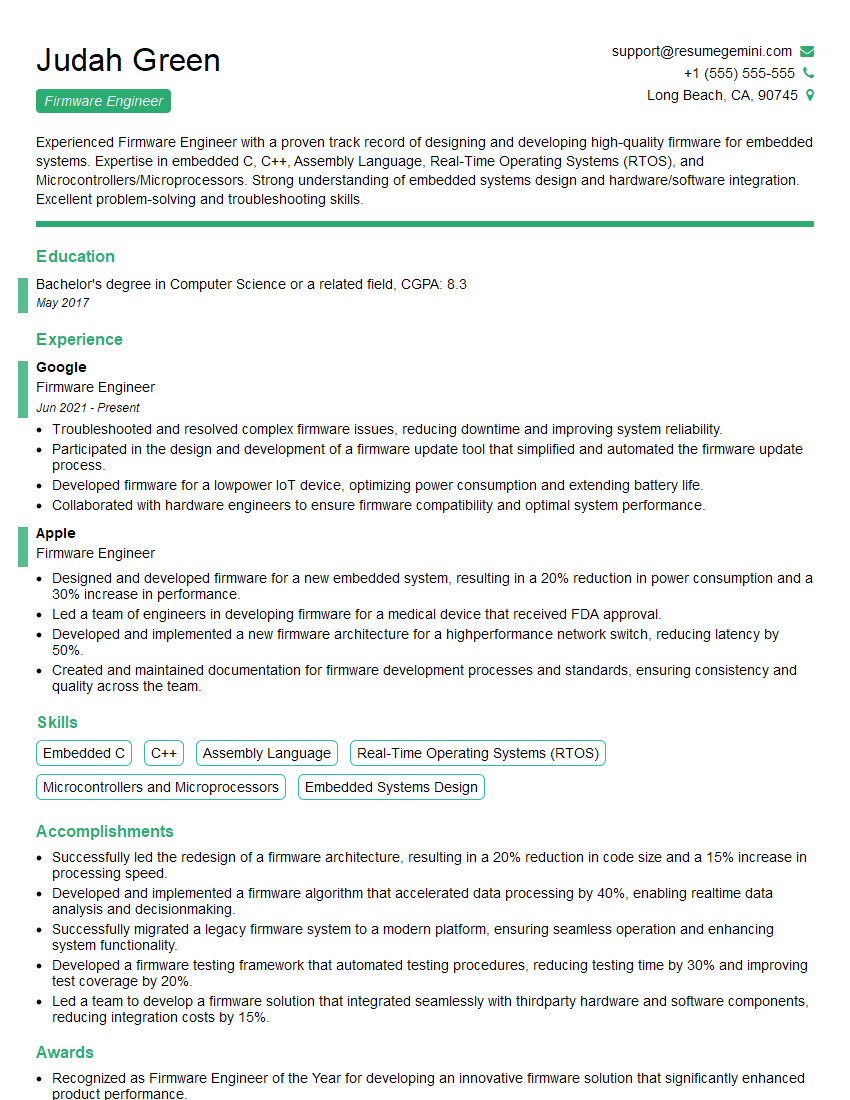
Firmware Engineer Resume Sample

Test Engineer Resume Sample
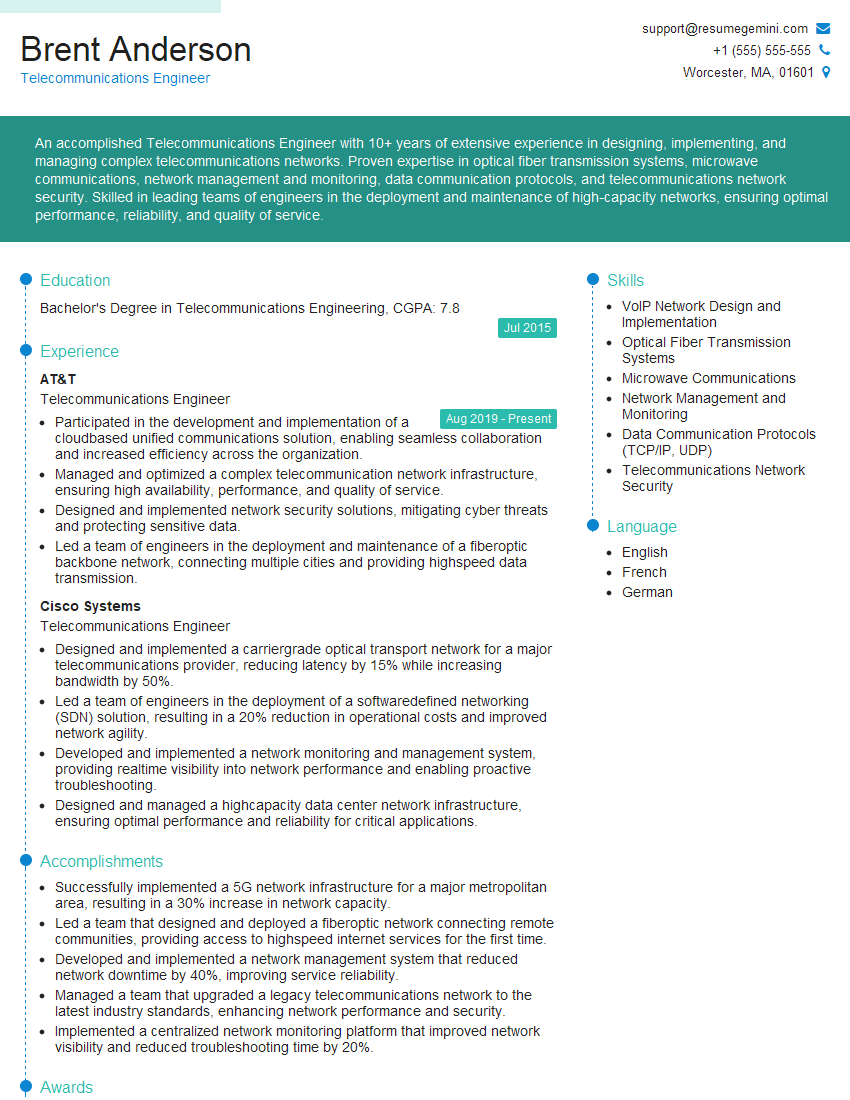
Telecommunications Engineer Resume Sample
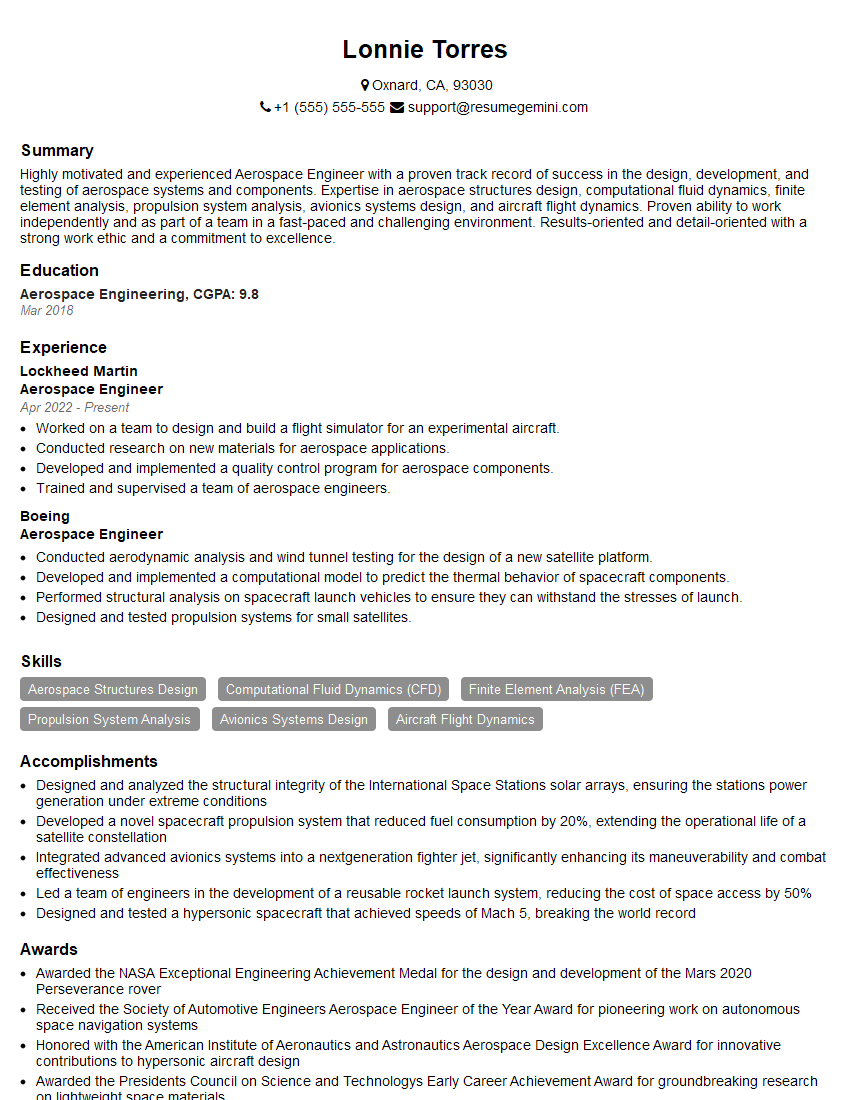
Aerospace Engineer Resume Sample

Hardware Engineer Resume Sample
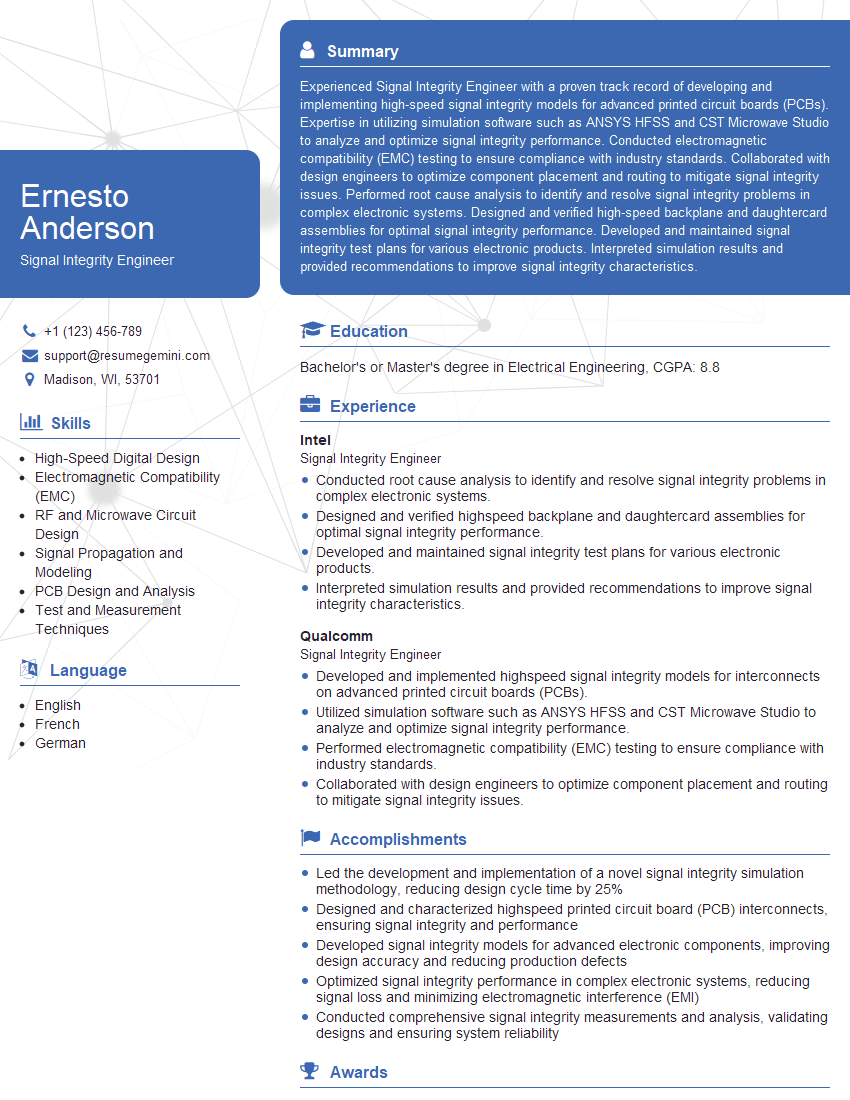
Signal Integrity Engineer Resume Sample
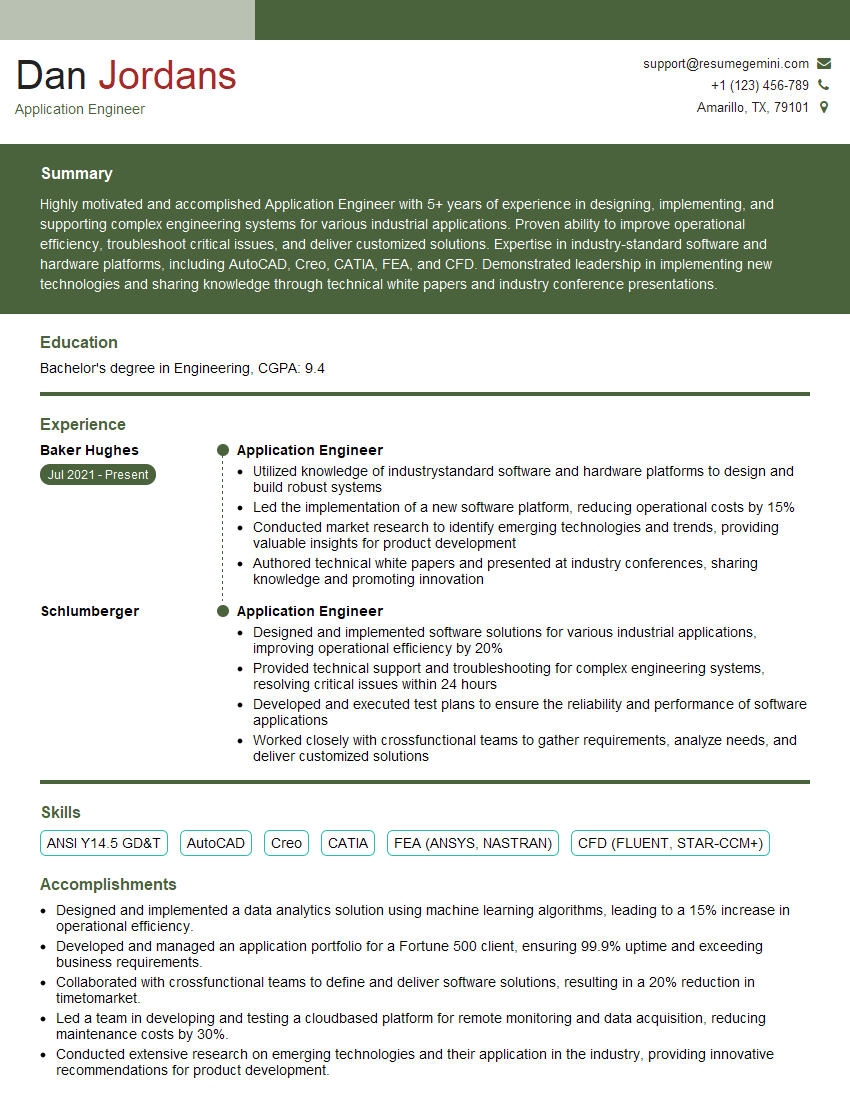
Application Engineer Resume Sample

Control Systems Engineer Resume Sample

Robotics Engineer Resume Sample
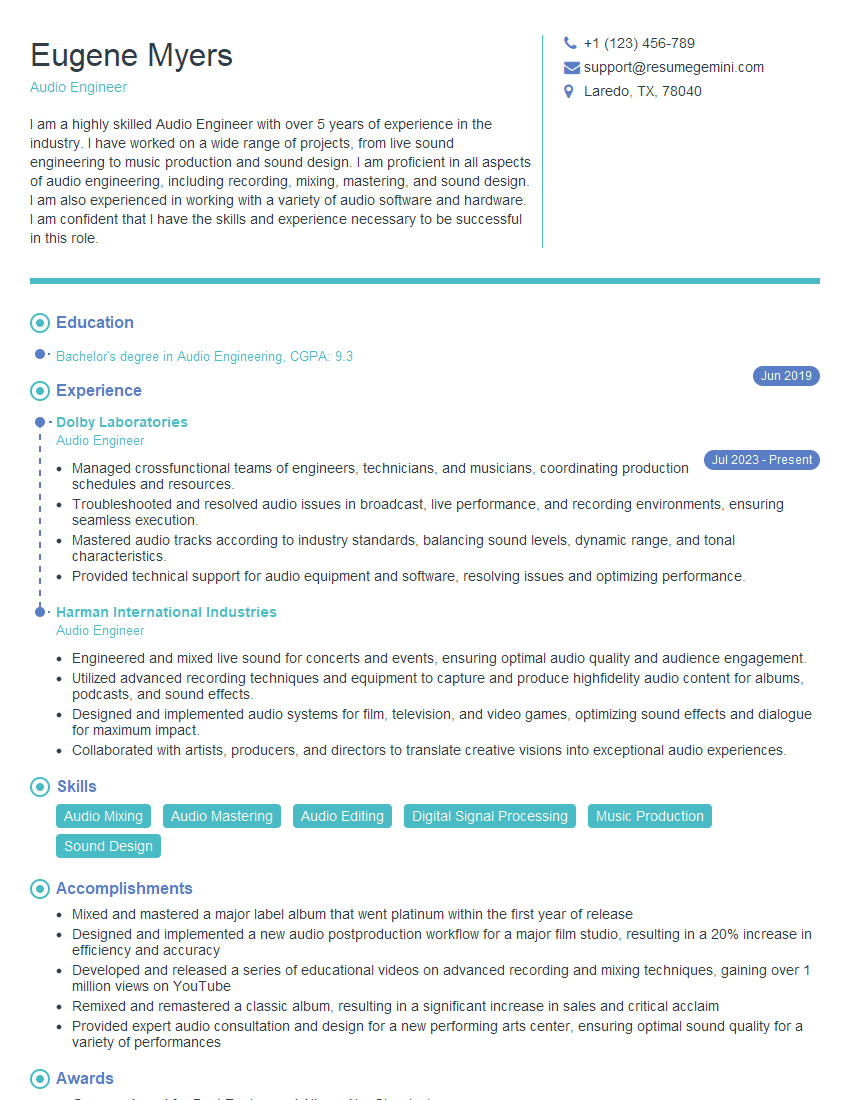
Audio Engineer Resume Sample

Embedded Systems Engineer Resume Sample
Explore more articles
Users Rating of Our Blogs
Share Your Experience
We value your feedback! Please rate our content and share your thoughts (optional).
What Readers Say About Our Blog
Very informative content, great job.
good