The thought of an interview can be nerve-wracking, but the right preparation can make all the difference. Explore this comprehensive guide to Ability to Operate and Maintain Air Defense Systems interview questions and gain the confidence you need to showcase your abilities and secure the role.
Questions Asked in Ability to Operate and Maintain Air Defense Systems Interview
Q 1. Describe your experience operating and maintaining air defense radar systems.
My experience with operating and maintaining air defense radar systems spans over eight years, encompassing various roles from operator to senior maintenance technician. I’ve worked extensively with the AN/TPS-75 and the AN/MPQ-64 Sentinel radar systems. Operating these systems involves understanding their capabilities, limitations, and operational parameters. This includes setting up the system, configuring parameters for different operational scenarios (e.g., search, track, identification), interpreting radar data (including target identification, range, and bearing), and coordinating with other elements of the air defense system. Maintenance involves routine checks, preventative maintenance, troubleshooting malfunctions (using built-in test equipment and diagnostic software), and conducting repairs, often involving intricate electronic components and software.
For example, during a recent exercise, I was responsible for ensuring the operational readiness of the AN/TPS-75. This involved conducting pre-operational checks, verifying signal integrity, and calibrating the system to ensure accurate target acquisition and tracking. During the exercise, a minor software glitch caused an intermittent loss of target track. Using my knowledge of the system’s architecture and software, I quickly isolated the problem to a faulty data processing module and implemented a workaround, restoring full functionality within minutes, preventing mission degradation.
Q 2. Explain the process of troubleshooting a malfunctioning air defense missile launcher.
Troubleshooting a malfunctioning air defense missile launcher is a systematic process requiring a methodical approach. It begins with a thorough assessment of the reported malfunction, gathering as much information as possible from the operator’s logs and reports. This initial assessment helps in prioritizing the troubleshooting steps. The next step involves checking the launcher’s power systems, ensuring that the power supply is stable and within acceptable parameters. If power is confirmed, we move on to examine the missile’s internal systems, checking its status through integrated diagnostic tools and software. These tools usually provide error codes that pinpoint the problem. Mechanical components, such as the launcher’s hydraulic or pneumatic systems, are then inspected for leaks, damage, or wear and tear.
For instance, if the launcher fails to elevate, we would first check the hydraulic system for leaks and then inspect the hydraulic pump and actuators. If the problem persists, we would consult the launcher’s technical manuals and diagnostic charts to identify the specific problem. Following the manual’s instructions, we may isolate a faulty component, replace it, or implement necessary repairs. Throughout the process, strict adherence to safety protocols is paramount. After repairs are completed, rigorous testing is conducted to validate the functionality of the launcher before returning it to operational status.
Q 3. What are the different types of air defense systems you are familiar with?
My familiarity encompasses a wide range of air defense systems, both short-range and long-range. These include:
- Short-Range Air Defense (SHORAD): Systems like the Avenger, equipped with Stinger missiles, offering point defense capabilities.
- Medium-Range Air Defense (MRAD): Systems like the Patriot missile system, capable of engaging a wider range of threats at greater distances.
- Long-Range Air Defense (LRAD): Systems such as the S-300 and THAAD, designed to intercept ballistic missiles and long-range aircraft.
- Radar Systems: I’ve experience with various radar systems, including the AN/TPS-75, AN/MPQ-64 Sentinel, and others used for target acquisition, tracking, and identification.
Each system has unique capabilities, limitations, and operational procedures. Understanding these nuances is critical for effective integration and operation of a comprehensive air defense network.
Q 4. How do you ensure the readiness and reliability of air defense systems?
Ensuring the readiness and reliability of air defense systems is a multi-faceted endeavor that requires a proactive and comprehensive approach. This involves a combination of preventative maintenance, routine inspections, rigorous testing, and continuous training for operators and maintainers. Preventative maintenance is crucial. It includes regular checks of all components, replacing worn parts before failure, and performing calibrations to maintain accuracy. We utilize scheduled maintenance plans, often following manufacturer guidelines, tailored to the specific system’s requirements.
Beyond routine checks, we conduct regular operational readiness exercises to test the responsiveness and effectiveness of the entire system under various simulated scenarios. These exercises help identify any weaknesses or areas needing improvement. Furthermore, we utilize sophisticated diagnostic tools and software to monitor the health and status of the systems continuously, allowing for proactive identification and resolution of potential problems before they escalate into major failures. This proactive approach reduces downtime and ensures the system’s readiness when needed.
Q 5. Describe your experience with air defense system software and communication systems.
My experience with air defense system software and communication systems is substantial. I’m proficient in using various diagnostic software packages to monitor system health, troubleshoot malfunctions, and configure parameters. I’m also familiar with the communication protocols used to exchange data between different components of the air defense system, including radar, command and control centers, and missile launchers. This involves understanding how data is encoded, transmitted, and received, and troubleshooting communication failures.
For example, I’ve been involved in integrating new software updates into radar systems, ensuring seamless transition without compromising system performance. In one instance, a communication link between a radar and a command center failed. By carefully analyzing the communication logs and system diagnostics, I pinpointed the problem to a faulty network switch and successfully restored communication, preventing a significant disruption to operations. This involved understanding network configurations, TCP/IP protocols, and data encryption techniques.
Q 6. Explain the procedures for conducting preventative maintenance on air defense equipment.
Preventative maintenance on air defense equipment follows a strict schedule based on manufacturer recommendations and operational experience. This involves a series of regular inspections and checks, including:
- Visual Inspections: Checking for signs of wear and tear, corrosion, damage, or loose connections.
- Functional Tests: Testing the functionality of each component to ensure it’s working correctly.
- Calibration: Calibrating sensors and other precision instruments to maintain accuracy.
- Cleaning: Cleaning and lubricating moving parts to prevent wear and tear.
- Component Replacement: Replacing components based on their lifespan or if they show signs of degradation.
Detailed records are maintained for every maintenance activity, including date, time, personnel involved, and any issues found. This helps track the equipment’s operational history and identify potential trends or problems. Adhering to a rigorous preventative maintenance schedule significantly reduces the likelihood of unexpected failures and maintains the high operational readiness of the system.
Q 7. How do you interpret and respond to radar data in an air defense environment?
Interpreting and responding to radar data in an air defense environment involves a deep understanding of radar principles, signal processing techniques, and the specific capabilities of the radar system in use. The radar data provides information about the targets’ range, bearing, altitude, speed, and sometimes even type. This raw data needs careful analysis to filter out noise, identify potential threats, and determine appropriate responses.
For example, detecting a fast-moving object with a high altitude and closing trajectory would immediately raise concerns about a potential hostile aircraft or missile. The next step would be to coordinate with other systems, such as identification friend or foe (IFF) systems, to confirm the target’s identity. Once the threat is confirmed, an appropriate response is determined based on the threat’s nature and location and is implemented using the command and control system. This could involve alerting other units, launching interceptors, or employing other defensive measures. Experience plays a significant role in accurately interpreting radar data and making swift, decisive decisions under pressure.
Q 8. Describe your experience with air defense system integration and testing.
Air defense system integration and testing is a complex process requiring meticulous planning and execution. It involves bringing together various components – radars, command and control centers, communication networks, and missile launchers – to ensure they function seamlessly as a unified system. My experience encompasses all phases, from initial system design reviews to final operational testing.
For example, during a recent project involving the integration of a new radar system, I was responsible for developing and executing a comprehensive test plan. This included unit testing of individual components, integration testing of subsystems, and finally, system-level testing to validate the overall performance. We employed both simulated and live-fire exercises to thoroughly assess the system’s capabilities and identify any potential weaknesses before deployment. We used a structured approach, documenting every step of the testing process and using various tools for data analysis and reporting, ultimately ensuring the system met all operational requirements.
Another key aspect of my work has been troubleshooting integration issues. This often involves identifying the root cause of problems, coordinating with various engineering teams, and implementing effective solutions. For instance, we once encountered a communication protocol incompatibility between the radar and the command center. Through detailed analysis of network logs and collaboration with network engineers, we identified the problem and implemented a software patch to resolve the issue.
Q 9. What safety procedures are crucial when operating and maintaining air defense systems?
Safety is paramount when operating and maintaining air defense systems. A lapse in safety procedures can have catastrophic consequences. Our protocols emphasize a layered approach to safety, encompassing strict adherence to operational procedures, rigorous training, and the implementation of robust safety mechanisms.
- Lockout/Tagout Procedures: Before any maintenance is performed on a system component, a lockout/tagout procedure must be followed to prevent accidental activation. This involves physically locking out power and other sources of energy.
- Personal Protective Equipment (PPE): Appropriate PPE, including eye protection, hearing protection, and specialized clothing, is mandatory during all operations and maintenance tasks.
- Emergency Shutdown Procedures: Clearly defined emergency shutdown procedures are crucial in the event of a malfunction or unexpected event. Personnel must be thoroughly trained in these procedures.
- Environmental Safety: Handling of hazardous materials, such as propellants and explosives, requires stringent adherence to environmental regulations and safety guidelines.
- Regular Inspections and Maintenance: Preventative maintenance is key. Regular inspections of equipment and systems help identify potential hazards before they become critical issues.
Imagine a scenario where a technician is working on a missile launcher. Failure to adhere to lockout/tagout procedures could result in the accidental launch of a missile, with potentially devastating outcomes. That’s why we place such strong emphasis on following each step precisely.
Q 10. How do you handle emergency situations during air defense system operation?
Handling emergency situations demands quick thinking, decisive action, and a thorough understanding of the system’s capabilities and limitations. Our response is guided by established protocols and involves a combination of immediate actions and longer-term remedial measures.
For instance, if a radar system fails during an operation, our immediate response would involve switching to backup systems, if available. Simultaneously, a fault diagnosis team would be deployed to identify and rectify the problem. Effective communication is paramount during such events; we maintain constant communication with higher command to provide updates and receive necessary guidance. Depending on the nature of the emergency, we might also involve specialized maintenance teams or external support.
In another instance, a software glitch might trigger a false alarm. Our established procedures would require a thorough review of sensor data and system logs to determine if there is a genuine threat. False alarms must be addressed swiftly and effectively to prevent unnecessary stress on the system and avoid misallocation of resources. Regular drills and simulations help prepare the team to handle such situations calmly and efficiently.
Q 11. Explain your understanding of air defense system network architecture.
The network architecture of a modern air defense system is typically a layered and distributed system designed for resilience and redundancy. It integrates various sensors, command and control centers, and weapon systems through a sophisticated network infrastructure.
At the lowest level, individual sensors (radars, early warning systems) collect and process data. This data is then transmitted to a command and control center through a secure communication network, often employing multiple redundant paths. This command and control center fuses the data from multiple sources, providing a comprehensive air picture. The center then assesses threats and assigns targets to appropriate weapon systems, which communicate through a similar secure network infrastructure to receive targeting information. This architecture uses various protocols and encryption methods to ensure data security and integrity.
Think of it as a layered defense, much like a castle with multiple layers of walls and defenses. Each layer is designed to withstand attacks and provide redundancy. This distributed architecture enhances system survivability; even if one part of the network is compromised, the system can still function to a certain degree thanks to the redundancy and resilience built into the design.
Q 12. Describe your experience with different types of missile systems and their capabilities.
My experience encompasses a variety of missile systems, each with unique capabilities and limitations. These range from short-range, point-defense systems to longer-range, surface-to-air missiles (SAMs).
- Short-Range Systems: These are designed to protect specific assets, such as military bases or ships, from close-range threats like cruise missiles or aircraft. They typically have a shorter range and are characterized by their rapid response time and high maneuverability.
- Medium-Range SAMs: Offer a balance between range and maneuverability. They are capable of engaging targets at longer ranges than short-range systems but may have less maneuverability.
- Long-Range SAMs: These are designed to intercept targets at much greater distances. They offer extended range but often have slower response times and less agility.
For example, I’ve worked with systems utilizing infrared seekers, which track the heat signature of the target, and radar-guided missiles, which rely on radar signals to guide them to their target. Each system has its own strengths and weaknesses; selecting the appropriate missile system depends on the specific threat and the operational environment. Understanding these nuances is critical for effective air defense.
Q 13. How do you coordinate with other units during air defense operations?
Coordination with other units is critical for successful air defense operations. This typically involves seamless information sharing and adherence to established command and control procedures. We utilize various communication channels, including secure radio networks and data links, to exchange real-time information regarding threat assessments, target assignments, and friendly forces’ locations.
In a typical scenario, we might coordinate with early warning systems to gain early notification of incoming threats. We’d then share this information with fighter squadrons, providing them with the necessary data to intercept the threats. Coordination with friendly air defenses in neighboring sectors is also crucial to avoid friendly fire incidents and ensure comprehensive coverage. This requires using standardized communication protocols and procedures to ensure clarity and prevent misunderstandings. Regular joint exercises and training help build interoperability and strengthen coordination between various units.
Imagine a situation with multiple air defense units responsible for protecting a large area. Without proper coordination, targets could slip through the gaps, resulting in a compromised defense. Hence, the importance of seamless communication and collaboration can’t be overstated.
Q 14. What are the key performance indicators (KPIs) for air defense systems?
Key Performance Indicators (KPIs) for air defense systems are crucial for evaluating their effectiveness and identifying areas for improvement. These metrics vary depending on the specific system and operational requirements, but some common KPIs include:
- Probability of Kill (Pk): The likelihood of successfully destroying a target. This is a crucial indicator of the system’s effectiveness.
- Reaction Time: The time it takes for the system to detect, identify, and engage a threat. A shorter reaction time enhances survivability.
- False Alarm Rate: The frequency of false alarms, which can strain resources and reduce operational effectiveness.
- System Uptime: The percentage of time the system is operational and ready for deployment.
- Mean Time Between Failures (MTBF): The average time between system failures, an indicator of reliability.
- Mean Time To Repair (MTTR): The average time it takes to repair a system failure. A shorter MTTR minimizes downtime.
By regularly tracking and analyzing these KPIs, we can identify trends, assess system performance, and make data-driven decisions to improve operational readiness and effectiveness. For example, a high false alarm rate might indicate a problem with sensor accuracy, prompting an investigation and potential adjustments to system parameters.
Q 15. How do you ensure the accuracy and reliability of air defense system data?
Ensuring the accuracy and reliability of air defense system data is paramount. It’s a multi-faceted process involving rigorous data validation, redundancy, and continuous monitoring. We rely on a combination of techniques to achieve this.
Data Validation: This involves cross-referencing data from multiple sources – radar, communication intercepts, and even satellite imagery – to confirm the validity of each target’s track and characteristics. Inconsistencies trigger further investigation and potentially manual intervention. Think of it like a detective’s work, verifying leads from multiple sources.
Redundancy and Backup Systems: We employ redundant systems and backup power sources. If one sensor fails, others can immediately take over, maintaining the integrity of the overall picture. This is akin to having a spare tire on your car – you don’t hope to need it, but you’re prepared if you do.
Real-time Data Filtering and Anomaly Detection: Sophisticated algorithms filter out noise and false positives from radar returns and other sensor inputs. Anomaly detection systems flag unusual activity that needs further examination, preventing false alarms and enhancing overall accuracy. This automated process allows the human operators to focus on critical situations.
Regular System Calibration and Maintenance: Scheduled calibration and maintenance of all sensors and systems ensure optimal performance and accuracy. Just as a precision instrument needs regular tuning, so do our air defense systems.
Career Expert Tips:
- Ace those interviews! Prepare effectively by reviewing the Top 50 Most Common Interview Questions on ResumeGemini.
- Navigate your job search with confidence! Explore a wide range of Career Tips on ResumeGemini. Learn about common challenges and recommendations to overcome them.
- Craft the perfect resume! Master the Art of Resume Writing with ResumeGemini’s guide. Showcase your unique qualifications and achievements effectively.
- Don’t miss out on holiday savings! Build your dream resume with ResumeGemini’s ATS optimized templates.
Q 16. Describe your experience with air defense system training and documentation.
My experience with air defense system training and documentation is extensive. I’ve participated in both classroom-based and hands-on training exercises involving various systems, from older legacy platforms to cutting-edge technologies.
Classroom Training: This involved theoretical instruction on system architecture, operational procedures, and troubleshooting techniques. We also covered emergency response protocols and safety regulations.
Simulator Training: We frequently utilize high-fidelity simulators to practice complex scenarios, replicating real-world threats and challenges. This allows us to hone our skills in a safe environment and work through potential difficulties without jeopardizing lives or assets. It’s much better to make a mistake in a simulation than in a real-world engagement.
Hands-on Maintenance Training: This provided practical experience in maintaining, repairing, and calibrating the equipment. We worked with technical manuals, schematics, and diagnostic tools to develop a profound understanding of system components and troubleshooting methodology.
Documentation: Accurate and up-to-date documentation is critical. I’ve been directly involved in maintaining, updating, and creating detailed operational and maintenance manuals, including troubleshooting guides, training materials, and emergency procedures.
Q 17. What are the common challenges faced in maintaining air defense systems?
Maintaining air defense systems presents numerous challenges, encompassing technological, logistical, and environmental factors.
Technological Obsolescence: Keeping pace with rapid technological advancements requires continuous upgrades and adaptation. Older systems may require significant effort to maintain, often with scarce spare parts. This is similar to trying to repair an antique car compared to a modern one.
Environmental Factors: Extreme weather conditions, such as high temperatures, humidity, or dust storms, can impact equipment performance and reliability, necessitating specialized maintenance and protection measures.
Logistical Challenges: Spare parts acquisition, transportation, and storage can pose significant logistical hurdles, especially in remote or challenging operational environments. This can involve coordinating with multiple suppliers and managing a complex supply chain.
Personnel Training and Retention: Highly skilled technicians and operators are essential for effective maintenance and operation. Recruiting, training, and retaining qualified personnel is often a challenge.
Cybersecurity Threats: Modern air defense systems are increasingly vulnerable to cyberattacks, requiring robust cybersecurity measures to protect against unauthorized access and disruption.
Q 18. How do you stay updated on the latest advancements in air defense technology?
Staying updated on advancements in air defense technology is crucial. I employ several strategies:
Professional Development Courses and Conferences: I actively participate in industry conferences, workshops, and training courses to stay abreast of emerging trends and technological breakthroughs.
Technical Publications and Journals: I regularly read professional journals and publications focusing on defense technology and air defense systems. This gives me access to cutting-edge research and development.
Vendor Engagement: Maintaining close relationships with air defense system manufacturers and vendors provides access to the latest product information, upgrades, and technical support.
Online Resources and Databases: I leverage online resources, professional networks, and databases to gain insights into new technologies and emerging threats.
Q 19. Describe your experience with air defense system simulation and training tools.
My experience with air defense system simulation and training tools is extensive. We use a variety of tools to enhance training and preparedness.
High-Fidelity Simulators: These provide a highly realistic environment for simulating various threat scenarios, allowing operators to practice responses to realistic threats without real-world risks. The fidelity of these simulations is constantly increasing, providing more realistic training.
Virtual Reality (VR) and Augmented Reality (AR) Tools: Immersive VR and AR technologies are increasingly used to enhance training by creating realistic and engaging learning experiences. These tools allow operators to visualize complex systems and interactions in a new, engaging way.
Computer-Based Training (CBT) Modules: We utilize CBT modules to deliver theoretical instruction and procedural training, providing interactive and adaptive learning experiences. This ensures competency across all team members.
Training exercises using legacy systems: Even older systems are used for familiarization and troubleshooting training. The core principles of operation and maintenance often have similar concepts across generations.
Q 20. Explain your understanding of air defense system command and control protocols.
Air defense system command and control protocols are critical for coordinated and effective operations. They ensure seamless information sharing and efficient resource allocation across different system components and personnel.
My understanding encompasses various aspects:
Data Link Protocols: These protocols dictate how data (target tracks, sensor information, etc.) is exchanged between different sensors, command centers, and weapon systems. This allows for a cohesive picture of the battlespace.
Communication Networks: Secure and reliable communication networks are essential for transmitting information and coordinating actions. These networks must withstand interference and remain functional under duress.
Standard Operating Procedures (SOPs): SOPs define the roles and responsibilities of different personnel, ensuring consistent and efficient command and control. Strict adherence to these procedures is critical for success.
Decision Support Systems: Advanced systems use algorithms and automated tools to aid commanders in making informed decisions based on real-time data analysis. This helps to increase reaction times and improve decision-making processes.
Interoperability: Modern air defense systems are designed for interoperability to work seamlessly with other systems and platforms, sharing information and resources efficiently. This is especially important in coalition operations.
Q 21. How do you manage and prioritize multiple tasks during air defense operations?
Managing and prioritizing multiple tasks during air defense operations requires a structured approach and robust decision-making framework. I use a combination of strategies:
Prioritization Matrix: I utilize a prioritization matrix to assess the urgency and importance of different tasks, focusing on those with the most significant impact on mission success. This helps to quickly sort through the multitude of incoming information and prioritize based on the context of the larger situation.
Threat Assessment: Real-time threat assessment is vital. I must quickly identify and prioritize the most pressing threats based on their capabilities, proximity, and potential damage.
Delegation: Effective delegation of tasks to team members based on their expertise and capabilities is crucial for efficient operations. This allows me to focus on the most critical tasks while ensuring everything is being handled.
Situational Awareness: Maintaining a high level of situational awareness is paramount to making informed decisions and adapting to rapidly changing circumstances. This involves carefully monitoring system performance, sensor data, and communication feeds to ensure nothing crucial is missed.
Communication and Coordination: Clear and timely communication is essential for coordinating actions among different teams and personnel. This could involve providing critical information or relaying orders to other units.
Q 22. Describe your experience with troubleshooting and repairing air defense system hardware.
Troubleshooting and repairing air defense system hardware requires a systematic approach. My experience involves diagnosing malfunctions across various system components, from radar systems and missile launchers to command and control interfaces. This often begins with a thorough assessment of error messages and sensor readings. For instance, if a radar system isn’t acquiring targets, I’d first check for obvious issues like power supply, antenna alignment, and signal integrity. Then, I move to more complex diagnostics, using specialized testing equipment and diagnostic software to pinpoint the problem down to a specific faulty component – be it a malfunctioning power amplifier, a defective signal processor, or a software glitch. Once identified, the repair involves replacing faulty parts, re-calibrating the system, and rigorously testing to ensure functionality is restored. I’ve successfully repaired a variety of failures, including replacing a faulty transmitter in a phased array radar and resolving a software bug affecting target tracking accuracy in a command-and-control system, ultimately restoring the system’s operational capability.
A crucial aspect is meticulous documentation of every step, including the initial problem description, troubleshooting procedures, component replacements, and the final system test results. This is vital for future maintenance and troubleshooting. It also ensures accountability and transparency within the maintenance team.
Q 23. How do you ensure compliance with safety and regulatory standards?
Safety and regulatory compliance are paramount in air defense operations. This involves strict adherence to operational procedures, safety protocols, and relevant national and international regulations. For example, we meticulously follow lockout/tagout procedures when working on high-voltage systems to prevent electrical shocks. Regular safety inspections of equipment and the working environment are crucial, ensuring that all safety devices are functioning correctly and that hazardous materials are handled according to regulations. We also undergo rigorous training on safety procedures and maintain detailed logs of all maintenance activities to ensure traceability. Compliance isn’t just about avoiding accidents; it’s about maintaining the system’s operational reliability and the safety of personnel.
My experience includes working with safety management systems (SMS) that integrate safety into every stage of the operation. This involves risk assessments, hazard identification, and mitigation strategies. The effective implementation of such a system is a crucial aspect of ensuring regulatory compliance and a safe working environment.
Q 24. What is your understanding of air defense system logistics and supply chain management?
Air defense system logistics and supply chain management are critical for maintaining operational readiness. My understanding encompasses the entire process, from procuring spare parts and consumables to managing inventory and ensuring timely delivery. Effective supply chain management involves accurate forecasting of parts demand based on historical data and equipment usage patterns. This includes using inventory management software to track parts, predict future needs, and optimize stock levels to minimize storage costs while ensuring parts availability for repairs. Establishing strong relationships with suppliers is also key to ensure reliable and timely delivery of critical components. Delays in the supply chain can directly impact operational capabilities, so maintaining a robust and efficient system is vital.
I have experience implementing and utilizing Material Requirements Planning (MRP) systems to optimize the inventory and procurement process. This ensures that the right parts are available at the right time, minimizing downtime and maintaining operational readiness.
Q 25. How do you handle conflict resolution within a team during air defense operations?
Conflict resolution within a team during air defense operations requires a calm, professional approach that prioritizes the mission and the safety of all personnel. I believe in fostering open communication and mutual respect. If conflicts arise, my first step is to facilitate a discussion among the involved parties to understand their perspectives and identify the root cause of the disagreement. This involves active listening, avoiding judgment, and focusing on finding common ground. If the conflict persists, I will mediate, suggesting solutions that address all parties’ concerns while prioritizing mission success. Documentation of the conflict resolution process, including the steps taken and the agreed-upon solution, is crucial for future reference and to prevent similar issues from arising.
For instance, during a particularly tense operation, a disagreement arose between the radar operators and missile crew regarding target prioritization. I facilitated a discussion, allowing both teams to explain their perspectives. We ultimately agreed on a clear prioritization protocol that addressed both safety and mission effectiveness. This resolved the conflict and avoided potentially jeopardizing the mission.
Q 26. Describe your experience with data analysis and reporting related to air defense systems.
Data analysis and reporting are crucial for optimizing air defense system performance. My experience involves collecting, analyzing, and interpreting data from various system sensors and logs to identify trends, patterns, and potential issues. This might involve analyzing radar performance metrics, missile launch data, or command-and-control system response times. I utilize data analysis tools and techniques to identify areas for improvement, such as optimizing maintenance schedules, predicting equipment failures, and improving overall system efficiency. Reports based on this analysis are essential for decision-making, resource allocation, and providing evidence-based recommendations for system upgrades or modifications.
For example, I analyzed radar data to identify a recurring pattern of false alarms during specific weather conditions. This analysis led to software modifications that significantly reduced false alarms, improving the system’s overall effectiveness.
Q 27. What is your experience with air defense system cybersecurity measures?
Air defense system cybersecurity is paramount to prevent unauthorized access, data breaches, and system disruptions. My understanding of these measures involves implementing and maintaining robust security protocols, including network segmentation, intrusion detection systems, and access control mechanisms. Regular security audits and vulnerability assessments are crucial to identify and mitigate potential weaknesses. This includes ensuring software is up-to-date with the latest security patches and adhering to strict password management policies. Personnel training on cybersecurity best practices is equally vital, as human error remains a major vulnerability. We also incorporate encryption and data integrity checks to protect sensitive information transmitted and stored within the system.
I’ve actively participated in security audits, identifying and addressing vulnerabilities in network configurations and software applications, contributing directly to enhancing the system’s overall cybersecurity posture.
Q 28. How would you approach improving the efficiency of air defense system maintenance?
Improving the efficiency of air defense system maintenance involves a multi-faceted approach. One key area is predictive maintenance, utilizing data analysis to anticipate potential failures and schedule maintenance proactively, rather than reactively. This reduces downtime and minimizes the need for emergency repairs. Another area involves optimizing maintenance schedules, leveraging historical data to identify optimal maintenance intervals for different system components. Implementing a Computerized Maintenance Management System (CMMS) helps streamline maintenance tasks, track parts inventory, and generate reports to provide insights into system performance and maintenance efficiency. Investing in advanced diagnostic tools and training personnel on the use of these tools can also significantly improve the speed and accuracy of troubleshooting and repairs. Furthermore, streamlining processes and implementing lean manufacturing principles can reduce waste and improve overall efficiency.
For example, I implemented a predictive maintenance program that used sensor data to forecast potential failures in the radar system. This allowed us to proactively schedule repairs during periods of low operational demand, minimizing disruption to the system’s operational capability.
Key Topics to Learn for Ability to Operate and Maintain Air Defense Systems Interview
- System Operation: Understanding the operational procedures of various air defense systems, including radar operation, target acquisition, weapon systems engagement, and communication protocols. Practical application includes simulating scenarios and troubleshooting malfunctions within a system.
- Maintenance Procedures: Proficiency in preventative and corrective maintenance, including diagnostic techniques, component replacement, and system calibration. Practical application involves explaining your experience with specific maintenance tasks and troubleshooting methodologies.
- Technical Troubleshooting: Developing effective problem-solving strategies for identifying and resolving system malfunctions. This includes understanding diagnostic tools, interpreting error codes, and applying systematic troubleshooting approaches.
- Safety Procedures and Regulations: A thorough understanding of all safety regulations and protocols related to the operation and maintenance of air defense systems. Practical application would include describing your adherence to safety protocols and your ability to identify and mitigate potential hazards.
- System Integration: Understanding how different components of the air defense system interact and integrate with other defense systems. Practical application involves describing your experience with system integration and testing.
- Data Analysis and Interpretation: Ability to interpret sensor data, system logs, and performance metrics to identify potential issues and optimize system performance. This involves applying analytical skills to draw conclusions from complex datasets.
- Teamwork and Communication: Effective communication skills are crucial for collaborating with team members and effectively reporting system status and maintenance needs. Practical application involves describing your team collaboration experience and clear communication skills.
Next Steps
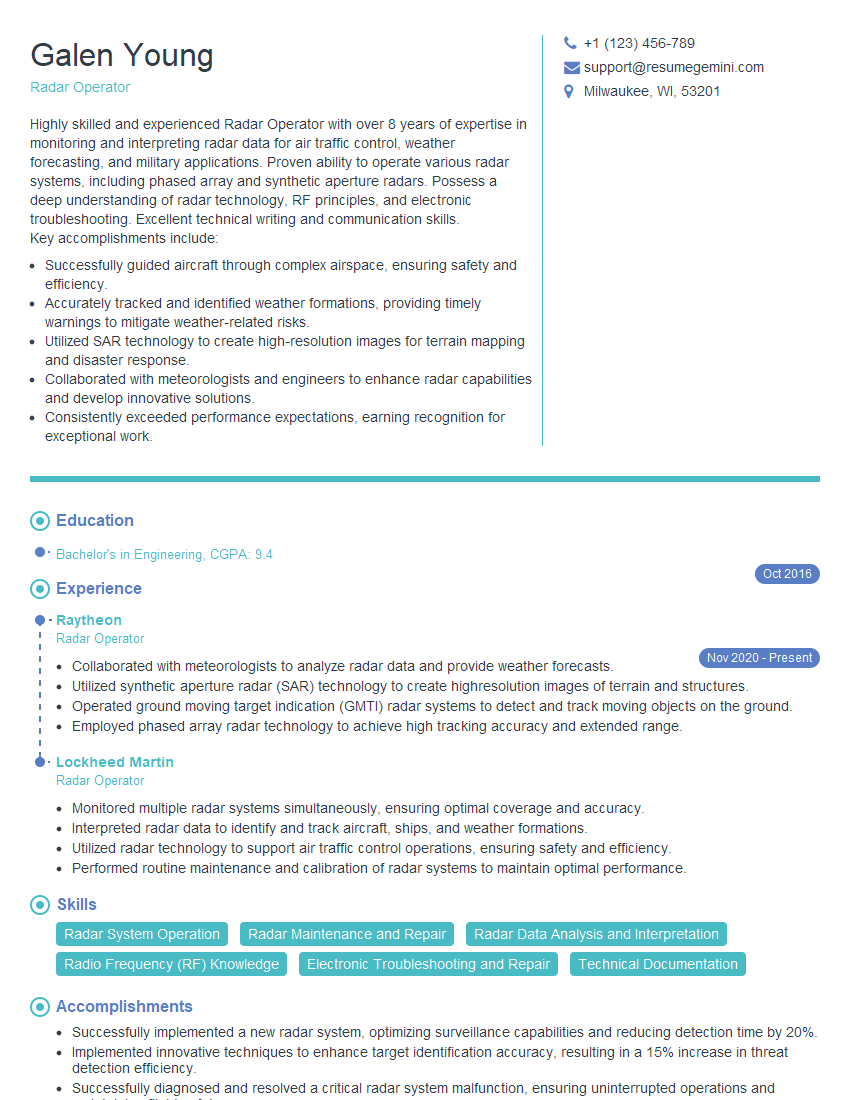
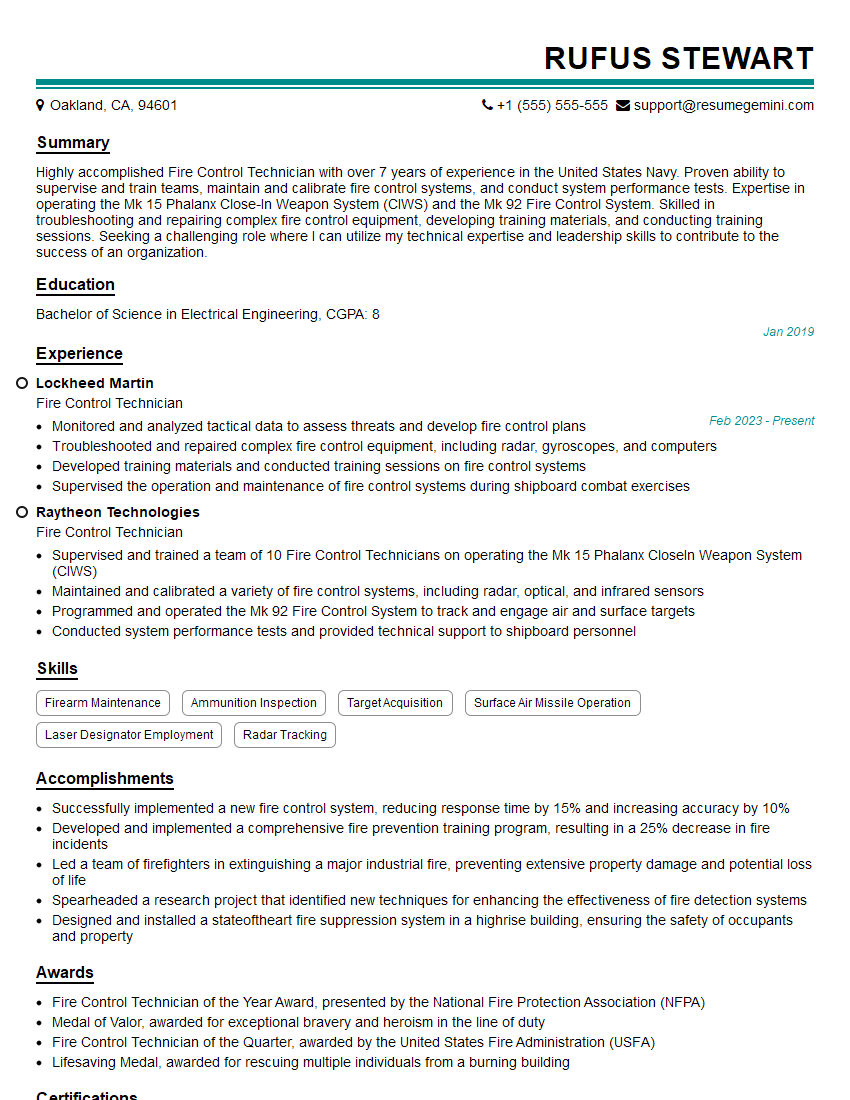
Mastering the ability to operate and maintain air defense systems opens doors to exciting and rewarding career opportunities in a critical field. Your expertise is highly valued, and showcasing it effectively is key to securing your desired role. To significantly boost your job prospects, creating a compelling and ATS-friendly resume is essential. ResumeGemini is a trusted resource that can help you build a professional resume that highlights your skills and experience. ResumeGemini provides examples of resumes tailored to the Ability to Operate and Maintain Air Defense Systems field, giving you a head start in crafting your application materials. Take advantage of these resources to present yourself as the ideal candidate.
Explore more articles
Users Rating of Our Blogs
Share Your Experience
We value your feedback! Please rate our content and share your thoughts (optional).
What Readers Say About Our Blog
Very informative content, great job.
good