Unlock your full potential by mastering the most common Ability to read and understand shipping documents interview questions. This blog offers a deep dive into the critical topics, ensuring you’re not only prepared to answer but to excel. With these insights, you’ll approach your interview with clarity and confidence.
Questions Asked in Ability to read and understand shipping documents Interview
Q 1. What is a Bill of Lading (B/L) and what key information does it contain?
A Bill of Lading (B/L) is a crucial document in shipping; it’s essentially a contract between the shipper and the carrier. Think of it as a receipt for the goods, a contract for their carriage, and a document of title. It details the terms of the shipment and serves as proof of ownership. Key information includes:
- Consignee: The party receiving the goods.
- Consignor: The party shipping the goods.
- Notify Party: A party to be notified upon arrival (often different from the consignee).
- Vessel Name and Voyage Number: Identifies the ship and its specific journey.
- Port of Loading (POL) and Port of Discharge (POD): Where the goods are picked up and delivered.
- Description of Goods: Detailed description including quantity, weight, and packaging.
- Freight Charges: The cost of transportation.
- B/L Number: A unique identifier for the shipment.
For example, imagine shipping a container of shoes from Vietnam to the US. The B/L would detail the shipper (the shoe factory), the receiver (a US retailer), the vessel details, the number of containers, the shoe description, and all relevant costs and payment terms. Without a properly completed B/L, the goods might not clear customs or be delivered correctly.
Q 2. Explain the difference between a commercial invoice and a proforma invoice.
Both commercial and proforma invoices are documents related to the sale of goods, but they serve very different purposes. A commercial invoice is a formal invoice used for customs clearance and financial transactions. It’s a legally binding document that confirms the sale and details the goods’ description, quantity, price, payment terms, and other relevant information for international trade. It’s the official invoice used by customs authorities to assess duties and taxes.
A proforma invoice, on the other hand, is a preliminary invoice. It’s usually issued before shipment and serves as a quote or estimate for the buyer. It provides details of the goods but isn’t a legally binding document for payment. Proforma invoices are often used to obtain import licenses or letters of credit from buyers before the actual shipment takes place. Think of it as a preview of the commercial invoice.
In essence: The commercial invoice is the final bill; the proforma invoice is a preview.
Q 3. What is an Incoterm, and why are they important in international shipping?
Incoterms® rules (International Commercial Terms) are a set of standardized trade terms published by the International Chamber of Commerce (ICC). They define the responsibilities of the buyer and seller in an international transaction regarding delivery and costs. They clarify who is responsible for what, including costs associated with carriage, insurance, and risk transfer. They are crucial because they prevent misunderstandings and disputes between parties. Common examples include:
- FOB (Free on Board): The seller is responsible for delivering goods to the named port of shipment. Risk transfers to the buyer once the goods are on board the vessel.
- CIF (Cost, Insurance, and Freight): The seller is responsible for delivering goods to the named port of destination, including insurance and freight costs. Risk transfers to the buyer once the goods are on board the vessel.
- DAP (Delivered at Place): The seller is responsible for delivering goods to a named place in the buyer’s country, cleared for import. The risk transfers to the buyer when the goods are at the agreed place of delivery.
Choosing the wrong Incoterm can lead to significant financial losses and contractual disputes. For example, if a seller wrongly assumes the buyer is responsible for insurance under an incorrect Incoterm and the goods are damaged, the seller might be held liable.
Q 4. Describe the process of verifying the accuracy of a packing list.
Verifying a packing list involves a meticulous process to ensure its accuracy reflects the actual contents of the shipment. This is crucial for efficient customs clearance and minimizes potential delays or disputes. The steps typically include:
- Compare the packing list to the commercial invoice: Ensure all items listed on the packing list match the items listed on the commercial invoice in terms of description, quantity, and weight.
- Physical inspection of the goods: Where possible, visually verify that the actual number of packages and their markings correspond to the packing list. Note any discrepancies immediately.
- Weight verification: Compare the declared weights on the packing list to the actual weighed weights if possible. Weight discrepancies may indicate errors in packaging or missing goods.
- Cross-referencing: Compare the packing list information with other relevant documents such as the B/L or other supporting documentation to confirm consistency.
- Documentation of discrepancies: If any discrepancies are found, they need to be documented with detailed notes, and appropriate corrective actions should be taken before shipment.
For example, if the packing list lists 100 boxes but only 98 are physically present, a note needs to be made, and the discrepancy needs to be investigated.
Q 5. How do you identify potential discrepancies or errors in shipping documentation?
Identifying discrepancies in shipping documentation requires a systematic approach. Common discrepancies involve:
- Inconsistencies in quantities or descriptions: Comparing numbers and descriptions across documents (B/L, packing list, invoice) for inconsistencies.
- Missing or incomplete information: Check for missing fields, unclear details or incorrect HS codes.
- Incorrect addresses or contact information: Verify that all addresses and contact information are correct and complete to ensure smooth delivery.
- Mismatched weights or dimensions: Comparing the declared weights and dimensions with the actual measurements or weights.
- Discrepancies in dates: Check the consistency and accuracy of dates mentioned on the documentation.
A practical method is a detailed line-by-line comparison of all shipping documents. Using a checklist helps identify potential issues early. For instance, a discrepancy between the quantity stated on the invoice and the packing list could indicate a potential loss or theft during loading. A missing signature on the B/L is a major problem that needs to be addressed immediately.
Q 6. What are the main sections of a Certificate of Origin (COO)?
A Certificate of Origin (COO) is a document that states the country where the goods originated. It’s crucial for determining tariffs, trade preferences, and compliance with import regulations. The main sections typically include:
- Exporter Information: Details about the company exporting the goods.
- Importer Information: Details about the company importing the goods.
- Product Information: Description of the goods including HS codes and quantity.
- Country of Origin: Clearly states the country where the goods were manufactured.
- Certification Statement: A formal declaration by the exporter confirming the origin of the goods.
- Issuing Authority (if applicable): Some COOs are issued by official chambers of commerce or government agencies.
Imagine exporting textiles from India. The COO would confirm the textiles were produced in India, allowing the importing country to apply appropriate tariffs or trade agreements.
Q 7. Explain the significance of the Harmonized System (HS) code in shipping.
The Harmonized System (HS) code is a standardized system of names and numbers used to classify traded products. It’s crucial for international trade because it’s used by customs authorities worldwide to determine tariffs, track trade statistics, and apply import regulations. Each product is assigned a unique HS code, allowing for consistent classification regardless of the country of origin or destination. Incorrect HS codes lead to delays, penalties, and increased costs.
For example, a slightly different HS code for ‘leather shoes’ versus ‘sports shoes’ might result in different tariffs and significantly impact the overall cost of importing. Accuracy is paramount. Proper HS code research and verification are crucial to avoid problems at customs.
Q 8. What are the implications of incorrect or missing shipping documentation?
Incorrect or missing shipping documentation can lead to significant delays, financial losses, and even legal issues. Think of it like a recipe – if crucial ingredients (documents) are missing or incorrect, the final product (successful delivery) will be compromised.
- Delays: Customs officials might hold the shipment pending verification, causing delays in delivery and impacting deadlines.
- Financial Losses: Holding fees, penalties, and potential damage to goods due to delays can be substantial. Incorrect documentation could also lead to incorrect invoicing and payment disputes.
- Legal Issues: Missing documentation related to hazardous materials, for example, can lead to severe penalties and legal ramifications. Incorrect declaration of goods can result in fines and legal action.
- Reputational Damage: Consistent issues with documentation reflect poorly on a company’s professionalism and reliability, potentially losing clients.
For example, a missing commercial invoice can halt customs clearance, resulting in demurrage charges (storage fees) at the port and angry clients waiting for their goods.
Q 9. How do you handle a situation where shipping documents are missing or incomplete?
Handling missing or incomplete shipping documents requires immediate action and a methodical approach. My first step is to identify precisely what’s missing and contact all relevant parties – the shipper, the consignee, and the freight forwarder. A proactive and collaborative approach is crucial.
- Identify the Gap: Determine exactly which documents are missing or incomplete. This could be the bill of lading, commercial invoice, packing list, or certificates of origin.
- Contact Relevant Parties: Request the missing documents promptly. If the documents are lost, work with the sender to recreate them based on available information.
- Document Communication: Keep a detailed record of all communication regarding the missing documents, including dates, times, and individuals contacted. This is essential for accountability and potential dispute resolution.
- Assess the Risk: Determine the potential impact of the delay. If the delay is critical, explore options such as expedited document delivery or a provisional release from customs (where applicable).
- Implement Corrective Actions: Implement procedures to prevent future recurrences. This could involve better record-keeping, improved communication processes, or additional training for staff.
For example, if a certificate of origin is missing, I’d immediately contact the shipper to request a replacement and inform the customs broker about the situation to minimize delays.
Q 10. What are the key differences between different Incoterms (e.g., FOB, CIF, DDP)?
Incoterms (International Commercial Terms) define the responsibilities of the buyer and seller in an international trade transaction. They clarify who is responsible for costs, risks, and obligations at different stages of the shipping process. Think of them as a clear division of labor and risk in international shipping.
- FOB (Free On Board): The seller’s responsibility ends when the goods are loaded onto the ship at the named port of shipment. The buyer is responsible for all costs and risks from that point onwards.
- CIF (Cost, Insurance, and Freight): The seller pays for the cost of goods, insurance, and freight to the named port of destination. Risk transfers to the buyer once the goods are loaded onto the ship at the port of shipment, but the seller handles the insurance and freight.
- DDP (Delivered Duty Paid): The seller bears all costs and risks until the goods are delivered to the named place of destination. This is the most comprehensive Incoterm for the buyer, leaving them with minimal responsibilities.
For example, with FOB, the seller is not responsible for any damage or loss that occurs after the goods are loaded onto the vessel, unlike CIF or DDP.
Q 11. How do you track a shipment using its tracking number and associated documentation?
Tracking a shipment involves using the tracking number provided by the carrier and cross-referencing it with the shipping documentation. The tracking number usually provides real-time updates on the shipment’s location and status.
- Locate Tracking Number: The tracking number is typically found on the bill of lading, air waybill, or other shipping documents.
- Access Carrier’s Website: Go to the carrier’s website (e.g., FedEx, UPS, DHL) and enter the tracking number.
- Review Tracking Information: The website will display the shipment’s status, location, and estimated delivery time.
- Cross-Reference with Documents: Compare the information provided by the tracking system with details in the shipping documents (e.g., shipment date, origin, destination, contents) to ensure accuracy and identify potential discrepancies.
Discrepancies might indicate a problem that needs immediate attention. For example, if the tracking information shows the shipment is delayed significantly compared to the estimated delivery time on the shipping documents, I would investigate further.
Q 12. How familiar are you with different types of shipping containers (e.g., dry van, reefer)?
I’m very familiar with various types of shipping containers. The choice of container depends greatly on the nature of the goods being shipped.
- Dry Van Containers: Standard containers used for general cargo. They’re enclosed, providing protection from the elements.
- Reefer Containers (Refrigerated): These containers are temperature-controlled, essential for shipping perishable goods like food and pharmaceuticals.
- Open-Top Containers: Have an open top, facilitating the loading of oversized or heavy cargo that cannot be lifted through the standard top opening.
- Flatrack Containers: Similar to open-top, but also lack sidewalls. Ideal for extremely large, heavy, or oddly shaped cargo.
- Tank Containers: Used for transporting liquids and gases in bulk.
Choosing the right container is critical for ensuring the safe and efficient transport of goods. Using a reefer for a non-perishable item would be unnecessary and costly, while using a dry van for liquid cargo would be disastrous.
Q 13. What are your strategies for managing large volumes of shipping documents efficiently?
Managing large volumes of shipping documents efficiently requires a combination of technology and organizational strategies. Think of it like building a well-organized library – you need a system to easily find and retrieve information.
- Document Management System (DMS): Utilize a DMS to store, organize, and retrieve documents electronically. This provides easy access, search functionality, and version control.
- Data Entry Automation: Automate data entry wherever possible, reducing manual effort and errors. Optical Character Recognition (OCR) can be used to extract data from scanned documents.
- Cloud Storage: Cloud-based storage solutions allow for secure access from anywhere and enhance collaboration among team members.
- Regular Audits: Conduct regular audits to ensure accuracy and compliance with regulations. This includes verifying that all required documents are present and up-to-date.
- Workflow Optimization: Optimize the document workflow to minimize processing time and improve efficiency. This could involve streamlining processes and using automated routing.
For example, implementing a DMS with OCR capability would automatically extract key data from invoices, reducing manual data entry and minimizing errors.
Q 14. Explain the process of customs clearance and the required documentation.
Customs clearance is the process of obtaining permission from customs authorities to import or export goods. It’s a critical step in international trade, involving various documents and procedures.
- Prepare Documentation: Gather all necessary documents, which typically include the commercial invoice, packing list, bill of lading, certificate of origin, and any other specific documents required depending on the goods and destination country.
- Submit Entry: Submit the necessary documentation to the customs authorities electronically or physically, depending on the country’s requirements.
- Inspection (If Required): Customs officers may inspect the goods to verify their description and value as declared in the documents. This is often done randomly or based on risk assessment.
- Payment of Duties and Taxes: Pay any applicable import duties, taxes, or other fees.
- Release of Goods: Once all requirements are met, customs authorities will release the goods for delivery.
The specific documents required can vary significantly depending on the type of goods, the country of origin, and the country of destination. For example, importing certain agricultural products often requires phytosanitary certificates to ensure they are free from pests and diseases.
Q 15. How do you ensure compliance with international trade regulations and documentation requirements?
Ensuring compliance with international trade regulations and documentation is paramount. It’s like following a complex recipe to ensure your shipment arrives safely and legally. My approach involves a multi-step process. First, I thoroughly understand the specific regulations governing the origin, destination, and goods involved. This includes knowing the Harmonized System (HS) codes for the products, which are essential for customs classification and tariffs. Second, I meticulously check all documentation against these regulations, verifying accuracy and completeness. This includes reviewing the commercial invoice, packing list, bill of lading, certificate of origin, and any other required certificates or permits. Third, I employ a proactive strategy, regularly updating my knowledge on any changes in regulations through industry publications, government websites, and professional development. For instance, recent changes in Brexit regulations significantly impacted documentation requirements for shipments between the UK and EU, requiring diligent monitoring and adaptation of our processes. Finally, I maintain a comprehensive system for tracking and auditing documentation to ensure consistency and traceability. Any discrepancies or potential issues are flagged immediately for resolution.
Career Expert Tips:
- Ace those interviews! Prepare effectively by reviewing the Top 50 Most Common Interview Questions on ResumeGemini.
- Navigate your job search with confidence! Explore a wide range of Career Tips on ResumeGemini. Learn about common challenges and recommendations to overcome them.
- Craft the perfect resume! Master the Art of Resume Writing with ResumeGemini’s guide. Showcase your unique qualifications and achievements effectively.
- Don’t miss out on holiday savings! Build your dream resume with ResumeGemini’s ATS optimized templates.
Q 16. What is a freight forwarder’s role in shipping documentation?
A freight forwarder acts as a vital intermediary, handling the logistical complexities of international shipping. In terms of documentation, their role is multifaceted. They act as the central hub, collecting and verifying all necessary documents from the shipper, importer, and other stakeholders. They prepare and process the shipping documents, ensuring they are compliant with regulations and accurately reflect the shipment details. This includes arranging the creation of the bill of lading, the most crucial document in international shipping, which acts as a contract of carriage. They also ensure that the appropriate customs documentation is correctly prepared and submitted to customs authorities. Think of them as orchestrators of the paperwork, smoothing the path for a successful shipment. Their expertise saves shippers significant time and effort in navigating the complex world of international trade regulations.
Q 17. How do you identify and resolve discrepancies between shipping documents and actual shipments?
Identifying and resolving discrepancies requires a systematic approach. I begin by comparing the information on each document – the commercial invoice, packing list, and bill of lading – against the physical shipment. This often involves physically checking the goods, verifying quantities, and confirming the descriptions match the documentation. Discrepancies can range from minor typos (e.g., incorrect weight) to more significant issues (e.g., missing goods). For minor discrepancies, I might initiate a simple correction with the shipper or carrier. For more serious issues, I would investigate further, potentially contacting all relevant parties and requesting documentation amendments or supporting evidence. I carefully document all discrepancies and resolutions to ensure accountability and prevent recurrence. A recent example involved a mismatch in the quantity of items listed on the packing list and the actual items in the shipment. Through thorough investigation involving photographs of the shipment and amended documentation from the shipper, we resolved the issue before it impacted customs clearance.
Q 18. What software or systems have you used to manage shipping documentation?
Throughout my career, I’ve utilized various software and systems to manage shipping documentation. This includes enterprise resource planning (ERP) systems such as SAP and Oracle, which provide a centralized platform to manage the entire supply chain, including document management. I’ve also used dedicated transportation management systems (TMS) like Blue Yonder and McLeod, which offer functionalities for creating and tracking shipping documents, automating processes, and generating reports. Furthermore, I’m experienced with cloud-based document management systems, which offer improved accessibility, collaboration, and security. The choice of system depends on the scale of operations and specific needs. For smaller shipments, a simple spreadsheet might suffice for tracking; however, for larger organizations with many shipments, a robust ERP or TMS is essential for efficiency and compliance.
Q 19. Describe your experience with electronic data interchange (EDI) for shipping documents.
Electronic Data Interchange (EDI) is a game-changer in shipping documentation. It enables the electronic exchange of documents between trading partners, eliminating the need for paper-based processes. My experience with EDI has primarily involved using ANSI X12 standards for the transmission of various documents such as purchase orders, invoices, and shipping notices. I’ve worked with EDI systems that integrate seamlessly with our ERP and TMS, automating the document flow and reducing errors. EDI not only streamlines operations but also significantly enhances accuracy and efficiency. For example, EDI has allowed for near real-time tracking of shipments and immediate notification of potential delays or discrepancies, which facilitates proactive problem-solving. The use of EDI is a critical element in achieving greater transparency and cost savings in international trade.
Q 20. How do you prioritize different tasks when dealing with multiple shipments and documents?
Prioritizing tasks when handling multiple shipments and documents requires a structured approach. I typically employ a system that combines urgency and importance. I use a combination of factors to determine priority: urgency (e.g., imminent deadlines, potential delays), impact (e.g., value of the shipment, potential financial consequences of delays), and complexity (e.g., special handling requirements, complex customs regulations). I often use a task management tool, such as Asana or Trello, to visually organize and track tasks, setting deadlines and assigning priorities. A clear understanding of the interdependencies between tasks is essential to ensure efficient workflow. For instance, clearing customs documentation might need to be prioritized before the physical shipment can be released, impacting downstream delivery timelines.
Q 21. What are some common challenges you’ve faced in handling shipping documentation, and how did you overcome them?
One common challenge is dealing with inconsistent or incomplete documentation from suppliers. This can lead to delays in processing and customs clearance. To overcome this, I’ve developed strong relationships with our suppliers, proactively communicating our documentation requirements and providing clear guidelines. Another challenge is navigating complex and ever-changing international regulations. To address this, I maintain a continuous learning approach, staying updated on regulatory changes through professional networks and industry publications. Finally, resolving discrepancies between documents and physical shipments can be time-consuming. Implementing rigorous quality control measures at every stage of the shipping process, combined with clear communication channels between all involved parties, minimizes the occurrence and facilitates quicker resolution of discrepancies.
Q 22. Explain the importance of accurate weight and measurement details in shipping documents.
Accurate weight and measurement details are crucial in shipping because they directly impact several aspects of the logistics process. Incorrect information can lead to significant problems, including increased shipping costs, delays, and even safety hazards.
- Pricing: Shipping carriers base their pricing on the weight and dimensions of the shipment. Inaccurate information can result in underpayment (leading to carrier losses and potential penalties for the shipper) or overpayment (increasing the shipper’s costs unnecessarily).
- Capacity Planning: Carriers need accurate dimensions to ensure proper loading and efficient space utilization in trucks, containers, or aircraft. Overestimation can lead to wasted space, while underestimation can result in rejected shipments or delays in loading.
- Safety and Handling: Correct weight is essential for safe handling and transportation. An incorrectly documented weight might lead to overloading, resulting in structural damage to vehicles or accidents. Dimensions are equally critical; incorrect measurements can lead to unstable stacking and potential damage to goods during transit.
Example: Imagine a pallet of goods declared as weighing 100kg, but actually weighing 150kg. This could cause the vehicle to be overloaded, leading to fines and potential accidents. Conversely, if a shipment is underestimated, the carrier may have to make a second trip to deliver it, increasing their costs and delaying delivery to the customer.
Q 23. How do you ensure the security and confidentiality of shipping documents?
Security and confidentiality of shipping documents are paramount to protect sensitive information and prevent fraud. My approach involves a multi-layered strategy:
- Secure Storage: Physical documents are stored in locked cabinets or secure locations with restricted access. Digital documents are stored on encrypted servers with access control mechanisms, and only authorized personnel can view them.
- Data Encryption: All digital shipping documents are encrypted using industry-standard encryption protocols (like AES-256) to protect against unauthorized access.
- Access Control: A robust access control system is implemented to limit access to shipping documents based on roles and responsibilities. Only authorized employees have access, and their actions are logged for audit trails.
- Regular Audits: Regular security audits are conducted to identify and address vulnerabilities and ensure compliance with relevant data protection regulations (such as GDPR or CCPA).
- Secure Communication Channels: We utilize secure communication channels (e.g., encrypted email or secure file transfer protocol (SFTP)) to transmit sensitive shipping data.
Example: Instead of sending a bill of lading via regular email, we would use a secure file transfer protocol to ensure the document remains confidential and protected throughout its transmission.
Q 24. How familiar are you with different types of transportation modes (sea, air, land)?
I have extensive experience with all major transportation modes – sea, air, and land. My understanding extends beyond just the basic modes; it includes a nuanced understanding of their respective documentation requirements and the specific challenges associated with each.
- Sea Freight: I’m familiar with Bills of Lading (B/L), including various types like straight B/Ls and order B/Ls. I understand the intricacies of containerization, Incoterms (like FOB, CIF, etc.), and the processes involved in port operations and customs clearance.
- Air Freight: I’m experienced with Air Waybills (AWB), understanding their structure and the critical information they contain, including dimensional weights and dangerous goods declarations.
- Land Freight: I’m familiar with the documentation needed for trucking and rail transport. This includes understanding freight bills, delivery receipts, and associated documentation for cross-border shipments.
This knowledge allows me to effectively process and interpret shipping documents regardless of the mode of transport used, ensuring accuracy and compliance.
Q 25. What is your experience with handling dangerous goods documentation?
Handling dangerous goods documentation requires meticulous attention to detail and a thorough understanding of relevant regulations (like IATA, IMDG, and ADR). My experience includes:
- Accurate Classification: I can accurately classify dangerous goods according to the appropriate hazard class and UN number. This is crucial for ensuring correct packaging, labeling, and transportation arrangements.
- Documentation Review: I can thoroughly review shipping documents, including the Shipper’s Declaration for Dangerous Goods, to ensure all required information is present and accurate, and that it complies with all relevant regulations.
- Emergency Response Planning: I have experience working with emergency response plans and procedures related to the transportation of dangerous goods.
- Compliance Management: I understand the importance of staying abreast of evolving regulations related to dangerous goods transport.
Example: I’ve worked with shipments of lithium batteries, carefully reviewing their documentation to ensure compliance with IATA Special Provision A67 and understanding the specific requirements for packaging and labeling.
Q 26. What is the importance of the ‘shipper’ and ‘consignee’ information in shipping documentation?
The ‘shipper’ and ‘consignee’ information is fundamental to shipping documentation as they identify the parties responsible for the goods throughout the shipping process. This information is critical for:
- Liability and Responsibility: Identifying the shipper and consignee establishes responsibility for the goods during transit and clarifies who is liable in case of loss or damage.
- Insurance Claims: Accurate shipper and consignee details are essential for processing insurance claims in case of unforeseen events.
- Customs Clearance: Accurate information is needed for customs authorities to identify the parties involved and properly process the shipment.
- Communication and Tracking: Correct contact details are vital for communication throughout the shipping process, allowing for real-time updates and tracking.
Example: Incorrectly listed consignee details could lead to significant delays as the shipment may be misdirected, or lost entirely, requiring costly recovery measures.
Q 27. How do you deal with a damaged or lost shipment, considering the relevant documentation?
Dealing with damaged or lost shipments involves a systematic approach, heavily reliant on accurate documentation. The process typically includes:
- Damage Assessment: Careful examination of the shipment upon arrival to document the nature and extent of the damage. Photographs and detailed descriptions are crucial.
- Documentation Review: A thorough review of all relevant shipping documents (e.g., B/L, AWB, packing list) to compare the condition upon arrival with the description at the time of shipment.
- Carrier Notification: Prompt notification to the carrier, providing them with detailed documentation, including photographic evidence of the damage or proof of non-delivery.
- Claim Filing: Filing a formal claim with the carrier or the insurer, including all supporting documentation. This often involves completing specific claim forms.
- Negotiation and Resolution: Negotiating with the carrier or insurer to reach a fair resolution, often involving compensation for damages or reimbursement of losses.
Example: If a container arrives with damaged goods, I would photograph the damage, note it on the delivery receipt, and promptly contact the carrier with all the relevant documentation to initiate a damage claim.
Q 28. Describe your experience with auditing shipping documents for accuracy and compliance.
Auditing shipping documents is a critical process to ensure accuracy, compliance, and cost efficiency. My experience encompasses:
- Data Verification: Cross-referencing information across various documents (e.g., comparing weight and dimensions on the packing list, commercial invoice, and B/L).
- Compliance Checks: Ensuring compliance with all relevant regulations, including customs regulations, dangerous goods regulations, and carrier-specific requirements.
- Cost Analysis: Analyzing shipping costs to identify potential areas for savings and improvement. This often involves comparing rates from different carriers and evaluating the efficiency of shipping processes.
- Identifying Discrepancies: Identifying and reporting any discrepancies or inconsistencies between different documents. For example, a mismatch between the declared value and the actual cost of goods.
- Reporting and Recommendations: Preparing detailed audit reports highlighting findings, areas of concern, and recommendations for improvement.
Example: During an audit, I discovered a pattern of inconsistencies in weight declarations, leading to an investigation that uncovered a potential issue with the weighing process at the warehouse. This highlighted the importance of regular audits for identifying operational inefficiencies and potential compliance issues.
Key Topics to Learn for Ability to Read and Understand Shipping Documents Interview
- Bill of Lading (B/L) Interpretation: Understanding the key components of a B/L, including shipper and consignee information, cargo details, terms of trade (Incoterms), and transport details. Practice identifying potential discrepancies or inconsistencies.
- Commercial Invoice Analysis: Deciphering the information contained within a commercial invoice, such as product descriptions, quantities, unit prices, total value, and payment terms. Understand how this relates to the B/L and other shipping documents.
- Packing List Examination: Analyzing packing lists to verify the accurate description, quantity, and packaging of goods. Learn to compare this information against the B/L and commercial invoice to identify any potential issues.
- Incoterms and their Implications: Understanding the various Incoterms (e.g., FOB, CIF, DDP) and their impact on responsibilities, costs, and risk allocation between buyer and seller. This is crucial for interpreting shipping documents correctly.
- Freight Forwarding Documentation: Familiarize yourself with common freight forwarding documentation, such as airway bills (for air freight) and ocean bills of lading. Understand how these documents work together within the shipping process.
- Problem-solving related to discrepancies: Develop your skills in identifying and resolving discrepancies between different shipping documents. Consider scenarios and how you would approach verification and correction.
- Understanding Customs Documentation: Gain familiarity with essential customs documentation, such as import/export declarations, to comprehend the regulatory aspects of international shipping.
Next Steps
Mastering the ability to read and understand shipping documents is vital for career advancement in logistics, international trade, and supply chain management. These skills demonstrate attention to detail, accuracy, and a crucial understanding of global commerce. To significantly increase your chances of landing your dream job, it’s essential to create an ATS-friendly resume that effectively highlights these skills. ResumeGemini is a trusted resource that can help you build a professional resume tailored to your specific experience and target roles. Examples of resumes tailored to showcasing expertise in reading and understanding shipping documents are available within ResumeGemini, providing you with valuable templates and inspiration for your own resume creation.
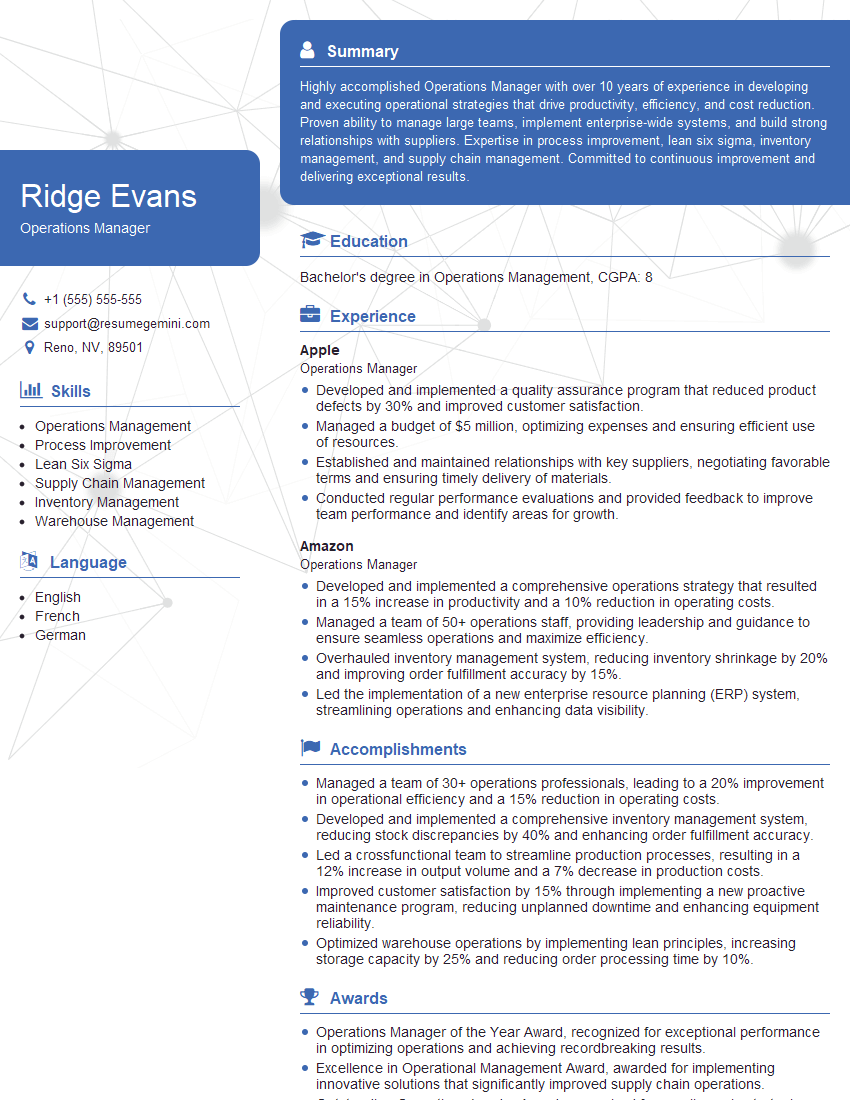
Operations Manager Resume Sample
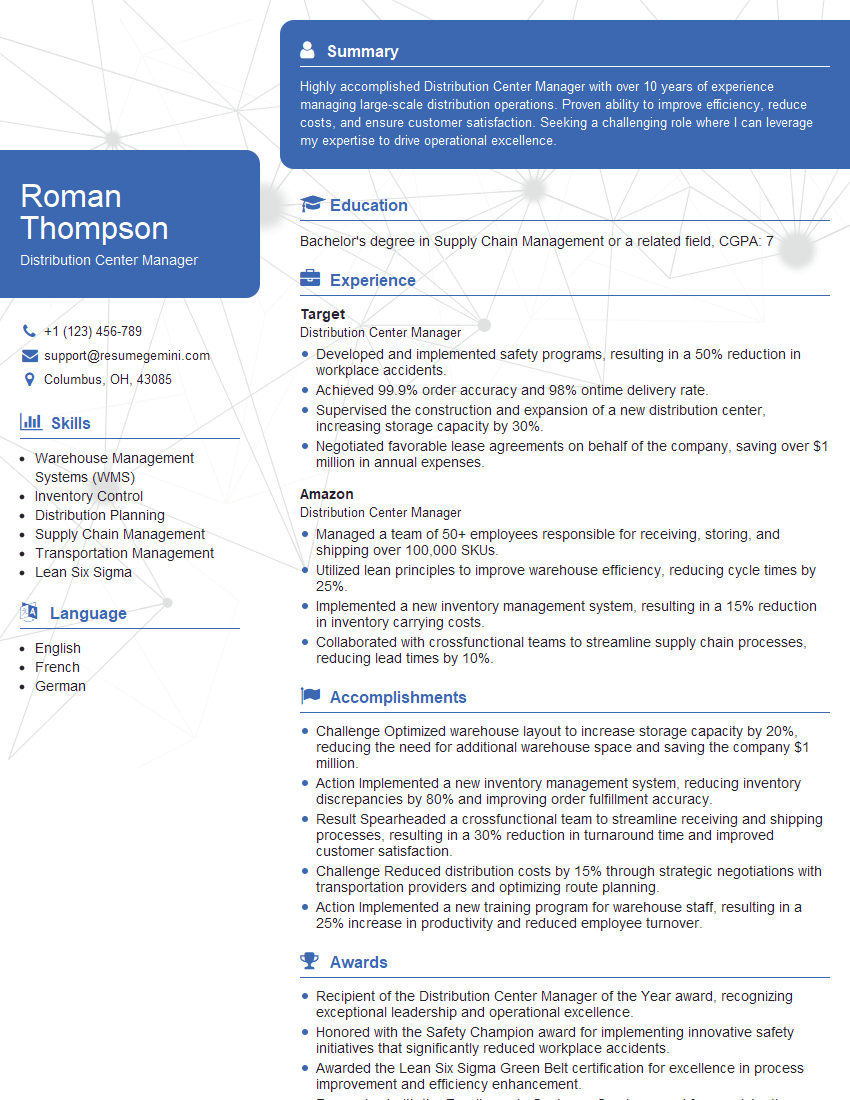
Distribution Center Manager Resume Sample
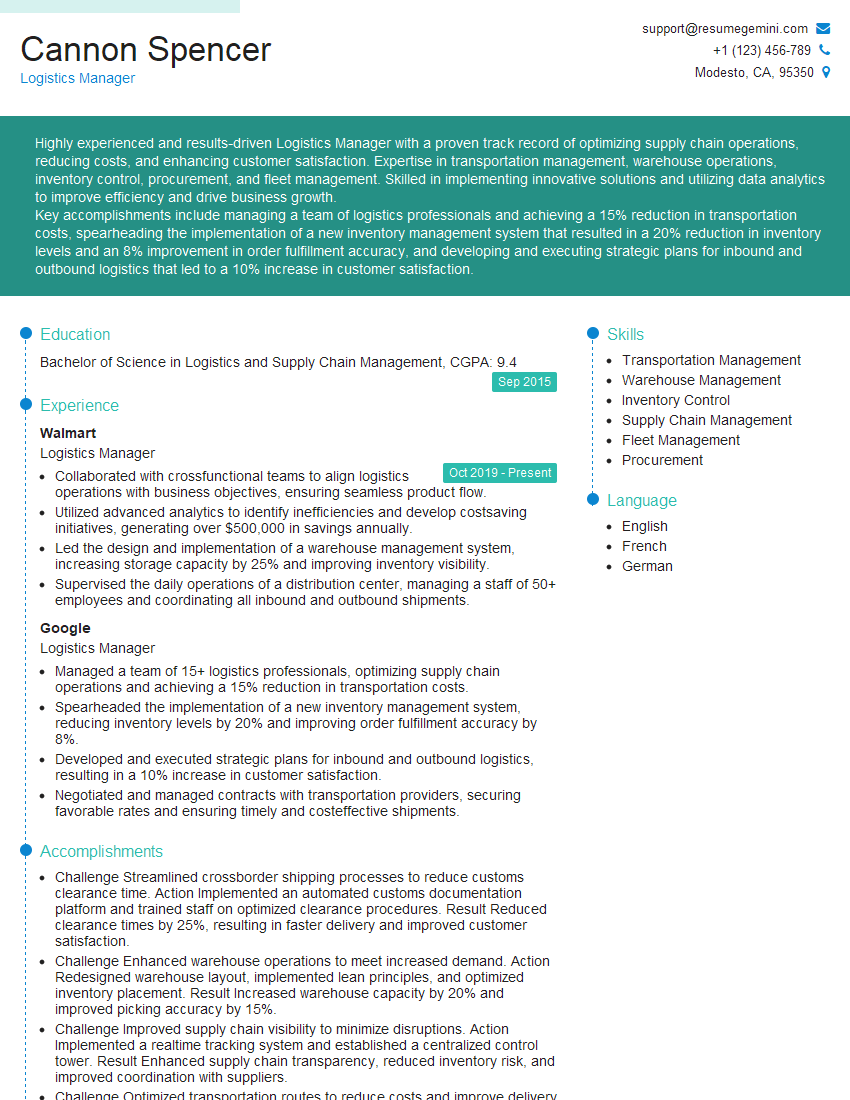
Logistics Manager Resume Sample
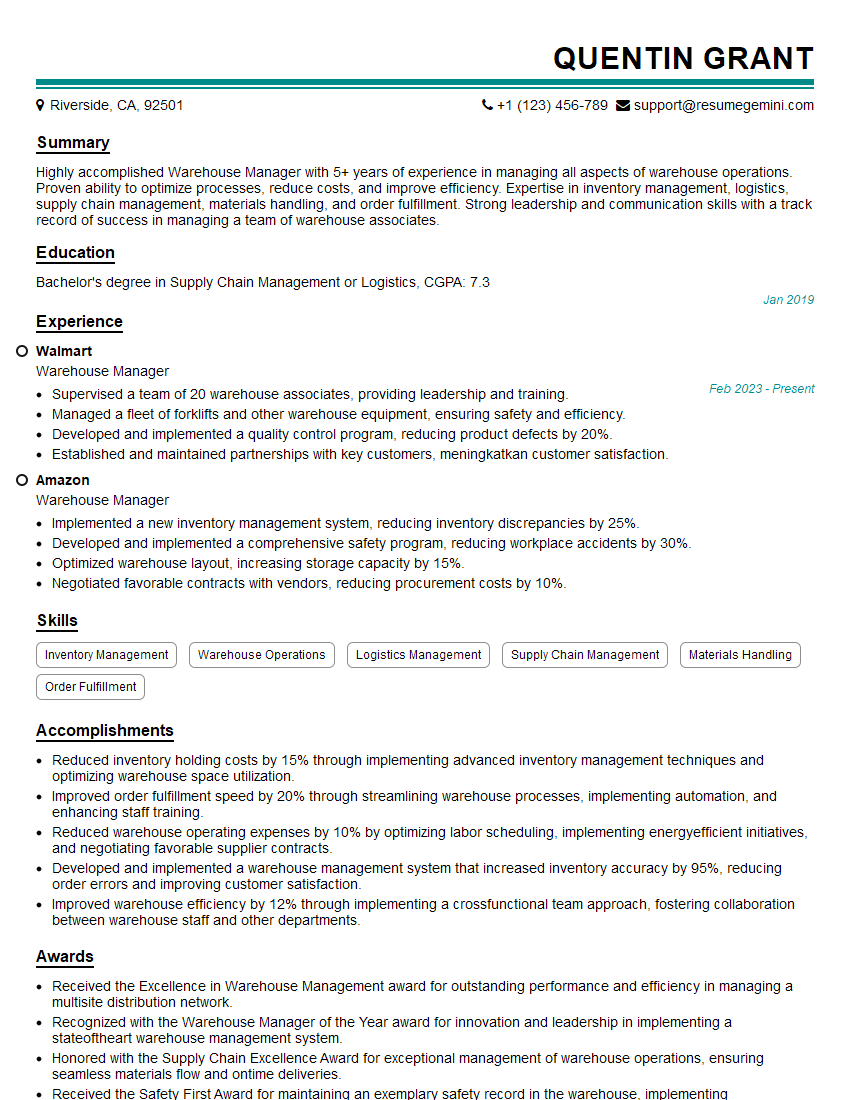
Warehouse Manager Resume Sample
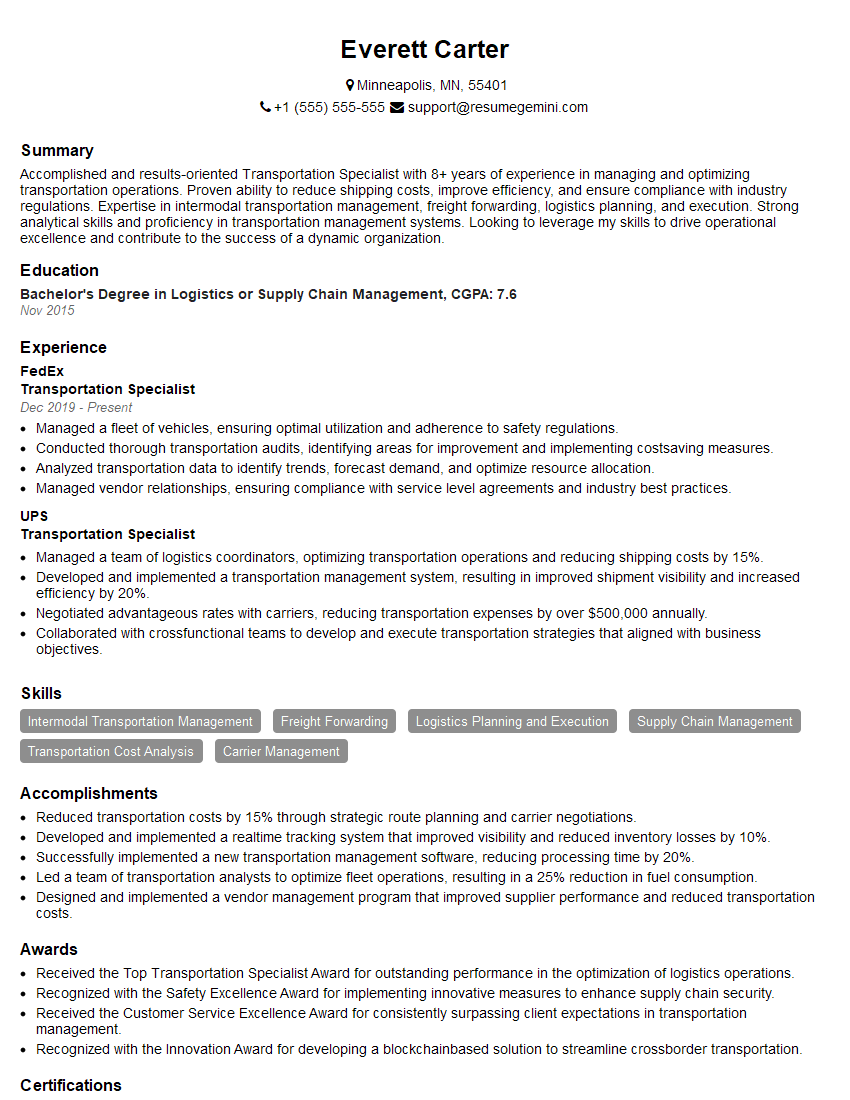
Transportation Specialist Resume Sample
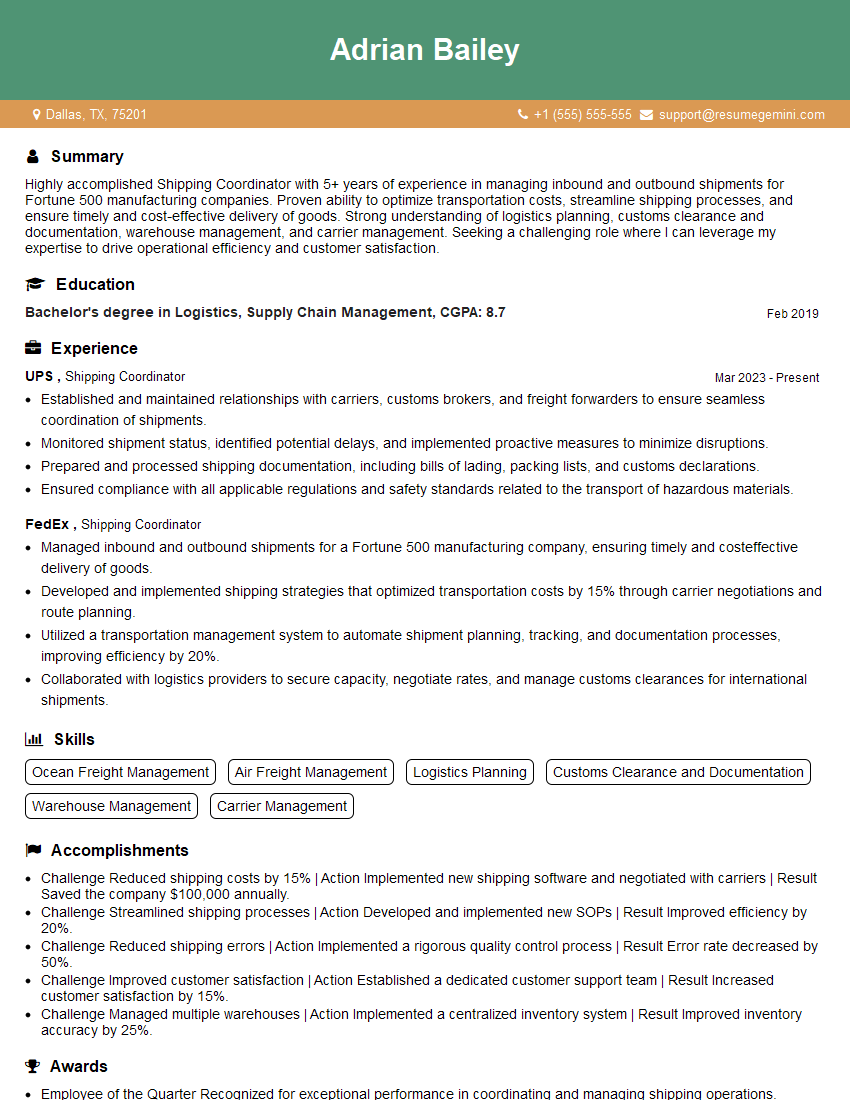
Shipping Coordinator Resume Sample
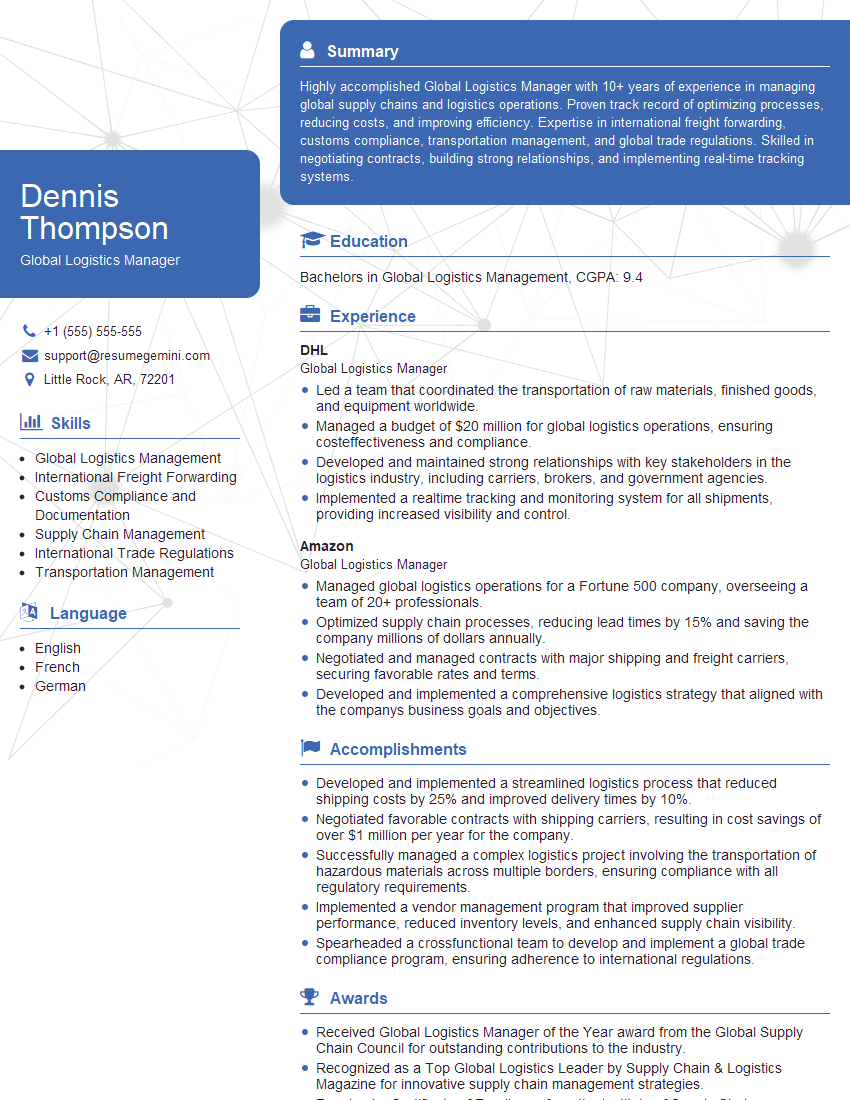
Global Logistics Manager Resume Sample
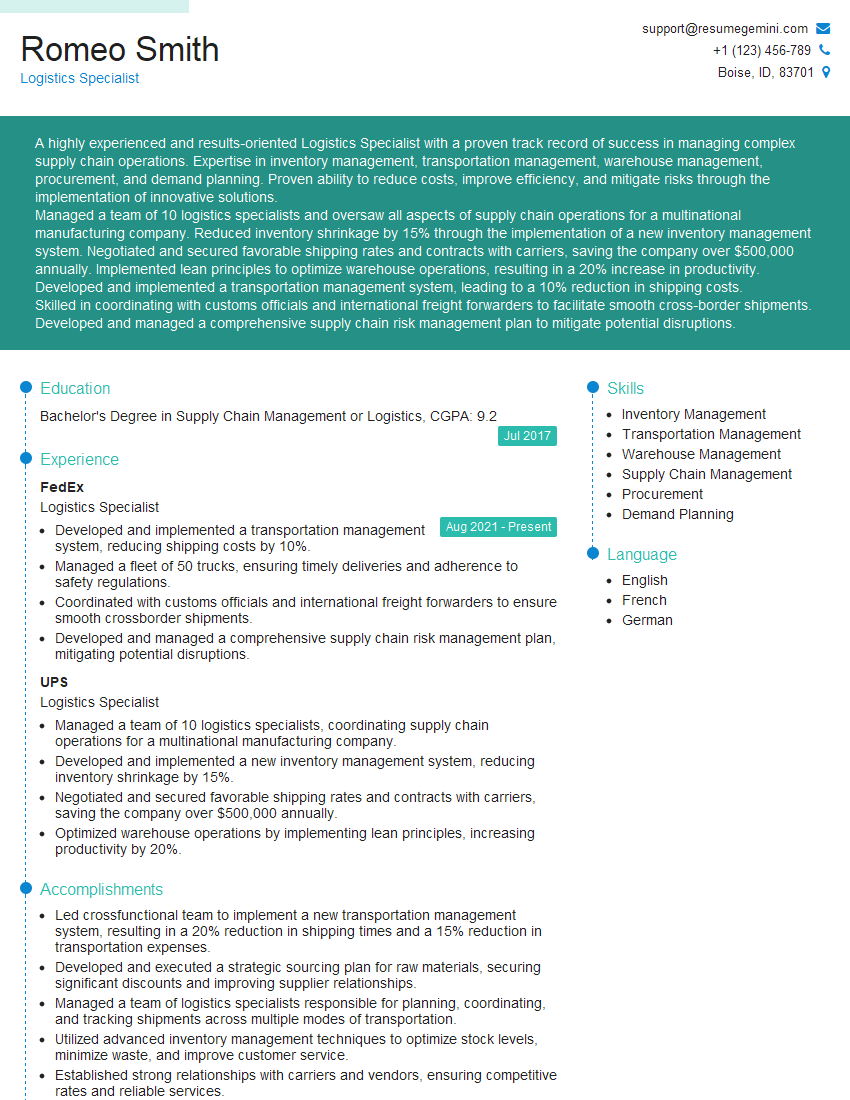
Logistics Specialist Resume Sample
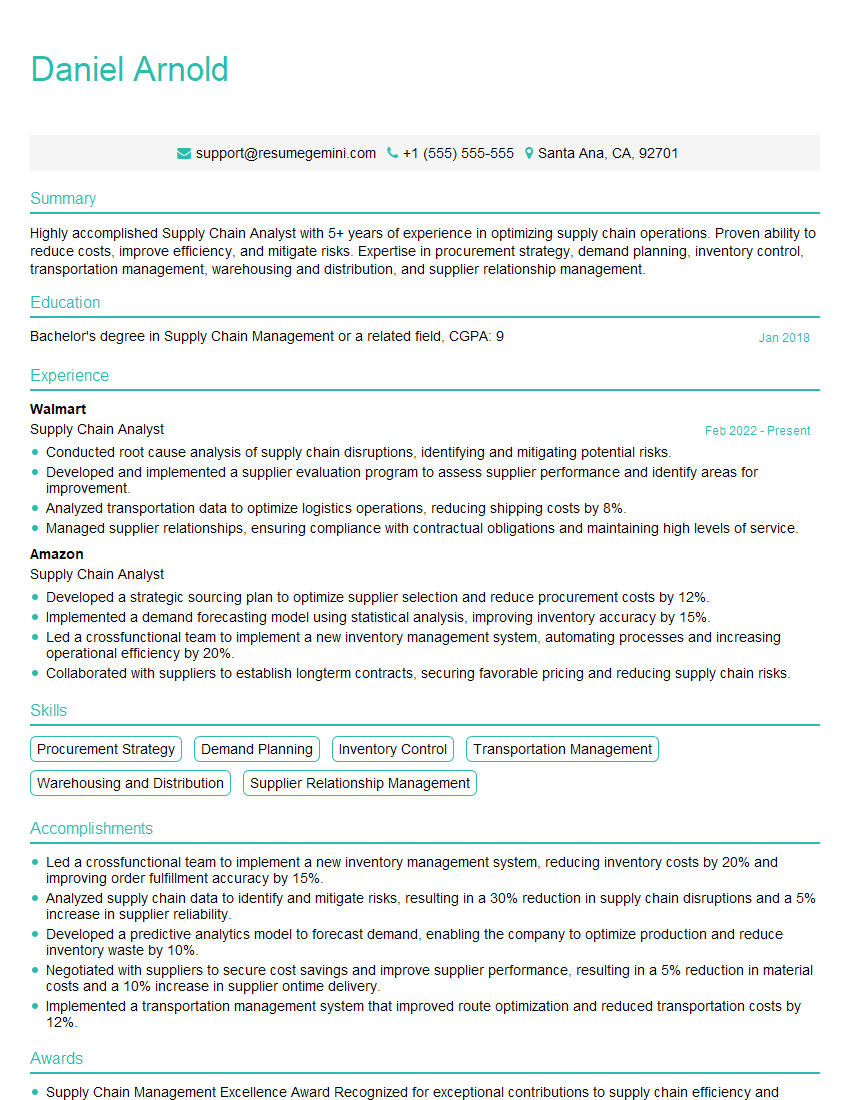
Supply Chain Analyst Resume Sample
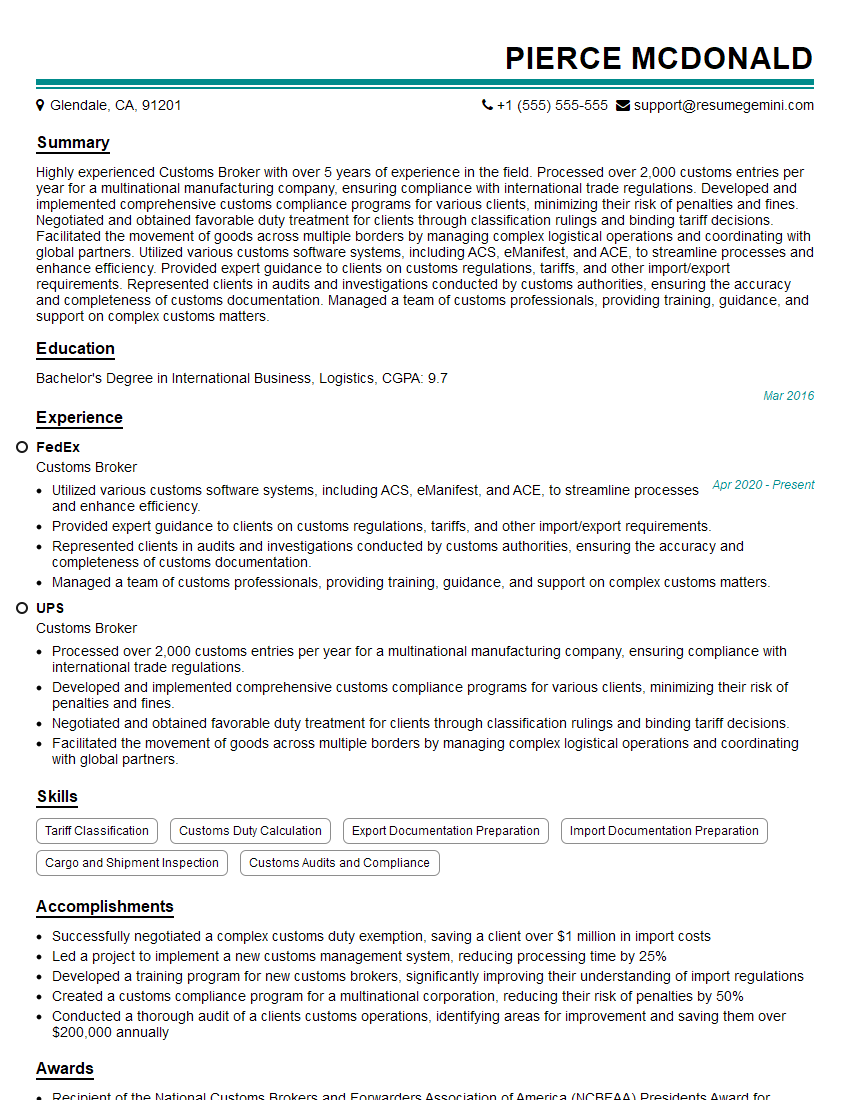
Customs Broker Resume Sample
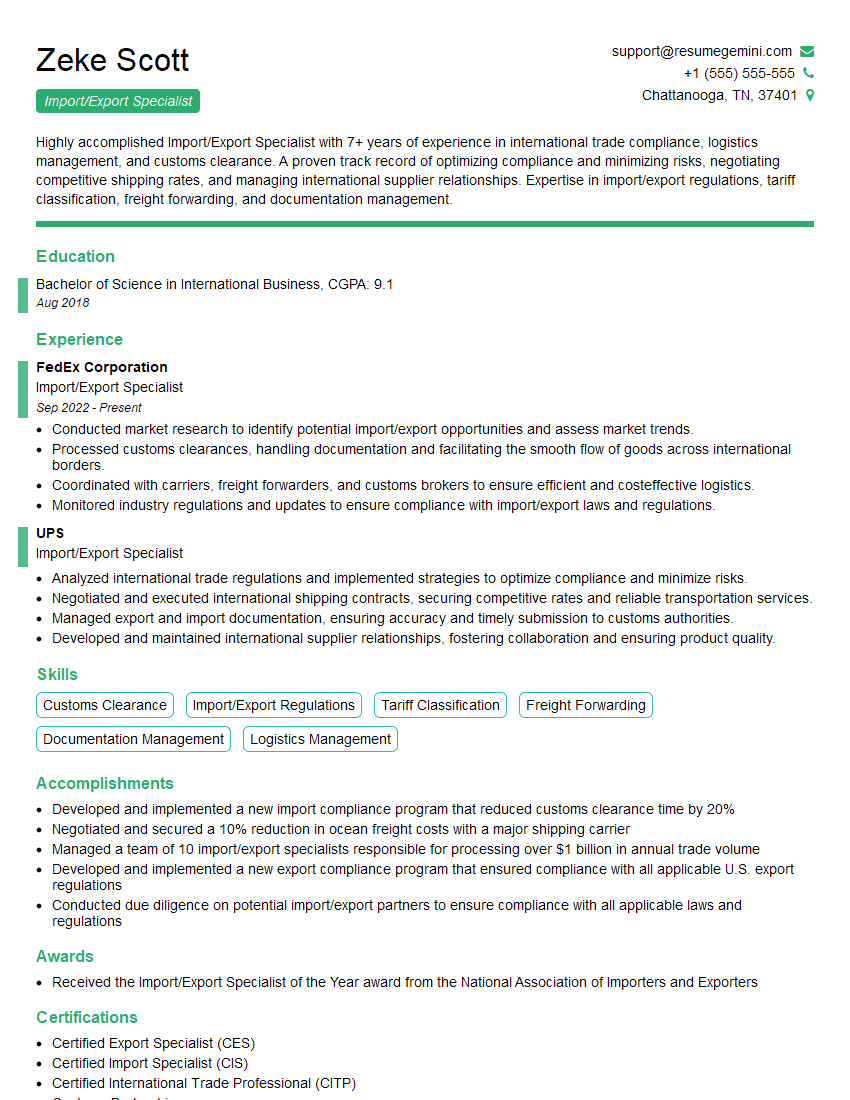
Import/Export Specialist Resume Sample
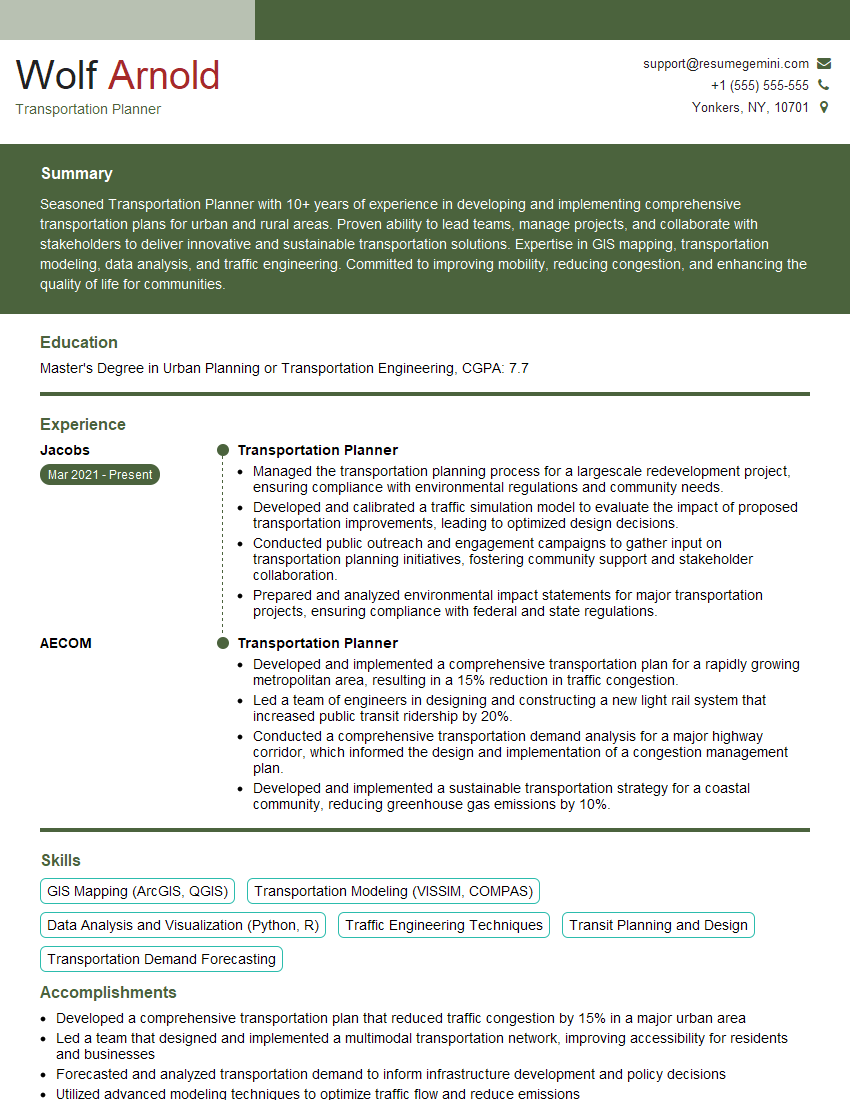
Transportation Planner Resume Sample
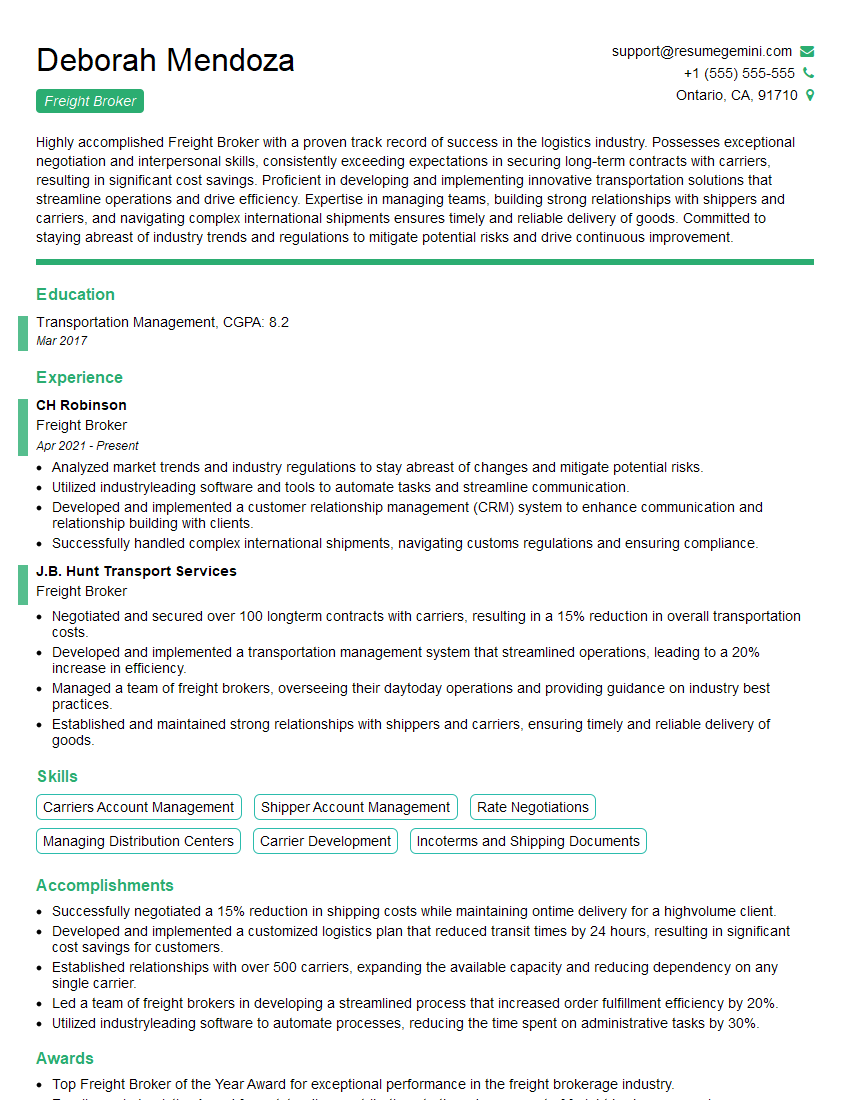
Freight Broker Resume Sample
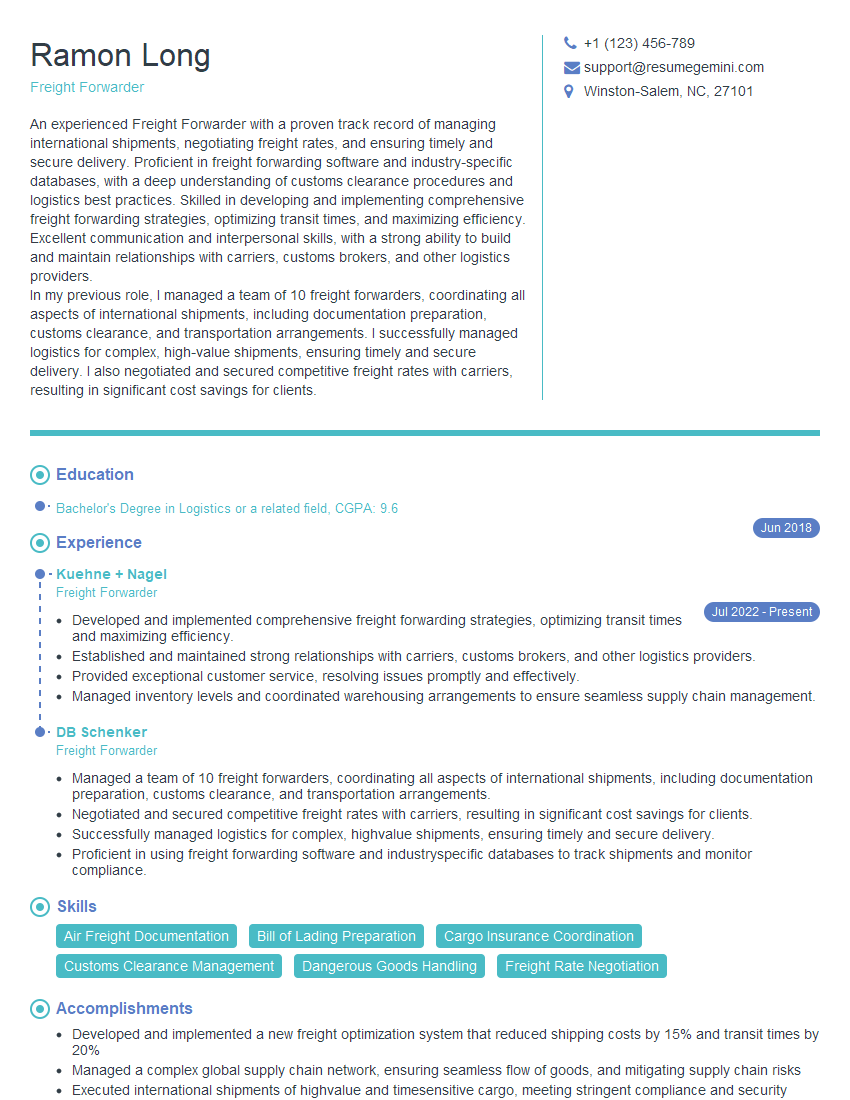
Freight Forwarder Resume Sample
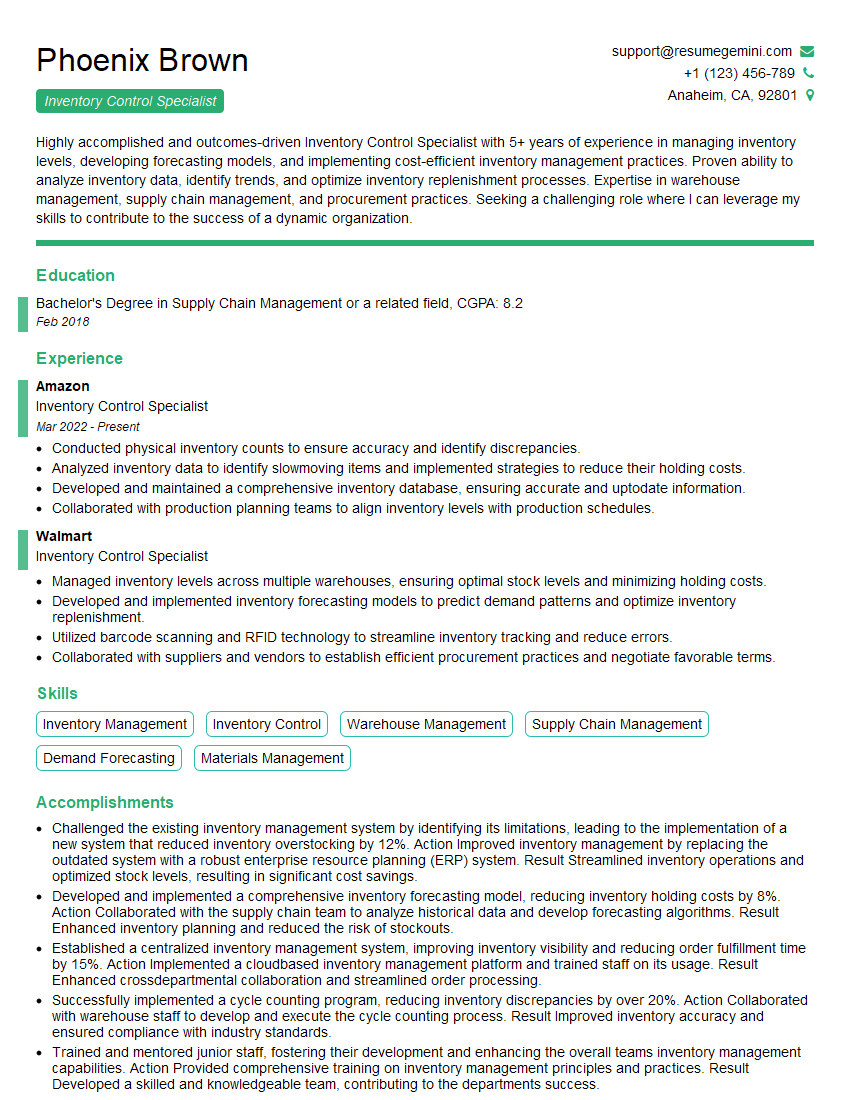
Inventory Control Specialist Resume Sample
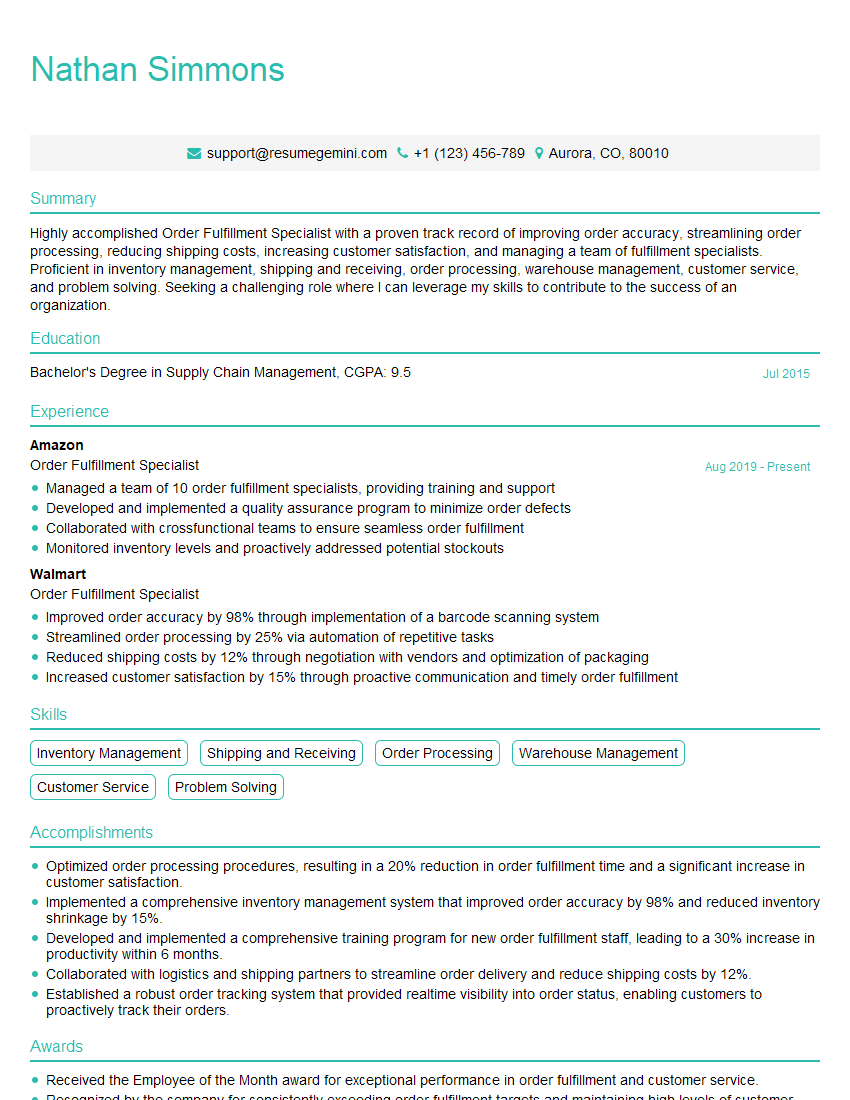
Order Fulfillment Specialist Resume Sample
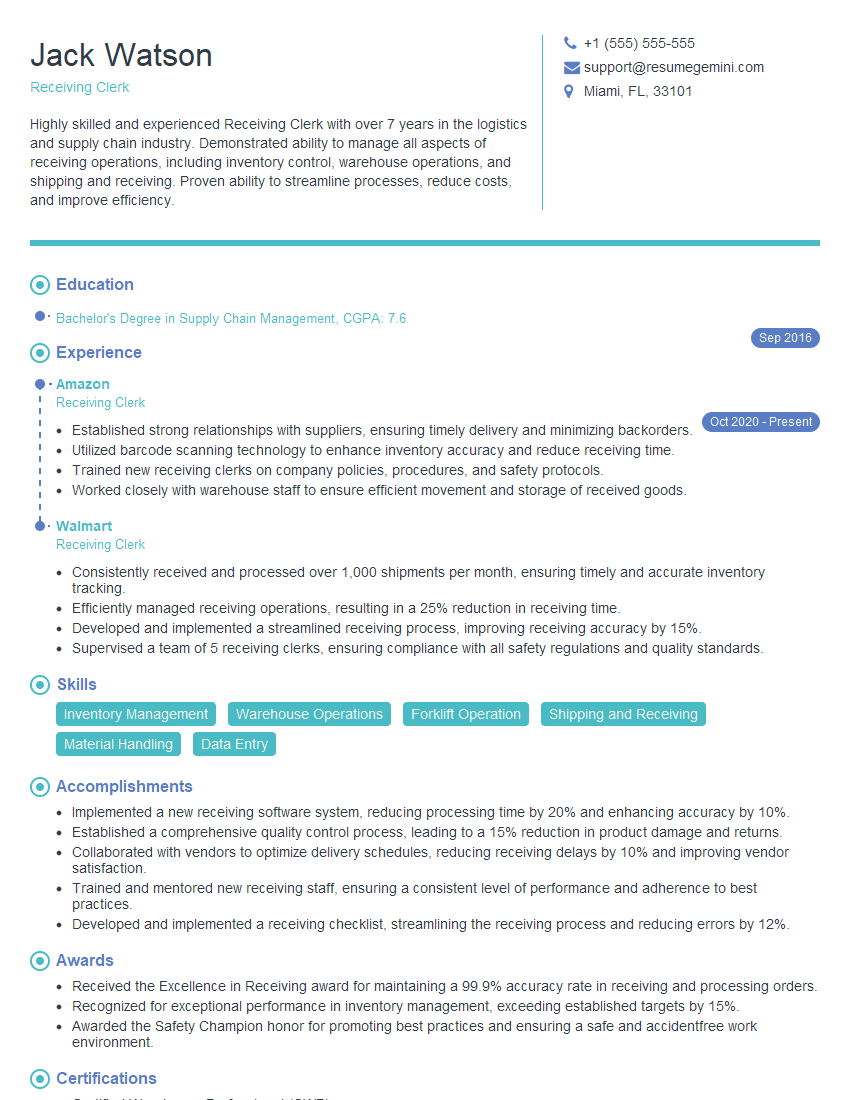
Receiving Clerk Resume Sample
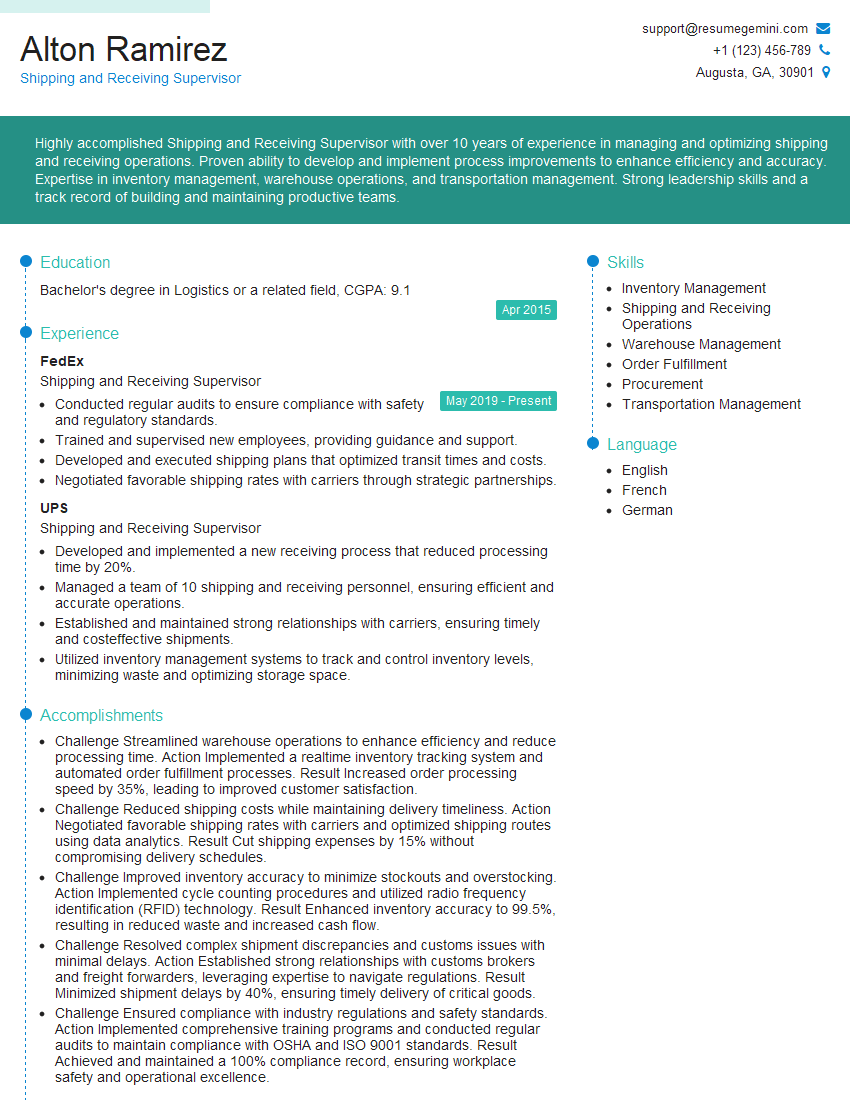
Shipping and Receiving Supervisor Resume Sample
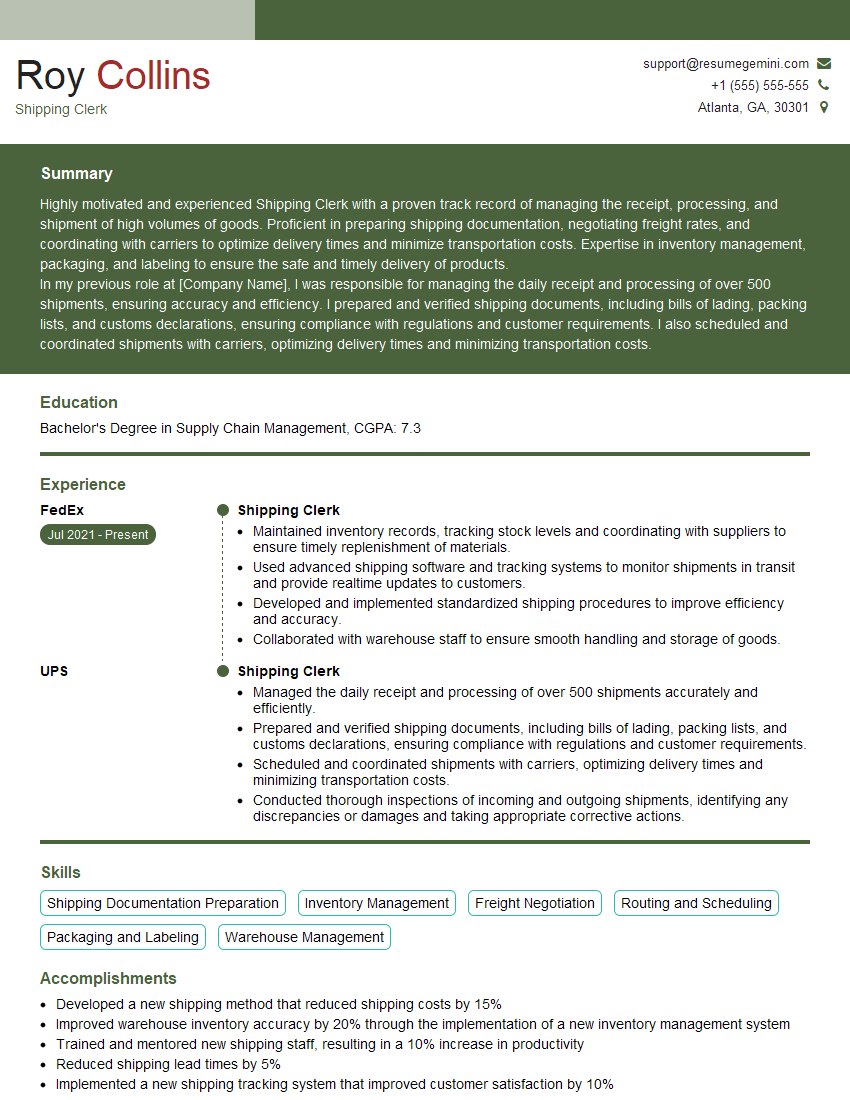
Shipping Clerk Resume Sample
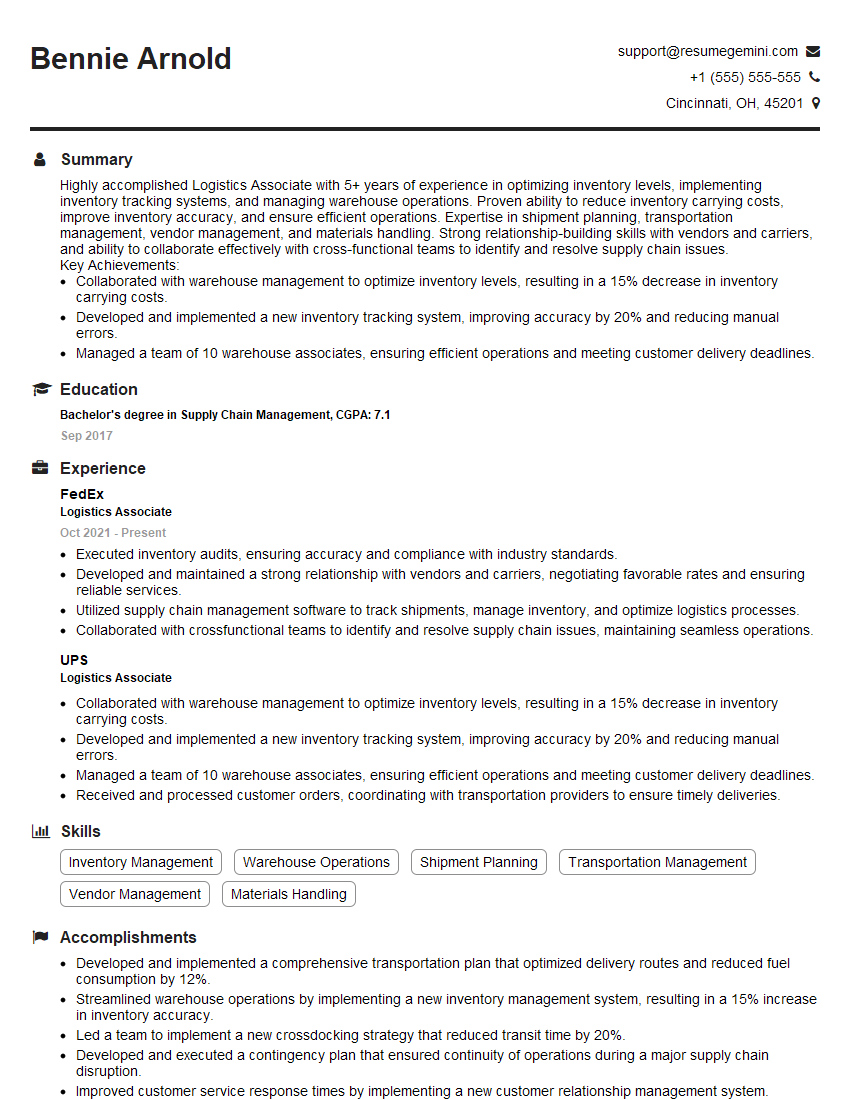
Logistics Associate Resume Sample
- Operations Manager
- Distribution Center Manager
- Logistics Manager
- Warehouse Manager
- Transportation Specialist
- Shipping Coordinator
- Global Logistics Manager
- Logistics Specialist
- Supply Chain Analyst
- Customs Broker
- Import/Export Specialist
- Transportation Planner
- Freight Broker
- Freight Forwarder
- Inventory Control Specialist
- Order Fulfillment Specialist
- Receiving Clerk
- Shipping and Receiving Supervisor
- Shipping Clerk
- Logistics Associate
Explore more articles
Users Rating of Our Blogs
Share Your Experience
We value your feedback! Please rate our content and share your thoughts (optional).
What Readers Say About Our Blog
Very informative content, great job.
good