Unlock your full potential by mastering the most common Ability to Work with Customers to Determine Design Specifications interview questions. This blog offers a deep dive into the critical topics, ensuring you’re not only prepared to answer but to excel. With these insights, you’ll approach your interview with clarity and confidence.
Questions Asked in Ability to Work with Customers to Determine Design Specifications Interview
Q 1. Describe your process for gathering customer requirements for a design project.
Gathering customer requirements is the cornerstone of any successful design project. My process is iterative and involves several key steps, starting with a deep dive into understanding the client’s business goals and target audience. I begin with a series of meetings and workshops, employing a combination of open-ended questions and targeted inquiries to uncover their needs and aspirations. This isn’t just about listening; it’s about actively probing and challenging assumptions.
For example, if a client says they need a ‘user-friendly’ website, I’d follow up with questions like: ‘What specifically makes a website user-friendly to your target audience?’, ‘What are the key tasks users need to accomplish on the site?’, and ‘What are the consequences of a user not being able to complete these tasks?’ This process often includes creating user personas to represent the different types of users the system will serve. I then document everything in a requirements document, creating a living document that is updated throughout the project.
Next, I employ various research methods to validate assumptions and gather more concrete data. This might involve user interviews, surveys, A/B testing, or competitive analysis. The results of this research are then used to refine and prioritize requirements, leading to a clear, actionable set of specifications.
Q 2. How do you handle conflicting requirements from different stakeholders?
Conflicting requirements are inevitable in collaborative projects. My approach is to facilitate open communication and collaborative problem-solving, not confrontation. I believe in transparency and make sure all stakeholders understand the implications of their requests.
First, I clearly document all conflicting requirements, highlighting the source and rationale behind each. Then, I facilitate a discussion where each stakeholder can explain their perspective and the importance of their requirement. This is often done through a prioritization workshop, where we use techniques like MoSCoW (Must have, Should have, Could have, Won’t have) or a simple weighted ranking system to objectively evaluate the relative importance of different features. This collaborative process allows us to find compromises and trade-offs that meet the most critical needs.
For instance, if a client requests both a highly customized design and a quick turnaround, we might need to compromise on the level of customization. We could prioritize the core functionalities and then add more customized features in subsequent iterations.
Q 3. Explain your experience using user research methods to inform design specifications.
User research is integral to my design process. I’ve extensively used various methods, including:
- User interviews: Conducting one-on-one interviews to gain in-depth understanding of user needs, behaviors, and pain points. For example, when designing a mobile banking app, I’d interview users about their current banking habits, their frustrations with existing apps, and their expectations for a new app.
- Surveys: Deploying online surveys to gather quantitative and qualitative data from a larger sample of users. Surveys can be used to understand user preferences, attitudes, and satisfaction levels.
- Usability testing: Observing users as they interact with prototypes or existing systems to identify areas for improvement. This allows me to directly observe user behavior and identify usability issues.
- A/B testing: Comparing different design options to see which performs better in terms of user engagement and conversion rates.
The data gathered from these methods inform every stage of the design process, from ideation and prototyping to final design and implementation. The insights gained directly translate into tangible design specifications, leading to more effective and user-centered solutions.
Q 4. How do you translate abstract customer feedback into concrete design specifications?
Translating abstract feedback into concrete specifications requires careful analysis and interpretation. Abstract feedback, such as ‘the website needs to be more modern,’ is unhelpful without further detail. My approach involves asking clarifying questions to unpack the meaning of such comments. I might ask: ‘What aspects of the current design feel outdated?’, ‘What websites do you consider modern and why?’, and ‘What specific elements would make our website feel more modern (e.g., color palette, typography, imagery)?’
Once I gather specific examples and preferences, I translate these into actionable specifications. For instance, ‘modern’ might translate into specific design elements like: ‘Use a minimalist layout’, ‘Incorporate a specific color palette’, or ‘Implement a responsive design that adapts to various screen sizes’. This process involves creating wireframes and mockups to visually represent the design and ensuring that the design choices align with the user needs and business goals.
Q 5. Describe a situation where you had to compromise on a design specification due to technical limitations or budget constraints.
In a recent project for an e-commerce platform, the client requested a highly interactive 3D product visualization feature. However, due to budget constraints and time limitations, implementing such a feature with the desired level of fidelity proved technically challenging. After careful consideration and discussion with the development team, we decided to compromise. Instead of a fully interactive 3D model, we opted for high-quality 360° product images and zoom functionality. This solution maintained the essential aspect of the client’s vision—allowing customers to view the product from multiple angles—while remaining within the allocated budget and development timeframe. The outcome was a satisfactory solution that fulfilled the majority of the client’s needs.
Q 6. How do you prioritize features based on customer feedback and business goals?
Prioritizing features is a crucial part of managing expectations and ensuring efficient resource allocation. I use a multi-faceted approach that incorporates both customer feedback and business goals. First, I analyze the customer feedback data to identify features that are highly valued by users and align with their needs. Next, I assess the business goals and strategic objectives to determine which features will contribute most to achieving these goals (e.g., increased conversion rates, improved user retention).
I often use a prioritization matrix that combines both user value and business value. Features are scored on each dimension, and those with the highest combined score are prioritized. This process ensures a balance between meeting user needs and achieving business objectives. For instance, a feature that is highly valued by users but has low impact on business goals might be prioritized lower than a feature with moderate user value but high business impact.
Q 7. How do you ensure that the design specifications are clear, concise, and easy to understand for the development team?
Clear, concise design specifications are essential for seamless collaboration between design and development teams. To ensure clarity and ease of understanding, I create a comprehensive design specification document that includes the following elements:
- Detailed descriptions: Each design element should have a detailed written description, explaining its purpose, functionality, and intended user experience.
- Visual mockups and wireframes: High-fidelity mockups and wireframes provide a visual representation of the design, helping developers understand the layout, visual style, and user flow.
- Style guide: A consistent style guide ensures that the design is implemented consistently throughout the application or website. This includes specifications for typography, color palettes, spacing, and other design elements.
- Interactive prototypes: Interactive prototypes allow developers to experience the design and understand its functionality before beginning the coding process. This can help to identify potential issues early on.
- Technical specifications: For developers, detailed technical specifications such as screen resolutions, image formats, coding standards are crucial. These technical specifications are added in a separate section of the documentation.
The document should be well-organized, easy to navigate, and written in plain language, avoiding jargon whenever possible. Regular reviews and updates are also essential to ensure that the specifications remain relevant and accurate throughout the development lifecycle.
Q 8. How do you handle changes in customer requirements during the design process?
Change is inevitable in design projects. My approach centers around proactive communication and a flexible process. I start by establishing a clear change management process with the client upfront, outlining how changes will be documented, reviewed, and prioritized. This might involve a change request form, detailing the impact on the schedule and budget.
When a change request arises, I schedule a meeting to thoroughly discuss the implications with the client. This includes exploring the rationale behind the change, assessing its impact on the existing design, and exploring alternative solutions. We then collaboratively evaluate the cost, time, and feasibility of implementing the change. If the change is significant, we might revisit the initial scope and revise the contract accordingly. Transparent communication throughout this process is paramount to maintaining a positive client relationship and a successful project outcome. For example, I once worked on a mobile app where the client wanted to add a new feature halfway through the development. By carefully evaluating the implications and adjusting the timeline, we successfully integrated the feature without significantly compromising the project’s quality or deadline.
Q 9. Explain your experience with different design specification documentation methods (e.g., wireframes, mockups, prototypes).
I’m proficient in various design specification methods, each serving a distinct purpose. Wireframes provide a low-fidelity skeletal structure, focusing on layout and information architecture. I use them early in the process to quickly iterate on the overall structure and user flow, focusing on functionality rather than visual details. Mockups, on the other hand, offer a higher-fidelity representation, incorporating visuals and branding elements to showcase the look and feel. They’re excellent for client presentation and gathering feedback on the design aesthetics. Prototypes offer interactive simulations, enabling users to experience the design directly and provide feedback on usability. I often use tools like Figma, Adobe XD, or InVision to create interactive prototypes.
For instance, in a recent e-commerce project, we started with wireframes to establish the page structure and navigation. Once the client approved the structure, we moved to mockups to refine the visual design, and finally, developed a clickable prototype to test the user experience and identify potential usability issues before development. Each method is used strategically to progressively refine the design and ensure alignment with client expectations.
Q 10. How do you ensure that the design specifications align with the overall business strategy?
Aligning design specifications with the overall business strategy is critical for success. Before starting any design work, I thoroughly research the client’s business goals, target audience, and competitive landscape. I use this information to inform design decisions and ensure the design not only meets the client’s immediate needs but also contributes to their broader business objectives. This could involve analyzing market trends, examining competitor websites, or conducting user research to understand the target audience’s behavior and preferences.
For example, if the client’s goal is to increase conversions on their e-commerce website, the design specifications would focus on elements that improve user engagement and facilitate a seamless purchasing process—clear call-to-actions, intuitive navigation, and a streamlined checkout process. Regular communication with stakeholders ensures consistent alignment throughout the design process.
Q 11. How do you measure the success of a design based on customer requirements?
Measuring the success of a design based on customer requirements involves a multifaceted approach. Key Performance Indicators (KPIs) are crucial. These could include metrics like task completion rate (how easily users can complete their goals), user engagement (time spent on site, pages visited), conversion rates (e.g., purchase rates), and customer satisfaction (feedback surveys, usability testing). These KPIs are established in collaboration with the client at the outset of the project, ensuring alignment on what constitutes success.
For example, if the goal is to improve website navigation, we might track the number of users who successfully find the information they’re looking for. A significant improvement in this metric indicates a successful design. We might also use A/B testing to compare different design variations and see which performs better based on pre-defined KPIs.
Q 12. Describe your process for creating user personas and how you use them to inform design decisions.
Creating user personas is a cornerstone of my design process. It involves developing detailed representations of ideal users. This process starts with user research—conducting surveys, interviews, and analyzing user data—to understand user demographics, behaviors, motivations, goals, and frustrations. I then synthesize this data to create several distinct personas, each representing a significant user segment.
For each persona, I typically include a name, age, occupation, goals, frustrations, and technological proficiency. These personas are then used to guide design decisions, ensuring the design resonates with the target audience. For example, if we’re designing a financial app, we might have personas representing a young adult starting their career and a senior citizen managing retirement funds. Their distinct needs and technological skills would inform different design approaches for each user segment.
Q 13. How do you validate your design specifications with users?
Validating design specifications involves testing the design with actual users to gather feedback and identify potential issues. I employ various user research methods, including usability testing, user interviews, and A/B testing. Usability testing involves observing users interacting with the design to identify pain points and areas for improvement. User interviews provide in-depth qualitative feedback on user experiences. A/B testing allows comparing different design iterations objectively.
For instance, I might conduct usability testing with a small group of users, observing how they navigate the website and complete specific tasks. Feedback from this testing is used to iterate on the design and make improvements before the final product launch. This iterative approach ensures the final design meets user needs and expectations effectively.
Q 14. How do you handle situations where customers don’t understand design terminology?
When clients lack design expertise, clear and simple communication is essential. I avoid jargon and use plain language to explain design concepts. Visual aids like mockups, wireframes, and even simple sketches are invaluable in bridging the communication gap. I also tailor my explanations to the client’s level of understanding, breaking down complex ideas into smaller, more digestible pieces. Active listening and patience are crucial.
I often use analogies and real-world examples to illustrate design principles. For instance, explaining information architecture using the analogy of a well-organized library helps clients grasp the importance of intuitive navigation. By focusing on the user experience and business goals, and demonstrating the impact of design decisions, I ensure the client understands and is comfortable with the proposed solutions.
Q 15. How do you present design specifications to stakeholders effectively?
Presenting design specifications effectively requires a multi-faceted approach, focusing on clarity, visual appeal, and stakeholder engagement. I begin by tailoring the presentation to the audience. For technical teams, I’d use detailed diagrams, code snippets, and precise measurements. For executives, I prioritize a high-level overview focusing on key features, benefits, and ROI.
My presentations typically include a clear introduction outlining the project goals and objectives, followed by a structured walkthrough of the specifications. This walkthrough visually showcases the design, using mockups and prototypes to illustrate functionality and user experience. I leverage visual aids like flowcharts, wireframes, and style guides to make complex information easily digestible. Finally, I always allocate time for Q&A to address any questions or concerns, ensuring everyone is on the same page.
For example, when presenting design specifications for a new e-commerce website, I would show executives a compelling presentation highlighting key performance indicators (KPIs) such as conversion rates and average order value, while simultaneously presenting developers with detailed API specifications and component libraries.
Career Expert Tips:
- Ace those interviews! Prepare effectively by reviewing the Top 50 Most Common Interview Questions on ResumeGemini.
- Navigate your job search with confidence! Explore a wide range of Career Tips on ResumeGemini. Learn about common challenges and recommendations to overcome them.
- Craft the perfect resume! Master the Art of Resume Writing with ResumeGemini’s guide. Showcase your unique qualifications and achievements effectively.
- Don’t miss out on holiday savings! Build your dream resume with ResumeGemini’s ATS optimized templates.
Q 16. How do you handle negative customer feedback on a design?
Negative feedback is invaluable. I view it as an opportunity for improvement and collaboration. My approach involves actively listening to the customer’s concerns, asking clarifying questions to understand their perspective, and validating their feelings. I avoid becoming defensive and instead focus on empathizing with their concerns.
Next, I analyze the feedback, separating constructive criticism from subjective opinions. For constructive feedback, I assess whether it aligns with project goals and technical feasibility. If it’s feasible, I incorporate it into the design. If not, I explain the limitations and propose alternative solutions, offering compromises where appropriate. For subjective opinions, I aim to understand the underlying concerns and address them through revised designs or additional explanations.
For instance, if a client dislikes a specific color palette, I might present alternative palettes while explaining the rationale behind the original choice (e.g., brand consistency, accessibility standards). This process not only improves the design but also strengthens the client relationship built on mutual respect and understanding.
Q 17. Explain your experience working with design systems and their impact on design specifications.
Design systems are crucial for maintaining consistency and efficiency in design specifications. My experience working with design systems has been transformative. I’ve used systems like Salesforce Lightning Design System and Material Design, which provided pre-built components, style guides, and documentation, significantly accelerating the design process.
A well-defined design system drastically reduces design ambiguity by establishing clear guidelines for typography, color palettes, spacing, and component behavior. This translates to more consistent and maintainable design specifications. Design specifications become modular and reusable, facilitating easier updates and reducing redundancies. When changes are needed, they can be implemented across the entire system with relative ease, ensuring consistency across all platforms and applications. The impact on design specifications is a shift towards a more efficient, scalable, and maintainable design workflow.
For example, using a design system reduced the time it took to create consistent UI elements for a multi-platform application from weeks to days. This allowed us to focus more on the core functionality and user experience, rather than repetitive design tasks.
Q 18. How do you incorporate accessibility considerations into your design specifications?
Incorporating accessibility considerations into design specifications is paramount. I ensure that design specifications explicitly address WCAG (Web Content Accessibility Guidelines) success criteria. This involves specifying alternative text for images, ensuring sufficient color contrast, providing keyboard navigation, and supporting assistive technologies.
My process includes using accessibility checkers and screen readers during the design process to identify and address potential issues early on. I document accessibility considerations within the design specifications, including details about color contrast ratios, keyboard focus indicators, and alternative text descriptions. I also collaborate with accessibility experts to ensure that the final design meets the required standards.
For instance, when specifying button styles, I would include requirements for sufficient color contrast, clear labels, and appropriate keyboard focus indicators, ensuring they are usable for all users, including those with visual impairments.
Q 19. How do you ensure that your design specifications are scalable and adaptable to future changes?
Creating scalable and adaptable design specifications requires a thoughtful approach that anticipates future changes and growth. I use modular design principles, breaking down the design into reusable components and avoiding hard-coded values whenever possible. This allows for easy modification and expansion without requiring extensive redesign.
Furthermore, I employ version control systems like Git to manage design specifications and track changes. This ensures that design iterations are documented, allowing for easy rollback and comparison. I also utilize design systems, as mentioned previously, which enhance scalability by providing a centralized repository for reusable components and style guidelines. Using flexible layouts and responsive design principles ensures the design adapts seamlessly to different screen sizes and devices.
For example, using a component-based approach for a website’s navigation menu allows for easy modification or addition of menu items without altering other parts of the design. Similarly, version control allows us to revert to previous versions if needed, minimizing disruption.
Q 20. Describe your experience using design tools to create and manage design specifications.
I’m proficient in various design tools for creating and managing design specifications. My expertise includes Figma, Sketch, Adobe XD, and InVision. These tools allow me to create detailed wireframes, mockups, prototypes, and style guides. I leverage their annotation and collaboration features to clearly communicate design decisions and specifications to developers and stakeholders.
Figma, in particular, excels at collaborative design and version control. Sketch’s vector capabilities are excellent for creating detailed icons and illustrations. Adobe XD provides robust prototyping features. InVision offers powerful collaboration and prototyping tools. The choice of tool depends on the project requirements and team preferences. I always strive to choose tools that maximize collaboration and efficiency.
For example, I might use Figma to create interactive prototypes and share them with stakeholders for feedback, then use Sketch to design detailed assets and export them in various formats for developers. The specific tools and workflow are carefully selected based on project needs.
Q 21. How do you balance the creative aspects of design with the technical constraints?
Balancing the creative aspects of design with technical constraints is a crucial skill. It’s about finding innovative solutions that meet both aesthetic goals and technical feasibility. I start by deeply understanding the technical limitations and possibilities of the platform or technology being used. This involves close collaboration with developers to ensure that the design is not only aesthetically pleasing but also technically achievable.
I approach this balance through iterative design and prototyping. I explore creative ideas, but I also validate them against technical constraints during the prototyping phase. This allows me to adjust the design early on, preventing costly changes later in the development process. Compromises are often necessary, but they shouldn’t compromise the user experience or core design principles. Instead, I focus on finding creative alternatives that fulfill the design intent within the technical boundaries.
For example, if a complex animation is desired but deemed technically challenging or performance-intensive, I might explore a simpler, more efficient animation that still achieves the desired visual impact. This requires creative problem-solving and a willingness to adapt the design to fit within the technical constraints.
Q 22. How do you ensure that your design specifications meet regulatory compliance requirements?
Ensuring regulatory compliance is paramount. My approach is proactive and multi-stage. First, I meticulously identify all relevant regulations and standards early in the project. This includes researching industry-specific guidelines, such as HIPAA for healthcare applications or GDPR for data privacy. I then create a compliance checklist, integrated into our design specifications document, outlining each requirement and how our design will address it. For example, if we’re designing a medical device software, we’ll need to ensure adherence to IEC 62304. This checklist becomes a living document, regularly reviewed and updated throughout the development lifecycle. Finally, we incorporate regular compliance audits into our project timeline to verify that our design continues to meet all regulatory requirements. This process minimizes the risk of non-compliance and ensures a robust and legally sound product.
Q 23. How do you incorporate user feedback into iterative design processes?
User feedback is the lifeblood of iterative design. I employ a variety of methods to gather and incorporate this feedback effectively. Early on, we use user interviews and surveys to understand user needs and pain points. As prototypes evolve, we conduct usability testing, employing methods like think-aloud protocols to observe users interacting with the design. This provides rich qualitative data. We also incorporate A/B testing, showing users slightly different versions of a feature to see which performs better. This provides quantitative data. All feedback is documented and analyzed, and design decisions are adjusted based on these insights. We use a feedback management system to track issues, assign priorities, and ensure that feedback is addressed in a timely manner. Think of it as a continuous feedback loop, constantly refining the design based on real user experiences.
Q 24. How do you manage the expectations of clients throughout the design process?
Managing client expectations is crucial for successful projects. I start by clearly defining the project scope and deliverables from the outset. This includes setting realistic timelines and budgets. Regular communication is key – I schedule frequent progress meetings, providing clear updates, and demonstrating the progress made against the agreed upon plan. I also proactively address potential challenges and risks early on. Transparency is paramount; I openly discuss any unforeseen issues or delays, and collaborate with the client to find mutually agreeable solutions. For example, if a technical challenge arises that might impact the timeline, I’ll explain the situation, offer alternative solutions, and work with the client to determine the best course of action. I use project management tools to track progress and communicate effectively. This proactive and transparent approach helps build trust and ensure alignment between client expectations and project outcomes.
Q 25. Describe a time you had to make difficult design trade-offs due to conflicting requirements.
In a recent project designing an e-commerce website, we faced conflicting requirements between performance and visual design. The client wanted a visually rich, highly interactive website with animations and high-resolution images. However, this increased the load time and negatively impacted performance on mobile devices. Our team had to make difficult trade-offs. We employed a tiered approach: high-quality visuals were used on desktop versions, while a simplified, faster-loading design was implemented for mobile devices. This required careful prioritization, balancing the client’s desire for visual appeal with the need for optimal performance. We carefully documented the rationale behind each decision and presented the trade-offs transparently to the client. The result was a website that met the core business objectives while providing a good user experience across all devices.
Q 26. How do you identify and address potential usability issues in the design specifications?
Identifying usability issues is a crucial part of my design process. I leverage a combination of techniques, starting with heuristic evaluations, where I use established usability principles to identify potential problems. We also conduct cognitive walkthroughs, simulating how a user might navigate the system to uncover potential usability bottlenecks. Usability testing with real users is critical; observing their behavior provides invaluable insights. We analyze data on user interactions, such as mouse clicks and scrolling patterns, using tools that track heatmaps and user flows. This quantitative data, combined with qualitative feedback, allows us to pinpoint usability issues and create more user-friendly specifications. Addressing these issues proactively ensures a seamless user experience.
Q 27. How do you use data analytics to inform your design specifications?
Data analytics plays a significant role in informing design specifications. Before even starting design, we analyze existing data to understand user behavior, preferences, and needs. This could include web analytics, showing popular features and user drop-off points on existing platforms. A/B testing results provide insights into the effectiveness of different design choices. We also use user demographics and market research to understand the target audience better. For instance, if analytics show that a particular feature is underutilized, we might reconsider its placement or importance in the design. This data-driven approach minimizes guesswork, ensuring that our design decisions are grounded in concrete evidence, resulting in more effective and user-centered designs.
Key Topics to Learn for Ability to Work with Customers to Determine Design Specifications Interview
- Active Listening and Questioning Techniques: Mastering the art of truly understanding customer needs beyond their initial requests. This includes asking clarifying questions, identifying underlying needs, and recognizing unspoken expectations.
- Requirements Gathering and Documentation: Developing efficient methods for capturing and documenting customer requirements. This involves using various techniques like prototyping, storyboarding, and creating detailed specifications documents.
- Communicating Design Concepts Effectively: Clearly conveying complex design ideas to non-technical clients using visual aids, presentations, and plain language. Practice explaining technical details in a way that is easily understood.
- Managing Client Expectations: Setting realistic timelines and expectations, proactively communicating potential challenges, and managing client feedback effectively throughout the design process.
- Collaboration and Teamwork: Demonstrating your ability to work collaboratively with clients and internal teams (designers, developers, etc.) to achieve a shared vision. This involves clear communication, conflict resolution, and a willingness to compromise.
- Problem-solving and Adaptability: Showcasing your ability to identify and solve design challenges that arise from conflicting client needs or changing requirements. Highlight your flexibility and creative problem-solving approach.
- Design Thinking Principles: Applying the principles of design thinking (empathy, define, ideate, prototype, test) to ensure the design solution truly meets the customer’s needs and solves their problems.
Next Steps
Mastering the ability to work with customers to determine design specifications is crucial for career advancement in design and related fields. It demonstrates strong communication, problem-solving, and client management skills – highly valued attributes in today’s competitive job market. To significantly increase your job prospects, crafting an ATS-friendly resume is essential. ResumeGemini can be a trusted resource to help you build a professional and impactful resume that showcases your skills effectively. Examples of resumes tailored to highlight your “Ability to Work with Customers to Determine Design Specifications” are available to guide your resume creation process.
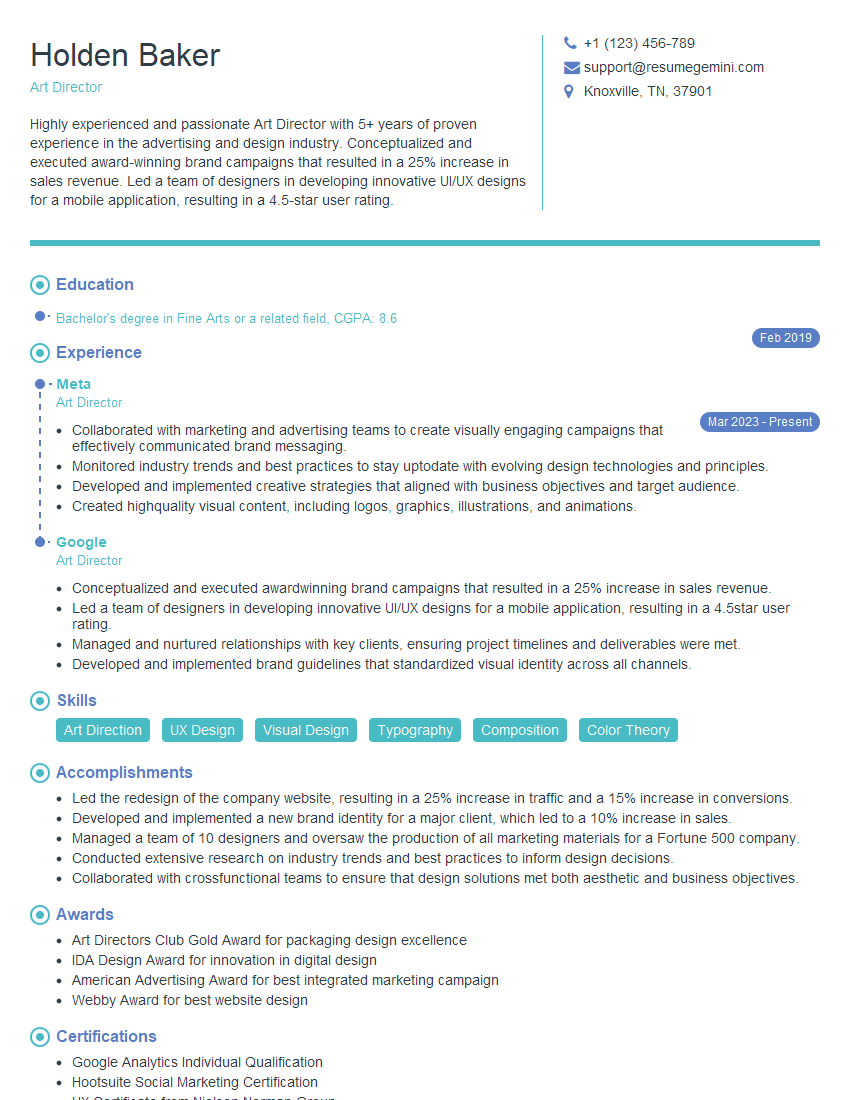
Art Director Resume Sample

Creative Director Resume Sample
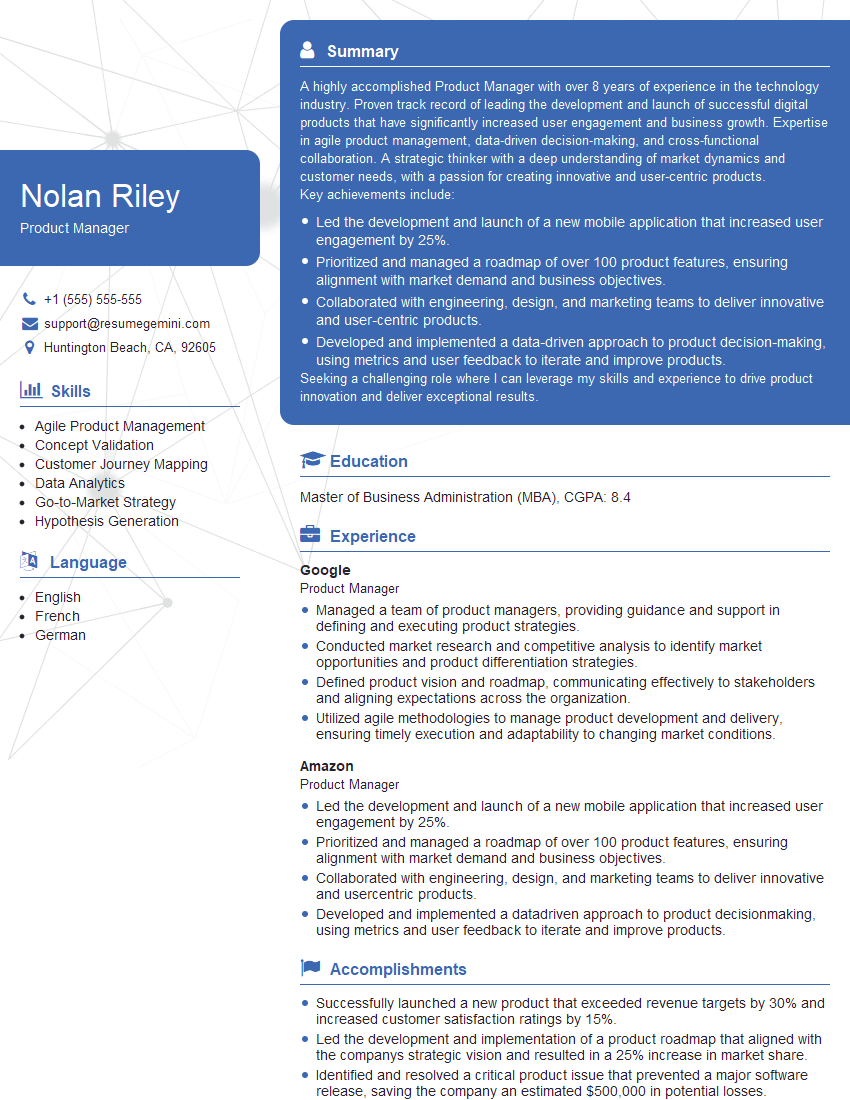
Product Manager Resume Sample

Project Manager Resume Sample
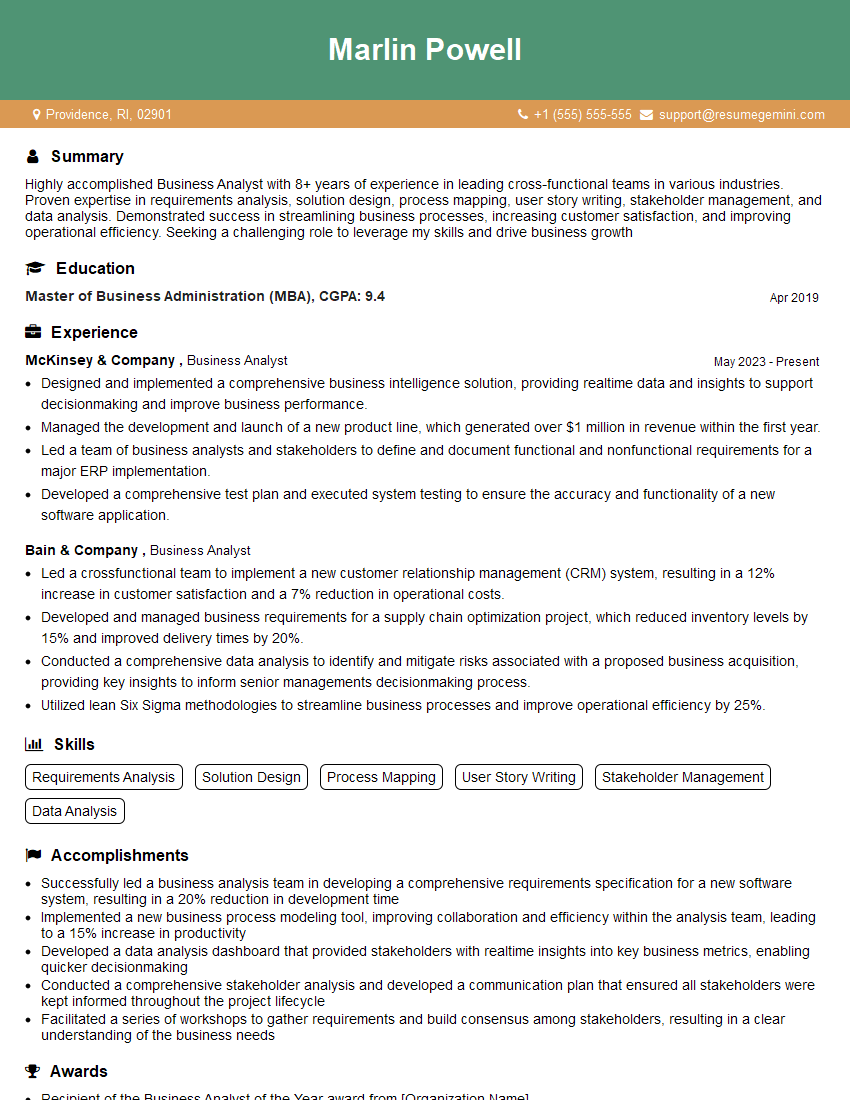
Business Analyst Resume Sample

Information Architect Resume Sample
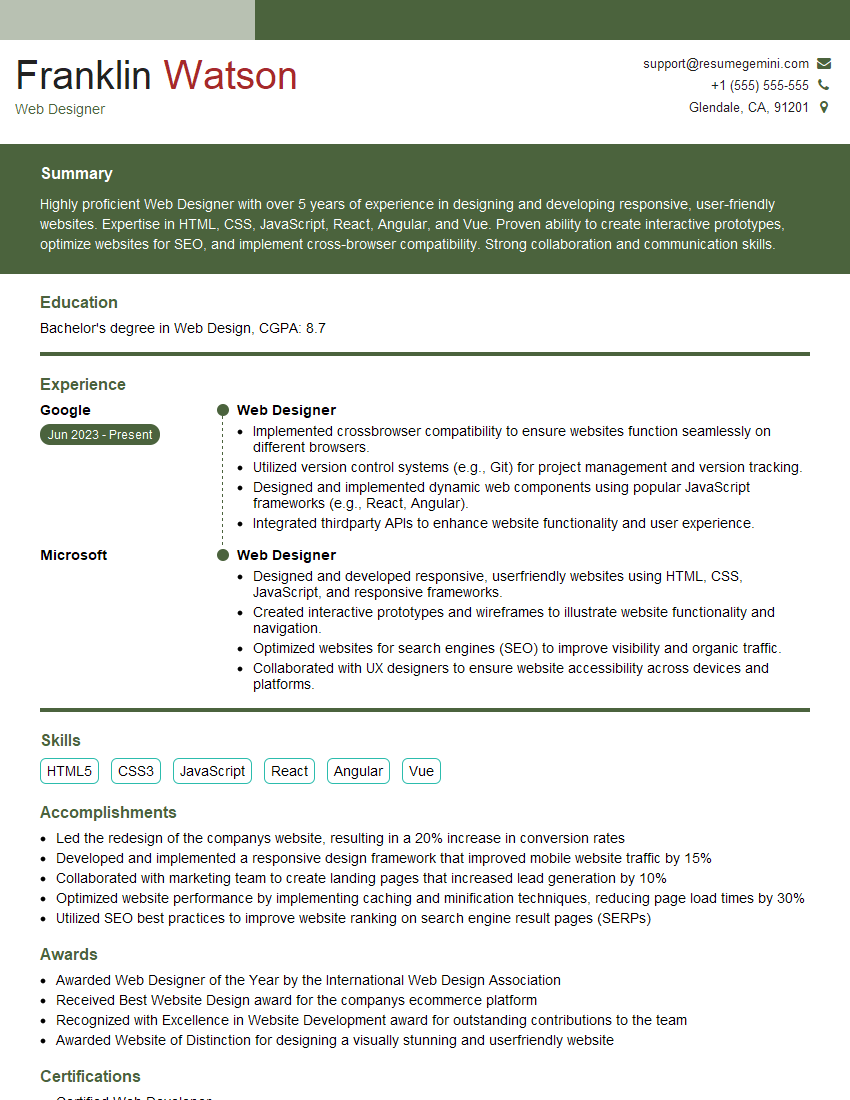
Web Designer Resume Sample
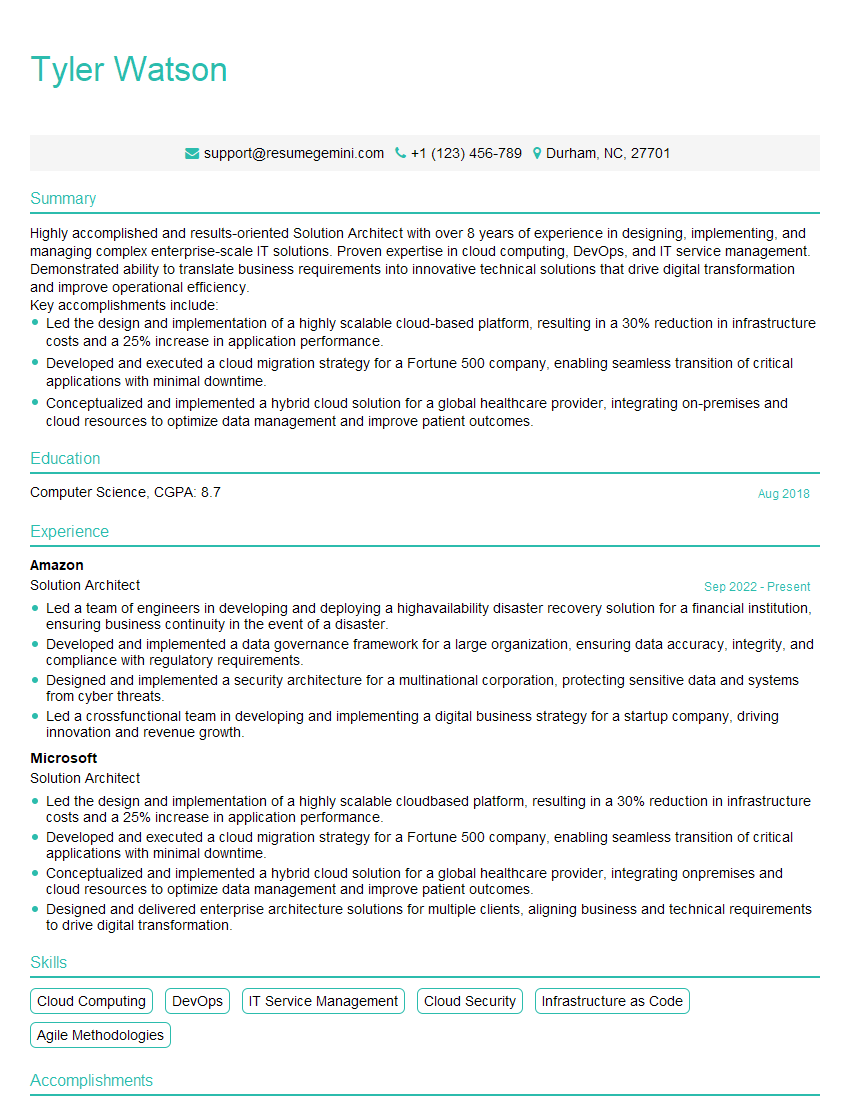
Solution Architect Resume Sample
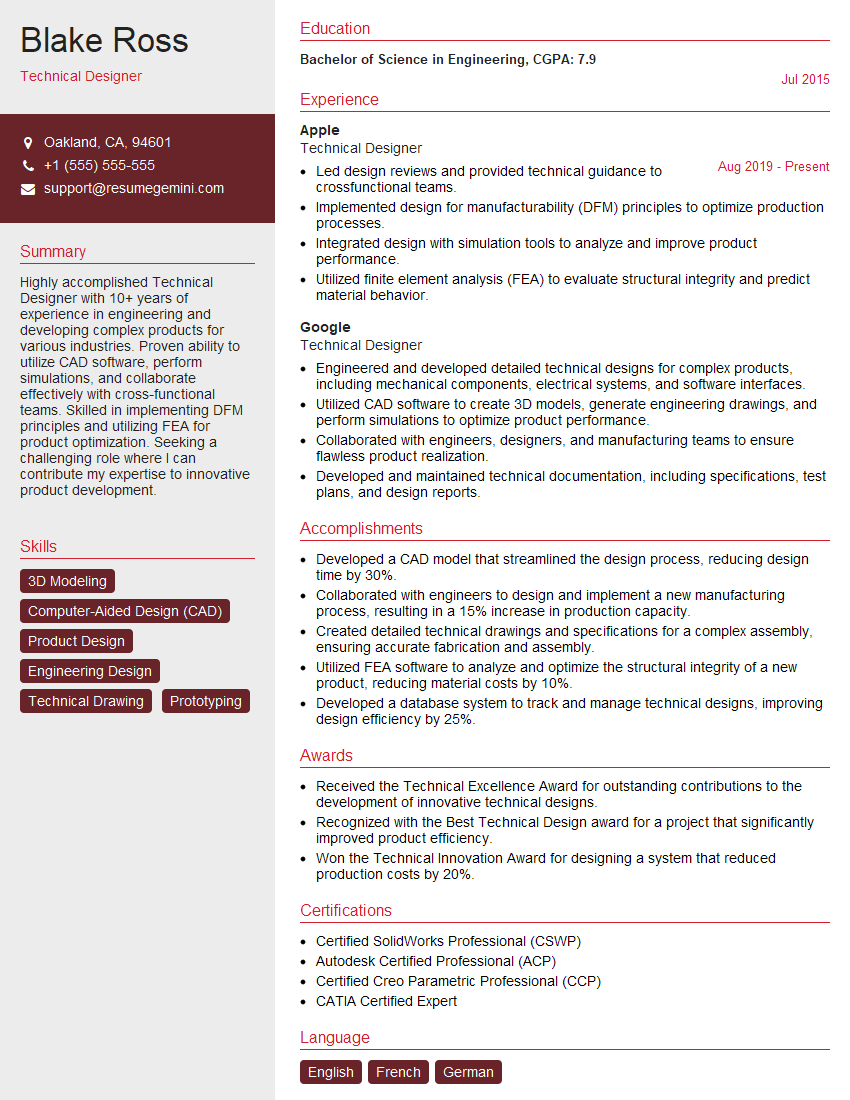
Technical Designer Resume Sample
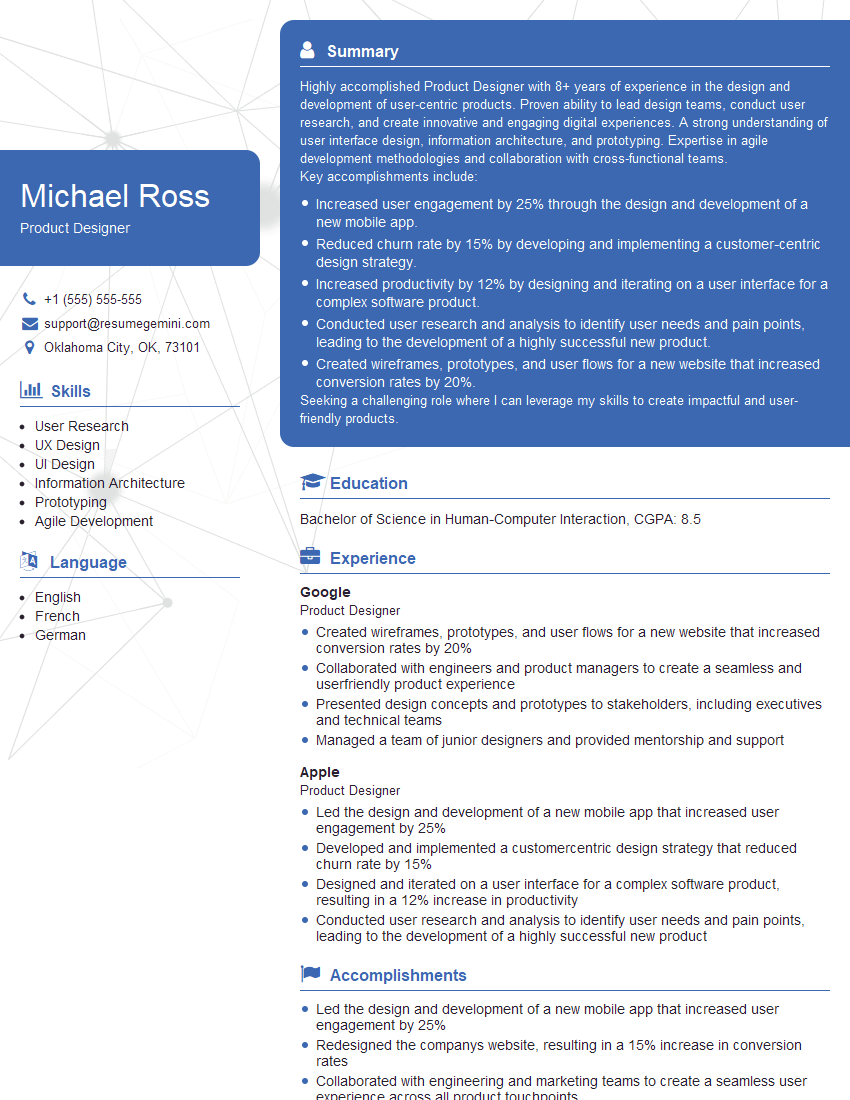
Product Designer Resume Sample
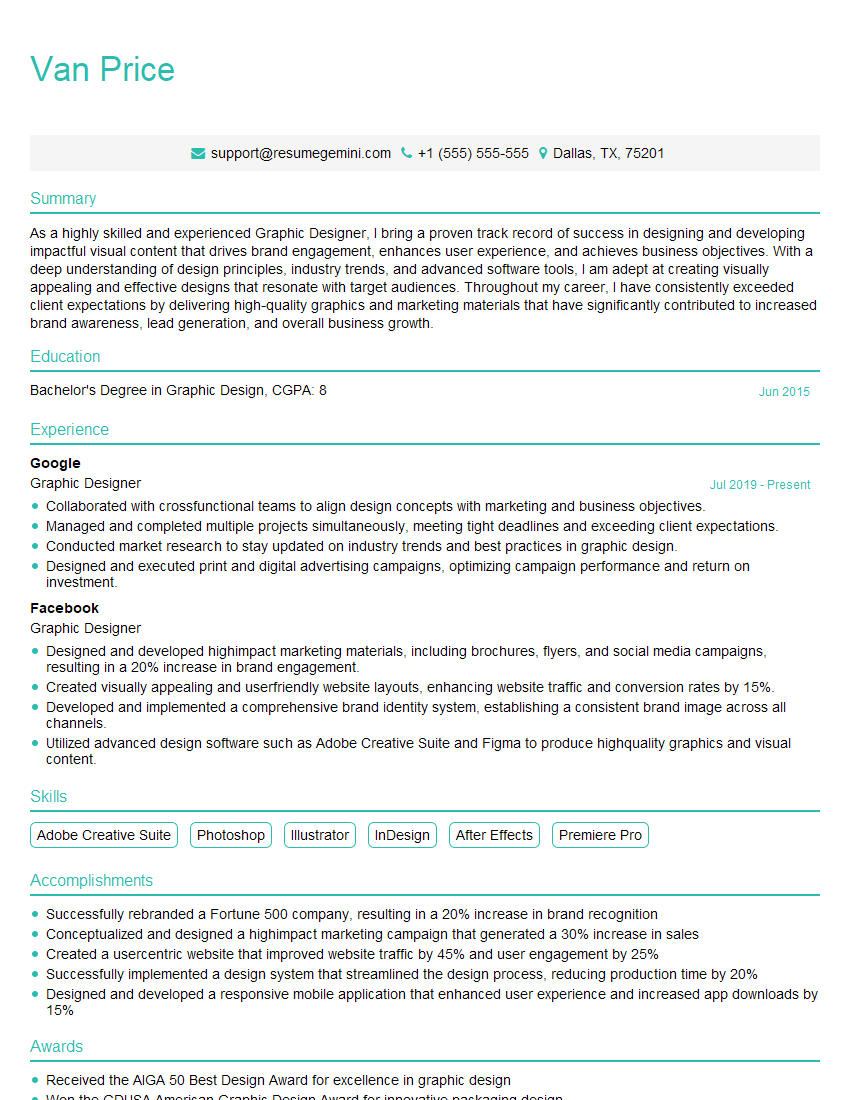
Graphic Designer Resume Sample
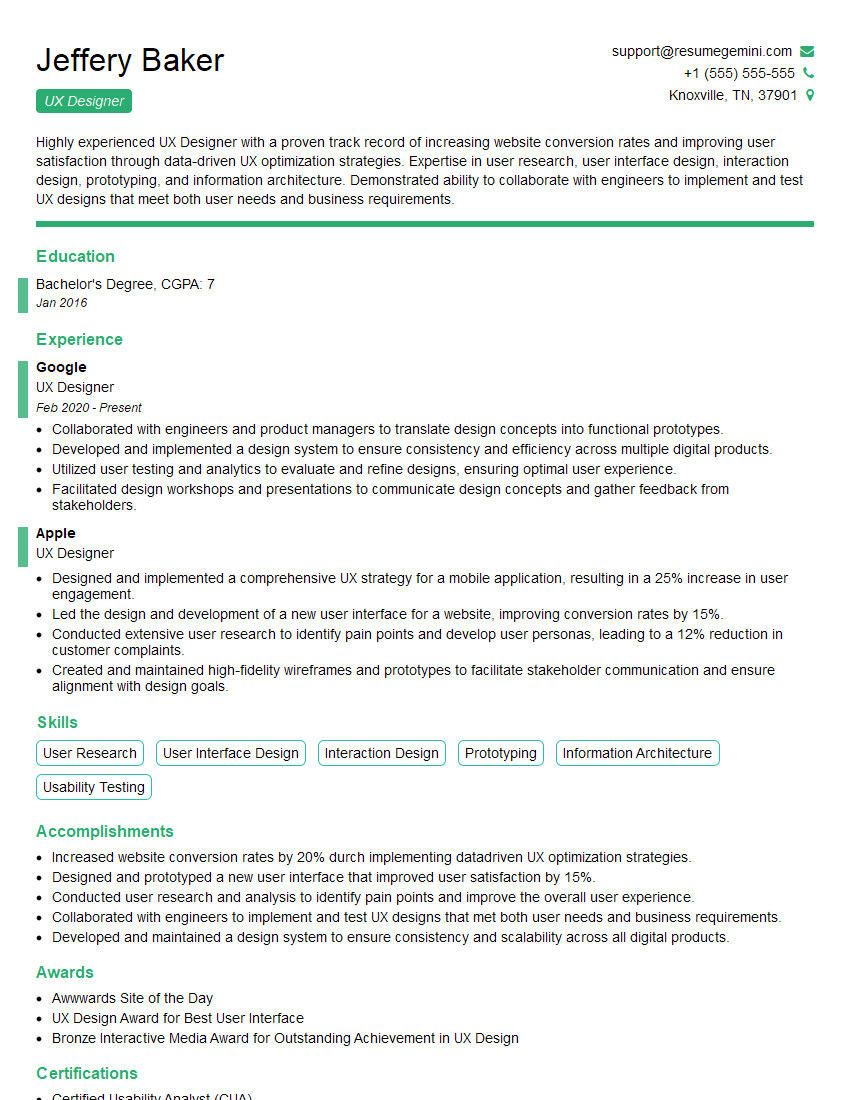
UX Designer Resume Sample
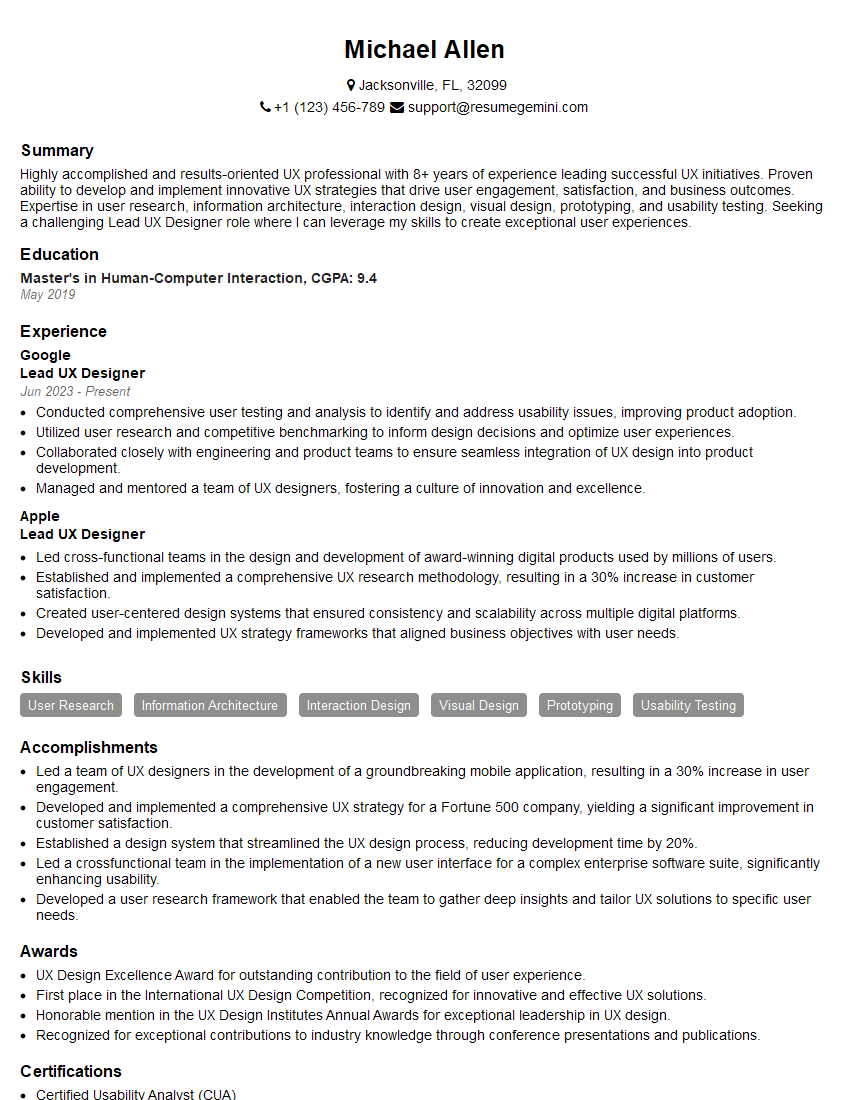
Lead UX Designer Resume Sample
Explore more articles
Users Rating of Our Blogs
Share Your Experience
We value your feedback! Please rate our content and share your thoughts (optional).
What Readers Say About Our Blog
Very informative content, great job.
good