Are you ready to stand out in your next interview? Understanding and preparing for Acoustics and Music Venue Management interview questions is a game-changer. In this blog, we’ve compiled key questions and expert advice to help you showcase your skills with confidence and precision. Let’s get started on your journey to acing the interview.
Questions Asked in Acoustics and Music Venue Management Interview
Q 1. Explain the concept of reverberation time and its impact on sound quality in a music venue.
Reverberation time (RT60) is the time it takes for a sound to decay by 60 decibels (dB) after the source stops producing sound. Think of it as the ‘echo’ or ‘liveness’ of a space. In a music venue, RT60 significantly impacts sound quality. Too short a time, and the music sounds dry and lifeless, lacking warmth and fullness. Too long, and the sound becomes muddy and unclear, with notes overlapping and losing definition. The ideal RT60 varies depending on the venue size and the type of music. For example, a small jazz club might aim for a shorter RT60 (around 0.8-1.2 seconds) for clear articulation, while a large concert hall might target a longer RT60 (around 1.8-2.5 seconds) for a more spacious and resonant sound.
Imagine clapping your hands in a small, empty room versus a large cathedral. The cathedral will have a much longer reverberation time, as the sound waves bounce off many surfaces before decaying. This difference in reverberation time directly impacts the perceived sound quality and the listening experience.
Q 2. Describe different types of sound absorption materials and their applications in room acoustics.
Sound absorption materials are crucial for controlling reverberation time and reducing unwanted reflections within a music venue. Different materials offer varying degrees of absorption at different frequencies.
- Porous Absorbers: These materials, such as acoustic foam, mineral wool, and fiberglass, absorb sound by trapping sound energy within their porous structure. They’re effective across a range of frequencies but are particularly good at absorbing higher frequencies. They are frequently used on walls and ceilings.
- Resonant Absorbers: These absorbers, like Helmholtz resonators (think of a hollow cavity with a small opening), are designed to absorb sound at specific frequencies. They are useful for tackling low-frequency problems, often found in the bass range which can be difficult to control.
- Membrane Absorbers: These consist of a flexible membrane stretched over a cavity. They are most effective at lower mid-range frequencies. These are commonly integrated within wall designs for efficient absorption of problematic frequencies.
- Panel Absorbers: These consist of a stiff panel mounted on a frame to create a cavity behind. They absorb sound by setting the panel into vibration.
The choice of material depends on the specific acoustic problem being addressed and the budget. For example, high-density fiberglass panels might be used in a recording studio for precise control, while less expensive acoustic foam could be used for general sound dampening in a smaller rehearsal space.
Q 3. How do you measure sound levels and what are the relevant standards and regulations?
Sound levels are measured using a sound level meter, which is a device that measures sound pressure levels in decibels (dB). Different weighting filters (A, C, Z) are used to adjust the meter’s response to match the human ear’s sensitivity to different frequencies. The ‘A’ weighting is the most common for assessing noise levels, as it closely approximates the human ear’s response at lower sound levels.
Relevant standards and regulations vary depending on the location and the type of venue. Commonly used standards include those from organizations like the International Organization for Standardization (ISO) and the Occupational Safety and Health Administration (OSHA). OSHA, for instance, sets limits on workplace noise exposure to protect workers’ hearing health. In most jurisdictions, noise limits exist to protect the surrounding neighborhood and other businesses from excessive noise from entertainment venues.
For example, a typical sound level meter will display the sound pressure level in dBA. Measurements taken during a performance would then be compared to local ordinances regulating noise levels at a given time and location.
Q 4. What are the key considerations for designing a sound system for a live music venue?
Designing a sound system for a live music venue requires careful consideration of several factors:
- Venue Size and Shape: The room’s dimensions and acoustic properties dictate the system’s size, speaker placement, and power requirements. A larger venue needs a more powerful and distributed system.
- Type of Music: Different musical genres have different frequency ranges and dynamic characteristics. A system designed for classical music would differ significantly from one for heavy metal, needing more bass reinforcement and headroom in the latter case.
- Audience Capacity: The number of people present will influence sound absorption and the required system power. The more people, the more sound absorption you have and you might need higher sound pressure levels to reach all audience members.
- Budget: System choices are directly affected by budget limitations. High-end equipment will naturally sound better, but there is often a suitable cost-effective solution for most situations.
- Speaker Placement and Coverage: Speakers should be strategically placed to provide even sound coverage throughout the venue, minimizing dead zones and excessive reflections. This is crucial for uniform sound quality across the audience.
- Subwoofer Placement: Low-frequency sound needs dedicated subwoofer arrangements to be reproduced accurately across the venue, without causing excessive sound peaks or cancellations.
A poorly designed system can lead to uneven sound coverage, feedback, and listener fatigue, while a well-designed system ensures a clear, enjoyable, and safe listening experience for everyone.
Q 5. Explain the principles of sound reinforcement and how to optimize it for different types of music.
Sound reinforcement aims to amplify and distribute sound effectively throughout the venue. It involves using microphones to capture the sound source (instruments, vocals), mixing consoles to process and route the signal, amplifiers to increase the signal strength, and speakers to distribute the amplified sound to the audience.
Optimizing sound reinforcement for different types of music requires adjusting the equalization (EQ) and dynamics processing to match the specific characteristics of each genre. For instance, acoustic music may require a more transparent and natural sound with minimal EQ, while rock music might require more aggressive EQ to emphasize specific frequencies and dynamics. A skilled sound engineer will use a combination of EQ, compression, and other effects to tailor the sound to be pleasing and clear to the audience.
Imagine a delicate acoustic guitar performance versus a high-energy rock concert. The sound reinforcement approach, with its use of EQ, compression and other tools, must accommodate this very significant difference in terms of the needed sound profiles.
Q 6. How do you address feedback issues in a sound system?
Feedback is a high-pitched squeal or howl that occurs when sound from the speakers is picked up by the microphones and re-amplified, creating a positive feedback loop. Addressing feedback involves a multi-pronged approach:
- Microphone Placement: Carefully positioning microphones to minimize picking up sound from the speakers is crucial. This often involves angling the microphones away from speakers and using directional microphones to focus on the desired sound source.
- Equalization (EQ): Notching out specific frequencies causing feedback using the graphic equalizer on the mixing console can eliminate the problem. This involves identifying the frequencies causing the feedback and cutting them.
- Gain Staging: Maintaining appropriate levels at each stage of the signal chain is paramount. Avoid excessive gain at any point.
- Feedback Suppressors: Dedicated feedback suppression devices can automatically identify and attenuate feedback frequencies in real-time.
- Room Treatment: Proper acoustic treatment of the venue itself can significantly reduce the chances of feedback by minimizing reflections that contribute to feedback loops.
A systematic approach, combining these strategies, usually allows for the effective elimination of feedback without negatively impacting the overall sound quality.
Q 7. What strategies do you employ for noise control and sound isolation in a music venue?
Noise control and sound isolation are crucial aspects of music venue management, particularly for protecting the surrounding community and ensuring the quality of the listening experience within the venue. Strategies employed include:
- Soundproofing Materials: Using sound-absorbing and sound-blocking materials in walls, ceilings, and floors. This includes dense materials like concrete, brick, and specialized soundproofing panels.
- Double-Wall Construction: Creating a double-walled structure with an air gap between the layers significantly reduces sound transmission.
- Sound Isolation Doors and Windows: Installing heavy, airtight doors and windows with appropriate seals and weather stripping to minimize sound leakage.
- Vibration Isolation: Using vibration isolation materials and techniques to prevent sound vibrations from transmitting through the structure. This includes decoupling floors, walls, and mechanical equipment.
- Noise Barriers: Implementing noise barriers (exterior walls, landscaping) to block the propagation of noise to the surrounding neighborhood. This is critical for reducing noise pollution.
- Acoustic Design Elements: Including features like baffles, diffusers, and absorbers to minimize reflections within the room and manage sound levels effectively.
The specific approach depends on the venue’s design, location, and the desired level of noise control. Careful planning and attention to these details help ensure compliance with noise regulations and a comfortable acoustic environment for both performers and audience.
Q 8. Describe your experience with different types of microphones and their suitability for various applications.
Microphones are the backbone of any sound reinforcement system, and choosing the right one is crucial for capturing high-quality audio. Different microphone types excel in various applications due to their unique designs and polar patterns.
- Dynamic Microphones: These are robust and handle high sound pressure levels well. Think of a Shure SM58, the workhorse of live vocals. Its cardioid polar pattern rejects off-axis sound, reducing feedback and stage noise. Ideal for live vocals, loud instruments (like snare drums), and situations where durability is key.
- Condenser Microphones: Known for their sensitivity and detailed sound reproduction, condenser mics are perfect for capturing subtle nuances. A Neumann U 87 Ai is a classic example, often used in studios for vocals and acoustic instruments. They’re more fragile than dynamic mics and need phantom power (48V).
- Ribbon Microphones: These mics offer a unique, warm, and often vintage-sounding character. They are very sensitive to sound pressure and are often used for capturing delicate instrument sounds like guitars and horns. However, they are more fragile and require careful handling.
- Boundary Microphones (PZM): These are flat microphones designed to be mounted on a surface, ideal for conference rooms or situations where a discreet, omnidirectional microphone is needed. They’re great for capturing a wide area with even coverage.
For example, in a live rock show, I’d use dynamic mics for vocals and loud instruments to withstand the high sound pressure levels. For a quieter jazz performance, I’d likely opt for condenser microphones to capture the detail and nuances of the instruments.
Q 9. How do you create a balanced mix for a live performance?
Creating a balanced mix for a live performance is a delicate art, requiring careful attention to detail and a good understanding of frequency response. The goal is to ensure all instruments and vocals are audible and blend well without any one element overpowering the others.
My approach involves:
- Gain Staging: Setting appropriate input levels for each instrument and microphone to prevent clipping (distortion) and ensure sufficient signal for processing.
- EQ (Equalization): Adjusting the frequency balance to address any issues with muddiness, harshness, or unwanted resonances. For example, cutting low frequencies from a vocal mic to remove rumble, or boosting high frequencies on a snare drum for clarity.
- Compression: Controlling dynamic range by reducing the difference between loud and soft sounds. This helps even out the volume and makes the mix more consistent.
- Panning: Positioning instruments and vocals in the stereo field. This adds dimension and separation.
- Reverb and Delay: Adding effects to create depth and space, but cautiously to avoid muddying the mix.
I regularly use a visual representation of the frequency spectrum (like a real-time analyzer) to monitor the mix and identify any frequency clashes. Imagine it like a painter adjusting colors to achieve a harmonious picture. The mix should feel natural and allow each element to shine in its own space.
Q 10. What are the challenges of managing a music venue from a financial perspective?
Managing a music venue financially presents many challenges. It’s a high-risk, low-margin business, susceptible to various factors that can impact profitability.
- High Operating Costs: Venue rental, utilities, staff salaries, insurance, and equipment maintenance represent significant expenses.
- Variable Revenue Streams: Revenue depends on ticket sales, bar revenue, merchandise sales, and potential sponsorships. These can be unpredictable depending on attendance and event popularity.
- Competition: The music industry is highly competitive; venues must attract audiences in a crowded market.
- Marketing and Promotion: Advertising and promoting events can be costly, requiring significant investment to secure attendance.
- Economic Downturns: During economic downturns, people often cut back on entertainment spending, impacting ticket sales and overall revenue.
Careful budgeting, efficient management of resources, diversified revenue streams, and strategic marketing are vital for financial stability. I also believe in building strong relationships with local businesses for sponsorships and networking to reach wider audiences.
Q 11. Describe your experience with venue safety regulations and emergency procedures.
Venue safety is paramount. My experience includes thorough familiarity with all relevant fire codes, occupancy limits, emergency exits, and evacuation procedures. Regular inspections and safety training for staff are essential.
I ensure that:
- Emergency Exits are Clearly Marked and Unobstructed: Regular checks ensure accessibility at all times.
- Fire Suppression Systems are Maintained and Inspected: These systems are regularly tested and serviced to ensure functionality.
- Adequate Security Personnel are on Site: The number of security personnel is adjusted based on the event size and expected attendance.
- Crowd Management Plans are in Place: These plans detail procedures for handling large crowds, ensuring a smooth flow of people and preventing overcrowding.
- First Aid and Medical Personnel are Available: Depending on the size of the event, qualified medical personnel may be present.
I have firsthand experience in coordinating emergency evacuations, working closely with local emergency services. Regular drills help ensure smooth and efficient responses in real situations.
Q 12. How do you handle customer complaints or technical issues effectively?
Handling customer complaints or technical issues requires a calm, professional, and empathetic approach. My strategy emphasizes prompt resolution and customer satisfaction.
For customer complaints:
- Listen Actively: Allow the customer to express their concerns without interruption. Show empathy and understanding.
- Apologize Sincerely: Acknowledge the issue and apologize for any inconvenience, even if it wasn’t directly your fault.
- Offer a Solution: Work with the customer to find a fair and satisfactory resolution. This could involve a refund, voucher, or other compensation.
- Follow Up: Check in with the customer to ensure they are satisfied with the resolution.
For technical issues:
- Diagnose the Problem: Quickly identify the root cause of the technical problem using systematic troubleshooting techniques.
- Implement a Solution: Repair or replace faulty equipment or software as quickly as possible.
- Communicate with the Customer: Keep the customer informed of the progress and estimated time of resolution.
Maintaining open communication and a focus on resolving problems quickly is key to preventing negative experiences and maintaining a positive reputation for the venue.
Q 13. What software or tools are you proficient in for audio processing and system design?
I’m proficient in various software and tools for audio processing and system design. My expertise includes:
- Digital Audio Workstations (DAWs): Pro Tools, Ableton Live, Logic Pro X – for recording, editing, and mixing audio.
- Digital Signal Processing (DSP) Software: Smaart, Room EQ Wizard (REW) – for analyzing and optimizing room acoustics and speaker systems. I use Smaart for real-time frequency analysis during live sound mixing, and REW for off-line measurements and correction.
- CAD Software: EASE Focus – for designing and modeling sound systems, ensuring proper speaker placement and coverage.
- Sound Reinforcement Consoles: I am experienced with various digital and analog mixing consoles from manufacturers like Yamaha, Soundcraft, and Allen & Heath.
Example of a simple EQ setting in a DAW: Cut 10dB at 100Hz to reduce low-frequency rumble.
My proficiency in these tools allows me to design, implement, and troubleshoot complex audio systems, ensuring high-quality audio for all events.
Q 14. Explain your understanding of different loudspeaker systems and their applications.
Loudspeaker systems vary significantly in their design and application. Understanding their characteristics is essential for choosing the right system for a specific venue.
- Point Source Speakers: These are compact speakers that project sound in a relatively narrow pattern. Suitable for smaller venues or focused sound reinforcement in larger spaces.
- Line Array Speakers: These consist of multiple small speakers arranged in a line. They provide consistent sound coverage over large distances, ideal for large concert halls or outdoor venues. They require careful design and placement to ensure optimal coverage and minimize interference.
- Subwoofers: Designed to reproduce low-frequency sounds (bass), subwoofers enhance the overall impact and depth of the sound system.
- Stage Monitors (Wedges): These speakers are placed on stage to allow performers to hear themselves and other musicians. They are typically designed to withstand the rigors of live performance and provide good feedback rejection.
For example, a small coffee shop might use point source speakers for background music, while a large stadium concert would require a complex line array system with numerous subwoofers to deliver powerful and even sound coverage to a massive audience. The choice depends heavily on the size and acoustics of the venue and the type of performance.
Q 15. How do you determine the appropriate seating capacity for a music venue based on acoustics?
Determining the appropriate seating capacity for a music venue hinges on a delicate balance between acoustics and audience comfort. It’s not simply about cramming in as many people as possible; it’s about creating an optimal listening experience for everyone present. We need to consider factors like reverberation time, sound pressure levels, and sightlines.
Reverberation Time (RT60): This measures how long it takes for sound to decay by 60 decibels in a space. A shorter RT60 is generally preferred for speech clarity and in smaller venues, while a longer RT60 might be desirable in larger spaces for certain genres of music. Too long an RT60 can create muddiness and make it difficult to discern individual instruments. Too short can make the sound seem sterile and lifeless. Acoustic modeling software can predict the RT60 based on room dimensions and material properties.
Sound Pressure Levels (SPL): We need to ensure that the sound levels don’t become excessively loud, causing hearing damage or discomfort. The maximum SPL at any seat will depend on the type of music and the venue’s sound system design. Accurate sound system simulations help predict the sound levels at different locations within the venue.
Sightlines: Every seat should offer a good view of the stage. Obstructions from columns, beams, or other elements should be minimized. This impacts both the aesthetic and emotional connection the audience has with the performance.
Example: For an intimate jazz club, a smaller capacity with excellent acoustics (shorter RT60, even sound distribution) would be prioritized, while a large arena concert might require a longer RT60 and more robust sound system design to ensure adequate coverage across a large number of seats.
In practice, I usually start with acoustic modeling simulations and combine that with safety regulations, fire codes, and building regulations to determine the maximum capacity.
Career Expert Tips:
- Ace those interviews! Prepare effectively by reviewing the Top 50 Most Common Interview Questions on ResumeGemini.
- Navigate your job search with confidence! Explore a wide range of Career Tips on ResumeGemini. Learn about common challenges and recommendations to overcome them.
- Craft the perfect resume! Master the Art of Resume Writing with ResumeGemini’s guide. Showcase your unique qualifications and achievements effectively.
- Don’t miss out on holiday savings! Build your dream resume with ResumeGemini’s ATS optimized templates.
Q 16. How do you plan and coordinate events with multiple technicians and contractors?
Coordinating events with multiple technicians and contractors requires meticulous planning and clear communication. I utilize a project management approach, breaking down the event into manageable tasks with clearly defined responsibilities and deadlines.
Pre-Event Coordination:
- Detailed Run-of-Show: This document outlines the timeline for each activity, including setup, soundcheck, performance, and teardown, along with specific responsibilities for each team member (lighting, sound, stagehands, security). This is shared with all involved.
- Pre-Event Meeting: This allows face-to-face communication to clarify roles, address potential concerns, and ensure everyone is on the same page.
- Communication Channels: Establishing a clear communication channel (e.g., group chat, email chain) for quick updates and troubleshooting is crucial.
- Contingency Planning: We anticipate potential problems and create backup plans, such as having substitute technicians on standby or extra equipment ready.
During the Event:
- On-site Coordination: A designated point person oversees the event, ensuring that tasks are completed on schedule and addressing any issues as they arise.
- Regular Check-ins: Brief check-ins with individual technicians and contractors maintain clear communication.
Post-Event Evaluation: Following the event, we conduct a thorough debriefing to discuss successes, challenges, and areas for improvement in future events. This helps maintain consistent efficiency and quality of service.
Q 17. Describe your experience with scheduling and managing staff for events.
Scheduling and managing staff involves creating efficient rosters, balancing workloads, and fostering a positive team environment. I leverage scheduling software to optimize staff allocation based on event demands and employee availability.
Factors considered include:
- Event size and type: Larger events require more staff, while smaller events may need a smaller team.
- Staff expertise: Matching staff expertise with specific roles ensures efficiency.
- Employee availability: Considering employee availability and preferred work schedules.
- Legal compliance: Adhering to labor laws and regulations regarding working hours and breaks.
Effective strategies include:
- Clear job descriptions: Defining job roles and responsibilities.
- Regular training: Ensuring staff are proficient in their roles.
- Performance feedback: Providing regular constructive feedback.
- Open communication: Maintaining transparency and fostering trust.
Example: During a busy festival weekend, I’d use a spreadsheet to track staff availability, assigning individuals to shifts based on their skills and experience to maintain appropriate coverage across multiple stages and support roles. This prevents overwork and ensures each member is optimally utilized.
Q 18. What are your strategies for marketing a music venue and attracting audiences?
Marketing a music venue requires a multi-faceted approach combining online and offline strategies. The goal is to build brand awareness, attract diverse audiences, and create a loyal following.
Strategies include:
- Social Media Marketing: Engaging content (photos, videos, behind-the-scenes glimpses), targeted ads to reach specific demographics.
- Website and Email Marketing: A user-friendly website with event listings, ticket sales, and a newsletter to stay in touch with patrons.
- Public Relations: Press releases for new events, partnerships with local media outlets, and building relationships with music journalists.
- Local Partnerships: Collaborations with local businesses, hotels, restaurants to cross-promote events.
- Event Ticketing: Using effective ticketing platforms for seamless ticket sales and customer management.
- Loyalty Programs: Rewarding repeat customers with discounts or exclusive benefits.
- Data-driven insights: Tracking website traffic, social media engagement, and ticket sales data to refine marketing efforts.
Example: A successful campaign I ran involved partnering with a local brewery to offer a special discounted drink package at our venue during a series of concerts. This generated increased ticket sales and heightened brand awareness by reaching a new audience segment.
Q 19. How do you manage relationships with artists, promoters, and other stakeholders?
Managing relationships with artists, promoters, and other stakeholders requires strong communication, mutual respect, and a commitment to delivering value. It’s about building partnerships built on trust and mutual benefit.
Strategies include:
- Clear Contracts: Detailed contracts outlining responsibilities, payment terms, and expectations.
- Open Communication: Regular updates and transparent communication to keep stakeholders informed.
- Proactive Problem-Solving: Addressing issues promptly and finding solutions collaboratively.
- Feedback Mechanisms: Collecting feedback to improve service and strengthen relationships.
- Networking and Relationship Building: Attending industry events and actively maintaining professional contacts.
Example: I’ve worked closely with independent promoters to develop bespoke event packages tailored to their specific needs and budgets, resulting in mutually successful events that showcase their artists while providing the venue with income and increased brand recognition.
Q 20. Describe your approach to maintaining a safe and comfortable environment for patrons and staff.
Maintaining a safe and comfortable environment for patrons and staff is paramount. This involves implementing comprehensive safety procedures and adhering to all relevant regulations.
Strategies include:
- Security Personnel: Trained security staff for crowd control, emergency response, and ensuring patron safety.
- Emergency Procedures: Clear emergency plans, including evacuation routes, first aid procedures, and communication protocols.
- Accessibility: Ensuring accessibility for patrons with disabilities, complying with accessibility regulations.
- Hygiene and Sanitation: Maintaining clean and sanitary facilities for both patrons and staff.
- Crowd Management: Strategies for crowd control, particularly during high-capacity events.
- Risk Assessment: Regular risk assessments to identify and mitigate potential hazards.
Example: We implemented a comprehensive security plan using a combination of CCTV cameras, trained security staff, and a clear communication system during a particularly large concert. This allowed us to manage the crowd efficiently and ensure the safety of everyone attending.
Q 21. How do you assess the structural integrity of a venue for sound installations?
Assessing the structural integrity of a venue before any sound installation is critical to prevent damage and ensure safety. This requires a multi-stage approach involving structural engineers and qualified acousticians.
Steps include:
- Structural Survey: A thorough structural survey by a qualified engineer to assess the load-bearing capacity of the building, especially the areas where sound equipment will be installed (e.g., walls, ceilings, floors).
- Load Calculations: Detailed calculations of the weight of sound equipment, including speakers, amplifiers, and support structures, to determine if the existing structure can safely support the load.
- Vibration Analysis: Assessing potential vibration issues caused by low-frequency sound, which can be damaging to the structure. This often requires specialized equipment and software.
- Reinforcement Plans: If the structural survey reveals weaknesses or insufficient load-bearing capacity, appropriate reinforcement plans must be developed and implemented by structural engineers.
- Building Permits and Regulations: Ensuring all work adheres to building codes and obtaining the necessary permits.
Example: Before installing a powerful line array system in a historic building, we commissioned a thorough structural survey that revealed some areas needed reinforcement. We then collaborated with structural engineers to develop and implement a reinforcement plan that secured the necessary structural integrity while preserving the historical character of the building.
Q 22. Explain your understanding of various soundproofing techniques.
Soundproofing involves minimizing the transmission of sound waves from one space to another. Effective soundproofing relies on a multi-pronged approach, targeting different aspects of sound transmission.
- Mass-loaded vinyl (MLV): This dense material is often installed on walls and ceilings to absorb sound energy. Think of it like a heavy blanket muffling noise.
- Sound absorption materials: Materials like acoustic panels, mineral wool, or even strategically placed thick carpets and curtains absorb sound waves, preventing them from reflecting and amplifying noise. Imagine these materials acting like a sponge, soaking up the sound.
- Decoupling: This technique involves separating structural elements, such as walls or floors, to break the path of sound vibrations. For example, resilient channels installed between drywall and studs can significantly reduce sound transmission. It’s like creating a gap to stop sound waves from travelling smoothly.
- Sealed joints and gaps: Air leaks transmit sound. Caulking, sealing, and weatherstripping around doors, windows, and other openings are crucial to minimize sound transmission. This ensures the soundproofing is truly airtight.
- Double-wall construction: Building two separate walls with an air gap between them effectively blocks sound waves. It’s like adding an extra layer of defense against noise.
In a music venue context, this could involve using combinations of these techniques, such as MLV on interior walls combined with acoustic panels to treat the interior space for optimal sound quality and noise reduction to avoid disturbing neighbors. For example, in a basement venue, decoupling the floor from the rest of the building structure is crucial to prevent sound transmission to upper floors.
Q 23. What are your strategies for dealing with noise complaints from neighbors?
Addressing noise complaints requires a proactive and communicative approach. The first step is always open dialogue and understanding the nature of the complaint.
- Regular communication: Establishing a positive relationship with neighbors can help to preempt issues. Inform them of events, potential noise levels, and expected end times.
- Sound level monitoring: Implementing sound level meters both inside and outside the venue to ensure compliance with local ordinances is essential. This provides objective data to support any discussion.
- Soundproofing improvements: Investing in additional soundproofing measures, based on the nature of complaints, is crucial. This may involve additional insulation, bass traps, or improved door/window sealing.
- Attentive staff: Training staff to monitor noise levels and address patron behavior contributing to excess noise is vital. This is a simple, yet powerful preventative measure.
- Community outreach: Hosting a neighborhood event or establishing a communication channel (e.g., dedicated email or phone line) to address concerns proactively is a good way to build goodwill.
For example, if complaints focus on low-frequency sounds (bass), implementing bass traps within the venue to absorb these frequencies can significantly reduce their transmission.
Q 24. How do you plan and execute sound checks for different types of events?
Sound checks are crucial to ensuring a successful event. The approach varies depending on the type of event and the performance requirements.
- Acoustic assessment: Begin with a thorough assessment of the venue’s acoustics, noting any problematic reflections or dead zones. This informs the placement of microphones and speakers.
- System alignment: Precisely align all audio components (microphones, mixers, amplifiers, speakers) to ensure proper signal flow and avoid feedback. This includes checking the gain stages and EQ settings.
- Level testing: Gradually increase the sound levels during the check, monitoring them with a sound level meter, to avoid exceeding safe sound pressure levels or causing discomfort for the audience.
- Artist collaboration: Engage with performers and sound engineers to ensure they are comfortable with the setup and achieve the desired sound quality. This can also reveal any potential issues early on.
- Event specific adjustments: For different events (classical music vs. rock concert), the approach to sound checks will vary substantially. Classical music requires very precise balancing and minimizing distortions, while rock concerts often prioritize high volumes with appropriate distortion.
For a classical music performance, a longer and more meticulous sound check is needed, focusing on microphone placement and balancing individual instruments. For a rock concert, the sound check is focused on ensuring the PA system can handle high volumes, testing the stage monitors, and making sure instruments sound powerful and clear during the live performance.
Q 25. What are the key performance indicators (KPIs) for a successful music venue?
Key Performance Indicators (KPIs) for a music venue should cover financial health, audience engagement, and operational efficiency.
- Revenue generation: Ticket sales, bar revenue, merchandise sales – these are fundamental indicators of financial success.
- Occupancy rate: The percentage of venue capacity utilized for events reflects audience demand and event programming success.
- Customer satisfaction: Surveys, reviews, and social media sentiment can provide valuable insights into audience experience and loyalty.
- Repeat customer rate: High repeat attendance signifies a loyal customer base and effective venue management.
- Event profitability: Tracking the revenue and expenses of each event is critical to determine profitability and identify areas for improvement.
- Operational costs: Monitoring costs related to staff, utilities, maintenance, and marketing provides insights into efficiency.
For example, a high occupancy rate alongside strong customer satisfaction indicates a successful event programming strategy that caters to audience demands while a low operational cost paired with high profitability indicates a successful management of the venue resources.
Q 26. How do you manage the budget and resources effectively for music venue operations?
Effective budget and resource management in a music venue involves careful planning, tracking, and analysis.
- Detailed budgeting: Create a comprehensive budget that encompasses all anticipated expenses (staff, rent, utilities, marketing, maintenance, etc.) and revenue streams.
- Expense tracking: Closely monitor expenses against the budget and identify areas for potential savings or cost optimization.
- Revenue forecasting: Accurately forecast revenue based on historical data, event bookings, and market trends. This ensures that the revenue projections are aligned with the expenses.
- Negotiation: Negotiate favorable contracts with suppliers, artists, and other vendors to secure the best possible rates.
- Inventory management: Manage inventory of bar stock, merchandise, and equipment efficiently to minimize waste and spoilage. This contributes to reducing costs.
For instance, negotiating favorable contracts with beer suppliers can lead to significant cost savings on beverage purchases, increasing profitability. Similarly, tracking staff hours and optimizing their scheduling can reduce labour costs.
Q 27. Describe your experience with licensing and permits for music venues.
Licensing and permits for music venues vary significantly by location and the type of events hosted. Navigating this requires thorough research and compliance.
- Business license: A basic business license is required to operate a commercial establishment.
- Liquor license (if applicable): If serving alcohol, a specific liquor license is crucial, involving rigorous applications and adherence to regulations.
- Music and entertainment permits: Permits related to live music performances may be required, often involving noise level restrictions and potential curfews.
- Building codes and inspections: Compliance with building codes, fire safety regulations, and other safety measures is essential, and often involves regular inspections.
- Copyright licensing (if applicable): Public performances of copyrighted music require licensing from performing rights organizations.
The process involves submitting detailed applications, providing necessary documentation, and potentially attending hearings or inspections. Failure to comply can lead to hefty fines and even closure. Engaging with local authorities and legal counsel to ensure compliance is vital.
Q 28. How would you troubleshoot a sound system malfunction during a live performance?
Troubleshooting a sound system malfunction during a live performance requires a systematic and calm approach.
- Identify the problem: Pinpoint the specific issue – is it a complete loss of sound, distortion, feedback, or something else? This initial diagnosis is paramount.
- Check the obvious: Start with the most straightforward checks – are power cables connected correctly? Are the components switched on? Is the audio source functioning correctly?
- Isolate the problem: Methodically check each component in the signal chain (microphones, mixers, amplifiers, speakers) to identify the source of the malfunction. For example, if one channel on the mixer is silent, focus on that channel’s inputs.
- Use backup systems: A well-prepared venue should have backup equipment readily available, enabling a quick switch if a component fails. This minimizes downtime.
- Seek expert help: If the problem is beyond the capabilities of the in-house sound engineer, contacting a qualified technician or sound engineer is essential.
For example, if there’s feedback, reducing the gain on a microphone or moving it slightly away from the speaker can often resolve the issue. A well-rehearsed protocol ensures a prompt, efficient, and effective response to technical failures.
Key Topics to Learn for Acoustics and Music Venue Management Interview
- Room Acoustics: Understanding reverberation time, sound absorption, diffusion, and their impact on sound quality within different venue types (e.g., concert halls, clubs, recording studios).
- Sound System Design & Optimization: Practical application of acoustic principles to design and optimize sound reinforcement systems, considering speaker placement, equalization, and system tuning for optimal clarity and coverage.
- Noise Control & Isolation: Strategies for minimizing noise pollution from a venue, including soundproofing techniques, vibration isolation, and compliance with local noise ordinances.
- Venue Design & Planning: Understanding the interplay between architectural design, acoustic treatment, and the overall functionality of a music venue, considering factors like sightlines, capacity, and stage design.
- Audio Engineering & Technology: Familiarity with audio equipment, digital signal processing (DSP), and common software used in live sound reinforcement and recording.
- Health & Safety Regulations: Knowledge of relevant safety standards and regulations pertaining to sound levels, crowd management, and emergency procedures within music venues.
- Budgeting & Financial Management: Understanding the financial aspects of venue management, including cost estimation, budgeting, and revenue generation strategies.
- Event Management & Production: Experience with planning and executing live music events, including coordinating with artists, technicians, and other stakeholders.
- Problem-Solving & Troubleshooting: Demonstrating the ability to identify and resolve acoustic and technical issues that may arise during rehearsals, performances, or recording sessions.
- Marketing & Promotion: Understanding the strategies for promoting music events and attracting audiences to your venue.
Next Steps
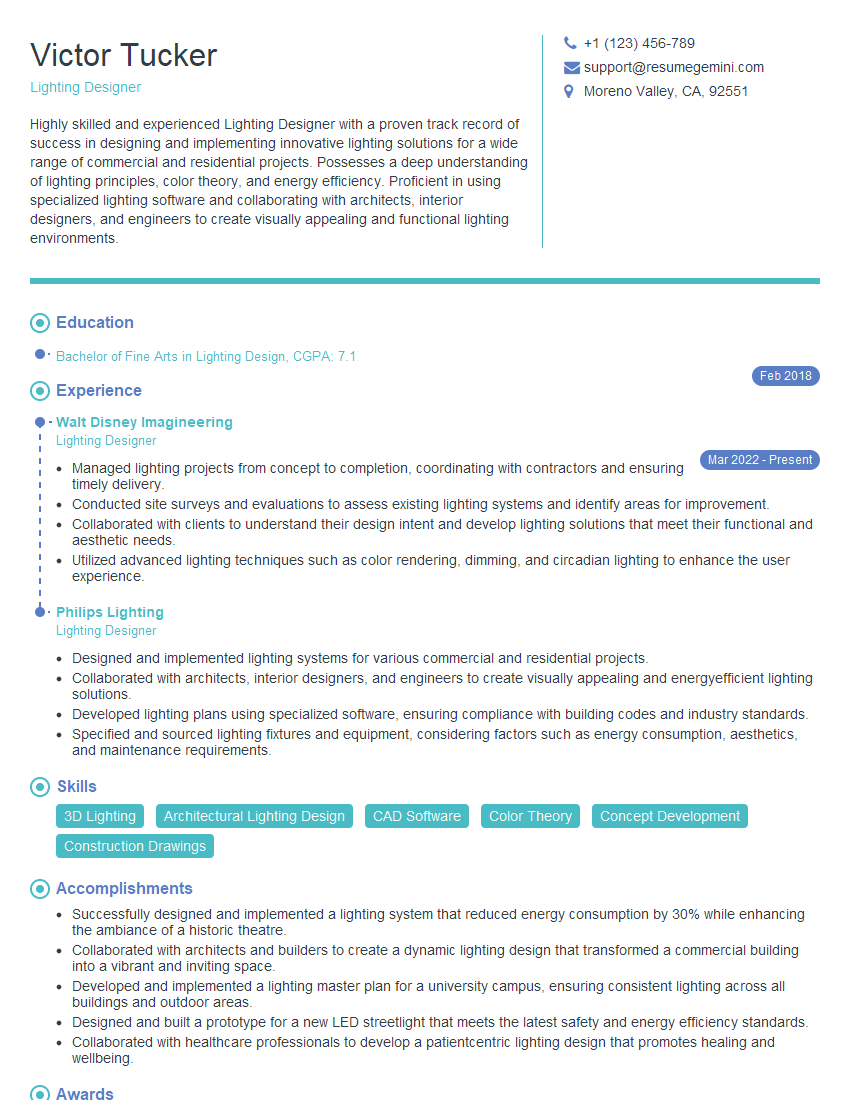
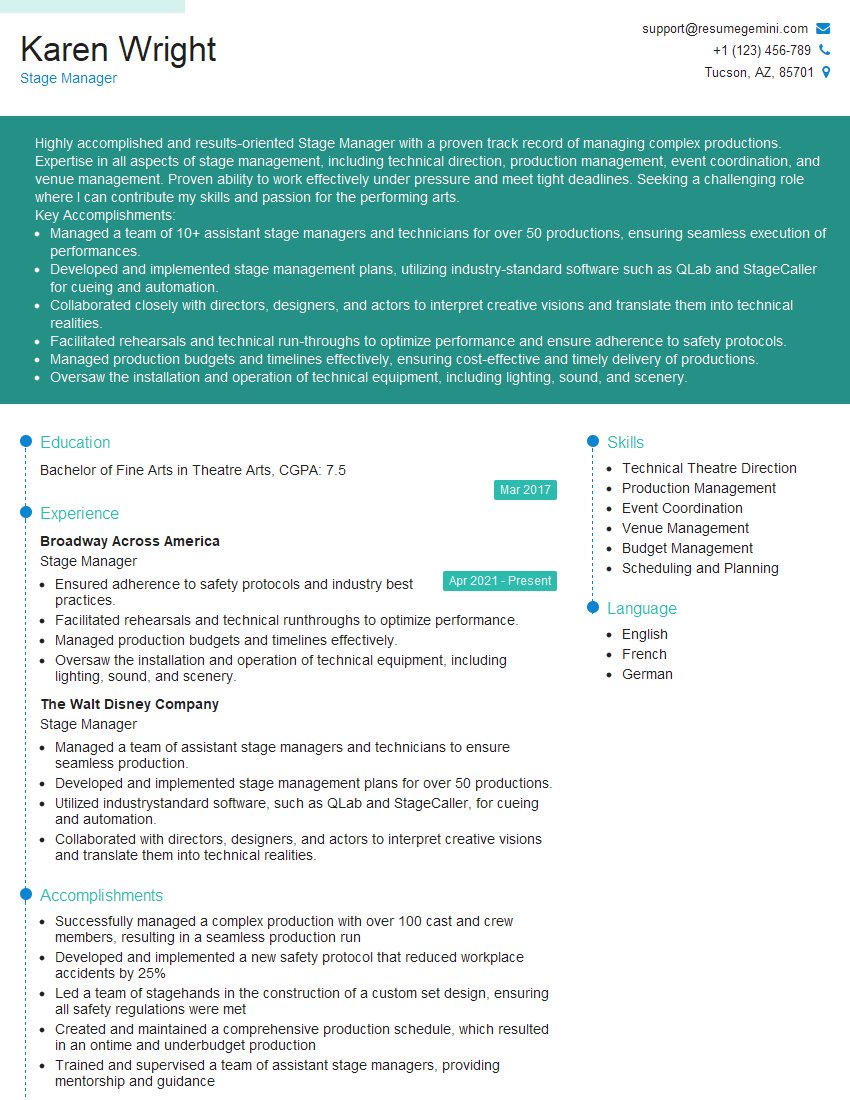
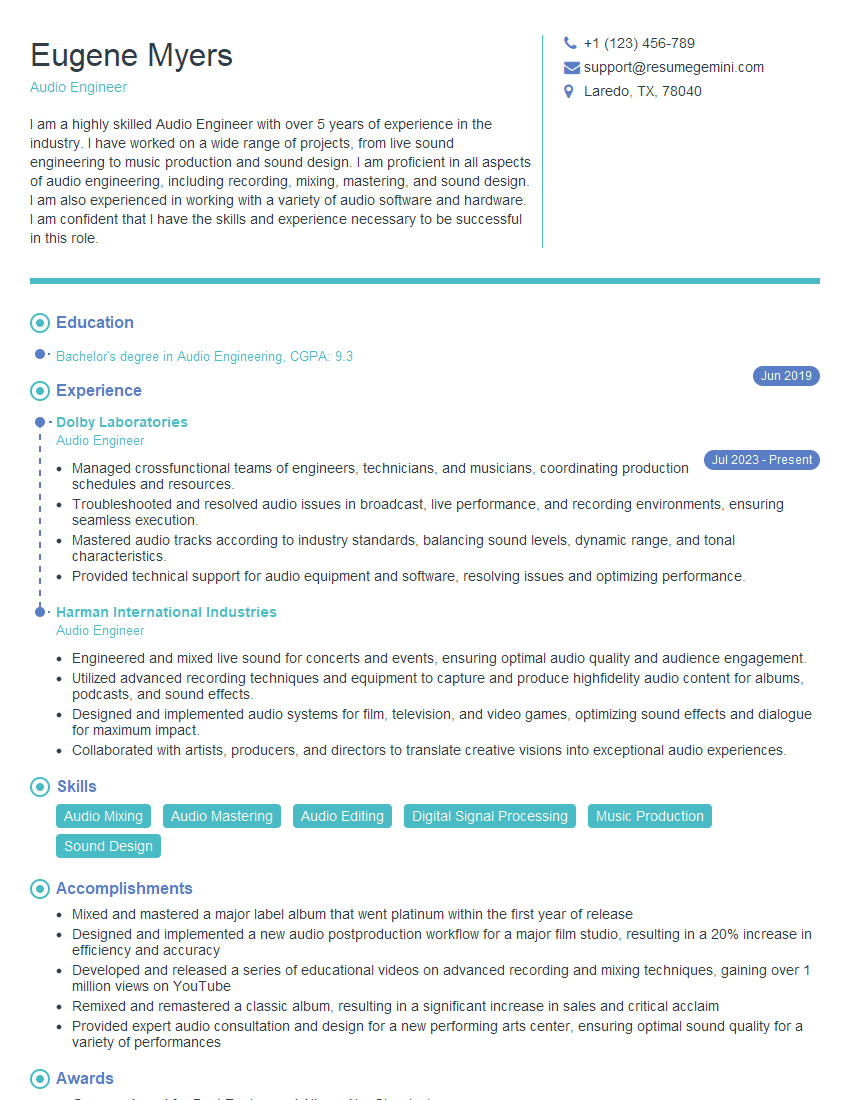
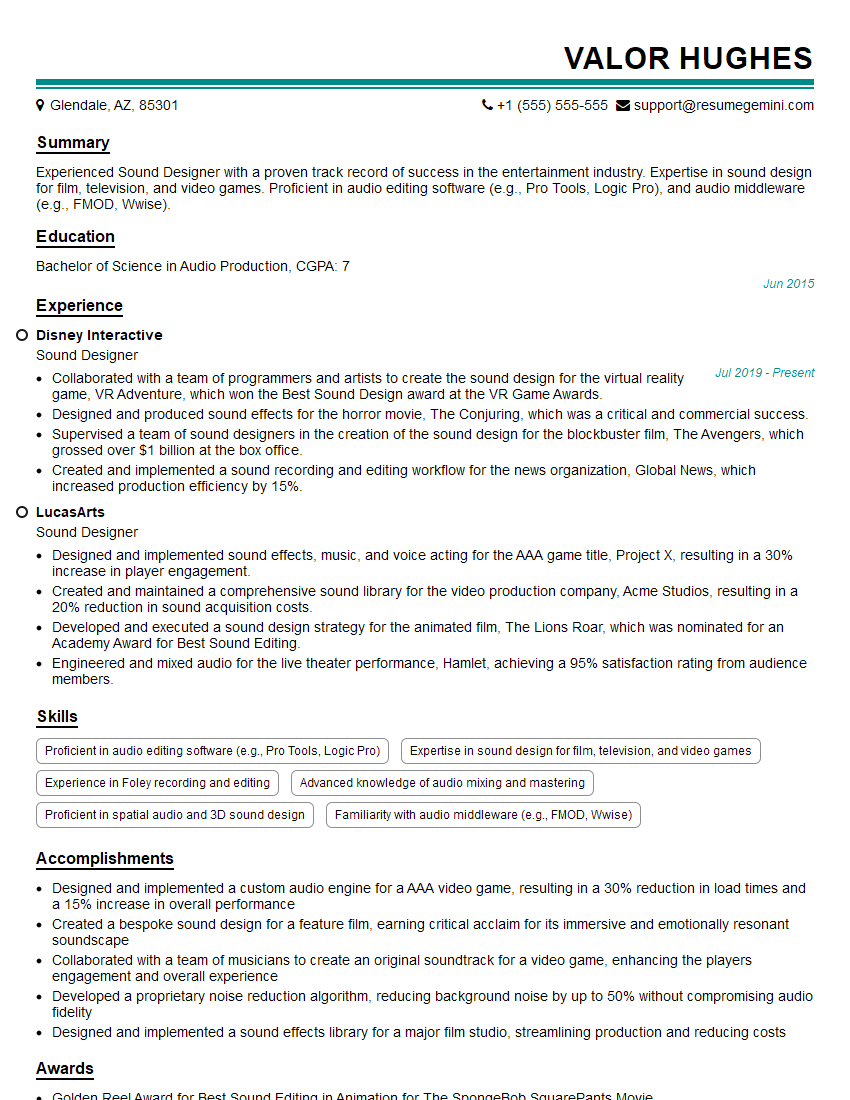
Mastering Acoustics and Music Venue Management opens doors to exciting careers in the vibrant music industry. A strong understanding of these principles is crucial for securing your dream role. To maximize your job prospects, create an ATS-friendly resume that effectively highlights your skills and experience. ResumeGemini is a trusted resource for building professional resumes, helping you present your qualifications in the best possible light. Examples of resumes tailored to Acoustics and Music Venue Management are available, providing valuable templates and guidance for your resume creation.
Explore more articles
Users Rating of Our Blogs
Share Your Experience
We value your feedback! Please rate our content and share your thoughts (optional).
What Readers Say About Our Blog
Very informative content, great job.
good