Unlock your full potential by mastering the most common Acoustics Design interview questions. This blog offers a deep dive into the critical topics, ensuring you’re not only prepared to answer but to excel. With these insights, you’ll approach your interview with clarity and confidence.
Questions Asked in Acoustics Design Interview
Q 1. Explain the difference between sound absorption and sound reflection.
Sound absorption and sound reflection are two fundamental acoustic phenomena describing how sound waves interact with surfaces. Think of throwing a ball at a wall: Sound absorption is like the ball being absorbed by the wall, losing its energy and not bouncing back. Sound reflection is like the ball bouncing off the wall, retaining much of its energy and changing direction.
More precisely, sound absorption refers to the process where sound energy is converted into other forms of energy, primarily heat, upon encountering a material. Materials like porous fabrics, acoustic foams, and certain types of drywall absorb sound effectively. Sound reflection, on the other hand, is the process where sound waves bounce off a surface, with the angle of incidence (incoming sound) equaling the angle of reflection (outgoing sound). Hard, smooth surfaces like concrete and glass reflect sound very well. The proportion of sound absorbed versus reflected depends on the material’s properties and the frequency of the sound.
Consider a recording studio: they use sound absorption materials extensively to minimize unwanted reflections that can muddy the sound, while a concert hall might use reflective surfaces to direct and amplify the sound to the audience.
Q 2. Describe the Sabine equation and its limitations.
The Sabine equation is a fundamental formula used to estimate the reverberation time (RT60) of a room – the time it takes for the sound level to decay by 60 decibels (dB) after the sound source stops. It’s expressed as:
RT60 = 0.161V/αSwhere:
- RT60 is the reverberation time in seconds
- V is the volume of the room in cubic meters
- α is the average absorption coefficient of the room’s surfaces (a dimensionless number between 0 and 1)
- S is the total surface area of the room in square meters
The Sabine equation is simple and useful for quick estimations, especially in rooms with relatively diffuse sound fields (sound waves traveling in many directions). However, it has limitations:
- It assumes diffuse sound fields: In reality, sound often reflects more predictably in some directions than others, especially in smaller rooms with non-parallel surfaces.
- It doesn’t account for sound absorption in the air: Air absorbs sound energy, especially at higher frequencies, and this effect is not included in the basic Sabine equation.
- It’s less accurate at low frequencies: Low-frequency sound waves have longer wavelengths and may not be effectively absorbed by many common materials.
- It assumes linear absorption: Real-world materials don’t always absorb sound linearly across all frequencies; their absorption coefficients vary.
More sophisticated models, such as the Eyring equation, address some of these limitations by incorporating factors like air absorption and non-diffuse sound fields. The Sabine equation is a good starting point, but should be used with caution, and its results should be viewed as approximations, especially in more complex acoustic environments.
Q 3. How do you measure sound absorption coefficients?
Sound absorption coefficients are determined using reverberation chamber tests or impedance tube tests. Both methods are standardized and provide objective measurement data.
Reverberation Room Method: A sample material is placed within a specially designed reverberation chamber with known volume and surface area. A sound source emits a broad spectrum of sound energy, and the decay rate of the sound is measured with and without the test material. The difference in the decay rates allows us to calculate the absorption coefficient at various frequencies.
Impedance Tube Method: This method is more suitable for smaller samples and focuses on measuring the acoustic impedance of the material. A sample is placed at one end of a tube, and a speaker at the other end generates sound waves. The standing wave pattern created within the tube allows the determination of the absorption coefficient and the material’s acoustic impedance.
The results of these tests provide a set of absorption coefficients, typically for the frequency range of 125 Hz to 4000 Hz, in one-third octave bands. These coefficients are essential for predicting the acoustic performance of materials in various architectural settings. The higher the absorption coefficient (closer to 1), the greater the sound absorption capacity of the material.
Q 4. What are the common types of sound barriers and their applications?
Sound barriers are designed to reduce noise transmission by interrupting the path of sound waves. Several types exist, each with specific applications:
- Solid Barriers: These are typically constructed from dense materials like concrete, masonry, or earth berms. They are effective at blocking a wide range of frequencies and are commonly used for noise control along highways, railways, and industrial sites.
- Berms (Earth Mounds): Natural and cost-effective, earth berms are used to absorb and block sound, especially at lower frequencies. They are frequently integrated into landscaping to provide both noise control and visual screening.
- Modular Barriers: These prefabricated panels are often made of metal, wood, or composite materials, sometimes with absorptive facing. They offer flexibility in design and installation and are common in construction sites, residential areas, and along roadways.
- Noise Walls: A specific type of solid or modular barrier often found along highways and railways, these are designed to reflect and absorb airborne sound.
- Vegetation Barriers: While not as effective as solid barriers, strategically planted trees and shrubs can help absorb and scatter sound waves, particularly at higher frequencies. They can be used in conjunction with other barriers.
The choice of sound barrier depends on factors such as the type and level of noise, the environment, aesthetic considerations, and budget. A thorough acoustic analysis is crucial to determine the appropriate barrier type, height, and placement for optimal noise reduction.
Q 5. Explain the concept of sound transmission class (STC).
The Sound Transmission Class (STC) rating is a single-number rating of a building element’s ability to reduce the transmission of airborne sound. Higher STC ratings indicate better sound insulation. It’s expressed as a whole number, for example, STC 50.
The STC rating is determined through laboratory testing according to standardized procedures. A sound source in one room generates a wide range of frequencies, and the sound level is measured in an adjacent room. The difference in sound levels at various frequencies is used to calculate the STC rating. A higher STC value means that more sound energy is blocked by the construction element.
STC ratings are widely used in building codes and specifications to ensure adequate sound insulation between rooms and spaces in residential and commercial buildings. For instance, a wall with an STC of 50 provides better sound isolation than a wall with an STC of 35. However, STC alone doesn’t capture the full acoustic picture, as it doesn’t account for low-frequency sound performance or impact noise reduction.
Q 6. How do you design for good speech intelligibility in a room?
Good speech intelligibility depends on optimizing the balance between direct sound (sound reaching the listener directly from the source) and reverberant sound (sound reflections). Several strategies can be employed:
- Optimize Reverberation Time: The reverberation time should be appropriate for the room’s size and function. Too long a reverberation time makes speech muddy and difficult to understand. Too short a time makes the speech sound dry and unnatural. The appropriate reverberation time depends on room size and use but is usually in the range of 0.4 to 1.2 seconds for speech-oriented spaces.
- Control Early Reflections: Early reflections that arrive within a short time interval after the direct sound can either enhance or detract from intelligibility. Strategically placed absorbers can minimize undesirable early reflections, improving clarity.
- Reduce Background Noise: External and internal background noise will affect intelligibility. Effective sound insulation and noise control measures can reduce ambient noise levels.
- Appropriate Sound Reinforcement System (If Needed): For large spaces, a well-designed sound reinforcement system with appropriately placed loudspeakers can ensure even sound coverage and boost speech levels.
- Room Shape and Size: Room shape and size significantly influence sound propagation and reflections. Avoiding parallel walls and using sound-diffusing elements can improve intelligibility.
- Material Selection: Choosing appropriate sound-absorbing materials for the walls, ceiling, and floor is crucial in managing reverberation and improving intelligibility.
Acoustical modeling software can be invaluable in predicting speech intelligibility in a room before construction.
Q 7. What are some strategies for controlling noise in a building?
Controlling noise in a building requires a multifaceted approach that addresses both airborne and structure-borne noise. Strategies include:
- Source Control: Reducing noise at its source is the most effective method. This might involve using quieter equipment, implementing vibration isolation for machinery, or adopting noise reduction techniques in the building’s mechanical systems.
- Path Control: Interfering with the path sound takes to reduce transmission. This is done via insulation, sound barriers, and proper design choices.
- Receiver Control: Protecting the listener from noise. This involves using personal protective equipment (PPE), designing quiet spaces, or implementing sound masking systems.
- Sound Insulation: Utilizing sound-absorbing materials and soundproofing techniques, like adding insulation to walls, ceilings, and floors and installing double-glazed windows, significantly reduces sound transmission.
- Vibration Isolation: Implementing vibration isolation measures for mechanical equipment, such as using resilient mounts or vibration dampeners, reduces structure-borne noise transmission.
- Strategic Room Placement: Carefully planning the location of noisy spaces (e.g., mechanical rooms) relative to quieter spaces (e.g., bedrooms) helps minimize noise intrusion.
- Airborne Noise Reduction: Sealing gaps and cracks in walls, windows, and doors prevents sound leakage. The use of sound-absorbing materials like acoustic panels can reduce reverberation within rooms.
A detailed acoustic analysis and design are crucial for effective noise control in any building project. This usually involves calculations of sound transmission loss (STL), sound absorption coefficients, and reverberation times to ensure that design choices effectively meet the desired noise reduction targets.
Q 8. Describe different types of noise and their sources.
Noise is simply unwanted sound. We categorize it based on its source and characteristics. There are several types:
- Airborne Noise: This is sound that travels through the air. Examples include traffic noise, speech, music from a nearby venue, or the hum of machinery. Sources are diverse, from vehicles to industrial equipment and even human activity.
- Structure-borne Noise: This type of noise travels through solid materials like walls, floors, and ceilings. Think of the thumping of footsteps from upstairs, the vibrations from a washing machine, or the rumble of a train passing nearby. Sources are often impacts or vibrations.
- Impact Noise: A specific subcategory of structure-borne noise, impact noise is caused by a sudden collision or impact. Dropping objects, slamming doors, and footfalls are prime examples. It’s often characterized by its impulsive nature.
- Environmental Noise: This encompasses a broad range of sounds emanating from the environment, including natural sounds like wind and rain, as well as anthropogenic sounds like traffic, construction, and industrial activity. Managing environmental noise is crucial for preserving peace and quiet, especially in urban areas.
Understanding the type of noise is crucial for effective noise control. For example, addressing airborne noise might involve soundproofing walls, while managing impact noise would focus on isolating the source of the impact or using resilient materials.
Q 9. How do you use acoustic modeling software?
Acoustic modeling software, like Odeon, EASE, or Room Acoustics Simulator, are invaluable tools for predicting and visualizing sound behavior in a given space. My process typically involves these steps:
- Geometry Creation: I begin by accurately modeling the room’s geometry using the software’s CAD tools. This includes defining the dimensions, materials, and any architectural features.
- Material Assignment: Each surface within the model is assigned its specific acoustic properties, like absorption coefficient and scattering coefficient. This data is crucial for accurate simulations.
- Source Definition: The position and characteristics of sound sources, such as speakers or machinery, are defined. This may also include directionality information of the source.
- Simulation Run: Once the model is complete, I run the simulation to calculate parameters such as reverberation time, sound pressure levels, and sound propagation pathways. This often involves specifying various frequency ranges.
- Results Analysis and Interpretation: The software outputs data that I analyze to identify potential acoustic issues and explore different design solutions. I use visualizations like color maps and impulse response plots to understand how sound behaves in the space.
- Design Iteration: Based on the simulation results, I iterate on the design, adjusting materials, geometry, or source placement to achieve the desired acoustic performance. For example, I might add sound-absorbing panels or strategically place diffusers to improve sound quality.
These simulations enable informed decision-making before construction, avoiding costly rework and ensuring optimal acoustic performance. I’ve used this approach successfully in projects ranging from concert halls to recording studios, each demanding a unique acoustic profile.
Q 10. What are the common issues with room acoustics and how to address them?
Common room acoustic issues often stem from poor design choices or a lack of acoustic treatment. Some prevalent problems include:
- Excessive Reverberation: Long reverberation times, where sound reflections persist for too long, cause muddiness and poor speech intelligibility. This is common in large, hard-surfaced rooms. Solution: Incorporate sound-absorbing materials like acoustic panels, curtains, or carpets.
- Echoes: Distinct reflections of sound waves create echoes, disrupting speech intelligibility and clarity. This is often caused by parallel reflective surfaces. Solution: Break up parallel surfaces using diffusers or strategically placed absorbent materials.
- Poor Speech Intelligibility: This results from excessive reverberation, echoes, or background noise masking speech. Solution: Optimize reverberation time, reduce background noise, and strategically position sound sources and listeners.
- Uneven Sound Distribution: Some areas of the room might be too loud or too quiet. Solution: Use sound diffusers to evenly distribute sound energy and strategically position sound sources to improve sound coverage.
- Noise Intrusion: External noise can significantly disrupt the acoustic environment. Solution: Implement soundproofing measures like insulated walls, double-glazed windows, and specialized doors.
Addressing these problems requires careful planning and the application of appropriate acoustic treatments. My experience has shown that a thorough understanding of the space’s function and its intended use is key to achieving optimal acoustics.
Q 11. Explain the concept of reverberation time and its importance.
Reverberation time (RT60) is the time it takes for sound to decay by 60 decibels (dB) after the sound source stops. It’s a crucial indicator of a room’s acoustic character. A shorter RT60 is desirable for speech-oriented environments (e.g., classrooms, conference rooms) to ensure clarity. Longer RT60s are often preferred in musical spaces (e.g., concert halls, recording studios) to enhance richness and warmth, but only within certain limits.
The importance of reverberation time lies in its direct impact on:
- Speech Intelligibility: Excessive reverberation makes speech blurry and difficult to understand. A well-designed space manages RT60 to ensure optimal clarity.
- Musical Quality: In musical settings, RT60 influences the ambiance and character of the sound. Too short an RT60 makes the music sound dry and lifeless; too long, it becomes muddy and unclear.
- Overall Acoustic Comfort: A properly balanced RT60 contributes significantly to the comfort and enjoyment of a space, whether for speech, music, or simply quiet contemplation. An uncomfortable acoustic environment can lead to fatigue and distraction.
Designing for the right RT60 necessitates careful material selection and consideration of the room’s volume and geometry. For instance, a small recording studio needs a drastically different RT60 compared to a large concert hall.
Q 12. How do you assess the impact of noise on the environment?
Assessing the impact of noise on the environment involves a multi-faceted approach using a combination of field measurements, modeling, and regulatory compliance.
- Noise Mapping: We conduct noise surveys using calibrated sound level meters to measure noise levels at various locations. This data is then used to create noise maps showing noise levels across a specific area.
- Noise Modeling: Software like CadnaA allows us to model the propagation of noise from various sources, predicting noise levels in different scenarios. This is particularly useful for assessing the impact of potential developments or infrastructure projects.
- Environmental Impact Assessment (EIA): This crucial step involves evaluating the potential environmental impacts of a project, including noise pollution. It often requires consideration of relevant regulations and standards.
- Community Engagement: Understanding the concerns and perceptions of the community affected by the noise is crucial. We often conduct public consultations to gather feedback and address any concerns.
- Compliance with Regulations: Noise assessments must comply with local, regional, and national noise regulations. This often involves comparing predicted and measured noise levels with prescribed limits.
For example, in assessing the environmental impact of a new highway, we would model the noise propagation from traffic, considering factors like traffic volume, vehicle speed, and terrain. This would allow us to predict noise levels at nearby residential areas and compare these predictions to acceptable noise limits defined by regulations, ensuring the project doesn’t negatively affect the community’s well-being.
Q 13. What are the different types of microphones and their applications in acoustic measurements?
Different microphones cater to specific acoustic measurement needs. The choice depends on the frequency range, sensitivity, and directivity required.
- Condenser Microphones: These are highly sensitive and offer a wide frequency response, making them ideal for precise measurements in various applications, including sound intensity measurements and reverberation time measurements.
- Dynamic Microphones: More rugged and less sensitive to handling noise, dynamic microphones are often used in situations with high sound pressure levels, such as measuring industrial noise.
- Pressure-field Microphones: These measure sound pressure at a point and are suitable for general sound level measurements.
- Intensity Microphones: These use two closely spaced microphones to measure sound intensity, providing information on both the sound pressure and particle velocity. This is valuable for identifying noise sources and determining sound power levels.
- Array Microphones: These consist of multiple microphones arranged in a specific configuration to provide spatial information about sound sources. Useful for source localization and noise mapping.
In practice, I select the microphone type based on the specific measurement requirements. For example, condenser microphones are preferred for high-fidelity recordings and precise acoustic measurements in controlled environments, while dynamic microphones are more suitable for noisy environments where robustness is critical.
Q 14. Describe your experience with acoustic simulations.
I have extensive experience with acoustic simulations using various software packages, including Odeon, EASE, and CATT-Acoustic. I have used these tools in a wide range of projects, from designing concert halls and recording studios to assessing the acoustic performance of buildings and mitigating noise pollution in urban environments.
One particularly challenging project involved designing the acoustics of a multi-purpose auditorium. The client wanted a space that could comfortably host both orchestral concerts and theatrical performances, each with very different acoustic requirements. Using acoustic simulation software, I modeled several design iterations, experimenting with different ceiling designs, wall treatments, and seating arrangements. The simulations helped me optimize the reverberation time and sound distribution to satisfy the client’s needs for both clarity and warmth. The final design, validated by the simulations, resulted in a space praised for its exceptional acoustic performance. This highlights the crucial role of simulations in achieving successful acoustic designs.
Q 15. Explain your approach to solving a complex acoustics problem.
Tackling a complex acoustics problem involves a methodical approach. It begins with a thorough understanding of the problem’s scope. This means carefully analyzing the existing conditions, identifying the noise sources, and defining the desired acoustic outcome – be it improved speech intelligibility in a lecture hall or reduced noise transmission in an apartment building. I then develop a detailed model, often using specialized software like Odeon or EASE, incorporating the room geometry, material properties, and source characteristics. This model helps predict the sound field and identify areas needing attention. Next, I explore potential solutions, comparing their effectiveness and cost-benefit ratios. This might involve suggesting architectural modifications, installing acoustic treatments, or implementing noise control measures at the source. Finally, I’ll recommend a tailored solution, documenting everything for easy implementation and future reference, always ensuring the chosen solution aligns with project goals and budget constraints. For example, in designing a concert hall, we might model the sound field to optimize reverberation time for different musical genres, ensuring both clarity and richness.
Career Expert Tips:
- Ace those interviews! Prepare effectively by reviewing the Top 50 Most Common Interview Questions on ResumeGemini.
- Navigate your job search with confidence! Explore a wide range of Career Tips on ResumeGemini. Learn about common challenges and recommendations to overcome them.
- Craft the perfect resume! Master the Art of Resume Writing with ResumeGemini’s guide. Showcase your unique qualifications and achievements effectively.
- Don’t miss out on holiday savings! Build your dream resume with ResumeGemini’s ATS optimized templates.
Q 16. What are your preferred methods for measuring sound levels?
Accurate sound level measurements are crucial. My preferred methods involve using calibrated sound level meters, ideally Class 1 for higher precision. These meters measure sound pressure levels (SPL) in decibels (dB), often across different frequency bands (using octave or 1/3 octave filters). For detailed analysis, I often employ sound intensity probes which measure the sound energy flowing in a specific direction, providing greater insight into noise source identification and location. In addition to these, I frequently use specialized software to analyze the collected data, creating visualizations that aid in understanding the acoustic environment. For instance, a noise mapping study for an airport requires a combination of sound level meter readings at various locations and sophisticated software to model the propagation of aircraft noise and predict noise contours across the surrounding area.
Q 17. Describe your experience with different types of acoustic materials.
My experience spans a wide range of acoustic materials, each with its unique properties. Porous absorbers, like acoustic foam or mineral wool, are excellent for reducing reverberation by absorbing sound energy. These are commonly used in recording studios and home theaters. On the other hand, resonant absorbers, such as Helmholtz resonators or membrane absorbers, target specific frequencies making them ideal for addressing resonant modes within a room. Then we have barrier materials, like drywall or specialized acoustic panels, which are designed to reduce sound transmission between spaces – crucial for soundproofing walls and ceilings. Each material’s performance is influenced by its thickness, density, and surface characteristics. I consider the material’s absorption coefficient and transmission loss when selecting the appropriate material for a specific application. For example, in a recording studio, a combination of porous absorbers and bass traps (resonant absorbers) is crucial for achieving a balanced acoustic environment, minimizing unwanted reflections and resonances.
Q 18. How do you handle conflicting design requirements in acoustics projects?
Conflicting design requirements are common in acoustics. For instance, a client might desire both excellent sound insulation and large windows. This requires a balanced approach – a collaborative effort with architects and other designers. My strategy is to first clearly document all requirements and constraints. I then prioritize them based on their importance, using a weighted scoring system. This helps quantify the relative importance of each. Next, I explore different design options, simulating each scenario with acoustic modeling software to evaluate their impact on conflicting requirements. Finally, I present different scenarios to the client, explaining the trade-offs involved, allowing informed decision-making. For example, selecting high-performance glazing with enhanced acoustic properties can partially address the desire for both natural light and good sound insulation.
Q 19. What are some common building codes and regulations related to acoustics?
Building codes and regulations related to acoustics vary by location, but common themes include limiting noise transmission between dwelling units (e.g., STC ratings for walls and floors), setting maximum permissible noise levels in different spaces (e.g., decibel limits for HVAC systems), and specifying acoustic performance requirements for specific building types (e.g., requirements for schools, hospitals, or theaters). Familiarization with these codes is crucial; it informs design decisions and ensures compliance. For example, the International Building Code (IBC) provides general guidelines, while local jurisdictions may have more stringent requirements. Regularly updating knowledge on these codes and standards is critical for staying abreast of changes and best practices.
Q 20. How do you deal with unexpected noise issues during a project?
Unexpected noise issues during construction require a rapid and effective response. The first step involves identifying the source of the noise. This might involve on-site sound level measurements, visual inspection, or discussions with the construction team. Once identified, the solution depends on the nature of the problem. It could range from modifying construction techniques (e.g., using quieter equipment or adjusting working hours) to implementing additional acoustic treatments (e.g., adding more sound insulation to a partition). Documentation is essential, recording the problem, the corrective actions taken, and verification of effectiveness. For example, if excessive noise from a ventilation system is discovered, we might need to re-design the ductwork or install additional silencers.
Q 21. Explain the concept of critical distance in room acoustics.
Critical distance in room acoustics refers to the distance from a sound source where the direct sound level equals the reverberant sound level. Before this distance, the direct sound dominates; after it, the reverberant sound becomes more prominent. Imagine a speaker in a room: close to the speaker, you hear the sound directly from the source clearly. As you move farther away, the reflections from the room’s surfaces catch up, eventually becoming equally loud as the direct sound at the critical distance. This distance is influenced by the room’s size, shape, and absorption characteristics. Knowing the critical distance is essential for optimizing room acoustics, particularly in performance spaces. In a concert hall, we might aim for a large critical distance to ensure that the audience hears a balanced mix of direct and reverberant sound, fostering a rich and immersive experience. A smaller critical distance might be preferable in a smaller, more intimate venue.
Q 22. Describe your experience working with different clients and stakeholders.
My experience spans a diverse range of clients, from architects and developers on large-scale projects like concert halls and stadiums, to smaller firms designing boutique restaurants and recording studios. I’ve also worked directly with end-users, such as school districts needing improved classroom acoustics or industrial clients seeking noise reduction solutions for their factories. Working with diverse stakeholders requires strong communication skills. For instance, I might explain complex acoustic principles to a non-technical architect using analogies, while delivering detailed technical reports for engineers. Each stakeholder has unique needs and priorities; understanding these is crucial for successful project delivery. I’ve found active listening and clear, concise communication are key to navigating differing perspectives and achieving mutually agreeable outcomes.
Q 23. What software and tools are you proficient in (e.g., EASE, CATT-Acoustic)?
I’m proficient in several industry-standard software packages. These include EASE (Electro-acoustic simulation software), widely used for predicting sound reinforcement systems in spaces like churches and auditoriums; CATT-Acoustic, a powerful room acoustics simulation tool for design and analysis; and Odeon, another room acoustics software. Beyond these, I’m adept at using specialized measurement tools like sound level meters (SLMs), real-time analyzers (RTAs), and acoustic cameras for on-site data acquisition. Proficiency in these tools is essential for accurate acoustic modeling and analysis.
Q 24. How do you ensure the accuracy and reliability of your acoustic measurements?
Ensuring accurate and reliable acoustic measurements requires meticulous attention to detail and adherence to established standards. Before any measurement, I meticulously calibrate my equipment using traceable standards and follow ISO-compliant procedures. This involves performing background noise measurements to assess the ambient sound levels and account for any potential interference. During measurements, I carefully select microphone positions to ensure representative data, paying close attention to factors like reverberation and background noise. I typically make multiple measurements at each location and use statistical analysis to ensure the reliability of my results. After collecting the data, I thoroughly review it for anomalies and use appropriate software to process and interpret the findings. The entire process, from calibration to data interpretation, is meticulously documented to ensure transparency and traceability.
Q 25. Describe a challenging acoustics project you worked on and how you overcame the challenges.
One particularly challenging project involved designing the acoustics for a multi-purpose hall within a historic building. The existing structure posed significant limitations—irregular geometry, thick masonry walls, and a history of renovations. The initial acoustic simulations indicated significant issues with sound reflections and reverberation times. To overcome this, we employed a combination of strategies. We used computational modeling to simulate various solutions, exploring the effectiveness of different materials and configurations. This included testing different absorption and diffusion treatments. After thorough testing and simulations, we carefully placed absorptive panels and diffusers to control reflections and reduce excessive reverberation, ensuring a balanced acoustic environment for various uses, from lectures to musical performances. The final result was a satisfyingly successful blend of acoustic design and preservation of the building’s historical integrity.
Q 26. How do you stay updated with the latest advancements in acoustics technology?
Keeping abreast of advancements in acoustics technology is crucial in this rapidly evolving field. I actively participate in professional organizations like the Acoustical Society of America (ASA), attending conferences and workshops to learn about the latest research and technologies. I regularly read peer-reviewed journals, like the Journal of the Acoustical Society of America, and industry publications, to stay informed about new software, materials, and measurement techniques. Online resources, webinars, and manufacturer updates also provide valuable insights into emerging trends. This commitment to continuous learning ensures I remain at the forefront of the field and can leverage the latest innovations in my work.
Q 27. Explain the principles of sound insulation and how it is achieved.
Sound insulation, or soundproofing, aims to reduce the transmission of sound through building elements like walls, floors, and ceilings. It’s achieved primarily by two mechanisms: mass and damping. Mass law dictates that heavier materials are better sound insulators. A thicker concrete wall will offer better sound insulation than a thin plasterboard wall. Damping refers to the ability of a material to absorb sound energy. Materials with high damping properties, like rubber or specialized acoustic insulation, help reduce sound transmission by converting sound energy into heat. Effective sound insulation is often achieved by combining both mass and damping. For example, a double-wall construction with a decoupling layer (like resilient channels) between the walls provides effective sound insulation by combining the mass of the walls with the damping properties of the decoupling layer. This creates a break in the transmission path, significantly reducing sound leakage.
Q 28. What are your career goals within the field of Acoustics?
My career goals include continuing to expand my expertise in specialized areas of acoustics, such as environmental noise control and architectural acoustics. I also aspire to contribute to the advancement of the field through research and publication. Furthermore, I aim to take on leadership roles within the acoustics community, mentoring junior professionals and sharing my knowledge to foster the growth and excellence of the field. Ultimately, my goal is to use my skills to design acoustically comfortable and sustainable environments that enhance the quality of life for everyone.
Key Topics to Learn for Acoustics Design Interview
- Room Acoustics: Understanding reverberation time, sound absorption, diffusion, and their impact on speech intelligibility and listening experience. Practical application: Designing concert halls, recording studios, or classrooms for optimal acoustics.
- Sound Insulation & Transmission Loss: Principles of sound isolation, materials selection (e.g., mass law, STC ratings), and flanking transmission paths. Practical application: Designing soundproof walls for residential buildings or industrial noise control.
- Noise Control Engineering: Identifying noise sources, propagation paths, and implementing effective mitigation strategies. Practical application: Reducing highway noise impact on nearby communities or designing quiet HVAC systems.
- Architectural Acoustics: Integrating acoustic considerations into the architectural design process, from initial concept to construction. Practical application: Designing spaces with effective sound masking or minimizing noise interference in open-plan offices.
- Environmental Noise Assessment: Understanding and applying noise modeling software and techniques to predict and manage noise pollution. Practical application: Conducting environmental impact assessments for construction projects or airports.
- Building Codes and Regulations: Familiarity with relevant building codes and standards related to acoustics. Practical application: Ensuring designs meet legal requirements for noise levels in different building types.
- Acoustic Measurements and Analysis: Understanding various acoustic measurement techniques and data analysis methods. Practical application: Validating design performance through on-site measurements and analysis.
- Sound Absorption and Diffusion Materials: Knowledge of different materials used for sound absorption and diffusion, and their application in various acoustic scenarios. Practical application: Selecting optimal materials for improving room acoustics.
Next Steps
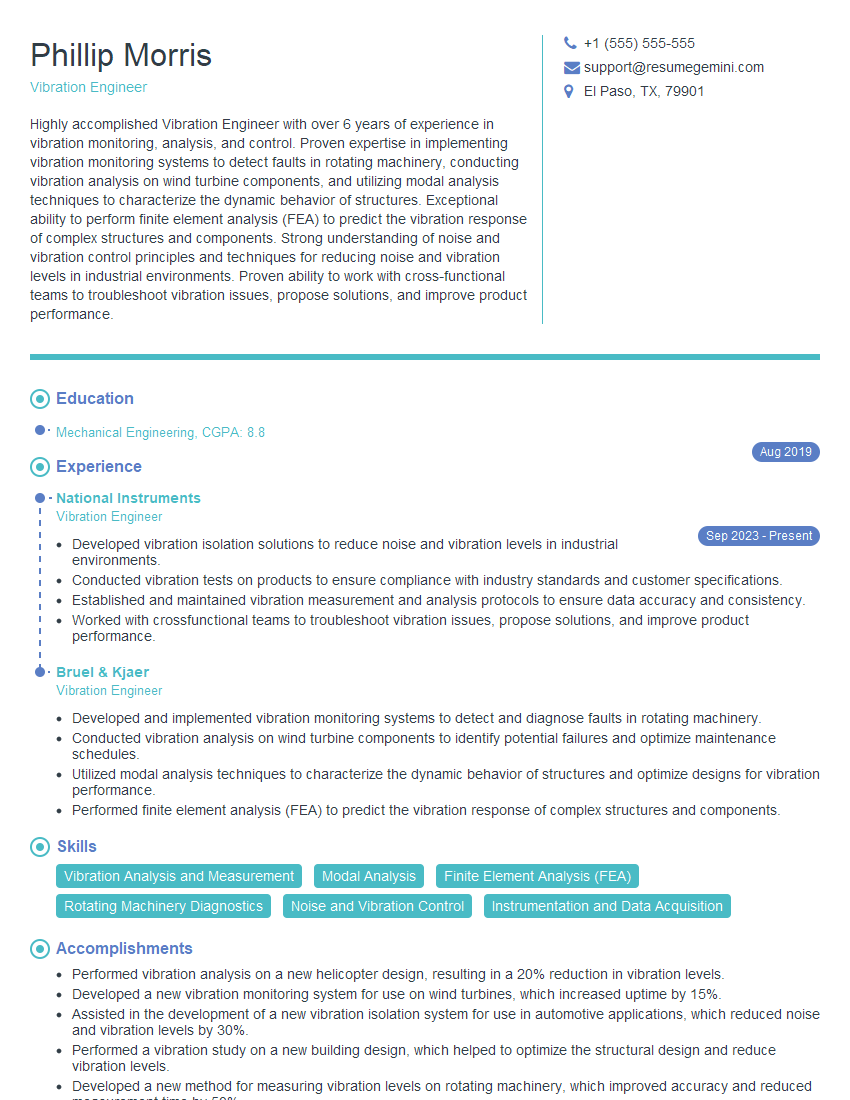
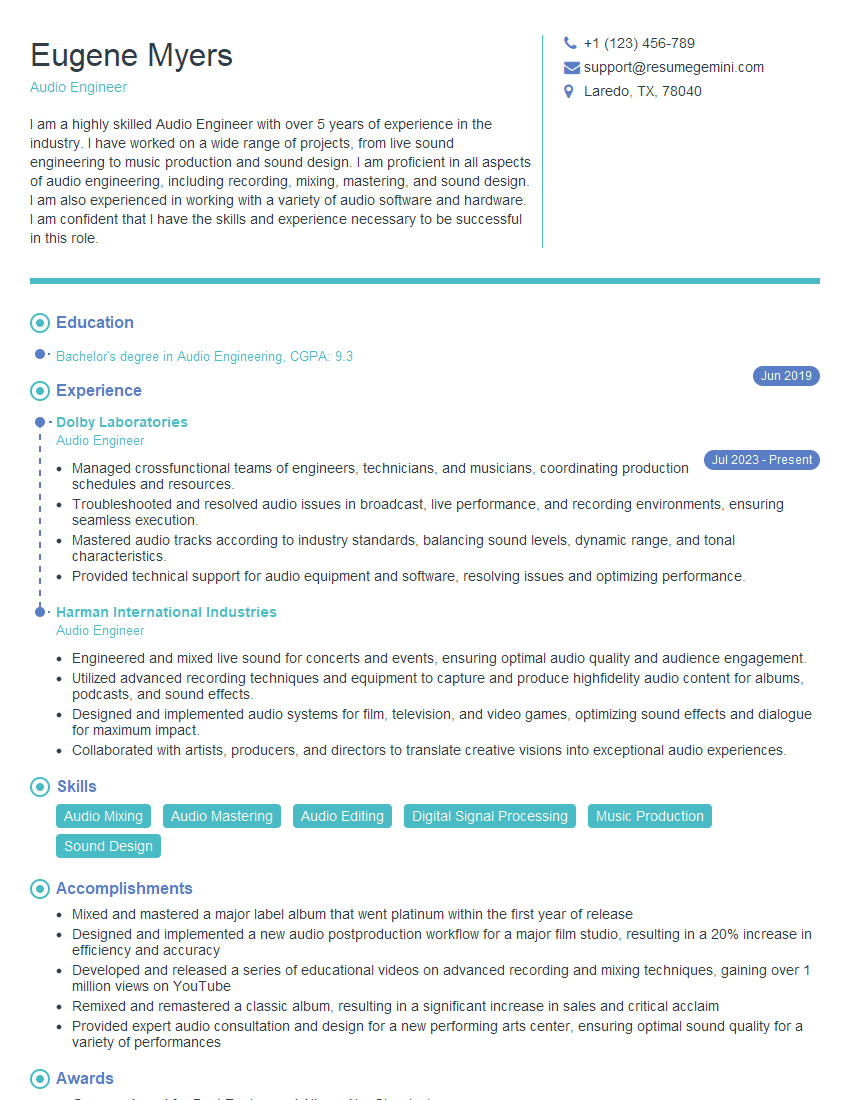
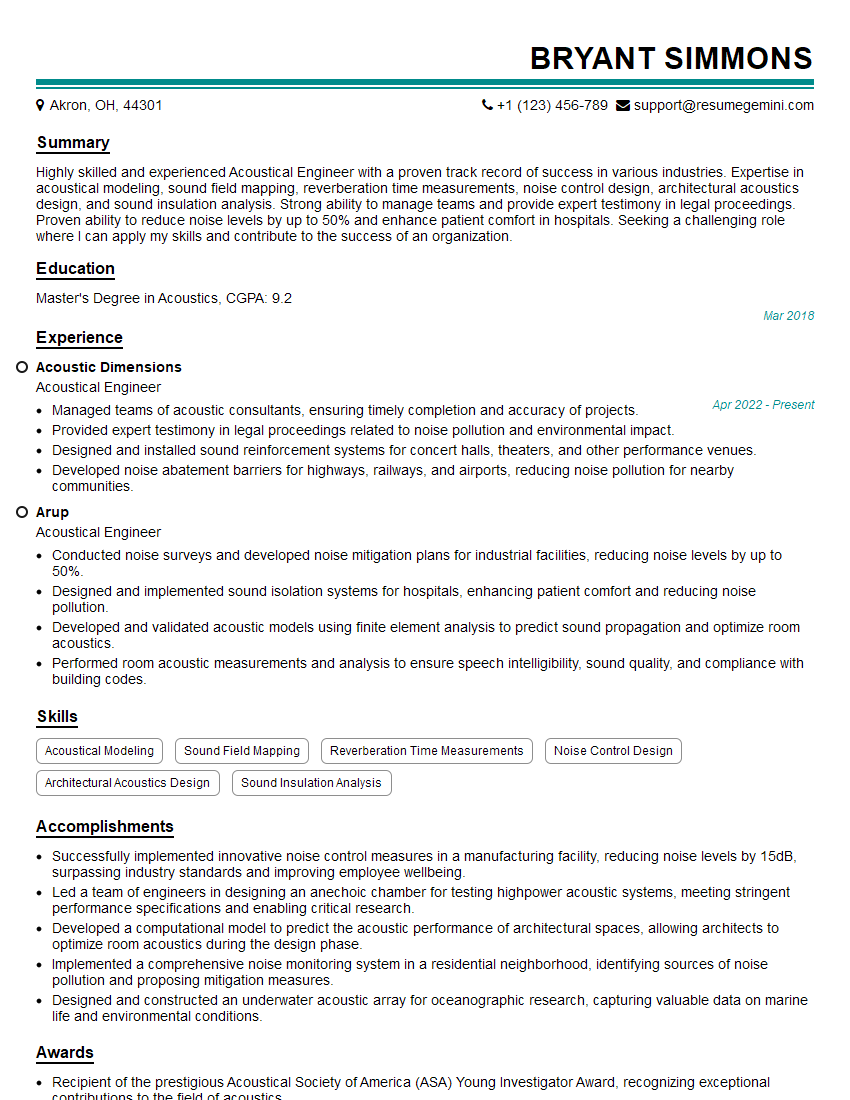
Mastering Acoustics Design opens doors to a rewarding career with diverse opportunities in architectural firms, consulting companies, and manufacturing industries. To significantly increase your chances of landing your dream job, creating a well-structured, ATS-friendly resume is crucial. ResumeGemini is a trusted resource that can help you craft a professional and impactful resume tailored to the specific requirements of Acoustics Design roles. Examples of resumes optimized for this field are available to guide you. Take the next step in your career journey – build a resume that showcases your skills and experience effectively.
Explore more articles
Users Rating of Our Blogs
Share Your Experience
We value your feedback! Please rate our content and share your thoughts (optional).
What Readers Say About Our Blog
Very informative content, great job.
good