Are you ready to stand out in your next interview? Understanding and preparing for Racecraft interview questions is a game-changer. In this blog, we’ve compiled key questions and expert advice to help you showcase your skills with confidence and precision. Let’s get started on your journey to acing the interview.
Questions Asked in Racecraft Interview
Q 1. Explain the concept of aerodynamic downforce and its impact on racecar handling.
Aerodynamic downforce is the force that pushes a racecar downwards, increasing its grip on the track. It’s generated by carefully designed aerodynamic components like wings, diffusers, and bodywork, manipulating airflow to create a pressure difference above and below the car. The higher pressure above the car pushes it downwards.
This increased grip significantly impacts handling. More downforce allows the car to corner at higher speeds with less risk of skidding or losing control. Imagine it like pressing down firmly on a piece of paper on a table – it’s less likely to slide. However, excessive downforce can also increase drag, reducing top speed. Finding the optimal balance between downforce and drag is a crucial aspect of racecar setup.
For example, a Formula 1 car’s front wing generates significant downforce to maintain stability during high-speed cornering. Conversely, a NASCAR stock car, with its less aggressive aerodynamics, prioritizes straight-line speed over extreme cornering grip.
Q 2. Describe the different types of tire compounds and their performance characteristics.
Tire compounds are essentially different rubber mixtures with varying properties affecting grip and durability. They are usually categorized by their hardness, with softer compounds offering more grip but wearing out faster, and harder compounds providing longer life but less grip. Think of it like choosing between different grades of sandpaper – a finer grade (softer compound) provides better grip initially, but wears out quickly, whereas a coarser grade (harder compound) lasts longer but might not grip as well.
- Soft compounds (e.g., Supersoft, Soft): Provide excellent grip, especially in low-temperature conditions, but degrade quickly.
- Medium compounds: Offer a balance between grip and durability, suitable for a variety of track conditions.
- Hard compounds (e.g., Hard, Superhard): Provide the longest life but offer less grip, ideal for managing tire wear over longer stints.
The choice of tire compound is crucial for race strategy. A team might opt for soft tires for qualifying to achieve the fastest lap time, then switch to harder compounds for the race to manage tire wear and complete the distance.
Q 3. How do you analyze telemetry data to identify areas for performance improvement?
Telemetry data, collected from sensors on the car, provides a wealth of information about its performance. Analyzing this data is crucial for identifying areas for improvement. My process typically involves these steps:
- Data acquisition and cleaning: Gathering data from various sources (GPS, accelerometers, gyroscopes, etc.) and removing any noise or errors.
- Lap time analysis: Identifying sectors where lap time is lost and correlating it with other data points.
- Performance parameter analysis: Examining parameters such as speed, acceleration, braking, g-forces, tire temperatures, and engine parameters to identify areas of weakness.
- Comparative analysis: Comparing data from different laps, drivers, or race sessions to spot anomalies or trends.
- Correlation and root cause identification: Determining the underlying causes of performance issues by correlating multiple data points.
For example, if we observe consistently lower speeds in a particular corner alongside high tire temperatures, it suggests an issue with tire wear or setup in that corner. This might lead us to adjust the car’s setup, tire pressures, or driving style.
Q 4. Explain the relationship between suspension setup and vehicle handling.
The suspension system is a crucial element that dramatically impacts a vehicle’s handling. It manages the interaction between the tires and the track surface, influencing grip, stability, and responsiveness. Key suspension parameters include:
- Spring rates: Determine the stiffness of the suspension, affecting the car’s ride height and how it reacts to bumps.
- Damper settings: Control the rebound and compression of the suspension, influencing body roll, pitch, and yaw.
- Ride height: Affects aerodynamic downforce and the center of gravity.
- Anti-roll bars: Reduce body roll during cornering, improving stability.
Adjusting these parameters alters the car’s balance, responsiveness, and overall handling characteristics. A stiffer setup will provide more grip but might make the car less comfortable and more prone to bouncing. A softer setup will make the car more comfortable but might reduce grip. The optimal setup depends on the track characteristics, tire compounds, and driver preferences.
For instance, a track with many high-speed corners might benefit from a stiffer suspension setup for better stability. Conversely, a track with lots of bumpy sections might require a softer setup to maintain tire contact.
Q 5. What are the key factors to consider when developing a race strategy?
Developing a winning race strategy requires considering several key factors:
- Track conditions: Weather, temperature, and track surface influence tire choice, fuel consumption, and car setup.
- Tire degradation: Understanding how tires wear under different conditions is crucial for tire management and stint length decisions.
- Competitor analysis: Understanding competitor strategies and performance levels helps in formulating a counter-strategy.
- Fuel strategy: Optimizing fuel consumption and pit stop timing while maintaining competitiveness.
- Safety car periods: Planning for potential safety car interruptions and their impact on race strategy.
- Driver performance: Assessing driver capabilities and limitations while tailoring the strategy accordingly.
A successful strategy is a dynamic balance between aggression and consistency. A cautious approach might ensure finishing the race, while an aggressive one might yield higher rewards but also higher risks. Consider a situation where a safety car is deployed. A team might decide to make a pit stop under the safety car to gain track position or change tire compounds without losing significant time.
Q 6. How do you manage tire wear and degradation during a race?
Managing tire wear and degradation is vital for maximizing performance and finishing the race. It involves a multi-pronged approach:
- Pre-race analysis: Understanding the expected tire wear rates based on track conditions, tire compounds, and car setup.
- Data-driven monitoring: Using telemetry data to track tire temperatures, pressures, and wear rates during the race.
- Driver feedback: Regular communication with the driver to assess tire condition and driving style adjustments.
- Strategic pit stops: Planning pit stops to change tires at optimal times, considering tire wear, fuel levels, and track position.
- Driving technique adjustments: Guiding the driver to adopt driving styles that minimize tire wear, such as smoother steering inputs and controlled braking.
For example, if telemetry shows excessive tire wear on the rear left tire, we might instruct the driver to reduce braking force on that side or adjust their driving line to reduce stress on that particular tire. This ensures the tires last until the end of the race and maintains consistent performance.
Q 7. Describe your experience with different data acquisition systems.
Throughout my career, I’ve worked extensively with several data acquisition systems, including AIM, Cosworth, and Bosch systems. Each system has its strengths and weaknesses regarding data logging capabilities, user interfaces, and integration with other systems. My experience encompasses:
- Data logging and analysis: Configuring sensors, collecting data, and performing post-race analysis to identify performance issues and areas for improvement.
- System integration: Integrating data acquisition systems with other software applications for data visualization and reporting.
- Troubleshooting and maintenance: Diagnosing and resolving issues with data acquisition hardware and software.
- Data interpretation and presentation: Converting raw data into meaningful insights and communicating findings to engineering teams and drivers.
For instance, I once used AIM’s sophisticated analysis tools to identify a correlation between a specific steering input and a sudden loss of traction, leading to a significant performance improvement through steering geometry adjustment.
Q 8. Explain the process of setting up a racecar for a specific track.
Setting up a racecar for a specific track is a meticulous process involving numerous adjustments to optimize performance based on the track’s unique characteristics. Think of it like tailoring a suit – a generic suit won’t fit perfectly; you need adjustments for the individual.
The process begins with analyzing the track layout: identifying high-speed corners, slow-speed corners, braking zones, and acceleration points. This analysis informs decisions about:
- Aerodynamics: Adjusting the car’s ride height, wing angles, and splitter settings to manage downforce. For example, a high-downforce setup is beneficial on a track with many tight corners, providing increased grip. Conversely, lower downforce might be preferred on faster tracks to reduce drag.
- Suspension: Tuning the springs, dampers, and anti-roll bars to control body roll and tire contact patch. This is crucial for maintaining stability through corners. A stiffer setup might be needed on bumpy tracks, while a softer setup could provide better grip on smoother ones.
- Brakes: Adjusting brake bias (the distribution of braking force between front and rear wheels) to suit the track layout and braking zones. A track with many heavy braking points might require a more rear-biased setup.
- Tire pressures: Optimizing tire pressures for grip and consistent lap times based on the track surface and temperature. Incorrect pressures can drastically affect handling and performance.
- Gear ratios: Adjusting gear ratios in the gearbox to ensure optimal engine performance throughout the track. This maximizes acceleration and top speed based on the track’s straight lengths and corner speeds.
After making these adjustments, extensive testing and data analysis are critical to fine-tune the setup. Telemetry data from sensors on the car provides valuable insights into tire temperatures, suspension loads, and other parameters, allowing for iterative improvements to achieve the perfect balance between speed and stability.
Q 9. How do you troubleshoot a performance issue on a racecar?
Troubleshooting a racecar’s performance issue requires a systematic and methodical approach. It’s akin to being a detective, gathering clues to identify the culprit.
The process starts with identifying the nature of the performance deficit: is it slower lap times, reduced top speed, understeer (the front of the car slides), oversteer (the rear slides), or something else? Then, a series of checks must be carried out:
- Data Analysis: Review telemetry data looking for anomalies in tire temperatures, engine performance, suspension travel, and brake pressures.
- Visual Inspection: Inspect the car for any obvious damage, such as loose fasteners, broken parts, or tire wear patterns.
- System Checks: Systematically check each major system: engine (compression, spark, fuel delivery), transmission (gear shifting, driveshaft), suspension (travel, geometry), brakes (pressure, fluid levels), and aerodynamics (damage to bodywork).
- Component Testing: If data analysis and visual inspection don’t reveal the issue, testing individual components (e.g., replacing spark plugs, checking fuel pressure) might be necessary.
- Driver Feedback: Crucially, gather the driver’s feedback. They can provide invaluable insights into how the car feels and handles.
For example, inconsistent lap times coupled with high tire temperatures on one side might point to a suspension issue. Slow top speed could indicate a problem with the engine or drivetrain. Once the problem is identified, the appropriate repairs or adjustments can be made.
Q 10. What is your experience with CFD (Computational Fluid Dynamics) in motorsport?
Computational Fluid Dynamics (CFD) is an indispensable tool in modern motorsport. It allows us to simulate airflow around the car, providing detailed information on aerodynamic performance without the need for extensive wind tunnel testing (though wind tunnels still play a significant role).
My experience with CFD encompasses various applications, including:
- Aerodynamic Optimization: Using CFD simulations to design and optimize aerodynamic components such as wings, diffusers, and bodywork to maximize downforce and minimize drag.
- Flow Visualization: Analyzing flow patterns to identify areas of separation or turbulence, allowing us to improve aerodynamic efficiency.
- Performance Prediction: Predicting the car’s performance at different speeds and track conditions.
- Cooling System Design: Optimizing the design of cooling systems to maintain optimal operating temperatures for the engine and other components.
One specific example from my experience involved using CFD to analyze the airflow around a new front wing design. The simulations revealed that a slight adjustment to the wing’s angle significantly increased downforce without significantly increasing drag, ultimately leading to a noticeable improvement in cornering speed.
Q 11. How do you optimize fuel consumption during a race?
Optimizing fuel consumption during a race is crucial for achieving competitive lap times and strategic advantage. It’s a balancing act between maintaining speed and conserving fuel.
Strategies include:
- Engine Mapping: Utilizing engine maps that prioritize fuel efficiency over raw power at certain points in the race, especially during periods of lower intensity.
- Driving Style: Encouraging a smooth and consistent driving style to minimize unnecessary throttle inputs and braking. Aggressive driving consumes significantly more fuel.
- Aerodynamic Efficiency: Maintaining a low-drag aerodynamic setup reduces the energy required to overcome air resistance, leading to better fuel economy.
- Tire Management: Optimal tire pressures and careful tire management can enhance fuel efficiency. Poor tire management often leads to increased fuel consumption.
- Pre-Race Fuel Calculations: Carefully calculating the amount of fuel required based on the track length, anticipated race strategy, and safety margins.
For instance, a conservative driving style combined with a fuel-efficient engine map might be employed during a yellow flag period to save fuel while still maintaining a competitive position. Understanding and adapting to varying track conditions and race situations is crucial for efficient fuel management.
Q 12. Describe your understanding of different engine mapping strategies.
Engine mapping refers to the electronic control unit’s (ECU) programmed instructions that dictate the engine’s behavior at various operating points. It’s like the engine’s personality, determining its power delivery, fuel efficiency, and throttle response.
Different mapping strategies cater to various needs:
- Qualifying Map: This map prioritizes maximum power output, often at the expense of fuel consumption and engine durability. It’s used for short bursts of intense performance during qualifying sessions.
- Race Map: This map balances power and fuel efficiency. It’s optimized for sustained performance throughout the race, ensuring the car finishes without running out of fuel.
- Fuel Saving Map: This map prioritizes fuel efficiency over power, allowing the car to conserve fuel during periods of low intensity, such as safety car periods or periods of reduced competition.
- Wet Weather Map: This map adjusts fuel delivery and ignition timing to account for reduced traction and potential for wheelspin in wet conditions.
Choosing the appropriate map depends on the specific race conditions and strategic objectives. For example, a qualifying map might be used for a single, short, high-intensity lap, while a race map would be employed for the duration of a longer race.
Q 13. Explain the importance of driver feedback in racecar development.
Driver feedback is absolutely critical in racecar development. The driver is the ultimate sensor, providing qualitative information that is often impossible to obtain through instrumentation alone.
A driver’s feedback covers a wide range of aspects:
- Handling characteristics: The driver can identify understeer, oversteer, balance issues, and other handling characteristics that might not be evident in telemetry data.
- Braking performance: The driver can assess brake pedal feel, stopping power, and brake fade.
- Engine response: The driver can describe the engine’s power delivery, responsiveness, and any unusual vibrations or noises.
- Aerodynamic effects: The driver can report on the car’s stability at high speeds and in different conditions.
- Ergonomics: The driver can provide insights on the comfort, visibility, and control layout of the cockpit.
For instance, a driver might report that the car is ‘nervous’ at high speeds, indicating a problem with aerodynamic stability or suspension settings. This kind of feedback is extremely valuable and helps engineers fine-tune the car’s setup to better suit the driver’s preferences and the track characteristics.
Q 14. How do you manage a pit stop strategy?
Managing a pit stop strategy involves optimizing the timing and execution of pit stops to achieve the best possible race result. It’s a complex interplay of factors, including:
1. Race Strategy:
- Tire Strategy: Determining which type and how many sets of tires are needed during the race, and when to change them, accounting for degradation and track conditions.
- Fuel Strategy: Calculating the amount of fuel required for each stint (period between pit stops), balancing fuel load with lap time and risk of running out of fuel.
- Competitor Analysis: Monitoring competitors’ strategies and making adjustments to counter their moves or gain a competitive advantage.
2. Pit Stop Execution:
- Crew Proficiency: The efficiency and skill of the pit crew significantly impact pit stop duration. A fast and seamless pit stop can save valuable time.
- Safety Procedures: Strict adherence to safety procedures is crucial to prevent accidents and ensure the driver’s safety during the pit stop.
- Communication: Clear communication between the driver, pit crew, and race engineers is essential for successful pit stop execution.
3. Risk Management:
- Weather Conditions: Adjusting the pit stop strategy based on changing weather conditions (e.g., rain or increasing temperatures).
- Safety Car Periods: Utilizing safety car periods to perform pit stops without losing significant track position.
For example, if rain is predicted mid-race, it might be strategically beneficial to pit earlier for wet weather tires. Effective pit stop management, coupled with well-informed strategic decision-making, is crucial for securing a top spot on the podium.
Q 15. What are your experience with different race car simulations software?
My experience with race car simulation software spans several leading platforms. I’ve extensively used iRacing, rFactor 2, and Assetto Corsa Competizione, each offering unique strengths. iRacing excels in its highly realistic physics engine and online multiplayer capabilities, allowing for competitive racing against other drivers globally. rFactor 2 provides excellent modding support and customization options, enabling detailed track and car setups for meticulous analysis. Assetto Corsa Competizione focuses on GT3 racing, delivering highly accurate car models and a realistic driving experience. My proficiency in these simulators extends beyond basic driving; I’m adept at data analysis, telemetry interpretation, and fine-tuning car setups for optimal performance across different tracks and weather conditions. For example, using iRacing’s telemetry data, I was able to identify a significant understeer issue on a particular corner, which was resolved by adjusting the car’s differential settings and aerodynamic balance. This exemplifies my ability to leverage simulation data to improve real-world performance.
Career Expert Tips:
- Ace those interviews! Prepare effectively by reviewing the Top 50 Most Common Interview Questions on ResumeGemini.
- Navigate your job search with confidence! Explore a wide range of Career Tips on ResumeGemini. Learn about common challenges and recommendations to overcome them.
- Craft the perfect resume! Master the Art of Resume Writing with ResumeGemini’s guide. Showcase your unique qualifications and achievements effectively.
- Don’t miss out on holiday savings! Build your dream resume with ResumeGemini’s ATS optimized templates.
Q 16. Describe your understanding of the different types of braking systems in racecars.
Racecars typically employ several braking systems, each designed for specific purposes. The most common are:
- Hydraulic Braking Systems: These are the standard in most racecars, utilizing brake fluid pressure to activate the brake calipers. The system’s responsiveness and stopping power are highly tunable via adjustments to the master cylinder bias (front/rear distribution) and brake pad compounds. A crucial element is the brake bias adjuster, allowing drivers to fine-tune the braking balance based on track characteristics and driving style.
- Anti-lock Braking Systems (ABS): ABS prevents wheel lockup during hard braking, maintaining steering control. While essential for safety, the precise ABS settings require careful consideration. Too aggressive an ABS setting can hinder braking performance, while too little may compromise control.
- Brake-by-Wire Systems: These electronic systems increasingly feature in modern racecars. They offer advantages such as more precise control, better integration with other systems like traction control, and the ability to tailor braking feel through software. However, they introduce additional complexity and dependability concerns.
Understanding the intricacies of these systems and their interactions is vital for achieving optimal braking performance and safety. Think of it like an orchestra; each section needs to be perfectly balanced to produce a harmonious sound (or, in this case, effective stopping power).
Q 17. How do you evaluate the performance of different race car components?
Evaluating race car components involves a multifaceted approach combining data analysis with subjective feedback. The process typically includes:
- Data Acquisition and Analysis: Telemetry systems provide invaluable data on speed, acceleration, braking, suspension movement, and tire temperatures. Analyzing this data reveals performance bottlenecks and areas for improvement. For example, excessive tire wear on one particular corner might point to a setup issue.
- Performance Testing: Track testing with experienced drivers allows for subjective feedback on handling, stability, and overall drivability. This complements the objective data analysis.
- Comparative Analysis: Comparing the performance of different components (e.g., comparing two different sets of tires) on the same track under similar conditions provides a clear indication of their relative strengths and weaknesses.
- Durability Testing: Ensuring components can withstand the stresses of racing is crucial. This includes fatigue testing and simulations to predict component lifespan.
This holistic approach is essential to identify which components need optimization and to pinpoint the underlying cause of performance problems. Imagine it like diagnosing a medical issue – you need both objective test results and the patient’s subjective experience to get the full picture.
Q 18. Explain your experience with different types of shock absorbers.
Shock absorbers, or dampers, play a crucial role in controlling suspension movement, impacting handling and overall performance. Different types cater to various needs:
- Coil-over Dampers: These are widely used, offering adjustability in ride height, spring rate, and damping. They provide a good balance of performance and adjustability.
- Gas-charged Dampers: Using pressurized gas within the damper improves responsiveness and prevents cavitation (foam formation). This results in more consistent damping forces.
- Double-adjustable Dampers: Allow independent adjustment of rebound (extension) and compression (rebound) damping forces. This provides fine-grained control over suspension behavior.
- Three-way or Four-way adjustable Dampers: Offer even more sophisticated adjustment capabilities, allowing separate control of high- and low-speed damping for each direction. They’re commonly found in high-end racing applications.
The choice of shock absorber depends on the specific demands of the track and the car’s setup. For instance, a high-speed track might benefit from dampers with increased high-speed compression damping to reduce body roll, while a bumpy track might necessitate softer low-speed settings to increase traction.
Q 19. How do you use data analysis to predict race outcomes?
Predicting race outcomes using data analysis relies on several factors. A robust approach would involve:
- Historical Data Analysis: Examining past race results, driver performance, and track conditions provides a baseline for predicting future performance. Analyzing past qualifying times, race pace, and pit stop strategies can reveal patterns and tendencies.
- Weather Forecasting: Accurately predicting weather conditions significantly influences race outcomes. Different weather patterns affect tire choices, grip levels, and overall car performance.
- Car Performance Analysis: Analyzing the relative pace of different cars based on their setups and driver skill helps predict potential outcomes. Simulations, combined with track data, can offer insights into this aspect.
- Statistical Modeling: Employing statistical models and machine learning algorithms can enhance predictive accuracy. This involves inputting several parameters (weather, track conditions, driver history, etc.) to predict a likely outcome.
It’s crucial to remember that racing involves an element of unpredictability; unexpected incidents can significantly alter the outcome. Data analysis helps improve the probability of an accurate prediction, but it’s not a guarantee.
Q 20. Describe your process for selecting the optimal gear ratios for a given track.
Selecting optimal gear ratios for a specific track involves a careful balance between acceleration, top speed, and cornering speeds. The process usually includes:
- Track Analysis: Analyzing the track layout, identifying long straights and tight corners is crucial. Long straights need higher top speeds, requiring longer gear ratios. Conversely, tight corners require lower speeds and faster acceleration out of the corner, suggesting shorter ratios.
- Engine Characteristics: The engine’s power curve dictates where its power is most effective. Gear ratios need to be optimized to keep the engine in the most efficient part of its power band through most of the lap.
- Simulation and Modeling: Using race car simulation software, engineers can model different gear ratio combinations and their impact on lap times. This helps narrow down the best choices.
- Testing and Iteration: Track testing allows for verification and fine-tuning of the selected ratios. Minor adjustments might be necessary based on driver feedback and data analysis.
Finding the optimal gear ratios is an iterative process; the initial selections are often refined through testing and analysis until the best overall performance is achieved. Imagine this as tailoring a suit—initial measurements are necessary, but alterations are made to ensure the perfect fit.
Q 21. Explain the effects of different weather conditions on racecar performance.
Weather conditions significantly impact racecar performance. The key effects are:
- Temperature: High temperatures affect tire pressures, grip, and engine performance. Tires lose grip at higher temperatures; engines may lose some power due to thermal restrictions. Low temperatures also affect tire performance, reducing grip and increasing the risk of tire punctures.
- Humidity: High humidity can affect engine performance, particularly in naturally aspirated engines due to decreased air density.
- Rainfall: Rain dramatically reduces tire grip, increasing stopping distances and making cornering much more challenging. Aquaplaning can occur at higher speeds, leading to loss of control.
- Wind: Strong winds can negatively affect aerodynamic balance, requiring drivers to adjust their driving styles accordingly. The effect varies based on the car’s downforce characteristics and wind direction.
Preparing for diverse weather conditions involves strategic tire selection, aerodynamic adjustments, and driver training. Teams often use weather forecasting to predict changes and prepare appropriate strategies. It’s like preparing for a hike; knowing the weather forecast helps you pack appropriate clothes and gear for a safe and successful journey.
Q 22. How do you balance performance and reliability in racecar setup?
Balancing performance and reliability in racecar setup is a delicate dance. You’re essentially optimizing a system with competing priorities: pushing the limits of speed and handling while ensuring the car finishes the race. It’s not about choosing one over the other, but finding the sweet spot in between.
This involves a multi-faceted approach:
- Data Analysis: Telemetry data from practice and qualifying sessions are crucial. We analyze tire wear, brake temperatures, engine performance, and suspension loads to identify potential weaknesses or areas for improvement. For example, if we see excessive tire degradation on a specific corner, we might adjust the suspension setup or change tire pressures to mitigate this.
- Component Selection: Choosing high-quality, durable parts is paramount. While lightweight components are advantageous for performance, their reliability must be rigorously tested. We prefer parts with a proven track record, even if slightly heavier.
- Conservative Setups: For long races, we often favor a slightly more conservative setup than the absolute fastest setup. This might involve sacrificing a fraction of lap time to enhance durability and reduce the risk of mechanical failures. Think of it like choosing a slightly slower but more reliable engine for a marathon versus a powerful but less dependable one for a sprint.
- Driver Feedback: The driver’s feedback is invaluable. Their subjective experience, noticing any unusual vibrations, handling quirks, or braking issues, allows us to identify problems that might not be apparent in the data.
- Iterative Process: Finding the optimal balance is an iterative process. We make adjustments, test them, analyze the results, and then refine the setup based on the findings. It’s a constant cycle of optimization and refinement.
Ultimately, a well-balanced racecar setup is one that consistently delivers competitive lap times while minimizing the risk of mechanical failures and ensuring a finish.
Q 23. What are your experience with different types of traction control systems?
My experience encompasses a variety of traction control systems (TCS), ranging from simple throttle-based systems to sophisticated, electronically controlled systems integrating ABS and stability control. The complexity varies widely depending on the class of racing.
- Basic Throttle-Based TCS: These systems are simpler and work by reducing engine power when wheel slip is detected. They are often found in entry-level racing and are relatively easy to tune.
- Advanced Electronic Differential Systems: These use sensors to monitor wheel speed and actively distribute torque between the wheels to prevent excessive slip. This offers more nuanced control and maximizes traction in cornering.
- Integrated Systems with ABS and Stability Control: In higher-end racing, TCS is often integrated with ABS (Anti-lock Braking System) and stability control systems. These work together holistically to manage braking, traction, and vehicle stability in challenging conditions. For example, in wet conditions, these systems work seamlessly to help maintain control even with significant wheel slip.
My experience involves tuning and calibrating these systems to suit different track conditions, car configurations, and driver styles. The key is to find a balance; enough control to prevent loss of traction without unduly hindering performance. It’s a fine line between safety and speed. Each system requires a different approach, and fine-tuning is often track-specific.
Q 24. How do you communicate technical information effectively to non-technical personnel?
Communicating technical information to non-technical personnel requires simplifying complex concepts without sacrificing accuracy. My approach emphasizes clear, concise language, avoiding jargon whenever possible. I rely heavily on visual aids like charts, graphs, and diagrams.
For instance, instead of saying, “The aerodynamic downforce vector is insufficient at Turn 3,” I’d explain, “The car isn’t sticking to the road well enough at Turn 3, so we need to improve the grip.”
I also use analogies to connect technical ideas with everyday experiences. For example, explaining suspension stiffness using the analogy of a car’s shock absorbers and how they impact ride comfort. Using relatable comparisons helps bridge the gap between technical and non-technical audiences.
Finally, active listening and soliciting questions are critical. Understanding the audience’s level of understanding and responding accordingly helps ensure the information is received and understood correctly.
Q 25. Describe your experience with working under pressure in a high-stakes environment.
Working under pressure in a high-stakes environment is integral to motorsport. I thrive under such conditions. I’ve experienced several instances where quick thinking, problem-solving, and effective teamwork were paramount to achieving success.
One example is during a particularly intense race where we experienced an unexpected engine malfunction mid-race. The pressure was immense, as points were at stake, and there was limited time for repairs. But my team and I worked collaboratively, calmly assessing the situation, troubleshooting the issue, and effecting a quick fix under immense time pressure, ultimately securing a podium position despite the adversity.
My ability to remain calm and focused during high-pressure moments comes from experience and a meticulous approach to planning and preparation. Knowing the car intimately and having contingency plans in place makes it easier to address unexpected problems.
Q 26. How do you manage conflicts within a race team?
Conflict within a race team can be detrimental to performance. My approach focuses on open communication, active listening, and collaborative problem-solving.
I encourage team members to express their concerns openly and respectfully. I then facilitate a discussion to understand the root cause of the conflict. This often involves identifying differing viewpoints, clarifying misunderstandings, and seeking common ground.
If the conflict involves technical disagreements, we usually rely on data and objective analysis to reach a consensus. For example, if there’s a disagreement on suspension settings, we would refer to the telemetry data to support the best decision. In cases of personality clashes, we usually aim to promote a more collaborative team spirit and mutual respect, emphasizing the importance of a cohesive team for race success.
Q 27. Explain your understanding of the rules and regulations governing motorsport events.
My understanding of motorsport regulations is extensive, encompassing technical regulations, sporting regulations, and the specific rules governing various racing series. I am proficient in interpreting rulebooks, ensuring our racecar is compliant, and advising the team on regulations related to car modifications, driver eligibility, and race procedures.
This involves a detailed understanding of technical specifications like minimum weight limits, aerodynamic restrictions, engine configurations, and safety regulations. We regularly review these regulations to adapt to any changes and to minimize the risk of penalties or disqualifications. Staying updated on rule changes is a continuous process and essential for competitiveness and fair play.
Q 28. Describe your experience with post-race analysis and performance reporting.
Post-race analysis and performance reporting are critical for continuous improvement. It’s more than just reviewing the race results; it’s a thorough examination of every aspect of the race weekend.
This includes analyzing telemetry data to understand car performance in different phases of the race, comparing our performance against competitors, reviewing strategy decisions, identifying areas of strength and weakness, and assessing the effectiveness of any setup changes we implemented. We also examine mechanical data to check for any wear or damage sustained during the race.
The findings are then documented in a detailed report, highlighting key performance indicators (KPIs) and providing recommendations for future races. This iterative approach to learning from past performances is crucial to maintain our competitiveness and strive for continuous improvement.
Key Topics to Learn for Racecraft Interview
- Understanding Racecraft Fundamentals: Grasp the core principles and definitions related to Racecraft. This includes its theoretical underpinnings and various interpretations.
- Practical Application of Racecraft Concepts: Explore real-world examples and case studies demonstrating the application of Racecraft principles in different contexts. Consider scenarios requiring critical analysis and problem-solving.
- Analyzing Racecraft’s Impact: Understand the potential positive and negative consequences of Racecraft, both historically and in contemporary society. Develop skills in assessing the ethical implications.
- Critical Race Theory and its Relation to Racecraft: Explore the intersection and distinctions between Racecraft and Critical Race Theory, demonstrating your knowledge of related academic discourse.
- Addressing Biases and Promoting Equity: Understand strategies and methodologies for identifying and mitigating biases related to Racecraft within various systems and processes.
- Data Analysis and Racecraft: Learn to analyze data critically, recognizing potential biases and misinterpretations related to Racecraft within data sets.
- Communication and Racecraft: Develop effective communication skills to discuss complex Racecraft issues sensitively and professionally.
Next Steps
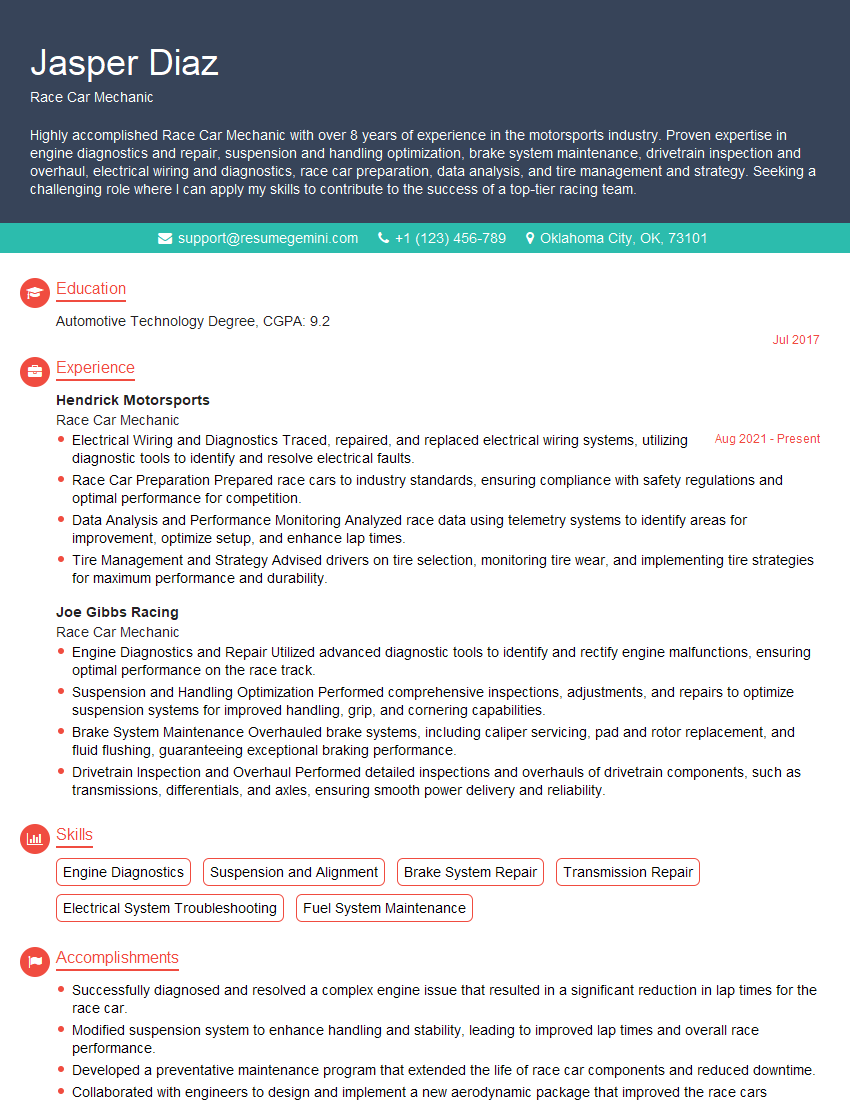
Mastering Racecraft demonstrates crucial analytical and critical thinking skills highly valued in today’s diverse and evolving workplace. This knowledge can significantly enhance your career prospects across numerous fields. To maximize your job search success, creating an Applicant Tracking System (ATS)-friendly resume is essential. ResumeGemini is a trusted resource that can help you build a professional and impactful resume, tailored to highlight your Racecraft expertise. Examples of resumes tailored to Racecraft are available to help guide your resume development.
Explore more articles
Users Rating of Our Blogs
Share Your Experience
We value your feedback! Please rate our content and share your thoughts (optional).
What Readers Say About Our Blog
Very informative content, great job.
good