The right preparation can turn an interview into an opportunity to showcase your expertise. This guide to Adhering to Safety Regulations interview questions is your ultimate resource, providing key insights and tips to help you ace your responses and stand out as a top candidate.
Questions Asked in Adhering to Safety Regulations Interview
Q 1. Explain your understanding of OSHA regulations.
OSHA, or the Occupational Safety and Health Administration, sets and enforces standards to ensure safe and healthful working conditions for workers across various industries in the United States. My understanding encompasses a wide range of regulations, including general industry standards, construction standards, maritime standards, and agricultural standards. These regulations cover a vast array of hazards, from fall protection and hazard communication to machine guarding and lockout/tagout procedures. I’m particularly familiar with OSHA’s General Duty Clause, which mandates employers to provide a workplace free from recognized hazards likely to cause death or serious physical harm, even if not explicitly covered by a specific standard. This requires proactive hazard identification and control. For example, I understand the detailed requirements for Personal Protective Equipment (PPE) selection, use, and maintenance, as well as the crucial role of hazard communication programs in informing employees about chemical hazards through Safety Data Sheets (SDS) and proper labeling.
Q 2. Describe your experience conducting safety audits.
I have extensive experience conducting safety audits, both internal and external, across diverse industries. My approach is systematic and thorough, starting with a pre-audit planning phase where I review relevant OSHA standards and the organization’s specific safety program. During the audit, I use a combination of observation, interviews, and documentation review to identify potential hazards and non-compliances. For instance, in a recent audit of a manufacturing plant, I observed several deficiencies in machine guarding, inadequate lockout/tagout procedures, and a lack of proper training for employees operating heavy machinery. My audit reports include detailed findings, photographs of identified hazards, and recommendations for corrective actions. I follow up on these recommendations to ensure implementation and effectiveness, demonstrating a commitment to continuous improvement in workplace safety. I also utilize various checklists and standardized audit methodologies to ensure consistency and thoroughness.
Q 3. How do you identify and assess workplace hazards?
Identifying and assessing workplace hazards is a crucial aspect of safety management. My approach involves a multi-faceted strategy. First, I conduct thorough workplace inspections, paying attention to potential hazards like slips, trips, and falls, unsafe equipment, electrical hazards, and chemical exposures. Secondly, I interview employees at all levels to gain insights into their experiences and perceptions of workplace risks. This often uncovers hazards that might not be immediately obvious during a visual inspection. Thirdly, I analyze incident reports and near-miss data to identify recurring patterns and contributing factors. I then use a risk assessment matrix to evaluate the likelihood and severity of each identified hazard. This allows me to prioritize interventions and resource allocation towards the most critical risks. For example, if a risk assessment shows a high likelihood and severe consequence for a specific hazard (like working at heights without proper fall protection), immediate corrective action will be prioritized.
Q 4. What are your strategies for developing and implementing safety programs?
Developing and implementing effective safety programs requires a structured approach. It begins with a thorough understanding of the organization’s operations, hazards, and existing safety culture. The program should be tailored to the specific needs and risks of the workplace. I typically start by establishing clear goals and objectives, aligned with OSHA standards and industry best practices. This includes developing written safety policies, procedures, and training programs. Key elements I incorporate are:
- Hazard identification and risk assessment: A proactive approach to identify and control hazards.
- Employee training and education: Equipping employees with the knowledge and skills to work safely.
- Emergency response planning: Developing and practicing emergency response plans to effectively handle incidents.
- Personal Protective Equipment (PPE) program: Providing and ensuring proper use of PPE.
- Regular safety inspections and audits: Continuously monitoring and improving safety performance.
- Incident investigation and reporting: Thoroughly investigating incidents to prevent recurrence.
Q 5. Explain your experience with incident investigation and reporting.
Incident investigation is vital for preventing future occurrences. My approach follows a structured methodology, starting with securing the scene and collecting evidence. I interview witnesses, review available documentation, and analyze the root causes of the incident. I use various investigative techniques, such as fault tree analysis and 5 Whys, to drill down to the underlying factors. My reports include a detailed description of the incident, contributing factors, root causes, and recommendations for corrective actions. These reports are crucial not only for compliance but also for continuous improvement in safety management. For example, a recent investigation into a near-miss incident involving a forklift revealed a lack of designated pedestrian walkways and inadequate training on forklift operation. The corrective actions included implementing improved pedestrian walkways and providing refresher training for all forklift operators. Accurate and timely reporting is crucial to compliance and preventing future accidents.
Q 6. How do you ensure compliance with safety regulations?
Ensuring compliance is an ongoing process, not a one-time event. My strategies involve establishing a strong safety culture where safety is a core value. This includes regular safety meetings, open communication, and employee involvement in safety initiatives. I employ a proactive approach, performing regular inspections, conducting safety audits, and utilizing various compliance monitoring tools. Staying abreast of changes in OSHA regulations and industry best practices is crucial. When non-compliances are identified, I develop and implement corrective actions with a focus on both immediate remediation and long-term preventative measures. This includes proper documentation of all safety-related activities, ensuring traceability and accountability. Maintaining accurate records of training, inspections, audits, and incident investigations provides evidence of compliance during any regulatory review.
Q 7. Describe your experience with safety training and education.
Safety training and education are paramount for a safe and productive work environment. I have extensive experience developing and delivering safety training programs tailored to the specific needs of the workforce. My approach includes a mix of classroom instruction, hands-on training, and online modules. For example, I’ve developed training programs on hazard communication, lockout/tagout procedures, fall protection, and emergency response. I utilize various methods, including interactive exercises, case studies, and simulations to make learning engaging and effective. Regular refresher training ensures that employees maintain their knowledge and skills. I also assess the effectiveness of training programs through pre- and post-training evaluations and observation of on-the-job performance. A key aspect is ensuring that the training is relevant, practical, and understandable for all employees, regardless of their background or literacy levels.
Q 8. How do you handle conflicts regarding safety procedures?
Resolving safety procedure conflicts requires a collaborative and structured approach. My strategy prioritizes open communication and a focus on finding solutions that maintain the highest safety standards. I begin by actively listening to all involved parties, understanding their perspectives and concerns. Then, I refer back to the established safety regulations and procedures, highlighting the relevant sections to clarify any misunderstandings. If the conflict persists, I facilitate a discussion using a structured problem-solving approach, such as root cause analysis, to identify the underlying issue and collaboratively develop an acceptable resolution. For example, if a disagreement arises over the use of a particular piece of equipment, I would review the manufacturer’s instructions, relevant safety regulations, and our company’s standard operating procedures to determine the correct and safest approach. Finally, any agreed-upon changes are documented and communicated to all team members to ensure consistency and avoid future conflicts.
Q 9. How do you communicate safety information effectively?
Effective communication of safety information is crucial. My approach involves tailoring the information to the specific audience and using various methods for optimal impact. This includes using clear and concise language, avoiding technical jargon whenever possible, and employing visual aids such as diagrams, videos, and infographics. For example, when briefing a team on a new safety procedure, I would use a combination of a written checklist, a visual demonstration, and a hands-on practice session. I also incorporate regular safety meetings, toolbox talks, and email updates to reinforce key safety messages. Furthermore, I ensure that all communication is accessible to all team members, considering language barriers and different learning styles. For example, providing safety training materials in multiple languages or using simplified diagrams for those with low literacy skills. Regular feedback mechanisms are also essential to gauge comprehension and make adjustments as needed.
Q 10. Explain your experience with risk assessment methodologies.
I have extensive experience with various risk assessment methodologies, including HAZOP (Hazard and Operability Study), FMEA (Failure Mode and Effects Analysis), and bow-tie analysis. In a previous role, I led a HAZOP study for a new chemical processing plant. This involved systematically examining each stage of the process to identify potential hazards and their consequences. The team documented each hazard, its causes, and the potential consequences using a predefined format, and proposed mitigative actions for each identified hazard. The HAZOP study significantly improved the safety design of the plant and helped us anticipate potential problems before they occurred. Another example would be using FMEA to analyze a specific piece of equipment by systematically identifying potential failure modes, their effects, and the likelihood of occurrence. This helps in prioritizing maintenance and control measures to prevent equipment failures and their potential safety implications.
Q 11. How do you prioritize safety risks based on likelihood and severity?
Prioritizing safety risks involves a structured approach that considers both the likelihood of occurrence and the severity of potential consequences. I typically utilize a risk matrix, assigning numerical values to both likelihood and severity. The matrix then generates a risk score by multiplying the likelihood and severity scores. For example, a high-likelihood, high-severity risk (such as a potential explosion in a chemical plant) would receive a high risk score and require immediate attention. A low-likelihood, low-severity risk (such as a minor cut from a sharp object) would receive a low risk score and may require less urgent action. However, even low-risk events are considered and documented, as they can contribute to a broader safety picture. Regularly reviewing and updating the risk matrix allows for dynamic management of risks as circumstances change. This helps allocate resources effectively, focusing on the highest-risk areas first.
Q 12. Describe your experience using safety management systems (SMS).
My experience with Safety Management Systems (SMS) is extensive. I have implemented and managed SMS in several different industrial settings, including construction and manufacturing. An SMS is a proactive system that involves all levels of an organization to systematically identify, assess, and control hazards. It focuses on continuous improvement and learning from incidents and near misses. In a previous role, I led the implementation of a new SMS based on the ICAO (International Civil Aviation Organization) standards. This involved developing a comprehensive safety policy, establishing clear reporting procedures, conducting regular safety audits, and implementing corrective actions based on findings. The success of this implementation led to a significant reduction in safety incidents and improved overall safety performance. The key aspects involved include regular safety audits, incident reporting and investigation procedures, and proactive hazard identification and control. These are all crucial elements of a successful SMS.
Q 13. What is your experience with personal protective equipment (PPE)?
My experience with Personal Protective Equipment (PPE) spans various industrial sectors. This includes selecting appropriate PPE based on identified hazards, ensuring compliance with relevant regulations (like OSHA standards), training employees on proper PPE usage, and establishing clear procedures for inspection, maintenance, and replacement of PPE. For example, in a construction project, I ensured that workers were provided with appropriate hard hats, safety glasses, high-visibility clothing, and steel-toe boots based on site-specific hazards. The selection of PPE was not only guided by regulations but also by the comfort and practicality for the workers. It’s important that PPE is both protective and usable, ensuring worker compliance. This includes things like offering different sizes and styles of equipment to fit various individuals.
Q 14. How do you ensure proper use and maintenance of PPE?
Ensuring proper use and maintenance of PPE is critical for its effectiveness. This starts with comprehensive training programs covering the correct selection, fit, usage, limitations, and care of specific PPE. Regular inspections are performed to identify any damage or wear and tear. Damaged PPE must be immediately replaced. We maintain detailed records of inspections, replacement dates, and training for all workers to ensure compliance and traceability. We also emphasize the importance of reporting any issues or concerns with PPE to supervisors immediately. Clear procedures for cleaning and storage of PPE are also essential. PPE should be stored in a clean, dry location, protected from damage. Finally, a regular review of PPE effectiveness and suitability is conducted, adapting the program as necessary to meet changing workplace conditions and technological advancements.
Q 15. Explain your understanding of emergency response procedures.
Emergency response procedures are a predefined set of actions designed to mitigate risks and ensure the safety of personnel and property during an emergency. They’re crucial for minimizing damage, preventing injuries, and facilitating a swift and organized return to normalcy. A robust plan addresses various scenarios, from minor incidents like a small fire to major events such as a natural disaster.
A well-structured emergency response plan typically includes:
- Clear communication channels: Designated contact persons, emergency notification systems (e.g., sirens, text alerts), and pre-established communication protocols.
- Evacuation procedures: Designated escape routes, assembly points, and procedures for accounting for all personnel.
- Emergency response teams: Trained personnel responsible for specific tasks like fire suppression, first aid, and coordinating evacuation.
- First aid and medical assistance: Provisions for immediate medical attention, including first aid kits, trained personnel, and arrangements for emergency medical services.
- Post-incident procedures: Steps to take after the emergency, including damage assessment, cleanup, and review of the response.
For example, in a manufacturing facility, a fire emergency might involve activating the fire alarm, evacuating personnel using pre-designated routes, engaging the fire suppression system, and contacting emergency services. Post-incident, a thorough investigation would determine the cause of the fire and identify areas for improvement in safety procedures.
Career Expert Tips:
- Ace those interviews! Prepare effectively by reviewing the Top 50 Most Common Interview Questions on ResumeGemini.
- Navigate your job search with confidence! Explore a wide range of Career Tips on ResumeGemini. Learn about common challenges and recommendations to overcome them.
- Craft the perfect resume! Master the Art of Resume Writing with ResumeGemini’s guide. Showcase your unique qualifications and achievements effectively.
- Don’t miss out on holiday savings! Build your dream resume with ResumeGemini’s ATS optimized templates.
Q 16. How do you conduct emergency drills and training?
Conducting effective emergency drills and training is vital for ensuring personnel are prepared to respond appropriately during a real emergency. It’s not enough to simply have a plan; everyone needs to understand and practice it.
My approach involves:
- Scenario-based training: Simulating realistic emergencies to test the effectiveness of the response plan and identify weaknesses. We might simulate a fire, chemical spill, or equipment malfunction, depending on the workplace hazards.
- Regular drills: Conducting drills regularly (at least annually, and more frequently for high-risk environments) to reinforce procedures and identify areas requiring improvement. These drills should incorporate unexpected elements to test adaptability.
- Hands-on training: Providing practical training on the use of safety equipment (fire extinguishers, first aid supplies, etc.) and emergency procedures.
- Debriefing sessions: After each drill, conducting thorough debriefing sessions to analyze the response, identify areas needing improvement, and update the emergency response plan as needed.
- Documentation and record-keeping: Maintaining detailed records of drills, including participation, observations, and corrective actions.
For instance, during a fire drill, I would evaluate the time taken to evacuate, the effectiveness of communication, and the response of emergency response team members. Any deficiencies, such as slow evacuation routes or unclear communication, are addressed in the post-drill debrief and incorporated into revised training or procedural updates.
Q 17. Describe your experience with workplace injury prevention.
Workplace injury prevention is a proactive approach focused on eliminating or minimizing hazards to prevent accidents before they happen. It’s a multi-faceted approach involving engineering controls, administrative controls, and personal protective equipment (PPE).
My experience encompasses:
- Hazard identification and risk assessment: Systematically identifying potential hazards within the workplace and assessing the associated risks using methods like Job Safety Analysis (JSA) or Hazard and Operability Study (HAZOP).
- Engineering controls: Implementing design modifications to eliminate hazards at their source. This might include machine guarding, improved ventilation, or ergonomic workstation designs.
- Administrative controls: Developing and implementing safe work procedures, training programs, and safety policies to minimize risks. This could include implementing lockout/tagout procedures, providing regular safety training, and implementing safety audits.
- Personal Protective Equipment (PPE): Providing and enforcing the use of appropriate PPE, such as safety glasses, gloves, and hearing protection, where engineering and administrative controls are insufficient.
- Behavioral safety programs: Promoting a safety-conscious culture by encouraging employees to identify and report hazards, and actively participating in safety initiatives.
For example, in a construction environment, implementing fall protection systems (engineering control), establishing safe lifting procedures (administrative control), and providing hard hats and safety harnesses (PPE) significantly reduces the risk of injuries.
Q 18. How do you investigate and analyze workplace accidents?
Investigating and analyzing workplace accidents is a crucial step in preventing future incidents. The goal is to understand the root causes, not just the immediate causes, to implement effective corrective actions.
My approach involves a systematic investigation process:
- Secure the scene: First priority is to ensure the safety of personnel and prevent further harm.
- Gather information: Collect evidence including witness statements, photographs, videos, incident reports, and any relevant documentation.
- Identify the root causes: Use root cause analysis techniques, such as the “5 Whys” method, to determine the underlying reasons for the accident, not just the immediate trigger.
- Develop corrective actions: Based on the root cause analysis, develop specific, measurable, achievable, relevant, and time-bound (SMART) corrective actions to prevent recurrence.
- Implement corrective actions: Ensure the identified corrective actions are implemented and followed.
- Monitor effectiveness: Track the effectiveness of implemented actions and make further adjustments as needed.
For example, if an employee suffered a hand injury while operating a machine, the investigation might reveal a lack of proper machine guarding (root cause) which led to the immediate cause, the hand getting caught. The corrective action would involve installing or repairing the machine guard and retraining employees on safe operating procedures.
Q 19. What are your methods for improving safety performance?
Improving safety performance is an ongoing process requiring continuous improvement and a commitment to a safety-first culture. My methods include:
- Leading indicators monitoring: Tracking proactive metrics, such as number of safety training hours, hazard reports, and near-miss incidents, to identify potential problems before they result in accidents.
- Lagging indicators monitoring: Tracking reactive metrics, such as injury rates, lost time days, and workers’ compensation costs, to evaluate the effectiveness of safety programs.
- Safety audits and inspections: Conducting regular safety audits and inspections to identify hazards and non-compliance issues.
- Safety training and communication: Providing ongoing safety training to employees and regularly communicating safety messages.
- Employee involvement and feedback: Encouraging employee participation in safety initiatives and soliciting feedback on safety procedures and practices.
- Benchmarking: Comparing safety performance against industry best practices and identifying areas for improvement.
For example, if the number of near-miss incidents is increasing, it could indicate a decline in safety awareness and necessitates immediate action, such as refresher training or enhanced communication campaigns.
Q 20. Explain your experience with safety metrics and data analysis.
Safety metrics and data analysis are essential for tracking safety performance, identifying trends, and measuring the effectiveness of safety initiatives. They provide objective evidence to support decisions and demonstrate the impact of safety programs.
My experience includes:
- Collecting and analyzing safety data: Gathering data on incidents, near misses, safety observations, and other relevant metrics.
- Developing key performance indicators (KPIs): Defining relevant KPIs that reflect the organization’s safety goals and objectives, such as Total Recordable Incident Rate (TRIR), Lost Time Injury Frequency Rate (LTIFR), and Days Away, Restricted, or Transferred (DART) rate.
- Using data visualization tools: Presenting data in a clear and concise manner using charts, graphs, and dashboards to facilitate understanding and decision-making.
- Trend analysis: Identifying trends in safety performance over time to detect potential problems and assess the effectiveness of safety interventions.
- Root cause analysis using data: Utilizing data to support root cause analysis and identify underlying causes of accidents.
For instance, analyzing the trend of injuries related to a specific machine might reveal a pattern pointing toward a design flaw or inadequate training, providing data-driven insights for improvements.
Q 21. How do you use data to drive safety improvements?
Data drives safety improvements by providing objective evidence to identify areas needing attention, measure the effectiveness of interventions, and demonstrate the return on investment (ROI) of safety initiatives. It allows for a data-driven, rather than a reactive, approach to safety management.
My approach to using data to drive improvements includes:
- Identifying key performance indicators (KPIs): Selecting the right KPIs that align with the organization’s safety goals.
- Data collection and analysis: Implementing systems for collecting and analyzing relevant safety data, identifying trends and patterns.
- Root cause analysis: Using data to support root cause analysis of incidents and near misses.
- Targeted interventions: Developing and implementing targeted interventions based on data-driven insights, focusing resources on areas with the greatest need.
- Monitoring and evaluation: Continuously monitoring the effectiveness of interventions and making adjustments as needed.
For example, if data reveals a high incidence of slips, trips, and falls in a specific area, it might prompt interventions such as improved lighting, floor maintenance, and employee training on safe walking practices. The effectiveness of these interventions is then tracked and measured using relevant KPIs to assess the impact and identify further improvements.
Q 22. Describe your experience with safety culture development.
Safety culture development isn’t just about posting signs; it’s about fostering a mindset where safety is everyone’s responsibility. My experience involves a multi-faceted approach, starting with a thorough assessment of the existing safety climate. This includes surveys, interviews, and observations to identify areas for improvement. For example, in a previous role at a manufacturing plant, we discovered a significant lack of reporting near misses. Following the assessment, I developed and implemented a comprehensive program that included:
- Leadership commitment: Ensuring that senior management actively champions safety initiatives and visibly demonstrates their commitment.
- Training and education: Implementing regular and relevant safety training programs tailored to specific roles and hazards. This included interactive sessions, practical demonstrations, and regular refreshers.
- Communication and feedback: Establishing open channels of communication to encourage reporting of near misses and hazards without fear of reprisal. We used regular safety meetings, suggestion boxes, and anonymous reporting systems.
- Incentive programs: Rewarding safe behaviors and recognizing employees who contribute to a positive safety culture. This could include safety awards, bonuses, or public recognition.
- Continuous improvement: Regularly reviewing safety performance data, identifying trends, and implementing corrective actions. This involved tracking key metrics such as incident rates, near misses, and employee participation in safety initiatives.
The result in the manufacturing plant was a noticeable decrease in incidents and a significant increase in employee engagement in safety matters. The key was consistent reinforcement and demonstrating that safety was not just a priority, but a core value.
Q 23. How do you promote a culture of safety within a workplace?
Promoting a culture of safety requires a proactive and holistic approach. It’s not enough to simply comply with regulations; you need to instill a mindset where safety is paramount. My strategy focuses on several key elements:
- Lead by example: Safety starts at the top. Leaders must visibly demonstrate their commitment to safety by following all safety rules and procedures. If management shortcuts safety, employees will likely follow suit.
- Empowerment and accountability: Employees must feel empowered to stop work if they identify a safety hazard. This requires clear procedures and a supportive environment where they won’t face retribution for raising concerns. Accountability should be shared, not just placed on individuals.
- Open communication: Create a safe space for reporting near misses and incidents without fear of blame. Regular safety meetings, toolbox talks, and anonymous reporting mechanisms are crucial. We should treat near misses as valuable learning opportunities.
- Training and education: Providing comprehensive and ongoing safety training that is relevant to the tasks performed and tailored to different skill levels is vital. Regular refresher courses ensure knowledge stays current.
- Incentivize safe behavior: Rewards and recognition programs can significantly enhance safety performance. This might include safety awards, bonuses, or public acknowledgment of employees’ safety contributions.
- Regular audits and inspections: Conducting regular safety inspections and audits to identify potential hazards and ensure compliance with regulations is essential. This allows proactive intervention before incidents occur.
Think of it like building a strong foundation for a house. Each element—leadership, communication, training, and accountability—contributes to the overall strength and stability of a robust safety culture.
Q 24. What are your methods for ensuring contractor safety?
Ensuring contractor safety requires meticulous planning and oversight. It starts with a thorough pre-qualification process. I typically utilize a checklist that assesses their safety records, insurance coverage, and adherence to relevant safety standards. This ensures only qualified and safety-conscious contractors are engaged.
- Pre-job safety briefings: Mandatory safety briefings are conducted before any work commences, outlining site-specific hazards, emergency procedures, and required personal protective equipment (PPE).
- Site-specific safety plans: Developing site-specific safety plans that address potential hazards unique to the project. These plans should incorporate input from both the contractor and the company.
- Ongoing monitoring and supervision: Regular inspections and monitoring of contractor activities are essential to ensure compliance with safety regulations and the site-specific safety plan. This might include daily safety walks and spot checks.
- Clear communication: Open communication channels between the contractor, company personnel, and safety officers are vital to address issues promptly and prevent accidents. This often involves regular meetings and reporting systems.
- Emergency response plans: Ensuring the contractor has a clear understanding of the company’s emergency response plans and procedures. This includes knowledge of emergency contact numbers, evacuation routes, and first aid facilities.
For instance, when overseeing a construction project, we implemented a system where contractors had to submit their daily safety reports, highlighting any near misses or potential hazards. This allowed for prompt intervention and prevented potential accidents.
Q 25. Explain your experience with lockout/tagout procedures.
Lockout/Tagout (LOTO) procedures are critical for preventing accidental energization of machinery during maintenance or repair. My experience involves extensive training and enforcement of these procedures. I’ve led numerous LOTO training sessions, emphasizing the importance of following established protocols to the letter.
- Training: Providing comprehensive training on proper LOTO procedures, including the five steps: Preparation, Shutdown, Isolation, Lockout/Tagout, and Verification.
- Procedure development: Ensuring that clear and concise LOTO procedures are developed for all machinery and equipment. These procedures are specific to the equipment and clearly outline each step.
- Equipment identification: Clearly identifying all energy sources and implementing a system for labeling and tagging each piece of equipment.
- Regular audits and inspections: Conducting regular audits and inspections to ensure compliance with LOTO procedures and identify areas for improvement.
- Enforcement: Strict enforcement of LOTO procedures with disciplinary measures for non-compliance. This fosters a culture of accountability.
In one instance, a near miss occurred because a worker didn’t properly follow the LOTO procedure. The incident triggered a comprehensive review and retraining program. We updated our procedures and added visual aids to make the process easier to understand and follow, eliminating future risks.
Q 26. How do you ensure the safe handling of hazardous materials?
Safe handling of hazardous materials requires a multifaceted approach, starting with proper identification, segregation, and storage. My experience includes developing and implementing comprehensive hazardous materials management programs.
- Material Safety Data Sheets (MSDS): Ensuring that MSDS are readily available for all hazardous materials and that employees are trained on their contents.
- Proper storage and handling: Implementing appropriate storage and handling procedures to minimize the risk of spills, leaks, and exposure. This includes using specialized containers and equipment.
- Personal Protective Equipment (PPE): Providing and enforcing the use of appropriate PPE, such as gloves, respirators, and eye protection, for all personnel handling hazardous materials.
- Emergency response planning: Developing and practicing emergency response plans for spills and leaks, including procedures for cleanup and evacuation.
- Training and education: Providing comprehensive training to all employees involved in handling hazardous materials. This training should include proper handling techniques, emergency procedures, and relevant regulations.
For example, in a chemical processing plant, we implemented a color-coded system for hazardous materials storage, making it easier for employees to identify and handle them safely. We also conducted regular drills to practice emergency spill response procedures.
Q 27. Describe your experience with confined space entry procedures.
Confined space entry requires stringent procedures to protect workers from potential hazards such as oxygen deficiency, toxic gases, and engulfment. My experience includes extensive training and supervision of confined space entries.
- Permit-required confined space program: Developing and implementing a permit-required confined space program in accordance with OSHA regulations (or equivalent).
- Atmospheric monitoring: Conducting atmospheric monitoring before, during, and after entry to ensure the space is safe for entry. This involves testing for oxygen levels, toxic gases, and flammable vapors.
- Ventilation: Ensuring adequate ventilation to remove hazardous atmospheres. This may involve using mechanical ventilation equipment.
- Rescue plan: Developing and practicing a comprehensive rescue plan in case of emergency. This includes identifying trained rescuers and having appropriate rescue equipment available.
- Training: Providing extensive training to all personnel involved in confined space entry, including the use of atmospheric monitoring equipment, rescue procedures, and emergency response.
I once managed a confined space entry for a pipeline inspection. Our strict adherence to the permit-required confined space program ensured the safety of the workers, and the timely completion of the inspection without any incidents.
Q 28. How do you maintain accurate safety records and documentation?
Maintaining accurate safety records and documentation is essential for demonstrating compliance with regulations and identifying areas for improvement. My approach combines both digital and physical systems.
- Digital record-keeping: Utilizing a digital safety management system to track incidents, near misses, training records, inspections, and other safety-related data. This allows for easy access, analysis, and reporting.
- Physical records: Maintaining physical copies of key documents, such as safety plans, permits, and inspection reports. This provides a backup in case of digital system failures.
- Data integrity: Implementing robust procedures to ensure the accuracy and completeness of safety records. This involves regular audits and verification processes.
- Data analysis: Regularly analyzing safety data to identify trends, pinpoint potential hazards, and evaluate the effectiveness of safety programs. This helps in making data-driven decisions to improve safety performance.
- Secure storage: Storing both physical and digital records in a secure and organized manner to prevent loss or unauthorized access.
By using a combination of digital and physical record-keeping, we created a system that is both efficient and reliable. This ensures easy access to critical safety information, supports compliance audits and facilitates continuous improvement in safety performance.
Key Topics to Learn for Adhering to Safety Regulations Interview
- Hazard Identification and Risk Assessment: Understanding methods for identifying potential hazards in the workplace and assessing the associated risks, including using risk matrices and hierarchy of controls.
- Safety Regulations and Legislation: Familiarity with relevant safety acts, regulations, and standards applicable to your industry. This includes understanding their practical implications and how to ensure compliance.
- Personal Protective Equipment (PPE): Knowledge of different types of PPE, their appropriate use, limitations, and maintenance. This includes selecting the correct PPE for various tasks and understanding when PPE is insufficient and further engineering controls are needed.
- Emergency Procedures and Response: Understanding and practicing emergency response procedures, including evacuation plans, first aid, and reporting incidents. This also includes knowing your role in an emergency situation.
- Accident Investigation and Reporting: Knowledge of proper accident investigation techniques, root cause analysis, and reporting procedures. This involves understanding the importance of accurate record-keeping and contributing to a culture of continuous improvement.
- Safety Training and Communication: Understanding the importance of effective safety training programs and communication strategies to ensure all employees are aware of and adhere to safety regulations. This includes methods for engaging employees in safety initiatives.
- Safety Audits and Inspections: Knowledge of conducting safety audits and inspections, identifying non-compliances, and recommending corrective actions. This includes understanding auditing methodologies and best practices.
Next Steps
Mastering adherence to safety regulations is paramount for career advancement in any industry. It demonstrates your commitment to a safe and productive work environment, a quality highly valued by employers. To enhance your job prospects, focus on building an ATS-friendly resume that showcases your safety expertise and experience. ResumeGemini is a trusted resource to help you craft a compelling and effective resume that highlights your skills and achievements. Examples of resumes tailored to Adhering to Safety Regulations are available to help guide your resume building process.
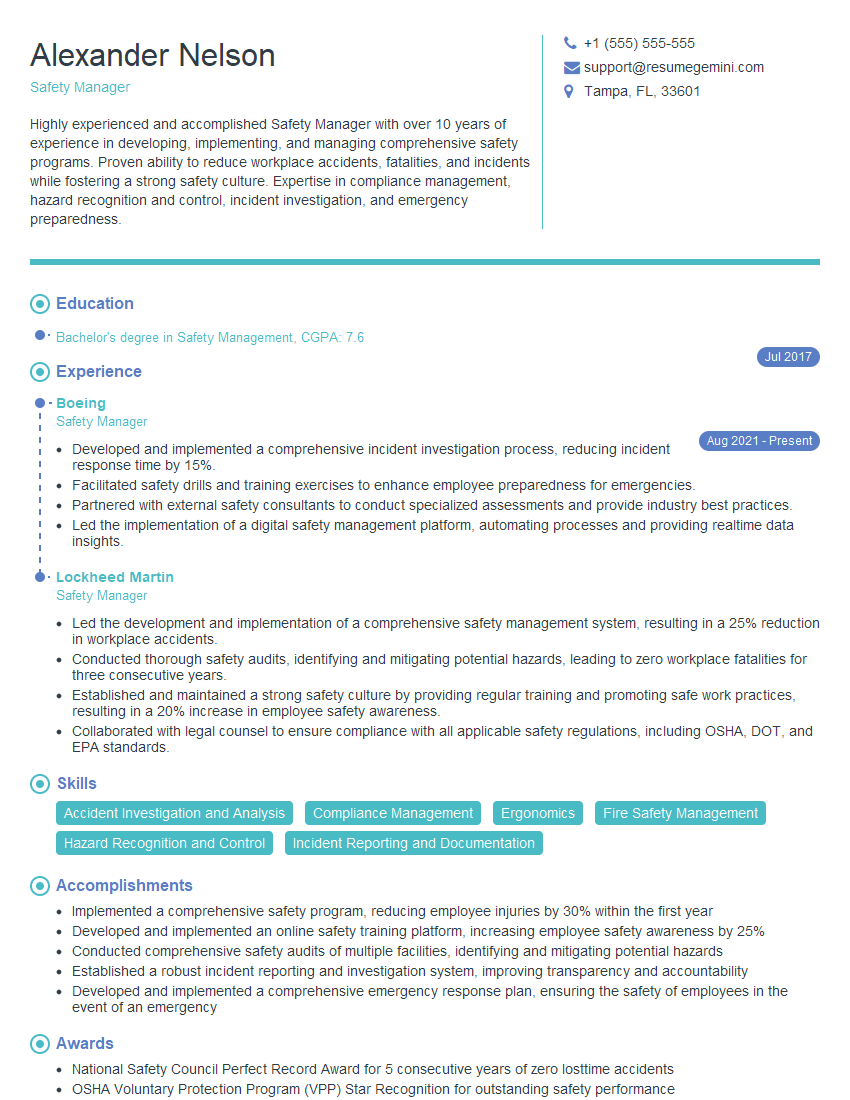
Safety Manager Resume Sample
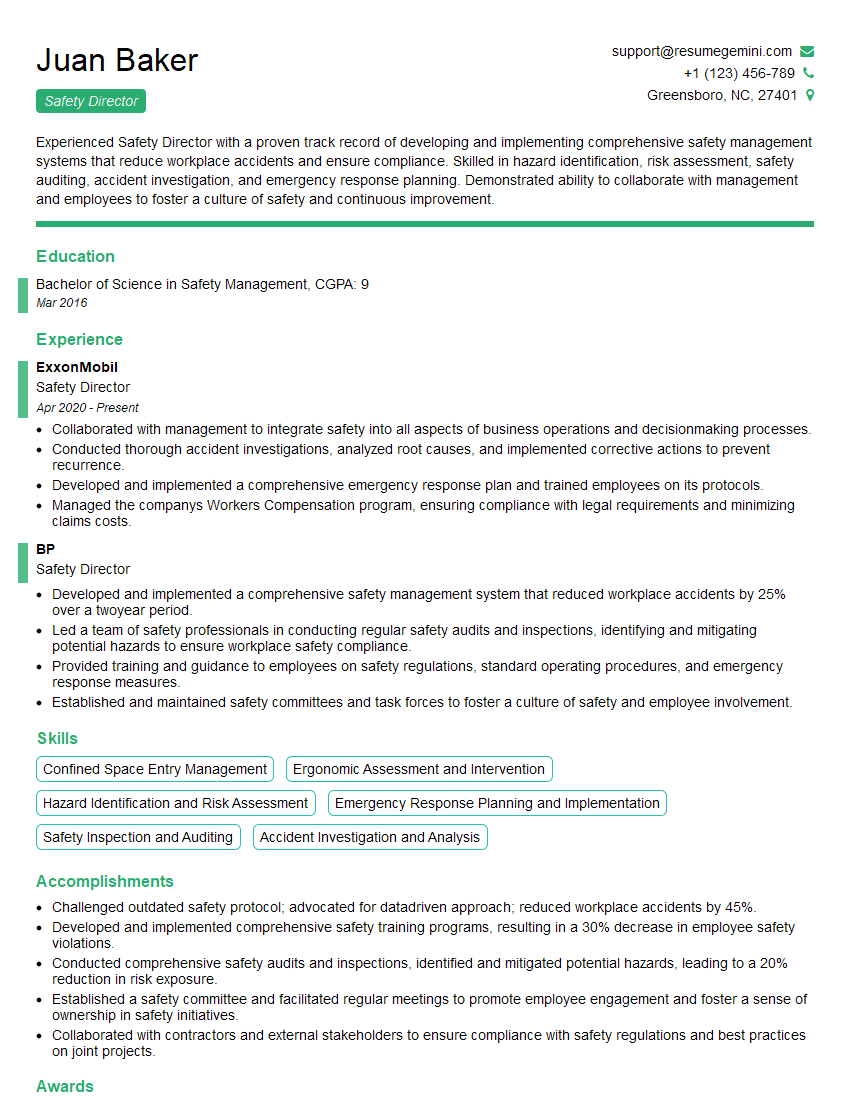
Safety Director Resume Sample
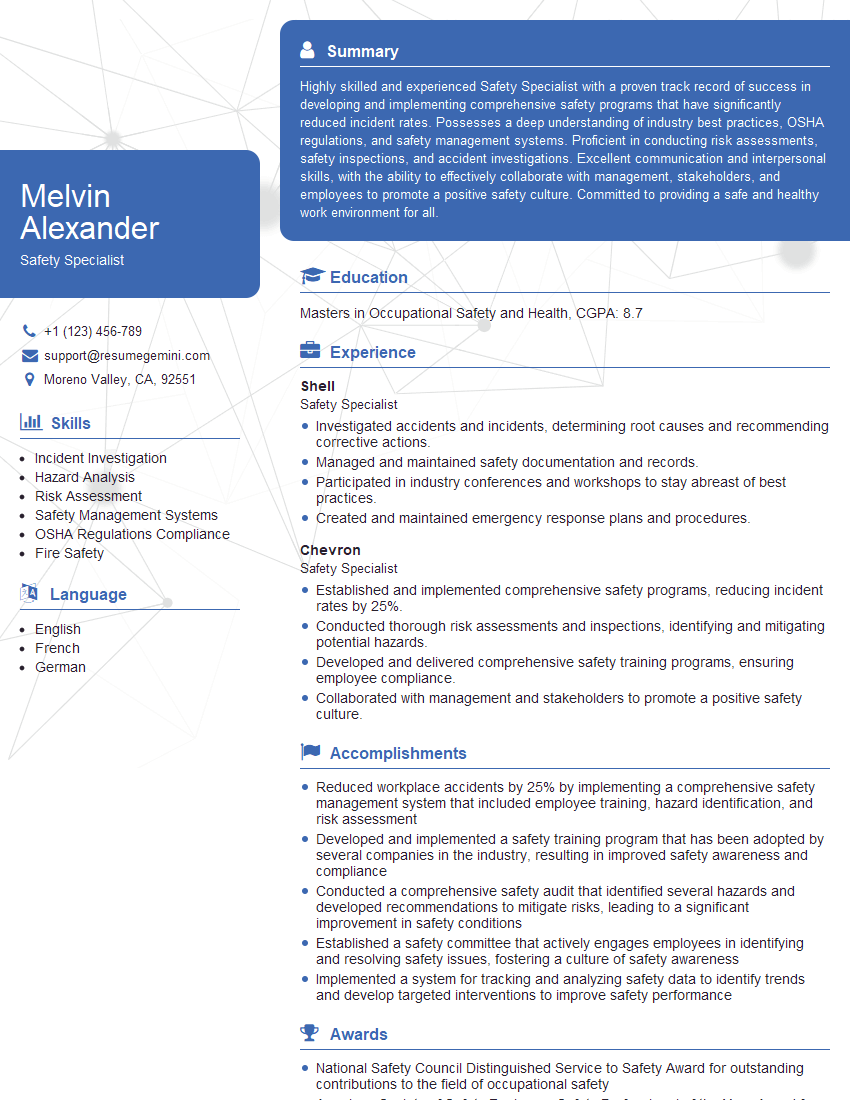
Safety Specialist Resume Sample
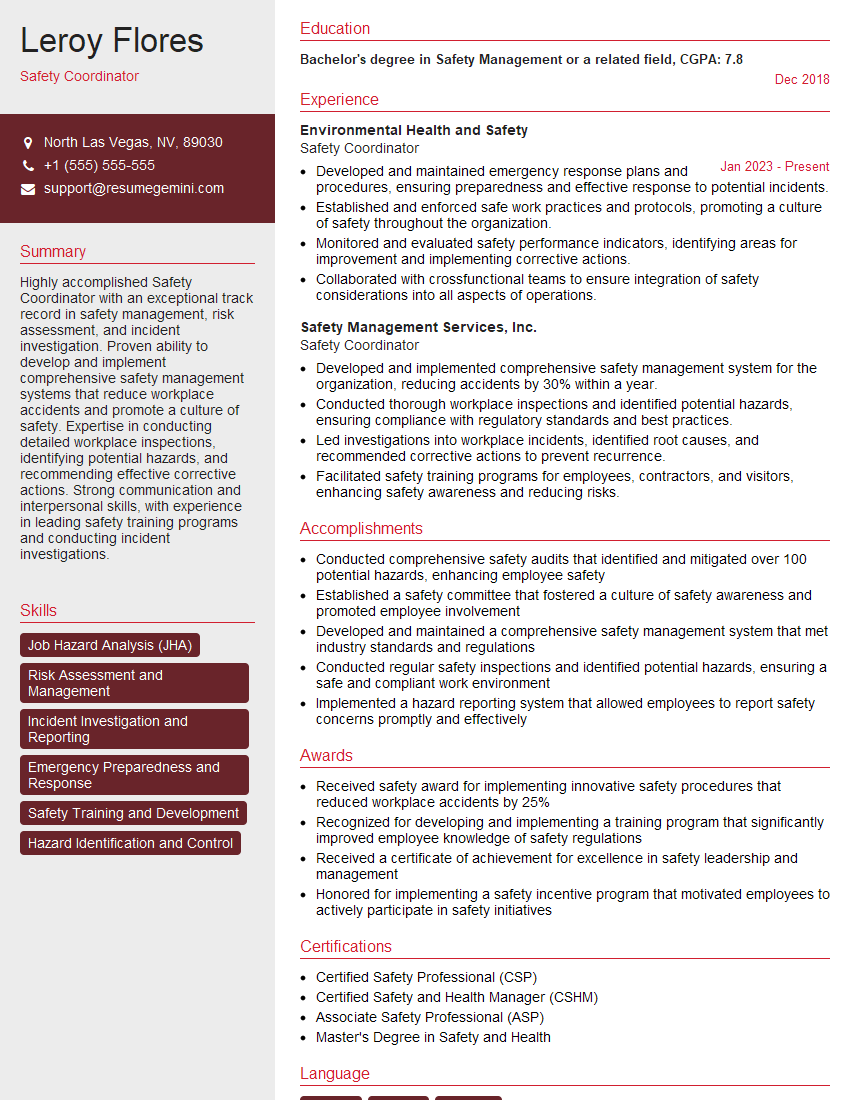
Safety Coordinator Resume Sample
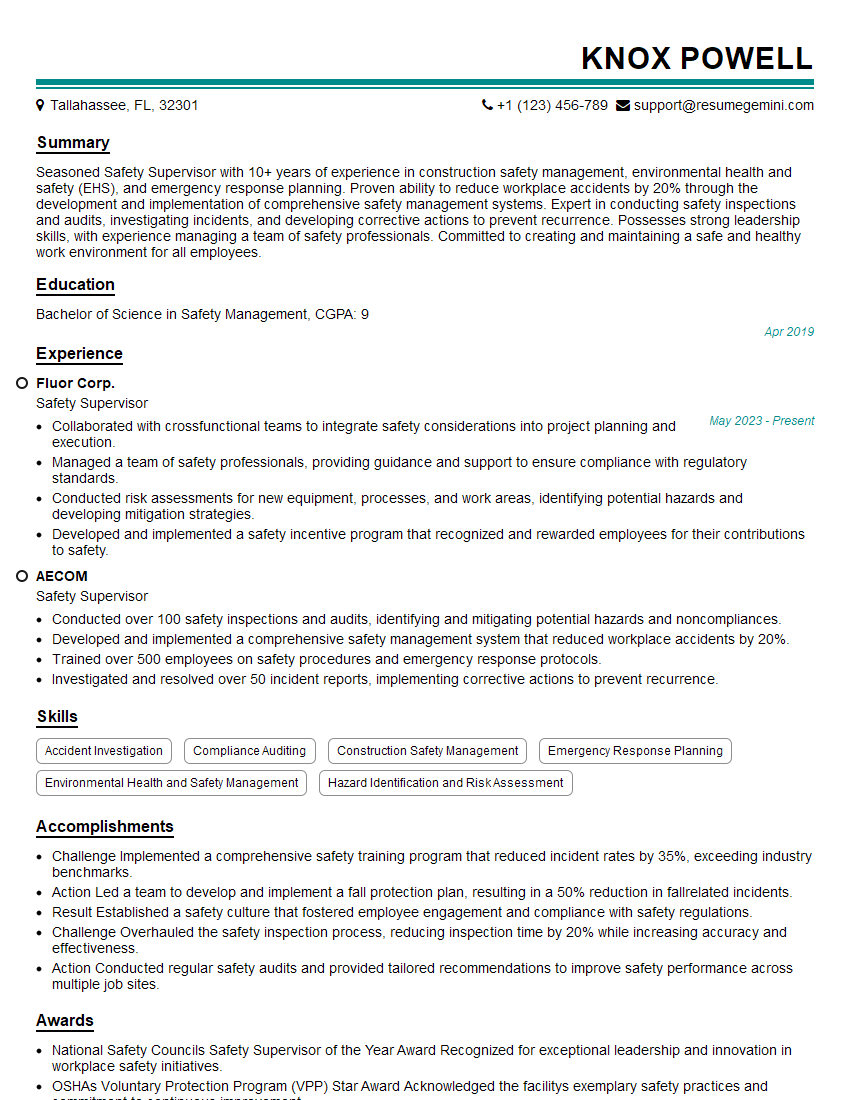
Safety Supervisor Resume Sample
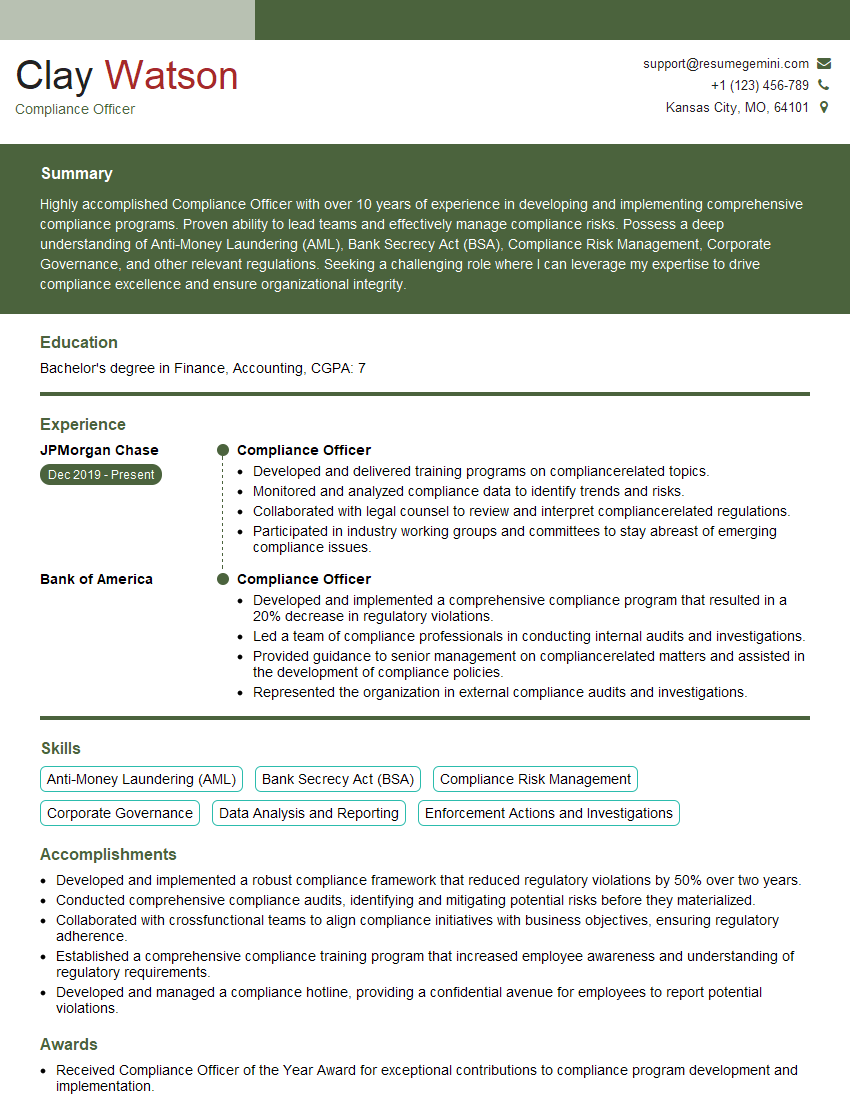
Compliance Officer Resume Sample
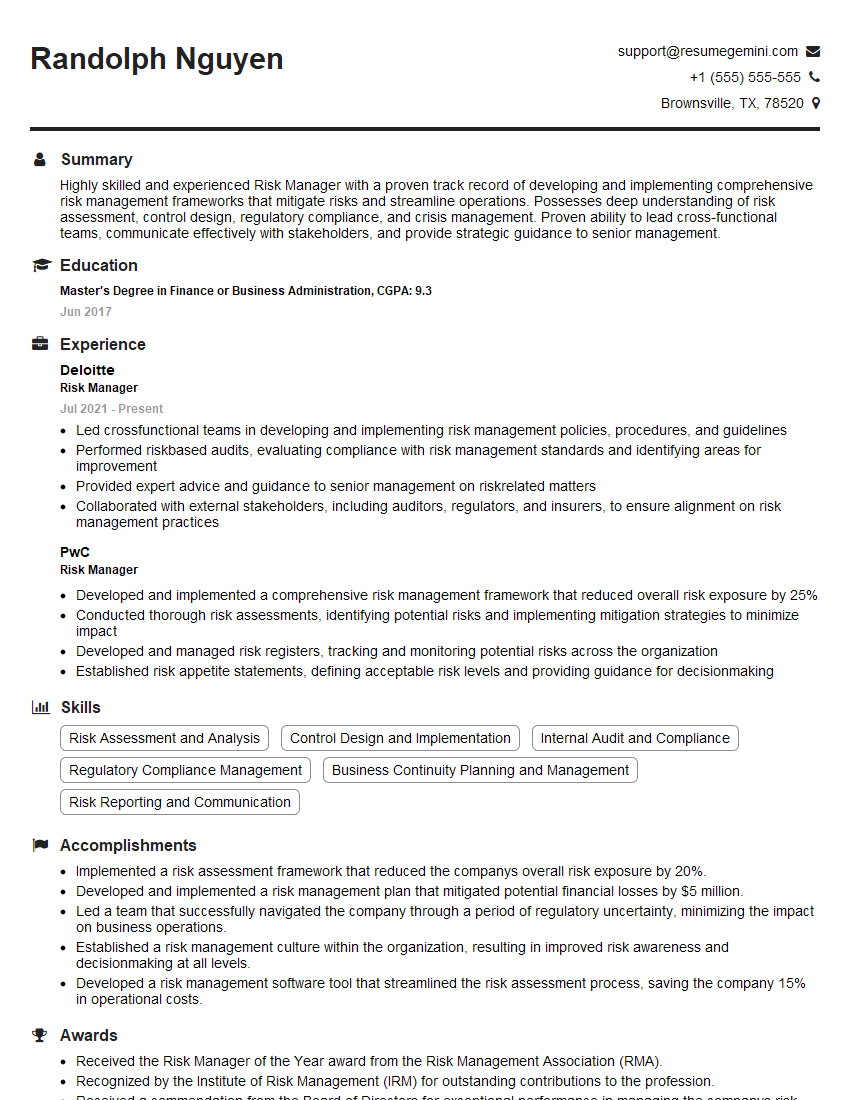
Risk Manager Resume Sample
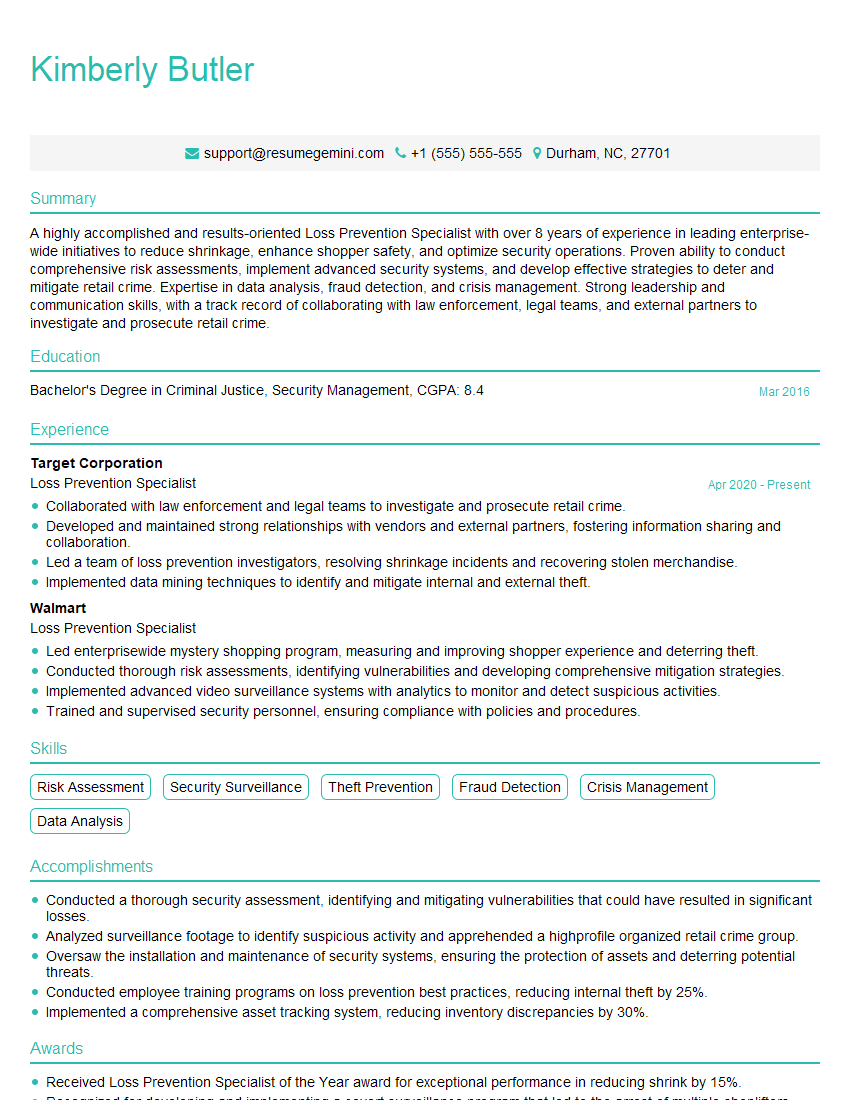
Loss Prevention Specialist Resume Sample
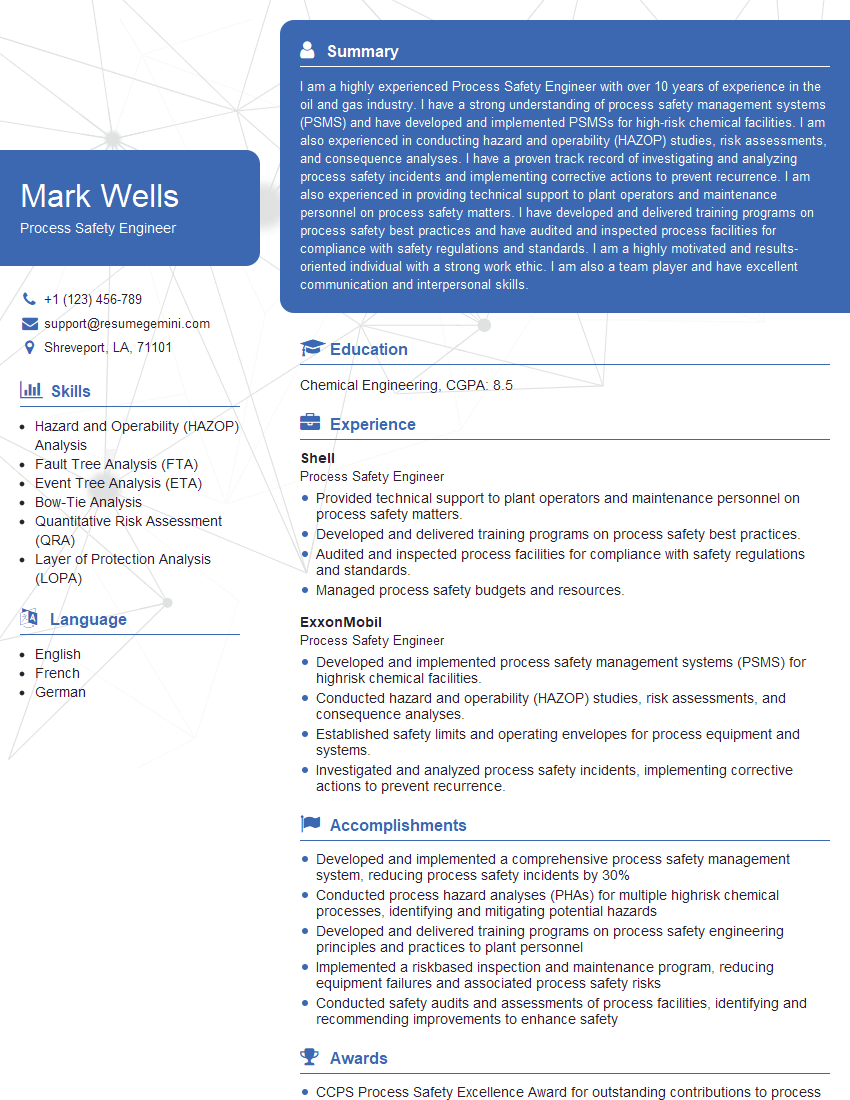
Process Safety Engineer Resume Sample
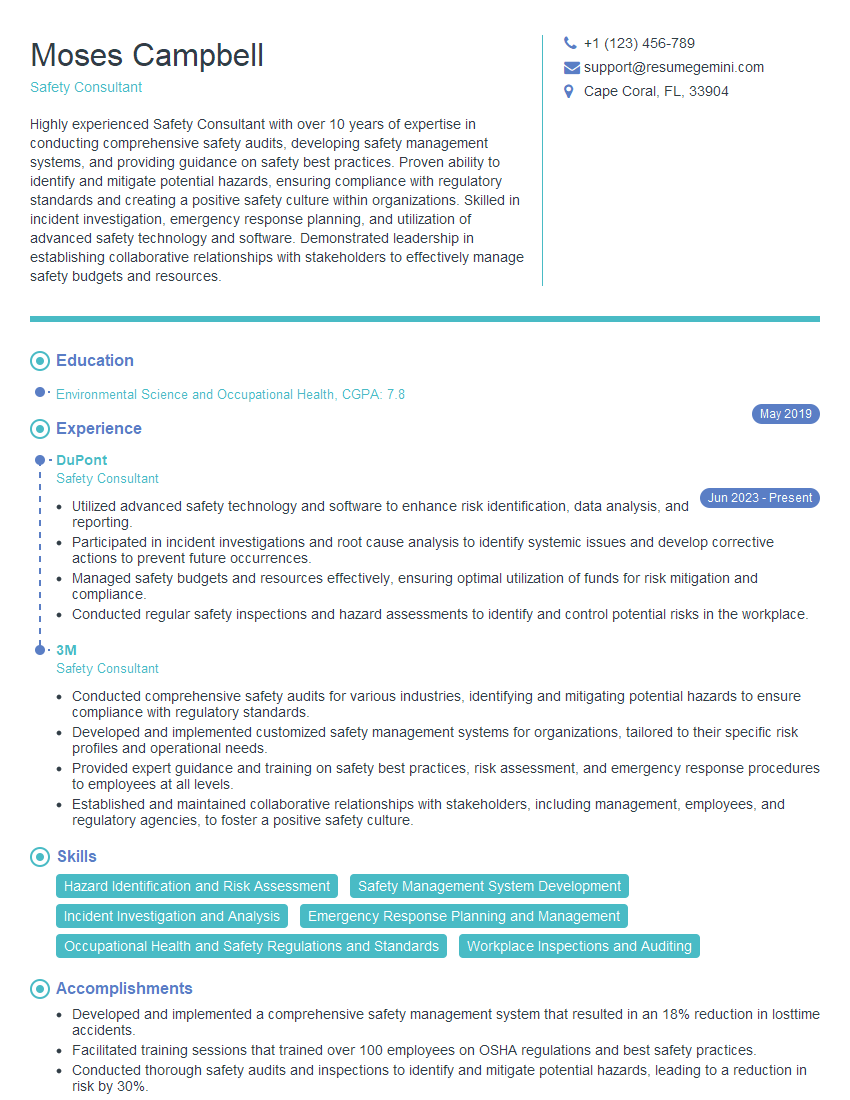
Safety Consultant Resume Sample
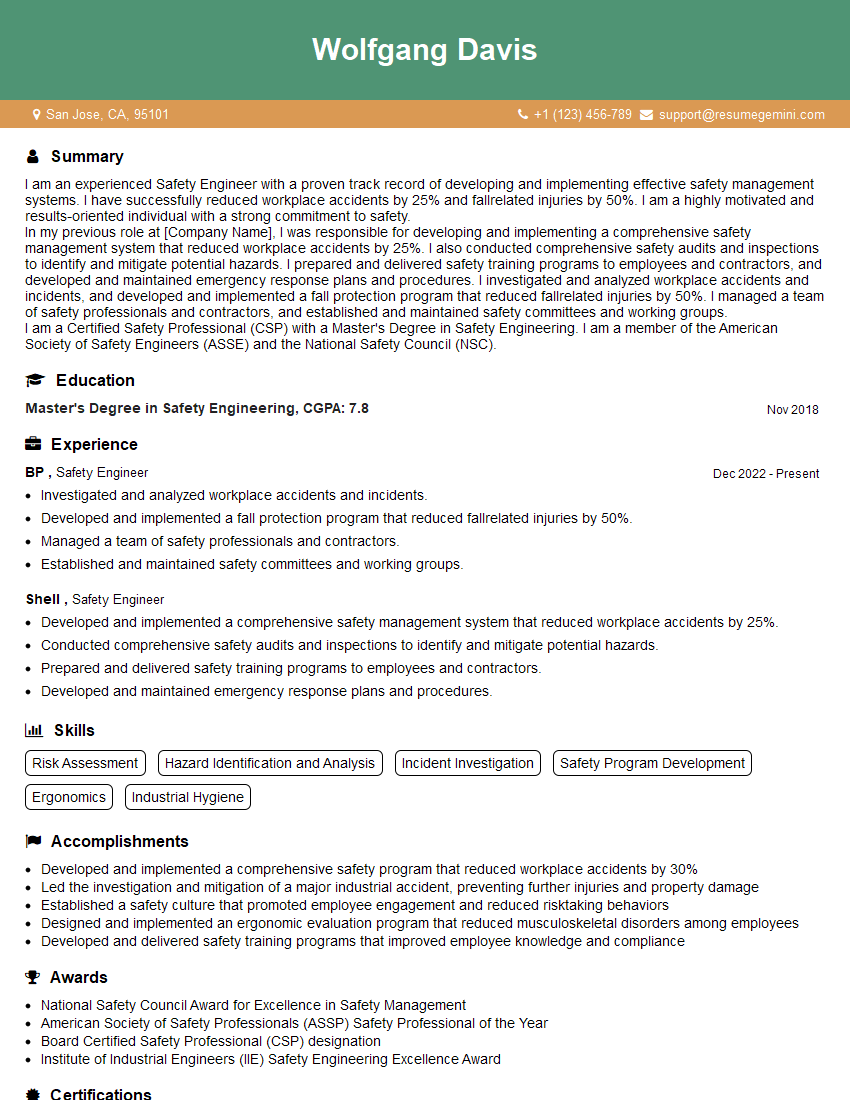
Safety Engineer Resume Sample
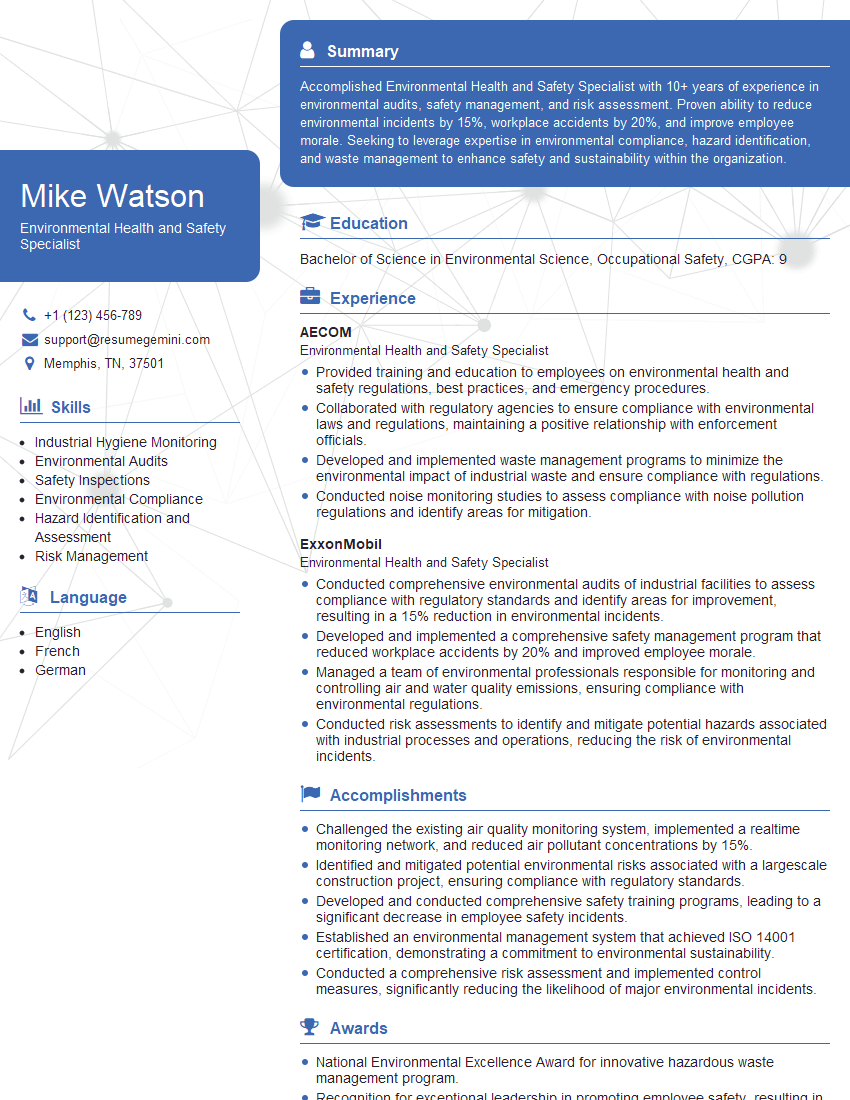
Environmental Health and Safety Specialist Resume Sample
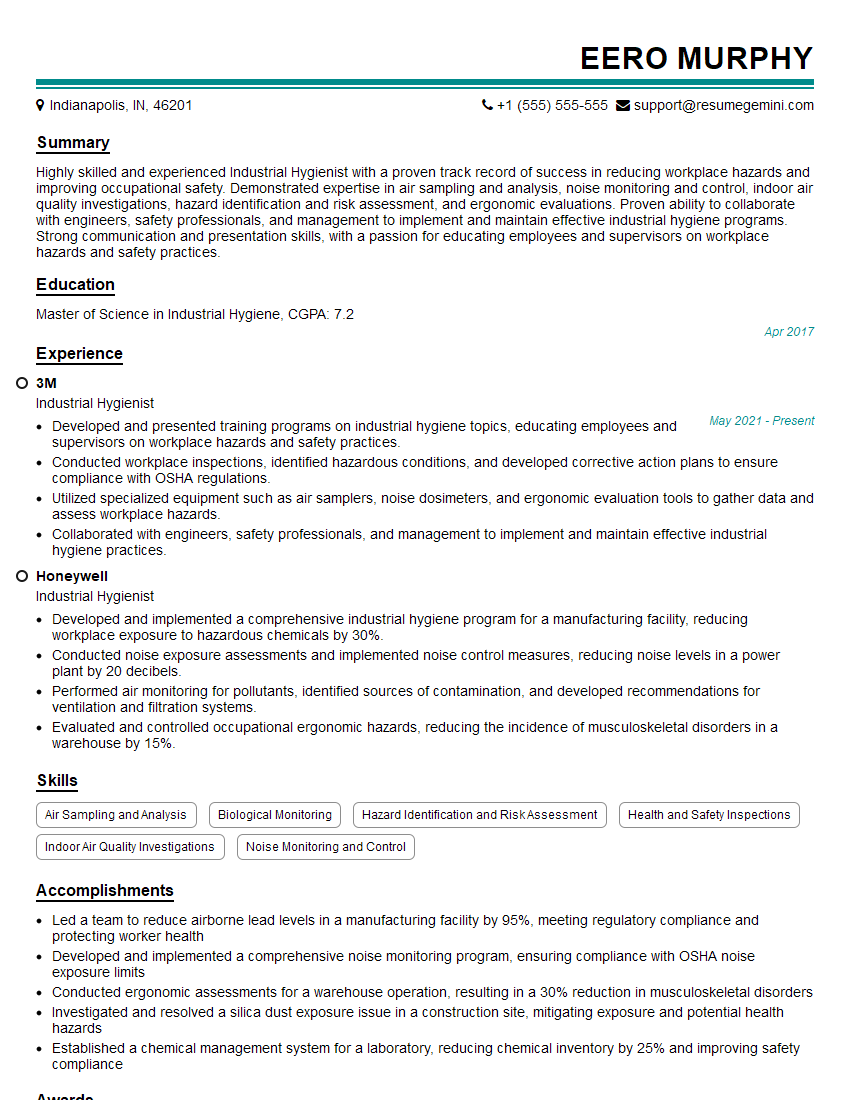
Industrial Hygienist Resume Sample
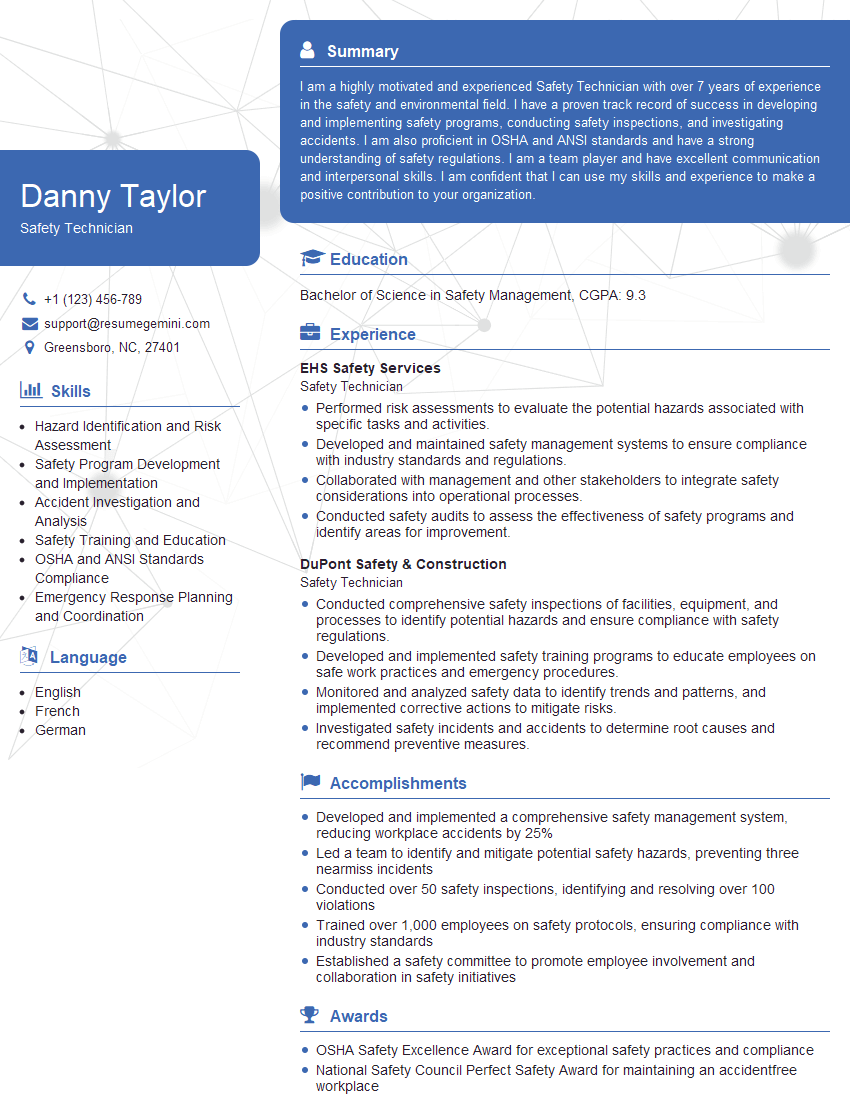
Safety Technician Resume Sample
Explore more articles
Users Rating of Our Blogs
Share Your Experience
We value your feedback! Please rate our content and share your thoughts (optional).
What Readers Say About Our Blog
Very informative content, great job.
good