Are you ready to stand out in your next interview? Understanding and preparing for Color and Trim Design interview questions is a game-changer. In this blog, we’ve compiled key questions and expert advice to help you showcase your skills with confidence and precision. Let’s get started on your journey to acing the interview.
Questions Asked in Color and Trim Design Interview
Q 1. Explain your experience with color theory and its application in automotive design.
Color theory is the foundational knowledge of how colors mix, interact, and create visual effects. In automotive design, it’s crucial for creating aesthetically pleasing and emotionally resonant vehicles. Understanding the color wheel – primary, secondary, and tertiary colors – allows me to create harmonious or contrasting color palettes. I utilize concepts like hue, saturation, and value (HSV) to fine-tune colors for different applications, like the exterior paint, interior upholstery, and dashboard accents. For example, a vibrant red might be ideal for a sporty model, while a sophisticated navy blue might suit a luxury sedan. My experience includes developing color palettes that align with brand identity, target market demographics, and current design trends. I’ve worked extensively with color harmonies such as analogous (colors next to each other on the wheel), complementary (opposite colors), and triadic (three evenly spaced colors) to achieve specific visual effects.
Furthermore, I apply color theory to ensure color consistency across different materials and lighting conditions. This involves understanding how colors appear differently under incandescent, fluorescent, and daylight settings, and selecting materials that maintain visual harmony regardless of lighting.
Q 2. Describe your process for selecting materials based on durability and aesthetics.
Selecting materials is a multifaceted process requiring a deep understanding of both aesthetics and durability. My approach starts with defining the design brief, which includes target market, brand identity, and desired vehicle characteristics. Then, I evaluate materials based on criteria like:
- Durability: This considers factors like scratch resistance, UV resistance, fade resistance, and wear resistance. For example, selecting a leather type that holds its shape and color over time for luxury interiors versus a more durable, easy-to-clean fabric for a family SUV.
- Aesthetics: This encompasses texture, visual appeal, and tactile qualities. The feel of the material needs to complement the vehicle’s overall design. For instance, a matte finish might convey a sophisticated image, while a textured fabric might suggest ruggedness.
- Sustainability: Growing industry concerns about eco-friendliness require choosing materials with low environmental impact, like recycled fabrics or plant-based leather alternatives.
- Cost-Effectiveness: Balancing premium materials with cost-effective alternatives to meet the target price point is crucial.
I typically utilize material libraries, supplier catalogs, and prototyping to evaluate materials. This hands-on process allows me to assess the tactile properties and visual impact of the materials under various lighting conditions.
Q 3. How familiar are you with various color rendering techniques and software?
I’m highly proficient in various color rendering techniques and software. My expertise includes using industry-standard tools such as:
- Adobe Photoshop: For precise color adjustments, digital painting, and creating realistic material renderings.
- Adobe Illustrator: For creating vector graphics, logos, and other design elements related to color and trim specifications.
- Autodesk VRED: For creating photorealistic visualizations of automotive interiors and exteriors, allowing for accurate color and material evaluations in different lighting conditions.
- 3D modeling software (e.g., Alias, SolidWorks): For integration with the overall design process and evaluating color and trim selections within the virtual 3D vehicle models.
I understand different color spaces (like RGB, CMYK, LAB) and color profiles, ensuring color accuracy throughout the design pipeline. I also have experience with digital color matching and creating custom color formulations for unique design elements.
Q 4. Explain your understanding of color psychology and its influence on consumer perception.
Color psychology plays a significant role in shaping consumer perception and influencing purchasing decisions. Different colors evoke different emotions and associations. For instance, red often signifies passion, excitement, or even aggression, while blue commonly represents calmness, trust, and reliability. Green suggests nature and sustainability. Understanding this allows me to strategically use color to enhance the brand image and appeal to the target audience.
For example, a sporty car might utilize red or yellow accents to convey excitement and performance, while a family vehicle might use calming blues and greens to project safety and trustworthiness. My approach incorporates research on color psychology to develop palettes that effectively communicate the desired brand message and vehicle personality.
Q 5. Discuss your experience with material sourcing and supplier management.
My experience with material sourcing and supplier management is extensive. I’ve built strong relationships with various suppliers, ensuring a reliable supply chain for high-quality materials. This involves:
- Supplier Qualification: Thorough evaluation of potential suppliers based on their quality standards, production capacity, and delivery reliability.
- Negotiation: Negotiating favorable pricing and delivery terms with suppliers, ensuring cost-effectiveness and timely delivery of materials.
- Quality Control: Implementing robust quality control procedures to ensure that the materials meet the specified standards and design requirements. This includes regular inspections and testing throughout the supply chain.
- Collaboration: Working closely with suppliers to address any issues promptly and maintain a high level of communication.
I’ve successfully managed complex material sourcing projects, ensuring timely delivery and maintaining high quality standards even in challenging circumstances.
Q 6. How do you stay updated on current color and material trends in the automotive industry?
Staying current with trends is critical in the fast-paced automotive industry. I employ several strategies to ensure my knowledge remains up-to-date:
- Industry Publications and Trade Shows: I regularly read industry publications and attend trade shows (e.g., Auto shows, material exhibitions) to track emerging trends and innovations in color and materials.
- Online Resources: Monitoring online resources, design blogs, and social media platforms focused on automotive design and color trends.
- Competitor Analysis: Analyzing the color and trim choices of competitor vehicles to understand market trends and consumer preferences.
- Collaboration with Experts: Networking with other designers, material scientists, and trend forecasters to gain insights and perspectives.
This multi-faceted approach allows me to anticipate upcoming trends and incorporate them into our designs, ensuring our products remain innovative and competitive.
Q 7. Describe a challenging color and trim project you’ve worked on and how you overcame the obstacles.
One challenging project involved developing a unique exterior color for a concept electric vehicle that needed to reflect the brand’s commitment to sustainability while maintaining a premium, sophisticated look. The initial challenge was balancing the desired “eco-friendly” perception (greens, blues) with the luxury branding (metallic finishes). We explored numerous pigments and finishes, facing issues with achieving the desired depth and luster in environmentally conscious pigments.
To overcome these obstacles, I collaborated with material scientists and color experts. We experimented with various bio-based pigments and innovative coating techniques. We also used advanced simulation software to test different color combinations under varying light conditions. Ultimately, we developed a unique, deep teal color with a subtle metallic flake, achieving both the sustainable image and the premium feel. This involved numerous iterations and meticulous testing to ensure both the aesthetic appeal and the durability requirements were met. This successful project demonstrated my problem-solving skills, collaborative spirit, and commitment to achieving innovative design solutions.
Q 8. How do you balance design aesthetics with manufacturing constraints?
Balancing design aesthetics with manufacturing constraints is a crucial aspect of color and trim design. It’s like creating a beautiful cake that also needs to be structurally sound and cost-effective. The ideal scenario is where both aspects seamlessly integrate. I approach this by thoroughly understanding the manufacturing process from the outset. This includes material limitations (e.g., a certain plastic might not be suitable for a specific molding process), cost considerations (e.g., certain pigments might be prohibitively expensive), and production timelines. I use this knowledge to inform my initial design concepts, avoiding aesthetically pleasing ideas that are ultimately unfeasible.
For example, if designing a car’s interior, I might initially envision a complex, multi-layered trim piece with intricate textures. However, I would immediately assess the feasibility of creating such a piece given the available tooling and assembly techniques. If it proves too complex or costly, I would explore alternative designs that retain the aesthetic appeal while simplifying the manufacturing process, perhaps using a simpler texture or a different material altogether. This often involves close collaboration with engineers and manufacturing specialists, ensuring a smooth transition from design to production.
Q 9. How proficient are you in Adobe Creative Suite (Photoshop, Illustrator)?
I’m highly proficient in Adobe Creative Suite, specifically Photoshop and Illustrator. I’ve used these tools extensively throughout my career for various tasks, including creating color palettes, generating realistic material renderings, developing design mockups, and preparing presentations. My proficiency extends beyond basic functionalities; I’m adept at utilizing advanced features like layer masking, advanced color adjustments, vector illustration techniques, and creating seamless patterns.
For instance, in Photoshop, I frequently use the 3D rendering capabilities to create realistic representations of material textures and finishes, which are crucial for client presentations. In Illustrator, I often build highly detailed vector-based illustrations for pattern development or intricate design details, ensuring they are scalable for various applications without losing quality. My workflow is streamlined, allowing for efficient and high-quality output. I am also comfortable training others on the use of these softwares for better team collaboration.
Q 10. What is your experience with CAD software for color and trim design?
My experience with CAD software for color and trim design includes proficiency in Alias Automotive, SolidWorks, and Keyshot. These tools are essential for creating accurate 3D models and simulations, allowing me to visualize how different colors and materials will interact with the overall product design. I use CAD software not only to create visualizations for clients but also to accurately measure surface areas, ensure design elements are scalable, and identify potential design flaws early on in the process.
For example, using Alias, I’ve created precise 3D models of car dashboards, enabling me to test various color combinations and material options in a virtual environment before physical prototypes are made. This allows for rapid iteration and design refinement, ultimately saving time and resources. The ability to visualize changes and conduct virtual tests in CAD significantly improves decision-making and avoids expensive mistakes later in the production process.
Q 11. Explain your understanding of different surface finishes and their impact on the final product.
Understanding surface finishes is fundamental to color and trim design. The finish significantly impacts the final product’s visual appeal, tactile experience, and durability. Different finishes offer unique properties; for example, a matte finish provides a subdued, elegant look, while a high-gloss finish creates a more luxurious and reflective surface. However, a high-gloss finish might be more susceptible to scratches, while a matte finish might show more imperfections.
Some common surface finishes include:
- Matte: Non-reflective, subtle, often used for a minimalist aesthetic.
- Gloss: High-reflective, luxurious feel, susceptible to scratches.
- Satin: A balance between matte and gloss, offers a soft sheen.
- Textured: Can mimic natural materials (e.g., wood grain, leather) and provide added tactile interest.
- Metallic: Provides a shimmering effect, often used for accent pieces.
The choice of finish significantly impacts the overall design perception. A high-gloss finish might be perfect for a luxury car, but inappropriate for a rugged outdoor tool. Therefore, selecting the appropriate finish is a critical design decision.
Q 12. How do you incorporate sustainability considerations into your color and trim design decisions?
Sustainability is a paramount consideration in contemporary color and trim design. I incorporate sustainable practices by focusing on material selection, sourcing, and waste reduction. This involves prioritizing recycled materials, bio-based materials (like plant-derived plastics), and materials with low environmental impact throughout their lifecycle. I also thoroughly investigate the manufacturing processes of chosen materials, seeking out eco-friendly methods that minimize energy consumption and waste generation.
For example, when designing furniture, I prioritize using sustainably sourced wood certified by organizations like the Forest Stewardship Council (FSC). For plastics, I explore options made from recycled materials or bio-based polymers. In addition to material choices, I consider the overall product design’s durability and repairability to minimize its eventual environmental impact. Design for longevity and easy repair reduces the need for frequent replacements. This holistic approach ensures that the design is not only aesthetically pleasing but also environmentally responsible.
Q 13. Describe your process for creating and presenting color palettes and material boards.
My process for creating and presenting color palettes and material boards involves a meticulous and iterative approach. It begins with thorough research and analysis of the target audience, brand identity, and the product’s intended use. I consider the overall aesthetic direction, aiming for cohesiveness and consistency. Then I create several initial color palette options, exploring different color harmonies and relationships. I utilize color psychology to understand how different colors evoke specific emotions and associations.
Next, I source appropriate materials based on the selected color palettes. This might involve reviewing material libraries, working with suppliers, or creating custom materials. I then assemble physical material boards that showcase the selected colors and textures, allowing for tangible evaluation. Finally, I present the color palettes and material boards to the client, discussing the design rationale and ensuring the choices align with the project’s objectives. I frequently use digital presentations alongside the physical boards to enhance visualization and collaboration. The process emphasizes clarity, communication, and client collaboration, ensuring the final choices reflect the project goals and the client’s vision.
Q 14. How do you handle feedback and critiques on your color and trim designs?
Handling feedback and critiques is an integral part of the design process. I view feedback as an opportunity for improvement and refinement, not as criticism. I actively listen to the feedback, asking clarifying questions to ensure a full understanding. I analyze the constructive criticism, separating personal opinions from valid design concerns. If the critique challenges the design’s functionality or aligns with user experience considerations, I consider changes thoughtfully. I document all feedback and design revisions in a well-organized manner.
For example, if a client suggests a different color scheme, I’ll research the implications of that change, considering the impact on the overall aesthetic and the project goals. I might create alternative visual representations illustrating these changes and present them back to the client. My goal is to build a strong collaborative relationship, where feedback is viewed as a catalyst for innovation, not a barrier to progress. This collaborative approach ultimately leads to stronger and more successful design outcomes.
Q 15. Explain your experience with color matching and quality control.
Color matching and quality control are paramount in Color and Trim Design. My experience involves utilizing spectrophotometers and colorimeters to precisely measure and match colors across different materials and production batches. This ensures consistency throughout the manufacturing process. I’m proficient in various color spaces (e.g., LAB, XYZ) and understand the nuances of metamerism – where colors appear identical under one light source but different under another. My quality control procedures include regular color checks at each stage of production, from initial sample creation to final assembly, employing visual inspection and instrumental analysis to identify and rectify any discrepancies. For instance, on a recent project involving a new car model’s interior, I identified a slight color variation between the dashboard and door panels under specific lighting conditions. Using a spectrophotometer, I pinpointed the exact deviation and worked with the supplier to adjust the dye formulation, ensuring perfect color harmony across all components.
Beyond instrumental measurement, I meticulously document all color specifications and tolerances, creating a comprehensive library of approved colors and materials. This ensures traceability and simplifies any future modifications or troubleshooting.
Career Expert Tips:
- Ace those interviews! Prepare effectively by reviewing the Top 50 Most Common Interview Questions on ResumeGemini.
- Navigate your job search with confidence! Explore a wide range of Career Tips on ResumeGemini. Learn about common challenges and recommendations to overcome them.
- Craft the perfect resume! Master the Art of Resume Writing with ResumeGemini’s guide. Showcase your unique qualifications and achievements effectively.
- Don’t miss out on holiday savings! Build your dream resume with ResumeGemini’s ATS optimized templates.
Q 16. What are your strengths and weaknesses in the field of color and trim design?
My strengths lie in my creative vision, coupled with a strong understanding of color theory and material properties. I excel at translating abstract design concepts into tangible, high-quality products. I’m highly proficient in various design software, such as Adobe Photoshop and Illustrator, and adept at communicating complex technical information to both technical and non-technical audiences. I also pride myself on my meticulous attention to detail and my ability to consistently meet deadlines.
One area I’m actively developing is my experience with sustainable materials. While I’m familiar with eco-friendly options, I aim to expand my knowledge of the latest advancements and certifications in this field to further incorporate sustainable practices into my design work. I’m already actively researching and experimenting with bio-based plastics and recycled fabrics to incorporate into future projects.
Q 17. How would you handle a conflict between design preferences and budget limitations?
Balancing design preferences with budget limitations requires a strategic approach. My first step is to clearly understand the budget constraints and prioritize design elements based on their impact. We might use a cost-benefit analysis to determine which aspects are most crucial to maintain high-quality design within the budget. This often involves exploring alternative materials or manufacturing techniques. For example, instead of using a high-cost, exotic wood trim, we might find a visually appealing and cost-effective engineered wood alternative that meets the same aesthetic goals.
I also advocate for transparent communication with stakeholders. Presenting various design options with clear cost breakdowns helps clients make informed decisions. It’s about finding creative solutions, like potentially using a more affordable material but enhancing its visual appeal through clever design techniques, achieving similar aesthetic impact without exceeding the budget.
Q 18. Describe your experience working with cross-functional teams in a collaborative design environment.
I thrive in collaborative environments. My experience working with cross-functional teams—including engineers, manufacturing specialists, and marketing professionals—has been instrumental in successfully launching many projects. I strongly believe in open communication and active listening. I facilitate clear communication by using shared digital platforms to store and update designs, and I actively solicit feedback at every stage of the design process.
For instance, on a recent project involving a new line of luxury cars, I worked closely with the engineering team to ensure that the chosen trim materials met both aesthetic and functional requirements. By actively collaborating, we identified and resolved potential manufacturing challenges early in the process, avoiding costly delays later on. Regular team meetings and transparent communication were vital to this successful collaboration.
Q 19. How do you manage multiple projects with competing deadlines?
Managing multiple projects with competing deadlines demands efficient organization and prioritization. I utilize project management tools like agile methodologies or Kanban boards to visually track progress, deadlines, and dependencies across multiple projects. This allows for a clear overview of all tasks and effective resource allocation. I also prioritize tasks based on urgency and importance, focusing on critical path activities first. Regular status updates with stakeholders keep everyone informed and aligned, allowing for proactive problem-solving and efficient resource re-allocation if unexpected delays occur.
Time blocking and effective delegation, where appropriate, are crucial to maximizing efficiency. I also maintain open communication with team members and clients to manage expectations and ensure everyone is aware of potential conflicts or adjustments in timelines.
Q 20. Explain your familiarity with different types of automotive interior and exterior trim materials.
My familiarity with automotive interior and exterior trim materials is extensive. I have experience with various materials such as:
- Plastics: ABS, PP, TPE, and various blends with varying finishes (matte, gloss, textured).
- Metals: Aluminum, steel, and chrome, considering aspects like surface treatment and durability.
- Leather and synthetic leathers: Understanding different grain patterns, textures, and durability for both aesthetic and practical aspects.
- Wood: Real wood veneers, engineered wood, and other wood-like materials, focusing on grain direction, color variations, and finishing techniques.
- Fabrics: Textiles, including woven and non-woven fabrics, considering their color fastness, wear resistance, and flammability.
Beyond the material itself, I understand the intricacies of material selection based on factors such as cost, durability, regulatory compliance (e.g., flammability standards), and environmental impact. I also consider the manufacturing processes and how they affect the final finish and quality of the material.
Q 21. How do you ensure the color and trim design aligns with the overall brand identity?
Aligning color and trim design with the overall brand identity is critical. I begin by thoroughly researching the brand’s values, target audience, and existing visual language. This involves analyzing the brand’s logo, existing color palettes, and marketing materials to extract key visual elements. I then translate these elements into the color and trim choices for the product.
For example, a luxury brand might utilize rich, deep colors and high-quality materials like real wood and leather to reflect sophistication and exclusivity. Conversely, a sporty brand might opt for brighter colors and more durable, lightweight materials. The chosen materials and colors should not only be aesthetically pleasing but also communicate the brand’s personality and resonate with its target audience. Throughout the process, I present design concepts with clear explanations of how the choices reflect and reinforce the brand’s identity, ensuring buy-in from the stakeholders.
Q 22. Discuss your experience with creating mood boards and concept presentations.
Creating compelling mood boards and concept presentations is crucial for effectively communicating design vision in Color and Trim Design. It’s about more than just pretty pictures; it’s about storytelling and establishing a clear direction. My process typically starts with thorough research into the target market, the brand identity, and the overall project goals. Then, I begin to gather inspiration, collecting images, textures, and even physical samples that evoke the desired mood and aesthetic. This could include fabric swatches, paint chips, images of nature, or even architectural details.
I organize these elements into a digital or physical mood board, carefully arranging them to highlight key color palettes, material choices, and overall design direction. The board acts as a visual narrative, conveying the feeling and atmosphere I’m aiming for. Beyond the mood board, I develop concept presentations that provide a more detailed explanation of the design choices. These presentations often include detailed sketches, color specifications (using Pantone or other standardized systems), material specifications, and justifications for the design decisions. For instance, I recently worked on a project for a luxury electric vehicle, and my mood board incorporated images of sleek modern architecture, natural landscapes, and high-end furniture to convey a feeling of sophisticated luxury and sustainability.
Finally, I present these mood boards and concepts to stakeholders, engaging in open discussions to gather feedback and refine the designs before moving into the next phase of the development process. This iterative approach ensures alignment and produces a final product that meets the client’s needs and expectations.
Q 23. How do you incorporate ergonomics and user experience considerations into your design process?
Ergonomics and user experience (UX) are paramount in Color and Trim Design. The feel, texture, and visual appeal of materials directly impact the user’s interaction and overall satisfaction. My approach involves considering several key factors throughout the design process. Firstly, I examine the intended use of the product. For example, a steering wheel requires a material that offers a comfortable and secure grip, while a dashboard needs a material that is durable and easy to clean. Secondly, I assess the potential for wear and tear, selecting materials that can withstand daily use and potential exposure to extreme conditions. This often involves testing materials for durability, resistance to scratching, fading, or staining.
I also consider the visual aspects of ergonomics. For instance, the color contrast between the display screen and its surroundings can affect readability. In automotive design, this is critical for driver safety. I might use colorimetry and spectrophotometry (discussed in a later question) to meticulously measure and control color values to ensure optimal visibility and minimize eye strain. I might incorporate user feedback into the process by conducting surveys or focus groups, or by using virtual reality to test design elements in a simulated environment. Moreover, I pay close attention to tactile elements; the way materials feel to the touch is critical. The right material can enhance the overall user experience, promoting comfort and a feeling of quality.
Q 24. What is your understanding of color standardization and communication systems (e.g., Pantone)?
Color standardization and communication systems are essential for consistent and accurate color reproduction throughout the design and manufacturing process. Pantone, for instance, is a widely recognized system that provides a standardized library of colors, each identified by a unique number. This ensures that the color I specify in my design will be accurately reproduced by the manufacturer, regardless of their location or the printing or dyeing methods used. Understanding these systems is critical to avoid costly discrepancies and ensure that the final product aligns with my design vision.
Beyond Pantone, other systems exist, such as RAL (for coatings and paints) and various digital color spaces such as sRGB and Adobe RGB. My work involves familiarity with multiple systems and their nuances, understanding their strengths and limitations and how to convert between them as needed. For instance, knowing how to translate a Pantone color specification into a digital representation for screen display is a routine task. The ultimate goal is to achieve visual consistency from the initial design concept to the final manufactured product, whether it’s a car interior, a piece of furniture, or any other product with color and material specifications.
Q 25. Explain your experience with colorimetry and spectrophotometry.
Colorimetry and spectrophotometry are crucial tools in my work, providing objective measurements of color and ensuring accurate reproduction. Colorimetry is the science of measuring and quantifying color, while spectrophotometry is the technique used to measure the spectral reflectance or transmittance of a material. A spectrophotometer is an instrument that measures the amount of light reflected or transmitted by a material at various wavelengths. This data is then used to generate a color profile, allowing for precise color matching and quality control.
I use spectrophotometry extensively to compare color samples, verify the accuracy of color matches, and monitor color consistency during production. For example, if a client requests a specific shade of blue, I will use a spectrophotometer to measure the reflectance of a sample, obtaining its spectral data. This data will be used to define the exact color, making sure that every part produced will match. I might then use this data to create a digital color profile for use in design software. If there are variations between batches of materials, I can use spectrophotometry to identify and address the cause of these discrepancies, ensuring consistency in the final product.
Q 26. How do you approach the development of sustainable and environmentally friendly materials?
Sustainability is no longer optional; it’s a core value in Color and Trim Design. My approach to developing sustainable and environmentally friendly materials involves considering the entire lifecycle of a material, from its sourcing to its disposal. This includes researching and selecting materials with recycled content, prioritizing those made from renewable resources, and opting for materials that are biodegradable or easily recyclable. I research suppliers who have robust environmental certifications and prioritize materials with low environmental impact.
For instance, I might choose recycled leather or plant-based alternatives to traditional materials, or I might work with suppliers who use sustainable manufacturing processes that minimize waste and pollution. Furthermore, I investigate materials with low volatile organic compound (VOC) emissions to improve indoor air quality. The selection also includes consideration of energy consumption involved in material production and transportation. It’s a holistic approach, assessing materials not just for their aesthetic qualities but also for their environmental footprint. This process usually involves collaborating with material scientists and sustainability experts to ensure that the choices align with the environmental guidelines and the overall project goals.
Q 27. Describe your process for evaluating and selecting new materials for automotive applications.
Evaluating and selecting new materials for automotive applications requires a rigorous and multi-faceted approach. The process begins with defining the specific requirements for the application. This involves considering factors such as durability, aesthetics, regulatory compliance, cost-effectiveness, and environmental impact. I collaborate with engineers and other stakeholders to establish clear specifications before beginning the material search.
Once the requirements are defined, I research and source potential materials, often working with material suppliers to obtain samples. The next step is a series of rigorous tests, which include evaluating the materials’ resistance to abrasion, UV degradation, heat, chemicals, and flammability. Colorfastness is another key area of testing. The results are then used to determine which material best meets the specifications while providing the desired aesthetic and functional characteristics. The entire process is carefully documented, and I create detailed reports that detail the selection process and justify the choice of materials.
Q 28. How do you ensure the long-term durability and performance of the selected color and trim materials?
Ensuring the long-term durability and performance of color and trim materials is vital for maintaining the aesthetic and functional integrity of a product. This involves several key steps, beginning with a thorough understanding of the intended use of the material. This determines the types of stresses and environmental conditions the material will be subjected to. For instance, materials used in the sun-exposed areas of a car will need to withstand UV radiation and high temperatures, whereas those in the interior may need to withstand abrasion and wear.
This understanding informs the material selection process, allowing me to prioritize materials with inherent resistance to these conditions. Testing plays a crucial role; I frequently use accelerated weathering tests to simulate years of exposure to sunlight, rain, and other environmental factors. This helps to predict the material’s lifespan and identify potential weaknesses before they appear in the finished product. I also collaborate with material scientists and engineers to ensure that materials are correctly processed and finished to optimize their longevity and performance. Finally, careful quality control throughout the manufacturing process ensures that materials are used and handled appropriately, maintaining consistency and extending the life of the finished product. The entire process aims to guarantee that the final product retains its aesthetic appeal and functionality for years to come.
Key Topics to Learn for Your Color and Trim Design Interview
- Color Theory Fundamentals: Understanding color harmonies (complementary, analogous, etc.), color psychology, and the impact of color on perception and emotion. Practical application: Explaining your choices for a specific vehicle’s interior color scheme.
- Material Selection and Properties: Knowledge of various materials used in trim (leather, fabrics, plastics, wood) including their durability, texture, and maintenance requirements. Practical application: Justifying the choice of a specific material based on cost, aesthetics, and performance needs.
- Manufacturing Processes: Familiarity with the manufacturing processes involved in applying trim and color to vehicles, including painting, stitching, and assembly techniques. Practical application: Discussing potential challenges and solutions in the manufacturing process related to color consistency or material application.
- Design Software Proficiency: Demonstrating expertise in relevant design software (e.g., Adobe Photoshop, Illustrator, CAD software). Practical application: Describing your experience using design software to create and present color and trim concepts.
- Trend Analysis and Forecasting: Understanding current and future trends in automotive color and trim design, including material innovation and consumer preferences. Practical application: Presenting a case study of a successful color and trim design, analyzing its market impact.
- Sustainability and Environmental Considerations: Awareness of sustainable materials and eco-friendly manufacturing practices within the automotive industry. Practical application: Describing how sustainable practices influence your design choices.
- Collaboration and Communication: Highlighting your ability to effectively communicate your design vision to stakeholders and collaborate with cross-functional teams (engineering, marketing, etc.). Practical application: Describing a scenario where you successfully collaborated with others to achieve a design goal.
Next Steps
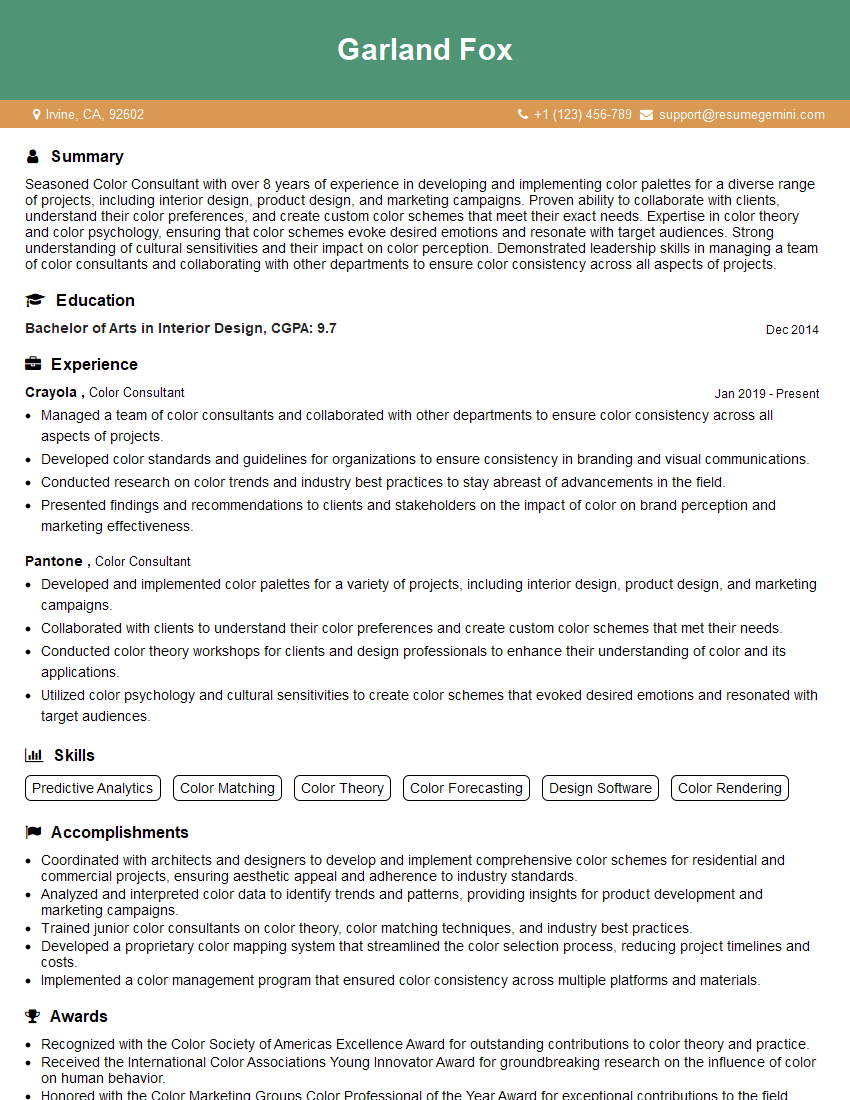
Mastering Color and Trim Design is crucial for a successful and rewarding career in the automotive industry. It opens doors to innovative projects, creative leadership roles, and the chance to influence the aesthetic experience of millions. To maximize your job prospects, creating an ATS-friendly resume is paramount. An effective resume clearly highlights your skills and experience, ensuring your application gets noticed. ResumeGemini is a trusted resource to help you build a professional, impactful resume tailored to the automotive industry. We offer examples of resumes specifically designed for Color and Trim Design professionals to guide you.
Explore more articles
Users Rating of Our Blogs
Share Your Experience
We value your feedback! Please rate our content and share your thoughts (optional).
What Readers Say About Our Blog
Very informative content, great job.
good