Interviews are opportunities to demonstrate your expertise, and this guide is here to help you shine. Explore the essential Advanced Knowledge of Cosmetics and Skincare interview questions that employers frequently ask, paired with strategies for crafting responses that set you apart from the competition.
Questions Asked in Advanced Knowledge of Cosmetics and Skincare Interview
Q 1. Explain the difference between an emulsion, a gel, and a cream.
Emulsions, gels, and creams are all common cosmetic formulations, but they differ significantly in their structure and properties. Think of them as different ways to combine oil and water, which generally don’t mix well.
- Emulsion: This is a mixture of two immiscible liquids—typically oil and water—where one liquid is dispersed as droplets within the other. A key component is an emulsifier, a molecule with both water-loving (hydrophilic) and oil-loving (lipophilic) parts that stabilize the mixture, preventing separation. Think of mayonnaise: oil droplets are dispersed in water, stabilized by egg yolk (the emulsifier).
- Gel: A gel is a semi-solid system consisting of a liquid phase trapped within a three-dimensional network of a gelling agent. This network can be formed by polymers, such as carbomer or xanthan gum. Gels are typically transparent or translucent and offer a lightweight feel on the skin. Aloe vera gel is a good example.
- Cream: Creams are usually emulsions, but they have a thicker consistency than lotions. They often contain a higher proportion of oil compared to water and can include additional ingredients like waxes or butters to provide richness and emolliency. A rich hand cream is an excellent example.
The choice of formulation depends on the desired product properties—a light moisturizer might be a gel, while a heavy-duty night cream might be a rich cream or emulsion.
Q 2. Describe the role of emollients in skincare formulations.
Emollients are crucial ingredients in skincare because they soften and smooth the skin by reducing water loss and improving skin barrier function. They work by filling in the gaps between skin cells, making the skin feel softer and more supple. Think of it like adding lubricant to a machine to reduce friction.
Chemically, emollients are typically lipids (fats) that are compatible with the skin’s natural oils. Common examples include:
- Oils: Mineral oil, shea butter, avocado oil. These provide a protective film on the skin.
- Waxes: Beeswax, carnauba wax. These provide structure and texture to the product.
- Silicones: Dimethicone, cyclomethicone. These offer a smooth, silky feel and form a protective film.
The selection of emollients depends on the desired texture, spreadability, and moisturizing properties of the final product. For example, a light lotion might use a volatile silicone oil, while a rich cream might use shea butter.
Q 3. What are the common preservatives used in cosmetics and their limitations?
Preservatives are essential in cosmetics to prevent microbial contamination and extend shelf life. Failure to properly preserve a product can lead to bacterial or fungal growth, posing a significant risk to the consumer.
Common preservatives include:
- Parabens (methylparaben, propylparaben): Effective broad-spectrum preservatives but have faced controversy due to potential endocrine-disrupting effects. Many formulations now avoid parabens.
- Phenoxyethanol: A widely used preservative with good efficacy and relatively low toxicity.
- Benzyl alcohol: Another effective preservative often used in combination with other preservatives.
- Sorbic acid and potassium sorbate: Effective against yeasts and molds, often used in conjunction with other preservatives.
Limitations: All preservatives have limitations. Some are effective against certain microorganisms but not others. Some consumers have sensitivities or allergies to specific preservatives. The efficacy of preservatives can also be affected by factors such as pH, temperature, and the presence of other ingredients.
Formulators must carefully select preservatives based on the product’s composition, intended shelf life, and target consumer group, always prioritizing safety and efficacy.
Q 4. Explain the concept of skin barrier function and its importance.
The skin barrier function is crucial for maintaining skin health. It’s a complex interplay of lipids (fats), proteins, and cells that work together to protect against environmental stressors, regulate hydration, and prevent water loss.
The stratum corneum, the outermost layer of the skin, is the primary component of the skin barrier. This layer comprises tightly packed corneocytes (dead skin cells) embedded in a lipid matrix. This matrix is predominantly composed of ceramides, cholesterol, and fatty acids. These lipids act like bricks and mortar, creating a water-resistant barrier.
Importance: A compromised skin barrier can lead to:
- Dryness and dehydration: Increased transepidermal water loss (TEWL).
- Increased sensitivity and irritation: Increased susceptibility to allergens and irritants.
- Infections: Reduced protection against bacteria and fungi.
- Premature aging: Increased susceptibility to UV damage.
Maintaining the skin barrier’s integrity is essential for healthy skin. Cosmetics and skincare products can play a role by replenishing lipids, moisturizing the skin, and protecting against environmental damage.
Q 5. What are the key considerations for formulating a sunscreen product?
Formulating a sunscreen requires careful consideration of several key factors to ensure both efficacy and safety:
- UV Filters: The choice of UV filters is paramount. They must provide broad-spectrum protection against UVA and UVB rays. The concentration of the filters directly influences the SPF (Sun Protection Factor) value. Formulators often utilize a combination of chemical and/or mineral filters for optimal protection.
- Stability: Sunscreens must be stable to ensure they retain their efficacy over time. This means protecting the active ingredients from degradation caused by factors like UV light, heat, and oxidation.
- Texture and feel: The texture and feel of the sunscreen are important for consumer acceptance. Formulators must balance efficacy with desired cosmetic properties, such as spreadability, non-greasiness, and lack of whitening.
- Water resistance: Water resistance is a crucial factor, especially for sunscreens intended for swimming or sweating. The formulation must be designed to withstand water exposure without compromising its effectiveness.
- Safety: Sunscreen ingredients must be rigorously tested for safety, including potential skin irritation, sensitization, and systemic absorption. Regulations vary between countries, but formulators must always adhere to the highest safety standards.
Formulating a successful sunscreen involves a complex interplay between these factors. It requires expertise in chemistry, dermatology, and regulatory affairs.
Q 6. Discuss the regulations surrounding cosmetic ingredient labeling.
Cosmetic ingredient labeling is subject to strict regulations globally, aiming to protect consumers and ensure transparency. These regulations vary somewhat between countries (e.g., the EU’s Cosmetics Regulation (EC) No 1223/2009, FDA regulations in the US), but common principles include:
- Ingredient list: All ingredients must be listed in descending order of concentration (from highest to lowest), with the exception of ingredients present at less than 1% which can be listed in any order.
- INCI names: Ingredients must be listed using their International Nomenclature of Cosmetic Ingredients (INCI) names, which are standardized internationally.
- Specific ingredient requirements: Certain ingredients, particularly those with known allergenic potential, must be explicitly labeled, even at low concentrations. This often involves a standardized labeling approach (e.g., *“May contain traces of nuts”*).
- Net weight or volume: The quantity of the product must be clearly indicated.
- Manufacturer information: The name and address of the manufacturer or distributor must be included.
Non-compliance can result in significant penalties, highlighting the importance of careful attention to labeling requirements during the development and marketing of cosmetic products.
Q 7. Explain the difference between SPF and PA ratings in sunscreens.
SPF and PA are both ratings used to measure a sunscreen’s effectiveness against UV radiation, but they focus on different types of UV rays.
- SPF (Sun Protection Factor): Measures the sunscreen’s ability to protect against UVB rays, which are primarily responsible for sunburn. An SPF of 30 means the sunscreen allows only 1/30th of the UVB radiation to reach the skin compared to unprotected skin.
- PA (Protection Grade of UVA): Measures the sunscreen’s ability to protect against UVA rays, which penetrate deeper into the skin and are linked to premature aging and skin cancer. The PA rating uses a plus (+) system: PA+, PA++, PA+++, and PA++++, with each plus indicating a progressively higher level of UVA protection.
Ideally, a good sunscreen should provide high SPF and high PA ratings to offer broad-spectrum protection against both UVB and UVA rays. It’s not sufficient to only have a high SPF; UVA protection is equally vital for long-term skin health.
Q 8. How do you determine the stability of a cosmetic formulation?
Determining the stability of a cosmetic formulation is crucial for ensuring its quality and safety throughout its shelf life. It involves assessing how well the product maintains its physical, chemical, and microbiological properties over time and under various storage conditions. We use a multi-faceted approach:
Accelerated Stability Testing: This involves subjecting the formulation to extreme conditions (e.g., high temperature, light exposure) to simulate long-term storage. Changes in appearance, pH, viscosity, and microbial counts are monitored. Think of it like fast-forwarding time to see how the product will fare in a year, but in just a few weeks.
Real-Time Stability Testing: Samples are stored under normal conditions (room temperature, etc.) and tested periodically over an extended period (months or years). This gives a realistic picture of long-term stability.
Chemical Analysis: Techniques like HPLC (High-Performance Liquid Chromatography) and spectrophotometry are used to measure the concentration of active ingredients and other components over time, ensuring they don’t degrade or react unexpectedly.
Microbial Testing: This is vital to ensure the product remains free from harmful bacteria and fungi throughout its shelf life, particularly for water-based products. We perform tests like total aerobic count and yeast and mold counts.
Physical Stability Testing: This focuses on assessing changes in physical properties such as viscosity, color, odor, and texture. For example, we might assess whether a lotion separates or a cream thickens excessively.
By combining these methods, we can create a comprehensive stability profile, allowing us to adjust the formulation or packaging to optimize its shelf life and prevent any degradation.
Q 9. Describe different methods for evaluating skin irritation.
Evaluating skin irritation requires a combination of in vitro (using non-animal models) and in vivo (using human subjects) methods. Ethical considerations and regulatory requirements dictate the preferred approaches.
In vitro methods: These include assays using reconstructed human epidermis (RhE) models. These models mimic the structure and function of human skin, allowing for the assessment of irritation potential without using animals. We can measure things like cytokine release which indicates inflammation.
In vivo methods: These involve human volunteer studies. The most common is the human repeated insult patch test (HRIPT). In this test, a panel of volunteers applies the product to their skin for repeated periods, and the skin’s reaction is assessed for signs of irritation (redness, swelling, etc.). Another method is the single-application patch test used for screening products for immediate reactions.
Instrumental Measurements: Non-invasive techniques like corneometry (measuring skin hydration) and colorimetry (measuring redness and inflammation) are gaining popularity for objective assessments of skin irritation.
The choice of method depends on the specific product, its intended use, and regulatory guidelines. A combination of methods often provides the most robust and reliable assessment of skin irritation potential.
Q 10. What is the significance of rheology in cosmetic formulations?
Rheology, the study of flow and deformation of matter, is critical in cosmetic formulations. The flow and texture of a product directly impact its application, sensory experience, and overall consumer appeal. For example, the feel of a luxurious cream, the spreadability of a lotion, or the precise dispensing of a spray all depend on the rheological properties of the formulation.
Viscosity: This refers to a product’s thickness or resistance to flow. A high viscosity might be desirable for a cream, offering a rich, luxurious feel, while a low viscosity would be preferred for a lotion to ensure easy spreadability.
Yield stress: This is the minimum amount of force required to initiate flow. A high yield stress would prevent a product from dripping or separating but might make it difficult to apply. A low yield stress will give easy dispensing but might affect stability.
Rheological testing involves using instruments like viscometers and rheometers to measure these properties, ensuring the formulation meets the desired sensory characteristics and stability requirements. Choosing the right emulsifiers and thickeners plays a vital role in achieving the desired rheology.
Q 11. Explain the different types of cosmetic packaging and their suitability.
Cosmetic packaging plays a crucial role in preserving product quality, protecting against contamination, and enhancing the consumer experience. The choice of packaging material depends on the product’s formulation, shelf-life requirements, and target market.
Plastic tubes: Widely used for creams, lotions, and gels, they are lightweight, cost-effective, and offer good barrier properties, especially if designed with a laminate layer.
Glass jars: Often used for premium products, glass provides an excellent barrier against oxygen and light but can be heavy and prone to breakage. They are excellent choices for products that need protection from light and oxygen.
Airless pumps: These innovative dispensers minimize air exposure, thereby extending the shelf life of sensitive products. Airless pumps minimize product oxidation and contamination by dispensing only the required amount.
Aerosol cans: Ideal for sprays, they offer convenient application but raise concerns regarding propellant choice and environmental impact.
Aluminum tubes: They offer good protection against light and oxygen while being lightweight. However, it is an expensive option.
In addition to the material, factors like the closure type (e.g., screw cap, pump dispenser), labeling, and overall design contribute to the packaging’s functionality, aesthetics, and suitability for the product.
Q 12. Discuss the impact of different pH levels on skin.
The pH of the skin’s surface (acid mantle) is typically slightly acidic, around 5.5. This slightly acidic environment is crucial for maintaining the skin’s barrier function and protecting against harmful microorganisms. Altering this pH can have significant consequences.
Alkaline pH: Products with an alkaline pH (higher than 7) can disrupt the acid mantle, leading to dryness, irritation, and increased susceptibility to infection. It can strip the skin of its natural oils.
Acidic pH: While a slightly acidic pH is beneficial, excessively acidic products (pH significantly below 5.5) can also cause irritation and dryness. This is because it can disrupt the skin’s delicate balance.
Therefore, cosmetic formulations should ideally have a pH close to that of the skin to minimize irritation and maintain the skin’s natural defenses. The pH of a product should be carefully controlled during formulation and testing.
Q 13. What are some common challenges in cosmetic product development?
Cosmetic product development presents several challenges:
Formulation Stability: Achieving long-term stability of complex formulations while maintaining efficacy and sensory appeal is demanding. Factors like temperature, light, and oxygen can cause degradation or separation.
Sensory Attributes: Balancing the desired sensory properties (texture, fragrance, color) with the functional requirements of the product is a key challenge.
Regulatory Compliance: Meeting the growing number of safety and labeling regulations across various global markets is essential and necessitates careful planning and rigorous testing.
Cost-Effectiveness: Balancing product performance with manufacturing and raw material costs is vital for achieving commercial success. We must work towards efficient and sustainable ingredient sourcing.
Consumer Trends: Keeping pace with constantly evolving consumer preferences and demands for natural, sustainable, and ethically sourced ingredients requires continuous innovation and adaptation.
Efficacy Demonstration: Providing scientific evidence to support claims of product efficacy and safety is crucial and requires rigorous clinical studies.
Overcoming these challenges requires a multidisciplinary approach involving chemists, formulators, dermatologists, and regulatory experts. Effective communication and collaboration are key.
Q 14. How do you assess the efficacy of a skincare product?
Assessing the efficacy of a skincare product is crucial for demonstrating its effectiveness and supporting marketing claims. A comprehensive approach is essential and involves several steps:
In vitro testing: Laboratory assays can assess the product’s ability to penetrate the skin, its antioxidant activity, or its effect on specific cellular processes. This gives us early evidence of potential effectiveness.
In vivo clinical studies: These are crucial for demonstrating the product’s effect on human skin. Studies often use parameters like skin hydration, elasticity, wrinkles, or other relevant measurements. They involve a control group and a test group, with measurements taken before and after a specified period.
Instrumental measurements: Non-invasive technologies such as corneometry, sebumetry, and image analysis provide objective data to support subjective assessments.
Consumer testing: Surveys and questionnaires can assess the consumer’s perception of product efficacy and sensory characteristics. This is important for the product’s acceptability.
The design and analysis of these studies need to follow strict scientific methods, ensure statistical significance, and adhere to ethical guidelines. The results then need to be carefully interpreted to make accurate and credible conclusions about the product’s efficacy.
Q 15. Explain the process of conducting a stability study for a cosmetic product.
A stability study for a cosmetic product is crucial to ensure its quality and safety remain consistent throughout its shelf life. It involves subjecting the product to various stress conditions, mimicking real-world storage and usage, to evaluate its physical, chemical, and microbiological stability. Think of it like a rigorous ‘stress test’ for your product.
The process typically involves:
- Defining the parameters: This includes specifying the test conditions (temperature, humidity, light exposure), duration of the study, and the analytical tests to be performed (e.g., pH, viscosity, microbial contamination, active ingredient concentration).
- Sample preparation: Representative samples of the final product are prepared and packaged in different packaging materials that mimic the commercial packaging.
- Stress testing: Samples are subjected to accelerated conditions, such as high temperatures (e.g., 40°C, 45°C) and fluctuating temperatures, to accelerate degradation processes. Other conditions include light exposure and humidity variations.
- Regular analysis: Samples are analyzed at predetermined intervals (e.g., weekly, monthly) to monitor changes in physicochemical properties, appearance (color, odor, texture), and microbial load. This often involves sophisticated analytical techniques like HPLC (High-Performance Liquid Chromatography) or spectrophotometry.
- Data analysis and interpretation: The results of the stability study are analyzed to assess the shelf life of the product. This involves determining the point at which the product falls outside pre-defined acceptance criteria. Statistical methods are used to extrapolate the results to predict the long-term stability under normal storage conditions.
For example, a sunscreen might undergo stability testing at 45°C to assess its SPF stability over time. If the SPF significantly decreases, it indicates the product’s formulation might not be suitable for long-term storage.
Career Expert Tips:
- Ace those interviews! Prepare effectively by reviewing the Top 50 Most Common Interview Questions on ResumeGemini.
- Navigate your job search with confidence! Explore a wide range of Career Tips on ResumeGemini. Learn about common challenges and recommendations to overcome them.
- Craft the perfect resume! Master the Art of Resume Writing with ResumeGemini’s guide. Showcase your unique qualifications and achievements effectively.
- Don’t miss out on holiday savings! Build your dream resume with ResumeGemini’s ATS optimized templates.
Q 16. Describe the role of antioxidants in cosmetic formulations.
Antioxidants are essential in cosmetic formulations to protect the product and the skin from damage caused by free radicals. Free radicals are unstable molecules that can damage cells and contribute to aging and various skin concerns. Think of them as tiny, destructive particles that attack the skin’s structure and healthy components. Antioxidants act as ‘free radical scavengers,’ neutralizing these damaging molecules.
Their role includes:
- Preserving product stability: Antioxidants prevent oxidation of ingredients, which can alter the product’s color, odor, and texture, and reduce its effectiveness.
- Protecting skin from damage: When applied topically, antioxidants help to protect the skin against environmental stressors, like UV radiation and pollution, which generate free radicals.
- Reducing signs of aging: By reducing oxidative stress, antioxidants can contribute to improved skin firmness, reduced wrinkles, and a more even skin tone.
Common examples of antioxidants used in cosmetics include Vitamin C (Ascorbic Acid), Vitamin E (Tocopherol), Coenzyme Q10, and green tea extract. Each antioxidant has its unique properties and effectiveness; sometimes a blend of different antioxidants is used for optimal efficacy.
Q 17. What are some common skin concerns and their associated ingredients?
Many skin concerns can be addressed with targeted ingredients. It’s important to remember that individual responses to these ingredients can vary.
- Acne: Salicylic acid (exfoliates), benzoyl peroxide (antibacterial), retinoids (reduce inflammation and regulate cell turnover).
- Dryness: Hyaluronic acid (intense hydration), ceramides (restore skin barrier), glycerin (humectant).
- Wrinkles and aging: Retinoids (stimulate collagen production), peptides (signal collagen synthesis), antioxidants (protect against free radical damage).
- Hyperpigmentation: Niacinamide (reduces melanin production), Vitamin C (inhibits melanin transfer), hydroquinone (stronger depigmenting agent, usually prescribed by dermatologists).
- Redness and inflammation: Centella asiatica (soothing and anti-inflammatory), niacinamide (reduces redness), green tea extract (antioxidant and anti-inflammatory).
It’s crucial to note that while these ingredients are commonly used to address these concerns, they should be selected carefully based on individual skin type and tolerance. Patch testing is always advisable before full application, especially for sensitive skin.
Q 18. How do you determine the appropriate viscosity for a cosmetic product?
Determining the appropriate viscosity for a cosmetic product is critical for its sensory appeal, ease of application, and stability. Viscosity refers to the thickness or resistance to flow of a liquid. It’s a crucial factor that influences consumer experience and product performance.
The viscosity is determined through a combination of factors:
- Product type: A lotion requires a lower viscosity than a cream. A gel needs to be sufficiently viscous to hold its shape.
- Target consumer: Older adults may prefer higher viscosity products for easier application.
- Ingredients: The choice of ingredients significantly impacts viscosity. Thickeners such as xanthan gum, carbomers, and clays are used to increase viscosity. Emulsifiers also impact the viscosity of emulsions.
- Sensory testing: Consumer panels provide valuable feedback on the preferred viscosity. Rheological measurements (using viscometers) quantify viscosity, allowing for precise adjustments.
- Stability considerations: The chosen viscosity needs to ensure the product remains stable during storage and transport, preventing separation or settling.
For example, a face serum would ideally have a light viscosity for easy spreadability and absorption, whereas a night cream might have a richer, higher viscosity for improved hydration and barrier protection.
Q 19. Explain the concept of comedogenicity and its relevance to skincare.
Comedogenicity refers to the potential of a substance to clog pores and contribute to the formation of comedones (blackheads and whiteheads), which are early stages of acne. The scale used to measure this potential is typically from 0 to 5, with 0 being non-comedogenic and 5 being highly comedogenic.
Relevance to skincare:
- Ingredient selection: Formulators need to carefully select ingredients based on their comedogenicity ratings to minimize the risk of acne breakouts. Ingredients like coconut oil and cocoa butter are known to be relatively comedogenic.
- Product development: Understanding comedogenicity helps in developing products suitable for acne-prone skin. Formulations can be designed with non-comedogenic oils and other ingredients to avoid clogging pores.
- Consumer awareness: Consumers are increasingly aware of comedogenicity, choosing products labeled as non-comedogenic or using ingredients with low comedogenicity ratings.
Many databases provide comedogenicity ratings for various ingredients. However, individual responses can vary, and a low comedogenicity rating doesn’t guarantee that a product won’t cause acne in all individuals. Patch testing is highly recommended.
Q 20. What are some key considerations for formulating products for sensitive skin?
Formulating for sensitive skin requires a meticulous approach, focusing on minimizing irritation and maximizing tolerance. Sensitive skin is characterized by its heightened reactivity to various stimuli, resulting in redness, itching, burning, or dryness.
Key considerations:
- Mild surfactants: Choose gentle, non-irritating surfactants, such as coco-glucoside or cocamidopropyl betaine, to minimize the risk of irritation.
- Minimal fragrance: Avoid or use very low concentrations of fragrance, as these are common irritants. Opt for fragrance-free formulations whenever possible.
- Careful preservative selection: Use preservatives known for their low sensitivity, such as phenoxyethanol, at minimal concentrations. Consider preservative-free options if possible, but be mindful of potential microbial contamination.
- pH balancing: Maintain a slightly acidic pH (around 5.5) which is close to the natural pH of the skin, as this minimizes irritation.
- Ingredient selection: Prioritize hypoallergenic and naturally derived ingredients whenever possible, avoiding common allergens such as lanolin or parabens. Test ingredients for skin irritation prior to incorporating them into a formulation.
- Simple formulations: Keep the formulations as simple as possible, minimizing the number of ingredients to reduce the risk of adverse reactions.
Through careful ingredient selection and formulation, brands can create products specifically designed for sensitive skin, ensuring the product is not only effective but also safe and gentle for use.
Q 21. Discuss the impact of different surfactants on skin.
Surfactants are crucial in cosmetic formulations as they facilitate cleansing, emulsifying, and foaming. They have diverse impacts on the skin, which depend on their type and concentration.
Different surfactant types and their impact:
- Anionic surfactants (e.g., sodium lauryl sulfate): These are highly effective cleansers but can be harsh and potentially irritating for sensitive skin due to their strong cleansing power. They effectively remove oil and dirt, but can also disrupt the skin barrier.
- Nonionic surfactants (e.g., coco-glucoside): Generally milder and less irritating than anionic surfactants. They’re commonly used in products for sensitive skin, offering effective cleansing without excessive stripping of the skin’s natural oils.
- Amphoteric surfactants (e.g., cocamidopropyl betaine): These possess both anionic and cationic properties, making them relatively mild and compatible with a wider range of ingredients. They often enhance the foaming properties of a formulation.
- Cationic surfactants (e.g., cetrimonium bromide): These are less commonly used in cosmetic cleansing formulations due to their potential to be irritating. They are often found in hair conditioners due to their ability to condition hair.
The choice of surfactant greatly affects the sensory experience. Harsh surfactants can leave the skin feeling dry and tight, while milder surfactants deliver a more comfortable feel. Formulators balance efficacy and skin compatibility when selecting surfactants.
Q 22. Explain the difference between natural and synthetic ingredients.
The distinction between natural and synthetic ingredients in cosmetics hinges on their origin and processing. ‘Natural’ ingredients are derived directly from natural sources like plants, minerals, or animals, with minimal processing. Think of pure shea butter extracted from shea nuts, or essential oils distilled from flowers. ‘Synthetic’ ingredients, on the other hand, are created in a lab through chemical processes. This doesn’t inherently mean they’re inferior; many synthetics mimic natural components’ benefits while offering better stability, purity, or cost-effectiveness. For example, synthetic Vitamin E is often preferred for its consistent potency over naturally-sourced Vitamin E, which can vary in strength depending on the extraction method and source.
It’s crucial to note that the term ‘natural’ is not always strictly regulated, leading to potential marketing ambiguity. A product labeled ‘natural’ may contain ingredients that have undergone significant processing, blurring the lines. Consumers should look for certifications from reputable organizations to validate the natural claims.
Q 23. What are the different types of acne and their treatments?
Acne presents in various forms, each requiring a tailored approach. Non-inflammatory acne, such as open and closed comedones (blackheads and whiteheads), results from clogged pores. Inflammatory acne includes papules (small red bumps), pustules (pus-filled bumps), nodules (larger, deeper bumps), and cysts (painful, pus-filled lumps). The severity ranges from mild to severe, impacting treatment choices.
- Mild acne often responds well to over-the-counter treatments containing benzoyl peroxide or salicylic acid, which exfoliate and fight bacteria.
- Moderate to severe acne may require prescription medications, such as retinoids (like tretinoin or adapalene), topical antibiotics, or oral antibiotics. Isotretinoin, a powerful oral medication, is reserved for severe, recalcitrant acne.
- Specific acne types, like hormonal acne, necessitate addressing hormonal imbalances through lifestyle changes or medication under dermatological supervision.
Effective acne treatment involves a holistic approach, incorporating skincare practices like gentle cleansing, avoiding harsh scrubbing, and maintaining a balanced diet. A consultation with a dermatologist is crucial for personalized diagnosis and treatment plan development.
Q 24. How do you select appropriate emulsifiers for a cosmetic formulation?
Emulsifier selection for cosmetic formulations is critical for achieving stable and aesthetically pleasing emulsions (mixtures of oil and water). The choice depends on several factors: the desired emulsion type (oil-in-water or water-in-oil), the specific oil and water phases, and the desired product texture and stability.
- HLB (Hydrophilic-Lipophilic Balance) value: This system helps predict an emulsifier’s suitability. Emulsifiers with a low HLB (e.g., < 7) favour water-in-oil emulsions, while those with a high HLB (e.g., > 10) prefer oil-in-water emulsions. Selecting emulsifiers with the appropriate HLB for your specific oil and water phases is essential.
- Emulsifier type: Various emulsifiers exist, including non-ionic (e.g., Tweens, Spans), anionic (e.g., sodium lauryl sulfate), cationic, and zwitterionic. The choice depends on the formulation’s pH, compatibility with other ingredients, and desired sensory properties.
- Synergistic combinations: Often, using a blend of emulsifiers improves emulsion stability and texture. For example, combining a high HLB and a low HLB emulsifier can yield a superior result.
Consider the overall formulation: The pH, presence of electrolytes, and the concentration of other ingredients will all impact emulsifier performance. Careful testing and experimentation are necessary to find the optimal emulsifier combination.
Q 25. Describe different methods for evaluating the sensory properties of a cosmetic product.
Evaluating a cosmetic product’s sensory properties involves assessing its tactile, visual, and olfactory characteristics. This is crucial for consumer acceptance and brand differentiation.
- Texture analysis: Instruments like texture analyzers measure parameters like firmness, spreadability, and stickiness. Sensory panels also provide valuable subjective evaluations of the product’s texture—smooth, creamy, rough, etc.
- Appearance evaluation: Visual assessments include color, gloss, clarity, and particle size. Colorimetry instruments precisely measure color, ensuring consistency across batches. Visual assessments by trained panelists help in assessing overall aesthetics.
- Olfactory assessment: Trained panelists assess the fragrance’s intensity, pleasantness, and persistence. Gas chromatography-mass spectrometry (GC-MS) can identify the individual volatile components within a fragrance.
Sensory evaluation combines objective instrumental measurements with subjective human perception. This provides a comprehensive understanding of the product’s overall sensory experience.
Q 26. What are the key challenges in scaling up a cosmetic formulation?
Scaling up a cosmetic formulation from lab-scale to manufacturing presents several challenges:
- Maintaining consistency: Ensuring consistent quality and reproducibility at a larger scale can be difficult. Factors like mixing speed, temperature control, and ingredient homogeneity can significantly affect the final product.
- Ingredient availability: Sourcing sufficient quantities of high-quality raw materials can be a challenge, particularly for specialized ingredients.
- Equipment limitations: Larger-scale manufacturing requires specialized equipment capable of handling larger volumes. Upgrading equipment or adapting existing processes may be required.
- Process optimization: Optimizing manufacturing processes for efficiency and cost-effectiveness is vital. This might involve adjusting mixing times, temperatures, or ingredient order.
- Quality control: Implementing robust quality control measures throughout the manufacturing process is essential to ensure product consistency and safety.
Careful planning, pilot-scale testing, and process validation are crucial to ensure a successful scale-up. Thorough understanding of the formulation’s rheology and stability is also vital.
Q 27. Discuss the importance of good manufacturing practices (GMP) in cosmetics.
Good Manufacturing Practices (GMP) are essential for ensuring the safety, quality, and consistency of cosmetic products. GMP guidelines encompass all aspects of manufacturing, from raw material sourcing and handling to finished product packaging and storage.
- Preventing contamination: GMP emphasizes maintaining a clean and hygienic production environment to prevent microbial contamination and cross-contamination between different products.
- Ensuring product quality: GMP guidelines dictate procedures for testing raw materials and finished products to ensure they meet predetermined quality specifications.
- Traceability: GMP mandates meticulous record-keeping to track every step of the manufacturing process, facilitating the identification of any issues.
- Personnel training: GMP emphasizes adequately trained personnel familiar with hygiene practices, equipment operation, and quality control procedures.
- Compliance: Following GMP guidelines ensures compliance with regulatory requirements and builds consumer trust.
Adhering to GMP is not just a matter of compliance; it’s a commitment to producing safe and effective cosmetic products.
Q 28. Explain your understanding of claim substantiation in the cosmetics industry.
Claim substantiation in the cosmetics industry refers to the scientific evidence required to support any claims made about a product’s efficacy or performance. This is crucial to avoid misleading consumers and to comply with regulatory requirements.
Substantiation typically involves conducting well-designed studies, such as clinical trials, to demonstrate the claimed effects. These studies should be conducted using appropriate methodologies, sample sizes, and statistical analysis. The data generated from these studies forms the basis for supporting the claims. Different regulatory bodies (e.g., FDA in the US, EU Commission in Europe) have varying requirements for the type and amount of evidence needed to support different claims. For example, a claim of ‘anti-aging’ requires significantly more rigorous evidence than a claim about a product’s ‘pleasant scent’.
Failing to provide adequate substantiation can lead to regulatory action, legal challenges, and damage to a company’s reputation. Robust claim substantiation is a cornerstone of ethical and responsible marketing in the cosmetics industry.
Key Topics to Learn for Advanced Knowledge of Cosmetics and Skincare Interview
- Skin Physiology & Anatomy: Understanding the layers of the skin, its functions, and how cosmetic ingredients interact with it. Consider the impact of various skin types and conditions.
- Cosmetics Formulation & Ingredients: Deep dive into different cosmetic formulations (e.g., emulsions, suspensions, gels), exploring the properties and functions of key ingredients (e.g., emulsifiers, preservatives, actives).
- Cosmeceutical Science: Explore the intersection of cosmetics and pharmaceuticals, focusing on active ingredients with proven efficacy and their mechanisms of action in addressing specific skin concerns.
- Product Development & Testing: Understanding the stages of product development, from concept to launch, including formulation, stability testing, safety assessment, and efficacy testing.
- Regulatory Compliance & Safety: Familiarity with relevant regulations and safety standards governing cosmetic products, including labeling requirements and ingredient restrictions.
- Marketing & Consumer Behavior: Understanding consumer preferences, market trends, and effective marketing strategies within the cosmetics and skincare industry. Consider the ethical considerations in marketing claims.
- Sustainability & Ethical Sourcing: Explore the growing importance of sustainable practices and ethical sourcing of ingredients in the cosmetics industry.
- Troubleshooting & Problem-Solving: Develop your ability to analyze formulation issues, identify potential problems, and propose solutions related to stability, texture, and efficacy.
Next Steps
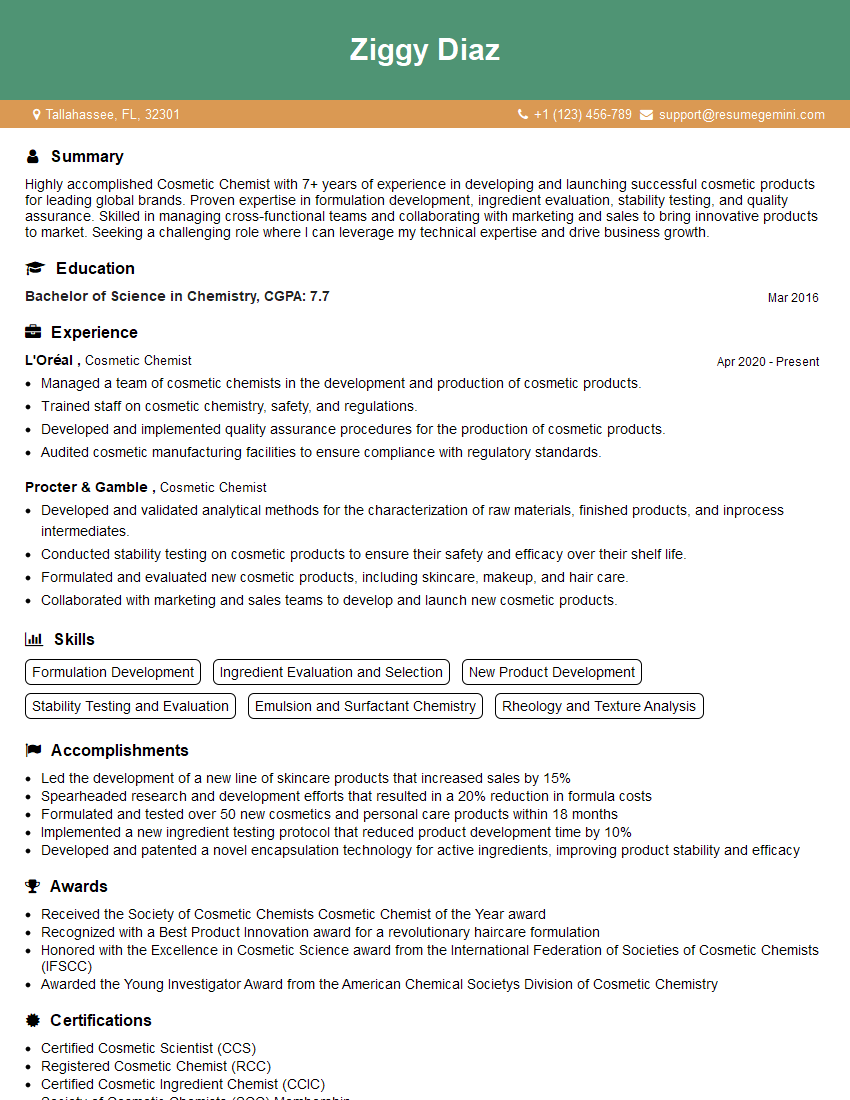
Mastering advanced knowledge of cosmetics and skincare is crucial for career advancement in this dynamic and competitive industry. A strong understanding of these topics will significantly enhance your interview performance and open doors to exciting opportunities. To further strengthen your candidacy, creating a compelling and ATS-friendly resume is essential. ResumeGemini is a trusted resource that can help you build a professional resume that highlights your skills and experience effectively. Examples of resumes tailored to Advanced Knowledge of Cosmetics and Skincare are available, showcasing how to present your expertise to potential employers. Invest in your future; craft a resume that reflects your potential.
Explore more articles
Users Rating of Our Blogs
Share Your Experience
We value your feedback! Please rate our content and share your thoughts (optional).
What Readers Say About Our Blog
Very informative content, great job.
good