The right preparation can turn an interview into an opportunity to showcase your expertise. This guide to Advanced Welding and Fabrication Techniques interview questions is your ultimate resource, providing key insights and tips to help you ace your responses and stand out as a top candidate.
Questions Asked in Advanced Welding and Fabrication Techniques Interview
Q 1. Explain the difference between MIG and TIG welding.
MIG (Metal Inert Gas) and TIG (Tungsten Inert Gas) welding are two prominent arc welding processes, differing primarily in their electrode and shielding methods. MIG welding uses a consumable electrode wire that continuously feeds into the weld pool, providing both filler material and electrical conductivity. The shielding gas, typically argon or a mixture of argon and carbon dioxide, protects the weld from atmospheric contamination. Think of it like a glue gun, constantly supplying fresh material. TIG welding, on the other hand, employs a non-consumable tungsten electrode to create the arc. Filler material is added separately, providing greater control over the weld bead. The shielding gas, usually argon or helium, performs the same protective function. Imagine a precise artist using a fine brush and separate paint to create a masterpiece.
In short: MIG is faster, simpler, and better suited for mass production, while TIG is slower, more precise, and ideal for applications requiring high-quality welds on thinner materials or intricate designs.
Q 2. Describe your experience with different welding processes (e.g., GMAW, GTAW, SMAW).
My experience encompasses all three processes: GMAW (Gas Metal Arc Welding – MIG), GTAW (Gas Tungsten Arc Welding – TIG), and SMAW (Shielded Metal Arc Welding – Stick). I’ve extensively used GMAW for large-scale projects requiring high deposition rates, such as fabricating structural steel components for industrial buildings. The speed and efficiency of MIG were crucial here. My TIG skills have been invaluable for intricate work like welding thin-gauge stainless steel in aerospace applications, where precision and clean welds are paramount. The control offered by TIG ensures a high-quality, aesthetically pleasing finish. Finally, SMAW has proven invaluable in challenging outdoor environments or when access to power is limited, because it doesn’t require a constant gas supply. I’ve used it extensively in pipeline construction and field repairs. Each process has its strength and I adapt my technique accordingly.
Q 3. What are the common welding defects and how are they prevented?
Common welding defects include porosity (small holes in the weld), incomplete fusion (lack of bonding between weld and base material), undercut (a groove at the weld toe), cracking (fractures in the weld), and slag inclusion (trapped slag from the welding process). Prevention strategies vary depending on the defect and the welding process but generally include:
- Proper cleaning of the base material: Removing dirt, rust, grease, and paint is crucial to ensure good fusion.
- Using correct welding parameters: This includes proper voltage, amperage, travel speed, and shielding gas flow rate.
- Maintaining good joint fit-up: Accurate joint preparation minimizes gaps and ensures proper penetration.
- Employing proper welding technique: This ensures consistent heat input and penetration.
- Regular equipment maintenance: Checking for gas leaks, worn-out nozzles, and proper shielding gas flow helps prevent many issues.
- Using appropriate filler materials: Choosing the right filler metal for the base material ensures compatibility and proper weld properties.
For instance, porosity can be minimized by ensuring sufficient shielding gas coverage and preventing moisture contamination of the filler metal. Undercutting can be mitigated by reducing amperage or increasing travel speed.
Q 4. How do you determine the appropriate welding parameters for a specific material and application?
Determining appropriate welding parameters is a critical aspect of ensuring a high-quality weld. Several factors play a vital role, including the base material (thickness, type, and properties), joint design, desired weld quality, and the welding process being used. This involves careful consideration of:
- Material Properties: Different materials (steel, aluminum, stainless steel) have different melting points, thermal conductivity, and other properties that dictate optimal welding parameters.
- Joint Design: The type of joint (butt, fillet, lap) significantly impacts penetration and heat distribution.
- Weld Size and Type: The required weld size and type (e.g., fillet weld, groove weld) impact heat input and deposition rate.
- Welding Process: Each welding process (MIG, TIG, SMAW) has a unique parameter range.
In practice, I often consult welding data sheets, manufacturer specifications, and my own experience to determine starting parameters. These parameters are then fine-tuned through trial welds, utilizing visual inspection and potentially destructive testing (e.g., tensile testing) to ensure the weld meets the required strength and quality standards. It’s an iterative process, requiring both theoretical knowledge and practical skill.
Q 5. Explain the importance of pre-weld and post-weld heat treatments.
Pre-weld and post-weld heat treatments are crucial for improving the mechanical properties and reducing residual stresses in welds, particularly in high-strength materials. Pre-weld heat treatments, such as stress relieving, can reduce internal stresses in the base material, preventing cracking during welding. This is essential for materials prone to stress-corrosion cracking. Post-weld heat treatments, like stress relieving or tempering, reduce residual stresses created during the welding process, which can lead to distortion or cracking. They also improve the weld’s toughness and ductility. For example, in the case of high-strength steel structures, post-weld heat treatment may be required to ensure the weld has sufficient impact resistance and to avoid premature failure.
The specific type and parameters of these heat treatments are determined by the material, welding process, and application requirements. Failure to perform the necessary heat treatments can result in premature failure of the welded structure.
Q 6. What are the safety precautions you take while welding?
Safety is paramount in welding. My safety precautions consistently include:
- Personal Protective Equipment (PPE): Always wearing appropriate PPE, including a welding helmet with the correct shade lens, welding gloves, flame-resistant clothing, and safety footwear.
- Ventilation: Ensuring adequate ventilation to remove welding fumes and gases, often using exhaust systems or working in well-ventilated areas.
- Fire Prevention: Keeping a fire extinguisher nearby and ensuring a clear workspace free of flammable materials.
- Eye and Skin Protection: Protecting eyes and skin from sparks, spatter, and ultraviolet (UV) radiation.
- Proper Handling of Materials: Following proper procedures for handling and storing welding materials and gases to prevent accidents.
- Awareness of Surroundings: Maintaining awareness of my surroundings and potential hazards, including electrical hazards and hot surfaces.
Furthermore, I always follow established safety protocols and company policies and regularly undergo safety training to ensure my practices are up-to-date.
Q 7. How do you interpret welding symbols?
Welding symbols are a standardized graphical representation of weld requirements, providing concise information about the type of weld, size, length, and other essential parameters. They’re crucial for clear communication between engineers, welders, and inspectors. A typical symbol includes a reference line, an arrow indicating the weld location, and various symbols and notations that specify the weld details. For example, a symbol might indicate a fillet weld, its size, and the length it needs to be. There are specific standards (like AWS D1.1) that detail the interpretation of these symbols and ensure consistent understanding across the industry. I have extensive experience interpreting these symbols and ensuring they’re accurately translated into the welding procedure.
The ability to interpret welding symbols is fundamental to correctly executing a weld as designed, ensuring quality and safety.
Q 8. Describe your experience with different welding jigs and fixtures.
My experience with welding jigs and fixtures spans a wide range, from simple clamping devices to complex, multi-axis robotic systems. I’ve worked extensively with various designs, including:
- Simple clamps and vises: Used for holding smaller, simpler parts during manual welding. Think of welding together small brackets – a simple vise is all you need to ensure proper alignment.
- Positioners and rotators: These are essential for larger, more intricate welds, allowing the welder to access all areas easily. For instance, welding the seams of a large cylindrical tank requires a rotator to present each seam optimally.
- Magnetic fixtures: Quick and convenient for temporary setups, especially useful for sheet metal welding. I’ve used magnetic jigs countless times in prototyping and smaller-scale production.
- Custom-designed jigs: For complex geometries or high-volume production, designing a custom jig is necessary for consistent, repeatable welds. I’ve been involved in designing and implementing these for projects requiring precise tolerances, such as aerospace components.
- Robotic welding fixtures: My experience extends to working with robotic systems, where fixtures become crucial for automating weld sequences. These fixtures need to be highly accurate and robust to handle the speed and precision of the robots.
Selecting the right jig or fixture is paramount. It’s a critical decision affecting weld quality, productivity, and safety. The choice depends heavily on the part geometry, material, weld type, and production volume.
Q 9. How do you ensure weld quality and consistency?
Ensuring weld quality and consistency is a multi-faceted process that begins even before the welding process starts. It involves careful planning, precise execution, and rigorous inspection. Here’s how I approach it:
- Proper Material Selection and Preparation: This includes selecting the right base materials with appropriate properties and cleaning them meticulously to remove any contaminants such as grease, paint, or rust. Think of it like preparing a fine dish – you can’t expect good results if your ingredients are subpar.
- Precise Welding Parameters: Setting the correct voltage, amperage, and travel speed is crucial for achieving the desired penetration and bead profile. Experience helps here; I can fine-tune these parameters based on the material and joint design.
- Consistent Technique: Maintaining a consistent arc length, travel speed, and electrode angle is essential for consistent welds. Imagine painting a wall – a consistent technique ensures an even coat.
- Regular Equipment Maintenance: Ensuring that welding equipment is properly calibrated and maintained helps avoid inconsistencies caused by faulty equipment. This is analogous to regular servicing of a car – preventive maintenance keeps it running smoothly.
- Weld Procedure Qualification (WPQ): For critical applications, a formal WPQ process is followed to ensure consistent results across different welders and production runs. This is like a recipe for achieving a certain quality standard, tested and validated.
- Post-Weld Inspection: This is the crucial final step. Visual inspection, followed by NDT methods (discussed later), verifies the quality and integrity of the welds.
Q 10. What are your experiences with non-destructive testing (NDT) methods for welds?
My experience with non-destructive testing (NDT) methods for welds is extensive. I’m proficient in several techniques, including:
- Visual Inspection (VT): The simplest and most common method, used to detect obvious flaws such as cracks, porosity, and undercut.
- Radiographic Testing (RT): Using X-rays or gamma rays to reveal internal flaws like cracks, porosity, and inclusions. This is critical for detecting defects hidden beneath the surface.
- Ultrasonic Testing (UT): Using high-frequency sound waves to detect internal flaws. UT is particularly effective at detecting cracks and lack of fusion.
- Magnetic Particle Inspection (MPI): Used to detect surface and near-surface cracks in ferromagnetic materials. A magnetic field is applied, and magnetic particles are used to reveal the flaws.
- Liquid Penetrant Inspection (LPI): Similar to MPI, but used for detecting surface-breaking flaws in all materials, regardless of magnetic properties.
The choice of NDT method depends on factors like the weld type, material, and required sensitivity. I always select the most appropriate technique based on the specific application and regulatory requirements. For instance, RT is often required for critical welds in aerospace or nuclear industries, whereas VT and LPI might suffice for less critical applications.
Q 11. Explain your understanding of weld penetration and fusion.
Weld penetration and fusion are fundamental aspects of weld quality. Weld penetration refers to the depth of the weld into the base materials. Adequate penetration is crucial for strength and integrity. Fusion refers to the complete melting and bonding of the base materials and the filler metal. Incomplete fusion creates a weak point in the weld, potentially leading to failure.
Imagine two pieces of metal being joined. Good penetration means the weld extends fully into both pieces, creating a strong bond. Good fusion means that the weld metal has completely melted and mixed with the base materials, creating a single, homogenous structure. Inadequate penetration or fusion results in a weaker joint, much like a poorly glued joint.
Several factors affect penetration and fusion, including the welding process, parameters (current, voltage, travel speed), joint design, and base material properties. Properly designed joints and optimized welding parameters are crucial for achieving full penetration and fusion.
Q 12. Describe your experience with different types of filler metals.
My experience with filler metals is extensive, encompassing various types for different base materials and applications. Some common examples include:
- Mild Steel Filler Metals (E7018, E6010): Used extensively for welding mild steel structures. The numbers indicate their tensile strength and other properties.
- Stainless Steel Filler Metals (308L, 316L): Used for welding various grades of stainless steel, chosen based on corrosion resistance requirements.
- Aluminum Filler Metals (4043, 5356): Used for welding aluminum alloys, with different compositions suited for various aluminum grades.
- Cast Iron Filler Metals: Specialized filler metals used for welding cast iron, requiring specific properties to handle the unique challenges associated with this material.
Selecting the correct filler metal is crucial for achieving a strong, reliable, and appropriate weld. The choice depends on factors like the base material, the desired properties of the weld (e.g., corrosion resistance, strength), and the welding process being used. Incorrect filler metal selection can lead to poor weld quality, cracking, and failure.
Q 13. How do you address welding porosity issues?
Welding porosity, the presence of small holes or voids in the weld, is a common defect that weakens the weld and reduces its fatigue life. Addressing porosity requires a systematic approach:
- Identify the Cause: Porosity can stem from various sources, such as moisture in the filler metal or base material, incorrect welding parameters, or contaminated surfaces. Careful analysis is needed to pinpoint the root cause.
- Control Moisture: Proper drying of filler metals and the base material is crucial. This often involves preheating the parts or using moisture-removing agents.
- Optimize Welding Parameters: Incorrect settings can lead to poor fusion and porosity. Adjusting amperage, voltage, and travel speed can often resolve the issue.
- Improve Surface Preparation: Thorough cleaning of the base materials is essential to eliminate contaminants that can cause porosity.
- Correct Joint Design: Poor joint design can trap gases and lead to porosity. Optimization of the joint geometry helps alleviate this.
- Rework/Repair: If porosity is already present, repair may be necessary, often involving grinding out the affected area and rewelding.
Prevention is always better than cure. By meticulously following proper procedures and conducting thorough inspections, many porosity issues can be avoided.
Q 14. What is your experience with robotic welding systems?
My experience with robotic welding systems is substantial, ranging from programming and operating robots to integrating them into automated production lines. I’m proficient in using various robotic platforms and programming languages common in the industry. My skills involve:
- Programming Robot Weld Paths: Using specialized software to create precise weld paths for complex geometries. This requires a strong understanding of both robotics and welding techniques.
- Robot Setup and Calibration: Ensuring that the robot is correctly positioned and calibrated for accurate welding. This involves precise measurements and adjustments.
- Troubleshooting Robot Systems: Diagnosing and resolving issues that may arise during robotic welding, such as sensor errors, programming glitches, or mechanical malfunctions.
- Integrating Robots into Production Lines: Working with other automation systems to create a complete automated welding cell, often involving conveyor systems and part handling equipment.
- Working with various robotic brands and controllers: Experience with different robotic brands, controllers, and programming software gives me flexibility and adaptability.
Robotic welding significantly enhances productivity, consistency, and precision, particularly beneficial in high-volume manufacturing. However, it demands expertise in both robotics and welding to achieve optimal results.
Q 15. How do you select the appropriate welding electrode for a given application?
Selecting the right welding electrode is crucial for achieving a strong, reliable weld. It’s like choosing the right tool for a job – a screwdriver won’t work if you need a hammer. The selection process depends on several factors:
- Base Metal: The type of metal being welded (steel, aluminum, stainless steel, etc.) dictates the electrode’s composition. For example, an E6010 electrode is suitable for mild steel, while an ER70S-6 is used for aluminum.
- Joint Design: The type of joint (butt, fillet, lap) impacts the electrode’s required penetration and reinforcement capabilities. A deep penetration electrode might be needed for a thick butt joint.
- Welding Position: Vertical, overhead, or flat welding positions require different electrode characteristics. E6010 electrodes, for instance, are known for their ability to weld in all positions.
- Desired Weld Properties: The application’s required strength, ductility, and toughness influence the electrode selection. High-strength applications necessitate electrodes with high tensile strength.
- Welding Process: The specific welding process (SMAW, GMAW, etc.) determines the electrode type. SMAW (Shielded Metal Arc Welding) uses coated electrodes, while GMAW (Gas Metal Arc Welding) uses wire feed.
For instance, if I’m welding a thick steel plate in a vertical position for a structural application, I’d likely choose a high-penetration, all-position electrode like an E7018, ensuring the weld possesses the necessary strength and integrity.
Career Expert Tips:
- Ace those interviews! Prepare effectively by reviewing the Top 50 Most Common Interview Questions on ResumeGemini.
- Navigate your job search with confidence! Explore a wide range of Career Tips on ResumeGemini. Learn about common challenges and recommendations to overcome them.
- Craft the perfect resume! Master the Art of Resume Writing with ResumeGemini’s guide. Showcase your unique qualifications and achievements effectively.
- Don’t miss out on holiday savings! Build your dream resume with ResumeGemini’s ATS optimized templates.
Q 16. Describe your experience with different types of welding power sources.
My experience encompasses various welding power sources, each with its unique characteristics and applications. I’ve worked extensively with:
- Constant Current (CC) Power Sources: Ideal for SMAW, these sources maintain a consistent current regardless of arc length fluctuations. This is crucial for maintaining a stable arc and consistent weld bead. I’ve utilized these for structural steel welding projects where consistent penetration and bead shape were paramount.
- Constant Voltage (CV) Power Sources: Primarily used for GMAW and FCAW (Flux-Cored Arc Welding), these sources provide a constant voltage, allowing the arc length to adjust based on wire feed speed and metal transfer mode. This adaptability is essential for achieving high deposition rates and smooth welds, which I’ve used extensively in sheet metal fabrication.
- Pulse Power Sources: These advanced sources offer precise control over current, allowing for improved weld quality and reduced spatter, particularly beneficial for thin materials and sensitive applications. I’ve used pulse welding for joining high-quality stainless steel components where spatter contamination was unacceptable.
- Multi-Process Power Sources: These versatile machines support multiple welding processes (SMAW, GMAW, etc.), offering flexibility and cost-effectiveness. I’ve found these invaluable on job sites requiring a range of welding tasks.
Choosing the right power source is akin to choosing the right engine for a vehicle – each has its strength and limitations, and the optimal choice depends on the application’s specific requirements.
Q 17. How do you calculate weld strength and size?
Calculating weld strength and size involves a combination of theoretical calculations and practical considerations. Weld strength is primarily determined by the base metal’s tensile strength and the weld’s own strength, often expressed as Ultimate Tensile Strength (UTS). Weld size depends on factors such as joint design, thickness of base materials, and required load-bearing capacity.
Weld Strength: It’s often estimated using factors and formulas that take into account the base metal’s UTS and the weld’s expected properties. AWS standards provide guidelines and tables for these calculations. For example, a simple approximation might involve considering a reduction factor (typically less than 1) applied to the base metal’s UTS to account for potential weld imperfections.
Weld Size: This is determined by considering the joint design, load requirements, and allowable stresses. For instance, a fillet weld size is usually measured as the leg length (the shortest distance from the weld toe to the root), calculated using design specifications and appropriate codes like AWS D1.1. Butt welds have a different size calculation, considering the weld penetration and reinforcement.
Real-world calculations often involve using software like FEA (Finite Element Analysis) to simulate stress and strain distributions within the weld and surrounding structure, offering a more accurate assessment of weld strength and size.
Q 18. What are the different types of weld joints and their applications?
Weld joints are categorized by how the components are positioned relative to each other. Each type has its strengths and weaknesses, suited for specific applications:
- Butt Joint: The simplest, joining two parts end-to-end. Strong, suitable for high-stress applications like pipelines or structural beams.
- Lap Joint: Overlapping parts. Easy to weld, but not as strong as butt joints. Used for applications with less demanding stress requirements.
- T-Joint: One part joining another at a right angle (like a ‘T’). Commonly used in structural fabrication, but design requires attention to avoid stress concentration.
- Corner Joint: Joining two parts at a right angle, forming a corner. Often found in box-type structures or containers.
- Edge Joint: Joining two edges, frequently used in sheet metal fabrication.
- Fillet Weld: A weld connecting two surfaces not coplanar. Used for structural and non-structural applications, providing good strength and cost-effectiveness.
The choice of joint depends on factors such as strength requirements, ease of fabrication, and the availability of access for welding. For example, a butt joint is preferred for high-strength applications where maximizing weld strength is critical, while a lap joint is often selected for ease of assembly and where stress levels are lower.
Q 19. Explain your understanding of the AWS welding codes and standards.
My understanding of AWS (American Welding Society) welding codes and standards is comprehensive. These codes provide the necessary guidelines for welding procedures, qualifications, and material specifications, ensuring the safety and quality of welded structures. They cover various aspects including:
- Welding Procedures: AWS codes specify the parameters for welding processes (e.g., current, voltage, travel speed) to ensure consistent weld quality. This includes PQR (Procedure Qualification Record) and WPS (Welding Procedure Specification) development.
- Welder Qualification: AWS defines procedures for welder qualification, demonstrating competency through tests that assess skills and knowledge.
- Material Specifications: AWS codes detail material requirements (e.g., chemical composition, mechanical properties) for welding consumables and base materials.
- Inspection and Testing: AWS outlines the methods for inspecting welds (visual, radiographic, ultrasonic testing) to ensure compliance with quality standards. This involves understanding various Non-Destructive Testing (NDT) techniques.
Familiarization with relevant AWS standards, such as D1.1 (Structural Welding Code – Steel) or D1.6 (Structural Welding Code – Aluminum), is essential for successful and compliant welding projects, ensuring both safety and structural integrity.
Q 20. How do you manage and mitigate welding-related risks?
Welding involves inherent risks, including arc flash, burns, fumes, and fire hazards. Effective risk management is paramount. My approach involves:
- Risk Assessment: Thoroughly evaluating potential hazards before commencing any welding work, considering factors such as location, materials, and surrounding environment.
- Personal Protective Equipment (PPE): Ensuring all welders use appropriate PPE, including helmets, gloves, jackets, and respiratory protection. This is non-negotiable.
- Fire Prevention: Implementing strict fire safety measures, including providing fire extinguishers, removing flammable materials, and using fire blankets when necessary.
- Fume Control: Using appropriate ventilation systems or respirators to mitigate exposure to harmful fumes generated during welding. Local exhaust ventilation is a key element.
- Arc Flash Protection: Employing arc flash safety practices, such as using appropriate PPE, maintaining safe distances, and utilizing arc flash labels to indicate potential hazards.
- Emergency Procedures: Establishing clear emergency procedures for handling accidents or injuries and providing appropriate first aid training to personnel.
Proactive risk management prevents accidents, protects welders, and ensures the safe completion of projects.
Q 21. What is your experience with AutoCAD or other CAD software for welding?
I possess extensive experience using AutoCAD and other CAD software in welding-related applications. My proficiency includes:
- Creating Weldment Drawings: Designing weldments, including creating detailed drawings specifying weld types, sizes, and locations. This involves understanding the nuances of weld symbols and their proper representation.
- 3D Modeling: Building 3D models of welded structures to visualize and analyze their design before fabrication. This helps in identifying potential problems early on.
- Generating Fabrication Drawings: Producing fabrication drawings from 3D models, detailing the individual components and their assembly sequence. This improves the efficiency of the fabrication process.
- Import/Export Functionality: Utilizing CAD software’s import and export functionalities to collaborate effectively with other engineers and designers involved in a project.
My experience with CAD software is crucial for creating accurate, detailed drawings, which are essential for fabricators to produce high-quality, reliable welded structures. It’s a significant part of efficient workflow and error reduction.
Q 22. Describe your experience with different types of cutting processes (e.g., plasma, laser).
My experience encompasses a wide range of cutting processes, primarily plasma arc cutting and laser cutting. Plasma arc cutting uses a high-velocity jet of ionized gas to melt and sever the material. I’ve extensively used this for cutting various thicknesses of steel, aluminum, and stainless steel, often for intricate shapes where precise cuts are less critical. The process is robust, relatively inexpensive, and readily adaptable to different materials. However, the cut edge quality can be rougher than with laser cutting.
Laser cutting, on the other hand, uses a highly focused beam of light to vaporize the material. I’ve employed this extensively for intricate designs and thin-gauge materials where a clean, precise cut is essential. The accuracy and repeatability are unmatched, leading to less post-processing. However, it’s more expensive and may not be suitable for all materials or thicknesses. For example, I once used laser cutting to create precisely sized components for a complex robotic arm, achieving a smoothness and accuracy unattainable with plasma cutting. The choice between plasma and laser always depends on the project’s specifics: material, thickness, tolerance requirements, and budget.
Q 23. How do you conduct a visual inspection of a weld?
A visual inspection of a weld is the first and most critical step in quality control. It involves a thorough examination of the weld using the naked eye, sometimes with magnification tools like a magnifying glass or a borescope for hard-to-reach areas. I assess several key aspects:
- Weld Appearance: I look for things like consistent bead width, even penetration, lack of undercuts, overlaps, porosity (small holes), cracks, and spatter. A good weld generally has a smooth, consistent appearance.
- Weld Profile: The shape and size of the weld bead should conform to the specifications in the blueprint. I pay close attention to the penetration – ensuring it’s deep enough to provide sufficient strength.
- Overall Integrity: I check for any signs of distortion, warping, or damage to the base material near the weld. This might indicate issues like improper heat input or excessive force during welding.
Documentation is crucial. I typically use a checklist to ensure consistency and thoroughness and take detailed photographs to record any imperfections. This visual inspection forms the basis for further non-destructive testing (NDT) methods, if necessary, such as radiographic or ultrasonic testing.
Q 24. Describe your troubleshooting experience related to welding equipment malfunctions.
Troubleshooting welding equipment is a regular part of my work. I’ve encountered various malfunctions, from simple issues like gas leaks to more complex problems involving power supply failures. My approach is systematic:
- Safety First: Always isolate the power and gas supplies before attempting any repairs. Safety is paramount.
- Identify the Problem: I carefully observe the symptoms. Is the arc unstable? Is there no arc at all? Are there unusual noises or smells? Is the gas flow incorrect?
- Check the Obvious: I start with the simplest potential causes: gas supply, electrode condition, power supply connections. Often, the problem is a loose connection or a depleted gas cylinder.
- Consult Documentation: The equipment’s manual provides valuable information on troubleshooting procedures and common problems. Manufacturer-specific diagnostic codes often guide the diagnosis.
- Systematic Elimination: If the problem persists, I use a process of elimination, checking each component systematically to identify the faulty part. This could involve voltage and amperage checks, gas pressure monitoring, and inspection of internal components.
- Professional Help: If the problem is beyond my expertise or the repair requires specialized tools, I don’t hesitate to call in a qualified service technician.
One instance I recall involved a persistent arc instability problem with a MIG welder. By systematically checking the wire feed mechanism, I identified a problem with the drive rollers, which had become worn. Replacing them resolved the issue.
Q 25. What is your experience with blueprint reading and interpretation for welding projects?
Blueprint reading is fundamental to my work. I’m proficient in interpreting welding symbols, dimensions, material specifications, and tolerances. I understand different projection methods and can visualize the three-dimensional structure from two-dimensional drawings. My experience includes interpreting blueprints for complex assemblies, understanding weld joint types, and identifying critical dimensions influencing the weld process.
For example, a recent project required the fabrication of a custom chassis for a specialized piece of machinery. The blueprint detailed various steel thicknesses, weld types (e.g., fillet welds, groove welds), and tolerances. I carefully studied the drawings to determine the appropriate welding parameters, select the correct filler materials, and plan the fabrication sequence. This ensured the final product met the exact specifications and functioned correctly.
Q 26. How do you maintain welding equipment and ensure its safety?
Maintaining welding equipment is critical for both safety and efficiency. My routine includes:
- Regular Cleaning: Keeping the equipment clean prevents build-up of spatter and debris that can interfere with operation and cause premature wear. This includes cleaning the torch, wire feeder, and power supply.
- Gas Supply Checks: Regularly check gas cylinders for pressure and leaks. Leaks can be dangerous and affect the weld quality.
- Electrode/Wire Inspection: Regularly inspect welding electrodes and wire for defects. Damaged electrodes or wire can cause inconsistent welds and equipment malfunction.
- Cable Inspection: Examine cables for fraying, damage, or loose connections. Damaged cables are a fire hazard and affect the electrical conductivity.
- Regular Servicing: Regular professional servicing is crucial. This often includes thorough inspection of components and preventative maintenance.
- Safety Checks: Regularly checking safety features like grounding, shielding gas flow, and appropriate personal protective equipment is critical for safe operation.
By following a strict maintenance schedule and proactively addressing any issues, we significantly reduce the risk of accidents and maximize the lifespan of the equipment. This approach saves money in the long run and ensures the consistent production of high-quality welds.
Q 27. Explain your understanding of material compatibility in welding.
Material compatibility in welding is crucial for ensuring the structural integrity and longevity of the weld. Selecting incompatible materials can lead to weld defects, cracking, and overall failure. My understanding encompasses several factors:
- Melting Points and Thermal Properties: Materials with significantly different melting points can create difficulties in achieving proper fusion. The filler metal must be compatible with both base materials.
- Chemical Composition: The chemical composition of the base metals and filler metal must be compatible to prevent undesirable reactions that weaken the weld. Certain alloying elements can lead to embrittlement or intermetallic compound formation.
- Coefficient of Thermal Expansion: Large differences in the coefficient of thermal expansion can result in residual stresses and cracking after the weld cools. Careful consideration of this aspect is crucial for preventing weld failures.
- Corrosion Resistance: The selection of materials should consider the intended environment. For example, dissimilar metals in contact can lead to galvanic corrosion. It is important to choose compatible materials and possibly implement preventative measures to mitigate this effect.
I use welding handbooks, material data sheets, and often consult with metallurgists to ensure compatibility. For instance, welding stainless steel to mild steel requires careful consideration of the filler material and the potential for corrosion. I would choose a filler metal specifically designed for dissimilar metal welds to ensure the best possible outcome.
Q 28. Describe your experience with complex fabrication projects.
I have extensive experience with complex fabrication projects, involving multiple materials, intricate geometries, and tight tolerances. These projects often require a thorough understanding of various welding techniques, material science, and fabrication processes. My experience includes the design and fabrication of custom machinery components, pressure vessels, and structural assemblies.
One notable project involved the construction of a large-scale custom filtration system for a chemical processing plant. This project required precise welding of various stainless steel components, careful attention to sanitary weld requirements, and a rigorous quality control process. We utilized both TIG and MIG welding techniques, selecting the most appropriate method for each part of the assembly. The project demanded careful planning, precise execution, and a collaborative team effort to successfully complete the complex assembly within the specified timeframe and budget. My role included overseeing the entire fabrication process from blueprint interpretation to final inspection and quality assurance.
Key Topics to Learn for Advanced Welding and Fabrication Techniques Interview
- Advanced Welding Processes: Understanding the nuances of various welding processes like TIG, MIG, and robotic welding, including their applications, limitations, and safety protocols. This includes theoretical knowledge of weld pool dynamics and heat transfer.
- Material Science and Metallurgy: Deep dive into the properties of various metals and alloys commonly used in fabrication, including their behavior under stress and heat. Practical application involves selecting the appropriate material for a given project based on its properties and the intended use.
- Blueprint Reading and Design Interpretation: Proficiency in interpreting complex engineering drawings, including understanding tolerances, dimensions, and welding symbols. This is crucial for translating designs into practical fabrication processes.
- Fabrication Techniques and Processes: Mastering techniques like cutting, bending, forming, and joining metals using various tools and machinery. Practical experience with different fabrication methods, including sheet metal fabrication and structural welding, is essential.
- Quality Control and Inspection: Knowledge of various non-destructive testing (NDT) methods used to ensure weld quality, including visual inspection, ultrasonic testing, and radiographic testing. Understanding industry standards and quality control procedures is key.
- Troubleshooting and Problem-Solving: Ability to diagnose and resolve welding defects, including understanding the root causes of common problems and implementing corrective actions. This involves practical experience in identifying and rectifying welding flaws.
- Safety Procedures and Regulations: Thorough understanding of safety protocols and regulations related to welding and fabrication, including the use of personal protective equipment (PPE) and adherence to safety standards. This is critical for maintaining a safe working environment.
- Automation and Robotics in Welding: Familiarity with automated welding systems and robotic welding applications, including programming and operation. Understanding the advantages and limitations of robotic welding in different contexts.
Next Steps
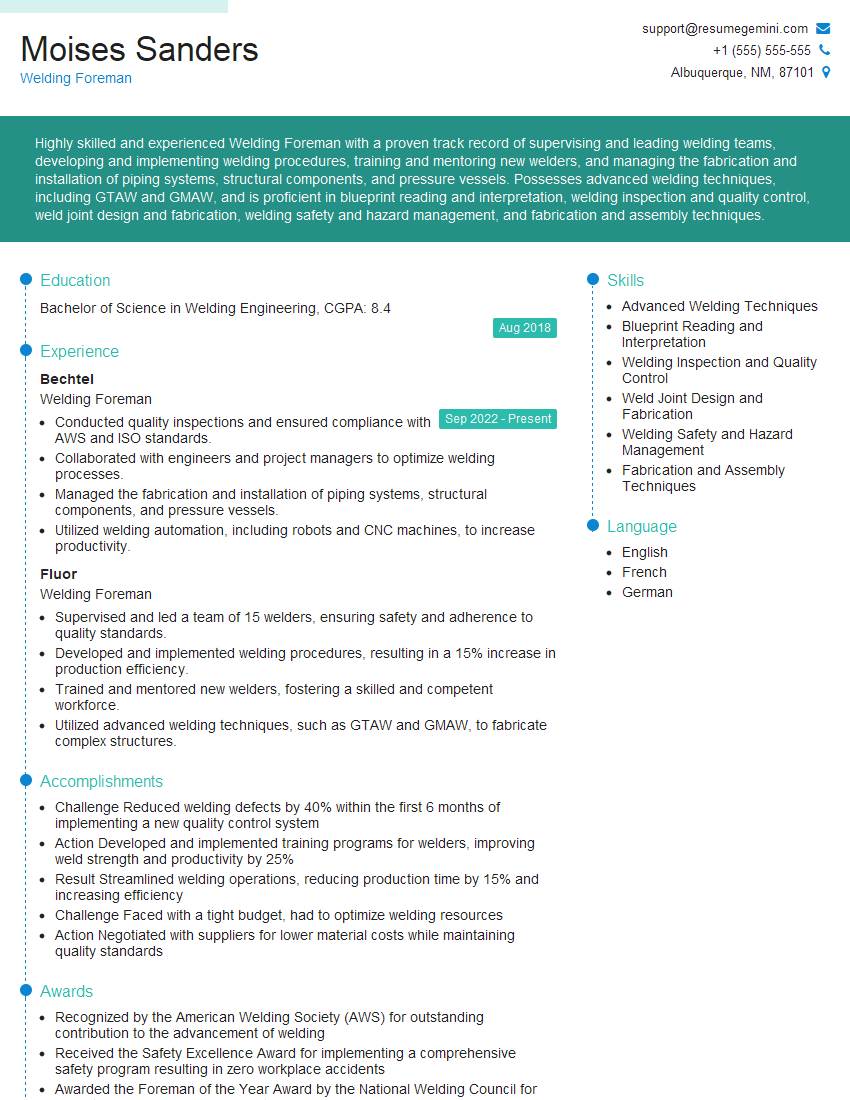
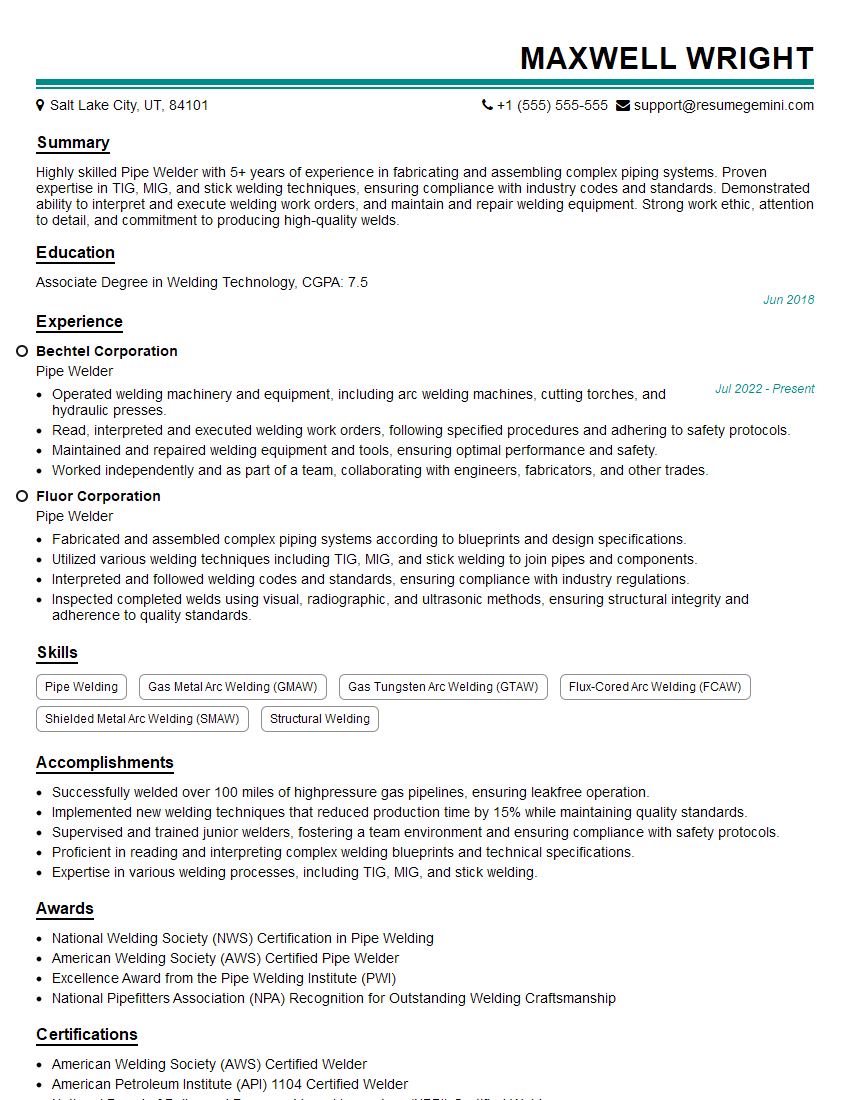
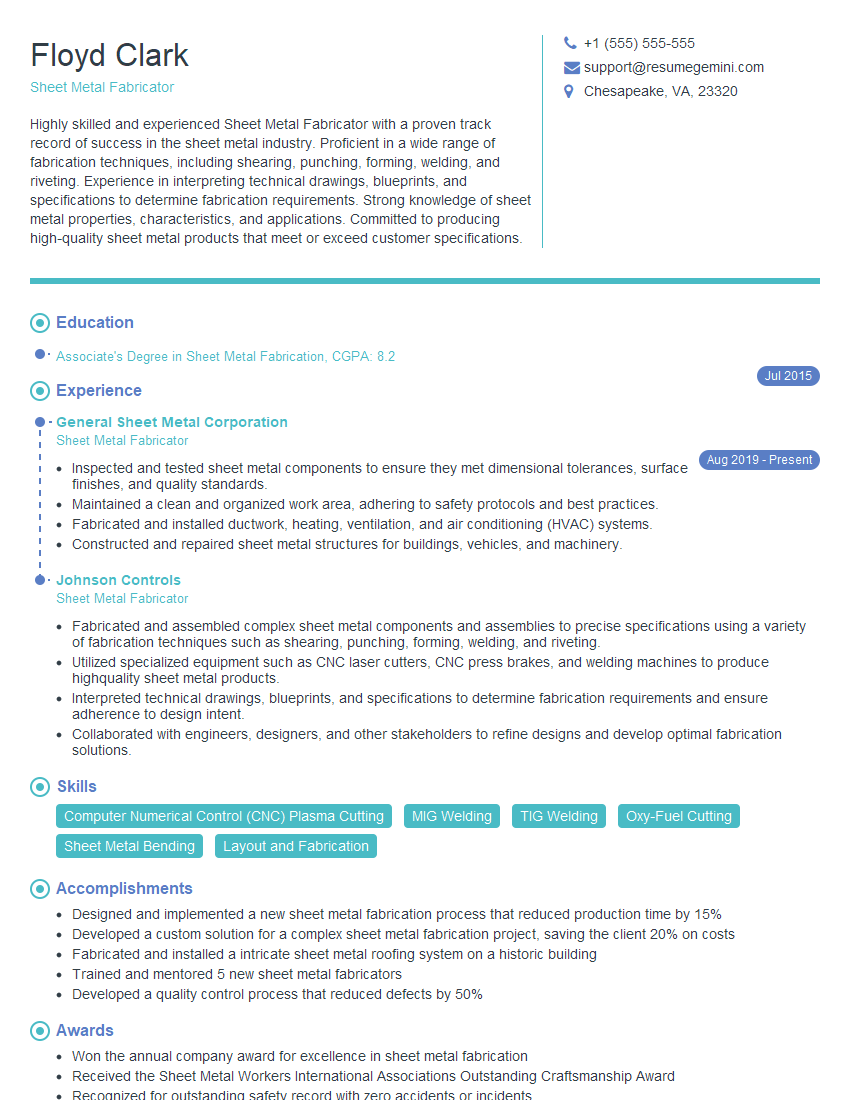
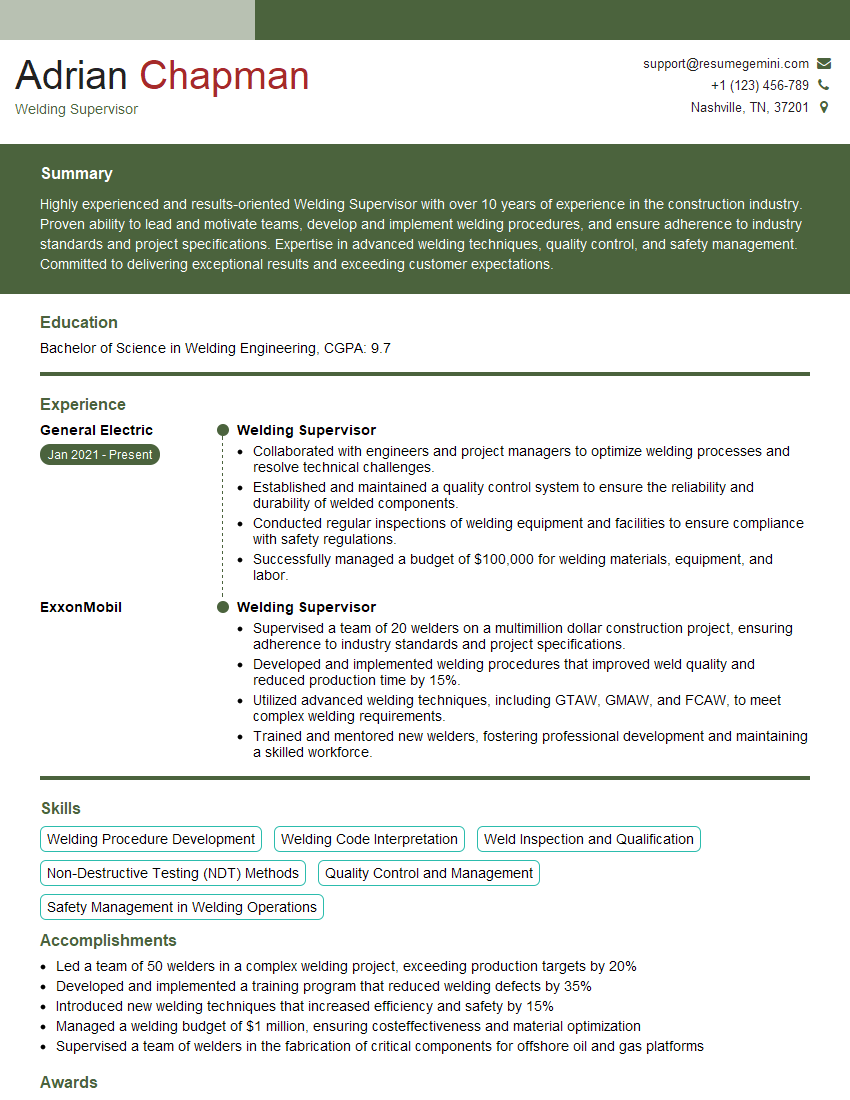
Mastering Advanced Welding and Fabrication Techniques is crucial for career advancement in this highly skilled field, opening doors to specialized roles and increased earning potential. To maximize your job prospects, create a compelling and ATS-friendly resume that effectively showcases your skills and experience. ResumeGemini is a trusted resource that can help you build a professional resume tailored to the specific requirements of the Advanced Welding and Fabrication industry. Examples of resumes tailored to Advanced Welding and Fabrication Techniques are available to help you get started.
Explore more articles
Users Rating of Our Blogs
Share Your Experience
We value your feedback! Please rate our content and share your thoughts (optional).
What Readers Say About Our Blog
Very informative content, great job.
good