Every successful interview starts with knowing what to expect. In this blog, we’ll take you through the top Aerial Acrobatics interview questions, breaking them down with expert tips to help you deliver impactful answers. Step into your next interview fully prepared and ready to succeed.
Questions Asked in Aerial Acrobatics Interview
Q 1. Describe your experience with different aerial apparatuses (silk, hoop, trapeze, etc.).
My aerial acrobatics journey has encompassed a diverse range of apparatuses, each demanding unique skills and techniques. I’ve extensively trained in aerial silks, mastering climbs, drops, wraps, and intricate transitions. The silks’ fluidity requires incredible strength, flexibility, and precision. With the aerial hoop (lyra), I’ve honed skills in spins, hangs, and dynamic inversions, demanding both core strength and spatial awareness. My trapeze work includes both static and flying trapeze, developing significant upper body strength, balance, and trust in catching. I’ve also had experience with rope, developing a strong understanding of knotting techniques and dynamic movement within a constrained space. Each apparatus presents its own set of challenges and rewards, enriching my overall understanding of aerial movement and body control.
Q 2. Explain your understanding of aerial rigging safety procedures.
Rigging safety is paramount in aerial acrobatics. It’s not just about following procedures; it’s about understanding the why behind each step. My understanding encompasses several key areas: First, thorough inspection of all equipment before each use is crucial, checking for wear and tear, fraying, or any signs of damage. Second, correct knotting techniques are essential. I’m proficient in various safety knots, ensuring secure connections. Third, weight limits must always be respected, and the rigging system must be rated appropriately for the weight of the performer and any additional equipment. Fourth, proper anchoring is critical, guaranteeing the system’s stability and security. Finally, and equally important, is a comprehensive understanding of the specific rigging system used – its load-bearing capacity, its correct configuration, and its limitations.
Ignoring any of these steps can lead to catastrophic consequences, so a meticulous and consistent approach is essential. For example, failing to properly inspect a weakened rope could lead to a serious fall. In my experience, regular training and refresher courses on rigging safety are vital to maintaining the highest standards.
Q 3. How do you assess and mitigate risk in aerial performances?
Risk assessment in aerial performances is a continuous process. It begins with identifying potential hazards, such as equipment failure, improper rigging, inadequate spotting, or unforeseen environmental factors like uneven flooring or strong winds. After identification, I analyze the likelihood and severity of each hazard. For instance, a high likelihood of equipment failure would require intensive preventative maintenance, while a low likelihood of a venue-related issue might only need a quick inspection before the show.
Mitigation strategies then follow. These can include using backup safety lines, employing experienced spotters, conducting thorough equipment checks, selecting appropriate venues and performing risk assessments specific to each venue. Regular rehearsals and the consistent practice of safety protocols are also essential elements of risk mitigation. The goal is not to eliminate risk entirely – that’s impossible – but to significantly reduce it to an acceptable level.
A practical example: During an outdoor performance, high winds were forecast. My risk assessment identified a high likelihood of the silks being blown off-course. Mitigation involved using stronger anchors, adding extra weight to the base of the silks and shortening the length of the silks to reduce wind resistance.
Q 4. Describe your experience with choreography and sequencing in aerial routines.
Choreography and sequencing are fundamental to crafting a compelling and safe aerial routine. My approach involves a collaborative process. I begin with a clear concept, often inspired by music, emotion, or a narrative. Then, I start by breaking down the routine into smaller, manageable sections or phrases. This allows for careful consideration of transitions, dynamics and the flow of the movement. I pay close attention to the physics of each movement, ensuring it’s both aesthetically pleasing and mechanically sound on the apparatus. Spotting and safety considerations are integrated throughout the choreography process.
For example, a challenging transition between two aerial silks positions might require specific body positions, strength requirements, and spotter placement to minimize risk. I regularly rehearse and refine the sequence, making adjustments as needed to optimize both the artistic and safety aspects of the routine. The final piece is about telling a story and engaging the audience on an emotional level.
Q 5. What are your strengths and weaknesses as an aerial performer?
My strengths lie in my versatility across various aerial apparatuses and my dedication to meticulous safety procedures. I also have a strong understanding of body mechanics and possess a high level of physical strength, flexibility, and endurance. My creative approach to choreography also allows me to generate unique and engaging routines.
However, like any performer, I also have areas for development. I am currently working to improve my strength in specific areas to execute more advanced moves on certain apparatuses, and I’m always striving to enhance my performance skills, particularly my stage presence and ability to connect with the audience. Continuous learning and seeking feedback are integral parts of my growth as a performer.
Q 6. How do you adapt to different performance spaces and venues?
Adaptability is crucial. Different performance spaces present unique challenges; height restrictions, ceiling types, flooring stability, and even the ambient temperature can impact a performance. My adaptation process begins with a pre-show site visit. I thoroughly assess the space, identifying potential issues, such as low ceilings, unsuitable rigging points or lack of adequate safety precautions. I then adjust the routine accordingly, perhaps simplifying certain moves or altering the rigging configuration to ensure both safety and the successful execution of the performance.
For instance, a high-ceiling venue might allow for more ambitious moves, while a low-ceiling one may require a more ground-based routine. This adaptable approach safeguards the performance’s success and, most importantly, my safety.
Q 7. Explain your approach to injury prevention and recovery in aerial acrobatics.
Injury prevention is a priority, starting with a comprehensive warm-up routine that targets all the major muscle groups used in aerial acrobatics. This includes dynamic stretching, strength training, and cardiovascular exercise. I maintain a consistent training schedule with a focus on proper technique and progressive overload, avoiding pushing myself beyond my limits too quickly. Regular cross-training activities such as yoga and Pilates help maintain flexibility, balance, and overall strength. Nutrition and sufficient rest play equally important roles in injury prevention.
Should an injury occur, my approach prioritizes immediate first aid and proper medical attention. The recovery process usually incorporates rest, ice, compression, and elevation (RICE) therapy, alongside physical therapy tailored to the specific injury. A gradual return to training, guided by medical professionals, is key to avoiding re-injury. Throughout my career, maintaining a healthy lifestyle, respecting my body’s limits, and consistently prioritizing safety have been instrumental in minimizing the risk of injury.
Q 8. Describe your experience working with diverse groups of students or performers.
Working with diverse groups is fundamental in aerial acrobatics. My experience spans from teaching beginners with varying physical abilities and levels of experience to collaborating with highly skilled professional performers. I adapt my teaching style to suit individual learning needs. For example, I’ve worked with students who have had previous dance or gymnastics backgrounds, providing them with tailored advanced training focusing on aerial-specific techniques. Conversely, I’ve also worked extensively with complete beginners, building their foundational strength, flexibility, and understanding of safety protocols before progressing to more complex maneuvers. I believe in creating an inclusive environment where everyone feels safe to learn, grow, and contribute their unique talents. This includes utilizing visual aids, varied instructional methods, and open communication to ensure clear understanding and address concerns.
- Adaptable Teaching Styles: I adjust my approach based on student learning styles, physical limitations, and emotional comfort levels.
- Inclusive Environment: I actively foster a culture of respect and mutual support, ensuring every student feels valued and empowered.
- Personalized Feedback: I provide constructive feedback tailored to individual needs, identifying strengths and areas for improvement.
Q 9. How do you handle unexpected equipment malfunctions during a performance?
Unexpected equipment malfunctions during a performance are a serious concern requiring quick thinking and decisive action. My approach is based on a combination of preventative measures and well-rehearsed contingency plans. Before every performance, we rigorously check all equipment: ropes, silks, rigging, and safety harnesses. We also have a backup system in place, including extra equipment readily available backstage. If a malfunction does occur, the primary focus is always on the safety of the performer. My training enables me to quickly assess the situation and take appropriate action, which might involve a controlled descent, or a strategic repositioning to a safer point on the apparatus. Clear communication with the rest of the performance team is crucial, ensuring everyone is aware of the situation and their respective roles in the emergency response. For example, during one show, a quick release on a trapeze unexpectedly failed. My immediate response was to signal to my spotter to assist with the controlled descent, whilst simultaneously communicating with the stage manager to halt the music and dim the lights, minimizing risk of further injury or alarm. Post-performance, thorough investigation and equipment servicing ensures that such incidents are minimized in future.
Q 10. What is your experience with spotting and assisting other aerialists?
Spotting and assisting other aerialists is an integral part of aerial acrobatics, emphasizing safety and trust. My experience in spotting is extensive, covering various aerial apparatuses including silks, trapeze, and lyra. I understand the biomechanics of different aerial moves and know how to provide appropriate support to prevent falls or injuries. Effective spotting requires precise timing, awareness, and strength. I utilize different spotting techniques depending on the specific maneuver and the skill level of the aerialist. For example, a beginner performing their first drop on silks requires a more hands-on approach, whereas a seasoned professional might only need verbal cues or subtle adjustments in their positioning. Communication is key – establishing clear signals and maintaining constant visual contact with the aerialist is paramount. I always brief the aerialist beforehand about the spotting strategy, so they feel confident and secure during the performance. My own training included extensive time dedicated to assisting more experienced aerialists, refining my skills in anticipating potential issues and providing seamless, effective support.
Q 11. How do you maintain your physical fitness for aerial acrobatics?
Maintaining peak physical fitness for aerial acrobatics requires a dedicated and holistic approach. My routine incorporates a combination of strength training, flexibility exercises, cardiovascular conditioning, and recovery methods. Strength training focuses on building upper body strength, core stability, and leg power – essential for aerial movements. I use a variety of exercises including weight training, calisthenics, and resistance band work. Flexibility is equally crucial to prevent injuries and perform fluid, graceful movements; I practice yoga, Pilates, and dynamic stretching regularly. Cardiovascular fitness enhances endurance and stamina, allowing for sustained performances without fatigue. This involves activities like running, swimming, and cycling. Finally, adequate rest and recovery are paramount. This includes sufficient sleep, nutrition, and incorporating active recovery techniques such as foam rolling to manage muscle soreness and prevent injury. I regularly monitor my progress and adjust my training plan as needed to optimize performance and prevent overtraining.
Q 12. Describe your knowledge of various aerial techniques (e.g., climbs, drops, inversions).
My knowledge of aerial techniques encompasses a wide range of skills across various apparatuses. In silks, I’m proficient in climbs (e.g., Russian climb, butterfly climb), drops (e.g., controlled drops, dynamic drops), and inversions (e.g., handstands, shoulder stands). On the trapeze, I’m skilled in various swings, catches, drops, and transitions. My repertoire also includes techniques on lyra (including spins, hangs, and dynamic movements). I understand the nuances of each apparatus and technique, from basic foundational movements to advanced tricks and combinations. Beyond specific techniques, I also understand how to adapt and combine them to create unique and aesthetically pleasing sequences. This involves understanding body mechanics, momentum, and flow to create dynamic and visually engaging routines. For example, I can smoothly transition from a silk climb into a specific inversion, then into a dynamic drop, all while maintaining control and safety. This integrated understanding is crucial for creating captivating aerial performances.
Q 13. Explain your understanding of the biomechanics of aerial movements.
Understanding the biomechanics of aerial movements is critical for safe and efficient performance. It involves analyzing the forces acting on the body during various movements, such as tension, compression, and shear forces. This includes understanding concepts such as leverage, center of gravity, and momentum. For instance, knowing how to distribute body weight effectively during a climb prevents strain on joints and muscles. Understanding these principles allows for precise execution of movements, reducing the risk of injury and maximizing efficiency. I have a detailed understanding of the musculature involved in each aerial maneuver, allowing me to tailor training programs that strengthen specific muscle groups and enhance flexibility where needed. For example, a strong core is crucial for maintaining balance and stability during inversions, while strong shoulders and back are vital for supporting hangs and climbs on silks. Analyzing the forces involved allows me to modify techniques to reduce strain, leading to greater control and artistry.
Q 14. How do you create and maintain a safe training environment?
Creating and maintaining a safe training environment is my top priority. This involves several key elements: First, proper warm-up and cool-down routines are essential to prepare the body for strenuous activity and prevent injury. Second, meticulous equipment inspection before each training session is paramount, ensuring all apparatus is in perfect working order and securely rigged. Third, appropriate spotting techniques are employed to minimize the risk of falls or injuries. I also ensure the training space is free from obstacles and adequately padded to cushion potential falls. Furthermore, I emphasize clear communication between myself and the trainees. This includes providing detailed instructions, ensuring that every participant understands safety protocols, and establishing a system for addressing any concerns or uncertainties. Finally, I always stress proper technique and progressive overload, ensuring that each individual progresses at their own pace to build strength and skill while minimizing the risk of injury. Regular risk assessments and the continuous improvement of safety procedures are critical aspects of maintaining a safe and effective training environment.
Q 15. How would you teach a beginner the basics of aerial silk?
Teaching beginners aerial silks starts with building a strong foundation in safety and basic skills. We begin with a thorough introduction to the apparatus itself – the silks, their construction, and how to safely mount and dismount. Then, we focus on fundamental climbing techniques, emphasizing proper grip, footwork, and body positioning. This includes learning different climbing grips like the ‘butterfly’ and ‘shin’ grip. We practice climbs to different heights slowly and deliberately. After mastering climbs, we introduce basic wraps and drops, always emphasizing controlled movements and proper spotting. I use a progressive approach, ensuring the student understands and comfortably executes each skill before moving on to more advanced techniques. For example, before attempting a drop, we practice controlled descents using a gradual release of tension in the silk. We always practice near the ground until the student demonstrates complete control and confidence. The entire process is guided by clear instructions, demonstrations, and plenty of repetitions with constant feedback and adjustments. Safety is paramount, and students are taught to trust their instincts and immediately signal if they feel unsure.
Career Expert Tips:
- Ace those interviews! Prepare effectively by reviewing the Top 50 Most Common Interview Questions on ResumeGemini.
- Navigate your job search with confidence! Explore a wide range of Career Tips on ResumeGemini. Learn about common challenges and recommendations to overcome them.
- Craft the perfect resume! Master the Art of Resume Writing with ResumeGemini’s guide. Showcase your unique qualifications and achievements effectively.
- Don’t miss out on holiday savings! Build your dream resume with ResumeGemini’s ATS optimized templates.
Q 16. What is your experience with aerial silks choreography?
My experience in aerial silks choreography spans over ten years, encompassing both solo and duo routines. I’ve designed and performed pieces for various events, from intimate studio performances to large-scale theatrical productions. My choreography often integrates elements of storytelling and character development, creating evocative narratives through movement. I’ve worked with diverse musical styles, from classical to contemporary music and even original compositions. For example, I choreographed a piece depicting the struggles and triumphs of a phoenix, using dynamic transitions between flowing, elegant movements and powerful, acrobatic sequences. My approach incorporates a blend of classical ballet, contemporary dance, and acrobatic principles to create unique and visually arresting routines. I carefully consider the technical capabilities and physical limitations of each performer when creating choreography. For duos, I focus on creating visually engaging and technically impressive partner work, emphasizing trust and precise timing.
Q 17. What are some common injuries in aerial acrobatics and how are they prevented?
Common injuries in aerial acrobatics include strains and sprains to muscles and ligaments, particularly in the wrists, ankles, shoulders, and back. Bruises and abrasions are also prevalent. More serious injuries such as fractures, dislocations, and concussions can occur from falls or impacts. Prevention is key. This begins with a thorough warm-up, focusing on increasing flexibility and strengthening supporting muscles. Proper spotting and safety protocols are mandatory, especially during the learning phases of any new skill. We use crash mats strategically placed to cushion falls, and all apparatus are regularly inspected for wear and tear. Careful attention to the silks condition reduces the risk of sudden breakage. Building strength and flexibility gradually reduces the risk of injury. Teaching proper technique and ensuring students understand their physical limits is equally important. Moreover, fostering a culture of communication encourages students to immediately express any discomfort or concern.
Q 18. How do you assess a student’s readiness for progressively challenging aerial skills?
Assessing a student’s readiness for progressively challenging aerial skills requires a holistic approach, combining observation, assessment of physical capabilities, and communication with the student. I look for consistent mastery of fundamental skills, including strength, flexibility, and controlled execution. For example, before introducing inversions, the student must demonstrate excellent climbing and wrapping techniques and comfortable control of their body weight. A student’s understanding of safety protocols and their awareness of their physical limits are also important indicators. I use a combination of formal assessments (measuring strength, flexibility, and technical skill) and informal observation (evaluating their control, balance, and overall confidence) to gauge their readiness. I encourage open communication, inviting the student to share their feelings and any concerns. Ultimately, the student’s comfort level and consistent demonstration of skills are the decisive factors in determining whether they are ready to move to the next level. A student must feel secure and confident in their abilities before attempting more demanding skills.
Q 19. Describe your experience designing aerial routines.
My experience designing aerial routines involves a collaborative process. I begin by understanding the performer’s strengths, weaknesses, and artistic vision. We discuss the desired mood, theme, and overall style of the routine. I consider the music’s tempo, rhythm, and emotional tone. The choreography’s development is iterative, often involving several drafts and rehearsals. I start with basic movement sequences and then incorporate more complex acrobatic elements, transitions, and artistic flourishes. I constantly evaluate the fluidity and flow of the routine, ensuring seamless transitions between movements. I am adept at incorporating unique transitions and using various apparatus properties such as fabric drape and flow to create visually interesting effects. A recent routine involved incorporating aerial silks with a hoop and incorporated an element of dance which was extremely rewarding. I find great satisfaction in the collaborative creative process of turning an idea into a performance-ready piece.
Q 20. How do you handle constructive criticism and feedback on your performances?
Constructive criticism and feedback are invaluable tools for growth. I welcome feedback and actively seek it out from trusted colleagues and instructors. I listen carefully to the feedback, focusing on the specific points raised. I analyze the feedback objectively, separating constructive suggestions from purely subjective opinions. I then assess the feasibility of incorporating the suggestions. If the feedback aligns with my goals for improvement, I actively work to incorporate them into my practice. For example, if feedback suggests improving the precision of a particular sequence, I’ll dedicate extra time to refine it. If the feedback is contradictory or not actionable, I carefully consider its validity and then decide on its usefulness. Ultimately, I view feedback as an opportunity to grow, refine my technique, and enhance my performance quality. The goal is constant improvement and a deeper artistic expression.
Q 21. How familiar are you with different aerial apparatus maintenance?
My familiarity with aerial apparatus maintenance is extensive. I’m proficient in inspecting silks for wear and tear, identifying potential weaknesses such as fraying or thinning. I know how to correctly clean and store the silks to prolong their lifespan and maintain their structural integrity. I understand the importance of regular inspection of rigging hardware to ensure its safety and reliability. This includes checking for corrosion, damage, or loose connections. I also have experience maintaining other aerial apparatus such as aerial hoops and trapezes, including lubrication of moving parts, tightening bolts, and checking for any signs of wear and tear. Safety is paramount, and regular, thorough maintenance of equipment minimizes the risk of accidents and ensures a safe environment for aerial acrobatics practice and performance. Knowing how to identify and address potential problems is critical for safe and effective performance.
Q 22. Describe your experience with performance costumes and their impact on safety and artistry.
Performance costumes in aerial acrobatics are far more than just aesthetically pleasing; they’re crucial for both safety and artistic expression. The fabric’s weight, stretch, and texture directly impact the execution of moves. For instance, a heavy velvet costume might restrict movement during quick transitions, whereas a lightweight Lycra suit allows for greater freedom and fluidity.
Safety is paramount. Costumes must be free of loose straps or embellishments that could get caught on the apparatus. I always opt for close-fitting, durable fabrics that won’t snag or tear. I’ve even had costumes custom-made with reinforced stitching in high-stress areas to prevent unexpected rips during challenging sequences.
From an artistic standpoint, the costume tells a story. The color palette, silhouette, and overall design contribute to the overall mood and theme of the performance. A flowing, ethereal gown evokes a sense of grace and elegance, while a more structured, edgy outfit might suggest strength and rebellion. The right costume amplifies the emotional impact of the performance and complements the choreography.
Q 23. How do you incorporate storytelling or thematic elements into your aerial performances?
Storytelling is at the heart of any captivating aerial performance. I weave narratives into my acts by using movement, costume, and music to convey a character’s journey or emotion. For example, in one piece inspired by the myth of Icarus, I started with slow, graceful movements, mimicking the initial wonder and freedom of flight. As the piece progressed, I incorporated increasingly dynamic and risky maneuvers, reflecting Icarus’s hubris and eventual fall. The music, lighting, and costume changes all contributed to this narrative arc.
Another approach is to focus on a specific theme, such as love, loss, or transformation. The choreography and storytelling work in tandem to explore the nuances of that theme. For instance, a performance exploring themes of resilience might show a character overcoming obstacles through perseverance, using powerful and acrobatic moves interspersed with more delicate, reflective moments.
Q 24. What is your preferred method for teaching or mentoring new aerialists?
My teaching philosophy centers around a combination of individualized instruction, progressive skill-building, and fostering a strong sense of body awareness. I believe in starting with the fundamentals – ensuring the student has a strong foundation in conditioning, flexibility, and strength before progressing to more complex techniques.
I adapt my teaching style to each student’s unique learning pace and preferences. Some students respond well to detailed verbal instructions, while others benefit more from visual demonstrations. I regularly use video analysis to help students identify areas for improvement in their form and technique. Safety is always my top priority. Each new skill is carefully introduced with a strong emphasis on proper technique and risk mitigation. Building trust and rapport with students is essential for creating a supportive and encouraging learning environment.
Q 25. Explain your understanding of music and its synchronicity with aerial movements.
Music is the lifeblood of any aerial performance. It not only enhances the emotional impact of the choreography but also serves as a crucial tool for timing, pacing, and dynamic variation. I carefully select music that complements the story and mood of the piece, taking into consideration its rhythm, tempo, and emotional intensity.
The synchronicity between movement and music is achieved through meticulous planning and practice. Each movement is precisely timed to the music’s rhythm and phrasing. For example, a powerful crescendo in the music might coincide with a particularly challenging or dramatic acrobatic sequence. Conversely, a quieter, more reflective section of music could accompany slower, more graceful movements. The goal is to create a seamless integration of music and movement, creating a truly immersive experience for the audience.
Q 26. How do you balance creativity with safety in aerial choreography?
Balancing creativity and safety in aerial choreography is an ongoing process that requires constant vigilance and careful consideration. Creativity fuels the design of innovative and breathtaking sequences, but this must always be tempered by a deep understanding of safety protocols and risk assessment.
Before attempting any new sequence, I meticulously assess the potential risks, considering factors such as the apparatus, the level of the performer’s skill and physical condition, and the potential consequences of a fall. I work incrementally, building complexity gradually and ensuring that each step is thoroughly practiced and mastered before moving on to the next. Safety rehearsals are crucial; I spend a lot of time practicing emergency procedures and spotting techniques. This ensures that even if mistakes are made, there are safeguards in place.
Q 27. Describe your experience with working under pressure in high-stakes performance situations.
Performing under pressure is an inevitable aspect of being a professional aerialist. I’ve experienced numerous high-stakes situations, from performing in front of large crowds to competing in prestigious competitions. My ability to manage pressure stems from rigorous preparation and a focus on the present moment.
Thorough rehearsal and practice are essential. The more prepared I am, the more confident I feel, reducing performance anxiety. I also utilize mindfulness techniques such as deep breathing and visualization to help me stay calm and focused before and during the performance. Remembering why I am doing this – my passion for the art form and connection with the audience – helps to ground me in the moment and overcome any pressure.
Q 28. What are your long-term career goals within the field of aerial acrobatics?
My long-term career goals involve a combination of performance, choreography, and teaching. I aspire to continue creating and performing my own original aerial work, pushing the boundaries of the art form while maintaining a high standard of safety and artistic excellence.
I also want to develop my choreography skills further, collaborating with other artists and creating works for different stages and contexts. Sharing my knowledge and passion for aerial acrobatics with the next generation of performers is crucial to me. I plan on developing and expanding my teaching program, mentoring young aerialists and helping them to cultivate their skills and passion.
Key Topics to Learn for Your Aerial Acrobatics Interview
- Safety Procedures and Protocols: Understanding and applying safety regulations, risk assessment, and emergency procedures in aerial environments. Practical application includes demonstrating knowledge of proper rigging, spotting techniques, and fall prevention methods.
- Aerial Apparatus Expertise: Demonstrate proficiency with various aerial apparatuses (e.g., silks, trapeze, lyra). This includes understanding their mechanics, limitations, and proper usage. Practical application involves describing your experience with different apparatuses and your ability to adapt to various equipment.
- Body Mechanics and Strength Training: Understanding the physical demands of aerial acrobatics. This includes knowledge of relevant muscle groups, conditioning exercises, and injury prevention strategies. Practical application could involve discussing your training regimen and injury recovery methods.
- Partnering and Collaboration: Demonstrate understanding of teamwork and communication within a performance context, including trust and safety within a team. Practical application involves describing experiences working with partners and how you ensure safety and efficiency.
- Choreography and Performance: Understanding the creative process behind aerial performances, including movement sequencing, storytelling, and artistic expression. Practical application involves detailing your experience creating or performing choreography, and the ability to convey emotion through movement.
- Improvisation and Problem-Solving: Demonstrating the ability to adapt and solve unexpected problems during performances. Practical application: Sharing scenarios where improvisation or quick-thinking was necessary to ensure performance success or safety.
Next Steps
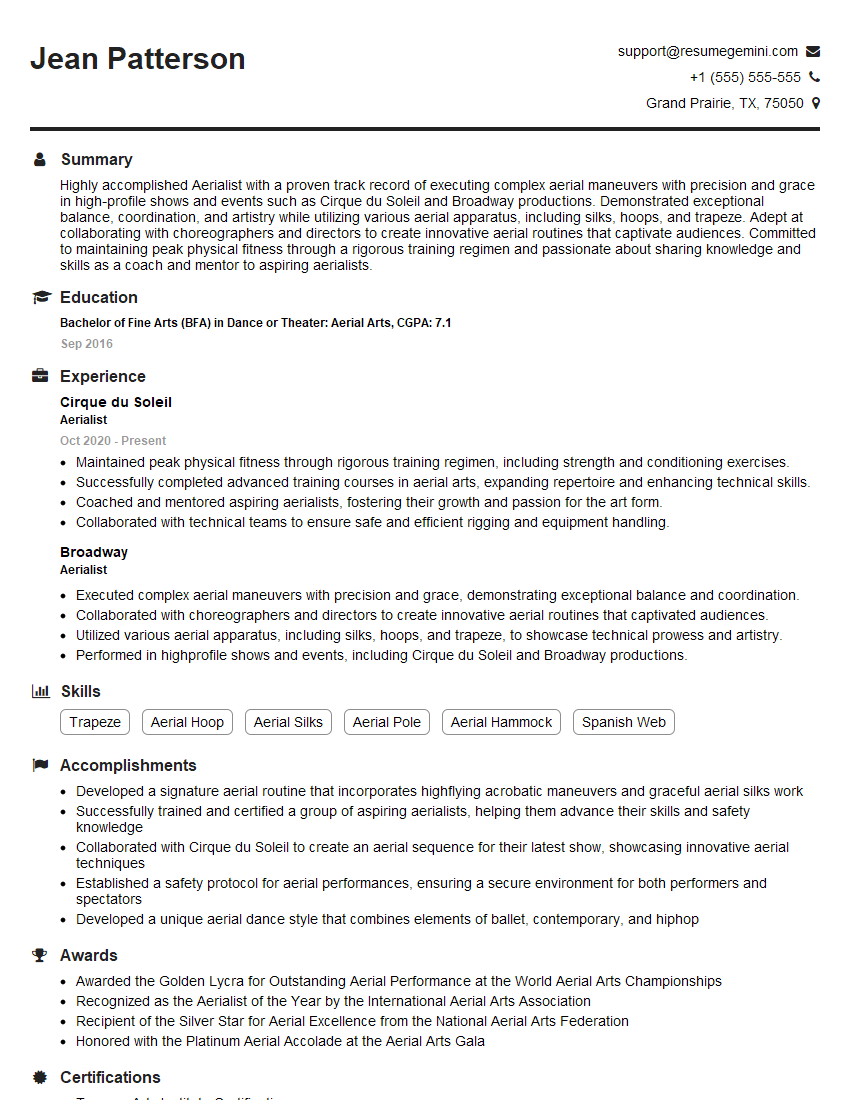
Mastering Aerial Acrobatics opens doors to exciting and rewarding career opportunities in performance, teaching, and choreography. To significantly boost your job prospects, create a resume that showcases your skills effectively to Applicant Tracking Systems (ATS). ResumeGemini is a trusted resource to help you build a professional and ATS-friendly resume. We provide examples of resumes tailored to the Aerial Acrobatics field to help you create a compelling application that highlights your unique talents and experience. Take the next step towards your dream career today!
Explore more articles
Users Rating of Our Blogs
Share Your Experience
We value your feedback! Please rate our content and share your thoughts (optional).
What Readers Say About Our Blog
Very informative content, great job.
good