Cracking a skill-specific interview, like one for Aerial Observation, requires understanding the nuances of the role. In this blog, we present the questions you’re most likely to encounter, along with insights into how to answer them effectively. Let’s ensure you’re ready to make a strong impression.
Questions Asked in Aerial Observation Interview
Q 1. Explain the different types of aerial platforms used for observation.
Aerial observation platforms are the vehicles or systems used to carry sensors for data acquisition. The choice of platform depends heavily on factors such as the area to be surveyed, the required resolution, budget, and accessibility. Popular platforms include:
- Uncrewed Aerial Vehicles (UAVs) or Drones: These are increasingly popular due to their cost-effectiveness, maneuverability, and ability to access challenging terrain. Different drone types exist, ranging from small quadcopters for detailed site surveys to larger fixed-wing UAVs for covering extensive areas.
- Fixed-wing Aircraft: These offer greater speed and endurance compared to helicopters, making them suitable for large-scale projects. They’re often used for aerial photography and mapping.
- Helicopters: Helicopters provide excellent maneuverability and hovering capabilities, ideal for precise data acquisition in specific locations or challenging environments. They are particularly useful in areas with obstacles or where precise positioning is paramount.
- Satellites: Satellites offer the broadest coverage and are essential for monitoring large areas such as entire countries or continents. However, their resolution is generally lower than that of UAVs or aircraft.
- Balloons and Airships: These platforms offer a cost-effective option for long-duration observations, especially at lower altitudes. They’re useful for specific applications such as environmental monitoring.
For instance, I’ve used drones for precise agricultural assessments and helicopters for detailed power line inspections. The selection of the platform is a critical first step in any aerial observation project.
Q 2. Describe your experience with various sensor technologies used in aerial observation.
My experience encompasses a broad range of sensor technologies used in aerial observation. This includes:
- High-Resolution Digital Cameras: These form the backbone of many aerial observation projects. I’ve worked extensively with cameras ranging from basic RGB cameras to multispectral and hyperspectral sensors. Multispectral cameras capture images in various wavelengths beyond the visible spectrum, providing information on vegetation health and other characteristics. Hyperspectral sensors offer an even finer spectral resolution, enhancing the capability to identify materials and features.
- LiDAR (Light Detection and Ranging): LiDAR systems emit laser pulses and measure the time it takes for them to return, creating highly accurate 3D point clouds. I’ve used LiDAR extensively for terrain mapping, generating highly detailed Digital Elevation Models (DEMs) and identifying features in complex environments such as forests or urban areas.
- Thermal Infrared (TIR) Cameras: These cameras detect heat signatures, allowing us to identify temperature variations, useful for applications like monitoring building energy efficiency, detecting heat sources, or monitoring wildlife.
- Hyperspectral Imaging: As mentioned above, these sensors offer detailed spectral information, enabling the identification of minerals, vegetation stress, and other subtle material differences.
For example, during a recent project involving infrastructure monitoring, I integrated data from high-resolution cameras and LiDAR to create a detailed 3D model, allowing for precise measurement of bridge degradation.
Q 3. How do you ensure the accuracy and reliability of aerial data collected?
Ensuring accuracy and reliability in aerial data involves a multi-faceted approach that begins even before data acquisition.
- Pre-flight Planning and Calibration: This involves careful planning of flight paths, considering factors such as wind speed, sun angle, and sensor orientation. Sensors need to be carefully calibrated to ensure their accuracy.
- Ground Control Points (GCPs): GCPs are points on the ground whose coordinates are precisely known. These are used to georeference the aerial data, ensuring accurate location information.
- Data Processing and Quality Control: This stage involves rigorous quality control checks to identify and correct errors. This might include things like removing outliers, correcting geometric distortions, and mosaicking individual images into a seamless dataset.
- Accuracy Assessment: Post-processing, the accuracy of the data is assessed using various metrics, comparing the data against known ground truths or independent datasets. This helps validate the results and quantify the accuracy achieved.
For instance, using a combination of GPS, IMU (Inertial Measurement Unit) data, and GCPs helps improve the accuracy of the georeferencing process, minimizing errors in the final product.
Q 4. What are the common challenges faced during aerial data acquisition?
Aerial data acquisition often faces numerous challenges:
- Weather Conditions: Cloud cover, rain, and wind can significantly impact data quality and make acquisition impossible.
- Terrain Complexity: Challenging terrain, such as dense forests or steep slopes, can hinder data collection and require specialized platforms or techniques.
- Sensor Limitations: Sensor resolution, spectral range, and other limitations can affect the information that can be extracted.
- Data Processing Complexity: Processing large datasets can be computationally intensive and require specialized software and expertise.
- Regulatory Restrictions: Airspace restrictions and regulations related to UAV operations can impact project planning and execution.
For example, I once encountered a project delay due to unexpected heavy fog, requiring rescheduling of the flight operations. Effective risk management and contingency planning are vital to mitigate these challenges.
Q 5. Explain your understanding of photogrammetry and its applications.
Photogrammetry is the science of making measurements from photographs. It involves capturing overlapping images from different perspectives, which are then processed to create 3D models, orthomosaics (georeferenced mosaics), and other geospatial products. It relies on the principles of geometry and image analysis. Think of it like reconstructing a 3D puzzle from many 2D pieces.
- Applications: Photogrammetry has numerous applications, including:
- Creating 3D models of buildings, infrastructure, and terrain: Crucial for construction, surveying, and urban planning.
- Generating orthomosaics for mapping and GIS applications: Providing accurate base maps for various uses.
- Documenting historical sites and artifacts: Preserving cultural heritage through accurate digital records.
- Monitoring environmental changes over time: Analyzing changes in land cover or coastal erosion.
In one project, I utilized photogrammetry to generate a high-resolution 3D model of a historical building, allowing for detailed inspection and preservation planning without physical access to all areas.
Q 6. Describe your experience with LiDAR data processing and analysis.
My LiDAR data processing and analysis experience involves several steps:
- Data Preprocessing: This involves cleaning the raw LiDAR data, removing noise, and correcting for systematic errors.
- Point Cloud Classification: This step involves assigning classifications (e.g., ground, vegetation, buildings) to individual points in the point cloud, improving data interpretation.
- Data Filtering and Editing: Removing outliers or unwanted features from the dataset.
- Digital Elevation Model (DEM) Generation: Extracting elevation information to create a digital terrain model.
- Feature Extraction: Identifying and extracting specific features from the point cloud, such as buildings, roads, or trees.
- Data Visualization and Analysis: Using specialized software to visualize and analyze the processed LiDAR data, generating reports and maps.
For instance, I used LiDAR data to create a highly accurate DEM for a flood risk assessment project. The detailed elevation data allowed us to identify areas prone to flooding with high precision.
Q 7. How do you process and interpret aerial imagery to extract meaningful information?
Processing and interpreting aerial imagery requires a structured approach:
- Image Preprocessing: This includes geometric corrections (orthorectification), radiometric corrections (adjusting for variations in brightness), and mosaicking.
- Image Analysis Techniques: Depending on the project goals, various techniques can be used. These include:
- Visual Interpretation: Experienced analysts visually examine the images to identify features of interest.
- Object-Based Image Analysis (OBIA): This technique uses image segmentation and classification to identify and classify objects within the imagery.
- Machine Learning (ML) and Artificial Intelligence (AI): Advanced techniques like deep learning are increasingly used for automatic feature extraction and classification.
- Data Integration: Combining aerial imagery with other datasets, such as GIS data or sensor data, can enhance interpretation and provide a more comprehensive understanding of the study area.
For example, in a vegetation health assessment, I used multispectral imagery, combined with ground-truthing data, to identify and classify different vegetation types and assess their health using vegetation indices. The results were instrumental in guiding land management strategies.
Q 8. What software and tools are you proficient in for aerial data analysis?
My proficiency in aerial data analysis software spans a range of tools, each suited for different stages of the workflow. For photogrammetry and point cloud generation, I’m highly skilled in Agisoft Metashape and Pix4Dmapper. These software packages allow me to process vast amounts of imagery to create highly accurate 3D models and orthomosaics. For image classification and object detection, I leverage QGIS and ArcGIS Pro, integrating them with machine learning libraries like Python’s scikit-learn and open-source libraries such as GDAL and OpenCV. This combination allows me to perform tasks like identifying damaged infrastructure or vegetation health assessments. Furthermore, I have experience with cloud-based platforms like Google Earth Engine, which is beneficial for processing very large datasets and conducting analysis at a regional or national scale. Finally, I utilize various image editing programs such as Adobe Photoshop for pre and post processing tasks.
Q 9. Explain the concept of Ground Sampling Distance (GSD) and its importance.
Ground Sampling Distance (GSD) refers to the distance on the ground that is represented by a single pixel in a digital image. Imagine a square grid on the ground; the GSD is the length of one side of that square as it appears in your image. A smaller GSD indicates higher resolution, meaning each pixel represents a smaller area on the ground, providing more detail. For instance, a GSD of 2cm means that each pixel in your image represents a 2cm x 2cm area on the ground. A lower GSD (e.g., 1cm) is crucial for applications needing fine detail, such as infrastructure inspections, while a larger GSD (e.g., 10cm) might be sufficient for broader surveys like agricultural monitoring.
The importance of GSD lies in its direct impact on the accuracy and resolution of the final products. A smaller GSD is essential for accurate measurements, 3D modelling with high fidelity, and detailed analysis. Choosing the appropriate GSD involves balancing image resolution with data storage requirements and processing time. Flying at a lower altitude results in a smaller GSD but might require more flights to cover the whole area.
Q 10. How do you manage flight planning and airspace regulations for drone operations?
Flight planning and airspace management are critical for safe and legal drone operations. I utilize specialized software like DroneDeploy and Litchi to plan flights, defining waypoints, altitude, camera settings (including GSD), and flight speed. These tools help me create efficient flight paths that minimize flight time and ensure complete coverage of the area of interest. Before any flight, I meticulously check the airspace using online platforms such as FAA DroneZone (for the US) or similar national aviation authorities websites to identify restricted airspace, temporary flight restrictions (TFRs), and other potential hazards. This involves identifying no-fly zones around airports, military bases, and other sensitive locations. I always ensure the drone is operated within the permissible altitude and distance limits set by the relevant regulations, and I obtain necessary permissions or waivers if required for operations in restricted areas. I also consider factors such as weather conditions (wind speed, visibility) and potential obstacles when planning my flight.
Q 11. Describe your experience with different types of flight maneuvers for aerial data collection.
My experience encompasses various flight maneuvers tailored to the specific data acquisition needs. For creating orthomosaics with minimal distortion, I typically use gridded flight patterns, ensuring consistent image overlap. For surveying steep slopes or complex terrain, I might employ a more flexible, non-gridded flight path adapted to the landscape. When focusing on specific features or objects, I may utilize targeted imagery with precise waypoints. In situations where real-time inspection is necessary, I utilize different sensors and flight patterns that ensure efficient data capturing. For example, when inspecting bridges I would utilize a targeted approach focused on the specifics of each span and utilize appropriate sensors that can detect any cracks, deterioration or other issues.
Additionally, I’m proficient in techniques such as oblique photography (capturing images at angles to enhance 3D model detail) and close-range photogrammetry for highly detailed models of smaller objects or structures.
Q 12. How do you ensure the safety and security of aerial operations?
Safety and security are paramount in aerial operations. This begins with pre-flight checks, including thorough inspection of the drone’s hardware (propellers, batteries, sensors), ensuring all components are functioning correctly. I always have a backup drone and battery set readily available in case of failures. I always operate within visual line of sight (VLOS) unless specifically authorized for beyond visual line of sight (BVLOS) operations, which requires additional permits and safety measures. I consider environmental factors like weather conditions and avoid flying in adverse weather. I establish clear communication protocols with any ground crew present. Furthermore, data security is maintained through secure data storage and transfer protocols, using encrypted drives and cloud storage with access control measures. I adhere to strict data privacy regulations and guidelines.
Q 13. What are the legal and regulatory requirements for operating drones in your region?
(This answer needs to be tailored to a specific region. Replace the example with your region’s regulations.) In the United States, the primary regulatory body is the Federal Aviation Administration (FAA). Operating drones commercially requires a Part 107 Remote Pilot Certificate, demonstrating competency in drone operation and safety regulations. Before each flight, I must comply with airspace restrictions, obtain necessary permissions for flights in restricted areas, and follow all operational safety guidelines. This includes registering my drone with the FAA and maintaining logs of all flights. Furthermore, I am aware of and comply with all relevant privacy laws concerning the collection and use of imagery and data acquired during aerial operations. I stay updated with any changes or updates to the FAA regulations.
Q 14. Explain your understanding of different image formats and their suitability for various applications.
Different image formats are suited for various aerial applications. TIFF (Tagged Image File Format) is a lossless format ideal for photogrammetry and high-precision mapping, preserving image quality for accurate measurements and 3D modeling. GeoTIFF is a variant of TIFF that embeds geospatial metadata, essential for integrating aerial imagery with geographic information systems (GIS). JPEG (Joint Photographic Experts Group) is a lossy format that compresses image files, reducing storage space. While useful for quick viewing and web applications, it is less suitable for high-precision analysis due to data loss. JPEG 2000 offers a better balance between compression and image quality compared to standard JPEG, making it a potential alternative for applications needing both efficient storage and reasonably high image detail. The choice depends heavily on the application. For example, TIFF is preferred for creating detailed orthomosaics used in surveying projects, while JPEG may be acceptable for creating overview maps or sharing imagery on a website.
Q 15. How do you handle data storage and management for large aerial datasets?
Managing large aerial datasets requires a robust strategy encompassing data storage, organization, and accessibility. Think of it like building a well-organized library for your imagery – you need a system to find exactly what you need quickly and efficiently. We typically employ a tiered storage approach. Raw data, often terabytes in size, is initially stored on high-capacity network-attached storage (NAS) systems. This allows for quick access during processing. Once processed, data is often migrated to cloud-based storage solutions like Amazon S3 or Azure Blob Storage for long-term archiving and cost-effectiveness. Metadata, crucial for data discovery and management, is meticulously documented using standards like ISO 19115. This metadata includes information like sensor type, acquisition date, geographic location, and processing parameters. We use database management systems (DBMS) such as PostgreSQL with PostGIS extensions to manage this metadata, enabling efficient searching and querying. A well-defined folder structure further enhances organization, ensuring that related files are easily located. For example, projects are often organized by year, location, and data type (e.g., imagery, point clouds, DEMs).
Furthermore, data versioning is essential. This allows us to track changes and revert to previous versions if needed, which is crucial when working with multiple iterations of processing or analysis. Employing data versioning systems like Git LFS allows us to effectively manage changes to large files, not just metadata. Finally, access control is a critical security measure to protect sensitive data. We employ role-based access control (RBAC) to restrict access to authorized personnel only.
Career Expert Tips:
- Ace those interviews! Prepare effectively by reviewing the Top 50 Most Common Interview Questions on ResumeGemini.
- Navigate your job search with confidence! Explore a wide range of Career Tips on ResumeGemini. Learn about common challenges and recommendations to overcome them.
- Craft the perfect resume! Master the Art of Resume Writing with ResumeGemini’s guide. Showcase your unique qualifications and achievements effectively.
- Don’t miss out on holiday savings! Build your dream resume with ResumeGemini’s ATS optimized templates.
Q 16. Describe your experience with georeferencing and orthorectification of aerial imagery.
Georeferencing and orthorectification are fundamental steps in transforming raw aerial imagery into usable geospatial data. Georeferencing assigns geographic coordinates to the imagery, essentially placing it onto a map. This involves identifying control points – points with known coordinates – within the imagery and using them to align the image to a coordinate system. We use software like Pix4D, Agisoft Metashape, or ERDAS Imagine to perform this. For example, we might use ground control points (GCPs) – points whose locations are accurately measured on the ground using GPS – or tie points, automatically identified features that match between overlapping images.
Orthorectification takes this a step further by removing geometric distortions caused by terrain relief and camera perspective. This results in an orthophoto, a georeferenced image where all pixels represent equal ground area. Imagine looking straight down at a perfectly flat map; that’s what an orthophoto aims to achieve. This process usually requires a digital elevation model (DEM), which helps the software correct for elevation changes. The accuracy of the orthorectification depends heavily on the quality of the input data, including the accuracy of GCPs and the resolution of the DEM. A high-quality orthophoto is a critical component of many GIS and mapping applications.
Q 17. How do you create digital elevation models (DEMs) from aerial data?
Creating Digital Elevation Models (DEMs) from aerial data involves extracting elevation information from overlapping aerial imagery. This is often done using photogrammetry techniques. Essentially, the software analyzes the parallax (the apparent shift in the position of an object as seen from different viewpoints) between overlapping images to calculate the three-dimensional coordinates of points on the ground. Software like Pix4D or Agisoft Metashape uses sophisticated algorithms to identify corresponding points across multiple images, automatically generating dense point clouds representing the terrain surface. From this dense point cloud, a DEM can be generated through interpolation. Interpolation is the process of estimating the elevations at locations where no direct measurements were taken. Different interpolation methods offer varying levels of smoothness and accuracy.
The accuracy of the resulting DEM is influenced by factors such as the quality and overlap of the imagery, the flying height, and the chosen interpolation method. For example, using higher-resolution imagery and increased overlap will typically improve DEM accuracy. In addition to photogrammetry, LiDAR (Light Detection and Ranging) data can be used to generate high-accuracy DEMs directly. While more expensive than photogrammetry, LiDAR provides greater accuracy, especially in vegetated areas.
Q 18. Explain your understanding of different map projections and coordinate systems.
Map projections and coordinate systems are fundamental concepts in geospatial data handling. A map projection is a way of representing the three-dimensional Earth on a two-dimensional surface. This process always involves some distortion, as it’s impossible to perfectly flatten a sphere onto a plane without altering distances, angles, or areas. Different map projections are designed to minimize specific types of distortion. For example, the Mercator projection preserves angles, making it suitable for navigation, while the Albers Equal-Area projection preserves area, making it suitable for representing land mass extents.
Coordinate systems define the location of points on the Earth’s surface. Geographic coordinate systems use latitude and longitude, referencing a spherical or ellipsoidal Earth model. Projected coordinate systems, on the other hand, transform these geographic coordinates into planar coordinates (x, y) using a specific map projection. Understanding these systems is critical for ensuring that aerial data from different sources is properly aligned and can be analyzed together. For instance, a dataset might use the Universal Transverse Mercator (UTM) projection, while another uses the State Plane Coordinate System. Proper handling of these ensures seamless integration and avoids errors in measurements and analyses.
Q 19. How do you identify and mitigate sources of error in aerial data?
Aerial data is susceptible to various sources of error. These can broadly be categorized into geometric and radiometric errors. Geometric errors relate to the positional accuracy of the data, while radiometric errors relate to the accuracy of the brightness or color values. Geometric errors can stem from atmospheric effects (refraction), sensor inaccuracies, and imprecise georeferencing. Radiometric errors can be caused by atmospheric scattering and absorption, sensor noise, and variations in lighting conditions.
Mitigating these errors involves a multi-pronged approach. Careful sensor calibration and precise georeferencing are crucial. The use of high-quality ground control points (GCPs) significantly improves georeferencing accuracy. Atmospheric correction techniques can reduce the impact of atmospheric effects on both geometric and radiometric accuracy. Software packages often include tools for atmospheric correction. For example, techniques like empirical line correction can help. Furthermore, rigorous quality control procedures, such as visual inspection of the imagery and statistical analysis of the data, help detect and identify outliers and potential errors. Understanding the limitations of the data and acknowledging the uncertainty associated with the measurements is also crucial for interpreting results responsibly.
Q 20. Describe your experience with the integration of aerial data with GIS systems.
Integrating aerial data with GIS systems is a core aspect of my work. Aerial imagery and derived products like orthophotos, DEMs, and point clouds seamlessly integrate with GIS software such as ArcGIS or QGIS, enriching spatial analyses and visualization capabilities. This integration typically involves importing georeferenced aerial data into the GIS environment using standard file formats like GeoTIFF, Shapefiles, and LAS files. Once imported, the data can be overlaid on existing geospatial datasets, such as base maps, cadastral data, or other thematic layers.
For example, we can use orthophotos as base maps for land use/land cover classification. DEMs can be used to derive terrain attributes, such as slope, aspect, and watershed boundaries, that help understand hydrological processes. Point clouds provide detailed 3D information useful for building models, infrastructure assessments, and volumetric analysis. The ability to seamlessly integrate and analyze this variety of data within a GIS environment allows for powerful decision-making across multiple domains, such as urban planning, environmental monitoring, and infrastructure management. This combined power is particularly useful when undertaking site-specific analysis where detailed imagery is critical for informed decision making.
Q 21. How do you communicate technical information about aerial data to non-technical audiences?
Communicating technical information about aerial data to non-technical audiences requires a clear and concise approach that avoids overly technical jargon. Instead of using complex terminology, I focus on explaining concepts using relatable analogies and visual aids. For example, instead of saying “orthorectification”, I might describe it as “making the image look like a perfectly flat map”.
Visual representations such as maps, charts, and infographics are incredibly useful. I try to tailor my communication to the specific audience and their level of understanding. For example, when presenting to a group of city planners, I might focus on how the data can support urban development decisions, whereas when presenting to a group of environmental scientists, I might emphasize the ecological insights the data can provide. Using clear and simple language, coupled with relevant visuals, is key to ensuring that the information is easily understood and appreciated by the intended audience. We often use client-specific reports which clearly define the processes and results without employing technical jargon, allowing for ease of use and understanding.
Q 22. What are the ethical considerations involved in aerial observation?
Ethical considerations in aerial observation are paramount. We’re dealing with potentially sensitive information, impacting privacy and potentially public safety. For example, unauthorized surveillance is a major ethical breach. We must always adhere to local, national, and international laws regarding airspace usage and data collection. This includes obtaining necessary permissions and warrants before conducting observations in private areas. Another critical aspect is data security and responsible data handling. Protecting the anonymity of individuals captured in aerial imagery is essential; blurring faces or using anonymization techniques is often necessary. Finally, the potential misuse of aerial data for malicious purposes, such as targeting individuals or groups, must be considered, requiring robust security protocols and ethical oversight.
- Privacy: Ensuring the privacy of individuals captured in aerial imagery is a top priority. This often involves carefully selecting observation times and areas to minimize the chances of capturing identifiable individuals without their consent.
- Data Security: Robust security measures are crucial to prevent unauthorized access to sensitive data, protecting both individuals and national security.
- Transparency and Accountability: Maintaining transparency in data collection methods and purpose is critical, as is establishing clear accountability for any misuse of aerial observation data.
Q 23. How do you maintain and troubleshoot aerial equipment?
Maintaining and troubleshooting aerial equipment is a crucial part of the job. Regular pre-flight checks are mandatory, including inspecting propellers (for drones), checking sensor functionality, and verifying battery levels. Post-flight maintenance includes cleaning sensors, lubricating moving parts, and storing equipment in a controlled environment to prevent damage. Troubleshooting typically involves systematically identifying the issue. For instance, if a drone’s camera isn’t capturing images, I would first check the camera settings, then the SD card, then the data transmission link, and finally the camera’s internal components. For more complex issues, I rely on manufacturer documentation and specialized diagnostic tools. I also participate in regular training to stay up-to-date on the latest maintenance procedures and troubleshooting techniques.
- Pre-flight checks: These are vital for ensuring safe and effective operation, encompassing everything from physical inspections to software calibrations.
- Post-flight maintenance: Cleaning, storage, and regular component checks prevent premature wear and tear.
- Troubleshooting: This follows a methodical process, starting with simple checks and progressing to more involved diagnostics if needed.
Q 24. Describe your experience with different types of post-processing techniques for aerial data.
My experience with post-processing aerial data spans various techniques. Orthorectification, for example, corrects geometric distortions in imagery due to camera angle and terrain variations, resulting in a map-like view. I’ve extensively used photogrammetry software to generate 3D models from overlapping images, crucial for creating accurate digital elevation models (DEMs) or 3D point clouds. Furthermore, I’m proficient in using image processing techniques like atmospheric correction to remove haze and improve image clarity and feature extraction, allowing me to automate the identification of specific objects or land cover types using algorithms like object-based image analysis (OBIA).
- Orthorectification: This process corrects geometric distortions, creating accurate georeferenced images.
- Photogrammetry: This technique utilizes overlapping images to generate 3D models and point clouds.
- Atmospheric Correction: This improves image quality by removing atmospheric effects like haze and improving clarity.
- Object-based Image Analysis (OBIA): This enables automated extraction of specific features from aerial imagery.
Q 25. What are the advantages and disadvantages of using different aerial platforms (e.g., drones, airplanes, satellites)?
Different aerial platforms each offer unique advantages and disadvantages. Drones are cost-effective, highly maneuverable, and offer great spatial resolution, perfect for small-scale projects like construction site monitoring or precision agriculture. However, they have limited flight time and range. Airplanes are suitable for larger areas, offering extended flight time and greater range but are generally more expensive and less maneuverable. Satellites provide the broadest coverage, crucial for large-scale mapping and environmental monitoring, but with lower spatial resolution and limited control over data acquisition timing.
- Drones: Cost-effective, highly maneuverable, high spatial resolution, but limited flight time and range.
- Airplanes: Larger coverage area, extended flight time, but less maneuverable and more expensive.
- Satellites: Broadest coverage, suitable for large-scale projects, but lower spatial resolution and limited control over acquisition.
Q 26. How do you select the appropriate aerial platform and sensor for a specific observation task?
Selecting the right platform and sensor depends entirely on the specific observation task. For example, if I need high-resolution imagery of a small construction site, a drone equipped with a high-resolution RGB camera would be ideal. For monitoring deforestation over a large region, a satellite with a multispectral sensor would be a better choice. Factors such as budget, required spatial and spectral resolution, area of coverage, and the need for real-time data acquisition all play a role. I always carefully evaluate these factors to choose the optimal combination of platform and sensor, ensuring the collected data meets the project’s specific requirements. The project objectives directly determine the appropriate platform and sensor selection.
Q 27. Explain your experience with cloud-based platforms for aerial data storage and processing.
Cloud-based platforms have revolutionized aerial data storage and processing. I have extensive experience using platforms that offer scalable storage, powerful processing capabilities, and collaborative tools. These platforms enable me to efficiently store and manage large datasets from various sources, perform complex analyses using cloud computing resources, and share data with collaborators seamlessly. The ability to access and process data from anywhere with an internet connection is highly beneficial, allowing for flexible workflows and faster project turnaround times. Security features offered by reputable cloud platforms are also crucial for protecting sensitive aerial data.
- Scalable storage: Cloud platforms can handle massive datasets generated from aerial observations.
- Powerful processing: Cloud computing resources enable efficient processing of large and complex datasets.
- Collaboration tools: These facilitate seamless sharing and collaborative analysis of data.
- Data accessibility: Remote access allows flexible workflows and improved project turnaround times.
Key Topics to Learn for Aerial Observation Interview
- Sensor Technologies: Understanding various sensor types (e.g., optical, infrared, LiDAR) and their applications in aerial observation, including their limitations and data processing requirements.
- Data Acquisition and Processing: Familiarize yourself with flight planning, data acquisition techniques, and post-processing workflows for image rectification, orthorectification, and mosaic creation. Practical experience with relevant software is highly valuable.
- Image Interpretation and Analysis: Develop skills in interpreting aerial imagery and identifying features of interest. This includes understanding photogrammetry principles and applying them to extract meaningful information from aerial datasets.
- Geographic Information Systems (GIS): Mastering GIS software and techniques for integrating and analyzing aerial observation data with other geospatial information. Demonstrate proficiency in spatial data manipulation and analysis.
- Applications in Specific Industries: Research the applications of aerial observation in fields relevant to your target roles (e.g., agriculture, construction, environmental monitoring, urban planning). Understanding industry-specific challenges and solutions will showcase your practical knowledge.
- Data Accuracy and Error Analysis: Be prepared to discuss sources of error in aerial observation data and methods for assessing data accuracy and reliability. Understanding limitations and mitigation strategies is crucial.
- Legal and Ethical Considerations: Familiarize yourself with privacy regulations and ethical considerations related to data acquisition and use in aerial observation, particularly concerning airspace restrictions and data security.
Next Steps
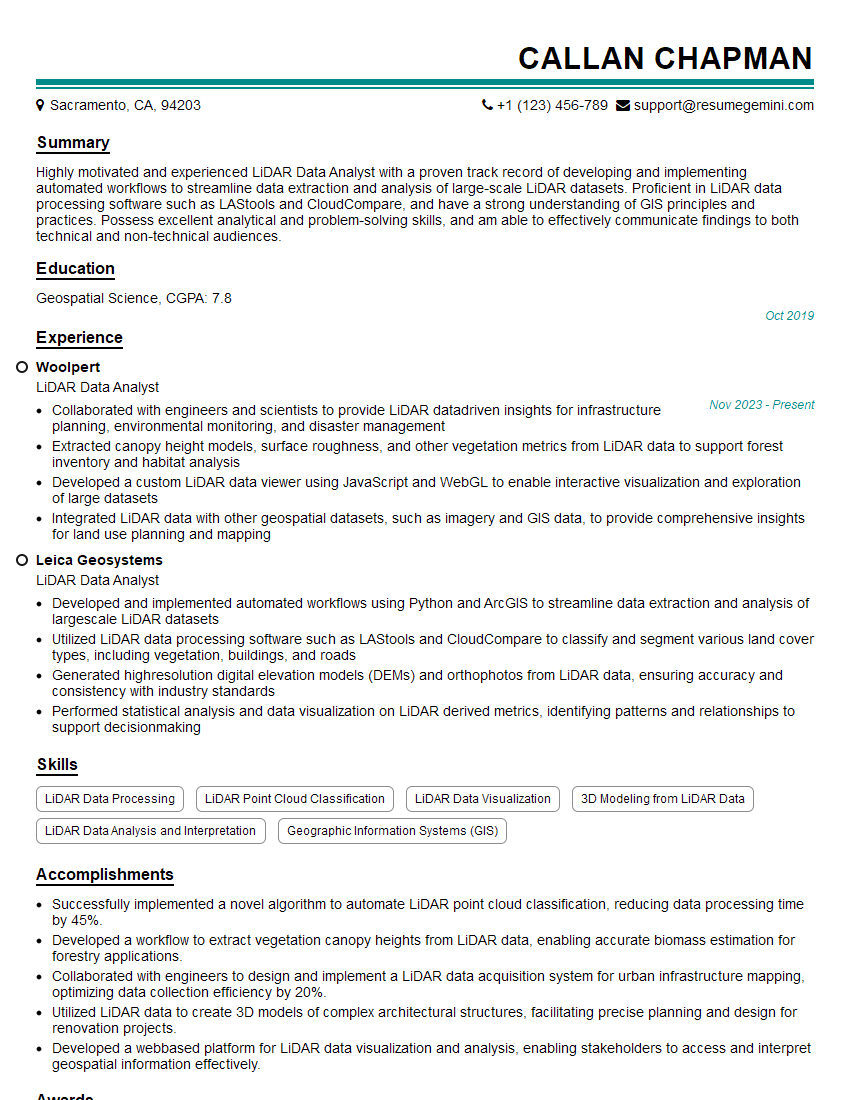
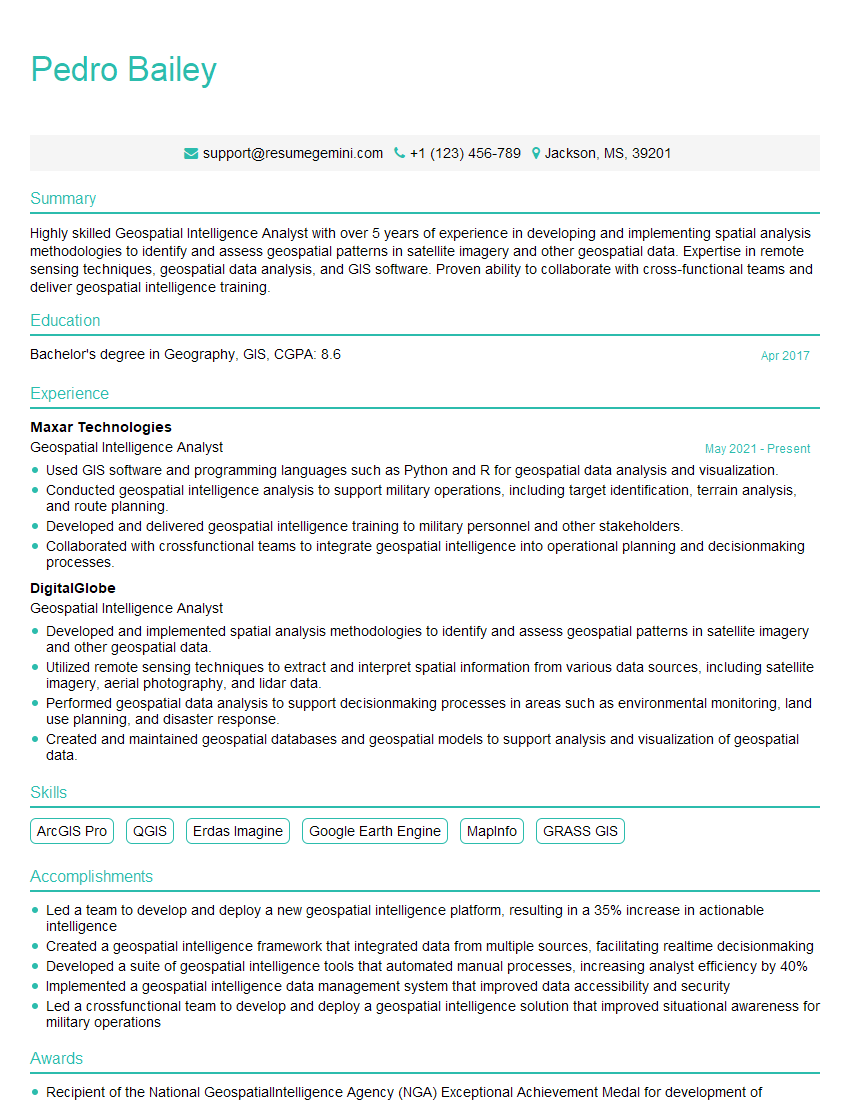
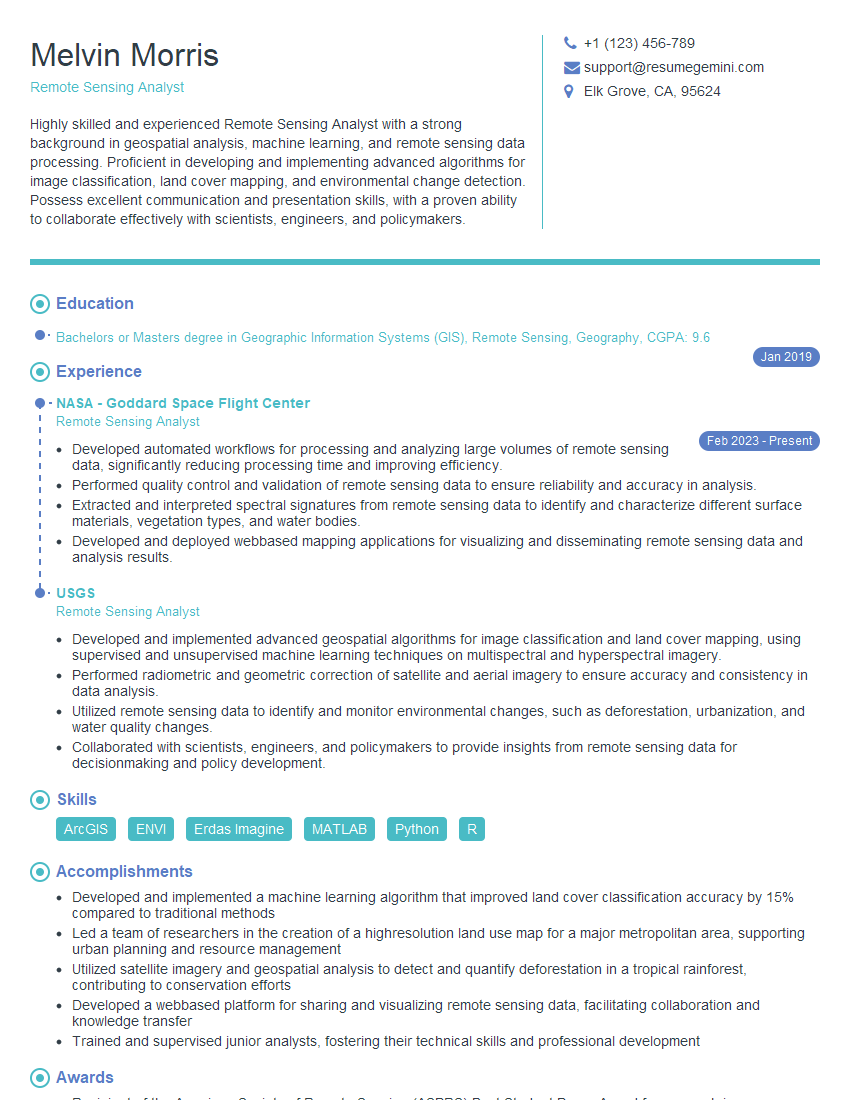
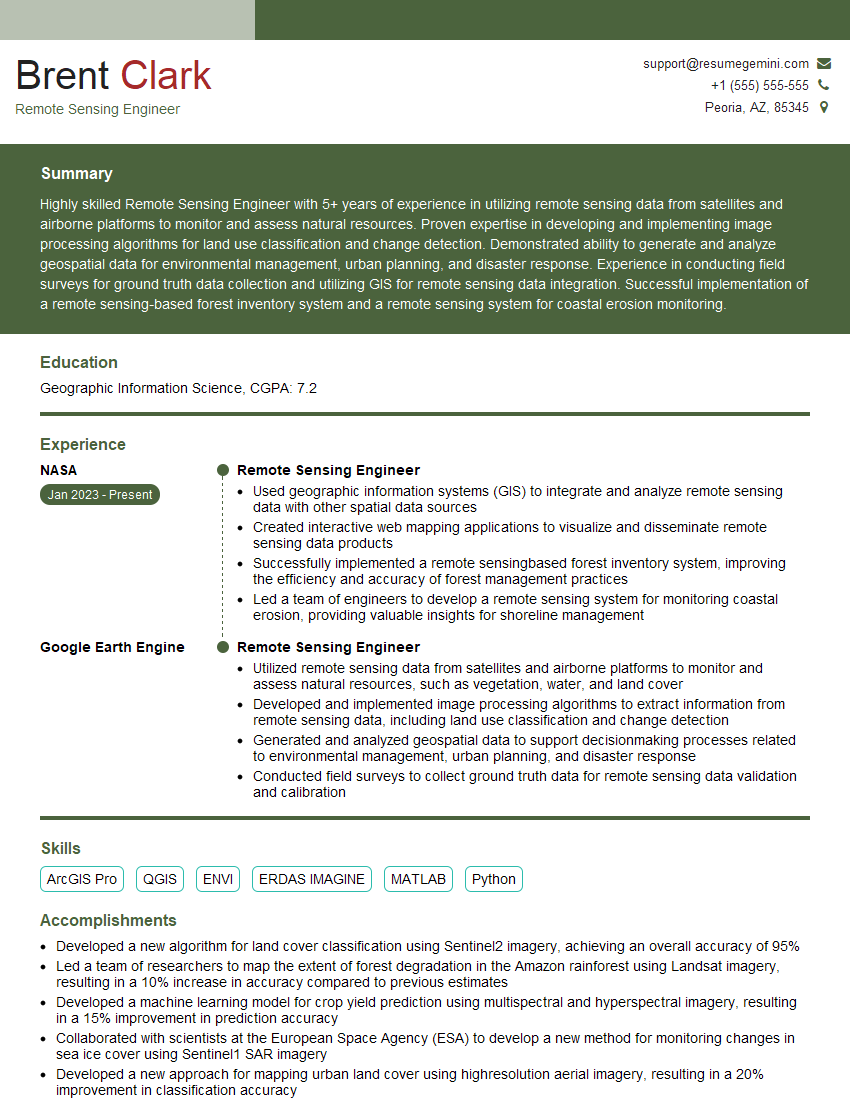
Mastering aerial observation opens doors to exciting and impactful careers across diverse industries. The ability to analyze and interpret aerial data is a highly sought-after skill, significantly enhancing your value in the job market. To maximize your job prospects, creating an ATS-friendly resume is crucial. ResumeGemini is a trusted resource that can help you craft a professional and effective resume, designed to capture the attention of recruiters and hiring managers. Examples of resumes tailored specifically to aerial observation roles are available to guide you through the process.
Explore more articles
Users Rating of Our Blogs
Share Your Experience
We value your feedback! Please rate our content and share your thoughts (optional).
What Readers Say About Our Blog
Very informative content, great job.
good