Every successful interview starts with knowing what to expect. In this blog, we’ll take you through the top Modification and Customization interview questions, breaking them down with expert tips to help you deliver impactful answers. Step into your next interview fully prepared and ready to succeed.
Questions Asked in Modification and Customization Interview
Q 1. Explain your experience with different modification methodologies.
Modification methodologies vary greatly depending on the system’s complexity and architecture. My experience encompasses several key approaches:
- Patching: This is the simplest form, involving applying small fixes to address specific bugs or vulnerabilities. I’ve used this extensively for quick fixes in web applications, often involving updating specific lines of code or configuration files. For example, patching a vulnerability in a specific library by replacing a vulnerable version with a patched one.
- Configuration Changes: Many systems allow modifications through altering their configuration files. I’ve extensively utilized this method in server administration, adjusting parameters like memory allocation, network settings, or logging levels. Imagine fine-tuning an Apache web server for optimal performance by adjusting its
httpd.conffile. - Plugin/Extension Development: This involves creating add-ons that extend the system’s functionality without directly altering its core code. My experience includes developing plugins for content management systems like WordPress, dramatically enhancing their capabilities with minimal risk to the core system’s stability. A plugin could be something as simple as adding a new form to a webpage or as complex as integrating with an external API.
- Custom Code Development: For more extensive modifications, custom code development is often necessary. This involves writing new modules, functions, or even entire applications to integrate with the existing system. In my previous role, I developed a custom module for an ERP system to automate a previously manual reporting process.
The choice of methodology depends heavily on the required change, the system’s architecture, and the long-term maintenance goals. A small, well-defined change might only require patching, while a significant functional addition often warrants custom code development.
Q 2. Describe a time you had to customize a system to meet specific needs.
In a previous role, we had a client who needed a custom reporting feature in their existing inventory management system. The system, while robust, lacked the specific report generation capabilities they required, particularly a report detailing low-stock items across multiple warehouses. Simply adding a new report using only configuration changes wasn’t possible.
My approach involved a phased implementation. First, I thoroughly analyzed their existing database schema to understand data relationships. Then, I developed a new SQL query to extract the required data. This query included conditions to identify low-stock items based on customizable thresholds (configurable by the client). Next, I created a custom reporting module which utilized the query, formatted the data into a user-friendly report, and integrated it seamlessly into their existing system’s user interface. This ensured a consistent user experience. The entire process was meticulously documented and tested to avoid unforeseen errors before deployment.
The client was highly satisfied with the added functionality. The project highlighted the importance of understanding both the technical architecture and client needs to successfully implement customizations.
Q 3. How do you approach troubleshooting issues in a customized system?
Troubleshooting customized systems requires a methodical approach. My strategy involves:
- Reproduce the issue: First, I meticulously document the steps needed to reproduce the issue consistently. This allows me to eliminate guesswork and focus on the specific problem.
- Isolate the source: I systematically eliminate potential causes, starting with the recently modified components. Tools like logging and debugging are crucial for this stage. Is the error happening in the custom code, or is it an interaction between custom code and the original system?
- Review logs and error messages: Analyzing logs and error messages is vital. These provide valuable clues about the nature of the problem. Understanding the error messages requires knowing the programming languages and frameworks involved.
- Test changes incrementally: When implementing fixes, I do so incrementally, thoroughly testing each change before moving to the next. This prevents introducing new problems while resolving the original one.
- Consult documentation and community resources: Referring to the system’s documentation and relevant online communities often provides helpful insights or pre-existing solutions. It is very valuable to know where to look for relevant solutions.
It’s a process of elimination guided by systematic observation and analysis.
Q 4. What are the potential risks associated with system modification?
Modifying systems inherently carries risks. Key potential risks include:
- System instability: Incorrect modifications can lead to crashes, data loss, or performance degradation.
- Security vulnerabilities: Poorly implemented changes can introduce security holes that expose the system to attacks.
- Compatibility issues: Modifications might break compatibility with other systems or components.
- Increased complexity: Changes add complexity, making future maintenance and troubleshooting more difficult.
- Unforeseen consequences: Modifying one part of a system can have unintended effects on other areas.
Mitigation involves careful planning, thorough testing, and rigorous quality assurance practices. Understanding the system’s architecture and dependencies before starting any modification is vital.
Q 5. How do you ensure the security and stability of modified systems?
Ensuring security and stability involves several key strategies:
- Thorough testing: Rigorous testing, including unit tests, integration tests, and user acceptance testing, is crucial to identify and resolve issues before deployment.
- Security code review: Having another developer review the code for security vulnerabilities is crucial, especially if dealing with sensitive data.
- Input validation: Implementing robust input validation prevents malicious data from compromising the system. Sanitize all user inputs.
- Regular security updates: Keeping the base system and its components up-to-date with security patches is essential.
- Access control: Restricting access to modified components based on the principle of least privilege is important. Avoid giving unnecessary permissions.
- Monitoring and logging: Continuous monitoring and detailed logging help detect anomalies and provide crucial information for troubleshooting.
A layered security approach, combining multiple strategies, significantly enhances the security and stability of a modified system.
Q 6. Explain your experience with version control in modification projects.
Version control is indispensable in modification projects. I predominantly use Git for managing code changes. It allows me to:
- Track changes: Git provides a detailed history of all modifications, enabling easy rollback if needed.
- Collaborate effectively: Git facilitates teamwork by allowing multiple developers to work on the same project concurrently.
- Branching and merging: This allows for parallel development of features without disrupting the main codebase. I frequently use this to test new functionalities in a separate branch before merging them into the main branch.
- Code review: Git supports code review workflows, improving code quality and reducing errors.
In addition to the technical aspects, I utilize clear and consistent commit messages to easily track the purpose of each change. This is essential for maintaining a well-organized and easily understandable version history. For example, feat: Added new reporting module clearly explains the nature of the commit.
Q 7. How do you handle conflicting requirements during customization?
Conflicting requirements are common in customization projects. My approach involves:
- Prioritization: Clearly identify and prioritize conflicting requirements based on business value, impact, and feasibility. A clear understanding of business goals helps in this process.
- Negotiation and compromise: Work with stakeholders to find solutions that meet the most critical requirements, potentially involving compromises on less critical ones. Open communication and collaboration are key here.
- Trade-off analysis: Evaluate the trade-offs of different approaches, considering factors like cost, time, and risk. Present these analyses clearly to help stakeholders make informed decisions.
- Documentation: Meticulously document all decisions made regarding conflicting requirements, including the rationale for choices. This helps avoid future misunderstandings and facilitates maintainability.
- Iteration and refinement: Iteratively refine the solution, incorporating feedback from stakeholders and adjusting priorities as needed. Flexibility is important, as requirements often evolve over time.
Handling conflicting requirements effectively requires strong communication, negotiation, and a collaborative approach to ensure everyone’s needs are considered and addressed as comprehensively as possible.
Q 8. What testing methodologies do you employ for modified systems?
Testing modified systems requires a multi-faceted approach. We can’t just assume everything works perfectly after a change. My methodology centers around a combination of regression testing, unit testing, integration testing, and user acceptance testing (UAT).
- Regression Testing: This is crucial. We run tests on the entire system to ensure the modification hasn’t introduced new bugs or broken existing functionality. Think of it as a system-wide health check. I often utilize automated testing frameworks like Selenium or JUnit to streamline this process.
- Unit Testing: This focuses on individual components or modules impacted by the modification. We isolate the modified code and rigorously test its functionality in a controlled environment. This helps pinpoint problems early.
- Integration Testing: Once the unit tests pass, we test the interaction between the modified component and other parts of the system. This ensures seamless communication and data flow.
- User Acceptance Testing (UAT): This final stage involves end-users testing the modified system to ensure it meets their needs and expectations. Their feedback is invaluable in uncovering usability issues we might overlook.
For example, if we modify a payment gateway integration, unit tests would focus on the gateway’s API calls, integration tests would verify the interaction with the order processing system, and regression tests would ensure the whole e-commerce site still functions correctly. UAT would confirm that users can complete purchases without issues.
Q 9. Describe your experience with documentation in modification projects.
Documentation is paramount in modification projects. Poor documentation can lead to costly errors and delays. My approach emphasizes clear, concise, and well-organized documentation throughout the entire lifecycle of a modification project.
- Before Modification: I thoroughly review existing documentation to understand the system’s architecture and functionalities. This informs the modification strategy and risk assessment.
- During Modification: I meticulously document all changes, including code modifications, configuration updates, and testing results. This often involves using version control systems like Git, along with detailed comments within the code itself.
- After Modification: I update existing documentation to reflect the changes. This includes user manuals, technical specifications, and any other relevant documentation. I also generate comprehensive test reports detailing the testing process and results.
Think of it like building a house – you wouldn’t start construction without blueprints, and you’d certainly document any changes during the building process. Similarly, meticulous documentation enables efficient maintenance and future modifications.
Q 10. How do you prioritize tasks in a modification project with multiple deadlines?
Prioritizing tasks in modification projects with multiple deadlines requires a strategic approach. I typically use a combination of techniques to effectively manage competing priorities.
- Prioritization Matrix: I often employ a matrix that considers both urgency and importance. This helps to visually prioritize tasks based on their impact and deadlines.
- Work Breakdown Structure (WBS): Breaking down the project into smaller, manageable tasks provides better visibility and allows for more accurate estimation of time and resources required.
- Dependency Analysis: Identifying dependencies between tasks is vital. Some tasks can’t begin until others are completed. This informs the sequencing of tasks and helps in identifying potential bottlenecks.
- Agile Methodologies: In many cases, an Agile approach (Scrum, Kanban) works best. Its iterative nature allows for flexibility and continuous adaptation to changing priorities and deadlines. Daily stand-up meetings ensure everyone’s on the same page.
For instance, if we have a critical bug fix due next week and a new feature request with a later deadline, the bug fix takes precedence, regardless of the new feature’s perceived importance. Using a WBS and dependency analysis ensures we can tackle the bug fix efficiently, while the new feature’s tasks can be planned accordingly.
Q 11. Explain your understanding of different software development lifecycles in relation to modification.
Software Development Lifecycles (SDLCs) significantly impact how we approach modifications. Different SDLCs have varying levels of formality and control.
- Waterfall: In a waterfall model, modifications are often treated as separate projects with their own lifecycle. This can be rigid but provides well-defined stages for testing and documentation.
- Agile: Agile methodologies are much more flexible. Modifications can be incorporated into existing sprints, making the process quicker and more adaptable to change. This is often preferred for smaller, iterative changes.
- DevOps: DevOps emphasizes continuous integration and delivery (CI/CD). Modifications can be deployed rapidly, often automatically, through automated testing and deployment pipelines. This requires a robust automation strategy.
The choice of SDLC depends on the scale and complexity of the modification, the urgency of implementation, and the overall development process of the organization. For a large-scale modification, a more structured approach like a modified waterfall might be appropriate, while for smaller, less critical changes, an agile approach is often more efficient.
Q 12. Describe your experience with various scripting languages for customization.
Proficiency in scripting languages is essential for customization. I have extensive experience with several, each suited to specific tasks:
- Python: Excellent for automating tasks, data processing, and system administration. Its readability and extensive libraries make it highly versatile. I’ve used Python to automate testing procedures and create custom scripts for data migration.
- JavaScript: Essential for front-end web development customization. I leverage JavaScript frameworks like React, Angular, or Vue.js to enhance user interfaces and add interactive features.
- Bash/Shell Scripting: Invaluable for automating tasks on Linux/Unix systems. I often use this for system administration tasks related to deployment and server management. For example, I might write a shell script to automate database backups or software installations.
- PowerShell: Similar to Bash, but for Windows environments. It allows me to automate tasks within the Windows ecosystem, including system configuration and software deployment.
My choice of scripting language depends heavily on the target system and the nature of the customization needed. For example, if I’m customizing a web application, JavaScript is my primary choice, while system-level automation might involve Python or shell scripting.
Q 13. How do you manage modifications in a collaborative environment?
Managing modifications in a collaborative environment requires careful planning and effective communication. I rely on several strategies to ensure smooth collaboration:
- Version Control Systems (VCS): Git is my go-to VCS. It facilitates collaborative code development, allowing multiple developers to work on the same project simultaneously without conflicts. Branching and merging capabilities are essential.
- Code Review: Thorough code reviews are vital to maintain code quality and catch potential errors before deployment. This also helps to share knowledge and best practices among team members.
- Communication Tools: Utilizing communication tools like Slack or Microsoft Teams is crucial for instant communication and updates. This ensures everyone is aware of the project’s progress and any potential roadblocks.
- Project Management Tools: Tools like Jira or Asana provide a central platform for task management, progress tracking, and issue reporting. This improves transparency and accountability.
For example, using Git branches allows developers to work on separate features concurrently. Code reviews ensure the quality and consistency of the changes before merging them into the main branch. Regular communication ensures everyone stays informed about changes and potential conflicts.
Q 14. What tools and technologies are you proficient in for modification and customization tasks?
My toolset encompasses a wide range of technologies for modification and customization tasks. This includes:
- Integrated Development Environments (IDEs): VS Code, IntelliJ IDEA, Eclipse – for efficient code editing, debugging, and testing.
- Version Control Systems (VCS): Git, for collaborative code management.
- Testing Frameworks: JUnit, Selenium, pytest – for automated testing.
- Databases: SQL Server, MySQL, PostgreSQL – for database modifications and schema updates.
- Cloud Platforms: AWS, Azure, GCP – for deployment and management of modified systems.
- Scripting Languages: Python, JavaScript, Bash, PowerShell, as previously discussed.
- Project Management Tools: Jira, Asana, Trello – for task management and collaboration.
My proficiency in these tools allows me to tackle a diverse range of modification and customization challenges across different platforms and technologies. The specific tools I use are determined by the specific project requirements.
Q 15. How do you handle unexpected issues during the implementation of customizations?
Handling unexpected issues during customization requires a proactive and systematic approach. It’s not about if something goes wrong, but when. My strategy involves a multi-pronged approach: rigorous testing, robust logging, and a well-defined escalation path.
Thorough Testing: Before deploying any customization, I employ various testing methodologies, including unit testing, integration testing, and user acceptance testing (UAT). This helps catch issues early in the development cycle. For example, when customizing an e-commerce platform’s checkout process, I’d test various scenarios – successful checkout, failed payment, insufficient stock – to identify potential problems.
Comprehensive Logging: Implementing detailed logging throughout the customized system allows for easy debugging and troubleshooting. If an unexpected error occurs, logs provide invaluable clues about the cause. Imagine a customized CRM; logs can pinpoint which specific user action triggered a system failure, the exact time, and the associated data.
Defined Escalation Path: Establishing a clear escalation protocol is crucial. This ensures that issues are addressed promptly and effectively. If a problem cannot be resolved immediately, the escalation path ensures it gets escalated to the appropriate team member or department.
Rollback Plan: A well-defined rollback strategy is essential to quickly revert to a stable system state if a critical issue arises. This prevents prolonged downtime and data loss.
By combining these strategies, I can mitigate the impact of unexpected issues and ensure the smooth operation of the customized system.
Career Expert Tips:
- Ace those interviews! Prepare effectively by reviewing the Top 50 Most Common Interview Questions on ResumeGemini.
- Navigate your job search with confidence! Explore a wide range of Career Tips on ResumeGemini. Learn about common challenges and recommendations to overcome them.
- Craft the perfect resume! Master the Art of Resume Writing with ResumeGemini’s guide. Showcase your unique qualifications and achievements effectively.
- Don’t miss out on holiday savings! Build your dream resume with ResumeGemini’s ATS optimized templates.
Q 16. Describe your approach to optimizing customized systems for performance.
Optimizing customized systems for performance is crucial for a positive user experience and efficient resource utilization. My approach involves a combination of techniques:
Profiling and Benchmarking: Before and after any customization, I conduct thorough performance profiling to identify bottlenecks. This helps pinpoint areas needing optimization. Tools like JProfiler (for Java) or Chrome DevTools (for web applications) are indispensable in this process.
Database Optimization: Often, performance issues stem from database queries. Optimizing database queries, indexing appropriately, and using efficient database design principles are critical steps. For example, replacing inefficient
SELECT *queries with targetedSELECTstatements can dramatically improve performance.Caching Strategies: Implementing appropriate caching mechanisms (e.g., using Redis or Memcached) can significantly reduce database load and improve response times. Caching frequently accessed data reduces the need to repeatedly fetch it from the database.
Code Optimization: Efficient coding practices, such as minimizing database interactions and using optimized algorithms, are essential. For instance, replacing nested loops with more efficient data structures can dramatically improve processing speed.
Load Balancing and Scaling: For high-traffic applications, load balancing and horizontal scaling are vital to distribute the workload and ensure system responsiveness. This might involve using cloud-based solutions like AWS or Azure.
By strategically applying these optimization techniques, I can ensure that customized systems are responsive, efficient, and capable of handling the expected workload.
Q 17. What strategies do you employ to ensure the scalability of modified systems?
Ensuring scalability in modified systems requires careful planning and architectural considerations. My strategies include:
Modular Design: Designing the system with loosely coupled modules promotes scalability. Changes in one module don’t necessarily affect others. This makes it easier to scale individual components as needed.
Horizontal Scaling: Instead of relying on a single powerful server, horizontal scaling involves adding more servers to handle increased load. This is often facilitated through cloud-based infrastructure.
Database Scalability: Choosing a database system that can scale effectively is crucial. NoSQL databases are often preferred for their horizontal scalability compared to traditional relational databases.
Asynchronous Processing: Processing tasks asynchronously, using message queues (like RabbitMQ or Kafka), prevents bottlenecks and allows for parallel processing. This is especially beneficial for long-running tasks.
Microservices Architecture: For large, complex systems, a microservices architecture allows for independent scaling of individual services.
Adopting these strategies allows the customized system to handle increased traffic and data volumes gracefully, ensuring its long-term viability.
Q 18. How do you balance the need for customization with the maintenance of original functionality?
Balancing customization with the preservation of original functionality is a delicate act, requiring careful consideration and a structured approach. My method involves:
Impact Analysis: Before implementing any customization, I conduct a thorough impact analysis to understand how changes might affect existing functionalities. This helps prevent unintended consequences.
Layered Architecture: Customizations should ideally be implemented in a separate layer, leaving the core functionality untouched. This separation minimizes the risk of impacting existing features.
Version Control: Using a robust version control system (like Git) allows for easy tracking of changes and facilitates rollbacks if necessary. This ensures that the original system can be easily restored if problems occur.
Thorough Testing: Rigorous testing is critical to ensure that customizations don’t break existing functionality. Regression testing is crucial here to verify that previously working features continue to function correctly.
Documentation: Maintaining comprehensive documentation of all customizations is crucial for future maintenance and troubleshooting. This documentation should detail the purpose, implementation details, and potential impacts of each customization.
By meticulously following these steps, I ensure the customized system remains stable, reliable, and maintains its core functionality while meeting specific user requirements.
Q 19. Explain your understanding of user experience (UX) considerations in system customization.
User experience (UX) is paramount in system customization. A poorly designed customization, even if functionally correct, can lead to user frustration and decreased adoption. My approach to UX in customization includes:
User Research: Understanding user needs and preferences is the foundation of good UX. This involves conducting user interviews, surveys, and usability testing to gather insights.
Intuitive Design: Customizations should integrate seamlessly into the existing system, maintaining consistency in design and interaction patterns. Avoid introducing jarring changes that disrupt the user’s workflow.
Accessibility: Designing customizations to be accessible to users with disabilities is critical. This includes adhering to accessibility guidelines (like WCAG).
Iterative Design: UX design is an iterative process. Prototyping, testing, and refining the design based on user feedback are crucial for creating a positive user experience.
Usability Testing: Conducting usability tests throughout the design and development process ensures that the customized system is user-friendly and intuitive.
By prioritizing UX considerations, I can ensure that the customized system is not only functional but also enjoyable and efficient to use.
Q 20. How do you assess the impact of modifications on existing system architecture?
Assessing the impact of modifications on existing system architecture is a crucial step to prevent unforeseen problems. My approach involves:
Architectural Review: A thorough review of the existing system architecture is the first step. This helps understand the system’s components, dependencies, and potential vulnerabilities.
Dependency Mapping: Mapping out the dependencies between system components helps identify which parts of the system might be affected by the modifications. This can reveal potential conflicts or ripple effects.
Performance Modeling: Modeling the performance of the system after the modifications can help predict any potential performance bottlenecks or degradation.
Risk Assessment: Identifying and assessing potential risks associated with the modifications, such as security vulnerabilities or data loss, is crucial.
Impact Analysis Matrix: Creating an impact analysis matrix helps to systematically document and track the impact of modifications on different aspects of the system.
By systematically analyzing the impact of modifications on the existing architecture, I can minimize risks and ensure that the modified system remains stable and reliable.
Q 21. Describe your experience with integrating third-party components into customized systems.
Integrating third-party components into customized systems requires careful planning and execution to avoid compatibility issues and security risks. My experience includes:
Component Selection: The selection process focuses on components that are well-documented, actively maintained, and have a strong reputation. Compatibility with the existing system is also a critical factor.
API Integration: Most third-party components are integrated via APIs. Thoroughly understanding the component’s API documentation is crucial for successful integration. For instance, understanding the authentication methods, data formats, and error handling mechanisms is essential.
Security Considerations: Security is paramount when integrating third-party components. I carefully review the component’s security practices, ensuring that appropriate security measures are in place to prevent vulnerabilities.
Testing and Validation: After integration, rigorous testing is needed to ensure the component functions correctly within the customized system and doesn’t introduce security flaws or performance issues. This often includes unit testing, integration testing, and security testing.
Dependency Management: Using a dependency management system (like npm or Maven) helps manage the dependencies introduced by the third-party component, ensuring consistent versions and facilitating updates.
Successful third-party component integration requires meticulous planning, thorough testing, and a focus on security. My experience in these areas allows me to seamlessly integrate these components, enhancing the functionality of the customized system while mitigating potential risks.
Q 22. How do you ensure compliance with relevant regulations and standards during modification?
Ensuring compliance during modification is paramount. It’s not just about ticking boxes; it’s about building trust and avoiding costly legal issues. My approach involves a multi-step process starting with a thorough understanding of all applicable regulations and standards – this could range from industry-specific guidelines (like HIPAA for healthcare software) to general data protection regulations (like GDPR). I then create a compliance checklist specific to the modification, incorporating each relevant rule. This checklist is reviewed and signed off by both the client and our internal compliance team. Throughout the modification process, we maintain meticulous documentation to prove our adherence to every requirement. For example, if modifying a medical device software, every change would be logged and traceable, showing adherence to FDA regulations. We utilize version control systems like Git to track changes, allowing for easy auditing and verification. Finally, we conduct thorough testing and validation to ensure that the modified system continues to meet all the necessary compliance standards.
Q 23. Explain your process for identifying and mitigating risks during customization projects.
Risk mitigation in customization is an iterative process. I begin with a detailed risk assessment, identifying potential problems early. This involves brainstorming sessions with the development team, client stakeholders, and sometimes even external security experts. We categorize risks based on likelihood and impact, using a matrix to visualize the potential damage and prioritize mitigation efforts. For instance, a high-impact, high-likelihood risk might be data breaches, while a low-impact, low-likelihood risk might be minor UI glitches. For each identified risk, we develop a mitigation strategy. This could include anything from implementing robust security protocols (e.g., encryption) to conducting thorough testing, establishing rollback plans, and including clear communication protocols for addressing unforeseen issues. We document all identified risks, mitigation strategies, and the outcomes in a central risk register, regularly reviewed and updated throughout the project. This proactive approach significantly reduces the chances of project delays or failures.
Q 24. How do you estimate the time and resources required for a modification project?
Accurately estimating time and resources is crucial. I employ a combination of techniques including a detailed work breakdown structure (WBS), where the project is divided into smaller, manageable tasks. Each task is then estimated individually based on complexity, considering factors like the experience level of the team members and the availability of reusable components. Historical data from past projects plays a significant role, allowing for realistic estimations based on proven benchmarks. For example, if we’ve completed similar customizations before, we can use that past data as a foundation. Contingency is also factored in to account for unforeseen challenges or delays. We use project management software, such as Jira or Asana, to track progress against the estimates, allowing for timely adjustments if deviations are identified. This approach provides transparency and fosters better communication with clients about project timelines and budgets.
Q 25. Describe your experience with change management processes related to modifications.
My experience with change management in modification projects is heavily reliant on clear communication and a structured process. We utilize agile methodologies, ensuring transparency and flexibility. Changes are formally requested and reviewed, with impact assessments conducted to understand potential consequences. Each change request goes through a formal approval process involving the client and relevant stakeholders. Once approved, the change is incorporated into the project plan, updating timelines and resource allocation as needed. We use a version control system to track all changes and maintain a clear audit trail. This structured approach minimizes disruptions, maintains project control, and ensures that changes are integrated smoothly and efficiently. For example, if a client requests a significant change mid-project, we immediately evaluate the impact, update the project plan accordingly, communicate the revised timeline to the client, and obtain their approval before proceeding.
Q 26. How do you stay updated on the latest advancements in modification and customization technologies?
Staying updated is critical in this rapidly evolving field. I actively participate in industry conferences and webinars, attending workshops and training sessions to learn about new techniques and technologies. I also regularly read industry publications, journals, and online resources such as blogs and forums. Active involvement in online communities allows for direct engagement with other professionals, sharing knowledge and learning from best practices. Furthermore, I dedicate time to experimenting with new tools and technologies relevant to modification and customization, constantly seeking opportunities to enhance my skillset. This continuous learning ensures I remain at the forefront of innovation and apply the latest advancements to improve my work and deliver exceptional results for clients.
Q 27. What are the key performance indicators (KPIs) you use to measure the success of a customization project?
The success of a customization project is measured by several key performance indicators (KPIs). These include:
- On-time delivery: Did we meet the agreed-upon deadlines?
- Within-budget completion: Did we stay within the allocated budget?
- Client satisfaction: How satisfied was the client with the final product and the overall process? This is often measured through surveys or feedback sessions.
- Defect rate: The number of bugs or errors found post-delivery. A low defect rate indicates a high-quality product.
- User adoption rate: How widely is the customized solution being used by the intended users?
- Return on Investment (ROI): Did the customization deliver the expected business value for the client?
Q 28. How do you handle customer feedback on modifications and customizations?
Customer feedback is invaluable. We actively solicit feedback throughout the project lifecycle, not just at the end. This can include regular check-ins, demos, and dedicated feedback sessions. We establish clear channels for feedback, making it easy for clients to communicate their thoughts and concerns. All feedback is documented, analyzed, and categorized, helping us understand areas where we excelled and areas needing improvement. We prioritize actionable feedback, addressing immediate concerns promptly and incorporating constructive criticism into the ongoing development process. For example, if a client expresses concerns about a specific feature’s usability, we immediately investigate, potentially involving user testing to validate their feedback and implement necessary changes. This iterative approach ensures that the final product aligns perfectly with the client’s needs and expectations.
Key Topics to Learn for Modification and Customization Interview
- Understanding Client Requirements: Analyzing user needs and translating them into actionable modification and customization plans. This includes effective communication and eliciting specific details.
- Impact Analysis: Assessing the potential consequences of modifications and customizations on existing systems. This involves identifying potential risks and developing mitigation strategies.
- Design and Implementation: Designing and implementing modifications and customizations using appropriate technologies and methodologies. This encompasses coding best practices, testing, and documentation.
- Testing and Quality Assurance: Developing and executing comprehensive test plans to ensure the quality and stability of modified and customized systems. This includes unit testing, integration testing, and user acceptance testing.
- Version Control and Deployment: Utilizing version control systems (e.g., Git) to manage code changes and deploying modifications and customizations effectively. This includes understanding branching strategies and release management.
- Security Considerations: Implementing security best practices throughout the modification and customization process. This involves protecting against vulnerabilities and ensuring compliance with security standards.
- Maintenance and Support: Providing ongoing maintenance and support for modified and customized systems. This includes addressing user issues, resolving bugs, and implementing updates.
- Specific Technologies & Frameworks: Demonstrate familiarity with relevant technologies used in modification and customization within your target industry (e.g., specific programming languages, APIs, platforms).
- Problem-Solving and Troubleshooting: Showcase your ability to effectively diagnose and resolve technical issues that arise during the modification and customization process. Use examples to highlight your analytical and problem-solving skills.
Next Steps
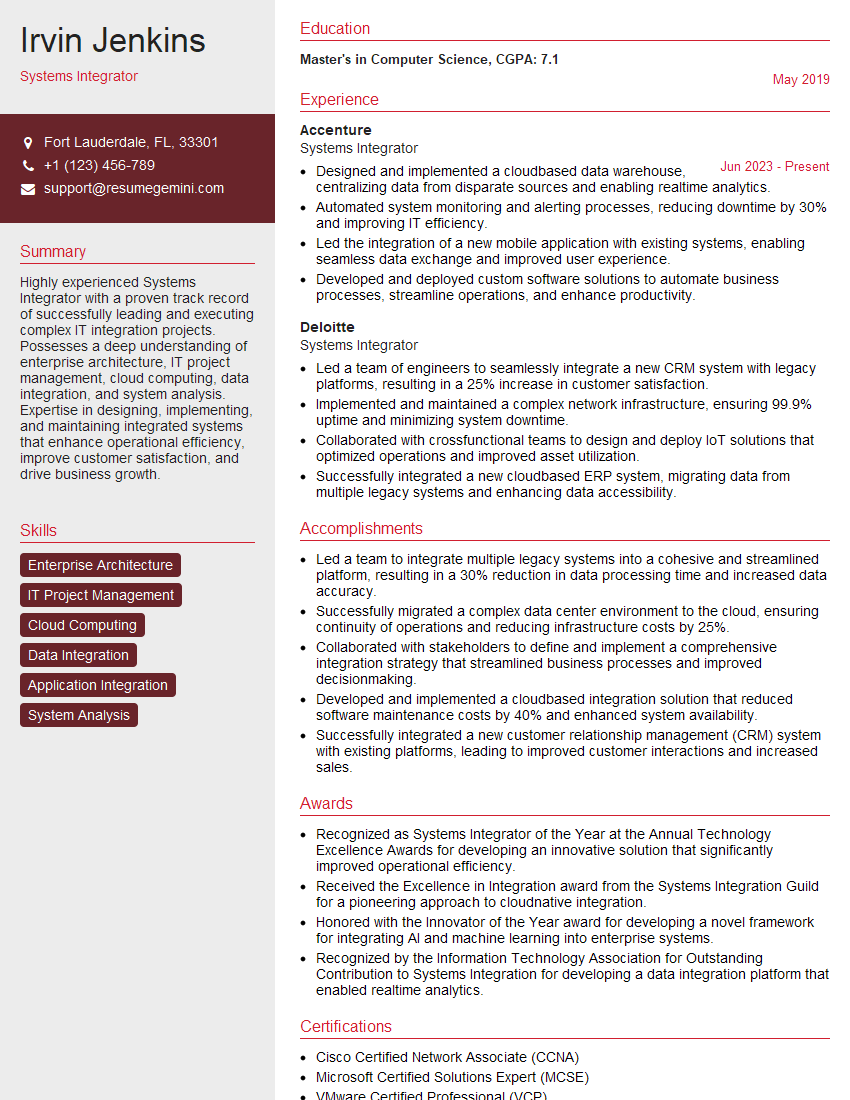
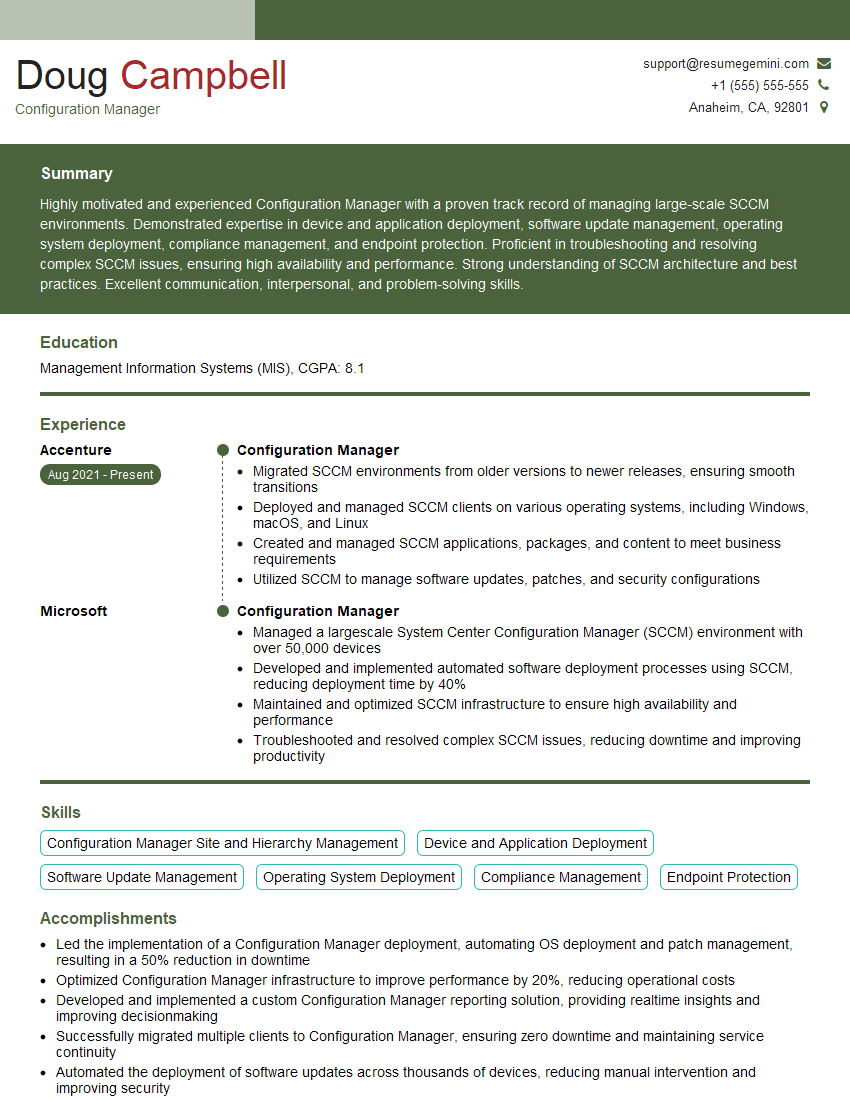
Mastering Modification and Customization is crucial for career advancement in many technical fields. It demonstrates your ability to adapt existing systems to meet evolving needs, showcasing valuable problem-solving and technical skills. To significantly improve your job prospects, create an ATS-friendly resume that highlights your relevant skills and experience. ResumeGemini is a trusted resource that can help you build a professional and impactful resume. Examples of resumes tailored to Modification and Customization are available to guide you, ensuring your application stands out.
Explore more articles
Users Rating of Our Blogs
Share Your Experience
We value your feedback! Please rate our content and share your thoughts (optional).
What Readers Say About Our Blog
Very informative content, great job.
good