Interviews are opportunities to demonstrate your expertise, and this guide is here to help you shine. Explore the essential Aerial Tree Work interview questions that employers frequently ask, paired with strategies for crafting responses that set you apart from the competition.
Questions Asked in Aerial Tree Work Interview
Q 1. Describe your experience with different climbing techniques (e.g., SRT, DRT).
My experience encompasses both Single Rope Technique (SRT) and Double Rope Technique (DRT), two fundamental climbing methods in aerial tree work. SRT relies on a single rope for both ascent and descent, making it efficient for accessing specific branches or working in confined spaces. Think of it like a highly skilled rock climber using a single rope. I utilize SRT frequently for precision pruning and smaller removals where maneuverability is key. DRT, on the other hand, uses two ropes – one for ascent and another for descent – offering greater safety and stability, especially when working on larger trees or handling heavier loads. It’s like having two safety lines, providing redundancy and peace of mind. I often prefer DRT for larger removal projects or situations where the tree’s condition necessitates extra caution. My proficiency in both techniques allows me to adapt to various tree sizes, conditions, and job requirements.
For instance, recently I used SRT to access a specific branch on a large oak to remove a section that was threatening a power line. The precision required to remove that specific branch without affecting the rest of the tree perfectly showcased SRT’s advantages. On another job, we used DRT for a large pine removal where the weight of the sections presented a significant challenge requiring the enhanced safety and control provided by the double rope technique.
Q 2. Explain your understanding of tree anatomy and its relevance to pruning and removal.
Understanding tree anatomy is paramount in aerial tree work. It directly impacts pruning and removal decisions, ensuring safety and preserving tree health. Key elements include the root system, trunk, branches (including leaders and laterals), and foliage. The root system’s structure determines the tree’s stability and its ability to withstand stress. The trunk’s diameter and internal structure inform its strength and the potential for decay or disease. Branches have different growth patterns and strengths, and understanding their angles and connections to the trunk is crucial for safe removal and pruning. For example, a branch collar, the swollen area at the base of a branch, should never be cut, as it contains important growth tissues. Pruning improperly within the branch collar can cause decay. Knowing how each element interacts influences my decisions regarding pruning techniques, such as crown reduction or thinning, or even determining the best approach for safe removal.
For example, I wouldn’t just cut a large branch indiscriminately. I’d carefully analyze the branch collar, weight distribution, and the overall structure of the tree to ensure the cut is made in a way that minimizes damage and stress on the tree. Ignoring this knowledge would increase the risk of tree damage, or even potentially dangerous drop situations.
Q 3. What safety procedures do you follow when working at height?
Safety is my utmost priority. My safety procedures begin with a thorough pre-job assessment which includes a detailed tree inspection, weather check, and site analysis. I use appropriate Personal Protective Equipment (PPE) consistently, including harnesses, helmets, gloves, eye protection, and chainsaw chaps. I employ a comprehensive system of rope management and redundancy. This means multiple anchor points, backup ropes, and frequent equipment checks. I never work alone and always maintain clear communication with my ground crew. Regular communication keeps everyone aware of the actions being undertaken and the location of each member of the crew.
Before each cut, I establish a safe work zone, using warning signs and traffic control if necessary. I constantly assess potential hazards and adjust my techniques accordingly. Post-cut, I ensure all debris is cleared and the area is left secure. Regular training and adherence to industry best practices are crucial for maintaining a high level of safety.
Q 4. How do you assess tree risk and determine the appropriate removal or pruning methods?
Assessing tree risk involves a visual inspection of the tree’s overall health, structural integrity, and its surroundings. I look for signs of decay, disease, insect infestation, lean, or structural weakness. I use established risk assessment tools to quantify potential hazards and determine appropriate actions. Factors like proximity to buildings, power lines, or public areas all play a significant role in determining the method. Some trees require only pruning, whilst others might need partial or complete removal.
For instance, a tree with significant decay might require removal to prevent collapse, while a tree with minor branch dieback could be addressed with targeted pruning. I utilize a risk matrix, which weighs factors like tree species, health, location and potential impacts to quantify the level of risk and propose the most appropriate course of action. This might mean removal using specialized rigging techniques, detailed pruning, or even recommending that the tree is monitored for a period of time and reassessed regularly.
Q 5. What are the different types of saws and cutting equipment used in aerial tree work?
Aerial tree work employs a variety of saws and cutting equipment, each suited to specific tasks. Chainsaws are the primary cutting tool, ranging from smaller, more maneuverable models for pruning to larger, more powerful saws for larger removals. I also utilize climbing saws for precise cuts in confined spaces, pole saws for reaching higher branches from the ground, and hand saws for finer work. Other equipment includes reciprocating saws for specific cutting needs and specialized pruning shears for smaller branches. The choice of equipment is tailored to factors such as tree species, branch size, access, and the overall objective of the job.
For example, a large oak might require a powerful chainsaw, while trimming a small branch on a delicate flowering cherry tree would necessitate the use of more refined tools such as hand pruners and smaller climbing saws. This careful selection ensures both efficiency and minimizes potential damage to both the tree and the surrounding environment. Proper maintenance of all equipment is critical to ensure optimal performance and safety.
Q 6. Describe your experience with rigging and lowering techniques.
Rigging and lowering techniques are crucial for safely removing large sections of trees, especially in areas with limited space or hazards. I have extensive experience using various rigging systems and techniques, including different types of ropes, pulleys, and shackles. I always prioritize system redundancy and employ advanced techniques like the use of multiple ropes and redundant anchor points to ensure safety during the lowering process. The specific rigging system is selected based on factors like the size and weight of the section being removed, the height, and the surrounding environment.
For instance, when removing a large limb, I would carefully plan the lowering path, select appropriate ropes based on their weight capacity, and install multiple anchor points to ensure that the load will be lowered in a safe and controlled manner. I always consider the potential for swaying or unexpected movements and take the necessary precautions to counteract these factors. Safety is always paramount, and thorough planning and execution are necessary to ensure successful and safe lowering operations.
Q 7. How do you handle emergency situations while working in trees?
Emergency situations in aerial tree work require quick thinking, sound judgment, and adherence to established protocols. These might include equipment failure, unexpected weather changes, or injuries. My training includes extensive emergency response procedures, and I always carry a comprehensive first-aid kit. In case of equipment failure, I immediately secure my position, assess the situation, and implement a backup plan, often involving my ground crew. If weather deteriorates suddenly, I immediately descend and wait for conditions to improve. In case of injury, I prioritize first aid and immediate evacuation.
For example, if a rope snaps, my immediate response would be to secure myself using my backup systems. I’d then communicate with the ground crew to initiate appropriate rescue procedures. Regular safety training and drills are key to effective emergency response, ensuring preparedness for various scenarios and maintaining a high level of safety within the team.
Q 8. Explain your knowledge of different types of wood and their properties.
Understanding wood properties is crucial for safe and efficient aerial tree work. Different species possess unique characteristics impacting their strength, flexibility, and how they react to cutting and rigging.
- Hardwoods: Generally stronger and denser than softwoods, examples include oak, maple, and ash. Their density makes them harder to cut but also provides greater strength for climbing and rigging. Oak, for example, is extremely strong but can be brittle, requiring careful cuts to avoid shattering.
- Softwoods: Typically lighter and less dense, such as pine, fir, and spruce. Easier to work with, but less strong, necessitating different techniques. Spruce, while lighter, is also more flexible, which needs to be accounted for when rigging.
- Decayed Wood: Recognizing signs of rot (softness, discoloration, fruiting bodies of fungi) is paramount. Compromised wood is significantly weaker and poses a serious risk of failure during climbing or removal.
Knowing these differences allows me to choose appropriate techniques – different saw types, rigging strategies, and climbing methods – depending on the species and condition of the wood I’m working with. This minimizes risk and ensures efficient work.
Q 9. What are the common hazards associated with aerial tree work, and how do you mitigate them?
Aerial tree work is inherently hazardous. Common hazards include:
- Falls: The most significant risk. Mitigated by using appropriate climbing gear (harnesses, ropes, carabiners) meticulously inspected before each use, employing proper climbing techniques, and consistently assessing the structural integrity of the tree.
- Equipment Failure: Ropes, saws, and other tools can fail. This is mitigated through regular inspection and maintenance, using high-quality equipment from reputable manufacturers, and having backup equipment readily available.
- Branch Failure: Unexpected branch breakage during cutting. This is minimized by careful assessment of wood condition, using appropriate cutting techniques, and employing effective rigging to control falling limbs.
- Electrical Hazards: Contact with power lines. This requires careful planning and potentially calling utility companies to de-energize lines or work around them with safe distances. Using insulated tools and maintaining awareness of line locations is critical.
- Weather Conditions: High winds, rain, or ice significantly increase the risk. Work is postponed when weather conditions are unsafe.
Risk assessment is paramount. I conduct a thorough evaluation of every job before starting, considering all potential hazards and developing a mitigation plan before even beginning.
Q 10. How do you ensure the safety of yourself and others on the ground?
Ensuring the safety of myself and others on the ground is a top priority. This involves:
- Clear Communication: Establishing clear communication channels with ground crew members. Using hand signals, radios, or a designated spotter to coordinate actions and warn of potential hazards.
- Designated Safety Zones: Establishing and maintaining clear safety zones around the work area to keep bystanders out of harm’s way. Using barriers, warning signs, and spotters to maintain this.
- Proper Rigging Techniques: Using proper rigging techniques to control the direction and descent of falling branches and sections of the tree. This includes the use of ropes, pulleys, and other equipment to direct the wood away from people and property.
- Pre-Work Briefing: Conducting a thorough briefing with the ground crew outlining the plan, potential hazards, and roles of each team member before commencing work.
- Emergency Procedures: Having clear and readily accessible emergency procedures, including communication channels, first-aid protocols, and emergency contact information.
Safety is a continuous process. Throughout the operation, I am constantly vigilant, adjusting the plan as necessary to maintain the safety of everyone involved.
Q 11. Describe your experience with different types of ropes and their applications.
Rope selection is crucial. I have extensive experience with various types:
- Static Ropes: These ropes have minimal stretch and are used for supporting loads like climbing systems, securing rigging, and creating anchor points. They provide reliable support under tension.
- Dynamic Ropes: These ropes are designed to stretch under load, absorbing shock and reducing impact forces during falls. They are used for things like shock-absorbing systems during climbing, adding safety to a potentially dynamic situation.
- Synthetic Ropes: Nylon, polyester, and other synthetic ropes offer advantages like high strength-to-weight ratio, resistance to abrasion and UV degradation. They are the most common choice in aerial tree work due to their versatility and performance.
- Wire Rope: Used for very heavy lifting and specialized rigging tasks where high tensile strength is essential. Requires careful handling due to the potential for damage from kinks or sharp edges.
The selection depends on the specific application and load requirements. I always use ropes rated for far greater loads than anticipated.
Q 12. Explain your knowledge of tree diseases and pests.
Knowledge of tree diseases and pests is vital for assessing tree health and determining the safest and most appropriate action. This includes identifying symptoms and understanding the impact on tree structure and stability. For example:
- Dutch Elm Disease: A fungal disease affecting elm trees, weakening branches and making them prone to failure.
- Oak Wilt: A fungal disease affecting oak trees, disrupting water flow and leading to rapid decline.
- Emerald Ash Borer: An invasive insect that kills ash trees by feeding on the cambium layer.
- Root Rot: Various fungal diseases causing decay and weakening of the root system, leading to instability.
Identifying these issues helps determine the safest approach for tree removal or management, potentially requiring specialized techniques to handle weakened wood or avoid spreading disease.
Q 13. How do you plan and execute a complex tree removal operation?
Complex tree removal operations require meticulous planning and execution. My approach involves:
- Thorough Assessment: A detailed on-site inspection to assess the tree’s size, species, condition, surrounding structures and obstacles, and access points.
- Risk Assessment: Identifying potential hazards, including power lines, nearby structures, soil conditions, and weather.
- Detailed Plan: Develop a step-by-step plan outlining the sequence of cuts, rigging procedures, and safety precautions.
- Equipment Selection: Choosing appropriate equipment, such as saws, ropes, pulleys, harnesses, and safety gear.
- Crew Briefing: Clearly communicating the plan to the ground crew and other team members.
- Controlled Removal: Executing the removal operation following the plan, making adjustments as needed based on conditions.
- Debris Management: Efficiently clearing debris and ensuring the safety of the work area.
For instance, removing a large, leaning tree near a house necessitates detailed planning of the fall path, rigging to control the direction of the tree’s fall, and protective measures for the house. I might utilize specialized rigging techniques and multiple anchor points to ensure controlled descent.
Q 14. What are your strategies for dealing with difficult access situations?
Difficult access situations require creative problem-solving and specialized techniques. This might include:
- Using specialized equipment: This can include small, maneuverable saws, lightweight ropes, and climbing gear specifically designed for challenging terrain.
- Employing advanced rigging techniques: Such as using multiple anchor points, creating rope systems to navigate obstacles, or using high-lines to reach difficult locations.
- Utilizing alternative access points: Exploring less obvious paths such as using adjacent properties or utilizing aerial lifts if feasible.
- Utilizing smaller crews for confined spaces: This can minimize the risk of accidents in restricted areas.
For example, removing a tree in a densely packed urban environment might involve using smaller hand tools and employing advanced rigging to navigate around houses and power lines. Safety is paramount, so I would develop a thorough plan factoring in the difficulties before initiating any work.
Q 15. How do you maintain your equipment and ensure its proper functioning?
Maintaining my equipment is paramount to safety and efficiency. It’s not just about the tools themselves, but a comprehensive system. I follow a strict preventative maintenance schedule, inspecting everything before and after each job. This includes a thorough visual check for wear and tear, ensuring bolts are tight, ropes are free from fraying or damage, and harnesses are in excellent condition. I keep detailed logs of inspections and servicing, noting any repairs or replacements. For example, my chainsaw requires regular sharpening and lubrication; I also replace the chain and bar when they reach their wear limits, documented meticulously in my logbook. My ropes are inspected regularly for any signs of wear, and I retire them proactively once they’ve reached their recommended lifespan, even if they seem superficially fine. This proactive approach prevents unexpected failures during critical moments and ensures the longevity of my equipment.
Career Expert Tips:
- Ace those interviews! Prepare effectively by reviewing the Top 50 Most Common Interview Questions on ResumeGemini.
- Navigate your job search with confidence! Explore a wide range of Career Tips on ResumeGemini. Learn about common challenges and recommendations to overcome them.
- Craft the perfect resume! Master the Art of Resume Writing with ResumeGemini’s guide. Showcase your unique qualifications and achievements effectively.
- Don’t miss out on holiday savings! Build your dream resume with ResumeGemini’s ATS optimized templates.
Q 16. Describe your experience with working with various types of climbing gear.
My experience with climbing gear spans a wide range of systems. I’m proficient with both traditional climbing techniques using ropes, ascenders, and descenders, and more modern techniques using SRT (Single Rope Technique) systems. I’ve worked extensively with various types of ropes, including static ropes for support and dynamic ropes for shock absorption, each with different strengths and applications. I’m comfortable using a variety of ascenders and descenders, selecting the appropriate gear based on the specific task and tree morphology. For example, in a complex crown reduction, I might utilize a double rope system for redundancy, whereas a smaller pruning job might only require a simple SRT setup. Selecting the right equipment isn’t just about knowing the gear, it’s about understanding the implications of each choice, the potential hazards and how to mitigate them. It’s a matter of experience and always prioritizing safety.
Q 17. How do you communicate effectively with your crew and clients?
Clear and consistent communication is vital. With my crew, I emphasize pre-job briefings, regularly updating everyone on the plan, potential hazards, and safety procedures. We use hand signals to communicate during operations where verbal communication is difficult or dangerous. With clients, I strive for transparency. I explain the process clearly, answering questions patiently, and providing realistic timelines and cost estimates. I use visual aids like tree diagrams to illustrate pruning plans, helping clients understand the scope of work and the intended outcome. Regular updates during the job, either through direct contact or email, keep clients informed and build trust. Open communication builds a positive working relationship and ensures everyone is on the same page. For instance, if I anticipate a delay due to unforeseen circumstances, I proactively inform the client, explaining the situation and suggesting a revised schedule.
Q 18. Explain your understanding of relevant safety regulations and standards.
Safety is my top priority. My understanding of relevant regulations and standards is comprehensive, encompassing OSHA guidelines for arboriculture, ANSI standards, and any local ordinances specific to the work area. I am familiar with safe work practices for aerial lifts, proper fall protection, and hazard identification and risk assessment. I regularly update my knowledge through professional development courses and maintain all necessary certifications. For example, before commencing any job, I perform a thorough risk assessment, identifying potential hazards like overhead power lines, unstable ground, or nearby structures. Based on this assessment, I develop a detailed safety plan, assigning roles and responsibilities and implementing the appropriate safety measures. This might include setting up designated safety zones, using spotters, or employing specialized safety equipment depending on the situation.
Q 19. What is your experience with different types of pruning cuts?
Different pruning cuts serve different purposes. I’m experienced in various techniques, including thinning cuts to reduce density, raising cuts to increase light penetration, reduction cuts to shorten branches, and heading cuts to maintain shape. The choice of cut depends heavily on the tree species, its health, and the desired outcome. For instance, a thinning cut is a simple, precise cut, removing small branches within a larger structure without causing significant damage. On the other hand, a reduction cut requires careful planning to ensure the branch is reduced safely and avoids creating stubs, which can be detrimental to the tree’s health. Proper execution minimizes stress on the tree and reduces the risk of disease or decay. I strive to make every cut clean and precise, to avoid creating wounds that are difficult to heal.
Q 20. How do you determine the appropriate size and type of equipment for a given job?
Choosing the right equipment is crucial. This involves a careful assessment of the tree’s size, species, location, and the nature of the work. For a small tree in an open space, hand tools might suffice. However, for a large tree requiring extensive crown reduction, I would utilize a bucket truck or climbing gear. The choice of ropes, ascenders, and other climbing equipment also depends on the tree’s characteristics – the diameter of branches, the overall structure of the canopy, and the access challenges. For example, working near power lines necessitates the use of insulated tools and specialized safety equipment. I always choose equipment that’s appropriately rated for the load and the task at hand, ensuring both safety and efficiency.
Q 21. How do you handle unexpected weather conditions?
Unexpected weather significantly impacts aerial tree work. My response depends on the severity and type of weather. Light rain may cause minor delays, but I will continue with the job if it’s safe to do so. However, strong winds, thunderstorms, or heavy snow necessitate an immediate cessation of operations. The safety of my crew and myself is paramount. In such cases, I immediately secure my equipment, and if working at height, safely descend from the tree. A pre-job weather check is always part of my preparation, and I have contingency plans in place, including the ability to reschedule jobs with short notice. Understanding the impact of weather on tree stability is also essential – wind can stress branches making them more likely to break unexpectedly. Safety takes precedence over any schedule.
Q 22. Describe your experience with working in confined spaces.
Working in confined spaces, particularly in aerial tree work, demands meticulous planning and adherence to safety protocols. It’s not just about being high up; it’s about navigating limited maneuverability and potential hazards like overhead power lines, nearby structures, and unpredictable branch movement.
My experience includes extensive work in confined spaces, such as removing large branches from trees located close to buildings or working within dense canopy areas where space is severely restricted. For example, I once had to remove a large, diseased branch from an oak tree overhanging a historic building. We used a combination of specialized rigging techniques and a smaller, articulated aerial lift to access the branch precisely, minimizing the risk of damage to the building or surrounding landscape. Safety briefings, risk assessments, and using appropriate personal protective equipment (PPE), including harnesses and fall protection systems, are paramount in every operation.
Q 23. How do you manage waste materials during tree removal or pruning operations?
Waste management is crucial for environmental responsibility and client satisfaction. Our process involves a multi-step approach, starting with careful planning to minimize waste generation. For example, we often try to salvage usable wood, repurposing it for firewood or other projects whenever possible.
For the remaining waste, we follow strict procedures for sorting and disposal. Green waste, like branches and leaves, are chipped and often used as mulch, reducing landfill burden. Other debris like nails, metal, and plastic are separated and disposed of according to local regulations. We always ensure our waste disposal complies with all environmental regulations. Proper documentation and disposal permits are maintained for every job.
Q 24. Explain your knowledge of tree biology and growth patterns.
Understanding tree biology is fundamental to safe and effective tree care. My knowledge encompasses aspects like growth rings (indicating age and health), branching patterns (which dictate how weight is distributed), and the impact of environmental factors on growth. I understand how different species respond to pruning, and how their structural characteristics influence their vulnerability to disease and wind damage.
For instance, knowing that a certain species is prone to developing weak branch unions helps me plan for safe pruning techniques. Similarly, understanding the growth habit of a particular tree allows me to predict how it will respond to trimming. This knowledge informs the most effective and least invasive methods for pruning or removal, maximizing tree health and longevity.
Q 25. How do you identify different tree species?
Identifying tree species is a crucial skill, based on a combination of characteristics: leaf shape and arrangement, bark texture and color, bud shape, fruit or cone type, and overall tree form. I use field guides, online resources, and my own extensive experience to confirm species identification.
For example, distinguishing between a red oak and a white oak involves looking at the leaf lobes – red oaks have pointed lobes while white oaks have rounded ones. Bark texture also provides valuable clues; the bark of a mature pin oak will be quite different from that of an American elm. Accurate identification is essential for determining the appropriate care strategy, considering species-specific vulnerabilities and maintenance needs.
Q 26. What is your experience with using aerial lifts and other mechanized equipment?
I am proficient in the safe and efficient operation of various aerial lifts, including bucket trucks and knuckle boom lifts. My experience also extends to other mechanized equipment such as chainsaws (various sizes and types), chippers, stump grinders, and winches. Regular maintenance, safety inspections, and adherence to manufacturer guidelines are integral to my approach.
I’ve worked with numerous types of aerial lifts, from smaller units for delicate pruning tasks to larger platforms for more extensive removals. My experience includes not just operating the equipment, but also selecting the right equipment for a particular job, factoring in considerations like reach, stability, and ground conditions. Safety is always the top priority. I follow rigorous pre-operation checks and always adhere to all safety regulations and company protocols.
Q 27. How do you conduct a pre-work site assessment?
A thorough pre-work site assessment is paramount. It involves a detailed inspection of the entire area, focusing on several key factors. This starts with identifying the target tree(s), assessing their size, health, and proximity to structures, power lines, and other obstacles.
I carefully examine the surrounding terrain, assessing ground conditions, potential access challenges, and the availability of safe work areas. I consider weather conditions, anticipating possible wind or rain impacts on the operation. Documentation, including photos and sketches, is used to record the assessment, which is then integrated into a detailed work plan. This plan outlines the most efficient and safest procedures to complete the job, including a thorough risk assessment and mitigation strategy. This ensures the entire operation proceeds smoothly and safely.
Q 28. Describe your experience with first aid and emergency response procedures.
Safety is our utmost priority. I’m certified in first aid and CPR, and I’m experienced in emergency response procedures specific to aerial tree work. This includes knowing how to manage various injuries, from minor cuts and abrasions to more serious falls or equipment malfunctions.
We maintain a comprehensive emergency response plan for each job, identifying potential hazards and outlining procedures for immediate action in case of an accident. This includes knowing how to communicate effectively with emergency services and managing the site safely until professional help arrives. Regular safety training ensures that our entire team is well-prepared for any eventuality. We perform regular drills and refreshers on safety procedures.
Key Topics to Learn for Your Aerial Tree Work Interview
- Tree Biology and Identification: Understanding tree species, growth patterns, and potential hazards is crucial for safe and effective work. This includes recognizing signs of disease and decay.
- Climbing and Rope Access Techniques: Mastering various climbing techniques, including ascents, descents, and movement within the canopy, is fundamental. Practical experience and understanding of safety protocols are essential.
- Pruning and Tree Care Practices: Knowing the proper techniques for pruning, crown reduction, and other tree care procedures is vital for maintaining tree health and safety. This includes understanding different pruning cuts and their impact.
- Risk Assessment and Safety Procedures: Demonstrate a thorough understanding of hazard identification, risk mitigation, and adherence to safety regulations and best practices. This includes using appropriate PPE and understanding emergency procedures.
- Equipment Knowledge and Maintenance: Familiarity with various tools and equipment used in aerial tree work, including their proper use, maintenance, and limitations, is critical. This includes ropes, harnesses, saws, and other specialized equipment.
- Environmental Considerations: Understanding the environmental impact of tree work and employing sustainable practices is increasingly important. This includes minimizing damage to surrounding vegetation and wildlife.
- Problem-Solving and Decision-Making: Be prepared to discuss how you approach challenges in the field, such as unexpected weather conditions or difficult tree access. Highlight your ability to think critically and make sound judgments under pressure.
Next Steps
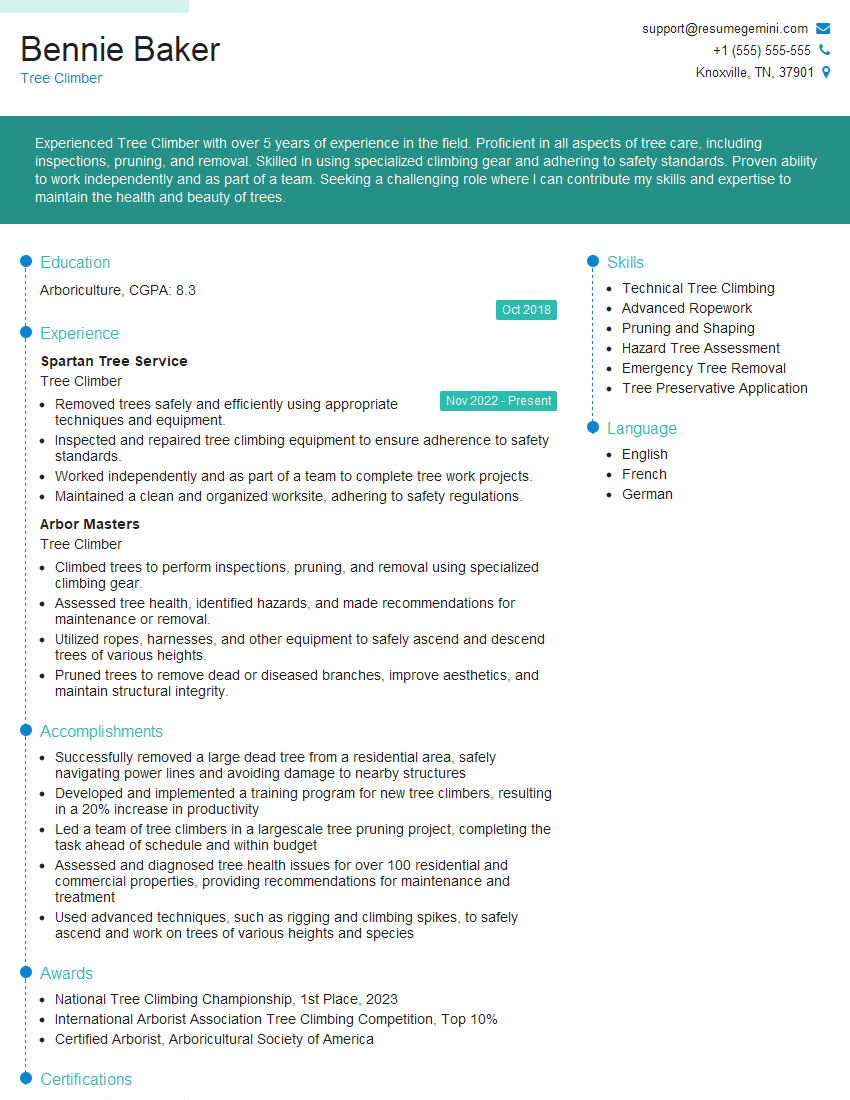
Mastering Aerial Tree Work opens doors to a rewarding career with opportunities for advancement and specialization. To significantly enhance your job prospects, invest time in creating a compelling and ATS-friendly resume. ResumeGemini is a trusted resource to help you build a professional resume that highlights your skills and experience effectively. Examples of resumes tailored to the Aerial Tree Work field are available, providing you with valuable templates to guide your resume creation.

Explore more articles
Users Rating of Our Blogs
Share Your Experience
We value your feedback! Please rate our content and share your thoughts (optional).
What Readers Say About Our Blog
Very informative content, great job.
good