The right preparation can turn an interview into an opportunity to showcase your expertise. This guide to Shipboard Firefighting Systems interview questions is your ultimate resource, providing key insights and tips to help you ace your responses and stand out as a top candidate.
Questions Asked in Shipboard Firefighting Systems Interview
Q 1. Describe the different types of shipboard fire detection systems.
Shipboard fire detection systems are crucial for early warning and rapid response. They vary in technology and application, but generally fall into these categories:
- Heat Detectors: These activate when a predetermined temperature is reached. They come in fixed temperature and rate-of-rise types. Fixed temperature detectors trigger only when a specific temperature is exceeded, while rate-of-rise detectors trigger when the temperature increases rapidly, even if it hasn’t reached a specific high temperature. Think of it like a fever – a sudden spike is more alarming than a slow increase.
- Smoke Detectors: These detect the presence of smoke particles using various methods such as ionization (detecting changes in air conductivity) or photoelectric (detecting light scattering by smoke). Photoelectric detectors are generally better at detecting smoldering fires, while ionization detectors are more sensitive to flaming fires.
- Flame Detectors: These utilize infrared or ultraviolet sensors to detect the radiant energy emitted by flames. They’re extremely fast and effective at detecting fast-spreading fires, making them ideal for engine rooms.
- Gas Detectors: Specific gas detectors can be used in areas with potential for flammable gas leaks, such as engine rooms or cargo holds, detecting the presence of gases like methane, propane, etc.
The choice of detector depends on the specific fire hazard of the area. For example, an engine room might use a combination of heat, flame, and gas detectors, while accommodation areas might primarily rely on smoke detectors.
Q 2. Explain the operation of a fixed fire fighting system, such as CO2 or water sprinkler system.
Fixed fire-fighting systems provide automatic suppression once a fire is detected. Let’s look at two common examples:
- CO2 Systems: These systems discharge carbon dioxide (CO2), a non-conductive gas that displaces oxygen, suppressing the fire by smothering it. A typical CO2 system involves a bank of CO2 cylinders connected to a network of pipes and nozzles. When a fire alarm is triggered, the CO2 is released into the protected space. The CO2 displaces the oxygen needed for combustion. Think of it like suffocating the fire. These are often found in engine rooms, pump rooms, and other spaces containing equipment sensitive to water damage.
- Water Sprinkler Systems: These systems use a network of pipes with sprinkler heads that activate individually when a fire is detected. They release water to cool the fire and prevent its spread. Each sprinkler head contains a small glass bulb or fusible link that melts or shatters at a predetermined temperature, triggering the release of water. They offer a more targeted approach than flooding the entire area with water, thus mitigating water damage.
Both systems require regular maintenance and testing to ensure reliability and prevent malfunctions during a real emergency.
Q 3. What are the limitations of each type of fixed fire suppression system?
While effective, fixed systems have limitations:
- CO2 Systems: CO2 is asphyxiating and dangerous to humans. Spaces protected by CO2 systems require thorough ventilation after discharge and warning systems to allow personnel to evacuate before discharge. It is also ineffective on fires involving certain metals or other materials that can continue to burn even without oxygen.
- Water Sprinkler Systems: Water can cause significant damage to electrical equipment and sensitive cargo. The effectiveness depends on water pressure, sprinkler head spacing, and the type of fire. Water might be ineffective in certain types of fires, like those involving flammable liquids.
Therefore, the selection of the most appropriate system always involves careful consideration of the risks involved and the specific needs of each protected space.
Q 4. How do you conduct a fire risk assessment on a vessel?
A fire risk assessment on a vessel is a systematic process to identify potential fire hazards, assess their risks, and develop preventive measures. It should be carried out regularly and updated as the vessel’s condition changes. Here’s a step-by-step approach:
- Identify Hazards: This involves a thorough survey of the vessel, identifying potential ignition sources (e.g., hot work, electrical equipment, machinery), flammable materials (e.g., fuels, paints, cargo), and factors that could contribute to fire spread (e.g., inadequate ventilation, combustible materials in passageways).
- Assess Risks: For each identified hazard, assess the likelihood and severity of a fire occurring. This often involves using risk matrices that consider the probability of ignition and potential consequences (e.g., loss of life, property damage, environmental impact).
- Evaluate Existing Controls: Assess the effectiveness of existing fire prevention and protection measures (e.g., fire detection systems, fire extinguishers, emergency exits, fire drills). Determine if existing measures are sufficient.
- Develop Control Measures: Develop and implement additional control measures, such as improving ventilation, fireproofing materials, installing additional fire detection or suppression systems, or revising emergency procedures.
- Document Findings: Document the assessment, including identified hazards, risk levels, control measures implemented, and responsibilities for each measure. This record should be readily available to relevant personnel.
- Review and Update: Regularly review and update the assessment, particularly after incidents, changes to the vessel’s configuration, or changes to operational procedures.
Q 5. Outline the procedures for responding to a fire in different areas of a ship (engine room, accommodation, cargo hold).
Responding to a shipboard fire requires a swift, organized approach. Procedures differ based on the location and type of fire. However, the general principles of RACE (Rescue, Alarm, Confine, Extinguish/Evacuate) apply universally.
- Engine Room: First, attempt to confine the fire by shutting down affected machinery and closing fire doors. Activate the fixed CO2 system if applicable and available. If the fire is small and accessible, use portable extinguishers. If the fire is beyond control, evacuate the engine room and report to the bridge.
- Accommodation: Rescue any persons in immediate danger. Activate the fire alarm and use portable extinguishers if the fire is small and contained. Close doors to confine the fire. Evacuate the affected area, and ensure passengers and crew follow the muster stations.
- Cargo Hold: Confining the fire is paramount. Close the relevant hatchways and fire doors. Activate the fixed fire-fighting system if fitted. Due to the difficulty of accessing cargo holds, external firefighting using monitors and hoses may be necessary. If the fire involves hazardous materials, appropriate specialized response teams may be required. Evacuating the ship might be necessary.
In all cases, immediate notification of the bridge is critical. The bridge will coordinate the response, contacting shore-based authorities and emergency services if needed.
Q 6. Describe the use and limitations of various portable fire extinguishers.
Portable fire extinguishers are the first line of defense in many fire situations. Their effectiveness depends on the type of fire and their proper use. Common types include:
- Water: Effective on Class A fires (ordinary combustibles like wood and paper). Not suitable for Class B (flammable liquids) or Class C (electrical) fires.
- Foam: Effective on Class A and B fires. Forms a layer that prevents reignition.
- Dry Chemical (ABC): Effective on Class A, B, and C fires. Disrupts the combustion chain reaction.
- Dry Chemical (BC): Effective on Class B and C fires. The main difference between ABC and BC dry chemical is in the composition of the dry chemical and the intended use.
- CO2: Effective on Class B and C fires. Displaces oxygen, smothering the fire. Leaves no residue, making it suitable for sensitive equipment.
Limitations: Portable extinguishers have limited capacity and are only effective on small, contained fires. Attempting to use an extinguisher on a large fire is extremely dangerous and may cause injury or death. They need regular inspections and pressure tests to ensure reliability. Always check the extinguisher rating to confirm its suitability for the type of fire.
Q 7. Explain the importance of regular maintenance and testing of fire detection and suppression systems.
Regular maintenance and testing are crucial for the reliability of fire detection and suppression systems. Neglecting this can lead to system failures during emergencies with potentially catastrophic consequences. A proper maintenance plan involves:
- Regular Inspections: Visual inspections of all equipment, including detectors, sprinklers, hoses, and extinguishers. Checks should involve pressure tests for water and CO2 systems, checking for leaks or damage to piping. Examination of extinguisher pressures and seals.
- Functional Tests: Periodic testing of the operational readiness of the entire fire detection and suppression system. This includes alarms, pumps, and the release mechanisms for fixed systems. It confirms each component is working as designed.
- Record Keeping: Maintaining accurate and up-to-date records of all inspections and tests. This documentation is essential for compliance with regulations and demonstrates due diligence.
- Professional Servicing: Regular professional servicing by qualified personnel is vital. They possess the specialized knowledge and tools for thorough inspections and repairs to ensure the systems are operational.
Think of it like a car – regular servicing prevents breakdowns. The same logic applies to shipboard fire systems. Regular maintenance ensures they function correctly when needed most, safeguarding lives and property.
Q 8. What are the legal and regulatory requirements for shipboard fire safety?
Shipboard fire safety is governed by a strict international framework, primarily the International Maritime Organisation (IMO) regulations, specifically the International Convention for the Safety of Life at Sea (SOLAS). These regulations dictate the design, construction, equipment, and operational procedures related to fire prevention and control on all vessels. Key aspects include:
- Fire detection and alarm systems: Ships must have comprehensive systems to detect fires early, including smoke detectors, heat detectors, and manual call points strategically located throughout the vessel. These systems are regularly inspected and tested.
- Fire extinguishing systems: This includes fixed systems like sprinkler systems, foam systems, and CO2 flooding systems, as well as portable fire extinguishers of various types (water, foam, CO2, dry powder) appropriately located and readily accessible. Regular maintenance and testing are mandatory.
- Fire-resistant materials: Bulkheads, doors, and other structural elements must meet specific fire-resistance standards to prevent fire spread. The type and rating are dependent on the location and the vessel’s size and type.
- Escape routes and emergency exits: Ships need clearly marked, well-lit, and unobstructed escape routes, ensuring crew and passengers can evacuate safely in case of fire. Emergency exits must meet stringent standards for opening mechanisms and ease of access.
- Fire drills and training: Regular fire drills and comprehensive training for all crew members are mandatory, ensuring everyone is familiar with procedures, equipment use, and emergency response. This includes training on using fire-fighting equipment and emergency escape routes.
- Fire safety management system: Modern ships often employ a formal Fire Safety Management System (FSM) that covers all aspects of fire safety from prevention to response, integrating safety management into the ship’s overall operation.
Non-compliance with these regulations can lead to significant penalties, including detention of the vessel, fines, and potential loss of certification.
Q 9. How would you manage a fire emergency involving casualties?
Managing a fire emergency involving casualties requires a coordinated and efficient response prioritizing life safety. The first step is to activate the ship’s emergency response plan, raising the alarm and initiating the appropriate communication channels. This includes contacting the bridge and emergency services.
- Immediate actions: Simultaneously, efforts should focus on rescuing and evacuating casualties from the affected area using established escape routes. First aid should be administered to those injured. Firefighters need to be equipped with appropriate Personal Protective Equipment (PPE).
- Fire suppression: Concurrent with rescue efforts, firefighting operations should commence, using the appropriate methods and extinguishing agents depending on the fire’s nature and location. Containment is key to preventing spread.
- Casualty management: A designated area for treating casualties should be established away from the fire zone. This involves providing medical aid, organizing transport to a medical facility, and coordinating with shore-based medical teams if necessary.
- Post-incident investigation: Following the emergency, a comprehensive investigation is critical to identify the cause of the fire, the effectiveness of response measures, and potential areas for improvement in safety procedures. This helps prevent future incidents.
A well-rehearsed emergency response plan, regularly updated, is crucial for handling such situations effectively and minimizing loss of life and damage to property.
Q 10. What are the key elements of a ship’s fire plan?
A ship’s fire plan is a crucial document outlining procedures for preventing, detecting, and combating fires onboard. It acts as a blueprint for a coordinated response, ensuring crew members understand their roles and responsibilities in a fire emergency. Key elements include:
- Fire prevention measures: This section outlines the procedures for preventing fires, including regular inspections, maintenance of equipment, safe storage of flammable materials, and good housekeeping practices.
- Fire detection and alarm systems: Details of the ship’s fire detection and alarm system, including the location of detectors, alarm panels, and procedures for responding to alarms.
- Firefighting equipment: A comprehensive inventory of all firefighting equipment onboard, including locations, types, and operating instructions. This is vital for quick access during emergencies.
- Emergency escape routes and assembly points: Clear diagrams and descriptions of all escape routes and assembly points, which should be clearly marked and well-lit. Crew should know multiple escape routes from various locations.
- Roles and responsibilities: A clear allocation of responsibilities to various crew members, including who is in charge, who operates fire-fighting equipment, who assists with evacuation, and who manages communication.
- Communication procedures: Methods for communication during a fire emergency, including the use of internal communication systems, emergency broadcasts, and contact procedures with shore-based authorities.
- Emergency power systems: Procedures for switching to emergency power sources in case of a fire affecting the main power system, ensuring critical systems remain functional.
- Post-incident procedures: Steps to follow after a fire, including damage assessment, investigation of causes, and reporting requirements.
The fire plan should be readily accessible to all crew members and regularly reviewed and updated to reflect any changes in the ship’s configuration or operational procedures.
Q 11. Describe the procedures for donning and using breathing apparatus.
Donning and using breathing apparatus (BA), such as self-contained breathing apparatus (SCBA), is crucial for firefighters entering hazardous environments. The procedure is critical for safety and survival.
- Pre-use checks: Before donning the BA, it’s essential to conduct a thorough check of the apparatus, including the air cylinder pressure, the mask seal, and the functionality of all components. This is a crucial step to ensure the equipment functions as expected in a critical situation.
- Donning procedure: The specific procedure varies depending on the BA type, but generally includes attaching the harness, securing the mask, and activating the air supply. Training is vital to develop muscle memory.
- Mask fit and seal checks: A proper mask seal is crucial for preventing toxic gases and smoke from entering. The user must check the seal before entering a hazardous environment.
- Communication: The BA unit often includes a communication system to maintain contact with the fire team outside the hazardous area. Testing the communication before entering is crucial.
- Entering and operating in a hazardous atmosphere: The user needs to operate the BA in accordance with training and follow instructions from the fire team leader. Never operate outside training or approved guidelines.
- Exiting and post-use procedures: After exiting the hazardous environment, the BA should be properly removed and decontaminated according to established procedures. The air cylinder needs to be recharged and the BA checked before being returned to service.
Regular training and practice are vital for effective and safe use of BA. Improper use can have fatal consequences. All crew must understand the urgency of following the correct procedures.
Q 12. How would you control and extinguish a fire involving flammable liquids?
Controlling and extinguishing a fire involving flammable liquids requires specialized techniques and equipment due to the rapid spread and intense heat generated. The priority is to prevent the spread of the fire and contain the spill.
- Initial actions: If safe to do so, shut off the source of the flammable liquid. If the fire is small, use a suitable fire extinguisher (foam or dry powder are generally effective). Never use water on flammable liquid fires as it can spread the fire.
- Containment: If the fire is larger, contain the spill to prevent its spread. This may involve using absorbent materials such as sand, soil, or specialized spill kits.
- Cooling: Cool the containers near the fire to prevent ignition of nearby flammable materials. This is often done by using water spray to lower the temperature of the surroundings.
- Foam application: Foam is the most effective extinguishing agent for flammable liquid fires. It creates a blanket that smothers the flames and prevents oxygen from reaching the fuel.
- Evacuation: Evacuate personnel from the affected area. The area needs to be fully secured to prevent unauthorized personnel from entering.
- Post-incident: After extinguishing the fire, the affected area needs thorough cleaning to remove traces of flammable liquids to prevent re-ignition. Ventilation needs to be checked and debris removed to prevent hazardous scenarios.
Appropriate personal protective equipment (PPE), including fire-resistant clothing and breathing apparatus, is essential when dealing with flammable liquid fires. The crew needs to understand the risks involved and the correct procedures.
Q 13. Explain the use of fire hydrants and hoses.
Fire hydrants and hoses are fundamental components of a ship’s fire-fighting system, providing a readily available source of water for extinguishing fires.
- Fire hydrants: These are strategically located throughout the vessel, providing access points to the ship’s fire main, a network of pipes carrying water under pressure. They are usually color-coded (red) for easy identification. Regular testing and inspection are required.
- Fire hoses: Connected to fire hydrants, fire hoses are long lengths of reinforced rubber or other suitable material that carry water to the fire. They come in various sizes and are equipped with nozzles allowing for adjusting the water spray pattern (jet, spray, fog).
- Operation: To use a fire hydrant, a crew member opens the hydrant valve, connects a fire hose, and then controls the water flow using the nozzle. Two crew members are usually needed: one to control the water flow and another to direct the hose.
- Maintenance: Regular checks of hydrants, hoses, and couplings (connections between the hose and hydrant) are vital to ensure their functionality. Hose reels are checked for proper winding and functionality, and hoses are checked for any damage, leaks, or kinks.
- Training: All crew members must receive training on the location, operation, and maintenance of fire hydrants and hoses as part of their fire-fighting training.
Proper training and regular maintenance are crucial for effective and safe operation of the fire hydrant and hose system. Effective teamwork is also required for effective firefighting.
Q 14. What are the safety precautions when working with fire fighting equipment?
Safety precautions when working with firefighting equipment are paramount to prevent accidents and injuries. It’s crucial to always prioritize safety.
- Personal Protective Equipment (PPE): Always wear appropriate PPE, including fire-resistant clothing, gloves, boots, and eye protection, to protect against heat, flames, and other hazards. Breathing apparatus is critical in smoke-filled environments.
- Proper training and certification: All personnel involved in firefighting should receive proper training on the use and maintenance of equipment. Certifications are necessary for handling certain equipment.
- Safe operating procedures: Always adhere to established operating procedures. Never attempt to use equipment without proper training. Follow guidelines for deployment, operation, and post-use maintenance.
- Teamwork and communication: Firefighting is a team effort; communication is vital. Clear communication between team members ensures coordinated and effective fire suppression.
- Hazard awareness: Be aware of potential hazards, such as falling debris, toxic gases, and unstable structures, and take precautions accordingly.
- Equipment maintenance and inspection: Regularly inspect and maintain all equipment to ensure its proper functioning. This prevents malfunction during emergency situations.
- Post-incident procedures: Follow established post-incident procedures, including equipment decontamination, safety checks, and incident reporting.
Safety should be the top priority when working with fire-fighting equipment. Ignoring safety precautions can lead to severe consequences. A safe working environment is paramount.
Q 15. Describe the different classes of fires and the appropriate extinguishing agents.
Fires are classified into different classes based on the type of fuel involved, requiring specific extinguishing agents for effective control. Understanding these classes is crucial for safe and efficient firefighting.
- Class A Fires: These involve ordinary combustible materials like wood, paper, cloth, and some plastics. They are best extinguished by cooling the burning material below its ignition temperature. Water is the most common agent, but AFFF (Aqueous Film Forming Foam) can also be effective.
- Class B Fires: These involve flammable liquids like gasoline, oil, grease, and solvents. They are extinguished by interrupting the fuel-air-heat chain reaction. Extinguishing agents include CO2, dry chemical powder (like ABC powder), and AFFF. Water, while effective in some circumstances, may spread the fire if used improperly.
- Class C Fires: These involve energized electrical equipment. The primary hazard here is electric shock. Power must be shut off before applying extinguishing agents. CO2 and dry chemical powders are preferred due to their non-conductive properties. Never use water on Class C fires unless the power is definitely off.
- Class D Fires: These involve combustible metals like magnesium, titanium, and sodium. They burn at extremely high temperatures and react violently with water. Special dry powder extinguishers designed for Class D fires are necessary. Sand can be used in some cases as a temporary measure.
- Class F Fires: These involve cooking oils and fats. These fires require specialized extinguishing agents like wet chemical extinguishers or F-class foam. Water should be avoided as it can cause the fire to spread violently.
For example, a fire in a galley (kitchen) involving cooking oil would be a Class F fire and require a wet chemical extinguisher. A fire in a ship’s electrical panel would be a Class C fire and would necessitate shutting off the power before using a CO2 extinguisher.
Career Expert Tips:
- Ace those interviews! Prepare effectively by reviewing the Top 50 Most Common Interview Questions on ResumeGemini.
- Navigate your job search with confidence! Explore a wide range of Career Tips on ResumeGemini. Learn about common challenges and recommendations to overcome them.
- Craft the perfect resume! Master the Art of Resume Writing with ResumeGemini’s guide. Showcase your unique qualifications and achievements effectively.
- Don’t miss out on holiday savings! Build your dream resume with ResumeGemini’s ATS optimized templates.
Q 16. How would you deal with a fire in a confined space?
Fighting a fire in a confined space presents unique challenges due to limited ventilation and potential for rapid fire spread. A systematic approach is vital.
- Assess the situation: Determine the type and size of the fire, the location and accessibility of the space, and the potential hazards.
- Ensure your own safety: Wear appropriate personal protective equipment (PPE), including self-contained breathing apparatus (SCBA), fire-resistant clothing, and safety boots.
- Ventilate the space: If safe to do so, open any available hatches or vents to help clear smoke and heat, and prevent the buildup of toxic gases. Consider using fans to enhance ventilation, but ensure they do not interfere with extinguishing efforts.
- Attack the fire: Utilize the appropriate extinguishing agent depending on the fire class. If possible, apply the agent from a safe distance to reduce personal risk. Small fires might be manageable with a portable extinguisher; larger fires may require the use of a fixed fire-fighting system or external fire brigade.
- Monitor the situation: Even after the flames are extinguished, the fire may re-ignite due to smoldering materials. The space needs to be thoroughly checked for remaining hot spots. Ventilation is crucial during this phase.
- Report: After the fire is extinguished, report the incident immediately to the appropriate personnel and conduct a post-fire investigation to prevent future incidents.
Imagine a fire in a storeroom filled with flammable materials. It’s critical to first evacuate personnel, then assess the fire class before attempting to extinguish it, ensuring good ventilation (if safe to do so) and wearing full PPE, particularly an SCBA to avoid inhaling toxic fumes.
Q 17. What are the signs of a potential fire hazard?
Recognizing potential fire hazards is paramount in preventing onboard fires. Regular inspections are key to identifying and mitigating these risks.
- Overheating equipment: Bearings, motors, and other machinery can overheat due to friction or malfunction, generating ignition sources. Regular maintenance and monitoring of temperatures are essential.
- Accumulation of combustible materials: Clutter, waste materials, and spilled chemicals can easily ignite. Maintaining a clean and organized workspace is crucial.
- Faulty electrical wiring: Damaged insulation, overloaded circuits, and poor connections can cause sparks and fires. Regular inspections and proper electrical maintenance are vital.
- Improper storage of flammable materials: Flammable liquids, gases, and solids must be stored in designated areas, away from ignition sources. Proper labeling and adherence to safety regulations are essential.
- Smoking hazards: Smoking in unauthorized areas and improper disposal of cigarettes are common causes of fires. Enforcing strict no-smoking policies and providing designated smoking areas can significantly reduce risks.
- Welding and cutting operations: These operations can generate sparks and cause fires if proper precautions are not taken. Fire watches, fire blankets, and fire extinguishers should be readily available.
For example, a build-up of oil rags near a hot engine is a major fire hazard that would be easily identified during a regular inspection. Likewise, frayed electrical wiring can be spotted during a routine check and replaced before becoming a risk.
Q 18. Explain the role of the fire control plan in emergency response.
The fire control plan is the backbone of a vessel’s emergency response system. It provides a detailed, ship-specific guide for preventing and combating fires.
- Emergency Procedures: The plan details step-by-step procedures for various fire scenarios, including alarm activation, evacuation routes, firefighting techniques, and communication protocols.
- Firefighting Equipment Location: It maps the location of all firefighting equipment, including fire extinguishers, fire hoses, hydrants, and sprinkler systems, ensuring crews know exactly where to find the needed tools.
- Crew Responsibilities: The plan clearly defines the responsibilities of each crew member during a fire emergency, clarifying roles and reporting structures.
- Emergency Communication: It outlines the ship’s communication systems for reporting fires, coordinating firefighting efforts, and contacting external emergency services.
- Post-Fire Procedures: The plan details procedures for post-fire damage assessment, cleanup, investigation, and reporting to relevant authorities.
During a fire, the plan serves as a quick reference, guiding the crew through coordinated actions, preventing confusion and maximizing the effectiveness of firefighting efforts. A well-drafted plan, regularly reviewed and updated, is crucial for minimizing damage and ensuring the safety of everyone onboard.
Q 19. Describe the process of conducting a fire drill on board a vessel.
Conducting regular fire drills is critical for ensuring the crew’s preparedness. Drills should simulate real-life scenarios.
- Planning: Choose a specific fire scenario (e.g., engine room fire, galley fire). Designate roles for crew members.
- Announcement: Announce the drill, clearly stating the scenario and the objectives. Make sure all crew are aware it’s a drill and not a real emergency.
- Scenario Implementation: Activate the fire alarm system, and initiate the emergency procedures as outlined in the fire control plan. This might include the use of smoke machines to simulate a smoky environment.
- Crew Response: Evaluate crew response – their ability to use firefighting equipment, follow evacuation routes, communicate effectively and complete assigned tasks.
- Debriefing: Conduct a thorough debriefing session immediately after the drill to analyze strengths and weaknesses. Identify areas needing improvement in procedures or crew training.
- Documentation: Record the drill’s details, including the scenario, crew responses, and areas for improvement. This data is vital for improving future training.
For example, a drill simulating a fire in a cargo hold might involve activating the appropriate alarm, deploying a fire team, and initiating an evacuation of non-essential personnel, enabling us to pinpoint and address any gaps in knowledge or efficiency.
Q 20. How do you manage crew training for fire prevention and response?
Effective crew training is the cornerstone of fire prevention and response. A comprehensive program should cover both theoretical knowledge and practical skills.
- Initial Training: All crew members should receive initial training upon joining the vessel, covering fire safety regulations, fire classes, extinguisher usage, and emergency procedures.
- Refresher Training: Regular refresher training is crucial to reinforce knowledge and update procedures. This should happen at least annually.
- Practical Drills: Regular fire drills and emergency exercises are vital for practicing procedures and developing skills.
- Specialized Training: Certain crew members may receive specialized training, such as fire team training, which includes advanced firefighting techniques, the use of specialized equipment, and the management of complex fire scenarios.
- Record Keeping: Meticulous records of all training events, including dates, participants, and performance evaluations, must be maintained to comply with regulations and track individual progress.
For example, we might use simulations, videos, and hands-on training with fire extinguishers to help teach crewmembers how to respond effectively to a range of fire scenarios. This builds confidence and improves their readiness in real-life situations.
Q 21. Explain the importance of proper ventilation during fire fighting.
Proper ventilation plays a vital role during firefighting, impacting both safety and effectiveness.
- Smoke and Heat Removal: Ventilation removes smoke and heat, improving visibility and making it safer for firefighters to access the fire area and operate effectively. This significantly reduces the risk of suffocation and heat exhaustion.
- Oxygen Control: Controlling the flow of oxygen to the fire can suppress the flames, aiding in the extinguishing process. Careful ventilation can starve the fire of its life-sustaining fuel.
- Toxic Gas Dilution: Ventilation helps to dilute or remove toxic gases produced during combustion, reducing the health risks to firefighters and other personnel.
- Cooling Effect: Introducing fresh air can aid in cooling down the affected area, preventing re-ignition and minimizing further damage.
However, improper ventilation can be dangerous. Introducing too much oxygen can reignite a seemingly extinguished fire. Careful planning and controlled ventilation are crucial to ensure that ventilation efforts support the overall firefighting strategy, preventing any unforeseen complications. For instance, in a confined space, ventilation should be cautiously initiated only after the initial fire is suppressed to avoid oxygen replenishing the flames.
Q 22. What are the different types of fire doors and their functions?
Fire doors are crucial for containing fires on ships, preventing their spread and protecting escape routes. They come in various types, each designed for specific functions:
- A-60 Fire Doors: These doors are designed to withstand a fire for at least 60 minutes. They are typically found in critical areas such as stairwells, corridors, and machinery spaces. They often feature robust construction and self-closing mechanisms.
- A-30 Fire Doors: Similar to A-60 doors, but offer 30 minutes of fire resistance. Used in areas where the risk of fire spread is slightly lower, or where space constraints are a factor.
- B-15 Fire Doors: These doors offer a lower level of fire resistance (15 minutes), usually employed in areas less critical to overall fire safety.
- Watertight Fire Doors: These doors provide both fire resistance and watertight integrity, essential for protecting against flooding and fire in simultaneous incidents. They are often found in bulkheads separating watertight compartments.
- Fire Dampers: While not doors in the traditional sense, fire dampers are crucial components of fire protection systems. They automatically close to prevent the spread of fire through ductwork and ventilation systems.
The choice of fire door depends on the specific location, the potential fire risk, and regulatory requirements. For example, a crew accommodation might use A-30 doors, while an engine room would mandate A-60 watertight fire doors.
Q 23. Describe the procedures for using a fire escape route.
Using a fire escape route is a matter of life or death in a shipboard fire. Procedures must be ingrained through regular drills:
- Familiarize yourself with escape routes: Know the location of all escape routes and assembly points from your work area and accommodation. Ship plans should be readily available.
- Remain calm: Panic can lead to poor decisions. Follow instructions from the bridge or designated fire wardens.
- Close doors behind you: This helps contain the fire and reduces smoke spread. Only open doors if absolutely necessary to escape.
- Proceed to the assembly point: Once you reach safety, ensure you report to the assembly point. This allows for a headcount and identification of anyone still missing.
- Do not re-enter the burning area: Your priority is self-preservation. Rescue efforts are the responsibility of trained fire-fighting personnel.
- Assist others if possible, but prioritize your own safety: If safe to do so, help those who may need assistance, but only if you can do so without jeopardizing your own safety.
Regular fire drills are critical to ensure everyone understands and can execute these procedures effectively. These drills should simulate various fire scenarios and cover all aspects of evacuation.
Q 24. What is the role of the SOLAS convention in shipboard fire safety?
The International Convention for the Safety of Life at Sea (SOLAS) plays a pivotal role in regulating shipboard fire safety. It sets minimum standards for fire prevention, detection, and extinguishing systems. SOLAS mandates:
- Structural Fire Protection: Regulations on fire-resistant materials, compartmentalization, and the construction of fire-resistant bulkheads.
- Fire Detection and Alarm Systems: The installation of automatic fire detection systems and audible alarms throughout the vessel.
- Fire-Fighting Equipment: The provision of adequate fire-fighting equipment, including fire extinguishers, fire hoses, and fixed fire-fighting systems.
- Emergency Escape Routes: Clear and well-marked escape routes, including sufficient lifeboats and life rafts.
- Crew Training: SOLAS emphasizes the importance of adequately training crew members in fire prevention, detection, and firefighting techniques.
Compliance with SOLAS is mandatory for all vessels engaged in international voyages and failure to comply results in serious penalties. It ensures a baseline level of safety for all ships and crew members globally.
Q 25. How do you maintain crew competency in fire fighting procedures?
Maintaining crew competency in fire-fighting procedures is paramount to ship safety. Several methods ensure continuous improvement:
- Initial Training: All crew members must undergo comprehensive fire-fighting training during their initial employment. This covers the use of firefighting equipment, emergency procedures, and the understanding of fire dynamics.
- Regular Drills: Frequent fire and emergency drills simulate real-life scenarios, allowing the crew to practice their skills and teamwork in a controlled environment. Drills should include different fire scenarios and cover escape procedures.
- Refresher Courses: Periodic refresher courses ensure crew knowledge remains up to date, especially with advancements in firefighting technology and procedures.
- Onboard Training: The ship’s officers should conduct regular onboard training sessions to reinforce learned skills and address specific issues or concerns.
- Documentation and Records: Maintaining comprehensive records of all training and drills is essential to demonstrate compliance with regulations and to track crew competency levels.
- Use of Simulators: Advanced shipboard fire simulators allow crew to practice complex scenarios and decision-making in a safe and controlled virtual environment.
Consistent and thorough training ensures that crew members are always prepared and capable of handling any fire emergency safely and effectively.
Q 26. Describe the process of investigating a fire incident.
Investigating a fire incident on a ship involves a systematic approach to determine the cause and to prevent similar incidents in the future:
- Secure the Area: The immediate priority is to ensure the safety of personnel and to prevent further damage. The area must be secured to prevent tampering with evidence.
- Initial Assessment: A preliminary assessment of the extent of the damage, the location of the origin, and any witnesses’ accounts should be conducted.
- Evidence Collection: Thorough evidence collection includes photographs, video footage, samples of burned materials, and witness statements. All evidence should be handled carefully to maintain its integrity.
- Expert Consultation: A fire investigation expert can provide professional insight and analysis based on the gathered evidence.
- Cause Determination: Through careful analysis of the evidence, the root cause of the fire is determined. This often involves eliminating possibilities and identifying contributing factors.
- Report Preparation: A detailed report documenting the investigation’s findings, conclusions, and recommendations should be prepared for the relevant authorities and the ship’s management.
- Preventive Measures: Based on the findings of the investigation, appropriate preventative measures are implemented to reduce the risk of similar incidents occurring in the future.
A well-conducted investigation provides vital information to prevent future incidents, improve onboard safety procedures, and ensure compliance with regulations.
Q 27. What is the difference between a fire alarm and a fire detection system?
While both are parts of a ship’s fire safety system, there’s a clear distinction:
- Fire Alarm System: This system is primarily designed to alert the crew of a potential fire. It typically includes manually operated call points, smoke detectors and heat detectors that trigger audible alarms. Think of it as the ‘announcement’ of a potential threat.
- Fire Detection System: This system goes a step further by detecting the presence of a fire. It is more comprehensive and includes various detection technologies (smoke, heat, flame) to pinpoint the location of the fire, facilitating a faster and more effective response. The goal is early detection, providing critical time to engage firefighting resources and prevent escalation.
In essence, a fire alarm system is a basic warning system while a fire detection system is an advanced system capable of pinpointing the location and nature of a potential fire hazard. A ship’s safety typically demands a comprehensive fire detection system working in conjunction with a fire alarm system.
Q 28. Explain the concept of fire compartmentalization on ships.
Fire compartmentalization is a crucial aspect of ship design aimed at limiting the spread of fire. It involves dividing the ship into smaller, fire-resistant compartments using fire-rated bulkheads and decks.
Imagine a building with fire doors separating rooms. The same principle applies on ships, but at a much larger scale and with stricter regulations. Each compartment acts as a barrier, slowing or even preventing the spread of fire and smoke to other areas of the ship. This buys valuable time for evacuation and fire-fighting efforts.
The effectiveness of compartmentalization depends on:
- Bulkhead Integrity: Bulkheads must meet specific fire resistance ratings (e.g., A-60, A-30) to withstand fire for a certain duration.
- Door and Hatch Protection: Fire doors and hatches must be properly sealed and maintained to prevent fire from spreading through openings. They have a critical role in creating effective compartments.
- Ventilation Control: Fire dampers are vital in preventing the spread of fire through ventilation systems.
By limiting the spread of fire, compartmentalization enhances the safety of passengers and crew, simplifies fire-fighting operations, and increases the likelihood of successful fire containment.
Key Topics to Learn for Shipboard Firefighting Systems Interview
- Fire Detection and Alarm Systems: Understand the various types of fire detection systems used on ships (heat detectors, smoke detectors, flame detectors), their principles of operation, and limitations. Be prepared to discuss alarm system configurations and response procedures.
- Fixed Fire Fighting Systems: Master the operation and maintenance of different fixed fire suppression systems, including sprinkler systems, foam systems, CO2 systems, and halon systems. Be ready to explain their applications in different shipboard areas and limitations.
- Portable Fire Fighting Equipment: Demonstrate a thorough understanding of the use and limitations of various portable fire extinguishers (types, operation, limitations). Discuss the importance of proper maintenance and inspection of this equipment.
- Fire Prevention and Control Measures: Be prepared to discuss fire prevention strategies onboard vessels, including hazard identification, risk assessment, and implementation of safety procedures. This includes understanding fire safety regulations and compliance.
- Emergency Procedures and Drills: Know the ship’s fire emergency procedures, including muster stations, escape routes, and the role of crew members in fire fighting and evacuation. Discuss the importance of regular fire drills and their practical application.
- Fire Investigation and Reporting: Understand the process of investigating a fire incident, collecting evidence, and preparing a comprehensive report. This includes outlining the importance of accurate documentation and contributing to lessons learned.
- International Maritime Organization (IMO) regulations: Familiarize yourself with relevant IMO regulations and guidelines related to shipboard fire safety and firefighting systems. Be ready to discuss their practical implications.
Next Steps
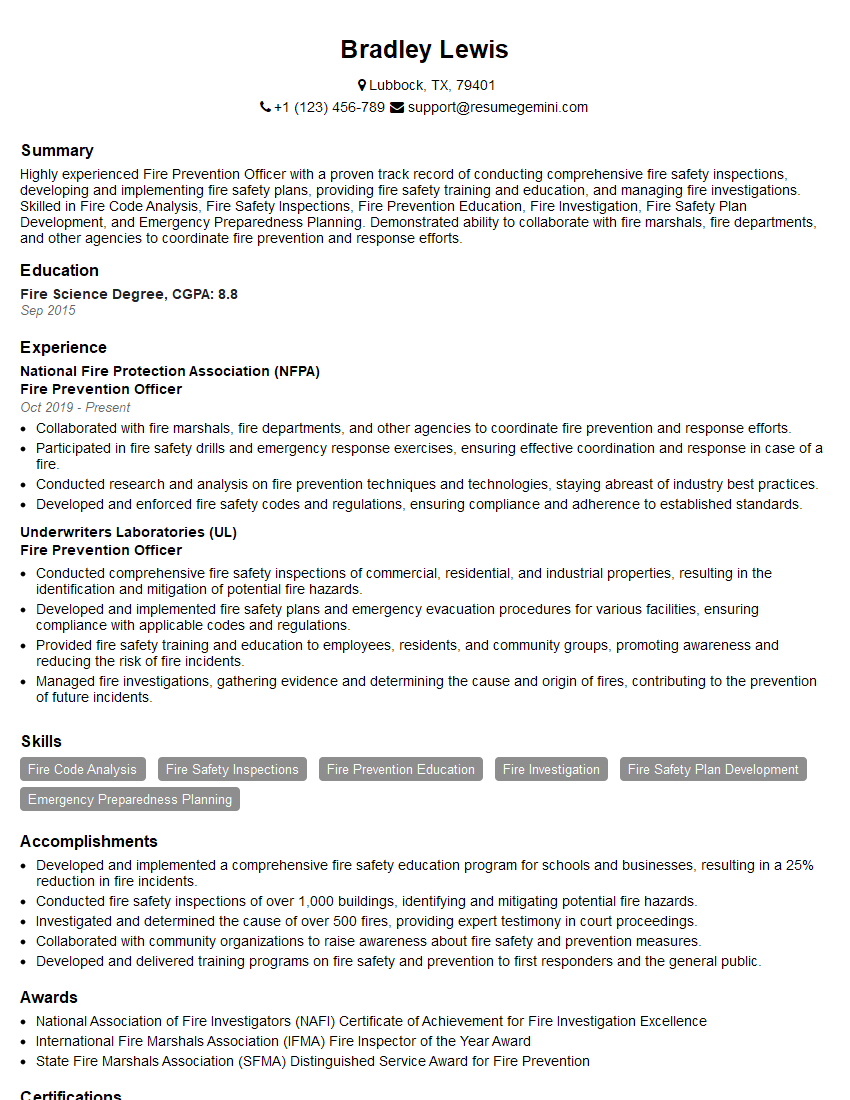
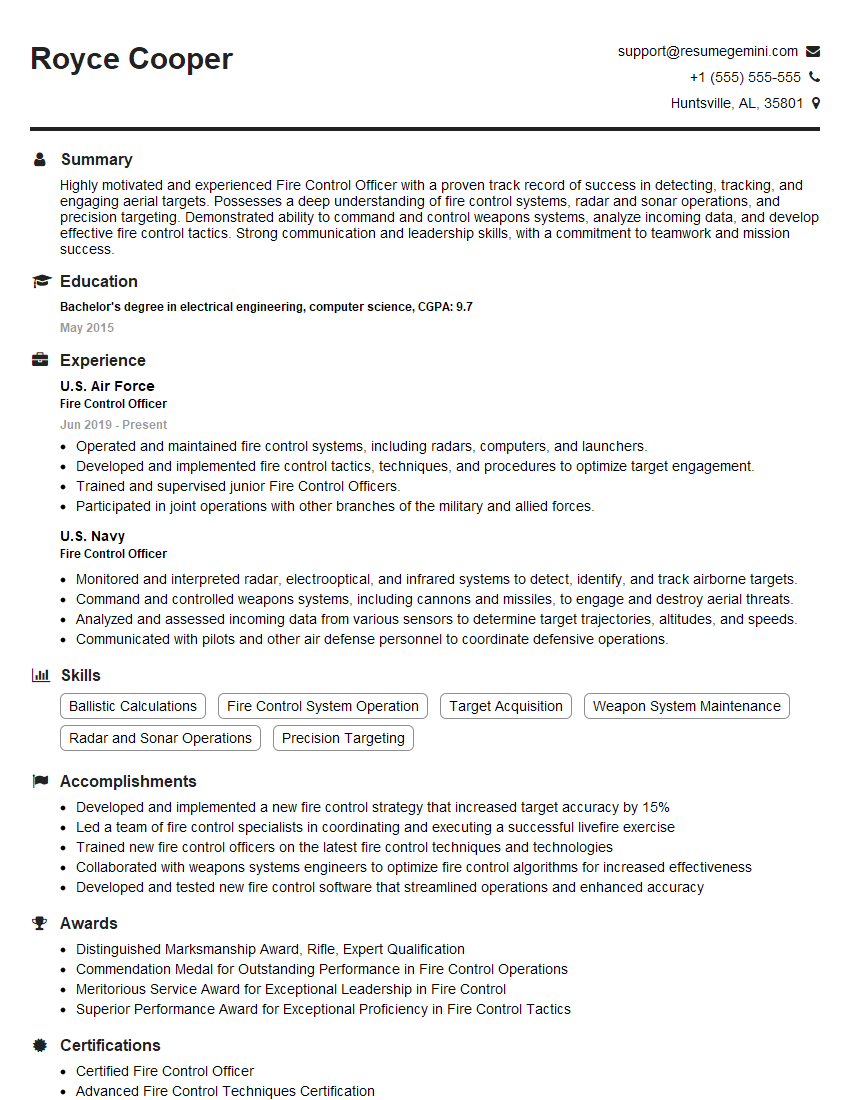
Mastering shipboard firefighting systems is crucial for career advancement in the maritime industry, demonstrating your commitment to safety and operational excellence. This knowledge is highly valued by employers and significantly enhances your job prospects. To increase your chances of securing your dream role, create an ATS-friendly resume that effectively highlights your skills and experience. ResumeGemini is a trusted resource that can help you build a professional and impactful resume. They provide examples of resumes tailored to Shipboard Firefighting Systems, ensuring your application stands out. Take the next step towards your maritime career today!

Explore more articles
Users Rating of Our Blogs
Share Your Experience
We value your feedback! Please rate our content and share your thoughts (optional).
What Readers Say About Our Blog
Very informative content, great job.
good