Cracking a skill-specific interview, like one for Agriculture Policy and Regulation, requires understanding the nuances of the role. In this blog, we present the questions you’re most likely to encounter, along with insights into how to answer them effectively. Let’s ensure you’re ready to make a strong impression.
Questions Asked in Agriculture Policy and Regulation Interview
Q 1. Explain the difference between direct and indirect agricultural subsidies.
Agricultural subsidies are financial assistance provided to farmers to support agricultural production and stabilize markets. Direct subsidies are payments made directly to farmers, often tied to specific commodities or practices. Indirect subsidies, on the other hand, are less direct and can take many forms, benefiting farmers indirectly.
- Direct Subsidies: Examples include price supports (government purchases of surplus crops to maintain prices), deficiency payments (payments to farmers when market prices fall below a target price), and direct payments based on acreage or production. Think of it like a direct cash payment from the government to the farmer.
- Indirect Subsidies: Examples include tax breaks, subsidized crop insurance, government-funded research and development, and infrastructure improvements like irrigation projects. These support farmers without directly transferring cash, creating a more favorable environment for agricultural production.
The key difference lies in the method of delivery. Direct subsidies involve a clear transfer of funds, while indirect subsidies create an environment that benefits farmers without directly transferring cash. Both play vital roles in shaping agricultural production and market stability, though their effects can vary depending on the specific subsidy and its design.
Q 2. Describe the impact of the Farm Bill on agricultural production.
The Farm Bill, a comprehensive piece of legislation enacted every five years in the United States, significantly impacts agricultural production. It encompasses a wide range of programs that influence everything from crop planting decisions to the overall economic health of the agricultural sector.
- Production Support: The Farm Bill provides direct and indirect subsidies that encourage the production of specific crops, often those deemed to be in the national interest. These can incentivize farmers to grow particular crops and affect the overall supply and demand in agricultural markets.
- Conservation Programs: A substantial portion of the Farm Bill is dedicated to conservation programs. These programs incentivize environmentally friendly farming practices like no-till farming, cover cropping, and the implementation of buffer strips. This leads to improved soil health, reduced erosion, and a healthier environment.
- Research and Development: Funding for agricultural research and development is a crucial component of the Farm Bill. Investments in new technologies and practices help farmers increase yields, improve efficiency, and develop more sustainable approaches to agriculture.
- Food Assistance Programs: The Farm Bill also includes significant funding for food assistance programs like the Supplemental Nutrition Assistance Program (SNAP). While not directly impacting agricultural production, these programs bolster the demand for agricultural products, which indirectly stimulates production.
In essence, the Farm Bill acts as a powerful instrument shaping the direction and sustainability of American agriculture. The effects are far-reaching, affecting everything from the types of crops produced to the environmental impact of farming practices.
Q 3. How do agricultural trade agreements affect domestic farmers?
Agricultural trade agreements, such as the USMCA or the WTO agreements, profoundly influence domestic farmers by opening up access to foreign markets and increasing competition. While these agreements can benefit some farmers by expanding export opportunities and leading to higher prices for certain commodities, they can also negatively impact others.
- Increased Competition: Trade agreements can lead to an influx of cheaper agricultural products from other countries. This increased competition can lower prices for domestic farmers, squeezing their profit margins, and potentially impacting their livelihoods if they cannot compete on price. For example, a sudden increase in imported dairy products can negatively impact domestic dairy farmers.
- Expanded Markets: On the flip side, these agreements can create new export opportunities, allowing domestic farmers to sell their products to a wider market, leading to increased revenue. For example, a trade agreement might create access for American soybean farmers to new markets in Asia, increasing demand and potentially boosting profits.
- Trade Restrictions and Tariffs: Trade agreements can also lead to the establishment of tariffs or other trade restrictions. While these measures can protect domestic farmers from intense foreign competition, they often increase prices for consumers and can lead to retaliatory tariffs from other countries, potentially harming exports.
The impact on domestic farmers is complex and often depends on the specific commodity, the farmer’s size and efficiency, and the overall terms of the trade agreement. It requires careful consideration of both the opportunities and challenges presented by international markets.
Q 4. What are the major challenges in implementing sustainable agricultural practices?
Implementing sustainable agricultural practices faces many challenges, primarily stemming from economic, technological, and social factors. It requires a fundamental shift in how we approach food production.
- High Initial Costs: Transitioning to sustainable methods often requires significant upfront investment in new technologies, equipment, and training. This can be a major barrier for smaller farms with limited financial resources.
- Lack of Market Incentives: Consumers often prioritize price over sustainability, making it difficult for farmers to compete when adopting sustainable practices that might increase production costs. There’s a need for stronger market incentives to reward sustainable practices.
- Technological Gaps: While sustainable technologies are developing rapidly, some are not yet widely accessible or affordable, hindering widespread adoption. Further research and development are essential to bridge this gap.
- Soil Health and Climate Change: Many sustainable practices require significant changes to soil management and crop selection strategies. Addressing the effects of climate change, such as increased droughts and extreme weather events, also requires adaptation of sustainable farming methods.
- Social and Cultural Barriers: Changes to traditional farming practices can face resistance from farmers who are accustomed to established methods. Education and outreach are crucial for promoting the benefits of sustainable agriculture and addressing potential concerns.
Overcoming these challenges requires a multi-faceted approach involving government support through policies and incentives, technological innovation, consumer awareness, and the development of robust supply chains that prioritize sustainable practices.
Q 5. Analyze the role of government regulations in ensuring food safety.
Government regulations play a crucial role in ensuring food safety by establishing standards for food production, processing, and distribution. These regulations help minimize risks to public health from foodborne illnesses.
- Food Safety Modernization Act (FSMA) (Example): The FSMA in the United States shifted the focus from responding to foodborne illnesses to proactively preventing them. It outlines comprehensive regulations for all aspects of the food supply chain, from farm to table. These regulations encompass preventative controls, the safe handling of produce, and the control of harmful pathogens.
- Inspection and Enforcement: Governments establish inspection programs to ensure food producers and processors comply with regulations. These inspections involve checking facilities, verifying processes, and testing food products for contaminants. Enforcement actions, such as fines or product recalls, are taken when violations occur.
- Standards and Guidelines: Regulations set standards for food labeling, ensuring consumers have accurate information about the food they purchase. This includes information about ingredients, allergens, and nutritional content.
- Traceability Systems: Governments promote the use of robust traceability systems that enable quick identification and removal of contaminated food products from the market should an outbreak occur. This helps minimize the spread of foodborne illnesses and ensures rapid responses to potential threats.
Effective food safety regulations are essential for protecting public health, maintaining consumer confidence in the food supply, and supporting a thriving and safe food industry.
Q 6. Discuss the economic impact of climate change on agriculture.
Climate change poses a significant threat to agriculture, impacting crop yields, livestock production, and overall economic stability. The effects are complex and far-reaching.
- Changes in Temperature and Precipitation: Increased temperatures and altered precipitation patterns can directly affect crop growth, potentially reducing yields and increasing the risk of crop failures. Extreme weather events, such as droughts, floods, and heat waves, can have devastating consequences.
- Pest and Disease Outbreaks: Warmer temperatures can expand the range of pests and diseases, increasing the frequency and severity of outbreaks and requiring more pesticide use, potentially further impacting the environment and human health.
- Water Scarcity: Changes in precipitation patterns and increased evaporation can lead to water scarcity, particularly in arid and semi-arid regions, making irrigation more challenging and impacting crop yields.
- Sea Level Rise: In coastal areas, sea level rise can inundate farmland and contaminate freshwater sources used for irrigation, rendering land unsuitable for agriculture.
- Economic Impacts: These changes collectively result in reduced crop yields, decreased livestock productivity, and increased input costs, potentially leading to economic hardship for farmers and impacting food security.
Adapting to climate change in agriculture requires a combination of strategies, including developing climate-resilient crops, implementing water-efficient irrigation techniques, and improving soil health to enhance carbon sequestration and water retention. Investing in research and development is crucial to build resilience to the inevitable challenges ahead.
Q 7. Explain the concept of food security and its policy implications.
Food security exists when all people, at all times, have physical and economic access to sufficient, safe, and nutritious food that meets their dietary needs and food preferences for an active and healthy life. Policy implications are vast and interconnected.
- Sustainable Agriculture Policies: Policies promoting sustainable agriculture practices are crucial. These aim to increase productivity while minimizing environmental impact and preserving resources for future generations. This includes promoting agroforestry, conservation agriculture, and integrated pest management.
- Trade Policies: Fair and equitable trade policies are essential to ensure access to food, particularly for importing nations. Unfair trade practices can exacerbate food insecurity.
- Social Safety Nets: Implementing robust social safety nets, such as food assistance programs, are critical for ensuring that vulnerable populations have access to food, especially during times of crisis. These programs offer a crucial buffer during periods of economic hardship or natural disasters.
- Investing in Infrastructure: Investing in infrastructure, such as transportation networks and storage facilities, is necessary for efficient food distribution and reducing post-harvest losses, which are particularly significant in developing countries.
- Disaster Risk Reduction: Policies aimed at disaster risk reduction are critical in minimizing the impacts of climate change and other natural disasters on food production and access.
- Climate Change Mitigation and Adaptation: Addressing climate change through mitigation and adaptation strategies is paramount. This includes reducing greenhouse gas emissions from the agricultural sector and developing climate-resilient crops and farming practices.
Achieving food security requires a holistic and coordinated approach involving governments, international organizations, farmers, and consumers. It’s a complex challenge requiring collaboration and long-term commitment.
Q 8. How do agricultural policies address issues of land use and conservation?
Agricultural policies address land use and conservation through a multifaceted approach, aiming to balance food production needs with environmental protection. This involves a range of strategies, including:
- Conservation Reserve Programs (CRP): These incentivize farmers to take environmentally sensitive land out of production, restoring it to its natural state. For example, the US CRP pays farmers annual rental payments for converting highly erodible land to conservation cover.
- Sustainable Agriculture Practices: Policies promote farming techniques that minimize environmental impact, such as no-till farming, crop rotation, and integrated pest management. These practices reduce soil erosion, improve water quality, and enhance biodiversity.
- Land Use Zoning and Regulations: Governments can implement zoning laws to restrict development in environmentally sensitive areas, preserving vital habitats and preventing deforestation. This can involve designating areas as protected national parks or wetlands.
- Payments for Ecosystem Services (PES): These programs compensate landowners for providing environmental benefits, such as carbon sequestration, water purification, or biodiversity conservation. Farmers might be paid for maintaining healthy wetlands on their property.
- Precision Agriculture Technologies: Policies can encourage the adoption of technologies like GPS-guided machinery and soil sensors to optimize resource use, minimizing inputs and reducing environmental impacts. This helps farmers target fertilizer and water precisely, avoiding waste and pollution.
Ultimately, effective land use and conservation policies require a collaborative effort involving governments, farmers, and environmental organizations to ensure long-term sustainability.
Q 9. Describe the regulatory framework governing genetically modified organisms (GMOs).
The regulatory framework governing genetically modified (GM) organisms varies significantly across countries, but generally involves a risk assessment process. This process typically includes:
- Pre-market Approval: Before a GM crop can be commercially grown or sold, it must undergo a rigorous evaluation by regulatory agencies. This typically involves assessing its potential impacts on human health, the environment, and biodiversity.
- Data Requirements: Applicants are required to submit extensive data demonstrating the safety and efficacy of the GM organism. This includes data on the genetic modification itself, as well as field trial results demonstrating the performance and environmental impact of the modified crop.
- Risk Assessment: Regulatory agencies evaluate the potential risks posed by the GM organism, considering factors such as the possibility of gene transfer to wild relatives, the potential for the development of herbicide-resistant weeds, and potential impacts on non-target organisms.
- Labeling Requirements: Many countries have labeling requirements for GM foods, enabling consumers to make informed choices. The specifics of labeling vary significantly across jurisdictions.
- Monitoring and Surveillance: After approval, ongoing monitoring and surveillance may be implemented to track the performance and environmental impact of the GM organism in the field.
Examples include the US Environmental Protection Agency (EPA) regulating the use of pesticides produced by GM crops and the Food and Drug Administration (FDA) assessing the safety of GM foods.
Q 10. What are the key principles of agricultural biotechnology regulation?
The key principles of agricultural biotechnology regulation revolve around ensuring safety and managing risk. These principles include:
- Precautionary Principle: This emphasizes the need to take preventative action to avoid potential harm, even if the scientific evidence is incomplete. If there’s a reasonable suspicion of harm, regulations may prevent the use of a technology.
- Risk Assessment and Management: A thorough risk assessment is crucial, identifying potential hazards and evaluating the likelihood and severity of their occurrence. This informs the development of risk management strategies, such as restricting cultivation to specific regions or imposing labeling requirements.
- Transparency and Public Participation: The regulatory process should be transparent, allowing for public input and engagement. This builds trust and ensures that societal values and concerns are considered.
- Scientific Basis: Regulations should be based on sound scientific evidence, using rigorous methods to evaluate the safety and efficacy of agricultural biotechnology products. This relies on robust data collection and analysis.
- Proportionality: Regulatory measures should be proportionate to the level of risk involved. Overly restrictive regulations can hinder innovation without sufficient justification.
- Consistency and Harmonization: Ideally, regulations should be consistent across different jurisdictions to facilitate international trade and avoid conflicts.
These principles are vital for navigating the ethical, social, and environmental implications of agricultural biotechnology, striking a balance between innovation and responsible management.
Q 11. Analyze the effectiveness of current agricultural water management policies.
The effectiveness of current agricultural water management policies is mixed, varying widely across regions and depending on the specific policy implemented. Some policies have demonstrated success in improving water use efficiency and reducing water stress, while others have fallen short of their intended goals.
- Successes: Incentive-based programs, such as water-efficient irrigation subsidies or payments for water conservation, have proven effective in promoting water-saving technologies and practices. Improved water infrastructure, like efficient irrigation systems, can also dramatically improve water management.
- Challenges: Many policies struggle with enforcement, inadequate funding, or a lack of farmer participation. Existing water rights systems often create inequities in access, while climate change exacerbates water scarcity, making efficient management even more challenging. A lack of integration with other policies can hinder success.
Effective water management requires a holistic approach, integrating technological advancements with changes in farming practices and policy frameworks. This includes investing in water-efficient irrigation technologies, promoting water-wise cropping systems, and implementing robust monitoring and enforcement mechanisms. Improved data collection and forecasting can also guide more targeted and effective policies.
Q 12. How do agricultural policies impact rural communities and development?
Agricultural policies significantly impact rural communities and development, both positively and negatively.
- Positive Impacts: Policies supporting sustainable agriculture, for example, can enhance farm income and improve food security. Investing in rural infrastructure, including transportation and communication networks, can stimulate economic growth and improve the quality of life for rural residents. Access to credit and financial assistance can aid in farm expansion and diversification.
- Negative Impacts: Conversely, policies that favor large-scale industrial agriculture can lead to displacement of small-scale farmers, exacerbating economic inequality. Environmental regulations, while crucial, can place additional burdens on small farmers with limited resources. Lack of access to markets or technological advancements can hinder development and economic opportunity.
Effective agricultural policy should prioritize rural development, ensuring that policies are equitable, inclusive, and promote sustainable livelihoods. This might involve providing technical assistance and training to farmers, investing in rural infrastructure and education, and supporting the development of local markets for agricultural products.
Q 13. Discuss the role of technology in modern agricultural policy.
Technology plays a transformative role in modern agricultural policy, enhancing efficiency, sustainability, and resilience.
- Precision Agriculture: Technologies like GPS-guided machinery, sensors, and drones enable precise application of inputs like fertilizers and pesticides, reducing waste and environmental impact. Data analytics helps optimize resource use and improve yields.
- Remote Sensing and GIS: Satellite imagery and Geographic Information Systems (GIS) are used for crop monitoring, yield prediction, and identification of areas requiring specific interventions. This facilitates informed decision-making at the farm and policy levels.
- Biotechnology: Genetically modified crops offer potential improvements in yield, pest resistance, and nutritional content. Regulation of biotechnology remains a key aspect of agricultural policy.
- Climate-Smart Agriculture: Technologies like drought-resistant crops and improved water management systems help farmers adapt to climate change and mitigate its impacts on agricultural production.
- Data-driven Policy: Data analytics is essential for monitoring policy outcomes, identifying areas for improvement, and ensuring effective resource allocation.
However, access to and adoption of these technologies can be uneven, creating disparities amongst farmers. Policies should address these challenges through investment in infrastructure, education, and support for small-scale farmers.
Q 14. Explain the challenges of regulating agricultural pesticides and herbicides.
Regulating agricultural pesticides and herbicides presents significant challenges, primarily due to their potential for adverse environmental and human health impacts.
- Balancing Benefits and Risks: Pesticides are vital for crop production, but they also pose risks to human health, pollinators, and other beneficial organisms. Regulation seeks to balance these competing interests, ensuring adequate protection while allowing farmers to manage pests and diseases effectively.
- Scientific Uncertainty: The long-term effects of some pesticides and herbicides are not fully understood, making it challenging to establish safe exposure levels. New research continually emerges, demanding ongoing reassessment of risk.
- Resistance Development: Pesticide resistance develops when pests evolve resistance to commonly used chemicals, requiring the development and deployment of new products, potentially leading to further environmental and health concerns.
- Enforcement and Monitoring: Ensuring that pesticide use complies with regulations requires effective monitoring and enforcement, which can be resource-intensive. This necessitates robust inspection programs and penalties for non-compliance.
- International Trade: Varying regulations across countries create challenges for international trade, requiring coordination and harmonization of standards to facilitate the safe and responsible exchange of agricultural products.
Effective regulation requires a multi-pronged approach, involving robust risk assessment, continuous monitoring, promotion of integrated pest management (IPM) strategies, and strong enforcement mechanisms. Furthermore, public education and engagement are crucial for ensuring informed decision-making about the use and management of agricultural pesticides and herbicides.
Q 15. How do agricultural policies address issues of animal welfare?
Agricultural policies increasingly address animal welfare through a combination of regulations, incentives, and consumer pressure. These policies aim to improve the living conditions of farm animals, reducing suffering and promoting ethical treatment.
- Regulations: Many countries have implemented regulations setting minimum standards for animal housing, transportation, and slaughter. For example, restrictions on the use of gestation crates for pigs or battery cages for hens are becoming increasingly common. These regulations often specify minimum space allowances, environmental enrichment requirements, and limitations on practices deemed inhumane.
- Incentives: Governments may offer financial incentives to farmers who adopt higher welfare practices. This could involve subsidies for investing in improved facilities, training programs on animal welfare management, or certification programs that reward farms meeting specific welfare standards and command premium prices.
- Consumer Pressure: Growing consumer awareness of animal welfare issues drives demand for ethically produced food. This pressure influences farmers and food retailers to adopt higher welfare standards to meet consumer preferences, even in the absence of stringent government regulations. Labels like ‘free-range’ or ‘organic’ often indicate higher welfare practices.
For example, the European Union has implemented comprehensive legislation on animal welfare, covering various aspects from farm to fork. This illustrates a proactive approach to integrating animal welfare into agricultural policy.
Career Expert Tips:
- Ace those interviews! Prepare effectively by reviewing the Top 50 Most Common Interview Questions on ResumeGemini.
- Navigate your job search with confidence! Explore a wide range of Career Tips on ResumeGemini. Learn about common challenges and recommendations to overcome them.
- Craft the perfect resume! Master the Art of Resume Writing with ResumeGemini’s guide. Showcase your unique qualifications and achievements effectively.
- Don’t miss out on holiday savings! Build your dream resume with ResumeGemini’s ATS optimized templates.
Q 16. Discuss the impact of international trade agreements on agricultural production.
International trade agreements significantly impact agricultural production by influencing market access, pricing, and production methods. These agreements can both create opportunities and pose challenges for farmers.
- Increased Market Access: Trade agreements reduce or eliminate tariffs and other trade barriers, allowing farmers to export their products to a wider range of markets. This can lead to increased income and production, especially for countries with a comparative advantage in certain agricultural commodities.
- Price Volatility: Increased global competition can lead to price volatility, making it challenging for farmers to plan their production and investment. Fluctuations in international prices can impact farm profitability and income stability.
- Production Standards: Trade agreements often include provisions related to food safety, sanitary, and phytosanitary (SPS) measures. These can create both opportunities and challenges, requiring farmers to meet specific standards to export their products, which may involve investments in technology and infrastructure.
- Competition: Trade agreements can lead to increased competition from subsidized agricultural products from other countries. This can pose a significant challenge for farmers in countries with less developed agricultural support systems.
The impact of the North American Free Trade Agreement (NAFTA) on the dairy industry provides a clear example. Increased imports of dairy products from Mexico and Canada affected US dairy farmers, leading to production adjustments and policy responses.
Q 17. What are the ethical considerations in agricultural policymaking?
Ethical considerations in agricultural policymaking are paramount and encompass several key areas. Policies must balance economic efficiency with environmental sustainability, social equity, and animal welfare.
- Environmental Sustainability: Policies should promote farming practices that minimize environmental damage, including soil erosion, water pollution, and greenhouse gas emissions. This requires considering the long-term impacts of agricultural production on ecosystems and biodiversity.
- Social Equity: Policies should address issues of food security and access, ensuring that everyone has access to affordable and nutritious food. This includes addressing issues of land ownership, access to resources, and fair labor practices in the agricultural sector.
- Animal Welfare: As discussed earlier, policies must prioritize the ethical treatment of animals throughout the food production chain. This involves setting humane standards for animal housing, transport, and slaughter.
- Intergenerational Equity: Policies should also consider the needs of future generations, ensuring that agricultural resources are managed sustainably to meet the food and fiber needs of society in the years to come. This emphasizes responsible resource use and environmental protection.
For example, the debate around genetically modified organisms (GMOs) highlights the complex ethical considerations, balancing potential benefits in terms of yield and pest resistance against concerns about potential environmental and health risks.
Q 18. Analyze the role of agricultural cooperatives in policy development.
Agricultural cooperatives play a vital role in agricultural policy development by providing a collective voice for farmers and influencing policy decisions at local, national, and even international levels.
- Advocacy and Lobbying: Cooperatives represent the interests of their members in policy discussions and negotiations. They lobby governments for policies that support farmer incomes, improve market access, and promote sustainable agricultural practices.
- Data and Information: Cooperatives often collect data on production, prices, and market trends that inform policy decisions. This information can be invaluable for policymakers in assessing the impacts of policies and developing evidence-based solutions.
- Policy Implementation: Cooperatives can play a crucial role in implementing agricultural policies, for example, by providing training to their members on new technologies or sustainable practices. They can also assist with the distribution of government support programs and subsidies.
- Innovation and Technology: Cooperatives can drive innovation in the agricultural sector by investing in research and development, testing new technologies, and promoting best practices. This fosters technological advancement that increases efficiency and sustainability.
The success of dairy cooperatives in many regions highlights their capacity to influence milk pricing policies and negotiate better market access for their members.
Q 19. How do agricultural policies address issues of food waste and loss?
Agricultural policies address food waste and loss through a variety of strategies that target different stages of the food supply chain. The goal is to reduce waste, enhance efficiency, and improve resource utilization.
- Improved Infrastructure: Investing in better storage facilities, transportation networks, and processing technologies helps reduce post-harvest losses, which are particularly significant in developing countries.
- Technological Advancements: Implementing technologies that monitor and predict food spoilage, optimize harvesting and packing processes, and extend shelf life can significantly reduce waste.
- Consumer Education: Educating consumers about proper food storage, handling, and preparation practices can reduce household food waste. Campaigns promoting ‘best before’ versus ‘use by’ dates are examples of this approach.
- Policy Incentives: Governments can incentivize the reduction of food waste through subsidies for food banks and composting initiatives. They can also set targets for waste reduction and encourage businesses to adopt waste management strategies.
- Legislation: Regulations concerning food labeling, date marking, and waste management can help reduce losses throughout the supply chain.
For example, many countries are implementing policies to encourage food donation and composting, diverting food waste from landfills and providing food for those in need. This is a multifaceted strategy addressing both environmental and social aspects.
Q 20. Explain the role of market mechanisms in agricultural policy.
Market mechanisms play a crucial role in agricultural policy, providing signals about supply, demand, and price. Effective policies often leverage market forces to achieve their objectives.
- Price Signals: Market prices act as signals to producers about what to produce and how much. Changes in supply and demand reflected in prices guide production decisions.
- Competition: Policies promoting competition among producers often lead to greater efficiency, lower prices, and improved quality. Competition among various agricultural products creates a dynamic market.
- Market-Based Instruments: These include various tools like tradable permits for water or emissions, payments for ecosystem services, and carbon markets, providing incentives for farmers to adopt sustainable practices.
- Trade Liberalization: Removing trade barriers allows producers to access larger markets and consumers to benefit from more affordable food. However, this needs careful management to avoid negative impacts on domestic producers.
For instance, the use of agricultural subsidies is a policy intervention that distorts market prices. While it may benefit certain producers in the short term, it can have long-term consequences, including inefficiencies and trade disputes.
Q 21. Discuss the challenges of measuring the effectiveness of agricultural policies.
Measuring the effectiveness of agricultural policies is complex and challenging due to numerous interacting factors that influence agricultural outcomes.
- Multiple Objectives: Agricultural policies often have multiple objectives, such as increasing farm income, protecting the environment, and ensuring food security. Evaluating success requires considering all these goals simultaneously.
- Long-Term Impacts: The effects of agricultural policies often unfold over many years, making it difficult to isolate the specific impacts of a particular policy from other factors influencing the agricultural sector. Longitudinal studies are often needed.
- Data Limitations: Accurate and reliable data on agricultural production, prices, and environmental impacts are essential for evaluating policy effectiveness. However, such data may be limited, especially in developing countries.
- Unintended Consequences: Policies may have unintended consequences that are difficult to predict or measure. For example, a subsidy designed to increase production could lead to environmental damage or unfair competition.
- Attribution Challenges: It’s difficult to isolate the impact of a single policy from other factors affecting agricultural production. It’s necessary to use sophisticated econometric techniques to disentangle the effects of different variables.
To address these challenges, researchers often employ a combination of quantitative and qualitative methods, including econometric analysis, farm-level surveys, and case studies to evaluate the effectiveness of agricultural policies. This multi-faceted approach is essential for a robust assessment.
Q 22. How do agricultural policies address issues of income inequality among farmers?
Agricultural policies aim to reduce income inequality among farmers through a variety of mechanisms. The core idea is to ensure a more equitable distribution of benefits within the agricultural sector, preventing a situation where a few large farms dominate while smaller, family-run operations struggle.
- Direct Payments: Many countries provide direct income support to farmers, often tied to specific crops or livestock. These payments act as a safety net, particularly beneficial for smaller farms that might otherwise be vulnerable to price fluctuations.
- Targeted Subsidies: Subsidies focused on specific farming practices or technologies can help smaller farms improve efficiency and increase their income. For example, subsidies for water-efficient irrigation could benefit smaller farms in water-stressed regions.
- Credit and Insurance Programs: Access to affordable credit and crop insurance is crucial. These programs reduce the financial risks faced by farmers, allowing them to invest and weather unexpected challenges.
- Market Regulation: Policies that regulate prices or support farmer cooperatives can improve the bargaining power of smaller farms and prevent exploitation by larger buyers.
For example, the European Union’s Common Agricultural Policy (CAP) incorporates various measures aimed at supporting small and medium-sized farms, including direct payments and rural development programs. Similarly, many developing countries have implemented policies to empower smallholder farmers, though challenges remain in effective implementation and reaching the most marginalized.
Q 23. Describe the impact of agricultural subsidies on global food markets.
Agricultural subsidies, while intended to support domestic farmers, have a significant impact on global food markets. These impacts can be both positive and negative, often leading to complexities and unintended consequences.
- Price Distortion: Subsidies often lead to overproduction of certain commodities in subsidized countries. This increased supply can depress global prices, impacting farmers in non-subsidized nations who struggle to compete.
- Trade Distortion: Subsidized exports can flood international markets, undercutting the prices of farmers in developing countries who lack similar support. This can lead to decreased agricultural production and economic hardship in these regions.
- Environmental Concerns: Subsidies can incentivize environmentally damaging practices, such as excessive fertilizer use or deforestation for agriculture. This can have global environmental consequences such as greenhouse gas emissions and biodiversity loss.
- Food Security Implications: While subsidies might aim to improve food security domestically, their impact on global food prices can negatively affect food security in other nations, particularly those reliant on imports.
The impact of the US farm bill on global cotton markets is a prime example. Subsidies provided to US cotton farmers have been criticized for depressing global cotton prices, hurting cotton producers in developing countries.
Q 24. Analyze the role of risk management in agricultural policy.
Risk management is paramount in agricultural policy because farming is inherently risky. Unpredictable weather patterns, pest outbreaks, fluctuating commodity prices, and market volatility can severely impact farmers’ livelihoods and food security. Effective agricultural policies must address these risks.
- Crop Insurance: Government-backed or subsidized crop insurance programs protect farmers from financial losses due to adverse weather events, disease, or other unforeseen circumstances.
- Disaster Relief Programs: These programs provide financial assistance to farmers affected by natural disasters, enabling them to recover and rebuild their operations.
- Price Stabilization Mechanisms: Policies aimed at stabilizing prices can help reduce the financial risks farmers face from volatile markets. This might involve buffer stocks or price support programs.
- Diversification Support: Policies encouraging diversification of crops and livestock can reduce the impact of risks specific to a single commodity.
- Information and Technology: Access to weather forecasts, market information, and new technologies can assist farmers in making informed decisions and managing risks more effectively.
For example, the US Federal Crop Insurance Corporation provides a nationwide crop insurance program, while many developing countries are implementing index-based insurance schemes, which are particularly relevant in regions with limited data availability for traditional insurance.
Q 25. Explain the challenges of adapting agricultural policies to climate change.
Adapting agricultural policies to climate change presents significant challenges. The impacts of climate change on agriculture are widespread and varied, demanding a multifaceted policy response.
- Increased Frequency and Intensity of Extreme Weather Events: Policies must support farmers in adapting to more frequent droughts, floods, heatwaves, and storms. This includes developing drought-resistant crops, investing in water management infrastructure, and improving disaster preparedness.
- Shifting Climate Zones: Traditional cropping patterns may no longer be suitable in many regions. Policies need to encourage the adoption of climate-appropriate crops and farming practices.
- Pest and Disease Outbreaks: Climate change can alter pest and disease dynamics, requiring new approaches to pest and disease management, including the development of resistant crop varieties.
- Water Scarcity: Water resources are increasingly stressed due to climate change. Policies must promote water-efficient irrigation techniques and water conservation strategies.
- Data and Research: Adequate data on the impacts of climate change on agriculture is crucial for effective policymaking. Investment in climate-related research is essential to inform policy decisions.
For example, many countries are now integrating climate change considerations into their national agricultural policies. This involves promoting climate-smart agriculture practices, investing in climate-resilient infrastructure, and supporting research and development of climate-adapted technologies.
Q 26. Discuss the importance of data and analytics in informing agricultural policy.
Data and analytics are transforming agricultural policymaking. The availability of large datasets on agricultural production, markets, climate, and other relevant factors provides policymakers with powerful tools for evidence-based decision-making.
- Precision Agriculture: Data from sensors and remote sensing can provide insights into crop health, soil conditions, and water use, allowing for more efficient and sustainable farming practices. This information can inform policies supporting the adoption of precision agriculture technologies.
- Market Analysis: Data on commodity prices, trade flows, and consumer preferences can help policymakers understand market dynamics and design effective policies to stabilize prices or support specific markets.
- Climate Change Impact Assessment: Climate data can be used to assess the vulnerability of agricultural systems to climate change and inform adaptation strategies. This might involve predicting crop yields under different climate scenarios.
- Policy Evaluation: Data can be used to evaluate the effectiveness of agricultural policies, allowing for course correction and improved policy design. This may involve analyzing the impacts of subsidies or other interventions.
For example, the use of Geographic Information Systems (GIS) and remote sensing data is increasingly common in agricultural policymaking, providing valuable insights into land use, crop production, and environmental impacts. Similarly, the use of big data analytics to predict market trends is improving the effectiveness of price stabilization policies.
Q 27. How do agricultural policies address issues of food sovereignty?
Food sovereignty emphasizes the right of people to healthy and culturally appropriate food produced through ecologically sound and sustainable methods. Agricultural policies can support food sovereignty in several ways.
- Support for Local and Small-Scale Farmers: Policies that provide financial and technical assistance to smallholder farmers and local food systems can strengthen food sovereignty by promoting local food production and reducing reliance on imports.
- Promotion of Agroecological Practices: Policies that encourage agroecological practices, such as organic farming and integrated pest management, promote environmentally sustainable food production and enhance food security.
- Access to Land and Resources: Secure access to land and other resources is crucial for food sovereignty. Policies should address issues of land tenure insecurity and ensure equitable access to resources.
- Regulation of Food Imports and Exports: Policies regulating food imports and exports can help prevent unfair trade practices and protect domestic farmers and food systems.
- Consumer Education and Awareness: Raising consumer awareness about the importance of supporting local food systems can drive demand for locally produced food.
Many countries are incorporating principles of food sovereignty into their agricultural policies. This often involves strengthening local food systems, supporting smallholder farmers, and promoting sustainable agricultural practices.
Q 28. Describe the role of stakeholder engagement in agricultural policymaking.
Stakeholder engagement is crucial for effective agricultural policymaking. Agricultural policies affect a wide range of stakeholders, including farmers, consumers, processors, retailers, researchers, NGOs, and government agencies. Meaningful engagement ensures that policies are relevant, equitable, and effective.
- Participatory Policy Processes: Involving stakeholders in the policy design and implementation process through consultations, workshops, and other participatory mechanisms ensures diverse perspectives are considered.
- Transparency and Accountability: Transparent and accessible information about policy development and implementation helps build trust and fosters accountability.
- Conflict Resolution Mechanisms: Effective mechanisms for addressing conflicts and disagreements among stakeholders are necessary to ensure consensus-building and policy implementation.
- Monitoring and Evaluation: Engaging stakeholders in the monitoring and evaluation of policies helps ensure that policies are achieving their intended outcomes and allows for adaptive management.
For example, participatory approaches, such as farmer field schools, can be employed to build consensus and local ownership of agricultural policies. Similarly, transparent and inclusive consultations on agricultural trade agreements are vital to ensuring equitable outcomes for all stakeholders involved.
Key Topics to Learn for Agriculture Policy and Regulation Interview
- Domestic Agricultural Policy: Understanding the historical context, current frameworks, and future directions of national agricultural policies. This includes analyzing the impact of subsidies, trade restrictions, and environmental regulations on farmers and consumers.
- International Trade and Agricultural Agreements: Analyzing the complexities of global agricultural trade, including the WTO’s role, regional trade agreements (like NAFTA/USMCA), and their effects on food security and market access for different countries.
- Food Safety and Regulation: Exploring the regulatory landscape surrounding food production, processing, and distribution, including traceability, labeling requirements, and the management of foodborne illnesses. Consider the role of government agencies in ensuring consumer safety.
- Sustainable Agriculture and Environmental Policy: Understanding the intersection of agricultural practices and environmental concerns, such as climate change mitigation and adaptation, water resource management, and biodiversity conservation. This includes analyzing policy instruments designed to promote sustainable farming.
- Agricultural Economics and Market Analysis: Applying economic principles to understand agricultural markets, including supply and demand dynamics, price volatility, and the impact of policy interventions on market efficiency. Consider forecasting models and their implications.
- Rural Development and Agricultural Policy: Analyzing the relationship between agricultural policy and rural development initiatives, including infrastructure investment, access to credit, and rural community well-being.
- Policy Implementation and Evaluation: Understanding the practical challenges of implementing agricultural policies, the importance of data collection and analysis for evaluation, and strategies for improving policy effectiveness.
Next Steps
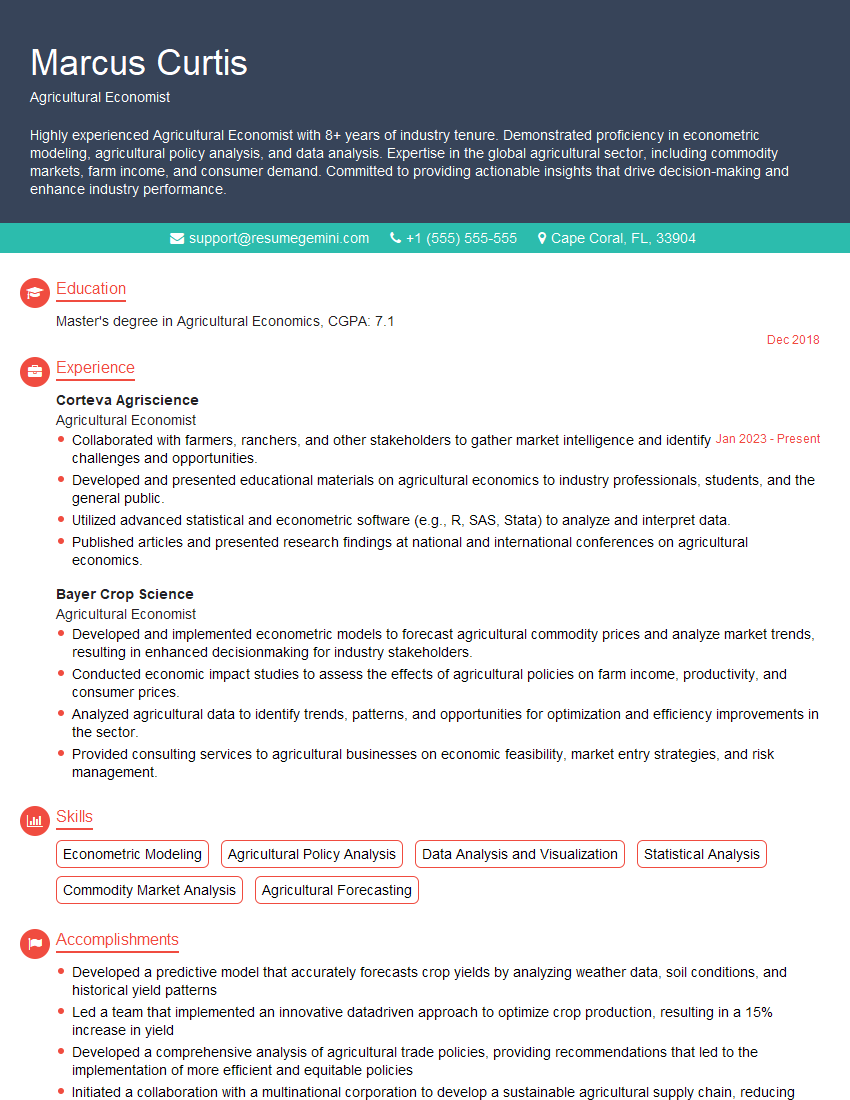
Mastering Agriculture Policy and Regulation is crucial for career advancement in this dynamic field. A strong understanding of these concepts will make you a highly competitive candidate, allowing you to contribute meaningfully to shaping the future of food systems and rural communities. To maximize your job prospects, it’s essential to create an ATS-friendly resume that highlights your skills and experience effectively. ResumeGemini is a trusted resource that can help you build a professional and impactful resume, ensuring your qualifications stand out. Examples of resumes tailored to Agriculture Policy and Regulation are available through ResumeGemini to guide you in building your own.
Explore more articles
Users Rating of Our Blogs
Share Your Experience
We value your feedback! Please rate our content and share your thoughts (optional).
What Readers Say About Our Blog
Very informative content, great job.
good