The thought of an interview can be nerve-wracking, but the right preparation can make all the difference. Explore this comprehensive guide to Agronomic Data Collection and Analysis interview questions and gain the confidence you need to showcase your abilities and secure the role.
Questions Asked in Agronomic Data Collection and Analysis Interview
Q 1. Explain the difference between remote sensing and proximal sensing in agronomic data collection.
Remote and proximal sensing are both crucial methods for collecting agronomic data, but they differ significantly in their approach. Remote sensing involves acquiring data from a distance, typically using airborne or satellite platforms. Think of it like taking a picture of a field from a plane or a satellite. This provides a large-scale view, ideal for monitoring vast areas. Proximal sensing, on the other hand, gathers data from up close, using sensors that are physically positioned near the subject, like using a hand-held sensor in the field. This gives a more detailed, localized measurement. Imagine checking the soil moisture with a sensor directly in the ground.
The key difference lies in the scale and detail. Remote sensing offers broad spatial coverage but might lack fine-grained detail, while proximal sensing provides high-resolution data but is limited in its geographical reach. The choice depends on the specific research question and available resources.
Q 2. Describe your experience with various data collection tools used in agriculture (e.g., GPS, drones, sensors).
Throughout my career, I’ve extensively utilized various data collection tools in agriculture. My experience includes using GPS units for precise georeferencing of field data, ensuring accurate location information for all measurements. I’ve worked with both fixed-wing and multirotor drones equipped with multispectral and hyperspectral cameras, collecting high-resolution imagery for vegetation monitoring, crop health assessments, and precision irrigation management. I’m also proficient in using various types of sensors, including soil moisture sensors, leaf area index sensors, and yield monitors. For example, I once used a network of soil moisture sensors across a vineyard to optimize irrigation scheduling, significantly reducing water usage while maintaining yield. I also have experience integrating data from different sensors to create a comprehensive picture of crop status.
Q 3. How do you ensure data accuracy and quality control in agronomic data collection?
Ensuring data accuracy and quality is paramount. My approach involves a multi-faceted strategy: First, I meticulously calibrate and validate all equipment before data collection. For example, drones require pre-flight calibration, and sensors need regular checks against known standards. Second, I implement quality control checks during data acquisition. This includes regularly reviewing sensor readings, checking for equipment malfunctions, and employing redundant measurements where possible. Third, I incorporate data cleaning and processing techniques after collection. This can involve outlier removal, data smoothing, and gap-filling using interpolation methods. Finally, I perform a thorough data validation step involving comparisons to ground-truth data or other independent sources to identify inconsistencies or biases.
Q 4. What are the common data formats used in agronomic data analysis (e.g., CSV, GeoTIFF, shapefiles)?
Agronomic data analysis employs a range of formats. CSV (Comma Separated Values) is a widely used format for tabular data, easily imported into most statistical software. GeoTIFF is a common format for georeferenced raster data such as satellite imagery or drone-acquired images, containing both spatial and spectral information. Shapefiles are a vector data format used to represent point, line, and polygon features, often used for representing field boundaries, sample locations, or irrigation systems. The choice of format depends heavily on the type of data being analyzed and the analysis techniques to be employed. For example, analyzing yield data collected from a combine harvester would often use CSV, whereas analyzing multispectral imagery would use GeoTIFF.
Q 5. Explain your experience with various statistical software packages used in agricultural data analysis (e.g., R, Python, SAS).
I’m proficient in several statistical software packages commonly used in agricultural data analysis. R is my primary tool for its powerful statistical computing capabilities and extensive libraries specifically designed for agricultural applications. I’ve used R to perform statistical modeling, geospatial analysis, and data visualization. For example, I used R to build a linear model predicting crop yield based on weather data and soil properties. I also have experience with Python, utilizing libraries like pandas, scikit-learn, and geopandas for data manipulation, machine learning, and geospatial analysis. Additionally, I possess working knowledge of SAS, particularly useful for large-scale data management and analysis common in commercial agricultural settings. The choice of software depends on the complexity of the analysis and the specific features required.
Q 6. Describe your experience with geospatial data analysis and visualization tools (e.g., ArcGIS, QGIS).
My experience with geospatial data analysis and visualization tools is extensive. ArcGIS is a powerful platform for managing, analyzing, and visualizing geospatial data. I’ve used ArcGIS for tasks such as creating thematic maps, performing spatial interpolation, and analyzing spatial relationships between different data layers. I’ve also used QGIS, a free and open-source alternative that provides comparable functionality. For example, I used ArcGIS to create maps depicting spatial variability in soil nutrients across a large farm, which was then used to guide variable-rate fertilization strategies. Both tools enable creation of visually appealing and informative maps useful for communicating findings to stakeholders.
Q 7. How do you interpret NDVI data to assess crop health and yield potential?
NDVI (Normalized Difference Vegetation Index) is a valuable tool for assessing crop health and yield potential. It’s calculated from satellite or drone imagery using the formula: NDVI = (NIR - Red) / (NIR + Red), where NIR is near-infrared reflectance and Red is red reflectance. Higher NDVI values (typically ranging from -1 to 1) indicate healthier vegetation with higher chlorophyll content, while lower values suggest stress or poor health.
Interpreting NDVI data involves analyzing spatial patterns and temporal trends. High NDVI values across a field indicate vigorous growth and high potential yield. Conversely, low NDVI values may signal problems such as drought stress, nutrient deficiency, pest infestations, or diseases. Temporal analysis, tracking NDVI changes over time, allows us to identify the onset and progression of stress, enabling timely interventions. For example, a sudden drop in NDVI might trigger investigations for pest problems or irrigation needs. The use of NDVI is therefore crucial for precision agriculture, allowing for targeted interventions.
Q 8. How do you handle missing or incomplete data in agronomic datasets?
Handling missing or incomplete data is crucial in agronomic datasets because gaps can significantly skew analysis and compromise the reliability of any conclusions. My approach is multifaceted and depends on the nature and extent of the missing data. I first assess the mechanism of missingness: is it Missing Completely at Random (MCAR), Missing at Random (MAR), or Missing Not at Random (MNAR)? This informs the best strategy.
- MCAR: If the missingness is completely random, simple methods like deletion (if the percentage is small) or mean/median imputation might suffice. However, I prefer more sophisticated techniques like multiple imputation, which creates several plausible imputed datasets, providing a more realistic representation of uncertainty.
- MAR & MNAR: For more complex missingness patterns, I employ more advanced imputation techniques such as k-Nearest Neighbors (k-NN) imputation, which considers the values of similar data points to estimate missing values. For MNAR, more sophisticated methods involving model-based imputation, often incorporating information from other variables or domain expertise, are necessary. This might involve using a predictive model trained on the complete data to predict the missing values.
For example, if soil moisture data is missing for a few days due to sensor malfunction (MCAR), simple imputation might work. However, if yield data is missing for a field with known pest infestation (MNAR), a model incorporating pest pressure and other factors is required for accurate imputation.
Q 9. Explain your experience with data cleaning and preprocessing techniques.
Data cleaning and preprocessing are foundational to any robust agronomic analysis. My experience encompasses a range of techniques, including:
- Data Validation: This involves checking for inconsistencies, outliers, and errors. For example, I’d flag a yield value of -10 kg/ha as an obvious error, potentially caused by a data entry mistake.
- Data Transformation: I often transform variables to improve model performance. For instance, I might log-transform skewed yield data to achieve normality or standardize variables to have zero mean and unit variance.
- Outlier Detection & Handling: I use methods like box plots and scatter plots to identify outliers. Depending on the context, I might remove them, replace them with imputed values, or winsorize (cap) them.
- Handling Missing Values: As discussed earlier, I utilize various imputation techniques, selecting the most appropriate one based on the nature of the missing data.
- Data Aggregation: This involves summarizing data at different levels (e.g., aggregating daily weather data to monthly averages).
I typically use tools like R or Python with packages such as pandas, scikit-learn, and tidyverse to perform these tasks. A typical workflow includes importing the data, exploring it for anomalies, cleaning and transforming the data, and exporting a preprocessed dataset ready for analysis.
Q 10. What are the different types of agricultural sensors and their applications?
Agricultural sensors are revolutionizing data collection. Different sensors provide valuable insights into various aspects of crop production. Here are some examples:
- Soil Sensors: These measure soil moisture, temperature, nutrient levels (e.g., nitrogen, phosphorus, potassium), salinity, and pH. Applications include irrigation scheduling, fertilizer optimization, and early detection of nutrient deficiencies.
- Plant Sensors: These include chlorophyll meters (measuring plant health), hyperspectral cameras (detecting diseases or stress), and sensors measuring plant height and biomass. This data informs decisions on disease management, irrigation, and harvesting timing.
- Weather Stations: These provide crucial meteorological data, including temperature, rainfall, humidity, solar radiation, and wind speed. This information aids in predicting weather events, assessing crop water needs, and optimizing planting dates.
- Yield Monitors: These are mounted on harvesters to measure yield in real-time, providing spatially explicit yield maps which are incredibly useful for site-specific management.
The choice of sensors depends on the specific research question or management goal. For instance, a study on drought tolerance might focus on soil moisture and plant water potential sensors, while a study on nutrient management might utilize soil nutrient sensors and chlorophyll meters.
Q 11. How do you integrate data from different sources (e.g., sensors, weather stations, field records)?
Integrating data from diverse sources is vital for a holistic understanding of the agroecosystem. The process typically involves several steps:
- Data Standardization: Ensuring data from different sources use consistent units and formats is critical. This might involve converting units (e.g., Celsius to Fahrenheit) or standardizing date and time formats.
- Data Cleaning & Preprocessing: Applying the cleaning techniques mentioned earlier to each dataset before integration is essential for accurate results.
- Spatial and Temporal Alignment: Aligning data based on location and time is often crucial. For example, matching weather station data to specific field locations and aligning sensor readings with the appropriate time stamps.
- Data Fusion Techniques: Depending on the data types and the research question, I might employ data fusion techniques to combine information from various sources. This could involve simple averaging, weighted averaging based on data quality, or more advanced methods such as Kalman filtering or machine learning techniques.
For example, integrating sensor data (soil moisture, plant height) with weather data and yield maps allows for a detailed analysis of the factors driving yield variation across a field, enabling improved management strategies.
Databases like PostgreSQL or cloud-based solutions (e.g., AWS, Google Cloud) are often used to store and manage these diverse datasets, facilitating efficient integration and analysis.
Q 12. Describe your experience with developing predictive models for crop yield or disease prediction.
I have extensive experience developing predictive models for crop yield and disease prediction using various machine learning techniques. For yield prediction, I often utilize regression models, such as:
- Linear Regression: For simple relationships between predictors and yield.
- Support Vector Regression (SVR): For handling non-linear relationships and high-dimensional data.
- Random Forest Regression: A robust ensemble method capable of handling complex relationships and mitigating overfitting.
- Neural Networks: For highly complex relationships and large datasets.
For disease prediction, I typically employ classification models, including:
- Logistic Regression: For binary classification (disease presence/absence).
- Support Vector Machines (SVM): For both binary and multi-class classification.
- Random Forest Classification: A powerful ensemble method suitable for diverse datasets.
- Convolutional Neural Networks (CNNs): For analyzing image data from plant sensors or drones to detect disease symptoms.
The choice of model depends on the specific dataset, the nature of the variables, and the desired level of prediction accuracy. Model selection involves careful evaluation using appropriate metrics (discussed in the next answer).
Q 13. How do you validate and evaluate the accuracy of your agronomic models?
Validating and evaluating the accuracy of agronomic models is critical to ensure their reliability and practical utility. I employ a range of techniques:
- Data Splitting: I typically split the dataset into training, validation, and testing sets. The training set is used to train the model, the validation set for hyperparameter tuning and model selection, and the testing set for evaluating the final model’s performance on unseen data.
- Cross-Validation: Techniques like k-fold cross-validation provide a more robust estimate of model performance by training and evaluating the model on different subsets of the data.
- Performance Metrics: For regression models, I use metrics like R-squared, Root Mean Squared Error (RMSE), and Mean Absolute Error (MAE). For classification models, I use metrics such as accuracy, precision, recall, F1-score, and AUC-ROC.
- Confusion Matrix: This provides a detailed breakdown of model predictions, highlighting true positives, true negatives, false positives, and false negatives, which is particularly useful for classification problems.
Furthermore, I conduct sensitivity analyses to assess the impact of individual variables on model predictions and examine residual plots to identify potential model misspecifications or systematic errors. The goal is to build models that are not only accurate but also interpretable and robust.
Q 14. What are the key performance indicators (KPIs) you use to assess the effectiveness of agronomic interventions?
Key Performance Indicators (KPIs) for assessing the effectiveness of agronomic interventions vary depending on the specific intervention and objectives. Some common KPIs include:
- Yield Increase: A fundamental measure of success, often expressed as a percentage increase compared to a control or previous year’s yield.
- Cost Reduction: Assessing the reduction in input costs (e.g., fertilizer, water, pesticides) due to the intervention.
- Resource Use Efficiency: Measuring the yield obtained per unit of input (e.g., yield per unit of water or fertilizer).
- Disease Incidence/Severity Reduction: For disease management interventions, this assesses the decrease in disease prevalence or severity.
- Environmental Impact: Considering the environmental consequences of the intervention, such as greenhouse gas emissions, water consumption, and pesticide use.
- Economic Profitability: Assessing the net economic benefit of the intervention, considering both costs and benefits.
The selection of KPIs depends on the specific context and goals. For example, an intervention focused on sustainable agriculture might prioritize resource use efficiency and environmental impact, while an intervention focused on maximizing profit might prioritize yield increase and cost reduction.
Q 15. Explain your experience with data visualization and reporting for agronomic data.
Data visualization is crucial for understanding complex agronomic datasets. My experience involves using a variety of tools and techniques to present findings clearly and effectively. This includes creating interactive dashboards using tools like Tableau and Power BI, generating custom reports using R and Python, and creating visually appealing static graphics like charts and maps using software such as ArcGIS and QGIS. For instance, I’ve developed dashboards showing yield maps overlaid with soil nutrient levels, allowing farmers to pinpoint areas needing targeted fertilization. I also create reports summarizing key performance indicators (KPIs) like crop yield, water usage efficiency, and pesticide application rates, often comparing performance across different fields or years.
- Example 1: Creating a heatmap visualizing yield variation across a field, highlighting areas of high and low productivity to inform future planting strategies.
- Example 2: Developing a dashboard showing the correlation between soil moisture levels and crop growth stages, assisting in the optimization of irrigation schedules.
Career Expert Tips:
- Ace those interviews! Prepare effectively by reviewing the Top 50 Most Common Interview Questions on ResumeGemini.
- Navigate your job search with confidence! Explore a wide range of Career Tips on ResumeGemini. Learn about common challenges and recommendations to overcome them.
- Craft the perfect resume! Master the Art of Resume Writing with ResumeGemini’s guide. Showcase your unique qualifications and achievements effectively.
- Don’t miss out on holiday savings! Build your dream resume with ResumeGemini’s ATS optimized templates.
Q 16. How do you communicate complex agronomic data to non-technical stakeholders?
Communicating complex agronomic data to non-technical stakeholders requires translating technical jargon into plain language and using visuals effectively. I employ several strategies: Firstly, I use simple, clear language, avoiding technical terms unless absolutely necessary and defining them when used. Secondly, I leverage visual aids such as charts, graphs, and maps to represent complex datasets in an easily digestible format. For example, instead of presenting a table of nutrient levels, I might use a bar chart to compare nutrient levels across different fields. Finally, I focus on the key takeaways and implications of the data, emphasizing the practical implications for decision-making rather than dwelling on the technical details.
Example: When presenting data on fertilizer optimization to a farmer, I might focus on the projected increase in yield and profit, rather than delving into the specifics of nitrogen uptake rates. I would use a simple graph to show the relationship between fertilizer application and yield, emphasizing the point of diminishing returns.
Q 17. Describe your experience with using data to optimize irrigation schedules.
Data-driven irrigation scheduling is essential for efficient water use and optimal crop growth. My experience involves using soil moisture sensors, weather data, and crop evapotranspiration models to create optimized irrigation schedules. We utilize data from various sources, integrating soil moisture data from sensors installed in the field, weather forecasts (temperature, rainfall, humidity), and crop-specific evapotranspiration rates. This data is then fed into a scheduling model (often customized based on specific crop needs and soil characteristics) to determine the appropriate irrigation timing and amount. This approach allows us to avoid over-irrigation (leading to water waste and potential nutrient leaching) and under-irrigation (resulting in crop stress and yield reduction).
Example: I worked on a project where we used real-time soil moisture data and weather forecasts to create a variable-rate irrigation system. This allowed us to apply water only to areas that needed it, resulting in a 20% reduction in water consumption without impacting crop yield.
Q 18. How do you use data to optimize fertilizer application rates?
Optimizing fertilizer application rates involves using data to ensure crops receive the necessary nutrients without over-fertilizing, which can harm the environment and reduce profitability. My approach combines soil testing, plant tissue analysis, and yield mapping to determine the optimal fertilizer application rates for each field. Soil samples are analyzed to determine nutrient levels, and plant tissue analysis provides insights into nutrient uptake. Yield maps from previous seasons provide information on areas of high and low productivity. By combining this data, we can create variable rate fertilizer application maps, ensuring that fertilizer is applied precisely where and when it is needed.
Example: By analyzing soil tests and yield maps, we identified areas in a field that consistently had low yields due to low phosphorus levels. A variable rate fertilization plan, focusing on increased phosphorus application in those zones, led to a 15% increase in yield in those areas during the subsequent growing season.
Q 19. How do you use data to manage pest and disease outbreaks?
Data plays a crucial role in managing pest and disease outbreaks. Early detection and rapid response are key. My approach involves using various data sources: scouting data (visual inspections of fields), sensor data (detecting changes in plant health), and historical records (patterns of past outbreaks). This data is integrated into early warning systems to identify potential outbreaks before they become widespread. For example, we use image analysis of drone-acquired imagery to detect early signs of disease or insect infestation. This allows for proactive intervention, such as targeted pesticide applications or other pest management strategies.
Example: We used drone imagery to detect early signs of a fungal disease in a soybean field. By implementing a targeted fungicide application only in the affected areas, we were able to prevent the disease from spreading to the rest of the field, minimizing yield losses and reducing the amount of pesticide used.
Q 20. Explain your experience with precision farming technologies.
My experience with precision farming technologies is extensive. I’m proficient in using GPS-guided machinery, sensor networks, remote sensing, and data management systems. This includes experience with variable rate technology (VRT) for fertilizer and pesticide application, auto-steer systems for improved field operations, and the use of drones and satellite imagery for crop monitoring and yield prediction. I am also familiar with various data management platforms used to collect, store, analyze, and visualize data from these technologies.
Example: I’ve worked with farmers implementing GPS-guided planting and spraying equipment, resulting in reduced input costs and improved yields through precise application and minimized overlaps.
Q 21. What are the challenges associated with using big data in agriculture?
The use of big data in agriculture presents several challenges: Firstly, data heterogeneity is a significant issue, as data is often collected from diverse sources in various formats. Secondly, data integration can be complex, requiring significant effort to combine and harmonize data from different sensors, platforms, and databases. Thirdly, data storage and processing requirements can be substantial, requiring significant computing power and storage capacity. Finally, ensuring data quality and accuracy is critical but often difficult to achieve. Data cleaning, validation and error handling are critical steps.
Example: Integrating data from multiple sources (soil sensors, weather stations, yield monitors) often requires significant data cleaning and transformation to ensure compatibility and consistency. This can be time-consuming and require specialized skills.
Q 22. How do you address data security and privacy concerns in agricultural data management?
Data security and privacy are paramount in agricultural data management. We need to protect sensitive information, such as farmer identities, precise location data of fields, and proprietary crop varieties. My approach is multi-layered and involves several key strategies.
- Data encryption: All data at rest and in transit is encrypted using robust algorithms like AES-256. This ensures that even if data is intercepted, it remains unreadable without the decryption key.
- Access control: We implement strict access control measures, using role-based access control (RBAC) to limit access to data based on individual needs and responsibilities. Only authorized personnel have access to specific data sets.
- Data anonymization and aggregation: Where possible, we anonymize data, removing identifying information while retaining valuable insights. Aggregation techniques can summarize data at a higher level, protecting individual farmer details.
- Compliance with regulations: We strictly adhere to all relevant data privacy regulations, such as GDPR and CCPA, ensuring we meet all legal requirements for data handling and storage.
- Regular security audits: We conduct regular security audits and penetration testing to identify vulnerabilities and proactively address any potential threats.
For example, in a project involving soil analysis data, we used anonymized identifiers for each farm and aggregated soil nutrient levels at a regional level, providing valuable insights without compromising individual farmer data. This safeguards privacy while allowing for impactful data analysis.
Q 23. Describe your experience with data mining and machine learning techniques in agriculture.
My experience with data mining and machine learning in agriculture is extensive. I’ve worked on various projects leveraging these techniques to optimize crop yields, improve resource management, and predict disease outbreaks.
- Predictive modeling: I’ve used machine learning algorithms, like random forests and support vector machines, to predict crop yields based on historical weather data, soil conditions, and planting practices. This allows farmers to make informed decisions about planting, fertilization, and irrigation.
- Disease detection: I’ve developed image recognition models using convolutional neural networks (CNNs) to detect plant diseases from drone imagery or smartphone photos. Early disease detection enables timely intervention, reducing crop losses.
- Precision irrigation: I’ve implemented machine learning models to optimize irrigation schedules based on real-time soil moisture data and weather forecasts, leading to reduced water consumption and improved water-use efficiency.
- Data mining for pattern recognition: I have used various data mining techniques to identify patterns and correlations within large agricultural datasets to understand the impact of various factors on crop production.
For instance, in one project, we used a random forest model to predict corn yield with 90% accuracy, significantly improving the farmer’s planning and resource allocation.
Q 24. What are the ethical considerations related to data collection and analysis in agriculture?
Ethical considerations in agricultural data collection and analysis are crucial. Transparency, fairness, and respect for farmer autonomy are paramount.
- Informed consent: Farmers must be fully informed about how their data will be used and have the right to opt out of data sharing. Clear and understandable consent forms are necessary.
- Data ownership and control: Farmers should retain ownership and control over their data, with the right to access, modify, and delete their information.
- Data security and privacy: As discussed earlier, robust security measures are essential to protect farmer data from unauthorized access and misuse.
- Bias and fairness: Algorithms used for data analysis must be carefully evaluated for potential biases that could unfairly disadvantage certain farmers or groups.
- Transparency and accountability: The methods used for data collection and analysis should be transparent, and there should be mechanisms for accountability in case of errors or misuse of data.
For example, before implementing a new data-driven decision support system, we would ensure farmers understand how the system works, how their data is used, and what benefits they can expect. We would also address any concerns and provide mechanisms for feedback.
Q 25. How do you stay up-to-date with the latest advancements in agronomic data collection and analysis?
Staying current in this rapidly evolving field requires a multifaceted approach.
- Professional conferences and workshops: Attending conferences like the Agritechnica or the American Society of Agronomy meetings provides opportunities to learn about the latest research and technologies.
- Scientific journals and publications: Regularly reading journals like the Agronomy Journal and the Crop Science keeps me informed about new research findings and advancements.
- Online courses and webinars: Platforms like Coursera and edX offer courses on various aspects of agronomic data analysis and machine learning.
- Industry news and publications: Following industry-specific news and publications allows me to keep abreast of new technologies and applications.
- Networking with peers: Engaging in discussions and collaborations with other professionals in the field allows for the exchange of knowledge and insights.
I actively participate in these activities to ensure my knowledge and skills remain current and relevant.
Q 26. Describe your experience with developing and implementing data-driven decision support systems for agriculture.
I have extensive experience in developing and implementing data-driven decision support systems (DSS) for agriculture. These systems utilize data analysis to provide farmers with actionable insights to improve their operations.
- System design: I’ve worked on designing systems that integrate data from various sources, such as sensors, weather stations, and satellite imagery, to provide a comprehensive view of farm conditions.
- Data analysis and modeling: I’ve developed analytical models to predict crop yields, optimize resource allocation, and manage risks.
- User interface development: I’ve worked on creating user-friendly interfaces that allow farmers to easily access and interpret the data and insights provided by the DSS.
- System deployment and maintenance: I’ve been involved in deploying these systems on farms and providing ongoing maintenance and support.
For example, I developed a DSS for a large-scale farm that integrated data from soil sensors, weather stations, and historical yield data. The system provided farmers with real-time recommendations on irrigation, fertilization, and pest control, resulting in a significant increase in crop yields and reduced input costs.
Q 27. What are some limitations of using technology for data collection and analysis in agriculture?
While technology offers significant advantages, there are limitations to consider.
- Data access and infrastructure: Reliable internet connectivity and access to appropriate hardware and software are crucial but may be lacking in many agricultural areas, especially in developing countries.
- Data quality and accuracy: Sensor errors, inaccurate data entry, and missing data can impact the reliability of analysis and decision-making.
- Cost and complexity: Implementing and maintaining advanced technologies can be expensive and require specialized skills and knowledge.
- Interoperability: Different data sources and systems may not be easily compatible, creating challenges for data integration and analysis.
- Dependence on technology: Over-reliance on technology can lead to vulnerabilities if systems fail or technical expertise is unavailable.
Addressing these limitations requires careful planning, the use of robust technologies, and adequate training and support for farmers.
Q 28. How do you ensure the sustainability of data-driven agricultural practices?
Ensuring the sustainability of data-driven agricultural practices involves a holistic approach that considers environmental, economic, and social factors.
- Environmental sustainability: Data-driven systems should promote practices that minimize environmental impact, such as optimizing water and fertilizer use, reducing pesticide application, and promoting biodiversity.
- Economic sustainability: The systems should be economically viable for farmers, leading to increased profitability and improved livelihoods.
- Social sustainability: The systems should be equitable and accessible to all farmers, regardless of size or location, promoting fair and inclusive practices.
- Data governance and stewardship: Establishing robust data governance structures that ensure data quality, security, and responsible use is essential.
- Capacity building: Training and educating farmers and agricultural professionals on the use and interpretation of data is critical for long-term success.
For example, a sustainable system might integrate data on soil health, water availability, and market prices to help farmers make informed decisions that maximize profits while minimizing environmental impact. Investing in local capacity building ensures the long-term success of these practices.
Key Topics to Learn for Agronomic Data Collection and Analysis Interview
- Data Acquisition Methods: Understanding various techniques for collecting agronomic data, including remote sensing (satellite imagery, drones), sensor networks, and manual field measurements. Consider the advantages and limitations of each method.
- Data Management and Cleaning: Mastering data organization, cleaning, and preprocessing techniques crucial for accurate analysis. This includes handling missing data, outliers, and ensuring data consistency across different sources.
- Statistical Analysis Techniques: Proficiency in descriptive statistics, regression analysis, ANOVA, and other relevant statistical methods for interpreting agronomic data and drawing meaningful conclusions. Be prepared to discuss your experience with statistical software packages.
- Spatial Data Analysis: Understanding Geographic Information Systems (GIS) and their application in analyzing spatially referenced agronomic data. This includes techniques like spatial interpolation and geostatistics.
- Data Visualization and Reporting: Ability to effectively communicate findings through clear and concise visualizations (graphs, charts, maps) and written reports. Showcase your skills in creating compelling data narratives.
- Precision Agriculture Applications: Demonstrate your understanding of how agronomic data analysis contributes to precision agriculture practices, such as variable rate fertilization and irrigation.
- Data Interpretation and Problem Solving: Practice applying your analytical skills to solve real-world agronomic problems using collected data. Be prepared to discuss challenges encountered and solutions implemented.
- Software Proficiency: Highlight your experience with relevant software such as R, Python (with libraries like Pandas and NumPy), ArcGIS, or other specialized agricultural data analysis tools.
Next Steps
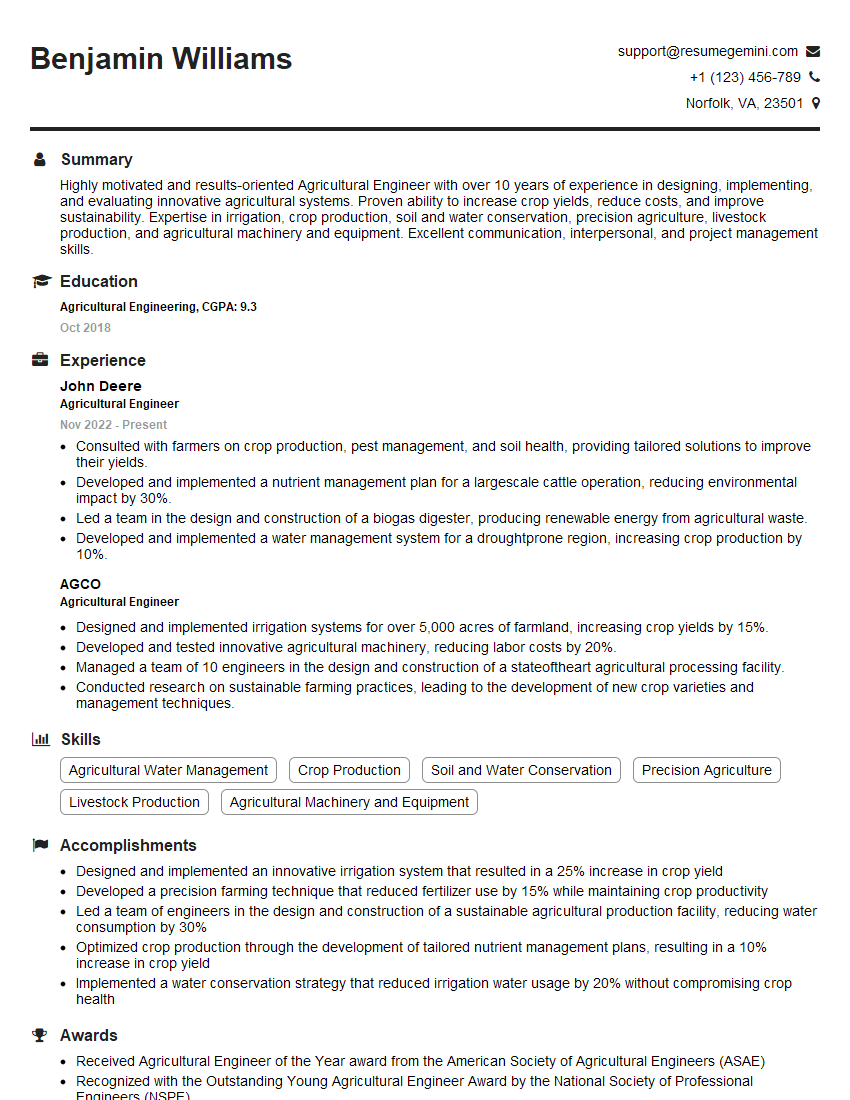
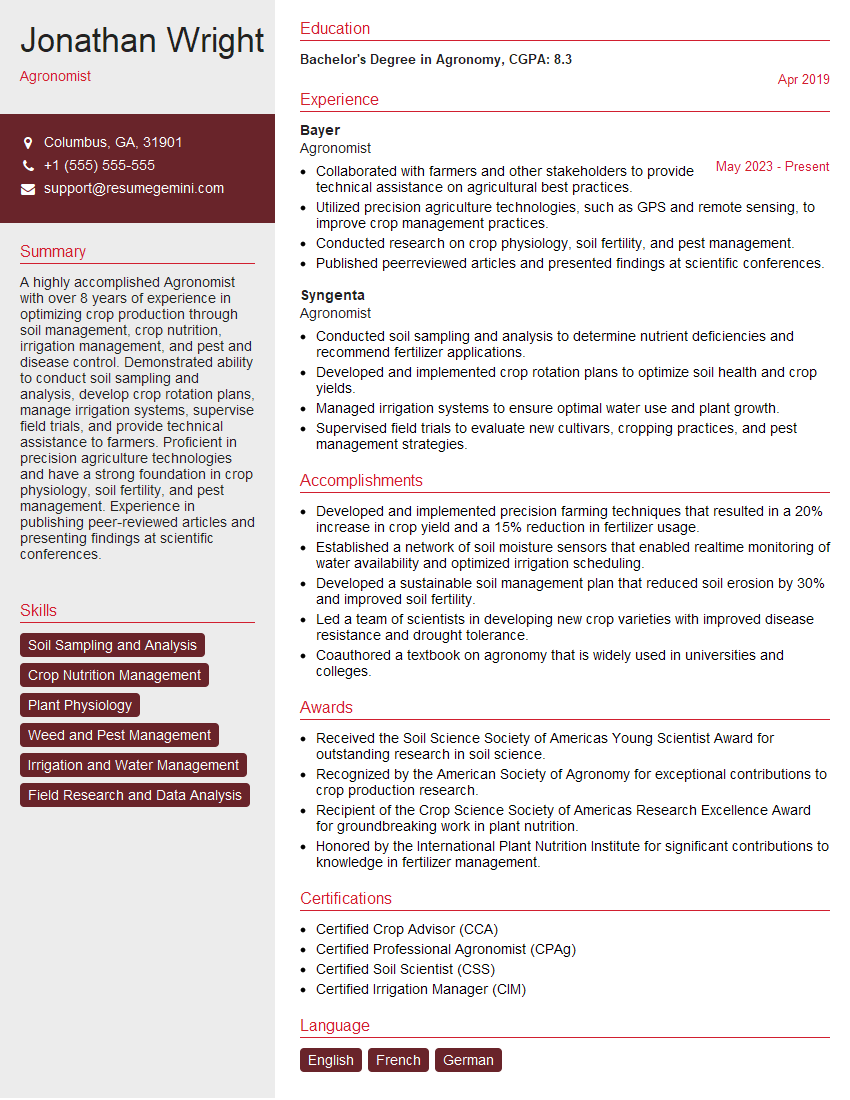
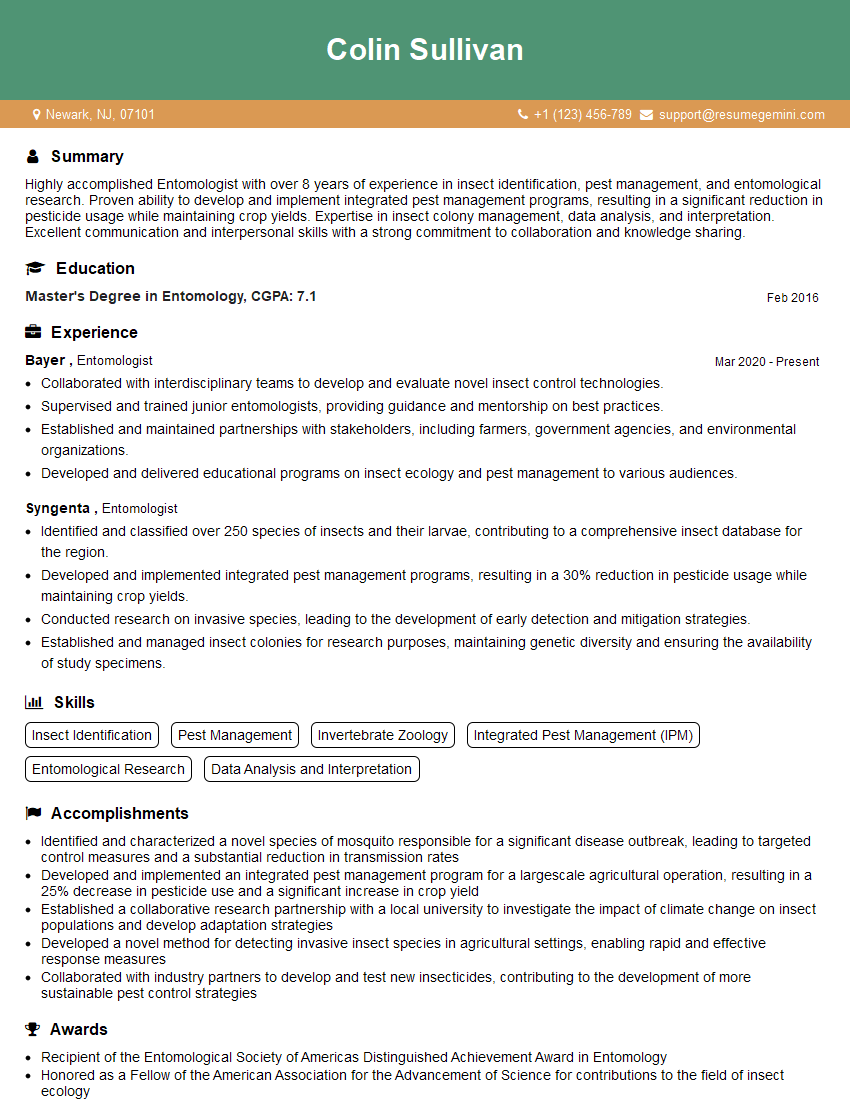
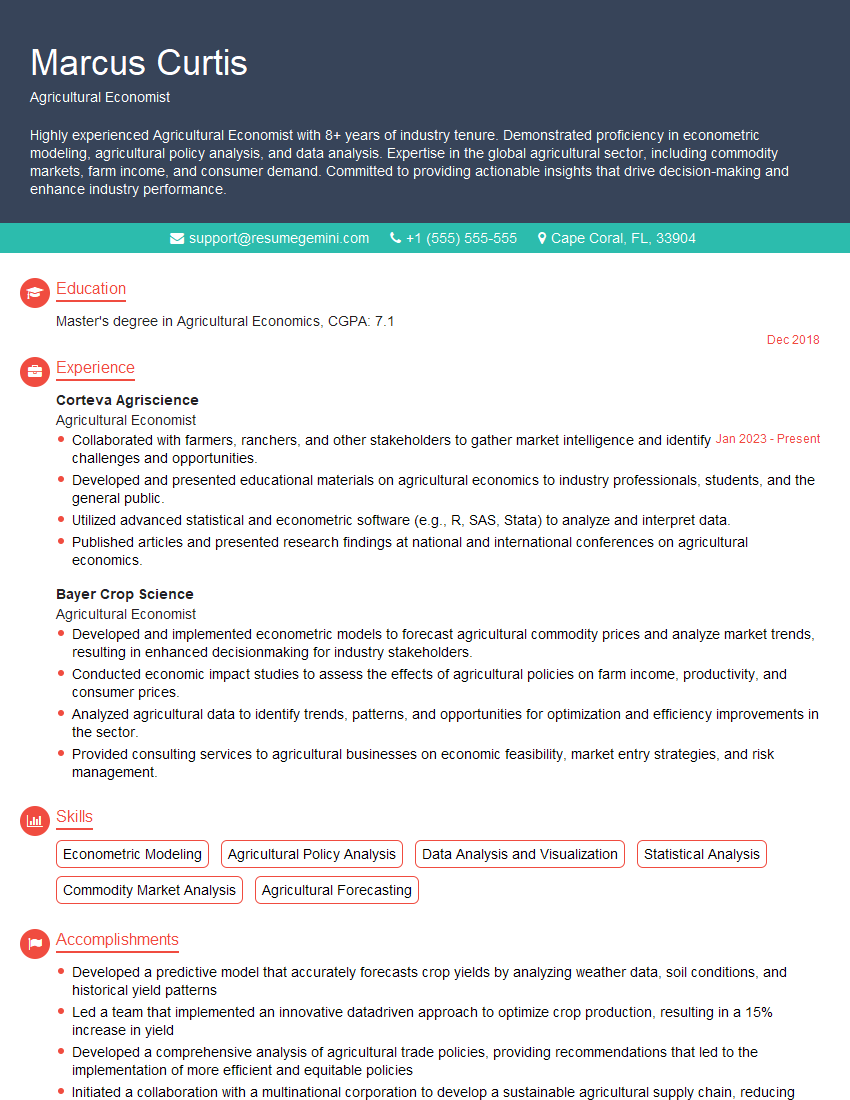
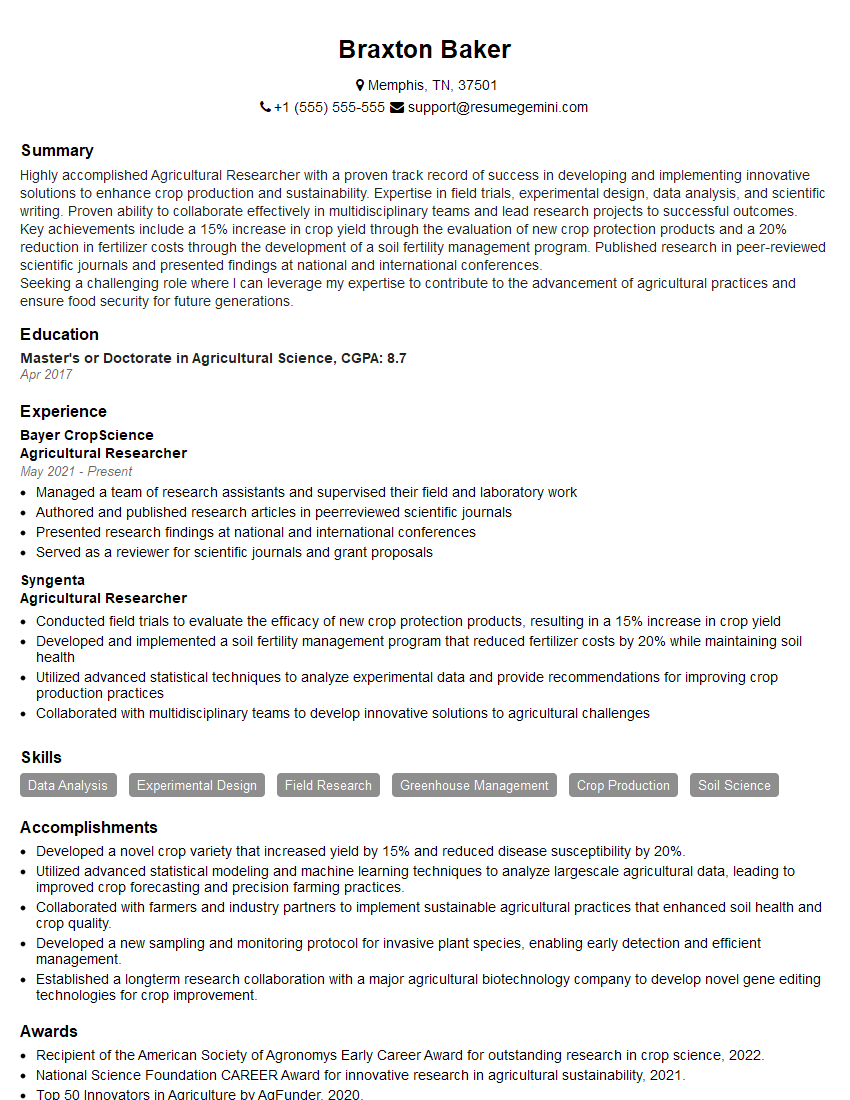
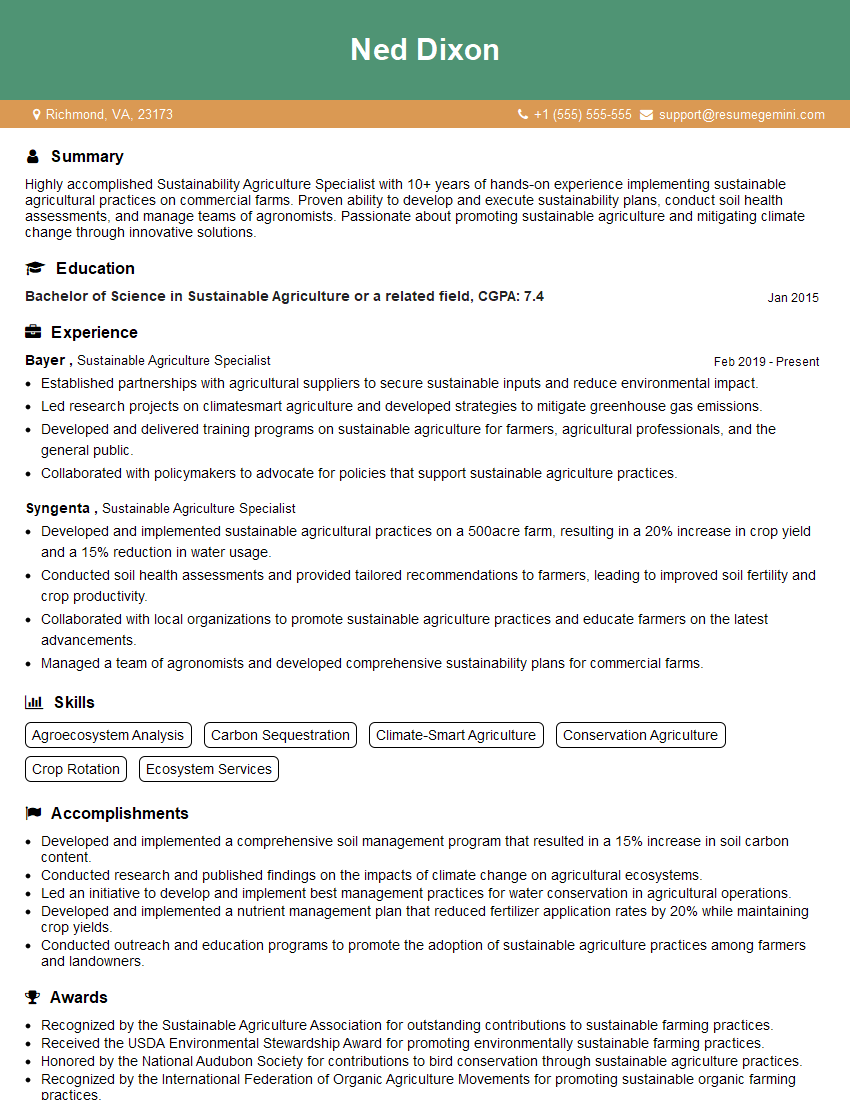
Mastering Agronomic Data Collection and Analysis is crucial for career advancement in the agricultural technology sector. It opens doors to exciting roles with significant impact on food security and sustainable agriculture. To maximize your job prospects, it’s vital to present your skills effectively. Creating an ATS-friendly resume is key to getting your application noticed. We highly recommend using ResumeGemini to build a professional and impactful resume that highlights your expertise. ResumeGemini offers examples of resumes tailored to Agronomic Data Collection and Analysis to guide you through the process. Take the next step towards your dream career today!


Explore more articles
Users Rating of Our Blogs
Share Your Experience
We value your feedback! Please rate our content and share your thoughts (optional).
What Readers Say About Our Blog
Very informative content, great job.
good