Cracking a skill-specific interview, like one for Air Defense Artillery, requires understanding the nuances of the role. In this blog, we present the questions you’re most likely to encounter, along with insights into how to answer them effectively. Let’s ensure you’re ready to make a strong impression.
Questions Asked in Air Defense Artillery Interview
Q 1. Explain the different types of air defense systems and their capabilities.
Air defense systems are categorized by their range, mobility, and the type of threats they counter. We can broadly classify them into short-range, medium-range, and long-range systems. Each has unique capabilities.
- Short-Range Air Defense (SHORAD): These systems, like the Avenger or Stinger missile systems, focus on protecting specific assets, such as bases or convoys, from close-in threats such as helicopters, drones, and low-flying aircraft. Their range is typically a few kilometers.
- Medium-Range Air Defense (MRAD): Systems like the Patriot missile system or the NASAMS offer a balance between range and mobility. They can engage a broader range of threats, including cruise missiles and fighter jets, at distances up to several tens of kilometers. They usually involve more sophisticated radars and command and control systems.
- Long-Range Air Defense (LRAD): These are designed to defend large areas against long-range ballistic missiles and high-altitude threats. Examples include the THAAD and Aegis systems. They require extensive sensor networks and sophisticated tracking capabilities. The range extends to hundreds of kilometers.
- Point Defense Systems: These are typically ship-based, designed to protect a single vessel against incoming missiles and aircraft using close-in weapon systems such as CIWS (Close-In Weapon System).
The capabilities vary based on the specific system and its sensors, but generally include target acquisition, tracking, identification, and engagement. Consider the Stinger: excellent at engaging low-flying targets with high accuracy, but limited range. Compare this to the Patriot, whose longer range and ability to intercept ballistic missiles provide significantly different capabilities.
Q 2. Describe the process of engaging an air target.
Engaging an air target is a complex process, a coordinated dance of sensors, communication, and weapon systems. It begins with detection using radar or other sensors. The system then tracks the target, determining its speed, altitude, and course. Identification follows, confirming the target’s nature (friend or foe) through IFF (Identification Friend or Foe) systems and other data. If deemed hostile, the system enters the engagement phase. This involves calculating the trajectory and firing the appropriate weapon, considering factors like wind speed and target maneuverability. Finally, the system evaluates the results and adjusts accordingly. The entire process happens rapidly, often within seconds, particularly for fast-moving targets like fighter jets.
Think of it like playing a game of high-stakes billiards. Detecting the target is like spotting the ball; tracking it is following its movement; identification is knowing it’s the right ball you need to hit; engagement is the shot itself; and evaluation is seeing if you made it.
Q 3. What are the key components of an air defense system?
An air defense system is more than just a weapon; it’s a network of integrated components. Key components include:
- Sensors: Radars (various types, like phased array and pulse Doppler), electro-optical systems (infrared and visible light cameras), and acoustic sensors are used to detect and track targets. These provide the system’s “eyes and ears.”
- Command and Control (C2): This is the brain of the system, coordinating all the other components. It receives data from sensors, identifies threats, assigns targets, and controls the weapons. Modern systems employ sophisticated algorithms and AI to aid in decision making.
- Communication Systems: Essential for seamless data exchange between sensors, C2, and weapons systems. This includes data links, radio communications, and secure networks.
- Weapons Systems: These are the system’s “teeth,” ranging from missiles (surface-to-air) to guns (e.g., CIWS). Each weapon has its strengths and weaknesses against specific targets.
- Power Generation and Distribution: Crucial for the operational readiness of all components.
These components work together synergistically. A failure in any one area can significantly impact the overall effectiveness of the system.
Q 4. How does the Integrated Air and Missile Defense (IAMD) architecture function?
Integrated Air and Missile Defense (IAMD) represents a significant evolution in air defense, moving beyond independent systems to a unified, networked approach. It integrates various sensors, C2 systems, and weapon systems across different domains (air, land, sea) to provide a comprehensive defense against a wide range of threats, from cruise missiles to ballistic missiles to aircraft. The architecture relies on a robust data sharing network, enabling a common operational picture across all participating elements. This allows for efficient prioritization of targets and optimized use of resources.
Imagine a symphony orchestra. IAMD is the conductor, coordinating the various sections (sensors, communication, weapons) to create a harmonious and effective defense. Each section contributes uniquely, but it’s the conductor’s direction that makes the whole thing work beautifully.
Q 5. Explain the concept of layered defense in air defense.
Layered defense is a strategic approach in air defense utilizing multiple layers of systems with overlapping ranges and capabilities. This ensures redundancy and increases the probability of intercepting hostile air threats. Each layer is designed to engage threats at specific ranges and altitudes. A short-range system could protect a specific asset, while a long-range system would engage threats further out, providing time and opportunity for lower layers to react. This approach significantly improves overall effectiveness and reduces the chances of a successful enemy attack.
Think of it like a castle with multiple defensive walls. Each wall acts as a layer, slowing down and weakening an attacking force before it can reach the center. The inner walls may be less robust but are protected by the outer ones.
Q 6. Discuss the importance of air defense coordination and communication.
Air defense coordination and communication are paramount. Effective communication ensures a unified response to threats, preventing friendly fire incidents and maximizing the efficiency of available resources. Real-time data sharing across different systems (sensors, weapons, and command centers) is crucial for rapid target acquisition, identification, and engagement. Without seamless communication, the effectiveness of even the most sophisticated air defense system is drastically reduced. Communication systems must be robust, reliable, and secure to ensure the integrity of the defense network.
Imagine firefighters tackling a large blaze. If they can’t communicate effectively, they might end up fighting each other instead of the fire. Coordination and communication are vital for a successful outcome.
Q 7. Describe your experience with different types of radar systems.
My experience encompasses a variety of radar systems, including phased array radars, pulse Doppler radars, and early warning radars. Phased array radars, like those used in the Patriot system, offer excellent precision and rapid target tracking due to their ability to electronically steer the beam. Pulse Doppler radars are effective in distinguishing moving targets from clutter, crucial in complex environments. Early warning radars provide long-range detection of approaching threats, giving ample time for a response. Each system has its strengths and weaknesses, and the choice of system depends heavily on the specific operational requirements and the type of threats anticipated. For example, a maritime environment might favor a radar with excellent sea clutter rejection capabilities. I’ve worked extensively with data analysis from these systems, developing techniques for optimizing target tracking algorithms and improving the accuracy of threat assessments.
Understanding the limitations and capabilities of different radar types is essential for effective air defense planning and execution. This includes things like beamwidth, range, resolution, and resistance to jamming and deception techniques.
Q 8. Explain the principles of fire control and targeting.
Air defense fire control and targeting is a complex process that involves detecting, identifying, tracking, and engaging airborne threats. It’s essentially a coordinated effort to accurately predict an enemy aircraft’s future position and deliver a weapon to that location. Think of it like a highly sophisticated game of predictive billiards, where the cue ball is our missile, and the target is the enemy aircraft.
The process involves several key principles: acquisition (detecting the threat), identification (determining friend or foe), tracking (continuously monitoring the threat’s position and trajectory), engagement (launching a weapon), and evaluation (assessing the effectiveness of the engagement). This often relies on a sophisticated network of sensors such as radars (providing range, bearing, and altitude), and electronic warfare systems providing identification and classification. The data is then fed into a fire control computer that calculates the required firing solution, considering factors like wind, projectile characteristics, and the target’s speed and trajectory. This calculation ultimately determines the weapon’s aiming parameters and fuses to ensure a successful interception.
For example, during a real-world operation, a radar system detects an incoming aircraft. The system then tracks its movement, identifying it as a hostile threat based on its trajectory, speed and transponder signals. This data is sent to the fire control computer, which then calculates the necessary launch parameters for an interceptor missile to successfully neutralise the target. The success of the engagement is then evaluated, confirming the neutralization of the threat, which might involve visual confirmation or additional sensor inputs.
Q 9. How do you assess and mitigate threats in an air defense environment?
Assessing and mitigating threats in an air defense environment requires a multi-layered approach, combining technological capabilities with sound tactical decision-making. It starts with threat identification – understanding the type of aircraft, its capabilities, and its likely intentions. This often involves intelligence gathering, analyzing potential enemy tactics, and considering the geographical context. Next comes threat prioritization – deciding which threats pose the most imminent danger and deserve immediate attention. This prioritization is based on several factors, including the threat’s proximity, its weaponry, and its potential impact.
Mitigation involves deploying the appropriate air defense assets, such as short-range, medium-range, or long-range systems, to counter the identified threats. This might include using electronic warfare capabilities to jam enemy radar or communications, deploying decoys to confuse enemy targeting systems, or employing defensive countermeasures. Continuous monitoring and adaptation are crucial. The air defense system must constantly update its assessment of the threat environment and adjust its tactics accordingly. This includes reacting to changes in the enemy’s actions, adapting to new technologies, and learning from past engagements.
For instance, if we detect a swarm of drones approaching a critical asset, we might prioritize deploying short-range air defense systems combined with electronic countermeasures to disrupt the drone control signals and neutralize the threat before they reach their target. If a high-value enemy aircraft is detected, we would deploy long-range systems or possibly coordinate with friendly assets for interception.
Q 10. What are the challenges of integrating different air defense systems?
Integrating different air defense systems presents a number of significant challenges. One major hurdle is ensuring interoperability – the ability of different systems from various manufacturers, or even different nations, to communicate and share data seamlessly. Different systems may use different communication protocols, data formats, and even different units of measurement. This incompatibility can severely hinder the overall effectiveness of the air defense network.
Another key challenge is command and control. Effectively managing a heterogeneous mix of air defense systems requires a robust command and control system that can integrate data from multiple sources and provide a unified, comprehensive picture of the air defense situation. This system must be able to distribute tasks, coordinate engagements, and resolve potential conflicts between different systems competing for the same targets. Finally, there’s the issue of data fusion. Combining data from various sensors – radar, infrared, electronic warfare systems – to create a single, consistent view of the battlefield is critical but often complex. This requires sophisticated algorithms and data processing capabilities to manage the volume of information and resolve potential inconsistencies.
For example, integrating a legacy system with newer, more advanced systems may require custom software interfaces and extensive testing to ensure data compatibility and effective communication. Furthermore, the command and control system must have the capability to process and display information from all sources, making it easy for the operators to interpret the air situation and effectively manage their assets.
Q 11. Describe your experience with air defense maintenance and troubleshooting.
My experience in air defense maintenance and troubleshooting spans several years, encompassing various systems and platforms. This includes preventative maintenance checks and services (PMCS), scheduled maintenance, and emergency repairs. I’m proficient in diagnosing and resolving complex technical issues, often using a systematic approach, starting with an initial assessment of the symptoms, followed by a thorough inspection and testing of relevant components. Troubleshooting frequently involves using diagnostic tools, schematics, technical manuals, and collaborating with subject-matter experts to resolve complex technical issues.
A memorable troubleshooting experience involved a malfunctioning radar system. After initial checks pointed towards a faulty power supply, further investigations revealed a minor wiring fault. The problem was seemingly insignificant, however, it prevented the system from functioning correctly. Once identified and fixed, the system returned to full operational capacity, preventing a significant operational disruption. This situation highlighted the importance of meticulous attention to detail and thoroughness during inspections and maintenance. I am highly skilled in utilizing specialized diagnostic equipment, proficient in interpreting technical manuals, and possess expertise in conducting fault isolation procedures following established maintenance procedures.
Q 12. How do you ensure the readiness and operational effectiveness of air defense assets?
Ensuring the readiness and operational effectiveness of air defense assets necessitates a holistic approach incorporating various elements. First, proactive maintenance is paramount. This involves regular PMCS, adherence to scheduled maintenance cycles, and prompt attention to any identified issues. This minimizes downtime and maximizes the availability of systems during critical operations. Second, operator training is crucial. Well-trained operators are able to effectively operate and maintain the systems, maximizing their effectiveness and mitigating potential errors.
Third, supply chain management is vital to ensure the timely availability of spare parts and essential components. This includes establishing robust supply chains, maintaining sufficient inventory levels, and implementing efficient logistics processes. Fourth, system upgrades and modernization are necessary to maintain the system’s relevance and competitiveness. By continuously incorporating technological advancements and adopting newer technologies, we can counter evolving threats and ensure long-term effectiveness. Lastly, operational exercises and simulations play a vital role in ensuring the readiness of both equipment and personnel. Realistic training scenarios help familiarize operators with various scenarios and allows for the identification of potential weaknesses in procedures or systems.
For instance, I implemented a new inventory management system which optimized spare parts procurement, resulting in a significant decrease in equipment downtime. Additionally, I participated in the development of a comprehensive training program to enhance operator proficiency, which improved the overall effectiveness of the air defense batteries under my supervision.
Q 13. Explain your understanding of air defense doctrine and tactics.
Air defense doctrine and tactics encompass a wide range of principles and strategies aimed at effectively protecting assets from aerial threats. Doctrine provides a framework for how air defense systems should be employed, outlining organizational structures, operational concepts, and procedures. Key principles within doctrine include centralized control, coordination between different air defense elements, and integration with other defense systems.
Tactics, on the other hand, are the specific actions taken on the battlefield. These are often highly situation-dependent and involve the deployment of air defense assets based on threat assessment, terrain, and other battlefield factors. Effective tactics include using layered defense, employing deception techniques, and maintaining situational awareness. Understanding the interplay between doctrine and tactics is critical for success in air defense operations. Doctrine provides the foundation, while tactics provide the flexibility to adapt to changing circumstances.
For example, doctrine may specify how different air defense battalions should coordinate during a major operation. However, the specific tactics used in a particular engagement will depend on the immediate threat, the available resources, and the unique conditions of the battlefield. A common tactic involves employing a layered defense, with short-range systems protecting high-value assets, and long-range systems providing a more expansive protective layer.
Q 14. Describe your experience with air defense simulation and training.
My experience with air defense simulation and training is extensive, involving both individual and collective training exercises. Simulations provide a safe and cost-effective means to train personnel on complex air defense systems and procedures, without the risks and expenses associated with live-fire exercises. I have been involved in designing and conducting various simulations using a range of software and hardware, providing realistic scenarios that challenge operators’ decision-making abilities and problem-solving skills under pressure. These simulations often include multiple systems and diverse threat profiles, mirroring real-world conditions.
These simulations typically incorporate various features such as realistic radar depictions, sophisticated threat models, and integrated communication networks. The data collected during the simulations is valuable for evaluating operator performance, identifying training gaps, and refining training methodologies. The feedback mechanisms provided allow operators to understand their strengths and weaknesses, thus allowing for focused training and improved performance. Moreover, the simulations provide a platform to test new tactics and procedures in a controlled environment before implementing them in real-world operations, allowing for continuous improvement and refinement of the system’s effectiveness.
For instance, I developed a simulation that accurately modelled a large-scale air defense engagement, involving multiple battalions and a diverse array of threats. This simulation was instrumental in identifying and addressing key deficiencies in our operational procedures, enhancing the overall effectiveness of the air defense force.
Q 15. What are the key factors influencing air defense system selection?
Selecting an air defense system is a complex process influenced by several crucial factors. It’s not just about picking the most advanced technology; it’s about finding the best fit for a specific operational environment and mission needs. Key factors include:
- Threat Assessment: Identifying the types and characteristics of anticipated aerial threats (e.g., aircraft, drones, missiles) is paramount. This dictates the required range, altitude capabilities, and weapon systems of the air defense system.
- Geographic Considerations: Terrain, climate, and infrastructure significantly impact system deployment and operation. A system effective in a flat desert might be unsuitable in mountainous terrain.
- Budgetary Constraints: Acquisition, operation, and maintenance costs vary widely. A balance must be struck between capability and affordability.
- Interoperability: Seamless integration with existing command, control, communications, computers, and intelligence (C4I) systems is critical for effective situational awareness and coordinated action. The system needs to ‘talk’ to other systems.
- Technology Maturity and Reliability: Choosing a proven system with a reliable track record is vital to ensure operational effectiveness and reduce downtime. Cutting-edge technology may come with increased risk.
- Personnel Training and Availability: The system’s complexity will directly impact the required training time and expertise of the operators. A highly sophisticated system might require extensive training and specialized personnel, which might not be readily available.
For example, selecting a short-range system for protecting a fixed base is fundamentally different than choosing a long-range system for protecting a large area or mobile assets. The threat assessment would drive the selection of the appropriate system’s capabilities.
Career Expert Tips:
- Ace those interviews! Prepare effectively by reviewing the Top 50 Most Common Interview Questions on ResumeGemini.
- Navigate your job search with confidence! Explore a wide range of Career Tips on ResumeGemini. Learn about common challenges and recommendations to overcome them.
- Craft the perfect resume! Master the Art of Resume Writing with ResumeGemini’s guide. Showcase your unique qualifications and achievements effectively.
- Don’t miss out on holiday savings! Build your dream resume with ResumeGemini’s ATS optimized templates.
Q 16. How do you manage personnel and resources in an air defense unit?
Managing personnel and resources in an air defense unit requires a multifaceted approach that prioritizes both efficiency and effectiveness. I employ a strategy that emphasizes:
- Clear Chain of Command and Communication: Establishing clear lines of authority and ensuring seamless communication across all levels is crucial for rapid response and coordinated action. Regular briefings and drills reinforce procedures.
- Training and Proficiency: Continuous training and evaluation of personnel are paramount to maintain proficiency in operating and maintaining complex systems and responding to evolving threats. Simulation-based training can be highly effective.
- Resource Allocation: Careful allocation of resources, including equipment, ammunition, fuel, and maintenance support, is essential to ensure operational readiness and prevent disruptions. This requires meticulous planning and regular inventory management.
- Maintenance and Logistics: A robust maintenance and logistics system is key to minimize downtime and maintain operational effectiveness. Regular preventative maintenance, prompt repairs, and efficient supply chains are crucial.
- Personnel Welfare: The well-being of the personnel is paramount. Addressing issues such as stress, fatigue, and morale contributes significantly to unit effectiveness. Implementing rest and rotation schedules, stress management programs, and providing access to counseling services are vital.
For instance, during a deployment, I would meticulously track ammunition expenditure, schedule maintenance based on operational intensity, and ensure personnel are adequately rotated to avoid burnout. This involves careful resource budgeting and proactive planning to avoid critical shortages.
Q 17. Describe your experience with air defense data analysis and interpretation.
My experience in air defense data analysis and interpretation involves extracting actionable intelligence from various sources to improve situational awareness and decision-making. This includes:
- Radar Data Analysis: Interpreting radar returns to identify, track, and classify aerial targets. This requires understanding radar limitations and interpreting data in relation to geographical information and environmental factors.
- Sensor Fusion: Integrating data from multiple sensors (radar, electro-optical, infrared) to create a comprehensive picture of the airspace, enhancing accuracy and minimizing errors. Inconsistencies between data from different sources need careful analysis.
- Threat Assessment and Prediction: Analyzing historical data and current intelligence to assess the nature and intensity of likely threats. This involves predicting potential enemy actions and optimizing defensive strategies.
- Performance Evaluation: Analyzing system performance data to identify areas for improvement in operational efficiency, maintenance procedures, or training. This is done using statistical analysis and performance metrics.
For example, I once identified a systematic bias in radar data during a training exercise that was initially attributed to enemy deception. Through detailed analysis, we found a calibration error that was easily corrected, improving the accuracy of the system significantly.
Q 18. What are the ethical considerations associated with air defense operations?
Ethical considerations in air defense operations are paramount. They encompass:
- Proportionality: Ensuring the response to a threat is proportional to the threat itself. Using excessive force against a minor threat is unethical and potentially illegal.
- Discrimination: Distinguishing between military and civilian targets is crucial to minimize collateral damage. This necessitates precise targeting and intelligence gathering to avoid civilian casualties.
- Accountability: Maintaining rigorous records and adhering to clear rules of engagement ensures accountability for actions taken during operations. This helps prevent excessive force and protects against unauthorized use of force.
- Respect for International Law: Adhering to international humanitarian law and the laws of armed conflict is essential. This includes respecting the sovereignty of other nations and avoiding unnecessary harm.
- Transparency: Openly communicating the objectives, rules of engagement, and results of air defense operations promotes trust and accountability, minimizing potential conflicts and misunderstandings.
For example, maintaining a high level of training and accurate targeting systems minimizes the risk of civilian casualties, which is a crucial ethical consideration in any air defense operation.
Q 19. Explain your understanding of air defense cybersecurity threats and mitigation strategies.
Air defense systems are increasingly vulnerable to cyberattacks. Threats include:
- Data breaches: Unauthorized access to sensitive data, such as operational plans, deployment locations, or system configurations.
- System disruption: Compromising the functionality of air defense systems by disrupting their operation or compromising their integrity.
- False data injection: Introducing false data into the system to mislead operators or create confusion.
- Denial-of-service attacks: Overwhelming the system with requests to make it unavailable to legitimate users.
Mitigation strategies involve:
- Network security: Implementing robust firewalls, intrusion detection systems, and access control measures to protect the system from unauthorized access.
- Data encryption: Protecting sensitive data by encrypting it both in transit and at rest.
- Regular software updates and patching: Keeping the system software up-to-date to address known vulnerabilities.
- Personnel training: Educating personnel on cybersecurity best practices to minimize human error, a major source of vulnerability.
- Redundancy and fail-safes: Designing systems with backup mechanisms to maintain operational capability even if parts are compromised.
For example, implementing multi-factor authentication and regular security audits are crucial steps in minimizing the risk of unauthorized access and data breaches.
Q 20. How do you stay current with the latest advancements in air defense technology?
Staying current with advancements in air defense technology requires a proactive and multi-faceted approach:
- Professional Development: Attending conferences, seminars, and workshops to learn about the latest technologies and trends.
- Industry Publications and Journals: Regularly reading industry publications, journals, and technical reports to stay abreast of technological developments.
- Networking and Collaboration: Participating in professional organizations and networking with colleagues in the field to share knowledge and experiences.
- Military Training and Exercises: Participating in military training exercises and simulations that incorporate new technologies and tactics.
- Online Resources and Databases: Utilizing online resources, databases, and industry websites to access the latest research and development information.
For instance, I actively participate in professional organizations such as the Association of the United States Army (AUSA) and attend specialized air defense conferences to keep updated on the latest developments in missile defense systems.
Q 21. Explain your understanding of air defense planning and execution.
Air defense planning and execution involve a systematic process to ensure the effective protection of assets from air threats. It encompasses:
- Threat Assessment: Identifying potential threats, their capabilities, and likely attack vectors.
- Asset Prioritization: Determining the critical assets needing protection and their vulnerabilities.
- Deployment Planning: Optimizing the placement of air defense systems considering terrain, range, and communication capabilities.
- Force Integration: Coordinating with other elements of the defense, such as ground forces or intelligence agencies.
- Rules of Engagement (ROE): Establishing clear ROE to ensure authorized use of force.
- Execution and Monitoring: Implementing the plan and continuously monitoring effectiveness, making adjustments as needed.
- Post-Action Analysis: Evaluating the success and shortcomings of the operation to refine procedures for future engagements.
For example, planning a defense for a large military base would involve a detailed threat assessment, considering various types of aircraft, drones, and missiles. This would lead to a deployment plan incorporating a layered defense system with short, medium, and long-range capabilities, coupled with comprehensive communication and coordination procedures between different units.
Q 22. Describe your experience with air defense emergency response procedures.
Air defense emergency response procedures are critical for mitigating threats and protecting assets. My experience encompasses a range of scenarios, from responding to simulated attacks during training exercises to managing real-world incidents requiring immediate action. This involves a layered approach beginning with threat detection and identification, followed by immediate engagement or defensive maneuvers depending on the threat profile. The chain of command is strictly followed to ensure coordinated responses. For instance, during a training exercise simulating an incoming missile barrage, we followed a pre-established emergency response plan. This involved immediate confirmation of the threat, assessment of the trajectory and payload, allocation of available defensive assets, and execution of engagement protocols, all whilst maintaining constant communication with higher command.
The entire process emphasizes rapid decision-making, clear communication, and efficient resource allocation under significant time pressure. Post-incident, a thorough analysis is conducted, identifying areas for improvement in our response protocols, equipment readiness, and personnel training.
Q 23. How do you communicate effectively in a high-pressure air defense environment?
Effective communication in a high-pressure air defense environment relies on clear, concise, and unambiguous language. We use standardized military terminology and communication protocols to avoid misunderstandings, which is especially critical during live engagements or emergencies. Think of it like a finely tuned orchestra – every instrument (team/system) needs to play its part in perfect harmony. A key component is utilizing multiple communication channels for redundancy, such as secure radio communication, command and control systems, and real-time data networks. Each channel has specific functionalities to ensure secure and appropriate information flow. Regular communication drills and training enhance team cohesion and communication proficiency under stress.
For example, during a particularly intense training exercise, a sudden equipment malfunction prompted a quick transition to backup communication systems. Our adherence to clear protocols ensured a seamless shift, preventing operational disruptions. Active listening and constant feedback loops within the team are essential to ensure everyone is on the same page and informed about situational developments.
Q 24. What are the key performance indicators (KPIs) for an air defense unit?
Key Performance Indicators (KPIs) for an air defense unit are multifaceted and designed to evaluate effectiveness across several domains. These KPIs include:
- Threat Neutralization Rate: The percentage of detected threats successfully neutralized. This reflects the unit’s effectiveness in achieving its primary mission.
- Reaction Time: The time elapsed between threat detection and engagement. Shorter reaction times indicate greater efficiency and readiness.
- System Uptime: Percentage of operational time for air defense systems. High uptime ensures readiness to counter threats.
- Personnel Readiness: This encompasses training proficiency, personnel retention, and overall morale. Well-trained and motivated personnel are crucial for effectiveness.
- Equipment Maintenance: Preventive and corrective maintenance metrics showing readiness of equipment.
- False Alarm Rate: The number of false alarms relative to confirmed threats. Minimizing false alarms is essential for operational efficiency and maintaining alertness.
Tracking these KPIs provides a comprehensive assessment of the unit’s capabilities and identifies areas for improvement. Regular analysis and feedback loops ensure continuous improvement and optimal performance.
Q 25. Describe your experience with air defense budget management.
My experience with air defense budget management involves careful resource allocation across various aspects, including personnel salaries, equipment maintenance and upgrades, training programs, and operational expenses. This requires a deep understanding of budgetary constraints, prioritization of essential needs, and effective negotiation with stakeholders to secure necessary funding. We use sophisticated budgeting software and forecasting models to anticipate future needs, manage risks, and optimize resource utilization.
For example, I once successfully secured additional funding for a critical system upgrade by demonstrating the cost-effectiveness and operational benefits of the improvement, preventing a potential lapse in our defensive capabilities. Regular budget reviews, performance tracking, and cost analysis are essential to ensuring accountability and efficient resource allocation.
Q 26. Explain your understanding of the legal framework governing air defense operations.
The legal framework governing air defense operations is complex and involves international law, national legislation, and military regulations. Key aspects include the Law of Armed Conflict (LOAC), which dictates rules of engagement and the acceptable use of force. National air space sovereignty laws define boundaries and restrictions. Additionally, environmental regulations need to be considered, especially regarding the use of munitions and potential collateral damage. Strict adherence to these legal frameworks is paramount for responsible and ethical air defense operations. Any action taken must comply with the rules of engagement and be justifiable under international law.
We regularly undergo legal training to ensure we understand and can apply these guidelines in dynamic operational situations. Thorough planning and risk assessment before any operation are critical to minimize unintended consequences and ensure legal compliance.
Q 27. How would you handle a system malfunction during a critical operation?
Handling a system malfunction during a critical operation requires a rapid, systematic approach. First, we would immediately initiate established troubleshooting procedures. This includes checking for power supply issues, software glitches, and physical damage. Concurrently, we would switch to backup systems or manual procedures, if available. Communication is paramount; immediately alerting the chain of command and requesting support from maintenance personnel or other units is crucial. While troubleshooting, we would focus on maintaining situational awareness and continue monitoring for potential threats, adjusting our defensive posture accordingly.
For instance, during a training exercise, a radar system malfunctioned. We immediately switched to a secondary radar system, simultaneously notifying the chain of command and maintenance teams. This swift response ensured continuous situational awareness and minimized any operational impact.
Q 28. How do you ensure the safety of personnel and equipment in an air defense environment?
Ensuring the safety of personnel and equipment is paramount in air defense. This involves implementing robust safety protocols at all levels. These protocols cover aspects such as proper handling of weapons and equipment, adherence to strict safety procedures during maintenance and operations, and conducting regular safety briefings and training. We utilize sophisticated safety management systems and regularly assess potential risks, implementing preventative measures to mitigate them. Emergency response plans are regularly updated and practiced to ensure readiness and efficient response in case of accidents or incidents.
Personal protective equipment (PPE) is mandatory for all personnel during operations, and equipment is regularly inspected and maintained to ensure optimal safety and functionality. This includes maintaining strict ammunition storage and handling regulations to minimize risk.
Key Topics to Learn for Air Defense Artillery Interview
- Air Defense System Components: Understand the intricacies of various air defense systems, including radars, launchers, missiles, and command and control elements. Consider the interoperability and limitations of each component.
- Ballistic Missile Defense: Explore the theoretical concepts and practical challenges of intercepting ballistic missiles. Analyze different engagement strategies and their effectiveness.
- Air Defense Tactics and Strategies: Study different defensive strategies, including area defense, point defense, and mobile defense. Understand how to apply these strategies based on threat assessments and available resources.
- Threat Identification and Tracking: Learn the processes involved in identifying, classifying, and tracking aerial threats. Familiarize yourself with various radar systems and their capabilities in tracking different types of targets.
- Engagement Procedures: Understand the procedures for engaging hostile aircraft and missiles. Focus on the decision-making process, communication protocols, and safety considerations.
- Countermeasures and Deception: Explore methods used to counter enemy air defense systems and strategies used to deceive or evade enemy detection.
- Air Defense Doctrine and Principles: Grasp the fundamental principles of air defense operations and the application of military doctrine in real-world scenarios.
- Problem-Solving and Decision-Making Under Pressure: Practice scenarios requiring quick and accurate decisions in high-pressure situations. Develop a strong understanding of risk assessment and mitigation.
- Technological Advancements in Air Defense: Stay updated on the latest advancements in air defense technology, including new weapon systems, sensors, and command and control technologies.
Next Steps
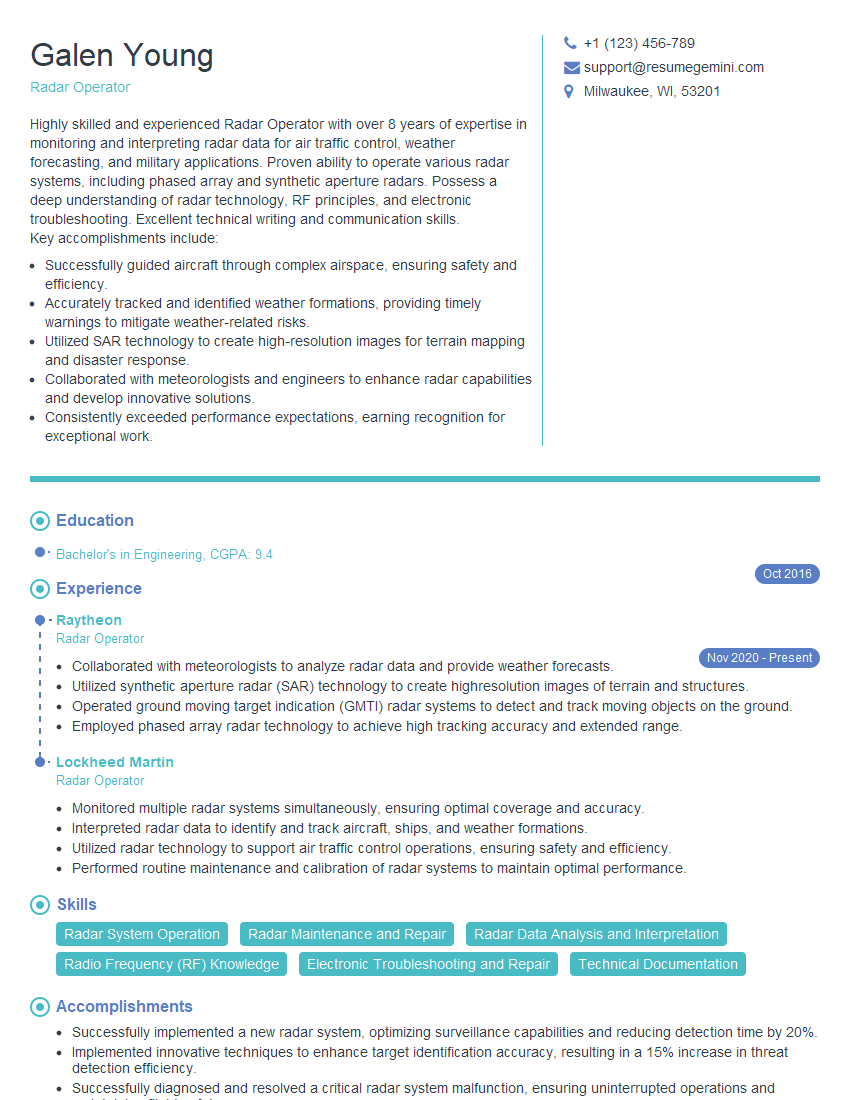
Mastering Air Defense Artillery principles significantly enhances your career prospects within the defense industry, opening doors to specialized roles and leadership opportunities. To make a strong impression, crafting an ATS-friendly resume is crucial. This ensures your qualifications are effectively highlighted and reach the right recruiters. We highly recommend using ResumeGemini to build a professional and impactful resume. ResumeGemini provides tools and resources to create a compelling narrative showcasing your skills and experience. Examples of resumes tailored to Air Defense Artillery professionals are available to help you get started.
Explore more articles
Users Rating of Our Blogs
Share Your Experience
We value your feedback! Please rate our content and share your thoughts (optional).
What Readers Say About Our Blog
Very informative content, great job.
good