Cracking a skill-specific interview, like one for Air Quality Permitting and Compliance, requires understanding the nuances of the role. In this blog, we present the questions you’re most likely to encounter, along with insights into how to answer them effectively. Let’s ensure you’re ready to make a strong impression.
Questions Asked in Air Quality Permitting and Compliance Interview
Q 1. Explain the difference between a Title V and a minor permit.
The difference between a Title V and a minor air quality permit hinges on the facility’s potential to emit pollutants. Think of it like this: Title V permits are for the ‘heavy hitters,’ while minor permits are for facilities with significantly less environmental impact.
Title V Permits: These are required for major sources of air pollution, meaning facilities that emit or have the potential to emit significant quantities of regulated pollutants. These permits are more comprehensive, requiring detailed emission calculations, sophisticated monitoring plans, and rigorous reporting requirements. They are subject to stricter oversight and more frequent inspections. An example would be a large power plant or a major refinery.
Minor Permits: These are for smaller sources of air pollution that don’t meet the threshold for a Title V permit. They typically involve simpler permitting processes, less stringent monitoring requirements, and less frequent reporting. A small manufacturing facility or a dry cleaner might fall under this category. The specific emission thresholds defining ‘major’ and ‘minor’ sources vary depending on the state and the specific pollutants involved.
In essence, the distinction boils down to the magnitude of potential environmental impact and the corresponding level of regulatory scrutiny.
Q 2. Describe your experience with the National Emission Standards for Hazardous Air Pollutants (NESHAP).
My experience with NESHAP (National Emission Standards for Hazardous Air Pollutants) spans over a decade, encompassing both permitting and compliance aspects. I’ve worked extensively with various NESHAP subparts, including those addressing hazardous waste combustors, chemical plants, and industrial surface coating operations. This experience includes:
Permitting: Developing and reviewing permit applications ensuring compliance with all applicable NESHAP requirements, including Maximum Achievable Control Technology (MACT) standards. This often involves intricate calculations of emissions and evaluating the efficacy of control devices.
Compliance: Conducting compliance audits, reviewing monitoring data, and identifying areas needing improvement. I’ve assisted facilities in developing and implementing corrective action plans to address any deficiencies. For example, I once identified a malfunction in a facility’s activated carbon injection system – a key component of meeting their NESHAP requirements – and helped them rectify the issue to prevent future non-compliance.
Technology Evaluation: I’ve assessed different control technologies to meet NESHAP standards, considering factors like cost-effectiveness and operational feasibility. This includes researching and evaluating the efficiency of technologies like fabric filters, scrubbers, and thermal oxidizers.
NESHAP compliance is particularly challenging due to the complexity of the regulations and the potentially severe health impacts of the pollutants involved. My experience ensures that I can navigate these complexities to help facilities achieve and maintain compliance.
Q 3. How do you determine compliance with emission limits?
Determining compliance with emission limits involves a multi-step process that combines monitoring, data analysis, and regulatory interpretation. Imagine it as a detective investigation where we gather evidence to confirm if the facility is abiding by the regulations.
Monitoring: This involves using continuous emission monitoring systems (CEMS) or other approved methods to collect data on actual emissions. For example, a CEMS continuously monitors the concentration of pollutants in the exhaust stack of a power plant.
Data Analysis: The collected data is then analyzed to determine if the emissions are below the established limits. This might involve statistical analysis, accounting for any deviations and averaging periods as defined in the permit. We also look for trends and patterns which might point to potential problems.
Record Keeping: Maintaining meticulous records of all monitoring data, maintenance logs, and any deviations is vital. This ensures transparency and traceability and aids in compliance demonstrations.
Reporting: Regular reporting to the regulatory agencies is mandatory, including submitting summaries of monitoring data, compliance certifications, and details of any corrective actions taken.
Non-compliance might lead to penalties, including fines, enforcement actions, and permit modifications. Therefore, accurate monitoring, thorough data analysis, and proactive reporting are critical to maintaining compliance.
Q 4. What are the key components of an air quality permit application?
A complete air quality permit application is a detailed document that presents a comprehensive picture of the facility’s potential air emissions and its plan to comply with all applicable regulations. Think of it as a business plan, but for environmental compliance.
Facility Description: A detailed description of the facility, including its processes, equipment, and materials used.
Emissions Inventory: A comprehensive accounting of all air emissions from the facility, specifying the types and quantities of pollutants emitted. This often involves complex calculations and the use of emission factors.
Control Technology Description: Details about any pollution control devices used (scrubbers, filters, etc.), their efficiency, and operational parameters.
Monitoring Plan: A plan outlining how emissions will be monitored, including frequency, methods, and reporting requirements.
Compliance Plan: A strategy for maintaining compliance with all applicable regulations, including standard operating procedures, maintenance schedules, and emergency response plans.
Air Dispersion Modeling (if required): Modeling results demonstrating that the facility’s emissions will not violate ambient air quality standards.
The completeness and accuracy of the application are crucial for timely permit issuance. An incomplete or inaccurate application can result in delays and potential non-compliance issues.
Q 5. Explain your understanding of Prevention of Significant Deterioration (PSD) regulations.
Prevention of Significant Deterioration (PSD) regulations are designed to protect clean air areas from new or modified sources of pollution. Imagine a pristine national park; PSD ensures that new industrial facilities won’t significantly degrade the air quality in these areas.
PSD regulations require a rigorous permitting process for new or modified sources of air pollution in areas that already meet National Ambient Air Quality Standards (NAAQS). This process includes:
Air Quality Analysis: A detailed analysis of the current air quality in the area and an assessment of the potential impact of the proposed facility’s emissions.
Best Available Control Technology (BACT): The facility must implement the BACT to minimize its environmental impact. BACT is determined on a case-by-case basis and often involves advanced pollution control technologies.
Air Dispersion Modeling: Sophisticated air dispersion models are used to predict the impact of the facility’s emissions on ambient air quality. This helps to ensure that the emissions won’t cause any exceedances of NAAQS.
Analysis of Air Quality Impacts: The modeling results are used to assess the potential for significant deterioration of air quality. The applicant must demonstrate that the facility’s emissions will not cause any significant adverse impacts.
PSD is a crucial component of environmental protection, ensuring that economic development does not come at the cost of air quality in already clean areas.
Q 6. How do you conduct an emissions inventory?
Conducting an emissions inventory is like taking a comprehensive census of a facility’s air pollutants. It’s a systematic process of identifying and quantifying all air emissions from various sources within a facility.
The process involves:
Identifying Emission Sources: This includes identifying all equipment and processes that emit pollutants, such as boilers, engines, storage tanks, and process vents.
Determining Emission Factors: Emission factors represent the amount of pollutant released per unit of activity (e.g., tons of pollutant per ton of material processed). These factors are often obtained from EPA databases or industry-specific studies.
Calculating Emissions: Multiplying the emission factors by the activity levels provides the total emissions from each source. This requires accurate data on the operational parameters of each emission source.
Aggregating Emissions: Summing up the emissions from all individual sources provides the total emissions from the facility, categorized by pollutant type.
Data Verification: Ensuring accuracy in data collection, calculations, and record-keeping is essential for a reliable emissions inventory.
A well-conducted emissions inventory provides a critical baseline for permit applications, compliance monitoring, and environmental impact assessments.
Q 7. What are your experiences with air dispersion modeling software?
My experience with air dispersion modeling software includes extensive use of AERMOD, CALPUFF, and ISCST3. I’m proficient in model setup, data input, model execution, and interpretation of results. This experience has been vital in numerous projects, including:
PSD Permitting: Using air dispersion models to demonstrate compliance with PSD regulations by showing that proposed emissions will not cause significant deterioration of air quality.
Accident Prevention Plans: Modeling the potential dispersion of pollutants in the event of an accidental release, helping to develop effective emergency response plans.
Environmental Impact Assessments: Assessing the environmental consequences of proposed projects on local and regional air quality.
Compliance Demonstrations: Using model results to demonstrate compliance with ambient air quality standards.
Proficiency in these modeling tools is critical for accurate prediction of air quality impacts and ensuring environmental compliance. I understand the limitations of these models and select the appropriate model based on site-specific factors and regulatory requirements. A recent project involved using AERMOD to model the impact of a new manufacturing facility on a nearby sensitive receptor, ultimately leading to modifications in the facility’s design to mitigate potential impacts.
Q 8. Describe your familiarity with various air pollution control technologies.
My familiarity with air pollution control technologies is extensive, encompassing both traditional and advanced methods. I’ve worked with a wide range of technologies, each tailored to specific pollutants and emission sources.
- Particulate Matter Control: This includes technologies like baghouses (fabric filters), electrostatic precipitators (ESPs), and cyclonic separators. For example, I helped a cement plant optimize its baghouse operation, reducing particulate emissions by 15% through a combination of improved filter maintenance and airflow adjustments.
- Sulfur Dioxide (SO2) Control: I have experience with flue-gas desulfurization (FGD) systems, which use either wet scrubbing (lime or limestone) or dry scrubbing (sodium bicarbonate) to remove SO2 from exhaust gases. In one project, we successfully implemented a wet FGD system on a coal-fired power plant, significantly reducing its SO2 emissions and meeting stringent regulatory requirements.
- Nitrogen Oxides (NOx) Control: My experience includes selective catalytic reduction (SCR) and selective non-catalytic reduction (SNCR) systems, which use ammonia or urea to reduce NOx emissions. I’ve assisted clients in troubleshooting SCR system malfunctions, leading to improved efficiency and reduced NOx emissions.
- Volatile Organic Compound (VOC) Control: I’m familiar with various VOC control technologies, including thermal oxidizers, catalytic oxidizers, and adsorption systems using activated carbon. For instance, I guided a chemical plant in the selection and installation of a regenerative thermal oxidizer, effectively eliminating VOC emissions while recovering waste heat.
- Mercury Control: Activated carbon injection and other specialized techniques for mercury removal are also within my expertise.
Understanding the strengths and weaknesses of each technology and their applicability to different industrial settings is crucial for effective air pollution control.
Q 9. How do you ensure compliance with continuous monitoring systems?
Ensuring compliance with continuous monitoring systems (CMS) requires a multi-faceted approach. It’s not just about the equipment itself but also the data handling, reporting, and quality control procedures.
- Calibration and Maintenance: Regular calibration and preventative maintenance are essential to ensure the accuracy and reliability of the CMS. We follow strict schedules and utilize certified technicians to perform these tasks, meticulously documenting all activities. This ensures that the data collected is reliable and legally defensible.
- Data Validation and QA/QC: We employ rigorous quality assurance and quality control procedures to validate the data generated by the CMS. This involves checking for data gaps, outliers, and other anomalies. We use statistical methods to identify and address any issues.
- Data Reporting and Record Keeping: Accurate and timely reporting of CMS data is crucial. We use specialized software to manage and report this data to the regulatory authorities in the required format, maintaining comprehensive records for audits and compliance demonstrations.
- Regulatory Compliance: Keeping abreast of changes in regulations and requirements is vital. We proactively monitor updates and ensure that our CMS operations and reporting procedures align with all relevant regulations.
- Troubleshooting and Repairs: We have established procedures for promptly addressing any equipment malfunctions or data quality issues. This includes on-site troubleshooting and coordination with equipment vendors for repairs and replacements.
For example, in one instance, a sudden spike in the CMS data alerted us to a problem with the control system at a power plant. Our prompt investigation and remediation prevented a potential compliance violation and minimized environmental impact.
Q 10. Explain your experience with environmental auditing procedures.
My experience with environmental auditing encompasses both internal and external audits, focusing on air quality compliance. I’m familiar with various auditing methodologies and standards, including those established by regulatory agencies.
- Planning and Scoping: A comprehensive audit begins with careful planning and scoping, identifying the specific areas and regulations to be reviewed.
- Document Review: Thorough review of permits, operational records, maintenance logs, and other relevant documents is critical to assessing compliance.
- Site Inspections: On-site inspections of emission control equipment, monitoring systems, and operational areas are essential to verifying the accuracy of the documentation and identifying any potential issues.
- Data Analysis: Statistical analysis of emission data, operational parameters, and other relevant information is employed to identify trends, anomalies, and potential compliance gaps.
- Reporting and Recommendations: A detailed report summarizing the audit findings, including any non-compliance issues and recommendations for corrective actions, is prepared.
For example, during an audit of a manufacturing facility, we identified a discrepancy between reported emissions and actual monitored data. This led to a review of their operational procedures and the implementation of improved record-keeping practices, ensuring future compliance.
Q 11. How would you handle a non-compliance issue?
Handling a non-compliance issue requires a systematic and proactive approach. The immediate priority is to address the issue, minimize its environmental impact, and prevent recurrence.
- Immediate Action: The first step involves immediately addressing the underlying cause of the non-compliance to stop further violations. This might involve repairing faulty equipment, adjusting operational parameters, or implementing temporary control measures.
- Internal Investigation: A thorough internal investigation is conducted to determine the root cause of the non-compliance and identify contributing factors.
- Corrective Actions: A detailed plan of corrective actions is developed and implemented to address the root cause of the non-compliance and prevent future occurrences. This plan is typically documented and submitted to the regulatory agency.
- Reporting to Regulatory Agency: Prompt and transparent reporting to the regulatory agency is crucial. We work collaboratively with the agency to provide them with all necessary information and to ensure the corrective actions are effective.
- Preventative Measures: Measures are put in place to prevent similar incidents from happening again. This might involve improving training, strengthening operational procedures, or upgrading equipment.
For instance, if a continuous monitoring system malfunctions, leading to a brief period of non-compliance, we would promptly report the incident, detail the corrective actions (repair and recalibration), and provide data demonstrating the restoration of compliance.
Q 12. Describe your experience with regulatory reporting requirements.
My experience with regulatory reporting requirements is extensive, covering various federal, state, and local regulations. I understand the importance of accurate, timely, and complete reporting to maintain compliance.
- Permitting Applications: I’ve prepared numerous permit applications, including Prevention of Significant Deterioration (PSD) permits, Title V permits, and other air quality permits, ensuring all necessary information and supporting documentation are included.
- Emission Inventories: I have experience developing and submitting accurate emission inventories, using various methodologies and data sources.
- Compliance Reports: I’ve prepared and submitted a wide range of compliance reports, including annual reports, deviation reports, and other required documentation, in a timely manner and adhering to specific formats and requirements.
- Data Management: I’m proficient in using software and databases to manage environmental data and generate required reports efficiently.
- Regulatory Updates: I constantly monitor changes in regulations to ensure that our reporting procedures remain compliant.
For example, I successfully navigated a complex permitting process for a new industrial facility, obtaining all necessary permits within the required timeframe and ensuring the facility’s compliance from the outset.
Q 13. What are your experiences with air quality monitoring equipment?
My experience encompasses a wide range of air quality monitoring equipment, including both stationary and mobile monitoring systems. I understand the principles of operation, data acquisition, calibration, and maintenance for these systems.
- Continuous Emission Monitoring Systems (CEMS): I have worked extensively with CEMS for various pollutants like SO2, NOx, CO, O2, and particulate matter. This includes experience with different technologies, such as extractive and in-situ systems.
- Ambient Air Quality Monitoring: I am familiar with ambient air quality monitoring equipment, including sensors for particulate matter (PM2.5 and PM10), ozone (O3), carbon monoxide (CO), sulfur dioxide (SO2), and nitrogen dioxide (NO2). I understand the principles of data acquisition, calibration, and quality control.
- Portable Monitoring Equipment: I’ve used portable monitoring equipment for various field applications, including stack testing and fugitive emission surveys.
- Data Acquisition and Analysis: I am proficient in using data acquisition software and performing data analysis to ensure data quality and identify potential trends or anomalies.
For example, during a stack test, we utilized specialized equipment to accurately measure pollutant concentrations and gas flow rates, ensuring the test results were reliable and met regulatory requirements. This required careful calibration of the equipment and adherence to standardized testing protocols.
Q 14. Explain your understanding of the Clean Air Act.
The Clean Air Act (CAA) is a comprehensive federal law that regulates air emissions in the United States. My understanding of the CAA is thorough, encompassing its various provisions and their practical implications.
- National Ambient Air Quality Standards (NAAQS): I understand the NAAQS for criteria pollutants (ozone, particulate matter, carbon monoxide, sulfur dioxide, nitrogen dioxide, and lead) and their role in protecting public health and welfare.
- State Implementation Plans (SIPs): I am aware of the role of states in developing and implementing SIPs to achieve and maintain the NAAQS.
- New Source Review (NSR): I’m experienced with the NSR program, which regulates major new and modified stationary sources of air pollution. This includes PSD and non-PSD permits.
- National Emission Standards for Hazardous Air Pollutants (NESHAP): I understand the NESHAP program, which regulates emissions of hazardous air pollutants (HAPs) from various sources.
- Enforcement and Penalties: I’m knowledgeable about the enforcement mechanisms under the CAA and the potential penalties for non-compliance.
The CAA provides a framework for achieving and maintaining clean air. Its complexity requires a deep understanding of its various components to ensure regulatory compliance.
Q 15. How do you stay current with changes in air quality regulations?
Staying current in the dynamic field of air quality regulations requires a multi-pronged approach. It’s not enough to simply rely on past knowledge; continuous learning is essential.
- Subscription to Regulatory Updates: I subscribe to newsletters and updates from the Environmental Protection Agency (EPA), relevant state environmental agencies, and industry associations like the Air & Waste Management Association (AWMA). These resources provide timely information on rule changes, enforcement actions, and emerging trends.
- Professional Development: I actively participate in webinars, conferences, and workshops focused on air quality permitting and compliance. This allows me to network with other professionals and learn about best practices from experts in the field. Recently, I attended a workshop on the implications of the updated Clean Air Act provisions on industrial facilities.
- Monitoring Legal Databases: I regularly monitor legal databases like Westlaw and LexisNexis for relevant case law and regulatory updates. This ensures I’m aware of how regulations are being interpreted and applied in practice. A recent case involving the interpretation of a specific emission limit significantly impacted my work on a refinery permit.
- Networking and Collaboration: I maintain a strong professional network, engaging with colleagues and experts in the field to discuss current challenges and share knowledge. This informal exchange of information often reveals updates and insights not readily available through official channels.
This comprehensive approach ensures I remain up-to-date and proficient in navigating the ever-evolving landscape of air quality regulations.
Career Expert Tips:
- Ace those interviews! Prepare effectively by reviewing the Top 50 Most Common Interview Questions on ResumeGemini.
- Navigate your job search with confidence! Explore a wide range of Career Tips on ResumeGemini. Learn about common challenges and recommendations to overcome them.
- Craft the perfect resume! Master the Art of Resume Writing with ResumeGemini’s guide. Showcase your unique qualifications and achievements effectively.
- Don’t miss out on holiday savings! Build your dream resume with ResumeGemini’s ATS optimized templates.
Q 16. Describe your experience working with state and federal agencies.
I have extensive experience collaborating with both state and federal agencies on air quality matters. My work has involved numerous interactions with agencies like the EPA and various state environmental agencies. These interactions have covered a wide range of activities including:
- Permit Applications: I’ve prepared and submitted countless permit applications, navigating complex permitting processes, responding to agency requests for information, and addressing comments received during the review process. For example, I successfully obtained a Title V operating permit for a large cement plant, requiring extensive interaction with both state and federal officials.
- Compliance Monitoring and Reporting: I’ve assisted clients in implementing compliance programs, conducting self-audits, and preparing accurate and timely emission reports. This includes working with agencies to resolve compliance issues, ensuring timely submission of required reports.
- Enforcement Actions: I’ve represented clients in interactions with agencies regarding compliance issues, working collaboratively to develop solutions that address any violations and prevent future occurrences. A recent case involved a minor exceedance of an emission limit due to equipment malfunction, which we resolved successfully through a collaborative approach with the agency.
- Inspections and Audits: I’ve been involved in preparing for and participating in facility inspections and audits by regulatory agencies, proactively addressing any potential concerns to ensure smooth and successful compliance.
My experience has fostered strong working relationships with agency personnel, allowing for efficient and effective communication and problem-solving.
Q 17. What is your experience with environmental impact assessments?
Environmental Impact Assessments (EIAs) are a crucial component of many air quality projects. My experience includes:
- Conducting EIAs: I have participated in conducting EIAs for a range of projects, from small industrial expansions to large-scale infrastructure developments. This involved identifying potential air quality impacts, evaluating emission sources, modeling air dispersion, and assessing the significance of these impacts.
- Developing Mitigation Plans: A key aspect of my work in EIAs is developing effective mitigation plans to minimize negative environmental consequences. For example, for a proposed power plant, we suggested using advanced emission control technologies to reduce air pollutant emissions below regulatory limits.
- Reviewing EIAs: I’ve reviewed EIAs conducted by others, offering critical assessments of methodologies, data quality, and conclusions. This involved critically reviewing modeling assumptions, identifying gaps in analysis, and ensuring compliance with applicable guidelines.
- Working with Stakeholders: EIAs often involve engaging with various stakeholders, including community groups, government agencies, and project developers. My experience includes facilitating communication and addressing concerns related to air quality impacts. This collaborative approach ensured all stakeholders had their voices heard during the assessment process.
My understanding of EIA methodologies and my ability to assess air quality impacts effectively contribute to informed decision-making and sustainable project development.
Q 18. How do you manage multiple projects simultaneously?
Managing multiple projects simultaneously requires a structured and organized approach. I utilize several key strategies:
- Prioritization and Planning: I prioritize tasks based on deadlines, urgency, and potential impact. This involves creating detailed project plans, outlining timelines, milestones, and responsibilities.
- Project Management Software: I utilize project management software (e.g., Asana, Trello) to track progress, manage deadlines, and collaborate with team members. This allows for clear visibility of all ongoing projects and tasks.
- Effective Communication: Maintaining clear and consistent communication with clients and team members is essential. Regular meetings and progress reports are crucial to ensure everyone is informed and aligned.
- Delegation: When appropriate, I delegate tasks to team members based on their skills and experience. This ensures efficient workload distribution and efficient use of resources.
- Time Management Techniques: I employ time management techniques such as time blocking and the Pomodoro technique to maintain focus and productivity. This helps maximize my work hours and ensure that deadlines are consistently met.
By combining these methods, I can effectively manage multiple projects, ensuring timely completion and high-quality results.
Q 19. What are your problem-solving skills related to air quality issues?
My problem-solving skills related to air quality issues involve a systematic approach encompassing:
- Data Analysis: I’m proficient in analyzing emission data, air quality monitoring data, and other relevant information to identify trends and potential issues. This might involve using statistical software to identify patterns or anomalies in emission data.
- Troubleshooting: I have the expertise to troubleshoot problems related to emission control equipment, monitoring systems, or compliance reporting. A recent example involved identifying the source of unexpectedly high emissions from a client’s facility by reviewing operational records and conducting onsite inspections.
- Regulatory Interpretation: I’m adept at interpreting complex air quality regulations and applying them to specific situations. This includes understanding permit conditions and compliance requirements.
- Developing Solutions: Based on my analysis and understanding of regulatory requirements, I can develop effective solutions to address air quality issues. These solutions may involve implementing new control technologies, modifying operational procedures, or developing comprehensive compliance programs.
- Creative Problem Solving: I look beyond obvious solutions and explore innovative approaches to address challenges. For instance, I once helped a client reduce emissions significantly by implementing a process optimization strategy, rather than relying solely on expensive equipment upgrades.
My ability to analyze data, interpret regulations, and develop creative solutions enables me to effectively resolve a wide range of air quality problems.
Q 20. Describe a time you had to deal with a complex permitting issue.
One particularly complex permitting issue involved a client seeking a permit for a new chemical manufacturing facility. The facility was located near a sensitive ecological area, leading to concerns about potential air quality impacts on the surrounding environment. The challenge was not only meeting the stringent emission limits but also demonstrating that the facility’s emissions would not adversely affect the nearby ecosystem.
The solution involved a multi-step process:
- Detailed Emission Modeling: We conducted sophisticated air dispersion modeling, using advanced software and incorporating detailed meteorological data, to accurately predict the impact of the facility’s emissions on air quality in the surrounding area. We used multiple modeling scenarios to account for various weather conditions.
- Stakeholder Engagement: We actively engaged with the relevant state environmental agency, local communities, and environmental advocacy groups. This involved presenting our modeling results, addressing concerns, and incorporating feedback into our permit application.
- Mitigation Measures: Based on the modeling results and stakeholder feedback, we proposed and implemented a comprehensive set of mitigation measures. This included upgrading to state-of-the-art emission control technologies and implementing robust monitoring and reporting protocols.
- Collaboration with the Agency: We maintained open communication with the regulatory agency throughout the entire permitting process, addressing their questions and concerns proactively. This collaborative approach led to a successful permit approval, minimizing delays and ensuring compliance with all regulations.
This experience highlighted the importance of meticulous planning, advanced modeling, proactive stakeholder engagement, and clear communication in navigating complex permitting challenges.
Q 21. How familiar are you with greenhouse gas emission reporting?
I am very familiar with greenhouse gas (GHG) emission reporting, which is increasingly important in air quality management. My familiarity includes:
- Understanding GHG Regulations: I understand the relevant regulations related to GHG reporting, including those under the EPA’s Greenhouse Gas Reporting Program (GHGRP) and any applicable state regulations. This includes a deep understanding of the different GHGs (e.g., CO2, CH4, N2O), their global warming potentials, and how they are reported.
- Data Collection and Analysis: I know how to collect and analyze emission data from various sources, including process emissions, fuel combustion, and fugitive emissions. This often involves working with facility operators to gather accurate data and ensure the integrity of reporting.
- Reporting Requirements: I’m knowledgeable about the specific reporting requirements, including data formats, reporting deadlines, and submission methods. I understand the importance of accurate and timely reporting to meet regulatory obligations.
- Compliance Verification: I’m capable of verifying the accuracy of GHG emission reports, ensuring that the reported data accurately reflects the actual emissions from a facility. This may involve reviewing the facility’s data management procedures and ensuring they meet compliance standards.
- Offset Strategies: I am familiar with different offset programs and strategies to reduce a company’s carbon footprint and meet emission reduction goals.
My expertise in GHG reporting allows me to assist clients in meeting their regulatory obligations and developing effective strategies for reducing their GHG emissions.
Q 22. Explain your experience with risk assessment and management.
Risk assessment and management in air quality permitting and compliance involves identifying potential environmental hazards, evaluating their likelihood and severity, and implementing control measures to mitigate risks. It’s like being a detective, investigating potential problems before they become significant issues.
My experience includes conducting comprehensive risk assessments using established methodologies like HAZOP (Hazard and Operability Study) and what-if analysis. For instance, I worked with a chemical plant to assess the risk of accidental releases of volatile organic compounds (VOCs). We identified potential leak points in the piping system, evaluated the atmospheric dispersion modeling under various meteorological conditions, and determined the potential impact on nearby residential areas. Based on this, we recommended implementing leak detection and repair programs, installing vapor recovery systems, and developing an emergency response plan. This involved detailed calculations, modeling, and stakeholder communication to ensure a thorough understanding of the risks and agreed-upon mitigation strategies. Another project involved evaluating the risks associated with exceeding permit limits due to operational issues. We developed a comprehensive monitoring and reporting program to track emissions and identify potential problem areas proactively. We then implemented corrective actions like process optimization and equipment upgrades to minimize the risk of exceeding the permit limits.
Q 23. What is your experience with data analysis and reporting in relation to air quality?
Data analysis and reporting are crucial for demonstrating compliance and identifying trends in air quality. I’m proficient in using various software and techniques to analyze emission data, ambient air monitoring data, and meteorological data. For instance, I regularly use statistical software like R and Python to analyze air quality data to identify patterns, trends, and outliers.
I’ve developed customized reports for clients summarizing emission data, compliance status, and any identified exceedances. This often involves creating visualizations like graphs and charts to effectively communicate complex information to both technical and non-technical audiences. A key project involved analyzing several years of continuous emission monitoring (CEM) data from a power plant to identify the sources of high emissions and to evaluate the effectiveness of emission controls. This data analysis led to process improvements resulting in a significant reduction in emissions and ultimately cost savings for the company. In another case, I utilized GIS mapping to visualize ambient air monitoring data to identify spatial patterns of pollution and assist in targeting mitigation efforts.
Q 24. How do you prioritize tasks related to permitting and compliance?
Prioritizing tasks in permitting and compliance requires a strategic approach that considers regulatory deadlines, potential environmental impacts, and resource availability. Think of it as managing a portfolio of projects, each with its own urgency and importance.
I typically use a combination of methods, including:
- Regulatory Deadlines: Tasks with imminent deadlines, such as permit renewal applications or reporting requirements, are always prioritized.
- Potential Environmental Impact: Tasks addressing potential high-impact scenarios (e.g., preventing exceedances of critical air quality standards) receive immediate attention.
- Risk-Based Approach: Tasks associated with higher-risk activities are prioritized to minimize potential environmental harm and legal liabilities.
- Resource Allocation: Project prioritization is also aligned with available resources – personnel, budget, and equipment.
Q 25. Describe your understanding of air toxics and their control.
Air toxics are hazardous air pollutants that can cause serious health problems, even at low concentrations. Controlling these pollutants requires a multi-faceted approach. My understanding of air toxics includes their sources, their health effects, and the various control technologies used to mitigate their emissions.
I have experience working with facilities that emit air toxics, such as chemical plants and refineries. This involved reviewing and evaluating emission control technologies such as:
- Incineration: High-temperature oxidation to destroy pollutants.
- Absorption: Using liquids or solids to capture pollutants.
- Adsorption: Using solid materials to trap pollutants.
- Condensation: Cooling gases to remove pollutants.
Q 26. How do you work effectively with cross-functional teams?
Effective collaboration is key in air quality management. I thrive in cross-functional teams and believe in open communication and mutual respect.
My approach includes:
- Active Listening: I carefully listen to and consider the perspectives of all team members.
- Clear Communication: I ensure that my communication is clear, concise, and easily understood by all team members, regardless of their technical background.
- Shared Goals: I work to establish clear, shared goals for the team, and I regularly communicate progress towards those goals.
- Conflict Resolution: I am adept at identifying and resolving conflicts proactively and constructively.
Q 27. What software and tools are you proficient in for air quality management?
Proficiency in various software and tools is essential for effective air quality management. I’m highly proficient in using several industry-standard programs and platforms.
My expertise includes:
- AERMOD/ISCST3: Atmospheric dispersion modeling software for predicting air pollutant concentrations.
- ProUCL: Statistical software used for uncertainty analysis and compliance demonstrations.
- GIS software (ArcGIS): For spatial data analysis and visualization of air quality data.
- Spreadsheet software (Excel): For data management, analysis, and reporting.
- Database management systems (SQL): For organizing and managing large datasets.
- Various CEM data acquisition and analysis software: To manage and analyze data from continuous emission monitors.
Q 28. Explain your experience with environmental management systems (EMS).
Environmental Management Systems (EMS) are frameworks that help organizations systematically manage their environmental performance. Think of it as a blueprint for sustainability. My understanding encompasses the principles of ISO 14001, and I’ve worked with organizations implementing and maintaining such systems.
My experience includes:
- EMS Audits: Conducting internal and external audits to assess EMS effectiveness and compliance.
- Gap Analysis: Identifying areas where an organization’s EMS needs improvement to meet regulatory requirements and best practices.
- Training and Development: Providing training to employees on environmental policies, procedures, and responsibilities.
- Documentation Review: Reviewing and updating EMS documentation to ensure it reflects current practices and regulations.
Key Topics to Learn for Air Quality Permitting and Compliance Interview
- Regulatory Frameworks: Understanding the Clean Air Act, state-specific regulations, and relevant permitting programs (e.g., Title V, Prevention of Significant Deterioration (PSD)). Focus on the practical application of these regulations to various industries.
- Permit Applications and Processes: Mastering the steps involved in preparing and submitting complete and accurate permit applications, including emission calculations, modeling, and best available control technology (BACT) determination. Practice analyzing scenarios requiring modifications or renewals.
- Emission Inventories and Monitoring: Develop a strong understanding of methods for conducting emission inventories, selecting appropriate monitoring technologies, and interpreting monitoring data to ensure compliance. Be prepared to discuss data analysis and reporting procedures.
- Compliance Strategies and Enforcement: Explore strategies for ensuring ongoing compliance, including developing and implementing compliance plans, responding to enforcement actions, and utilizing compliance auditing techniques. Consider potential scenarios involving non-compliance and corrective actions.
- Air Quality Modeling: Familiarize yourself with air dispersion modeling principles and software applications. Be ready to discuss the interpretation of model results and their role in permitting decisions. Consider different model types and their applications.
- Air Pollution Control Technologies: Gain a working knowledge of various air pollution control technologies, including their effectiveness, costs, and applicability to different emission sources. Be able to compare and contrast different technologies for specific applications.
Next Steps
Mastering Air Quality Permitting and Compliance opens doors to rewarding and impactful careers in environmental protection. A strong understanding of these principles is highly sought after by employers and demonstrates a commitment to environmental stewardship. To stand out from the competition, invest in creating an ATS-friendly resume that highlights your skills and experience effectively. ResumeGemini is a trusted resource that can help you build a professional and impactful resume, designed to get noticed by recruiters. Examples of resumes tailored to Air Quality Permitting and Compliance are available, showcasing how to present your qualifications most effectively. Take the next step in your career journey – build a standout resume today.
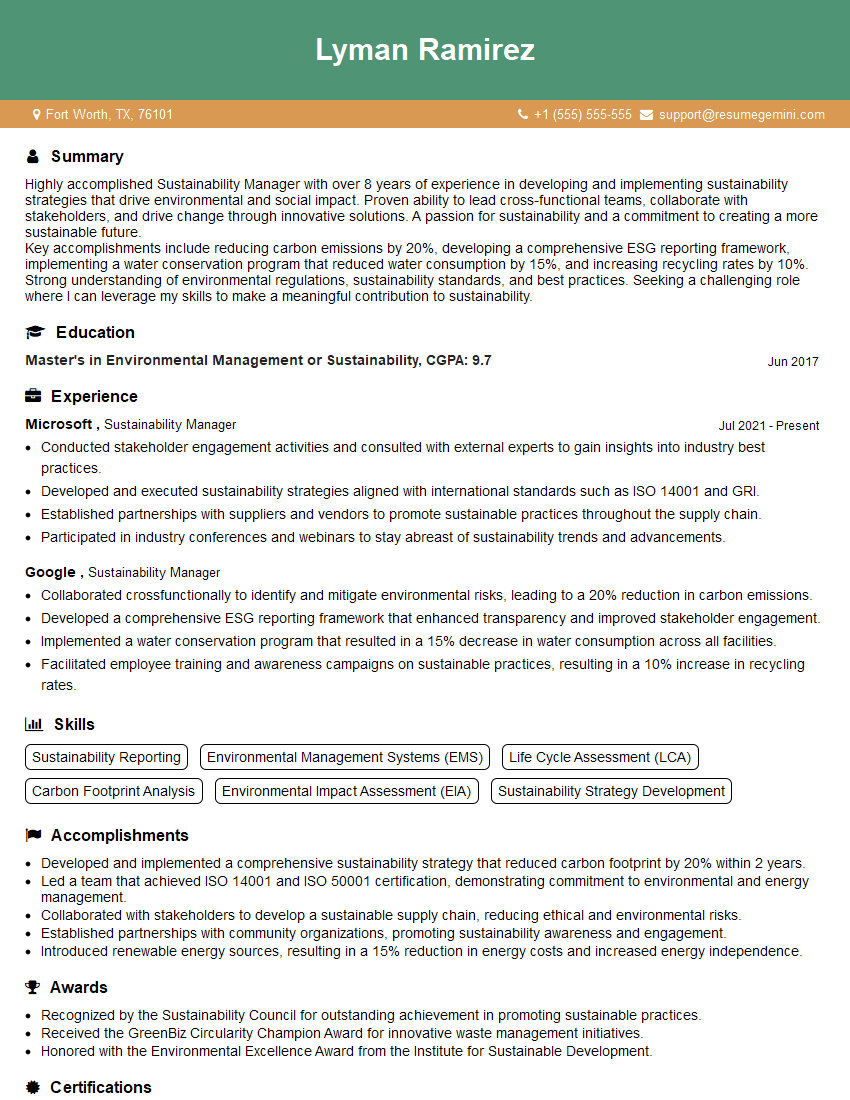
Sustainability Manager Resume Sample
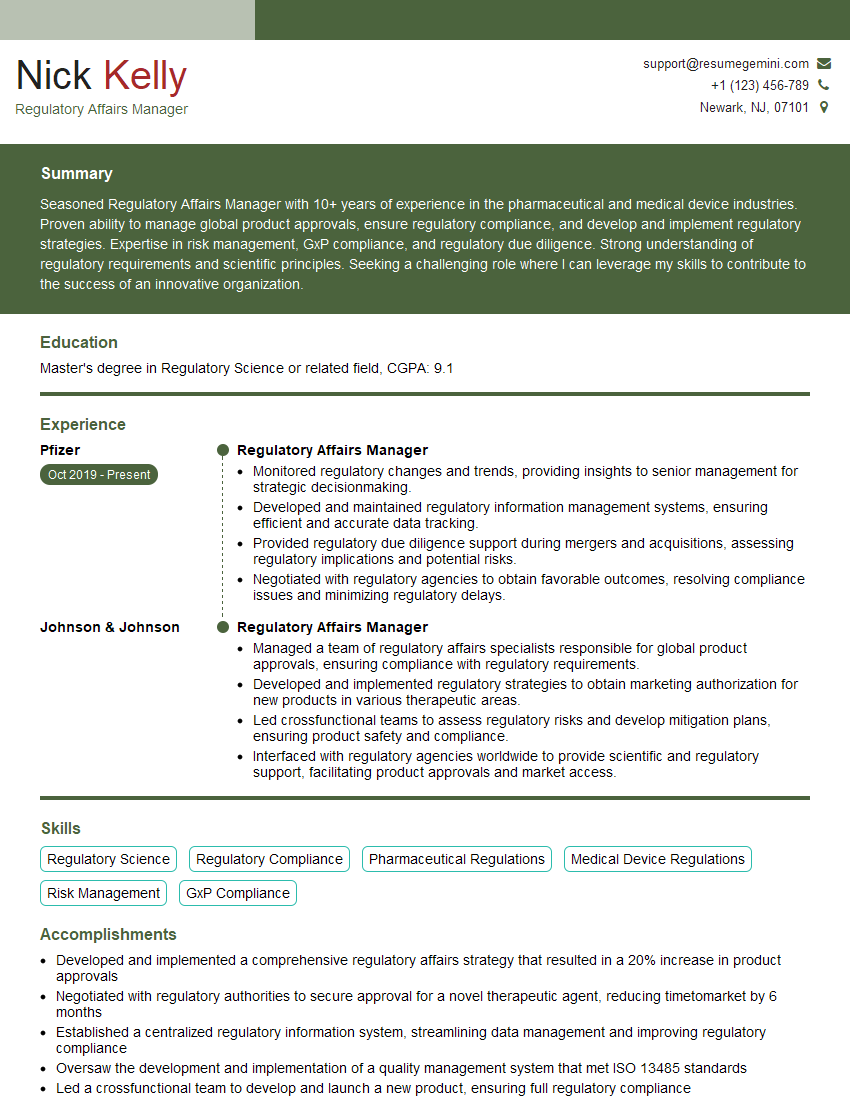
Regulatory Affairs Manager Resume Sample
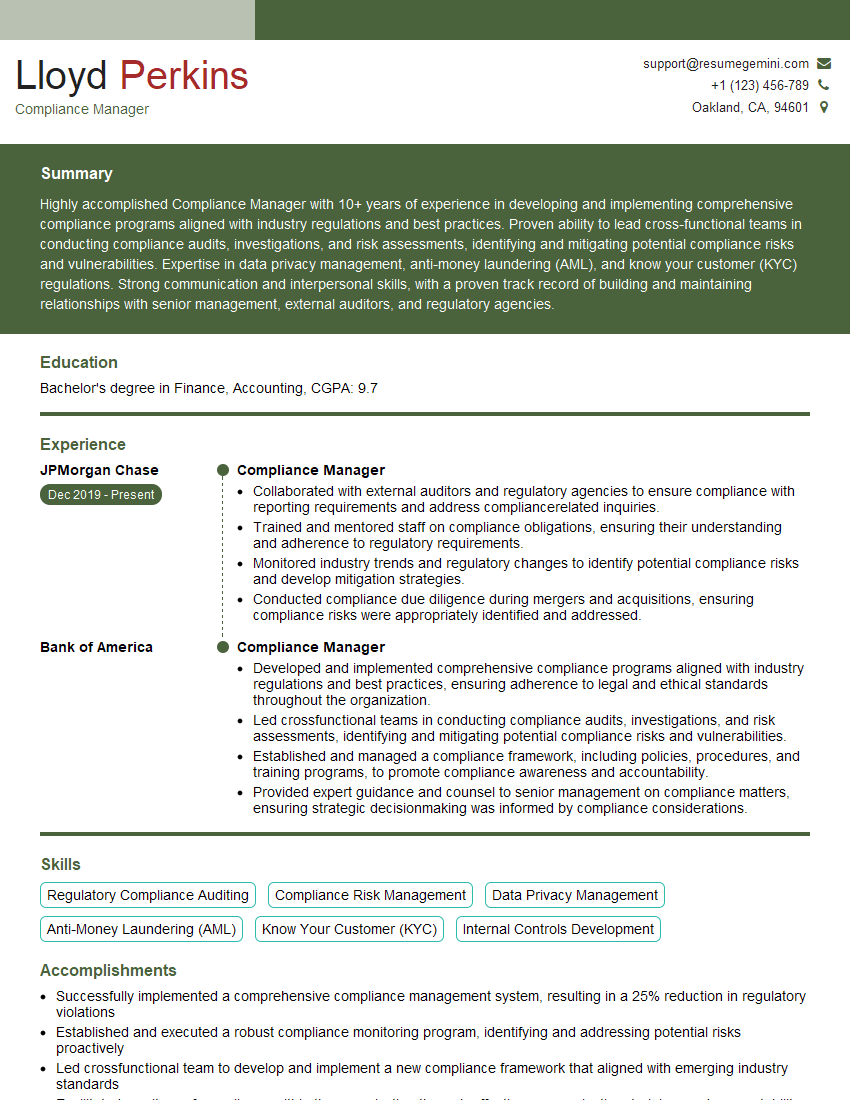
Compliance Manager Resume Sample
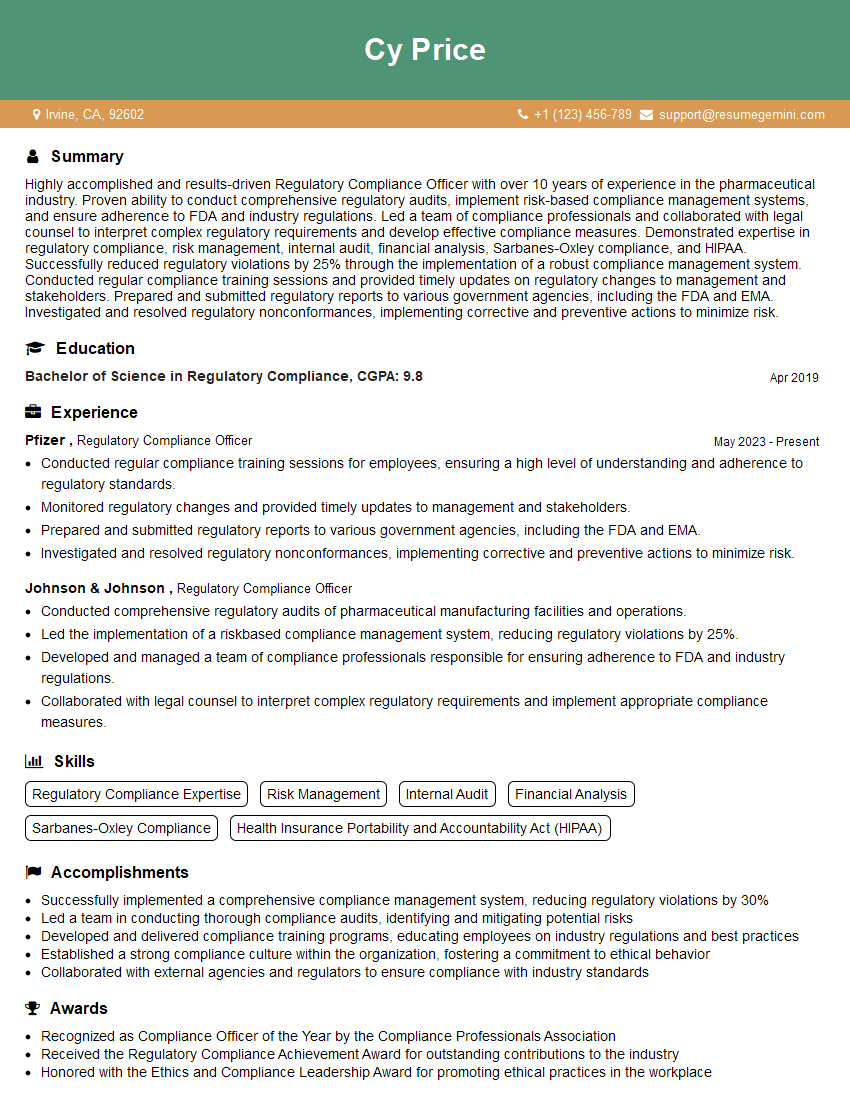
Regulatory Compliance Officer Resume Sample
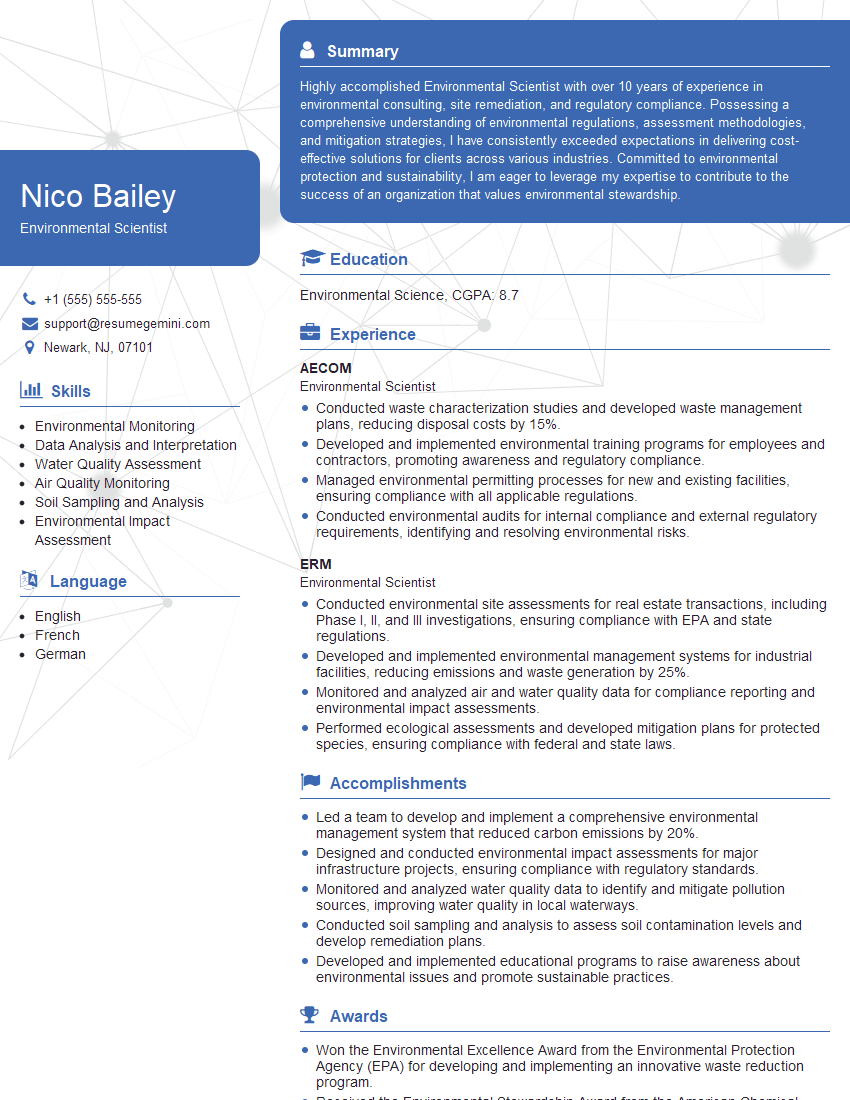
Environmental Scientist Resume Sample
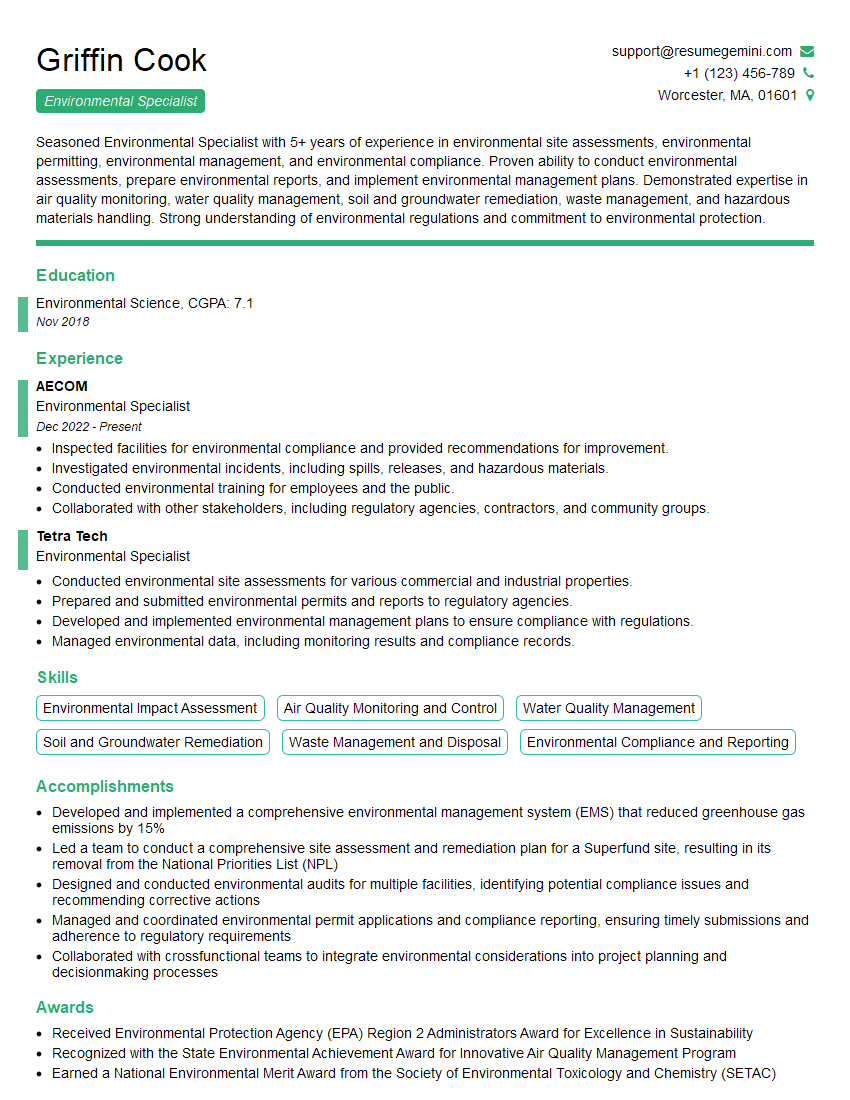
Environmental Specialist Resume Sample
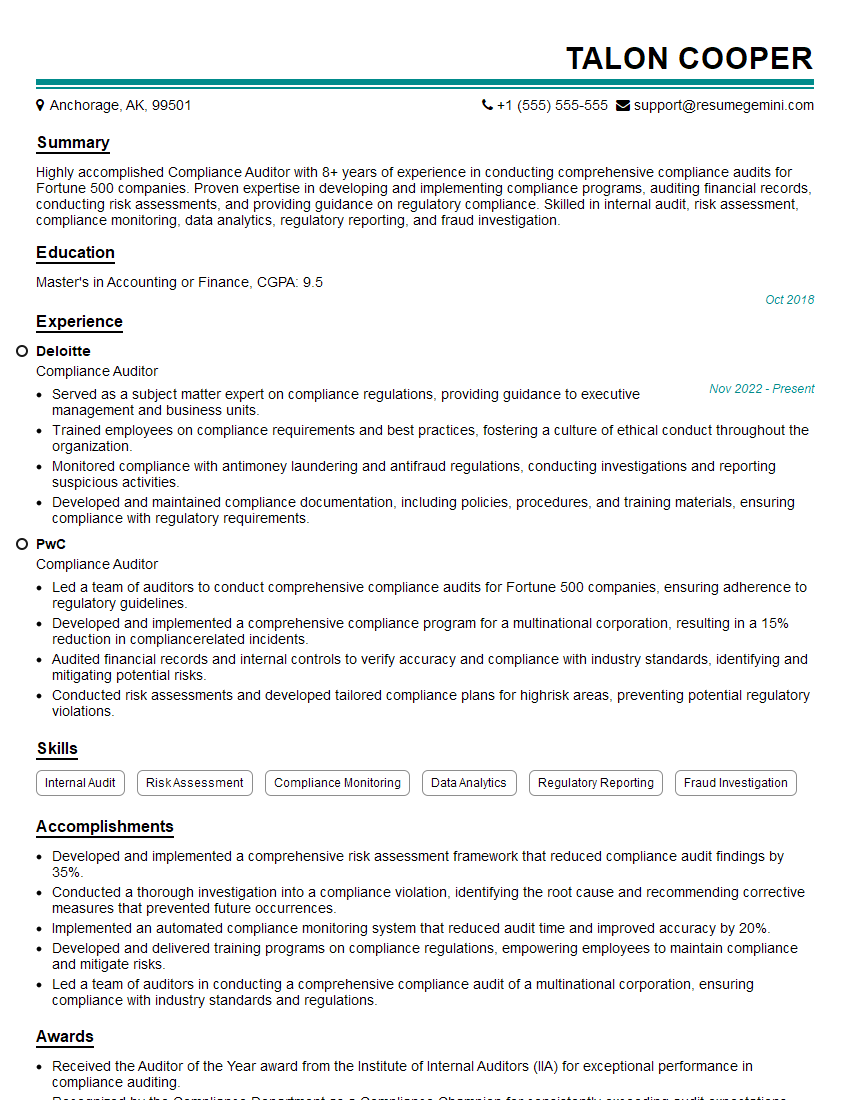
Compliance Auditor Resume Sample
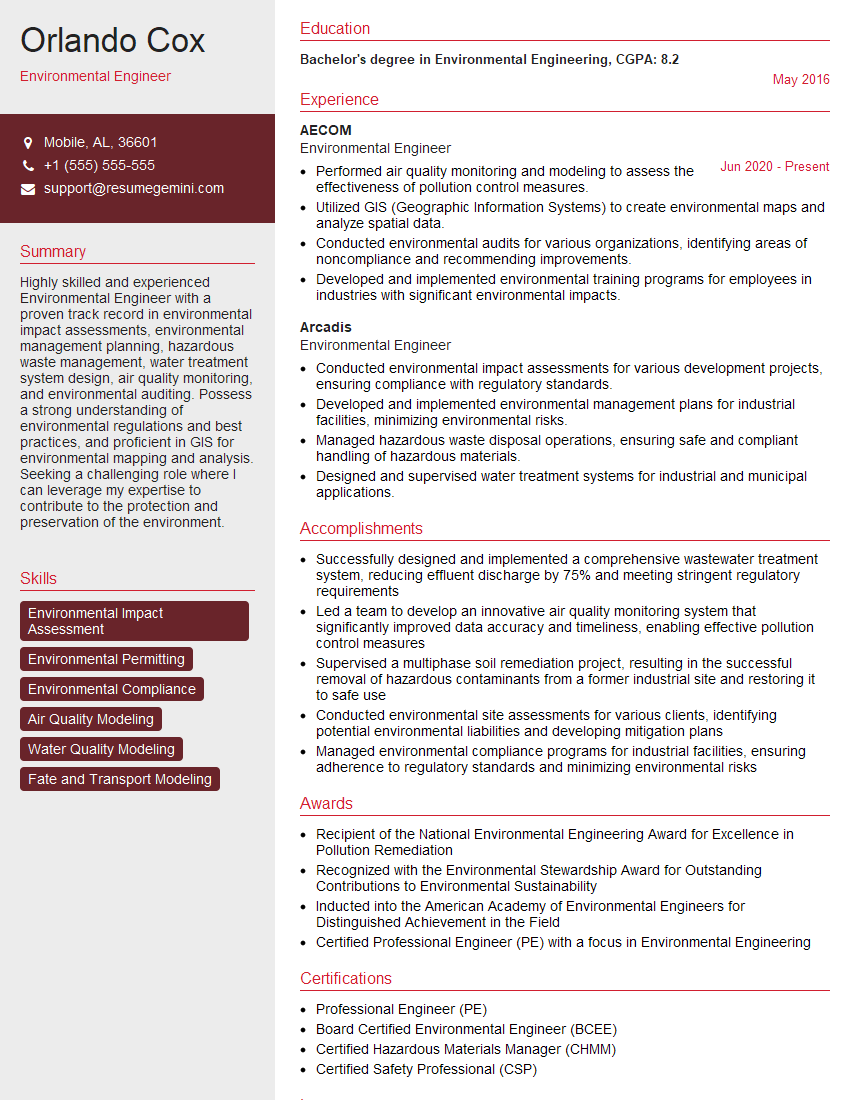
Environmental Engineer Resume Sample
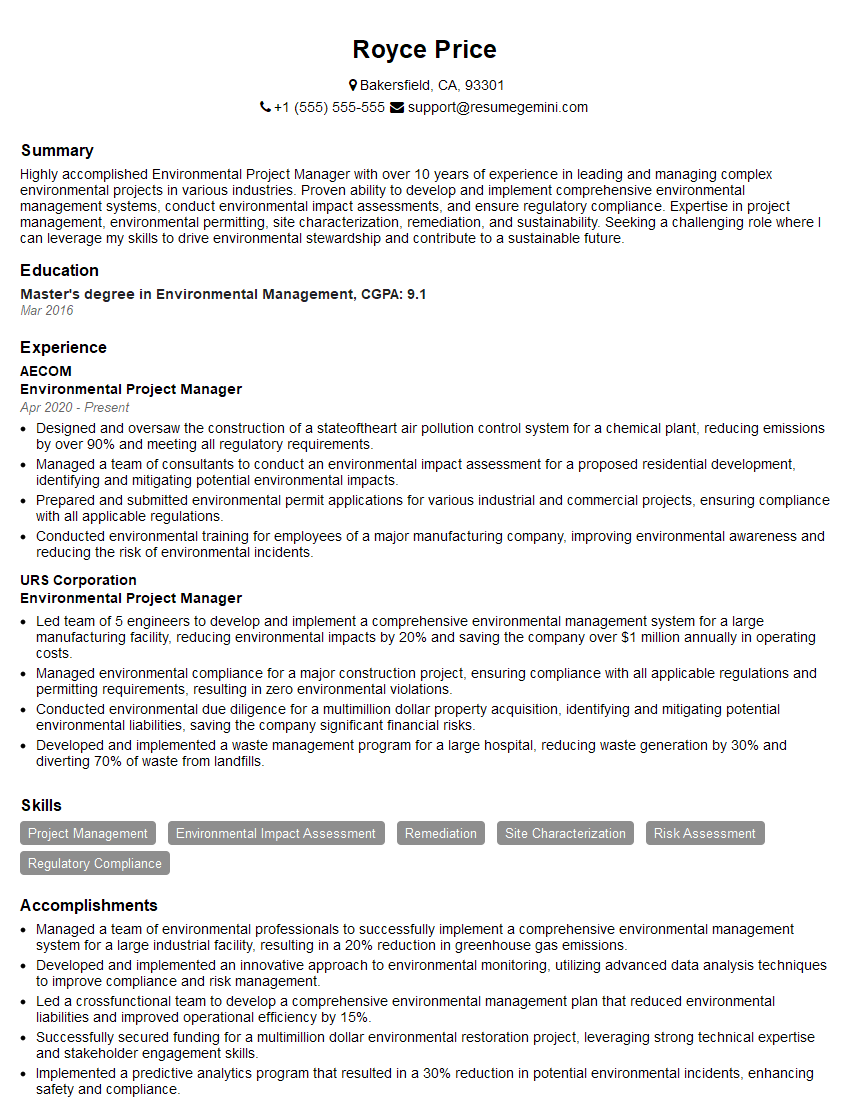
Environmental Project Manager Resume Sample
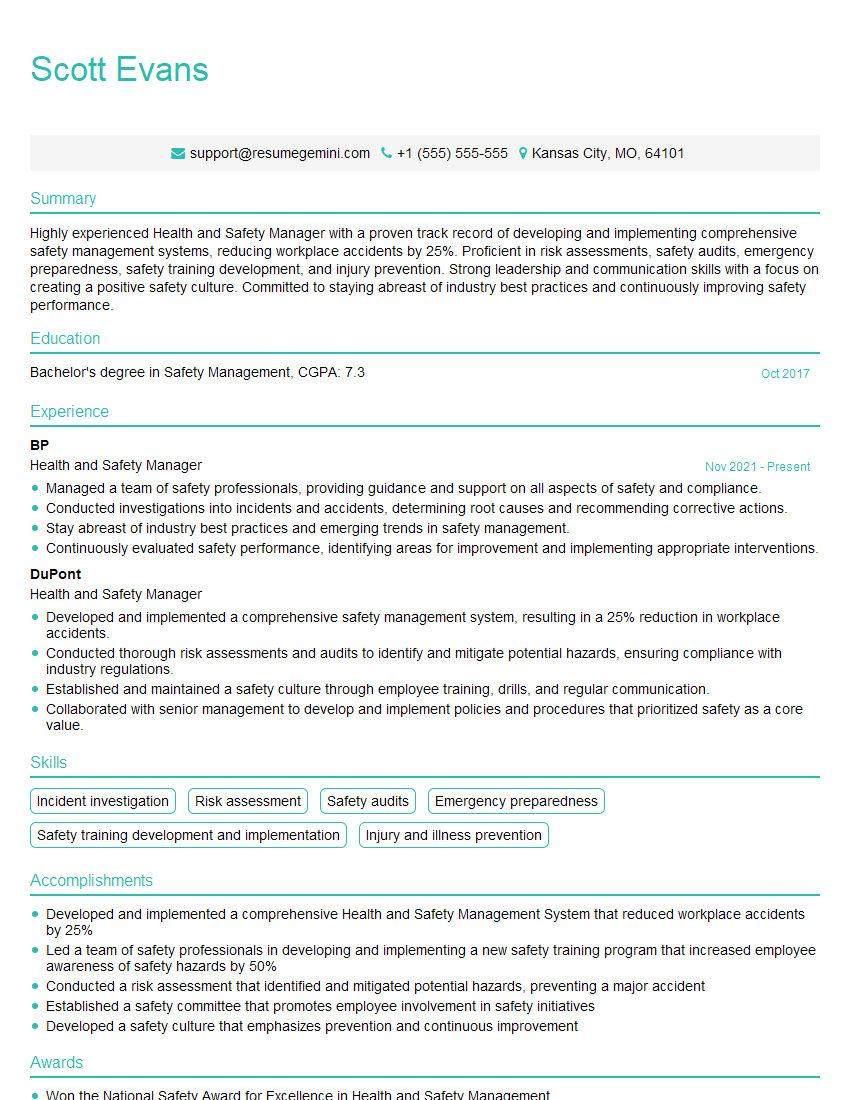
Health and Safety Manager Resume Sample
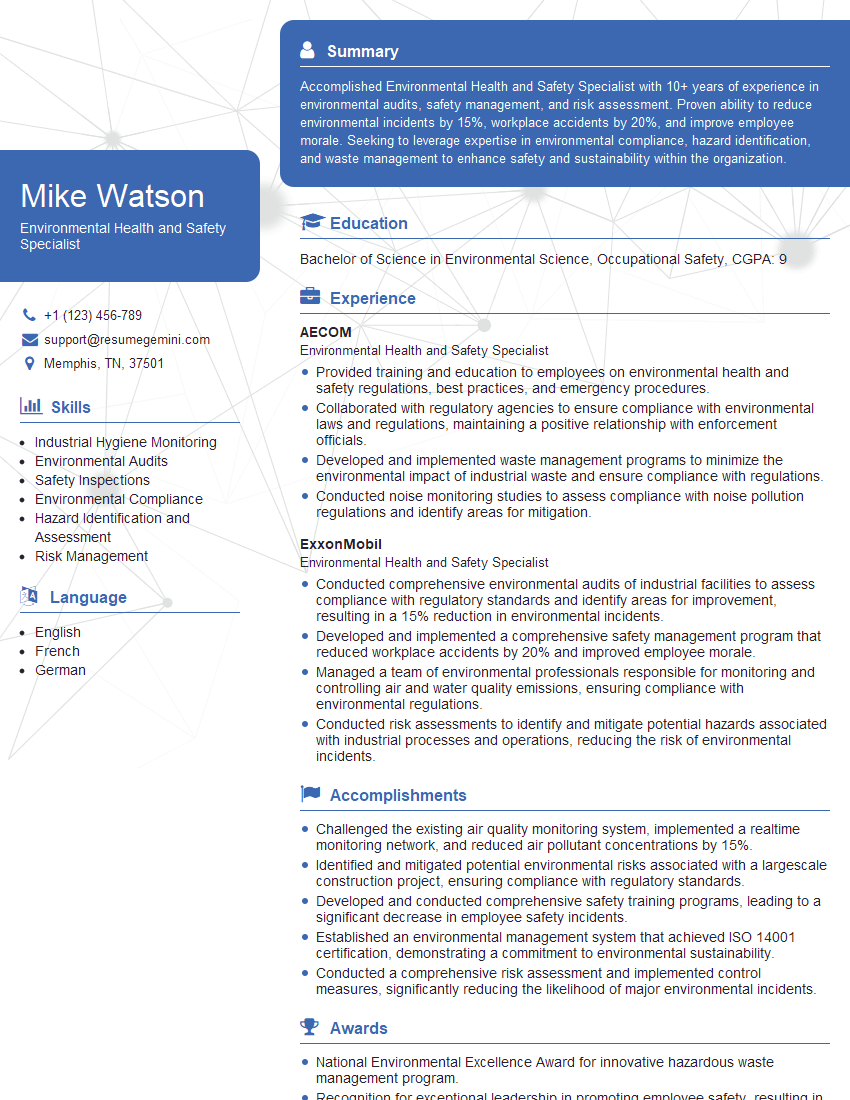
Environmental Health and Safety Specialist Resume Sample
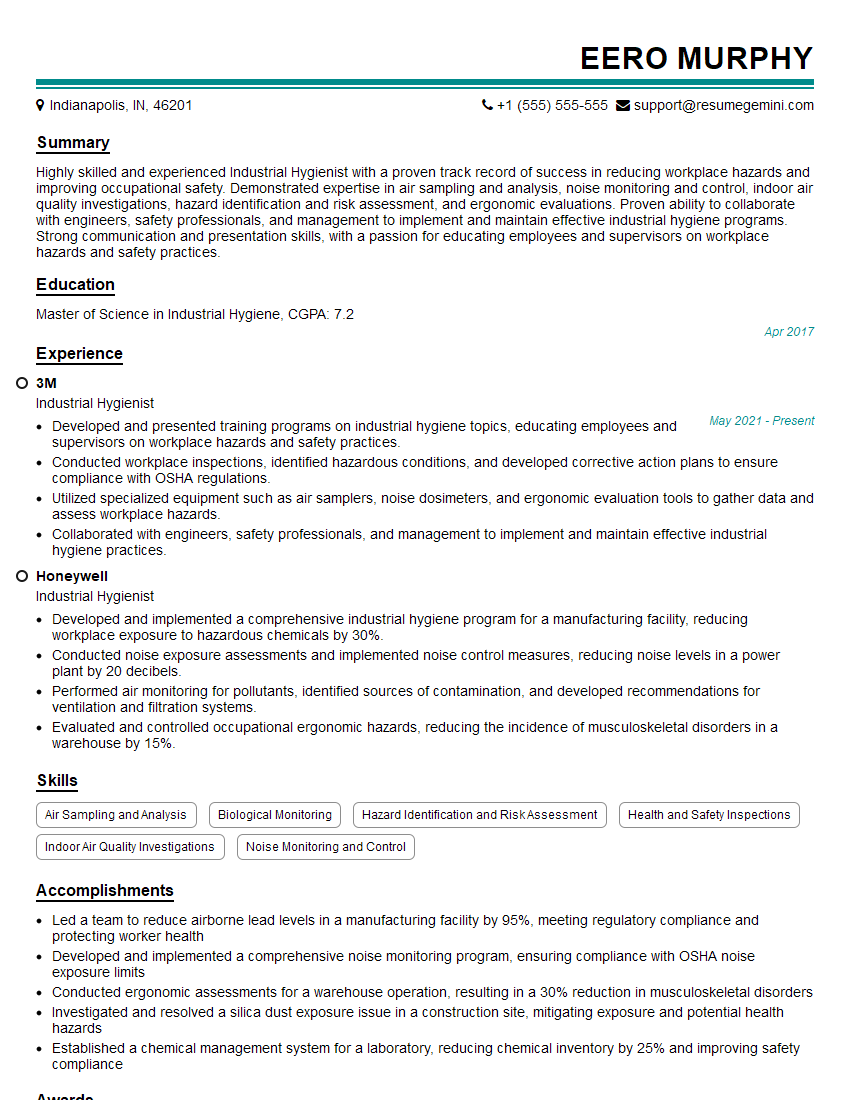
Industrial Hygienist Resume Sample
- Sustainability Manager
- Regulatory Affairs Manager
- Compliance Manager
- Regulatory Compliance Officer
- Environmental Scientist
- Environmental Specialist
- Compliance Auditor
- Environmental Engineer
- Environmental Project Manager
- Health and Safety Manager
- Environmental Health and Safety Specialist
- Industrial Hygienist
Explore more articles
Users Rating of Our Blogs
Share Your Experience
We value your feedback! Please rate our content and share your thoughts (optional).
What Readers Say About Our Blog
Very informative content, great job.
good